
No matter what chronic illness you battle, chances are your health condition brings you some type of pain throughout your patient journey. As a person with Crohn’s disease, pain can oftentimes be part of daily life…even when you’re in a “remission” state. It can be difficult and overwhelming to try and wrangle the beast that is chronic illness and chronic pain.
I recently came across a new book entitled,  “The Pain Companion: Everyday Wisdom for Living With and Moving Beyond Chronic Pain.” The author, Sarah Anne Shockley, lives with chronic pain herself and offers sage advice about how to find compassion within yourself and adjust your mindset. To Sarah, “pain is a necessity, but suffering is an option.” I’ve found personally after living with Crohn’s for more than 13 years, that the way I look at, deal with and handle pain has evolved greatly in that time. It’s not something that happens overnight, but you’ll notice a transformation within yourself as time goes by. You come to find a kind of patience and strength within yourself that you never knew existed.
Sarah recognizes how isolating pain is. She writes, “There is no one inside your world of pain with you; you are utterly alone there. Even others who are also suffering do not share the same pain.”  This excerpt really spoke to me, since no two IBD patients have the same exact journey or disease process or pattern. We’re all unique in how we experience the disease but can find great comfort from leaning on those who “get” the pain on a different level than the average person.
The book touches on the invincibility factor we all feel prior to diagnosis. How the healthy just expect to always feel well and take it for granted.
“When the body is not functioning properly, it brings up a huge amount of fear and anxiety. We can’t wake up in the morning and assume everything is going to be all right.”
The book discusses why pain has a purpose. How it warns us. The way it alerts us when things are awry. How we all can think of our pain as a “sign-post and a guide,” rather than a problem to be overcome.
As a parent myself, I loved an analogy that was shared about pain acting very much like a child pulling on a pant leg and whining. We can ignore the child all we want…but the more we tell the child to stop and be quiet, the more upset they get. After a while, we look down, take a breath, and try to calmly ask what they are trying to tell us, so we can act. 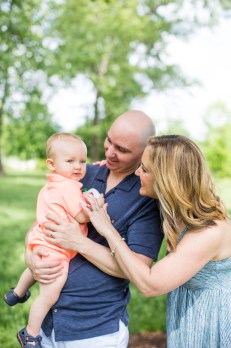 The same goes for chronic pain. We all know with IBD that symptoms of a flare start to fester. We know it deep down and may try and keep the worry and stress to ourselves. Until the pain is too much to take on alone. Think of pain as your body communicating with you and giving you a target for healing.
“The Pain Companion” shares several helpful coping strategies and meditative exercises that you can put into play in the comfort of your home. From breathing practices to writing letters, it’s all about changing the relationship you have with your pain and coming to terms with it, rather than thinking of it as such an enemy.
Our stories, our patient journeys and our experiences open our eyes to the importance of slowing down, being present and simply being appreciative of the small things—like a day where you feel healthy and “normal.” This book reminded me and showed me that rather than an enemy, I can use my pain to my advantage—take the time to listen and thrive regardless of what it throws my way.
Click here to purchase “The Pain Companion off Amazon. Click here to learn more about Sarah and her blog and website.

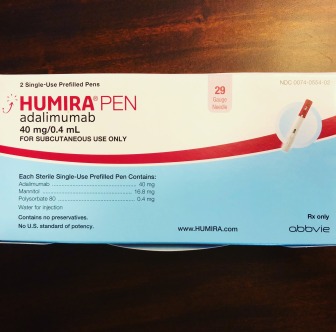 It changed in a way that I never knew was possible. I have so many flashbacks of my journey with Humira. The tears as I felt sickly in my 20s sitting alone in my apartment and wondering why me. The dread, anxiety and anticipation every other Monday and the strength I had to muster up within myself to once again receive my medication. Holding the injection in my hand, getting in the zone and focusing my thoughts on brave family members and friends as I held down the plum colored button and felt the burn. The sad look on my son’s face as he looked in my eyes and witnessed his mama hurting.

 Linde graduated from my high school and later moved to St. Louis. She currently resides in Atlanta, where she works for the CDC and does Policy work for the division of lab sciences.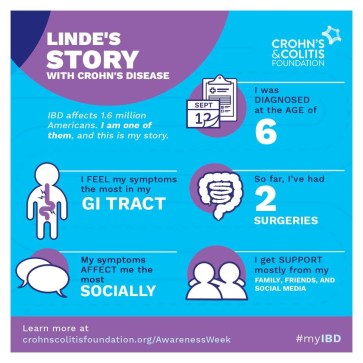
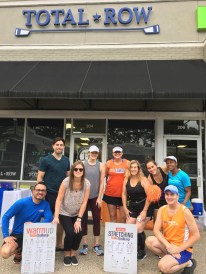 I’m training for a half marathon and taking on the biggest fitness and
 We ended up living together throughout our entire college experience, stood up in each other’s weddings and have managed to stay very close, despite thousands of miles between us since graduation.
 I teared up. I was so fearful of the unknown, as far as what this is going to mean for me for the rest of my life. There is such a variation in the way patients with IBD can experience the disease… my mind immediately went to worst case scenario for myself.”
 She used to ride out the symptoms much longer before admitting there was a change that needed to be addressed, mostly because she was fearful of having to go back on steroids. I can attest to being the same way. Prior to becoming a mom, I waited until going to the emergency room was the only option. Now, I am more mindful of listening to my body and nipping flares in the bud, because my family needs me.
 it makes you feel just a little bit stronger and gives you the confidence that you can handle the curveballs life is bound to throw at you over and over!”
 lights camera crohn's