
This post is sponsored by the American Gastroenterological Association (AGA). I am a paid program Brand Influencer; this post is sponsored and includes my own personal experiences.
Whether you consider yourself to be healthy or if you battle a chronic illness, the thought of pregnancy and motherhood can be overwhelming. So many unknowns. So many what ifs.  As a mom of two, who has battled Crohn’s disease for more than 13 years, I can relate to the concerns and the anxiety about what the future holds, what our bodies are capable of and how our disease will respond as we bring new life into this world.
My son turns two in March and my daughter was just born January 14. To say it’s been a busy couple of years is an understatement! That being said, family planning, pregnancy and postpartum care are all experiences that I’ve dealt with recently as a woman with inflammatory bowel disease (IBD). When you live with Crohn’s or ulcerative colitis, there’s no telling what the next hour or the next day will bring. You’re oftentimes on medications and navigating disease symptoms and flares. You wonder if your body can take on the role of creating a new life, when it has continually failed you and caused flare-ups of disease activity. You worry about the likelihood of passing on your disease to your children. There’s a laundry list of questions and thoughts that run through your mind. 
My experience is much like any woman who battles a chronic illness. So much gray area, not enough concrete research or answers. This is what inspired the launch of the IBD Parenthood Project. The new website aims to provide IBD patients with medical facts about IBD and pregnancy. You can think of it as a one-stop-shop for all your questions and a reliable resource to address your uncertainties and validate your decisions. The IBD Parenthood Project aims to address misconceptions that so many of us universally have when it comes to medications, working with a healthcare team, delivery, breastfeeding and postpartum care.
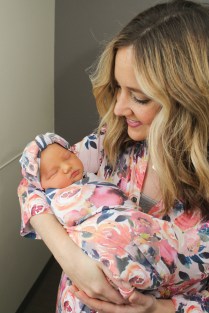 This resource gives mothers like me and you peace of mind and empowers us to make decisions about our bodies and for our families, in the safest way possible. The information arms us with the knowledge to not only allow us to be our own best advocates, but also comfort us as we build our families and take on the role of mom.
During my first pregnancy, I was very hesitant to breastfeed my son because of the biologic I was on. I worried about the lack of long-term studies available and if a postpartum flare would impact my ability to nourish him. I wasn’t sure where to turn to for sound, credible advice. I turned to Google and stumbled upon conflicting information and varying opinions shared on online support group forums. Making this decision was difficult, 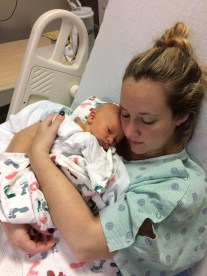 and the information out there led me to feel a bit uneasy. I chose to formula feed my son because of the lack of research and consistent information that I was able to find.
Now, less than two years later, my thoughts on breastfeeding while on a biologic have evolved. I’ve been able to educate myself thanks to resources like the IBD Parenthood Project that have given me medically-based facts on the benefits of breastfeeding my little girl. With Crohn’s, you often feel like you’re riding in the car, but not in the driver’s seat. This new website and toolkit makes you feel like you’re the one behind the wheel. It provides a newfound confidence that so many of us lack.
The “Pregnancy & IBD: After You Deliver” fact sheet addresses all the big questions that arise once your baby is here. The information covers everything you need to know for yourself and for your child. As we know, the postpartum period, or the “fourth trimester,” is complicated, regardless of your health. Throw in IBD and it makes for what can be an even more complicated transition. Having this resource at our disposal saves us from doing the homework and helps guide us as we take on the unknown and acclimate to our new life.


Motherhood has inspired me greatly in my battle against IBD. It’s shown me that despite my body repeatedly challenging me, I was still able to bring life into this world. Family planning and having children is a personal decision. But, if it’s something you dream of and something you hope for in your life, please take the time to educate and equip yourself with the knowledge that is now readily available, right at your fingertips. Remember, with proper planning and care, women with IBD can and do have healthy pregnancies and healthy babies.

 It was a brisk January morning. Tears filled my eyes as I was overcome with emotion. Our rainbow baby is here, safe and sound. Another pregnancy behind me, a pregnancy that silenced my Crohn’s disease and provided sweet reprieve from my chronic illness. It was time to take Sophia home and start our life as a family of four.
 Each time I have a procedure or deal with painful symptoms, I see their faces, I say their names in my head, and it brings me a sense of calm. My goal when Reid was born, was to stay out of the hospital until he could walk, luckily that’s been the case. He’ll be two in March. Now, I have that same goal following the arrival of my daughter.
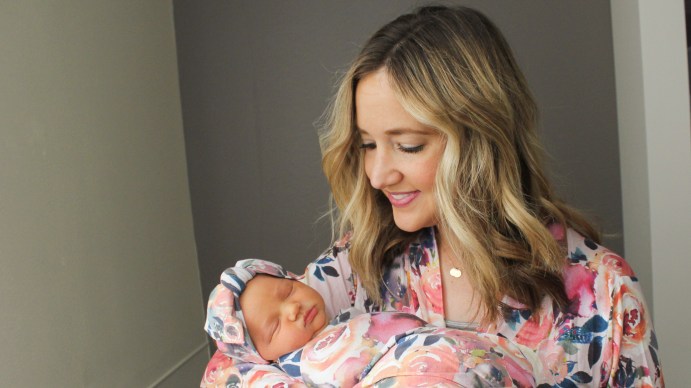 Motherhood and IBD can be a difficult and challenging balance. Some days the fatigue and symptoms are so debilitating you feel like you’re falling short. At the same time, the days where you’re feeling well, remind you that you are so much more than your disease. Just because you have a chronic illness, doesn’t mean you are robbed of experiencing the beauty of life and what it feels like to have your very own family.
 It all starts with recognizing where you are in your patient journey and then determining when your symptoms and body are in the best shape to get pregnant. While everyone’s disease experience is different—the worries, concerns and fears associated with parenting and chronic illness are often the same. Always know you are never alone. Communicating these feelings with those around you, makes all the difference. Lean on our patient community and all those who’ve lived your reality.
 When Sophia Shea entered the world January 14, 2019, our family received a wonderful gift. Between our son Reid and our baby girl, we could not be more blessed. My chronic illness has given me such an appreciation for health and for life in general. With the pregnancies behind me, I often reflect on where I started back at age 21 in 2005. At that time, in my eyes, I was Natalie and I had Crohn’s disease. There was no telling what my future would hold. Now, nearly 14 years later, at age 35, I’m so much more. I’m a mom to two under two. I’m a wife. I’m a daughter. I’m a sister. I’m an aunt. I’m a friend. And I also have Crohn’s.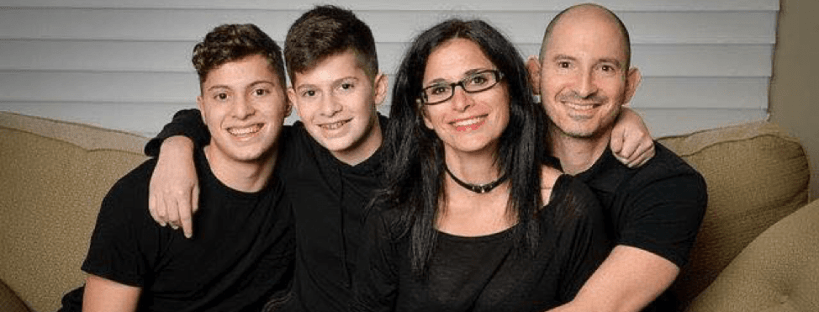
 it was discovered she had Crohn’s disease and a portion of her intestine was removed. IBD has been a big part of their lives, their relationship and their family—but, it hasn’t stopped them from enjoying life, finding humor amidst the difficult days and having children.
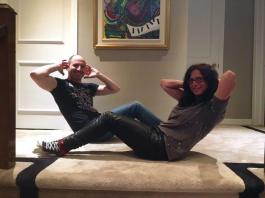 a campaign both in real life and on social media to connect to those with IBD, create awareness and raise money for the cause. Crohn’s and Colitis Canada backed this effort and supported the effort on a national level. Here’s how it worked—Brian shared a challenge that he would do 10,000 crunches until $10,000 was donated to Crohn’s and Colitis Canada. For five months straight, Brian posted a video of himself doing crunches, while wearing costumes.

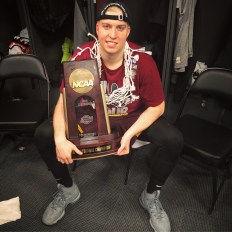 At the time, Nick DiNardi was a senior walk on and served as a scout to prepare players for each game. Aside from his skills on the hardwood, Nick has battled Crohn’s colitis since he was 11.
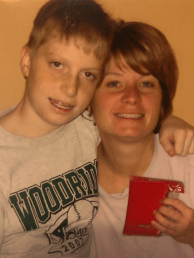 My grade school friends had no idea why I was crying in class, oftentimes teasing me while I was in pain,” said Nick. “My parents and siblings were always there to do everything they could to make me feel better, but I just never felt like anyone related to the pain I was in.”
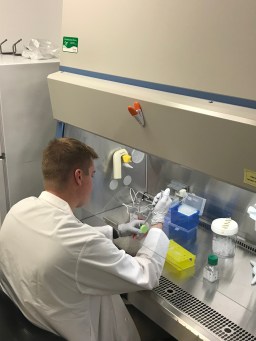
 lights camera crohn's