
Talking to Your Boss and Coworkers About Inflammatory Bowel Disease

Living with IBD can be especially challenging in a professional setting. Prior to becoming a stay-at-home mom and freelance/blogger, I worked full-time for 12 years. For 10 of those years, my Crohn’s was not in remission. This week on Lights, Camera, Crohn’s, guidance on how to approach conversations with your boss and co-workers effectively so you can feel supported.

The more they know

Before I became self-employed, I worked at three television stations, a public affairs PR agency, and in Corporate America as a communications specialist for a natural gas utility. With each interview and onboarding process, I waited until I was hired to disclose that I had Crohn’s disease to my boss. The first week of work, in a one-on-one meeting I openly shared about my disease and tried my best to educate my boss and my team about my health. Since I did not start blogging or any patient advocacy work until 2016, there was nothing online about my journey with Crohn’s. If I were trying to get a job nowadays, I wouldn’t have that luxury since my story is publicly shared. Every single boss, all my co-workers, and each employer were extremely understanding and empathetic about my struggles. I was incredibly lucky in that regard.

While working full-time I had several hospitalizations and bowel resection surgery that kept me out of work for 2.5 months. I was grateful for bosses who were generous with sick time and that my corporate job had a solid short-term disability plan I was able to utilize.

Everyone has a different opinion about when and how to best disclose your health or disability status. While some people consider their IBD a “disability,” others do not. I’m often asked how to navigate answering that question on a job application. I personally do not consider my IBD to be a disability, but it’s understandable if you do. Answer as you see best fit and most comfortable.

Why It’s Important to Share

  • Accommodation Needs: Explaining your condition can help you receive necessary accommodations, such as flexible work hours or the ability to work from home during flare-ups. One of the major benefits of the pandemic is how it altered how we work. Back when I was in the workforce, working from home wasn’t utilized as much as an option. I had high symptom days where I worked from home once or twice every few months, but it wasn’t a weekly occurrence. Hybrid working environments or remote jobs are ideal for those with chronic illness.

The flexibility work from home jobs provide is huge—whether it’s being able to work from your couch if you’re dealing with abdominal pain and it hurts to sit at a desk, being able to work in comfortable clothes or pajamas if the fatigue makes showering a challenge, or worrying about the commute and being able to travel without a bathroom mishap or having to go multiple times in a public employee bathroom…the list can go on and on.

  • Understanding: Colleagues aware of your condition are more likely to be supportive and understanding during challenging times. One of the most important aspects of IBD to share with others who do not have our disease is the unpredictability of our health. Since we’re able to look perfectly normal on the outside, it can be difficult for an average person to fully grasp or believe the pain we’re dealing with. I remember countless days in Corporate America having to unbutton my work pants and having to tell my co-workers I was on the struggle bus. I can still envision myself on the news desk when the camera shifted to a weather segment and slumping over in pain. Everyone I worked with was aware of when I was having an “off” day. I’ve had co-workers drive me to the emergency room during the workday. I always felt supported and was never made to feel like I was less than because of my Crohn’s and for that I am still grateful.
  • Reduced Stigma: Talking openly about Crohn’s and ulcerative colitis can help reduce the stigma associated with chronic illnesses and foster a more inclusive workplace. People may question or wonder why you may have unique work accommodations, while it’s none of their business, being transparent, and really stepping up to the plate and going above and beyond when you’re able will show others that you never use your disease as an ”excuse”. If you have an infusion or a doctor’s appointment that makes you arrive late, it’s helpful to inform your boss and co-workers so they know why you may be strolling in during the middle of the day.

Preparing for the Conversation

  • Know Your Rights: Familiarize yourself with your workplace’s policies on medical conditions and accommodations. Understanding your rights under laws such as the Americans with Disabilities Act (ADA) can provide a framework for your discussion. Check out these tips from the Crohn’s and Colitis Foundation.
  • Plan Ahead and Explain Your Needs: Choose an appropriate time and setting for the conversation. Ensure privacy and sufficient time to discuss your needs without interruptions. I always had a face-to-face conversation with my bosses, and they were appreciative of knowing. Clearly state what accommodations you need to manage your condition effectively. This could include flexible hours, a work-from-home arrangement, or having a desk closer to the restroom. Emphasize your dedication to your job and how these accommodations will help you remain productive. For example, “Having the ability to adjust my work schedule during flare-ups will help me stay on top of my responsibilities.” If I was prepping for a colonoscopy or having a scan, I let my team know.
  • Gather Information: Be ready to explain what IBD is, how it affects you, and what accommodations or support you might need. A high-level explanation is often sufficient.Your boss doesn’t need to know your entire patient journey. For example, “I have a chronic condition called Crohn’s disease/ulcerative colitis that affects my digestive system. This can sometimes cause severe abdominal pain and fatigue.”
  • Offer Solutions: Suggest practical ways to implement accommodations. For example, “During flare-ups, I could work from home and communicate via video calls and emails to stay connected with the team.” Your boss may have questions or concerns. Be prepared to address them calmly and provide any necessary documentation from your healthcare provider.

Communicating with Coworkers

You don’t need to share all the details. A brief explanation like, “I have a medical condition called Crohn’s disease/ulcerative colitis, which sometimes causes me to feel unwell,” can suffice. Explain how your condition might impact your work or interactions. For example, “There may be times when I need to step away from my desk more frequently.”

Reassure coworkers that while you have a chronic condition, you are still capable of performing your job. For example, “Most days, it doesn’t affect my work, but there might be times when I need a bit of flexibility.”

Encourage an open dialogue. Let them know they can ask questions if they want to understand better, but also respect your privacy. While I was hospitalized, I would often send an email to my team at work to provide them with a high-level update, so they heard the information from me versus someone else. For example, “Hi team! I appreciate all your well wishes. It’s been a difficult few days, but I’m hanging in there. I hope to be discharged from the hospital by the weekend and look forward to seeing you soon.”

Final Thoughts

Talking about IBD with your boss and coworkers can seem daunting, but it is a crucial step toward ensuring you have the support you need in the workplace. By being honest, clear, and proactive, you can foster a more understanding and accommodating work environment. Remember, your health and well-being are paramount, and having open discussions can help you maintain your health, while staying on top of your professional responsibilities. When interviewing for jobs, pay close attention to how an employer manages insurance benefits, short-term/long-term disability, and whether you feel like your boss and co-workers would be people you feel comfortable sharing your health struggles with. You aren’t married to your job, if you ever feel unsupported, seek employment elsewhere. Along with your boss, it’s helpful to talk with Human Resources, so you’re aware of all the medical benefits and support that is available for employees.

While IBD complicates life, I hope you continue to go after your dreams. Sure, there are going to be setbacks and roadblocks along the way, but you are worthy of whatever job or career you want to set out and do. Less than 3 months after my diagnosis, while on 22 pills a day, I landed a job 8 hours away from all friends and family and went after my dream of working in TV news. I’m proud of that and it’s a reminder that this disease doesn’t need to rob you of all you hope to be and all you hope to do. You are not a burden on employers and the sky is the limit for you.

Helpful Resources:

Employee and Employer Resources | Crohn’s & Colitis Foundation (crohnscolitisfoundation.org)

Inflammatory Bowel Disease Coverage Under the ADA (verywellhealth.com)

Navigating the workplace – My IBD Life (gastro.org)

How To Cope With Ulcerative Colitis at Work (clevelandclinic.org)

10 patient-backed tips for dealing with IBD at work – Oshi HealthCrohn’s and Work: Your Rights, The ADA, Statistics & More (healthline.com)

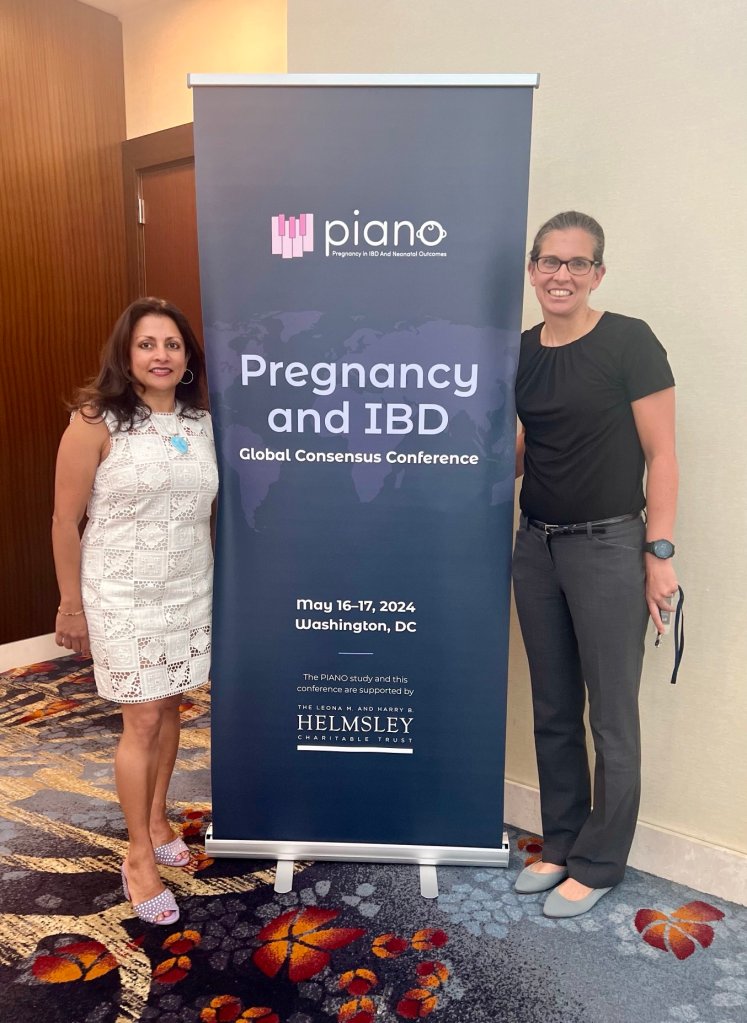
Navigating Medications for IBD During Pregnancy and Breastfeeding: A Comprehensive Global Guide

One of the main challenges and worries women face when it comes to pregnancy and IBD is feeling comfortable and confident staying on their medication. The first-ever Global Consensus Conference on Pregnancy and IBD was held during Digestive Disease Week (May 2024) and part of the discussion focused on the latest recommendations for medication during pregnancy and lactation. Last week on Lights, Camera, Crohn’s we covered the global guidance regarding pre-conception counseling and family planning.

Hear from the co-chairs of the Global Consensus Conference and esteemed gastroenterologists, Dr. Uma Mahadevan and Dr. Millie Long about what they want the IBD community to know about medication during pregnancy and postpartum.

The latest recommendations for IBD women

  • All biologics can be continued through pregnancy and lactation
  • 5ASA can be continued
  • Thiopurines can be continued, but monitor liver enzymes for intrahepatic cholestasis of pregnancy
  • S1P agents and JAK inhibitors should be avoided in pregnancy unless there is no other viable alternative
  • Biosimilars are equally safe to originator drugs (biologics) in pregnancy
  • Wound healing after C-section/episiotomy: Thiopurines
    delayed wound healing with episiotomy, but there’s no impact of biologics on
    wound healing with C-section, tear, episiotomy

These recommendations were voted on and determined by more than 50 medical providers and IBD patient advocates from around the world. The hope is that this guidance will leave couples feeling empowered and more comfortable in their decision to stay on medications that are deemed low risk.

“We have learned that there are many different practice patterns in various locations globally regarding treating women with IBD during pregnancy. The goal of this Global Consensus was to have a consistent, evidence-based framework for management of pregnant women with IBD that will improve the quality of care globally. Most importantly, treating inflammation and continuing appropriate medications (such as biologics) improves outcomes for both mom and baby,” said Dr. Millie Long.

When I was pregnant with my children, I trusted what my care team (GI, OB, and Maternal Fetal Medicine doctors) told me regarding Humira and the risk versus benefit of staying on my medication through pregnancy and after. I credit my medication for keeping my Crohn’s under control while I carried my babies and after I brought them into this world. But I’m going to be honest—when you are 36 weeks pregnant and you feel the baby kicking and moving as you’re about to do your injection, it can feel emotional. At the same time, I always told myself I was doing what was best for me and for them. Now that my kids are 7, 5, and almost 3 (all perfectly healthy), I am reminded every day that I made the right choice for our family.

Handling the hesitations

Dr. Mahadevan says when patients come to her worried about staying on their medication while they are pregnant, she discusses the “very clear data” that shows disease activity is the strongest predictor of pregnancy complications.

“This includes having difficulty conceiving, higher miscarriage rates, higher complications of pregnancy, including pre-term birth. Pre-term birth has a strong correlation with reduced socioeconomic status and other issues later in life. Plus, if women are so sick and worn out by their IBD, they aren’t able to enjoy their new baby and struggle to take care of their child as well as they would like to. For medications like monoclonal antibody, where there is good safety data, it really makes sense to continue.”

“Women should stay on biologics during pregnancy without any alteration when they are pregnant. This reduces the risk of flare during and post pregnancy for the mom and improves outcomes for the baby. The strongest predictor of pre-term delivery (and the complications arising from this), is active inflammation,” said Dr. Long.

Clinical trials in pregnancy and drug safety rely on observational data. There are no randomized trials where one person is chosen to get therapy, and another is not.

“This is where the PIANO study and other such prospective (where we follow patients before we know the outcome) registries are so important. We can collect data quickly… as soon as a medication is approved for use. We also get data from large population datasets from countries such as France, where all patients are registered, and their outcomes can be collected. This takes longer but will have much larger numbers,” explained Dr. Mahadevan.

All three of my kids were part of research studies while in utero and after. My youngest who turns three in July was part of the PIANO study. I can’t say enough about the importance of contributing to research and helping to pave the way for future IBD families. We have the guidance we have today because of all the moms who took it upon themselves to be a part of studies like PIANO.

Biosimilars in pregnancy

As more and more patients are switched from a biologic to a biosimilar, there’s a great deal of interest in how this impacts family planning and pregnancy.

A total of 89 pregnant women with IBD enrolled in PIANO on Infliximab were included as part of a study presented at Digestive Disease Week entitled, “Use of Biosimilars to Infliximab During Pregnancy in Women with Inflammatory Bowel Disease: Data from the PIANO study” that Dr. Long and Dr. Mahadevan were a part of.

In the study, 76 women were on the originator drug (Infliximab/Remicade), while 13 women were on an Infliximab biosimilar.

“Though this study is small, Europeans noted that they did not differentiate between biosimilar and originator in their studies. There were no difference in clinical characteristics or significant differences in any pregnancy complications between the two groups. Developmental milestones were assessed at 12 months, with no differences in communication, fine motor, gross motor, personal/social interaction, or problem solving between groups,” said Dr. Mahadevan.

This data and ongoing research can reassure mothers with IBD on biosimilar IFX who wish to pursue pregnancy.

Avoiding S1P agents and JAK inhibitors in pregnancy

For those who don’t know—S1P agents and JAK inhibitors include: Ozanimod (Zeposia), Tofacitinib (Xeljanz) and Upadacitinib (Rinvoq).

If you’re currently taking one of these medications and finally have your IBD under control, it can be daunting to know what to do next for family planning.

“It is a case-by-case situation .In general, we would like to avoid these agents as, unlike with biologics which are antibodies, these agents are pills and cross the placenta during the first trimester during a key time in the baby’s development,” said Dr. Mahadevan. “Animal studies have shown harm with supratherapeutic (higher than human doses) levels of drug. Upadacitinib (Rinvoq) had birth defects in animals even at human doses. For S1Ps, usually there is another effective medicine patients can try. An exception may be if they also have multiple sclerosis as S1Ps are used to treat both conditions. For jak inhibitors, they are often the only effective therapy for a patient. We will discuss the risks, the benefits, and the options – using a surrogate, etc.”

Lactation considerations

The benefits of breastfeeding are similar in IBD and non-IBD moms.

“We do not have robust data that breastfeeding will specifically reduce the risk of IBD in offspring, but there are many studies in the general population that demonstrate that breastfeeding is beneficial to infants. The choice to breastfeed is an individual one, and it is important to support each family’s decision,” said Dr. Long.

Breastfeeding research is more challenging than pregnancy studies, as this is not collected in medical records or large databases.

“Breastfeeding research is data from registries like PIANO and individual studies from different IBD centers,  which measure transfer in breastmilk and outcomes,” said Dr. Mahadevan.

She went on to say that breastfeeding is allowed on thiopurines, and there should be low to no risk to the infant.

“Ideally, if the mother can wait four hours, there is no drug transferred, but even earlier the amount that is transferred is very low,” explained Dr. Mahadevan.

As an IBD mom who fed each of my babies differently, I want to reiterate that whether you choose to breastfeed or not is a personal decision and you are not less than or a failure if you need to supplement or formula feed. Juggling chronic illness, postpartum, and motherhood is a lot. Give yourself grace and trust your child will thrive no matter how they are fed.

My oldest was only breastfed for three days because I wasn’t well-versed about the data regarding biologics and breastfeeding and because I was nervous about flaring and not being able to feed my baby. I breastfed my middle child for 6 months while supplementing, and my youngest was exclusively breastfed 14 months—all while on Humira. Your journey and your experience are personal to you. Try not to allow outside or societal pressure to contribute to your guilt as an IBD mom.

Gaps and strides in IBD research
Dr. Long says we need more data on the safety and efficacy of novel small molecules during pregnancy.

“This includes medications like tofacitinib, Upadacitinib, Etrasimod and ozanimod. This is why registries like PIANO are so important, to capture this information and inform patients and providers alike. Some of the strides being made in IBD pregnancy research include the effectiveness of pre-conception counseling, novel assessments of disease activity during pregnancy (such as intestinal ultrasound), data on novel biologics during pregnancy and lactation (including newly approved therapies such as Risankizumab or Mirikizumab) and data specifically on biosimilars. Through this data and the Consensus recommendations, we can improve pregnancy outcomes for many women with IBD,” said Dr. Long.

The overall hope is that the Global Consensus Conference recommendations will provide women with IBD all over the world with consistent and evidence-based care prior to, during, and post pregnancy.

Planning for a Family with IBD: Essential Guidance and the Latest Recommendations

When you live with a disease like Crohn’s or ulcerative colitis, family planning takes thought and special consideration. The first-ever Global Consensus Conference on Pregnancy and IBD was held during Digestive Disease Week (May 2024) and part of the discussion focused on the latest recommendations for pre-conception counseling and family planning. This week on Lights, Camera, Crohn’s hear from Dr. Uma Mahadevan who co-chaired the conference, along with Dr. Christopher Robinson, a maternal fetal medicine specialist. As an IBD mom of three kids and the patient lead for the United States on this initiative, I’m excited to start sharing the latest guidance for our community.

The latest recommendations for IBD women

  • Couples should get pre-conception counseling.
  • Remission prior to conception for at least 3-6 months with objective evidence of remission.
  • All women with IBD should be followed as high-risk pregnancies (however that monitoring works in each country)
  • Pregnant women should take low dose aspirin daily by 12-16 weeks gestation to avoid preterm pre-eclampsia.

These recommendations were voted on and determined by more than 50 medical providers and IBD patient advocates from around the world. They are the gold standard, and the hope is that the recommendations help clear up the gray area and bring clarity to couples who are planning to grow their family and wanting to conceive.

“Our goal was to have a universal guideline that was the same worldwide. This would reduce confusion and avoid the default of just not giving women appropriate therapy. The Consensus really tried to advise what we, as pregnancy in IBD experts, do with our patients, so that women everywhere can have the same high level of care,” said Dr. Mahadevan.

Considerations for women prior to conception

Dr. Mahadevan says when a woman starts medication, she generally tells her whether it is a compatible with pregnancy or not.

I also tell them when they are ready to consider conception to meet with me first. So generally – the education and family planning discussions should start before you are even ready to consider pregnancy. For couples, they should give their GI a 6-month window ideally to make sure there is remission, a chance to optimize medication, and get any testing done that is needed.”

Personally, I had bowel resection surgery in August 2015 while I was engaged. We knew our wedding was in June 2016, and following the surgery I reached remission for the first time in a decade, so timing was of the essence. I told my GI at a post-op appointment in November 2015 that we were planning to start trying for a baby right after our wedding. Knowing that, she put me on a prescription prenatal and folic acid to start prepping my body for pregnancy, I also had a colonoscopy the month prior to my wedding to confirm I was in remission.

Recovering in the hospital after my bowel resection surgery, with hopes of one day being a mom.

Dr. Mahadevan recommends patients start 1 mg of folic acid daily when she learns they are considering conception.

“The prenatal with iron can be bothersome to some patients so I wait for the OB to start that. I check Vitamin D, B12, and iron labs to make sure those are all good.”

Dr. Christopher Robinson, MD, MSCR, Charleston Maternal Fetal Medicine says preconception care is an excellent way to plan out a pregnancy path.

He went on to say, “We recognize that the best outcomes are achieved when preconception care is employed prior to conception for optimization of disease management. This is especially true of IBD where there can be a number of misconceptions about safety of medications and goals for nutrition and surveillance of the pregnancy. Thus, I would recommend preconception counseling and establishing a care plan with Maternal Fetal Medicine early in pregnancy (first trimester).”

What does pre-conception counseling entail

Preconception counseling can be extensive. You should expect to go through an entire healthcare maintenance checklist of the following:

  • Checking labs—vitamin levels, sometimes drug levels
  • Updating vaccines
  • Cancer screenings—pap smear, colonoscopy if appropriate
  • Ensuring the patient is in remission which may require a colonoscopy, intestinal ultrasound or other imaging
  • Making sure medications are compatible with pregnancy
  • Reviewing prior pregnancy and if there were complications
  • Discussing mode of delivery, referring to a Maternal Fetal Medicine doctor prior to pregnancy if prior complications or if a woman is extremely high risk (for example, prior blood clots), has an ostomy, or if there is evidence of malnutrition or difficulty with weight gain.
  • Discuss starting aspirin at week 12 and set up a visit schedule with your GI, as you’ll generally see them once per trimester.

I had four pregnancies—three healthy, full-term babies and one miscarriage. As soon as I found out I was pregnant I alerted my GI. From there I set up an appointment with my “regular” OB for the initial ultrasound at 8-10 weeks, and then moving forward I had monthly ultrasounds with a maternal fetal medicine doctor, appointments with my GI each trimester, and the regularly scheduled in-office visits with my OB. Even though I had flawless pregnancies each time (aside from the baby I lost around 7 weeks), I was considered “high risk” because of my history of Crohn’s disease and prior surgery.

I had three scheduled c-sections, not because I had perianal Crohn’s, but because my care team allowed me to decide what I felt most comfortable given my health history. If I could do it all over again, I’d do it all the same. I appreciated the extra surveillance for my children and for me, healed beautifully after each abdominal surgery, and was grateful that by staying on Humira until 39 weeks with my first child and 37 weeks with my younger children, I maintained my remission throughout pregnancy and after.

Dr. Robinson said while each pregnancy has specific needs, in general he also follows pregnancy with serial growth checks every 4 weeks across pregnancy (following the targeted anatomic scan).

“It is possible, if a patient has longstanding, well controlled disease, and an optimum prior pregnancy outcome history, to check a 32- and 36-week ultrasound for growth. However, in the first pregnancy, I agree with serial growth scans.”

What remission before pregnancy really looks like

Remission is often a difficult word to define when it comes to living with IBD. As Dr. Mahadevan tells me, “Not everyone can achieve complete remission.” So, what are doctors looking for and what should your target be?

“We are looking to give moms-to-be the best chance at conceiving, keeping the pregnancy, and having a health pregnancy. I like to see normal labs, normal calprotectin, normal colonoscopy, and imaging without visible inflammation. Not everyone can achieve this, but that is the ideal three to six months prior to conception,” explained Dr. Mahadevan.

“IBD has both genetic and autoimmune underlying components that can interfere with development of the placenta and affect maternal nutrition across pregnancy. In these cases, optimization of disease management can improve care and reduce risk for both mother and fetus. The goal of interventions is to reduce the risk for mother and infant through coordinated care with GI, MFM and OB/Gyn in pregnancy,” said Dr. Robinson.

Stay tuned to Lights, Camera, Crohn’s next week when the latest recommendations for IBD medication in pregnancy and lactation is disclosed. A full manuscript with all the recommendations and guidance is in the works, with hopes of the information being publicly available by the end of this year. I’ll be working on the companion piece for the manuscript dedicated specifically to the patient community.