Stronger from the Inside Out: The Role of Nutrition in Gut, Muscle, and Bone Health for Women with IBD

At the inaugural Cedars-Sinai IBD and Women’s Health Conference, experts came together to spotlight the unique challenges women face at the intersection of inflammatory bowel disease (IBD) and women’s health. Co-directed by Dr. Puja Khanna, Clinical Director of the IBD Women’s Health Program, and Dr. Maria Abreu, Executive Director of the IBD Institute, the event featured a two-part format: clinical updates for providers and education for patients and caregivers. Topics ranged from fertility and pregnancy to nutrition and mental health.

One of the featured speakers was Neha D. Shah, MPH, RD, CNSC, CHES, Senior Dietitian at the Colitis and Crohn’s Disease Center at UCSF and founder of Neha Shah Nutrition LLC, a private practice specializing in nutrition care for patients with IBD. Her session focused on nutrition updates and strategies to support gut, muscle, and bone health in women with IBD. This week on Lights, Camera, Crohn’s I spoke with Neha, and she zeroed in on something every woman with IBD should care about: how to use nutrition to protect our gut, muscle, and bone health.

Why Nutrition Matters Beyond the Gut

Whether you live with IBD or care for patients, you know that IBD affects much more than the gut. Fatigue, abdominal pain, and debilitating flares that blindside us can make it feel like our whole body is affected.  While we know this, it can be complicated to know how to address these specific challenges.

“Women with IBD face a unique set of challenges,” Neha explains. “Poor absorption can contribute to ongoing symptoms, muscle loss, and bone loss. Hormonal shifts, whether from PMS, pregnancy, or perimenopause add yet another layer, often making symptoms unpredictable.”
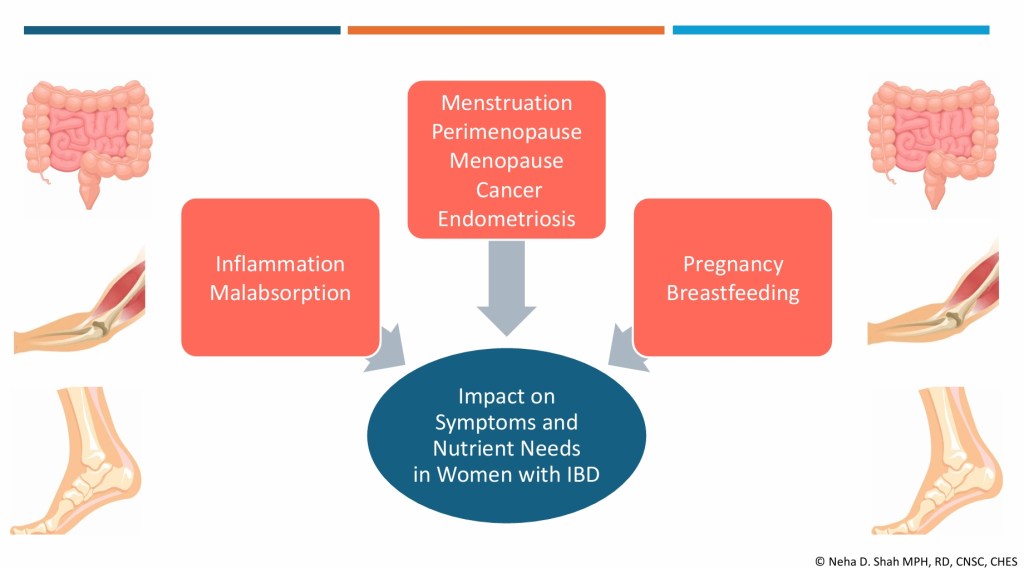
Her goal? To give women practical, evidence-based strategies they can use to better support their health, both now and as their bodies change through different life stages. As a woman who was diagnosed with Crohn’s disease at age 21, my questions and focus have shifted now that I’m 42 and my family is complete.

“Many women don’t just experience flare-ups; they live with changes in their body that evolve throughout life, impacting daily routines, work, and overall quality of life. In my presentation, I aimed to highlight both the latest updates and practical, whole-food strategies that women can use to better support their health.”

Key Takeaways from Neha’s Presentation

Gut Health

IBD symptoms often overlap with PMS and endometriosis: fatigue, abdominal pain, diarrhea, bloating, and constipation. If you’ve noticed an uptick in your IBD symptoms right around your period, you are not imagining it.

When combined, these conditions can intensify, highlighting the need for careful monitoring and proactive management.

  • Dietary Patterns: A Mediterranean-style diet rich in fruits, vegetables, whole grains, legumes, nuts, and olive oil may reduce the risk of IBD flares and ease painful bowel symptoms in women with endometriosis.
  • Fiber Matters: Soluble fiber (oats, fruit) can slow diarrhea, insoluble fiber (leafy greens, brown rice) can help constipation, and less fermentable fibers may reduce gas and bloating. Adjusting textures, like blending or mashing can improve tolerance, especially for those with strictures.
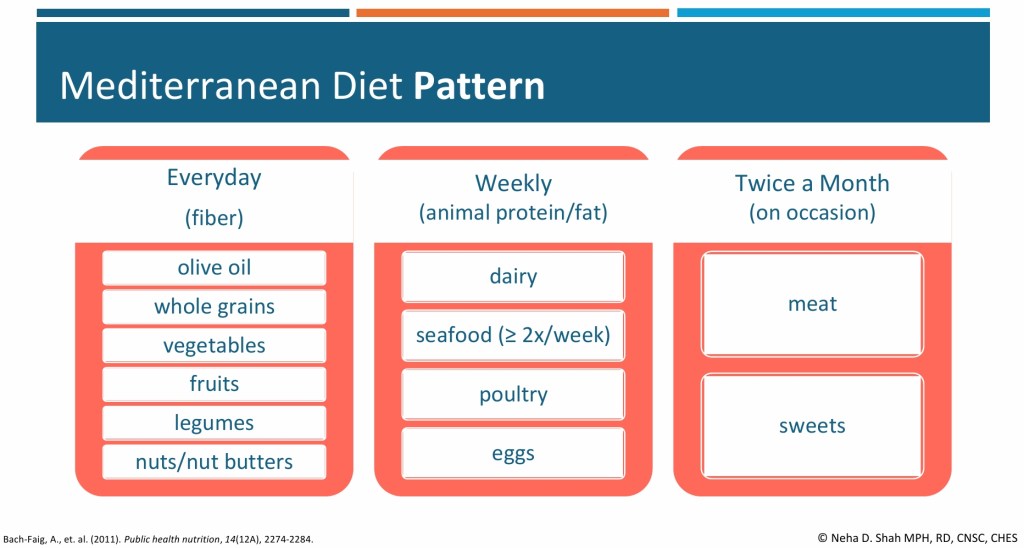
Neha notes that further studies are needed here and she’s hopeful we’ll have even more intel in the future.

Muscle Health

Sarcopenia (loss of muscle mass and strength) is more common in IBD due to chronic inflammation and nutrient malabsorption. Hormonal changes and aging further increase the risk.

  • Nutrition + Activity: Adequate protein intake (1.2–1.5 g/kg per day for many with IBD) and resistance training are key. Individual requirements sometimes are even higher.
  • Gut-Muscle Axis: Emerging research suggests fiber may support muscle health by fueling beneficial gut bacteria. The National Health and Nutrition Examination Survey (NHANES) 2011–2018 survey data from 6,000 healthy adults (without IBD) showed each 5 g increase in fiber intake was associated with higher lean mass and grip strength, possibly through increased short-chain fatty acid production. Fiber’s role in IBD and sarcopenia remains understudied.
  • Practical Tip: Aim for 15–20 grams of protein per meal, combining both animal (e.g., fish) and plant-based sources (e.g., lentils, tofu, nut butter). People with IBD generally have higher protein needs, which can vary depending on weight, activity level, and disease state.

“Evidence in women with IBD is limited. One small case-control study of 23 women with UC versus age- and BMI-matched controls found reduced quadriceps strength, slower sit-to-stand and gait speed, and lower physical activity, though handgrip strength was preserved, says Neha. “Early assessment of nutrition, activity, and lower limb function is crucial. No IBD-specific sarcopenia guidelines exist, but recommendations from the International Clinical Practice Guidelines for Sarcopenia by the annual International Conference on Frailty and Sarcopenia Research by centers at John Hopkins University include increasing protein/calorie intake and resistance training.”  

Bone Health

Women with IBD are at higher risk for osteoporosis and osteopenia, especially during perimenopause and menopause. The gut-bone axis reflecting the connection between gut microbes and bone health may play a role. Calcium and vitamin D requirements in individuals with IBD depend on factors such as disease activity, malabsorption risk, corticosteroid use, and deficiency status.

If you haven’t done so already, talk with your care team about getting a DXA scan (bone density scan) so you have a baseline. The earlier in your IBD journey, the better. Bone scans are non-invasive, and probably the easiest test we undergo. You wear your street clothes, lie down on a table, and it’s a quick and painless experience. I have a bone health doctor at Wash U (yes, that’s her title!), who focuses specifically on this after a bone scan in 2022 showed signs of osteopenia and osteoporosis in my 30s. Be mindful on the timing—do not get a bone scan while pregnant or breastfeeding as this can skew the results. If you’re nursing, it’s ideal to give your body at least 6 months after weaning before you get a bone scan, so your bone health is accurate.

  • Calcium & Vitamin D: People with IBD often under consume these nutrients, particularly when dairy is restricted. For most, calcium needs range from 1,000–1,500 mg/day, with vitamin D at 1,500–2,000 IU/day. In a cross-sectional study of 65 IBD outpatients, nearly two-thirds reported restricting dairy, leading to an average calcium intake of only 343 mg/day—well below the daily recommendation.
  • Practical Tip: For those who tolerate dairy, start small—a dollop of yogurt, a sprinkle of cheese, or lactose-free milk. Non-dairy sources and supplements can help fill the gaps. When you get labs, you can talk with your GI about looking at your vitamin D level to see if it is adequate or not. I was on 50,000 IU once a week for many years. Now, I take 2,000 IU a day. So, this figure does fluctuate and it can improve.

Nutrition Across Life Stages

Neha stresses the importance of tailoring nutrition guidance to a woman’s age and life stage:

  • Young women (around age 20): Focus on building peak bone mass, meeting calcium and vitamin D needs, and making realistic choices in dining halls or dorms. Portable, nutrient-dense snacks like yogurt, nut butter, or fortified bars can make a difference.
  • Premenopausal women: Greater emphasis on long-term bone and muscle health, distributing protein intake evenly throughout the day, and pairing nutrition with weight-bearing activity to maintain strength. Neha’s focus shifts more toward optimizing long-term bone health, since risk factors may be increasing.

“Across both age groups, I prioritize adequate protein and fiber in forms that are well tolerated to help manage symptoms and optimize muscle mass, while also monitoring common nutrient deficiencies such as iron, vitamin B12, and folate,” explains Neha.

The Role of an IBD-Specialized Dietitian

A dietitian specializing in IBD plays a vital role in helping patients understand how inflammation and treatments can affect digestion, absorption, and food tolerance.

“We stay up to date with the latest evidence and tailor nutrition strategies to each stage of the disease—whether someone is newly diagnosed, recovering from surgery, or in remission. For example, we help patients identify which types and textures of fiber are best tolerated, since not all foods impact the gut the same way,” says Neha. “We also emphasize balanced protein intake from both animal and plant sources to protect muscle mass, and ensure nutrients for bone health, like calcium and vitamin D are optimized from both dairy and non-dairy options. Just as importantly, we integrate these strategies into each patient’s lifestyle, culture, and social settings so that recommendations are practical, sustainable, and supportive of long-term quality of life.”

By seeking out a registered dietitian who specializes in IBD you are truly targeting your treatment and receiving personalized care that helps you cut through the confusion, especially if you are newly diagnosed. Their strategies are not just good on paper; they work at your kitchen table and in your daily routine to help you get your health and well-being back under control.

Accessing a dietitian may depend on the healthcare system. Patients can ask their gastroenterologist for a referral, or they may be able to connect with an IBD-specialized dietitian through private practice. Many registered IBD dietitians also do virtual video calls, so it’s not necessary for in-person, local appointments. The Crohn’s & Colitis Foundation provides resources to help connect patients with dietitians who have expertise in IBD.

Final Thoughts

Nutrition in IBD isn’t one-size-fits-all. It requires careful personalization and an understanding of the unique challenges women face throughout their lives. By focusing on gut, muscle, and bone health, women with IBD can better protect their bodies today while laying the foundation for stronger health in the future. It’s not just about flares and managing our IBD, it’s about how our bodies uniquely absorb nutrients, how inflammation affects our strength, and how hormonal changes shift the way we fell over time. Muscle weakness, bone loss, and unpredictable symptoms tied to our menstrual cycles can be a lot, but small, realistic changes in how we eat and move our bodies can make a lasting difference.

Click here to learn more about Neha Shah’s work.

Connect with Neha on Instagram: @nehagastrord

When Science Meets Story: The Patient Voice in the Global Consensus on IBD and Pregnancy

It is an exciting and transformative time for the IBD community when it comes to family planning and pregnancy. For years, patients and providers faced uncertainty and conflicting guidance about everything from fertility to medication safety. Now, with the publication of the Global Consensus on IBD and Pregnancy, we finally have a unified, evidence-based roadmap created by leading experts worldwide.

This groundbreaking research, jointly published across multiple top journals, is more than just a collection of data—it’s a lifeline for patients, caregivers, and clinicians seeking clarity and confidence. And for the first time, that guidance comes to life through a series of 12 videos now available online. As the sole U.S. Patient Ambassador and Group Lead for patient advocates worldwide, I was honored to contribute not only to this historic project, but also to share my own journey in the video series—bringing the patient perspective directly into the global conversation.

Grateful for Dr. Uma Mahadevan and the entire team for their incredible work on the Global Consensus.

Check out the video series

Following the release of the research from the 2025 Global Consensus Conference on IBD, a series of 12 videos were also published on the PIANO (Pregnancy in IBD and Neonatal Outcomes website), featuring experts speaking on best practices, emerging data, and consensus statements.

Among those 12, my Patient Perspective video is unique. It’s the only video in the lineup where you hear firsthand experience from an IBD mom. During my unscripted 18-minute video, I share openly about the tough decisions I faced personally, the hopes and worries I encountered while bringing babies into this world, and what I want fellow patients and doctors to know. As an IBD mom of three kids (now ages 8, 6, and 4) who were all exposed in utero to Humira, I have a unique perspective to share.

I know what it’s like when you’re 32 weeks pregnant and have to do a biologic injection while you see your baby’s foot kicking at your belly. I know how stressful it is when you don’t know if you’re going to flare while pregnant or shortly thereafter. I know how complicated and overwhelming it can feel when you’re juggling a chronic illness along with pregnancy and motherhood.

Having a patient video placed alongside expert commentaries is a statement: our lived experience is essential to understanding how guidelines work in the real world. I hope my words leave you feeling seen and empowered.

The 12 published videos cover the following topics:

  • Adverse Outcomes of Pregnancy in IBD
  • Fertility and IBD
  • Fetal and Neonatal Adverse Events in IBD
  • IBD Medications During Pregnancy
  • IBD Medications During Breastfeeding
  • Immunizations for Infants of Mothers with IBD
  • IBD Medication During Breastfeeding
  • Key Findings and Recommendations
  • Management of IBD During Pregnancy
  • Maternal Factors in IBD
  • Preconception Counseling and Contraception for Patients with IBD
  • The Patient Perspective

Why These Videos Matter

Each video is a piece of a bigger puzzle. Together they tell a story about where we are now, where we need to go, and how patients can be—and must be—central to that journey.

Bridging gaps between patient, clinician, and researcher. These videos are designed not just for patients, but for caregivers, physicians, policy makers, and anyone interested in improving IBD care. Seeing things through the patient lens can spark better communication, more empathic care, and guidelines that address what matters most.

Empowerment through shared experience. Whether it’s coping with symptoms, navigating treatment decisions, or facing uncertainty, this research will make you feel more confident in every decision you make along the way. Rather than feeling like there’s an overwhelming amount of gray area, you can see the roadmap of decision-making created from the Consensus that will help you each step of the way.

How to Watch & What To Do Next

  1. Watch the videos: Listen firsthand and educate yourself. An educated patient is an empowered patient. It’s one thing to read a published medical study, it’s especially helpful to see these videos and watch the research come to life.
  2. Join the conversation: Use these videos as conversation starters, take what you learned into clinic visits, have conversations with your partner/family/friends, or on social media. When you’re talking about family planning, make sure your GI and Maternal Fetal Medicine doctors are aware of the Global Consensus on IBD and Pregnancy to ensure they are up-to-date on the very latest research.
  3. Join the PIANO study. This is a great way to become a citizen scientist and use your journey to motherhood as a way to pave the way for others. I participated in PIANO with my youngest child, and he will continue to be “followed” until age 18. It does my heart good to know we’re helping bridge the gaps in understanding so women with IBD now and in the future can feel more comfortable about staying on medication in pregnancy and during breastfeeding.

Too often, patient voices are an afterthought or an add-on. Being featured as an integral voice, not a sidebar, is a powerful shift. The fact the Global Consensus Conference team made such a point to incorporate patients like myself who are IBD moms, from around the world, goes to show just how inclusive and comprehensive this research is.

Final Thoughts

Living with IBD means navigating uncertainty, physical challenges, and emotional strength, but it also means being part of a community that continues to push boundaries in care. These videos highlight not only the science and data, but the lived realities that bring those numbers to life. Patient voices don’t just complement medical expertise, they help shape the future of care. By placing my perspective alongside global experts, the Consensus reminds us that guidelines are most powerful when they reflect both evidence and experience.

As an IBD mom, I think about what this progress means for my three children and for the next generation of families impacted by this disease. I volunteer my time and energy for these projects because they are at the heart of my patient advocacy and genuinely matter so much to me. The inclusion of patient voices today paves the way for a future where no one feels alone in their decisions about pregnancy and IBD. Together—patients, clinicians, and researchers are building a roadmap that will make the journey clearer, safer, and more hopeful for those who come after us.

Managing ADHD Medications with Crohn’s and Colitis: What Patients Want You to Know

Living with Inflammatory Bowel Disease (IBD) often means juggling more than one health condition. For some, that includes managing Attention-Deficit/Hyperactivity Disorder (ADHD). Both conditions can significantly impact daily life, and when it comes to treatment, it’s important to understand how ADHD medications may interact with IBD and its therapies. This week on Lights, Camera, Crohn’s we hear from more than 25 people who are juggling both and share their impactful advice.

The Overlap Between ADHD and IBD

While ADHD and IBD are separate conditions, research shows that people with chronic illnesses, especially those that begin in childhood or young adulthood may experience higher rates of ADHD or ADHD-like symptoms. Brain fog, fatigue, and difficulty concentrating are also common in IBD, which can make it challenging to distinguish what’s driving certain symptoms.

For those diagnosed with both conditions, ADHD medications can be life-changing, improving focus, energy, and daily functioning. But because IBD involves a sensitive gastrointestinal (GI) system, it’s important to weigh the potential effects ADHD medications can have on digestion and disease activity.

Common ADHD Medications and GI Considerations

Stimulant Medications (Adderall, Ritalin, Vyvanse, Concerta)

  • Appetite suppression: Stimulants often decrease appetite, which may be concerning for IBD patients who already struggle to maintain weight or adequate nutrition.
  • GI side effects: Nausea, abdominal pain, and diarrhea can occur, sometimes making it difficult to know whether a flare or medication side effect is to blame.
  • Sleep disruption: Poor sleep can worsen IBD symptoms and overall inflammation. Timing doses earlier in the day can help.

Non-Stimulant Medications (Strattera, Qelbree, Intuniv, Kapvay)

  • Slower onset: These may be less likely to cause GI upset but can take weeks to become effective.
  • Potential side effects: Constipation, abdominal pain, and fatigue are possible, which can overlap with IBD symptoms.

Impact on Gut Motility

Both stimulant and non-stimulant ADHD medications can influence gut motility (how fast or slow food moves through the digestive tract). For those with Crohn’s or ulcerative colitis, this may complicate symptom management, particularly if diarrhea or constipation is already a challenge.

Key Considerations for Patients with IBD

  1. Collaborative Care is Essential
    Make sure your gastroenterologist and psychiatrist (or prescribing physician) are aware of all your medications. This helps prevent drug interactions, especially if you’re on biologics, immunosuppressants, or steroids.
  2. Monitor Nutritional Status
    If stimulants suppress appetite, work with a dietitian to find calorie-dense, IBD-friendly foods and snacks that can help you maintain strength and body weight.
  3. Track Symptoms Carefully
    Keep a journal noting when you take your ADHD medication, what you eat, and how your GI symptoms present. This can help differentiate between medication side effects and IBD flare activity.
  4. Adjusting Doses and Timing
    Sometimes, smaller, or extended-release doses can reduce side effects. Timing medication with meals or adjusting when you take it can also ease GI discomfort.
  5. Mental Health Matters
    ADHD itself can heighten stress and anxiety, which are known triggers for IBD flares. Finding a treatment balance that supports both brain and gut health is critical for overall well-being.

An IBD mom and therapist shares her advice

Sammi is an IBD mom who works as a therapist. In her experience, both personally and professionally, she has valuable input to share about taking ADHD medications when you have Crohn’s or UC. Sammi took a low dose of Adderall (5 mg, sometimes 10 mg) in graduate school for her anxiety and ADHD.

“My appetite was extremely impacted I’m sad to say. I did not feel hungry until my stomach was physically giving me intense hunger cues. I was only a couple of months into Humira at that point so I too, was struggling with maintaining my weight and didn’t want that to be impacted.”

Here are a few things Sammi did to make it manageable:

1. ALWAYS eat before you take ADHD medications. Eat a big breakfast, if possible, protein and carbs (if you can tolerate generally, of course). As a therapist, many of my clients struggle with taking meds early enough at times. And inferring a good meal ahead of time can feel like a barrier so I just want to hold space for that. However, it is so imperative to be really fueled and in a good place stomach wise / eating wise before taking for the day.

2. Plan your meals out as much as possible. Since hunger cues were lessened for me, I was in the mood for nothing. So  it would be hard to decide what I was going to eat, and then I would not have to decide when I was feeling fatigued and overwhelmed.

3. Snacks are clutch. I say snacks because sometimes that’s just the easiest thing to eat, especially when you don’t want to think about food or you’re not actively thinking about food because your appetite is suppressed. I have Crohn’s disease and one of my biggest triggers is my stomach getting too empty whether it’s because I’ve waited too long to eat or I haven’t eaten enough that day. It will give me such a bad stomachache so that was happening to me pretty frequently when I first started taking the Adderall.

4. Take your ADHD medicines early in the day. This is my BIGGEST piece of advice and clinical recommendation for anyone who is considering taking ADHD medication. Take it early in the day so your sleep isn’t impacted. As we know with IBD- sleep can already be difficult this is so important!

More from the patient community

“My advice is to take it early in the morning so that you can eat more in the afternoon and evening. I don’t have a problem with dropping weight; I had the problem of retaining! Transparently, now I’m on GLP-1 (GI approved) medication, and I’ve lost 38 pounds. Best I’ve ever felt! But, when I take my Adderall too late in the day, I don’t eat and that’s not good either. I take my ADHD meds twice a day, as prescribed. Once at 7 am and once around noon.”

“I have IBD, and I currently take Adderall for my ADHD. I have been on it for a few months, and in my experience, my biggest issue is that it suppresses your appetite for quite some time. I’ve been struggling to gain weight for awhile due to my IBD, so taking something that makes it hard for me to eat all day has been a big challenge. I am thinking about asking my doctor to switch me to a new treatment plan to hopefully find something that doesn’t suppress my appetite!”

“I feel like it never affected me very much with eating and I don’t think there was any interactions between anything with ADHD meds and my UC!”

“I’ve heard fellow moms with kids on these medications recommend eating a big breakfast before ADHD meds kick in, having a snacky lunch, and a late dinner after they wane.”

“There are non-stimulant ADHD meds. Stimulants are the ones that suppress appetite. You can ask your doctor about these and ask to start on the very lowest possible effective dose, if stimulants are required.”

“I don’t take ADHD medications now, but in college I did. I did not find it impacted anything with my Crohn’s. Depending on the ADHD med, it could impact appetite but didn’t interfere with how I manage my IBD.”

“I’m on mental health meds for anxiety and depression, along with ADHD meds, and I do think I’ve had a slight decrease in appetite. I also naturally have a lower appetite than most. A family friend of mine has been on Ritalin for longer than me, and I think he has struggled more in that aspect than I have though.”

“I have a j-pouch with a post-pouch diagnosis of Crohn’s, and I take Vyvanse for ADHD. I take 30 mg a day, I don’t feel like it impacts my appetite at all.”

“I take stimulants for my ADHD, and I don’t have any decrease in appetite. It just depends on the person.”

“The best advice is eating a big breakfast, having snacks for lunch, and then eating a big dinner. I have also reached out to my Crohn’s dietitian  to have more creative ideas for small meal ideas! The issue with choosing what medicines is that they all aren’t covered immediately—I’m starting on Adderall, which is one of the suppressants—my doctor doesn’t plan to keep me on that long term, but due to insurance, I have to start there. I have also have to find out what exactly is covered and is not covered (as IBD patients we’ve been there before, right!?)”

“I have Crohn’s and just started to take Vyvanse about two months ago. Even on a low dose, while also being on a high dose of prednisone, I’ve had little appetite. It has helped me to eat something small as soon as I’m able in the morning, before taking the medicine. It helps me have more of an appetite throughout the day, though I have smaller meals now.”

“I have Crohn’s and ADHD. I take an extended release 10 mg Adderall and find that my appetite is fine, a little less, but not dramatically so. I hadn’t really thought about it until my GI went through my meds. I have found that if I take 20 mg (we played around with the dose to find which works best), I do experience a loss of appetite. I think if you can find the therapeutic dose, it should be ok! I’m just a case study of one, but I would also add that ADHD meds have the benefit of supporting healthier time management skills, so I’m more inclined to stop and eat, which my scattered self sometimes didn’t do.”

“I don’t take my ADHD meds every day, but I take Vyvanse and when I do take it, I notice appetite suppression, but it’s nothing severe. I don’t have a j-pouch or struggle with being underweight. When I take them, I usually notice mid-day appetite suppression the most. I tend to eat breakfast before it’s fully kicked in and the effects have waned by dinner time.”

“I have been on Vyvanse, and it has been the best on my stomach and ADHD. I was diagnosed early this year. I tried Adderall, and it made me anxious and over stimulated. Concerta had me nauseated all day, everyday…Vyvanse is the way to go!”

“I have been on Ritalin for the last 2.5 years (finally) and even started an anxiety med that also helps with my chronic pain.”

“I’m on 10 mg of Focalin for ADHD and on Imuran (max dose), Entyvio infusions, and other meds for anxiety and depression. I never had a big appetite regularly, so I haven’t noticed a big difference. The benefit for me has been that I am calmer now and don’t get that ADHD stress. I’m 45 and was just diagnosed with ADHD last November. I’ve had Crohn’s since age 14 with many surgeries between then and 2022.”

“I have IBD and take ADHD meds. I never had the lack of appetite side effect, so I might be an outlier. I usually eat breakfast before taking my pills. Sometimes I need to set timers to eat though if I’m hyperfocusing.”

“I recommend keeping snacks in view. If you don’t feel like eating, drink a protein shake. My Crohn’s symptoms improved a bit with ADHD meds, too.”

“I can’t speak to the loss of appetite, but I was diagnosed with ADHD a few months ago. I tried Adderall for three days, but each day it upset my gut. I had way more bowel movements than normal, even though I was not flaring, and my gut was sore after each one. So, I stopped taking the Adderall and everything went back to normal. I’ve just been self-medicating with caffeine ever since.”

“It helps to eat when you take your ADHD meds and then eat smaller meals throughout the day. It’ll make you not thirsty, so make sure you’re mindful about hydrating. I recommend taking little breaks from it, during weekends and things.”

“I just started my ADHD medications again post-baby and have noticed a huge drop in appetite. I tried a few different meds before settling on extended-release Ritalin. I will say immediate release Adderall severely exacerbated my Crohn’s and gave me horrible stomach cramps. The stomach cramp thing is common with that one, even if you don’t have IBD.”

“I stopped my ADHD medication. It absolutely  destroyed my belly. They are a stimulant and make you go to the bathroom more an also affect blood flow to the colon. It’s been awful.”

“Personally, it’s never been enough to make me lose weight. But I do tend to front load—eat my biggest meal in the morning. Also, the come down from stimulants will have you ravenous by the end of the day.”

Finding the Right Balance

Every person’s IBD and ADHD journey looks different. What works well for one person may not for another. The key is to be proactive, keep your healthcare team in the loop, and advocate for adjustments when needed.

Managing IBD is already a full-time job. Adding ADHD into the mix can feel overwhelming, but with the right treatment plan, many people find that their ADHD medications not only improve focus but also help them feel more in control of their health overall.

Additional Resources

Risk of Anxiety, Depression, and Attention-Deficit/Hyperactivity Disorder in Pediatric Patients With Inflammatory Bowel Disease: A Population-Based Cohort Study – PubMed

Association between attention-deficit/hyperactivity disorders and intestinal disorders: A systematic review and Meta-analysis | Scientific Reports

Gut dysbiosis as a driver of neuroinflammation in attention-deficit/hyperactivity disorder: A review of current evidence – ScienceDirect

Is There a Link Between Adderall and Ulcerative Colitis or Crohn’s Flares? | MyCrohnsAndColitisTeam

ADHD and Bowel Issues: Finding ReliefWhen ADHD Meets IBD: A Complicated Relationship – Girls With Guts