
Knowing what to eat with IBD can feel stressful and overwhelming. While research updates in our community are often exciting, the “news” isn’t always actionable for patients and caregivers. Food, however, is where the rubber meets the road—it’s a daily, practical touchpoint for those of us living with IBD.
Kristin Cunningham, MHA, RD, CSDH, LD, a registered dietitian at WashU’s IBD Center in St. Louis, understands this reality both professionally and personally. Diagnosed with Crohn’s disease more than 30 years ago, Kristin recently shared a presentation with her local Crohn’s & Colitis Foundation chapter focused on choosing snacks that are affordable while still meeting the unique needs of someone with IBD.

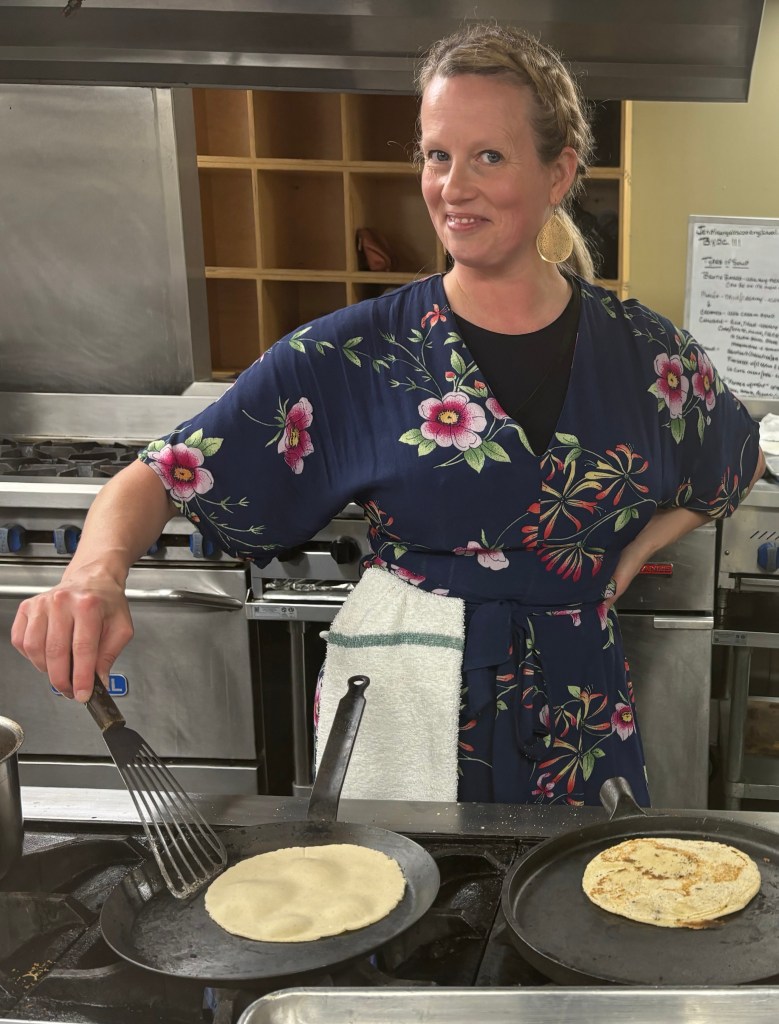
This week on Lights, Camera, Crohn’s, Kristin offers insight into how we can approach nutrition and everyday food decisions—whether we’re in a flare or remission.
Food Insecurity and IBD
A growing concern in the IBD community is access to food itself. Research shows that 13.5% of Americans with IBD experience food insecurity, compared to 9% of the general population.
“We know food costs have risen in the past three years, and SNAP benefits have decreased for some, so we can reasonably predict that food insecurity rates are even higher now,” Kristin explains.
Certain groups are disproportionately affected, including individuals who are non-Hispanic Black, uninsured or on Medicaid, or relying on SNAP benefits. Kristin emphasizes that clinicians should routinely screen for food insecurity and take a multidisciplinary approach, bringing in dietitians and social workers to better support patients.
Pain Points from our Community
One of the biggest emotional burdens Kristin sees? Guilt.
Many people with IBD blame themselves, believing they should have been able to pinpoint the exact food that “caused” a flare.
“I try to offer reassurance that active disease is much more complex than just something eaten,” she says. “Diet may play a role, but there are many other factors outside of our control that drive inflammation.”

Beyond that, patients commonly struggle with:
- Fatigue that makes meal planning feel impossible
- Limited time or cooking skills
- The rising cost of food
Dealing with Diet while flaring
Kristin is quick to validate just how difficult eating can be when symptoms are at their worst.
“I struggle to eat well when my disease is active, too,” she shares. “Even water moving through your GI tract can hurt.”
Her approach is not about eliminating discomfort completely—but about minimizing additional irritation and maintaining nutrition while the body heals.
That often means focusing on foods that are easier to digest and gentler on inflamed areas, such as:
- Peanut butter
- Greek Yogurt: Select a yogurt with 7 grams or less of added sugar. The least costly way to achieve this while avoiding artificial sweeteners is to buy plain yogurt & flavor on your own. For example, with vanilla extract, fruit, 1 tsp of honey/sugar/maple syrup, which would add 4-6 grams of added sugar.
- Canned Black Beans/Hummus: You can mash up any canned beans for tolerance. Rinse salted canned beans with water to reduce sodium content.
- Avocado
- Hard boiled Eggs
- Cottage Cheese with fruit: Select cottage cheese that is 2% fat or less (unless trying to gain weight) & free of carrageenan. Select diced fruit in 100% juice to avoid added sugar or artificial sweeteners.
- Cereal: Select a cereal with 2+ grams of fiber & 4 grams or less of added sugar per serving.
- Microwave Baked Potato with Olive Oil: Avoid skin if stricture/short bowel/ileostomy or other difficulty with insoluble fiber
- Unsweetened Applesauce
- Soft-cooked carrots
- Slow cooker shredded chicken
- Smoothies
- Mashed potatoes
Preparation matters just as much as the food itself. Chewing thoroughly, cooking well, peeling, mashing, or pureeing can all make a meaningful difference.
For those open to more structured approaches, Kristin may suggest:
- Exclusive Enteral Nutrition (EEN)
- Crohn’s Disease Exclusion Diet (CDED) with Partial Enteral Nutrition
While these options have stronger evidence in Crohn’s disease, early research suggests potential benefits in ulcerative colitis as well. That said, Kristin is transparent, she knows from firsthand experience, that these approaches can be difficult to tolerate and may take weeks to show results.
“Most of my patients aren’t interested in that level of structure, and that’s completely understandable,” she says. “But people deserve to know these options exist.”
Snacking with IBD
Kristin’s top three snacks are guacamole and chips, Cheerios, and snack cookies.
Snack Cookie Recipe
Serves: 6
Ingredients:
• 2 Ripe Bananas
• 1 egg
• ½ cup nut or seed butter
• ½ TB olive oil
• 1 tsp vanilla extract
• 1 cup Flour of choice (almond, white wheat, whole wheat, etc.)
• ½ tsp baking powder
• ½ tsp baking soda
• ¼ tsp salt
• 2 cups of cereal (ex. Puffed rice cereal, puffed millet cereal, cornflakes)
Directions: Preheat oven to 350 F. Line baking sheet with parchment paper. Add bananas to a large bowl & mash. Add remaining ingredients (except cereal) and mix well. Add cereal and mix well. Drop by 1-1 ½ TB scoops onto baking sheet. Makes 12 cookies. Store any not eaten same day in an airtight container in the refrigerator.
Final Thoughts
Food will never be a perfect science with IBD, and it’s not supposed to be. What matters isn’t control, but connection: learning your body’s cues, honoring its limits, and responding with flexibility instead of fear. Some days that might look like a well-balanced meal; other days, it’s a few safe bites just to get through. Both count. Both matter. Because living with IBD isn’t about getting it “right,” it’s about continuing to nourish yourself, in whatever way you can, even when it’s hard.
Kristin’s list of helpful resources for IBD-friendly recipes:
Gut Friendly Recipes | Crohn’s & Colitis Foundation
IBD-Friendly Recipes & Nutrition | GI Nutrition Foundation
Pureed Pzazz: Pureed Food Recipes
Chef-Crafted Recipes for Gut Health & IBD Wellness | Chef With IBD
Recipes Recipes – Eat Well Crohn’s Colitis
IBD AID Recipes – Center for Applied Nutrition at UMass Chan Medical School
 lights camera crohn's