
No one feels their best when they are unwell, and this is no different for those with chronic illness. There is an ebb and flow to anything chronic – meaning there are good and bad days – but what happens when your bad days outweigh your good days?
In a Twitter poll I conducted this week asking fellow patients how IBD has impacted their mental health, 40% said they’ve experienced depression and it’s a struggle, while 60% said they’ve dealt with mental health issues from time to time. I found it telling that no one who responded to the poll said their mental health wasn’t impacted at all.
 This week a guest post from 31-year-old Louise Helen Hunt from the United Kingdom. She was diagnosed with Crohn’s in 2011 and has undergone four surgeries in the last three years. Louise opens up about her struggles with mental health, while living with IBD and offers incredible perspective and words of wisdom that everyone in our community should be mindful of. I’ll let her take it away…
I hit rock bottom six months into my IBD diagnosis. I struggled to find a treatment plan that worked. This involved months of being in and out of hospital. I tried very hard to be positive, but I was sinking. I refused help, I didn’t want to talk about it and I certainly didn’t want any more medication.
Fast forward to 2018, six years since those first depressive episodes and I was still feeling depressed. I’d gone through two major surgeries very close together, came out with a stoma, struggled with my body image and was starting a new job. It was a stressful time and I was not coping. I needed help.
There are lots of emotions experienced by those who live with IBD, both positive and negative. Depression and anxiety come up often on patient surveys from various sources, rates of depression are higher among IBD patients as compared to the general population.
The balancing act of IBD and Depression
Depression is a serious mood disorder that causes feelings of sadness and loss of interest. Depression can make you feel exhausted, worthless, helpless, and hopeless. It can also make dealing with daily tasks difficult. Tasks associated with managing a chronic illness may even feel insurmountable.
Depression often gets worse if it is not treated. IBD specialists are encouraged to assess not just the physical symptoms, but also the emotional symptoms. These can be:
- Persistent sad, anxious, or “empty” mood
- Feelings of hopelessness, negativity
- Feelings of guilt, worthlessness, helplessness
- Loss of interest or pleasure in hobbies and activities that were once enjoyed, including sex
- Decreased energy, fatigue, being “slowed down”
- Difficulty concentrating, remembering or making decisions
- Insomnia, early-morning awakening, or oversleeping
- Loss of appetite, weight loss, or overeating and weight gain
- Restlessness and irritability
Depression is treatable. It is important to seek out a counsellor who has experience in treating people who live with chronic illness. And while it can take some time for the symptoms of depression to go away, seeking treatment can help improve your mood, your quality of life, and your ability to cope with IBD.
This can be in the form of Cognitive behavioural therapy (CBT) – an evidence-based treatment for depression and anxiety, it works to identify and change negative thought patterns and behaviours which can contribute to depression – or medication management which can be used in addition to therapy.
How to handle depression when you’re chronically ill
- Talk to like-minded people – this could be online, at a support group or your friends.
- Keep a journal – getting your thoughts out of your head can be very taxing but ultimately therapeutic.
- Take your prescribed medication regularly.
- Remember there is no shame in needing or taking medication to cope with your symptoms.
- Be active – whether this is running or going to the gym, even something as simple as a regular walk can help: being outside and feeling grounded – literally – can lessen some of the symptoms of depression.
- If you are having a crisis, please seek medical attention. Be proactive and pick up the phone.
- Don’t expect to “snap out of it.” Instead, expect to feel a little better each day.
- Ask for and accept help from your family and friends.
- Know that positive thinking will eventually replace negative thinking as your depression responds to treatment.
 Remember that feeling better takes time, and that your mood will likely improve gradually, not immediately.
Connect with Louise on social media:
Facebook: Louise Helen Hunt
Instagram: @louisehelenhunt
Twitter: @louisehelenhunt

 She’s a 38-year-old wife and mom who juggles two autoimmune diseases. She also has Hashimoto’s disease. Since she started on Remicade in 2018 following her IBD diagnosis, she’s experienced the difficulty of warding off illness while being an elementary school teacher and a mom to a young child.
 Dealing with the symptoms of IBD was more than enough–how on Earth would I be able to handle that plus avoid picking up viruses at school and in public?
 I really needed to stop caring about what others think and prioritize my health. One of the most surprising things to me was that people really don’t understand what immunosuppression means. Some people think I’m just a paranoid germaphobe even after I’ve explained that I’m immunosuppressed. They don’t understand that a simple cold for them, can mean days of sick leave for me due to a secondary infection. Or a fun day swimming in the bay can mean a bacterial infection for me that lasts for weeks and causes symptoms similar to a bad flare.
 Somehow my body knows when we have something fun planned and chooses those times to conk out on me. When I’m lying on the couch at home feeling sorry for myself while my husband and son are at a friend’s New Year’s Eve party or Memorial Day BBQ (both events I missed this year), I try to remind myself that Remicade is what allows me to lead a relatively normal life and be able to do things like go sledding with my son on a snow day and take him Trick or Treating. I couldn’t do those things when I was in a bad flare before treatment and definitely can appreciate them more now. I just make sure shoes come off and hands are washed right when we get home.
 I chose to blog and become a patient advocate for several reasons. I was tired of feeling isolated. I wanted to be a voice for the newly diagnosed, as well as the veteran patient. And, as a journalist, I’ve always had a love for the written word. For me—expressing myself through writing comes a lot easier than saying the words out loud.
 In that time, I’ve shared 171 new articles (because some weeks I post on Mondays AND Wednesdays). Over the last three years, more than 105,000 people from around the world have checked out Lights, Camera, Crohn’s. Could the articles be organized better? Yes. Could the design be snazzier? Yes. But, my focus as an IBD blogger and advocate is to give you the nitty gritty. I’d rather spend my time and energy on content vs. design.
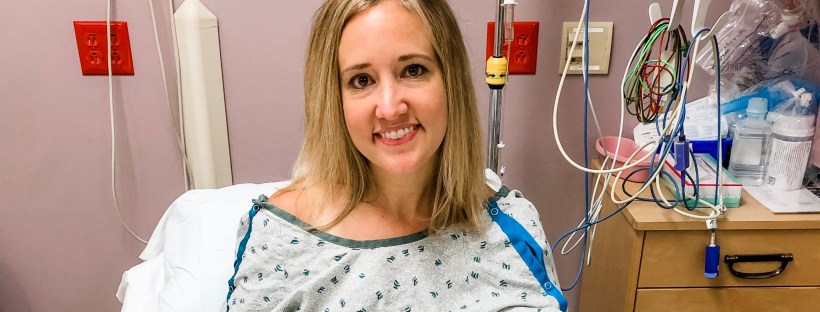

 Boys and girls, this is a game changer. Gummy bears are considered a clear liquid because they liquify upon digestion, much like Jello. In the days leading up, you can eat all the colors, but 24 hours before your scope stay away from any red, orange or purple as those colors are not allowed during prep. I used gummy bears to chase the magnesium citrate, two bears for every sip! It was also a nice treat and it felt good to actually chew something after only having liquids for days.
 Look up menus and decide where you want to treat yo’self. Along with that first meal, I try and plan something fun to do. This time around my husband and I went shopping after breakfast and then we went out to dinner and to a light show at the Botanical Gardens (where we got engaged!). Knowing I had that to look forward to, helped me a great deal!
 My compassionate little 2-year-old even held my glass of prep with me and didn’t want to leave my side when I went to the bathroom. (lucky him!)
 In the days leading up, my GI recommended I drink whole milk or chocolate milk to get some protein for the baby. (I chose not to do this because my stomach can be sensitive to dairy.) I made sure Sophia got a couple bottles of formula each day, since my breastmilk was probably lacking it’s normal nutrients.
 It’s in these moments where I pause and reflect with positive internal self-talk. I think about family members and friends who inspire me. I pray to God for a smooth procedure and good results. I try and breathe and relax the best I can.
 Rather than rely so heavily on achieving remission, focus more on how you feel each day. Are you having more “feel good” days than symptomatic days? Are you able to function and complete tasks personally and professionally without your health getting in the way?

 I took him into the vet and a chest x-ray showed he has congestive heart failure. The vet gave him a day to a year to live. When I saw the size of his enlarged heart in his tiny body, my heart sank. My world stopped. The tears flowed. And immediately, I felt my Crohn’s symptoms return.
 As a mom of two and a wife, I know I need to reel it in and start coping so I don’t land myself in the hospital. But, the sadness, stress, and worry only feed my illness. What’s a girl to do? Whether you have a chronic illness or not—losing a four-legged family member is devastating and heart-wrenching.





 It feels like a fiery pain inside my rib cage that travels all the way down my stomach. The gnawing makes me feel raw internally and externally. I put my glasses on and as I’m standing up and rocking my daughter in her nursery, I try to think of her warm little body as a heating pad.
 The fact that so many people without IBD are under the assumption that our pain and symptoms are self- imposed upsets me. We already beat ourselves up mentally as it is. My husband and I took our son for ice cream last night, so immediately I wonder if all of my pain is a result of the choice to have ice cream with my 2-year-old.
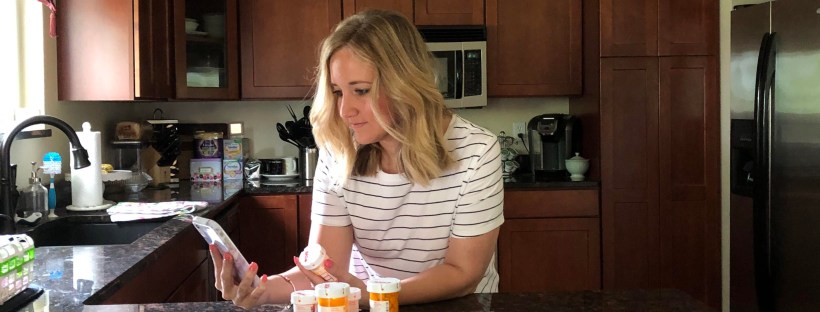




 If you’re struggling, tell them. The more you keep your mask on and your wall up, the more your partner will think you have everything under control and that your IBD isn’t much of a “big deal” in your life.


 It’s not always the big goals, it’s getting through the day-to-day. Your IBD Health Coach will help you stick to weekly goals through calls, texts, and emails, based on how you like to communicate. Support will be right at your fingertips.
 As a chronic illness patient, myself, even though I try and manage my Crohn’s the same each day, sometimes life and being a mom gets in the way. I tend to put my needs and my care at the bottom of the totem pole. As a parent, I know I’m not alone in that. Having a Health Coach standing by ready to listen, educate and inspire me, is a reminder that I’m not in this alone.

 lights camera crohn's