
I’m sitting at O’hare International Airport in Chicago. Fresh off taking the stage in Des Moines for a patient symposium. And an image of a young couple in the crowd keeps popping into my head. As I spoke, I noticed. I noticed how he squeezed her hand when I talked about love and inflammatory bowel disease. I recognized how he touched her shoulders when I reminisced about how it feels when friends turn their back on you, as you grapple with a chronic illness. As I stood on that stage, witnessing their not-so-subtle interactions, I knew that girl had found someone special.
Each time I speak, and in many of my articles, I refer to my husband, Bobby.  Since the moment we met in 2013, and through all the ups and downs my Crohn’s disease has caused in our lives, he’s been my safe place and my protector. During my speech, I talked about how everybody needs “a Bobby.” A person who sees you for more than your disease. A person who doesn’t shudder at the thought of seeing you at your lowest for days on end in a hospital bed. A person who gets the day to day management and emotional toll chronic illness takes on not only the patient, but the couple and the family.
After my speech, this same couple who stood out to me in the crowd approached me. I immediately told them they had grabbed my attention. I said let me guess—I pointed to the young girl and said, “you have IBD.”  Then I turned to her boyfriend and said, “and you are her rock and her caretaker.” They laughed and told me I guessed right. Isn’t it amazing how easy it is to spot this type of support? I was a complete stranger, once in her shoes. Young. Dating. Wondering about my future. Their names are Emily and Kellen.
Ironically, Emily and I both underwent bowel resection surgery days apart in the summer of 2015. Her boyfriend at the time, decided it was too much—and left her. Then she met Kellen. As we joked, “her Bobby.” IBD throws us curve balls, it challenges us in unimaginable ways, but it teaches us, too. One may think of surgery and setbacks as the lowest of the low during the patient journey, but often those moments bring about the greatest highs and crystal-clear clarity. Both about ourselves—what we’re capable of…and about others.
As I was talking to Emily and Kellen it brought tears to my eyes, because I felt so happy for her.  Only 22 years old, so much of her life ahead of her. And she’s found the person who looks at her, despite her illness, and loves her for it. The Bobbys and the Kellens of the world are the real deal. If you haven’t found yours yet, trust me…they exist and they are out there.
It was my husband Bobby’s birthday yesterday. The special milestone days always bring out the mushy side in me. I can’t help it. So, as I sit in this airport, and think about how lucky Emily is, I’m also reflecting on how lucky I am to have found my ride or die, who will be with me all the days of my life, just like my illness.
 It was an awesome event that brought together writers and patient advocates from a variety of chronic illness communities. I was there as one of the inflammatory bowel disease representatives.
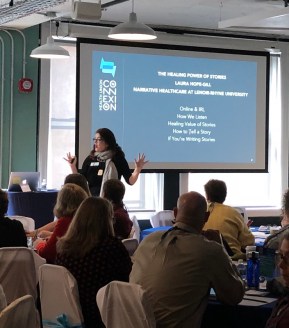 Instead of staying silent, remember that humans connect best at points of vulnerability. Illness gives our lives more meaning, we’ve discovered who really loves us and who our genuine relationships are.”
 This was really eye-opening to me. You may wonder what I’m referring to. As a patient advocate and within any conversation you have—how quickly are you to relate to someone’s story and respond with your own similar experience? I think we’re all guilty of this. We aren’t malicious in our actions and maybe we’re trying to self-disclose to show we empathize. But, instead of responding with our own personal story—it’s imperative we listen, rather than tell. Let the storyteller guide the conversation.
 Throw in an unpredictable, often debilitating condition and tackling the role is even more challenging.
 Becoming a mom has made every poke and prod, injection and procedure less of a pain, because now I have so much more to fight for.
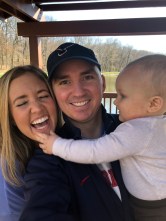 As people we grow. Each chapter of our lives matters and is part of our story. Embrace the good and even the bad—because it brought you to where you are today. Pain and flares are fleeting and as we all know, so is youth. Our babies grow up so fast, we must hold the feel good moments close and not dwell on past hurt or what could happen tomorrow.
 hope is he’ll realize what an integral role and life-changing impact he’s had on me since the moment I held him in my arms for the first time.
 een blindsided each and every time. I’ve worked a full day, trained for a half marathon, taken a road trip…you name it…and BAM…hello, bowel obstruction or abscess.
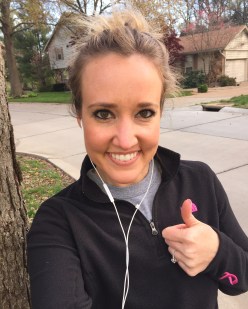 It’s these fleeting moments of invincibility that provide us with a chance to live like the rest of society. It may seem simple, but recognize these moments, verbalize them with loved ones. Celebrate the small joys, that are a big deal.
 Think about the risk vs. the reward. It’s emotionally draining when nothing seems to be working or helping to ease your pain, but, staying positive and open helps us all physically, emotionally and mentally. Keep an open mind with your healthcare providers and have two-way communication. Educate yourself, learn about the clinical trials and treatment options out there—be your own best advocate. Connect with others who are living your same reality. Trust in other peoples’ journeys, but recognize your journey is unique and so is everyone else. Each person’s IBD presents differently.
 By telling someone you are struggling, hurting or worried, you are not showing weakness. You are not complaining. If you are going through a dark time and wonder how you’re ever going to overcome a current setback, lean on your support system without hesitation. Internalizing your pain will only make matters worse. You’re still brave and resilient, no matter what.
 Amanda shares the hospital bag “must haves,” so you can be prepared the next time around. Amanda, take it away…

 That’s it! If there are things on here that aren’t your jam, just leave them out or substitute with something more your style!



 When I was a news anchor in Springfield, Illinois, I used to interview and participate in cooking segments with a registered dietitian named Amanda Figge. She is extremely passionate and well-versed about nutrition and health and practices what she preaches in her daily life.


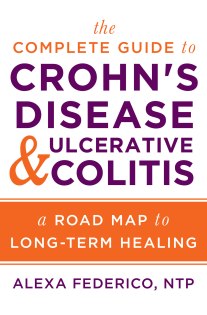 I recently read a book entitled, “The Complete Guide to Crohn’s Disease and Ulcerative Colitis”—A Roadmap to Long-Term Healing, by Alexa Federico. It’s a good thing “roadmap” is in the title, because that’s exactly how I felt while taking in each passage.
 Once you have accepted IBD, it’s important not to dwell on “Why me?” Instead of focusing on what you can’t change (the fact you have this illness now), focus on what you can change. Your healing will be limited if you do not move past the pity-party stage. We all do it; just don’t make it your new life.”

 est to paint a picture for you. My legs feel like complete jelly. My brain feels in a fog. I feel so lethargic; the thought of showering seems overwhelming. I’m not in pain. My stomach feels fine. But, there’s something “off” and you feel it with every part of your being.
 Living in the Midwest, I didn’t want two winter days with temps in the 80s to pass without enjoying them. I knew the fresh air and exercise would be a welcome excursion for my little man and me. Did those two walks with the stroller push me to my limits? What is too much? What is not enough? At 34, you feel lazy when you can’t keep up or have to admit you’re just too tired. You look perfectly fine on the outside, you feel like those around you wonder if you try and take advantage of your disease.
 that stated, “Fatigue in IBD is experienced by up to 86 percent of patients with active disease and 41 percent in remission.” It’s crazy how common this is! For people with IBD, fatigue can be physical, mental or a combination of both.
 As Valentine’s Day approaches and love is in the air, I’m choosing to look at my disease with my whole heart and to share my feelings with you.
 I may have ended up marrying a person who really wasn’t about being with someone in sickness and in health.
 There’s no sense in wondering and wishing for something that is not possible. Once you take a deep breath and stop living in your healthy past you come to realize that you were given this hand of cards for a reason.
 You take those steps to heal. You focus on getting better. You do all you can to make it through. Crohn’s and any chronic illness for that matter gives you this opportunity over and over. So, while we all tend to have negative feelings about our health and worry about what the next hour will bring, try and pause and stop for a moment. Think about all the beauty and insight it’s provided—and love yourself and your disease for a second.
 lights camera crohn's