
10 reasons why Crohn’s preps you for pregnancy

“Raise your hand if you’ve ever had an IV.”…
I nonchalantly look around the room and notice I’m one of two women in the newborn class at the hospital who raises her hand. Then, I start thinking…about how scary it would be for all the completely healthy people who’ve never stepped foot in a hospital as the patient, who’ve never had pain medication or surgery, who’ve never experienced a hospital stay with their husband. That’s when it hits—battling Crohn’s disease for more than 11 years has prepped me for this journey and given me confidence going into delivery.
Here are my top 10 reasons why:
10. Packing the hospital bag—So many people stress over what to bring and what they’ll need. Normally with a flare, I’m bent over in pain rushing to throw together loose odds and ends in a bag, on a whim, with no rhyme or reason. You know what you’ll actually use (comfy pjs without a waistband, a phone charger, face wipes that allow you to wash your face without getting up, your own shampoo, etc.)—and what you’ll never touch.
9. Dealing with frequent bathroom breaks—In the first and third trimester you constantly need to take bathroom breaks. As a Crohnie, you’re used to scoping out where the bathrooms are in public places and know what it’s like to be woken up in the middle of the night when you need to use the bathroom.
8. Your condition is not invisible—Once you start showing—complete strangers, friends and family alike treat you like you’re a VIP. Everyone wants to help you, hold doors for you, give their seat up for you, bend over for you, help you reach for items at the store, you name it. When you’re in pain or uncomfortable, there’s no need to suffer in silence because everyone loves helping out a preggo woman. Whereas when you’re struggling with Crohn’s symptoms you look healthy to bystanders and can cover up symptoms if you want to.
7. Stretchy pants—Forget the days of having to worry about your skinny jeans or that belted dress restricting your stomach and giving you stomach pains, living in stretchy maternity leggings and dresses for months on end is heavenly. I’m keeping those bad boys post-baby to wear when my Crohn’s acts up!
6. Handling diet restrictions—If you’ve encountered a Crohn’s flare you expect a nutritionist at the hospital or at your GI’s office to talk with you about what to avoid and what you can eat. You’re used to a list of foods (fruits, veggies, anything fried, caffeine, nuts, popcorn, etc.) that hang over your head as possible kick-starters for inflammation. I swear since my Crohn’s diagnosis if I even try to have movie theater popcorn, I get the same look from my family as I would if I asked for an amaretto stone sour while pregnant! When you find out you’re pregnant and need to refrain from sushi, large doses of caffeine, lunch meat, alcohol, unpasteurized cheeses, etc…it’s a walk in the park because you’re used to having willpower when it comes to refraining from certain foods and drinks, even if they are your favorite.
5. Living with pain and discomfort—The back, hip, and rib pain that comes along with pregnancy as your joints and ligaments loosen up from the relaxin hormone and prepare for childbirth is eerily similar to what it feels like to be on 40-60 mg. of prednisone. As someone with chronic illness you’re used to tough days and not feeling 100 percent.
4. Needles are no big deal—From IVs, to blood draws, giving yourself Humira injections, etc…you become desensitized to needles and don’t stress over it. While an epidural or spinal block sounds daunting—it’s just another shot to you. You know how it feels to get pain medication and how your body responds to certain drugs. For instance, I know I’m not a fan of Morphine, and will ask for some Dilaudid and Zofran after my C-section if that’s the route I end up going.
3. Previous abdominal surgery—According to the Crohn’s and Colitis Foundation, 75 percent of Crohn’s patients will require surgery at some point in their life. If you’re like me—you’ve had a bowel resection and already have the “C-section scar,” you know what it’s like to heal from abdominal surgery. My doctors told me healing from a C-section will be much easier than the removal of 18 inches of intestine, along with my appendix. It’s sounding like I’ll be having a scheduled C-section at 39 weeks. If I hadn’t gone through my surgery in 2015, I feel as though I’d be very anxious and apprehensive about going under the knife to bring my baby into the world.
2. Comfort with your caretakers—Between multiple hospital stays with my husband by my side, along with my family and my in-laws, I know who I can count on and how those closest to me respond during health situations. During the newborn classes the instructor mentioned how many husbands have to stand in the corner of the room during delivery or can’t witness a C-section, many fainting or passing out…I’m comforted by the fact that my husband is my rock and his support, compassion and patience always gets me through everything. I know he’ll be holding my hand and keeping my eye on the prize til our son is born.
1. Going to the hospital for good—This is the best part of all!! Whether you were just diagnosed or if you’re a chronic illness vet, this is one of the few times in life when going to the hospital is for a GREAT reason. Whatever pain you endure is temporary and whatever recovery is needed is all a result of bringing a LIFE into this world—a child that you get to love and adore, a new member of your family. This is one of the few times your pain has purpose.
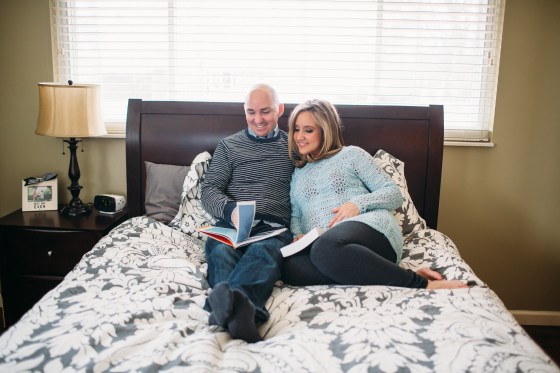
photo by J Elizabeth Photography www.jelizabethphotos.com

Photo Courtesy: J. Elizabeth Photography

5 tips for overcoming the scarlet letter of a chronic illness diagnosis in your 20s

I recently came across an article on The Mighty, entitled “What it’s like to be diagnosed with a chronic illness in your 20s.” I was immediately drawn to the story since I too was diagnosed with Crohn’s disease when I was 21-years-old. The author, Catherine Emerson, who is 21, inspired me to reflect on that time in my life and also think about how my mindset and identity has changed over the last 11.5 years. It’s my hope that my words will bring people in her shoes solace in knowing that the best is yet to come.

When you’re a 21-year-old good health is expected. Between work, school and socializing you oftentimes feel invincible to anything going wrong. But when the tides suddenly change and you’re blindsided and told you have a lifelong illness, it can feel like you’re drowning in a state of unknown.

As if the prednisone giving you insomnia wasn’t enough to get your first flare up in check; that initial diagnosis leaves you up all night, gasping for air. There is so much fear and so much helplessness. When you’re told you have Crohn’s at age 21 it feels like that’s your newfound identity. “Hi, I’m Natalie. I have Crohn’s.” You begin to think and feel that everyone in your inner circle labels you that way and looks at you with sympathetic eyes as you take 22 pills a day to get by.

It’s difficult to go from being a completely healthy person… to your family staring at you during dinner—wondering if you should be eating that, or sighing with sadness when you run to the bathroom mid-meal, constantly asking you “how are you feeling?” It got to the point where I had to tell people to stop asking me that question.

During the time of my diagnosis I was actively searching for my first TV job—I went from being excited about reporting on camera to doing anything to dodge the mirror. image1-20I have very few pictures of myself from this time in my life because I felt so hideous and self-conscious. In the photo at the top of the article, I had been sick for weeks and struggled to attend a baseball game with my brother. I didn’t know what was wrong, for months I was unable to eat without pain and had fevers topping 104 degrees. The photos to the left are what months of steroids and medication caused post-diagnosis. While Crohn’s is an invisible illness for the most part—when you’re going through a flare, it begins to affect your outward appearance as well, whether it’s drastic weight loss when you’re too sick to eat anything other than liquids or weight gain and water retention from treatment. Finding that balance initially is so challenging.

In her article Catherine talks about how as a 21-year-old she was “excited by the prospect of fun and exciting experiences” and that when her health started to decline that her world was “completely shattered.” I can relate and I know the feeling—but, to all the Catherines out there—who’ve been told they have a chronic illness in their 20s, I’m here to tell you that while there will always be difficult days along the way that may break you temporarily, you will learn so much about yourself and so much about your body that it will be an ongoing experience that empowers you and only makes you stronger.

Now—as a 33 year old, married woman who is expecting her first child in less than six weeks—I can tell you firsthand—there are people out there who will love you unconditionally and embrace you for who you are. Your future is brightphoto by J Elizabeth Photography www.jelizabethphotos.com and you can experience all of life’s exciting milestones like the rest of society. Your disease will enable you to see people’s true colors and character in a way you never knew possible. It actually makes finding a spouse easier because you can see who has true heart. Your perspective about life and challenges along the way will shift. One day you’ll wake up and feel like despite the never-ending worry and wonder that looms with Crohn’s—you’ll come to a place where you feel confident that you are in control. Rather than your identity—your disease is a part of what makes you unique.
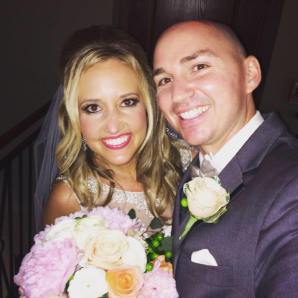
What felt like a scarlet letter in my 20s, now feels like a badge of honor in my 30s. Instead of shying away from admitting I have an illness, I’ve found it more helpful to be vocal and let others know that part of my life story. Living with Crohn’s doesn’t make you weak, it makes you tough—mentally, emotionally and physically.

Here are 5 tips for overcoming the initial shock of a chronic illness diagnosis.

  1. Be patient with yourself and those around you.

Give yourself time to heal and process the news. Don’t blame anyone or anything for your diagnosis. Instead, tell yourself that God gives his toughest lessons to his greatest teachers.

  1. Don’t suppress your emotions.

If you need to cry, let it out. No apologies needed. Writing in a journal is cathartic. If someone is negative or makes you feel less of person because of your disease, remove them from your inner circle. Focus on the positive people and experiences in your life.

  1. Network and find people who are living your same reality.

The most helpful tool you’ll find is socializing, whether it’s in person or online with those who live with your same disease. As supportive as friends and family want to be—there is no way for someone who doesn’t have Crohn’s to truly grasp what it feels like. Use those friendships to lift your spirits; you’ll feel an instant connection with those who can relate.

  1. Celebrate the small victories.

While the diagnosis will stop you in your tracks and change your daily life—whether it’s diet, sleep or exercise—give yourself credit for the milestones, even if they seem minuscule. When I was first diagnosed I went eight months without eating a fresh fruit or vegetable. To this day—I can still remember having a salad for the first time—and crying in the middle of a restaurant with my family… because I was so happy.

  1. Don’t focus on the long term—focus on the now.

Thinking about having a disease for the rest of your life is overwhelming. There’s no telling what trials and tribulations are ahead, but in reality—that’s the case for everyone. Focus on each day and don’t let yourself get caught up in the worry of when your next flare up will be. You’ve encountered one before and overcome and you’ll do it again.

Catherine closes out her article by saying, “Please think before you make comments, and be understanding of the demons people like me battle every day. I am learning to live and love myself again, but it will take time and a hell of a lot of support.”

For those who do not have a chronic illness—please take Catherine’s words to heart and know that even on “feel weddinggood” days, there is a constant inner dialogue going on in the minds of Crohn’s patients. It starts the minute you wake up—and doesn’t stop. The best thing you can do is show compassion to all, because you never know what battles a person is fighting from within—if you only judge from the outside.


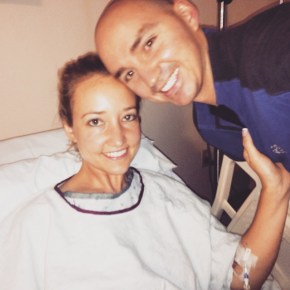
Heartfelt gratitude to my husband, my number one caretaker

In the spirit of Valentine’s Day I thought it would be fitting to share my gratitude for the man who I’m lucky to call my husband and best friend. The man who’s stood by my side through so much—whether it was holding my hand for days on end as I laid in a hospital bed fighting a flare up…or stepping up throughout my pregnancy when I am too tired to take my socks off. Caregivers have a tough job. Of course it’s difficult to be the patient or the “sick one”…but, I think it’s the supporting cast who really deserve the credit.Photo by J Elizabeth Photography www.jelizabethphotos.com

As someone who’s battled chronic illness for nearly 12 years there are not enough words, cards or gestures to truly capture my heartfelt appreciation. I told my husband Bobby when we started dating that I had Crohn’s so that he’d have an out before he got too invested in getting to know me. Rather than run for the hills—he showed compassion and to this day constantly assures me that despite my struggles, I’m still a healthy person overall.

It’s the moments when I’ve been at my weakest that now shine as some of our best times as a couple. I can envision him resting his head on my bed in the ER, bhospitalent over in a chair for hours into the night…as I go through tests…never letting go of my hand or complaining. I think about when I’m NPO (not allowed anything by mouth) because of procedures and how he gently dipped sponges into a cup of water to wipe on my gums when I was thirsty. When I have trouble falling asleep now because of discomfort with the pregnancy I drift off by counting down from 200…something he taught me while fighting a flare in the middle of a dark hospital room years ago.

Now, as we gear up for the biggest adventure of our lives—becoming parents(!!!)… I’m comforted by  the fact that going into labor—whether I deliver vaginally or by c-section isn’t going to be so scary, because I’ll have my rock star teammate by my side through it all. This isn’t our first…and surely won’t be our last rodeo in the hospital. While I’m still anxious and nervous about delivery, it’s so comforting to know how he responds in medical situations. Bobby knows how to calm me down, he knows what to say, how to act, what to pack, the questions to ask, you name it. When he looks in my eyes when I’m going through something painful—we’re able to communicate in a way that makes it all ok.

I’ve said it before and I’ll say it again—your support network, your caregivers… are your lifeline. Make sure you express your gratitude and realize how lucky you are to have them by your side. There is no reason you should ever feel like you need to take on anything alone. Whether you’re the patient or not—help is ouPhoto by J Elizabeth Photography www.jelizabethphotos.comt there for you as you navigate the unknown. The Crohn’s and Colitis Foundation of America (CCFA) offers an online support network for caretakers, too! Click here to learn more.

Bobby—you’re an amazing husband, partner in crime and best friend…I can’t even begin to imagine what a phenomenal dad you are going to be. It brings me such joy to know that our little guy will grow up with YOU as a role model. As we get into the 34th week of pregnancy and get ready for our lives to change forever, I’m so glad I have you by my side for each and every expefeb13blogrience. Having a man who “gets it” and never makes me feel guilty for my condition, gives me the confidence to know that while Crohn’s can be debilitating, it’s not going to break my spirit…but only make US, stronger.
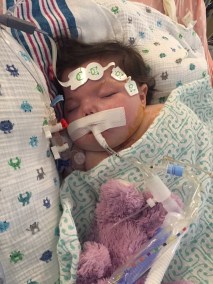
Wishing everyone a super sweet Valentine’s Day and  a life shared with someone as wonderful as my Bobby! XO

Life is fragile: Embrace even the most difficult days

Life is a constant roller coaster of highs and lows, unknowns and welcome surprises. We all come across experiences that shape us, struggles that challenge us and moments that define us. We meet people who completely change our world and our perspectives. These people and these moments are important to keep close in thought. When you’re battling something tough they can serve as great sources of inspiration to provide clarity and the knowingness that no matter how awful something may seem…it too shall pass.

Living with a chronic illness has taught me that while life is far from butterflies and rainbows, it’s a beautiful compilation of encounters that gear us up to take on whatever may come our way. Whether it’s fighting a flare up or grieving the death of a loved one, we are constantly reminded of how quickly our current state of affairs can change.

All the recent political jibber jabber, harsh words and hate plastered on social media and making headlines is extremely disheartening and disturbing. While we’re all entitled to our opinions and to say what’s on our minds—to me, it’s more important to focus on being a good person, celebrating the blessings in my life and doing all I can to make a difference in the lives of others. Physically being a good person will do a lot more good in this world than spouting off on a Facebook status. If each person who’s taken the time to craft a social media post about their political opinion used that energy to volunteer or even connect with someone face to face or on the phone, think about how much more productive that would be.

While your current situation may feel grim—think of how many people would give anything to live a day in your shoes. Before you open your mouth to speak or act…pause and think.

Think of the thousands of people waiting for the gift of life through organ donation… staring at the clock from their hospital beds…wondering when that perfect stranger will give them a second chance. Think about that the brave babies fighting for their lives in NICUs across the country and their parents who are wondering if they’ll ever get to see their child grow up. Think about all the people who wake up and receive chemo so they can fight another day. The list goes on and on.

When you’re the person who’s going through something difficult—rather than thinking ‘woe is me’ have faith and confidence in yourself and when you look in the mirror try and find the strength to smile. If life was perfect and none of us ever faced any sort of trials or tribulations—the best, most beautiful moments would never shine as bright.

Rather than suffer in silence, share your greatest fears and struggles with those close to you. Communicating and making people aware of your pain will help you, as you won’t have to take on your struggles alone. It’s cathartic to be open—support networks (friends and family) ebb and flow… sometimes you need the boost…other times you need to give it. Depend on that, trust in it and utilize it.

I write this article as I prepare to go visit a baby in the hospital who has completely altered my perspective on what it means to be strong. Baby Jade has spent every day of her life—nearly a year (she turns one Feb. 25)—within four walls of a hospital room. Witnessing her steadfast bravery after each surgery, procedure, test and setback…and that of her parents, has shown me just how fragile life is.  Despite the image1-19hardships and unfathomable scares, Jade and her parents remain focused on the future and determined to one day go home as a family. As a soon to be mom, I can’t begin to grasp what it’s like to be in their shoes, but they constantly show me and inspire me to take on all of life’s setbacks, challenges and disappointments with a positive attitude and an unwavering faith.

My challenge to you–embrace the dark days… as it makes the sun-filled ones even more promising and brighter.

Why as a mom-to-be with Crohn’s disease I’ve decided not to breastfeed my son

Breastfeeding. It’s amazing how controversial this topic is and how critical and opinionated people can be. Since I announced to family members and friends this past summer that I was pregnant with my first child, I’ve quickly learned the majority of people naturally assume that’s the route you’re going to go. Whether it’s casually mentioning the best breast pump or laughing about nursing pads to put in your bra—it seems no one expects you to formula feed your child. People are vocal and proud of breastfeeding—and I don’t have a problem with that. What I do have a problem with is people who judge and make you feel like you are depriving your child and being a “bad mom.”

I’ve thought about it for years…as a woman with Crohn’s disease my health and the medications needed to treat my illness make it a whole diffeimg_5797rent ball game. While I expect there will be many naysayers and people who question my decision—it comes to this. It’s my son and it’s my personal choice. While doctors and people say “the molecules are too large in Humira to pass through breast milk,” it’s always followed up quickly by…BUT… there are no long term studies.


Humira first hit the market in 2002 for rheumatoid arthritis…it wasn’t even approved by the FDA to treat Crohn’s until 2007. I started giving myself the injections in July 2008. In my heart of hearts, I don’t feel comfortable knowing that 20 years down the road unknown long-term health effects could start popping up. It’s just not worth the risk or the wonder on my part. My baby and I are part of five-year study that looks at Mother and Baby and the response to biologic medication. For more information, click here.

My mom was on the blood thinning drug Heparin while she was pregnant with me and after she delivered. As a nurse, she too made the decision back in the 80’s to formula feed my brothers and me because she wasn’t sure about the long-term effects of those injections. I always appreciate that she looked out for us. It’s my hope that my son will have the same appreciation for my decision to follow in her footsteps.

It’s helpful to have my regular OB, high-risk OB and gastroenterologist all in my corner. I had a glimmer of hope about possibly breastfeeding my future kids after my bowel resection surgery in August 2015. In order to heal, I was off all medication from July to mid-November. I started whimsically thinking about a life without medicine and what that would mean for not only me, but also my family. Then reality and some harsh words from my GI doctor brought me back to earth. Not taking medication when dealing with Crohn’s is like playing Russian roulette. You may be “ok” for a couple of months or years, but the likelihood of needing additional surgeries and dealing with flare-ups skyrockets.

Aside from the medication, living with Crohn’s can be extremely scary. One hour you’re fine and the next you’re being rushed to the hospital. I’m so fearful of a postpartum flare and parenting while dealing with debilitating symptoms. I don’t know when I’ll be in the hospital next or when I’ll need to be on additional medications that aren’t safe for my son. For now, being pregnant has magically silenced my disease. While pregnancy has its fair share of discomforts, struggles and pain, my baby boy has taken my Crohn’s and shown it who’s boss. He’s truly the healing hands where it used to hurt.

There’s no telling how my health will be post-delivery and in the years ahead—but, it comforts me to know that my Crohn’s and medications don’t need to be tied to him in any way once he enters this world. It’s difficult enough giving myself injections and taking pills throughout the entire pregnancy. I want to free of him any link to what I’m taking. If you google IBD and breastfeeding the conflicting articles and research would make your head spin. One article will explore how breastfeeding can put you at greater risk for a postpartum flare, while the next says the opposite. With Crohn’s, nobody’s disease process is the same. I’ve found it’s best not to look at what the numbers show and compare yourself to others.

Now that I’m well into my third trimester I keep envisioning the first moment I hold my son and how he instinctively may try to start breastfeeding when he’s laid on my chest. It brings tears to my eyes—because I’m sure I’ll feel a sense of failure and that I’m depriving him of what many believe is best for his health.  But, it will also be my greatest accomplishment in life. Successfully bringing my son into the world will feel like a huge victory against the disease that has robbed me of so much, but made me stronger than I was before.

I know this article goes against what many mothers and people believe—it may cause you to try and sway my thoughts or make me feel guilty for choosing bottle over breast, but it’s my decision and I’m standing by it. Whether it’s discussions on Instagram or forums online, I’m amazed at how many women with Crohn’s constantly look for guidance on whether they can get pregnant, when they should start trying to conceive and if they should breastfeed…all because of their medication and their own personal health. I stand by all of you prospective mommies grappling with those questions and I’m here for you. Follow your heart. Do what’s best for you and your child. And while it’s easier said than done, stay true to what you feel most comfortable with—because at the end of the day—no one knows your body or baby like you do.

I’ll leave you with a quote from Barbara Katz, “Birth is not only about making babies. Birth is about making mothers: strong, competent, capable mothers who trust themselves and know their inner strength.

Celebrating six months of Lights, Camera, Crohns: An Unobstructed View

Today marks six months since I took the leap and launched my blog. It’s been such a cathartic learning experience thus far. I appreciate all the support, feedback and kindness I’ve received whether it’s over social media or email. As you can imagine—it’s daunting to open up about life with a chronic disease and coming up with a story idea each week isn’t always the easimg_5751iest! But, I’m happy with where the blog has started and excited to see what the future holds.
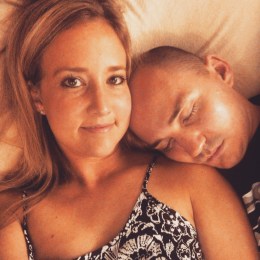
I found out I was pregnant two days after I started this blog. Now, I’m more than 30 weeks pregnant! It’s been so exciting to share the journey with you all. I’m excited to be a mom and to continue to share thought-provoking content about living life with a positive state of mind while battling Crohn’s.

Here’s a snapshot of the top three most read stories on the blog:

  1. Living each day with a “Jade state of mind”
  2. 11 years ago today, a bittersweet anniversary
  3. I have Crohn’s…and I’m going to be a Mom!

Over the last six months, more than 8,000 people from around the world have checked out a story on Lights, Camera, Crohns. Crazy to think there are readers in New Zealand, Angola, Switzerland, Ireland and Brazil… just to name a few!

I’m always looking for story ideas and topics that interest you. Send ideas to: lightscameracrohns@gmail.com.

Thank you SO much for taking the time to read my stories, educate yourself about inflammatory bowel disease and inspire me to open up about a subject that is often not discussed.

Cheers to many more months and years of Lights, Camera, Crohns…I have a feeling the best is yet to come!

XO,

Natalie

The Affordable Care Act: A voice for those with pre-existing conditions

Pre-existing conditions and politics…while I consider myself to be well-versed on the first topic, I don’t ever pretend to be an expert on the latter. That being said—in recent days there have been countless headlines about efforts to repeal the Affordable Care Act. Just like anything in life, Americans are divided about the need for universal coverage. Polls largely show that while a majority of people oppose the law, a wide majority oppose repealing it all together. I’m not one to share my political allegiance or get into conversations about politics, but it’s difficult to ignore the outpouring of concern among not only fellow Crohnies, but anyone who lives with a chronic health condition.

It’s one thing to repeal the ACA, it’s another to do away with it without a replacement program in place to make it better. Seventy rallies to defend the law took place over the weekend from Maine to California—this is an issue that impacts the quality of life for millions of Americans.

As a Crohn’s patient of nearly 12 years—medical bills from doctor visits, routine scopes, daily medications, blood tests and hospitalizations are extremely overwhelming. For instance, two injections of Humira (a month supply) is nearly $2,500 (without insurance). Limg_8385uckily for me, I’ve been fortunate to have insurance coverage from my employers through the years and been able to take advantage of some drug-savings cards. As a soon to be mom, and a wife, I never want my health costs to hinder my family, you feel enough guilt as it is battling a chronic condition in the first place. It’s physically, mentally, emotionally and financially exhausting on not just the patient, but also the caretakers.
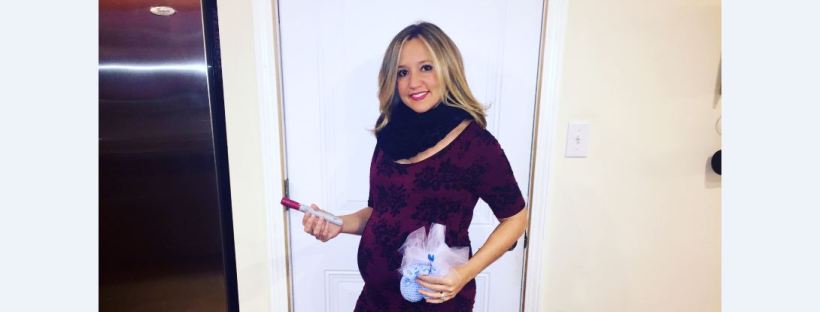

When I graduated college in 2005, my parents put me on a private insurance plan to cover me as I looked for my first TV job. They got the coverage when I was a “healthy” 21-year-old, two months later I was diagnosed with Crohn’s disease. Timing was everything. I can’t even imagine how difficult it would have been to pay the premiums and cover my initial hospital stays, tests, 22 pills a day, etc… as an unemployed, uninsured, 21-year-old college graduate.

My heart hurts for those who hit a crossroads—deciding to take medication, seek treatment and drown in debt, or go without and let your disease spiral out of control. I came across this story from a woman named Jean:

“What many take for granted, the health of their children, is a constant worry for us. Our daughter has Crohn’s disease, a chronic illness that requires she have Remicade infusions every 8 weeks to stay in remission. At close to $20,000 each, her medical costs are almost $150,000 per year. Without insurance, she can’t afford this. We can’t afford this. Can anyone? Repealing the ACA may work if you have a great job with insurance benefits but what is a college student to do? What is a new graduate to do? What is a person without a full-time job supposed to do? She doesn’t even have a chance at a job when one considers the cost of providing insurance benefits. She can work if she gets medical care, but without it, she will die.”

While on Twitter, I saw a new website called: Faces of the ACA. The website is run by a team of volunteers dedicated to the countless Americans who depend on ACA for survival, it features roughly 100 personal stories. According to a December survey from the Kaiser Family Foundation:

  • 85 percent of the public supports the provision that allows young adults to stay on their parents’ insurance plans until age 26.
  • 83 percent support eliminating out of pocket costs for preventative services.
  • 69 percent favor the provision that bans insurance companies from denying coverage on the basis of pre-existing conditions.

Speaking of pre-existing conditions, the Crohn’s & Colitis Foundation of America (CCFA) recently released the following statement urging Congress to maintain stability in insurance coverage for patients with chronic illnesses:

“For patients living with chronic illnesses like Crohn’s and colitis, healthcare coverage is essential to ensure they receive the care necessary to manage their complicated disease,” said Michael Osso, President & CEO of CCFA. “Our patients experience numerous barriers to care – including difficult utilization management protocols and high cost of care. Repealing the Affordable Care Act without simultaneously enacting a replacement would not only increase the barriers our patients have to combat, but it would leave many in limbo without certainty that they would have the insurance they depend on for critical doctor’s appointments, medications, medical procedures, and much more. If we are to repeal the Affordable Care Act, it must be done so in a way that provides a replacement that will ensure stability in coverage, maintains the basic patient protections enacted by the law, and prohibits insurer discrimination against patients with chronic diseases.”

Undoubtedly this is a very complex issue and there are pros and cons for the current law. Regardless of your stance, I think it’s important to take a moment and think about loved ones, family members and friends—maybe it’s even yourself—this isn’t just a political game, we’re talking about people’s lives and their health.

Think about how scary it would be to know you may not be able to continue medical treatments you need to manage your chronic illness, or perhaps even survive. Think about how stressful it would be if you had to choose between putting food on the table or getting the medicine you need to help you power through a work day. This is the reality for millions of people.

For anyone with Crohn’s…you’ve likely experienced the transformation yourself—from being healthy and not relying on insurance coverage to having a lifelong disease and becoming dependent on insurance to manage your chronic illness. Not only are you burdened with a chronic health condition, but you have to worry about whether you can even afford the drugs that will help manage your pain. Repealing the ACA without a suitable replacement that provides protection for patients with pre-existing conditions is like adding insult to injury.

I know what it feels like to go through your mail and receive multiple medical bills a day, it’s not easy—whether you have insurance or not. It’s an extra burden on your finances and your family. Circumstances and health can change in the blink of an eye; it’s easy to think you’re invincible until you become a statistic with nowhere to turn.

So what can you do amongst all the debate and discourse? Contact your Representative in the U.S. Congress here and your U.S. Senator here and share your story. If you sign up for 2017 health insurance no act of Congress can take that away from you once you’ve signed a contract with your insurance company. Enroll before the January 31 deadline. Get covered today at www.HealthCare.gov.

Biologics with a baby bump: Taking Humira while pregnant

It’s something I’ve done nearly 250 times, iced my thigh to help numb the area prior to giving myself a Humira injection. It’s a process that’s become part of life, nothing feels foreign about it. My last shot was different though. When I placed the ice pack on my leg it hit my pregnant belly for the first time. Immediately I started to get emotional. Then, my baby boy started kicking…over and over and over. The injection laid next to me on the coffee table, in its usual spot. My mind began to race—since I started administering the injection in 2008, I always stare at a photo of a family member or friend who inspires me or say their name out loud for strength as the needle needs to stay in 10 seconds to ensure all the medication is transferred. It’s been the perfect distraction from the pain up until now.

This time—I said my baby boy’s name. Sorry, not sharing it until he’s born…but, I said his name and it literally took away my pain. So many people in the Crohn’s community and anyone who depends on a biologic drug for relief can relate to not only what it’s like using this type of medication but also how big of a role it plays in family planning.

Humira belongs to a class of biologic medications. Biologics are genetically-engineered proteins derived from human genes. They are designed to inhibit specific components of the immune system that play pivotal roles in fueling inflammation. Crohn’s disease is linked to an overproduction of certain proteins, including one called tumor necrosis factor (TNF), which is produced naturally by your body’s immune system. Humira targets and helps block TNF by blocking its action in the body to help diminish inflammation that can lead to symptoms. Other biologics that may ring a bell: Remicade, Cimzia, Tysabri and Stelera.

I attribute Humira to helping me maintain a remission state, it’s been a miracle drug for me. That being said—as my baby and my belly continue to grow, I find myself counting down the number of injections I need to do (7 more!) before he’s herimg_5688e…as the medication does pass through the placenta. Humira is a category B drug. Category B drugs are considered “likely to be safe for pregnant women.” The category ranking means that studies of Humira in pregnant animals haven’t shown any risk to the fetus.

My regular OB, high-risk OB and gastroenterologist all have the same advice—stay on Humira throughout pregnancy, as the mother’s health needs to come first in order to stay ‘flare up free’ until baby arrives. Even though they’ve told me that multiple times, I find myself repeatedly double checking at every appointment.

Each woman and couple needs to do what they are most comfortable with. It’s all about looking at the benefits vs. the risks. It’s such a delicate balance. While not ideal, the injection provides me with the peace of mind that I’m doing all I can to keep my disease in check so my baby has the best chance for reaching a full-term birth. At 28 weeks and a few days pregnant, my Crohn’s has been nearly non-existent since my positive pregnancy test. (knock on wood!) I feel I owe the calmness of my disease to my unborn son and the injections that have helped me get to this place.


Embracing the unexpected in 2017: The power of positivity

New Year’s resolutions. It’s that time of year when coming up with ways to improve ourselves is all the talk. Rather than come up with a list of fitness feats and dietary goals, take a moment to breathe and focus on being the best possible you. When it comes to living with a chronic illness, one of the easiest pitfalls is to think of yourself as a “sick” person. I challenge you to alter this mindset in 2017, even if the road ahead seems bleak.

I fall victim to this more often than I’d like to admit. I’ll make comments to my husband about being a “sickly girl” or let my worries about a future flare up consume my thoughts on a daily basis. Crohn’s disease is often referred to as a debilitating disease. It is. BUT, what’s even more debilitating is constantly concerning yourself with the unexpected and keeping a laser focus on each symptom, pain and side effect from medication you may or may not be experiencing. While it’s important to be in tune with your body, it can be even more crippling to let your disease consume you.

When the going gets tough, remember to tell yourself you were given this life because you are strong enough to live it. This quote by Alex Elle speaks volumes about self-care and freeing yourself from negativity:

“As you make room for joy and prepare for change, release what no longer serves you. Anything that causes a disruption in your life should be left alone. Be mindful and intentional about what deserves space in your growth process and what does not.”

It’s healthy to rant and vent at times, but your struggles will overwhelm you and hinder your ability to fight if you let them. Let your difficult days serve as teaching tools that inspire others and provide you with somewhat of a magical ability to relate and understand those around you. Chronic illness is exhausting and emotional, but in my opinion it gives you superpowers. In those moments where you are pushed to your pain limit or experience a surgery or procedure for the first time, you gain a sense of strength you didn’t have befimg_5663ore. When a loved one or friend is facing hardship, you have the power to step back and provide unique perspective and compassion. What you’re enduring each day of your life is not a walk in the park, but each experience and fear-filled moment creates an everlasting shield that makes you, you.


I’ll leave you with this quote from William Arthur Ward as we embark on another year, a new chapter and a fresh start, “The pessimist complains about the wind; the optimist expects it to change; the realist adjusts the sails.”

Wishing you all the best on your journey this year around the sun, no matter what comes your way keep your focus on the beauty and the blessings around you and the rest will fall into place.


Happy Holidays: Celebrating the good times and the good days

‘Tis the season for reflecting on the past and looking forward to the future. I hope you’re enjoying time with family and friends and celebrating the feel good days. I’m looking forward to sharing advice, hope and inspiration in the years to come. Stay tuned for some exciting video projects that are in the works for 2017. In the meantime, here’s our holiday card and a photo from Christmas day. Thank you for all the love and support!

fullsizerender-40fullsizerender-41image2-5