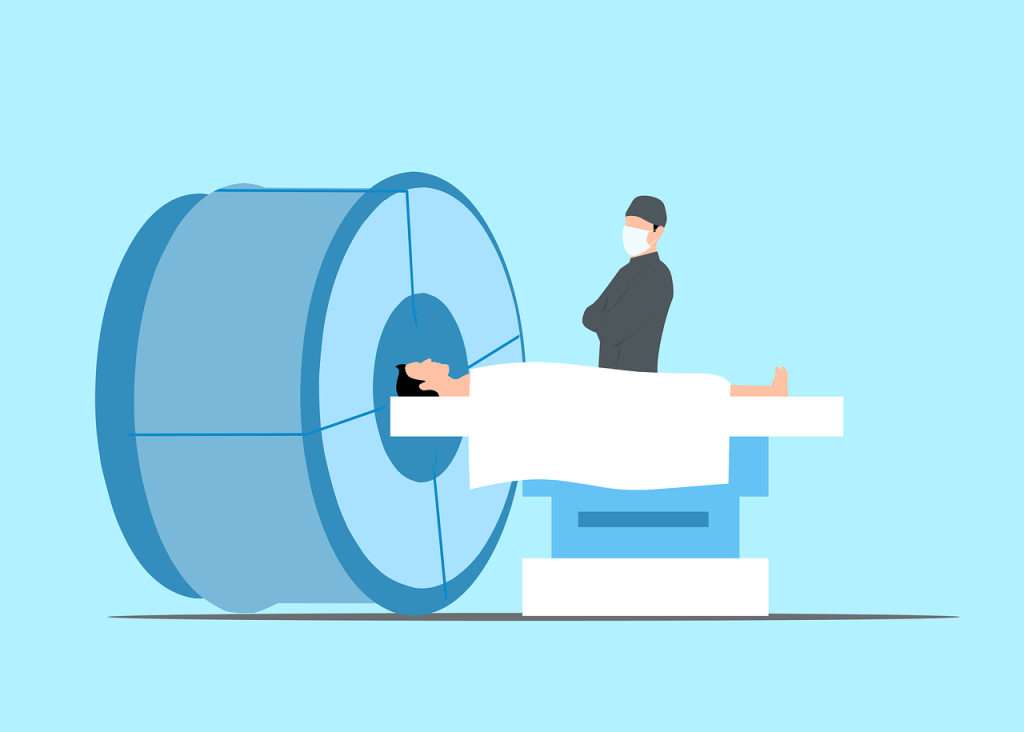
The Patient Experience: Tips and Tricks for your next MRE with IBD

Everybody copes and has their own unique tips and tricks for undergoing an MRE. I received more than 100 messages with recommendations, there was some overlap and similar advice—but I know our community could benefit from this information and find comfort in it. One of the most challenging aspects of undergoing medical scans and procedures is the mental health aspect—the wait, the wondering. Oftentimes these results do not go in our way and may indicate we are in a serious flare or need surgery. So, while the actual process of drinking contrast and dealing with claustrophobia can be intense, the challenges are often amplified by the dread of finding out the story behind our symptoms. Understand you are not alone in that. I try and just prepare myself for the worst, while hoping for the best. Nobody wants “bad” news, but once you go through the scan and have a better idea of what is going on and then you can go after the flare and get to feeling better.

Here’s the link to Part 1 of “Everything You Need to Know Before an MRE with IBD” in case you missed it.

Advice from the community to ease the MRE experience

“Whether it’s laying there saying prayers (like the Rosary) or focusing on doing something (like walking through Sun salutations or walking through doing something you love to do) that has helped me.”

 “As a pediatric patient, my mom was allowed into the MRE room, and she held my foot (the only thing she could reach). Just feeling she was physically there helps my anxiety a lot. Ask for goggles that let you watch a movie are gamechangers because you can’t see anything but the movie, even if you tried!”

 “I close my eyes and pretend that I’m lying on a beach and listening to country music. I feel comfortable knowing I can see my feet at the other end, and they can communicate with me. Honestly, I close my eyes and sing my heart out!”

 “I listen to the loud banging noises and try to find melodies or patterns. Then, I repeat them back in my head and by the time I’ve done it a few times I’m in a meditative state or the test is over.”

 “I try to look up/behind me if I start to feel claustrophobic and you can see outside! I also find it almost relaxing to count the loud clips and beeps. It gets your mind distracted.”

“Picture yourself someone you like; use deep breathing to help soothe your vagus nerve.”

“I know it’s not ideal, but if you are extremely overwhelmed you can always get the test under general anesthesia.”

“I focus on my breathing and imagine I’m in my favorite place.”

“Eye mask with no metal clasps and ear plugs (or music) helps to reduce the sensory overload for me.”

“Before you get in the tube, ask for a towel. Put it over your eyes and do not take it off until they let you out.”

“Deep breaths. Visualize you’re in your favorite place and ask for music. Ask your GI if moving forward Intestinal Ultrasound can replace getting an MRE.”

“I’m normally able to tilt my head up to see out the end of the tube. It helps me so much!”

“Breathing exercises can help.”

“Ask if there is a bariatric imaging machine so you have more room.”

“Slow deep breathing helps me prepare for it and calm down.”

“I close my eyes and envision being on a bench or somewhere hard but with open space for me.”

“Gadolinium has a high allergic reaction. Even if you have not had it before. Communicate with your care team and ask about taking Benadryl.”

“Meditation and Guided Imagery.”

“I take deep breaths and remind myself I am going to be ok. It was quicker than I had expected.”

“Take extra Xanax! I take it for flying and always need more than I think.”

“If they let you pick the music, pick it! Having my music really helps me.”

“See if an Open MRI is available. Otherwise, a big dose of benzos.”

“I’ve been Twilight sedated before, it’s the only way to go!”

“I took Zofran. I also wear MRI safe clothes, so I don’t have to change. I make sure there’s no metal in my bra.”

“Focus on breathing. Close your eyes before being rolled in. Think of something like planning a party or a holiday.”

“I hate it. Hate it. Hate it. Someone told me just don’t open your eyes and it worked.”

“I take Ativan and do breathing exercises.”

“Always ask for a towel or wash cloth to cover your eyes.”

“Keep your eyes closed the whole time. Do not peek. And ask for your favorite music to play.”

“I keep my mind focused on other topics and talk to God.”

“Take anxiety meds! If I have to do this again, I will take something.”

“Let your care team know before you enter the room that you’re claustrophobic.”

“Say Affirmations or imagine being on a vacation on a sunny beach. Anything to divert your mind.”

“Last time my nurse gave me an orange smelling strip that helped so much.”

“I close my eyes and pray or sing songs I like the most in my mind.”

“Slow breathing and counting (in for 4 seconds and out for 4 seconds) or listening to music while in the tube.”

“I always have a Life Saver candy between the contrast drinks.”

“I asked them to bring me back far enough so I could tip my head back and see the ceiling.”

“My sister needs to take 3 anxiety pills for the MRE.”

“Try to find your happy place and go to that in the tube.”

“Have all the good and happy plans run through your mind and ponder them. Daydreams! Mantras!”

“I write stories in my head—like manifestations.”

“Think of a beach on a sunny day.”

“Make lists in your head.”

“Definitely have anxiety meds on hand.”

“Bring a personal blanket. This always helps me.”

“Bring ear plugs in case they don’t have some for you.”

“Use a wedge pillow for your legs (ask for it).”

“Visualize the best vacation, start to finish. Try to remember every detail. Distract your mind!”

“Ask for a heated blanket, it can be chilly in there.”

“When your mind wanders, count. Count breaths in (5) and out (5) and focus on the numbers.”

“Some MRI machines offer a mirror, almost like a periscope. It shows you the outside!”

“Fast paced work out music helps me.”

“I ask before we start that they give me a time update every 15 minutes.”

“It makes me less anxious when I hear the weird and terrible sounds the machine makes if I have NSYNC playing. Have them play music you like that’s also light and funny. (As in 90’s boy bands!)

“My office gives lavender stickers to help calm you to place on the robe. It helped me!”

“I’m SO claustrophobic but I always self-talk “I’m a mother and set the example for my kids.”

“Tell the tech you are nervous. Ask them to check in with you more than they usually would.”

“Remember you can squirm out of the bottom if you need to. Knowing that makes me feel less trapped.”

“Lavender essential oil.”

“I took half a Xanax and enjoyed every second…haha.”

“Take the meds and extra, if possible. I’ve taken up to 4-5 mg of Ativan!”

“They let you choose your radio station or podcast, which can help.”

“I’ve listened to the Hamilton soundtrack. I struggle more with getting the contrast down.”

“Meditation! I always do it before, during, and after.”

“Prepare a playlist or an audiobook and ask if the tech can play it over the speaker.”

“I pray the entire time, so I don’t panic.”

“Try not to investigate too much about the details, it may worry you too much.”

“It’s easier to go in feet first, I don’t know why…but it is.”

“Use the help/panic button and take a break midway through if needed.”

“Be prepared to hold your breath a lot—the tech will guide you.”

“Request a helmet with a mirror. It’ll help you see out of the tube.”

“Try and see how many song lyrics you can remember.”

“Tell them you are nervous. They are more understanding and will talk you through it more.”

“Make sure you give the anxiety meds at least 30 minutes to work their magic.”

“The pills help tremendously, but I also bring an eye mask.”

“Thank you for doing this article, I’ve canceled my MRE twice now out of fear.”

Additional MRE resources

MRE Test for Crohn’s: Purpose, Procedure, and Risks (healthline.com)

The Role of Magnetic Resonance Enterography in Crohn’s Disease: A Review of Recent Literature – PMC (nih.gov)

How is IBD Diagnosed? | Crohn’s & Colitis Foundation (crohnscolitisfoundation.org)

MRE (MR Enterography) Imaging for Crohn’s Disease (healthcentral.com)MR Enterography in Ulcerative Colitis: Beyond Endoscopy | RadioGraphics (rsna.org)

Everything You Need to know Before an MRE with IBD

Nearly 19 years of living with Crohn’s disease and this past week I experienced an MRE (Magnetic Resonance Enterography) scan for the second time. I felt nervous, overwhelmed, and scared leading up to the test. The only other time I had an MRE was in July 2015 while hospitalized with a bowel obstruction. The scan was used to determine whether I needed surgery. I was out of it and have little to no recollection of the experience. The results from my MRE in 2015 informed my GI team back then that I needed 18 inches of my intestine removed. Fast forward to the present day, and after being in deep remission since that surgery, I started to experience a worrisome uptick in symptoms beginning in early March 2024.

It took a month to get in for the MRE, but I knew in my heart-of-hearts I needed to get answers. Leading up to the scan, I crowdsourced questions on Instagram and received an outpouring of support that helped make the experience nearly seamless for me. This week on Lights, Camera, Crohn’s I provide a behind-the scenes look at what it’s like to get an MRE and share firsthand advice from a patient advocate who is truly an “MRE pro”. Due to the amount of information, we’re breaking this bad boy up into two parts.

Walking you through the process

I had to arrive at the medical center at 10:15 am and was advised not to eat or drink four hours prior. I set my alarm for 6 a.m. and drank some water. When it was time to get in the car with my husband to head to my MRE, I took a Zofran to help prevent nausea from drinking all the contrast. After arriving at the imaging center, I was brought back to a room where I answered health questions and changed into a hospital gown and pants. I wore a sports bra without metal but was told I couldn’t wear it due to some synthetic fabrics. Then, I received my IV. The nurse took one look at my arms and grabbed a vein finder machine. For those who don’t know, this looks like a wand and puts a light over your arm to highlight veins so the nurse can pick the best option. My husband held the wand for her as she did my IV and she got it on the first try. That was a big win for me.

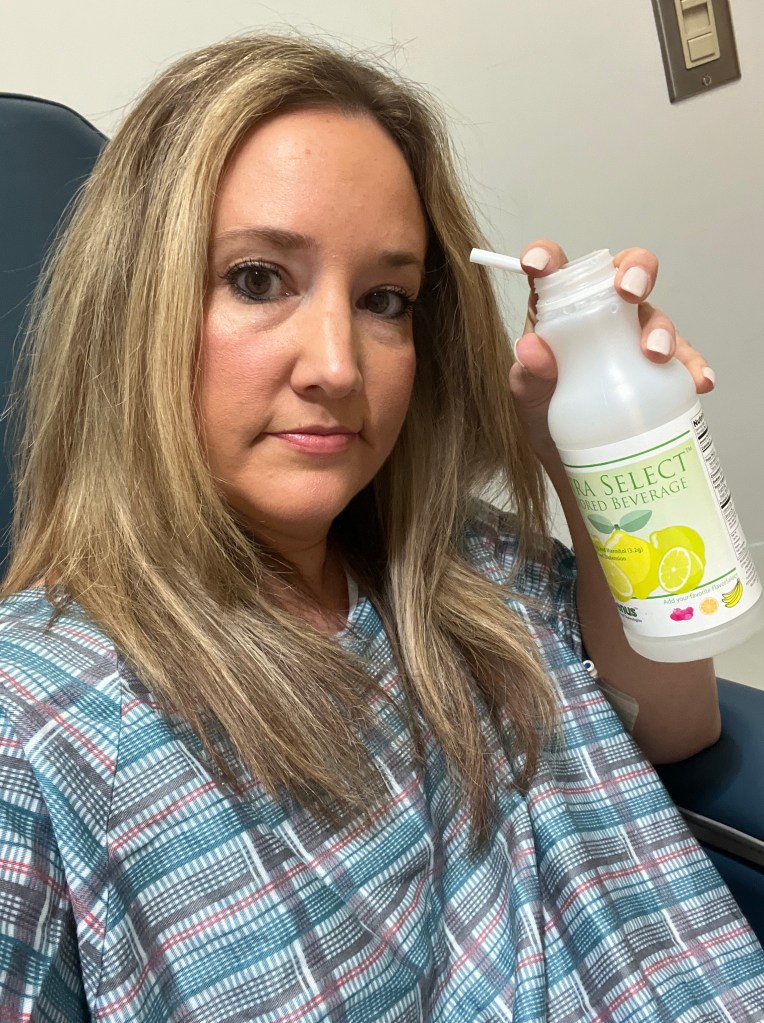
Once the IV was in, an MRI tech brought me three bottles of contrast (450 ml) to drink, about 46 ounces of fluids. I was told I had 20 minutes for each bottle and hopefully that I would have all three bottles down in an hour. Worst case the tech said I needed two. She told me not to chug too fast as that might make me nauseous. I took it with a straw and scrolled on my phone to distract myself. The contrast tasted like a super flat Sprite with a dull citrus taste. I’ve heard many people must do this in a public waiting room, I was grateful to be in a private room with my husband.

Due to my claustrophobia and anxiety about the test, my GI prescribed pre-meds for me that I picked up from Walgreens prior to the day of my test. He prescribed me four, 0.25 mg Xanax. I had never taken Xanax and did not know how it would make me feel. I called the Radiology center the day before the scan to ask whether I’d be able to get anything in my IV if I was too anxious, and they said if you’re outpatient you can only take anxiety meds orally.

Fellow IBD patients advised I take one Xanax the night before to have an idea of how it made me feel. I followed that advice and I’m so glad I did! Knowing how I responded took a bit of the stress off my shoulders. I took my first Xanax the moment I started the contrast (1 hour prior to the MRE) and then 30 minutes later I took .50 mg (2 pills) because I didn’t feel calm enough. For me, that was the perfect dosage. I felt completely coherent but chill and relaxed.

When I walked into the MRI room I asked if I could have headphones and listen to music. The techs asked me what kind of music I wanted; I said something upbeat like Taylor Swift. Then, I asked for a washcloth to put over my eyes. The scan took 45 minutes, I didn’t have one moment of fear or anxiety. There are lots of loud banging sounds and you hear the tech’s voice instruct you when to hold your breath and when to breathe. I felt very at ease and at the end started to doze off!

Since I had been NPO all day and it was 1 p.m. I was given a bag of pretzels and a bottled water after I changed back into my clothes. My husband had to leave during the scan to pick up our younger two from preschool, but the timing was perfect, and he swung back and grabbed me, so I did not have to drive after the scan. I felt tired afterwards.

After about 3 hours I started to get excruciating abdominal pain that I was not expecting. I’ve since been told by fellow patients that this is a result of the contrast and that it’s not unusual. I was very uncomfortable for about four hours. I spent a long time in the bathroom and on the couch with the heating pad. By about 9 p.m. I felt back to normal.

Guidance from a Veteran IBD Warrior and MRE Pro

Rocio Castrillon has lived with Crohn’s disease for more than 20 years and underwent countless MRIs specific to her IBD, but also for a multitude of other reasons including—Brain, Face/Sinus, Shoulder, Cervical Spine, Lumbar Spine, Legs, and Knee. She’s a true patient advocate in every sense of the word and someone I admire greatly. Through my recent experience, Rocio helped me immensely and even texted me the morning of my scan on her own accord, throughout my test as I drank the contrast, and after when I was stuck in the bathroom in pain. This is a true example of someone who goes out of their way behind the scenes to be a source of comfort and support for others. We have never met in person (yet!) and there’s this level of friendship between us.

“While MREs are specifically used for IBD patients, due to the contrast ingested, as well as injected, they are more complex than the traditional MRI and tend to be lengthier in time. Due to my anxiety and claustrophobia, I’ve had to utilize coping techniques to undergo MRIs and although they are still challenging, it’s yet another aspect of my IBD I’ve overcome. While these recommendations are primarily for IBD patients, many can be considered for a traditional MRI,” explained Rocio.

Check out Rocio’s step-by-step advice as your gear up for your next MRE:

PLANNING

  • At the time that an MRE is ordered by your gastroenterologist, there are a few considerations to keep in mind. MREs will require prior authorization which may take weeks. Fortunately, this time will allow you to explore options for locations.
    • In most cases, the MRE is ordered to be performed at the imaging facility that is affiliated with your provider, but you do not have to do your MRE there.
    • Oftentimes, there are private imaging centers, not affiliated with an academic institution, which can be more cost-effective.
  • MRI machines are now available in a wider bore design to help reduce anxiety and are recommended for claustrophobic patients. The feeling of a more “open” machine is beneficial. But to locate one, you must call around to determine if your recommended imaging facility has them and/or if you need to seek out an external facility.
  • At the time of your gastroenterologist appt., and if you have anxiety and/or claustrophobia, Rocio strongly suggests requesting a prescription for a sedative used for panic disorders, such as: Ativan, Klonopin or Xanax, which are short-to-intermediate in duration. While you will only need a prescription for one pill, keep in mind that there are many states that now require identification to pick up controlled substances.
    • Please note that if you do take a sedative, you will be required to have a driver to accompany you, as you will not be allowed to drive yourself.
  • Also, at the time of your gastroenterologist appt., and if you have nausea, Rocio strongly suggests requesting a prescription for Zofran to be utilized prophylactically.
  • Once the prior authorization for your MRE is approved, you will be able to schedule. Request an appt. time that works with your personal eating schedule. Because MREs require fasting, as well as contrast ingestion, patients may find it challenging to drink contrast early in the morning. Rocio tends to have more nausea in the mornings, so she prefers to schedule mid-day scans. While this does mean a longer fasting time, it also allows her to drink more contrast.

DAY BEFORE

  • Rocio eats a light diet the day before the MRE to prevent nausea as much as possible. While this is not necessary, she’s found it helps with nausea and vomiting.
  • HYDRATE…before AND after your MRE. While the technicians will explain the need to hydrate following an MRE, hydrating beforehand will allow for easy access to veins for the IV needed to inject the contrast. Hydrating after is crucial to eliminate the contrast from your body.

DAY OF MRE

  • Before leaving home, be sure to remove all jewelry and/or metal from your body. Because an MRI machine uses a magnetic field, you cannot have any metal on you. Women will be asked to remove their undergarments which have metal.
    • Additionally, if you continue masking in medical facilities, your mask will be switched out for a mask without metal that the technician will provide you.
  • An hour prior to the scheduled arrival time, take the prescription Zofran so it has time to kick in before needing to begin the contrast. It will help prevent/reduce the level of nausea and/or vomiting from the contrast.
  • Upon arrival at the imaging facility, you can take the sedative, as this will allow it time to kick in before you begin the imaging. Because there will be a window of time when you need to consume the contrast and when the imaging begins, this typically works well.
  • Contrast! While many academic institutions have shifted to a new contrast, Breeza,  which is lemon-lime flavored, it is not always available to patients. In the past, Rocio has consumed other contrasts. She wholeheartedly agrees that Breeza is certainly better “tasting” than those in the past. But in full transparency, it still is contrast…haha.
  • For all her MREs, Rocio has been provided with three bottles of Breeza. Unfortunately, she cannot consume all of them, and at best, she’s drank a maximum of one bottle. While this is certainly not ideal from an imaging perspective, and is NOT medical advice, she’s been fortunate to have been “allowed” to perform the test with just one contrast bottle. The imaging that has resulted has sufficed for the radiologist to review and for her gastroenterologist to see results.
  • Insider Tip: While this may not be available to all patients at all facilities, Rocio always requests to sit near a bathroom and/or near a trash can if she is in the main waiting area. She says she already has enough anxiety about the MRE, and having people watch her drink contrast tends to make her more anxious. Note this is NOT always readily available, and you will have to adapt to what is available at your facility.

MRE START

  • Upon finishing the contrast, the technician will take you back to the MRI machine where you will be laid flat. If you have anxiety and/or claustrophobia, be sure to alert the technician as they can make you more comfortable in a few ways.
  • Typically, a technician will ask for your music preference as they’re able to control the music that you hear via headphones (provided to you)
    • Rocio prefers relaxation/spa music as it helps to keep her calm.
  • Depending on your facility, there are mirrors that can be placed to allow you to “see” the surroundings and not actually have a view of the MRI tube. It enables patients to have the “illusion” that they can see the outside – either images displayed on the ceiling, or the room where the technician is sitting. This has been a lifesaver for her!
  • During the MRE, the technician will explain everything to the patient through a speaker that you can hear in the machine. You will also be able to respond to the technician and they can always hear you. You will also be provided with an emergency panic button to press, should you need to come out of the machine for any reason.
  • During the MRE, the technician will advise when they are starting the contrast through your IV. You should not feel anything except a quick sensation of nausea that passes immediately. This doesn’t happen to everyone, but it’s common.
  • Rocio says for some patients, like herself, who have been unable to consume all the contrast or who have slow motility, sometimes an injection called Glucagon will be utilized. This improves the quality of the images, but it does cause side effects. You will be instructed to ease into resuming eating and avoid any high protein foods due to slow digestion.
  • At the conclusion of the exam, you will be instructed to hydrate and begin eating slowly. Much like post-colonoscopy, Rocio recommends light meals for a few hours.
  • Due to Rocio’s extreme nausea and vomiting, she typically does not tolerate the contrast after the exam and tends to get sick shortly after. This is NOT the norm, but she  recommends having an emesis bag in your car. As a reminder, if you have taken a sedative, you will not be allowed to drive yourself.

Considerations regarding contrast

While the actual scan experience was more pleasant than I had anticipated, about 3 hours after getting home I started getting terrible stabbing pains in my abdomen and had to run to the bathroom multiple times. At one point my husband came upstairs to check on me because I had been in the bathroom for so long. I was not aware or told that the contrast could cause this type of response. When sharing this on Instagram and after talking with Rocio, I learned how common this is within our community, especially for those who are symptomatic.

An IBD mom whose daughter has Crohn’s shared helpful insight for those who are on special diets or have difficulty tolerating contrast drinks.

Kristen tells me for MRE’s her daughter mixes Miralax in a specific amount of water that the MRI tech recommends, if she had to guess 40-60 oz over an hour. She says this helps prevent stomach cramping and uptick in symptoms. Kristen says some patients on the Specific Carbohydrate Diet (SCD) also drink pineapple juice (Lakewood brand or another organic fresh pressed brand) with Miralax.

“I found through this experience with my daughter that there was not much knowledge about how what you put in your body in the way of contrast, may affect inflamed intestines. Large amounts of sugar alcohol in contrast causes my daughter terrible pains for hours afterwards. Everyone is obviously different, and this disease is unique to each person, but I did a lot of research and we have found that the combo of a biologic plus SCD diet has really helped my daughter maintain remission, for now anyway.”

Kristen’s daughter had bowel resection surgery to remove strictures in her terminal ileum 7 years ago when she was 13 years old. She’s added some food back, but she’s strict with eating only whole foods and great about taking her medication.

Tomorrow on Lights, Camera, Crohn’s hear input and helpful MRE advice from 80 IBD warriors along with how to cope with the mental health aspect of going into a test and not knowing how the results are going to impact your life. As I was working on this article, I found out from my IBD nurse that my MRE results were within normal limits and that there is no evidence of active inflammatory bowel disease. While I’m thrilled and grateful to receive this news, it’s always perplexing when you’re more symptomatic than normal and your labs and scans don’t reflect a reason why.

An innovative app for all chronic illnesses: Meet Corra

This post is sponsored by Corra. All thoughts and opinions shared are my own.

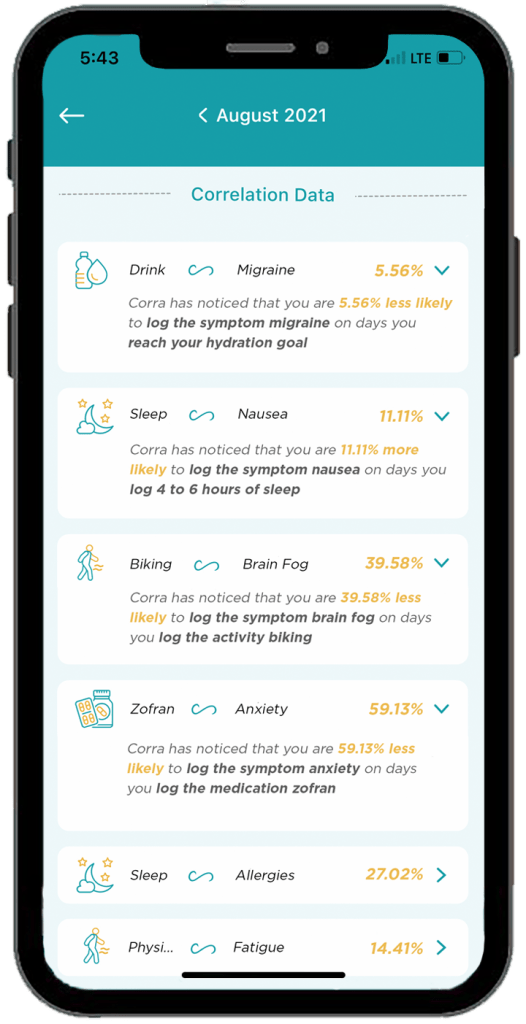
For as long as Elya Lane can remember she had signs and symptoms of a health condition. It wasn’t until college that she received her official diagnosis of Ehlers Danlos Syndrome and POTS. She says her poor health started to spiral with other comorbidities popping up, the worst of which was chronic UTIs that left her whole body in crippling, burning pain and weak from the antibiotics. Elya’s personal journey with chronic illness inspired her to create the Corra App. This week on Lights, Camera, Crohn’s we learn about how she made her dream a reality and how she hopes to improve peoples’ lives.

The breaking point

“I was constantly plagued with fears of antibiotic resistance, infection complications, or complications from long term antibiotic use. I got to the point where I was so sick that I wrote letters to my kids and my family in case something happened to me. I started tracking all our passwords and making videos for my husband on where our important files were, how different things were stored, all the kids’ data, etc. While I tried to face this potential outcome bravely, I was devastated imagining my kids growing up without a mom,” said Elya.

As she navigated these dark and daunting days, the despair caused her to think about how she could fight back and regain control of her health.

“I started to religiously track my health in journals before transferring to Excel spreadsheets. I was so frustrated by how exhausting and impossible it felt to crunch that much data, so I turned to searching for a symptom track and correlative software to help me. I downloaded and tried every single one I could find – but none met my needs. Some even gave me back faulty data which made me angry. That’s when I decided to create a solution myself,” she explained.

In 2020, after losing access to all her healthcare management tools, and with her health declining rapidly, she decided to create Corra.

The meaning of Corra

There are quite a few chronic illness apps on the market, some that even attempt to offer correlative insights. Corra is short for correlations. Elya wanted to identify correlations in her health so that she could find her triggers and optimize her lifestyle.

Here’s what sets Corra apart from other chronic illness apps on the market:

  • The algorithm was custom built by Corra’s chief data scientist, Simeon Wilson, who has a master’s in quantitative economics from UCLA. “We are not aware of any software that exists that compares to what Corra is currently offering with our correlative algorithm.”
  • Corra was designed by individuals with chronic illness. “Not just me! While the idea and original designs are all mine, we brought on more than 200 beta testers with various chronic illnesses to provide their feedback and help us tailor the app to the needs of the chronic illness community. Even now, we continue to rely on the insights and feedback from the community to enhance and adjust the app. I want Corra to always be designed by and created for our community.”
  • We correlate with nutrition in an accurate and helpful way. “I believe nutrition plays a massive role in our health so one of our key focuses with our algorithm was to be able to correlate seamlessly with nutrition inputs.”
  • Corra does not sell user’s data. “We don’t scrape your data from your device or browsing history, we don’t use your data to sell you anything, we don’t share your data with third parties. Your data is yours alone. As an individual with a chronic illness who often feels more like a commodity than a person, making sure people can receive personalized insights into their health without signing away their privacy is incredibly important to me.”

Corra’s bells and whistles to check out

  • The ability to track health data in one place without having to use five different apps to log information. “My favorite part of Corra is of course the correlations, because getting detailed insights like that about my health is equivalent to having a team of data scientists run extensive tests on my health and provide me reports. It’s life changing to be able to learn about my health overtime and create a custom-built lifestyle that caters to my future.”
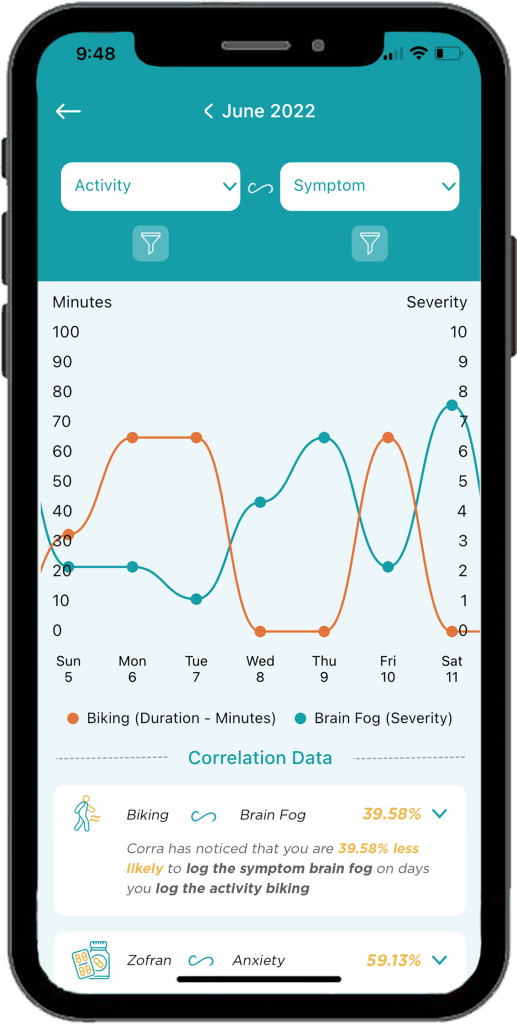
  • Discovering positive and negative correlations. “You may receive insight that something has x% chance of increasing or decreasing a symptom. I think being able to get data on the things that are helping is just as important as being able to identify triggers.”
  • The ability to log appointments, download PDFs of your data to share with my doctor, track medications and supplements, track mood and stress levels, etc. “I’m also extremely excited about all the upcoming integrations we have in the works! Soon we will be connected to Fitbit and Apple Health with Garmin, Cronometer, Weather data, and hopefully Oura coming shortly after! Over time we will continue to integrate with as many devices and apps as possible so users can have all their data in one location!”

A promising future

Elya says being able to learn what foods, activities, supplements, and medications help or cause symptoms has enabled her to have a much better understanding of how best to manage her health conditions.

“I’ve been told to go vegan, cut out red meat, don’t eat dairy, sugar, gluten, eat paleo, try a carnivore diet, go vegetarian, and try cutting out leafy greens… what I found with Corra is that I didn’t need to make these drastic nutrition changes, I only needed to cut out some foods in each of those categories. For example, I discovered that I have a high trigger correlation with ground beef. I can eat steak and other red meat, but not ground beef. Similarly, chicken thighs are a trigger for me, but chicken breast is not. Same with gluten, there are some gluten products that are triggering for me, but not all gluten triggers me. Being able to identify exactly which foods to cut out, rather than willy nilly cutting out entire food groups or going on drastic diet changes, has been an absolute game changer.”

Elya has also discovered that cold and flu medications like Mucinex are major triggers for her. This helped her realize why she would get a horrible flare a few days after coming down with a cold or flu.

“Now, I try to manage my colds and flus with other medicine to try to prevent the flare on top of the cold. It’s also important to note that I’m not cured! I have to manage my diet and my activities and my supplements every day. The difference is, I’m no longer throwing shots in the dark, I now have the information I need to manage my condition to the best of my ability.”

Information really is power, and it has given Elya control over her life and reduced her anxiety. Because of Corra, she is now coming up on two years without the need for daily antibiotics. It’s been over 2 years since she visited the emergency room.

I’ve found that medical providers are far more willing to accept unbiased data from an algorithm than trust my verbal expression of my experience, so in that way Corra becomes my advocate and backs up my statements,” said Elya.

She says her health conditions have caused her to go through depression, isolation, and hopelessness. But her hope for Corra is two-fold.

“First, I believe it can help others identify their triggers and optimize their life so that their conditions can become more manageable, but I also hope that Corra can be a beacon of light for those struggling to see they are not alone. There are so many steps between the start of symptoms and any kind of treatment let alone cure (depending on if your condition is even curable)… and I want to be the one that goes into the trenches and helps people who are suffering the most. So many people in the chronic illness community get forgotten or left with “your test results are normal” when they know there is something wrong with them. I want to create a company that comes alongside them and lifts them up and allows them to have their voices heard.”

Downloading Corra

You can download Corra directly from the App store or the Android playstore. There is a free version as well as premium access. The premium version is $7.99/month or $24.99 if you enroll for a 6-month subscription. Elya is looking for Corra Insiders who are interested in getting free access to the app. By joining the Insiders group, you get a first look at upcoming features. This provides you the opportunity to share feedback on what you do/don’t like or would like to see improved or added in the future. Sign up for the Corra Insiders program here.

Cedars Sinai’s IBD Dietitian Apprenticeship Program is Changing the Future of Nutritional Support for Patients

It’s the first of its kind program dedicated to training dietitians about IBD-focused nutrition. Cedars Sinai Hospital in Los Angeles, California launched its IBD Dietitian Apprenticeship in July 2023.

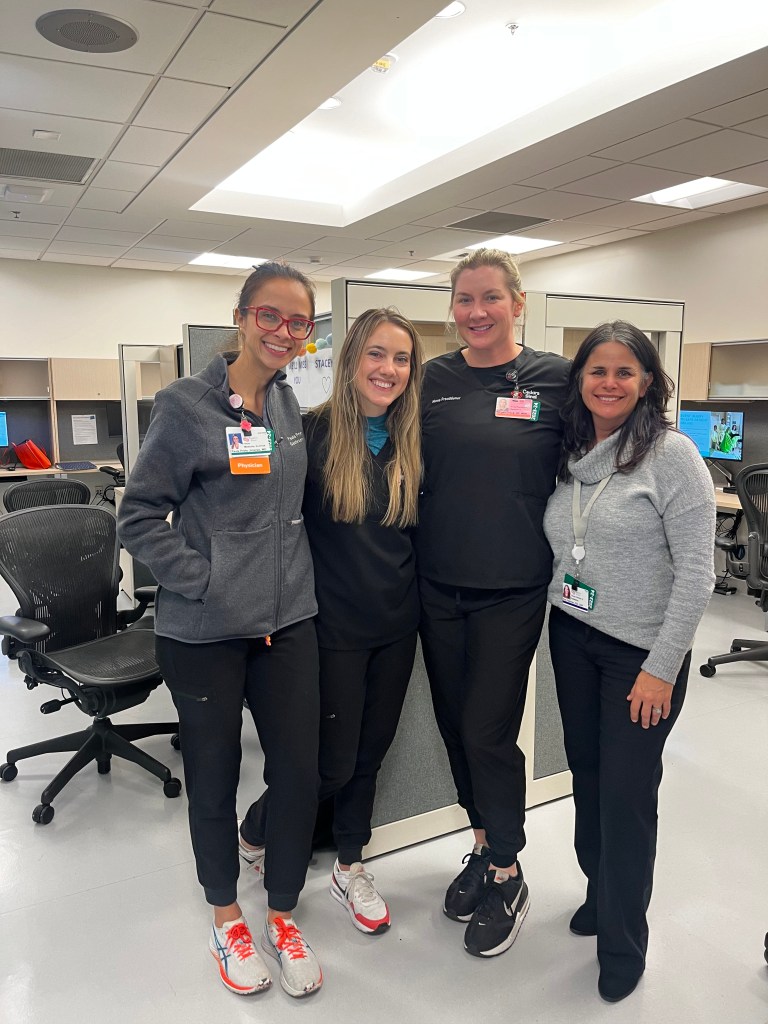
Registered IBD dietitian Stacey Collins was the first registered dietitian to be selected, participate, and complete the program. I’ve been amazed at all she does for our community and been excited to dig deep and learn what her key takeaways have been from this experience. As someone whose lived with ulcerative colitis since 2012, when she was 21-year-old, Stacey has a unique perspective and approach.

This week on Lights, Camera, Crohn’s we’ll hear about her firsthand experience and why this Apprenticeship program is just what our community needs. The hope is that registered dietitians who participate in the program can take their knowledge from the experience and be able to plug themselves into an IBD Center to build and strengthen an IBD program.

Going up against lack of education and funding

Stacey tells me there is little to no education that they receive in dietitian training on how to do nutrition specific to gastroenterology, much-less IBD, and she says this Apprenticeship program fills the gaps and then some.

“So much of what I learned was through self-study before this program. But in the Apprenticeship, whether I was part of the team rounding on patients in the hospital, or seeing a newly diagnosed patient in clinic, or sitting on the floor with a 3-year-old patient asking about their Paw Patrol toys, I left every encounter feeling that special kind of discomfort and gratification that comes with growth and learning. This was truly a hands-on learning experience from many different sides of the IBD rubix cube, and I’m so grateful I wasn’t learning it all by reading slides from a PowerPoint and taking a test- who learns that way anyway?!”

Addressing the unmet needs

Once registered dietitians complete the Apprenticeship they can work in an academic center or a private practice that values IBD nutrition and has the financial backing to justify the need for a dietitian.

“There are institutions and people in places of power who are advocates for the profession of IBD RDs, and this work is simply impossible without them. IBD RDs have the potential to support patients throughout their journey as an accessible, consistent member of their multidisciplinary care team. Unfortunately, a lot of this potential is systemically handicapped by the lack of funds: RDs are investments rather than quick money-makers for a clinic without physician advocates and creativity, and we NEED people at institutions to see our value,” said Stacey.
The main programmatic goals are to provide a structured, supervised training program for dietitians to learn a model wherein dietitians work together with physicians and advanced practice providers for the care of adults and children with IBD.

Places do exist (and many are coming) that support this multidisciplinary model of healthcare delivery, but there’s such an unmet need, especially for people who don’t have access to these IBD centers. The hope is for this Apprenticeship program to fill the gaps of that unmet need by signaling to physician advocates at these institutions that a nutrition professional with intense training and experience DOES exist, ESPECIALLY for more complex patients who have IBD.

So much to be done for patients
Registered IBD dietitians can assess people for malnutrition regardless of their stage of IBD, which is common even in remission and linked to poor health outcomes, along with so much more. Stacey says:

  • We can help catch micronutrient deficiencies or insufficiencies that many other care team members might miss, and we can correct and monitor them.
  • We can help patients experiencing food insecurity find ways to nourish themselves within their budget constraints with an eye toward prevention of other comorbidities.
  • We can help nutritionally prepare patients for surgery.
  • We can help patients in need of a medical or therapeutic diet intervention find a way to make it a sustainable intervention for themselves.
  • We can help patients nourish themselves using a whole-person approach, whether they are juggling multiple diagnoses, starting a new job, headed off to college, or too tired to eat: we have tools for helping patients feeling like they can handle it all
  • We can help prevent re-hospitalizations from small bowel obstructions or dehydration by giving patients IBD-specific tools for understanding their body.
  • We can save physicians time by inheriting questions about nutrition and/or supplementation regimens, and we can personalize these for each patient.
  • We can even show GI or IBD Fellows what it’s like to feel spoiled working with an IBD dietitian, and hopefully they’ll advocate to hire one of us wherever they make their final clinical stop

She’s confident IBD dietitians can make nutrition an accessible tool when it so often feels inaccessible with IBD!

Stacey’s top apprenticeship moments that left a lasting impression

Six months is a long time to pick up your life, move to another state temporarily, and fine tune your knowledge and expertise on nutrition and IBD. Here are the key takeaways Stacey says she took away from the experience:

1. Patience with patients is key; everyone is on their own timeline.

“I got to see a doctor celebrate with a patient who finally quit smoking cigarettes for good. After that encounter, he told me that he had been pleading with that patient for 20 years to stop, but he never blamed the patient for having a tough time stopping. He really was empathetic to the fact that they had a lot going on, and he knew they’d get around to it once life allowed. That was really enlightening to see: patients really are doing their best. How can I support them, especially if their timeline looks differently than the expectations that I have?” 

2. It doesn’t have to be all-or-nothing; don’t let perfection be the enemy of good nutrition.

“One day I was with Erin Feldman, RD (Cedar’s Pediatric GI and IBD RD). She was listening to a worried mom talk about how she didn’t want her kid to eat sugary cereal, but that’s ALL they would eat for breakfast: it was the sugary cereal, or it was nothing at all. The child was exercising their choice autonomy and exploring what that looked like around mealtimes, and it was a challenge for the parents. Erin had a rapport established with the family, and I could see that they really trusted her. Plus, Erin is a mom, too, so she speaks the same first language as parents, and she really empathizes with the fact that many IBD parents are blamed for their child’s symptoms or disease. She truly met the parents right where they were at that moment.”

“Instead of focusing on the PERFECT breakfast with beautifully-balanced macronutrients and color that the child certainly would refuse, she said, “What if you just added PLAIN Cheerios and a couple of raspberries to their sugary cereal, that way they’re getting some antioxidants from the berries and a more diverse source of grains into their breakfast?” It was TOO easy, and the parents were like, “YES. We can do that.” and just like that: not a perfect solution, but a practical intervention that would work for where the child is right now.”

And that’s the power in having multiple touchpoints to a dietitian: next time they see the doctor again, they’ll see Erin, too, and they can make more adjustments for how life is being lived around food at that stage, too. So often people have the ambitious idea of going from zero to specific carbohydrate diet (SCD) all in one encounter, and the reality is that often multiple conversations and coordination of resources are needed, and meeting patients where they are looks different for everyone.

3. Nutrition interventions can be hard, and multidisciplinary support really is key. 

“So often as dietitians, it’s easy to get stuck in the weeds of research and to get excited over interventions that have promising outcomes. This happened with a patient needing Exclusive Enteral Nutrition, but ~5-7 days into it, they were uncomfortable, and they really missed food. I was able to have a conversation with the patient alongside their doctor in the same room, who patiently reiterated our rationale behind the intervention and said, “not if it compromises your mental health. Let’s stop it if your brain is telling you we need to stop- we need to respect that. You should be proud that you tried this, and now you know!” And I could tell the patient was so relieved to have reassurance from their doctor that no matter what THEY chose for THEIR body they’d be supported by their doctor and by their dietitian. It really does take a team.”

4. GI Doctors REALLY do not get exposure to solid nutrition in their training

Kelly Issokson, MS, RD (Clinical Nutrition Coordinator, Course Director: DIET Executive program, Apprenticeship Director) arranged for Stacey to lead a learning session with the GI Fellows at Cedars, and in a room full of some of the smartest and most compassionate clinicians.

“They wanted to know all about the different nutrition interventions that we can recommend for patients. It felt like they had been rewarded for being the best of the best all by themselves their whole lives, and now they had an opportunity to learn more about how to collaborate effectively. They were all so enthusiastic.”

Stacey noticed after that session that the GI Fellows felt comfortable texting her while on rounds if she wasn’t there to ask if she’d stop by a patient’s room, or they’d text to ask about B12 supplementation after remembering to screen for a deficiency.

“They really understood the value that IBD RDs bring, and it’s not because I’m a great public speaker (I’m really not); it’s that they had this additional exposure to working with a dietitian with specialized training. This really made everything click for me: doctors don’t always know the right questions to ask patients about our nutrition needs, because most of them haven’t had the education OR the exposure to team members with the expertise to be truly helpful for patients. Working in silos keeps patients isolated, and I’m hopeful that the GI Fellows, when/if they leave Cedars become physician advocates to ensure that their patients have access to an IBD experienced RD.”

Plans for the future

When Stacey completed her Apprenticeship this winter, she did not envision returning full-time to her online private practice. She thought she’d start working at an academic institution, because the purpose of the program is for the dietitian to seamlessly integrate into a multidisciplinary GI care team.

I am still holding out on hope that one day I could have both (but I’ll never give up my private practice- I love it so much). Truthfully, I’m thrilled to be back with such a passion for teaching patients how to implement some of the skills that I’ve learned into their own life, plugging it into their existing care teams, even if I’m on my own in private practice. I already helped patients through perioperative nutrition before this program, but now I’ve got some RICH resources to help make IBD surgery and nutrition really make sense for patients now in a much clearer way,” Stacey explained.

She’s able to take the research that they did from the perioperative IBD Nutrition program that exists at Cedars and put it into practice with her patients, and it’s a bit of a full-circle moment for her, having lived through IBD surgery with limited support.

“I’m a much better listener than I was before this program, a skill I learned from Kelly Issokson, MS, RD (Clinical Nutrition Coordinator, Course Director: DIET Executive program, Apprenticeship Director). Additionally, I’m more practical in my approaches and meeting patients where they really are, too, a skill I learned from Erin. I’m working on some ways to expand IBD RD accessibility, too. I’m a much more confident advocate on behalf of my patients now, too.”

Advice for the newly diagnosed

If you’re reading this and you or a loved one was recently diagnosed with IBD, ask your GI doctor to hire an IBD Dietitian. Stacey knows this doesn’t exist in most places, and as a patient, she understands how silly it is to constantly be burdening patients with requests. But the field of IBD Nutrition exists because enough patients asked, “What can I eat?” and enough doctors paid attention to it to be documented research. This is the next piece of the puzzle.

If your care team provides a registered dietitian who doesn’t specialize in IBD, that’s not going to cut it. Be assertive in asking your GI office to hire an IBD Dietitian, or invest in training their Dietitian,  if they really want to help their patients.

Stacey advises patients and caregivers to stay off online forums. There’s so much food fear there, and life is bigger than that. Lastly, she advises reaching out for help. Even if Stacey may not be a good fit for you, she’s happy to provide patients with other RDs that she’d enthusiastically see, because an informed decision is a good one.

You can also utilize the directory on the Crohn’s and Colitis Foundation’s website to find some dietitians, and the AGA will have a directory available soon, too. 

Exciting research nuggets

During her Apprenticeship, Stacey chose to do a research project to examine the effects of malnutrition and perioperative nutrition supplementation on surgical outcomes in people getting IBD surgery, whether that be for j-pouch, permanent ostomy, lysis of adhesions, or a resection.

“We had a small sample size (n=25). Regardless, we found that perioperative nutrition supplementation had a statistically significant impact on decreasing the length of stay, meaning that greater adherence to the nutrition supplementation protocol was associated with a shorter time spent in the hospital. Regardless of nutrition status (malnourished or not), everyone seemed to benefit from the nutrition supplementation protocol that we recommended for before and after surgery.”

Stacey is hopeful that more research with an even larger sample size will help inform these results so that this can be a resource more widely available for patients!

The future is bright

“If I dared to dream about what this could look like in the future, the closest possible model in existence is at UCLA under Dr. Niru Bonthala who is the Director for Women’s Health in IBD. Basically, I see the RD’s role evolving to cover every nutritional aspect of IBD with specialized knowledge to support patients in each life circumstance: from surgical prehabilitation to home nutrition support (TPN or EEN) and transitioning back to eating; to the overlap of eating disorders; to fertility and perimenopause; from anywhere along the spectrum of LGBTQIA+ care and/or transgender care; from peds transitioning to adult care, and even adults to aging adults; even athletics and/or eating disorders.”

There’s a rich opportunity within all these Venn-diagrams for a specialist interest and training to exist in IBD Nutrition, and this learning opportunity exists at Cedars.

“I’d also love to see the RD in an outpatient clinic even able to do community outreach: teaching basic cooking skills, procuring menu items for their medical diet (and beyond), and even showing patients and their families what this could look like by partnering with local food banks. Again, this is just me dreaming here in a world that I think should exist for people who have IBD and for RDs who are trained in IBD Nutrition,” said Stacey.

The current IBD Apprentice Yi Min Teo (@herbsandfood) came from both clinical and private practice backgrounds like Stacey. Yi Min will finish her training in July 2024. The program is supported by a grant from Leona M. and Harry B. Helmsley Charitable Trust.

In addition to dietitians wanting more IBD nutrition education, there’s also an Executive Program for MDs/DOs, APPS, and includes both virtual and in-person learning opportunities. You can apply here.

Aging and IBD: Key Considerations for the Patient Community

Did you know within the next decade, one in three IBD patients will be over age 60 and that right now, adults over 60 make up the greatest portion of the IBD population? As someone who was diagnosed with Crohn’s disease at age 21, who is now 40, I’ve started to think more about what managing and living with IBD will look like as I continue to age. Managing IBD in older adults is complex and requires considering each person’s individual risk of complications and co-morbidities.

This week on Lights, Camera, Crohn’s a look at the research that’s available and what we can expect as an aging patient population. Before we get started, it’s important to note there are two groups—adult-and-pediatric onset IBD who are getting older and then a group of people who are diagnosed later in life (after age 60) referred to as “elderly-onset IBD”. Every review I saw online uses age 60 as the benchmark to differentiate these two groups. Elderly onset makes up about 10-20% of patients who are newly diagnosed with IBD.

Unfortunately, there’s limited data and studies that have followed patients for 20-plus years, so we don’t know a ton about how aging impacts patients who were diagnosed as pediatrics or as younger adults compared to those who are in their later years. While there’s a well-known belief that IBD can “burn out” as we age, meaning that symptoms for some quiet down, that is of course not the case for all.

Considerations when treating IBD in older age

Have you ever talked to your GI about how your IBD will be managed as you age? I know I haven’t. I feel that there’s so much to focus on in the “now” it can be overwhelming to think about how we’ll take care of ourselves 20-40 years from now! As we surpass age 50, there are important discussions to be had.

What patients and providers need to consider:

  • Risk of disease and treatment related complications
  • Tolerability of IBD therapies, which is unique to each person’s personal experience
  • Drug metabolism and how it alters with aging
  • Body composition changes which include a reduction in total body water and an increase in total body fat.
  • The delicate balance of disease-related risks vs. treat-related complications.
  • Risk of adverse events from medications vs. benefit shift (higher rates of infections, malignancy, and drug intolerance).

Given these factors alone, the way in which IBD is managed in older age isn’t as clear cut as when we’re younger. With both thiopurines and biologics, older patients are more likely to discontinue treatment. Older adults may value symptomatic remission (and quality of life) more than mucosal healing.

This study entitled, “The elderly IBD patient in the modern era: changing paradigms in risk stratification and therapeutic management” states, “Despite elderly onset IBD presenting with a less extensive or aggressive phenotype than adult-onset IBD, its disease course is not necessarily more benign. In Everhov et al.’s work,  22% of elderly onset Crohn’s patients underwent surgery by 5 years, although the rate was lower in UC patients (6%). Similarly, the cumulative probability of surgery at 10 years was 32% in Crohn’s patients compared with 8% in UC in another population-based study.”

According to an article in Time called “The Connection Between IBD and Aging”, whereas IBD was once thought as a disease with two spikes in onset—20s to 30s and 40s to 50s—doctors are learning there is a third spike that begins later in life. For those of us who are diagnosed when we are younger, our bodies have lived with decades of damage the disease has caused, often we’ve had surgery, been on medications with serious side effects, and ongoing flare-ups for much of our lives. For those who get IBD after 60, rather than seeing damage in various parts of the intestinal tract, more activity is seen in the colon.

The article goes on to say, “It’s no surprise IBD causes chronic inflammation, and so does aging. So, as we age with IBD, we’re at greater risk for inflammation linked-health issues, including cardiovascular disease, cancer, hypertension, chronic obstructive pulmonary diseases, chronic kidney diseases, obesity, skin issues, blood clots, arthritis, dementia, and skeletal muscle loss.”
Comorbidities and IBD

According to the Crohn’s and Colitis Foundation, people who have Crohn’s may also have a better quality of life as they age, partly thanks to modern medications and less use of steroids long term, which can trigger bone loss and cataracts over time, among other symptoms. Steroids are the most dangerous medication we have to treat IBD, sometimes of course they are necessary, but long-term use should be avoided at all costs.

People over 60 are more prone to infections and have a greater likelihood of being on medications for additional health conditions. They also often have visual, cognitive impairments, risks for falls, and surgery complications.

Underrepresentation in clinical trials

One of the main reasons we lack data about IBD in older age is because this population of patients is often excluded from clinical trials. This study from The Lancet Gastroenterology & Hepatology says, “A deeper understanding of biological and functional age, dynamic risk stratification strategies (including frailty-based risk assessment tools), comparative effectiveness and safety of current therapies and treatment strategies, and shared decision making to inform treatment goals and targets is needed to improve outcomes in older adults with IBD.”

A Crohn’s and Colitis Foundation study found that clinical trials for biologics only included 1% of people over age 65. How can patients feel safe about being put on biologics when there isn’t research to back up the safety and efficacy of these heavy-duty medications when they reach that age bracket?

A study by The Lancet titled, “Is it time to include older adults in inflammatory bowel disease trials? A call for action shares that “the therapeutic management of older patients with IBD is challenging, particularly because of the absence of evidence-based guidelines for these patients, who too frequently are excluded from clinical trials.”

As far as menopause goes, we still don’t know much yet about how this impacts women and the  role it plays in disease course. Some small studies have found a modest protective role for estrogen-replacement therapies for IBD activity. But there’s more research needed in this area. According to the Crohn’s and Colitis Foundation menopause may begin earlier in IBD patients, but this does not appear to have any negative effect on disease activity or progression. Women with IBD are at greater risk for osteoporosis in menopause, this is why it’s so important we’re proactive in younger age by getting bone density tests and taking calcium and vitamin D supplementation (if labs show you’re deficient). I have taken 50,000 IU of Vitamin D once a week for years to help combat bone loss and this past year I started seeing a Bone Health Doctor to keep a close eye on my osteopenia. My GI told me during my clinic visit this month he wants me to take 2 Tums a day for added calcium.

As far as men, aside from methotrexate, IBD medications do not usually cause erectile dysfunction. Ileal pouch anal anastomosis (IPAA or J-Pouch) surgery, while sometimes associated with loss of sexual function, is not associated with erectile dysfunction. There’s also no known connection between IBD and prostate cancer.

Patient input from those who are 60-plus

Patti says her age has changed how she manages her IBD.

“I’m 60 years old. Mostly, I compartmentalize social outing to 2 hours at a time. If I extend it, I’m exhausted and feel crummy for the entire next day or two. If there’s a situation where I know it will have to be more than three hours, I make sure to rest and eat less the day before, and then eat minimally until the last hour or so of the outing. This way, I don’t have to feel like I’m running on empty during the entire outing, and I can prepare to be home for whatever the food decides to do, in addition to the exhaustion and pain that I know are coming.”

Patti went on to say that she feels her Crohn’s brought on menopause sooner, but also that her Crohn’s may have masked menopause symptoms because she was used to low-grade fevers and sleep interruptions.

“I found out I was post-menopausal at 50 and I basically missed the transition (the symptoms). I took that as a win (ha), but I do feel like my body is older than my age. I can’t really explain why, but the constant inflammation, plus my body trying to resolve it—I believe it’s taken a toll on my aging. But recently turning 60 feels AMAZING. TO be sick since I was 8 years old and have fought my way to my sixth decade feels like I climbed a mountain! I’m proud of how hard I’ve fought all these years, while still thoroughly enjoying life, my marriage, my daughters, and my career!”

Heidi was diagnosed with Crohn’s at age 50 after years of being told she had IBS. She found out in July 2023 that she had a” severe Crohn’s reoccurance after 5 years on Stelara. Her options were Skyrizi or Rinvoq since she has a history of TNF inhibitors failing her. Even though Rinvoq had a slightly better chance of putting her in remission, her and her care team thought Skyrizi would be a safer option due to her age. Rinvoq has a warning regarding increased cardiovascular events, such as heart attack, stroke, or death in people 50 years or older, along with risk of blood clots.

“If I don’t respond well enough to Skyrizi, we will then try Rinvoq, but the safety profile seemed better especially for me being over 60, and that’s important to me. I also worry about what is going to happen when I retire and my medical insurance goes from commercial to Medicare! I think they often have a deductible that is much higher than commercial insurance.”

Heidi was also diagnosed with osteoporosis in her 50’s and took treatment for it for 5 years.

“My risk for fracture still increases as I age, so my GI ensures I have DEXA scans every 2 years.”

Brenda had diverticulitis for a few years, and beginning in December 2011 she started having other bowel problems. She went straight to her general practitioner, and he ordered a colonoscopy, which confirmed her Crohn’s disease diagnosis at age 63.

“After many failed medications, I had part of my colon removed and I had a temporary ileostomy. Unfortunately, I got an abscess which made me really sick and in 2015 I had more colon removed and the stoma was made permanent. Since that surgery, I’ve been quite well and basically get on with my life without any IBD medication.”

Brenda is now 75 and worries about getting sick again and needing additional surgeries. She also worries that as she ages that one day she may not be able to deal with her ostomy bag herself and that  concerns her.

Keith has ulcerative colitis and his wife was diagnosed in her 20s with ulcerative colitis. Her IBD was under control for years until she was hospitalized 20 years ago. She underwent her first operation then and it was successful. Fast forward two decades and she flared and required additional surgery.

“She’s doing ok now, but both surgeries were a result of her bowel narrowing.”

Jody is on Remicade and is currently in remission. She started with colitis in her 20s and then her diagnosis shifted to Crohn’s in her 60s. She’s in her early 70s now. She’s tried several biologics and medications.

“Not sure when I started Remicade. I have tried a few before and they were either too expensive or I had issues with them. I am in the United States so our insurance is not easy. I also have taken Mesalamine for years for colitis, which has worked great but it’s another expensive drug, so the prescription was cut in half due to cost a few years ago.

Sherry hasn’t changed much in her 44 years of living with Crohn’s, but has more of a focus on an overall healthy lifestyle.

“I’ve gotten better at avoiding trigger foods and being more diligent taking necessary vitamins. I’ve always been active (weight training, golf, and skiing) and remain so if not more these days. The introduction of biologics has obviously been a game changer a huge benefit.

Jeff says gastroenterologists seem to believe you more as you age.

As you get older, more things in your body are broken. It’s a balancing act as to what is most critical. You also start running into unknown territory for GI docs, as many treatments do not have much data, if any, for seniors. GI docs do seem to believe you more when you need help.

Kanchan is currently 74. She has had a J-Pouch since 1989.

“For the last 4-5 months I am making probiotic yogurts at home and the last month I started making Kefir. I’m hoping for good results.”

Sherri– “I was diagnosed with IBD in 2015 when I was 56. I’m tired of the whole thing. What’s going to happen when I can’t look after myself?”

Closing Thoughts

It’s important for us to work closely with our healthcare teams, not only gastroenterologists, but all specialists, to manage IBD effectively as we age. It is beneficial to check in with a registered IBD dietitian, as aging may affect the body’s ability to absorb nutrients. I often wonder if when my kids are in high school or college (my youngest is 2.5!), if I’ll play a little Russian Roulette and try going off my biologic. I’ve been in surgery-induced remission since August 2015 and if this continues (God willing), I think I will try. Right now, as an IBD mom of 3 kids (ages 6, 5, and 2.5), I don’t feel confident enough that I won’t flare and need to pull out all the stops I can, so I can be present and well for my young family.

There’s a delicate balance with each decision we make along the way and the best we can do is advocate for ourselves, be proactive and take measures now to be healthy, do our research, and stay as educated as we can about what’s coming down the pipeline for the IBD community as we age. By controlling inflammation in our younger years, we can help improve our future quality of life and prevent age-related symptoms.

Check out this YouTube Video from the Crohn’s and Colitis Foundation entitled, “Aging and IBD: What Crohn’s and Colitis Patients Should Know” to learn more.

Shattering Stigmas around Gastro Health: Why you need to know about the GH Foundation

It’s not surprising there’s stigma that surrounds gut health. Even though “everybody poops” it’s still a bit of a taboo topic, and don’t even get the general population to think about getting the dreaded colonoscopy. This is where the GH Foundation comes into play. Co-Founders, Dacia Heck and Kristin Lynn Grube have both been personally impacted by gastro health in unique ways and their journeys inspired them to create a non-profit to help break down barriers and start critical, life-saving conversations.

According to the Crohn’s and Colitis Foundation, “patients with IBD appear to be at notably increased risk of colorectal cancer compared to the general population, with one recent study demonstrating a 7% colorectal cancer risk after 30 years of the disease. I had my first colonoscopy at age 21, which confirmed my Crohn’s disease diagnosis. Since 2005, I’ve had more scopes than I can count. I typically get a colonoscopy every year. While it’s not an enjoyable experience, it gives me peace of mind that I’m being proactive about my health. I’ll be getting my next scope in the coming months.

This week on Lights, Camera, Crohn’s we hear from Dacia and Kristin to learn more about their mission, the difference they hope to make, and how you can get involved and feel supported.

The personal connection

Until your gut starts causing health problems, chances are you don’t often think about it. Kristin was diagnosed at age 27 with Serrated Polyposis Syndrome (SPS), which is characterized by the occurrence of multiple polyps throughout the colon and/or rectum that can develop into colorectal cancer (CRC). She discovered this through a colonoscopy.

Kristin Lynn Grube, co-Founder of the GH Foundation

“My diagnosis has taught me to be my own relentless health advocate and speak up for myself. I continue to learn how to cope with SPS’s ongoing effects – emotionally, physically, and spiritually. Some days are easier than other days.”

Dacia lost her healthy, active sister from Stage IV colon cancer. Her sister was diagnosed at age 43 and passed away less than 4 months later.

Dacia Heck, co-founder of the GH Foundation.

“My sister’s diagnosis was a complete shock, as we didn’t have a family history of colorectal cancer and she was well below the screening age of 50 at the time of her diagnosis.”

The inspiration behind the GH Foundation

While Dacia and Kristin have different stories and experiences, they are both passionate about bringing important resources to the general public and are adamant about making gastrointestinal (GI) conversations not only more accessible, but also more mainstream, in order make the path to GI wellness and cancer prevention easier for others.

“We truly believe we can make a difference – one conversation at a time. As Kristin and I discussed where we wanted to focus our time and energy, we kept circling back to the “stigma” associated with GI diseases. That stigma often delays people talking to their family or medical provider about GI-related conditions. We decided the way we could make the biggest impact was to create GH Foundation and focus our mission on breaking that stigma,” said Dacia.

The GH Foundation’s main mission is to destigmatize conversations around GI, or gastro, health issues. 1 in 16 people in America will get CRC and 0 in 16 like talking about it. The GH Foundation encourages everyone to start the conversation. True prevention starts with educating the public on what is normal GI health and when to speak with a medical provider.

Discovering the loopholes in gastro health

As Dacia and Kristin did their research and spoke with different folks from all walks of life, they kept noticing that the conversations around gastro health have to start with a younger audience. Young adults in their late twenties to early forties are not discussing the importance of gastro health with their medical providers.

“We believe this is mostly due to the deeply rooted societal stigma surrounding gastro health. Given the uptick in early age onset (EAO) CRC, it may be too late to prevent a late-stage diagnosis once they qualify for screening. We want to focus on the very beginning and origin of it all –  the conversation, whether it is with your family, friends, or network. Take that first step and reach out to someone, ask questions, make that list of symptoms you are experiencing, find out if you have a family history of GI diseases,” said Kristin.

While it’s intimidating, Dacia and Kristin guarantee that the first step will go a long way and may improve your quality of life, or even save your or someone else’s life.

“Our goal is to bridge the gap between the medical terminology and the general public’s knowledge about GI health. We are finding ways to make medical terminology and information accessible to the public. We encourage everyone to listen to their body, and to get the tools to empower them to speak up if they have issues,” said Dacia.

Taking their mission into action

The GH Foundation works to meet people where they are and find different ways to overcome the stigma. For some people, it’s learning about the basics of gastro health through an educational webinar, for others, it is hearing a survivor’s story and becoming inspired to take that first step.

“It’s connecting at a social gathering and finding a space where you can share your day-to-day challenges that you thought you were experiencing alone. Other times, we just want to have fun – we play GI trivia games and entertain each other with the Poo Squad mascots (more on that later in this interview). With all our events, we create an environment where it is safe to ask any questions. There is never TMI; we can talk about poop all day if you like,” said Kristin.

The Three Main Pillars of the GH Foundation’s Advocacy

  • Gastro Health
    • Inform and educate the public about the importance of GI health. So far, the GH Foundation has focused on the human GI anatomy, common myths and facts about GI health, ostomy facts, and CRC-related information. You can find out more about resources and past events on the GH Foundation website.
  • Proactive Advocacy
    • Proactively provide information and strategies to create positive shifts in how we communicate and influence others. Using what they’ve learn from other organizations, medical providers, patients, and cancer survivors, the GH Foundation has created educational content to then share with the public. Be on the lookout, you may just see their Mascots or Bristol Stool Charts popping up more and more near you!
  • Impact/Prevention
    • Educate and inspire people to take action to live a healthier life by fostering an open environment where no topic or question is off limits. Kristin and Dacia lead by example by first sharing something about themselves or asking someone at an event if they would like to share their experiences. They want to help people become as comfortable as possible about talking with their medical providers so they can get the most accurate information about their symptoms and find the best treatment for them.

Making a Difference

Since launching the GH Foundation, Kristin and Dacia have heard from many people that they scheduled their colonoscopy after attending one of their events or receiving one of their resources.

“People have also spoken with family members about their family history to get genetic testing and have said they felt more prepared about what to ask their medical provider at their next visit. People have approached us and expressed a sense of relief that we are creating an environment where they can ask any question, as uncomfortable or personal as it may be. Our mascots have received positive feedback as well. Seeing Sir Colon has taught them what the “colon” looks like,” said Dacia.

Through their initiative “GHF on Campus” they bring gastro health conversations to the forefront of young adult minds through a series of captivating events exclusively tailored to undergraduate students.

“One of our main approaches at the GH Foundation is targeting who we call the “pre-screening community”. Young adults under the age of 45 need to be made aware of common myths and facts on GI health, CRC signs and symptoms to keep watch, and what to ask if CRC symptoms emerge. GHF on Campus has a dual impact: Not only are they learning for themselves, but they can go back home and share what they have learned with family and friends. They can ask about their family history and encourage their family members to act, like scheduling a colonoscopy,” said Kristin.

So far, the GH Foundation has collaborated with the vibrant student communities at the University of Iowa and Northwestern University. Kristin and Dacia are looking to expand campus programming—if you’re reading this and would like to learn more, click here

Finding humor through the message

You must meet people where they are. One of the ways they are doing that is with a sense of humor.

“We have designed our GHF mascots that bring some fun and lightness to topics that can be very overwhelming and serious,” said Kristin.

The GH Foundation’s mascot crew features: The Poo Squad (from left to right)—Ms. TP, Plungy, Mr. Poo and Sir Colon.

They will show up in different ways. One of the ways is our “Check your Colon” t-shirt with our very own Sir Colon. You can purchase a shirt here.

You can register now for a virtual webinar panel discussion entitled, “Destigmatizing Ostomy 101” taking place Tuesday, February 20th, 2023 at 6:30 pm CT. The discussion will feature Wound Ostomy RNs Jennifer Bart, MSN, RN, CWOCN, and Aimee Sheddan, BSN, RN, CWOCN.

Getting Involved with the GH Foundation

  • Talk  – Initiate the conversation with your family, friends, and colleagues. Educate your loved ones about the risk of neglecting their gastro health. It may seem like a small step but can change the trajectory of life.
  • Volunteer – Help connect your community to life-saving resources about GI health.
  • Donate – Your donation directly funds our efforts to distribute educational materials and health guidance to the public.
  • Engage – Reach out to us! We welcome new ideas on how we can break the stigma.
  • Follow us on our socials so we continue to reach more and more people.

Connect with the GH Foundation on social media and follow the amazing work they’re doing:

Instagram: @_theghf

Facebook

LinkedIn

Skin cancer scare: My experience as an IBD mom

During my annual skin check at the dermatologist in September my doctor biopsied two small marks on my back. In the moment, my doctor expressed that she wasn’t concerned, and neither was I. Fast forward two weeks, and I was about to speak at a health conference for patient advocates in New Jersey when I received a phone call from an unknown number. I answered and was caught off guard when the voice on the other end was a nurse from my dermatologist’s office telling me both spots came back with pre-cancerous spots and that I needed to get excision surgery on both as soon as possible.

Hearing that news was unexpected. I felt unsure and scared. That anxiety built up until I finally was able to schedule the procedure for November 30th. Life as an IBD mom makes these types of health hiccups tricky. I had to keep pushing off the surgery because of different family activities and obligations during this extra busy time of year.

This week on Lights, Camera, Crohn’s I take you on a behind-the-scenes look at my patient experience and discuss skin cancer and IBD and what you need to be aware of.

How I felt going in

Going into the surgery I felt uneasy. I wasn’t sure what the recovery would entail. I’ve only had abdominal surgeries, a bowel resection and three c-sections. One of the spots was on my upper back and the other was right above my bra strap. I was worried about how it was going to feel to lay down, sit back, move my arms, pick up and hug my kids…the list goes on.

As always, I turned to our IBD community for input, intel, and perspective. The experiences and advice shared not only educated me but left me feeling comforted before I went under the knife. Here is some of the feedback I received:

You only live once and it’s on your back. In my opinion, the only way to wear a scar bad is to wear it with insecurity. Cover it up with confidence, or reveal it with confidence, but if you do either with insecurity, that makes it much more obvious.”

“After surgery when you’re up and about, focus on excellent posture almost to the point of bending backwards. You’ve had a resection and with any abdominal surgery, you hunch over a little bit to keep the incision from pulling. Do the same with the back ones, but you have to kind of have a bend to your back. Move slowly and if it pulls, you’ve pushed too far. With abdominal surgeries, I stay very on top of pain meds, with this, I would make sure you’re in a little bit of discomfort, just so you know when you’ve pushed too far. Not enough to be in actual pain, but enough to be uncomfortable and feel it when it pulls.”

“Be extra careful with what activities you do with it being on your back. I popped stitches on my back once because it’s such a high-tension area. The worst part is having a scar left behind.”

“My doctor gave me an option: stitches vs no stitches. Choose closure with stitches, otherwise healing is long.”

“The local anesthetic stings a little, but nothing worse than a biologic that you’re used to. They’ll tell you to keep the sutures moist with ointment (NOT Neosporin) and covered during the day. Wash gently with your regular soap and water. The sutures on the back are usually in for about two weeks. Make sure the pathology checks margins (so you know all atypical cells were excised). Compared to everything IBD moms endure, this is a piece of cake!”

“Surgery is an easy recovery. I had stitches for two weeks. Make sure you keep the area moist with Aquaphor or Bacitracin. Be careful not to lift anything with the stitches so you don’t pop a stitch or cause further scarring by stretching the open area. It might hurt the first couple of days, but Tylenol will do the trick.”

“My best friend had a pretty good size excision surgery on her back, and everything went smoothly, and it was painless for her. She healed up nicely and the scar is minimal.”

“Recovery was straightforward! Just keep up on any pain meds prescribed and try to take it easy. I had a wide excision on my toe that sucked because walking was hard for a few days. Little movement until your incisions are healed a bit is helpful.”

“Sitting back and laying down might hurt for a couple of days, but you should be fine after that. You don’t want to pop the stitches. You can’t take a bath or submerge the incisions for at least two weeks. Showering is fine after 24 hours, but just be gentle with them. I did derm nursing for many years.”

“I’ve had this (Crohn’s med complication), and it was far less bad than I thought. Briefly painful, but recovery is quick. I found vitamin E cream super useful while it was healing or (La  Roche- Posay Cicaplast) also once healed. Make sure you rub the scar, so it doesn’t ‘tether’.”

“Find out your surgeon’s preferred ointment. Mine okayed Aquaphor. Set pillows so you can sleep comfortably once you find a position that works. The pain is worst at night. Sending you big hugs and wishing you speedy healing with clean margins!”

What excision surgery entailed

Leading up to the excision surgery—especially the week of—my mind started to race a bit when I went to bed at night and started thinking of the procedure and recovery. It was my first time needing something more than a biopsy at the dermatologist, so I wasn’t sure what to expect. The excision surgery process involved so many lidocaine and epinephrine shots that I was in tears by the end. The areas of my back were so sensitive and by the time I had 10-15 shots I could feel, I hit a bit of a breaking point.

One of the nurses brought me an ice pack to grip onto and it really helped stop my anxiety and shaking on the table. The actual surgery on the two spots took an hour. It’s always an odd feeling while you lie awake and know your body is being cut into. I have dissolvable stitches underneath my skin and on top on the incisions.

Here’s a photo of the two incisions. They are larger than I had anticipated, and I’m not thrilled about them, but I know once they’re healed, they won’t look so angry.

Recovery is not linear

The first night of recovery I was able to keep the pain under control for the first 10 hours or so, but I woke up at 4 in the morning in excruciating pain. I felt like my back was on fire and I couldn’t move. It was a horrible feeling. My husband helped me out of bed, and we went downstairs. He propped me up on a ton of pillows and set an alarm for my next pain pill. The first two days were a rougher recovery than I had anticipated, but I’m so grateful my dermatologist caught this when she did.

By day 3 I was doing laundry, cleaning, organizing my son’s room, packing up toys to donate, and making dinner. As I write this, I’m 4 days post-op and I just have slight twinges of pain here and there and itching sensations. The hardest part for me has been not being able to lift or hold my 2-year-old or being able to help my 4-year-old daughter who’s had a club cast on her dominant hand and arm and has needed my help to do everything from getting on the toilet to climbing into her car seat. That being said, my kids have all been incredibly patient and empathetic and my husband has been a rockstar at making sure I don’t overdo and feel supported every step of the way.

My toddler walked up to me when I was in pain and said, “your tummy hurt, mama?” Not this time, buddy. It amazed me that his mind went there when he saw me hurting. With that, he snuggled me on the couch and gently grabbed both my hands and kissed them.

Is there a link to IBD meds and skin cancer?

There is some evidence to suggest a potential association between IBD and an increased risk of skin cancer, particularly non-melanoma skin cancers such as squamous cell carcinoma and basal cell carcinoma. When I asked my surgeon prior to my procedure if being on Humira put me at greater risk for this, she told me there’s not enough conclusive evidence and she did not relate my situation to my medication, but I’m still not convinced. I was told that the pre-cancerous cells would have turned to melanoma if this was not caught.

The relationship between IBD and skin cancer risk is complex and may involve various factors:

Immunosuppressive Medications: Prolonged use of medications, such as corticosteroids or certain biologics, can weaken the immune system, increasing susceptibility to infections and possibly contributing to a higher risk of skin cancer.

Chronic Inflammation: IBD itself is characterized by chronic inflammation in the gastrointestinal tract. Chronic inflammation has been linked to an increased risk of certain cancers, including skin cancer. The inflammatory process may contribute to the development of cancerous cells.

Sun Exposure: Some studies suggest that those with IBD may be at an increased risk of skin cancer due to excessive sun exposure. It’s important to note that certain medications used to treat IBD, like thiopurines (Imuran and Purinethol), make the skin more sensitive to sunlight.

Genetic Factors: There may be genetic factors that contribute to both IBD and an increased risk of skin cancer. Some people have a genetic predisposition that makes them more susceptible to both conditions.

Final thoughts—Get those annual skin checks!

When it comes to skin cancer, we can control our sun exposure and how we protect our skin when outdoors and that should not supersede the importance of taking medication to treat and manage IBD.

Talk with your care team about the frequency you should be screened. Once you have skin cancer or a biopsy, it’s not unusual for bi-annual visits or even every three months. If I can share anything—it’s to get your annual skin check. Skin cancer is nothing to mess around with. Ignorance is not bliss. Give yourself peace of mind and schedule a dermatologist appointment, whether you have IBD or not. My husband and I have both had scares now when it comes to our skin. Be proactive and in the new year I hope you take the appropriate steps to make sure you’re in the clear.

Additional resources on Skin Cancer and IBD

IBD and the Risk of Skin Cancer (verywellhealth.com)

Does IBD Put You at Greater Risk of Developing Skin Cancer (everydayhealth.com)

Inflammatory Bowel Disease and Skin Cancer: An Assessment of Patient Risk Factors, Knowledge, and Skin Practices – PMC (nih.gov)

Risk of Melanoma and Nonmelanoma Skin Cancer Among Patients With Inflammatory Bowel Disease – Gastroenterology (gastrojournal.org)

Inflammatory Bowel Disease Is Associated With an Increased Risk of Melanoma: A Systematic Review and Meta-analysis – Clinical Gastroenterology and Hepatology (cghjournal.org)

Supplements to support your immune system with IBD—Yay or Nay?

It’s that time of year when sickness lurks around every corner. For those of us who are immunocompromised, run of the mill “regular people” sickness can hit us extra hard. Since the end of September, I’ve dealt with bronchitis for 5 weeks, followed by pink eye in both eyes, and I currently am dealing with a bacterial infection in my right eye. Being an IBD mom with young kids in preschool and elementary school brings extra germs into our house. While I’ve been under the weather, I keep second guessing what supplements are deemed “safe” and beneficial for me to take since I’m on a biologic. Even 18-plus years into the game, I still get confused about the gray area around supplements to help us improve or boost our immune systems and which we need to be careful of.

This week on Lights, Camera, Crohn’s we hear from three gastroenterologists who take a deep dive into this topic, along with a registered pediatric GI dietitian, and several people from the patient community. Before we get started, I want to preface this by saying this is a complex issue that is not black and white. Even after digging deep researching this topic—I’m still not completely clear on what’s best for myself.

There’s been conflicting beliefs on whether Elderberry is “smart” to take when you’re immunocompromised. I ran a poll on Instagram asking our community what they’ve been told. Of the 260 people who responded 72% said “This is a thing?!”, 21% of those polled said they were told to “Steer clear when on immunosuppressants”, and 7% of people were told by their provider that it’s “Safe and advised” to take Elderberry.

Let’s hear what patients have to say

Samantha: “I was advised not to boost my immune system. So, I focus on nourishing my body well when sick. I drink a lot of smoothies and fresh juice. I’d avoid Elderberry for sure. I take daily vitamins and get my levels checked regularly to make sure I’m getting enough of what I need. However, I have a kid in school who brings all those lovely germs home. I had a GI once explain it to me like this…my immune system is overactive; I have to take medication to weaken it, which brings it down to a “normal” range. If I try to “boost” it, I’m working against my medication.”

Cindy: “My mother-in-law purchased some Elderberry for my daughter with Crohn’s shortly after her diagnosis. “A woman at Whole Foods told me this could be good for her.” She meant well. Anyway, I understood that my daughter shouldn’t take Elderberry, after consulting with Dr. Google. I believe it was a reputable website that contraindicated Elderberry for patients on immune suppressing medications.”

Emily: “I have been told both—that Elderberry is safe and that it is not. My family doctor told me to avoid it and my GI nurse says that it’s ok sometimes when sick?! So confusing!”

Alyssa: “My husband has Crohn’s and is on Entyvio. He takes Elderberry if he has flu or cold symptoms, whereas I take it daily during the winter. Funny enough, I’m sick A LOT more than him!”

Jessie: “I’ve been told by some doctors not to take immune boosting supplements with biologics and others that it doesn’t matter, but I can’t find the concrete research/facts I need to be sure.”

Lindsey: “I find my symptoms flare when I have Elderberry!”

Rachel: “I’m always confused if I should be taking anything to “boost” my immune system when I’m on suppressive meds. I asked my provider years ago, but I didn’t really get a real answer. I’ve always thought it was good to take supplements to help my immune system, but then I get concerned about them counteracting my medication.”

Hermione: “I have been told it is a placebo effect by my immunologist.”

Kristen: “I read that you don’t want to boost your immune system since that’s the system you want suppressed and caused your disease in the first place.”

Bee: “I was told not to take things that will “boost” the immune system. In South Africa, it’s Echinacea. I was told not to take it. So, my approach has been to “indirectly boost” my immune system by taking vitamins and fresh fruit and vegetables as much as I can tolerate.”

Rocio: “I’ve had this conversation with providers, particularly when I had COVID. I was told NOT to take Elderberry because it has been shown to increase cytokine storm which is present in both COVID and IBD. From an IBD specific point of view, the anti-TNFs seem to calm that storm which is why some were used as COVID therapeutics. So, I wouldn’t say it’s because of being on immunosuppressants, but rather the disease itself.”

Julie: “I live on Elderberry but never asked my doctor, so I’m hoping it’s ok!”

Laura: “I’ve taken Elderberry for years on Remicade (also working as a nurse practitioner in pediatric primary care) and it has helped keep me well and my GI docs have never been opposed to me taking it. I do usually skip it the night before and after an infusion though.”

Jana: “I was told it could cause increased risk of cytokine storm for those with IBD in general, whether on immunosuppression or not.”

Heather: “My son’s GI said NO to Elderberry. We used to take it every winter, but once he was diagnosed with Crohn’s they said to stop using it. I always worry about this time of year and all the yucky stuff going around. My son takes the Liquid IV Vitamin C packets and puts those in his water. I don’t know if they help, but I feel better knowing he is taking something to maybe help give him a boost!”

Beth: “I’m so glad you’re covering this because there is so much confusion—should we try to boost our immunity or not? My personal experience is that I was taking it trying to boost my immunity before a busy event season when I needed to stay healthy. About three weeks later, I was wracking my brain trying to figure out what was flaring my Crohn’s because I’d been eating right, sleeping more, hydrating…and I think it was the Elderberry. In general, I have tried to shift my logic to “these are things that help keep me healthy” versus “how do I boost my immunity?”

Madison: “My first GI told me “No” if you’re on biologics. Not sure if that’s true, but I just trusted that guidance and still avoid it!”

Jess: “I was told to steer clear of Elderberry because of having IBD.”

Jaclyn: “I have asked so many times what I can take, and I’m always told there is basically nothing extra I can do. I have a 4-year-old and 5-month-old in daycare, so they are always bringing home sicknesses.”

Elderberry: To take or not to take?

After reading those firsthand experiences it’s clear—the patient population is unclear and hesitant about what is best when it comes to boosting immunity. While Elderberry has gained popularity for its potential immune-boosting properties, its safety for those of us with IBD is not well-established. Elderberry supplements are often promoted for their antiviral and immune-enhancing effects, primarily attributed to compounds like flavonoids and anthocyanins.

Before I became a patient advocate, I would take elderberry anytime I felt a sniffle or had a sore throat. I really felt like it made a positive difference. Fast forward a few years and I started hearing that Elderberry could interact with Humira and cause my immune system to become over-active, so I stopped taking it all together. To this day, I wonder about taking it—and I know many of you do, too!

There are a few considerations for those with IBD when it comes to Elderberry:

Sorbitol Content: Elderberry products, particularly some syrups and extracts, may contain sorbitol, a sugar alcohol. Sorbitol can have a laxative effect and may exacerbate symptoms for those with IBD, especially if you are sensitive to sugar alcohols.

Potential Interaction with Medications: Elderberry may interact with certain medications or treatments for IBD. Elderberry is believed to have immune-modulating properties. When taken with immunosuppressive medications like Humira or Remicade, there is a potential risk of enhancing the immunosuppressive effects, which might increase the susceptibility to infections. It’s important to discuss this with your healthcare provider to understand the potential implications.

Limited Research: There is limited research specifically addressing the safety and efficacy of Elderberry in individuals with IBD. The specific interactions can vary, and it’s essential you ensure there are no adverse effects or diminished efficacy of your prescribed medications.

The GI’s weigh in on the debate

Dr. Miguel Regueiro, M.D., Chief, Digestive Disease Institute, Cleveland Clinic, says that while he does not want to sound dismissive of supplements, that we lack good data to make claims for or against. Personally, he does not feel Elderberry is harmful, and does not have a problem with his patients taking it.

“I am not aware of good, randomized data to indicate true harm from Elderberry in immunosuppressive or immunomodulatory medications, even though there are warnings listed,” he said. “Theoretically, Elderberry will “stimulate” or “activate” the immune system and has been a popular supplement that some recommend for “cold/flu” or to prevent cold and flu.  If that theory is true, then potentially elderberry as an immune stimulant would offset or counteract an immunosuppressive.”

Without good, randomized safety data, it is difficult to make this strong claim one way or another. Given that Elderberry may or may not help with cold/flu, in an abundance of caution it would be reasonable to avoid in patients on immunosuppression. 

“My sense is that the dose of Elderberry is low enough that even with immunosuppression, there should not be a problem, but, again, without confirmatory evidence to say that Elderberry effectively “fights off” or “prevents” cold/flu, one could simply avoid it in patients who are immunosuppressed.”

Dr. Regueiro says the ideal health-related approach is to ensure that IBD patients are eating a whole food diet, avoiding processed/ultra processed foods, drinking plenty of water each day (1-2 liters), exercising regularly, and having good sleep hygiene.   

“Regarding additional supplements, based on a patient’s history and certain IBD meds, we recommend different supplements. For example, for patients who have been on steroids in the past, we recommend a bone densitometer for osteopenia (and osteoporosis). If bone mineralization is low, we recommend supplemental calcium and Vitamin D.  If a patient has had ileal (small bowel) surgery, we will check a vitamin B12 level and if it’s low, we recommend parenteral (subcutaneous) shots, as they will not be able to absorb oral B12.”

He went on to say that iron levels should be checked, as iron deficiency is common. If iron levels are low and a patient is anemic, parenteral (IV) form of iron is recommended, as oral iron can upset the stomach and even lead to more IBD symptoms.

“For patients with short bowel syndrome from extensive bowel surgery, they should be managed by a nutrition team who specializes in short gut as the evaluation of nutrients and  vitamins is more comprehensive and detailed. Finally, for most of our IBD pts who do not have any of the above vitamin deficiencies, as long as they’re eating a well-rounded, healthy diet, they need no other vitamins. However, I tell my patients that taking a once per day over the counter vitamin is generally safe and ensures all nutrients are covered.”

Dr. Yezaz Ghouri, M.D., Director of Inflammatory Bowel Disease Services, University of Missouri School of Medicine at Columbia, says elderberries seem to have high amounts of antioxidants.

“The main antioxidant seems to be a bioflavonoid called Anthocyanin. These give purple pigment in the berries and have powerful antioxidant properties. Antioxidants have an anti-inflammatory and anti-carcinogenic effect in the body. Patients with IBD have chronic ongoing inflammation and are at increased risk of developing colon cancer. Carcinogenesis refers to the conversion of normal tissues to cancer. In general, we recommend the use of berries in IBD patients, and these are a good source of minerals, vitamins, and healthy carbs. The Crohn’s and Colitis Foundation cautions the use of Elderberry in IBD patients due to concerns that this fruit increases production of certain types of chemicals in the body that can cause IBD type inflammation. One of these chemicals is called tumor necrosis factor (TNF), the same which is blocked by medications used to treat IBD.”

Immunosuppressive medications and antioxidants work hand in hand in preventing inflammation.

“But there have been some studies that showed the effect of Anthocyanins on a group of immunosuppressive medications used in IBD called anti-TNF alpha inhibitors (examples: infliximab, adalimumab, certolizumab, golimumab). There is inconclusive evidence in this matter and there are no large clinical human studies showing that use of Elderberry is linked with an effect on TNF alpha inhibitors ,” explained Dr. Ghouri. “Please consult with your GI specialist prior to their use. Taking Elderberry in moderation should be ok, but if one develops any signs of disease flare, then stop the use,” he said.

Dr. Ghouri agrees that it is “ok” for IBD patients to take Elderberry.

“Elderberry has very strong anti-inflammatory properties that may contribute towards preventing damage from chronic ongoing inflammation and free radical based tissue injury.” 

Dr. Ghouri recommends the following protocol for labs to indicate whether you need specific supplements/vitamins added to your regiment:

  • Checking Vitamin D levels at least once a year
  • Checking Vitamin B12, Folic acid and Iron (Ferritin) levels, if anemic
  • Specifically checking Vitamin B12 level once every 6 to 12 months in patients with Crohn’s disease involving the small bowel

Checking other mineral or vitamin levels may be patient dependent, please check with your GI specialist or PCP. There is a need for checking vitamin and mineral levels more frequently in patients who have lost most of their small bowel, due to Crohn’s disease. These individuals have a diagnosis of short-gut syndrome and sometimes require IV nutrition. These patients are at higher risk for developing all sorts of vitamin and rare mineral deficiencies. They need to be seen by a specialist with a background in managing such patients and require frequent blood testing for several minerals and vitamins.

The Pediatric Perspective

With young people often being the carriers of so many germs and being susceptible as school age kids—I wanted to hear from Dr. Michael Dolinger, M.D., MBA, Assistant Professor of Pediatrics, Associate Pediatric Gastroenterology Fellowship Program Director, Icahn School of Medicine at Mount Sinai.

“For any patient on immunosuppressive medications, it is important to have an open discussion with your treating gastroenterologist about Elderberry, specifically Sambucus nigra, which is used in most herbal supplements. This could stimulate the production of components of the immune system that cause inflammation, mainly cytokines and tumor necrosis factor,” explained Dr. Dolinger. “Many effective therapies target these cytokines or tumor necrosis factor to treat inflammatory bowel disease, as they are often elevated. There is no clear evidence to support this either way, but if you are on a therapy that targets tumor necrosis factor or cytokines for your inflammatory bowel disease, I would certainly have a discussion with your gastroenterologists to review the potential risks and benefits first.”

He went on to say that one of the largest issues with using supplements, particularly in children, is that they are not regulated by the Federal Drug Administration, and you have no way of knowing if what is on the label is in the supplement you would be giving your child.

“I always encourage parents who are thinking about giving supplements to children to assess if there have been any studies of this particular supplement in children or ongoing studies and if not, I urge them to use the same caution they have surrounding any therapy and that is to place safety at the forefront and not give unregulated supplements to children,” said Dr. Dolinger.

For children with IBD, a well-balanced diet with adequate calories for growth and development is the most important recommendation. Supporting supplementation with iron, vitamin D, vitamin B12, and calcium is needed when these levels are low.

Routine monitoring of vitamins and micronutrients is essential in the care of inflammatory bowel disease patients. For example, vitamin C deficiency often goes unrecognized. We see zinc or selenium deficiencies not uncommonly too. It is most important to have routine monitoring for vitamins and micronutrients at diagnosis and when doing well, at least yearly,” he said.

Erin Feldman, R.D., CSP is a pediatric dietitian. She looked up Elderberry on a database called NatMed. Here’s what she found:

“On the natural medicine database, under “interactions with drugs” immunosuppressants are listed and it states—theoretically, Elderberry might interfere with immunosuppressant therapy, due to its immunostimulant activity. Elderberry has immunostimulant activity, increasing the production of cytokines, including interleukin and tumor necrosis factor. On the patient handout it states that Elderberry might cause the immune system to become more active. This could increase symptoms of autoimmune diseases. If you have one of these conditions, it is best to avoid Elderberry.”

Supplements and Lifestyle Choices that may offer general immune support

If you plan to incorporate any supplements into your routine, please consult with your care team, preferably a gastroenterologist or a registered dietitian, who is familiar with IBD and how it manifests in our bodies. Here are some different supplements you may want to check out:

Probiotics: Probiotics are beneficial bacteria that can help maintain a healthy balance in the gut microbiome. Some studies suggest that certain probiotics may be helpful for individuals with IBD, but their effectiveness can vary. Different strains may have different effects, so it’s crucial to consult with a healthcare professional before using probiotics.

Vitamin D: Adequate levels of vitamin D are important for overall health and immune function. Many people with IBD may have lower levels of vitamin D. This can be determined by a simple blood test. I personally have been vitamin D deficient for years, so I’m prescribed 50,000 IU a week right now.

Omega-3 Fatty Acids: Omega-3 fatty acids, found in fish oil, flaxseed oil, and certain nuts and seeds, have anti-inflammatory properties. They may help support the immune system and reduce inflammation. Again, consult with your healthcare provider for appropriate dosages.

Zinc: Zinc is essential for immune function. Some people with IBD may have lower levels of zinc, so supplementation may be considered under the guidance of a healthcare professional.

Turmeric/Curcumin: Turmeric, and its active compound curcumin, have anti-inflammatory properties. Some studies suggest that curcumin may have potential benefits for those with IBD, but more research is needed. It’s essential to consult with a healthcare provider before using curcumin supplements.

Quercetin: Quercetin is a flavonoid with antioxidant and anti-inflammatory properties. It is found in various fruits and vegetables. Some studies suggest it may have potential benefits for individuals with IBD, but more research is needed.

Lifestyle Factors: Adequate sleep, stress management, and regular exercise are crucial for overall health and immune function. Ensure you are getting enough rest and engaging in stress-reducing activities.

Final Thoughts

Given the potential for interactions and the need to manage the delicate balance of the immune system in individuals with IBD, it is highly advisable to consult with your healthcare provider before adding Elderberry or any new supplement to your routine. A lot more research is needed in this field to better understand supplements and their effects on medications.

There is no clear evidence that immune boosting supplements such as elderberry produce cytokines and tumor necrosis factor to counteract medications, but there is also no strong evidence that they do not either. We don’t know the way in which supplements support or do not support individual immune systems in patients with inflammatory bowel disease on therapies that target the immune system.

Your healthcare provider may guide you on whether elderberry or other immune-supportive supplements are appropriate for you, and if so, what dosage is safe. Always follow their recommendations to ensure the best possible outcomes and to minimize the risk of complications.

The Patient Experience: What the IBD community has to say about Rinvoq

When you have IBD and need a biologic, it used to be all infusions or self-injections. But starting in March 2022 (for ulcerative colitis) and May 2023 (for Crohn’s) a daily pill known as Rinvoq (Upadacitinib), entered the game. Rinvoq is the first approved oral product to treat Crohn’s. This once-daily pill is prescribed for those with moderately to severely active IBD who have had a lackluster response or an intolerance to one more TNF blockers (such as Humira and/or Remicade). Rinvoq is also prescribed for rheumatology and dermatology conditions, such as rheumatoid arthritis, psoriatic arthritis, ankylosing spondylitis, non-radiographic axial spondylarthritis.

Doses range from 15 mg, 30 mg, or 45 mg. According to AbbVie’s website, “Rinvoq is a selective JAK inhibitor based on enzymatic and cellular assays. Rinvoq works with your body to fight the inflammation that can lead to IBD symptoms. Rinvoq stops the activity of some inflammatory proteins known as Janus kinase (JAK) to help reduce inflammation.

This week on Lights, Camera, Crohn’s we talk with 29 IBD patients about their personal experience on Rinvoq, along with Dr. Uma Mahadevan about key information for those in the family planning stages of their lives.

What patients have to say about the induction dose and the quick improvement in symptoms

Rinvoq is the first JAK inhibitor medication that Brooke tried and she didn’t know what to expect. She started Rinvoq in July and says her body has done a complete 180.

“All of my immediate issues have healed, and my long-standing symptoms have begun to fade. In the beginning during the loading dose, I felt a bit more tired. But after two weeks, I had more energy and have experienced less symptoms. Most of my extraintestinal manifestations have cleared up.”

Brooke says she has caught two colds since being on it, so she’s still masking and being diligent around crowded spaces, especially during flu season. She advises fellow patients to talk to their physicians about the dosage they need.

“Because of how much I’ve been flaring, I’m on a higher dose longer than I may have been if I started in a healthier place. Make sure you and your care team agree on a dosage that is not only good for you, but also that you agree with.”

Brooke sets alarms to take her meds because she is used to an infusion or subcutaneous injection, and it’s important not to miss a dose of Rinvoq.

Tonya: I’m only two weeks in, so still on the induction dose, but this is the first time my symptoms have been somewhat controlled in four years.”

Sarah: “I just started Rinvoq and it’s helping me come out of a flare up.”

Melissa: “My 17-year-old son has been on Rinvoq for about six months after Xeljanz failed him. He’s doing great on it and it’s super easy since it’s a pill once a day. He has also been on Humira and Entyvio in the past. Rinvoq has been the easiest transition so far.

Jennifer L.: “I went on Rinvoq after Remicade failed me and then went on Cyclosporine to bridge the gap before I could switch to Rinvoq. I started it in December of last year and this has been the one drug that has subsided a lot of the symptoms. No nocturnal bowel movements, the only major side effects I’ve had is some acne, but I would say it’s hardly noticeable. I did have to come off hormonal birth control as a side effect can also be blood clots, so you can’t have two drugs that increase your risk of that together. I’m single and wasn’t really thinking about dating coming out of a huge flare, so it was a no brainer for me there. If you’re looking to get pregnant, I’ve heard you can’t be on it because studies have shown birth defects, so that’s a concern potentially for some women or for contraceptive options given that you’re only limited to non-hormonal options while on this.”

Krista: “My fiancé just started Rinvoq and after one day he was feeling better. His energy is up, he has an appetite again, and is showing significantly less signs of inflammation. We still have a journey, but it’s been a miracle drug for him.”

Lizzie: “I have been on this now for 3 months after Humira and Stelara stopped working. So far, my Crohn’s symptoms have subsided. I’m no longer flaring. I would say since taking Rinvoq, I feel more fatigued, but apart from that, I feel really good.”

Marla: “I started Rinvoq 24 days ago, so I don’t have a lot to tell you. I don’t think it’s anything bad. It’s hard to tell if the medication is working yet. I do blood work in November.”

Lauren: “I’ve been on Rinvoq for about one year now. Didn’t work at first, but found out I simultaneously had C-diff. I was on vancomycin and Rinvoq for about 4 months and was scoped for the first time in 4 years because I was in remission. I ended vancomycin and flared again. I will be transitioning to Skyrizi soon, but even though I’m not in remission, Rinvoq has been the only thing that has gotten me in the best place I’ve been in 4 years. I love the ease of one pill a day, no infusions, no shots, etc.”

The main reason Lauren can’t stay on Rinvoq is that it’s not safe for pregnancy and she hopes to have another child. She’s bummed this medication is the only thing that’s shown her improvements and that she needs to switch.

Amber: “I just started Rinvoq last week, so perhaps it’s too early. I am adding Rinvoq to Entyvio for fistulizing Crohn’s. The one thing we are trying to figure out is how it works with an ileostomy. I tend to have a fast track and has passed pills in the past and Rinvoq is an extended release.”

Dana: “I’m currently on Rinvoq! Although I’ve only been on it for 3 weeks, I don’t have any real side effects so far.”

Lindsay: “I’ve only been on Rinvoq for about 3 weeks. I was hoping for a more dramatic change based on things I have read. My fevers have gone away, and I feel like I have more energy, but I still go to the bathroom just as much and the urgency has not changed. I also had to give up breastfeeding to start Rinvoq, so that was hard!”

Sarah: “I started Rinvoq after Humira was not putting me in remission after 1.5 years on it (even with methotrexate added to help). I saw an immediate improvement in my stools. I might have a few pimples as a side effect. It’s only been 3 weeks, but so far, so good!”

Erica: “I’ve been on Rinvoq since May. I haven’t had any improvement. I was hoping when I started that it would work for me. I heard so many people call it their miracle drug. I was scared to try it at first because of all the warnings, but once I started it, I was hopeful. Unfortunately, it was not my miracle drug and I had to add Skyrizi to it…I’m still not better.”

Denise: “I’ve been on Rinvoq for about 7 years. I’ve been part of a clinical trial. I don’t think I have anything bad to say about it. I was so sick with few options, so I took a risk, and it fixed me. I don’t think I’ve had any side effects. I still get scoped annually as part of the study and my intestines have looked great. Sure, I still have tummy troubles, but not the main Crohn’s ones! I get blood work done every 3 months and everything has been normal there as well.”

Abigail was prescribed Rinvoq in late August 2022. At the time, she was hospitalized with the worst flare she’s ever had and was admitted 3 separate times for a 37 day stay. She was facing steroid and Remicade failure and running out of time before requiring emergency surgery. Abigail was given the option of trying Rinvoq for 2 weeks. If it didn’t work, surgery would be required to remove her colon. Her care team got insurance to approve it and she started it right away. Abigail took a double loading dose. Usually, you do 45 mg for 8 weeks, but she did it for 16 weeks instead.

“This medication not only saved my colon, but arguably my life, as I had faced death twice during that hospitalization. I was able to get off steroids. I now take 30 mg of Rinvoq daily and I’m in clinical remission. My next colonoscopy is at the end of this month, so it may show even further remission. I was nervous to start Rinvoq, since it is so new, but given the circumstances, I agreed to it. I am honestly so glad I did. The only side effect I have experienced is high cholesterol. My care team will be addressing this after my colonoscopy. I am forever grateful to Rinvoq for giving me my life back. I choose to do medication and therapeutic diet (SCD). For me, this combination has really helped.”

The visible side effects

Jessie started on Rinvoq to treat her Crohn’s before it was FDA approved because of a flare she couldn’t get under control. She was put on the 45 mg dose for 2 months and saw quick improvements in how she was feeling. After years and years of being poked and prodded for infusions and labs she says she’s so grateful to give her body a rest and just take a daily pill.

“Rinvoq has been like a miracle drug for me. Despite the side effects of weight gain, constipation, and acne on my face and body, I don’t even care because it’s the best I’ve felt in more than 5 years. I’ll take the acne and backne any day.”

Jessie spent hundreds of dollars on skin products and through patient support groups she was recommended CeraVe Moisturizing Cream with Salicylic Acid and CeraVe Body Wash with Salicylic Acid and has noticed a huge improvement. Both products are available over the counter.

Madison: “I am on Rinvoq and I hate it. Let’s say first, it works fast. Within 48 hours, my symptoms were gone, and it’s done a great job at keeping my UC in check. However, the side effects are awful. Acne is the most common side effect and I have it everywhere. My face used to be dry, but now it’s VERY oily. My cholesterol has gone up, which is a known side effect and doctors are keeping close tabs on it. Lastly, weight gain. Weight gain was recently acknowledged as a side effect and I’ve had that, too. The first-generation JAK inhibitors were notorious for weight gain, so I’m not sure why it wasn’t acknowledged in this second generation.”

Madison adds that it’s hard to acknowledge that Rinvoq is working well, but it comes with its fair share of side effects. While the side effects are annoying, she says they are not as bad as a flare.

Alexandra: “I took Rinvoq for 5 months. It did absolutely nothing for my UC, but it gave me horrible acne.”

Lisa: “I was on 45 mg for 3 months. I hated it. I had some sort of infection the entire time and had bruises everywhere. I started Skyrizi three days ago.”

Elizabeth: “I’ve had great results on Rinvoq, I take 30 mg along with Entyvio. My only complaint with Rinvoq is the acne.”

Jenna: “I just stopped Rinvoq. I had a horrible face rash as a side effect. It seemed like an acne flare when it started back in early August and no matter what I tried, it got worse and worse. My dermatologist and doctors both believed it was some sort of rash caused by being on immunosuppressant drugs and stopped my Rinvoq. I took an anti-parasitic and the acne is mostly cleared up.”

Kelly: “I started Rinvoq and only completed 6 weeks (the loading dose and start of the treatment). Insurance issues were part of the reason why I stopped taking it. I also knew that I wanted another child. If I was able to…and there were minimal to no studies for a safe pregnancy. The only symptoms I had were small rashes on my hands and feet, kind of pimple like, not painful or concerning…just something I noticed.”

Jennifer V.: “On Rinvoq and love it!! It’s a pill so it’s easy and it has put me mostly into a therapeutic remission. The cons: weight gain, fatigue, elevated liver enzymes, and anemia. All in all, if you are not having any more children, I would highly recommend this medication. I would need to see more time and research if I were to recommend it prior to pregnancy.”

Jennifer V. had to go off Rinvoq last week while she was taking Paxlovid to clear up Covid and she lost weight for the first time in ages. Now she says she’s back on Rinvoq and the weight is coming right back.

Emily: “I have had Crohn’s and lupus since 2020 and I took the highest dosage of Rinvoq, and it didn’t do much to help me. While I was on it, I thought I saw some improvements, but as soon as I went off it, I realized it wasn’t doing much good. It made my skin break out really bad. I often would pass the pill whole when going to the bathroom. It’s a big pill, easy to see. I’m on Skyrizi now and hoping to reach remission.”

Kendall: “I’ve been on Rinvoq about 3 months. My symptoms have improved, but I’m surprised at how many of the side effects I have experienced: styes, mouth sores, cold sores, and acne. I’m planning to stay on it. My IBD is not stable yet, but I’m hopeful Rinvoq will get me there. Afterwards, I’ll see if diet and lifestyle can maintain remission. It’s nice that you can start and stop Rinvoq!”

Implications for pregnancy and breastfeeding to consider

Sarah: “I just started Rinvoq and it’s helping me come out of a flare up. I am wrapping up my third month. I started to feel improvement after two weeks. It’s such a relief to take a pill after self-injecting for the past 15 years. So far, I don’t have any bad side effects. The only thing that stresses me out is that you can’t be pregnant while taking it, so as a 34-year-old, ready to have a second child, it’s in the back of my mind—how am I going to get off (and back on this), how will I keep my Crohn’s under control when I’m pregnant next? But, in the meantime, I’m grateful that it’s helped me get control over a bad flare that caused me to take a medical leave from my job.”

Allie: “I feel like I had a good experience on Rinvoq. I would say the good is that it works very fast. I was starting to feel better from my flare within 3 days. I was able to get off prednisone because it worked so quickly. The bad is that Rinvoq made me gain weight that I haven’t been able to lose, but my doctors won’t confirm it’s related to the medication. I also felt very bloated all the time. I did not like having to take a pill every day (going from being on Entyvio), so I would sometimes forget to take it. The last thing for me is that I’m still hoping to have another child and it’s not safe for pregnancy, so it was not a long-term option for me, even though it helped me achieve healing from a flare.”

Carmen started taking Rinvoq in February after multiple biologics and non-biologics failed to treat and manage her ulcerative colitis. So far, she says her experience has been very positive. She went into clinical remission within the first month of being prescribed 45 mg.

I’ve since been tapered down to 15 mg and it’s still looking very positive. Bloods, calprotectin, and how I generally feel has massively improved, along with my quality of life. The negatives I’ve experienced so far have been some mild skin issues, mainly rashes on my face, chest, and upper back, this is currently controlled by over-the-counter salicylic acid face and body wash. I’ve also picked up a few fungal infections and have lost my big toenail because of one of the infections that required antibiotics. For me, these are minor issues and outweigh the overall treatment plan. My GI believes as we’ve decreased the dose to 15 mg, that these minor side effects will disperse over time.”

Carmen says taking a once daily pill is much simpler than some of the other biologic drugs that require visiting an infusion center and taking multiple other medications either intravenously or orally. The cost for me is relatively high for Rinvoq at $150 a month, but this will depend on what medical insurance and copay you have. All in all, Carmen says Rinvoq has been a positive experience and has done what other medications have failed to do.

Important Considerations Regarding Family Planning While on Rinvoq

Dr. Uma Mahadevan, MD, Director of Colitis and Crohn’s Disease Center at University of California San Francisco and lead investigator of the Pregnancy in IBD and Neonatal Outcomes study (PIANO) says when it comes to Rinvoq, the medication has been associated with birth defects in animals at the same dose as given to humans (30 mg), so she avoids prescribing this in pregnancy.

“I do not prescribe Rinvoq to someone who is about to get pregnant. However, Rinvoq is generally given to people who have not responded to anti-TNF, so if Rinvoq is the best medicine for them, I do not hold the fact that they are a woman of child-bearing age against them and give them the therapy to best put them in remission.”

Dr. Mahadevan says if a woman is on Rinvoq and becomes pregnant she has successfully transitioned patients to Skyrizi. This can be more challenging with UC as there are fewer options. The PIANO study is currently researching the safety and efficacy of these drugs. There are several Skyrizi patients being monitored right now and 2 Rinvoq patients so far. You can learn more about being a part of PIANO here. I participated in PIANO with my youngest child as an IBD mom who is on Humira. Being a part of this research is invaluable for our community and helps current and future families.

It’s believed that Rinvoq crosses into breastmilk, so you should avoid feeding your baby that way if you are taking this medication.

Rinvoq Complete Patient Support

Much like other biologics, there are patient support services in place that you want to be aware of. RINVOQ Complete provides personalized patient support when you need it. With RINVOQ Complete, you get 1-to-1 assistance with finding potential ways to save on the cost of your prescription and more. I use Humira Complete for my prescription needs.

You can also get help making sense of your insurance and finding ways to fit Rinvoq into your everyday routine.

If you have commercial insurance, you may be eligible to pay as little as $5 a month for your prescription with the RINVOQ Complete Savings Card. Click here to sign up for your RINVOQ Complete savings card.

Final thoughts

It’s important to remember that just because someone has a miraculous experience or a terrible one with a specific drug, does not mean that you will. I will say, with all the biologics that I’ve covered on Lights, Camera, Crohn’s the visible side effects (weight gain and acne specifically) were the most widespread and common among the patient population. So many of you said you felt guilty feeling “vain” about not wanting to be on a drug because of that, and I want you to know those feelings are valid and matter. At the end of the day, we all must measure risk vs. benefit and what matters most when it comes to keeping our IBD in check.

You can check out other Patient Experience articles that I’ve covered here:

Humira

Remicade

Entyvio

Stelara

Skyrizi

Puberty and IBD

Trauma and Worry Surrounding Blood Draws and IVs

Living with IBD and Additional Chronic Illnesses

Biosimilars: What Leading GIs want you to know

My J-Pouch changed my life

The best advice IBD warriors have ever received from therapists

It’s no surprise IBD impacts so much more than just our guts. Not only is there the gut and brain connection, but also the complex nature of our chronic illness(es) that can cause serious anxiety, depression, and mental health issues. The isolating nature of Crohn’s disease and ulcerative colitis, the unknowingness of what the next day holds, and the never-ending laundry list of procedures, labs, scans, and surgeries, year after year is a lot for any person to go through.

Even though I’ve lived with Crohn’s disease for more than 18 years, and have seen three different gastroenterologists in that time, not once has my mental health been brought up during a clinic appointment. When treating a person for IBD, the health of the whole person needs to be considered. I ran a poll on Instagram asking the IBD community if they’ve ever been to therapy. Out of 185 respondents, 70% seek therapy, 18% have not, and 12% are considering it.

I did an article in September 2020 about why a specific public bathroom at a grocery store I used to shop at triggers me and shared tactics for coping. You can read the article that featured Dr. Tiffany Taft here.

This week on Lights, Camera, Crohn’s we hear from those in our community about the advice that’s resonated with them the most since receiving their IBD diagnosis.

The words that have made a lasting impact

Olivia: “3% effort is still effort. You’re not going to be able to give 100% every day and that’s OK. Your best can look different from day to day.”

Julie: “It’s not your fault, you didn’t do anything wrong.”

Kristen: “You can’t drive forward if you’re always looking in the rearview mirror.”

Sarah: “Medical trauma is trauma and to give myself credit for all I have overcome.”

Cindy: “Remove all IBD related stressors from the bedroom to avoid impacting sleep. In our case, this meant no Humira injections for my daughter while sitting on the bed or nearby it.”

Tina: “Imitation is the best form of flattery.”

Lauren: “Don’t Google things you’re worried about, like symptoms.”

Jennifer: “Stay in the present.”

Heather: “Sometimes you just need to take a nap!”

Myisha: “If it’s not going to matter in five years, don’t give it five minutes of your energy.”

Kate: “It’s not your fault.”

Susan: “I’ve never seen a therapist, but I always tell myself it could always be worse.”

Stacey said: “You can’t control how seriously people take Covid. You can only control how you protect your physical and mental health. You have to put your health first. And, if people don’t agree with your choices, then that’s their problem. You can’t risk your health just to make it easy for others or to placate them. You come first in your life.”

Robin: “The “things” I do—my work advocating for others, supporting others, helping others face challenges with their diseases—I deserve that, too. Not from other people, but from myself. The beauty in therapy is that you’re receiving a non-biased/outsider opinion. This person that has no side and will sometimes say something you’ve heard 1,000 times in a way you’ve never heard before or even in a better way that allows you to really listen to what’s being said. To absorb it. Even to say it multiple times with no judgement if that’s what’s needed. Also, EMDR, which is a whole other thing and only part of the therapy experience.”

What is EMDR therapy?

Several people said EMDR therapy was their favorite and has been lifechanging. So, what exactly is it? Eye movement desensitization and reprocessing (EMDR) is a fairly new, non-traditional type of psychotherapy that’s popular for treating post-traumatic stress disorder. EMDR focuses on the natural tendencies our brains have for healing from traumatic memories. There are mental blocks (such as feelings of self-esteem issues and powerlessness) that can prevent us from healing. During EMDR, you are allowed to process the bad memories and experiences to start healing yourself. This helps our brains process challenging thoughts and feelings in a healthier way. Chances are through your patient journey you’ve endured several vivid and significantly painful moments that you haven’t been able to process and heal from.

Supportive Resources about managing mental health and IBD

Crohn’s and Colitis Foundation

Helpful Apps

Searching for links between IBD and mental health, through the gut microbiome

The link between mental health disorders and ulcerative colitis

Psychological Factors Associated with IBD

Crohn’s disease and Your Mental Health