I wish when I was diagnosed with Crohn’s in July 2005 that I would have had a look into the future to know that the same body that has gone to war with me time and time again would also bring three miracles into the world.
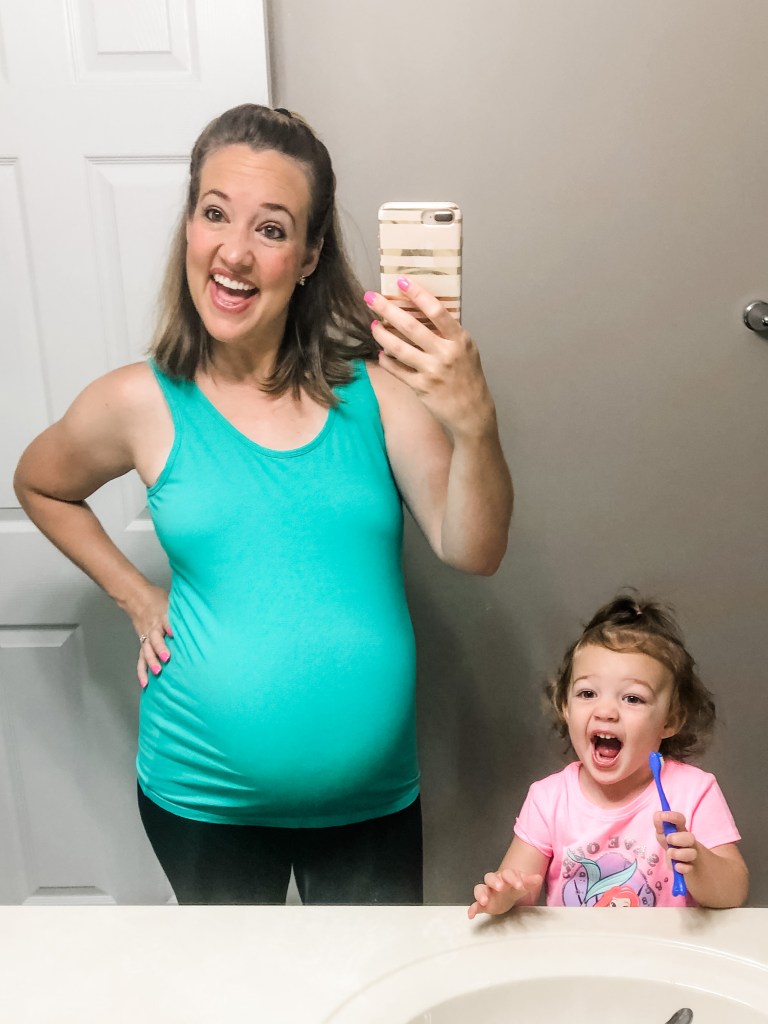
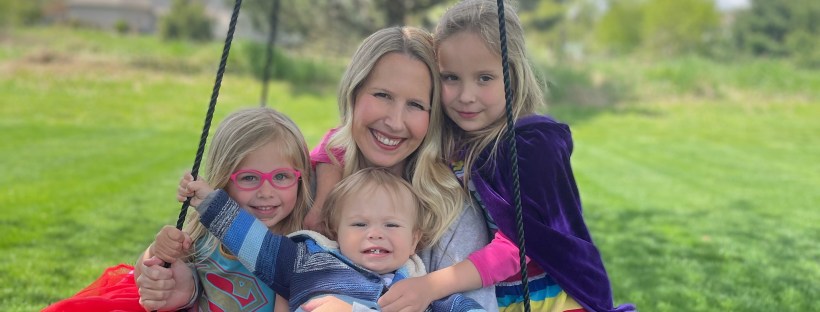
Wednesday, July 14, 2021 my family grew to five and I became an IBD mom to three kids, four and under. Our latest addition, Connor Christopher, completes our crew.
On the day of my scheduled C-section and Connor’s birth, I felt overwhelmed with emotions. So many thoughts and feelings came to mind—from knowing I would never be pregnant again to recognizing that from this point forward I would never feel the deep remission I experience when I carry a life inside of me.
There are so many sharp contrasts in what pregnancy and deliveries have meant in comparison to life with Crohn’s.
The unpredictable nature of Crohn’s but having three scheduled C-sections all go to plan.
The way it feels to head to the hospital for a good reason.
The fact that my Crohn’s comes up as an aside when conversing with medical professionals and my pregnancies and being a mom comes first as my “identity.”
The perspective and strength IBD has given me when it comes to coping with painful pregnancy-related issues like SI Joint Dysfunction, Symphysis pubis dysfunction, acid reflux that required prescription medication, and C-section recoveries.
The incredible pride and joy I feel knowing that the girl who found out she had a debilitating lifelong disease 16 July’s ago, has carried three pregnancies to term and has a family of five to show for it.
If you’re like me and have dreamed of one day being a mom, explore all options to get there and don’t let your IBD hold you back. You are not less than because of your chronic illness, you are more capable than you think. Your body may surprise you in ways you could never imagine. To me–my children are proof of all that’s possible despite chronic illness.
When I was 21 and found out I had Crohn’s disease, one of my greatest fears was the uncertainty of what my future would look like personally and professionally. While the unknown was daunting and overwhelming, I never really allowed myself to think of not becoming a mom because of my disease. Instead, I shifted my focus to recognizing that getting there may take some detours and careful planning.
Thank you for all the well wishes for my family over the years. Your kind words, interest, and prayers, have meant the world to us and helped me to realize that even though I’m an “IBD” mom… I’m so much more.
Let’s face it, when you live with IBD, packing for a hospital stay isn’t anything new. We know what we need and what we won’t. We know the necessities and even with a C-section recovery, it’s nice to have a positive and happy reason to be going to the hospital. But this time around, my hospital bag for delivering my son this week has an addition. Since I’m participating in the Pregnancy in Inflammatory Bowel Disease and Neonatal Outcomes (PIANO) study, my son and I will be getting our blood drawn the day he’s born and cord blood will also be taken.
The blood sample kit includes an ice pack and vials that are labeled “Mom”, “Cord”, and “Baby”. This will measure the level of biologic drug in our bodies…and the coolest part is, I’ll get to know the results, while also contributing to research for current and future IBD moms on biologics. I can’t wait to find out how much Humira is found in our blood samples. The most ironic part of all? My scheduled C-section just happened to land on the same day as my loading dose anniversary of Humira… 13 years ago! Little did I know when I was injecting myself for the first time how my life would evolve to what it is today.
Background on the PIANO study
PIANO is an observational, multicenter study launched in January 2007 with the main focus to look at whether there is an increased risk for worsened maternal and fetal outcomes when a woman takes a biologic or thiopurine (a type of immunomodulator) therapy during pregnancy. Prior to this, lack of safety data has led many women to discontinue their therapy during pregnancy, which can lead to health repercussions to both mother and child.
On delivery day, it will be a team effort. My OBGYN and the nurses will ensure everything is taken care of and then one of my family members will make a stop at FedEx (within 3 days) to ensure our blood samples make their way safely from Missouri to California.
What else is packed in my bag?
This c-section will be my fourth abdominal surgery in less than 6 years, all on the same incision. Knowing what to pack so I can heal and be comfortable is almost second nature at this point.
Comfy nightgowns with buttons so I can easily breastfeed and keep my incision waistband-free
Two robes
Nursing bras
Cozy socks
Frida Mom Boy Short Disposable Postpartum underwear (not a fan of those mesh panties from the hospital!), I’ve also heard Depends are great!
Slip on shoes/flip flops (for the shower and walking the halls)
5 masks (planning to be admitted 4 nights, 5 days) and hand sanitizer
Nipple cream (I prefer the Motherlove brand)
High-waisted joggers and a nursing top
Summer dress for the drive home
Phone charger
Non-perishable snacks
Toiletries
Outfits and swaddles for baby boy
Newborn pacifiers
The results from the blood draws are expected about a month after delivery. I’ll be sure to share an update on my Instagram page (@natalieannhayden). Interested in enrolling in the PIANO study? Please call 415-885-3734 or email PIANO@ucsf.edu.
July has been my least favorite month for the last 16 years of my life. It’s the month I was diagnosed with Crohn’s disease. The month I had an abscess the size of a tennis ball in my small intestine. The month I was put on a biologic medication. The month I had a bowel obstruction that led to bowel resection surgery. You get the picture. But now, it’s about to be the month I give birth to my third child. Baby boy is about to flip the script on a month that previously brought dread. Instead, I can focus on celebrating his new life and all his birthdays and milestones for years to come.
Photo credit: Heather Roth Photography
As a woman with IBD, motherhood has continually provided me with reminders of all my body is capable of despite my chronic illness. It’s shown me what once may have seemed unattainable, is possible. Motherhood is a constant reminder that my body hasn’t always been at odds with me. That despite the challenges and the pain all these years, it still afforded me the opportunity to carry healthy babies to term. Rather than feeling like my body is the enemy, motherhood has made me think of my body as my ally. We’ll have our ups and downs forever, but for 27-plus months it’s been a safe haven for my children. I’ve enjoyed flawless pregnancies and deep remission. It’s given me a chance to feel like a “typical healthy” woman, if only for a moment. Pregnancy has felt like a security blanket wrapped around me, and is soon to be no more. With that, comes an immense amount of gratitude, as well as anxiety, as from this point forward it’s just me and my Crohn’s…no buffer.
It feels weird going into this month of July not worrying about what could be, but rather being excited about what’s to come. When I was younger and prior to getting married, I avoided making plans in the month of July—especially life changing ones! My wedding, vacations, etc. were all coordinated around this month because I didn’t trust the way my body could blindside me.
Preparing for the shift in health
While I am ready for my son to be here and over the discomforts of pregnancy, a part of me is sad that I’ll never feel this well again. Within days of delivering Reid and Sophia, the gnawing abdominal pain associated with IBD crept back into my life before I even had a chance to bring my babies home. I expect the same will happen this time. While it was discouraging then and will make me feel the same now, I’m hopeful the shift in hormones won’t throw me into a postpartum flare and that I’ll find comfort in knowing from this point forward, every medication, every procedure, and every hospitalization will be done without a life growing inside of me.
Over these last nine months I’ve enjoyed eating popcorn with my kids for the first time, drinking a cup of coffee without a need to use the bathroom right after, and nearly 40 weeks of baby flutters and kicks instead of pain. It’s been a great run. I hope my experiences through family planning, conception, pregnancy, and motherhood provide you with an understanding that IBD doesn’t mean you can’t have a family. While many sadly struggle with infertility, complications, or not physically being well enough to carry a baby, it’s very possible that you can. Whether it’s stories like mine or the opposite, remember each of our journeys is unique. Don’t base your experience and capabilities on someone else, but when something or someone inspires or empowers you to go after what you dream of, hold on to that.
Baby boy will not only complete our family but serve as a constant reminder of all that is possible. While my Crohn’s has brought a great deal of heartache it’s also allowed me to gain a unique perspective and to never take life’s miracles and triumphs for granted.
Starting on a biologic and finding one that helps manage your IBD can be challenging physically, mentally, and emotionally. Nearly 13 years ago (July 14, 2008) I sat in my GI’s office like a fish out of water petrified of injecting myself with four Humira shots. I remember how daunting and overwhelming taking the plunge into life on a biologic was and know I would have given anything to hear firsthand experiences from fellow IBD patients. This inspired me to launch a special series on Lights, Camera, Crohn’s hearing firsthand accounts from people like you and me, living life on biologics. So far, I’ve covered Remicade and Entyvio.
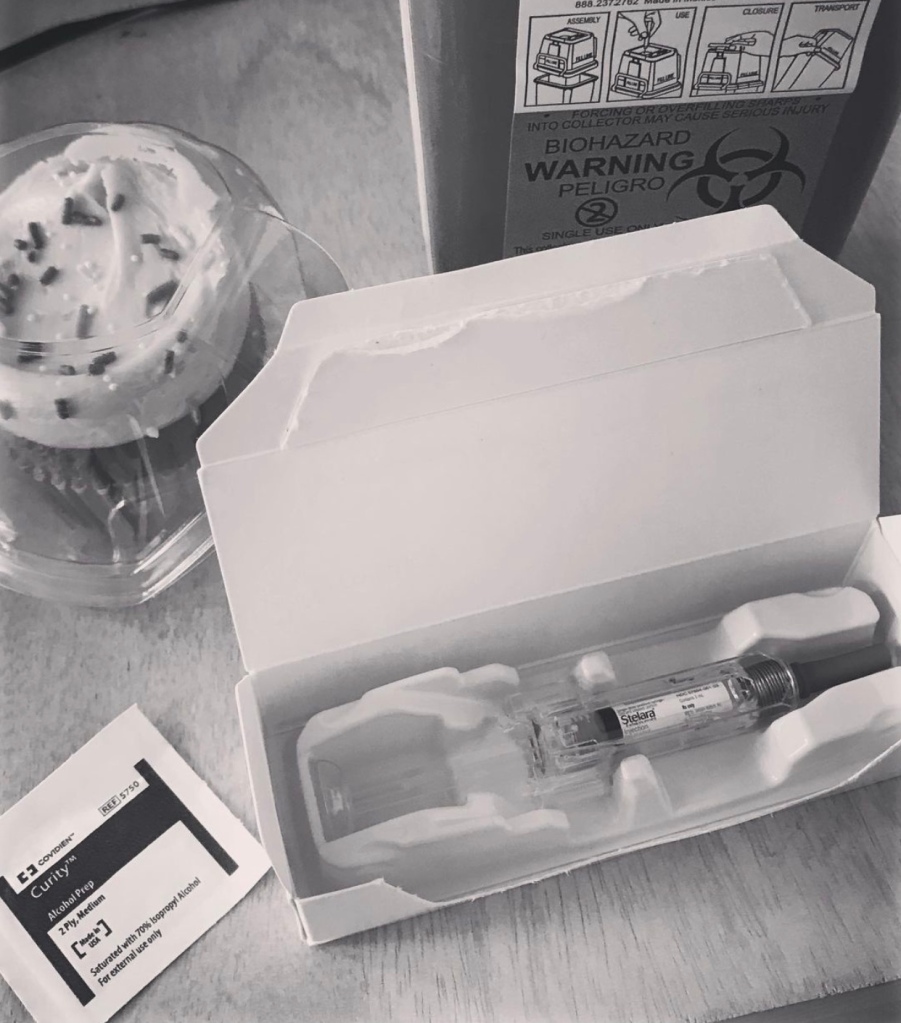
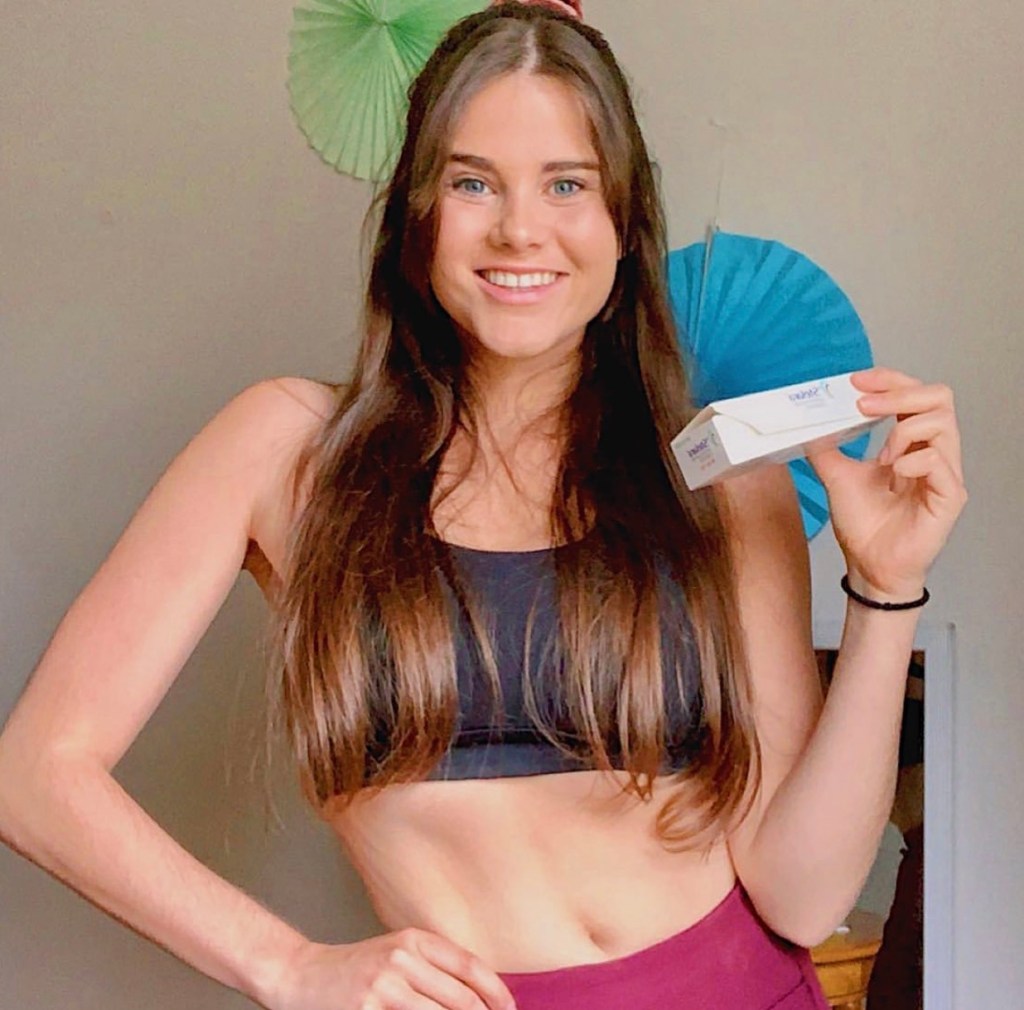
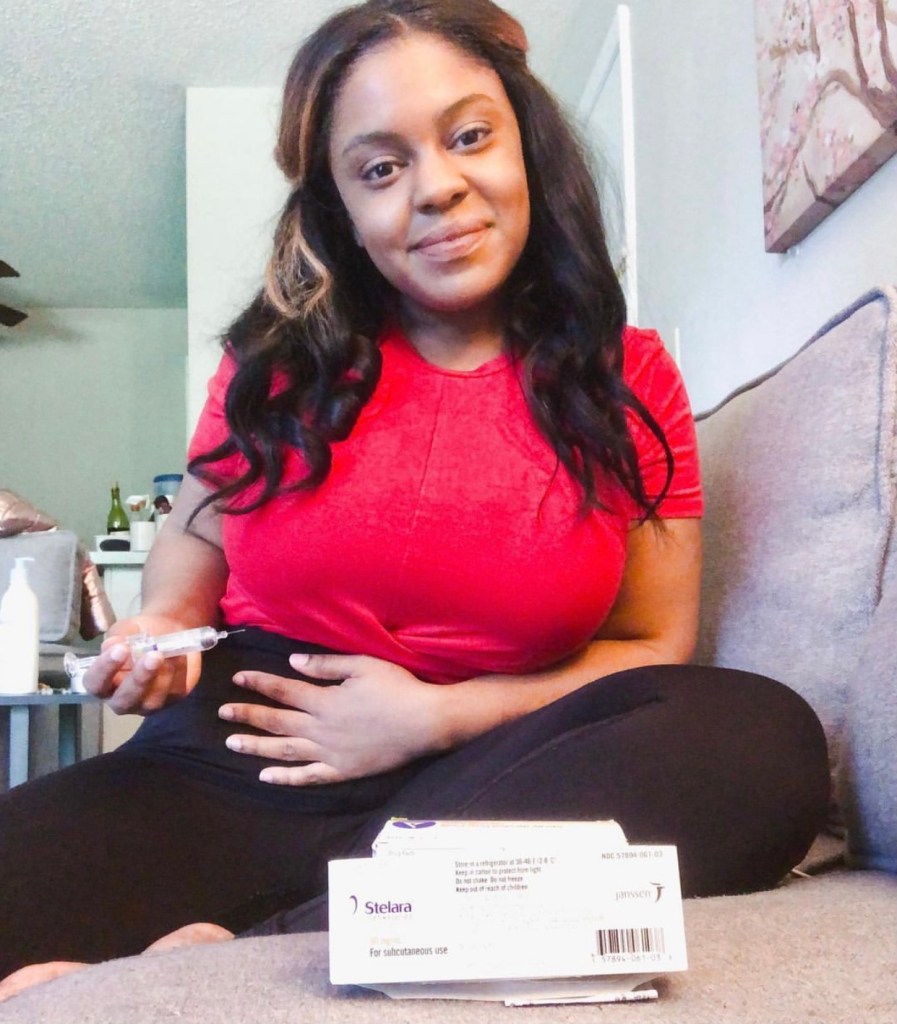
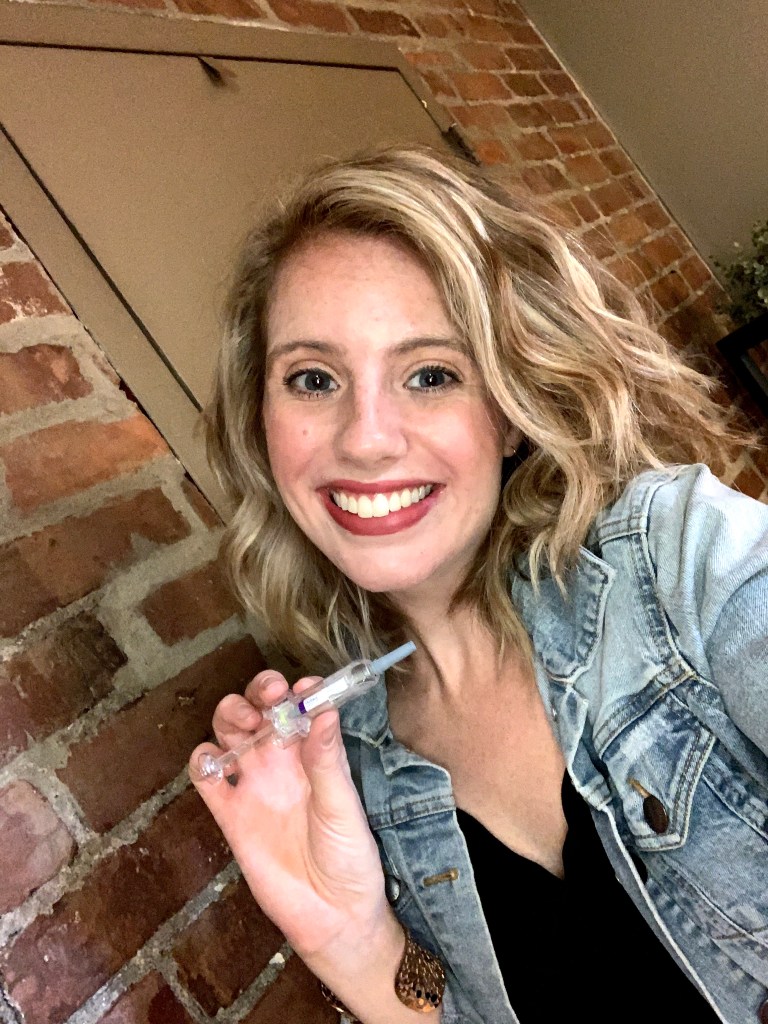
This week—we tackle Stelara (ustekinumab). Stelara is categorized as a human interleukin-12 and -23 antagonist. Patients receive a one-hour loading dose infusion and follow up with an injection every 8 weeks. As you’ll read, some patients receive their injection every 6 weeks, others every 4. Stelara is indicated for Crohn’s disease, ulcerative colitis, severe plaque psoriasis, and active psoriatic arthritis. As a biologic, it joined the IBD game in September 2016 for Crohn’s disease and October 2019 for Ulcerative Colitis.
“I’ve been on Stelara for almost 5 years. I started taking it right when the FDA approved it for Crohn’s disease. I have only good things to say, because it’s keeping me in remission. It’s easy to administer and doesn’t burn like Humira used to (prior to the Citrate-free formula). I stayed on Stelara throughout both my pregnancies. My GI had me skip my last dose both times I was pregnant, and I re-started my injections once the babies were here,” said Ashley Miller.
Patient Advocate and Co-Founder of IBD Desis, Tina Aswani Omprakash, joined a clinical trial for Stelara to treat her Crohn’s disease. She says it took months to work, but it was the first time in a decade of having IBD and enduring more than 20 surgeries that she was able to achieve remission.
“At that juncture, I thought my life would always be in shambles and that I would never be able to rise from the ashes of this disease. But here I am today pursuing advocacy work and going to graduate school part-time. Modern medicine is nothing short of a miracle and I can’t help but count my blessings every single day to have been given another chance at life again. Thank you, Stelara, for making me whole again.”
Click here to learn more about Tina’s clinical trial experience with Stelara.
Making the Switch
Lauren Gregory is an IBD mom and a pediatric hospitalist. Even as a physician herself, she was nervous about switching biologics. Prior to starting on Stelara, she took Humira injections for 8 years. Unfortunately, the Humira induced numerous medication related side effects that really affected her quality of life.
“I was worried that Stelara wouldn’t work and that I would feel even worse. Switching medications ended up being the best decision. I have been in remission since starting Stelara four years ago and feel better than I have since diagnosis. Stelara also allowed me to have a healthy pregnancy and baby!”
Jenna Ferrara recently made the switch from Remicade to Stelara. Last week, she did her first self-injection and says Janssen was beyond helpful throughout the process. Click here to learn about the Nurse Navigator Program. The program provides a registered nurse (in-person) to help support you as you learn to give yourself injections.
“Between the nurse navigator and sending a training nurse to my house, they made it so easy. I was nervous before my first shot, but thanks to the nurse, it was great!! I’m still waiting to see results, but things have been slowly getting better after only two doses.”
“I tried Stelara after Humira failed me and it never helped or worked from the start, but regardless it was sold to me as the best option. My attending at the time even said it was his top choice for patients and would have put me on it from the start if he had been my GI who diagnosed me. I was super disappointed it failed, but now I’m on Remicade and feeling better than ever,” said Julie Mueller.
Erin O’Keefe was diagnosed with ulcerative colitis in 2017 and initially was able to control her IBD with mesalamine. She started Humira in January 2020 and had what was believed to be a drug-related reaction that landed her in the hospital for 2 weeks and the ICU for 3 days.
“After I was discharged, I was started on Stelara, and I couldn’t be happier with the results. My symptoms are minimal, and I have even been able to re-introduce foods that I tended to stay away from. The injection is easy and I’m so happy not to be taking pills daily. Fingers crossed I can stay on Stelara for many years to come!”
“My 15-year-old son started Stelara last fall after a Humira fail (he was on Humira for 4 months when he developed psoriasis). It seems to be working as his markers and symptoms have slowly subsided. He has also put on some much-needed weight. Therefore, his doctors have recommended that he step up to the adult dose. Their aim to fully eradicate the inflammation—his calprotectin is still elevated. While Stelara is approved for pediatric use for psoriasis, it’s not yet approved for Crohn’s…so there have not been any studies.”-Michelle Boas
Hayley Weiss had to switch to Stelara after Humira caused her to get Psoriasis on the bottom on her feet and the palms of her hands. She just celebrated two years of being on Stelara. The 8-week dosing wasn’t doing enough to keep her IBD under control, so she was switched to every 6 weeks.
“I was doing well for awhile on the 6-week injections, but then at about 5 weeks I was getting symptomatic, so my doctor decided to actually give me another loading dose and I kept on with the 6 weeks for a little while until September of last year. At that time, my doctor approved me for every 4 weeks and that is what I have been doing.”
“I switched to Stelara from Humira in February 2019. I feel the best I’ve ever felt in a long time. A lot less breakthrough flares, energy levels are back, and inflammation numbers are lower than when I was on Humira. I haven’t had any negative reactions and have zero complaints!”- Erin Forman Carmiel
Martin R. was on Humira for about a decade. During that time, he calls the drug a “game changer” for bringing stability to his life when it came to managing his Crohn’s disease and reducing the need for steroids and antibiotics.
“After the regular blood tests for the azathioprine which I’ve been taking since 1992, I showed I had developed antibodies to Humira. I chose Stelara two years ago and it seems to have taken over where Humira left off. I don’t have additional side effects and a longer interval between injections, so that’s a bonus.”
After two years of remission, special education teacher, Jasmine Edwards, started flaring, despite being on Entyvio. Previously, Humira and Remicade gave her drug-induced lupus. Now, after just receiving her first dose of Stelara, she’s hoping the fourth biologic is a charm.
“I’m looking forward to the freedom of not having to get monthly infusions at the doctor’s office. I really hope Stelara puts me in LASTING remission so I can get back to a better quality of life. I’ve been feeling well since my loading dose infusion, but I’m also on prednisone. The only side effect I had after the infusion was feeling tired. In four weeks, I will administer my first at-home injection. I’m nervous about giving myself a shot because with Humira I used the pen, but I’m READY for remission, so I’ll try anything!”
Amanda Hart has had two doses of Stelara so far. Unfortunately, her MRI still shows new inflammation.
“I’ve been increased to once every 4 weeks. If there is no improvement in three months with the higher dosage, I’ll be looking for a new approach. I was originally on Humira, but switched due to my symptoms. Sadly, the symptoms on Stelara have been worse and my diet is more restricted then when Humira was not considered effective anymore.”
Alli Butler was previously on Humira, she finds Stelara makes her feel similarly.
“I’m currently taking Stelara, it has worked great for me and got me through my third pregnancy. Hoping it continues to work well through my postpartum experience.”
Tips for Self-Injecting Stelara
Lori Plung has battled Crohn’s disease for more than 40 years. Since that time, she’s been on four different biologics. She credits Stelara as her easiest patient experience.
“Remicade and Entyvio are obviously infusions—they took time and planning to organize appointments at infusion centers and waiting there while being infused. I was on Humira which was nice to have the freedom to inject at home, but I didn’t like the pen model of injecting. I haven’t had any problems with Stelara. I started my loading dose infusion in April 2019 and give myself the injection every 8 weeks. I love that it’s a pre-filled syringe and that I can do the injection in my home.”
Claire Paschall recommends taking the injection out of the fridge so it can warmup to minimize the burn.
“The automatic needle pullback jolts if you take your thumb off once done and it can hurt (so slowly take your thumb off). I feel like it took longer to build up in my system than Remicade and Humira, however I haven’t had any side effects to report. I have been flaring with my rectal disease, but my small intestine disease is in remission.”
Plea for a Pen-Style Injection
Courtney Meyer started Stelara in March and immediately saw improvement with her symptoms. Previously, she had tried Remicade, Humira, and Entyvio.
“It’s so nice not to have to get an IV after the loading dose. The only downside is that it doesn’t come in a pen option like Humira, and I have difficulty with needles, so I get it administered by a nurse in my GI office every 8 weeks. They inject it in the back of my arm, so I don’t have to deal with the usual stomach or thigh injection sites. It’s the most convenient and easiest treatment of Crohn’s that I’ve been on in 15 years! I was able to stop other medications and I’m just on Stelara. No side effects so far.”
Julianne Bossert was diagnosed with Crohn’s more than 25 years ago. She was on Humira for almost 5 years and says it worked great, until it didn’t. She started Stelara in February and is gearing up for her fourth dose next week.
“I feel like I’m on the cusp of getting better, but not quite there yet. I’m about two weeks out of being off steroids that I have been on for a year. So, my crutch is now gone, and we will really begin to see if Stelara is working. My two biggest complaints are the shot itself. It’s not a pen like Humira, which was way easier to administer. The syringe is way scarier, and they show you how to inject it once and then off you go! Awful anxiety. The other complaint is how different the relief is. When I was due for my Humira about two to three days leading up to I was in bad shape…very sick. But I’d get the injection and feel better within an hour. Leading up to Stelara, I feel awful, get the shot, and still feel awful for days. The turnaround time isn’t as quick for me.”
Emily Beaman is an IBD mom of two who initially started on Humira and was switched to Stelara two years ago.
“I will say the only thing I don’t like is the injection. I prefer the Humira pen-style. I have yet to be able to give myself the injection which means I have to rely on my husband to do it. I find it hurts more than the original Humira did for me (the Citrate-free version wasn’t available while I was on it) I really wish they would come out with a pen-style injection. I worry about if I ever had to give it to myself…that I wouldn’t be able to.”
Stelara Tips for the IBDMom (or Dad!)
Brooke Abbott is a patient advocate, single mom, and co-founder of IBD Moms. She shares helpful tips for administering the injection whether at home or at your doctor’s office.
If injecting at home:
Keep an injecting kit. Have a small kit prepped with alcohol wipes, band-aids, and cotton balls or pads.
Prep the night before. Hydrate as much as possible and make sure you have your kit ready and prepped.
Injection day. Make it a relaxing event. Have your injection before a family movie night so you can get some cuddles in after injecting yourself or being injected.
Normalize your treatment. “Practice” with your little ones with a play doctor’s kit. I used to always play doctor and do fake injections, to normalize living like a patient for my little one.
If injecting at the doctor’s office:
Book Appointments to include self-care time. I try to book appointments for my injections early in the day so I can have time after to do something for me. Whether it’s going to grab a coffee and read, meet with a friend, or have a nice lunch.
Take the LO (little one) with you. I am all about including my LO in my patient life. I want him to be able to ask questions and voice concerns. So sometimes when he is out of school, I will take him with me. It’s good for him to hear the progression of the treatment and to see mommy being brave and getting an injection.
Multitask. Try and take all your blood tests and everything at one time. That way you don’t have to make any unnecessary trips to the doctor’s office.
Let’s Talk Side Effects
Overall, the consensus from patients was little to no side effects—which is a HUGE win. Of course, each person’s experience with IBD and with biologics is unique.
Stelara is the first biologic for Shanna Quinn. She started on it in July 2020 following bowel resection surgery. She found starting off with an infusion was a bit “scary” and much preferred giving herself a shot which she says is “so easy.” In her opinion, making the decision to start a biologic was the biggest hurdle, rather than choosing one.
“It doesn’t hurt, although you do have to go slow or else the medication will sting a bit. One drawback is that I get tired afterwards. I’ve learned to take the day and relax and sleep, if needed. I do my shots on the weekend to allow for that. My GI and I discussed a few options before choosing Stelara. I took a test that asked questions about priorities, risks, concerns, etc. The results gave me details about how each biologic stacked up against your concerns and priorities. Take the “IBD&Me” test for yourself here. Knowing you may need to be on a medication for life or knowing it may fail you is hard to wrap your brain around. I hope IBD will get way more targeted and specific regarding treatment options.”
A patient who wishes to remain anonymous has found the side effects of Stelara to be more draining than Remicade, but not as bad as Entyvio. He says the first three days after the injection he needs considerable rest.
“I have also noticed systemic night sweats as far out as five weeks after the injection. For me, this is unique to Stelara in terms of my individual experience. The silver lining is that Stelara seems to have generated more stability and normalcy from an IBD symptom perspective. My level of disease is quite severe and to date, Stelara has had the best outcome. One drawback however is that insurance companies are less willing to grant physicians discretion to prescribe more frequent injections. My GI has said he faces greater pushback on Stelara specifically.”
Paula Hepburn has been on Stelara for 1.5 years, it’s the only biologic she’s been on thus far. She feels like it’s working well to control her Crohn’s disease.
“The first infusion gave me crazy fatigue for four days and I often get tired after each injection. Sometimes it only lasts a few hours, sometimes into the next day. I feel fortunate to have access to this medication because it helps control my IBD so well.”
Madison Morgan has been on Stelara for 2 years. She started it following an ileocecal resection that involved the removal of 8 inches of intestine. Madison finds the injections to be easy. She does experience some side effects though.
“I get a headache immediately after the injection that lasts about 15 minutes, the worst side effect I’ve had is yeast infections and UTI’s, I’ve never had them until Stelara and have had 6-7 yeast infections in the last two years and 2 UTI’s. A couple weeks before my Stelara injection (once every 8 weeks, 95 mg), my arthritis from my Crohn’s gets pretty bad, but seems to get better after my injection.”
“Stelara has been amazing! Aside from the infusion loading dose, it’s quick and easy and fairly pain free. I have minimal side effects other than sometimes feeling sleepy after my injection, but other times I have crazy energy. Overall, this is the only biologic that has worked for me for more than a couple of years.”-Bethany Lowe
“I’ve found the injections to be almost painless and I’m a huge wimp with shots. It took a few tries to find the right timing and frequency for my shots, but I do them every 4 weeks and approximately 1-3 days before each shot, I start to get some IBD symptoms…so I know it’s working!”-Danielle Fries
Olivia L. was diagnosed with ulcerative colitis 20 years ago. She’s an IBD mom of 3. Lucky for her, she was able to get through the first 18 years of living with IBD without being on a biologic. Unfortunately, she experienced a postpartum flare two years ago that is still wreaking havoc on her life.
“I started Stelara about a year ago. It’s super easy to use. The only side effects I’ve felt are being tired for a day or two after the injection. I feel quite lucky that I was able to start Stelara, rather than other options. It’s easy to take because you do it at home, and the side effects are non-existent for me. Unfortunately, it hasn’t been as effective as we had hoped. I do my injection every 4 weeks instead of 8. From a tolerance and side effect standpoint, Stelara has been a good medication for me, but it still frightens me to be on a biologic. I know everybody manages this dance in their own way.”
Krista Cherrix has been on Stelara for one year. She prefers the syringe injection over the Humira pen but has unfortunately dealt with weight issues since starting it.
“I have gained a TON of weight on it and can’t seem to get it to budge even with diet and exercise. I also have not been able to get pregnant so far, which isn’t necessarily the drug, but I got pregnant with my first (pre-diagnosis) without trying.”
“I took Stelara monthly for nearly 2 years and had no side effects. My diarrhea was still frequent and after having an MRI and a colonoscopy, the results showed that I still have significant inflammation in my small bowel. I am going to be starting Humira in hopes of healing the inflammation.”-Marsha Gagnon
Dealing with Insurance and Cost
Shawn Bethea is an IBD patient advocate and author of “My Tummy Really Hurts”. Overall, she considers her experience on Stelara to be good, but wants others to know there have been some hurdles to cross along the way.
“At first, I truly didn’t think the medication would work for me. I was placed on the standard dosing and scheduled to receive my injection every 8 weeks. During the initial weeks I’d feel great! I had more energy and didn’t feel the sharp pains as I usually did (in my stomach area). I wasn’t going to the bathroom as often and even my Eczema seemed to be clearing up.”
However, after those first initial weeks, she noticed a decline. Her energy decreased, her Eczema became bothersome, and her joints would ache. She communicated her concerns with her GI who prescribed injections every four weeks.
“With any high dollar medication comes unique challenges to those of us who don’t live on a Beyonce budget. Between my insurance, the patient assistance program, and copay, the drug was running about $20,000 monthly. When you have insurance and nothing changes like a lapse of coverage or a job change, this is something you can possibly juggle (depending on the level of coverage/assistance, but mine was pretty good). The problem came in when I changed jobs, lost insurance, and had to wait for new insurance to take effect – which was delayed, of course.”
Shawn stopped taking Stelara, due to lack of insurance coverage, everything was impacted. She began to experience joint pain, became extremely tired, and was using the bathroom more—even experiencing extreme constipation.
“Overall, I love Stelara, but I hate the way our healthcare system operates. No drug should run half of someone’s salary monthly. But I subscribe to the system because I simply want to live and be healthy like everyone else.”
Jacquie Persson has been on Stelara since 2019. She started off with the recommended dosage of injecting every 8 weeks, but after 6 months, she was moved to every 4 weeks.
“Since starting Stelara, my Crohn’s disease has been well-managed I haven’t had to take prednisone since 2018, after depending on steroids on and off from 2016-2018. Financially, being on this drug is a little anxiety inducing. The list price is over $20,000 per injection and I’m constantly on edge wondering when or if my insurance will decide to stop covering it. My copay is over $200. I currently have copay assist which brings my out of pocket down to $5, but what if that program were to go away?”
“I started Stelara in December 2016 after Remicade failed me. I had success with small flares here and there. In March of 2021 I had a big flare—my first in about 5 years and was out of work for 2 months. My GI wanted to increase my Stelara from every 6 weeks to every 4, but my insurance repeatedly denied it and just finally approved it about a month ago, thankfully in time for me to be feeling better.” – Mary Fordham
“The dosing is wild! I started at 8 weeks and now I’m moving to six…and I know some people on every 4 weeks. Insurance has a really hard time approving more frequent injections.”-Catalina Berenblum
Click here to learn more about Janssen’s CarePath Savings Program for Stelara.
Success Stories on Stelara
“Stelara has been a Godsend for me. I had an ileocolic resection nearly five years ago and have maintained remission with Stelara and azathioprine since my surgery. The side effects have been minimal. For me, it’s been one of the easier injections I’ve used. It doesn’t sting or burn like Humira did prior to the release of the Citrate-free version. I take Stelara every four weeks instead of the typical eight.”-Jennifer Ryan Carmichael
Amanda Pennwell was diagnosed with Crohn’s when she was 8 years old. She’s now a mom of 3 and due with her fourth baby this October. She’s been on almost every drug approved for Crohn’s disease. She says she can honestly say Stelara has changed the severity of her Crohn’s the most significantly, with the least amount of side effects and the biggest improvement to her day-to-day life. She started Stelara in April 2019 after flaring with her twins. She was able to get pregnant, have a smooth postpartum experience and breastfeed her third baby while on it.
“Stelara helped me get my life back. This is something I never dreamed my broken body would ever be capable of doing. I’m so thankful that Stelara is continuing to work for me. I have been healthier than ever. I work out all the time and my body feels strong. I haven’t experienced abdominal pain more than a dozen times in the past two years. It’s truly remarkable. Stelara has enabled my husband and I to chase our dreams while raising our babies! I work part-time while staying home with the kids. We our building our dream home and I know I couldn’t keep up with it all if I felt the way I did two years ago. I’m thankful for research and better IBD drugs like Stelara.”
Patient Advocate, Founder & President of Patient Authentic, Lilly Stairs, credits Stelara for saving her life.
“I have been in medically controlled remission for nearly 8 years from all three of my autoimmune diseases – Crohn’s Disease, Psoriatic Arthritis, & Psoriasis. I went from bleeding ulcers in my small intestine and total body arthritis that left me paralyzed in pain to living symptom free and thriving as a solopreneur. I am so grateful for this brilliant medical innovation and only hope that someday all autoimmune patients can have this type of experience on a medication.”
Check out previous biologics that have been featured on Lights, Camera, Crohn’s. These articles have NO affiliation or guidance from pharma. All content was created thanks to countless IBD patients sharing their personal patient journeys with the hope of helping others.
For IBD mom, Suzy Burnett, reflecting on the past year and half of living through the COVID-19 pandemic causes her to feel flooded with emotions. She knew having three children under the age of five at age 41, while dealing with the ebbs and flows of Crohn’s disease, would be challenging. She delivered her son, Guy, just as COVID cases were starting to soar. Now, she’s able to look back on how her family adapted and thrived, despite the difficult circumstances of living through a global pandemic with a chronic illness. I’ll let her take it away…
Like many families, we’ve worn masks, stayed at home, literally have seen no one except our wonderful neighbors, and made sacrifices to ensure the safety of ourselves and others. We made the difficult decision not to send our 5-year-old to kindergarten, rather, enroll her in virtual 4k from the confines of our home. Our 3-year-old also didn’t attend preschool a few mornings a week like we had originally planned. We have noticed the lack of socialization has impacted her the most. Our 15-month-old is just now meeting family and friends for the first time. He takes stranger danger to a whole new level, but we know he’ll warm up in due time.
My husband, like so many others, started working from home. What was once thought to be a temporary safety precaution, has become a permanent situation. He continues to work in a room without doors while the wee ones race around playing superheroes. Noise canceling headphones have become a lifesaver. All of us together at home, day after day, month after month. Our bond has grown deeper, and our Burnett Party of 5 has survived. I can honestly say we live fuller, laugh harder, hold each other longer, and love deeper.
Dealing with the lifting of the mask mandate
Just as we were beginning to get used to our personal version of Groundhog’s Day, the mask mandate was lifted. This is a huge milestone, but with that brings excitement along with anxiety. My husband and I are both vaccinated, but our 3 young children will have to continue to wait their turn. To say we’re trepidatious about starting to acclimate back into society is an understatement. We’ve been in our little bubble on Welcome Drive for more than a year. I don’t think things will ever get back to “normal,” per say, but we’re looking forward to what our “new normal” will be. It’s a new beginning, a fresh start to be more present, and we have the opportunity to give precedence to things that matter most in life. Things will be a little different than before, and we will always remember and carry the weight that was and will forever be COVID.
We will continue to have our groceries delivered as well as basic necessities, because it’s unclear who is vaccinated, and I’m not going to rely on the honor system of strangers to keep my kiddos safe. However, I am beyond the moon ecstatic that our girlies will both be doing outdoor soccer and playdates with other vaccinated families. My husband will continue to work from home, but this is a change we welcome and greatly appreciate. It has given us time as a family we never knew we were missing. Our oldest daughter, Lucy, will finally be attending kindergarten…….wait for it….IN PERSON. I am so proud of her. She’s sacrificed so much these past several months. She’s handled herself with grace and class far beyond her years. We’re planning our first family trip in over two years, and I am completely overwhelmed at the mere thought of the happiness this will bring.
Coming out stronger than before
It has been months of peaks and valleys, but our mountain remains strong. On top of enduring the pandemic, we lost our family cat, Miles. He was a furry friend to our littles when they couldn’t see their own friends. My dear Grandma Connors was called amongst the angels, and now she protects us from above. I also recently almost lost my sister due to a post birth hemorrhage, but now she rests safely at home with her baby boy. And I am recovering from a nasty bout of C.difficile. Yes, the one time I left the house I picked up a bacteria from the hospital. Through it all though, we’re stronger than ever before because of our strong family foundation.
My point in saying all of this is that we all go through our own struggles. Life is so unexpected, and often we can’t choose what we’re dealt. We can, however, choose how we handle the storm. We’re so grateful for our health, happiness, and each day we’re given. Take NOTHING for granted because every day is a gift. Everyone has been impacted one way or another these past few years, and now it’s up to you to see where your ship will go as you navigate life with IBD and in general. As the tides of the ocean swiftly change, so will the moments in life. Savor the moments.
When Campbell Dwyer was three years old, her health took a turn for the worse. She was diagnosed with Hirschsprung disease, a rare congenital disease that affects the colon and intestinal motility. She underwent three surgeries by the time she was four.
Her life began with two colostomies before she transitioned to a permanent ileostomy in her thirties. After her 10th surgery, she joined several online support groups geared for those with ostomies. To her surprise, she discovered there were many children who had ostomies.
After doing research, Campbell was shocked about the lack of literary support for children coping and coming to terms with ostomy life. She decided to change that by creating a book series called “My Silly Illy”.
“I want children to understand having an ostomy does not define them. It is simply a piece of them that contributes to their individuality. My hope is that this book will help teach inclusion and acceptance.”
Her thought-provoking, heartwarming, and humorous story aims to help children understand what is happening with their bodies and how to thrive with their new appendage.
The only constant in life is change
Throughout her lifetime of coping with Hirschsprung disease, overcoming numerous surgeries, and transitioning from a state of merely existing to living. Campbell says she welcomed each high and low as part of her transformation.
“Making the decision to write this book series has been my greatest personal success yet. I have confidence that my personal battles with an invisible disease and life with an ostomy will encourage and motivate those younger than me and promote strength to their families. I can finally see that nearly forty years ago, my future was being purposefully designed to make a difference in the world.”
Bringing My Silly Illy to life
Talented illustrator, Ana-Maria Cosma, took Campbell’s vision, thoughts, and scribbles, and brought them to life with the hope of creating a life-changing and eye-opening literary experience for many.
“My vision for this book is that the ostomy will be portrayed to each child as their personal superhero. The last page of the book has a faceless child, this is by design. The child can draw their face, or the loved one can cut out a picture and place it on the spot. There are also fun hairstyles that can be cut out. I want children to see themselves in each page of this book; to see themselves enjoying their favorite foods, traveling, and playing.”
Gearing up for a hospital tours
In the months ahead, Campbell plans to visit children’s hospitals around the United States, as well as bookstores. She’ll be hosting book readings, signings, and round table discussions with families and children coming to terms with ostomy life. Her goal is to champion pediatric ostomy patients and help their loved ones and parents understand what the child may not be able to communicate.
You can order “My Silly Illy” in the following places:
…and several independent book shops (you can do a Google search to get your hands on a copy at a specific location).
Campbell is extremely grateful to her publisher, Gen Z. Publishing for believing in the story concept, supporting her dreams, and making them a reality.
You can connect with Campbell Dwyer on Instagram: @mysillyilly
When you think of a marathon runner what words come to mind? Grit, resilience, drive, focus, strength…the list goes on. Michelle Ladonne, 34, of Massachusetts, isn’t your typical long-distance runner. Not only was she diagnosed with Crohn’s disease in 2010, but she’s also managed to participate in 59 marathons in 35 states and 3 continents. Yeah. You read that correctly. Incredible, isn’t it?!
Like many of us, Michelle is the first person in her family to be diagnosed with IBD. When she was told she had Crohn’s, she frantically started Googling from her hospital bed. All she remembers hearing the doctor saying are “lifelong” and “no known cure”. She was certain she’d been handed a death sentence. Her life, at age 23, flashed before her eyes.
Going the distance
As time passed, Michelle learned how to listen to her body better. She says she’s become better at determining whether pain is a “routine Crohn’s symptom” or an acute issue that needs immediate medical attention. Finding the balance of when to push through and when to rest has enabled her to feel more in control of her life and her disease.
“I used to think that the ideal was to never let Crohn’s hold me back from reaching my dreams, or to not let Crohn’s become an excuse. But the reality is that I live with a chronic condition, and despite all the determination and effort in the world, sometimes Crohn’s wins, and I need to be ok with backing off, resting, and focusing on my health,” Michelle explains.
She admits—she doesn’t always listen to her body. She’s ran some races while in the middle of a flare or not long after a hospital discharge.
“I think with experience – both with running and managing Crohn’s symptoms – I’ve learned when I can push through the symptoms, or when I will make things worse if I don’t back off. I try to listen to my body and accept that sometimes not running is the safest and healthiest choice – whether that means skipping a training day, missing a race, or twice coming to that realization mid-race and walking off the course.”
A team effort between care team and patient
Michelle recalls her experience running in the 2018 Berlin Marathon while in the middle of a Crohn’s flare, about a month after being hospitalized. She says her GI was not overly excited about the idea of her traveling out of the country to run a full marathon.
“My abdominal pain wasn’t well controlled, and I was underweight after having been on a liquid diet for several weeks. But my GI knew how important it was to me and supported me. I started the race knowing that if I didn’t feel well, I could slow down or walk, and worst case, I would stop. I started at a conservative pace and focused on hydrating and tuning into how my body felt. I remember seeing my friend cheering at mile 16, and I ran into her arms and exclaimed, “I am doing it! I’m going to finish this!”
Crossing that finish line felt like the biggest victory for Michelle. Right after finishing the race, she texted her GI doctor a photo wearing a medal and thanked him for his support. True to form, Michelle’s GI reminded her that beer is a clear liquid, and since she was in Germany, she should have one to celebrate!
Persevering through Crohn’s and running
Michelle says having the mindset to persevere through life with Crohn’s and running marathons is similar. She says there’s an adage in marathon running, “when your legs can’t run anymore, run with your heart.”
“Miles 20-26.2 of a marathon bring some of the most brutal pain and physical exhaustion imaginable. At that point, you learn to trust that you are strong enough, tough enough, and brave enough to keep moving forward. You learn to push on when you feel like giving up, because forward is the only option,” says Michelle.
During a recent 22-day hospitalization, she was in more pain than ever before. COVID visitor restrictions left her feeling lonely, anxious, and afraid. She had to draw upon that same reserve of mental strength as at mile 20 of the marathon. She was physically and mentally spent but knew that digging deep and pushing forward was the only option.
“Just like in running marathons, I had to trust in my experience; I had overcome other challenging situations when I wasn’t sure that I could, and this was just one more challenge that I would eventually overcome.”
Michelle’s advice for fellow IBD runners
Figure out how nutrition factors into your running – specifically what you eat and drink before you run. It can be different for everyone. Some of it is trial and error. If running a shorter distance, Michelle doesn’t eat 2-3 hours prior. For longer distances, fueling becomes more important, so she’ll eat something soft and “safe”, like white toast with peanut butter and honey.
Plan your route in advance and evaluate the bathroom options. For longer runs, particularly if you are flaring, try to be strategic about running in locations with bathrooms. Think about local parks, gas stations or fast-food places (support those businesses after your run!). In a pinch, construction porta-potties work, too.
Don’t perseverate on the bad runs. You’ll have them – the days where everything hurts, you are exhausted, and it’s just a miserable kind of slog. Choose to celebrate the victory of having made it out the door. Know that just like Crohn’s, the bad days happen, but so do the really good ones, and that’s what makes it all worthwhile.
Not allowing Crohn’s to keep her on the sidelines
Michelle is grateful she’s able to run, and do what she loves, despite her disease. She knows not everyone with IBD is able to be physically active. While Crohn’s has sidelined her at times, it’s never completely robbed her of her passion or changed her focus. On the difficult days, Crohn’s has made her even more appreciative of running and the gift that it is to her.
“On the days when I don’t feel like running – it’s too cold, too hot, too rainy – I remind myself that I don’t “have” to run, but I “get” to run. Not everyone is so lucky, and I don’t take that for granted. Having Crohn’s, it is easy for me to think of my body as somehow broken or defective. Running has helped me to appreciate that my body is capable of some amazing things. Running has taught me to focus less on what my body looks like (the weight fluctuations of flares and steroids can be tough!) and more on what my body is capable of.”
Taking steps to control fatigue
Even though Michelle clearly has magnificent endurance and strength, it doesn’t mean she isn’t familiar with fatigue and that makes even the most basic daily tasks feel insurmountable. If she’s feeling that overwhelming sense of fatigue, she’ll skip a run or lay on the couch with a heating pad and watch Netflix like the rest of us. At the same time, she says it’s important to distinguish between physical fatigue and just not feeling motivated to go for a run. She tries not to let her Crohn’s become an easy out during the long Massachusetts winters, or in the pouring pain, or even after a long day of work.
She currently takes 6MP and is on Entyvio every six weeks to manage her IBD.
Running goals now and in the future
Since 2016, Michelle has been focused on running a marathon in each of the 50 states. COVID put a hold on that goal, but she hopes to get back to traveling soon so she can cross the finish lines in every state.
“During COVID, since I couldn’t travel, I started focusing on running every street in the towns south of Boston. So far, I’ve finished 11 towns and over 4,000 streets. I have enjoyed exploring so many interesting places close to home and seeing all the history in southeastern Massachusetts. I am toying with a goal of running all the streets in Boston – I think that may need to happen!”
Michelle has also been checking off all the Marathon Majors—New York, Chicago, Boston, and Berlin.
She underwent a hemicolectomy—the removal of a portion of her large and small intestines in March 2021 and was readmitted two weeks after surgery with blood clots in her abdomen. At that point, she was diagnosed with a clotting disorder, in addition to endometriosis in her bowel. After 22 days in the hospital, and six weeks off from running so she could heal, she’s started to slowly build her mileage back up as she regains her strength. Michelle ran a 5K a few weeks ago and is running a half marathon later this month. Her main goal—to run the London Marathon in October, and potentially a few other fall marathons. Once she finishes London—she’s planning a trip to Tokyo to complete the Majors.
Michelle enjoys sharing her patient journey—the ups and downs, the blood, sweat, and tears, and everything in between, in hopes her experiences might help others feel less alone and to know that anything is possible. From weeks in the hospital to completing a 100-mile ultramarathon, she’s done it all, all while living with Crohn’s disease.
This article is sponsored by Nori Health. All thoughts and opinions shared are my own.
When Roeland Pater was diagnosed with Crohn’s disease nearly 20 years ago at age 19 there was a lot he didn’t realize and a lot he tried to ignore. He felt like he was on cruise control the first few years after surgery led him to remission. A few years later, his IBD took a turn and so did his perspective on his health.
“I started to realize that everything I did in life was impacting my disease. Suddenly, I couldn’t do whatever I wanted when I wanted. I became cautious of my actions and decisions. I tried to get a better grasp of how my IBD was impacting my life by receiving personalized care, but I was struggling trying to find a way to do that,” explained Roeland, Founder of Nori Health.
He noticed that during his medical treatment, he experienced a lack of support and education between hospital appointments, with little to no focus on quality of life or emphasis on how he was living day-to-day. Like many with IBD, this left Roeland feeling frustrated, misunderstood, and like there was no hope in controlling his condition.
The inspiration behind Nori Health
As a professional in the tech industry, this caused a proverbial light bulb to go off in Roeland’s head. He identified this massive gap in IBD care and decided to dedicate his life to solving the problem, with the goal of helping others. He recognized the need for a digital solution to help people like himself better manage and control their disease through daily behaviors. This is how the concept and mission for Nori Health was created. The company received an investment two years ago, which drove the concept into a real product and an app.
“Research shows that people living with a chronic inflammatory disease typically experience a 30% lower quality of life when compared to healthy individuals. Closing this gap is our mission. We believe this can be done by improving the understanding of the disease and its triggers through education and disease management. We aim to give patients in our program a sense of control over their disease management,” said Roeland.
How the Nori Health app works
The Nori Health app offers an 8-week program for IBD patients, guided by Nori, a digital coach. Through regular conversations (text-based—like WhatsApp) with Nori you receive personalized insights on factors that are proven to impact quality of life, and symptoms like pain and fatigue. These tips can be saved to your personal dashboard, and you can implement them into your daily routine, helping to keep your IBD under control.
“Most apps on the market are focused on a tracking model. This puts a lot of responsibility in the hands of the patient to monitor their daily activities and to discover patterns that might trigger symptoms. We changed this model around to best support the patients. Nori guides the patients through their health journey, with personalized, evidence-based factors. Nori provides the user with actionable tips that can be saved in the app, which can then be easily implemented into daily routines and lead to significant change,” said Roeland.
You can think of Nori as an artificial intelligence chat coach. You will work together to discover the lifestyle factors that impact how you feel and learn about simple changes you can make to gain more control of your disease. The end goal? To have less pain, more energy, and less strain on your mental health. Changes include everything from forming a new hydration routine, to talking to others about your condition, to reaching a point of acceptance of living with a chronic disease.
Main areas of focus include:
Stress
Hydration
Exercise
Diet
Mental Health
Pain
Low Energy
Sleep
“We would like to emphasize the importance of finishing the 8-week program. Just like taking a full course of antibiotics, the true benefit from the app comes from completing the entire course of the program,” said Roeland.
The app is not currently open to the public, but I’m excited to offer 100 of my Lights, Camera, Crohn’s readers direct early access!
Getting started:
Download the Nori Health app for iPhone here and Android access here.
During registration use access code TEST212 for free access to the full program.
As you are given free access to the app, you will be asked to provide feedback on your progress (this is in-app, and anonymous). The Nori Health team will reach out to you by email to collect feedback about your experience as well.
Hopes for the future
Nori Health is deeply rooted in recognizing the power of community. The program was not only developed by an IBD patient but created thanks to the input of more than 600 patients in England, Netherlands, Belgium, France, and beyond. By participating in this initial launch, you can continue to provide valued feedback and guidance so that the team at Nori Health can make the appropriate tweaks and further understand unmet needs. So far, the feedback has been overwhelmingly positive and has shown that patients can be supported throughout their patient journey—whether they are newly diagnosed or a veteran patient.
“We’ve seen an average of 34% improvement in daily management (diet, stress, and exercising on a daily basis) with people who completed the 8-week program,” said Roeland. “Half of the participants whose social lives were compromised due to symptoms, started to reconnect with friends and loved ones. These are the types of improvements and shifts we had aspired to see happen when we created the app.”
By working with patients like himself, Roeland says these valuable insights have changed Nori Health’s focus and influenced them to go much deeper into the factors that improve quality of life.
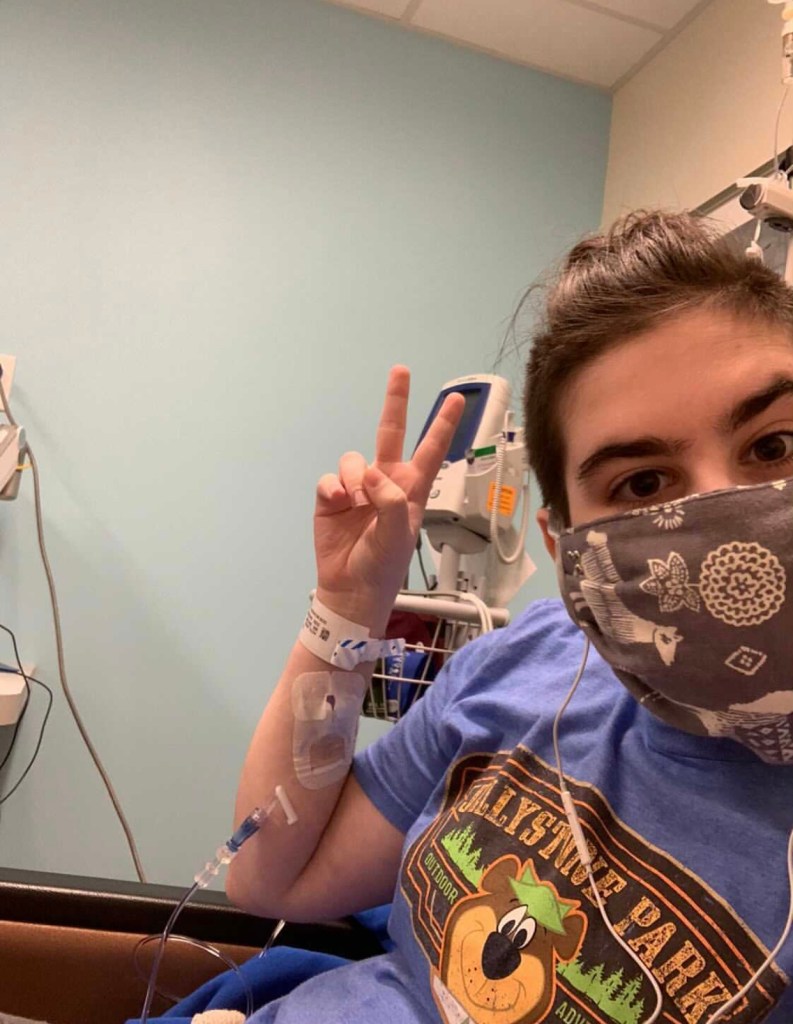
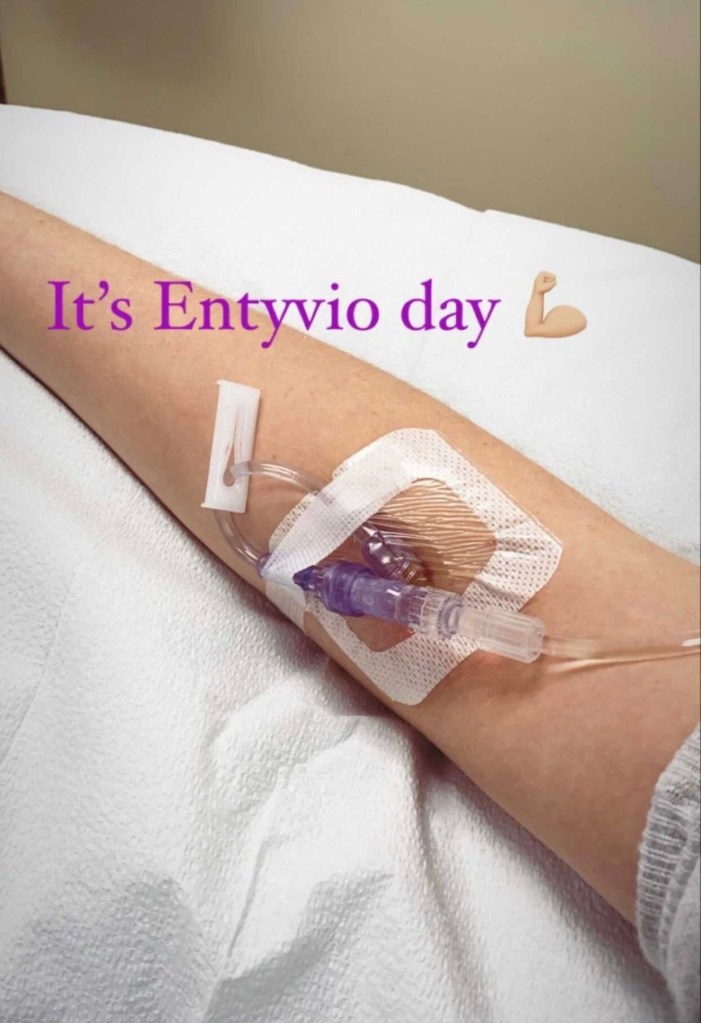
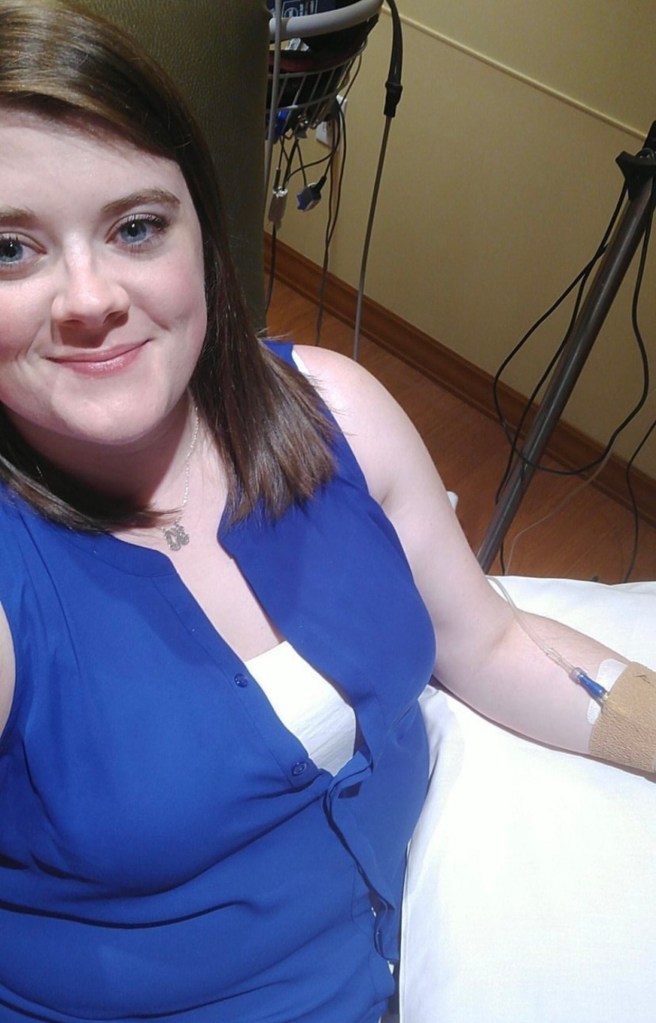
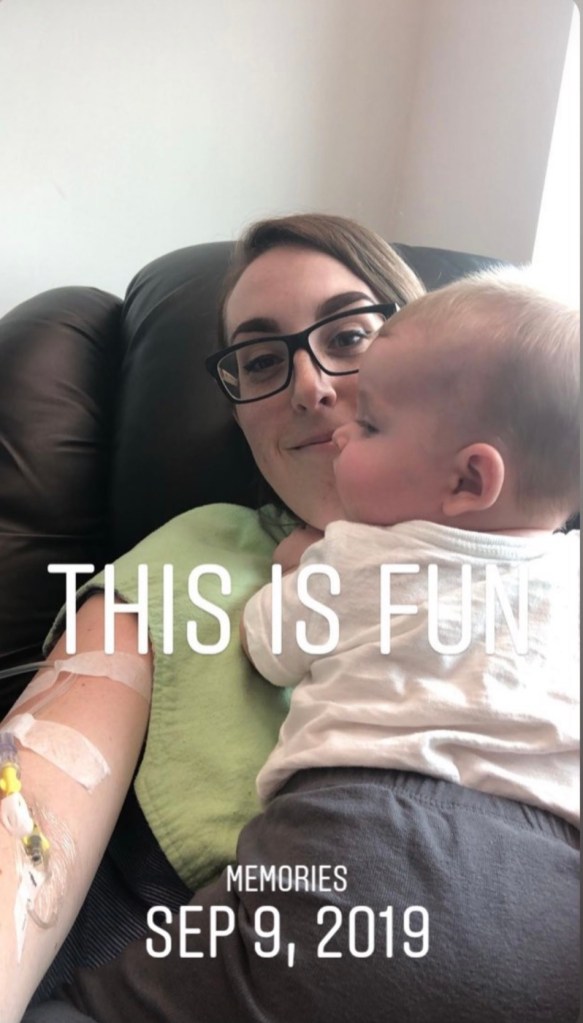
Starting a biologic or switching to a new one after a drug fails you is a stark reality for many with IBD. I personally have been on the same biologic since July 2008. Lucky for me, my body hasn’t built up antibodies and it’s served me well in managing and treating my Crohn’s disease. Recently, a woman with Crohn’s disease private messaged me on Instagram. She’s been on Humira (adalimumab) since 2006, but she’s no longer responding to it. Her gastroenterologist has advised she start Entyvio (vedolizumab).
Like anyone who deals with a drug failing them, she’s reached a level of comfort giving herself injections and knowing the ins and outs of the medication she receives. Now, 15 years later, she feels a bit like a fish out of water trying to navigate a new biologic and all the unknowns that come along with that transition, especially because she hopes to start a family in the next year.
After hearing from her and wanting to help, I went out on a limb and shared the following on my Instastory—to try and comfort her as she embarks on this new chapter in her treatment. “Hey IBD fam! Let me know if you’re on Entyvio and what your experience on it has been thus far. Looking to get info for someone who has been on Humira since 2006 and is making the switch after losing response to it. Appreciate your help and insight.”
The overwhelming response from the community
Several people wrote me directly about their experience with Entyvio—everything from tips and tricks to minimize side effects to how Entyvio has improved their quality of life or been detrimental to it. The response truly blew me away. We all know, IBD presents uniquely in each of us. So, one person’s experience with a biologic (or anything for that matter in treating Crohn’s or ulcerative colitis) must be taken with a grain of salt. At the same time, there’s a sense of camaraderie in connecting with those who use or have experienced your same therapy.
Since I’ve never been on Entyvio, I learned a lot in the process…and wanted to share my findings from these direct message discussions with you. Entyvio is known for its low side effect profile, as it specifically targets the gut. My hope is that this will help alleviate people’s concerns and help educate the community, should Entyvio be offered up as a possible treatment plan presently or in the future for you. (NOTE: I am writing this on my own accord—with NO affiliation or guidance to pharma). This is strictly created from IBD patient experience.
Infusion: Dosing schedule + timing
Generally, the recommended dosage is a 30-minute intravenous infusion, every 8 weeks. Depending on a patient’s response, this can shift to every 6 weeks or even every 4.
“Been on Entyvio since it was approved by the FDA. It has been very helpful since it targets the gut. I am on supplemental IBD meds, but I like that it’s a fast infusion and has given me my life back. It’s the longest I’ve ever been on a biologic, too.”
“It’s about an hour total to get the IV, wait for the med to be mixed, and have the infusion. I am noticeably tired the day of the infusion, but then bounce back quickly by day two. No other side effects at all. Entyvio has been a lifesaver for me!”
While some people saw improvement after the loading doses, Entyvio is known to react slower than other biologics. While most of us are used to biologics taking 2-3 months to work their magic, several people stated their GI warned them ahead of time that Entyvio could take 8 months to a year to be fully effective.
Side effects: The consensus among those who responded
Headaches/Dehydration/Fatigue
“I take Tylenol and Benadryl at every infusion because I found when I didn’t, I ended up with really bad headaches. I seem to feel better if I exercise for a little bit after my infusion, like walk 20 minutes or do 20 minutes on a bike. Real slow and easy. I often feel tired that day and maybe the next day, but after that I’m pretty much golden.”
“A lot of people get headaches after the infusion—they think from dehydration, so it’s helpful to ask for an extra bag of saline fluids during the infusion.”
“My friend and I both get tired after our Entyvio infusions. We both need a good nap after and then we feel fine. Hydrating the day before, during, and right after the infusion helps a ton.”
Hair Loss/Growth
“I lost a LOT of my hair while on this and had to take a large amount of prednisone for almost a year to get back on track because this medication. Please do research on this one! I did not do much and read a lot of people lost almost all their hair. Thankfully, mine grew back while I was pregnant. It was a big bummer! I’m on Stelara now and it works just as well as Humira did for me before my response to it also declined.”
“Been on Entyvio about 2.5 years and it’s the only drug to get me into remission! Was on infliximab (Remicade) before and became allergic and lost response. Minimal side effects with the Entyvio as well! If anything, I just noticed my hair doesn’t really grow the same.”
Navigating infusions and life
While the shorter infusion time is a plus, nothing beats the convenience of an at-home injection. At the same time, several patients shared the benefit of setting up an at-home infusion, so that’s something to look into versus going into a medical facility to receive your medication.
“I have ulcerative colitis and I’ve been on Entyvio for almost a year now. It’s the first biologic I’ve been on and it has helped a little, but it hasn’t been able to heal my rectum at all. I’m in a teen support group and one of the group leaders has had the same experience. After the starter doses, I was on every 8 weeks, but my drug levels were too low, so we switched to every 6 weeks and that didn’t do anything either. Since my symptoms were increasing, I was moved to every 4 weeks as of November. I honestly wish I were on Humira or another at home injectable only because I’m 18 and want to have a normal life that isn’t tied to needing to be home or to go the hospital every month, but it is what it is. The infusions don’t take long, but I do come home and sleep for the rest of the day. I started a pediatric clinical trial about a month ago since the Entyvio isn’t doing enough, but I still have to stay on the Entyvio.”
Pregnancy and Breastfeeding
For guidance on pregnancy and breastfeeding in regards to Entyvio, you can find helpful information at the IBD Parenthood Project and through the PIANO registry study. You can also connect with IBD Moms and Mamas Facing Forward, social media communities comprised of women living your reality.
Prior to planning to conceive, it’s always a good idea to communicate your family planning goals and dreams with your care team. Let your GI and OB know that you’re hoping to get pregnant 6-plus months ahead of time, so they are clear on what your expectations are. That way, you can put your best care plan in place, especially as it comes to staying on top of managing your IBD while you bring a life into the world.
“It was the first biologic that actually showed healing on my colonoscopy. I was on Entyvio my whole pregnancy, and now I’m breastfeeding on it.”
“I have been on all biologics and have had the best response to Entyvio. It put me into a 3.5-year remission (my only remission ever) and allowed me to have my son. Unfortunately, it does not target perianal Crohn’s, so I have had issues over the last few years. After trying Stelara, I had to go back to Entyvio because it’s the only drug that treats my luminal Crohn’s. It really is an amazing drug. No side effects for me, and my immune system is stronger than it has ever been—on the other drugs, I caught a million colds and would get bronchitis and pneumonia several times a year. Since being on Entyvio, I think I’ve gotten a cold a year (maybe?!), it’s a dream!”
“I have been on Entyvio for about two years now and it has been lifechanging. In terms of my ulcerative colitis, it has been day and night, and it has even gotten me into remission! I do feel really tired after my infusion and a little bit into the next day, but since I only get them every 8 weeks, that is a side effect I am more than willing to take on! I was on Entyvio for my entire second pregnancy and that was a breeze compared to my first.”
Be a proactive patient
Like many biologics and prescription drugs, there is a patient savings program available that you’ll want to check out. Learn more about Entyvio Connecthere.
Helpful Entyvio-Focused Facebook Communities
Several of the people who responded shared they’ve had positive experiences and found support in Facebook groups geared for those specifically on Entyvio. Check them out:
Thanks to everyone who went out of their way to share their experience and help a fellow IBD warrior in need. Having this type of intel is good as gold and extremely beneficial in empowering patients as they make drug and treatment choices.
You did nothing to cause your diagnosis or your disease. Read that again. It’s not your fault. No matter what you may see on social media or hear from friends or family, those of us with Inflammatory Bowel Disease did not live “incorrectly” or do anything damaging that “sparked” our chronic, autoimmune issues to come to life.
I was incredibly disheartened recently by a post on Instagram that in so many words claimed that bad habits in life led to a man’s Crohn’s disease. He made blanket statements about how medication and surgery are not necessary and that it just takes a long time and reflection to reverse the damage he caused on himself after years of smoking, binge drinking, etc. The post was not only on his own feed, but also shared by a community IBD page with more than 8,000 followers. After days of endless comments from those angered by his assertions and claims, the post was taken down and the patient “advocate” made his Instagram private, but the damage was already done.
Hold up—what’s with the blame game?!
You may wonder why patient advocates like me get their feathers ruffled by claims like this. I can tell you why. I, along with so many of my counterparts in the IBD community, work tirelessly to educate and inform not only those with Crohn’s and ulcerative colitis about the patient journey, but also caregivers and friends. When misinformation is disseminated it sets the clock back, bigtime. It further stigmatizes our illness, especially when the false statements are said by someone who lives with IBD. Not only does it hurt those grieving and trying to come to terms with their lifelong diagnosis, but it’s a direct attack on those diagnosed as pediatrics and those who did everything by the book (ate well, exercised, got lots of sleep, managed stress, etc.) and STILL got IBD.
If there was a magic bullet or diet that helped “cure” or manage all of us, we would do it. If there was a way to prevent IBD, people would do it. Crohn’s and ulcerative colitis aren’t like lung cancer, which is sometimes caused by smoking or diabetes which is sometimes caused by being overweight or liver disease which can be caused by excessive drinking. IBD is complicated and mysterious. There is not a behavior or habit that is associated with possibly “getting it” one day. The two known factors—hereditary and environmental—leave much to the imagination. I personally have no family history. I was a picture of health until the two months leading up to my Crohn’s diagnosis in July 2005. It felt as though a light switch went off and my world went from being healthy and able-bodied to being chronically ill.
You did nothing wrong
If you’re reading this and wondering what you did to cause your disease, the answer is nothing. If you’re reading this as a parent and feel as though you could have fed your child less processed food or breastfed them instead of giving formula or shouldn’t have had your child vaccinated, please stop believing that. I know we all want a reason. We all want answers and some clarity as to the why—but, at the end of the day, does it really matter? Focusing on the why doesn’t help us focus on the how. HOW are we going to get through this? HOW are we going to manage our disease and live a full life? HOW are we going to cope during flares and periods of remission? HOW are we going to navigate the unknown and thrive? HOW are we going to find the right treatment plan? HOW are we going to target our triggers and learn what to avoid? Focus on what you can tangibly do to improve your patient journey and less on the coulda, shoulda, woulda’s, because just like each case of IBD is unique, so is each back story.
Here I am as a little girl. Long before being diagnosed at age 21. This little girl did nothing to deserve or cause Crohn’s disease.
Stop the finger pointing and the blame game. Stop making the medical community out to be the bad guys and the adversary. Stop acting as though those who depend on medication and need surgery failed in any way.
Start collaborating with your care team and finding physicians who listen and genuinely care about the approach you wish to take to manage and treat your disease, while also understanding that a holistic and “med-free” approach may not be feasible for your type of disease process. Start getting involved and educating yourself about how IBD manifests and the complicated nature of not only Crohn’s and ulcerative colitis, but also the extraintestinal manifestations and mental health aspect that are often not talked about. Even if you’re on medication or have had surgery you can still take whatever measures make you feel better in a complementary way. It’s not all black and white. There’s so much gray area. You can be on a biologic and still try any “elimination diet” you’d like. It’s just a matter of doing what works best for you, without pointing the finger or demeaning others in our community. Start connecting with those who live your reality and lift you up, rather than make you feel like you’re taking the easy way out.
This is 21-year-old me. There were moments where I felt very sick while on this Spring Break trip my senior year of college in March 2005. I attributed the abdominal pain to traveling and eating different food in the Bahamas. Little did I know four short months later I’d receive my Crohn’s diagnosis.
I know that if my 21-year-old self came across posts on social media claiming I caused my Crohn’s and that I could “heal my gut” on my own, I may have believed it. I can tell you nearly 16 years into this, I know without a doubt that is not the case. I am not a failure for taking medication, needing surgery, or trusting my physicians. I credit my 5.5 years of remission to being a compliant, proactive patient who believes in science, educating myself on the facts, and realizing that this disease is bigger than me and a constant learning process. I don’t need to know my why because I’ve done a damn good job of discovering my how’s and you can, too.

























 lights camera crohn's