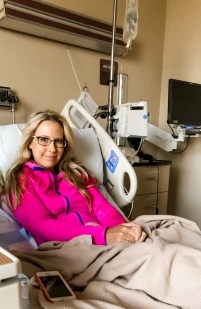
My family calls me “Sergeant COVID”: Navigating life while being high-risk, as the world reopens

I’m preparing to feel like the bad guy in the months ahead. My family has already jokingly called me “Sergeant COVID”.  As an IBD mom who is immunocompromised, the decisions I make as the world starts to reopen may step on some toes. I’ve always been one to struggle with confrontation and take it upon myself to be a people-pleaser, which isn’t always a good thing. But this. This is different. I know there will be times I need to speak up and say no.

While out on a walk with my family in our neighborhood this week, we approached a house with two moms sitting side by side, a play date was going down.

sophiawalk15months

Daily walks and getting fresh air help to keep us sane!

Several kids ran around the yard. An SUV parked next to the two moms with their thermoses. I turned to my husband when I spotted them and said, “well there’s a playdate.” He laughed and said, “Are you not going to allow Reid and Sophia to see anyone for a year?”

Well, that’s a good question my friends. Who knows what these next few months will bring, and as someone who is immunocompromised from my biologic medication, that may need to be the reality if things don’t make a drastic turnaround for the better as far as number of cases and deaths.

I want to be together with my friends and family as much as the next person

I also understand the risk associated with getting together with people who have not taken social distancing and quarantine as strictly as my family has. I haven’t stayed in my house and neighborhood since March 12th and only ventured to the grocery store and for bloodwork once, to throw those efforts out the window. I haven’t cooked every meal for my family and refrained from ordering take out for nothing.

baking

Trying lots of new recipes has been a great distraction.

The moment I let my guard down before I feel comfortable, the moment I put myself or my family at risk.

As someone who’s worried about sickness from germs and flare-ups for years, I see this pandemic through a different lens than many. Anyone in the IBD community who is on immunosuppressive medication has a different perspective. I’m already anxious about having to justify my decisions to stay home as life slowly starts getting back to a new normal for everyone. But until I feel safe, we’ll be taking all the precautions.

I wonder just as much as the next person in the chronic illness community how to navigate these difficult conversations with well-meaning and otherwise “healthy” friends and family. When I hear about people getting together indoors, going for walks with people outside their nuclear family, having people over for BBQs, even being essential workers (which I know can’t be helped)—I know the date I’ll see those friends and family just gets pushed further away.

When things calm down, the first people my kids and I will see indoors, will be my parents, who have practiced strict social distancing and haven’t ventured out for anything but groceries. If they were out and about and seeing others, that wouldn’t be the case.

We all need to do what we feel comfortable with and worry less about hurting someone’s feelings or getting a little backlash for our decisions. Luckily, my husband Bobby has been extremely understanding and supportive and backs me up on how I feel. IMG-1529
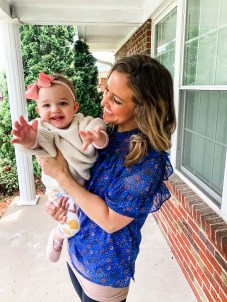
The best thing we can do is over-communicate. Talk openly about life as someone who is immunocompromised and what recommendations and parameters around social distancing your care team has shared with you. By talking about what your doctor has told you, it validates your worries and fears.

It’s ok to feel disappointed and frustrated. Not everyone has been or will take social distancing and quarantining as seriously as you do. Focus on what you can control—and that is your actions and that of your families. You are doing all that you can to stay safe, and that’s what matters. I’ve had moments where I was physically shaking and so overwhelmed by emotions throughout these past few weeks—because of the actions of others. You see it on social media—the families getting together with several people for Easter, and birthdays, and Mother’s Day. People taking trips on airplanes. Social distancing block parties where people are all standing super close to one another. It’s truly mind-boggling and hard not be judgmental from my vantage point. If you need to cut down on social media or cut ties temporarily with those who you believe are acting irresponsibility, do what you need to do for your mental health and well-being.

We had originally planned to drop off my mother-in-law’s Mother’s Day gifts on the front porch and stay in our car, but my in-laws set up patio furniture on opposite sides of their large patio and we were able to hang out outside 20+ feet apart to exchange presents. It was nice to finally see one another from afar vs. through a window.

Constantly keep your finger on the pulse of research. There are so many physicians in the IBD community truthfully working around the clock to bring patients like us the latest and newest information about COVID-19 as it relates to Crohn’s and ulcerative colitis. Educate yourself on factual, research-based information. Follow top GI doctors on Twitter. Stay in touch with your care team and don’t hesitate to ask questions. Tune in for Facebook Lives and Twitter Chats from IBD Social Circle, IBD Moms, and many other great groups.

Lean on the patient community. Prior to the pandemic, life with a chronic illness already made us feel a bit like outsiders. IMG-1409Now more than ever, we’re being labeled as the “sickly”, the “disposable”, the “weak”, the list goes on. COVID-19 is not JUST about the elderly and immunocompromised, this is about everyone. As patients we have a unique perspective and understanding about the struggles we face daily and what it’s like to go through this challenging time. Connect with fellow patients online who get your reality, your emotion, and the whirlwind of going up against this invisible bogeyman. To refrain from social media, you can download awesome free apps like Gali Health and IBD Healthline, with helpful articles, community conversations, and chats by patients, for patients.

Your FOMO is nothing new. Chances are throughout your patient journey you’ve had to miss out on plans or cancel last minute. Will it be hard when the whole family or your group of friends are getting together, and you tell them you won’t be joining for the big “post-quarantine” reunion? YES. Of course. At the same time, you’ll probably feel comforted not having to worry if so and so is asymptomatic and waiting on pins and needles for two weeks to see if you’re in the clear.

I look so forward to the day when my family and I can reunite with those we love and miss dearly. I just ask that people have understanding, patience, and empathy for those like myself, who will be very fearful to return to life as we used to know it…if that will ever be. Maybe put on the kid gloves and imagine walking in our shoes before you say something that you can never take back.

Telehealth: Where Have you Been All My Life? Making the Most Out of Your Next Appointment

They say there’s a first for everything and that was the case for me with telehealth visits. Nearly 15 years into my patient journey with Crohn’s disease, and I had never had a video chat with a physician. Going into the experience felt a bit daunting, a little uncomfortable. As patients, we get so used to our routine for managing our illness, that changing the course of care can make us feel anxious. I know I’m in the majority when it comes to being new to this whole telemedicine thing. Let me tell you, I really loved it. I walked away from my computer smiling and feeling happy. Here’s why.

Connecting over video saved me time and a whole lotta energy

My commute to and from my GI office is about 35 minutes and usually involves bringing at least one of my kids with me or coordinating childcare. It was awesome to just walk into my kitchen and instantly connect with my physician. We’ve talked on the phone many times in the past when I have a question or an issue but conversing over video made a big difference. You feel much more connected and like you’re sitting in the same room.

I didn’t feel rushed

Oftentimes while in the examining room, I feel like I’m racing the clock to get all my questions asked. It can feel like I’m just one of many appointments in a row and that my physician is bouncing from room to room. There was a sense of calm and a laid-back aspect of the call that sat well with me. It felt like a 35-minute heart-to-heart that was genuine, educational, and comforting. I felt listened to and heard. We talked about everything from my Crohn’s symptoms to my next colonoscopy, and how to handle everything with the COVID-19 pandemic.

We set a game plan in place

Something I love about my GI is that she’s extremely proactive and aggressive. You ask her a question and she immediately has a confident response. I’ve been more symptomatic the past few weeks than I have been for awhile, so she ordered a fecal calprotectin test to see if there was any inflammation going on. My husband, Bobby, picked up the test from the lab and I will bring the completed test in when I get my bloodwork this week. As far as my annual colonoscopy for later this summer, she told me that we should be ok to get the scope in, as that’s an ideal window for when things are expected to calm down COVID-wise. If we waited or delayed the scope, she fears it could be a YEAR until we’re able to do one again. Telehealth-interpreters-tel-1140x500

She determined that part of the reason I may be experiencing more abdominal pain is unintentionally changing up my diet. Something so many of us are doing right now. Our family hasn’t had take-out food since March 12th. While it’s great to have a healthier diet, having less processed foods can make things more challenging on our digestive systems. She recommended I incorporate more carbs into my daily diet, drink more water from a cup vs. a straw or a bottle (as that can cause gas to build up), and even try drinking peppermint tea or having peppermint oil in the air.

Guidance for navigating the pandemic and IBD

I asked my GI about her recommendations for what to do once Stay at Home orders are lifted and how long social distancing should be in place as someone who is immunocompromised from my medication. She said I am free to go to public parks and trails (while wearing a mask) but should stay out of everything from supermarkets to shopping malls through the summer. She advised it would be best to have my husband continue to run our necessary errands while wearing a mask. She’s anticipating a second peak of the virus will happen when the colder weather approaches.

Luckily, Bobby has been able to work from home since March 18th, a benefit of corporate America. When I asked about what to do when he has to go back in the office, she said he would need to wear a mask and at the sign of any symptoms, would need to stay away from our family.

As far as flaring and needing to go to the hospital, my GI recommended keeping her in the loop and openly communicating about symptoms so we can handle as much as we can outpatient. If there is an acute issue (fever, vomiting, etc.—things that happen with an obstruction), then I should go to the hospital as I normally would.

When it comes to IBD patients being tested with an antibody test, she doesn’t foresee that happening unless we are about to go into surgery or have a procedure. Even then, she says our immune response is different than that of the rest of the population.

Recommendations to keep in mind ahead of your telehealth appointments

Come prepared. Have questions. Be open about your symptoms and don’t downplay anything. Your physician can only help you if they know what’s going on.

Familiarize yourself with the technology. I choose to do my call on the computer, much like a Zoom meeting, but through the patient program provided by my office. There was also an option to click a link in a text message and chat like you’re on FaceTime. telemed

Try to have a quiet space for your call where you can focus. Unfortunately, my husband had a work call during my appointment, but I was able to put the baby down for a nap and bribe my 3-year-old with some snacks and TV. He only interrupted a couple of times, but my physician understood and we had a good laugh about how fruit snacks work wonders to calm or distract toddlers.

Ask about billing. Telehealth appointments at my doctor’s office are billed the same as a routine appointment. Make sure your office has your insurance information ahead of time.

Listen to this About IBD podcast from one of my favorite patient advocates, Amber Tresca, and one of the top IBD docs, Dr. Nandi, about how to best prepare for telehealth appointments during the pandemic.


IBD mom offers up 5 tips for productively working from home

Twenty years ago, Katy Love, was diagnosed with Crohn’s Disease. She was a sophomore in college. She could barely make it out of bed some days, due to the enormous amount of pain and overwhelming fatigue. After her diagnosis and subsequent surgeries, she wondered if she’d ever be able to have a “real job” – like many of us in the chronic illness community, she worried about how she would be able to work and manage her illness. Katy didn’t allow her diagnosis to prevent her from following her personal or professional dreams. Now as an IBD mom, running her own PR business from home, in the middle of a pandemic, she has some advice to share about being successful in the face of adversity. Boulder_Headshots_043

After graduating from college, I took a job at an interactive advertising agency. My dream job. Then, reality set in. I needed to ask for accommodations for my Crohn’s disease– I had to ask for a flexible schedule – one where I could work from home when needed.

I was elated when the agency agreed. Since then, I’ve been blessed to work with several teams (for other companies) that understood my illness and trusted me to work remotely when needed. As someone who has worked from home quite often during my career, due to a chronic illness, I’ve learned a few helpful best practices that have helped save me time… and my sanity.

Create a realistic routine and office hours. If you know you can’t start working until 9 a.m., due to family obligations, don’t start your work time until 9 a.m. Then, plan accordingly for your end time each day. Be sure to share your office hours with your family and colleagues. It’s important for everyone to know when you’re working. Also be patient with your new schedule. As with all new things, it will take some time to become a true routine. This is all new territory – working from home is a normal occurrence for me, however, having all my children and my spouse at home, while trying to work from home, is a new challenge.

Get Dressed. Every single day. I know this may sound silly, as you haven’t left the house in weeks. But I find this extremely important. It sets the tone for the day. When you look the part, you’re much more likely to feel the part. Plus, with all the Zoom calls, you want to look like you aren’t wearing yesterday’s PJs for the weekly team meeting.

Establish a defined workspace. You need an area where you know – this is my desk, my work zone. Your family members know that when you are there, you are working. Working from bed sounds delightful…I love my bed. However, it’s easy to be distracted if you’re not in a specific workspace. IMG_0846Also, surround your workspace with all that you may need during the day. Computer, chargers, phone, etc. I like to also put candles or fresh flowers near my workspace – they smell great and elevate my mood. With spring finally here, go outside and pick a few flowers and put them in a mason jar. Anything that makes you smile and motivates you.

Communication is KEY. I learned this early on in my career. Just because you’re not in physical sight of your team, and your employer, you want them to know you’re ON and working. The worst thing you can do is go dark. If they don’t see you, hear from you, it’s easy to assume you aren’t taking working from home seriously. So, over-communicate with your team during this time.

Take breaks throughout the day. When you’re setting up your new routine/office hours, schedule breaks into the day. Personally, I like to work out in the mornings. So, finding 30 minutes to hop on my bike sets my day up for success. In the afternoon, take a walk outside, or bake with your kids. Katy_Vince_Family_138It’s extremely important to incorporate self-care into your routine right now. There’s so much uncertainty and doom/gloom in the news. Make sure you are taking time to appreciate yourself, your team, and your family, while keeping your health as a top a priority.


Seeing the beauty through the struggle: IBD mom welcomes third child amidst COVID-19 pandemic

Welcoming a baby into the world brings so many emotions to the surface. For IBD mom, Suzy Burnett, of Madison, Wisconsin, it’s been a rollercoaster. She had her third baby, Guy Richard, February 29th. IMG_0146Right before COVID-19 started wreaking havoc in the States. Before Guy was born, Suzy’s biggest fear was a postpartum flare. After the birth of her second oldest daughter, Alice, she had the worst Crohn’s flare of her life and was hospitalized.
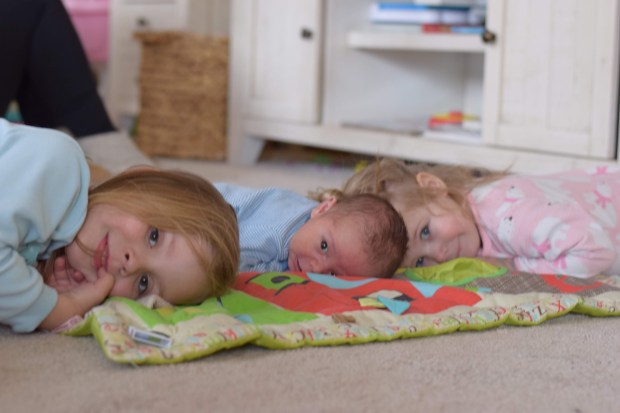
Now, as her and her family face the COVID-19 pandemic, she has a new set of concerns. Will Guy be able to stay healthy until his immune system matures a bit? How will her daughters adjust to the new addition? Will she be able to stay well despite being immunocompromised? COVID-19 added a whole new slew of uphill battles that she or anyone else for that matter hasn’t been prepared to deal with. This week Suzy shares her perspective as an IBD mom, doing all she can to protect herself and her family in the face of this viral war.

As anyone who has ever had a baby, you know those first two weeks, involve several doctor appointments. Guy still had high bilirubin levels when we brought him home, so this meant we needed to make extra trips to his pediatrician. Sounds easy, right? There was so much involved this time around. Babies don’t have that immunity built up yet, so we had to use a special entrance, and go straight to our room to avoid any contact with the public. I couldn’t help but glance at the waiting room and see all the long faces adorned with facial masks. It was swimming with sick kiddos. I felt incredibly lucky at that moment as we escaped the chesty coughs, and furniture that had been saturated in illness.IMG_0147

One week went by, and things quickly changed to Zoom and FaceTime appointments. Not only did the baby’s appointments change…but mine did as well. Those of us with Crohn’s disease can’t always get by with a virtual chat about our symptoms. But here we are.

Navigating health issues brought on by my IBD

Many people with IBD develop extra-intestinal manifestations. IMG_0144Unfortunately, when I was put on prednisone last summer, I developed extremely high eye pressures. I was diagnosed as “Glaucoma suspect” at 40 years old, meaning I have some risk of the disease, but no proven damage (yet), so my eyes are monitored often.

I’m also dealing with an external hemorrhoid, thanks to excessive diarrhea, along with an anal fissure, all while caring for three children—one being a newborn.

For those of you who don’t know, an anal fissure is a small tear in the thin, moist tissue (mucosa) that lines the anus. I’m treating the fissure with topical lidocaine and a suppository three times per day. I’ve had my fair share of pain, but this ranks right up there with my non-sedated sigmoidoscopy and childbirth. It feels like broken glass, or razor blades back there. There’s a chance this has progressed to a fistula, and I may require surgery in the weeks to come.

Normally, I would be seen right away, but due to the current COVID-19 crisis, it’s been several phone calls back and forth with the nurses triaging my symptoms. I’m confident the hemorrhoid will go away, but if the fissure doesn’t, I might be facing surgery, and right now a trip to the hospital could be life threatening.

Seeing the beauty through the struggle

Amidst this horrific event that is crippling our world, there is an unexpected beauty that has surfaced. Our wonderful party of five has become closer than close. Yes, there are times when we all go a bit loony, but we’re embracing this time together. My kids are my world, my everything. I need to be the best version of myself, and a huge part of that now and forever is not letting my IBD win. Even when my disease has a strong hold on me, I never let my kids see the struggle.

If you’re reading this and you’re unsure about whether you’ll be able to handle your IBD and motherhood, I’m here to tell you it’s possible. IMG_0148As a woman and a mom of three who has battled Crohn’s since 2008, I believe if it’s your dream to have children, or a family, you should most definitely pursue that. Consult with your GI and OB doctors prior to getting pregnant, and make sure you’re in remission. Pregnancy can be challenging, but if you’re also flaring, it’s that much harder.

As we all experience the change in our day-to-day lives during the COVID-19 pandemic, whether you have IBD or not, there has been a return to simplicity. A back to basics mentality that is exponentially refreshing. Take a walk outside and breathe in and out. Right now, we’re forced to take our time, dig deep, and focus on our inner beings. Much like the experience of dealing with the diagnosis of IBD, it’s a time to peel back those layers and re-discover YOU.

Follow Suzy’s journey by checking out her blog: Crohnie Mommy 


The race for a cure: How clinical trials are taking on COVID-19

Clinical trials are the guiding light when it comes to discovering life-saving medical breakthroughs. Now, more than ever, they are critical for ensuring treatments and vaccines to combat COVID-19 are safe and effective. IMG-9966 Citruslabs is currently offering research organizations their patient recruitment service and software free of charge for COVID-19 trials. Their goal is to make an impact by accelerating the research needed to find a vaccine and treatment for this condition sooner rather than later.

“Without clinical trials, there is no innovation in medicine. Since there is currently no cure or vaccination for COVID-19, it is essential to test potential treatment methods as soon as possible and to speed up the process so that we can slow this virus down and all move on with our lives. We know that patient recruitment is a big issue in the clinical trial industry. We want researchers to do what they do best: conduct research, see patients, and let others, like Citruslabs, worry about patient recruitment,” said Susanne Mitschke, CEO and Co-founder, Citruslabs.

Susanne

Susanne Mitschke, CEO & Co-fonder, Citruslabs

Right now, clinical trials are looking for people infected with coronavirus, as well as healthy individuals. Healthy people are the key group needed for vaccination trials. Currently, there are around 12 different potential treatment methods being tested—finding a cure for people who are already infected with COVID-19 and finding a vaccination that prevents people from getting the virus in the first place.

As you can imagine, aside from COVID-19 trials, the clinical trial world has come to a screeching halt. Patients are scared to come to screenings or continue with their study visits because of COVID-19.

The trials to treat infected COVID-19 patients are targeting the most severe cases and mostly treat ICU patients. Citruslabs isn’t working on those trials, as it’s hard for them to identify patients who are in the ICU. Their expertise lies more so with clinical trials for vaccines.

The race to discover a safe COVID-19 vaccine

Even though clinical trials for COVID-19 are accelerated right now, to ensure a vaccine works and is safe, still takes time. This is why it’s expected a vaccine for COVID-19 won’t be approved until at least March 2021. stay-home-save-lives-4983843_1280

To give you an idea of just how accelerated the race to get a COVID-19 vaccine is, on average clinical trials for vaccines take 10 years! First, research must be done “in vitro”, then, usually the vaccine is tested on animals and the last step is human clinical trials (three phases for FDA approval). Most companies then continue with a Phase 4 trial to collect “real-world evidence” and test the drug with tens of thousands of patients.

“The good news when it comes to COVID-19 is that researchers have investigated other Coronaviruses: SARS (from 2002) and MERS (from 2012). The current Coronavirus has 80-90% similarity to the SARS virus from 2002, which is also why doctors call the virus SARS-COV-2. When it comes to COVID-19, some trials focus on live but weakened virus forms. These have drawbacks because they can still make the host (the human being) sick! Newer approaches are looking at the genetic code of the virus, which seems in light of COVID-19, a safer approach,” explained Susanne.       corona-4983590_1920

COVID-19 Symptom Tracker

Citruslabs is collaborating with other research organizations to find the right patients for clinical trials. One of those companies is Lazarus, which created a symptom tracker to identify those who are likely to have COVID-19. Their software advises patients if they should stay at home (self-monitoring), visit their primary care physician, or even go straight to the hospital. You can find a link to their tracker here.

How to get involved and help

So, what can we do as the general population right now—other than STAY HOME to minimize the spread? Taking part in clinical trials can really save lives, now more than ever. If you are interested in taking part in a clinical trial to find a vaccine for COVID-19, head over to https://bit.ly/2wMS3Ja and fill in your information. A research team will be in touch with you about suitable trials in your area.

The backstory on Citruslabs

Founded in 2015—Citruslabs is the link between patients and research organizations. Their sole focus is to find the right candidates for the right clinical trials. Currently, 86% of clinical trials don’t meet their patient targets. Citruslabs is working tirelessly to change that. When clinical trials can’t be completed it puts researchers in limbo because they are not able to collect enough data to the safety and efficacy of new treatments. As a result, many drugs never make it to market.

As of today, Citruslabs has worked with more than 200 clinical studies and reached more than 3 million patients. But their work is just getting started. Over 50% of Americans are not aware of clinical trials. CitrusLabs

“We want to change this by providing transparent information about the importance of clinical trials, their benefits, but also their risks so that individuals can make an informed decision if they want to join a clinical trial or not,” said Susanne.

In the months to come, stay tuned to Lights, Camera, Crohn’s for more information about how Citruslabs is working to drive research related to Inflammatory Bowel Disease. For now, though—the focus remains on COVID-19 and doing all they can to rise to the challenge and make a difference.

Click here to learn more about how Citruslabs is fighting the fight against COVID-19.

This article was sponsored by Citruslabs. All thoughts and opinions shared are my own.