Hospital bag essentials: What to pack & where to find it

If you battle inflammatory bowel disease, chances are, along that journey you’ve been blindsided by a flare that sends you to the hospital. One of the hardest things to do is try and pack a bag for the hospital while you’re doubled over in pain and can’t think straight. This week, a guest post from my friend, and fellow IBD advocate, Amanda Osowski. IMG_2499Amanda shares the hospital bag “must haves,” so you can be prepared the next time around. Amanda, take it away…

As a Crohn’s patient, my often urgent, sometimes frequent trips to the hospital used to leave me wondering how I could better prepare for these moments, when they arrive.

For several years, I have been keeping a mostly packed hospital bag. Today, I operate off a combination of a mostly pre-packed duffle bag, along with a note on my phone of a few items to add to the bag before I head to the hospital. This has allowed me to feel slightly more in control of the times my body does not cooperate.

Steps for filling a pre-packed hospital bag:

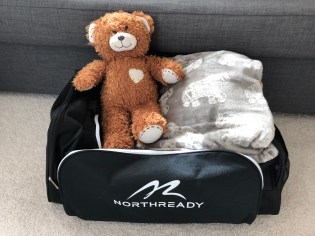
  1. Start by finding a good duffle bag. I have found that ones with internal/external/side pockets are best for me to keep things organized. (This is mine!) Often bags used for working out/the gym are good candidates for this purpose based on size. Amazon has many options, and stores like Marshalls/T.J. Maxx often have name brand bags for inexpensive prices.
  2. Records:
    1. Keep a printed list of current medications, supplements, allergies, doctors and their contact information. This is much easier to reference in the ER or in-patient with multiple doctors rounding.
    2. Have a printed copy of any medical documentation from your providers – especially if you have a port, picc or central line, an ostomy, feeding tube, or other medical devices/necessities. I also store these on my cell phone, so I have a mobile copy.
    3. Share with your parents/spouse/friends where this bag is kept, in case you are unable to grab it before becoming admitted.

Essentials

  • 3-5 pairs of underwear IMG_2495
  • 4-6 pairs of socks with grippers on the bottom. I really like yoga socks like these or these or these!
  • Flip flops or slide shoes or slippers with grippers on the bottom (for leaving the room).
  • Glasses/Case or Contacts/Case, including cleaner wipes/solution
  • Hand Sanitizer / Wipes
  • Lysol Spray
  • Pen/pad of paper or notebook
  • Phone charger
    • I would recommend either purchasing an extra 6ft. or 10ft. cord on Amazon to keep in your bag, or purchasing an extension cord to help with outlets that are in inconvenient places
    • Also – wall plugs like this that have the ability to charge more than one item at a time are great.
  • Ear plugs (in case of roommates or beeping IVs!) – I like these or these
  • Eye masks (to sleep w/lights) – This one is my favorite.
  • Hard candies to suck on/throat lozenges for dry throat

Clothes:

Note: I don’t have a ton of clothes that I like/find comfy, and because I often want my favorite items when I’m in the hospital, I usually keep these on my “To Add” list (see below)

  • 2-3 Comfortable bottoms (PJ pants, shorts, leggings, sweatpants) – loose fitting is best
  • 1-2 Zip up sweater/sweatshirt/fleece in case it’s chilly
  • (Men) 3-5 tank tops or tee shirts with loose neck/arms
  • (Women) 3-5 Tank tops with built in bra or tee shirts and sports bra with no metal

 Toiletries

  • Toothbrush/Toothpaste
  • Mouth wash
  • Deodorant
  • Hairbrush/Comb
  • Hair ties/bobby pins/elastic headbands
  • Dry Shampoo (My favorite listed here, and Target often sells travel size bottles for $5.99)
  • Shower items: shampoo/conditioner/body wash/razor
  • Lotion
  • Chapstick
  • Face wipes – these are my favorites
  • Wet wipes
  • Calmoseptine!
  • Nail file/nail clippers
  • If you’re female, tampons/pads just in case!
  • Body spray like this!

 Comfort

  • Toilet Paper (As a Crohnie – my bottom often cannot handle the hospital 1 ply)
  • Stuffed animal
  • Soft blanket (I’ve found my favorites at Marshalls or Home Goods)
  • Pillow (or your own pillow case)
  • Hair dryer (if that’s important to you after hospital showers)
  • Bathrobe (if that’s your thing – I don’t keep one in my bag)
  • Laundry bag/bag to keep dirty clothes separate from clean ones (I just keep a few plastic target bags in my duffle)
  • Kleenex/Tissues if you prefer soft ones
  • Heating pad
  • Durable/tall refillable water bottle
  • 1-2 sealed bottles of water (yourself + caregiver)
  • Photos – friends, spouses, pets. While most of us have these digitally, sometimes it’s nice to put a small frame on your hospital windowsill or nightstand

Entertainment

  • Magazines / Books – physical or downloaded to your phone/tablet IMG_2496
  • Deck of cards or small game
  • Headphones
  • Coloring book/colored pencils or crayons or markers

I use small makeup size pouches or bags to organize things together (ie: electronic related items, toiletries, etc.), and keep this all in my duffle bag, which lives in our guest room closet. This is important for me to remember, in case my husband is out of town and a friend offers to swing by our place and pick it up from me!

I mentioned my “To Add” list that I keep on my phone. Here’s what’s on it!

 To Add:

  • iPad + charger
  • Laptop + charger
  • Clothes (See above!)
  • Snacks: Including this obviously depends on your current intake abilities, or your caregivers, as well as your regular hospital’s offerings.

amandaThat’s it! If there are things on here that aren’t your jam, just leave them out or substitute with something more your style!

Connect with Amanda on social media! While she shares posts about her health adventures and patient advocacy efforts, she also share lots of other great content too!


Instagram

Twitter


The difference between sympathy and empathy with chronic illness

Sympathy and empathy. Two different words with very different meanings. Especially to those of us in the chronic illness community. The first nine years I battled Crohn’s disease, I kept my diagnosis as private as possible. Only close friends, family and co-workers knew what I was going through behind closed doors. I did this because I didn’t want sympathy.

TVblog

Back on the news desk following a bowel obstruction hospitalization, would you ever guess this was my first show back?

I didn’t want people to look at me differently. I didn’t want to be judged or looked down upon. I didn’t want to be viewed as “less than” by my peers. When you choose to suffer in silence you close yourself off to support, you close yourself off to empathy.

Since sharing my patient journey in November 2014 with the public, I’ve realized the power of empathy. How it feels when those close to you and complete strangers reach out to offer support, words of advice and choose to show compassion. By definition, empathy means, “the ability to understand and share the feelings of another.” The definition of sympathy is “feelings of pity and sorrow for someone’s misfortune.”

When we choose to share our story, we open ourselves up to not only support, but criticism. People who believe we are advocates as a way of seeking attention. People who try and dumb down our personal experiences because they feel we share to get pity. People who believe we want others to feel sorry for us. This could not be further from the truth.

I share my experiences with Crohn’s disease as a way to inspire and educate.

crohnswalk

I’ll always remember how my cousins and brother rallied around me at the Take Steps Walk in Chicago.

The last thing I want is for someone else to feel sorry for me. There is no reason to act like I have it worse than you or that you feel bad I’m not “healthy.” I am healthy, I just have a chronic disease that makes my life a little more challenging than yours. The challenges Crohn’s has brought into my life have been difficult, emotional and trying—but with each setback, comes a much stronger comeback. I am stronger and better for the trials I have been faced with.

I don’t want your sympathy. I want your empathy. I want you to reach out and see how I’m doing, because you genuinely care. I want you to show interest when I bring up my disease, rather than change the subject…or walk away. The lack of empathy and disinterest hurts more than anything. It shows you who’s a surface friend…and who is a real one.

IMG_7435

I was hospitalized six months into my relationship with my husband. His support was amazing from the start.

Think about how you’d like to be treated and talked to, if you dealt with an invisible, chronic illness that wreaked havoc on your body without warning. A disease that you do all you can to control with lifestyle and medication. A disease of constant unknowns.

When you conversate with those in the chronic illness community—think before you speak and please choose to be empathetic, rather than sympathetic. Your efforts may seem minimal to you, but they mean more than you know.

Liquid diets: How to thrive and what to avoid

When you battle inflammatory bowel disease, chances are there will be several times throughout your journey where you are limited to only drinking liquids—whether it’s preparing for an upcoming procedure or needing to rest your bowel during a flare-up. It can be extremely dreadful to function in a workplace or in a social situation, when you’re limited to drinking liquids or sipping on some broth.

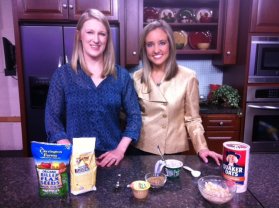
meandamandaWhen I was a news anchor in Springfield, Illinois, I used to interview and participate in cooking segments with a registered dietitian named Amanda Figge. She is extremely passionate and well-versed about nutrition and health and practices what she preaches in her daily life.


“Nutrition holds the key to the difference between going on or off certain medications, improving your performance and strength at the gym, raising energy levels, and reducing pain and inflammation, to name a few. There is no one-size-fits-all approach to healthy eating,” Amanda explains.

One of Amanda’s recent posts on social media really peaked my interest. She included a photo of Ensure. If you have IBD, chances are you’ve relied on these at some point. I know I have. In her post, Amanda wrote:ensure

“Ensure is one of the worst “nutritional” beverages to supplement in the diet. Yes, I fully understand the body just needs to receive nutrients in any way, shape or form it can. But when longevity and health are a prime concern, QUALITY should be a priority. As you can see, Ensure provides an assortment of vitamins and minerals, but in order to get those nutrients, you have to consume a bottle chalk-full of chemicals and high-inflammatory agents.”

She went on to say:

“Sugar is the third ingredient. Corn maltodextrin is a highly processed refined carbohydrate. Soy protein should be avoided. Artificial flavors/sweeteners are no way to treat the body nicely. You’re basically consuming a multi-vitamin that was covered in sugar, lit with a cigarette and left in the middle of a freeway during rush hour traffic.”

Whew. Intense. If you’re like me—and have depended on these meal supplement drinks when you’re in the hospital, fighting a flare at home or struggling to eat—those words probably struck a chord with you, too. Amanda’s focus is to heal the body with whole foods and eliminating potential sources of inflammation. Inflammation is the immune system’s first response to an acute or chronic condition. Chronic inflammation can be caused by cancer and its treatments, autoimmune disorders such as fibromyalgia and Crohn’s, metabolic complications such as diabetes and even neurological conditions like depression.

“While I believe it’s important for all people to practice low inflammatory eating habits (focusing on a whole foods diet and limiting processed foods, chemicals and added sugars), it is especially important for individuals experiencing chronic inflammation to adopt these protocols. Ensure is often provided to those undergoing chemotherapy or recovering from a bowel flare-up. While it may be appropriate for some, creating a homemade nutritional supplement can have far less chemicals and more immune-boosting benefits,” says Amanda.

If you’re put on a liquid diet to calm your bowel and to heal, avoid lactose, gluten, sugar-substitutes and soy. Making homemade shakes allows you to have complete control of the nutrients you are putting into your body. Here are two of Amanda’s favorite smoothie recipes:

 Creamy Chocolate Banana Smoothie

  • 1 scoop of chocolate whey protein isolate (lactose-free and naturally sweetened)
  • ½ frozen banana
  • ½ small avocado
  • 1 spoonful of peanut butter or almond butter
  • Handful of ice cubes
  • Unsweetened almond milk (1/2 cup- 1 cup)

Blend all ingredients in food processor or mixer. Using less almond milk will make the smoothie extra rich and thick.

Berry Bliss Smoothie

  • 1 scoop vanilla whey protein isolate (lactose-free and naturally sweetened)
  • ½ -1 cup frozen blueberries
  • ½ frozen banana
  • 1-2 handfuls of spinach
  • Unsweetened almond milk (1/2 cup- 1 cup)

Blend all ingredients in food processor or mixer. Using less almond milk will make the smoothie extra rich and thick. IMG_5890

Another option instead of whey protein isolate would be collagen peptides. These specific amino acids can additionally help support proper gut function and strengthen immunity. L-glutamine powder is an additional supplement Amanda recommends that promotes gut healing. This powder can easily be added to smoothies and beverages.

I don’t know about you, but the next time I’m on a liquid diet, I’m going to take Amanda’s advice to heart. While we may not have control of our well-being with Crohn’s and ulcerative colitis, this knowledge and background enables us to grab the reins and give our body the best shot to heal, in a healthy way.


A book review: The Complete Guide to Crohn’s disease and Ulcerative Colitis

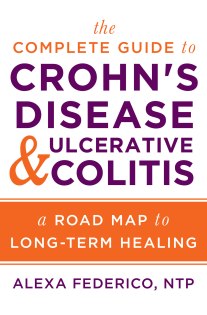
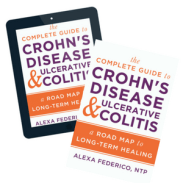
When you’re diagnosed with inflammatory bowel disease, no matter what age or stage of life you are in, it’s a big shock. Navigating this newfound identity, label, diagnosis and these unchartered waters can be overwhelming. As someone who’s battled Crohn’s disease for nearly 13 years, I’m the first to admit, that first year was brutal. The Complete Guide to CD & UC-2I recently read a book entitled, “The Complete Guide to Crohn’s Disease and Ulcerative Colitis”—A Roadmap to Long-Term Healing, by Alexa Federico. It’s a good thing “roadmap” is in the title, because that’s exactly how I felt while taking in each passage.

Alexa was diagnosed with Crohn’s disease at age 12. She’s now 23 and says, “A lot has changed since my diagnosis! My mindset is probably the biggest change I have gone through. I began this autoimmune journey as a child, holding onto a grudge against my body, bitter about the foods I couldn’t eat and the pain I felt. I felt like my body betrayed me and that I would be a victim my whole life. Over the years, I slowly started realizing that these lifestyle changes that I followed begrudgingly were the very things keeping me healthy. From there, I accepted my lifestyle and started to become interested in nutrition and other ways that people can influence their own health. Today, I couldn’t be more grateful for the path I have walked. I know my experiences and the knowledge I have gained have led me and my family to make smarter lifestyle choices and now I am helping others to do the same.”

No matter where you are along your patient journey, this book will speak to you. Whether it’s how to find a solid support system and how to detach from the “Negative Nellies” in your life or what types of alternative medicine and selfcare options are available—there’s something for everyone. I personally found the techniques for managing stress to be really beneficial.

In one passage, Alexa writes, “I want to stress to you this point: healing is more than a physical process. Alexa Federico headshotOnce you have accepted IBD, it’s important not to dwell on “Why me?” Instead of focusing on what you can’t change (the fact you have this illness now), focus on what you can change. Your healing will be limited if you do not move past the pity-party stage. We all do it; just don’t make it your new life.”
That attitude. That perspective. That’s how I choose to take on Crohn’s. This book is helpful to not only those with IBD, but their caretakers, family and friends. It provides an inside look from the patient prospective, while showing that there’s a big world out there when it comes to healing, managing and feeling empowered every step of the way through your patient journey. I would have given anything to have had this book available when I was told at age 21 that I had Crohn’s disease.

Alexa says reflecting on her personal experience as a child being diagnosed with Crohn’s inspired her to write this book. “I remember my medical team in the hospital going over the diagnosis with me and my parents, but they gave us little direction to go in. We just had my prescriptions and a few words on dietary advice, but other than that, it felt like we were on our own to figure it out. Since then, I have learned so much and I felt like writing a book was the way to share it with people who are getting started on this journey.”

As a fellow patient and advocate, I can assure you this book is one that will educate you, comfort you and help guide you through periods of remission and flare-ups. It’s a reminder that living well with IBD is possible, but take taking on IBD is a multi-faceted approach.Untitled design

“I want readers to feel a sense of empowerment after reading the book and realize that there are many ways they can control their lives. I want them to feel equipped to try out new health management strategies and determine what feels good for them.”

“The Complete Guide to Crohn’s Disease and Ulcerative Colitis” is available on Amazon. Be sure to check out Alexa’s awesome blog, Girl in Healing.

Taking on fatigue as a mom with Crohn’s disease

I hear my baby saying “mama” gleefully from the playpen. Anxious for attention and snuggles. I hear this as I’m sitting on the toilet with the door open, paying the price for the cup of coffee I just consumed. It’s one of those days as a mom with inflammatory bowel disease. The all-encompassing fatigue is taking hold. I knew this the minute my eyes opened, and I heard Reid in his crib, despite a restful eight hours of sleep. If you don’t have IBD you may wonder what I’m talking about.

Let me try my bIMG_6729est to paint a picture for you. My legs feel like complete jelly. My brain feels in a fog. I feel so lethargic; the thought of showering seems overwhelming. I’m not in pain. My stomach feels fine. But, there’s something “off” and you feel it with every part of your being.

As my husband helps me unload the dishwasher, I tell him, “I’m so fatigued”…he laughs a little and says, “well, you’re 34…you are getting old.” I explain to him it’s my Crohn’s. Sure, I may be in “deep remission”, I haven’t been hospitalized with a flare since my bowel resection surgery in August 2015 (*knocks on all the wood), but that doesn’t mean the disease doesn’t impact my daily life. My husband is amazing and never says anything malicious, but unless you live it, you simply can’t comprehend it.

I’m going to be vulnerable here. Please no judgement. The clothes I washed more than five days ago, are still in the dryer. Each day I told myself I needed to walk down 13 stairs and bring them up, but it felt like too much. This morning as my husband got ready for work, needing his jeans…I remembered…they were still in the dryer. I felt like a failure. As I rocked my son in his nursery today, it took too much out of my legs to be in motion. All I was doing was sitting, his little body on my chest. But the rocking felt like too much. As I laid him down for a nap, I went back and forth in my mind about whether I could muster up the energy to shower. I chose to. Mid-shower, I had a brainstorm to sit down on the seat and take some deep breaths while the warm water hit my body. When I stood up, I honestly couldn’t remember if I had put shampoo in my hair yet or if I had washed my face. Literally no clue. These are just a few examples. But this is the reality of being a mom with IBD.

I started beating myself up over the fact that the past two days I may have overdone it. IMG_6646Living in the Midwest, I didn’t want two winter days with temps in the 80s to pass without enjoying them. I knew the fresh air and exercise would be a welcome excursion for my little man and me. Did those two walks with the stroller push me to my limits? What is too much? What is not enough? At 34, you feel lazy when you can’t keep up or have to admit you’re just too tired. You look perfectly fine on the outside, you feel like those around you wonder if you try and take advantage of your disease.

Here’s my advice for anyone with chronic illness, specifically IBD, especially the parents out there. remedy-nsmith-stlouis-1204

  1. Try not to beat yourself up over it. This too shall pass. You won’t feel this fatigue every day. As a matter of fact, days ago I had the music playing and I was dancing around with my son as I cleaned the house. I felt SO happy and so energetic. Focus on those times to get you through.
  2. Self-care, self-care, self-care. Whether it’s going to get a massage, exercising, sitting on the couch and enjoying some tea or going to Target to shop by yourself. Do what makes you feel at ease. Do something for yourself every day.
  3. Vocalize your exhaustion. If you don’t communicate your struggles, you won’t receive the comfort and help that you need. You are not admitting failure. You’re not waving a white flag and giving into your disease. Rather, you’re being strong enough to realize, in this moment, on this day, you need a little boost from those around you to get by.
  4. Ask for help. Boy do I struggle with this. But, it’s imperative. Especially for first-time moms. Being a parent is hard work. Being a parent with chronic illness is on a whole different level. Hold your tribe close and call on them when you need them. You won’t regret it.
  5. Rest. It’s ok to lay on the couch if you aren’t feeling up to doing chores. It’s ok to say no to a night out with friends. Give your body what it needs. Listen to it. This fatigue is real and by not listening, you’re only feeding into the problem more. You’ll thank yourself later.

I recently came across a statistic this week on Twitter from the Congress of ECCO (European Crohn’s and Colitis Organization) IMG_6342that stated, “Fatigue in IBD is experienced by up to 86 percent of patients with active disease and 41 percent in remission.” It’s crazy how common this is! For people with IBD, fatigue can be physical, mental or a combination of both.

Fatigue has a significant impact on the quality of life and needs to be talked about. If you’re like me and feeling fatigued, I hope you feel empowered to share and do what you can to combat it. Just know you are not weak, you are not lazy, fatigue impacts everyone on this journey differently. And most importantly, you are not alone.


A Valentine letter for Crohn’s

Yes, you read that title correctly. I used the word ‘Valentine’ and Crohn’s in the same sentence. I’d be lying if I said I would have been able to do that years ago. Hate would have been a more relatable feeling and word. IMG_8476 (1)As Valentine’s Day approaches and love is in the air, I’m choosing to look at my disease with my whole heart and to share my feelings with you.
If it weren’t for my Crohn’s I wouldn’t know my strength.

If it weren’t for my Crohn’s I wouldn’t have my perspective.

If it weren’t for my Crohn’s I wouldn’t know the meaning of a “feel good” day.

If it weren’t for my Crohn’s I wouldn’t be able to empathize with others on the same level.

If it weren’t for my Crohn’s I wouldn’t be able to see people’s true colors.

If it weren’t for my Crohn’s

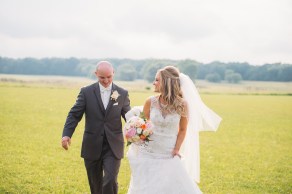
photo by J Elizabeth Photography www.jelizabethphotos.comI may have ended up marrying a person who really wasn’t about being with someone in sickness and in health.

If it weren’t for my Crohn’s I’d feel invincible and take my health for granted.

If it weren’t for my Crohn’s I wouldn’t be me.

In life there are triumphs and there are challenges. There are stresses and there are successes. There are highs and there are lows. I find embracing the good, the bad and the ugly enables us to reach our potential. The painful, low points are difficult in the moment, but in hindsight they push us to our limits and show us all what we are capable of.

People often ask me if I wish I didn’t have Crohn’s disease. I find it to be a loaded question. I’ve gotten to the point in my patient journey where I wouldn’t change a thing. So much of taking on this chronic illness is your attitude. remedy-nsmith-stlouis-1212There’s no sense in wondering and wishing for something that is not possible. Once you take a deep breath and stop living in your healthy past you come to realize that you were given this hand of cards for a reason.

Your voice, your experience, your journey has the power to inspire. You have the ability to change lives. You have the opportunity to show that invisible illness and everything that comes along with it doesn’t need to destroy your dreams.

While I know some days, weeks and months are going to be treacherous in this journey, do yourself a favor and stop being so hard on yourself. Love yourself. Love all of you. Even the part of you that is broken on the inside. I’ve been through the flare ups and the scares. I’ve overcome pain that causes me to pass out. I’ve weathered the storm of being wheeled into surgery. I’ve done hundreds of injections and blood draws and pokes and prods. At the end of the day, you rise. IMG_6282You take those steps to heal. You focus on getting better. You do all you can to make it through. Crohn’s and any chronic illness for that matter gives you this opportunity over and over. So, while we all tend to have negative feelings about our health and worry about what the next hour will bring, try and pause and stop for a moment. Think about all the beauty and insight it’s provided—and love yourself and your disease for a second.

XOXO,

Natalie

Canceled Plans: Dealing with the unexpected with IBD

Making plans. It’s almost an oxymoron when you battle Crohn’s disease or ulcerative colitis. For the past month or so, I’ve been corresponding with a girl named Amanda. We were brought together through a patient advocacy group known as “The Breakthrough Crew.” One of the organizers told us we should connect. I’m so glad we have. image1 (7)

You know that feeling when you talk to a complete stranger and feel like they’ve been a part of your life and your patient journey since the start? That’s how it is with Amanda. We went from emailing, to texting, to talking on the phone. Our phone conversation felt so comfortable and effortless. She lives in Chicago, I’m from there. We grew up 20 minutes from one another, little did we know our paths would cross in our 30s. This past week, my virtual IBD bestie and I made plans to meet up for lunch halfway in the suburbs.

Unfortunately, days before our lunch plans, Amanda was hospitalized with a flare up. We texted and decided it would be best to change our plans and for me to take a train into the city so she wouldn’t need to drive. We were both so excited. IMG_6057Three days later, at 10 pm the night before we were going to hang out, Amanda was admitted back into the hospital.


This is life with IBD. Making plans and then your disease intervening and saying “not so fast.” This is life when you don’t know what the next hour or day will bring. IBD can rob us of so much of what so many people take for granted. In these moments, this is when friendships within the IBD community mean so much.

While Amanda sits in her hospital bed, we’re able to correspond and be there for one another. I don’t think twice about having my plans change in a matter of moments, it’s almost an expectation. When I heard she was hospitalized, we shifted our plans and rather than lunch and girl talk, I was going to take the train and an Uber to the hospital to meet this girl who I’ve never met, but feel so close to. Unfortunately, her and I both knew rest was what she needed more than anything. And hospital visits, while uplifting, can be exhausting.

When she voices frustrations I too can feel her pain and offer meaningful words of encouragement.

IMG_6056

Amanda and her amazing husband, Rick

When she talks about her incredible husband Rick and how the poor guy wasn’t even given a chair to sit in as she struggled in pain for hours in the ER, it immediately brings me back to moments where my husband had to lay in my hospital bed with me because he too wasn’t given a place to rest.

Since I started sharing my story in 2014…nearly a decade after my diagnosis, I’ve realized how empowering it is to be open, to find comfort in friends—both virtually and in real life—and to know there are so many people out there who can be your lifeline in health and in flare ups. Find your Amanda. Find your friend who gets it. Even if you have yet to meet in person, they can bring you comfort you never realized you needed until it was available.

Amanda and I made plans. They didn’t happen. But, hey…that’s the nature of the beast we call IBD. If it weren’t for IBD, our paths never would have crossed. We’ll try again next month, and the month after, and one of these times the stars and our health journeys will align.

Israel Outdoors offers once in a lifetime Birthright Israel trip for IBD and IBS warriors

Deb Weiner traveled to Israel on her Birthright Israel trip back in 2010, like many young Jewish adults. Except she had Crohn’s disease. The Birthright trip is an important milestone for many young Jewish adults, unfortunately her inflammatory bowel disease created many obstacles. Pic 1Despite making life-long friendships and memories, she felt the challenges of her dietary restrictions, and couldn’t take in all the monumental experiences like her peers.

This is where a trip for people with Inflammatory Bowel Disease (Crohn’s and Colitis), Irritable Bowel Syndrome and non-Celiac gluten sensitivity comes in. It’s a time for young adults to discover new meaning in their personal Jewish identity and connection to Jewish history and culture. IBD is most commonly present in people of Caucasian and Ashkenazic Jewish origin.

I’m so excited to announce that registration for this once in a lifetime trip opens TOMORROW (Jan. 30, 2018)!

Here are some key details:

o   Dates: August 6 – August 17, 2018 (10) day trip

o   Open to residents in the United States and Canada

o   Medical staff will be traveling with participants throughout the trip

o   Refrigeration is available for all injectable medications (including sharps containers)

o   Meals that cater appropriately for all participants

o   More scheduled bathroom breaks

o   Travel accommodations that take additional restrictions (chronic fatigue, joint pain) into consideration

Wonder if you’re eligible to attend? Here are the requirements:

o   Must have at least one parent of recognized Jewish decent

o   Age 18-26 (post-high school)

o   Have not traveled to Israel before on a peer education trip or study program after turning 18

o   Have not lived in Israel after age 12

Pic 2“A Birthright Israel trip includes airfare from major cities, hotels, meals, transportation within Israel, and costs associated with touring the country,” said Deb, who as a Crohn’s patient herself, is helping with the coordination of this program for Israel Outdoors.

Deb remembers wanting to climb to the top of Masada, an ancient fortress that overlooks the Dead Sea, but the climb took place after a very strenuous day, and she didn’t feel well enough for the climb.

“With this trip, no one has to miss out on anything. Accommodations are offered that I would have loved to have benefited from. For instance, for those who aren’t up for the hike, a cable car will take the group to the top of Masada. When it comes to sharing a room, there are less people per room than on a typical Birthright Israel trip, making it easier to maneuver, and taking bathroom turns and whatnot. Participants will be staying with peers who understand what they are going through,” said Deb.Pic 5

The Birthright Israel  trip is considered the most successful Jewish initiative in the world, with more than 600,000 young adults participating. Deb has truly seen her personal experience come full circle. She’s been the young 20-something on the trip, feeling isolated and concerned. Now, nearly eight years later, Deb has the foresight and the knowledge about what young adults just like her need, to make the experience one that is enjoyable and comfortable.

“We want to share an experience and create lasting memories and friendships. There shouldn’t be a reason not to go on this trip, so we are bridging the gap. We want those with IBD, IBS, and non-Celiac gluten sensitivity to have the same great experiences as those who go on Israel Outdoors’ classic Birthright Israel trip,” said Nate Edelstein, North American Director for Israel Outdoors. Pic 3

Click here to register. You are encouraged to apply within the first week of open registration to secure a spot. The maximum trip number is 40 people and applications are accepted via email on a rolling basis. Israel Outdoors hopes to offer this trip every summer and possibly twice a year (summer and winter) if there is enough interest and demand.


Colonoscopy Prep 101 : Drink it all in

I scheduled my colonoscopy in September and it’s hung over my head ever since. It’s not the procedure that’s bothersome to me, it’s the prep and the worry of the findings. This past week, it happened. I went 2.5 days on a liquid diet (which is easier said than done when you’re a stay at home mom all day) and did the prep. IMG_5348Everyone knows the prep is far from desirable and it doesn’t help when you’re famished. For some reason, this go around was especially difficult on me. I was incredibly nauseated and weak. I vomited multiple times. I could barely get it down.
Luckily, an hour before I started the prep, my mom landed in St. Louis and was able to take care of my baby for me. I honestly don’t know what I would have done without her, as my husband was at work when I needed to start the prep. MOM TIP: Have someone help you, whether it’s a friend or a family member when you have kids. It’s nearly impossible to take care of yourself during this, let alone another person!

The magnesium citrate and I don’t mix well. Even with it cold. With ice. With Sprite. With Zofran to help the nausea. Still awful. Instead of drinking the 64 oz. of Gatorade mixed with 14 servings of Miralax in one hour, it took me seven hours…and I still had about 8 oz. left behind. The morning of the procedure I was supposed to get up three hours before we left for the hospital (3:30 am) and take 10 oz. of magnesium citrate. I woke up with stomach pain at 3, attempted with the prep again…and failed. I gagged the minute it touched my lips. Let’s just say I was not too confident in my how “cleaned” out I was going to be. In the nights leading up, I started to fear inflammation or issues that would change my disease course and plans for future children.

I turned to Instagram for some tricks of the trade when it comes to prepping for joyous colonoscopies and came away with some helpful tips I thought I’d share:

  • If you deal with nausea, ask your GI for a prescription of Zofran going in.
  • If magnesium citrate doesn’t sit well with you, see about taking over the counter Senokot tablets (typically four tabs in the evening and four tabs in the morning).
  • Keep the prep very cold, use ice and a straw.
  • Swish around apple or white cranberry juice and spit it out in the sink if you’re getting sick of the taste.
  • Have some diaper cream, A&D ointment and baby wipes on hand to ease the burden on you bum.
  • Use shot glasses.
  • Lemon popsicles (anything but red or orange is allowed), same goes for Jello.
  • Bone broth or chicken broth.
  • Plan that first meal as something to look forward to. Eyes on the prize, FOOD!
  • Gummy bears—just steer clear of the red and orange ones.
  • Have a good book, a fully charged phone and some magazines on hand.
  • Clean the bathroom beforehand, you’re going to be spending a lot of time in there.

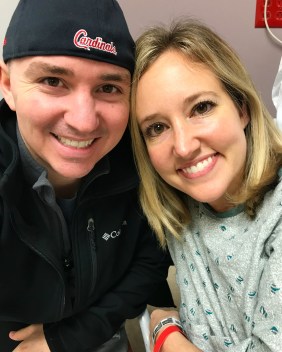
IMG_5372As I sat alone in my hospital gown, waiting for the IV and the procedure I had a few moments to think, pray and reflect about my patient journey. My husband Bobby came back to see me, held my hand, kissed me a few times and I was whisked away. I woke up to the best news! There were no signs of inflammation or active disease and my streak of “remission” continues. I put that word in quotes because I am always hesitant, as my symptoms always come out of left field and blindside me. For now, I am going to bask in this celebratory moment, enjoy every feel good day and take in the relief of knowing I’ve gone through another colonoscopy and passed with flying colors!

Young IBD patient aspires to become Pediatric GI

Madison Harbison. I’ll always remember the first time our paths crossed. IMG_4983I had just gotten off the stage after speaking at the Crohn’s and Colitis Foundation Patient Symposium Event in October. Her and her mom, Michelle, approached me outside of the auditorium. Tears in their eyes. Smiles on their faces. I immediately felt a connection and knew this little girl was something special.

Madison was only three years old when she started experiencing symptoms. Bloody diarrhea was the first indicator. After E.coli and C-diff were ruled out by doctors, this little girl underwent a colonoscopy. Imagine that. Three years old. Drinking the prep. Dealing with everything in the bathroom. And not being able to understand why this was happening or knowing what was wrong with you. Being a little girl, naïve to what it means to have a chronic disease that would be a part of her, for her entire life.

Imagine how overwhelming it felt for her parents. Michelle said it felt like they were torturing their daughter. Madison is now 12 years old. IMG_4985She’s had a total of three colonoscopies, an endoscopy and an MRE. She’s been hospitalized due to flare ups three times. She has three siblings at home, so as she’s in the hospital or going to the doctor, her parents have to care for them as well. There’s a reason for the saying—’it takes a village’… because it really does.
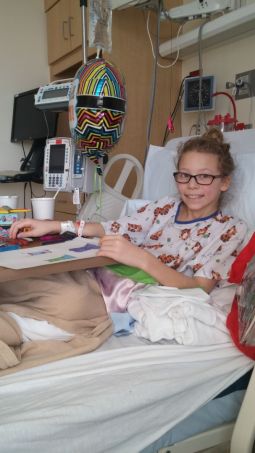
Madison has indeterminate colitis. Her inflammation is centered around her colon. She also battles arthritis that is secondary to her IBD. Just like me, Madison is on Humira injections. Her parents give her the shot—and each time she gets anxious and upset before and after. As a 34-year-old grown woman, I still react the same way at times. So, I can only begin to think what it would feel like for her. Aside from Humira, Madison takes Sulfasalazine, Imuran, Vitamin D, Iron and a multivitamin.

When it comes to advice for fellow parents, Michelle says, “Try to connect with other parents who are going through the same thing. There are “support groups” on Facebook that have helped me so much. Do not give up hope. I have every reason in the world to believe that Madison is going to accomplish everything that she sets out to. This disease is only one part of the amazing person that she is. It does not define her. IMG_4986Also, as a parent of a child with a chronic illness, we are their best advocate. No one knows your child better than you do. If you think that something isn’t quite right, trust your momma instincts!”

When you talk to Madison she radiates strength and resilience. You can see it in her eyes. She’s very mature and well spoken. She says IBD has made her a stronger person. “It’s made me more responsible in the sense of taking my medication, thinking about what foods affect me and always telling my mom if anything is wrong.”

As far as her Humira injection routine (let’s be honest, we all have one!)…her parents take the pen out of the fridge and let it warm up for a few hours, to lessen the sting. Madison likes to use Pinterest on her phone as a distraction. She wipes her leg with the alcohol swab and nods at either her mom or dad so they know to start. IMG_4988Right before the shot, she relaxes her leg, takes a deep breath and pretends she’s anywhere but the living room couch.

Each summer, Madison attends Camp Oasis. It’s a unique experience where kids with IBD have the chance to be on their own, to make decisions and to take responsibility, while being in a safe and compassionate environment. All the campers have IBD. “Camp has really showed me that I am not alone battling this disease. It is the coolest thing to be surrounded by other kids who know and understand what I have experienced.”

Madison doesn’t let her disease hold her down. She’s an avid soccer, basketball and volleyball player. She’s gearing up to take the stage in “Annie” and she excels at dance. This girl does it all.

Guess what she wants to be when she grows up? A Pediatric Gastroenterologist. Madison wants to help kids who are going through what she’s gone through.

madi

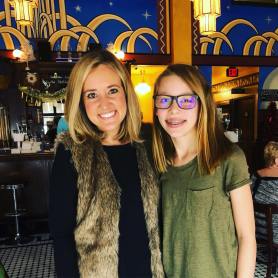
Out to lunch with Madi, taking on IBD together one day at a time.

I can without a doubt say, I know she’ll achieve this goal and follow her dream. She’s a true example of an IBD hero. Someone who hasn’t allowed her disease to rule her life. Someone who looks adversity in the face and says ‘not so fast.’ Someone who I admire and look up to, even though she’s more than 20 years younger than me. If you ever need inspiration—think about Madison during that next Humira shot, think about her when you’re taking that dreadful colonoscopy prep, think of her when you’re getting rolled down to that next CT scan. I know I will.