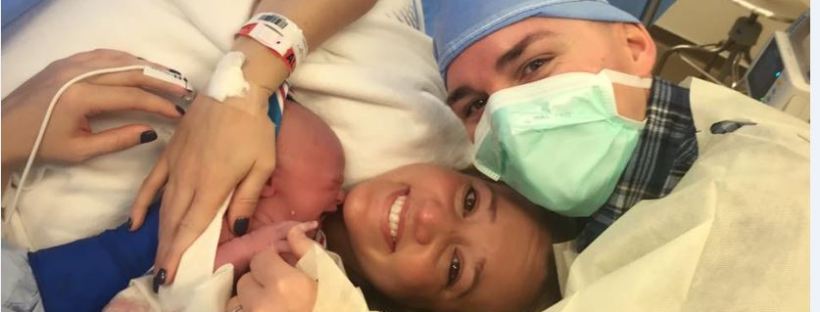
Living life with a chronic illness has its fair share of challenges—coupled with pregnancy, life gets even more complicated and fragile. Every decision you make to handle your disease process not only impacts your own well-being, but also your child’s.
During my pregnancy I noticed how common it was for people to ask questions regarding Crohn’s disease and having children, whether it was online or in person. Questions such as—can you get pregnant? Should you stay on your medicine? Should you deliver vaginally or have a c-section? Now that I’m a mom and my first pregnancy is behind me—I thought it would be helpful to reflect on some of the difficult decisions and experiences that come along with bringing a life into this world.
Here are my responses to the most commonly asked questions.
Can you and should you try to get pregnant?
The answer to this is YES! Just like with most things in life—timing is everything. Women with ulcerative colitis or Crohn’s disease that’s in remission can become pregnant just as easily as other women of the same age. However, if your IBD is active, you may have more difficulty getting pregnant. The key is getting pregnant when your symptoms are at bay and your disease is calm. That way you have a better likelihood of carrying over that remission throughout pregnancy. Luckily, my husband and I started trying for a family 10 months after my bowel resection surgery. I was feeling great and my disease was nonexistent during my entire pregnancy.
To stay on medication…or not to stay on medication.
This can be an emotional decision (especially if you’re feeling well) and one that you must discuss with your doctor(s). After my surgery in August 2015, I felt invincible. I had been taken off all medications for the first time in ten years to allow my body to heal. This newfound freedom made me believe that I could always cruise through life without needing to pop pills each evening or give myself injections. That November, during an appointment with my GI, I was told that would never be the case and that I’d be playing Russian roulette with my health. I’ll always remember being told that I had a “severe and aggressive form of Crohn’s” and that I would need to start up my Humira injections and add additional medications immediately, or else there was a big risk of my disease flares returning within a few years. I remember the tears flowing and how it felt like a punch to the stomach. As difficult as it was to put myself back on medication knowing that I wanted to start a family in seven months, following the doctor’s orders ended up being the best thing for me.
Having clear communication with your doctor is imperative. My GI put me on a prescription prenatal vitamin and folic acid to prepare me for pregnancy. I started back on Humira in November 2015 and haven’t stopped giving myself the injections since. Was it scary at times to inject myself with a medication when my baby bump was prominent and I could feel my son kicking? Yes. It was very emotional—but, it gave me peace of mind to know that this medication was preventing a major flare that could complicate Reid’s birth and cause pre-term labor. Every doctor has a different opinion on this—some say to get off biologics the final trimester, others say to stay on throughout. My OB, high risk OB and GI all agreed it was important for me to stay on Humira and Lialda from start to finish so that everything with my Crohn’s was managed properly.
Will I pass Crohn’s disease on to my children?
According to many health studies, there is a 4-10% chance of passing IBD on to your child if one parent is an IBD sufferer. This increases significantly if both parents suffer with IBD (up to 30%), plus if other members of the family are also sufferers. I personally, would not let your diagnosis hold you back from having a family. While you hope and pray your offspring don’t end up with Crohn’s or ulcerative colitis, what better person to advocate for them…than a parent who lives it–and gets it.
Should you deliver vaginally or get a c-section?
Once you find out you’re pregnant you’ll want to make sure you get a team of doctors in place—an OB, a high risk OB and your GI. Each case and situation is different and both types of deliveries are possible. I know women with IBD who have delivered both ways. The key indicator is where your disease is located. If it’s in the perianal region or if you’re apt to fistulas, you’re a candidate for a scheduled c-section.
The next is your size—my first appointment with the high risk doctor I was told it would be difficult for me to deliver a baby larger than seven pounds due to the size of my pelvis. After hearing that at 8 weeks pregnant, I felt pretty confident I would end up with a c-section.
Just like any pregnant woman—if the baby is breech, if you have placenta previa, etc…the decision is a clear one.
It ended up being a game time decision until my 39th week. The doctors kept a close eye on me and once Reid showed no sign of coming on his own, we decided to schedule a c-section. The entire experience was extremely positive and I’m so grateful everything went smoothly for us both. Lucky for me—the incision from the c-section was able to be the same as my incision from my resection, I didn’t have any adhesions and the scar tissue from my previous abdominal surgery was nearly non-existent.
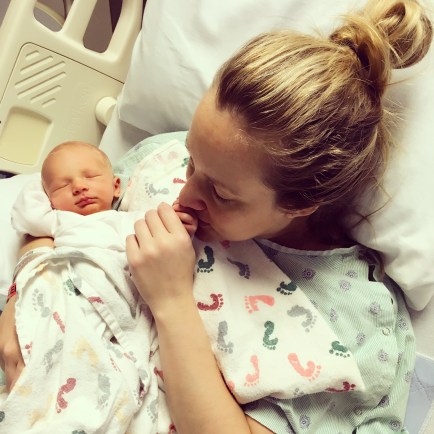
Becoming a mother is emotional and overwhelming—you’ll receive advice from anyone you’re willing to listen to. Take it all in stride and remind yourself that no matter how your baby gets here—whether you have a natural birth without medicine or a c-section, if you breastfeed or if you don’t…it’s your life, your journey and your family. Do what feels right in your heart and what you are most comfortable with. After nearly 12 years of battling Crohn’s, it’s truly remarkable to go through a pregnancy, bring a life into this world and see all that your body is capable of… despite the hardships its endured along the way. Have faith in your medical team and once that baby is in your arms and you lock eyes that first unbelievable moment—it will all be worth it.



 st flare of my life a week after delivering”…to “I have triplets and two out of three have Crohn’s.” I love hearing feedback and the whole point of this blog is to get the conversation going in the Crohn’s community and to serve as an advocate and voice for those who suffer in silence….but, I’d be lying if I said those comments haven’t stuck with me.
 substance here I also find shortsightedness; for, of course, a parent’s world will continue to change as their child grows and giving oneself to another is an investment or journey, not an immediate payoff or arrival.
 I find myself crying tears of joy anytime I hear certain songs or start thinking about how grateful I am to be at this point. I’ve waited my whole life for you.
 mama has your back more than you know.
 d out in this delightfully inappropriate 60 minute romp entitled, “Flare: A Crohn’s Cabaret.” The show is Saturday, March 25 at 7 p.m. at the

 I have very few pictures of myself from this time in my life because I felt so hideous and self-conscious. In the photo at the top of the article, I had been sick for weeks and struggled to attend a baseball game with my brother. I didn’t know what was wrong, for months I was unable to eat without pain and had fevers topping 104 degrees. The photos to the left are what months of steroids and medication caused post-diagnosis. While Crohn’s is an invisible illness for the most part—when you’re going through a flare, it begins to affect your outward appearance as well, whether it’s drastic weight loss when you’re too sick to eat anything other than liquids or weight gain and water retention from treatment. Finding that balance initially is so challenging.
 and you can experience all of life’s exciting milestones like the rest of society. Your disease will enable you to see people’s true colors and character in a way you never knew possible. It actually makes finding a spouse easier because you can see who has true heart. Your perspective about life and challenges along the way will shift. One day you’ll wake up and feel like despite the never-ending worry and wonder that looms with Crohn’s—you’ll come to a place where you feel confident that you are in control. Rather than your identity—your disease is a part of what makes you unique.
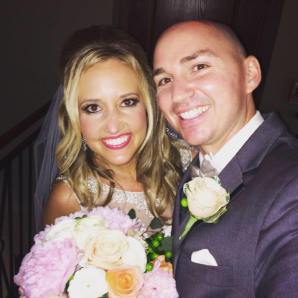 good” days, there is a constant inner dialogue going on in the minds of Crohn’s patients. It starts the minute you wake up—and doesn’t stop. The best thing you can do is show compassion to all, because you never know what battles a person is fighting from within—if you only judge from the outside.
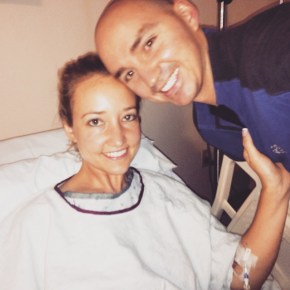 ent over in a chair for hours into the night…as I go through tests…never letting go of my hand or complaining. I think about when I’m NPO (not allowed anything by mouth) because of procedures and how he gently dipped sponges into a cup of water to wipe on my gums when I was thirsty. When I have trouble falling asleep now because of discomfort with the pregnancy I drift off by counting down from 200…something he taught me while fighting a flare in the middle of a dark hospital room years ago.
 t there for you as you navigate the unknown. The Crohn’s and Colitis Foundation of America (CCFA) offers an online support network for caretakers, too! Click
  rience. Having a man who “gets it” and never makes me feel guilty for my condition, gives me the confidence to know that while Crohn’s can be debilitating, it’s not going to break my spirit…but only make US, stronger.
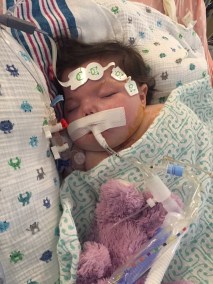 hardships and unfathomable scares, Jade and her parents remain focused on the future and determined to one day go home as a family. As a soon to be mom, I can’t begin to grasp what it’s like to be in their shoes, but they constantly show me and inspire me to take on all of life’s setbacks, challenges and disappointments with a positive attitude and an unwavering faith.
 lights camera crohn's