The inner battle: A whole body approach

One of the scariest and most daunting parts of Crohn’s disease or any chronic illness for that matter is the wonder and curiosity of when it’s going to strike next. Even if it’s been months or years since a hospitalization or flare, not a day goes by that you don’t wonder…when is the next time going to be? Each time I’ve been hospitalized in the past 11 years I have felt completely fine in the morning—and then something changes. A few hospitalizations really stick out in my mind because of how abruptly my day and life changed.

The first was in May 2009. I anchored the morning news on Wake Up Wisconsin and felt great, had a first date planned in the evening and was getting ready for it. What seemed like a happy, carefree day—turned into a nightmare in a matter of moments. The crushing, debilitating stomach pains started out of nowhere, I was vomiting from the pain…and before I knew it, hospitalized. The guy I was supposed to go on a date with laughed and thought it was all an excuse not to see him.

Another instance that sticks out in my mind—I was training for my second half marathon in February 2014, anchored the morning news in Springfield, ran 9 miles and was heading to St. Louis after my run to see my boyfriend (now husband). While I was driving to St. Louis those all too familiar pains began…later that night I was hospitalized with a bowel obstruction.

That’s how quickly it happens. The disease doesn’t care if you have plans. The disease is a mysterious beast that chooses to rear its ugly head without any notice. But, the magic happens when you find a way to manage stress so it doesn’t lead you to a vicious cycle of flare ups. This can be easier said than done, but there are ways to manage the day-to-day and be mindful of your thought process and your body.

Many time people with Crohn’s disease and Ulcerative Colitis have what’s called “psychophysical vulnerability.” Meaning that stress, emotional health and poor coping strategies can impact how one’s disease progresses and hinder quality of life. While it’s imperative to follow a diet, exercise and treatment plan that you respond best to, it’s also important to focus on the emotional and cognitive impact the illness has on you.

  • Breathe deeply: Breathing out for five seconds and in for five seconds helps to slow you down and create a sense of calm. Do this as many times as you need to feel relaxed. Be mindful of your breath as it enters and exits through your nose.
  • Focus on the now and not the what if: There’s no sense in worrying about your next hospital stay—have confidence in the fact that with each flare up and rough day that has happened through your disease process there has been a beginning and an end. Deal with it when it happens—don’t waste time living in a state of fear. You’ve beat it before and you’ll beat it again.
  • Confide in a family member or friend: Share your struggles and worries, don’t keep them bottled up in side. If you don’t communicate with your support network they won’t know you need help. Always share your feelings, don’t hesitate or feel like you need to deal with this alone.

Overall, place emphasis on the “relaxation response”—a physiologic state of deep rest induced by mediation, yoga and prayer—in doing so you not only alleviate stress and anxiety, but also help to keep the disease process in check.

Finding the mind-body techniques that help you fight the fatigue, stress and chronic pain of Crohn’s diseases can be the best recipe for getting the symptom relief you’re looking for. If you’re mentally strong, you’ll be much better equipped to endure the days that hurt you on a physical level.

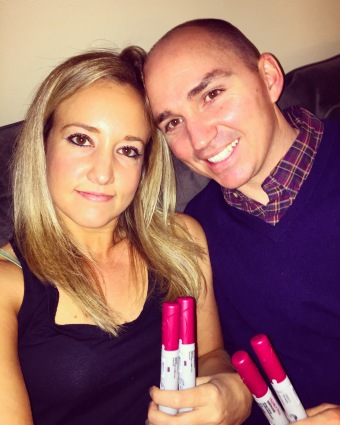
Taking shots like a champ…and not the kind from the bar

Back in the summer of 2008, during a hospitalization, I was told we needed to “break out the big guns.” The medication I had taken for three years to calm my Crohn’s disease was doing as much for me as a Flintstone vitamin. As I laid in the hospital bed and heard the game plan I was incredibly apprehensive, petrified really…at the thought of having to give myself a painful injection for the rest of my life. There was so much unknown—How would it feel? Did I have the strength to actually inflict pain on myself? What about the side effects?

At that time I was given the choice to give myself a Humira injection every two weeks from the comfort of my home or receive Remicade treatments in the hospital every 6-8 weeks through an IV for several hours. During this time I was a morning news anchor in Wisconsin, nobody knew I battled Crohn’s. I wanted to keep my disease a secret as much as I could, so I chose Humira. Not only for the privacy, but also because I mentally didn’t want to have to go to a doctor’s office or hospital and be hooked up to medicine. To me—that would make me feel like a sicker person. I know multiple people on Remicade who love it, if it works for you—great!

For those who are on Humira—you know the beginning is the worst. The loading dose is physically, emotionally and mentally taxing. In order to get the medicine working you need to do four shots, instead of “just” one. Back in July 2008, I went to the doctor’s office with my Mom to do the first four shots and let me tell you, it’s a milestone in my disease journey I will always remember. The nurse showed me how to administer the shot on a practice squeeze ball, but made me give them all to myself in my thighs. Sitting there with a large epi-pen like syringe in my shaking hand felt so foreign. I shuddered at the thought of what it would feel like when I mustered up enough strength to push the plum-red button and feel the medicine enter my body. You do one—and quickly feel the stab of the needle and the liquid burn through your leg. That’s one. Then you have to prepare to do three more back-to-back-to back. When that was over, I remember walking out of the doctor’s office and stopping before we reached the reception desk. My Mom and I hugged and froze in the moment. That embrace spoke to me more than words could at the time. She felt for me and was and is my biggest cheerleader. It was a feeling of relief, pride and the knowingness that this was just the beginning.

Two weeks later you do two shots—a huge improvement from having to do four, but still no picnic. Unfortunately for me, the loading dose made me feel incredibly weak and dizzy. I was miserable. I couldn’t make it up 13 stairs. Work was a struggle and my energy level felt like I was on “empty” every single day. Each person responds differently to that initial loading dose—you have to tell yourself, your body is absorbing and getting accustomed to 4x a foreign medication. It’s temporary pain for long term gain.

Then, from that point forward, I was down to one shot, every other week. The first few months I would dread my Monday “shot days”…and would cry as I gave myself them alone in my apartment. In time, I grew so much more comfortable and knew the medication was making me feel better and worth the short term pain. Twenty seconds of pain for symptoms to subside and to stay off other medications—pretty great trade if you ask me! Luckily, after the loading doses my body grew accustomed and to this day I feel no side effects or symptoms when a shot is due or after I take one, something that can’t always be said about Remicade.

The past few years Humira has just became part of my life and routine—I give myself the shot every other Monday while I’m watching TV, or running out the door to work or to meet friends for dinner.  Anyone who undergoes surgery is taken off Humira for the time being, so unfortunately I had to do that loading dose again last November. Luckily, this time around I felt a lot braver and didn’t experience any sickness as a result of all the shots.

Here are some tips for all my fellow Humira injectors and for their family members and friends:

  1. Humira is kept in the fridge, take the shot out and set a timer for one hour. I used to do 30 minutes and then a nurse told me I could do an hour, and it’s made a difference. Warming up the medication decreases discomfort.
  2. Five minutes before doing the shot, wash your hands and wipe your thigh or stomach with an alcohol swab. Let it dry and then hold an ice packet wrapped in a paper towel over the spot you are going to inject. Each time you do the shot, switch legs or the area on your stomach. I write R or L in my calendar because it’s hard to remember!
  3. Once you’ve held the ice pack on the spot, take it off and use your forearm to lean on the area for a few seconds…this warms up your skin a bit.
  4. Look at the medicine in the shot and tilt the pen up and down to see that it’s moving in there. There’s a small oval window you can look at it to see the clear medication.
  5. Take the plum-red top and gray bottom off the shot—they are labeled 1 and 2. At this point be ready to inject—any sudden movement will release the medication.
  6. Sit straight up with good posture and stare at a focal point on the wall, on the TV or if you’re like me stare at a photo that inspires you. I either look at a picture of my cousin Bill who’s had the two heart transplants and a kidney transplant, at a photo of my Aunt Judy who passed away from ALS, or one of my husband and I from a happy time. Look at photos of people who have shown you what it means to be strong.
  7. Grab the skin on your thigh or stomach and pull up and back—you want it taught, but not too much where the medication will not go in properly and spill out.
  8. Hold the shot straight up—90 degree angle from your skin.
  9. Stare at that picture and go to your happy place.
  10. Take a deep breath, press the button like a champ, and count out loud…“one one thousand, two one thousand, three one thousand…until 10.” When I’ve needed “extra strength” I’ll say the person’s name as my count down… “Bill, Bill, Bill…”
  11. Lift up the shot—hopefully you won’t see any medication (liquid). Depending on where the injection goes you may bruise immediately or bleed, but in most cases you won’t. If anything your skin may be raised a bit, but that’s a good sign! It means the medication is getting absorbed.
  12. When you look at the oval window of the shot it will be highlighter yellow—meaning the medication has been dispensed. Put the shot in a sharps container to properly dispose of it.
  13. I always text my Mom or tell my husband “Perfect shot!”

While I don’t enjoy injecting myself or getting shots—I do enjoy the benefits Humira has provided me the past eight years. This drug has done a magnificent job of silencing my symptoms and allowing me to have a great quality of life. It’s nice not to need to take 22 pills. It’s comforting to know that when I do get hospitalized doctors have told me my stays are shorter because of Humira. Many people shudder at the side effects—and think…well, there’s an increased risk of Tuberculosis,  Lymphoma, this suppresses your immune system, etc…as my Mom, who’s a nurse, always tells me—look at the side effects of Tylenol and you would never take it. I can tell you since 2008 I’ve never noticed that I get more colds, viruses, etc. I haven’t noticed any difference in my immune system and my blood work (which is tracked quite often) never shows any signs of issues.

How about the cost? There’s a great program called Humira Complete which allows you to get the shots for as little as $5 a month! Click here for more details. If you need assistance for any reason, an on-call registered nurse is also available 24/7 to answer any questions or concerns by calling 1-800-4HUMIRA (1-800-448-6472). The nurse ambassadors are fantastic. If you want a nurse to come to your home and help you or teach you, they stand ready and willing.

It’s up to each person and each patient—but my advice is that you need to weigh the risks versus the benefits and look at what kind of life you want to lead.

IMG_0242

Photo taken before my loading dose in November 2015. 

I don’t believe in happenstance

The definition of happenstance is “something that happens by chance.” Whether it’s the diagnosis of a disease like Crohn’s or an encounter that leaves a lasting impression, I’m of the belief that each discovery, each interaction, and each “coincidence” is actually meant to occur. It’s those very happenstance moments that can bring us the greatest clarity and change the destiny of our lives.

The happenstance mentality is not something I can take credit for. My Godmother or “Nouna” as us Greeks say it, has been a shining light in my life since she put the oil on me 33 years ago. She’s endured more heartache than many—as her son Bill was born with a hypoplastic left ventricle (basically half a heart). My cousin Bill is someone who comes up quite a bit in my writing and in my thoughts because he’s a pillar of inspiration for me—much like his Mom. Throughout Bill’s miraculous transplant journey these last 27 years and throughout my 11 year battle with Crohn’s…each hospital stay, each flare up, setback and surgery—she always says… “I don’t believe in happenstance.” Her words are so empowering to me.

They make me feel like I’m meant to battle the adversities before me and that the current pain and struggle is just a small fragment of what my life is all about. Those words mean I was destined to have Crohn’s—this was meant to be a part of me because there is a purpose. In my opinion—my love for writing and helping others enables me to be an advocate for those who suffer in silence. This mentality is never a “why me”… but more a “why not me.”

As my Nouna says, “As simple as this may sound, the “happenstance mentality,” is like a very high and unspoken faith. It’s believing the circumstance and the outcome are totally out of my hands. That I just have to believe in the higher powers, that they will intervene and make everything work out. I have never ever asked God “why?”  I felt if I did, I would be looking ungrateful to God for what He has given us. Instead of the “why me” perception, I prefer to live by: “God gives his toughest lessons to his greatest teachers.”

Who are your greatest teachers? When I think of some of my greatest teachers in life it’s those like my Nouna who choose to look at life’s obstacles as only hurdles and setbacks. When you think back to experiences that challenged you—hindsight is 20/20 for a reason. No matter what you are dealing with or what you are battling take a moment to stop and think—every relationship and friendship started with a stranger, each person with a medical condition has heard the same words… “You have….”… and each new possibility and encounter is a new opportunity.

We all go through different seasons in our life—embrace the timing. What may seem like your greatest hardship in the moment, may pleasantly surprise you down the road when you come to the realization that the thing that you may detest the most (ie. Crohn’s disease), an illness that forces you to let go of the reins as it takes control of you at any moment…. also has the ability to serve as a lifelong blessing because it forces you to look in the mirror and be stronger. It forces you to push through when your hurt the most and it forces you to truly grasp how fragile, amazing and often taken for granted a good day of health is.FullSizeRender (34)

I hope the happenstance mentality serves as a source of strength for you and a reminder of how our lives are all part of a bigger plan.


The best birthday gift of all

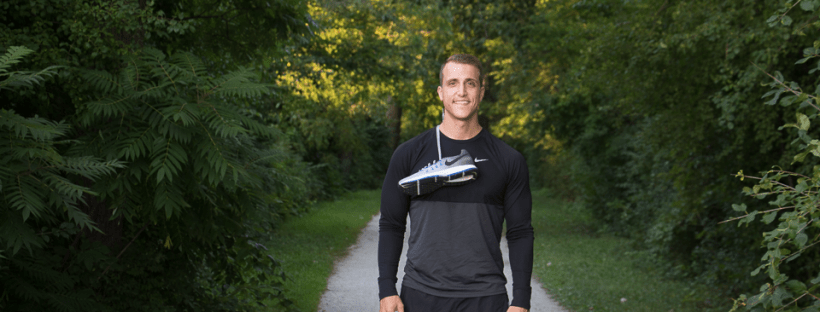
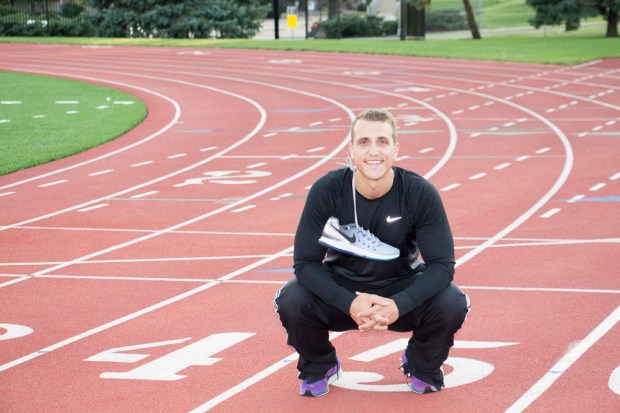
This week is my birthday. Turning 33 isn’t all that exciting, but my baby brother’s herculean efforts to run the Chicago Marathon this October for Crohn’s disease are. A few months back, Greg approached me and expressed his interest to make a difference and educate the public about Crohn’s disease.

On Greg’s fundraising page he writes, Through the years, I’ve aspired to complete in the Chicago Marathon; I just didn’t have the guts to participate until my sister had to have 18 inches of hers removed. Natalie’s strength, courage and determination to take on each day and not let her disease hold her down inspires me to lace up my running shoes and gear up for the 2016 Chicago Marathon. I am running to raise money and awareness for the Crohn’s and Colitis Foundation (CCFA). I am running so my sister can stand on the sideline for once and be the one who gets to offer strength to me.”

Week after week, Greg sends me photos and texts about his training. With each mile that is added on and each enthusiastic photo that is shared, I’m overwhelmed with a sense of pride. Pride because I know firsthand how difficult it is to train for a race. Pride because my little brother is going to extreme efforts to make a point and to educate those around him about Crohn’s and Ulcerative Colitis. Pride because when I watch him run October 9, I will know he’s endured blood, sweat and tears for the 1.6 million IBD patients in the United States.

“When the going gets tough, I think of all the people who live in a state of unknown and experience pain from Crohn’s, says Greg. “Marathon training isn’t just putting in miles, it also involves a lot of mental and emotional strength. We all run for our own reasons and often time, these reasons are close to our hearts.”

Only .5 percent of the U.S. population has ever participated in a marathon. A marathon is much more than 26.2 miles on race day; it’s the hundreds of miles that are logged beforehand. It takes more than being physically in shape, it takes a great deal of time, energy and determination.

Greg tells me, “I hope this makes you feel proud. I hope to educate the uneducated who don’t know that Crohn’s disease is a chronic illness, with no cure that causes tremendous pain. Although I cannot take the pain away, I hope that the extra awareness gives you a sense of hope that a cure will be found; that you do not feel alone in this battle.”

Sitting here now envisioning Greg crossing the finish line in Grant Park brings tears to my eyes. I am so excited for that moment and so appreciative that he’s going to this effort to make a difference.

Greg—as you train these last seven weeks know that I admire your compassionate heart and genuine willingness to make a difference. Watching you run and knowing all the effort you’ve put in is something I will remember for the rest of my life. This speaks volumes about your amazing character and how you always put family first. You are a true warrior for the IBD cause, and I can speak for the IBD community and say we are all eternally grateful for advocates like you.

So…what more could a birthday girl ask for?

How about this—my one birthday wish is that you click here and visit Greg’s fundraising page and donate to support the cause. The deadline to donate is Sunday, September 18. Every dollar makes a difference. Let’s join my brother in taking steps to find a cure for Crohn’s Disease and Ulcerative Colitis.

greg

The network of love

When you think of a sibling so many thoughts and emotions come to mind, from childhood memories to knowing that no matter what—you have those special people to count on, as your unconditional best friends and lifelong partners in crime.

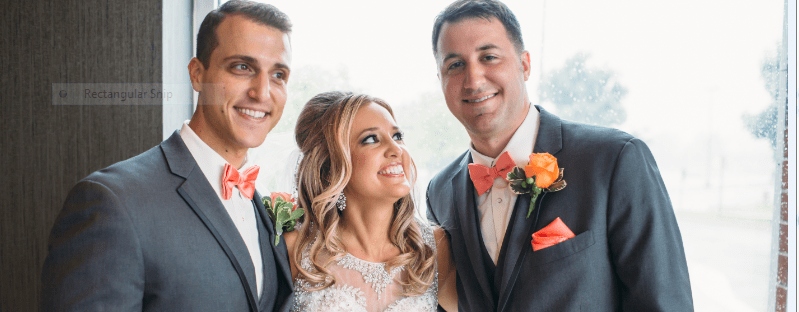
I have two brothers, I’m the oldest but I learned long ago that I look up to both of them…and not just because they are way taller than me. This week is my brother Peter’s birthday. We’re Irish Twins, same age for a week. Peter spoke at my wedding earlier this summer and did a remarkable job. He’s someone who thinks before he speaks and is careful with his words. He’s a deep thinker and an incredibly compassionate soul. I always kid him about being intellectual, but in all actuality I admire that about him. My respect for him continues to grow as we get older.

During his speech at my wedding he recounted his memories of a road trip he took from Chicago down to St. Louis in August 2015 so that he could be by my side as I prepped for major abdominal surgery.

As he drove down I-55 south, he passed through Springfield, Illinois and immediately he thought of that city as a place where I followed my dream and passion of broadcast journalism at WICS-TV. Then he got to thinking about all the miles I had traveled to follow my heart…Minnesota, Wisconsin, Chicago, Springfield and now St. Louis.

Here’s a snippet of Peter’s wonderful speech as he reflected on last summer’s surgery, “…Natalie has an amazing network of love. She has it because she wants it and because she deserves it.

When I arrived at the hospital and opened the door to her room, she cried when she saw me. Much like her other visitors, I spent a few days in that hospital beside her, observing, listening, and praying. And in these quiet moments I witnessed the beautiful, sacred love between Natalie and Bobby. Oh, how she longed for him, and how delicately he combed her hair, and how patient they were for each other. And I’ll never forget when they parted before the surgery and then reunited after; these were glorious scenes to witness.

I drove home from St. Louis with peace, believing that things were going to be fine and knowing that this unconditional love of theirs would be celebrated with the network of love that means so much to them. I’m inspired by their story and how it grows. I suggest that we all be mindful of our journeys and remember that distance should lead to within and not without…”

This network of love Peter speaks of rings true for anyone battling a chronic illness. Having a support system to hold you up when you don’t have the strength to get out of bed is invaluable.

Everyone deserves support—but it’s a balance—being there in the good times and the bad, because you want to. Whether it’s a simple text message, flowers, or visit—it’s always remembered. At the time, the thought may cross your mind… “I wonder how she’s doing?”…”I’m going to say a prayer that her surgery goes well.”… “I’d like to visit and see her.”… we all have busy lives, but when those thoughts cross your mind try your best not to ignore them and follow through.

What may seem like a short visit or an “annoying” text is not—it shows you care. If you think of reaching out and are praying for feel good days for a loved one or a friend but don’t articulate it, your family member or friend will never know and honestly just think you’re too busy or don’t really care.

Your loved one who is battling an illness is not screaming out for attention or wanting sympathy but it’s nice to know your friends and family have your back and are interested in your well-being. When you’re alone in a hospital room or struggling in pain on the couch sidelined from a friend’s get together …it’s easy to feel alone. In those moments when people who claim to be your closest confidants, loved ones and friends don’t reach out—it makes you start to question just how much you truly mean to that person.

Since I was diagnosed with Crohn’s disease in 2005 there have been countless hospital stays, rough days and ER visits. If you ask me—I could tell you each person who has ever visited me at home or in the hospital, each person who has sent a care package, flowers or a card and each person who has reached out. These are moments you always remember.

My brother Peter captured it so perfectly—it’s a network of love—knowing this beast of an illness isn’t something I need to fight on my own takes away so much of the burden. So the next time someone is going through a difficult time, no matter what the issue—when you think of someone—don’t hesitate, be there—whatever way you can.

Peter turns 32 this Wednesday. Knowing I have someone like him in my network of love and as a family member, someone who always puts others first, makes me feel like anything is possible. Take this time to think of your network of love, and always remember to appreciate those who lift you up when the going gets tough.

Check out Peter’s blog.

Drowning out the noise

While the majority of friends and family are amazing cheerleaders, supporters and compassionate caretakers…there are always a few who manage to make an insensitive comment or question the severity of your disease along the way. Most of the time it’s not malicious, but more innocent ignorance…at least I like to tell myself that.

Over the last 11 years I’ve heard it all “You don’t look sick?!” “You’re sick, again?” “Don’t worry about the effects of the steroids, you have puffy checks anyways!”, “You’re a sickly, frail girl”…but following my surgery there were a few comments and conversations that made it back to me that left me incredibly disheartened. Comments that I may be able to forgive, but will never forget. One of them questioning “Why is she getting so much attention? I had a C-section. There wasn’t all this talk when I was sick.”

Ok. Let’s get one thing straight. A C-section may have a similar scar, but there is absolutely NO COMPARISON to the procedure. With a C-Section part of your body is not cut out of you. You come out of the procedure receiving a baby, most likely one of the happiest moments of your lifetime.  Sure you need time to recuperate from being cut into, but you have the joy of staring at your bundle of joy and knowing your pain was so that little life could enter this world.

With the surgery I underwent, 18 inches of intestine were removed. My ileocecal valve as taken.  What’s that valve do? It helps you “hold it” whenever you have to go to the bathroom. My appendix was removed (who would have thought?!) and the surgeon explained that all of my intestines had been pushed down into my hip area and had to be “put back into place.” It’s not as simple as cutting out the intestine and connecting it to the colon and being good as new or cured. For the next year…and truly for the rest of your life, your digestion is different. Your internal organs are forever changed and that carries over into how you feel on a daily basis. According to the Crohn’s and Colitis Foundation of America (CCFA), an estimated two-thirds to three quarters of people with Crohn’s will have one or more operations in their lifetime. About 20 percent of patients show a recurrence after two years, 30 percent after three years, and up to 80 percent by 20 years.

I’m going to get real graphic and personal here because it needs to be said in order to make my point clear. I’m sure fellow Crohnie’s have experienced much of the same. While I was recuperating and working from home half days before I went back to work last summer, I had an accident. No, I did not fall. As a 32 year old woman, home alone, all by myself, I wasn’t able to cross the tiny hallway to the bathroom to “make it” on time. Imagine that. How would you feel if you knew your body wasn’t functioning correctly? Completely dealing with unchartered territory, not knowing what is going to be thrown your way? Never knowing when the next time THAT could happen again is. What if it’s in public? What if it’s in front of my friends and family? I wasn’t able to drive home for months to Chicago or make long road trips because I was fearful of having enough time to pull off the road. For a few weeks, I even carried a pair of underwear in my purse…just in case.

Let that sink in. And before you judge or question someone take into consideration that they may be battling an invisible disease that is a part of who they are… every. single. day. of their life. Until you’ve been a patient or been given the diagnosis, consider yourself lucky that you get to experience the ignorant bliss of being unable to fathom the pain and constant worry.

While ill-intentioned words leave invisible scars and bring us down… try to challenge yourself and recognize the importance of keeping your head up and being an advocate by compassionately educating those around you.

In the news business you can receive 100 compliments about how great your story was and how awesome you are to watch, but then you’ll receive one comment about how your haircut is awful or that you read too fast…and that rewarding, positive feeling goes out the window instantly. Much is the same when people make comments questioning the way you handle your disease.

Ultimately, when you look in the mirror you know what you’ve experienced and you’ve fought the battles. Trust in your family members, friends, and strangers who genuinely rally around you and care about your well-being. THAT is where your focus needs to lie. Positive attracts positive, drown out the noise.

Photo by J Elizabeth Photography www.jelizabethphotos.com

10 tips for getting past the dreaded “S” word

Today marks one year since a decade of disease was removed from my body. The dreaded “S” word being surgery. Since the day I was initially diagnosed I hoped and prayed I would never need to go under the knife. But, there’s only so much IV medication you can take and so much daily agony you can endure before that’s your only choice. When I was told I needed surgery—I started writing in a journal. Here’s my entry from the day I got the news:

July 20, 2015

The hospital room phone rings-like a siren-it makes me jump out of my skin. I hesitate to answer and receive the results of my MRI. The GI doctor tells me exactly what I was hoping not to hear. The results show a bunch of stricturing and scarring within my intestines. I am going to need an ileocolic resection and anastomosis. A what!? Basically, one foot of my intestine needs to be taken out and then re-attached to my colon (which ended up being 18 inches!). Sounds like fun, right? My first thought, will I need a bag? No. Well that’s a huge positive and something I’m immediately grateful for. I had been preparing for this news and knew for the last decade surgery was always a possibility and on the horizon—but, up until this point I had managed  to dodge the bullet. Not this time. I kept staring forward, nodding my head and telling him I appreciated the call. My mom couldn’t hear what I was being told but said I kept blinking very fast and my eyelashes were moving up and down quicker than she could comprehend. My mind was racing. Hooked up to machines and weak from my already four day hospital stay and bowel obstruction… I broke down. My mom and fiancé Bobby stood at my bedside-consoling me without needing to say a word. My cousin Bill, who has been my rock and inspiration the past 26 years decided to take a 12 hour train ride to see me for one day. Miraculously, Bill has undergone two heart transplants and a kidney transplant. So, when I need perspective, strength and courage he’s my go-to and my hero. Since we both have lived with chronic health issues and grew up four doors down the street from one another the bond and closeness we share is one that can’t be described by words. Bill happened to be visiting that very day, but had to leave for his train right after I received the call. The timing was crazy. He only had five minutes to give me a pep talk. He did not smile, he looked me straight in the eyes and told me I needed to give it six  hours to sink in and that this is all for the better. He said to think everything through. Absorb it and revisit it later tonight. As he was on the train—he sent me this text:
“You’re going to be fine in the long run. Don’t focus on the difficulties of the coming month, rather think of the lasting positives you’ll experience in the long term because of the short term struggles.”

Boom. What better advice could I have asked for!? To this day I read that saved text message when I need strength. 

For anyone who has had a major surgery—it’s scary and daunting. Especially if you’ve never had one and don’t know how it’s going to feel like and what the recovery will entail. Never having surgery before throws a whole different level of anxiety into the mix.

Here are 10 tips to get through it:

  1. Find your happy zen—think of this as a fresh start
    • The days leading up are huge (obviously if it’s an emergency surgery you don’t have time to think—(even better in my opinion!)—But, if you have the time—mentally and physically build up your spirits and strength so that the recovery is not as much of a challenge. It’s a mindset and a state of calmness and peace that go out the window the minute they are prepping you for surgery and saying goodbye to loved ones. But for now, it’s about finding that happy zen, the peace within. Several doctors and surgeons told me the surgery would offer a “fresh start” and that I would feel like a “rockstar.” One year later—and I must agree I’ve had more “feel good” days in the last 12 months than I have in the last 10 years.
  2. Make check list and purchase some pjs and comfy clothes without waist bands
    • This is much easier for my fellow female Crohnies… but, hospital scrubs are great, too! I “spoiled” myself and got a bunch of new pajama dresses. Highly recommend finding clothes that are comfortable and make you feel pampered when you’re at your worst. Take care of errands and shopping ahead of time so you don’t have to worry about anything as you recover.
  3. Enjoy nature
    • It’s no surprise nature is truly said to be the best medicine. Do your best to STOP thinking, STOP wondering, STOP analyzing or planning what’s going on for the rest of the day, week, or month. Just breathe in that fresh air. Smile. Look at the clouds, stare at the flowers and how they manage to brighten the day, look at the trees and how they provide shelter and shade. It’s all a comfort that can’t be replicated. It’s easy to lay on the couch and think “woe is me” and not feel strong enough to do anything. I know there are days like that—and that’s “ok” too—and necessary. But, when you get the itch to go outside—do it.
  4. Stay away from Google
    • It’s human nature to want to learn and educate yourself when you’re told you need to undergo surgery, while it’s helpful to ask questions to medical professionals… sometimes Googling for details and seeing pictures of the procedure and incisions can make the days leading up all the more scary. I know I read plenty of commentary from people who made the whole process sound terrifying. Talk to people you know who have gone through surgery, ideally IBDer’s. One of my former interns and a friend from college who had both underwent resection procedures called me the week leading up and THEIR advice was incredibly helpful and spot on.
  5. Talk to your doctor about the incision beforehand
    • The night before my surgery, my surgeon visited me and asked me how I would like my incision to look…from talking to fellow Crohnies…this doesn’t seem all that common. But, ask for it! I asked for the incision to be made as low as possible and horizontal…he listened. Now, I can wear a bikini and the only incisions that are visible are from the laproscopic part of the procedure. The first few months I couldn’t look at myself in the mirror below my belly button without getting upset, but a year later the scars have become part of me and my story. I consider them battle wounds.
  6. Get inspired
    • When trying to stand and walk for the first time post-surgery think of all the people out there who are paralyzed and would give anything for the chance to feel the ground beneath their feet. When getting poked and prodded think of all the little kids battling illnesses and how they face adversity and pain and don’t shudder. No matter what you are battling—use the strength of others to lift yourself up-in doing so, the cycle of inspiration and positivity continues. You are likely someone else’s source of strength without even knowing it.
  7. Lean on others, don’t worry about being independent
    • You’re going to need family members or friends to help you through the recovery process, don’t be too proud to ask for help or feel like you’re a burden. They are by your side because they care and love you—and if the roles were reversed you know you’d do the same. It’s easy to get frustrated during the recovery process and lash out because of the unbearable pain—try your best not to. Your caretakers are your lifeline and help you heal in so many ways. At the same time, make sure you slowly start to walk around the house and start doing things for yourself as you’re able, the more you can move the quicker you will heal and have a sense of normalcy. Challenge yourself to walking for 5 minutes, then 10…keep building up time. The key is not doing too much, too fast. Allow yourself to ease into life again.
  8. Celebrate the small victories
    • As you challenge yourself you’ll slowly start to do everyday tasks that seem like a REALLY big deal. I remember the first time I tied my shoes post-surgery and didn’t need my mom to dry my hair. It was a BIG deal, celebrate those accomplishments. Sometimes even just putting make up on while you convalesce on the couch can make you feel more like yourself.
  9. Guard your belly
    • The most pain felt when recovering is laughing, sneezing, coughing and driving. I remember my mom and I watching TV or her and Bobby talking and making me laugh and it would hurt so badly that I would cry from laughing. Keep a pillow or body belt close by so that you can cradle your stomach and ease some of the burden. One of my old “TV tricks” is to think of the smell of fish if you have to sneeze…if you do so, you won’t sneeze.
  10. Share your story on social media.
    • This advice is coming from someone who dealt with the disease in secrecy for a little over nine years. I kept my struggles to myself because I didn’t want to be labeled as a “sickly” news anchor or garner sympathy from the public. The moment I shared my personal battle on social media in November 2014, it felt like a weight was lifted. The support, love, and prayers from friends, family members and complete strangers has meant the world to me. As I was going through the hospital visits and surgery in 2015 and even now, having that foundation of help behind me makes me feel like I can overcome anything. At the same time—there has to be a balance. Try not to be negative and post daily about the pain, no one wants to hear that (to be quite honest).

Until you’ve actually experienced something it’s impossible to know how you are going to react or respond. I think it’s safe to say most people don’t like the thought of having surgery—but, taking in that news, absorbing what this means not only right now… but for years down the road provides a unique time for clarity and introspection. While you’re sick or in the hospital or recovering at home—the sun keeps shining, people live their lives, the clock keeps ticking. While you may feel like your world is coming to a halt—it’s all in motion and you are moving towards better days without even realizing it.

Be well,

Natalie

11 years ago today, a bittersweet anniversary

Hello! My name is Natalie Hayden and 11 years ago today I was hospitalized in my hometown hospital and told I had Crohn’s disease. Since that day—so much has changed, so much has been endured and so much has been gained.

For the past year or so I’ve contemplated starting a blog as a way to share my story about battling Crohn’s disease—a forum to discuss topics and give advice, a place to help those suffering in silence and a way to build a network of patients and caregivers who can join together and take on all of the ups and downs the illness brings, together.

Battling a chronic, auto-immune disease can often feel isolating. You feel like it’s a battle only you can fight. You never know what the next day (or hour!) brings and constantly find yourself wondering when the next flare will strike. Unfortunately, that worry and wonder only makes the disease process worse.

The date of July 23 has played an interesting role since that dreadful day in 2005:
• July 23, 2008—My furbaby, and rescue dog Hamilton James was born
• July 23, 2013—I met my husband, Bobby, on eHarmony

When I think of this day—it’s a mix of emotions. What would life be like without a lifelong illness? My mind wonders to life BC (Before Crohn’s)…but, there’s no sense in fantasizing about an uber-healthy and pain free life, because that’s not reality. All I can do is reflect on all that’s transpired and be stronger and better because of it.

I’m excited to share my journey with you and to also gain strength from hearing your stories. You may be wondering what the name of my blog means: “Lights, Camera, Crohns—An Unobstructed View.” In October 2005, while on 20 pills a day following my first flare up, I started my first television job in Austin, Minnesota. Since that time I worked as a producer, reporter and morning news anchor until my last show in Springfield, Illinois October 31, 2014. I’ve taken my love for writing and journalism and currently work as a Communications Specialist.

I want this blog to shed light on what it was like living in the spotlight while battling a disease that no one knew I was fighting to what life is like now. The past 11 years I’ve had several bowel obstructions—an “unobstructed view” means a clear, transparent, and “healthy” look without holding anything back.

I hope this blog makes you feel inspired and empowered to take your disease on with a positive attitude and strong will each day. Writing is cathartic and hearing from people who “get it” is the best medicine of all. I look forward to embarking on this journey with you and I’m excited to see where it takes us.

Natalie