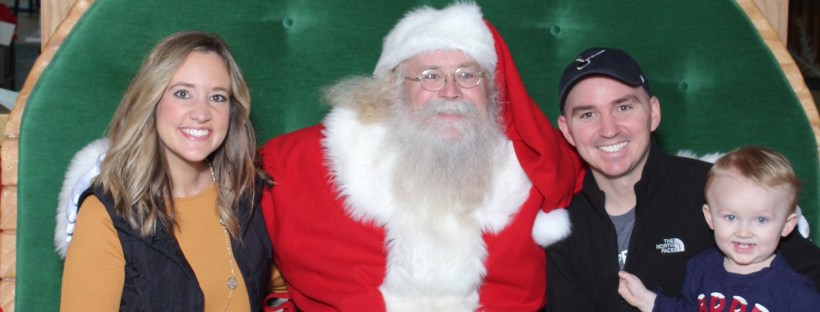
Merry Everything, from my family to yours

We hope the holiday season has been filled with love, joy, happiness and health for you. Thank you for your endless support and encouragement, kind words and feedback and interest in not only my patient journey, but also the well-being of my family. Whether we’ve connected on social media, through Lights, Camera, Crohn’s, by email or collaborations, I feel so grateful to have this platform to share my experience living with Inflammatory Bowel Disease every week of the year. You inspire me to be vulnerable. You inspire me to be strong.

I write and advocate in hopes of being the voice I so desperately needed when I was given a lifelong chronic illness diagnosis at age 21. Being able to lean on the IBD family virtually and in person is the gift that keeps on giving. We can all serve as a wonderful resource for one another, not only during difficult days, but also when we’re feeling on top of the world.

IMG_4950I hope you take this week to enjoy time with loved ones, relax and find time to care for yourself!

If we haven’t already—let’s connect on social media:

Instagram: @natalieannhayden

Twitter: @nataliesparacio

Facebook: Natalie A. Sparacio

Cheers,

Natalie

Ready to Roll: Charmin unveils its new “Forever” Toilet Paper Roll

This post was sponsored by Charmin. Personal opinions and thoughts are my own.

Safe to say we’ve all been there. You’re in the bathroom. You look. No toilet paper. Not a fun predicament to be in, especially when you live with inflammatory bowel disease (IBD). Talking about bathroom habits is somewhat taboo, regardless of whether you have a health issue. It’s not usually a comfortable conversation to have with others. But, just like the children’s book states, “Everyone Poops” and it’s nothing to be ashamed of. IMG_4815

After living with Crohn’s disease for more than 13 years, I’ve spent countless time dealing with bathroom issues and worrying about accidents. It’s become a part of my life and daily routine. It’s a personal part of my patient journey, but it’s also something that I know I’m not alone in dealing with.

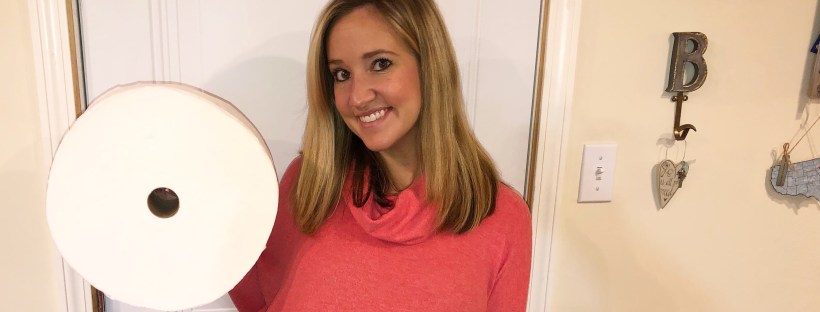
Here’s where the Charmin Forever Roll comes in. It takes away all the hassles of running out of toilet paper. The roll lasts up to ONE MONTH! And yes, boys and girls, it’s available in Charmin Ultra Soft, America’s softest toilet paper made with 2-ply sheets.

When it comes to dealing with flare ups, prepping for colonoscopies and recovering from surgery and hospitalizations, the Forever Roll takes the focus off the toiletries and gives you one less thing to worry about. When your IBD is flaring and fatigue is weighing you down, the “simple” act of making a quick run to the store for toilet paper or even changing the roll can seem strenuous, especially if you live on your own or if you’re building up stamina following abdominal surgery.

At first glance, the Forever Roll may look rather large IMG_4811and industrial to have in your personal bathroom. But reviews far and wide have been overwhelmingly positive!

As a stay at home mom who lives with IBD, oftentimes it’s just my 20-month-old son and I home together during the day. If the roll is out, I’m in quite the predicament. I’ll be adding a baby girl to the mix in a few weeks, so then I’ll really have my hands full! The Forever Roll is efficient and provides peace of mind.

“Charmin is always looking for to ways to improve the lives of consumers, and the Charmin Forever Roll delivers on a big tension: constantly having to change the roll of toilet paper,” said a P&G spokesperson. “By removing one more hassle in the bathroom, consumers can focus on other things without the fear of running out of TP.  Charmin hopes the Forever Roll alleviates this concern and provides a sense of relief for the IBD community with the same quality TP they know and love.”IMG_4837

Click here to order your Charmin Forever Roll Starter Kit. With the Starter Kit you get 3 Forever Rolls, free shipping and a FREE stainless steel roll holder. You have the option for a 1-user bathroom or a multi-user bathroom, so it’s perfect for any household.

Whether you live with IBD or if you’re the picture of health, we all need toilet paper to get through the day. I know I won’t miss opening the door and asking my husband to bring me toilet paper! Give it a go and let me know what you think.

A letter to my daughter, from your mom with Crohn’s disease

My sweet daughter,

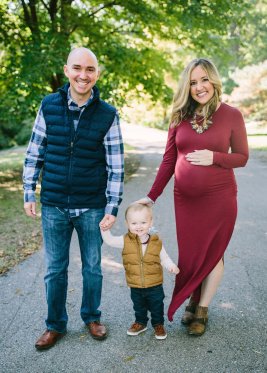
In less than 30 days you will be safe in my arms. It’s felt like a long journey to get to this point with you. Much like your brother, you’ve made me feel a sense of health that I never knew was possible. Through the creation of you and your life, I’ve found a deeper appreciation for my own.

You’ve silenced a disease that has ravaged my body for more than 13 years. _F6B0473You’ve reminded me of what is possible and what I’m capable of. You’re already an inspiration to me and you don’t even know it.

For as long as I can remember, I’ve hoped and dreamed for you. A daughter. A best friend. A relationship so sacred, so unique. Words don’t do justice for how anxious and excited I am to bring you into this world.

Just like your brother, you will see me struggle some days. Not with being your mom, but with my Crohn’s disease. It pains me to think about making you worry about my health or question when my next flare up will be, as leaving you and Reid for an extended hospital stay will be so tough on me and on our family.

I never want you to feel scared or question my resilience. Instead, I want to show you how strong I am and instill a positive attitude in you from a young age. You will witness the highs, the lows and everything in between that comes with chronic illness, but trust that mama will always come out on top. _F6B0340You and your brother serve as my greatest motivation to push through the pain and be strong. You’ll see how your dad loves and nurtures unconditionally and rises to every challenge that comes my way.

Here are my hopes for you.

A kind, happy heart. Always try and see the best in others, rather than coming to quick judgement. Soak in the happiness bestowed upon you each day and light up the room with your smile, even when the going gets tough.

A confident attitude and demeanor. Stand tall and be proud of who is looking back at you in the mirror. Love yourself for all that you are and don’t let any person make you question your worth.

A compassionate, empathetic mind. Recognize the pain of those around you, and be supportive, thoughtful and caring. Be a positive light in the lives of others.

A patience with yourself and others. Understand that life has setbacks, disappointments and pain, but that God has a plan for you. Trust in it, even when the path seems daunting or overwhelming. Try and use each challenge that comes your way as a moment to learn and grow.

A strength to use your voice. Never be afraid to speak up, be heard and communicate your hopes, dreams and fears. Feel empowered by your voice and know that everything you say and think matters._F6B0313

A life without Crohn’s disease. While there are many qualities I would love to share with you—I hope and pray you stay healthy and never receive an IBD diagnosis. I will be there every step of the way, should that ever happen. I’ll be your best advocate and your closest confidant in sickness and in health, and always.

See you soon, my sweet girl. My rainbow baby. My darling. Someday you’ll know how you’ve made my heart fill with such joy and immense gratitude.

Mama

Food for thought: What it’s like to get all your nutrition through an IV with IBD

This week–a guest post from an IBD advocate who continually inspires me. Meet Sonya Goins. twibbon-profileShe is a news reporter for a community television station in the Minneapolis/St.Paul area. Sonya is also a Crohn’s patient, diagnosed with the digestive disease in 1985 while she was in college. I’ll let her take it from here:

While fighting the physical pain of Crohn’s is tough, the mental aspect is even harder.

On January 3rd, 2018 my doctor put me on TPN (Total Parenteral Nutrition), which means I was fed through my veins. All of the nutrients I needed to survive were in an IV bag and pumped through my veins throughout the day. My doctor wanted to give my colon a rest so ulcers could heal.  I endured this treatment for eight and half months.  It was one of the most trying times of my life. No food, just water, broth and on occasion, coffee.

Despite my circumstances, I named my IV catheter “hopeful.” 26677835_10155748847937819_1006971807936260031_oHowever, it took me a minute to adapt a positive inner attitude.  You see, in public I put on a good, cheerful attitude. There were times when I wanted to crawl up into a big ball and shut out the world. The first few weeks of constantly wearing a backpack full of IV fluids were very hard.  I did not like what I saw in the mirror. I was angry at my situation.  It wasn’t until I visited a pediatric Crohn’s and Colitis Foundation support group that I changed my way of thinking. Seeing young people living with the digestive diseases, and going about their lives despite their circumstances, motivated me to do better.

I had to live my new normal to the best of my ability.

The mental game of TPN

Mentally, not eating real food was very, very challenging.  Although I could not eat, I still cooked for my youngest child. The smells of the food made my mouth water, tempting me to taste what I know would make me sick. There were a few times I lived on the edge and took a sample. I paid for my mistakes—painful cramps and bloody diarrhea were my punishment.

After the first month on TPN, I knew I needed professional help if I were to survive.  So, I sought the help of a therapist.  I also prayed and meditated—a lot. 35682318_10156164555637819_6627378019424010240_n

First, I needed a distraction for when I was tempted to eat. A friend taught me how to crochet. She even purchased the yarn, hooks and beginner books to get me going.  I still cannot do a granny square, but I learned a new skill.

When times were bad and I wanted to give up, I would mentally go to my happy place—Turks and Caicos. Several years ago, I visited the Caribbean Islands. I imagined myself sitting on the pristine beaches, watching the waves crash.

The social impact

The loss of social invitations also did a number on me.  Some of my friends did not want to hurt my feelings by eating in front of me, so they stopped including me. However, I did have one friend who went out of her way and found a restaurant that served the best broth in town. We sipped on broth and caught up with each other’s lives. This was one of the highlights.

I was determined not to let this situation get the best of me. Instead of going out to eat with friends, I invited friends to go for a walk. I walked with former coworkers, acquaintances and family members.  The fresh air and good conversations did me a lot of good.

Taking steps to heal mentally and physically

Walking became my foundation. I was motivated to walk for another reason.  Before I got sick, I signed up for several half marathons to raise money for the Crohn’s and Colitis Foundation. I finished the New Orleans half marathon in March, just three months into my treatment. I have never been so proud.  I had to walk the race, but I finished. Several months later, I also completed the Twin Cities 10 mile race, and the Savannah half marathon.

My unexpected journey made me stronger mentally and physically.  I am more outgoing and more self-assured than ever before.  After all, you cannot be shy walking around with an IV bag strapped to your body.

I share my story to give others hope.

Sonya Goins is also a Crohn’s and Colitis Foundation Board Member/MN Dakota Chapter.  You can find her blog at SonyaStrong.com. She also has a podcast on iTunes and GooglePlay entitled “Conversations about Crohn’s and Colitis.”

My Cause My Cleats: How Chicago Bear Anthony Miller is Representing IBD

When Chicago Bear standout rookie wide receiver, Anthony Miller laces up his cleats to take on the Los Angeles Rams this Sunday, his cleats will tell a story. A story many may not be aware of. Anthony’s longtime girlfriend, Alexandra Pounders, has battled Crohn’s disease for nearly 10 years. She was diagnosed at age 14. IMG_4488

This Sunday (Dec. 9), Anthony will participate in the NFL’s My Cause My Cleats campaign, as a way to spread awareness for inflammatory bowel disease (IBD) and show support to his girlfriend. Anthony’s cleats will feature the Crohn’s and Colitis Foundation.

“Being able to bring awareness about IBD through football means a lot to me. When I wear these cleats against the Rams, I’m not only going to be representing my girlfriend Alexandra, but also the millions of people across the globe who suffer from this disease,” said Anthony.

This is the third year for the My Cause for Cleats effort. It’s a way for NFL players to take steps to visually show their support for causes near and dear to their hearts. Anthony and Alexandra have been together almost five years. Alexandra says Anthony has been there for her every step of the way, whether it’s attending doctor visits or motivating her to stay strong during setbacks.

“It feels amazing to know there is someone by my side who cares so much for me that they want to spread awareness about this illness. IMG_4487Anthony has seen me fight for so long. It makes me feel like I’m not going through this alone,” said Alexandra.

“We are thrilled to see several NFL players, including Anthony Miller, raise awareness of Crohn’s and colitis through this year’s My Cause My Cleats campaign,” said Michael Osso, President & CEO of the Crohn’s & Colitis Foundation. “More than 3 million Americans live with these diseases, and, like Anthony, even more are touched by them as loved ones of patients. Using their platform as professional athletes to speak out about Crohn’s and colitis not only helps educate the public about the seriousness of these diseases but also underscores how wide-reaching these diseases are and how important it is to have the support of loved ones.”

Alexandra’s advice to the IBD community is to put your personal needs first and try to keep stress to a minimum, while accepting support from others.

“Surround yourself amongst people who may not completely know what it feels like to be in your shoes, but people who are willing to be patient with you and love you on the days that aren’t so great. Focus on being the best possible you that you can be in every aspect…mentally, physically, emotionally and surround yourself amongst people who truly care about you, it’ll be so much easier to overcome the obstacles you face with this disease. Stay positive. Hold on tightly to your faith. And don’t let this disease define you,” said Alexandra.bears

Chicago is my hometown and where the majority of my family lives. As a Bears fan and as a Crohn’s disease patient advocate who was diagnosed in July 2005, seeing professional football players put causes like the Crohn’s and Colitis Foundation in the spotlight means a great deal. Check out the #mycausemycleats hashtag on social media to learn more about the cause.

Taking on Crohn’s to Get My Life Back on Track

This post was sponsored by AbbVie Inc. Personal opinions and thoughts are my own.

Crohn’s and Colitis Awareness Week is December 1-7. If you have Crohn’s disease or ulcerative colitis, get tips from gastroenterologist Dr. Corey Siegel, a Crohn’s disease and ulcerative colitis expert, by visiting the online Expert Advice Tool before your next trip to the doctor’s office.

The gnawing abdominal pain. The frequent trips to the bathroom. The fatigue that hit me like a ton of bricks. It all became my “normal” the first few years following my diagnosis of Crohn’s disease in July 2005. During that time, I did everything I could to put a smile on my face as I reported the news on television stations in Minnesota and Wisconsin. While I loved sharing other peoples’ stories, I never wanted my own struggles to be uncovered while I was in the spotlight.

I am one of approximately 700,000 people in the United States affected by Crohn’s. Once I left the news desk in 2014, I felt it was the perfect time for me to share my struggles and become a vocal advocate. Rather than keep my story in the shadows, now, I share my journey proudly with hopes of helping and inspiring others as an IBD patient advocate and blogger.

Crohn’s and Colitis Awareness Week (December 1-7) is a time to educate others about IBD and empower those who may be struggling with their disease. It’s a time for patients and caregivers to speak up and use their voices to show that IBD doesn’t need to hold you back from experiencing all that life has to offer. It doesn’t need to prevent you from accomplishing your dreams. It doesn’t need to isolate you from enjoying a full quality of life. That being said—it takes effort on your part to listen to your body, recognize the symptoms and manage them accordingly with your health care team.

Crohn’s disease is a chronic inflammatory bowel disease (IBD) characterized by inflammation of the gastrointestinal (GI) tract. It can affect any part of the GI tract, from the mouth to the anus, and is not contagious or caused by food. IBD is a progressive disease, which means it can get worse over time if you are not proactively managing it. It’s also an invisible illness – I look like everybody else, no matter how I’m feeling on the inside. Those with IBD often internalize their struggles and keep their pain to themselves. It’s as if an inner conversation begins with every meal or beverage, moment of stress or excitement and twinge of pain.

In July 2008, almost three years to the day following my initial diagnosis, I found myself dealing with Crohn’s symptoms spiraling out of control. I was the morning anchor for ‘Wake Up Wisconsin.’ Deep down, I knew something wasn’t right. I was headed home to Chicago to celebrate the Fourth of July with family. I ended up being hospitalized over the holiday with an abscess the size of a tennis ball in my small intestine. I watched the fireworks reflect off my hospital room window with my mom. I felt broken and exhausted by yet another setback.

My gastroenterologist entered the room and talked candidly with me about the need to change my treatment plan to minimize the progression of my Crohn’s. While it was a daunting and emotional conversation, it’s a conversation that changed my life as a young woman with Crohn’s. I had my whole future ahead of me. I knew I needed to make changes and get my life back on track.

I’m here to tell you that despite my diagnosis of Crohn’s at age 21, I was still able to accomplish it all. The first decade of my disease, I worked full-time in the television business and spent time at a public affairs firm. I fell in love with an amazing man who sees me for so much more than my disease. We got married in 2016. We have a healthy toddler and we’re expecting a baby in 2019.

Crohn’s has shaped my perspective and shown me the strength I possess within. It’s taught me to slow down and listen to my body and to appreciate the beauty of a ‘feel good’ day. My IBD journey has been one of highs and lows, smiles and tears, and everything in between. I wear my IBD diagnosis as a badge of honor because it’s something that has tested my strength and perseverance, but it hasn’t robbed me from becoming all I want to be.

If you have Crohn’s, it’s important to work with your doctor (sooner rather than later) to create a monitoring and treatment plan focused on long-term success and minimizing disease progression. Prepare for your next doctor’s visit with the help of gastroenterologist Dr. Corey Siegel and the online Expert Advice Tool.

(US-IMMG-180836)

Disclosure: This post was sponsored by AbbVie Inc., a biopharmaceutical company, and should not be construed to constitute medical advice. Personal opinions and thoughts are my own. I am not a medical professional and am not qualified to give medical advice. Please talk with your doctor about your individual medical situation.

Discovering Gratitude While Living with IBD

When you think about life with inflammatory bowel disease, are you able to think beyond the pain and suffering? Are you able to pause and take time to reflect on how your illness has shaped you into who you are today? Are you willing to look at something that continually challenges you, scares you and leaves you drained—and think…you know what, I wouldn’t have my life any other way? _F6B0037

It takes a lot of time and a lot of patience to come to this place of realization. Until recent years, I’m not sure I would have ever been able to say a positive word about what it’s like to live with Crohn’s disease. But now, more than 13 years later with this disease, I feel my vision has gone from black and white and changed to color. I have peripheral vision I never had before. I’m able to see how my past shaped me into who I am today. I’m able to recognize how the pain and hurt has altered my perspective and forced me to take the blinders off. I can see moments where I’ve risen above and shown courage and bravery. Some memories are painful, some make me feel sad, others make me feel proud.

There comes a time in a chronic illness patient journey that you stop thinking “why me” and instead “why not me.” I don’t like placing pity on myself. I don’t prefer to fantasize about the days before I was diagnosed. Instead—I enjoy reflecting on how I’ve evolved through the years, despite the setbacks and the scares. wedding1Chronic illness, while physically, mentally and emotionally taxing, also has the ability to show us the beauty of the world around us and all that we’re capable of. Instead of thinking how my Crohn’s holds me back—I think about how I’ve lived despite its restraints.

As the years go by, and the diagnosis “anniversary celebrations” roll on, I continue to grow and feel a renewed sense of self within my illness and within myself. As you experience procedures, self-injections, surgeries and the unknown, you get desensitized, but you also gain strength. The day-to-day management of an invisible chronic illness is exhausting and can be overwhelming, but there comes a time when you feel a sense of harmony with your body. You know what it’s trying to tell you. You know when you need to listen. You understand when you need to act.

_F6B0340My disease has helped me take on motherhood. It’s made me soak in the feel-good moments, take mental snapshots of the happy days and celebrate the beauty of life. My disease has forced me to press pause when I’m doing too much, it’s reminded me of the importance of self-care and taking time for me. It’s shown me which people are meant to be in my life and which are meant to be in the backstory.

It’s a season of gratitude. A season of thanks. A season of family, friends and celebrations. This year—I’m choosing to celebrate how Crohn’s disease has guided me to the present. Beyond thankful for a husband who’s my rock, a son who is healthy as can be and a daughter on the way in January. My body may not be “healthy” …but, it’s still managed to create miracles.

It hasn’t always been a fun ride, it’s been brutal at times. But it’s my life and I wouldn’t have it any other way. Please do yourself a favor and give yourself time to reflect on how your disease has shaped you into the person you are today. By showing gratitude about living with IBD, it’s one of many moments where you can show your disease who is in the driver seat and continually rise above.

How Hurricane Maria changed the path of my Crohn’s Disease: A Puerto Rican patient’s journey

I recently connected with a fellow IBD patient on Twitter named Jessica Pérez-Cámara. Aside from both of us battling Crohn’s disease and both of us taking Humira, we’re also both journalists. This week—Jessica shares an emotional piece about what it was like to take on inflammatory bowel disease, amidst a natural catastrophe, mid-flare. I’ll let her take it away.

Life with IBD is hard enough. IMG-5512Try having a flare during the worst natural disaster in the history of your country. It happened to me. I survived.

On September 20, 2017, Category 4 Hurricane Maria made landfall in Puerto Rico, causing a humanitarian crisis. Maria left nearly 95 percent of the island without communications, water, electricity and with limited medical access.

Many of the 3.4 million U.S. citizens living on the island had restricted access to resources like food, fuel, among many other essential needs. No communication, no cell phones, no internet. Nothing. I am a journalist who, at the time of the storm, was working as a communications assistant in the local Government. My job was to share news to the public before and after the hurricane. My country ended up getting hit with two hurricanes, and my beloved grandmother passed away a few weeks earlier. She died the day before Hurricane Irma. It was all such a whirlwind, as the stress mounted, so did my flare. IMG-5510

I was diagnosed with Crohn’s Disease in August 2015, even though I’ve lived with IBD for more than three years, I’m still learning to navigate my illness. Upon my diagnosis, I was put on Asacol and Budesonide. I had been fearful of going on a biologic and did all I could to avoid them. But, deep down I knew the moment would one day come.

Nonstop work after Hurricane Maria

I worked nonstop for months on the initial hurricane recovery efforts. As I took on this responsibility, I was flaring badly. Many hospitals were not working full capacity, running on generators and with shortages of basic medications like IV bags.

I was feeling terrible, exhausted, the fatigue and diarrhea were worsening, but I kept working through the pain. I was putting my duty for my country before my health. I was working long hours and when I got home, it did not get any easier, because life was not the same. Basic things like food, water, fuel for the generators, gas for the cars and even having a good meal or taking a shower were more difficult. My body ached from head to toe. The food was scarce and what was available was mostly junk food, fried food and canned food.

IMG-5513One morning I decided to stop in my GI’s office. He had lost the A/C unit and the office was flooded during the storm. He ordered some labs, an emergency colonoscopy and a few days of rest. I was anxious, exhausted, scared. After the colonoscopy, I was prescribed prednisone for a month and then started Humira.

Humira without electricity at home

I began using Humira in November 2017. My initial four loading dose shots were at my parent’s house, because they had two power generators and could have the refrigerator running 24/7. They kept my Humira for the rest of the blackout for us, which lasted 114 days.

It’s now a year later. I am back to normalcy – to my new normal- of giving myself painful shots. I’m in the process of receiving the Citrate-free (pain free) Humira and I can hardly wait! Unfortunately, I deal with some side effects from the medication (general body aches and joint pain, fatigue and weakness). That being said, the minor side effects I deal with are manageable and worth it to keep my disease under control.

An important conversation about chronic illness

As a Crohn’s patient and as a Puerto Rican, IMG-5514I hope my experience sheds light on what it’s like for those in the chronic illness community as they endure the repercussions of natural disasters. It’s a critical conversation that needs to happen—preparedness for the IBD community in the face of weather disasters. How can employers, government and society step up to the plate?

One year ago, I began walking the path of the Hurricane to the path of remission. I look forward with a sense of hope for the future both as a person and as a patient.


Operation “Good Health” with IBD through finding love, raising kids and building your dream

“Crohn’s isn’t what I’d call a “sexy disease” – it’s hard to invite the love of your life to share a bathroom with you. You are scared, embarrassed, worried and everything in between. However, my bathroom habits are out of my control. And, even though I’d give my arm for my incredible man, I don’t want him to know what goes on in the bathroom. I want to be sexy, a woman of mystery … and IBD sometimes isn’t… well, hot.”

If that didn’t get your attention, then I don’t know what will. Katy Love is an IBD warrior who recently tied the knot October 21 with the love of her life. Katy+Vince-12Sickness and health truly take on a whole different meaning when you live with a chronic illness. Katy witnessed her husband Vince’s compassion and character while they were dating.

She had a wound vac that was loud, smelled and made it impossible to shower. Vince loved her despite her health complications and Katy said her Crohn’s brought them closer throughout their courtship.

“I’m extremely blessed to have a supportive partner. As anyone with IBD knows, you have great days and horrible days, sometimes within the same week. I truly believe IBD has made me a better, more understanding partner. I value each day, especially days without pain. And I value Vince and his support. From day one, he’s wanted to be involved in my Crohn’s journey. Going to doctor appointments, infusions, participating in fundraisers and holding my hair when I get sick,” said Katy.

While Katy doesn’t allow her IBD to define her, it’s a huge part of her day-to-day existence. It impacts her as a mother, a business owner, a partner, a friend…and especially as a wife. Diagnosed with Crohn’s at age 17, more than 21 years ago, she’s endured 40-plus colonoscopies, multiple bowel surgeries and removal of more than 75 percent of her bowel.

Preparing for the big day

Leading up to her wedding day she instated Katy_Vince_Family_137“Operation: Good Health.” She made it a priority to get a minimum of eight hours of sleep a night, as lack of rest tends to be a trigger for her. She was on a mission to hydrate, hydrate and hydrate some more. To set herself up for success and limit any surprise flares, she planned out her meals the entire wedding weekend. For example, she does well with bland foods, like noodles, rice, chicken and (big one) avoiding alcohol. And finally, she delegated responsibilities (aka stress) to friends and family. Katy admits she’s pretty Type A and would much rather do things herself than hand them off. However, she wanted to enjoy her wedding and because of her proactive planning, she was able to do just that!

Katy is a shining example of living life to the fullest, despite her disease. She was blessed with three, beautiful, healthy children. Fall 2017 Family 1Reagan, Grayson and Carter may not understand why their mommy is in bed or why she needs to pull over on the side of the road when she gets sick, but Katy’s Crohn’s has taught her children a great deal of empathy at a young age. A few weeks ago, she was in debilitating pain and her nine-year-old offered to make dinner for her brothers. She poured them each a bowl of cereal and that was everything.

Along with motherhood, Katy has managed to have a successful career in public relations, including serving as Vice President of Global Communications for Crocs, Inc. Recently, she launched her own PR firm, Comm Oddities Inc. that specializes in food, fashion and footwear. There is nothing this woman can’t do.

Advice after living with Crohn’s for 21 years

As far as advice for the rest of us? Boulder_Headshots_043

“Be kind to yourself. I’m very guilty of getting frustrated with myself. I want to do it all, all the time. Give 100 percent to my job, my family, my friends … and some days just getting out of bed is challenging.

One of my favorite quotes about living with a chronic illness (that’s most of the time invisible) is “Those with chronic illnesses aren’t faking being sick, they are faking being well.”  That really hits home. You don’t want to burden others, so you simply say, “I’m fine” and smile. But, asking for help isn’t a weakness. Those close to you want to help, they simply don’t know how.”
 

Paid IBD Research Opportunities: Check it Out

Calling all inflammatory bowel disease (IBD) patients and caregivers in the New York and Philadelphia areas! There’s a great opportunity to participate in research and receive $175 for taking part in a 60-minute in-person interview.

The main mission of the program is to improve the injection experience for gastrointestinal patients. syringe-1696020_1280Currently, many patients and caregivers struggle to inject medications correctly, which means patients don’t always receive their full dose of medication. This can lead to symptoms worsening and a greater threat of a flare up.

The study will assess an updated method of injection, so patients and caregivers have more of a sure-fire way to ensure medication is being received correctly and completely at the proper dosage. The interview responses will help inform the device development process. All responses and information will be confidential and anonymous.

Requirements to participate:

  • Must be diagnosed with Crohn’s disease or ulcerative colitis
  • Use a vial/syringe or TPN for medication
  • Ages 12-17 will be accounted as pediatric patients (will need to attend with a parent), anyone over 18 will be considered an adult.
  • Caregivers must be over age 18.

Click the following links to sign up:

New York

November 26-29

5th Avenue, 10th floor

Focus Room 693

New York, NY     1002

Deadline to register: Sunday, November 25

Philadelphia

December 2-7

M3 USA

1650 Market Street

Suite 3030

Philadelphia, PA     19103

Deadline to register: Saturday, December 1

Your feedback and expertise can help make it easier and safer for patients to inject and receive maintenance medication. As a Crohn’s patient of more than 13 more years, who has done self-injections for more than a decade, I can attest how critical this information is to the patient journey and to the future of medicine. By sharing your experience, you can improve the future of care for not only yourself, but many others in the IBD community.

Not able to make an in-person interview? boy-1986107_1920There’s also an online study—available to anyone in the United States—going on right now for those living with an immune system or digestive system condition. You can earn $15 for a 15-minute, online survey. Click here to get participate. The deadline is Tuesday, November 20.

Once you register for the studies, researchers will send an email invitation within 1-2 working days.