
As the weeks go by and the days get closer for baby girl to arrive, I can’t help but feel anxious and nervous about what it’s going to be like having two kids under two, while managing my Crohn’s disease. Throughout this pregnancy, I’ve quickly come to realize how my needs and health oftentimes take a backseat as I take care of my little guy.  While I feel incredibly blessed to be in this position, it comes with its own unique set of worries.
Prior to becoming a mom, my sole focus could be taking care of myself. While hospitalizations and flare ups were always dreadful, looking back, I had no idea how much “easier” it was to go through sickness, when all I had to worry about was me. I think many IBD women are hesitant to become moms because they are fearful of being able to juggle it all. That’s a valid concern, but personally motherhood has always been something I’ve dreamed of and wanted. I wasn’t about to allow my disease to hold me back from experiencing it.
That being said—you have to find patience within yourself and a trust in listening to your body’s symptoms to know when you’re doing too much and need to slow down. You need to be willing to wave the white flag at times and surrender to your illness. You have to be willing to ask for help. You need to be confident in the fact that your children will grow up differently than others. 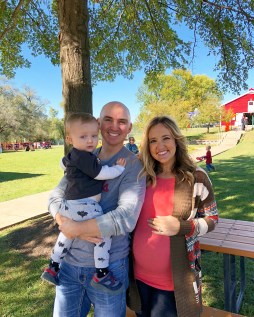 They will live within a home that talks about chronic illness and experiences it each day. Your little ones will learn compassion and perspective before they are even able to truly communicate. If you have a child and chronic illness, you know what I mean.
So far, I’ve been a mom for 19 months. I’m still a rookie. I’m still in the trenches of learning how to navigate this new life. But, I’m proud of how I’ve taken on the role of motherhood and balanced my illness along with it. I finally feel like I’m in sort of a cruise control with my son. In January, everything will start anew as we welcome our daughter into the world. Reid simply can’t wait for “sissy” …he constantly kisses my belly and tries to pull up my shirt, so he can “see” her. While I can’t wait either, the fear of a postpartum flare once again weighs on my heart. There are so many what ifs as a chronic illness mom.
What if I’m hospitalized and have to leave TWO babies at home until I’m well? What if my disease spirals out of control and I’m home alone with nowhere to turn? What if the stress of taking care of two children with limited help sends me into a flare up? What if I’m not enough? I’m trying to be proactive now to prepare myself mentally for both the magical moments and the challenges that I’ll be presented with when we become a family of four. 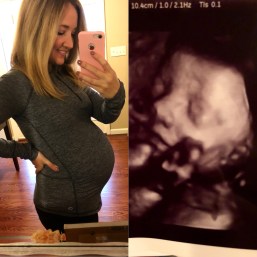 Whether it’s with motherhood or with living life with Crohn’s, it’s important to remind yourself that everything goes through stages. There are highs and lows, but each moment is fleeting.
One of the most amazing parts of pregnancy when you have chronic illness is witnessing your body create a miracle, right before your eyes, after years of letting you down. It’s a beautiful reminder that despite your illness and the parts of you internally that tend to malfunction, you are still able to carry a child and bring a life into this world. Pregnancy and motherhood have given me a renewed sense of self in my patient journey with Crohn’s. Motherhood has helped me love my body again, after years of damning it. It’s shown me that while IBD has shaken me to the core and blindsided me countless times, it hasn’t taken away one of the life’s most gracious gifts and experiences.

 She’s a ball of energy and a sweet little chatter box, wise beyond her years. Seven-year-old Brooke, of Missouri, was diagnosed seven months ago with Crohn’s disease. She spiked a fever on New Year’s Eve 2017 that lasted for eight days, and from that point forward, life was never the same.
 Brooke and her family were told she had Crohn’s disease on March 2, 2018. In a matter of months, she went from being an outgoing, energetic kid to a hospital patient on a laundry list of medications. She developed her first fistula while on methotrexate and was on prednisone for more than three months.
 d we do something to cause this? Were we making the right decisions for her treatment and care? Brooke has a HUGE personality. When she was first sick, and before her diagnosis, she just stopped talking. She would lie on the couch for hours and hours every day. This was not my Brooke. She normally can’t sit still for more than a few minutes! I was SO scared because I knew something wasn’t right. Watching her in pain and miserable for two months while we waited on this diagnosis was miserable. You just feel helpless…all we could do was love her and pray,” said Tara.
 When you’re going through this, you are spread so thin and it’s difficult to ask for help. We have another daughter, Haley, who is 10. Of course, when Brooke was in the hospital, either Josh or I were with her every minute. We live over an hour from Children’s Hospital in St. Louis, so it wasn’t possible to pop up for a quick visit. It was also hard for us to ask for support. We needed help mentally, financially, and logistically with many things. We have an AMAZING support system of family and friends who have helped us throughout this process.”
 Although I know she doesn’t know yet, what it really means to have Crohn’s, I am always so amazed by her strength. She talks about it very ‘matter-of-factly’. It doesn’t define her. I hope and pray constantly that anything that I encounter, I can deal with, the way she has dealt with this. It’s made our family stronger by seeing that we can face this together.”
 As a patient advocate myself and as someone who battles Crohn’s disease, Bill’s life and experiences have shaped how I take on my disease. His strength, perspective and perseverance constantly inspire me to push through bad flare ups and remind me that each setback, procedure and surgery is nothing I can’t overcome. Bill and I grew up down the street from one another, he’s more like a brother than a cousin.
 About four months ago, I teamed up with
  Keep Swimming Foundation provides financial relief to families of critically ill patients so that they can afford the non-medical costs associated with visiting their loved one (bedside meals, lodging, parking at the hospital, gasoline, etc.). As a chronic illness patient, I can attest to how beneficial this is for families as they grapple with health issues and financial concerns.
 This would be big for us, so I truly hope people will help us obtain this contribution from DripDrop,” said Bill.
 has worked in the life insurance special risk marketplace for more than 30 years. He specializes in helping those with pre-existing conditions, such as Crohn’s disease and ulcerative colitis. While he’s not able to represent everyone, he works closely with companies who underwrite conditions such as IBD the most favorably.
 Insurance can be confusing—no matter what type you’re dealing with. Some of the most common misconceptions with life insurance protection are that it’s too expensive, too complicated and that conditions such as IBD are not insurable. This is simply not the case.
 This Friday, I’ll be 27 weeks complete with my baby girl. My January due date is quickly approaching. Time is going both fast and slow. For the most part, my Crohn’s has behaved itself. But, there have been multiple times where I can’t seem to decipher if what I’m feeling is related to pregnancy aches and pains or my IBD. The burning and gnawing feeling in my abdomen often feels so reminiscent of the beginning of a bowel obstruction that I can’t help but fear the worst.
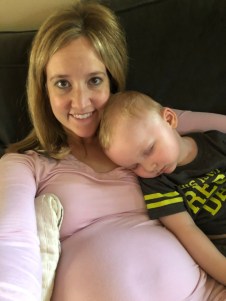 It’s difficult because every single pregnancy is different and so is every single person’s IBD. My OB tells me that with a contraction the pain will come and go, and I’ll be able to see a pattern and time it, whereas Crohn’s pain will be constant.
 My advice to myself and to all of you who may be dealing with these same fears and thoughts is to listen to your body. Be mindful of when you hurt, why you may be in pain and how often it’s taking place. Don’t turn a blind eye to your aches and don’t feel like a bother to your GI or OB. Reach out to your healthcare team and alert them when you have a concern, so they are aware of what’s going on. This is not a time to internalize your pain. This is a time to be vocal, be your own best advocate and start being the strong IBD mama that you are for your unborn child.
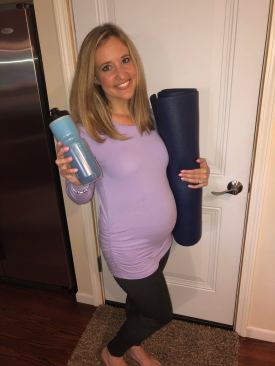 While yoga and DripDrop are different, I think of them much in the same way. They go hand in hand. While I’m driving to yoga class and sitting on my mat before we start, DripDrop was formulated so water and salt can be absorbed quickly, making recovery as effective as an IV. I can hydrate my body in a matter of minutes.
 Chasing around a toddler all day, while nearly 30 weeks pregnant, while battling Crohn’s disease is taxing. By taking time for myself and slowing down for a couple of hours of week, I’m setting myself up for success and optimal health.
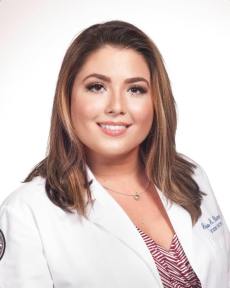
 The profession entails a great deal of stress, both physically and mentally. Not only are the hours long, but you are exposed to a ton of people who are sick, while you are immunocompromised.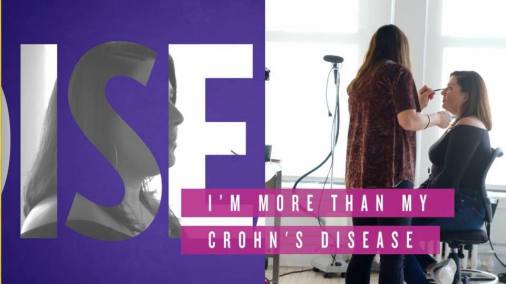


 “The Pain Companion: Everyday Wisdom for Living With and Moving Beyond Chronic Pain.” The author, Sarah Anne Shockley, lives with chronic pain herself and offers sage advice about how to find compassion within yourself and adjust your mindset. To Sarah, “pain is a necessity, but suffering is an option.” I’ve found personally after living with Crohn’s for more than 13 years, that the way I look at, deal with and handle pain has evolved greatly in that time. It’s not something that happens overnight, but you’ll notice a transformation within yourself as time goes by. You come to find a kind of patience and strength within yourself that you never knew existed.
 This excerpt really spoke to me, since no two IBD patients have the same exact journey or disease process or pattern. We’re all unique in how we experience the disease but can find great comfort from leaning on those who “get” the pain on a different level than the average person.
 The same goes for chronic pain. We all know with IBD that symptoms of a flare start to fester. We know it deep down and may try and keep the worry and stress to ourselves. Until the pain is too much to take on alone. Think of pain as your body communicating with you and giving you a target for healing.
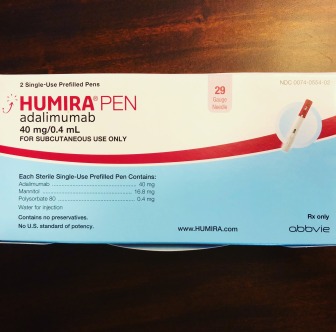 It changed in a way that I never knew was possible. I have so many flashbacks of my journey with Humira. The tears as I felt sickly in my 20s sitting alone in my apartment and wondering why me. The dread, anxiety and anticipation every other Monday and the strength I had to muster up within myself to once again receive my medication. Holding the injection in my hand, getting in the zone and focusing my thoughts on brave family members and friends as I held down the plum colored button and felt the burn. The sad look on my son’s face as he looked in my eyes and witnessed his mama hurting.
 lights camera crohn's