Connecting with women who battle inflammatory bowel disease and juggle it all is empowering. When I came across Hope (@hopeheartandhome) on Instagram, I was immediately impressed by her upbeat, real-life look at life as a stay at home, wife and as a blogger. Weeks passed by—and she mentioned she had Crohn’s disease in her in Insta-story. I sent her a direct message because there’s so much we can learn from one another as we navigate motherhood and life in general with inflammatory bowel disease. 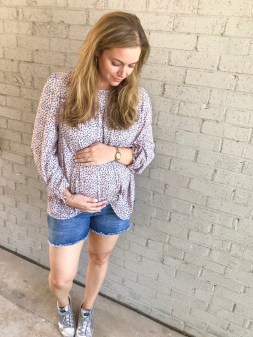 I specifically was interested in featuring Hope because she’s pregnant with baby #2!
Hope is 28 and lives in Charlotte, North Carolina with her husband and two-year-old daughter, Evie. She’s due with her second baby this October. August marks 10 years since she was diagnosed with Crohn’s disease. In getting to know Hope, her name fits her to a T. She is inspiring, driven, funny and focused on living her best life—despite her disease.
Like many of us, Hope was young when she received the life-changing diagnosis. At only 17—she had her entire future before her. In November 2012, after numerous hospital stays and an abscess that would not go away with IV meds, she had surgery to remove her ileum. Unfortunately, post-surgery she faced several complications ranging from a pinhole leak, surgery to repair the leak, as well as a serious case of MRSA. Hope says thanks to her faith in Christ and the support of family and friends, she came out stronger than ever with a 7-inch battle scar to prove it! Hope has been taking Cimzia injections ever since and has been able to maintain remission.
As a woman with IBD–did your Crohn’s present any complications or issues along the way with your first pregnancy?
Hope: “I answer this with an insanely grateful NO! I am extremely blessed that my body reacts so well to pregnancy. In fact, my gastro doctor often teases me that I need to have alllll the babies because my body loves being pregnant. I say this with sensitivity, as I know it is a struggle for many women and due to surgery  complications, the doctors I saw were pretty sure I would have difficulty conceiving; however, I am so thankful that God has given me grace in that aspect of my life. I will say that my first pregnancy was a bit of an “oops”, BUT my body was in 100% remission and I believe that greatly contributed to my success. This time around—knowing that I wanted to get pregnant, I made appointments with my GI and had blood-work, a colonoscopy, and wound up having to have an MRI to rule out any potential flare up. Thankfully, I was flare free and my doctor gave us the “ok” to try and conceive. I attribute much of our success to my remission. A healthy mom has a much greater chance of conceiving successfully in terms of Crohn’s Disease.”
How has Crohn’s impacted your role as a mom and a wife?
Hope: “Wow. This a big question! I’ve honestly never really thought about it impacting these roles of mine. I see Crohn’s as a little portion of who I am. It’s a very unglamorous and annoying part of me that I don’t like…but, it’s a part of me and therefore my story. Truthfully, I have been so blessed to have been in remission for about four solid years now, so my roles of wife/mom haven’t been altered by it, and for that I am extremely grateful. It was a long and bumpy road to get here and I would be lying if I said the thought of having a flare up doesn’t terrify me.  It definitely does, BUT I try to live my life with as much positivity as I can and a lot of laughter. I’ve found that Crohn’s has matured me far beyond my age in years and that has helped me navigate the endless responsibilities that come with being a young wife and a young mother. I never take health for granted and I am thankful every day for the opportunity to raise my child(ren) free of feeling sick. I get fatigued faster than the average person due to Crohn’s, but I am so used to it, it’s my normal. Also, have you ever met a mom who is full of endless energy?! Nope.”
Now you’re pregnant with baby #2, first of all HUGE congrats! How has this pregnancy compared to your first one–how are you feeling in comparison, etc.?
Hope: “Crohn’s-wise I feel wonderful and am experiencing zero symptoms. Pregnancy wise I am much more exhausted this time around thanks to my full of energy little two-year-old! Second pregnancies are very different… the “newness” is gone, and you know what to expect and I haven’t had a minute to daydream about this baby as often as I did with my daughter, but that’s because she keeps me busy! We’re excited to see if a little boy or another little girl will be joining us this fall!”
What advice do you have for women with chronic illness who aspire to be moms themselves?
Hope: “Patience and prayer. God hears our every thought and I truly believe He desires to give us the desires of our own hearts. The biggest thing I have learned in my life as a Crohn’s girl is that our timing is not our own.  We must surrender to Christ and let him lead us through the highs and the lows. If you aren’t a person of faith, my prayer for you is that you find peace in either the waiting of becoming a mom or peace in the journey of motherhood. It is not easy at all, but it is so worth it, and I pray for every woman who might be struggling to carry a baby because of this disease. It truly breaks my heart to think about that suffering. When I was pregnant with Evie, I joined a study called the PIANO study which stands for Pregnancy and Neonatal Outcomes in Women with Inflammatory Bowel Disease. I answered questions during pregnancy and at birth I brought in a lab kit where we sent off blood from me, from Evie, and from my umbilical cord, to study if any of my medications got to my baby. There was no trace of Cimzia in Evie’s blood or the umbilical cord which was wonderful and a big part of why I take Cimzia, as it does not pass the placenta. But, I mention this study to share my passion to help all women with IBD reach their dream of motherhood. I crave more information about this disease specifically for those moms struggling. Know that you’re not alone and you have many people rooting for you and your future babies!”
How do you find time to focus on self-care and combat the fatigue associated with not only motherhood, but IBD?
Hope: “I have not mastered this at all, but I am trying. Working out is something I do for me…my 45 minutes of endorphins, alone time, and knowing I am fueling my body. Open communication with my husband is another thing that helps me focus on self-care. If I am feeling exhausted or just needing some time, I tell him. We must communicate on how I am feeling to fully be a team. And hey, same goes for him! I’ve learned a lot about friendships/relationships and making sure that I set my time and energy on things and in people who are truly rooting for me and my family and vice versa. Life is too short to spend it stressed out or surrounded by people who are not life-giving. That’s been a hard lesson for my people pleasing self, but, being strong in my beliefs and in who I am and what I want to put out into this world has helped my mindset and overall health tremendously.”
Tell me about your blog Hope Heart and Home. With more than 11,200 Instagram followers you must keep busy! What inspired you to start the blog?
Hope: “This blog was originally started by my sister and I actually had my own blog, but once  Evie was born, my blog kind of fizzled and after awhile I was missing that creative outlet. My sister was pregnant with her second at the time and we decided to join forces and it was so much fun for us! Recently, my sister has taken a step back from blogging and is pursuing different passion and focusing solely on her family, so the blog has evolved again into an outlet for me. I am an extrovert and love talking with new people/sharing recipes/getting advice/looking at the newest trends/home decor/etc. so blogging just seems like a good fit for my personality. I am a stay at home mommy first and foremost, but the blog has allowed me to have something else that’s just mine and just for me.”
Interested in connecting with Hope? You can do so by emailing her at: hopeheartandhome@gmail.com or following her on Instagram (@hopeheartandhome).
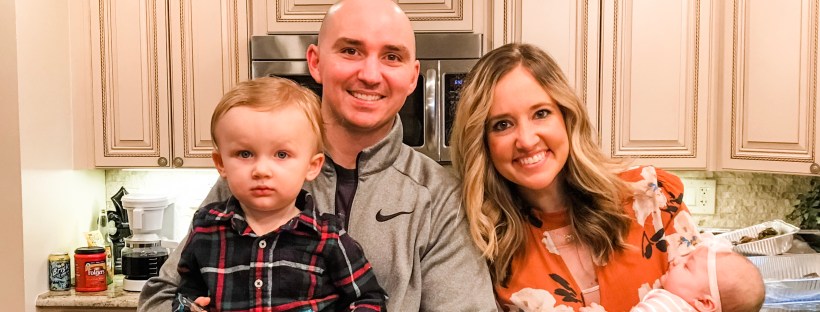

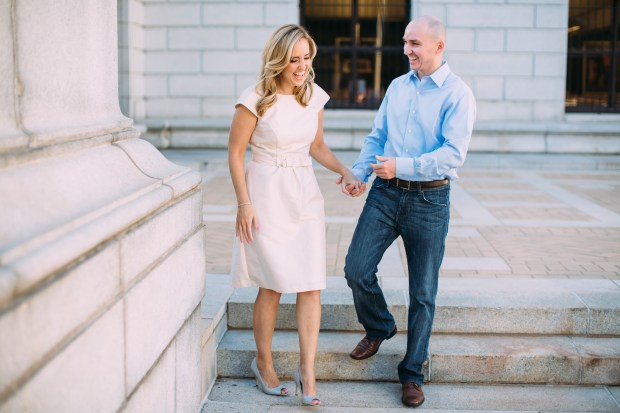
 I’m here to tell you that you are. I truly believe my vulnerability with my Crohn’s and how I deal with flare ups is a big part of why my husband fell in love with me. Chronic illness isn’t pretty. It forces you to see the world without rose-colored glasses. It makes you realize the importance of your health and how quickly it can be taken away from you.
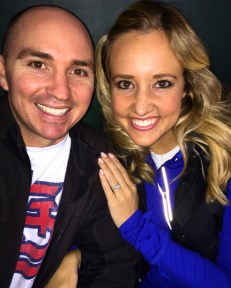 Caregiving looks and means different things to everyone. It’s not just about being a caregiver in the hospital or at a nursing home. It’s taking care of the one(s) you love on a typical day at home. It can be something as simple as rubbing your back or taking care of the kids while you’re stuck in the bathroom. It can be dishing you out ice cream after you give yourself an injection. Or holding your hand on a walk outside following a hospitalization. It’s those caregiving moments in particular that remind me constantly of the everlasting love I’ve found and make me 100 percent positive we will make it through, for the rest of my life.
 If you’re someone dealing with a disability/disease—don’t allow Dr. Phil’s ridiculously inaccurate comments make you think you aren’t worthy of love, because you are and always will be.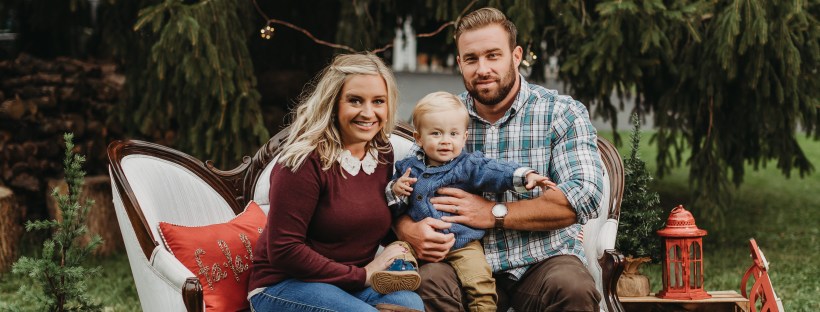
 I’ve had my fair share of surprises and obstacles with Crohn’s disease. My patient journey includes numerous surgeries, multiple doctor appointments a week, sitting in hospitals getting Remicade infusions, switching up medications to tame a flare and my all-time favorite, hospitalizations for days at a time. Please note the sarcasm in that last sentence.
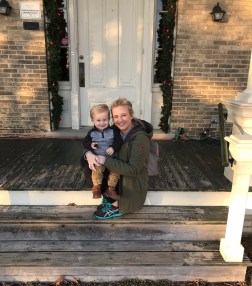 When the pain presented, I tried everything I could to avoid the trip. I just wanted to stay home and live my life with a newborn, enjoy the snuggles and oddly enough the 3 am feedings. Then, the time came when I couldn’t even get through a feeding without needing to set him down so I could run to the bathroom. I knew it was time.


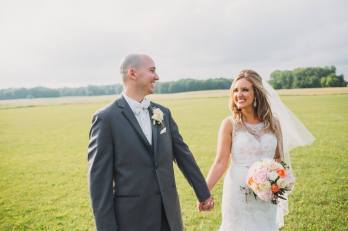 Chronic illness, while physically, mentally and emotionally taxing, also has the ability to show us the beauty of the world around us and all that we’re capable of. Instead of thinking how my Crohn’s holds me back—I think about how I’ve lived despite its restraints.
 My disease has helped me take on motherhood. It’s made me soak in the feel-good moments, take mental snapshots of the happy days and celebrate the beauty of life. My disease has forced me to press pause when I’m doing too much, it’s reminded me of the importance of self-care and taking time for me. It’s shown me which people are meant to be in my life and which are meant to be in the backstory.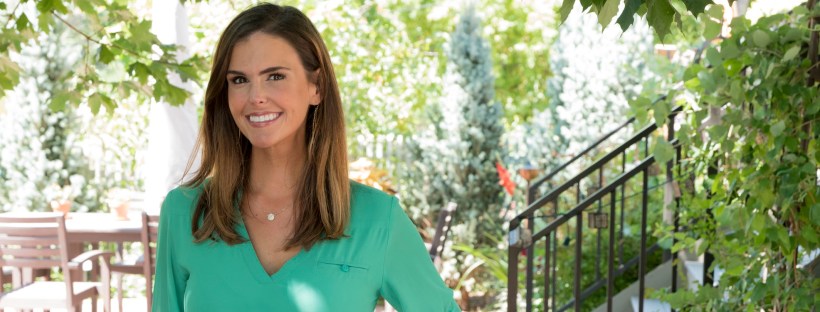
 Sickness and health truly take on a whole different meaning when you live with a chronic illness. Katy witnessed her husband Vince’s compassion and character while they were dating.
 “Operation: Good Health.” She made it a priority to get a minimum of eight hours of sleep a night, as lack of rest tends to be a trigger for her. She was on a mission to hydrate, hydrate and hydrate some more. To set herself up for success and limit any surprise flares, she planned out her meals the entire wedding weekend. For example, she does well with bland foods, like noodles, rice, chicken and (big one) avoiding alcohol. And finally, she delegated responsibilities (aka stress) to friends and family. Katy admits she’s pretty Type A and would much rather do things herself than hand them off. However, she wanted to enjoy her wedding and because of her proactive planning, she was able to do just that!
 Reagan, Grayson and Carter may not understand why their mommy is in bed or why she needs to pull over on the side of the road when she gets sick, but Katy’s Crohn’s has taught her children a great deal of empathy at a young age. A few weeks ago, she was in debilitating pain and her nine-year-old offered to make dinner for her brothers. She poured them each a bowl of cereal and that was everything.

 While I feel incredibly blessed to be in this position, it comes with its own unique set of worries.
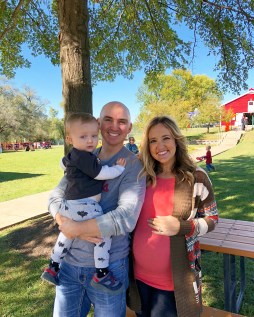 They will live within a home that talks about chronic illness and experiences it each day. Your little ones will learn compassion and perspective before they are even able to truly communicate. If you have a child and chronic illness, you know what I mean.
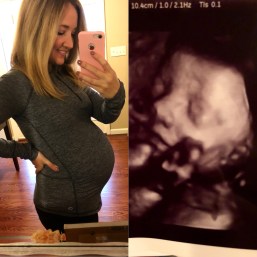 Whether it’s with motherhood or with living life with Crohn’s, it’s important to remind yourself that everything goes through stages. There are highs and lows, but each moment is fleeting.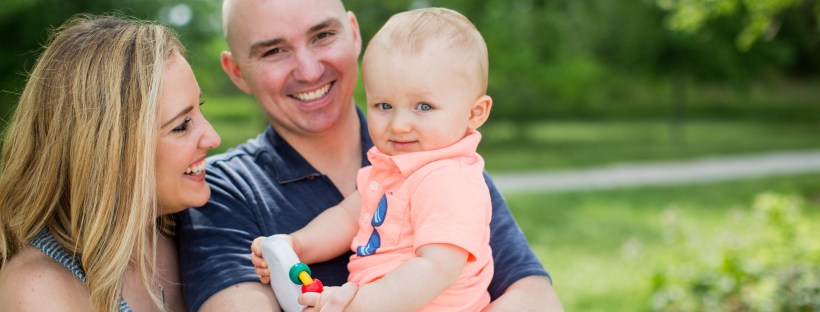
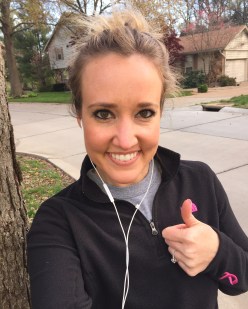
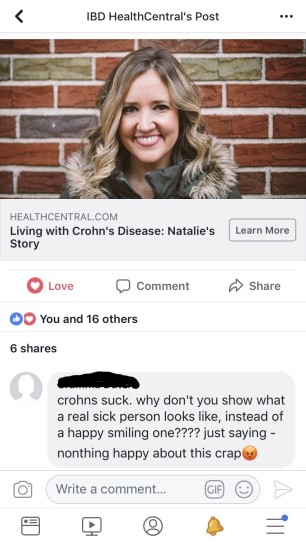 The featured image from the story is one of me smiling outside my home. The comment on the article: “Crohn’s sucks. Why don’t you show what a real sick person looks like, instead of a happy smiling one???? Just saying—nothing happy about this crap.”
 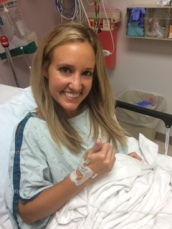 If you choose to smile and show Crohn’s who’s boss, than no matter what obstacles and setbacks come your way you’ll tackle them and fight through flares with a knowingness that better days are ahead.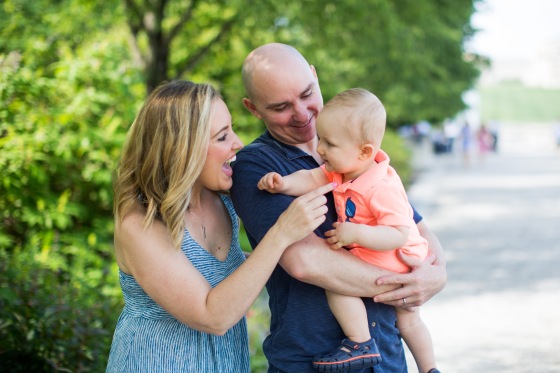
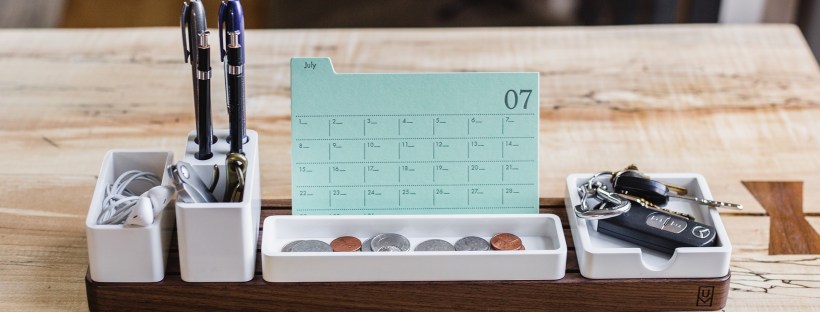
 I don’t know what it is about July, but that’s always been my danger zone. I always breathe a sigh of relief when August begins. Call me superstitious, but prior to getting married, I knew I could never have my wedding this month nor would I want to welcome a baby into the world. I have July’s number.
 nip it in the bud. Don’t try and be a superhero and take on a flare yourself or fail to communicate to those around you. You and I both know exactly how it feels when a trip to the hospital is a must. Delaying the inevitable will only add insult to injury. Stay on top of maintenance medication, vitamins, exercise and sleep.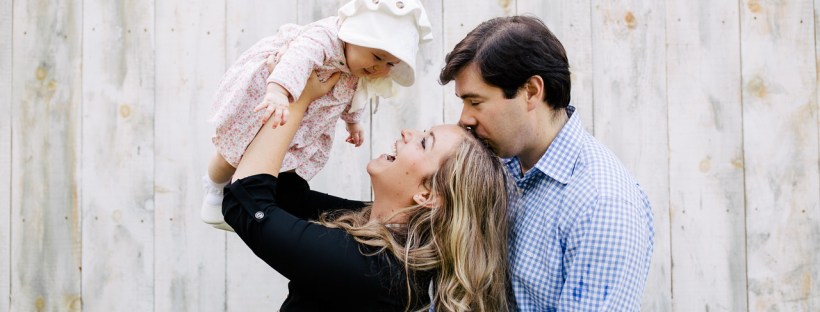

 Fast forward three years and her diagnosis changed to Crohn’s Colitis.
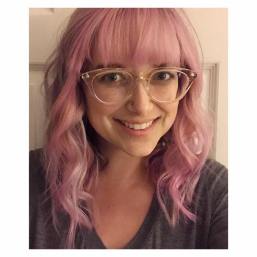 I’m thankful IBD has opened my eyes and given me the gift of true empathy. That empathy has led me to crave a deeper understanding and genuine connection with friends and loved ones. It has also shown me the true strength in others, and I am constantly humbled by the selflessness of my sweet husband and forever soulmate.”
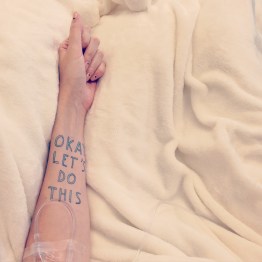 Your new “normal” is going to look a little or a lot different; it will take some time to adjust to that. Try not to compare your new energy level to your old, your body is fighting a hard battle and you’re doing the best you can. If your energy/activity level is more limited, plan accordingly. Choose wisely who you want to spend your time with and what you want to do – soak in and cherish these times.”
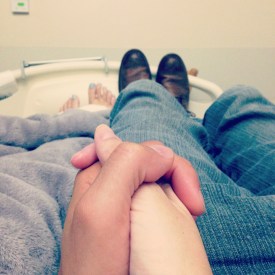 Whenever I am having a really difficult day and see a fellow warrior saying they can relate, offering words of kindness, or that they are having a hard day as well, you can feel that genuine connection and know that they truly mean it.”
 een blindsided each and every time. I’ve worked a full day, trained for a half marathon, taken a road trip…you name it…and BAM…hello, bowel obstruction or abscess.
 It’s these fleeting moments of invincibility that provide us with a chance to live like the rest of society. It may seem simple, but recognize these moments, verbalize them with loved ones. Celebrate the small joys, that are a big deal.
 Think about the risk vs. the reward. It’s emotionally draining when nothing seems to be working or helping to ease your pain, but, staying positive and open helps us all physically, emotionally and mentally. Keep an open mind with your healthcare providers and have two-way communication. Educate yourself, learn about the clinical trials and treatment options out there—be your own best advocate. Connect with others who are living your same reality. Trust in other peoples’ journeys, but recognize your journey is unique and so is everyone else. Each person’s IBD presents differently.
 By telling someone you are struggling, hurting or worried, you are not showing weakness. You are not complaining. If you are going through a dark time and wonder how you’re ever going to overcome a current setback, lean on your support system without hesitation. Internalizing your pain will only make matters worse. You’re still brave and resilient, no matter what.
 lights camera crohn's