The difference between sympathy and empathy with chronic illness

Sympathy and empathy. Two different words with very different meanings. Especially to those of us in the chronic illness community. The first nine years I battled Crohn’s disease, I kept my diagnosis as private as possible. Only close friends, family and co-workers knew what I was going through behind closed doors. I did this because I didn’t want sympathy.

TVblog

Back on the news desk following a bowel obstruction hospitalization, would you ever guess this was my first show back?

I didn’t want people to look at me differently. I didn’t want to be judged or looked down upon. I didn’t want to be viewed as “less than” by my peers. When you choose to suffer in silence you close yourself off to support, you close yourself off to empathy.

Since sharing my patient journey in November 2014 with the public, I’ve realized the power of empathy. How it feels when those close to you and complete strangers reach out to offer support, words of advice and choose to show compassion. By definition, empathy means, “the ability to understand and share the feelings of another.” The definition of sympathy is “feelings of pity and sorrow for someone’s misfortune.”

When we choose to share our story, we open ourselves up to not only support, but criticism. People who believe we are advocates as a way of seeking attention. People who try and dumb down our personal experiences because they feel we share to get pity. People who believe we want others to feel sorry for us. This could not be further from the truth.

I share my experiences with Crohn’s disease as a way to inspire and educate.

crohnswalk

I’ll always remember how my cousins and brother rallied around me at the Take Steps Walk in Chicago.

The last thing I want is for someone else to feel sorry for me. There is no reason to act like I have it worse than you or that you feel bad I’m not “healthy.” I am healthy, I just have a chronic disease that makes my life a little more challenging than yours. The challenges Crohn’s has brought into my life have been difficult, emotional and trying—but with each setback, comes a much stronger comeback. I am stronger and better for the trials I have been faced with.

I don’t want your sympathy. I want your empathy. I want you to reach out and see how I’m doing, because you genuinely care. I want you to show interest when I bring up my disease, rather than change the subject…or walk away. The lack of empathy and disinterest hurts more than anything. It shows you who’s a surface friend…and who is a real one.

IMG_7435

I was hospitalized six months into my relationship with my husband. His support was amazing from the start.

Think about how you’d like to be treated and talked to, if you dealt with an invisible, chronic illness that wreaked havoc on your body without warning. A disease that you do all you can to control with lifestyle and medication. A disease of constant unknowns.

When you conversate with those in the chronic illness community—think before you speak and please choose to be empathetic, rather than sympathetic. Your efforts may seem minimal to you, but they mean more than you know.

Liquid diets: How to thrive and what to avoid

When you battle inflammatory bowel disease, chances are there will be several times throughout your journey where you are limited to only drinking liquids—whether it’s preparing for an upcoming procedure or needing to rest your bowel during a flare-up. It can be extremely dreadful to function in a workplace or in a social situation, when you’re limited to drinking liquids or sipping on some broth.

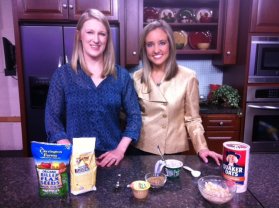
meandamandaWhen I was a news anchor in Springfield, Illinois, I used to interview and participate in cooking segments with a registered dietitian named Amanda Figge. She is extremely passionate and well-versed about nutrition and health and practices what she preaches in her daily life.

“Nutrition holds the key to the difference between going on or off certain medications, improving your performance and strength at the gym, raising energy levels, and reducing pain and inflammation, to name a few. There is no one-size-fits-all approach to healthy eating,” Amanda explains.

One of Amanda’s recent posts on social media really peaked my interest. She included a photo of Ensure. If you have IBD, chances are you’ve relied on these at some point. I know I have. In her post, Amanda wrote:ensure

“Ensure is one of the worst “nutritional” beverages to supplement in the diet. Yes, I fully understand the body just needs to receive nutrients in any way, shape or form it can. But when longevity and health are a prime concern, QUALITY should be a priority. As you can see, Ensure provides an assortment of vitamins and minerals, but in order to get those nutrients, you have to consume a bottle chalk-full of chemicals and high-inflammatory agents.”

She went on to say:

“Sugar is the third ingredient. Corn maltodextrin is a highly processed refined carbohydrate. Soy protein should be avoided. Artificial flavors/sweeteners are no way to treat the body nicely. You’re basically consuming a multi-vitamin that was covered in sugar, lit with a cigarette and left in the middle of a freeway during rush hour traffic.”

Whew. Intense. If you’re like me—and have depended on these meal supplement drinks when you’re in the hospital, fighting a flare at home or struggling to eat—those words probably struck a chord with you, too. Amanda’s focus is to heal the body with whole foods and eliminating potential sources of inflammation. Inflammation is the immune system’s first response to an acute or chronic condition. Chronic inflammation can be caused by cancer and its treatments, autoimmune disorders such as fibromyalgia and Crohn’s, metabolic complications such as diabetes and even neurological conditions like depression.

“While I believe it’s important for all people to practice low inflammatory eating habits (focusing on a whole foods diet and limiting processed foods, chemicals and added sugars), it is especially important for individuals experiencing chronic inflammation to adopt these protocols. Ensure is often provided to those undergoing chemotherapy or recovering from a bowel flare-up. While it may be appropriate for some, creating a homemade nutritional supplement can have far less chemicals and more immune-boosting benefits,” says Amanda.

If you’re put on a liquid diet to calm your bowel and to heal, avoid lactose, gluten, sugar-substitutes and soy. Making homemade shakes allows you to have complete control of the nutrients you are putting into your body. Here are two of Amanda’s favorite smoothie recipes:

 Creamy Chocolate Banana Smoothie

  • 1 scoop of chocolate whey protein isolate (lactose-free and naturally sweetened)
  • ½ frozen banana
  • ½ small avocado
  • 1 spoonful of peanut butter or almond butter
  • Handful of ice cubes
  • Unsweetened almond milk (1/2 cup- 1 cup)

Blend all ingredients in food processor or mixer. Using less almond milk will make the smoothie extra rich and thick.

Berry Bliss Smoothie

  • 1 scoop vanilla whey protein isolate (lactose-free and naturally sweetened)
  • ½ -1 cup frozen blueberries
  • ½ frozen banana
  • 1-2 handfuls of spinach
  • Unsweetened almond milk (1/2 cup- 1 cup)

Blend all ingredients in food processor or mixer. Using less almond milk will make the smoothie extra rich and thick. IMG_5890

Another option instead of whey protein isolate would be collagen peptides. These specific amino acids can additionally help support proper gut function and strengthen immunity. L-glutamine powder is an additional supplement Amanda recommends that promotes gut healing. This powder can easily be added to smoothies and beverages.

I don’t know about you, but the next time I’m on a liquid diet, I’m going to take Amanda’s advice to heart. While we may not have control of our well-being with Crohn’s and ulcerative colitis, this knowledge and background enables us to grab the reins and give our body the best shot to heal, in a healthy way.


Taking on fatigue as a mom with Crohn’s disease

I hear my baby saying “mama” gleefully from the playpen. Anxious for attention and snuggles. I hear this as I’m sitting on the toilet with the door open, paying the price for the cup of coffee I just consumed. It’s one of those days as a mom with inflammatory bowel disease. The all-encompassing fatigue is taking hold. I knew this the minute my eyes opened, and I heard Reid in his crib, despite a restful eight hours of sleep. If you don’t have IBD you may wonder what I’m talking about.

Let me try my bIMG_6729est to paint a picture for you. My legs feel like complete jelly. My brain feels in a fog. I feel so lethargic; the thought of showering seems overwhelming. I’m not in pain. My stomach feels fine. But, there’s something “off” and you feel it with every part of your being.

As my husband helps me unload the dishwasher, I tell him, “I’m so fatigued”…he laughs a little and says, “well, you’re 34…you are getting old.” I explain to him it’s my Crohn’s. Sure, I may be in “deep remission”, I haven’t been hospitalized with a flare since my bowel resection surgery in August 2015 (*knocks on all the wood), but that doesn’t mean the disease doesn’t impact my daily life. My husband is amazing and never says anything malicious, but unless you live it, you simply can’t comprehend it.

I’m going to be vulnerable here. Please no judgement. The clothes I washed more than five days ago, are still in the dryer. Each day I told myself I needed to walk down 13 stairs and bring them up, but it felt like too much. This morning as my husband got ready for work, needing his jeans…I remembered…they were still in the dryer. I felt like a failure. As I rocked my son in his nursery today, it took too much out of my legs to be in motion. All I was doing was sitting, his little body on my chest. But the rocking felt like too much. As I laid him down for a nap, I went back and forth in my mind about whether I could muster up the energy to shower. I chose to. Mid-shower, I had a brainstorm to sit down on the seat and take some deep breaths while the warm water hit my body. When I stood up, I honestly couldn’t remember if I had put shampoo in my hair yet or if I had washed my face. Literally no clue. These are just a few examples. But this is the reality of being a mom with IBD.

I started beating myself up over the fact that the past two days I may have overdone it. IMG_6646Living in the Midwest, I didn’t want two winter days with temps in the 80s to pass without enjoying them. I knew the fresh air and exercise would be a welcome excursion for my little man and me. Did those two walks with the stroller push me to my limits? What is too much? What is not enough? At 34, you feel lazy when you can’t keep up or have to admit you’re just too tired. You look perfectly fine on the outside, you feel like those around you wonder if you try and take advantage of your disease.

Here’s my advice for anyone with chronic illness, specifically IBD, especially the parents out there. remedy-nsmith-stlouis-1204

  1. Try not to beat yourself up over it. This too shall pass. You won’t feel this fatigue every day. As a matter of fact, days ago I had the music playing and I was dancing around with my son as I cleaned the house. I felt SO happy and so energetic. Focus on those times to get you through.
  2. Self-care, self-care, self-care. Whether it’s going to get a massage, exercising, sitting on the couch and enjoying some tea or going to Target to shop by yourself. Do what makes you feel at ease. Do something for yourself every day.
  3. Vocalize your exhaustion. If you don’t communicate your struggles, you won’t receive the comfort and help that you need. You are not admitting failure. You’re not waving a white flag and giving into your disease. Rather, you’re being strong enough to realize, in this moment, on this day, you need a little boost from those around you to get by.
  4. Ask for help. Boy do I struggle with this. But, it’s imperative. Especially for first-time moms. Being a parent is hard work. Being a parent with chronic illness is on a whole different level. Hold your tribe close and call on them when you need them. You won’t regret it.
  5. Rest. It’s ok to lay on the couch if you aren’t feeling up to doing chores. It’s ok to say no to a night out with friends. Give your body what it needs. Listen to it. This fatigue is real and by not listening, you’re only feeding into the problem more. You’ll thank yourself later.

I recently came across a statistic this week on Twitter from the Congress of ECCO (European Crohn’s and Colitis Organization) IMG_6342that stated, “Fatigue in IBD is experienced by up to 86 percent of patients with active disease and 41 percent in remission.” It’s crazy how common this is! For people with IBD, fatigue can be physical, mental or a combination of both.

Fatigue has a significant impact on the quality of life and needs to be talked about. If you’re like me and feeling fatigued, I hope you feel empowered to share and do what you can to combat it. Just know you are not weak, you are not lazy, fatigue impacts everyone on this journey differently. And most importantly, you are not alone.


A Valentine letter for Crohn’s

Yes, you read that title correctly. I used the word ‘Valentine’ and Crohn’s in the same sentence. I’d be lying if I said I would have been able to do that years ago. Hate would have been a more relatable feeling and word. IMG_8476 (1)As Valentine’s Day approaches and love is in the air, I’m choosing to look at my disease with my whole heart and to share my feelings with you.

If it weren’t for my Crohn’s I wouldn’t know my strength.

If it weren’t for my Crohn’s I wouldn’t have my perspective.

If it weren’t for my Crohn’s I wouldn’t know the meaning of a “feel good” day.

If it weren’t for my Crohn’s I wouldn’t be able to empathize with others on the same level.

If it weren’t for my Crohn’s I wouldn’t be able to see people’s true colors.

If it weren’t for my Crohn’s

photo by J Elizabeth Photography www.jelizabethphotos.comI may have ended up marrying a person who really wasn’t about being with someone in sickness and in health.

If it weren’t for my Crohn’s I’d feel invincible and take my health for granted.

If it weren’t for my Crohn’s I wouldn’t be me.

In life there are triumphs and there are challenges. There are stresses and there are successes. There are highs and there are lows. I find embracing the good, the bad and the ugly enables us to reach our potential. The painful, low points are difficult in the moment, but in hindsight they push us to our limits and show us all what we are capable of.

People often ask me if I wish I didn’t have Crohn’s disease. I find it to be a loaded question. I’ve gotten to the point in my patient journey where I wouldn’t change a thing. So much of taking on this chronic illness is your attitude. remedy-nsmith-stlouis-1212There’s no sense in wondering and wishing for something that is not possible. Once you take a deep breath and stop living in your healthy past you come to realize that you were given this hand of cards for a reason.

Your voice, your experience, your journey has the power to inspire. You have the ability to change lives. You have the opportunity to show that invisible illness and everything that comes along with it doesn’t need to destroy your dreams.

While I know some days, weeks and months are going to be treacherous in this journey, do yourself a favor and stop being so hard on yourself. Love yourself. Love all of you. Even the part of you that is broken on the inside. I’ve been through the flare ups and the scares. I’ve overcome pain that causes me to pass out. I’ve weathered the storm of being wheeled into surgery. I’ve done hundreds of injections and blood draws and pokes and prods. At the end of the day, you rise. IMG_6282You take those steps to heal. You focus on getting better. You do all you can to make it through. Crohn’s and any chronic illness for that matter gives you this opportunity over and over. So, while we all tend to have negative feelings about our health and worry about what the next hour will bring, try and pause and stop for a moment. Think about all the beauty and insight it’s provided—and love yourself and your disease for a second.

XOXO,

Natalie

Young IBD patient aspires to become Pediatric GI

Madison Harbison. I’ll always remember the first time our paths crossed. IMG_4983I had just gotten off the stage after speaking at the Crohn’s and Colitis Foundation Patient Symposium Event in October. Her and her mom, Michelle, approached me outside of the auditorium. Tears in their eyes. Smiles on their faces. I immediately felt a connection and knew this little girl was something special.

Madison was only three years old when she started experiencing symptoms. Bloody diarrhea was the first indicator. After E.coli and C-diff were ruled out by doctors, this little girl underwent a colonoscopy. Imagine that. Three years old. Drinking the prep. Dealing with everything in the bathroom. And not being able to understand why this was happening or knowing what was wrong with you. Being a little girl, naïve to what it means to have a chronic disease that would be a part of her, for her entire life.

Imagine how overwhelming it felt for her parents. Michelle said it felt like they were torturing their daughter. Madison is now 12 years old. IMG_4985She’s had a total of three colonoscopies, an endoscopy and an MRE. She’s been hospitalized due to flare ups three times. She has three siblings at home, so as she’s in the hospital or going to the doctor, her parents have to care for them as well. There’s a reason for the saying—’it takes a village’… because it really does.
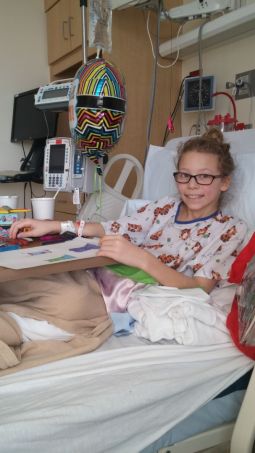
Madison has indeterminate colitis. Her inflammation is centered around her colon. She also battles arthritis that is secondary to her IBD. Just like me, Madison is on Humira injections. Her parents give her the shot—and each time she gets anxious and upset before and after. As a 34-year-old grown woman, I still react the same way at times. So, I can only begin to think what it would feel like for her. Aside from Humira, Madison takes Sulfasalazine, Imuran, Vitamin D, Iron and a multivitamin.

When it comes to advice for fellow parents, Michelle says, “Try to connect with other parents who are going through the same thing. There are “support groups” on Facebook that have helped me so much. Do not give up hope. I have every reason in the world to believe that Madison is going to accomplish everything that she sets out to. This disease is only one part of the amazing person that she is. It does not define her. IMG_4986Also, as a parent of a child with a chronic illness, we are their best advocate. No one knows your child better than you do. If you think that something isn’t quite right, trust your momma instincts!”

When you talk to Madison she radiates strength and resilience. You can see it in her eyes. She’s very mature and well spoken. She says IBD has made her a stronger person. “It’s made me more responsible in the sense of taking my medication, thinking about what foods affect me and always telling my mom if anything is wrong.”

As far as her Humira injection routine (let’s be honest, we all have one!)…her parents take the pen out of the fridge and let it warm up for a few hours, to lessen the sting. Madison likes to use Pinterest on her phone as a distraction. She wipes her leg with the alcohol swab and nods at either her mom or dad so they know to start. IMG_4988Right before the shot, she relaxes her leg, takes a deep breath and pretends she’s anywhere but the living room couch.

Each summer, Madison attends Camp Oasis. It’s a unique experience where kids with IBD have the chance to be on their own, to make decisions and to take responsibility, while being in a safe and compassionate environment. All the campers have IBD. “Camp has really showed me that I am not alone battling this disease. It is the coolest thing to be surrounded by other kids who know and understand what I have experienced.”

Madison doesn’t let her disease hold her down. She’s an avid soccer, basketball and volleyball player. She’s gearing up to take the stage in “Annie” and she excels at dance. This girl does it all.

Guess what she wants to be when she grows up? A Pediatric Gastroenterologist. Madison wants to help kids who are going through what she’s gone through.

madi

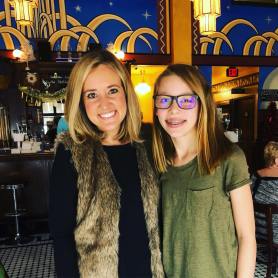
Out to lunch with Madi, taking on IBD together one day at a time.

I can without a doubt say, I know she’ll achieve this goal and follow her dream. She’s a true example of an IBD hero. Someone who hasn’t allowed her disease to rule her life. Someone who looks adversity in the face and says ‘not so fast.’ Someone who I admire and look up to, even though she’s more than 20 years younger than me. If you ever need inspiration—think about Madison during that next Humira shot, think about her when you’re taking that dreadful colonoscopy prep, think of her when you’re getting rolled down to that next CT scan. I know I will.


5 Tips for dealing with grief while battling IBD

Grief and inflammatory bowel disease. They don’t mix well. I can still remember getting a phone call in September 2012 that my grandma had been hospitalized, that night…I was in the ER, doubled over in pain.

IMG_2516When those close to me are in harms way, I have a difficult time compartmentalizing my stress and worry and not allowing it to impact my Crohn’s disease.

On December 22, a day before I was supposed to see my Grandma and days before Christmas…she passed away. I wasn’t able to say goodbye in person, but my mom put me on speaker phone and I was able to tell her how much I loved her and that it was “ok” to go to heaven. I told her to be my son’s guardian angel and to always give us signs that she’s with us. Through lots of tears, I told her what an incredible grandmother she was and what she meant to me. Minutes later, after my call, she died.

It pains me to write and to say those dreadful words. photo by J Elizabeth Photography www.jelizabethphotos.comI have never been able to handle the thought of life without her. It’s overwhelming not to have my grandma here to talk with all the time, visit, share the holidays with and I’m heartbroken that she’ll never get to see Reid grow up. I’m also scared about dealing with this major loss and having it throw me into a tailspin. The last thing she would ever want, is for me to be sick. Each hospitalization, each flare, each setback, always hurt her heart. She hated to hear of any complications or issues. So, I know I need to be strong and reign this in…in her honor.

What can we do in times of extreme grief when we live with a disease that tends to ignite in a flare when stress or emotions are out of whack? What can do we do find calmness when all we want to do is scream to the heavens in anguish? IMG_9748What can we do when we know we have to go on and be healthy for our families, but struggle to manage our IBD—even with a combination of strong medications?

I’m writing this for both you—and for me (to be quite honest). I don’t have all the answers, but since being diagnosed in July 2005, I’ve experienced my fair share of heartbreak and stress. Here are five tips to take to heart when you’re going through something overwhelming.

  1. Be proactive. Sure, many of life’s hardships come without notice…but, that’s not always the case. My grandmother was diagnosed with lung cancer in September and was told she had a few months to live. I knew this was the inevitable, but that doesn’t make it any easier. Each visit and each moment we shared together these last few months, helped me come to terms with what was to come. I’ve had good days and bad…emotions are funny like that. Something will hit you—and you’ll cry from a memory and then other times you’ll laugh at something you recall. Hold on tight to the good times and the good memories.
  2. Deep breathing, meditation, warm showers. Exercise. You need to shut it off every day. Whether it’s for a minute or an hour. Take time to clear your mind—think of nothing…just focus on your breathing. This will do wonders for you. When I feel my symptoms start to kick in, I constantly remind myself to take deep breaths in and out, it helps so much. Go for a walk, go for a run, shoot hoops—do whatever it takes to release that negative energy and pain.
  3. Communicate with your support network. One of the worst things we can do is bottle up our emotions and deal with the pain internally. If you need to cry, cry. If you need a shoulder to cry on, hug those close to you. If you need to snuggle your dog or your baby longer, do it. You are not in this alone. We’ve all lost someone close to us. We all know how painful it is to experience the death of a loved one. Share your memories, make your loved one’s memory eternal. IMG_4352
  4. Think about what your loved one would want. Chances are, this person knew firsthand what a struggle life with IBD is. The last thing they would want is for you to be in pain, in the hospital or needing medical intervention. Be strong for them. Think about what they would tell you if you could hear their words as they watch over you. Find comfort knowing that they are with you, just in a different way. Look for the signs they may give you. My college friends recently came to town. One of the signs my friend gets from her mom are white feathers. She had just told us earlier that day. That night, at dinner, we sat down…what was over our shoulder, right next to our table…a Christmas tree made out of white feathers. We knew she was with us. Hold those signs close to your heart.
  5. If you sense a flare is brewing, don’t put it on the backburner. Earlier in my patient journey I would wait until the last possible moment to go to the hospital. This is not smart. Nip that shit in the bud. You know your body, don’t try and be a super hero. The longer you wait to seek help, the worse it’s going to get. Recognize when handling your symptoms by laying on a couch, eating a liquid diet and taking pain pills isn’t going to cut it. You don’t need to be a martyr.

Handling grief is never easy, coupled with IBD it can be unbearable at times. Take time for you. Do what you need to do to heal and find comfort in your loved ones’ memories.

“It’s hard being a sick girl in a modern world:” A review of “My Flare Lady”

Meet Kathleen Nicholls. She’s a 34-year-old from Scotland who’s battled arthritis since 2009 and Crohn’s disease since 2010. IMG_20170823_223410_970She’s not your typical patient advocate. She’s an author who uses her sense of humor to not only inspire, but also make you laugh. She says things many of us think, but won’t say. Her most recent piece of work, “My Flare Lady”, is a great compilation of advice ranging from dating with chronic illness to finding self-worth despite the hardships we face on a daily basis. Rather than having a “woe is me” attitude, she’s the complete opposite. She’s incredibly candid and her honesty is what makes her writing so intriguing.

Here are some of my favorite excerpts from the book:

“When you are told you will be ill for the remainder of your life that feeling hits you tenfold. You suddenly find you are singled out against your will. You’re the sick partner, the sick daughter, the sick Chandler of your friend group.”

“Spend time with people who buoy you. Those friends and family who make you feel good about yourself, and are generally able to maintain an optimistic outlook. Those people in your life, if you have them, who radiate positivity and don’t flood you with negative thoughts, are really a priceless balm for a stinging soul.”

“When you are sick and in love your relationship may have a chocolate box full of additional worries to factor in, but it doesn’t have to stop you and your beloved from having a joyful life together filled with hearts, flowers, and painkillers strong enough to flatten an Ox.”

“So when I take medication and I start to play-act all the symptoms it says in the booklet I’ll have against my will; it’s disappointing to say the least. I read the little pamphlet that comes with my medication mostly for a giggle. I like reading aloud the various symptoms I may well encounter; mentally crossing them off and inevitably getting round to “death” in the small print. It’s funny (albeit in a fairly dark way I grant you). But a dark sense of humor tends to fit well with a chronic illness.”

“No sign of active ‘disease’ or current symptoms may encourage a medical professional to gleefully cry ‘remission’ but many patients still experience many ongoing differing symptoms regardless, meaning they certainly don’t feel the benefit of said remission.”

“The idea that even genuine moments of joy can be tainted by the anxiety of what’s to come is disheartening to stay the least. It’s something most people don’t have to consider.”

“It’s hard being a sick girl in a modern world. Therefore, it’s of incredible importance that as women we value one another, educate each other and help one another up instead of knocking each other down. Unlike Chumbawumba we can’t always get back up again so easily.”

“When I get nervous in the hospital I remind myself I’ve been through worse, that I survived it, all of it, an that I am here for good reason. It doesn’t always make me feel joy upon joy when I’m being prodded and probed by relative strangers, but it reminds me to get my priorities in order.”

IMG_20171024_173739_449That gives you an idea of what an incredible resource this book is for women in the chronic illness community. Kathleen’s ability to share her experiences and speak to others to make a difference, inspires me to be strong in my patient journey. Though we’ve never met in person, we’ve been “friends” on Twitter, Facebook and Instagram for years. I had the chance to interview her about her latest book. Here’s what she had to say:
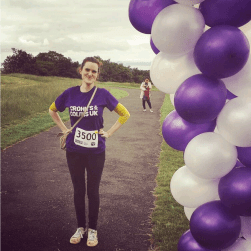
What inspired you to write “My Flare Lady”?

“Suffering from chronic illness can be incredibly isolating and it can be easy to get caught up in your own anxious brain, I always aim to write in a tone which feels inclusive and open, I want fellow sufferers to feel they are not alone and our shared experiences can be overcome and maybe even laughed at. I love and cherish women and in living with poor health for most of my life, I’ve always felt a kinship with women in the same rickety boat as my own. I want to inhabit a world where we pull one another up and where women (and men) can feel comfortable in being open and vulnerable with one another on their fears and experiences. It’s so important to know we are understood. “

What do you hope people take away from your book?

I hope readers can take a feeling of camaraderie, a feeling that we are in this together and that there is absolutely no shame in talking openly and honestly.

What type of response have you received from the chronic illness community?

“So far so good! The opinion of the chronic illness is so important to me, so I take away as much positive and negative feedback as I can on board. 20171129_201703People seem to enjoy the humour spattered throughout and find it to be informative and inclusive which is what I’d hoped for! This time round has been nerve wracking again so i try to only dip in and out of reading reviews for the sake of my own sanity/ego!”

Plans for future books in the works?

Yes, always! I’ve been working on a project based around the parallels between mental health and chronic illness and I hope to find more time to devote to that in 2018. I’ve also been playing around with ideas for short stories and longer-form fiction, but inevitably whatever I write always comes back to my diseased body!”

You can purchase “My Flare Lady” on Amazon. Click here to buy it, makes for a great Christmas gift—or a present for yourself. IMG_1002Kathleen is dedicated to helping others feel less alone and afraid in their fight with chronic illness. As someone who’s battled Crohn’s more than 12 years, I can tell you firsthand her words empower me to be strong. I constantly find myself nodding along while I’m reading and even laughing out loud. You can follow Kathleen on Twitter and Instagram @kathfantastic.