The difference between sympathy and empathy with chronic illness

Sympathy and empathy. Two different words with very different meanings. Especially to those of us in the chronic illness community. The first nine years I battled Crohn’s disease, I kept my diagnosis as private as possible. Only close friends, family and co-workers knew what I was going through behind closed doors. I did this because I didn’t want sympathy.

TVblog

Back on the news desk following a bowel obstruction hospitalization, would you ever guess this was my first show back?

I didn’t want people to look at me differently. I didn’t want to be judged or looked down upon. I didn’t want to be viewed as “less than” by my peers. When you choose to suffer in silence you close yourself off to support, you close yourself off to empathy.

Since sharing my patient journey in November 2014 with the public, I’ve realized the power of empathy. How it feels when those close to you and complete strangers reach out to offer support, words of advice and choose to show compassion. By definition, empathy means, “the ability to understand and share the feelings of another.” The definition of sympathy is “feelings of pity and sorrow for someone’s misfortune.”

When we choose to share our story, we open ourselves up to not only support, but criticism. People who believe we are advocates as a way of seeking attention. People who try and dumb down our personal experiences because they feel we share to get pity. People who believe we want others to feel sorry for us. This could not be further from the truth.

I share my experiences with Crohn’s disease as a way to inspire and educate.

crohnswalk

I’ll always remember how my cousins and brother rallied around me at the Take Steps Walk in Chicago.

The last thing I want is for someone else to feel sorry for me. There is no reason to act like I have it worse than you or that you feel bad I’m not “healthy.” I am healthy, I just have a chronic disease that makes my life a little more challenging than yours. The challenges Crohn’s has brought into my life have been difficult, emotional and trying—but with each setback, comes a much stronger comeback. I am stronger and better for the trials I have been faced with.

I don’t want your sympathy. I want your empathy. I want you to reach out and see how I’m doing, because you genuinely care. I want you to show interest when I bring up my disease, rather than change the subject…or walk away. The lack of empathy and disinterest hurts more than anything. It shows you who’s a surface friend…and who is a real one.

IMG_7435

I was hospitalized six months into my relationship with my husband. His support was amazing from the start.

Think about how you’d like to be treated and talked to, if you dealt with an invisible, chronic illness that wreaked havoc on your body without warning. A disease that you do all you can to control with lifestyle and medication. A disease of constant unknowns.

When you conversate with those in the chronic illness community—think before you speak and please choose to be empathetic, rather than sympathetic. Your efforts may seem minimal to you, but they mean more than you know.

A Valentine letter for Crohn’s

Yes, you read that title correctly. I used the word ‘Valentine’ and Crohn’s in the same sentence. I’d be lying if I said I would have been able to do that years ago. Hate would have been a more relatable feeling and word. IMG_8476 (1)As Valentine’s Day approaches and love is in the air, I’m choosing to look at my disease with my whole heart and to share my feelings with you.

If it weren’t for my Crohn’s I wouldn’t know my strength.

If it weren’t for my Crohn’s I wouldn’t have my perspective.

If it weren’t for my Crohn’s I wouldn’t know the meaning of a “feel good” day.

If it weren’t for my Crohn’s I wouldn’t be able to empathize with others on the same level.

If it weren’t for my Crohn’s I wouldn’t be able to see people’s true colors.

If it weren’t for my Crohn’s

photo by J Elizabeth Photography www.jelizabethphotos.comI may have ended up marrying a person who really wasn’t about being with someone in sickness and in health.

If it weren’t for my Crohn’s I’d feel invincible and take my health for granted.

If it weren’t for my Crohn’s I wouldn’t be me.

In life there are triumphs and there are challenges. There are stresses and there are successes. There are highs and there are lows. I find embracing the good, the bad and the ugly enables us to reach our potential. The painful, low points are difficult in the moment, but in hindsight they push us to our limits and show us all what we are capable of.

People often ask me if I wish I didn’t have Crohn’s disease. I find it to be a loaded question. I’ve gotten to the point in my patient journey where I wouldn’t change a thing. So much of taking on this chronic illness is your attitude. remedy-nsmith-stlouis-1212There’s no sense in wondering and wishing for something that is not possible. Once you take a deep breath and stop living in your healthy past you come to realize that you were given this hand of cards for a reason.

Your voice, your experience, your journey has the power to inspire. You have the ability to change lives. You have the opportunity to show that invisible illness and everything that comes along with it doesn’t need to destroy your dreams.

While I know some days, weeks and months are going to be treacherous in this journey, do yourself a favor and stop being so hard on yourself. Love yourself. Love all of you. Even the part of you that is broken on the inside. I’ve been through the flare ups and the scares. I’ve overcome pain that causes me to pass out. I’ve weathered the storm of being wheeled into surgery. I’ve done hundreds of injections and blood draws and pokes and prods. At the end of the day, you rise. IMG_6282You take those steps to heal. You focus on getting better. You do all you can to make it through. Crohn’s and any chronic illness for that matter gives you this opportunity over and over. So, while we all tend to have negative feelings about our health and worry about what the next hour will bring, try and pause and stop for a moment. Think about all the beauty and insight it’s provided—and love yourself and your disease for a second.

XOXO,

Natalie

Canceled Plans: Dealing with the unexpected with IBD

Making plans. It’s almost an oxymoron when you battle Crohn’s disease or ulcerative colitis. For the past month or so, I’ve been corresponding with a girl named Amanda. We were brought together through a patient advocacy group known as “The Breakthrough Crew.” One of the organizers told us we should connect. I’m so glad we have. image1 (7)

You know that feeling when you talk to a complete stranger and feel like they’ve been a part of your life and your patient journey since the start? That’s how it is with Amanda. We went from emailing, to texting, to talking on the phone. Our phone conversation felt so comfortable and effortless. She lives in Chicago, I’m from there. We grew up 20 minutes from one another, little did we know our paths would cross in our 30s. This past week, my virtual IBD bestie and I made plans to meet up for lunch halfway in the suburbs.

Unfortunately, days before our lunch plans, Amanda was hospitalized with a flare up. We texted and decided it would be best to change our plans and for me to take a train into the city so she wouldn’t need to drive. We were both so excited. IMG_6057Three days later, at 10 pm the night before we were going to hang out, Amanda was admitted back into the hospital.


This is life with IBD. Making plans and then your disease intervening and saying “not so fast.” This is life when you don’t know what the next hour or day will bring. IBD can rob us of so much of what so many people take for granted. In these moments, this is when friendships within the IBD community mean so much.

While Amanda sits in her hospital bed, we’re able to correspond and be there for one another. I don’t think twice about having my plans change in a matter of moments, it’s almost an expectation. When I heard she was hospitalized, we shifted our plans and rather than lunch and girl talk, I was going to take the train and an Uber to the hospital to meet this girl who I’ve never met, but feel so close to. Unfortunately, her and I both knew rest was what she needed more than anything. And hospital visits, while uplifting, can be exhausting.

When she voices frustrations I too can feel her pain and offer meaningful words of encouragement.

IMG_6056

Amanda and her amazing husband, Rick

When she talks about her incredible husband Rick and how the poor guy wasn’t even given a chair to sit in as she struggled in pain for hours in the ER, it immediately brings me back to moments where my husband had to lay in my hospital bed with me because he too wasn’t given a place to rest.

Since I started sharing my story in 2014…nearly a decade after my diagnosis, I’ve realized how empowering it is to be open, to find comfort in friends—both virtually and in real life—and to know there are so many people out there who can be your lifeline in health and in flare ups. Find your Amanda. Find your friend who gets it. Even if you have yet to meet in person, they can bring you comfort you never realized you needed until it was available.

Amanda and I made plans. They didn’t happen. But, hey…that’s the nature of the beast we call IBD. If it weren’t for IBD, our paths never would have crossed. We’ll try again next month, and the month after, and one of these times the stars and our health journeys will align.

Israel Outdoors offers once in a lifetime Birthright Israel trip for IBD and IBS warriors

Deb Weiner traveled to Israel on her Birthright Israel trip back in 2010, like many young Jewish adults. Except she had Crohn’s disease. The Birthright trip is an important milestone for many young Jewish adults, unfortunately her inflammatory bowel disease created many obstacles. Pic 1Despite making life-long friendships and memories, she felt the challenges of her dietary restrictions, and couldn’t take in all the monumental experiences like her peers.

This is where a trip for people with Inflammatory Bowel Disease (Crohn’s and Colitis), Irritable Bowel Syndrome and non-Celiac gluten sensitivity comes in. It’s a time for young adults to discover new meaning in their personal Jewish identity and connection to Jewish history and culture. IBD is most commonly present in people of Caucasian and Ashkenazic Jewish origin.

I’m so excited to announce that registration for this once in a lifetime trip opens TOMORROW (Jan. 30, 2018)!

Here are some key details:

o   Dates: August 6 – August 17, 2018 (10) day trip

o   Open to residents in the United States and Canada

o   Medical staff will be traveling with participants throughout the trip

o   Refrigeration is available for all injectable medications (including sharps containers)

o   Meals that cater appropriately for all participants

o   More scheduled bathroom breaks

o   Travel accommodations that take additional restrictions (chronic fatigue, joint pain) into consideration

Wonder if you’re eligible to attend? Here are the requirements:

o   Must have at least one parent of recognized Jewish decent

o   Age 18-26 (post-high school)

o   Have not traveled to Israel before on a peer education trip or study program after turning 18

o   Have not lived in Israel after age 12

Pic 2“A Birthright Israel trip includes airfare from major cities, hotels, meals, transportation within Israel, and costs associated with touring the country,” said Deb, who as a Crohn’s patient herself, is helping with the coordination of this program for Israel Outdoors.

Deb remembers wanting to climb to the top of Masada, an ancient fortress that overlooks the Dead Sea, but the climb took place after a very strenuous day, and she didn’t feel well enough for the climb.

“With this trip, no one has to miss out on anything. Accommodations are offered that I would have loved to have benefited from. For instance, for those who aren’t up for the hike, a cable car will take the group to the top of Masada. When it comes to sharing a room, there are less people per room than on a typical Birthright Israel trip, making it easier to maneuver, and taking bathroom turns and whatnot. Participants will be staying with peers who understand what they are going through,” said Deb.Pic 5

The Birthright Israel  trip is considered the most successful Jewish initiative in the world, with more than 600,000 young adults participating. Deb has truly seen her personal experience come full circle. She’s been the young 20-something on the trip, feeling isolated and concerned. Now, nearly eight years later, Deb has the foresight and the knowledge about what young adults just like her need, to make the experience one that is enjoyable and comfortable.

“We want to share an experience and create lasting memories and friendships. There shouldn’t be a reason not to go on this trip, so we are bridging the gap. We want those with IBD, IBS, and non-Celiac gluten sensitivity to have the same great experiences as those who go on Israel Outdoors’ classic Birthright Israel trip,” said Nate Edelstein, North American Director for Israel Outdoors. Pic 3

Click here to register. You are encouraged to apply within the first week of open registration to secure a spot. The maximum trip number is 40 people and applications are accepted via email on a rolling basis. Israel Outdoors hopes to offer this trip every summer and possibly twice a year (summer and winter) if there is enough interest and demand.


5 Tips for dealing with grief while battling IBD

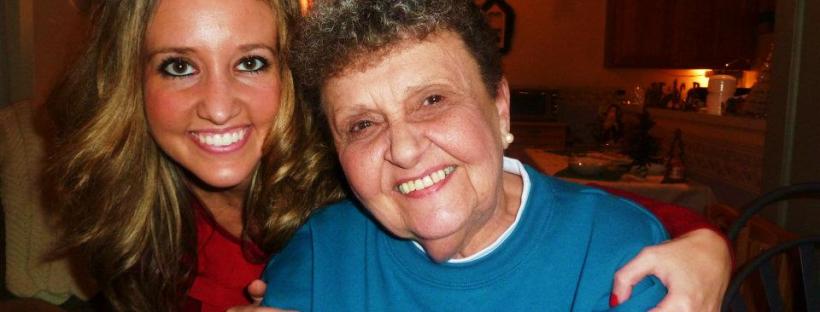
Grief and inflammatory bowel disease. They don’t mix well. I can still remember getting a phone call in September 2012 that my grandma had been hospitalized, that night…I was in the ER, doubled over in pain.

IMG_2516When those close to me are in harms way, I have a difficult time compartmentalizing my stress and worry and not allowing it to impact my Crohn’s disease.

On December 22, a day before I was supposed to see my Grandma and days before Christmas…she passed away. I wasn’t able to say goodbye in person, but my mom put me on speaker phone and I was able to tell her how much I loved her and that it was “ok” to go to heaven. I told her to be my son’s guardian angel and to always give us signs that she’s with us. Through lots of tears, I told her what an incredible grandmother she was and what she meant to me. Minutes later, after my call, she died.

It pains me to write and to say those dreadful words. photo by J Elizabeth Photography www.jelizabethphotos.comI have never been able to handle the thought of life without her. It’s overwhelming not to have my grandma here to talk with all the time, visit, share the holidays with and I’m heartbroken that she’ll never get to see Reid grow up. I’m also scared about dealing with this major loss and having it throw me into a tailspin. The last thing she would ever want, is for me to be sick. Each hospitalization, each flare, each setback, always hurt her heart. She hated to hear of any complications or issues. So, I know I need to be strong and reign this in…in her honor.

What can we do in times of extreme grief when we live with a disease that tends to ignite in a flare when stress or emotions are out of whack? What can do we do find calmness when all we want to do is scream to the heavens in anguish? IMG_9748What can we do when we know we have to go on and be healthy for our families, but struggle to manage our IBD—even with a combination of strong medications?

I’m writing this for both you—and for me (to be quite honest). I don’t have all the answers, but since being diagnosed in July 2005, I’ve experienced my fair share of heartbreak and stress. Here are five tips to take to heart when you’re going through something overwhelming.

  1. Be proactive. Sure, many of life’s hardships come without notice…but, that’s not always the case. My grandmother was diagnosed with lung cancer in September and was told she had a few months to live. I knew this was the inevitable, but that doesn’t make it any easier. Each visit and each moment we shared together these last few months, helped me come to terms with what was to come. I’ve had good days and bad…emotions are funny like that. Something will hit you—and you’ll cry from a memory and then other times you’ll laugh at something you recall. Hold on tight to the good times and the good memories.
  2. Deep breathing, meditation, warm showers. Exercise. You need to shut it off every day. Whether it’s for a minute or an hour. Take time to clear your mind—think of nothing…just focus on your breathing. This will do wonders for you. When I feel my symptoms start to kick in, I constantly remind myself to take deep breaths in and out, it helps so much. Go for a walk, go for a run, shoot hoops—do whatever it takes to release that negative energy and pain.
  3. Communicate with your support network. One of the worst things we can do is bottle up our emotions and deal with the pain internally. If you need to cry, cry. If you need a shoulder to cry on, hug those close to you. If you need to snuggle your dog or your baby longer, do it. You are not in this alone. We’ve all lost someone close to us. We all know how painful it is to experience the death of a loved one. Share your memories, make your loved one’s memory eternal. IMG_4352
  4. Think about what your loved one would want. Chances are, this person knew firsthand what a struggle life with IBD is. The last thing they would want is for you to be in pain, in the hospital or needing medical intervention. Be strong for them. Think about what they would tell you if you could hear their words as they watch over you. Find comfort knowing that they are with you, just in a different way. Look for the signs they may give you. My college friends recently came to town. One of the signs my friend gets from her mom are white feathers. She had just told us earlier that day. That night, at dinner, we sat down…what was over our shoulder, right next to our table…a Christmas tree made out of white feathers. We knew she was with us. Hold those signs close to your heart.
  5. If you sense a flare is brewing, don’t put it on the backburner. Earlier in my patient journey I would wait until the last possible moment to go to the hospital. This is not smart. Nip that shit in the bud. You know your body, don’t try and be a super hero. The longer you wait to seek help, the worse it’s going to get. Recognize when handling your symptoms by laying on a couch, eating a liquid diet and taking pain pills isn’t going to cut it. You don’t need to be a martyr.

Handling grief is never easy, coupled with IBD it can be unbearable at times. Take time for you. Do what you need to do to heal and find comfort in your loved ones’ memories.

Wishing you a very merry, healthy Christmas and New Year

Hope everyone had a wonderful Christmas! Sorry about missing my normal Monday post– this holiday season has been bittersweet. My grandmother passed away December 22. She and I were extremely close and it still feels surreal that she is no longer on this earth. Stay tuned for a blog post after the New Year about handling grief while battling IBD.

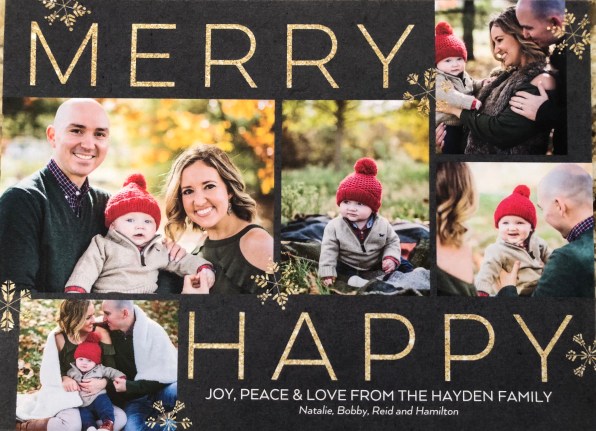
In the meantime, I thought I would share some holiday cheer from my family to yours. Wishing you a healthy, happy, flare-free year ahead! Thanks for all the love and support you send my way, all year long.

IMG_4196

IMG_4192IMG_4195IMG_4193