
This is a sponsored blog post. All thoughts and opinions are my own.
You’re in the doctor’s office with a thousand thoughts flying through your mind as your provider asks questions and shares intel that you’re trying to remember but can’t keep up. You nod and appear to be fully engaged and listening, but you walk out feeling a bit confused and unclear of next steps. We’ve all been there. That’s where a new app called “Babble” comes to save the day. To advocate for yourself, you first need to understand your own health story. This week on Lights, Camera, Crohn’s we hear firsthand from the co-founder of Babble and why she felt the need to create this cutting-edge tool for patients and caregivers.
How Babble was born
Jessica Bieligk, co-Founder of Babble, can pinpoint two experiences that really drove her to try and create a healthcare solution. She was volunteering to drive some of her older neighbors to their doctor’s appointments and through that she witnessed how challenging it was to capture what the doctor said and then effectively communicate it back to adult children or caregivers in the room.

“In parallel, I was managing healthcare for myself and my three young children. I was constantly scribbling questions on pieces of paper, trying to take notes on my phone, forgetting what a doctor had told me months earlier, or calling my husband after an appointment and trying to recreate a conversation from memory,” Jessica says.
The combination of the two made her realize that there was an opportunity to make this easier for patients and their families. We didn’t have to carry as much of the mental burden – patient-owned technology should be able to help us.
What does “Babble remembers, so you don’t have to” really mean in practice?
We can all relate to how it feels when you’re sitting in an appointment telling yourself I need to remember this. Jessica wants people utilizing Babble to be engaged listeners who are asking questions and being present without the added, unnecessary pressure.
“Babble can capture the conversation and turn it into a clear summary with the important takeaways and next steps,” she explains. “That summary becomes part of your health story, so three months later you’re not trying to remember, What did my GI say about that medication? When was I supposed to follow up? Why did we decide to change treatment?”
Babble remembers, so your brain doesn’t have to be the medical record.
Breaking down the process
Babble app developers have broken the experience on Babble to three simple steps.
Prepare → Capture → Share.
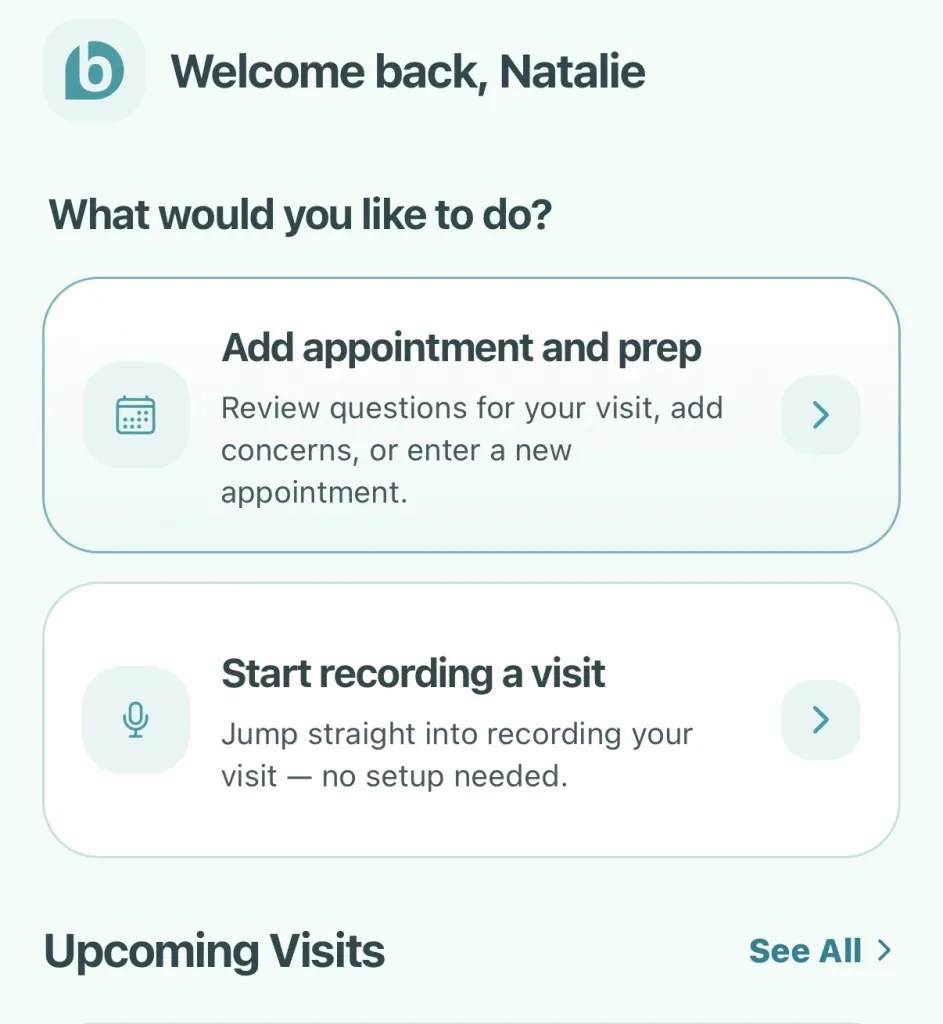
Before the visit, you can create the appointment and add the questions or concerns you want to discuss. Babble even provides some suggested questions based on your initial input. That alone can make an appointment more productive because you’re not trying to remember everything once the doctor walks into the room – there’s a simple “cheat sheet” from the app.
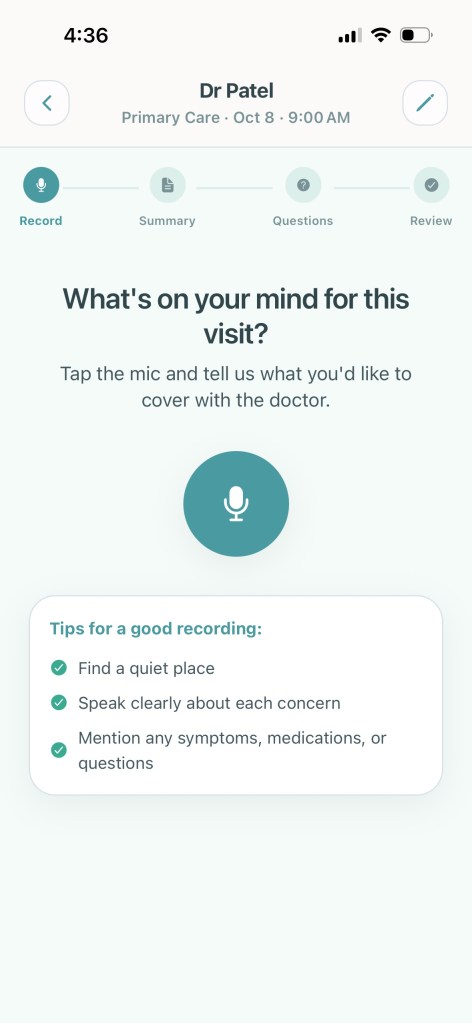
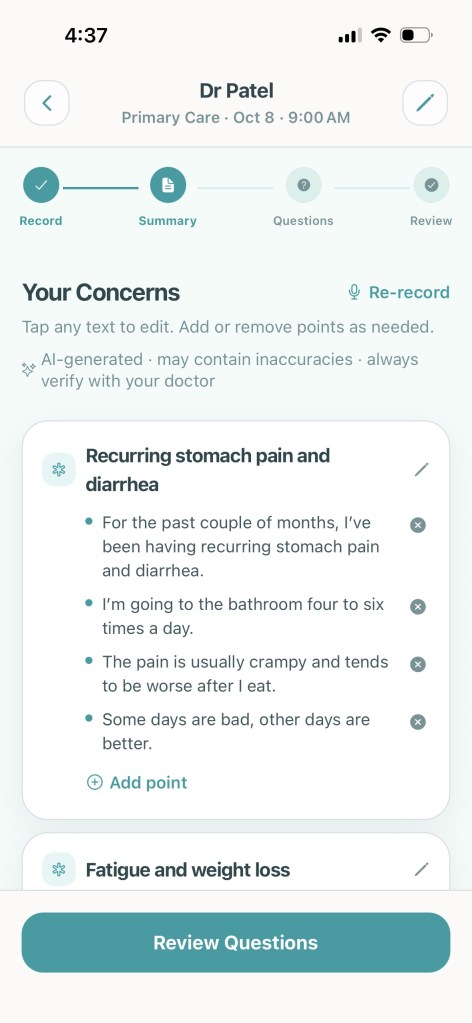
During the visit, with permission, you use Babble to capture the conversation. Instead of frantically taking notes, you can focus on the discussion, make sure you ask the questions that matter to you and truly engage with the doctor to feel confident in your care.
Afterward, Babble turns that conversation into a clear, easy-to-understand summary with the important information and next steps. It becomes a chapter in your health story and you’re able to easily share it with someone in your care circle who you want in the loop.
“This capsule approach hopefully ensures your questions are answered and you’re able to have a simple way to refer to what you discussed with the doctor. The goal is that the content of the appointment doesn’t disappear the moment you leave the exam room and that you’re able to keep others informed, even if they can’t be in the appointment directly,” says Jessica.
What sets Babble apart
Notes on your phone are only as good as what you manage to type while you’re also trying to listen, process information and ask questions. We’ve heard from patients with chronic illness that sometimes they feel like they have to choose between listening to the doctor and documenting what the doctor says.
Patient portals solve a different problem. They’re incredibly useful, but they’re generally organized around a provider or health system. Your GI might be in one system, your dermatologist in another, and another specialist somewhere else.
“Babble is organized around you – the patient- and is a simple experience that lets you keep your health story in a single place. It’s your record of what you discussed, what you understood and what you’re supposed to do next — across doctors, specialists and health systems,” Jessica shares.

There are an abundance of AI note-taking tools out on the market right now. Those are great and can work well for many people. Babble is a secure, healthcare focused and intentionally designed experience where all your health information is owned by you, in one place and easy to access when you need it.
Leveraging the conversations between providers and patients
Babble leverages AI to transcribe the audio from the conversation with the doctor and then create a simple summary of key themes and takeaways.
Babble can take that conversation and create a clear, structured summary that helps you understand what was discussed and what happens next. And because you retain those summaries, the value compounds over time. You’re not just creating notes from individual appointments. You’re beginning to build a health story.
Doing the “homework” before the appointment
Preparation is an important part of Babble and an important part of care, especially when there are multiple stakeholders involved.
Before an appointment, you can put the questions and concerns that have been floating around in your head, or questions your family members have asked you, into one place. Instead of remembering something important in the parking lot afterward, you go into the appointment knowing what you want to cover.
“One of the things we’ve heard in testing is that people love the idea of Babble becoming the place where their pre-appointment thoughts live. And we’ve created an experience where you can create a starting point and add and adjust as you get closer to the appointment and may have new questions or concerns,” says Jessica.
Ultimately, using Babble should help you get more of the limited time you have with your doctors. You can be more efficient and effective in communicating your concerns up front and then have clarity following each appointment.
“While we’ve built Babble for patients, so many of the physicians we’ve met with through our research are excited about how it can help them deliver better care for their patients,” Jessica adds.
Sharing your health story with loved ones
Sharing is core to what Babble is building, and Jessica says it’s one of her most used aspects of the app – it’s become indispensable in keeping her and her husband on the same page with their children’s care.
The experience is simple, once a user receives the visit summary, they can select to share that summary with a person of their choosing. That might be a spouse, an adult child, a sibling or another caregiver. The designated individual will receive an email with the summary so they can get up to speed in just a minute.

“Longer term, we hope to build in functionality so that users are able to collaborate across a care story (i.e. adult children coordinating a parent’s care) but we’re starting simple with the email,” says Jessica. “We’ve heard this need across generations: college students trying to explain an appointment to parents hundreds of miles away, adults coordinating care for aging parents, and parents trying to make sure both spouses understand what the pediatrician said.”
Instead of playing a game of telephone, everyone can work from the same information.
Addressing the hesitation around AI in healthcare
Hesitation is healthy. Healthcare information is incredibly personal, and Babble has been built in that reality. Babble is inspired by HIPAA-requirements and data security, and privacy have been priorities from the beginning.
“First, the patient is at the center of the product. Your information belongs to you, and you decide whom you share it with,” explains Jessica. “We don’t retain the audio recording after it has been processed, and your summaries are private to you unless you choose to share them.”
It’s also important to be clear about what Babble’s AI is, and isn’t, doing.
“Babble isn’t your doctor. It isn’t diagnosing you, prescribing treatment or replacing medical advice. We’re using AI to help you better capture, organize and understand the information from your actual healthcare conversations. It’s the communications superpower,” says Jessica.
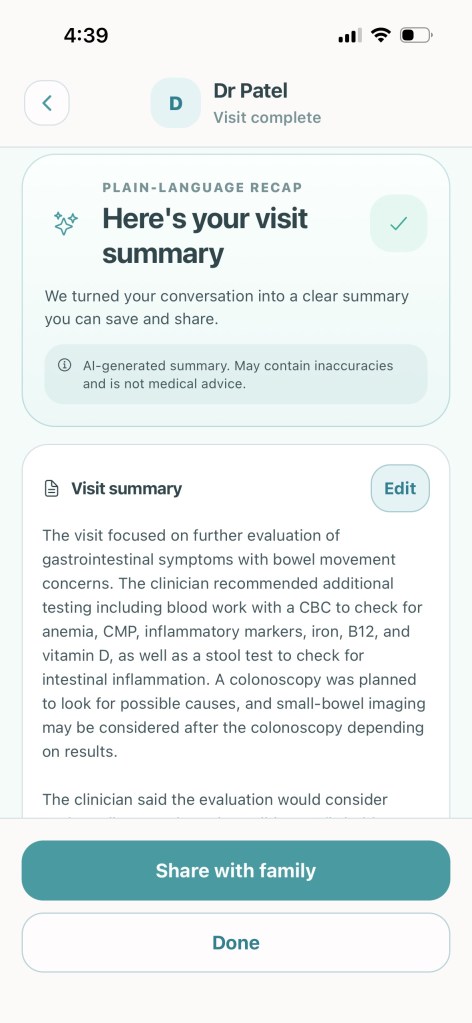
The use of AI here is supporting the patient, not replacing the provider and users are reminded throughout the app experience that they should always confirm with their provider if they are confused by any of the notes.
A helpful tool for those with multiple specialists
The past few months, Jessica has collaborated with me and tapped into the Lights, Camera, Crohn’s community for product development and feedback from fellow patient advocates to better understand how Babble can support those us of navigating chronic illness. I personally have been appreciative of how genuinely invested Jessica has been in capturing what matters from the patient perspective.
“Patients have told us they’re exhausted by having to “start over” and reconstruct their history every time they see someone new,” says Jessica. “Babble gives the patient continuity even when the healthcare system doesn’t. Over time, your individual appointment summaries become a longitudinal health story that stays with you.”
We may have a gastroenterologist, primary care physician, dietitian, surgeon, dermatologist or other specialists involved in our care. Those providers may not share the same system, and each appointment is only one chapter. Babble helps take some of the pressure of coordinating care across specialists off our shoulders.
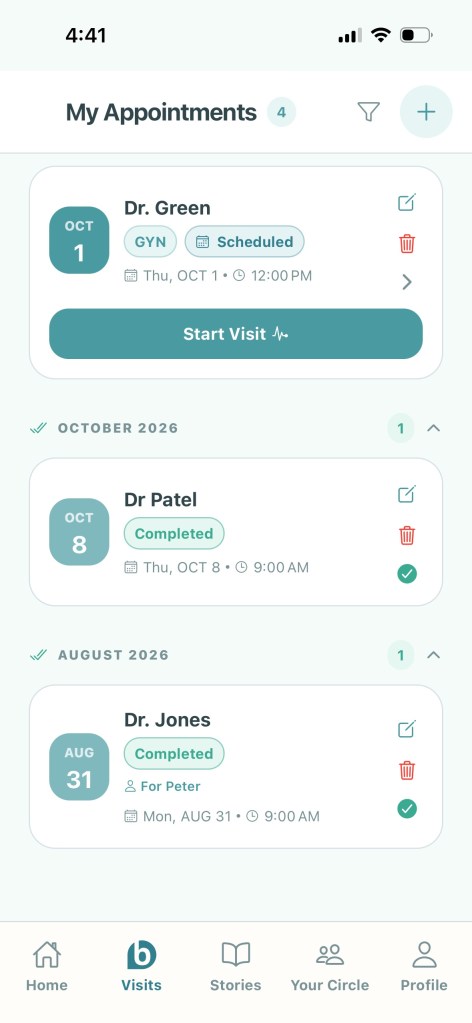
“Over the last year, we’ve relied on the feedback and reactions from parents, older adults, caregivers, college students and people managing complex or chronic conditions…and doctors, too. Despite very different circumstances, we keep hearing versions of the same things: “I remember the big picture but lose the details,” “My records are everywhere,” “I end up getting calls after hours from family members,” and “I don’t want to spend the appointment taking notes,” says Jessica.
Helping Caregivers stay in the know
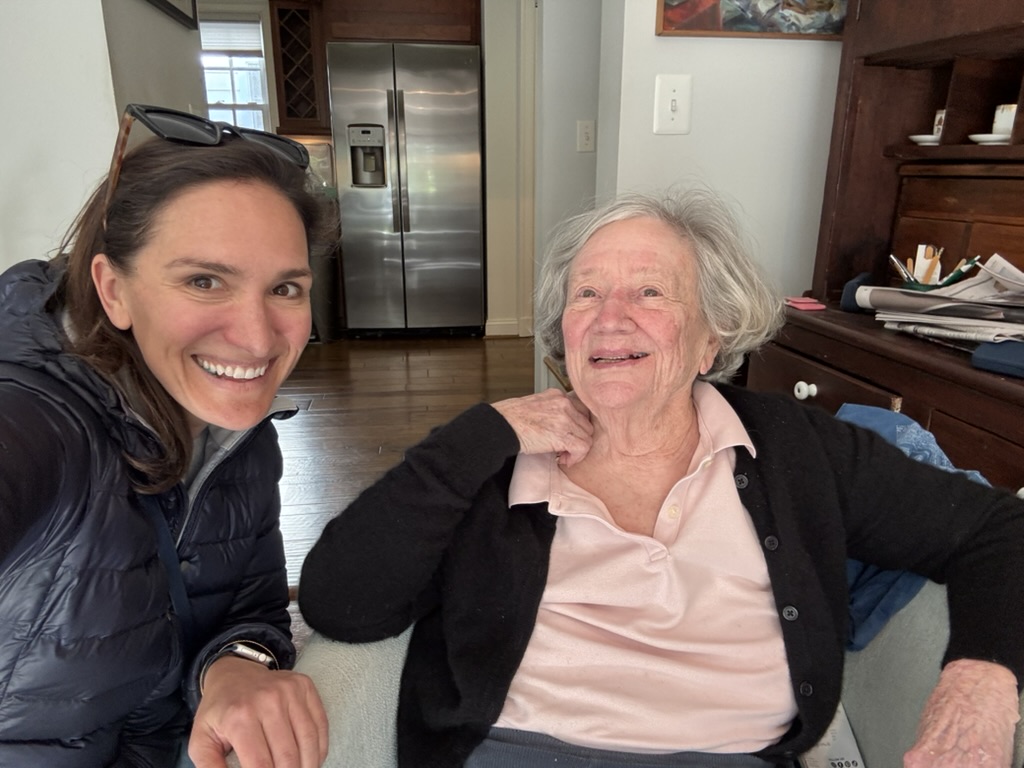
Caregiving was one of the original inspirations for Babble. So much caregiving is really information and communication management: What did the doctor say? Did the medication change? When is the follow-up? What symptoms are we supposed to watch? Did anyone tell my sister?
And often the person managing all of this wasn’t even at the appointment.
“One caregiver we interviewed described receiving secondhand information from a sibling who accompanied the parent to appointments. Another talked about the anxiety of managing a parent’s medication instructions after missing the appointment because of work,” Jessica recalls. “I want Babble to reduce that burden. The person who attends the appointment can capture it, and the people helping with care can receive a clear summary, with the patient’s permission, rather than trying to reconstruct what happened.”
Looking into the future
On day one, Babble helps you have a better appointment. Six months later, it starts helping you understand your holistic health story. A year later, imagine being able to look back and clearly understand: Here’s what I was experiencing. Here’s what we discussed. Here’s what we tried. Here’s what changed. Here’s what my different specialists told me.
Instead of healthcare, feeling like a series of disconnected encounters, you have continuity and an integrated look across the providers and conditions you’re managing.
“That’s why our invitation to patients is: Start writing your health story with Babble,” says Jessica.
Subscribing to Babble
Babble is a subscription product because the creators made a deliberate decision to build a business where the patient is the customer.
“We don’t want the business model to depend on selling patient data or monetizing people’s health information. We want to build and continually improve a product that works for the patient,” says Jessica.
Everyone will be able to record their first visit free, so you can experience Babble before deciding whether it’s valuable enough to keep using. Then users can opt into a $4.99/month subscription that gives you access to tracking unlimited appointments (for you and as many others as you’d like to manage).
For the Lights, Camera, Crohn’s Community, for anyone that signs up in the month of October, the first month is FREE!
Final thoughts
Healthcare can feel overwhelming enough without having to remember every question, every medication change, every recommendation and every next step once you walk out of the exam room.
For people living with chronic illness and caregivers and loved ones helping them navigate it, that mental load can add up quickly. We shouldn’t have to rely on memory, scattered notes or a game of telephone to understand our own healthcare.
That’s what makes the idea behind Babble so compelling. It’s not about replacing your doctor or turning AI into your healthcare provider. It’s about using technology to help you listen, understand, remember and stay connected so you can spend less time trying to document your care and more time participating in it.
Because your health story shouldn’t live in a dozen patient portals, a stack of notes or someone’s memory.
It belongs to you.
And when you can walk out of an appointment knowing what happened, what comes next and how to explain it to the people who support you, that’s more than better notetaking. It’s a little more clarity, a little more confidence and, ultimately, a little more control over your healthcare journey.




 His disease had gone unmonitored for years and his new doctor was performing a colonoscopy to see just how bad his IBD had gotten. We were unaware that he had developed a stricture that was so severe that when she pushed the scope through, it nicked the wall of his intestines, causing a perforation and bacteria to get into his bloodstream. Within 45 minutes of waking up from the procedure, he had spiked a 104-degree fever and kept telling me and the nurses he thought he was dying. I was TERRIFIED. But I also found myself motivated by the fear and the anxiety I felt.
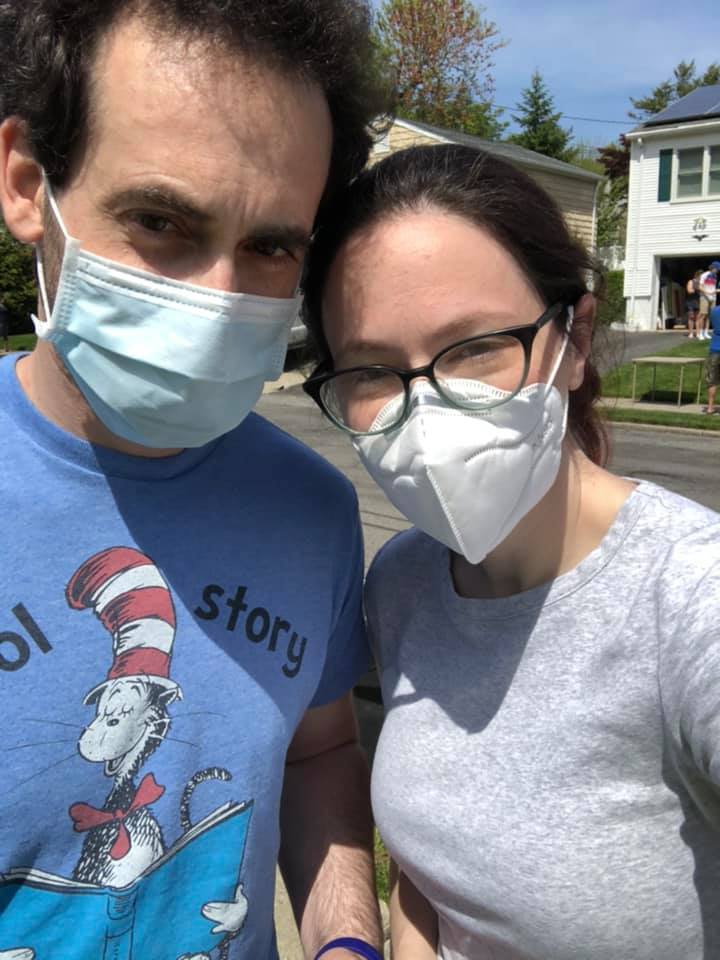


 I’m here to tell you that you are. I truly believe my vulnerability with my Crohn’s and how I deal with flare ups is a big part of why my husband fell in love with me. Chronic illness isn’t pretty. It forces you to see the world without rose-colored glasses. It makes you realize the importance of your health and how quickly it can be taken away from you.
 Caregiving looks and means different things to everyone. It’s not just about being a caregiver in the hospital or at a nursing home. It’s taking care of the one(s) you love on a typical day at home. It can be something as simple as rubbing your back or taking care of the kids while you’re stuck in the bathroom. It can be dishing you out ice cream after you give yourself an injection. Or holding your hand on a walk outside following a hospitalization. It’s those caregiving moments in particular that remind me constantly of the everlasting love I’ve found and make me 100 percent positive we will make it through, for the rest of my life.
 If you’re someone dealing with a disability/disease—don’t allow Dr. Phil’s ridiculously inaccurate comments make you think you aren’t worthy of love, because you are and always will be.
