Cooking in Quarantine: Recipes we’ve found and loved

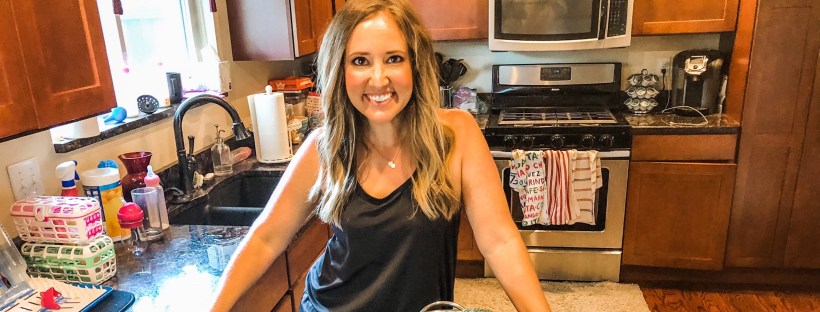
Cooking during quarantine has taken mealtime and meal prep to a whole new level. Like many people, I constantly feel like I’m thinking about what I’m going to feed myself and my family and it feels like I spend the other time doing dishes. As an immunocompromised IBD mom of two little ones, I’ve used these past few months to be a bit more resourceful in the kitchen.

Prior to the pandemic, I wasn’t the most adventurous. I had my 10-15 “go-to” recipes and never really branched out. While these past few months have been physically, mentally, and emotionally taxing, I’ve found spending some time in the kitchen, while listening to music, is a sweet distraction amongst the unknown chaos going on outside our home.

Since March 12th (102 days!), we have had take-out four times. So, as you can imagine, I’ve had to get creative with my cooking!

NOTE: These recipes do not follow one specific IBD or autoimmune “diet”. I am always hesitant to talk food, as each and every person has unique dietary needs and is able to tolerate food groups differently. If there was one way of eating that was a magic bullet for IBD, we’d all be following it. The best advice I can give when it comes to diet, is to keep a food journal and see what your individual triggers are.

Here are my favorite recipes I’ve found online since quarantine, that have been a hit in the Hayden household:

  1. Slow Cooker Chili. I’ve tried four different recipes these last few months and this one was our favorite. Since my kids are 3-years-old and 17 months, I did not add the hot sauce.
  2. Crispy Chicken. This is SO delicious, but heavy on the calorie count. (Worth it in my opinion!) Made for great leftovers, too. The pasta is to die for.
  3. Slow Cooker Greek Chicken Gyros with Homemade Tzatziki. You guys. As a Greek girl, I more than approved. The tzatziki sauce was fantastic.
  4. Slow Cooker Chicken and Rice. Super simple recipe. I make this with crescent rolls and green beans. Bonus: Makes the house smell great.
  5. One-pot Sausage and Peppers Pasta. Yummy meal, hits all the food groups, with minimal dishes. That’s a win! IMG-3692
  6. Crockpot Pulled Pork. So simple and so tasty. We pair up the meat with Hawaiian rolls and Bread and Butter pickles.
  1. Salsa Fresca Chicken Bake Recipe. I’ve always been a fan of making casserole-type dishes where you put everything together, put the dish in the oven, and that’s it!
  1. Slow Cooker Shredded Chicken Tacos + Mexican Rice Casserole. We’re big fans of Mexican food. These paired up great together along with all the toppings (tomatoes, cheese, sour cream, avocado, lettuce).
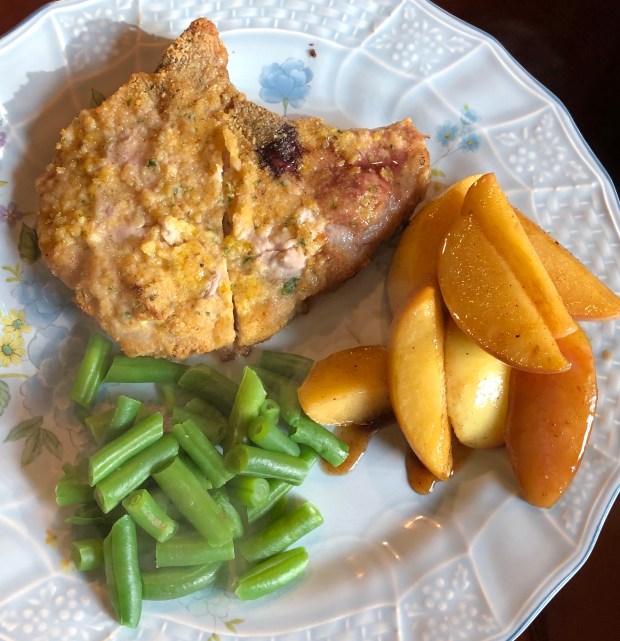
  1. Crispy Breaded Pork Chops. + Warm Cinnamon Apples. I’m usually not a huge fan of pork chops, but this meal is good. I usually make green beans for the side. IMG-2680
  1. Ground Beef Taco Casserole. Like I said above, we’re all about Mexican food. My husband loved this one.
  1. Mediterranean Rice Bowls. I found this recipe last year in a Women’s Day magazine and it has been one of our absolute favorites as of late. You can make this with lamb or beef, we’ve only done beef so far. I also buy mini pita breads to go with this. If you don’t have cucumber or don’t like it, I’ve made this with green bell peppers as well. I couldn’t find the recipe online—so I’ll share it here.

Ingredients:

1 lemon

2 tbsp. olive oil (divided)

2 cloves of garlic (I only use one clove)

4 cups of cooked long-grain rice

1 tsp ground cumin

½ tsp ground coriander

1 pint of cherry tomatoes halved

½ a seedless cucumber, cut into ¼ in. pieces

¼ cup of fresh mint

Crumbled feta, for serving

(I tweaked the directions a bit, so I’ll share how I make this)

  1. Make rice according to the box (will take 25 min. so start this first)
  2. Chop the tomatoes, cucumbers, garlic, and mint and put to the side.
  3. Finely grate zest of lemon, then cut lemon in half. Heat 1 tbsp. of olive oil in a large nonstick skillet on medium-high. Add beef and cook, breaking up with a spoon, until browned. (Once browned, discard fat). Add garlic and ¼ tsp of salt and pepper and cook, stirring 1 minute, toss with lemon zest. Transfer beef to a bowl and squeeze juice of 1 lemon half on top.
  4. Once rice is done cooking add it to the bowl with the beef and season with cumin, coriander, and ¼ tsp of salt and pepper.
  5. Squeeze juice from the remaining lemon half into a medium bowl. Toss with chopped tomatoes, cucumbers, and ¼ tsp of salt and pepper. Fold in the mint.
  6. Add the mixture to the beef and rice and top with crumbled feta. ENJOY! IMG-3693

Bonus recipe: While we were visiting the Lake of the Ozarks recently, I created a salad that is simple and delicious:

Butter lettuce

Chopped apples (I use Honeycrisp)

Chopped strawberries

Chopped grapes

Feta Cheese

Pecans (or whatever nut you’d like to add)

Honey Mustard dressing

Activism is a marathon: How to sustain momentum, while keeping IBD in check

Our current reality and the actions, decisions, and efforts we are making are a marathon and not a sprint. Much like life with chronic illness, anti-racism is something that will be an uphill battle day in and day out. You don’t receive an IBD diagnosis and educate yourself and manage your disease for two weeks and think the work is done. You are forced to evolve, learn, see the world through a different lens, while adapting to a new normal.

IMG-2683

Created by @Ericiaa_ on Instagram

The racism that is a part of this country is not going to be eradicated by two weeks of social media posts and protests. But, each genuine and heartfelt decision from here on out has the power to make a huge change. By speaking up and not standing down. By recognizing your own privilege. By standing arm in arm with your peers who have suffered in silence for far too long.

Dealing with the overwhelming fatigue

Fatigue is heavy when you battle Crohn’s and ulcerative colitis, regardless of the current climate in the world. When you couple months of COVID-19 with visibly seeing the divide in our country and all the work that needs to be done, it’s overwhelming. Don’t burn yourself out, don’t feel like you aren’t able to keep up, don’t compare yourself to others.

In recent weeks, I’ve seen countless IBD patients apologizing for sharing their health struggles. I’ve seen people in hospital beds saying sorry for needing support as they head into surgery, start a biologic, or come to terms with their diagnosis. I’ve heard from people feeling guilty for needing a break from social media because the stress and worry is a trigger for their illness.

Chronic illness doesn’t take a break. Chronic illness thrives in conditions when we stop managing it and don’t make our health a priority. Chronic illness doesn’t care if there’s a pandemic going on around the world or a Black Lives Matter protest in your city that you want to be a part of.IMG-2685

It’s ok if you need to focus on you and your IBD. It’s uncomfortable seeing how divisive this world can be and the hurt so many of our friends and family face just for the color of their skin. If you’re like me, it’s made me question and rethink how I’ve navigated race all my life. I have black friends from high school that I just started having race conversations with NOW. I am 36.

Eddie

Friends since 2000. Just talked about race this week.

I have black peers in the IBD community who bring tears to my eyes with their pleas for support and great admiration for them using their voices and platforms to make a change and a paint a clearer picture for the rest of us.

I’ve started changing what I choose to watch on Netflix. We’ve watched “Dear White People” and “13th” after putting our kids to bed this week. We tuned in for the Sesame Street Town Hall on CNN about racism, even though our children are young. It’s never too early to start the important conversations with your family. I’ve started researching books with black protagonists for my kids that also discuss racism, after looking through their bookcase and realizing we only have two books with black characters.

Here are some recommendations I’ve received:

“A Boy Like You”

“Love”

“The Skin You Live In”

“The Day You Begin”

“The Snowy Day”

“Good Morning Superman”

Netflix cartoon: “Motown Magic”

Don’t burn yourself out

At the same time, we all, including myself, have a lot of work to do. This momentum, this energy, and this dedication is going to be challenging to sustain. We don’t want to burn out. We can’t put our IBD on the back burner. It’s up to us to realize when we need time to focus on our health and when we can use our voice and our heart to make a difference.

IMG-2686

Created by The Chronically Honest, on Instagram

If you’re feeling more symptomatic from the stress of these eye-opening and challenging days, give yourself permission to take a break from social media and the news. Your health and well-being come first, and you don’t need to feel guilty for that. If you are desperately wanting to participate in protests but worry because you’re immunocompromised and in danger of getting COVID-19, that’s understandable. Your work and your effort can be done safely at home.

You can be an ally. You can be a friend. You can be a patient. That priority list can be fluid and ever-changing. Take care of others, but always remember to take care of yourself.

IBD does not just look like me

Like most people, the events of the past week have left me feeling upset, angry, frustrated, helpless, and at a loss for words. As a white woman I recognize my privilege and the need for change. I recognize that I can’t begin to imagine what it’s like to walk in the shoes of a black man, woman, or child.

As an IBD advocate I understand that Crohn’s disease and ulcerative colitis do not discriminate. These diseases don’t care what color, race, ethnicity, or gender you are. Oftentimes though, the lists for blogs, advocates to check out, interviews, or accolades, tend to feature people like me. When I scroll through these lists and see all white advocates it makes me uncomfortable. IBD looks like meWhen I’m part of a photo grid holding up a sign alongside fellow advocates…and it’s a bunch of white girls, it makes me feel out of touch.
Over the years, I’ve heard from black patients who are friends of mine, who have dealt with delayed diagnoses because of mistrust from physicians. I’ve heard of black patients being looked at as opioid-seekers, despite rarely going to the ER for their symptoms. IMG_8619

I want to make sure you know and are familiar with some ROCKSTAR female advocates who do a phenomenal job of being a voice for not only the IBD community, but the black community. Here are their names and their Instagram handles.

Brooke Abbott                @crazycreolemama and @IBDmoms

Shawn Bethea                 @shawnbethea_ and @crohnsandstuff

Gaylyn Henderson         @gutlessandglamorous and @gaylyn14

Myisha King                     @gameofcrohnsandchronicillness

Sonya Goins                     @sonya_goins

Melodie Blackwell          @melodienblackwell

Shermel Maddox            @shermel2

Chelsey Leanne               @chelseyleannibd

We’ve all had people in our lives try and understand what it’s like to live with IBD when they don’t have it. Through my nearly 15 years with Crohn’s, I’ve experienced the instant connection that occurs when you meet someone online or in person who understands your reality. ShawnThere’s a level of empathy and understanding that makes you feel like you are home.

In this instance, I’m not going to try and act like I fully grasp or understand what it’s like to be black with IBD. It’s important for our community to have role models who look like themselves to connect with, learn from, and admire. Especially the newly diagnosed and pediatric patients. IMG-2348

IBD is not black and white. IBD is all of us. Holding hands through this. Lifting one another up. Doing better at loving and accepting others. Making an effort to be anti-racism each and every day. Teaching our children to see the world and others with a different understanding. This is on us. We must be better.

IBD does not just look like me.

From one IBD mom to another…here are some resources to check out:

Children’s books to support conversations on race

Your Kids Aren’t Too Young to Talk About Race: Resource Roundup

Anti-racism Resources for White People

An Anti-racist Reading list (for adults)

Anti-Racism Activism Resources, Education, Stories, Books, and More

Wondering how you can make a meaningful impact? Tune in for a Facebook Live Tuesday, June 2 at 6 pm CT on the CrohnsandStuff Facebook page.

IMG-2352


Crohn’s and COVID: Hear one IBD mom’s experience battling both

Imagine having a fever for 31 days along with debilitating fatigue, a scratchy throat, cough, and trouble breathing. That was the case for Jessica I., age 34, of St. Louis. She is a COVID survivor, a Crohn’s warrior on immunosuppressant medications, a wife, a mom to two little ones, and an attorney.

Hindsight is 20-20 and of course we know a bit more about COVID-19 now than we did when quarantine and chaos ensued in mid-March, but let me take you back to how this all went down for Jessica and her family. DSC00747

Her daughters, age 4 and 19 months go to the same preschool and daycare. Their last day was March 11th. Jessica received an email from the director of the school saying a record number of teachers and students were out with the flu and strep. Except later it was determined the sickness going around the school was COVID-19. Two teachers landed in the ICU and multiple kids and parents tested positive in her older daughter’s class.

How the symptoms presented

“The first change was extreme fatigue and a scratchy throat, almost like cotton balls were stuck in my throat. Two days later I started with a low-grade fever. I felt pretty lousy for three days—fever, chills, and aches,” says Jessica. “I had one day where I felt better (March 26), but the following day I felt worse than before with a much higher fever and I had a dry cough. I felt constriction in my chest with every breath I took.”

Jessica’s husband was proactive and had ordered the family a pulse ox back in February, so she was able to monitor her oxygenation throughout her illness. She never dipped below 92, but the chills, painful aches, headaches, and fever from 99-101 stayed with her for over a month.

Still not 100%

“Though I no longer have a fever, I still have good days and bad days. I still have chills, aches, and extreme fatigue. It’s way more manageable, but I’m definitely not 100%,” says Jessica. “Luckily, I did not have the smell and taste issues, but because I felt so awful, I’ve lost 25 pounds.” 20190921_161434

Jessica is grateful her Crohn’s disease has not caused her problems in recent weeks. Diagnosed at age 12, IBD has been a part of her life for as long as she can remember.

She had two bad flares during her second pregnancy and most recently an eight-month flare last year. When her Remicade infusion was due this month, her GI was adamant she stay on schedule since she no longer had a fever. Jessica was terrified about getting a biologic on the heels of having COVID-19, so she chose to extend her medication schedule by one week. Her worries were justified.

“In 2006, I got my Remicade when I had mono (hadn’t known at the time) and got encephalitis and had to be in a UK hospital in the ICU for a month. I lost my ability to talk. I almost died. My GI doctor knows of this history, but insisted that I needed my Remicade because of my history of getting flares the last few years.”

Despite her apprehension, Jessica trusted her long-time physician’s recommendations and stayed on her Remicade and Imuran.

Balancing motherhood while fighting COVID-19

The first 12 days, Jessica isolated herself from her family in her master bedroom. Her husband worked a full-time job from home, while taking care of both girls on his own. Once Jessica’s fever persisted after two weeks, they decided as a family to have her come out of isolation because the burden was nearly impossible for her husband to continue to take on. Igielnik-8

“We knew almost for sure that my children were asymptomatic and gave me COVID-19. The next two weeks anytime I was out of my room I wore a mask and gloves. I didn’t make any food. This was so hard because I was still extremely sick and was just supervising play and TV watching for my girls. To this day, my husband and I are still sleeping in different rooms and not hugging and I’m not going anywhere near his food.”

Jessica’s husband is an avid news consumer and was following everything that was happening in China. He started to stockpile food and wipes back in January. Friends thought he was overreacting. His grandparents are Holocaust survivors. Jessica credits his “alertness” to that.

What Jessica wants people to know

Even though Jessica was able to fight the illness without being hospitalized, she says if we weren’t in the middle of a pandemic, she would have gone to the hospital in “normal” times.

“Mild COVID isn’t mild COVID. What I had was considered mild and I was so sick for so long…and I’m still not feeling completely better. I think people would change their mind about the severity of this if they knew someone who had COVID-19 or they themselves experienced it.”

To this day, Jessica still has chest pain and backaches. Her care team believe she has inflammation in her lungs because she was sick for so long.


Revolutionizing the patient experience through crowdsourcing: Use your journey to make a difference

This blog post is sponsored. All thoughts and opinions are my own.

Coping with chronic illness is complicated. When it comes to IBD, no two people have the same experience, but there are often many parallels and overlaps. Crowdsourcing is now being used to understand how to best treat chronic conditions, such as Crohn’s disease and ulcerative colitis. By empowering patients from all around the world to share information on a large scale and leveraging the power of advanced artificial intelligence to analyze and organize that data, StuffThatWorks is revolutionizing how medical research is done.

Chances are you’ve heard of the popular app, Waze, which allows people to build maps and share data with other drivers to bypass traffic. It’s an app my husband and I use all the time! One of the members of the Waze founding team, Yael Elish, started thinking about how crowdsourcing could be used to understand how to best treat chronic conditions. Yael’s daughter started to struggle with a chronic health condition and wasn’t responding well to treatment. Her illness was taking a heavy toll on the entire family. Yael Elish and daughters_1

“It seems like almost everyone dealing with an ongoing medical condition dedicates endless hours researching, speaking with others, and scanning groups in search of something that can help us feel, and live better. We want to know if there are treatments that will work better, if our side effects are unusual, or if diet or lifestyle changes could make a difference. We look for people like ourselves and seek to learn what works (and doesn’t) for them,” said Elish, Founder, CEO, StuffThatWorks.

When it comes to managing chronic illness, it’s much like trying to find the needle in the haystack—the one treatment that will work best for us. The power lies with patients. We are the people who have tried various treatments and know what’s worked best. Crowdsourcing puts patients in the driver seat. Large amounts of information can be gathered from millions of people worldwide.

“I want people to feel empowered – and validated. To realize that their point of view and experience is not only legitimate but is extremely valuable to helping the world understand illness and treatment effectiveness,” said Elish. “I want StuffThatWorks to be a place where patients can share their collective voice and be heard by the medical community.  Where patients themselves are able to impact and drive the research that is being done about their condition and play an active role in finding solutions that will help everyone with their condition feel better.”

StuffThatWorks Currently Serves 85 Condition Communities

As of now, more than 125,000 people are contributing members within 85 condition communities. Over 6.5 million points of data have been shared! One of the biggest communities (fibromyalgia) has over 15,000 members. PCOS has 12,000.

StuffThatWorks is looking to grow the IBD community.

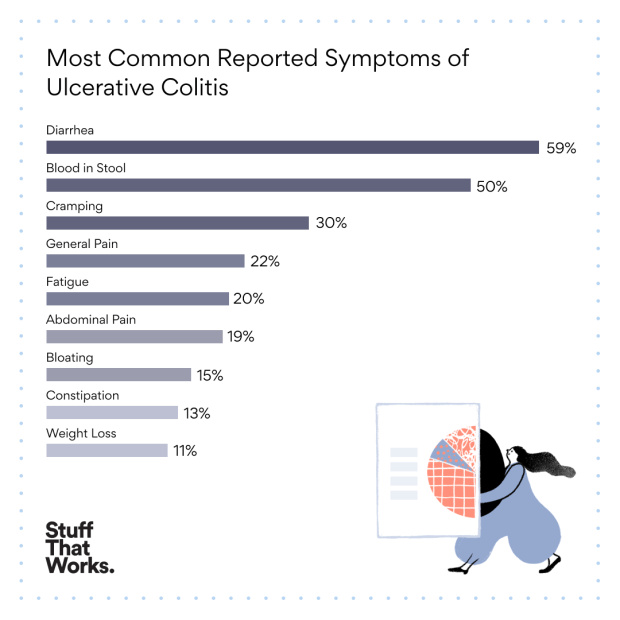
Right now, there are three communities, IBD in general, ulcerative colitis, and Crohn’s. Of these three, Crohn’s is the biggest with 729 members who have reported their experience with 270 treatments. The ulcerative colitis community has 409 members and 155 treatments in the database.

SymptomsUlcerativeColitis

Take the UC survey: https://stuff.co/s/5sSltbnK

On average, Crohn’s community members report they have tried 6.2 different treatments, and 37% describe their Crohn’s as “severe.” By sharing treatment experiences, our community members can use data to help one another figure out which treatments are best for different subgroups of people.

“The power of this database is that it can reduce the years of searching for the right treatment or combination of treatments. Our platform lets people explore how different treatments work effectively together, and we’re able to analyze everything from surgery and medications to alternative treatments, changes in diet, stress reduction and more,” said Elish.

COVID-19 response

StuffThatWorks is in a unique and powerful place to help advance the research on COVID and understand how it impacts people with different chronic conditions. Who is more at risk? Does the virus present differently in people with certain conditions? Do certain treatments work better/worse for them?

“We are currently prioritizing COVID-19 research by inviting everyone with a chronic condition to contribute to the research by answering questions about their experiences related to the coronavirus pandemic, even if they do not have the virus. We are also inviting all current StuffThatWorks members to fill out the coronavirus questionnaire and contribute to this new research,” said Elish. “We’ve also set up a dedicated coronavirus discussion forum, where doctors are answering questions and providing important information about the latest research.”

In a time when many people are feeling anxious and alone—discussion boards are helping to bridge the communication gap and allow for people to connect with one another. StuffThatWorks community members are seeking support about decisions: Should I cancel my doctor’s appointment? How much am I at risk if I am taking immunosuppressants? How can I help my partner understand my anxiety about coronavirus?

The world is suddenly realizing that crowdsourcing is the holy grail of how to gather health care data on a large scale. The real-time nature of it is particularly important, and the ability to get data from such a vast number of diverse sources.

Crowdsourcing research is limitless: The hope for the IBD community

You’ve heard the adage “strength in numbers”. Once large numbers of people with IBD sign up and become members on this free platform, everyone from the newly diagnosed to veteran patients can find something new and continue to evolve and learn about their patient journey.

TreatmentCategoriesCrohns

Take the Crohn’s survey: https://stuff.co/s/bzqQR5xP

“I want people with IBD to feel empowered – that this community is THEIRS, not OURS – and that they can determine what it’s used for and how it can be most helpful. They can add new research questions, post personal discussions or experiences and ask others specifically what works and doesn’t for them,” said Elish.

As members of the IBD family, by joining this platform we immediately become part of a supportive community where we can talk with others just like us, either collectively, or one on one, about how we manage and handle the day-to-day with our IBD.

Driving Research through Patient Reported Outcomes

Patients like you and me have power to influence the research direction of the medical world. We are all a piece of the puzzle and play a critical role in helping with the future development of medications and treatments, and hopefully one day a cure.

So much medical research is done using small groups and funding for large-scale research is extremely hard to come by. The opportunities are endless with crowdsourcing, in terms of the research that can be collected and the solutions we as patients can only provide. LightsCameraCrohns-Blogpost_image

Whether it’s shortening the amount of time it takes to get an IBD diagnosis or helping people find optimal treatments quicker, by sharing our experiences we gain invaluable insight into improving our quality of life and managing our chronic illness. It’s truly a win-win for everyone involved.

Check out StuffThatWorks and sign up for free as a member. Take part in building a knowledge base aimed at figuring out which treatments work best. Your story. Your experience. It’s powerful and it all matters.

Telehealth: Where Have you Been All My Life? Making the Most Out of Your Next Appointment

They say there’s a first for everything and that was the case for me with telehealth visits. Nearly 15 years into my patient journey with Crohn’s disease, and I had never had a video chat with a physician. Going into the experience felt a bit daunting, a little uncomfortable. As patients, we get so used to our routine for managing our illness, that changing the course of care can make us feel anxious. I know I’m in the majority when it comes to being new to this whole telemedicine thing. Let me tell you, I really loved it. I walked away from my computer smiling and feeling happy. Here’s why.

Connecting over video saved me time and a whole lotta energy

My commute to and from my GI office is about 35 minutes and usually involves bringing at least one of my kids with me or coordinating childcare. It was awesome to just walk into my kitchen and instantly connect with my physician. We’ve talked on the phone many times in the past when I have a question or an issue but conversing over video made a big difference. You feel much more connected and like you’re sitting in the same room.

I didn’t feel rushed

Oftentimes while in the examining room, I feel like I’m racing the clock to get all my questions asked. It can feel like I’m just one of many appointments in a row and that my physician is bouncing from room to room. There was a sense of calm and a laid-back aspect of the call that sat well with me. It felt like a 35-minute heart-to-heart that was genuine, educational, and comforting. I felt listened to and heard. We talked about everything from my Crohn’s symptoms to my next colonoscopy, and how to handle everything with the COVID-19 pandemic.

We set a game plan in place

Something I love about my GI is that she’s extremely proactive and aggressive. You ask her a question and she immediately has a confident response. I’ve been more symptomatic the past few weeks than I have been for awhile, so she ordered a fecal calprotectin test to see if there was any inflammation going on. My husband, Bobby, picked up the test from the lab and I will bring the completed test in when I get my bloodwork this week. As far as my annual colonoscopy for later this summer, she told me that we should be ok to get the scope in, as that’s an ideal window for when things are expected to calm down COVID-wise. If we waited or delayed the scope, she fears it could be a YEAR until we’re able to do one again. Telehealth-interpreters-tel-1140x500

She determined that part of the reason I may be experiencing more abdominal pain is unintentionally changing up my diet. Something so many of us are doing right now. Our family hasn’t had take-out food since March 12th. While it’s great to have a healthier diet, having less processed foods can make things more challenging on our digestive systems. She recommended I incorporate more carbs into my daily diet, drink more water from a cup vs. a straw or a bottle (as that can cause gas to build up), and even try drinking peppermint tea or having peppermint oil in the air.

Guidance for navigating the pandemic and IBD

I asked my GI about her recommendations for what to do once Stay at Home orders are lifted and how long social distancing should be in place as someone who is immunocompromised from my medication. She said I am free to go to public parks and trails (while wearing a mask) but should stay out of everything from supermarkets to shopping malls through the summer. She advised it would be best to have my husband continue to run our necessary errands while wearing a mask. She’s anticipating a second peak of the virus will happen when the colder weather approaches.

Luckily, Bobby has been able to work from home since March 18th, a benefit of corporate America. When I asked about what to do when he has to go back in the office, she said he would need to wear a mask and at the sign of any symptoms, would need to stay away from our family.

As far as flaring and needing to go to the hospital, my GI recommended keeping her in the loop and openly communicating about symptoms so we can handle as much as we can outpatient. If there is an acute issue (fever, vomiting, etc.—things that happen with an obstruction), then I should go to the hospital as I normally would.

When it comes to IBD patients being tested with an antibody test, she doesn’t foresee that happening unless we are about to go into surgery or have a procedure. Even then, she says our immune response is different than that of the rest of the population.

Recommendations to keep in mind ahead of your telehealth appointments

Come prepared. Have questions. Be open about your symptoms and don’t downplay anything. Your physician can only help you if they know what’s going on.

Familiarize yourself with the technology. I choose to do my call on the computer, much like a Zoom meeting, but through the patient program provided by my office. There was also an option to click a link in a text message and chat like you’re on FaceTime. telemed

Try to have a quiet space for your call where you can focus. Unfortunately, my husband had a work call during my appointment, but I was able to put the baby down for a nap and bribe my 3-year-old with some snacks and TV. He only interrupted a couple of times, but my physician understood and we had a good laugh about how fruit snacks work wonders to calm or distract toddlers.

Ask about billing. Telehealth appointments at my doctor’s office are billed the same as a routine appointment. Make sure your office has your insurance information ahead of time.

Listen to this About IBD podcast from one of my favorite patient advocates, Amber Tresca, and one of the top IBD docs, Dr. Nandi, about how to best prepare for telehealth appointments during the pandemic.


IBD mom offers up 5 tips for productively working from home

Twenty years ago, Katy Love, was diagnosed with Crohn’s Disease. She was a sophomore in college. She could barely make it out of bed some days, due to the enormous amount of pain and overwhelming fatigue. After her diagnosis and subsequent surgeries, she wondered if she’d ever be able to have a “real job” – like many of us in the chronic illness community, she worried about how she would be able to work and manage her illness. Katy didn’t allow her diagnosis to prevent her from following her personal or professional dreams. Now as an IBD mom, running her own PR business from home, in the middle of a pandemic, she has some advice to share about being successful in the face of adversity. Boulder_Headshots_043

After graduating from college, I took a job at an interactive advertising agency. My dream job. Then, reality set in. I needed to ask for accommodations for my Crohn’s disease– I had to ask for a flexible schedule – one where I could work from home when needed.

I was elated when the agency agreed. Since then, I’ve been blessed to work with several teams (for other companies) that understood my illness and trusted me to work remotely when needed. As someone who has worked from home quite often during my career, due to a chronic illness, I’ve learned a few helpful best practices that have helped save me time… and my sanity.

Create a realistic routine and office hours. If you know you can’t start working until 9 a.m., due to family obligations, don’t start your work time until 9 a.m. Then, plan accordingly for your end time each day. Be sure to share your office hours with your family and colleagues. It’s important for everyone to know when you’re working. Also be patient with your new schedule. As with all new things, it will take some time to become a true routine. This is all new territory – working from home is a normal occurrence for me, however, having all my children and my spouse at home, while trying to work from home, is a new challenge.

Get Dressed. Every single day. I know this may sound silly, as you haven’t left the house in weeks. But I find this extremely important. It sets the tone for the day. When you look the part, you’re much more likely to feel the part. Plus, with all the Zoom calls, you want to look like you aren’t wearing yesterday’s PJs for the weekly team meeting.

Establish a defined workspace. You need an area where you know – this is my desk, my work zone. Your family members know that when you are there, you are working. Working from bed sounds delightful…I love my bed. However, it’s easy to be distracted if you’re not in a specific workspace. IMG_0846Also, surround your workspace with all that you may need during the day. Computer, chargers, phone, etc. I like to also put candles or fresh flowers near my workspace – they smell great and elevate my mood. With spring finally here, go outside and pick a few flowers and put them in a mason jar. Anything that makes you smile and motivates you.

Communication is KEY. I learned this early on in my career. Just because you’re not in physical sight of your team, and your employer, you want them to know you’re ON and working. The worst thing you can do is go dark. If they don’t see you, hear from you, it’s easy to assume you aren’t taking working from home seriously. So, over-communicate with your team during this time.

Take breaks throughout the day. When you’re setting up your new routine/office hours, schedule breaks into the day. Personally, I like to work out in the mornings. So, finding 30 minutes to hop on my bike sets my day up for success. In the afternoon, take a walk outside, or bake with your kids. Katy_Vince_Family_138It’s extremely important to incorporate self-care into your routine right now. There’s so much uncertainty and doom/gloom in the news. Make sure you are taking time to appreciate yourself, your team, and your family, while keeping your health as a top a priority.


Seeing the beauty through the struggle: IBD mom welcomes third child amidst COVID-19 pandemic

Welcoming a baby into the world brings so many emotions to the surface. For IBD mom, Suzy Burnett, of Madison, Wisconsin, it’s been a rollercoaster. She had her third baby, Guy Richard, February 29th. IMG_0146Right before COVID-19 started wreaking havoc in the States. Before Guy was born, Suzy’s biggest fear was a postpartum flare. After the birth of her second oldest daughter, Alice, she had the worst Crohn’s flare of her life and was hospitalized.
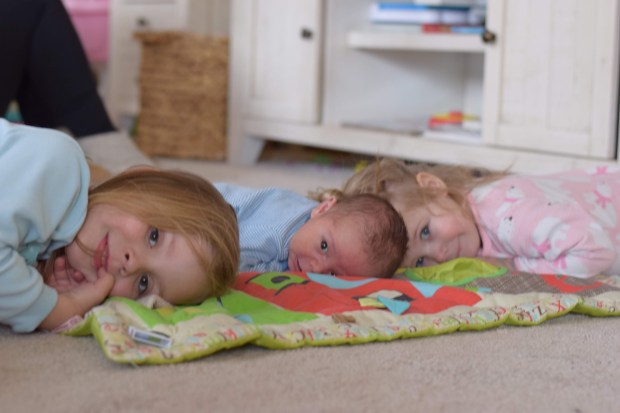
Now, as her and her family face the COVID-19 pandemic, she has a new set of concerns. Will Guy be able to stay healthy until his immune system matures a bit? How will her daughters adjust to the new addition? Will she be able to stay well despite being immunocompromised? COVID-19 added a whole new slew of uphill battles that she or anyone else for that matter hasn’t been prepared to deal with. This week Suzy shares her perspective as an IBD mom, doing all she can to protect herself and her family in the face of this viral war.

As anyone who has ever had a baby, you know those first two weeks, involve several doctor appointments. Guy still had high bilirubin levels when we brought him home, so this meant we needed to make extra trips to his pediatrician. Sounds easy, right? There was so much involved this time around. Babies don’t have that immunity built up yet, so we had to use a special entrance, and go straight to our room to avoid any contact with the public. I couldn’t help but glance at the waiting room and see all the long faces adorned with facial masks. It was swimming with sick kiddos. I felt incredibly lucky at that moment as we escaped the chesty coughs, and furniture that had been saturated in illness.IMG_0147

One week went by, and things quickly changed to Zoom and FaceTime appointments. Not only did the baby’s appointments change…but mine did as well. Those of us with Crohn’s disease can’t always get by with a virtual chat about our symptoms. But here we are.

Navigating health issues brought on by my IBD

Many people with IBD develop extra-intestinal manifestations. IMG_0144Unfortunately, when I was put on prednisone last summer, I developed extremely high eye pressures. I was diagnosed as “Glaucoma suspect” at 40 years old, meaning I have some risk of the disease, but no proven damage (yet), so my eyes are monitored often.

I’m also dealing with an external hemorrhoid, thanks to excessive diarrhea, along with an anal fissure, all while caring for three children—one being a newborn.

For those of you who don’t know, an anal fissure is a small tear in the thin, moist tissue (mucosa) that lines the anus. I’m treating the fissure with topical lidocaine and a suppository three times per day. I’ve had my fair share of pain, but this ranks right up there with my non-sedated sigmoidoscopy and childbirth. It feels like broken glass, or razor blades back there. There’s a chance this has progressed to a fistula, and I may require surgery in the weeks to come.

Normally, I would be seen right away, but due to the current COVID-19 crisis, it’s been several phone calls back and forth with the nurses triaging my symptoms. I’m confident the hemorrhoid will go away, but if the fissure doesn’t, I might be facing surgery, and right now a trip to the hospital could be life threatening.

Seeing the beauty through the struggle

Amidst this horrific event that is crippling our world, there is an unexpected beauty that has surfaced. Our wonderful party of five has become closer than close. Yes, there are times when we all go a bit loony, but we’re embracing this time together. My kids are my world, my everything. I need to be the best version of myself, and a huge part of that now and forever is not letting my IBD win. Even when my disease has a strong hold on me, I never let my kids see the struggle.

If you’re reading this and you’re unsure about whether you’ll be able to handle your IBD and motherhood, I’m here to tell you it’s possible. IMG_0148As a woman and a mom of three who has battled Crohn’s since 2008, I believe if it’s your dream to have children, or a family, you should most definitely pursue that. Consult with your GI and OB doctors prior to getting pregnant, and make sure you’re in remission. Pregnancy can be challenging, but if you’re also flaring, it’s that much harder.
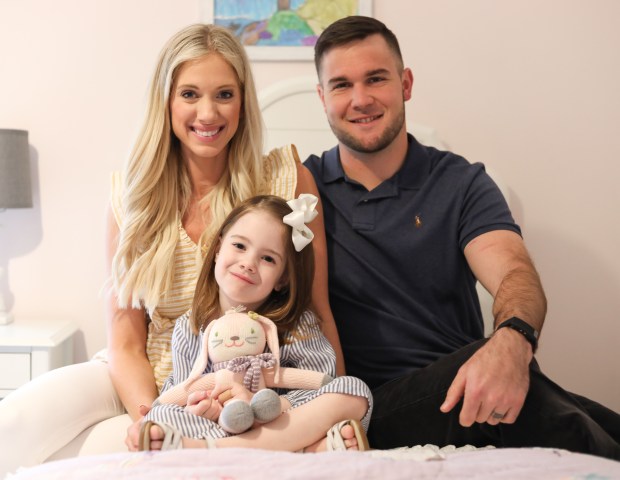
As we all experience the change in our day-to-day lives during the COVID-19 pandemic, whether you have IBD or not, there has been a return to simplicity. A back to basics mentality that is exponentially refreshing. Take a walk outside and breathe in and out. Right now, we’re forced to take our time, dig deep, and focus on our inner beings. Much like the experience of dealing with the diagnosis of IBD, it’s a time to peel back those layers and re-discover YOU.

Follow Suzy’s journey by checking out her blog: Crohnie Mommy 


My five year old has Crohn’s and was tested for COVID-19: A Mother’s story

UPDATE: Since this story was shared on March 30th, Jadyn’s COVID-19 test came back. After two weeks of waiting, the test came back positive.

Imagine your 14-month-old baby being diagnosed with Crohn’s disease. That was the reality for Anna and Jon Richt of Georgia. Fast forward a few years and their daughter, Jadyn, is now five years old and thriving with IBD. This past week though, the Richt family had quite a scare. E06A1215Jadyn woke up with a fever and a slight cough. Given the craziness of the times we live in right now, they immediately called the COVID-19 hotline. Once the person on the other line heard about Jadyn’s health history and the fact she is immunocompromised, they agreed, Jadyn needed to be seen. In urgent care, Jadyn was tested for the flu, strep throat, and COVID-19. The Richt’s were told they would have a test result in five days, it’s been more than a week now, and still no result.

Prior to all the discussion on social distancing and sheltering in place, Anna and Joe had traveled domestically. Family members who had been staying in their home had recently traveled internationally. Anna says, “The strep test came back positive, which gave us a sense of relief. But it didn’t cancel the possibility of COVID-19. We have been watching her closely, ready to sound the alarm at any sign of health deterioration. Thankfully, she is feeling much better and I believe she is bouncing back to her normal self.”

What’s it like to raise a daughter with IBD from such a young age? Jadyn has a G-tube, and Anna is passionate about spreading awareness about feeding tubes to educate others. E06A1193I’ll allow Anna to take you back to the beginning, so you can have a better grasp of their ongoing journey and how it’s brought them to where they are today.

Seeing blood when my baby was six months old

I started seeing blood in Jadyn’s stool when she was around six weeks old and immediately called her pediatrician. He chalked it up to a couple of things, mostly related to breastfeeding issues and didn’t seem too concerned. When she was eight months old, my husband’s job moved us far away from family and her symptoms worsened. Her new pediatrician was concerned about her weight loss and sent us to the hospital for further testing.

A colonoscopy showed lesions all throughout her GI tract. Crohn’s disease was mentioned but the gastroenterologist was hesitant to diagnose it because of Jadyn’s young age. I did exactly what they say not to do and Googled Crohn’s Disease. The symptoms were spot on: “Bloody stools, persistent diarrhea, vomiting, loss of appetite, weight loss.” I’m not sure I’ve ever told anyone this, but deep down, I knew.

Dealing with the diagnosis

The diagnosis eventually came when Jadyn was 14 months old. fullsizeoutput_38f9The first couple years were nothing short of a dog fight. I remember sitting in my sister’s living room after an appointment when all of the sudden the doctor’s number popped up on my phone. She was calling to say that Jadyn’s lab results didn’t look good and we needed to head to the hospital right away.


My sister and I sat there in disbelief and cried. I remember her saying through her tears, “I feel like you are under attack.” We were. But we fought back. There have been countless doctors’ appointments, feeding tubes, eating therapies, procedures, you name it. She has been a trooper through it all and I am so happy to report that her current medication is working. Thankfully, she is a normal 5-year-old for the most part, which I don’t take for granted.

What has the journey been like for me as her mother?

It’s by far the hardest thing I’ve ever faced in my life. At the beginning I assumed it was something we could easily get under control and move on. I now know it is a marathon race, not a sprint. Watching my child suffer, and not being able to fix the problem despite my best effort made me feel like I was failing her. IMG_6044

It’s been lonely at times. Don’t get me wrong, we have the most amazing family and friends. They have supported us unconditionally every step of the way. But because she was diagnosed so young, we’ve never met another child her age with Crohn’s. I couldn’t call one of my mom friends and ask, “What anti-TNF drug worked for your child?” or “How are you potty training your two-year-old who is flaring?” Instead, we’ve pioneered this head-on, and I’ve completely relied on my faith to get me through. People often say how strong I am, but honestly, I believe it’s God’s strength in me that they see. When I look back on these past five years, I know without a doubt He has carried us. I can honestly say I am proud of the mother I have become due to this disease. I am brave and empathetic. I’ve developed grit and survive on grace.

What I want to say to parents of children with IBD

Take care of yourself. I always think of the airplane safety guide. Secure your oxygen mask before helping others. You cannot fully care for your child if you don’t take care of yourself first. Some days that may mean a 30-minute workout and drinking plenty of water. Other days it’s meeting with a counselor to address the emotional toll the disease has taken.

Let others help. They really want to. Use that time to step away and catch your breath.

See your child for who they are. Your child is more than their disease. They are uniquely designed for a specific purpose.

You can do this. I firmly believe that you were handpicked by God to be your child’s mother.  Continue to advocate and cheer them on. Take it one day at a time.

E06A0940

Jadyn and her little sister

“And I am certain that God, who began the good work within you, will continue his work until it is finally finished on the day when Christ Jesus returns.” Philippians 1:6

You can follow Anna by checking out her blog: Grit to Grace

Anna’s Instagram: @grit.to.grace

Real talk from an immune compromised 30-something during the COVID-19 pandemic

You can think of this as a Public Service Announcement for the immune compromised. Like many of my peers in the chronic illness community, I may appear healthy on the exterior, but the biologic medication I depend on to manage my Crohn’s disease, knocks out my immune system. In my family alone, so many face the same reality:

-my 30-year-old cousin whose had two heart transplants and a kidney transplant

-my cousin’s 2.5-year-old son battling Leukemia

-my cousin’s wife who has Crohn’s and is on Remicade

-my cousin who lives with Ehlers-Danlos Syndrome among other chronic conditions

I’ve been part of the immune-compromised population since I was 24 years old. Over the past 12 years, never did I dream of the reality we’re currently living in. When I first heard about Coronavirus, I wasn’t all that alarmed. As the conversations and situation continues to become more serious, I’m getting more anxious and concerned.

Here are the latest recommendations shared by The Lancet as this relates to the IBD population. I found these guidelines helpful in drowning out the noise of all the information being thrown our way.

Potential risk factors for infection

  • Patients with IBD on immunosuppressive agents
  • Patients with active IBD and malnutrition
  • Elderly people with IBD
  • IBD patients who frequent medical clinics
  • IBD patients with underlying health conditions, such as hypertension and diabetes
  • Patients with IBD who are pregnant

Medication for patients with IBD

  • Continue current treatment if your disease is stable, and contact your doctor for suitable medicine if you’re flaring.
  • Use mesalamine as prescribed, this should not increase the risk of infection.
  • Corticosteroid use can be continued, but be cautious of side effects.
  • A new prescription of immunosuppressant or an increase in dosage is not recommended in epidemic areas.
  • Use of biologics, such as the anti-TNF’s infliximab (Remicade) and adalimumab (Humira) should be continued.
  • If Remicade infusion is not accessible, switching to a Humira injection is encouraged.
  • Vedolizumab (ENTYVIO) can be continued due to the specificity of the drug for the intestine.
  • Ustenkinumab (Stelara) can be continued, but starting this requires infusion center visits and is not encouraged.
  • Enteral nutrition might be used if biologics are not accessible.
  • Tofacitinib (Xeljanz) should not be newly prescribed unless there are no other alternatives.

Surgery and endoscopy

  • Postpone elective surgery and endoscopy. (I’ve heard of many  centers and hospitals delaying until June at this point.)
  • Screening for COVID-19 (completed blood count, IgM or IgG, nucleic acid detection, and chest CT needed before emergency surgery.

Patients with IBD and fever

  • Contact your GI about visiting an outpatient clinic. Consult with your physician about possibly suspending the use of immunosuppressant and biologic agents and follow appropriate guidance if COVID-19 can’t be ruled out.

While the unknown is scary—as a chronic illness community we need to recognize how well-equipped we are mentally and emotionally to live life during these uncertain and uneasy times. According to the National Health Council, 133 million Americans live with incurable or chronic diseases, many of which are treated with medications that make us susceptible to illness.

It can be unnerving to see peers downplay the severity of the situation and making light of the fact they have nothing to worry about. If you have a friend or family member who’s immune compromised or a loved one over age 60, you have reason to be empathetic. Chances are you know many people who fall in these categories. Going against the recommendation and living your life like nothing is going on right now, puts people like me and so many others in jeopardy. It’s irresponsible and says a great deal about your character. CCFA social distance

To those of us in the high-risk category, this quarantining and social distancing is more than an inconvenience or a change in our plans. We know that if we happen to come down with COVID-19, our bodies may not be able to fight it.

The healthy are getting a glimpse into what it feels like to live with a disease that can blindside you and flip your world upside down at any moment. After years of juggling all the variables and the what-ifs, we know how to protect ourselves. We know living in fear takes away from our joy. Thanksgiving2019

Rather than feel like we’re less than, we can continue to choose to see the beauty of what is right in front of us within our homes, with those who matter most.

Rather than feel like we’re goners, we can follow our care team’s recommendations, pay attention to facts over fake news, and stay on our medication. It’s believed the threat of untreated IBD is a bigger concern right now, and if you flare and need steroids, your immune system will take even more of a hit. If you are flaring and have a fever, physicians are now ruling COVID-19 out first.

Rather than waiting for the worst, we can be proactive and use the tools in our arsenal to stay as healthy as possible and use trusted resources to guide our decision making. Wash your hands even more than you’re used to, spend time outside in your yard, never share food or drink, change your clothes if you’ve left the house.

Rather than glue ourselves to the TV or scroll through our phones, we can take time for ourselves and make a point to make self-care a priority. Put your phone in another room, turn up the tunes and have a dance party with your kids. You’ll be amazed at what a stress reliever that is! Read a good book. Organize your closet. Try out a new recipe or bake something yummy.

Rather than cower in the corner, we can continue to advocate and be a voice for the voiceless in our community to educate and inform the rest of the population about what it means to be immune compromised by connecting over social media, Facetime, Marco Polo, emailing and texting.

Here are some helpful resources to check out:

Crohn’s and Colitis Foundation

Coronavirus and IBD Reporting Registry

International Organization for the Study of Inflammatory Bowel Disease

Coronavirus Resource and Planning for IBD Patients (Blog written by IBD advocate Jessica Caron)

Coronavirus Resources for People with IBD (Blog/Podcast created by IBD Advocate Amber Tresca)

USA Today article: The best thing everyday Americans can do to fight coronavirus? #StayHome, save lives