
This article is sponsored by Healthline. Thoughts and opinions are my own.
Dating is complicated. Dating can be stressful. Dating can force you to get out of your comfort zone.

One of my first photos with my husband, Bobby.
When you live with a chronic illness, dating can be downright daunting. When should you bring up your IBD with a significant other? How can you navigate the ups and downs that come along with your illness? How can you reach a sense of comfort when you need to run to the bathroom or cancel plans?
There’s not only one correct answer to any of those questions. But, as a woman who was diagnosed at age 21, who is now 35 and married with kids, I’m happy to share what worked for me. I recently led a Live Chat on Healthline’s IBD app about this topic. The main areas of concern revolved around significant others failing to grasp the severity of the disease. It’s difficult to fault what can sound like shortcomings, but being a caretaker isn’t easy. Not everyone is cut out for it.

Celebratory post- colonoscopy cheesecake!
And that is ok.
Here are my top 10 tips for educating significant others—whether it’s dating or marriage about what your experience as a patient is like.
- Bring your loved one along to doctor appointments.
Oftentimes, people have no clue how severe and debilitating IBD is. Let your partner hear it from the horse’s mouth (i.e. the doctor). By sitting in on appointments, not only is it a source of support for you, but a chance for them to ask questions, listen to the discussion, and hear about all that goes into managing your chronic illness.
- Have a social worker or counselor speak with you both so that you’re on the same page.
Oftentimes a loved one isn’t acting maliciously; they just don’t know how to cope with what life with IBD entails. Talking with a professional gives you a safe space and an even playing field to ‘air your dirty laundry’ and gather advice about actionable ways you can improve your relationship.
- Communicate when you’re in pain—don’t sugarcoat or downplay your symptoms.
If you’re hurting, say it. If you’re struggling, tell them. The more you keep your mask on and your wall up, the more your partner will think you have everything under control and that your IBD isn’t much of a “big deal” in your life.
 - If your feelings are hurt—articulate why. Resentment leads to stress and can activate symptoms. Be brutally honest and open. You can’t expect your lover to be a mind reader. By bottling up your frustration you may take out your anger in a big way, when an issue could be solved and nipped in the bud before it becomes bigger than it needs to be.
- Connect with fellow IBD patients on Healthline’s IBD app.
Whether it’s a live chat, reading articles, or matching up with fellow patients, Healthline’s new IBD app is a space where we all get you. We’ve all been there. We’re all standing ready. Ready to lift you up. Ready to answer your questions. Ready to listen to you vent and share advice. Advice that can make a major impact in your most personal and important relationships. Because at the end of the day, you want someone who loves you for all of you, and that includes your IBD.
- Share blog articles and social media posts from fellow IBD advocates that may be able to articulate what you’re going through.
Sometimes as patients, we’re going through so much but it can be difficult to put into words. While each person’s disease presents uniquely, chances are we’ve gone through similar experiences. If you read an article that resonates or see a post on social media that hits close to home for you—share it. This is an easy way to casually show the person you love that this is what you’re going through. A simple email with a link to an article—works wonders.
- If you want your person by your side at procedures and during hospitalizations, say it.
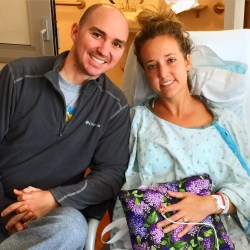
During the live chat, there was some discussion about fiancés and husbands not going to procedures or being by the bedside during the hospitalization. That a put a lot in perspective for me, as my husband has never left my side when I’ve been hospitalized (not even for an hour) and has gone to every colonoscopy.

Photo cred: J. Elizabeth Photography
I’ve never had to ask. Bobby just does that because he wants to. If you want your significant other there, tell them. The disease is isolating enough, the last thing you need is to be lying alone in the middle of the night with your racing thoughts and the beeping machines.
- Be with someone who you can be vulnerable with.
IBD isn’t pretty. There are days where we’re cooped up in the bathroom. There are times we’re in the fetal position for hours. If you feel at ease at your worst with your person, that’s a good sign. Recognize how you feel when you’re at your lowest point and at your best. Pay attention to how they respond when the going gets tough.
- When the red flags are waving feverishly in front of your face, don’t be afraid to walk away.
Listen to your gut. You know deep down if you constantly feel like a second thought or if your partner repeatedly lets you down. If they make you feel guilty, less than, or put off by your patient experience, time to say buh-bye. Trust me, you will count your blessings in the future.
- Take them along to local Crohn’s and Colitis Foundation events.

By attending local events you’ll be able to connect face-to-face with fellow couples and families living your same reality. You’ll discover how much you have in common right away. This also enables your partner to have someone who “gets” what it’s like to be a caretaker. Set up a double date or a time to hang out outside of public events.


 It’s not always the big goals, it’s getting through the day-to-day. Your IBD Health Coach will help you stick to weekly goals through calls, texts, and emails, based on how you like to communicate. Support will be right at your fingertips.
 As a chronic illness patient, myself, even though I try and manage my Crohn’s the same each day, sometimes life and being a mom gets in the way. I tend to put my needs and my care at the bottom of the totem pole. As a parent, I know I’m not alone in that. Having a Health Coach standing by ready to listen, educate and inspire me, is a reminder that I’m not in this alone.


 While attending IBD Social Circle at Digestive Disease Week in San Diego, I listened to a panel with Dr. Neilanjan Nandi, MD, FACP and Dr. Aline Charabaty, MD about the patient and health care practitioner dynamic.
 Switching physicians and entrusting someone new with your well-being is not easy. Trust your gut (for once!) and advocate for care that makes you feel like you have a voice. Think about how you feel leading up to an appointment, while you’re face to face with the physician and the emotions you may experience on that drive home. If anything makes you feel less than or not heard, connect with fellow patients in your area to see who makes up their care team. Do research about IBD specialists within drivable distance and take the steps you need to feel like you have your best ally against this disease.
 Over the next month, I’ll be partnering with IBD Healthline. I am so excited to share my journey using the app and explain how you too can benefit from all its invaluable features.
 I don’t know about you, but the more people I know with IBD, the stronger it makes me feel as I take on the disease.
 and podcasts shared each week on everything from diagnosis to nutrition and self-care tips. The more educated we are about our illness, the better advocates we can be for our care.

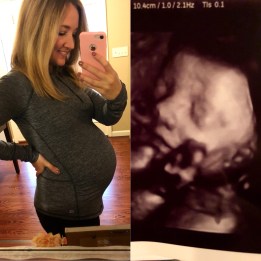
 To the person nervous to open up in a relationship and disclose they have this disease…
 To the person worried about passing this dreadful disease onto their children…

 As a mom of a 2-year-old and an almost 4 month old, I’m in the thick of motherhood right now. While it’s an amazing season of life, it definitely has its challenges. A toddler, a baby, and a chronic illness. Ah, I’m exhausted just reading that myself! While it’s far from easy—I’ve found some ways to help embrace the ups and downs and everything in between.
 No one wants to be hospitalized or deal with pain. Give yourself the best chance for having feel good days and make your disease management a priority. If you feel symptoms presenting and you’re concerned, alert your GI immediately. Be proactive, nip each flare in the bud as best you can.
 Yes, I know. Self care. We hear it all the time. It’s something that’s constantly talked about, that seems unattainable. But try and do something each day for yourself, whether it’s taking a shower, eating a meal sitting down, going for a walk outdoors with your little one and keeping your phone on silent, reading a book before bed, you name it. Try and find the moments in your day when you can unplug and relax. Practice yoga and meditate during nap time instead of doing the dishes or laundry. You owe it to yourself!
 You were given this role and this family because you were meant to have it and you were destined to live this life.


 Find the people who lift you up. Trust in the bonds you create with those who are there for you because they want to be out of the goodness in their heart, not as an obligation. Hold on closely to the relationships that spark joy and don’t extinguish your flame. Lean on those who are willing to give you their hand to lift you up, even when you don’t ask for it.




 studies suggest it may start with a bacterial imbalance in the gut, and several studies have shown that people with IBD were less likely to have been breastfed as infants. Furthermore, a study in Denmark showed that breastfed babies developed certain types of healthy bacteria in their digestive tract, which non-breastfed babies were lacking. A healthy amount of beneficial gut bacteria can promote a healthy immune system which fends off different diseases.
 It wasn’t easy, but I’m so glad I stuck with it. We lasted 16-months until he self-weaned and he has a very healthy immune system so far, despite the cesarean and me being on Humira. Best of all? I didn’t have a postpartum flare, which my doctor attributed to the combination of staying on my medications, following my diet plan and breastfeeding.
 as possible, especially in the first 24 hours, and provide plenty of skin-to-skin. After a c-section, the last thing I wanted to do was constantly get in and out of bed to pick up a newborn. Instead, I just spent my days with my son nestled on my chest so we could both sleep, heal, bond and get my milk flowing.
 Cut yourself some slack. Becoming a mother is stressful, but if you are feeling overwhelmed, talk to someone. Postpartum depression and anxiety are very real and as a mother with chronic illness, you may be more prone to those feelings. Seek out help from your spouse/partner, enlist nearby family/friends for support, and keep in close contact with your doctor to manage your symptoms.

 When you’re in the thick of a flare and when feel good days feel far from ever being a possibility, try and remember how fleeting these moments are.
 today he’s a rumbustious, adorable, little ball of energy. Sure, we age, too—but we also mature mentally when it comes to our illness. What felt like the biggest obstacle and scare of our life, evolves into something that is a part of who we are, an identity that while not ideal, helps to define us.
 But I can promise you, that as life goes on and as the years since that moment of diagnosis get further and further in the rear view mirror, you will find a comfort in this identity.
 lights camera crohn's