
My Cause My Cleats: How Chicago Bear Anthony Miller is Representing IBD

When Chicago Bear standout rookie wide receiver, Anthony Miller laces up his cleats to take on the Los Angeles Rams this Sunday, his cleats will tell a story. A story many may not be aware of. Anthony’s longtime girlfriend, Alexandra Pounders, has battled Crohn’s disease for nearly 10 years. She was diagnosed at age 14. IMG_4488

This Sunday (Dec. 9), Anthony will participate in the NFL’s My Cause My Cleats campaign, as a way to spread awareness for inflammatory bowel disease (IBD) and show support to his girlfriend. Anthony’s cleats will feature the Crohn’s and Colitis Foundation.

“Being able to bring awareness about IBD through football means a lot to me. When I wear these cleats against the Rams, I’m not only going to be representing my girlfriend Alexandra, but also the millions of people across the globe who suffer from this disease,” said Anthony.

This is the third year for the My Cause for Cleats effort. It’s a way for NFL players to take steps to visually show their support for causes near and dear to their hearts. Anthony and Alexandra have been together almost five years. Alexandra says Anthony has been there for her every step of the way, whether it’s attending doctor visits or motivating her to stay strong during setbacks.

“It feels amazing to know there is someone by my side who cares so much for me that they want to spread awareness about this illness. IMG_4487Anthony has seen me fight for so long. It makes me feel like I’m not going through this alone,” said Alexandra.

“We are thrilled to see several NFL players, including Anthony Miller, raise awareness of Crohn’s and colitis through this year’s My Cause My Cleats campaign,” said Michael Osso, President & CEO of the Crohn’s & Colitis Foundation. “More than 3 million Americans live with these diseases, and, like Anthony, even more are touched by them as loved ones of patients. Using their platform as professional athletes to speak out about Crohn’s and colitis not only helps educate the public about the seriousness of these diseases but also underscores how wide-reaching these diseases are and how important it is to have the support of loved ones.”

Alexandra’s advice to the IBD community is to put your personal needs first and try to keep stress to a minimum, while accepting support from others.

“Surround yourself amongst people who may not completely know what it feels like to be in your shoes, but people who are willing to be patient with you and love you on the days that aren’t so great. Focus on being the best possible you that you can be in every aspect…mentally, physically, emotionally and surround yourself amongst people who truly care about you, it’ll be so much easier to overcome the obstacles you face with this disease. Stay positive. Hold on tightly to your faith. And don’t let this disease define you,” said Alexandra.bears

Chicago is my hometown and where the majority of my family lives. As a Bears fan and as a Crohn’s disease patient advocate who was diagnosed in July 2005, seeing professional football players put causes like the Crohn’s and Colitis Foundation in the spotlight means a great deal. Check out the #mycausemycleats hashtag on social media to learn more about the cause.

Taking on Crohn’s to Get My Life Back on Track

This post was sponsored by AbbVie Inc. Personal opinions and thoughts are my own.

Crohn’s and Colitis Awareness Week is December 1-7. If you have Crohn’s disease or ulcerative colitis, get tips from gastroenterologist Dr. Corey Siegel, a Crohn’s disease and ulcerative colitis expert, by visiting the online Expert Advice Tool before your next trip to the doctor’s office.

The gnawing abdominal pain. The frequent trips to the bathroom. The fatigue that hit me like a ton of bricks. It all became my “normal” the first few years following my diagnosis of Crohn’s disease in July 2005. During that time, I did everything I could to put a smile on my face as I reported the news on television stations in Minnesota and Wisconsin. While I loved sharing other peoples’ stories, I never wanted my own struggles to be uncovered while I was in the spotlight.

I am one of approximately 700,000 people in the United States affected by Crohn’s. Once I left the news desk in 2014, I felt it was the perfect time for me to share my struggles and become a vocal advocate. Rather than keep my story in the shadows, now, I share my journey proudly with hopes of helping and inspiring others as an IBD patient advocate and blogger.

Crohn’s and Colitis Awareness Week (December 1-7) is a time to educate others about IBD and empower those who may be struggling with their disease. It’s a time for patients and caregivers to speak up and use their voices to show that IBD doesn’t need to hold you back from experiencing all that life has to offer. It doesn’t need to prevent you from accomplishing your dreams. It doesn’t need to isolate you from enjoying a full quality of life. That being said—it takes effort on your part to listen to your body, recognize the symptoms and manage them accordingly with your health care team.

Crohn’s disease is a chronic inflammatory bowel disease (IBD) characterized by inflammation of the gastrointestinal (GI) tract. It can affect any part of the GI tract, from the mouth to the anus, and is not contagious or caused by food. IBD is a progressive disease, which means it can get worse over time if you are not proactively managing it. It’s also an invisible illness – I look like everybody else, no matter how I’m feeling on the inside. Those with IBD often internalize their struggles and keep their pain to themselves. It’s as if an inner conversation begins with every meal or beverage, moment of stress or excitement and twinge of pain.

In July 2008, almost three years to the day following my initial diagnosis, I found myself dealing with Crohn’s symptoms spiraling out of control. I was the morning anchor for ‘Wake Up Wisconsin.’ Deep down, I knew something wasn’t right. I was headed home to Chicago to celebrate the Fourth of July with family. I ended up being hospitalized over the holiday with an abscess the size of a tennis ball in my small intestine. I watched the fireworks reflect off my hospital room window with my mom. I felt broken and exhausted by yet another setback.

My gastroenterologist entered the room and talked candidly with me about the need to change my treatment plan to minimize the progression of my Crohn’s. While it was a daunting and emotional conversation, it’s a conversation that changed my life as a young woman with Crohn’s. I had my whole future ahead of me. I knew I needed to make changes and get my life back on track.

I’m here to tell you that despite my diagnosis of Crohn’s at age 21, I was still able to accomplish it all. The first decade of my disease, I worked full-time in the television business and spent time at a public affairs firm. I fell in love with an amazing man who sees me for so much more than my disease. We got married in 2016. We have a healthy toddler and we’re expecting a baby in 2019.

Crohn’s has shaped my perspective and shown me the strength I possess within. It’s taught me to slow down and listen to my body and to appreciate the beauty of a ‘feel good’ day. My IBD journey has been one of highs and lows, smiles and tears, and everything in between. I wear my IBD diagnosis as a badge of honor because it’s something that has tested my strength and perseverance, but it hasn’t robbed me from becoming all I want to be.

If you have Crohn’s, it’s important to work with your doctor (sooner rather than later) to create a monitoring and treatment plan focused on long-term success and minimizing disease progression. Prepare for your next doctor’s visit with the help of gastroenterologist Dr. Corey Siegel and the online Expert Advice Tool.

(US-IMMG-180836)

Disclosure: This post was sponsored by AbbVie Inc., a biopharmaceutical company, and should not be construed to constitute medical advice. Personal opinions and thoughts are my own. I am not a medical professional and am not qualified to give medical advice. Please talk with your doctor about your individual medical situation.

Discovering Gratitude While Living with IBD

When you think about life with inflammatory bowel disease, are you able to think beyond the pain and suffering? Are you able to pause and take time to reflect on how your illness has shaped you into who you are today? Are you willing to look at something that continually challenges you, scares you and leaves you drained—and think…you know what, I wouldn’t have my life any other way? _F6B0037

It takes a lot of time and a lot of patience to come to this place of realization. Until recent years, I’m not sure I would have ever been able to say a positive word about what it’s like to live with Crohn’s disease. But now, more than 13 years later with this disease, I feel my vision has gone from black and white and changed to color. I have peripheral vision I never had before. I’m able to see how my past shaped me into who I am today. I’m able to recognize how the pain and hurt has altered my perspective and forced me to take the blinders off. I can see moments where I’ve risen above and shown courage and bravery. Some memories are painful, some make me feel sad, others make me feel proud.

There comes a time in a chronic illness patient journey that you stop thinking “why me” and instead “why not me.” I don’t like placing pity on myself. I don’t prefer to fantasize about the days before I was diagnosed. Instead—I enjoy reflecting on how I’ve evolved through the years, despite the setbacks and the scares. wedding1Chronic illness, while physically, mentally and emotionally taxing, also has the ability to show us the beauty of the world around us and all that we’re capable of. Instead of thinking how my Crohn’s holds me back—I think about how I’ve lived despite its restraints.

As the years go by, and the diagnosis “anniversary celebrations” roll on, I continue to grow and feel a renewed sense of self within my illness and within myself. As you experience procedures, self-injections, surgeries and the unknown, you get desensitized, but you also gain strength. The day-to-day management of an invisible chronic illness is exhausting and can be overwhelming, but there comes a time when you feel a sense of harmony with your body. You know what it’s trying to tell you. You know when you need to listen. You understand when you need to act.

_F6B0340My disease has helped me take on motherhood. It’s made me soak in the feel-good moments, take mental snapshots of the happy days and celebrate the beauty of life. My disease has forced me to press pause when I’m doing too much, it’s reminded me of the importance of self-care and taking time for me. It’s shown me which people are meant to be in my life and which are meant to be in the backstory.

It’s a season of gratitude. A season of thanks. A season of family, friends and celebrations. This year—I’m choosing to celebrate how Crohn’s disease has guided me to the present. Beyond thankful for a husband who’s my rock, a son who is healthy as can be and a daughter on the way in January. My body may not be “healthy” …but, it’s still managed to create miracles.

It hasn’t always been a fun ride, it’s been brutal at times. But it’s my life and I wouldn’t have it any other way. Please do yourself a favor and give yourself time to reflect on how your disease has shaped you into the person you are today. By showing gratitude about living with IBD, it’s one of many moments where you can show your disease who is in the driver seat and continually rise above.

How Hurricane Maria changed the path of my Crohn’s Disease: A Puerto Rican patient’s journey

I recently connected with a fellow IBD patient on Twitter named Jessica Pérez-Cámara. Aside from both of us battling Crohn’s disease and both of us taking Humira, we’re also both journalists. This week—Jessica shares an emotional piece about what it was like to take on inflammatory bowel disease, amidst a natural catastrophe, mid-flare. I’ll let her take it away.

Life with IBD is hard enough. IMG-5512Try having a flare during the worst natural disaster in the history of your country. It happened to me. I survived.

On September 20, 2017, Category 4 Hurricane Maria made landfall in Puerto Rico, causing a humanitarian crisis. Maria left nearly 95 percent of the island without communications, water, electricity and with limited medical access.

Many of the 3.4 million U.S. citizens living on the island had restricted access to resources like food, fuel, among many other essential needs. No communication, no cell phones, no internet. Nothing. I am a journalist who, at the time of the storm, was working as a communications assistant in the local Government. My job was to share news to the public before and after the hurricane. My country ended up getting hit with two hurricanes, and my beloved grandmother passed away a few weeks earlier. She died the day before Hurricane Irma. It was all such a whirlwind, as the stress mounted, so did my flare. IMG-5510

I was diagnosed with Crohn’s Disease in August 2015, even though I’ve lived with IBD for more than three years, I’m still learning to navigate my illness. Upon my diagnosis, I was put on Asacol and Budesonide. I had been fearful of going on a biologic and did all I could to avoid them. But, deep down I knew the moment would one day come.

Nonstop work after Hurricane Maria

I worked nonstop for months on the initial hurricane recovery efforts. As I took on this responsibility, I was flaring badly. Many hospitals were not working full capacity, running on generators and with shortages of basic medications like IV bags.

I was feeling terrible, exhausted, the fatigue and diarrhea were worsening, but I kept working through the pain. I was putting my duty for my country before my health. I was working long hours and when I got home, it did not get any easier, because life was not the same. Basic things like food, water, fuel for the generators, gas for the cars and even having a good meal or taking a shower were more difficult. My body ached from head to toe. The food was scarce and what was available was mostly junk food, fried food and canned food.

IMG-5513One morning I decided to stop in my GI’s office. He had lost the A/C unit and the office was flooded during the storm. He ordered some labs, an emergency colonoscopy and a few days of rest. I was anxious, exhausted, scared. After the colonoscopy, I was prescribed prednisone for a month and then started Humira.

Humira without electricity at home

I began using Humira in November 2017. My initial four loading dose shots were at my parent’s house, because they had two power generators and could have the refrigerator running 24/7. They kept my Humira for the rest of the blackout for us, which lasted 114 days.

It’s now a year later. I am back to normalcy – to my new normal- of giving myself painful shots. I’m in the process of receiving the Citrate-free (pain free) Humira and I can hardly wait! Unfortunately, I deal with some side effects from the medication (general body aches and joint pain, fatigue and weakness). That being said, the minor side effects I deal with are manageable and worth it to keep my disease under control.

An important conversation about chronic illness

As a Crohn’s patient and as a Puerto Rican, IMG-5514I hope my experience sheds light on what it’s like for those in the chronic illness community as they endure the repercussions of natural disasters. It’s a critical conversation that needs to happen—preparedness for the IBD community in the face of weather disasters. How can employers, government and society step up to the plate?

One year ago, I began walking the path of the Hurricane to the path of remission. I look forward with a sense of hope for the future both as a person and as a patient.


Operation “Good Health” with IBD through finding love, raising kids and building your dream

“Crohn’s isn’t what I’d call a “sexy disease” – it’s hard to invite the love of your life to share a bathroom with you. You are scared, embarrassed, worried and everything in between. However, my bathroom habits are out of my control. And, even though I’d give my arm for my incredible man, I don’t want him to know what goes on in the bathroom. I want to be sexy, a woman of mystery … and IBD sometimes isn’t… well, hot.”

If that didn’t get your attention, then I don’t know what will. Katy Love is an IBD warrior who recently tied the knot October 21 with the love of her life. Katy+Vince-12Sickness and health truly take on a whole different meaning when you live with a chronic illness. Katy witnessed her husband Vince’s compassion and character while they were dating.

She had a wound vac that was loud, smelled and made it impossible to shower. Vince loved her despite her health complications and Katy said her Crohn’s brought them closer throughout their courtship.

“I’m extremely blessed to have a supportive partner. As anyone with IBD knows, you have great days and horrible days, sometimes within the same week. I truly believe IBD has made me a better, more understanding partner. I value each day, especially days without pain. And I value Vince and his support. From day one, he’s wanted to be involved in my Crohn’s journey. Going to doctor appointments, infusions, participating in fundraisers and holding my hair when I get sick,” said Katy.

While Katy doesn’t allow her IBD to define her, it’s a huge part of her day-to-day existence. It impacts her as a mother, a business owner, a partner, a friend…and especially as a wife. Diagnosed with Crohn’s at age 17, more than 21 years ago, she’s endured 40-plus colonoscopies, multiple bowel surgeries and removal of more than 75 percent of her bowel.

Preparing for the big day

Leading up to her wedding day she instated Katy_Vince_Family_137“Operation: Good Health.” She made it a priority to get a minimum of eight hours of sleep a night, as lack of rest tends to be a trigger for her. She was on a mission to hydrate, hydrate and hydrate some more. To set herself up for success and limit any surprise flares, she planned out her meals the entire wedding weekend. For example, she does well with bland foods, like noodles, rice, chicken and (big one) avoiding alcohol. And finally, she delegated responsibilities (aka stress) to friends and family. Katy admits she’s pretty Type A and would much rather do things herself than hand them off. However, she wanted to enjoy her wedding and because of her proactive planning, she was able to do just that!

Katy is a shining example of living life to the fullest, despite her disease. She was blessed with three, beautiful, healthy children. Fall 2017 Family 1Reagan, Grayson and Carter may not understand why their mommy is in bed or why she needs to pull over on the side of the road when she gets sick, but Katy’s Crohn’s has taught her children a great deal of empathy at a young age. A few weeks ago, she was in debilitating pain and her nine-year-old offered to make dinner for her brothers. She poured them each a bowl of cereal and that was everything.

Along with motherhood, Katy has managed to have a successful career in public relations, including serving as Vice President of Global Communications for Crocs, Inc. Recently, she launched her own PR firm, Comm Oddities Inc. that specializes in food, fashion and footwear. There is nothing this woman can’t do.

Advice after living with Crohn’s for 21 years

As far as advice for the rest of us? Boulder_Headshots_043

“Be kind to yourself. I’m very guilty of getting frustrated with myself. I want to do it all, all the time. Give 100 percent to my job, my family, my friends … and some days just getting out of bed is challenging.

One of my favorite quotes about living with a chronic illness (that’s most of the time invisible) is “Those with chronic illnesses aren’t faking being sick, they are faking being well.”  That really hits home. You don’t want to burden others, so you simply say, “I’m fine” and smile. But, asking for help isn’t a weakness. Those close to you want to help, they simply don’t know how.”


Paid IBD Research Opportunities: Check it Out

Calling all inflammatory bowel disease (IBD) patients and caregivers in the New York and Philadelphia areas! There’s a great opportunity to participate in research and receive $175 for taking part in a 60-minute in-person interview.

The main mission of the program is to improve the injection experience for gastrointestinal patients. syringe-1696020_1280Currently, many patients and caregivers struggle to inject medications correctly, which means patients don’t always receive their full dose of medication. This can lead to symptoms worsening and a greater threat of a flare up.

The study will assess an updated method of injection, so patients and caregivers have more of a sure-fire way to ensure medication is being received correctly and completely at the proper dosage. The interview responses will help inform the device development process. All responses and information will be confidential and anonymous.

Requirements to participate:

  • Must be diagnosed with Crohn’s disease or ulcerative colitis
  • Use a vial/syringe or TPN for medication
  • Ages 12-17 will be accounted as pediatric patients (will need to attend with a parent), anyone over 18 will be considered an adult.
  • Caregivers must be over age 18.

Click the following links to sign up:

New York

November 26-29

5th Avenue, 10th floor

Focus Room 693

New York, NY     1002

Deadline to register: Sunday, November 25

Philadelphia

December 2-7

M3 USA

1650 Market Street

Suite 3030

Philadelphia, PA     19103

Deadline to register: Saturday, December 1

Your feedback and expertise can help make it easier and safer for patients to inject and receive maintenance medication. As a Crohn’s patient of more than 13 more years, who has done self-injections for more than a decade, I can attest how critical this information is to the patient journey and to the future of medicine. By sharing your experience, you can improve the future of care for not only yourself, but many others in the IBD community.

Not able to make an in-person interview? boy-1986107_1920There’s also an online study—available to anyone in the United States—going on right now for those living with an immune system or digestive system condition. You can earn $15 for a 15-minute, online survey. Click here to get participate. The deadline is Tuesday, November 20.

Once you register for the studies, researchers will send an email invitation within 1-2 working days.


Life Insurance and IBD: Breaking down walls and understanding coverage

Have a pre-existing condition? Do you have medical insurance? What about life insurance? Today—a look into the process of getting life insurance and the importance of getting it, as it relates to inflammatory bowel disease.

Mike Raines Mike headshothas worked in the life insurance special risk marketplace for more than 30 years. He specializes in helping those with pre-existing conditions, such as Crohn’s disease and ulcerative colitis. While he’s not able to represent everyone, he works closely with companies who underwrite conditions such as IBD the most favorably.

First off, you may be reading this wondering if you need life insurance protection. Mike tells me those with pre-existing conditions should be aware that life insurance should be purchased at the earliest age possible, since future mortality costs are typically higher on those with pre-existing medical conditions. That cost will only increase with age.

“Anyone, (not just those with pre-existing conditions or Crohn’s), who provides financial needs for their family or business probably has a need for life insurance protection. Life insurance can provide a large sum of cash within days to help provide time to for those who need it to adjust. Some of the planning needs for life insurance can include personal need such as: replacement of income, mortgage protection, pay for future college expenses, pay for outstanding debts including funeral expenses, spousal needs, future retirement account losses,” explained Mike.

calculator-385506_1920Insurance can be confusing—no matter what type you’re dealing with. Some of the most common misconceptions with life insurance protection are that it’s too expensive, too complicated and that conditions such as IBD are not insurable. This is simply not the case.
“The number one secret to finding the lowest rates on life insurance if you have Crohn’s disease or any pre-existing condition is to work with an independent agent/agency who has experience in the special risk arena. An independent agent will typically offer many carriers to choose from. Also, an independent agent/agency who specializes in pre-existing medical conditions will also offer those carriers that underwrite not only preferred risks, but those risks that may be higher risk such as Crohn’s disease, diabetes, etc. Experience and knowledge matters. Your agent is your best advocate. Put him to work to find you the protection you need,” said Mike.

At Special Risk Term, each individual case is treated as such. Mike and his team individually underwrite each applicant, based on personal medical history. For example, let’s say one person has Crohn’s disease, but also smokes, is overweight and doesn’t follow doctor’s instructions. While another with Crohn’s disease is very compliant, exercises every day, does not use tobacco and meets the height/weight chart. The person who is “doctor compliant,” will most likely be given a much better rate class for life insurance.

“Throughout my career, I’ve found it was easy to find coverage for someone in “perfect” health. I found it was much harder to find, negotiate and bind coverage for those with pre-existing medical conditions. I also found that those individuals who we found protection for were so much more grateful and happy that someone would fight to find them coverage. Many had been declined multiple times or had almost given up on finding any coverage, so for them to be able to protect their families was very gratifying. Obviously, sometimes not everyone is insurable or insurable at an affordable rate, but I like the challenge of helping find coverage for those who don’t know where to turn.”

Click here to learn more about IBD as it relates to life insurance protection.


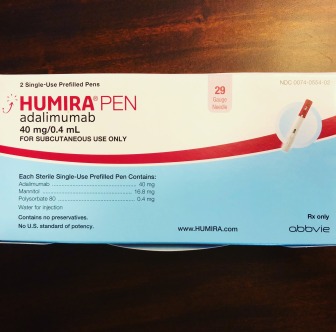
Celebrating a major patient victory: Citrate-free Humira

I still remember the first time I felt the pain. Sitting in my GI’s office with the nurse and my mom. Fresh out of the hospital after having an abscess the size of a tennis ball in my small intestine. Knowing I had to inject myself with a painful biologic drug, four times in a row, for the loading dose. The feeling when the medication entered my body was like nothing I had ever felt before. It was an unthinkable amount of pain. It was overwhelming knowing that for the rest of my life, I would endure this same pain, multiple times a month…with no end in sight.

Fast forward more than ten years later. A total of 122 months, hundreds of injections. My reality as a Crohn’s patient just changed. IMG_2966It changed in a way that I never knew was possible. I have so many flashbacks of my journey with Humira. The tears as I felt sickly in my 20s sitting alone in my apartment and wondering why me. The dread, anxiety and anticipation every other Monday and the strength I had to muster up within myself to once again receive my medication. Holding the injection in my hand, getting in the zone and focusing my thoughts on brave family members and friends as I held down the plum colored button and felt the burn. The sad look on my son’s face as he looked in my eyes and witnessed his mama hurting.


Now, all this is a distant memory. Thanks to the Citrate-free formula developed by AbbVie and approved for adults and pediatric patients in the United States, this reality is over. A matter of days ago, I experienced my first pain free Humira injection. I had heard all the hype and excitement around it, but it was so difficult to fathom such a change in my patient experience. Here’s a video of me experiencing my first Citrate-free injection:

I’m here to tell you it’s completely painless. Less pain than a blood draw. Less than a flu shot. You feel nothing. The process, effectiveness and outcome are the same, but you don’t feel anything. It’s emotional and overwhelming in the best way. I cried for a good half hour after my first one, happy tears. Tears of joy from a woman who now knows her children will never see their mom struggle in pain. Tears of joy from someone whose eternally grateful for a medication that keeps a painful and debilitating chronic illness at bay. Tears of joy knowing that I will never have to feel that awful pain again. A pain that’s too much to put into words, that was part of my life for so long.

The sun is shining a bit brighter today. I feel a load has been lifted off my shoulders that I didn’t even realize had been there for more than 10 years. When I heard about the Citrate-free formula being approved and available in the States, I was excited—but, didn’t realize the true extent of what a difference it would make in my life. joy-2483926_1920

If you’re on Humira and living in the States, make sure you talk with your GI and specialty pharmacy to ensure your script is changed to “Citrate-free”. The extra leg work will be so worth it. It brings me so much happiness to know that young children on Humira will never have to feel the pain. It gives me peace of mind as a chronic illness patient to know that developments like this in treatment are possible and happening right now.

My call of action to doctors, specialists, healthcare teams and specialty pharmacies—please communicate this with patients. I’ve heard from countless people around the United States who heard about this for the first time from me. That’s not the way it should be. My GI gave me a heads up three months ago.

Fellow patient advocates, please feel empowered to share what this means to you and reach out to your individual communities and support networks, so people can get the ball rolling and experience this for themselves. Our voices are strong, and word of mouth is powerful.

Humira was approved for Crohn’s in 2006. I started taking the injections in 2008. Now, it’s 2018 and patients in the United States have access to the Citrate-free (pain free) formula. What’s next? Now, we can truly continue to dream.

Taking on IBD, infertility and being a triplet mom: How my college roommate does it all

When it comes to life, I often say I don’t believe in happenstance. Meaning, I believe everything happens for a reason. This rings true with one of my closest friendships. Stephanie and I were random roommates freshman year of college and had an instant connection. photo by J Elizabeth Photography www.jelizabethphotos.comWe ended up living together throughout our entire college experience, stood up in each other’s weddings and have managed to stay very close, despite thousands of miles between us since graduation.

On college graduation day in May 2005, I aspired to be a TV journalist. She had dreams of being a Physician Assistant. Both of us accomplished those goals—what we didn’t see coming was that we would both be diagnosed with inflammatory bowel disease in the years ahead (the first and only people in both our families)—me with Crohn’s in July 2005, her with ulcerative colitis in February 2009. She was working as a Physician Assistant in Family Practice when her symptoms developed. She knew the pain and bathroom habits were not normal.

Stephanie recalls, “Once I admitted to myself these symptoms weren’t going to go away, I reached out to the doctor that I was working for at the time. He contacted the GI Doc we referred all of our IBD patients to, and he got the ball rolling toward a diagnosis pretty fast! When the GI walked in the room after my colonoscopy with a solemn look on his face and just shook his head, I was devastated. natandstephI teared up. I was so fearful of the unknown, as far as what this is going to mean for me for the rest of my life.  There is such a variation in the way patients with IBD can experience the disease… my mind immediately went to worst case scenario for myself.”

Stephanie’s journey with IBD and motherhood is one that is sure to inspire and provide hope to many. Along with juggling chronic illness, she also dealt with another devastating hurdle, infertility. Luckily, once she became pregnant through IVF, her ulcerative colitis symptoms were silenced.

“It was never far from my mind that while I was not pregnant, my uc was waiting quietly, like a ticking time bomb ready to go off, and that would then halt all the time, money and effort we were putting into getting pregnant. But, thankfully my uc behaved itself. We got pregnant on our first round of IVF with triplets (identical girls and a boy) who are happy, healthy and my entire world!”

Today, Stephanie and her husband have beautiful triplets who just started kindergarten. To take on IBD is one thing—add triplets to the mix… amazing! IMG_2885

“I’ve had IBD since day one of being a mom, so I don’t know any different! Just like when people ask me “What’s it like to have triplets?” my response is usually “It’s all I know, I didn’t have a singleton before my triplets, so this is the way I know how to be a mom!” For obvious reasons having IBD sometimes makes our mom responsibilities a little bit more challenging, but you have to figure it out and take the good days with the bad, because your kids need you!”

Stephanie says since having her kids, she’s noticed she’s much more willing to “wave the white flag” and reach out to her GI sooner when things start to go south. stephanieShe used to ride out the symptoms much longer before admitting there was a change that needed to be addressed, mostly because she was fearful of having to go back on steroids. I can attest to being the same way. Prior to becoming a mom, I waited until going to the emergency room was the only option. Now, I am more mindful of listening to my body and nipping flares in the bud, because my family needs me.

“Having a chronic disease definitely gives you a new perspective. It makes you appreciate the good days so much more! And when the not so good days creep up on you, having a good support system to help you physically and emotionally is crucial! Thank those in your life who lift you up and let them know you appreciate them! When you overcome each and every not so good day, nat and steph2it makes you feel just a little bit stronger and gives you the confidence that you can handle the curveballs life is bound to throw at you over and over!”

Beyond grateful to call this fellow IBD warrior mama one of my dearest friends. I’m sure after reading about her journey, you can see why.


A letter to my 21-year-old, newly diagnosed self: From 13 years in the future

This past week I turned 35. Birthdays for me are always a time of reflection on what was and excitement for what the future holds. Each year is so transformative, especially when it comes to how you handle and deal with chronic illness. natalie35bdayWhen I was diagnosed with Crohn’s disease at age 21, a month before my 22nd birthday—life had so many unknowns. I bottled up a lot of fears about how my life story would unfold and if I would be able to accomplish the hopes and dreams I had thought were a given.

This week, a letter to my 21-year-old, newly diagnosed self—from my current 35-year-old self. With time and experience, comes perspective. Perspective that I wish I had back when my world came crashing down upon me after learning I would forever have a disease for which there is no cure.

For those embarking on this journey—whether you’re the patient or the parent—you may feel like you are drowning in worry of what is to come with your lives. I hope my words will bring you comfort and the knowingness that you have a lot of life to live, and you will do just that.

Dear Natalie (age 21),

I can still see you looking at yourself in the mirror—feeling like a skeleton of who you used to be. Cheeks sunken in, eyes tired, arms covered with bright purple bruises from all the IV sticks, pokes and prods. You’re sitting up in bed, popping big bubbles with your chewing gum, trying to deal with the insomnia and ravenous appetite that comes along with taking 60 mg of prednisone. You’re thinking about how easy and simplistic life was a matter of weeks ago, graduating from college—hoping to land your first television gig as a news reporter.

Everything feels like it’s in shambles. You are perplexed about why you were dealt this hand of cards and why the rug was completely pulled out from under you, when just a matter of months ago you had the world by the tail.

Here’s what I want you to know. Nothing comes before your health. No job, no relationship, no friendship. There are going to be difficult times ahead as you figure out which people in your life genuinely want to be by your side, and which are only around for the fun, healthy times. feb13blogmainphotoIt’s a path that will bring you heartache. Significant others will let you down—you’ll be disheartened when they fail to show up when you need them most…but, then it will happen. You will meet the person who was meant to fight this fight beside you. You’ll know. You’ll see how that person loves you unconditionally and even more so, because of your illness. They will see you as so much more—see yourself the way they see you. Not some sick person. A person who has a sickness that is part of them, but far from all of them.

Professionally—you may need to take a different path that better suits your needs. natalienews2Don’t allow this illness to make you think you aren’t capable—because you are. You will surprise yourself, if you continue to be positive and find alternative ways to make your dreams become your reality. I know you’re sitting there with your huge spreadsheet of 200 U.S. cities, wondering which TV station you’ll be able to work at…and if your journalism career will ever happen. Looking back—I’m so proud of you for continuing that job search amidst your very first flare. Looking for jobs across the country, as you swallowed 22 pills a day, grappled with a chronic illness diagnosis and dealt with all the side effects and pain that is Crohn’s. Work ethic and attitude will take you far with this disease. IMG_4248You will shine under those bright studio lights.

Stop with the timelines and deadlines in your mind. You don’t need to be married and have kids by age 30. I know you think you want that, but trust in God’s plan for you and know that your future will fall into place the way it is meant to. Don’t rush yourself. Don’t feel less than just because all your friends seem to be checking off those boxes. Your time will come.

When you attend doctor appointments and when you are hospitalized be vocal. Be your own best advocate. Don’t be intimidated by the people in white coats. You know your body better than anybody else. It’s ok to cry. It’s ok to be angry. It’s ok to lash out. Have patience with yourself as you navigate your new normal and trust that the temporary hardships and hurt are just that, scary. The first of anything can be scary. FullSizeRenderThat first CT scan, that first colonoscopy, that first surgery, that first injection…it’s a lot to deal with. You’ll shake like a leaf and then as time goes on—you won’t bat an eye. You will find a strength within yourself that you never knew was there. You’ll be a seasoned warrior in no time.
What seems so foreign to you now, will soon be something you understand and can decipher immediately. Those symptoms—the pain, it’s all new now. In the future, you’ll have a good idea of what’s happening. What triggered it. How to help yourself. You won’t be as alarmed. You’ll know exactly what you need to do and when a hospital visit is a must.

I want you to know that everything is going to be alright. It’s going to be more than alright. You will thrive. You’ll beat the odds. You’ll land multiple TV gigs. You’ll fall in love. You’ll meet the one. You’ll be a mommy. IMG_6401You’ll do all these things. All with your sidekick—your enemy, but also your ally, Crohn’s. The one thing that really sets you apart. In the future you won’t keep your disease a secret, rather it will come up in conversations almost immediately, with a sense of confidence. A badge of honor. Yes, I have Crohn’s. Yes, it’s not ideal. But, yes…it’s made me sort of a bad ass. I’ve been through a lot. I haven’t backed down. And there’s so much life left to live.

You are not broken. You are not less than. This disease will take you on a journey you never imagined. Hold on tight, hang in there through all the scares and celebrate all the wonderful feel good days when your quality of life feels untouchable. And smile. Smile on the good days, smile through the bad days. Trust me. You got this. _F6B6137

Love yourself—everything that makes you, you—

Natalie, age 35

Feature photo credit: Coffee Geek