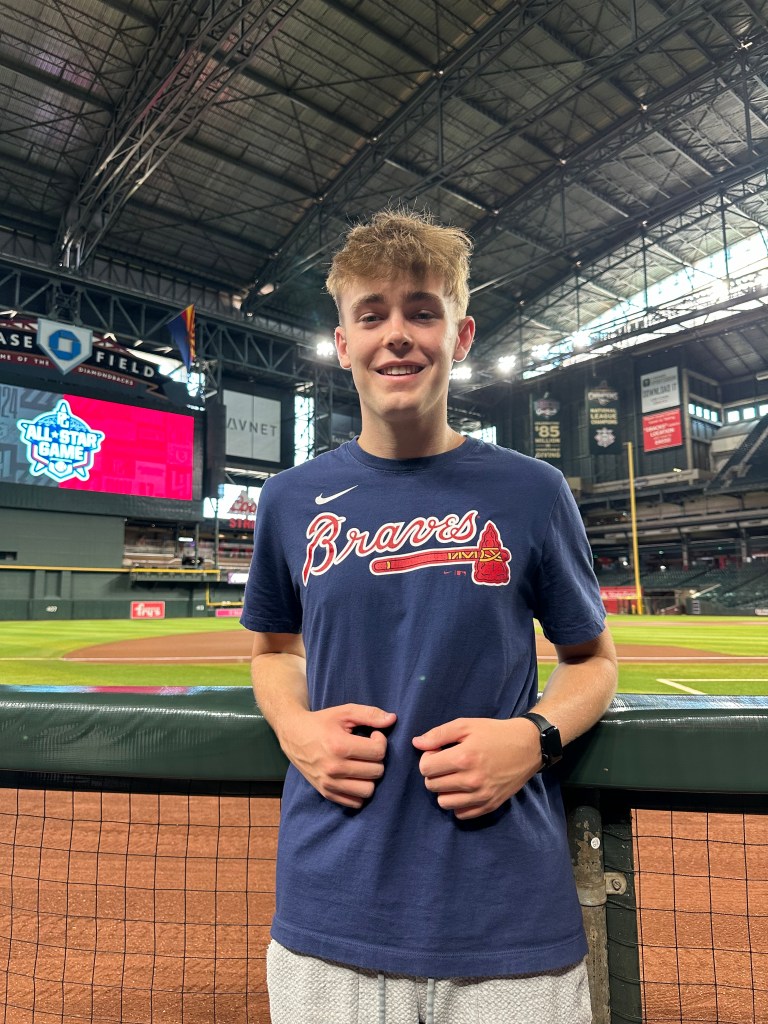
When most kids were running around their middle schools full of energy and excitement, Taylor Gautney was quietly fighting an invisible battle. In sixth grade, while his classmates joined extracurriculars and laughed through lunch breaks, Taylor was barely making it through the day. Many afternoons were spent passed out on the couch after going the entire day without eating. One day, after skipping lunch again, he collapsed on his way back to class. That moment changed everything.
At first, doctors suspected celiac disease. He was placed on a gluten-free diet after an initial endoscopy, but nothing improved. For years, the mystery lingered—until a more thorough examination revealed the real culprit: Crohn’s disease. A new diagnosis, a new treatment—Humira—and a new outlook on life began to take shape.
Now in remission and attending Arizona State University (ASU), Taylor has transformed his story from one of struggles to one of strength. But it wasn’t always easy. This week on Lights, Camera, Crohn’s a firsthand look at what it was like to be diagnosed with IBD at such a young age and how his first year of college went living across the country from his family.
“Just Keep Fighting”
Looking back, Taylor wishes he could tell his younger self one thing: “Just keep fighting and enjoying the positives in life.” Being diagnosed with a chronic illness at age 11 felt like a devastating detour. He admits that it changed the way he viewed the world and himself. “I started to think of every aspect of life as negative,” he recalls. But over time, Taylor learned to embrace small joys, and most importantly, to appreciate the unwavering support of his family.
Taylor’s mom, Anna, says, “It’s crucial to advocate for your child and speak up for them if medications are not working. It is also important to showcase to your child that you are in this with them, help them find a community, such as the Crohn’s and Colitis Foundation. This way, they can meet people who have what they have and formulate a sense of belonging.”
Holding On Through the Hard Days
Taylor wants young people diagnosed with IBD to know that while the patient experience is incredibly challenging—often filled with procedures and surgery, flare days, and quiet battles with your own body, it doesn’t define who you are. “People can’t see the diagnosis from the outside, they see your personality and exterior self,” he says. “Just be yourself, let people come to you and support you, especially during a rough time like an IBD diagnosis.”
The Power of Family
Taylor credits his parents for being the steady foundation beneath his feet throughout the rollercoaster of diagnoses and treatments. “My mom has been my rock,” he says. She’s been by his side at almost every appointment and has researched tirelessly to understand Crohn’s. Taylor’s dad always makes time to show Taylor the world with family trips and unshakable support. “They have given everything to me and made my life so much easier after the diagnosis.”
Life at ASU with IBD
Taylor’s transition to college life came with its own set of hurdles, including logistical nightmares like getting his medication delivered to campus. But he’s found his rhythm. “It’s definitely not as hard as I thought it would be,” he says. One surprising blessing? His roommate. “He also had a medical condition that required shots, pills, and daily maintenance,” Taylor says. Their shared experiences helped them form an instant bond, even leading to grocery trips for IBD-friendly dorm snacks.
Taylor’s professors and friends have also shown deep compassion. He remembers an English professor who read about his condition in a personal essay and went out of her way to learn more about Crohn’s. “She made me feel really special and seen,” he says. His friends check in on him, make sure he’s got his injections, and understand when he needs to sit out from social events. “I thank my friends at ASU for their understanding and empathy.”
A Voice for the Voiceless
Studying sports journalism, Taylor dreams of becoming a play-by-play broadcaster for Major League Baseball—ideally for the Atlanta Braves. But his passion extends beyond sports. He wants to use his voice to make an impact and tell meaningful stories. One of the most pivotal moments in his life came when he was asked to be the Pediatric Honored Hero for the Crohn’s & Colitis Foundation’s Birmingham walk. “That one event gave me confidence to speak in public and really sparked my love for communication,” he says.
Now connected with the Arizona-New Mexico chapter of the Foundation, Taylor is committed to giving back. His mission? To reach kids and teens who are newly diagnosed and remind them they are not alone.
Final thoughts
Taylor and I connected after he was doing research for a college project and reached out to interview me about my patient experience and advocacy work. During our initial Zoom interview, I was so blown away by his positive attitude and how he takes on life with IBD. I asked him during the call if I could have the honor of sharing his story. While there are male patient advocates—we need more who are willing to share their story.
Taylor is wise beyond his years, so articulate, genuine, and kind. The sky is truly the limit when it comes to his future. If anything, living with Crohn’s disease since age 11 has helped show him all he’s capable of despite his disease.
You can connect with Taylor by following him on Instagram: @t.gautney or by emailing him: tgautney@asu.edu.
Millions of people worldwide live with IBD. For teenagers with Crohn’s disease or ulcerative colitis, the challenges are multi-faceted—not only must they manage their health, but they also face the pressures of academic life, dealing with physical and emotional challenges their peers can’t relate to, and the daunting costs of higher education. Thankfully, several scholarship programs exist to support students dealing with IBD, offering financial assistance, and fostering a sense of community and empowerment.
This week on Lights, Camera, Crohn’s a look at what scholarships are available and tips for applying. This story idea was inspired by a caregiver who sent me a direct message on Instagram asking if her teenage daughter could be awarded a scholarship for going above and beyond scholastically despite having IBD. I wasn’t aware of what is available—and in working on this article I did my research as though I was a teen/caregiver looking up scholarships geared towards those with IBD.
Why IBD Scholarships Matter
Teens with IBD often navigate difficult symptoms, frequent medical appointments, and hospitalizations. Despite these challenges, many young people with IBD excel academically, participate in extracurricular activities, and remain determined to pursue higher education. Scholarships tailored to their needs can ease the financial burden of college tuition and provide a sense of validation for their hard work and resilience.
In addition to financial relief, these scholarships can help build a sense of camaraderie among students with similar experiences. IBD scholarships are a powerful way for these teens to connect, share their stories, and feel supported and empowered in their journey toward college and beyond.
Notable Scholarships for Teens with IBD
Abbvie Immunology Scholarship: The AbbVie Immunology Scholarship aims to reduce the financial burden for students impacted by inflammatory diseases. It is awarded to 45 students. Recipients pursuing an associate degree will receive a $5,000 scholarship. Those pursuing a bachelor’s or master’s degree/PhD will receive a $15,000 scholarship.
The Salix Gastrointestinal Health Scholarship Award: Ten scholarships to 10 outstanding students living with gastrointestinal (GI) diseases and disorders who are pursuing their higher education goals. The 2025-2026 application period opened February 10, 2025, and the end date to apply is May 5, 2025.
Patient Advocate Foundation – Scholarship” In 2000, PAF established the Scholarship for Survivors program to honor these individuals by offering educational scholarships to students who have suffered (or are suffering) from cancer or a chronic illness. The deadline for submissions is March 7, 2025.
180 Medical Scholarship Program: The 180 Medical Scholarship Program is open to full-time college students living with specific medical conditions, including spinal cord injuries, spina bifida, transverse myelitis, neurogenic bladder, or an ostomy (ileostomy, colostomy, and/or urostomy). They offer seven $1,000 college scholarships annually to seven recipients. Accepting applications through June 1, 2025. Recipients are announced in August.
AAHD Frederick J. Krause Scholarship on Health and Disability: Awarded annually to deserving students with a disability who are pursuing undergraduate/graduate studies in an accredited university and who are pursuing studies related to health and disability. Scholarships are generally $1,000.
Buckfire & Buckfire, P.C. Disability Scholarship Program: The Disability Scholarship was established in 2014 as part of the law firm’s commitment to helping students with disabilities or injuries who need financial assistance for educational purposes. The scholarship awards $1,000 to one student. The deadline to apply is October 1, 2025.
Defining the Disability Scholarship: The attorneys at the Berkowitz Hanna Malpractice and Injury Lawyers offer a $1,000 scholarship to help a student overcome a disability. Students define what disability means to them and explain how disability has been part of their life. Applications are not being accepted right now but stay tuned for 2025.
Lawrence Madeiros Scholarship: The Larence Madeiros Scholarship Fund was formed to provide awareness of chronic disorders to the public and to stimulate, foster, and encourage interest, awareness, and activism at the state and national level with reference to the fight against chronic disorders. The scholarship is awarded to high school seniors living with a chronic disorder and continuing their education at a college or university. The deadline for applying is May 1, 2025.
Overcoming Disability Scholarship: The Law Offices of Coats & Todd Overcoming Disability Scholarship awards $2,500 scholarships twice a year to college students who are managing a disability while attending school. To qualify, students must have a physical or psychological disability that affects their ability to work. The deadline for applying is March 26, 2025. Their team can be reached at: scholarships@coatsandtoddlaw.com
IBD Connects Scholarship Program: To support the educational aspirations of students impacted by IBD, IBD Connect awards two annual scholarships, each valued at $1,000, to eligible applicants enrolled in a U.S. college, university, or trade/vocational school for the upcoming academic year. The application program opens March 1, 2025, and ends May 31, 2025. For any questions regarding the Scholarship Program, email Lisa Fournier: lisafournier@ibdconnectinc.org.
It’s important to note there may be other IBD-related scholarships available, this list reflects what I discovered upon researching this article.
Additional Scholarship Resources
Beyond disease-specific scholarships, many general scholarships and grants are available to students with disabilities or health conditions. Websites like Scholarships.com, Niche, and Unigo allow users to search for scholarships based on specific needs, including chronic illness or disabilities.
Additionally, some universities even offer their own scholarships for students with disabilities, including those affected by IBD. It’s always a good idea to contact the admissions or financial aid office of the school you’re interested in to inquire about any opportunities.
Tips for Applying for IBD Scholarships
Start Early: Many scholarships have early deadlines, so it’s important to start the application process well in advance of the due dates.
Tell Your Story: Your personal experience with IBD is what sets you apart. Be honest and heartfelt in your essays, sharing how IBD has shaped you as a person and student.
Gather Documents: Be prepared to provide documentation of your diagnosis, along with transcripts and letters of recommendation.
Stay Organized: Keep track of all deadlines, required documents, and any special instructions for each scholarship.
Final thoughts
For teens living with IBD, pursuing a college education can be a difficult but achievable goal. Scholarships specifically designed for students with IBD can alleviate financial stress, validate personal resilience, and provide a network of support. I was “lucky” in the respect that I was not diagnosed with Crohn’s disease until two months after college graduation, so I did not have to navigate these challenges while furthering my education and moving away from home. Along with scholarships, it’s important for caregivers and students with IBD to communicate the need for accommodations on the college campus—this can range from having a bathroom in or near your dorm room to having extra time to complete assignments. Click here to read another Lights, Camera, Crohn’s article that digs deeper into this topic.
As more awareness is raised about the challenges of IBD, opportunities for scholarships and grants continue to grow, ensuring that students with IBD can thrive academically without being held back by their condition.
When you live with chronic illness, you experience a wide range of emotions and personal experiences that shape you. Life can feel like an uncertain rollercoaster ride, you never know when the next twist or turn is going to happen. This week on Lights, Camera, Crohn’s, 21-year-old Parsa Iranmahboub, candidly shares the mental health burden that IBD brings upon a patient. Diagnosed with Crohn’s when he was only eight years old, Parsa shares the perspective of what it’s like to be a pediatric patient who has grown into adulthood. He’s currently a student at UCLA and the Education Chair for the Crohn’s and Colitis Foundation’s National Council of College Students.
Parsa explains the psychosocial component of life with Crohn’s disease and ulcerative colitis by breaking it down to anxiety, embarrassment, guilt, and loneliness. He recently spoke about this at the Crohn’s and Colitis Congress as well as on IBD Patient Insider and his powerful words resonated with me and I know they will with you, too. Here’s Parsa’s breakdown of the IBD patient experience:
Anxiety: Being a bathroom disease, there is often the anxiety of whether a patient has easy accessibility to a restroom when they are out. But there can also be anxiety related to a patient’s diet. When I was younger, I was placed on a low sodium diet due to one of my medications. If I wanted to eat out with family or friends, there would be this anxiety of whether I could even eat anything from the restaurant. There’s also the anxiety that stems from extra-intestinal manifestations. I have a history of developing fistulas. And during my sophomore year of college, my labs were not looking too good, I was flaring a little bit, and I began to worry if this meant I would develop another fistula. I began to wonder how I would deal with a fistula as a college student. How would another flare up affect my grades and my ability to get my work done? I lived in a communal style dorm, so how would a sitz bath even work? Essentially, with anxiety there can be this fear of the disease taking over my life and how can I constantly accommodate it.
Embarrassment: Embarrassment can arise in numerous forms. For one, there’s the poo taboo. But there can also be embarrassment from when you are flaring. From when you are losing weight, when you no longer look healthy, when you now look “sick.” There are the side effects from medications. From when you begin to gain weight, develop acne, and now have that dreaded moon face. Let’s not forget the impact of extra-intestinal manifestations. In 6th grade, I had surgery for a perianal fistula. After the surgery, I had to wear tighty whities with a maxi pad to help absorb the pus. It would be an understatement to describe how much I began to despise physical education. Not because I had to exercise and run around. No, I was always too active of a kid to hate PE. But because we had to change into our uniforms during the beginning of class. And I was embarrassed to be in the locker room. I was embarrassed that everyone else would look cool with their boxers, but here I was with my tighty whities and a maxi pad. And it might sound ridiculous, almost like a scene taken from the “Diary of the Wimpy Kid”, but to my sixth-grade self, looking cool and being like everyone else mattered.
Guilt: There is often the guilt of feeling like a burden for others. That others have to not only be flexible with you but that they need to make accommodations because of you. “Oh, you all want to go hiking, well I can’t because there’s no accessible bathroom.” “Oh, you all want to eat at this place, actually can we go somewhere else where I can better tolerate the food?” There can even be instances where you feel guilt for believing that you no longer are a good friend. That since you have to refuse to hang out with friends because of fatigue or pain, your friends probably think you simply don’t enjoy hanging out with them. But there can also be guilt from a non-compliant label. When I was younger, I would receive weekly injections. Soon, I began to throw up after every injection. My doctor switched me to the pill version, but it would still make me feel incredibly nauseous. So much so, that I would refuse to touch the pills. Instead, I would take the pill container, open the lid, slowly pour the pills into the lid, pour too many, attempt to pour the extra pills from the lid back to the container, and once again pour too many pills back. It was a whole process. But I simply refused to touch the pills.
Well, it shouldn’t be a surprise that eventually I became non-compliant. Consequently, I switched medications and soon developed acute pancreatitis. At the onset of my symptoms, I was out of the house and had to call my dad to pick me up because I was continuing to throw up blood. And in the car, I told him “Dad, I think I’m going to die.” Thankfully, it was an over exaggeration. But at that moment, it wasn’t.
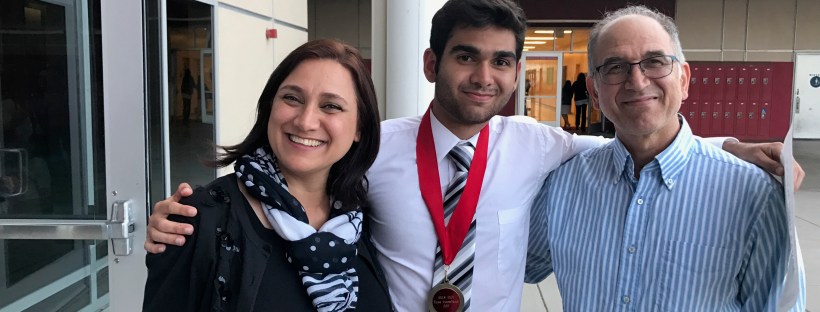
Parsa with his parents.
Now that I reflect on the moment, not only do I feel guilty for putting myself through that situation, but for also putting my family through that. I can’t imagine being a father and hearing your son tell you those words. And all of this happened because I couldn’t get myself to take those stupid pills. So, not only was I labeled as a non-compliant patient, a patient who was too immature to take his medications, but I was now also a patient who had “hurt” his family.
Loneliness: IBD is an invisible disease. You might look at a person and not realize they are living with a chronic illness. The invisibility is both the disease’s blessing and curse. There have been so many instances where I’ve been happy to have the ability to put on a mask and pretend that everything is okay. That my friends and peers do not have to associate me with a “disease,” a connotation that I despise so much that I often introduce my chronic illness as Crohn’s and not Crohn’s disease. However, because of the invisibility, the disease can feel extremely isolating. You might not know anyone else who can relate to your experiences/feelings. In fact, despite being diagnosed at a young age, for almost a decade I refused to share my story with friends and those close to me. It wasn’t until I met an IBD patient for the first time who was my age that I began to realize the importance of a shared community.
Dr. Tiffany Taft , PsyD, MIS, a Research Assistant Professor at Northwestern University Feinberg School of Medicine, spoke alongside Parsa during that Crohn’s and Colitis panel about Mental Health as it relates to IBD. As a Crohn’s patient of 19 years herself, she offers a unique perspective for her patients. I asked her when an IBD patient expresses these feelings of anxiety, embarrassment, guilt, and loneliness how she helps people deal with the struggles.
“The first thing I do is simply listen and reflect to the person my understanding without advice or judgement. It’s important to let someone tell their story before interjecting with any sort of interpretation or the like. Then, I start with some education about how our thoughts affect how we feel and how we behave. And that these thoughts are often on autopilot or may feel like they’re on an infinite loop and impossible to turn off,” explained Dr. Taft. “My goal is to help the patient understand their thinking and learn to slow it down and take a step back from their thoughts to be able to evaluate them, and maybe either change them or not let them have as much power.”
She went on to say that from there her and her patients tie their thoughts into other symptoms like anxiety, shame, or guilt, to see patterns and opportunities for change.
“It’s not an easy process, but most people can succeed. Loneliness has been harder during the pandemic. Social distancing has created a lot of isolation without an easy solution. I encourage staying connected via video chat, texting, and social media (so long as it’s not stressful!) People say that online interactions aren’t as fulfilling, and that’s probably true. But if I shift my thoughts from this negative lens to a more positive perspective, then it can help offset some of that loneliness until we can all be together again.”
The Decision to Open Up
It takes time and patience for many of us to come to terms with our diagnosis and decide how we want to present our experience to the world. For both Parsa and me, it took us a decade to take off our proverbial masks and share our reality with those around us. Parsa says he decided to share his patient journey at the end of freshman year of college after he joined a research lab at the UCLA Center for Inflammatory Bowel Diseases. He met someone for the first time who was his age and had IBD.
“When I was talking with her, this sort of light bulb just sparked. I realized I could connect with this person in a way I couldn’t have connected with anyone else before. She truly understood the challenges I was facing or had faced. Not from a scientific or “oh, I see” perspective, but from a “oh, I know cause you’re not alone” perspective. This connection was essentially my first exposure to the IBD community, and slowly, I began to become more involved in the community.”
The Power of Connecting with the IBD Community
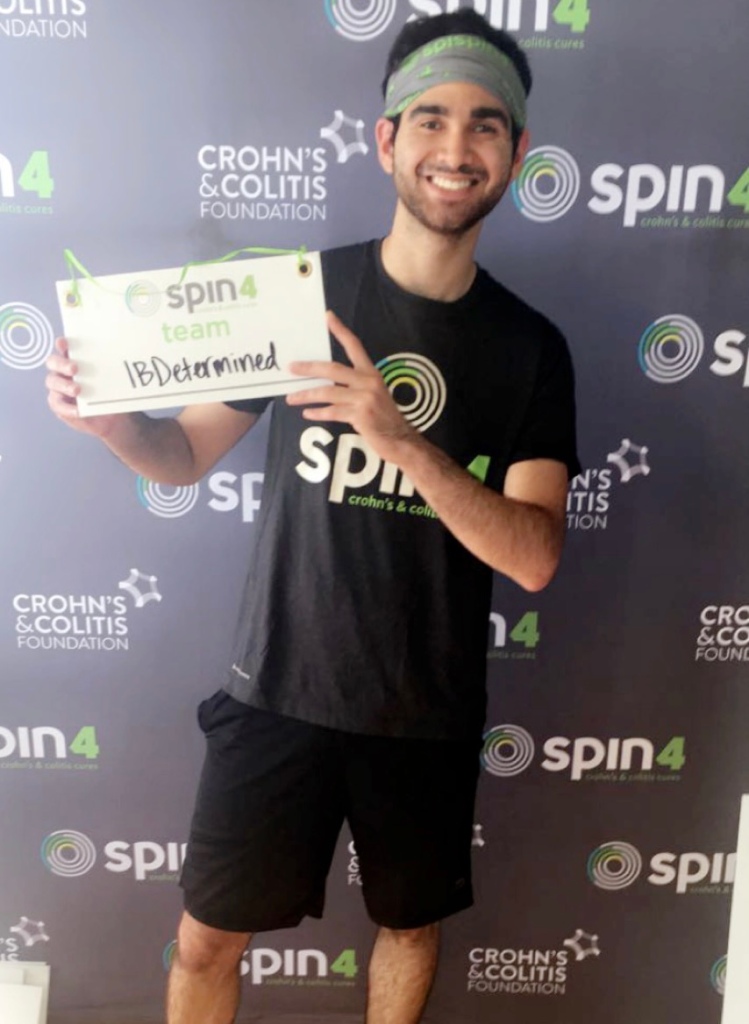
Parsa went from forming his first spin4 team to joining the National Council of College Leaders to becoming more involved with his local chapter in California. He then started a local support network for college students on the UCLA campus. His advice for patients and caregivers—find a support network within the IBD community.
Foundation of National Council of College Leaders (NCCL)—this group of college students from across the United States volunteers with the Foundation to provide a distinct voice for young adults with IBD. Members also connect on how IBD affects them as students, athletes, and partners in a relationship, the intersectionality that stems from a patient’s identity, and tips for having an ostomy bag, reducing stress through coping mechanisms, and applying for accommodations at school.
Parsa also co-founded IBDetermined at UCLA, a student organization geared towards providing a support network and advocacy-centered space for UCLA students with IBD.
“Even though there are some amazing national and local support groups, we noticed that there was a gap for local resources that focused specifically on the intersection between being a college student and an IBD patient. Hence, we wanted to create that more local space, where individuals could address their specific questions/concerns/thoughts relating to being an IBD college student at UCLA. It’s a space where our members can learn about accommodations that are available through our university’s Center for Accessible Education, can exchange tips and advice for navigating schoolwork and college life with IBD, can express their frustrations about the disease or the lack of university resources, and can share where the best and cleanest bathrooms are located on campus.”
Parsa says growing up with Crohn’s made him responsible at a young age. He learned about resilience. He learned to embrace the obstacles he has hurdled and to keep on pushing through even when he couldn’t immediately see the light at the end of the tunnel. Parsa says he learned to appreciate the time he felt healthy enough to live life not controlled by a chronic illness. Through the years he’s realized you can still be fortunate through a misfortune. This belief has given him a strong appreciation to make the most of the opportunities that come his way and refuse to take the easy way out.
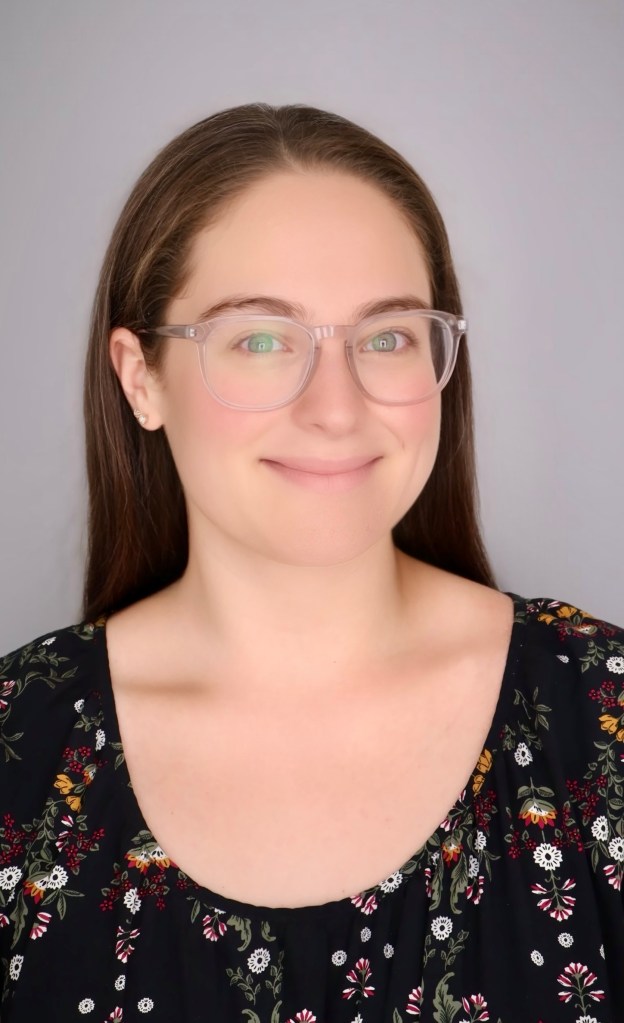
Navigating inflammatory bowel disease as a pediatric patient brings on additional stresses, concerns and worries. For 22-year-old Emily Gavol, this was the case. At 12 years old, she was diagnosed with Crohn’s disease. This week, a look into her life and how she took on the disease as a preteen, went to college out of state and landed her dream job in California with Walt Disney, after growing up in Wisconsin. My hope is that Emily’s story of perseverance, brings comfort to parents and fellow children and teens experiencing IBD as their life story unfolds.
What was it like to be diagnosed with Crohn’s disease when you were in seventh grade?
Initially it was a relief to know that there was finally an answer as to why I had been so sick for months. But it was also difficult to hear that I was diagnosed with a chronic illness that I had never heard of before. Being so young I didn’t really full grasp the severity of being diagnosed with a chronic illness.
How do you think the disease impacted your childhood and your perspective on life?
Getting diagnosed so young forced me to grow up very quickly. I had to learn to manage my symptoms while still attending school, doing homework and other normal activities. My perspective on life also changed, it became clear to me that health is something to never take for granted and appreciate it while you have it. Along with realizing quickly that the little things in life are not important. While most of my friends were worried about what to wear to school, I was just hoping I would feel well enough to make it to school. Additionally, this disease has taught me that there are many things that are out of our control and you just have roll with it sometimes.
How did your family and friends handle your diagnosis and how have they been there for you throughout your patient journey?
My family and friends were always there for me to lean on during my diagnosis and have been ever since. While I know that my parents were scared, confused and upset that I was going through this, they never let that show to me. They were and always have been the ones that lift me up when I am down, and never fail to stay by my side through all I have endured.
How did it feel to “fail” so many biologics?
Over my nearly 10 years with Crohn’s disease, I have struggled to find a medication that works for a continued period of time. When I first failed Remicade, it was frustrating because I had been getting better, then backtracked to experiencing more symptoms again. That frustration has continued and morphed into annoyance, as I have continued to fail more biologics. It is frustrating to feel like all these medications are being thrown at me to knock down this disease and nothing seems to work.
What inspired you to leave home and attend college in Minnesota, despite your illness?
Since I was nine years old, I knew that I wanted to become an Imagineer with the Walt Disney Company and work as an Interior Designer. As I got older, I knew I needed to attend a good school that would set me up for success. I researched the best programs in my area, and the University of Minnesota was the best fit for me. Their program and campus seemed to be everything I was looking for, so I wasn’t going to let my Crohn’s disease stop me from trying to achieve my dream.
What’s it like to attend college away from home, while battling a chronic disease? What roadblocks/hard times did you face?
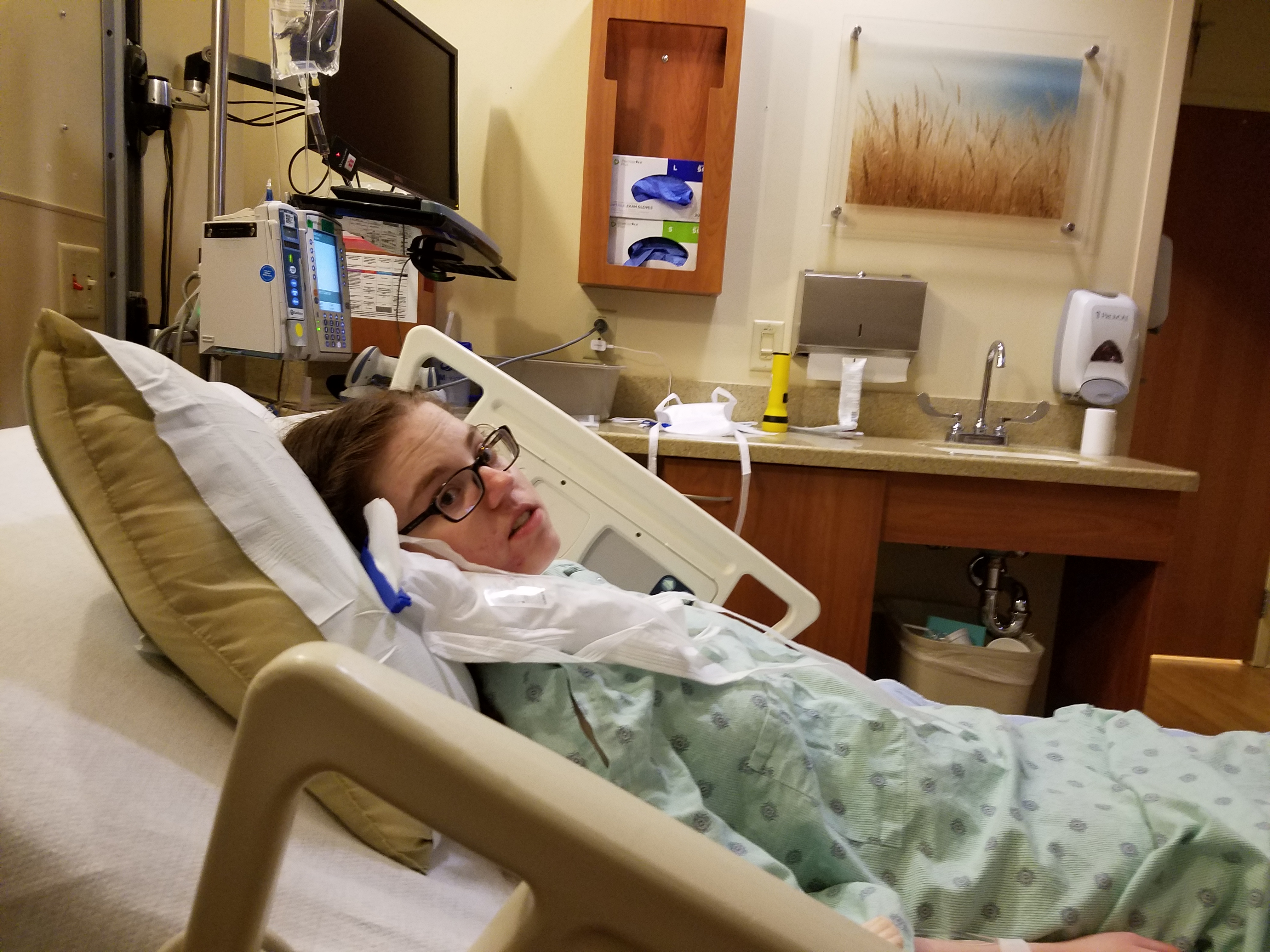
Attending a school so far from home without a doubt was a big challenge. And there were times when I wished I would have decided to go to school closer to home, because that would have been easier. The biggest roadblock was the physical distance, because it meant a lot of back and forth travel. Especially, during flare ups. I found myself needing to make the 4-hour drive home more often than I wanted to, which resulted in the need to miss more classes. Additionally, learning to manage my symptoms completely on my own and having to adequately communicate with my medical team from so far away, was challenging at first.
How do you overcome the setbacks that come your way and not allow them to de-rail your goals and plans?
I have always been a very determined and strong headed individual. I will always do my best to achieve my goals and not let anything stand in my way. Despite, all the setbacks my disease has thrown my way, I have just rolled with the punches and kept pushing forward. I do my best and my best is all I can do.
Talk about what it was like going through the ileostomy and knowing you are getting a permanent ileostomy? How do you feel about it–why kind of emotions does it bring?
Going through my transition of getting an ileostomy was the most difficult thing I have gone through as a result of my Crohn’s disease. My health took a drastic turn and it became clear that I would need an ostomy sooner rather than later. I initially was very scared and upset that this was happening. I didn’t know what an ostomy was or anyone that had one, so I had little idea of what to expect going into it. By the time I was a couple weeks away from surgery, I was honestly ready to have it done. I had been experiencing more symptoms and was ready to have the surgery behind me and be feeling better. I was doing my best to go into things with a positive outlook and think about it as a fresh start, but this was no easy task for me. It was an overwhelming and emotional couple of weeks following the surgery getting used to having and caring for an ostomy. I am not afraid to admit that I was scared to look at it and care for it myself after my surgery. But then I realized, this isn’t going to go away anytime soon, so I had to start doing things myself. The more familiar I became with everything, the more comfortable I was and began to realize that I was actually feeling better than before the surgery. This was hard for me to admit to myself, because I didn’t want to be put in the situation of having an ostomy or needing one for the rest of my life. While I am now on the road to needing a permanent ostomy, it still has not sunk in that it will actually happen yet. And I don’t think it is going to fully sink in until that surgery happens.

You landed your dream job post college. Speak to what it’s like to live across the country, away from family and friends–while living out your dream job…with Crohn’s.
I am literally living out my biggest dream. This is something that I never thought I would get to experience, and I think having Crohn’s has made me appreciate this opportunity more than I could ever imagine. The last year has been a wild roller coaster ride. I am just thankful to be here, because there were many times where I didn’t think I would even be able to graduate last year. My family and friends have been very supportive because they know how much this opportunity means for me personally and professionally. It is hard to be this far away from my main support system, but they are always just a text or phone call away. Additionally, my providers were very encouraging to me, pushing me to continue to live my life to the fullest and not let my disease slow me down. Hearing them say that to me, was really the last push that I needed to make this a reality. Knowing that my medical team wanted what was best for me, and was willing to work with me to get me where I am today, helped give me the confidence that I could do this.
Do your coworkers/did your college roommates know about your Crohn’s? How are people towards you when they hear?
In college I deliberately chose to live on my own with no roommates in order to give myself the best environment to thrive in. Over the past few years of having different jobs, I have told my coworkers about my Crohn’s disease. I don’t usually share it right away, because I want people to get to know me for me and not just my disease. When the time feels right, I do tell people about my Crohn’s disease. After I tell people about my Crohn’s, I always feel like a weight is lifted off me. Once people know my story, they have been as sympathetic as they can be. There always seems to be the range of people who know a friend that has it, to the people that have never heard of it before. For those who have never heard of it before, it is a good opportunity to teach them about it.
What are your hopes for the future?
My biggest hope for the future is an easy one, a cure for this disease. Aside from that, I hope I can continue to live my life and do my best to not let my disease stand in the way.
Advice for newly diagnosed patients?
My advice for newly diagnosed patients would be to find a good provider that you trust. It is important to trust their advice and recommendations, as scary as they can be sometimes. Additionally, try your best to not dwell on the negative things that are currently happening and think about what your future can hold. Always do your best to roll with the punches and keep moving forward, your best is all you can do.
What would you tell yourself at 12 years old…looking back at what you know now?
I would go back and tell myself that this is only the beginning. Life will be a never-ending roller coaster of ups and downs. Some of the downs will really take it out of you and knock you so far down you won’t think you will be able to find a way back up. And the some of the ups will be achievements you never thought were obtainable. But things will get better and there is always something better to look forward to right around the corner.