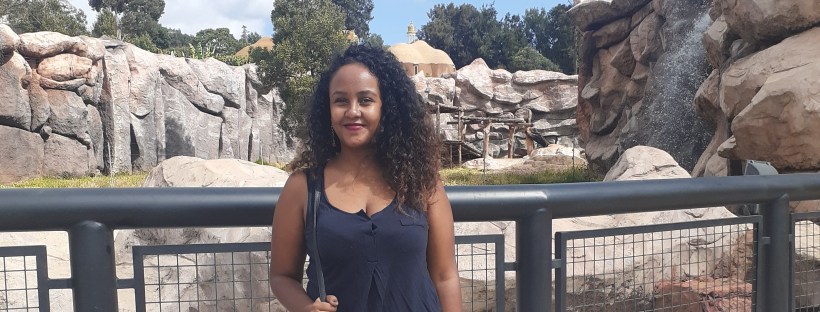
She’s a physician in Ethiopia looking to pave the way for those with IBD. She understands the need because she was diagnosed with Crohn’s in August 2017 at age 22 while she was a fourth-year medical student. After suffering from debilitating symptoms for eight months, she finally received a diagnosis. Dr. Fasika Shimeles Teferra says in her home country and in developing countries, she had always been taught that inflammatory bowel disease was non-existent. She felt isolated and alone as she embarked on her journey with chronic illness. There were no resources. No support. She had no clue where to turn when it came to being understood and knowing how to navigate nutrition.

In her school of medicine, an IBD diagnosis was morbid. She was told if she continued to learn about her illness, she’d die from the stress.
“Despite my medical background, I expected death to be imminent. The breaking point which later turned out to be a turning point for me, was when I was suffering from ovarian cyst torsion, explained Dr. Teferra. “Even though I was in remission at the time, every OBGYN who saw me in the ER refused to operate on me. One doctor refused to operate on me because I’m a “complicated patient with IBD”. He wanted to wait to see if pain meds will help solve it.”
Luckily, one doctor decided to operate on her, but unfortunately, she lost her left fallopian tube and ovary in the process. At age 23, she lost half her chance of being able to conceive a child. Her Crohn’s relapsed a few weeks later and depression set in. (Note: Luckily, she is due with her first child in June!)
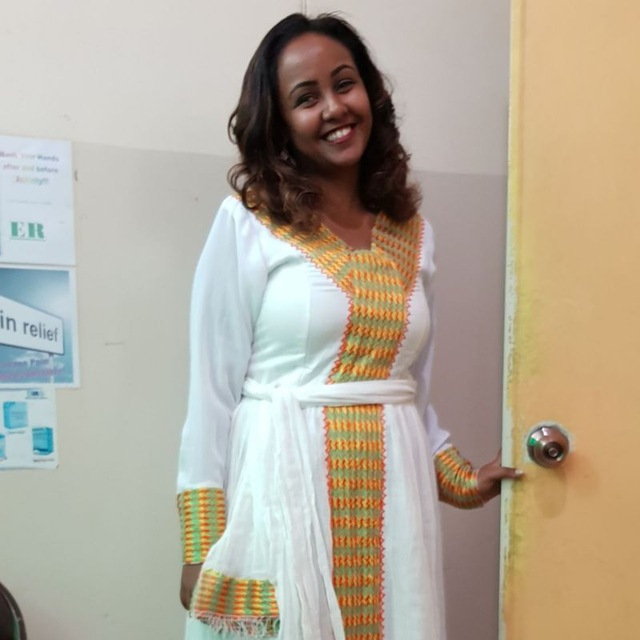
“I went to my doctor and told him I was quitting med school (I was 5th year at the time and just starting my medical internship). But what he said changed me forever and made me feel less alone. He told me he was treating multiple IBD cases and that my disease was much more common in Ethiopia than most thought. He also told me Crohn’s was manageable with medication.”
Holding onto new hope
With a renewed sense of hope, Dr. Teferra started advocating for herself and looking for local support groups to connect with others who lived with IBD. The problem—she couldn’t find any! She joined a Facebook group based in the United States and recognized the need for support in Ethiopia.
“I reached out to a couple of gastroenterologists here in Addis and told them I wanted to start a support group in Amharic focusing on sharing experiences, supporting one another. My hope was to help others who were struggling with coping with their diagnosis. I thought sharing my story would make a difference in someone’s life.”
Launching Crohn’s and Colitis Ethiopia to make a difference
After speaking with multiple doctors, Dr. Teferra decided to start an organization that would not only focus on support groups, but also advocacy work for policy makers. The last published data on IBD in Ethiopia dates back to 1990s! She recognized this lapse in research led to major gaps in treatment for IBD patients. This inspired her to launch Crohn’s and Colitis Organization Ethiopia in January 2020. When the COVID-19 pandemic hit in March 2020, it put everything on hold as the world stood at a standstill.
Even though the organization exists, Dr. Teferra is struggling to garner participation in support groups, because sadly the stigma of IBD leaves many in Ethiopia to suffer in silence and shame. She says fellow IBD patients prefer to communicate directly with her, so she has taken it upon herself to meet them and their families to better explain their condition and how to live a full life with it.
“I try and explain to the patient and their family how they can best take care of themselves and how family members can offer compassionate and empathetic support along the way,” said Dr. Teferra. “Many people discontinue their medication the moment they experience a side effect. I’m also passionate about discussing family planning and breastfeeding. Because of my medical background, I am able to give reliable information about IBD and I am able to use my story to guide the narrative.”
Dr. Teferra also has a registered dietitian who serves as a board member for Crohn’s and Colitis Organization Ethiopia. The nutritionist can provide guidance about how to enjoy Ethiopian cuisine and manage diet in the context of cultural foods.
But Dr. Teferra is only one person and can’t address the growing need for support and care. Even though local gastroenterologists have her contact information, and she tries to meet with as many people as possible, as you can imagine, it gets to be a lot.
Bringing IBD to Prime Time in Ethiopia
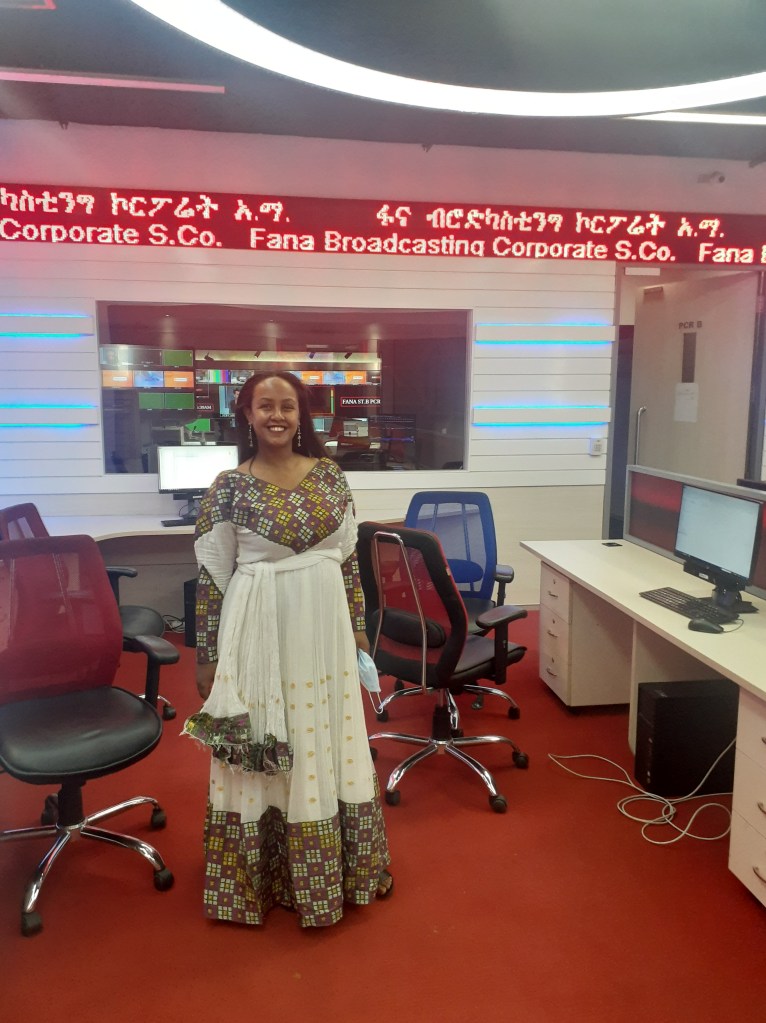
During an interview about COVID-19 on national television in Ethiopia, Dr. Teferra took it upon herself to also speak about IBD.
“Since it was Primetime, I was able to reach multiple people at once and I was able to send out the message that those with IBD are not alone. I plan to use such platforms to continue to share facts about IBD and that it does exist in Addis. In the meantime, I am working hard to find a researcher who can work on this with us. We cannot challenge policy makers without evidence, and we cannot change the minds of the medical community without research.”
Dr. Teferra says gastroenterologists in Ethiopia can testify that IBD cases are increasing daily. There is lack of medicine, lack of education, and lack of understanding. Many patients struggle to afford medication and choose to discontinue it because of lack of availability.
Overall, Dr. Teferra main mission with Crohn’s and Colitis Organization Ethiopia is to improve the quality of life and health literacy of people living with IBD in Ethiopia and provide the patient community with a better understanding of their condition by empowering them to take charge of their own health.
Connect with Dr. Fasika Shimeles Teferra on Twitter: @DrFasika.
Email: fasikateferramd@gmail.com



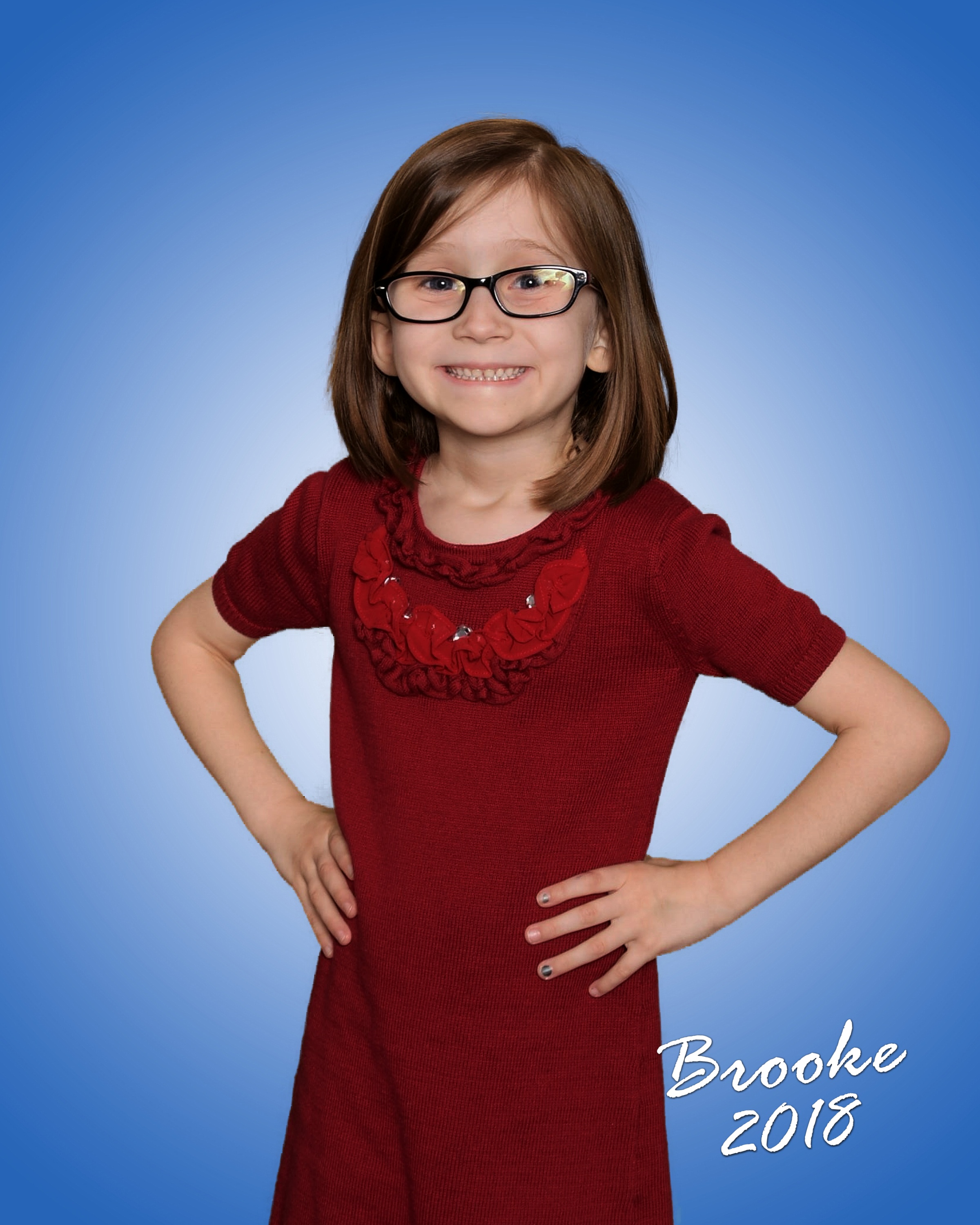 She’s a ball of energy and a sweet little chatter box, wise beyond her years. Seven-year-old Brooke, of Missouri, was diagnosed seven months ago with Crohn’s disease. She spiked a fever on New Year’s Eve 2017 that lasted for eight days, and from that point forward, life was never the same.
 Brooke and her family were told she had Crohn’s disease on March 2, 2018. In a matter of months, she went from being an outgoing, energetic kid to a hospital patient on a laundry list of medications. She developed her first fistula while on methotrexate and was on prednisone for more than three months.
 d we do something to cause this? Were we making the right decisions for her treatment and care? Brooke has a HUGE personality. When she was first sick, and before her diagnosis, she just stopped talking. She would lie on the couch for hours and hours every day. This was not my Brooke. She normally can’t sit still for more than a few minutes! I was SO scared because I knew something wasn’t right. Watching her in pain and miserable for two months while we waited on this diagnosis was miserable. You just feel helpless…all we could do was love her and pray,” said Tara.
 When you’re going through this, you are spread so thin and it’s difficult to ask for help. We have another daughter, Haley, who is 10. Of course, when Brooke was in the hospital, either Josh or I were with her every minute. We live over an hour from Children’s Hospital in St. Louis, so it wasn’t possible to pop up for a quick visit. It was also hard for us to ask for support. We needed help mentally, financially, and logistically with many things. We have an AMAZING support system of family and friends who have helped us throughout this process.”
 Although I know she doesn’t know yet, what it really means to have Crohn’s, I am always so amazed by her strength. She talks about it very ‘matter-of-factly’. It doesn’t define her. I hope and pray constantly that anything that I encounter, I can deal with, the way she has dealt with this. It’s made our family stronger by seeing that we can face this together.”
 lights camera crohn's