
The holiday season is upon us and with that comes family gatherings, social outings, and more food than anyone can handle. As someone who was diagnosed with Crohn’s disease more than 14 years ago, the holidays can still be complicated and stressful at times.

Christmas 2013 with my family
If you’re reading this—and you have a family member or a friend with IBD, you’re in the right place. Chances are you may struggle with how to be supportive, knowing what to say, and how to navigate IBD. I’m here to help so that this truly can be the best time of the year, for everyone involved.
Here are my top 10 tips for making that possible:
- Start the conversation. Stop making IBD the elephant in the room. It can be more hurtful if you only see family or friends a couple times a year and if no one asks how you are feeling. Three words—is all it takes— “How’s your Crohn’s?” Ask questions and genuinely listen to our answers. Your empathy means more than you know. This puts the onus on the person with IBD, and allows us to disclose what we’re comfortable sharing, while knowing that you care. When people don’t ask, it seems as if they don’t care. I find this to be especially true as a patient advocate and blogger. So much of my presence and identity is talking about my life with Crohn’s, that when people don’t ask, it hurts more now than it used to. With the growing online social media discussion, I’m sure many people in our community can relate to this.
- Leave the neighborhood watch party for criminals in the streets. Chances are Aunt Joan came across a diet “cure” for Crohn’s while perusing through Facebook last month. Insert eye roll. Don’t question the food we put on our plates or ask if that’s going to “hurt our stomachs”.
 We know our bodies, we know our triggers, and we are the ones who are ultimately going to have to pay if symptoms arise. Comments like “Oh, I didn’t think you could eat that?” or “Isn’t that going to land you in the bathroom?” are completely unnecessary. Focus on passing that side dish of mashed potatoes rather than giving us the side eye at the dinner table.
- Be flexible. The unpredictability of IBD—whether it’s feeling too fatigued to shower, lying in pain on the couch or holed up in a bathroom when you’re supposed to be getting ready or making a side dish, can cause us to be late for social gatherings. If a family member is tardy to the party or needs to leave earlier than expected, please don’t give them grief. Chances are they had to muster up a great deal of strength to get out of bed, get dressed, and put on their happy face, even if they are struggling on the inside. Practice grace and patience and remember how easy it is for us to mask pain with a smile.
- Don’t be offended if we bring our own food or don’t eat much. Oftentimes if we’re symptomatic or in the middle of a flare we are nauseous and eating feels too risky. It’s nothing against the way you make the family favorites. Trust we would eat everything if we could.
 Bringing “safe” foods or eating ahead of time at home provides comfort and allows us to enjoy more of the party. Please don’t take offense if we eat very little, or nothing at all.
- Please don’t make us feel like a spectacle. Chances are while at a social gathering, we’re going to need to break away to use the bathroom. If we need to go upstairs to use your bathroom, please don’t be offended or draw attention to us when we leave the table or return. We’re not trying to be rude; we’re already embarrassed and don’t want to deal with the anxiety of hogging the bathroom or smelling up the house as people socialize.
- We have doctors. Thanks to social media and Google, many seem to think they have the background of a MD. Please don’t try and teach us about a way we can “heal with food” that worked for your neighbor. Please don’t downplay or compare IBD to a stomach bug your toddler had.
 Please trust we know the side effects of the medications we are on; we know the risks of the surgery we may have to get; we know it all. Please don’t tell us to start taking a supplement you found online. Yes, we’ve heard of: CBD oil, turmeric, probiotics, the list goes on. Please don’t question the safety of our biologic. Our disease is our reality. Unless you live it, it’s not yours.
- While IBD is invisible, oftentimes it’s not. If a loved one is on steroids, trust me they are incredibly self-conscious about their appearance. The temporary chipmunk cheeks (are not cute), the acne that makes you feel like a teenager (is nothing to kid about), the sudden influx in weight (is nothing to comment on). The same goes for someone who looks like they’ve dropped a lot of weight. When you have IBD, weight fluctuations happen all the time. It’s not a good thing. It’s because we’re malabsorbing nutrients or in the thick of a flare. If you notice these outward differences in us, please keep the thoughts to yourself unless you know we are purposefully trying to lose or gain weight. Don’t pressure us to be in photos if we seem hesitant. Know that we are aware of the changes and struggle with them daily.
- Don’t push the booze.
 Just as with food, everyone with IBD responds differently to alcohol. We understand a glass of wine here or a beer there at a celebration may not seem like a big deal, but one drink can be enough to cause us extreme abdominal pain. Feel free to ask us, but if we decline the offer please don’t pester us, ask us if we’re pregnant, or try and make us succumb to peer pressure. We’d much rather be sober and present at the party without pain.
- Use us as a resource. Have a family member, friend, or co-worker of yours recently diagnosed with IBD? Let us know! Use us as a sounding board. I always love having the opportunity to use my patient journey and experience to bring hope and inspiration to others. Connect us with people in your life who we can support and help. The IBD family is incredibly welcoming and uplifting. By sharing this mutual connection, you can possibly change someone’s patient journey for the better.
- You play an integral role in our overall well-being. You bring us normalcy. You have the ability to distract us from our isolating illness.

With my (now) husband, New Years Day 2014. I was very sick at this family party. You would never know it by looking at this photo.
If someone close to you has IBD and they aren’t opening up or wanting to talk about it, don’t push them. We all handle the disease differently, and chances are in time, when the moments right, they will take down their walls. In the meantime, make it known you are present and there to offer support and encouragement every step of the way—and leave it at that. The simple act of knowing who we can count on and trust makes all the difference. Thank you for walking alongside us on this unpredictable and challenging journey and for seeing us as so much more than our disease. For that we are eternally thankful.

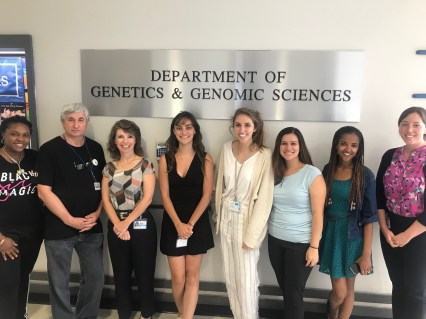
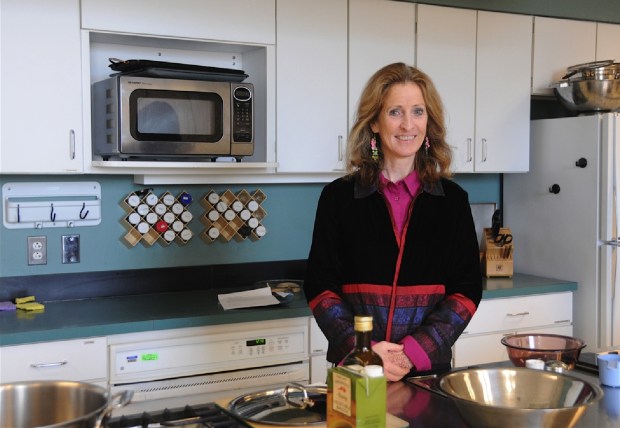 She is involved in research and clinical care, and she created the IBD Anti-Inflammatory Diet which is being investigated through the MELODY Trial. Barbara explains how through the MELODY Trial, the team is aiming to intervene in the transmission of a pro-inflammatory microbiome from women with Crohn’s to their babies.


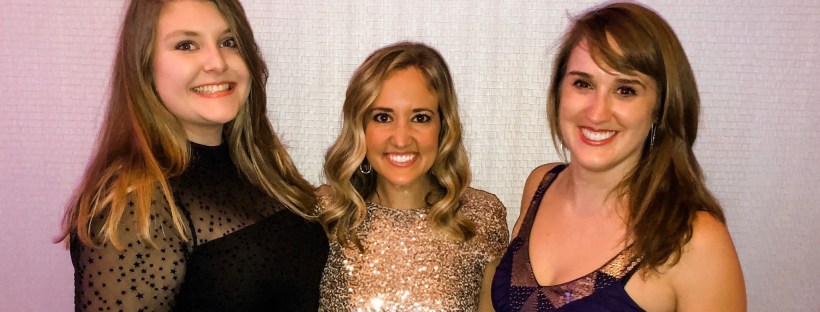


 If you’ve never attended a Crohn’s and Colitis Foundation event for your local chapter—whether it’s a patient symposium, an education event, a walk, or a Gala, I highly recommend you check them out. While it’s great to connect on social media or over the phone, nothing compares to physically being in the same room with people who are passionate about the same cause, who understand your reality, and are driven towards the same mission as you.
 For many of us in the IBD community, we deal with what is called Iron Deficient Anemia or IDA. With Crohn’s and ulcerative colitis, long-term irritation and inflammation in our intestines can interfere with our body’s ability to use and absorb iron properly. IDA is considered an extraintestinal manifestation of IBD.
 I provided the patient perspective. It was a great opportunity, but also taught me a lot about the prevalence of IDA with the IBD community, and the importance about being proactive and getting yourself the boost you need so you can feel your best each day. As a mom of two little ones, my anemia along with my Crohn’s can be a heavy burden to bear. That’s why I do my best to stay on top of managing my illness and taking all the supplements necessary to try and combat my malabsorption problems. I hope this article inspires you to do the same and realize you are never alone in your struggles.
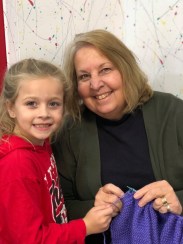 When seven-year-old Penny was diagnosed with Crohn’s in January 2017, her grandmother, Mary, started knitting her a purple blanket. She chose the color purple because it’s not only Penny’s favorite color, but also the color that represents Inflammatory Bowel Disease (IBD).


 At the same time, Mary says she’s impressed by Penny and how she is taking all the baggage that comes with Crohn’s in stride at such a young age: the daily medications, the infusions, the lifestyle changes.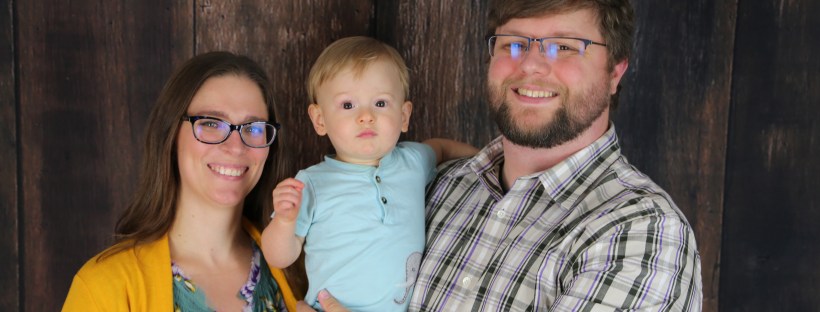
 Addy’s son, William, is now 13 months old. This week—she shares a guest post about her journey to bring him into this world and the challenges and victories she’s experienced as a new mom with IBD. I’ll let her take it away.
 After my second-high blood pressure reading that week, a nurse advised me to come into labor and delivery. When I arrived, I was diagnosed with gestational hypertension and started the induction process the next morning at 37 weeks.
 When William was born, I was thrilled, and so fortunate, to have a successful early breastfeeding relationship with him. When I started flaring again, breastfeeding became a significant challenge. I’d be with William during a late-night feeding, get a few minutes in, then have to wake my husband to keep William safe while I quickly ran to the bathroom. Obviously, this made William more than a little upset to start eating only to be pulled away. I also became increasingly worried that he wasn’t getting the nutrition he needed from me because I wasn’t absorbing nutrients the way I needed to. I upped my supplements and kept close tabs on his weight but continued breastfeeding. At this point, I knew I needed to do something different with my medications. What I was doing clearly wasn’t working.
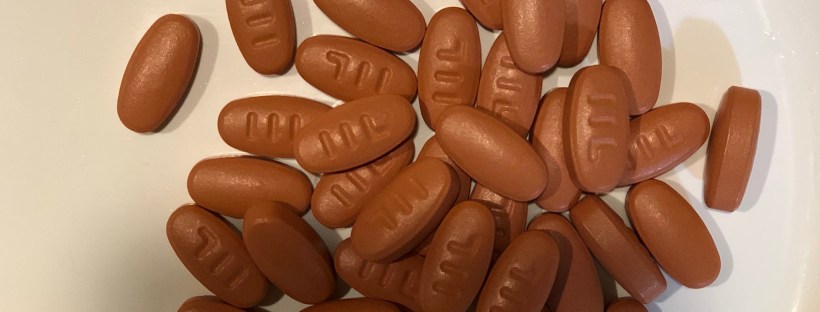
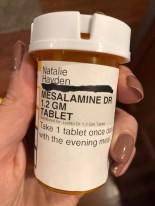 Chances are, if you have IBD, you’ve either been on or are currently taking this as part of your daily treatment regimen. Out of the approximately 1.6 million Americans who have IBD, more than 250,000 are currently on this type of medication. That may seem all fine and dandy, but did you know 5-ASA’s are not FDA approved for Crohn’s patients?
 NH: Given that there’s no evidence that 5-ASA medications are beneficial to Crohn’s patients (and not FDA approved), why are they being prescribed to more than 250,000 patients?
 She was nervous about the potential of being matched up with a roommate who wasn’t a good match.
 was diagnosed with ulcerative colitis less than one week before leaving to study abroad for three months. She says the fact the trip still happened and was so successful was a highlight of her college career. While back on campus in the States, she recalls how stressful it was prepping for colonoscopies.
 when she became sick with IBD, so she barely had time to form a body image that didn’t include this disease. She says she was never somebody who was confident in her appearance, but having IBD didn’t help. From the prednisone “moon face” to issues with gas and continence, there have been lots of times where she felt too gross to be taken seriously.
 caused her to get sick all the time and the community bathrooms weren’t of much help.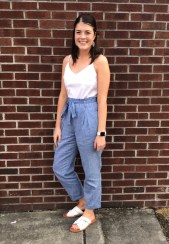

 Jennifer Badura’s son was diagnosed with Crohn’s while in high school. As a parent, she found her son’s transition to college challenging.
 Use the patient portal to your advantage. Never hesitate to reach out if you have a question or medical issue going on. Listen to your body’s signals and don’t wait until it’s too late.
 Set reminders in your phone or utilize apps that track your symptoms and whether you’ve taken your medication.
 Your disease is making the simple task of sitting in class alongside your peers an ordeal. While you may feel alone in this moment, thousands of college students around the world living with IBD can relate to this overwhelming stress and strain.
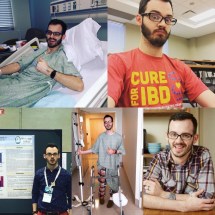 Balance is key. Health comes first,” said Aaron Blocker, a Crohn’s patient and IBD advocate. “It sucks to have to pause college because of your health, but school will always be there, and your health is important for long-term success.”
 As a straight A student, now struggling to pass classes due to an awful flare, I was devastated that I needed to ask for help. I was appreciative of my professors’ extreme kindness and that I was granted accommodations (deadline extensions, attending a different lecture on bad days, rescheduling exams, etc). This was a profound moment that taught me it was okay to ask for help,” said ulcerative colitis patient and IBD advocate, Jenna Ziegler.
 Ask for extra time, ask for a note taker. Get in touch with your school’s office for those with disabilities. Access the support you need to be on equal ground.”
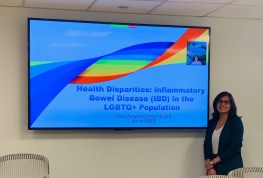 I also can use the bathroom frequently without question, eat in class without any questions and I’m allowed more than the usual 2 absences allowed in most classes,” said Tina Aswani Omprakash, Crohn’s patient and IBD advocate. “If there are group projects and I can’t partake; I ask the professor if I can do something on my own.”
 lights camera crohn's