
I’m a planner. Always have been. Always will be. But, as my grandmother always used to tell me, “Tell God you have a plan, and he’ll laugh at you.” That seems to be the case all too often for those of us in the chronic illness community. If you’re like me, each flare up and hospitalization has occurred completely out of the blue. I’ve b een blindsided each and every time. I’ve worked a full day, trained for a half marathon, taken a road trip…you name it…and BAM…hello, bowel obstruction or abscess.
So, how can we go about our lives as normally as possible with the ever-looming dread of the next setback and flare? It’s easier said than done, but it is possible. I’ve battled Crohn’s disease for nearly 13 years, this perspective and knowledge took time for me to gain. When I was first diagnosed, flexibility and patience weren’t in my vocabulary. But, like all things in life, time helps us heal and time teaches.
Here are five helpful tips for finding flexibility while taking on your illness:
- Do your best to live in the now. Rather than focusing on the past hiccups in your journey, live in the moment. Feeling well? Capitalize on this. Go outside, meet up with friends or family, get some exercise.
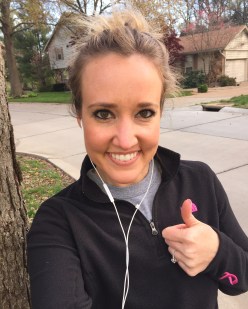 It’s these fleeting moments of invincibility that provide us with a chance to live like the rest of society. It may seem simple, but recognize these moments, verbalize them with loved ones. Celebrate the small joys, that are a big deal.
 - Stop beating yourself up over what could happen. Many people in the chronic illness community talk about how common post-traumatic stress disorder (PTSD) is. We’ve all faced some challenging, debilitating moments that have shook us to our core. Of course we don’t want that to happen again. Don’t place blame on yourself. Instead, give yourself credit for all you do on a daily basis to manage your disease—whether it’s watching your diet, taking medication or making an effort to practice self-care.
- Put your health first, don’t push yourself to the brink. Nobody likes to cancel plans or be a no-show at big events and social gatherings, especially when you’re actually looking forward to them. But, by putting other people’s needs before your own and worrying about what people might say or think of you—you’re only putting yourself in harm’s way. Be mindful of how friends and family members react when your disease is symptomatic. Are they supportive and understanding, or do they make you feel bad for bowing out? When you’re too tired, in pain or struggling, that’s a message from your body telling you to slow down. Please listen.
- Roll with the punches of treatment. Trying to wrangle a chronic illness into control is exhausting. It’s constantly a chess game. When you no longer respond well to your biologic, when you’re put on a new medication, when you’re told to try eliminating sugar, dairy, gluten or all the above…try to give everything a shot and a chance.
 Think about the risk vs. the reward. It’s emotionally draining when nothing seems to be working or helping to ease your pain, but, staying positive and open helps us all physically, emotionally and mentally. Keep an open mind with your healthcare providers and have two-way communication. Educate yourself, learn about the clinical trials and treatment options out there—be your own best advocate. Connect with others who are living your same reality. Trust in other peoples’ journeys, but recognize your journey is unique and so is everyone else. Each person’s IBD presents differently.
 - Be the first to admit when you need help.
 By telling someone you are struggling, hurting or worried, you are not showing weakness. You are not complaining. If you are going through a dark time and wonder how you’re ever going to overcome a current setback, lean on your support system without hesitation. Internalizing your pain will only make matters worse. You’re still brave and resilient, no matter what.

 Amanda shares the hospital bag “must haves,” so you can be prepared the next time around. Amanda, take it away…

 That’s it! If there are things on here that aren’t your jam, just leave them out or substitute with something more your style!



 When I was a news anchor in Springfield, Illinois, I used to interview and participate in cooking segments with a registered dietitian named Amanda Figge. She is extremely passionate and well-versed about nutrition and health and practices what she preaches in her daily life.


 est to paint a picture for you. My legs feel like complete jelly. My brain feels in a fog. I feel so lethargic; the thought of showering seems overwhelming. I’m not in pain. My stomach feels fine. But, there’s something “off” and you feel it with every part of your being.
 Living in the Midwest, I didn’t want two winter days with temps in the 80s to pass without enjoying them. I knew the fresh air and exercise would be a welcome excursion for my little man and me. Did those two walks with the stroller push me to my limits? What is too much? What is not enough? At 34, you feel lazy when you can’t keep up or have to admit you’re just too tired. You look perfectly fine on the outside, you feel like those around you wonder if you try and take advantage of your disease.
 that stated, “Fatigue in IBD is experienced by up to 86 percent of patients with active disease and 41 percent in remission.” It’s crazy how common this is! For people with IBD, fatigue can be physical, mental or a combination of both.
 As Valentine’s Day approaches and love is in the air, I’m choosing to look at my disease with my whole heart and to share my feelings with you.
 I may have ended up marrying a person who really wasn’t about being with someone in sickness and in health.
 There’s no sense in wondering and wishing for something that is not possible. Once you take a deep breath and stop living in your healthy past you come to realize that you were given this hand of cards for a reason.
 You take those steps to heal. You focus on getting better. You do all you can to make it through. Crohn’s and any chronic illness for that matter gives you this opportunity over and over. So, while we all tend to have negative feelings about our health and worry about what the next hour will bring, try and pause and stop for a moment. Think about all the beauty and insight it’s provided—and love yourself and your disease for a second.

 Three days later, at 10 pm the night before we were going to hang out, Amanda was admitted back into the hospital.

 Despite making life-long friendships and memories, she felt the challenges of her dietary restrictions, and couldn’t take in all the monumental experiences like her peers.
 “A Birthright Israel trip includes airfare from major cities, hotels, meals, transportation within Israel, and costs associated with touring the country,” said Deb, who as a Crohn’s patient herself, is helping with the coordination of this program for Israel Outdoors.


 Everyone knows the prep is far from desirable and it doesn’t help when you’re famished. For some reason, this go around was especially difficult on me. I was incredibly nauseated and weak. I vomited multiple times. I could barely get it down.
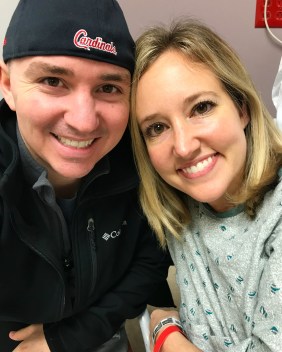 As I sat alone in my hospital gown, waiting for the IV and the procedure I had a few moments to think, pray and reflect about my patient journey. My husband Bobby came back to see me, held my hand, kissed me a few times and I was whisked away. I woke up to the best news! There were no signs of inflammation or active disease and my streak of “remission” continues. I put that word in quotes because I am always hesitant, as my symptoms always come out of left field and blindside me. For now, I am going to bask in this celebratory moment, enjoy every feel good day and take in the relief of knowing I’ve gone through another colonoscopy and passed with flying colors!
 I had just gotten off the stage after speaking at the Crohn’s and Colitis Foundation Patient Symposium Event in October. Her and her mom, Michelle, approached me outside of the auditorium. Tears in their eyes. Smiles on their faces. I immediately felt a connection and knew this little girl was something special.
 She’s had a total of three colonoscopies, an endoscopy and an MRE. She’s been hospitalized due to flare ups three times. She has three siblings at home, so as she’s in the hospital or going to the doctor, her parents have to care for them as well. There’s a reason for the saying—’it takes a village’… because it really does.
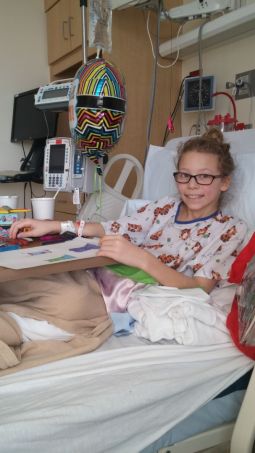 Also, as a parent of a child with a chronic illness, we are their best advocate. No one knows your child better than you do. If you think that something isn’t quite right, trust your momma instincts!”
 Right before the shot, she relaxes her leg, takes a deep breath and pretends she’s anywhere but the living room couch.


 lights camera crohn's