I remember the first phone call when I was pregnant with my oldest as a soon-to-be IBD mom. A researcher from Mother to Baby called me when I was newly pregnant and leaving work—I sat in my car in a parking lot, as she asked me several questions about my health, well-being, medication, and pregnancy thus far. That was Fall of 2016. Fast forward to now—and my oldest, Reid, just graduated from kindergarten. When I was diagnosed with Crohn’s disease at age 21 in 2005, one of my biggest fears was whether my chronic illness was going to rob me of motherhood. Back then, I was nowhere near ready to settle down, but the worry was always in the back of my mind.
When my husband and I got married in June 2016 and I was 10 months into surgical remission, we knew we needed to capitalize on my IBD finally being under control. Luckily, we got pregnant one month after getting married. Shortly thereafter, I started researching pregnancy studies for IBD moms. Lights, Camera, Crohn’s launched two days before I received a positive pregnancy test. I was fresh into my advocacy and had never been pregnant before. I didn’t have a community of IBD moms to lean on for questions or support as I navigated the unknown.
I came across information about Mother to Baby online and ended up being a part of their pregnancy studies for my first two children. The studies were different, but I had such a positive experience with Reid, that I decided to participate again with my daughter, Sophia. Reid’s study was a 5-year look at how Humira impacts babies in utero through kindergarten. When I was initially pregnant with him, this felt light years away. And here we are. Over the course of his pregnancy and until November 2022, I completed surveys, did phone interviews, had an in-person meeting with a doctor who came to my home and looked him over in front of me for any health anomalies, and most recently did an in-person cognitive neurobehavioral assessment at a nearby hotel with researchers.
We just got the results. While it’s rewarding to participate in IBD studies and interesting to learn, there’s always a part of you that worries about the findings and if mom guilt will ensue. It’s been reassuring and comforting to see my healthy kids, who were exposed to Humira in utero through the 3rd trimester, thrive and excel with milestones and in school.
The findings of the study
In November 2022, Reid and I met up at a nearby hotel with two researchers who provided neurodevelopmental behavioral evaluations for both of us. Reid’s assessment used a series of questions, games, and puzzles to help researchers determine his development of language ability, memory skills, and problem-solving abilities. The tests were selected to provide an evaluation of general mental ability and to describe specific abilities in areas of verbal knowledge and reasoning and visual-perceptual reasoning and organization. The tests were intense, I was proud of him for how he handled himself during the process.
Reid and I waiting to do our assessmentwith research administrators
According to Mother To Baby, “this battery of tests is best suited to examine the similarities and differences among groups of children. While it was not adapted for Reid’s individual characteristics, it can highlight general strengths and weaknesses in a child’s cognitive profile and indicate potential concerns when present.”
Behavioral Observations: “Reid was personable and interacted with both administrators on his arrival. He had a very positive attitude toward testing and quickly became comfortable with administration. He was engaged and attentive to the materials, listened attentively to the examiner and provided effortful responses even as questions became more difficult. Reid demonstrated good cooperation and attitude by following instructions and requiring minimal to no redirection from the administrators of his mother. He was focused and friendly for the full duration of testing.”
Summary of Assessment Results: “Tests were administered in a single testing session with one short break. The Wechsler Preschool and Primary Scale of Intelligence (WPPSI-IV) was selected to provide an evaluation of Reid’s general mental ability and to describe specific abilities in areas of verbal knowledge and reasoning and visual-perceptual reasoning and organization. This battery of tests is best suited to examine the similarities and differences in ability among similarly aged groups of children. While it was not adapted for Reid’s individual characteristics, it can highlight general strengths and weaknesses as well as potential concerns when present.”
The intelligence test was comprised of 10 subtests which measured a variety of verbal and nonverbal skills. Reid achieved a composite score in the average range. In the working memory category and spatial working memory, Reid performed in the high average range, which required him to remember and identify pictures that had previously been shown to him. On tasks that measured visual-spatial abilities, Reid scored below average. These tasks required him to synthesize visual stimuli to recreate block design.
“Reid was highly focused while processing visual stimuli. Overall, Reid is a bright and enthusiastic child. He was a pleasure to work with.”
Along with Reid’s assessment, I was also interviewed and performed tasks with an examiner on the other side of the room. I was assessed in the adjustment and life context. Tests included the Center for Epidemiological Studies Depression Scale and Parent Stress Index. My scores were within normal limits and my general mental ability also scored in the average range. Not gonna lie, the testing was challenging!
Reflecting on my experience
As an IBD mom of a 6-year-old, 4-year-old, and 22-month-old, who participated in pregnancy research during each of my pregnancies, I can’t begin to tell you how incredibly rewarding it is to know that your personal experience is helping to drive the future of care for women in our community who have hopes of one day being a mother. Sure, it takes a little bit of time and effort, but the data and research to show the safety and efficacy of medications while pregnant and breastfeeding is so needed. It’s comforting to know Reid is right where he needs to be cognitively and healthy physically, despite my high-risk pregnancy and exposure to Humira until 39 weeks gestation. We need more women to willingly step up to the plate and share their journeys to help guide the future of IBD motherhood and show all that’s possible despite our disease.
Opportunities to participate in research
Many people need to take medication during pregnancy to manage and treat their IBD. Yet, according to the Mother To Baby website, fewer than 10% of medications have enough information to determine their safety for use in pregnancy.
Do you have Crohn’s disease? Are you currently pregnant? If you answered “yes” to both questions, you may be able to help Mother To Baby advance the knowledge of how managing IBD in pregnancy impacts a developing baby. Click here to learn about how you can impact the health of future families by joining the Crohn’s Disease and Pregnancy Study.
July marks 15 years since I started my journey taking a biologic injection to manage and treat my Crohn’s disease. Since that time, I’ve had routine “safety labs” every 3-6 months, depending on my gastroenterologist. You may be familiar with safety labs, or you may wonder what I’m talking about. I’ve been seeing my current GI for almost 8 years, and she’s adamant that I get labs every 3 months to make sure my disease is closely monitored. If I fail to get labs every 3 months, per her orders, my prescription for Humira is unable to be filled by my specialty pharmacy.
I ran a poll on Instagram and asked, “If you are on a biologic, do you get safety labs every 3 months?” Of the 175 people who responded, 41% said “yes”, 36% said “no”, and 23% had no idea what safety labs are. This week on Lights, Camera, Crohn’s we take a closer look at the reasoning and purpose behind safety labs, and we hear from esteemed and world-renowned gastroenterologists Dr. David Rubin, MD, Section Chief of Gastroenterology, Hepatology, and Nutrition at the University of Chicago Medicine and Dr. Miguel Regueiro, MD, Chair, Digestive Disease and Surgery Institute, Professor in the Department of Medicine, Cleveland Clinic.
What is a safety lab?
Safety labs are to ensure that patients are not developing a complication from a medication that they may not feel.
“For example, kidney or liver function tests that may show an abnormality before a patient has damage to those organs, or problems. Or a white blood count that lowers in a patient on certain immunosuppressive therapy – something they may not “feel” until the immune system gets low enough to develop an infection,” explained Dr. Regueiro.
The periodicity of labs for “safety” are often taken from the clinical trial designs, rather than the likelihood that something is going to change within that period of time.
“Routine labs while on therapies for IBD is important and patients can and should keep track and ask for them at least twice a year for most of our therapies. For many of these, there are gaps in our understanding whether the interval (every 3 months for example) is the right one or makes a difference. We certainly know it takes time for patients to do this and costs money too. Some of my colleagues withhold refills as a safeguard to make sure patients get their labs. This may be more punitive than necessary, but it is one way to make sure this is getting done,” said Dr. Rubin.
When I get my labs done every 3 months the following blood tests are ordered by my GI:
CBC w/Auto Differential
Hepatic Function Panel (Liver Panel)
Vitamin D 25 Hydroxy (I am deficient, so we keep a close eye on this)
If there is concern about inflammation or anemia, then my GI also adds:
Sedimentation Rate, automated
High Sensitivity CRP
Iron Profile with IBC + Ferritin
In the past, if there’s concern about my response to Humira we do a “trough level” to see if I’ve built up antibodies to my therapy and to measure how much medication remains in my body right before I am scheduled to do another injection.
It’s important to know, since I started seeing my GI two months after my bowel resection surgery in 2015, I have been in remission. So, the concern about inflammation and needing to take fecal calprotectin tests has been few and far between. When we were in the middle of the pandemic, rather than an annual colonoscopy, my doctor had me do a fecal calprotectin test at home to limit my risk of being exposed to germs in a hospital setting while my disease was well-managed.
“We recommend certain labs on patients taking IBD medications. Each medication will require a different safety lab monitoring strategy. Some brief examples, for mesalamine, checking kidney function tests within a couple of months of starting a medication and then once or twice a year. For thiopurines (6MP and Imuran) and methotrexate more frequent blood work initially, e.g., complete blood count and liver function tests weekly to every other week in the first two months after starting and then every few months thereafter,” said Dr. Regueiro.
Safety labs as a disease monitoring strategy
Generally, safety labs are done for medical health reasons to make sure that everything is ok while taking the medication.
“Safety labs are “driven” by the physician or provider caring for the patient. The insurance company may require certain labs before starting or continuing a medication. For example, a tuberculosis (blood) test before starting an anti-TNF medication and then yearly while a patient is on the medication. Otherwise, the insurance company usually does not require safety labs for medication approval or continuation. Each case is different, and each insurance company is different,” said Dr. Regueiro.
“More important than pharma-drive lab recommendations—is that every patient should have a customized strategy to monitor their disease stability to detect relapses before there are clinical consequences. This is my new take home message for most of my lectures- in addition to “treating to a target” we must have “disease monitoring” as something that every patient has as part of their care,” said Dr. Rubin.
Chronic diseases like IBD tend to “drift away from control”, so it is good to keep an eye on things and this enables proactive preventive care.
Getting my safety labs in the thick of the pandemic
“For low-risk patients, that might be once a year, but for those who are on advanced therapies (biologics and the novel targeted small molecules), they likely need this approach more frequently. It is true that “knowledge is power,” and knowing that the disease has activated enables much better care,” explained Dr Rubin.
Disease monitoring may involve blood or stool markers (calprotectin) or depending on where you live, intestinal ultrasound. Colonoscopy or CT scan/MRI is also recommended. Dr. Rubin tells me the key is identifying what is appropriately benchmarked and reliable and which approach is feasible and makes the most sense for the patient.
Why the onus is often on us
As you can imagine, 3 months comes quickly. If you’re like me, I see my GI in clinic two times a year (every 6 months). When I was pregnant, she would see me in the office every 3 months. Given that I see her twice a year, that checks off two of my four lab visits. As an IBD mom juggling life with three young kids, time can often slip away. I’ve found I must alert my nurse and GI about when and where they need to submit lab orders so I can take care of them the other two times a year at a Quest or LabCorp nearby. In the past there have been a few times where I’ve dropped the ball.
Coordinating life with chronic illness can truly feel like a full-time job. Just this week I spent an hour on the phone with my specialty pharmacy trying to organize my next shipment because there was an issue with my patient savings card. At the time, all three of my kids were running around like little banshees, yelling, and making it hard for me to hear the phone representatives. At one point, I had to lock myself in my laundry room. These aren’t calls that can wait. Patients need their medication; we can’t just hang up and re-visit the snafu at another time because it can mean we receive our biologic shipment late. This is one small example—of a behind-the-scenes look at life with IBD as a mom.
While getting labs four times a year may not seem like a lot, it does involve planning, time, and coordination for patients. My kids have joined me countless times in the stroller as I get labs done. Then, reading the results on the Patient Portal and seeing certain results too low or too high can cause anxiety and added stress. It’s a never-ending cycle.
Talking with your care team
If you’re only getting labs done once or twice a year, it may be worth having a conversation with your GI about the reasoning why and what you feel most comfortable with. Your care is not a one-way street. If you feel like you need a more hands-on approach, talk about this with your doctor. In talking with fellow IBD patients, many who are on infusions every 8 weeks, tell me they get labs every 16 weeks.
If you’re only getting labs done once a year, Dr. Regueiro says you don’t necessarily need to be alarmed.
“For a patient who has been on a medication like mesalamine or a TNF inhibitor for a long time, in remission, and doing well without prior lab test abnormality, once per year lab testing may be ok. However, a patient on Imuran or 6MP may need lab testing more frequently.”
As a veteran patient, who was diagnosed with Crohn’s nearly 18 years ago, safety labs have become part of how I manage my IBD. While annoying at times, these labs also give me a sense of relief. One final recommendation I have—don’t try and get labs done before or after your colonoscopy—I’ve tried this twice to try and kill two birds with one stone, and with being so dehydrated, it was not a pleasant experience. Being closely monitored through safety labs takes away much of the stress and worry that can come because of being on a biologic, and the possible side effects that can happen now and into the future.
A special thank you to Dr. David Rubin and Dr. Miguel Regueiro who took the time to offer their expertise for this article on the heels of Digestive Disease Week (a HUGE conference they both actively participate and present at). Having their insight on topics like this that matter to patients means so much.
When was the last time you popped an aspirin or an Aleve for body aches, abdominal pain, or a headache? Chances are, if you have IBD, you’ve been told to refrain from doing so. People with Crohn’s disease and ulcerative colitis are told to stick to acetaminophen, or Tylenol, as it’s gentler on the stomach and not known to cause ulcers or aggravate IBD. While we’re still not supposed to take NSAIDs all the time, research is going on about whether it’s ok to take on an “as needed” or “short term” basis and if they truly put IBD patients at risk for a flare.
I ran a poll on Instagram asking those with IBD if they take NSAIDs. Of the 350 responses, 68% said no, 14% said yes, and 18% said only short term.
After my bowel resection surgery and three c-sections I was told short term NSAIDs were “safe” to help manage pain postoperatively. In full transparency, over the last year or so I’ve dealt with back pain that comes and goes and have felt the need to take NSAIDs on several occasions, but in the back of mind I know I probably shouldn’t be. I try and limit how often, and only took Tylenol for nearly 17 years. But, when the pain gets to be a bit much and I have to manage life with three little ones, sometimes I feel like I have no other choice. There’s been more and more talk lately about NSAIDs and IBD, so I wanted to take a deep dive and share what I’ve learned.
Dr. Shirley Cohen-Mekelburg, M.D., M.S., gastroenterologist and research scientist at University of Michigan and Director of the Inflammatory Bowel Disease Program at Ann Arbor VA Healthcare System, recently conducted a study that looked into how NSAIDs impact the IBD population. She says the best research questions come from clinical experience and this is a topic that comes up quite a bit from patients.
“We have been discussing the question of whether NSAIDs cause IBD flares for years, and there is no strong evidence directing us to conclude that NSAIDs definitely cause flares, nor that they are safe for use in IBD. As opioid use and abuse continues to rise, it is becoming more and more important to consider our non-opioid analgesic options. Ultimately, the idea for this study came about from discussions between the co-investigators on this study as to the clinical implications of this work, and the methods we have available to further investigate this important research question,” she said.
What the study found about NSAIDs and IBD
The study findings were not necessarily surprising.
“It is very difficult to study the impact of NSAIDs on IBD flares because prospective comparative studies are difficult to conduct for an over-the-counter medication such as NSAIDs, which is widely available to patients in various forms. Therefore, to demonstrate equipoise and justify the need for further safety and effectiveness work, we leveraged a large national database of patients with IBD.”
Dr. Cohen-Mekelburg and her team used a multimethod approach to understand the associations between NSAIDs and IBD flares.
“First, we looked at a traditional statistical method for examining associations between an exposure (i.e., NSAIDs) and an outcome (i.e., IBD flare). We then used more advanced techniques to demonstrate that this observed association may potentially be due to bias rather than a true association. These biases are well-established and important to consider when conducting observational research.”
It’s important to note that just because there’s conversation, interest, and research going on about NSAIDs and IBD, doesn’t necessarily mean there’s a change in clinical practice or current recommendations.
“This moreso inspires us to question our current knowledge in order to justify that further work is necessary to establish the safety of NSAIDs in IBD, and specifically, for what patients and in which contexts,” she said.
Why not taking NSAIDs as a patient isn’t necessarily clear-cut
Dr. Cohen-Mekelburg wants patients to know there is “no universal recommendation” for the “best way” to take NSAIDs if you have IBD, which is why many patients get mixed messages from clinicians and their peers.
“In practice, we see that some patients take NSAIDs routinely without any adverse effects, and others may take NSAIDs for a short period of time with serious adverse effects. Ultimately, more research is necessary to better understand the safety and effectiveness of NSAIDs for IBD-related pain control.”
Just as IBD presents uniquely in each of us, our response to NSAIDs and what is safe or harmful needs to be further studied.
Dr. Cohen-Mekelburg says, “COX-2 inhibitors are NSAIDs that are more selective in their mechanism of action and are thought to carry a lower risk of gastrointestinal bleeding. However, they may carry a higher risk of other adverse effects, such as cardiac problems. Some clinicians have questioned whether these selective COX-2 inhibitors may be “safer” in IBD, but this is not known based on current evidence.”
Ultimately, the goal of Dr. Cohen-Mekelburg’s study was to bring attention to the topic of NSAIDS in IBD and to inform future work to better answer these important questions that both patients and clinicians need to improve IBD care and pain management.
Aspirin and IBD pregnancies
As an IBD mom of 3—ages 6, 4, and 20 months I recently learned that it’s recommended for women with Crohn’s or ulcerative colitis to take a baby aspirin during pregnancy. I was pretty shocked by this. Dr. Uma Mahadevan, M.D., Director, Colitis and Crohn’s Disease Center at UCSF, and Chair of IBDParenthoodProject.org, recommends all pregnant women with IBD start around week 12 of gestation. For those who don’t know, Dr. Mahadevan is at the forefront of the latest research and guidance when it comes to IBD and pregnancy research with the PIANO study (Pregnancy Inflammatory Bowel Disease and Neonatal Outcomes).
“Women with immune mediated disease, like IBD, are at higher risk of pre-eclampsia and related disorders (gestational hypertension). Going on baby aspirin has been shown to reduce that risk. The original trial was done in Europe with 162 mg, but in the U.S., we use 81 mg,” said Dr. Mahadevan.
She says this conversation is started with women during pre-conception counseling.
“Prior to these discussions, many of my patients were surprised and always checked with us. I tell them to take the baby aspirin with food and let us know if disease flares. Anecdotally they have all done well with respect to IBD. As an FYI, aspirin can increase calprotectin, so that’s something to keep in mind if you are monitoring that,” said Dr. Mahadevan.
The idea NSAIDS trigger IBD flares is controversial. Are patients taking NSAIDS because they have a flare or did the medication trigger a flare? Dr. Mahadevan says it does seem that short term (a few times a month for headaches, menstrual cramps) is low risk for triggering a flare.
In summary, if you ask most GI’s, they will tell you that a “short course” (5 times a month or less) of NSAIDS when you have IBD is “ok”. If your symptoms worsen or do not resolve, then it’s time to communicate with your care team and possibly get some lab work to get to the bottom of what’s going on. When I was in pelvic floor therapy last year, my therapist recommended T-Relief Arnica +12 Cream. It’s a game-changer for me and alleviates pain in minutes. I rub a little on sore joints and my lower back and lay on the heating pad and don’t feel the need to take any medication. Tylenol Arthritis also helps with joint pain.
The jury is still out about whether NSAIDs exacerbate Crohn’s and ulcerative colitis, and further studies are needed. For general aches and pains, most GI’s recommend taking acetaminophen instead of NSAIDs if you have IBD. Have the conversation with your care team and be open and honest about how you are managing your pain whether it’s related to IBD, extraintestinal manifestations, or a completely different ailment.
It’s safe to say every prep for a colonoscopy is a shit show. The show just looks a bit different each time. I completed another annual colonoscopy this past Friday, and the process still keeps me on my toes, even after more than 17 years of living with Crohn’s disease. As those of us with IBD know, it’s so much more than the prep. It’s the anxiety of wondering if our disease is active. It’s the worry about whether our IBD is going to act up and be triggered by the ungodly amount of laxative we are ingesting in one sitting. It’s the fear of going through more trauma getting an IV and dealing with nurses and a care team we’re unfamiliar with. It’s resenting the fact that you’re a young person needing a colonoscopy…and the list goes on.
I did my second-ever pill prep (SUTAB) this time. I find swallowing 24 pills to be easier than guzzling anything that tastes unpleasant. There was a bit of a monkey wrench in my game plan this time around, when my gastroenterologist’s nurse informed me over the Patient Portal that magnesium citrate saline is recalled. Because of that, my doctor created an additional prep to make up for that. For some reason, the 24 pills deemed worthy for the rest of society to take to get cleaned out isn’t good enough. I received instructions two weeks prior to my scope that quite frankly scared the bejesus out of me.
Along with the 24 SUTAB pills and 96-plus ounces of water, patients are expected to:
Take 1,500 to 1,600 mg of magnesium citrate pills, twice (This adds 12 pills to the prep, and they are horse pills)
30 ml of Milk of Magnesia
Two enemas…yes, you read this correctly.
…the moment I received this news, my chest tightened, and I started to freak out. Regardless of the prep you choose (you’re “allowed to choose any one you like:”) …this is also “required”. Knowing this ahead of time made my mind race and I kept going back and forth about whether I was going to put myself through it or be my own advocate and go a bit rogue. It’s a bit daunting when the instructions are in CAPS and there’s the threat of needing to do everything over again.
Here’s what I did for my prep
It’s easy to talk a big game and say “there’s no way I’m doing this” …but at the same time, there’s a worry that looms that if you don’t, you may need to do another scope because you aren’t cleaned out enough. I’ve always been a bit of a rule follower, so it tends to take a lot for me to go against the grain.
I always do a self-imposed liquid diet to give me some buffer in case I encounter issues with the prep. My last meal is generally the Sunday night before a Friday scope. I allowed myself some crackers on Monday night, but other than that, I was strictly liquids all week. It’s brutal, but it always pays off in the end.
I bought magnesium citrate pills, the SUTAB pills, and the fleet enemas. I didn’t bother getting the Milk of Magnesia.
I took the first 1,500 mg (6 pills) of magnesium citrate, starting at noon the day before my 11:30 am colonoscopy. To me, it was a lot easier doing the pills than having to drink an entire bottle of magnesium citrate, which immediately causes me to vomit. I then timed out the 12 SUTAB pills, by setting a timer on my phone. I took one every 2-3 minutes. All you do is take the pills with 16 ounces of water and then follow that with drinking 16 ounces of water two more times over a couple of hours. I was “done” with my prep by 4 pm the day before my scope and wasn’t running to the bathroom too much.
I went to bed and set my alarm for 5 a.m. with the intention of doing the other 12 SUTAB pills + the additional 6 magnesium citrate. At this point, I was still on the fence about whether I would try an enema.
I walked downstairs in my dark house as my family slept and turned on a few lights so I could lay all the pills out on the kitchen counter. It was just me—all these enormous pills—and my thoughts. I got the 12 SUTAB down and after about 30 minutes I started feeling ill. I ran to the bathroom and vomited quite a bit…at the end I puked up bright red blood. It was petrifying. I screamed for my husband while I was on my hands and knees on the bathroom floor at 6 am. He ran down the stairs and could see how much anguish I was in. I immediately called my mom who is a nurse and she told me not to take anymore pills and that my prep was done.
My mom, who lives out of town, has been with me for every single prep since diagnosis, but this time around, she wasn’t since it’s so close to the holidays. Not having her by my side added a bit to the stress. I asked her if I should do the enema and had some choice words. She told me not to do it. I agreed. Hospitals are running low on enemas right now, so the instructions said to “bring an enema to the hospital in case you need it.”
Speaking up prior to the procedure
My scope wasn’t until 11:30 a.m., unfortunately it was very busy at the hospital, so I didn’t get mine until 1:15 p.m. When you haven’t eaten in nearly a week and your head is pounding from dehydration, every minute feels like an eternity. When the nurse finally got me from the waiting room, we got to the endoscopy suite and while I was still in my street clothes, she asked me if I had my enema with me. I froze in my tracks. I told her I forgot it on my counter (I purposefully forgot it on my counter) …and I proceeded to go into an explanation about how ridiculous it is to expect this of patients, how unnecessary and over the top it is and that I refuse to do it. She asked me if I did the enema earlier in the morning, I said no. To my surprise, she completely empathized with me and said she couldn’t agree more that it’s making all their procedures run late, that no other GI’s require it, and that she knows after 17 years with Crohn’s I know what I’m doing. She was whispering in cahoots with me, and it felt SO good to feel validated and heard.
When I told her I had difficult veins, rather than rolling her eyes or downplaying my fears, she listened and was so kind. She took a close look at all the options and ended up choosing a vein in my right hand. She got me with the first stick and immediately all my anxiety around the IV went away.
I informed my GI and anesthesiologist that I had vomited blood while doing the prep. They let me know that was from throwing up and it caused the capillaries in my esophagus and stomach to break and bleed. Because of that I was told prior to my procedure that in the event there was blood down below, an endoscopy would also need to be performed. Luckily that was not the case! I was given an antacid in my IV to help resolve any possible issues. I made the mistake this time of not taking my prescribed Zofran to prevent nausea. If you have a history of vomiting with prep, I highly recommend getting a script and taking this 30 minutes prior to starting your prep. In the moment, I was already taking so many pills I didn’t feel like adding one to the mix, but I wish I had.
The colonoscopy results
When I woke up from that amazing propofol nap I was thrilled when my GI gleefully walked into the recovery room with a huge smile on her face and told me that my small bowel and colon were “pristine”, that everything looked gorgeous, and that I was still in remission. The discharge notes state there is “normal mucosa in the entire examined colon” and that my “end-to-side ileo-colonic anastomosis” (where my small intestine was reattached to my large intestine from my bowel resection surgery in 2015) is characterized by “healthy appearing mucosa”. No biopsies were taken and the “quality of the bowel preparation was excellent”.
Remission is a complicated term and one I don’t take lightly. I reached surgical remission in 2015, after a decade of ups and downs. While I’m so grateful to continue the 7-year-streak of remission, I’m aware that tomorrow things can change. All any of us can do is focus on the right now and try not to dwell on what could be or what can happen. Remission is just a word—I didn’t do anything to deserve it, no one does. So much emphasis can be placed on being in remission, and I get that it can feel like a big deal—but IBD, whether you’re in “remission” or not is unpredictable, so there’s no sense in thinking you’re in the clear or invincible just because you’re told you’ve reached it. Remission does not mean you are completely free of symptoms.
My tips for going through a colonoscopy
Schedule your scope during an early time slot. Not only does this allow you to eat a lot sooner, but you’re also more likely to be taken right on schedule and not face any delays. For my 11:30 a.m. scope, I wasn’t at a restaurant until 3 p.m. I will say as an IBD mom, the 11:30 a.m. time was ideal in the fact I was able to get my two older kids ready for school and drop offs had already taken place before my husband and I left for the hospital.
Arrange childcare as you’re scheduling your scope. It’s challenging as an IBD mom or dad to have to worry about who is going to take care of your kids during procedures. Get the available dates for your colonoscopy and figure out childcare as you’re scheduling so there’s one less moving piece to deal with. My mother-in-law watched our kids from 9:30 a.m.-4:30 p.m. and it was comforting to know I had nothing to worry about while my husband and I were away.
Add in some buffer with a liquid diet for a few days. I’m not saying you need to go crazy with the liquid diet, but even doing one extra day of liquids will really ease your prep when it comes to what you need to pass. It also gives you a bit of leverage if things don’t go as planned when you’re trying to get it all down.
Listen to your body and do what you’re comfortable with. While there are guidelines and recommendations if you are vomiting, feeling sick, struggling to make it through the prep, just do what you can. Don’t push yourself to the brink of putting your health at risk. The SUTAB pills specifically say “Do not take other laxatives” … so how is a patient supposed to feel when their GI tells them to do a laundry list of additional laxatives?! The general population does the prep, without any add-ons. We should be able to do the same. I had to chuckle when I was told my prep was excellent, when I went off the grid and did what I felt was best. Before my procedure I smiled at my doctor and told her I did my best…and that’s all they can ask for.
Get labs ahead of time. The past few years my care team has tried to save me a trip to the lab and tried to get lab work through my IV. Each time, it’s been a nightmare. Last year the nurse in recovery stuck me 8 times and I was so dehydrated she never got any blood. She was unkind and rough and left me in tears. That was it for me. This year, I did labs the Monday before my scope. Having that checked off my ever-growing patient to-do list eased my anxiety and the nurse who did my IV said because she didn’t need to get labs through my IV, the needle could be a lot smaller—score!
Count the pills. I noticed this time I was given one extra SUTAB pill in my prescription bottle. I triple counted to make sure. There should be 24, total. Make sure not to take any extra.
Be cognizant of the time of year you get your scope. Get tests and procedures done prior to the end of the year when you’ve most likely reached your deductible, so you save money. I have a bone scan scheduled this week as well, crossing everything off the list when it’s covered.
Always remember gummy bears are a liquid. I share this year after year but so many people still seem unaware that this is the case. The day prior to a scope you need to steer clear of red and purple gummy bears, but you can eat gummy bears throughout a liquid diet and the day before your scope. The ability to chew something and have something sweet is a gamechanger. It’s a great way to chase prep that doesn’t taste good, too. This time around my sweet daughter took it upon herself to take all the red gummy bears from the bag so I wouldn’t accidently eat one…she made a pile of red gummy bears and proceeded to eat all of them.
Check about patient savings options. SUTAB is a bit pricier than other preps, you can save by going to http://www.sutab.com and printing off a coupon that brings the cost down to $40 with most insurances. Look into this regardless of what prep you do to make sure you’re not overpaying.
Feel empowered in what you’ve endured. Going through colonoscopies with IBD is not for the faint of heart. Chances are you have your own routine and know what works for you. Stick to it and speak up if something doesn’t sit right with you. Plan that post- scope meal ahead of time and reward yourself afterwards. You’ve been through a lot and deserve to recover and rest.
This post is sponsored by Smart Sharps Bin. All opinions expressed are my own and do not necessarily reflect the position of HealthBeacon plc or Hamilton Beach Brands, Inc.
I started doing my self-injection more than 14 years ago, long before I became an IBD mom. I went from being a single 20-something alone in my apartment mustering up the strength… to having a family around me while I receive my medication. The experience has changed greatly and so has my perspective.
There are many reasons why I have chosen not to hide my injections from my three children. Crohn’s disease impacts more than just the person who lives with it, it’s a family disease. Even though my children are ages five, three, and 16 months, there’s a deep level of understanding and empathy that starts from a very young age. My disease is part of me. I always try to be transparent about my health and well-being. I have never said “I have a disease” since my children wouldn’t understand that, but I try to explain that sometimes my “tummy” hurts and that “Mommy’s shot keeps me healthy, safe, and strong.”
My process for self-injecting every other Monday
Once dinner is over, I pull my injection out of the fridge and let it warm up on the counter, out of the reach of my kids. I’ve always preferred to do my shot at night so I can rest afterwards and have a sweet treat like ice cream as a reward after. After about 30 minutes to an hour, I head over to the couch, and my children hover around me. They watch as I wipe the alcohol swab counterclockwise and oftentimes help me hold the ice pack on my thigh for five minutes. Then, once it’s time to pull the top and bottom off the injection and get down to business, I let them know they need to give me some space and not to move or make any jerking motions. I pause. Smile sweetly at them and start my countdown, slowly and calmly…one one thousand…two one thousand…all the way to 10. They smile back at me and bounce around when I have finished self-injecting. They immediately want to see if I’m bleeding and want to make sure I’m not in pain and don’t need a band aid. I bounce up off the couch and act like it’s just another part of our bedtime routine.
Since we’ve been doing this “process” for as long as they can remember, it’s part of our family, and part of what it’s like for me as an IBD mom. My kids are my greatest cheerleaders and my reason “why” for everything I do in life.
The sweetest distraction
I find it empowering to look into their innocent eyes and joyful faces while I self-inject, it’s the best distraction. I used to stare at a focal point on the wall, a photo of someone who inspires me, or a show on the television, but looking at my kids—my greatest motivation to push through the difficult moments—is the best medicine, literally and figuratively. I make a point to smile at them and never show signs of weakness, so they see that I’m ok and doing something positive for myself. This has become a lot easier since the formula for Humira changed and is no longer painful. I used to really struggle to smile when the medication burned the first year and a half of my oldest son’s life.
When my injection used to be painful, my son would see through my smiles. He would often hold a toy and pretend to give himself his own injection. After I was done doing my shot, he would come up and kiss my thigh and say he loved me. At this point he wasn’t even two years old—kids of IBD parents just “get it,” their empathy and understanding of health is incredibly unique and special.
How that strength carries over into my children’s’ lives
Since my kids see me self-injecting every other Monday, they’ve become quite desensitized when it’s time for their own vaccinations at the pediatrician. When my older two children get their flu shots, they take them like champs. The nurses always laugh that they’re braver than some teenagers. When my kids smile and tell me they’re strong like me when I do my shot it’s bittersweet. While I wish they didn’t have to see me self-inject, it’s building their character and understanding of health in a beautiful way.
This article is sponsored by Health Beacon. All thoughts and opinions shared are my own.
When I think back about the scariest moments I’ve experienced since my Crohn’s disease diagnosis more than 17 years ago, doing self-injections and the loading dose process tops the list. To go from being someone who didn’t rely on a biologic medication to function and treat my chronic illness, to mustering up the strength to inflict pain on myself, it took getting used to, to say the least.
I’ll never forget what it was like when I was first told I would need to choose between a self-injection and an infusion while lying in a hospital bed with a hardcore flare. It felt like trying to pick the lesser of two evils at the time. I chose self-injection for privacy reasons because at the time I was a television news anchor and hadn’t shared that I had inflammatory bowel disease (IBD) publicly. I also have terrible veins and the thought of having to get IVs and be hooked up for hours to a medication seemed less convenient and like more of a reminder that I was unwell. During that hospital visit it took 8 tries to start my IV, so the trauma of that helped guide my choice to do injections instead.
Going the self-injection route
When I started my biologic in 2008, there were only two medications on the market to manage and treat Crohn’s disease – Humira and Remicade. The injection (I was prescribed) at the time had a reputation for being painful and the loading dose involved four injections, back-to-back in one sitting. When my mom and I walked into my gastroenterologist’s office so the nurse could instruct me on how to give myself shots, I was shaking like a leaf. In the moment I wasn’t sure how I was going to muster up the strength not knowing how it would feel. My palms felt sweaty holding the foreign injector pen in my hand. I wasn’t sure how badly it was going to hurt. I was fearful of the side effects and what the heavy-duty medication was going to make me feel like. I wanted the nurse to do the first injection for me, and she wouldn’t. In the moment that made me upset, but now I am so grateful she put the onus and trust on me. I’ve never had anyone do my injections but myself.
I pressed the button and instantly felt the liquid fire pain shoot into my leg. I couldn’t believe I was expected to do that three more times. But I did. When the appointment was over, my mom and I hugged in the hallway. I felt like I had been through battle. It was terrible. Knowing that I had to do another two injections in two weeks loomed over me. Unfortunately, my initial loading dose made me very sick. As my body got acclimated to the medication, I felt weak and could barely walk up 13 stairs to my apartment. I had to miss work and social functions as my body got used to medicine.
Going through another round of loading doses
Fast forward to 2015. I had bowel resection surgery that involved the removal of 18 inches of my small intestine, appendix, and Meckel’s diverticulum. My care team had me go off my medication for three months—prior to surgery and after. Because of that, I had to do another loading dose and re-start the process. Even though I was already more than 8 years into doing the same injection, when my GI told me I would need to do another loading dose, my mind immediately raced back to 2008 and what I went through. I was so emotional I had to call into work sick that day. Luckily, this time around was a lot less scary, and I had more confidence in the process and knew exactly what to expect. I didn’t have any side effects after this loading dose, and I was back on track to my normal injection routine.
The shift to “pain-free” injections
The first couple years I did my injection, I would count down the days until the next one was due with dread and worry. I spent more than a decade on the painful version of the medication. In 2018, the formula for the medication was changed for patients in the United States, taking out the sting and making the gauge of the needle smaller. The loading dose now “only” involves two injections versus the four.
The “pain-free” version of the medication has completely changed my patient experience for the better. I no longer dread my shot. The process feels simple and nearly effortless. Even though I’ve been lucky to be afforded the opportunity and access to this version of the medication, I can still remember how it used to feel. The anxiety and emotions the injection would cause, and what I dealt with for 10 years of my life every other Monday.
Self-injection through pregnancy and motherhood
I am an IBD mom with three young children. Ages 5, 3, and 15 months. When I was first pregnant in 2016, it took a lot of guts and felt like an emotional rollercoaster injecting a biologic knowing there was a life growing inside of me. As the weeks turned to months and my belly got bigger and bigger it became more emotional feeling kicks and movement in my stomach while I was pressing the button to give myself the shot. Until my son was 1.5 years old, he witnessed how upset the injection would make me at times and would hug me and watch with empathetic eyes from a very young age.
When I tried the pain-free injection in 2018, I shot a video the first time I experienced it. This time around, I was pregnant with my second child. You can watch the emotional video here. As I express in the video, it was lifechanging to know that throughout future pregnancies and through motherhood, my children wouldn’t ever see their mom crying or scared while doing injections anymore. Now, when I do my shots, I have a big smile on my face and my children see their mom through a much different lens.
Keeping your eye on the prize
Whether you are gearing up for your loading dose or a veteran self-injector, it’s an experience that can be hard to put into words unless it’s your reality. It’s normal to grieve and be upset about your situation. Try to breathe. Go to your happy place. Get a focal point to focus on and know that you are doing all you can to help keep your disease under control and live the fullest life possible. Short term pain, long term gain in every sense of the word. Being scared no matter where you are in your patient journey is understandable, but like all pain and fearful experiences, they too shall pass.
Click here to learn more tips about self-injecting.
The article discusses how teenage girls and young women post upsetting footage and commentary on social media about their “invisible illnesses” to gain attention and “likes” and bashes “Spoonies” for giving people a behind-the-scenes look at the reality of their chronic condition. Hold UP. As someone who has lived with Crohn’s disease for more than 17 years, who is patient advocate, and works tirelessly to empower and educate others about life with inflammatory bowel disease, by candidly sharing on social media and through my blog, I find it incredibly disheartening and worrisome that a story of this nature is in circulation.
The ableist mentally shines bright
How disappointing that a “news outlet” takes the time to belittle people who are battling debilitating and unpredictable illnesses and sharing their struggles not for attention, but for support and camaraderie. Unless you have a chronic illness, you don’t have the slightest clue about what it’s like to wake up each day and not know what the next hour is going to bring. Unless you have a chronic illness, you can’t begin to imagine the stress, worry, and anxiety that comes along with diseases that limit us and often set us up for failure when it comes to trying to keep up with the rest of society. Unless you have a chronic illness, you have no idea how isolating and overwhelming it can be to be young and unhealthy, different than your peers, while fearing what your future is going to hold. Unless you have a chronic illness, you can’t fathom what it’s like to juggle multiple specialists, appointments, medications, insurance, specialty pharmacies, and screening tests… just to survive. It’s imperative those with invisible chronic illnesses share their stories and show others that what they are going through.
Articles like this are extremely damaging and triggering to those who suffer in silence, the newly diagnosed, and furthers the fear of what could happen if you decide to come out of the “proverbial closet” publicly and share about your health struggles.
Patient communities NEED you to share
When I was diagnosed with Crohn’s disease at age 21 in July 2005, Facebook hadn’t even been out for a year. No one was going on social media and sharing they had a disease. I felt like I was on a desert island, all alone with a diagnosis that flipped my world as I knew it upside down. As an aspiring TV journalist, two months out of college graduation, I had no idea how I was going to function and follow my dreams. Nobody wants a chronic illness diagnosis. Nobody asks for this. Nobody wants to suffer so they can have “likes” and attention on social media, trust me. Never in my life have I seen people encouraging others to lie to their doctors about getting the diagnosis that they want.
With diseases like inflammatory bowel disease, this is not something you can fake. A diagnosis is received after scopes, scans, and labs, reflect that this is in fact the case. You don’t just walk into a doctor’s office and say you aren’t feeling well and exaggerate abdominal pain. It’s not a competition of who is “sickest,” people are sharing what they are going through for a variety of reasons. When someone is in a hospital bed, they may share for support, advice, and prayers. When someone is gearing up for a colonoscopy, they may share so they can get tips for easing the prep or coping with the worry of the unknown. When someone is pregnant and flaring, they may share to hear from other IBD moms who have been there before. The examples are endless. Patients are not haphazardly concocting up social media content and lies about their medical struggles to see who is going to get more attention. This is not “attention” people want.
By claiming we share for attention it goes against everything we stand for and belittles the lifechanging work patient advocates are doing to support and comfort their peers. As a patient advocate myself, I do so much behind the scenes “work” to guide those in the IBD community and help them every step of the way. It’s about helping others from the bottom of your heart and being the voice you needed to hear upon diagnosis and through milestones in life. It’s genuinely finding connections with those who are not just strangers on the internet, but quickly become your closest confidantes and resources. Since coming out and sharing I had Crohn’s disease in 2015, I went from having family and friends who didn’t have Crohn’s offering me support, to an army of thousands of members in the IBD family I can rely on who “get it” and are available right at my fingertips. THIS IS PRICELESS.
Sorry not sorry for the “upsetting content”
The article states “thousands of teens are banding together on social media as part of the movement” to support the Spoon theory. Imagine what it’s like to be living this reality versus just having to view a post on social media. Can you pause and put yourself in the hospital bed or on the operating table or on the couch about to do a painful injection and think about the pain and suffering those with chronic illness are forced to endure just to survive like the rest of society? It’s privileged to lash out against those who are doing all they can to show others what their lives consist of rather than bottling everything up—THAT is damaging, THAT is not healthy. Must be nice to have the privilege to keep scrolling and living your healthy life and only see a few seconds on your screen.
Should chronic illness patients be smiling as they’re suffering in hospital beds? Is it not normal to be crying when you’re worried and scared and can’t help but get emotional with all that’s on your shoulders? No one is complaining. It’s the stark reality. It’s heavy. It’s no surprise that more than 30% of people with IBD also deal with mental health issues and anxiety because life with the disease is so heavy.
It’s not about the money
Can we all pause and laugh about the fact the article claims those with chronic illness post on social media for the money. Hilarious. Get a grip. Even as a well-established and trusted “health influencer” within the IBD community, when companies reach out to me, it’s often to try products, not get a paycheck. When I am paid for my advocacy work it’s working diligently like your job as a journalist to write articles, create social media copy, and educate others about what my life is like with Crohn’s. I get compensated like any other human for using my skills and expertise, along with my precious time and energy, to sit on advisory boards and offer input and perspective for marketing and awareness campaigns. My job is not to be a patient, my “job” is to take what I’ve learned and use it to make a difference and help others.
This is not for show. Digging up past medical trauma and flare ups is not enjoyable. If businesses and pharmaceutical companies want to collaborate with chronic illness patients, they should be paying us for our invaluable intel and understanding. The article states patients have adopted “victim mentalities” …wow…and “communities of grievances” … when medical professionals are out of line or treat patients without respect, you better believe your ass they should be called out. How is change going to happen and life for chronic illness patients going to improve if we sit quietly. Be loud, my friends. Don’t allow articles like this to stop you from sharing. We NEED your valid experiences. You deserve to be heard. You matter. Even though the rest of society may be rolling their eyes or trying to stop us, they won’t, and they can’t.
I don’t want to go back to 2005 when I was all alone in my struggles with Crohn’s disease. I want to stay in 2022 when I can post whatever I want, whenever I want about my trials and triumphs as a woman, mother, and wife with Crohn’s disease and not fear judgement. Sometimes I’m thriving, sometimes I’m struggling. It’s vital that those with chronic illness continue to honestly share their stories on social media to provide clarity, education, and connection to those who relate wholeheartedly.
So, dear Emma, from one journalist to another, please start sharing stories that matter—don’t go after stories for attention or follow the adage, “it bleeds, it leads.” Seems like you are the one going after the likes. You should know better.
Sign the Petition
There has been outrage in the chronic illness community about this article—many feeling triggered and upset by the accusations and the claims made about Spoonies. An online petition has been created to have this Daily Mail article taken down—you can sign the petition by clicking here.
They call themselves “Propellers.” They’re a team of volunteers, made up of IBD patients and caregivers who created a non-profit called Propel a Cure for Crohn’s in 2016. They are laser focused on preventing and curing Crohn’s disease and, on the heels of their first research project funded at Stanford University in the world-renowned lab of Professor Mark Davis, they’re now determined to make a meaningful difference through their Roadmap to a Cure for Crohn’s effort. During this month (September 2022), they’re aiming to raise $50,000 to help get their latest project off the ground and to provide a solid foundation to bring their global team together.
This is a grassroots effort fueled by patient and parent volunteers. Patients and caregivers have an opportunity right now to directly influence a brighter future without Crohn’s! This is a peer-to-peer fundraiser—it’s not just about the monetary donations, but also sharing the message with others far and wide. Not only are international researchers involved, there are people all over the globe participating. In addition to the English-language campaign, there are also Swedish and Portuguese online campaigns running as well.
The Patient/Caregiver Perspective
Ildiko Mehes recalls what it was like when her 9-year-old daughter received her lifechanging Crohn’s disease diagnosis in 2017.
“As a parent, a serious diagnosis like Crohn’s is a huge shock, and it’s absolutely devastating and heartbreaking. Even during periods of remission, we are always on high alert and waiting for the other shoe to drop. At diagnosis, my whole world stopped, literally and figuratively. As irrational as it sounds, as a parent, you wish the rest of the world stopped with you to help you address the crisis. You wish that all of modern medicine rolled up their sleeves and urgently worked together to precisely diagnose the problem and bring her back to long-term health.”
As a caregiver, Ildiko has a unique sense of urgency and determination. She feels we need and can do better for IBD patients.
“When an otherwise healthy child, with no prior medical history, suddenly presents with IBD symptoms during a routine winter virus, you ask yourself “what caused this switch to be flipped?” Not having any answers to the underlying mechanism of disease onset or perpetuation, having a trial-and-error approach to disease management, and being forced to consider serious immunosuppressive medications with modest clinical trial benefits feels unacceptable as a parent. This is what drives me.”
As a pharmaceutical executive with more than 20 years of experience, Ildiko uses that unique skill set to go after complex and difficult goals with Propel a Cure and feels a deep sense of obligation to help our community.
“While there is excellent research ongoing in IBD, it happens in silos. It lacks global coordination and a plan. We don’t yet understand many basic things about Crohn’s. We are all just hoping for a “eureka moment” that hasn’t come over the last 100 years. We are continuously enticed with headlines of a “promising” new pathway or new drug candidate, usually in mice. And then that great idea sits there, with no progress made, a decade or more later. I know we can do better,” she said.
Natalie Muccioli Emery was diagnosed with Crohn’s disease in 2011 and she’s also a Propel a Cure Board member. She started dealing with abdominal issues 26 years ago. Being a veteran patient has provided her with perspective about how far treating and managing IBD has come and how far we still have to go.
“Propel a Cure was the first organization whose mission resonated with me. I appreciate their mission to cure Crohn’s Disease, but I even more appreciate the fact that they have laid out a plan as to what the areas of knowns and remaining unknowns are in their Roadmap to a Cure for Crohn’s project. Complex issues like Crohn’s Disease will take a collaborative and systematic approach to address, and this cause has captured that,” said Natalie.
Not only is Natalie an IBD mom, she’s also an IBD aunt!
“I believe that as an adult with IBD, the way I embody the role of a “Crohn’s Warrior” is not for myself it is for the next generation. I have “been there and done all that” with Crohn’s. But just because I did it with Crohn’s doesn’t mean the next generation should have to. I grow increasingly concerned when I see the rising rates of IBDs like Crohn’s in younger people. I believe the rising rates of Crohn’s should create a sense of urgency and a desire for a better future.”
Putting the puzzle pieces together
The Roadmap to a Cure is an ambitious project but one that is needed to drive real progress toward cures and prevention of IBDs, not just talk about “cures” in some very distant future. Ildiko says the brilliant clinicians and scientists she has gotten to know all tell her that getting to a cure will take a grassroots effort, global collaboration, and involvement of patients and caregivers.
“We at Propel a Cure are deeply committed to doing exactly that. The first step in our project is to systematize what we already know about Crohn’s today. We know a great deal, thanks to research. But when we are talking about complex fields like genetics, epigenetics, immunology, microbiology, epidemiology, multi-omics platforms and artificial intelligence, etc. there is no way any one person or group can know everything. We need a large global group of dedicated and brilliant experts to put all the puzzle pieces we already have on one table so we can begin to then put the pieces together,” she explained.
Grabbing the attention of medical professionals and researchers
Propel a Cure grabbed the attention of Dr. Bram Verstockt, MD, PhD, Department of Gastroenterology and Hepatology, University Hospitals Leuven, on social media.
“I truly like the concept of joined forces across various stakeholders, including patients and caregivers. As clinicians and scientists, we can have ideas about how to move forward based on experiences and interactions with patients on a daily basis. However, the next step really is to involve patients actively in many of these projects, as is currently the case with Propel a Cure,” said Dr. Verstockt.
The “Roadmap to a Cure” aims to bring together expertise across many different fields and niches in IBD.
“Over the past decades, a lot of scientific evidence has been generated in multiple domains of Crohn’s disease, so now it’s time to bring all that evidence together and truly connect the dots. Only by doing so, one might unravel knowns and unknowns and highlight where the remaining key gaps are, and we can define the priorities and strategies of how to fill these gaps to significantly advance the field, to improve the lives of patients with Crohn’s disease,” said Dr. Verstockt.
Where the roadmap can take us
After the initial step of putting together the state of the art, the next step is identifying gaps in our knowledge: what puzzle pieces do we still need? The third step is to develop the plan, or the Research Roadmap, to get from what we know today to developing cures and prevention strategies.
“We truly believe in a future where we can prevent and cure Crohn’s and eliminate so much patient and family suffering,” said Ildiko.
The reason this requires a grassroots effort and all of us patients and caregivers to fund it, is that otherwise the current system largely doesn’t provide incentives for new ideas or cures or global collaborative efforts of this magnitude. A recent paper discusses how the same ideas have been funded for decades, with limited progress and that we urgently need new directions.
Ildiko believes the current research incentive model is broken. “If we want true progress and cures for Crohn’s and other IBDs, we need a new collaborative model among IBD foundations/nonprofits, patients, caregivers, researchers, clinicians, and others. I believe this can become a model for other chronic and immune-mediated diseases.”
Click here to watch a video where Ildiko explains the Roadmap to a Cure project further.
Hopes for the future
“I would really like to see more key opinion leaders be brave about acknowledging the risks and limitations of current therapies, avoid putting lipstick on a pig when discussing some newer drug candidates in trials with lackluster results and the same mechanisms, dispense with biased headlines like “safe and effective” when the data is much more nuanced or unclear, and openness to “outside-the-box” ideas, like microbiome manipulation, including via diet, infectious triggers like Epstein-Barr virus in Multiple Sclerosis, vagus nerve stimulation, Fecal Microbiota Transplant (FMT), hyperbaric oxygen, etc. and also adopt routine monitoring via intestinal ultrasound for many patients,” said Ildiko.
As of now (September 12, 2022)—more than $26,609 has been raised!
“I have been overwhelmed by the response so far, as has the entire Propel team. People are really connecting with our mission. We are getting donations from so many states and countries! We have received more messages of profound thanks and hope than I can recount. This fuels us so much,” said Ildiko.
Natalie feels a wide range of emotions each time she sees a donation come in or the campaign shared across social media.
“I go from feeling hopeful, to introspective, to sad. I truly wish we did not have to do this campaign and that in 2022 we knew what the underlying cause(s) of Crohn’s are, and that safe, effective, reliable treatments were available for all Crohn’s patients. But here we are. Crohn’s is still very much part of the lives of patients and caregivers, and we need to take action to change that. I am so grateful for the outpouring of support we have received so far, but there is more work to be done!”
Propel a Cure has virtually no overhead fees or salaries, so every single dollar donated to Roadmap for a Cure goes to research.
“We are all volunteers who work out of our homes. The donations will be put towards collaborative research teams worldwide. Each team will lead a contributing area to the development of Crohn’s Disease (environment, microbiome, immune system etc.) and highlight where the gaps in knowledge remain,” said Natalie.
“The ultimate dream obviously would be to cure and if not, to significantly improve the quality of life for millions of patients worldwide,” said Dr. Verstockt.
Click here to donate to this incredible cause or to join their team.
Life with IBD impacts our careers in many ways. Our disease can often dictate what path our future takes. As students, teachers, and families gear up for another school year, I thought it would be interesting to hear from educators who have IBD about what it’s like to lead a classroom while living with an unpredictable chronic illness. This week on Lights, Camera, Crohn’s hear the inspiring stories and perspectives of four unsung heroes who don’t allow their IBD to rob them of their career aspirations.
Sarah Rife has been a teacher for seven years, she’s also an IBD mom and an ostomate. She’s currently teaching eighth grade math in the Chicagoland area, but previously taught high school Geometry and Algebra.
“I have taught through many highs and lows Crohn’s wise. For the first 5 years, there wasn’t a single year that I didn’t use every single sick day I had (and then some unpaid days). I believe four out of five of those first years, I had at least one hospitalization where I missed consecutive days, as well. In this time, I was on four different medications and tried a clinical trial.”
While this was going on Sarah says she rarely ate at school and if she did, she stuck to 3-4 “safe foods” to help get through the day.
“I constantly taught with an escape plan in the back of my mind. You can’t just leave a room full of 28-32 kids sitting unsupervised, so I constantly had to think about things like ‘Who will I have cover my class?’ ‘What if I am gone more than 5-10 minutes?’ ‘What can they work on that they will know how to do if I have to step out in the middle of teaching them something new?”
Sarah is open about her IBD with students and their families and says having IBD has made her a more compassionate educator since she understands when students need to miss school.
“When I was younger, I was the student missing multiple days of school. I remember the things that some of my favorite teachers did that helped me to not stress when I felt like I had mountains of missing work. Whenever I have a student gone for health reasons, physical or mental, my standard answer when they come back is “Worry about everything else first, and then I’ll talk to you about what we can do to bring you up to speed in math class. Don’t stress, I will work with you on it.”
One year while being evaluated by her principal during a drop-in visit. He walked into her room, sat down, and started typing. He was aware of her Crohn’s, but Sarah panicked when she knew she needed to make a mad dash to the bathroom while he was in her classroom observing her.
“I ended up going over to him and asking “I really need to step out and use the bathroom. Do you want me to grab someone like I usually do, or do you just want to watch them since you are here” He agreed to watch them, and I ran out to go to the bathroom. Whenever I had to step out, I was also conscious of what time it was. This time, there were about 30 minutes of class left. In my head, I needed to get back ASAP because THE PRINCIPAL was in there and he was supposed to be observing me. When I heard the bell ring and I was still on the toilet, I panicked – I’m talking instant tears. I was able to finish and tried to hurry back to my room. My path crossed his on the way back and I started to say, “I’m sorry, I didn’t know I would be that long.”
Sarah says her mind was racing with crazy thoughts about her abilities as a teacher and what she was capable of. The principal could see she had been crying and more tears were starting to fall, and he interrupted her and said, “Sarah, I am not worried about it. This is your third year here and we know this happens. I am worried about what I see when you are able to be in the classroom and what I saw meets and exceeds our expectations. Please don’t worry about it.” – This reassured her so much more than even he will ever know, but the story replays in her head every time an administrator pops in her room for an unannounced observation – even 4 years later.
When Sarah taught high school, she was nowhere near remission, forcing her to be extremely transparent with her students.
“I told them that I had a disease called Crohn’s and that in a nutshell, my immune system was attacking itself, specifically my intestines. They knew that me having to step out of class and disappear to the bathroom was a possibility and witnessed it multiple times a week, sometimes in the same class period. They were also aware that often these bathroom breaks would result in pain, nausea, and exhaustion.”
Whenever Sarah would have an episode, she says the students went above and beyond to be empathetic and understanding.
“I had students volunteer to work out examples on the board so I could sit down, and they were extremely good at switching gears and changing the plan if I needed to do something with less walking around, standing, or talking – for example work on a worksheet instead of doing notes or bringing questions to me at my desk over me walking around offering help. I really do think high school students are more resilient and compassionate than people give them credit for.”
Since her ostomy surgery, Sarah’s life in the classroom has changed for the better.
“I feel like a completely different teacher. My energy isn’t nearly as much of an issue, I can teach without constantly having an escape plan or worrying how long I’ll be stuck in the bathroom, I can eat lunch at school like a normal person, without worry or only packing the same 3 things, and for the first time in my teaching career, I had paid sick days left at the end of the year. I had a chance to worry about the content I was teaching first and my health second, which I had never been able to do in the past.”
Sadly, this past week, Sara’s ostomy leaked while she was in the middle of teaching 30 thirteen-year-old students. Luckily, she works less than one mile from home so she yanked her shirt down as far as it could go and told the admin she’d be back in 15 minutes.
Sara Margolin of New York has been a professor of psychology for 15 years, with a focus on neuropsychology, cognition, and aging. She says her experience with ulcerative colitis and two other autoimmune conditions has made her more understanding toward her students. Sara says, “Robin Roberts said it best, “everybody has something.” And she’s right. I’m not the only person with a chronic illness. Many of my students struggle or someone they love struggles. Understanding that they deserve the compassion that I wish to have has only made me a better professor.”
Sara has had to leave the classroom on multiple occasions to urgently use the bathroom.
“I will either quickly show a film if I have one at hand or pretend to get a call from my children’s school and “need to leave to take it.” But in my smaller classes, where the discussion leads us there — in the discussion of medical trials, medications for chronic illness, or psychological issues stemming from chronic illness, I’ve discussed my condition. And there have been a handful of students over the years who have been diagnosed while in my class, and I share with them that I understand what they are going through. We bond over that.”
Now that classes are back to in person this fall, she has some concerns knowing she is not fully in remission and not able to teach remotely anymore.
“When I was teaching at home, I had a time or two where I turned my camera off and taught from the bathroom…. EEK! … and knowing that I may be in the position to need to do that but not be able to is nerve wracking. But I know that my colleagues will fill in for me if I do need them to.”
Madison Laspisa of New York has taught fourth grade for four years. She was diagnosed with Crohn’s disease in June 2020, during her first year of having her own classroom. Not only were schools shutting down when her severe symptoms began, but she was dealing with school closures and remote teaching, on top of being diagnosed with a chronic illness.
“My life was flipped completely upside-down to say the least. I was truly devastated at everything that was happening around me and to me. My first year in my own classroom should have been the most memorable part of my career (in a good way), but I sadly cannot say that. My life changed before I had a minute to truly process what was happening. However, since we were forced to stay home because of the Covid-19 pandemic I had the availability to see doctors and get procedures done as needed. Had it been a normal school year I would have had to take a leave of absence during my very first year of teaching.”
Since then, Madison says her IBD has impacted her experience as an educator in more ways than she’d like to admit.
“Aside from needing to take days off to receive my infusion, there have been days where I needed to take a last-minute half day because I desperately needed to see my doctor. At times, this can leave the main office scrambling to find a substitute for my class with an already existing shortage. Not to mention the schedule change my students have to now adjust to with their teacher leaving mid-day.”
Madison says the toughest challenge for her is the amount of time she needs to take off to receive her medication and meet with her care team. She does her best to schedule doctor appointments after school hours, but sometimes it’s not realistic. Right now, she receives her biologic every four weeks, which was changed from every eight weeks.
“This required change in my treatment plan will now require me to miss time in my classroom with my students twice as often. It’s not as simple as “taking a day off” as it is very time consuming to create thorough substitute plans on the days, I am absent. It makes me feel like I’m a “bad teacher” because I have to take time away from my students and classroom. I feel guilty when I’m making substitute plans because I know I am going to be absent the next day and my students have no idea.”
Madison says the weight of the unpredictability of her Crohn’s makes her anxious. She worries about waking up one morning and not being physically able to go into work and do her job.
“I love what I do with a passion and anything that can hinder my ability to do my job to the fullest breaks me. Having the summer months off allows me to slow down and take a break from my rigorous work schedule. In a sense, it provides me with some relief because I know being home, I don’t have to worry about missing work because of my IBD.”
Madison hopes that if someone reading this article aspires to work in education, that they don’t allow their IBD to deter them from taking the leap.
“Teaching and being with my students is my escape from my reality with IBD sometimes. IBD has robbed me of so much and I refuse to let it rob me of my dream job. Do not let IBD dictate what you can and cannot do. Being a teacher and having IBD are both full-time jobs and can be extremely overwhelming at times but loving what you do makes all the difference.”
Krista Deveau has been a teacher in Canada for seven years, she recently became a mom and is an ostomate. She currently teaches kindergarten but has also taught third grade and worked as an intervention specialist helping students with literacy and numeracy. She started her teaching career three months after having a bowel resection surgery. She ended up landing back in the hospital three months later, weighing under 100 pounds, in one of the worst flares of her life.
“My GI team told me that I had to work part time if I was able to or else my chances of being back in a hospital bed were quite high. Working part time has really given me a work- life balance where I can take care of my health and myself and also focus on my career.”
Prior to receiving her ostomy, Krista tells me it was difficult to teach, as she was having accidents almost daily and was vomiting in a garbage can outside of her classroom. During her first year of teaching, she had a meeting with an administrator after school and happened to have an accident. Krista had forgotten to bring a change of clothes.
“I was so embarrassed that I stayed behind my desk all afternoon so students couldn’t smell me. I cleaned up at recess as best as I could. After school I went to meet with admin and told them I had to leave because I had had an accident and didn’t have a change of clothes. I had already told them about my situation and how I was experiencing incontinence, so it wasn’t a big deal, but I was humiliated.”
Krista says teaching is a stressful and demanding job—and that it’s important to be honest with your admin team so there are no surprises along the way.
“Make sure to take care of yourself. Don’t stay late every day. Work smarter, not harder. Collaborate and share plans with other teachers so you aren’t reinventing the wheel. Lean on your coworkers. Find one good coworker friend that will have your back. Don’t work on weekends. Don’t take on too much of the extras, it’s okay to say no. Try to have a healthy work life balance. And find a school/school board that’s a good fit for you and where you feel supported.”
Helpful Tips for Educators with IBD
Be flexible and rework plans, not just in terms of being absent, but also what you can do instead if your energy level is too low to actively teachon your feet or if you need to talk for an hour straight multiple times a day.
For example: Create PowerPoint slides where every single step of a math problem animates itself with the click of a button so you can be sitting instead of standing up, exerting energy.
Teaching is a pleasant distraction. Teaching enables you to get your mind off your IBD and do what you love. Regardless of what you do professionally, your IBD is going to be a part of you, why let it take more from you than it already has? Enjoy the thing you can enjoy.
Make the appropriate accommodations for yourself. Once you are hired or work in a school district, provide school administrators with medical documentation as to why you are unable to work on a certain date. At the start of the school year, it can be helpful to turn in a letter stating your treatment plan along with a request to use the bathroom when needed stating your medical condition. Typically, teachers use the bathroom on their scheduled breaks, but this accommodation allows that in the event you need emergency use of a bathroom, someone will need to cover your class at any given time. This type of documentation for my district must be renewed every school year.
For example, if a typical teacher instructs five classes with an hour to plan and a 25-minute lunch, split with a 25-minute study hall, inquire about keeping your schedule consistent year after year and teaching two classes, then having a plan period, teaching two more classes, and then a ‘duty-free lunch’—meaning you get the entire 56 minutes for lunch, instead of having a study hall to give you a buffer for a bathroom trip along with minimal interruption to other classes.
Request a classroom close to a bathroom and department office so that there are people nearby in case you need someone to cover your class on a moment’s notice.
Try not to fear the worst. Being hospitalized is beyond your control and whether you have a chronic illness like IBD or not, life happens, and co-workers will need help from time to time. Rather than stress about who gave up what time to help you, focus on how to pay it forward and help other teachers when you feel well and when someone else is in need.
Teaching takes a village. Everyone is more than willing to help you out if you let them. Besides, it all becomes so much easier when you don’t feel like you must hide such a huge part of who you are. The sooner you realize people are willing to help you and you don’t have to try and keep it hidden, the easier teaching with IBD becomes.
**Disclaimer: This article is in no way meant to offer medical advice or guidance. Medication to treat and manage IBD is NOT a failure. Please understand this is one person’s experience and journey. Prior to going off medication, consult with your gastroenterologist and care team.**
She was diagnosed with Crohn’s disease in 1991 at 19 years old. As a veteran patient and IBD mom of two teenagers, Kelli Young says the COVID-19 pandemic, along with turning 50, inspired her to dig deeper into her health journey and look beyond the “cookie cutter” approach to treating IBD. After multiple surgeries and decades of biologics and other medications, she was determined to try a different approach.
Much like many of us in the IBD community, we often choose to hide our disease from others. Kelli says 15 years of that strategy often left her feeling misunderstood. Once she started sharing and opening herself up to support, her world changed for the better. Anytime someone is sympathetic and says, “you poor thing,” Kelli reminds them that Crohn’s disease molded her in the person she is today and that everyone has problems, hers just happens to be IBD.
“Having lived more than half my life as an IBD patient, I knew I didn’t want to live the second half of my life the way I did the first half.”
Taking a closer look into food sensitivities
It’s no surprise the importance of diet has become a larger part of treating IBD in recent years, but there’s still a lot of gray area.
“Diet is often the one thing that the medical profession overlooks or provides the same generic diet to everyone, assuming everyone is the same. Diet is the #1 factor that affects your health in every way imaginable. Your energy, sleep, weight, sex drive, bowel movements, heart rate, and mood, just to name a few.”
Prior to changing her diet, Kelli connected with her longtime friend of more than 20 years, Dr. Sean Branham, a chiropractor who specializes in functional medicine. Dr. Branham ordered the Oxford Food Sensitivity Test. The test measures inflammation in the body on a cellular level. Food sensitivities are unique to each person, so it’s impossible to determine what your sensitivities are without getting tested. Reactions can also be delayed or be dose dependent.
Kelli says, “The Oxford Food Sensitivity Test looks at all types of white blood cells (Neutrophils, Lymphocytes, Monocytes and Eosinophils) and measures release of all pro-inflammatory chemicals like Cytokines, Histamines, Prostaglandins and Leukotrienes. Certain groups of foods are pro-inflammatory to humans because we may not contain all the enzymes to thoroughly break them down (like dairy). Other foods are pro-inflammatory because of their processing, like many different forms of sugar. Some are inflammatory due to genetic modification like gluten. Some healthy foods can create inflammation once digestive damage has been done and these partially digested foods leak across the digestive barrier and trigger an immune response.”
Customizing diet with Food Sensitivity results
Kelli’s tests results showed mushrooms, cashews, trout, mangos, green peas, coconut, among other foods, triggered an immune reaction. Once Kelli had her Food Sensitivity results in hand, her and Dr. Branham started to customize her diet.
“We first started by removing the bigger classes of pro-inflammatory foods like; dairy, sugar, gluten and soy and then assessed specific foods that were causing a problem for me individually.”
Along with removing these food groups from her diet, Kelli did a whole-body digestive cleanse that involved a specific diet with supplements, a shake, and a cream to rid the body the body of toxins, decrease inflammation, and cleanse the liver and digestive tract.
“Testing revealed that there were more than just digestive issues going on. I also had a blood sugar regulation problem, Estrogen dominance, nutrient deficiencies, a need for: digestive enzymes, immune support, and microbiome support. Once I completed the cleanse, we customized a supplement regimen specific to me based on my test results. We started with what Dr. Branham considered the most important things first and then as we corrected those issues, we moved on and tackled the next issue and so on.”
Celebrating a “new way of life”
As a single mom of a 19-year-old and a 16-year-old who have supported her through her IBD journey every step of the way, Kelli calls these lifestyle changes her “new way of life”.
“When my son was between the ages of 8-12 years old, he was showing IBD symptoms, but he didn’t have IBD, he was experiencing empathic pains. He watched me, a single mother, battle with the daily struggles. I tried to hide it, but he saw right through me. Today he is 16, growing, thriving, and enjoying his healthy mother. My daughter, 19, the age at which I was diagnosed, is thriving as well. I am now able to truly be present in both of their lives.”
When Kelli and her husband divorced, her children were only 8 and 5 years old. As an IBD mom it made an already challenging time that much more complicated. She never dreamed she’d be at this place in her life health-wise.
“Back then I wondered how I was going to give myself my own shots, how I was going to care for two small children 50% of the time when I was always sick. Being a single mother with IBD forced me to take a good hard look at my life, not only for me, but for the sake of my children. My motto used to be “expect the unexpected” and “no expectations.” Today, I no longer worry about the future bad days or wonder if I’m going to be around to be a grandmother someday. Yes, it’s difficult at times to follow such a structured lifestyle, but it’s even more difficult living a life being chronically ill.”
Going off all meds
Kelli has been off all IBD medication since May 2021. She says her GI of 30 years is reluctantly supporting her decision to go this route on her patient journey. Kelli had a colonoscopy in June 2022, and after the scope in recovery he said, “Well Kelli, your new way of life is working. I’ve never seen your scope results look this good.”
While this lifestyle may seem “extreme” to some or difficult to follow, Kelli says she was sick and tired of being sick and tired.
“The definition of “remission” varies depending on who you ask. I am celebrating three years of a “disease free” diagnosis. The Crohn’s will ALWAYS be very much part of my life, but now, the only time I have a “bad day” is when I cheat on my new way of life, eating something I shouldn’t be eating, not getting enough sleep, not exercising, and not managing my stress.”


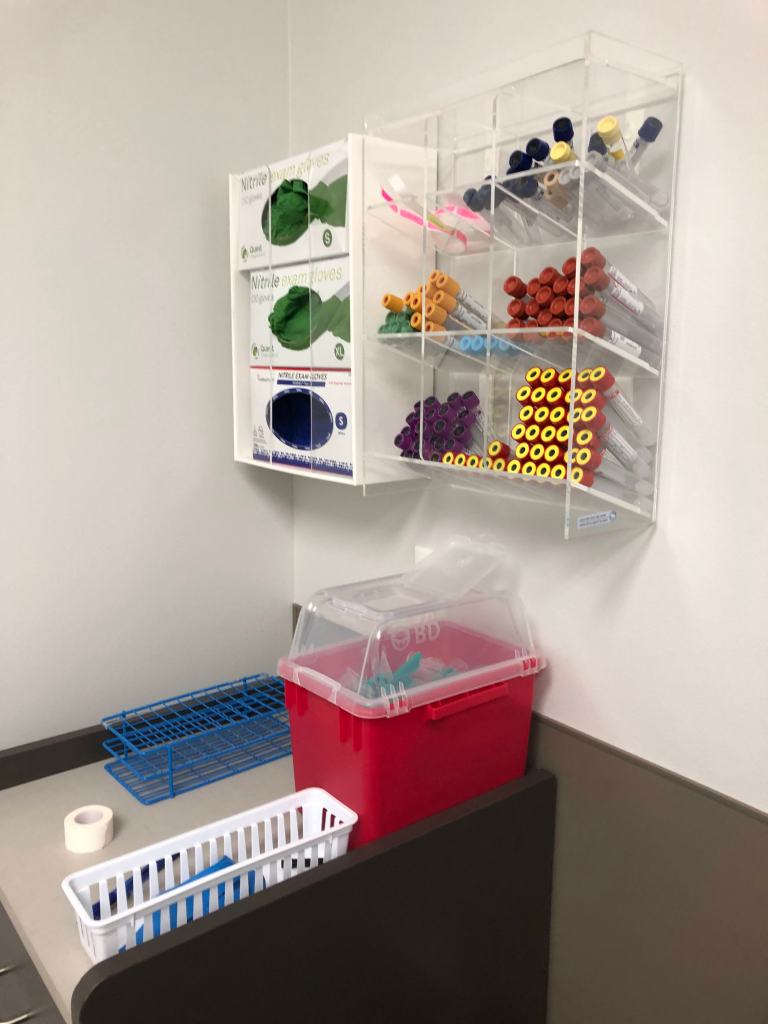
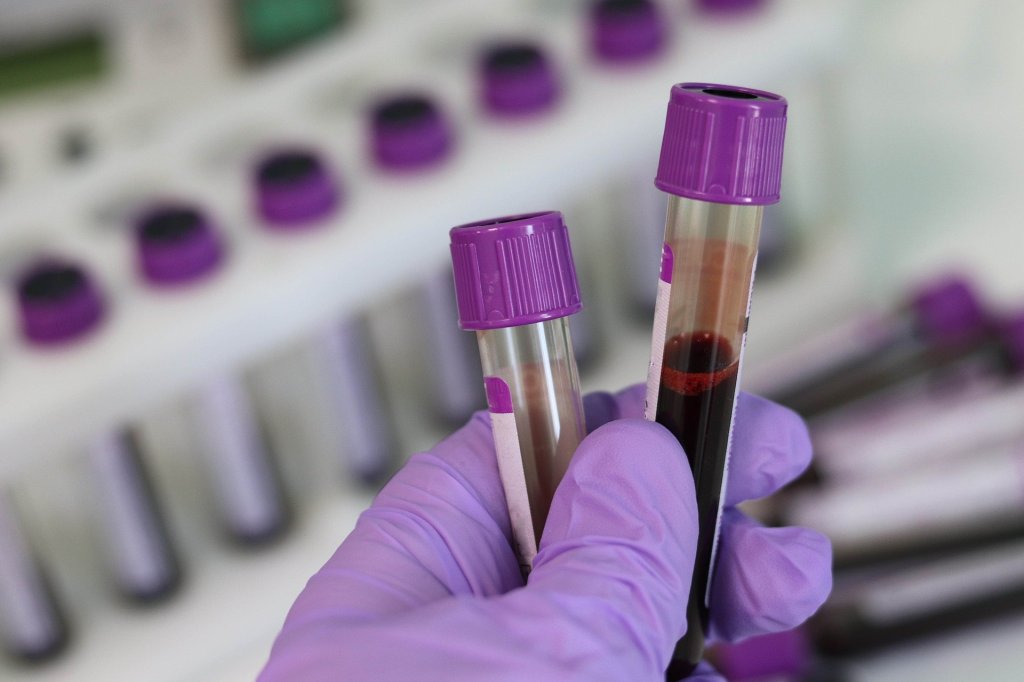


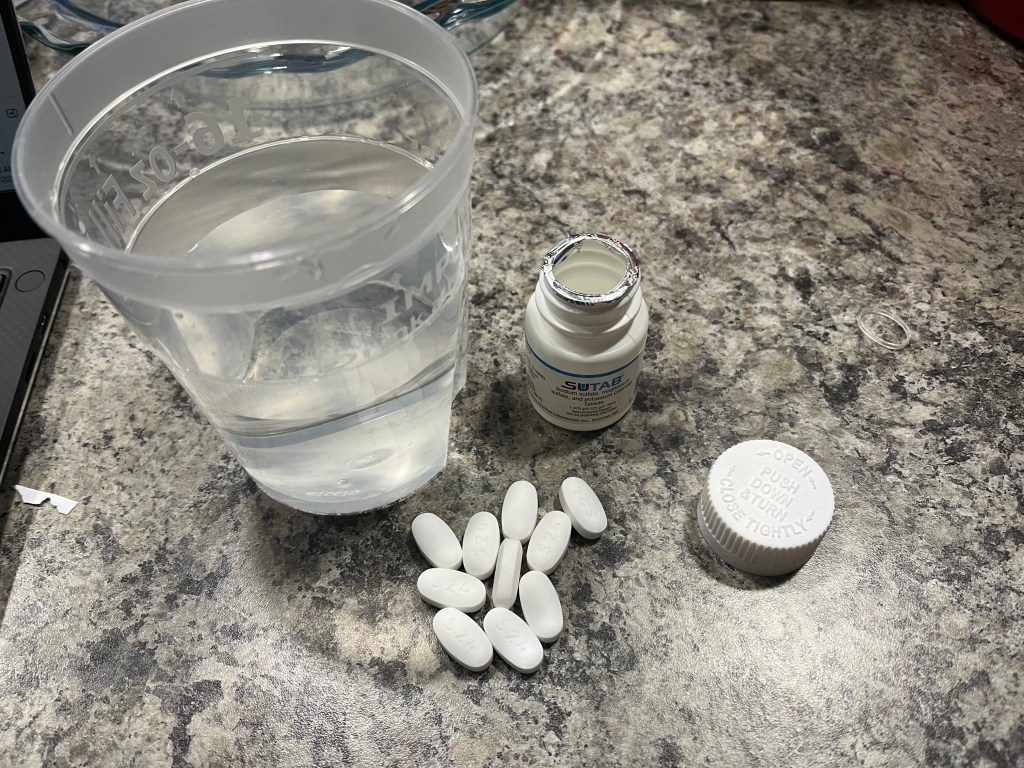
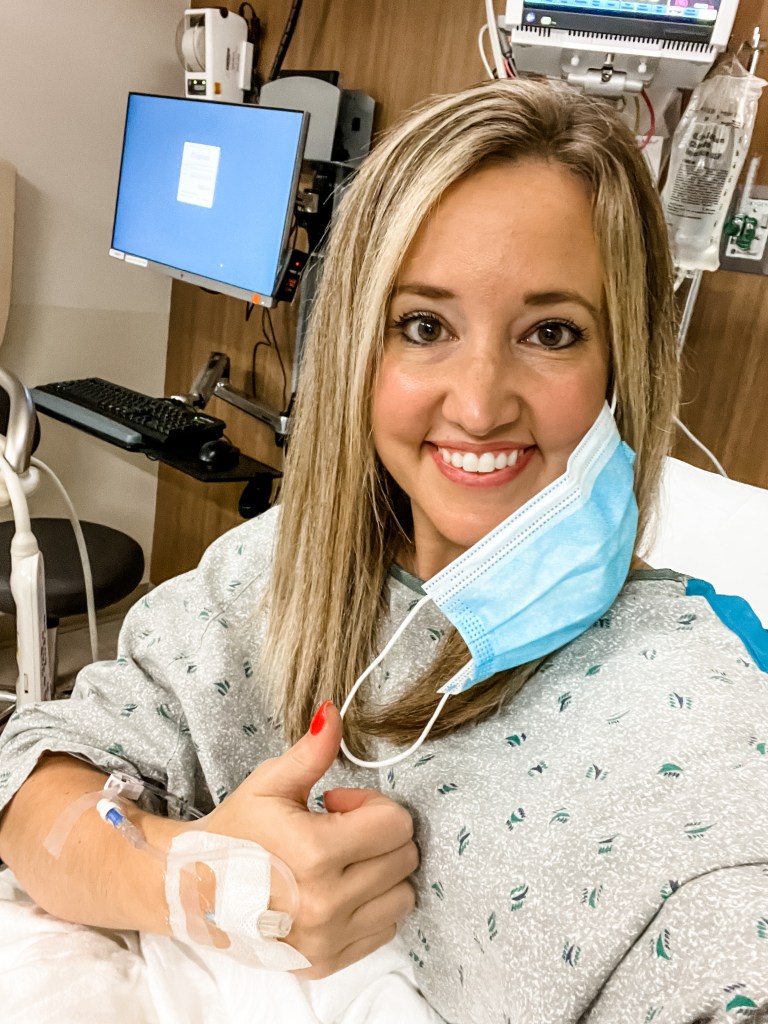
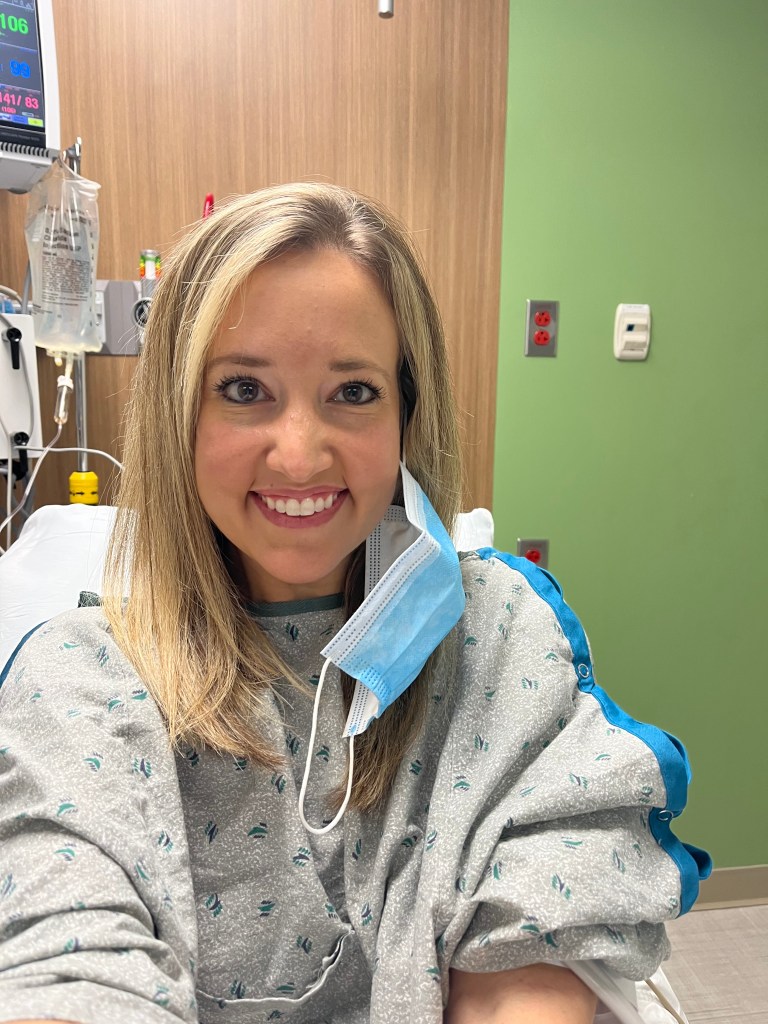



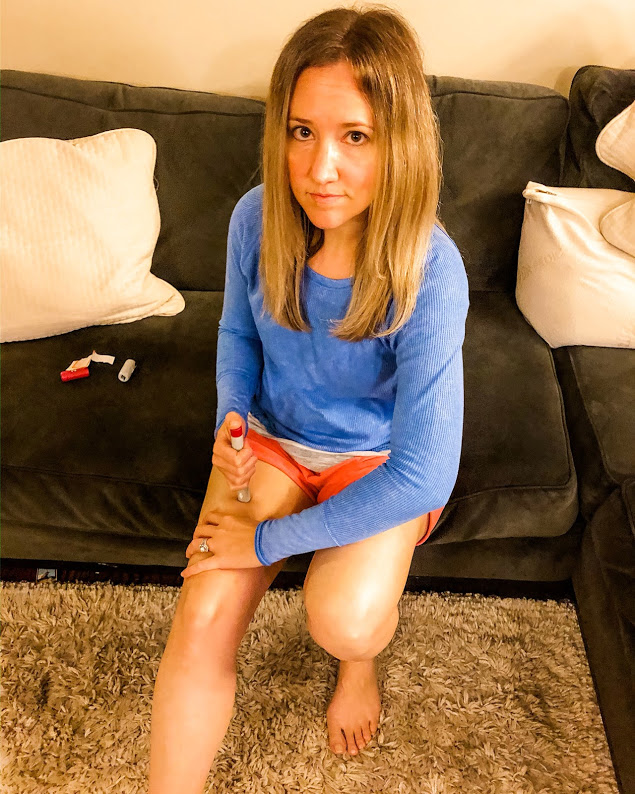





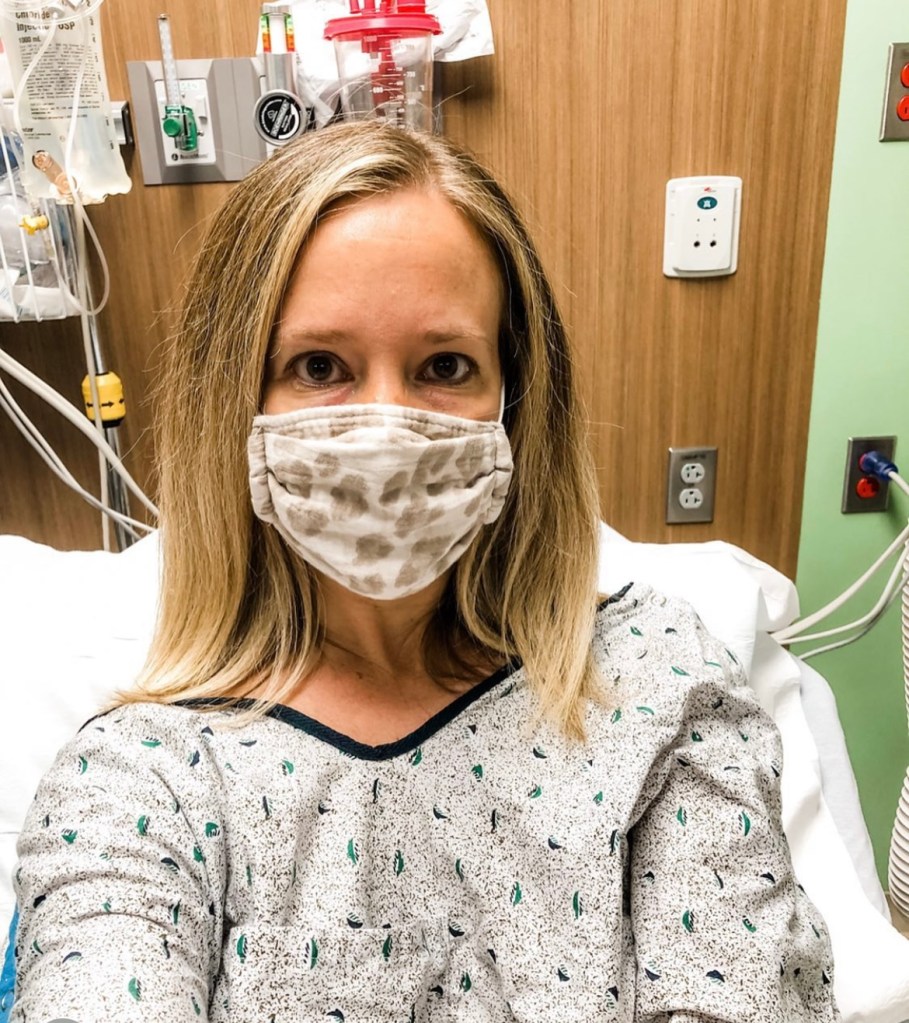
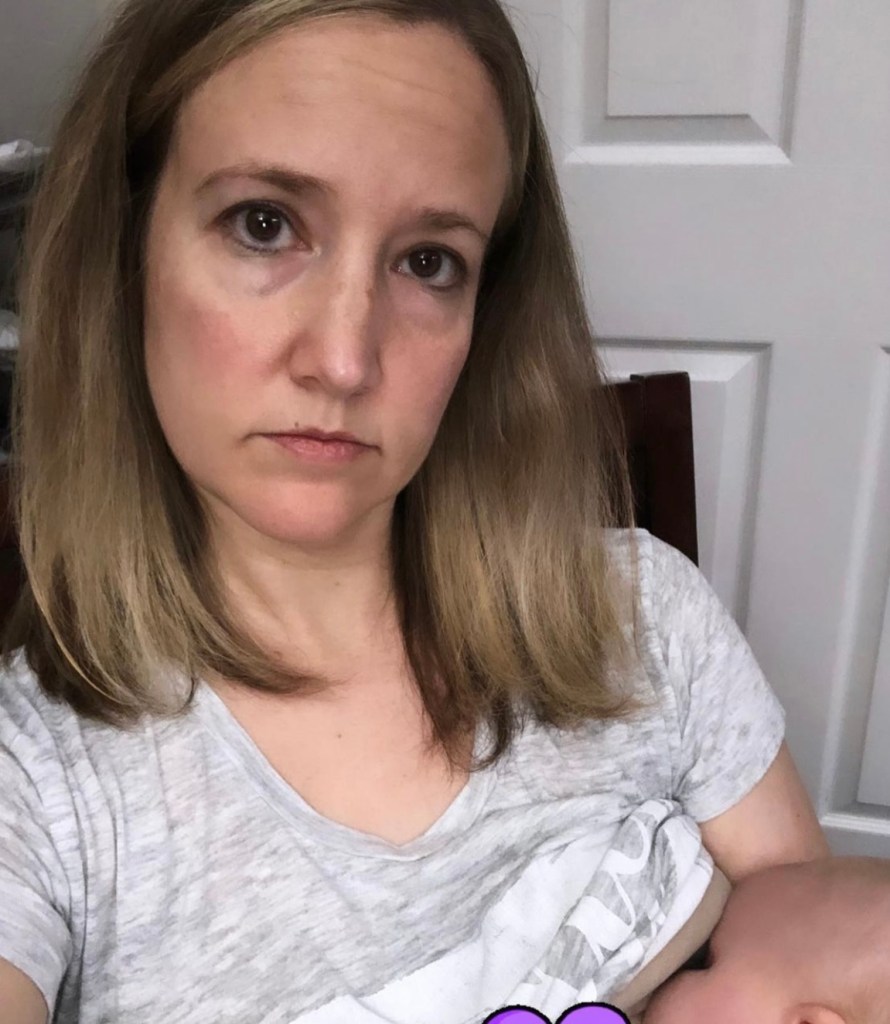
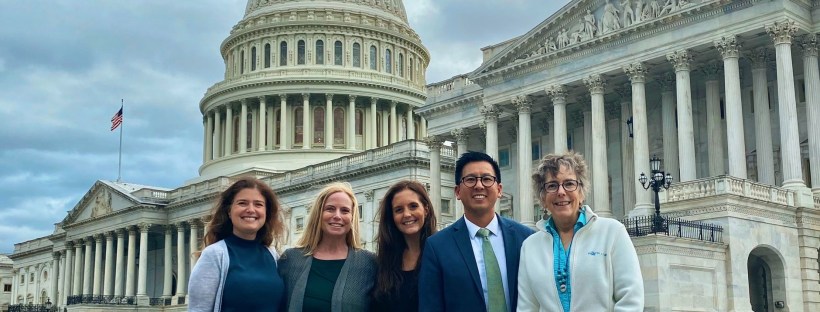






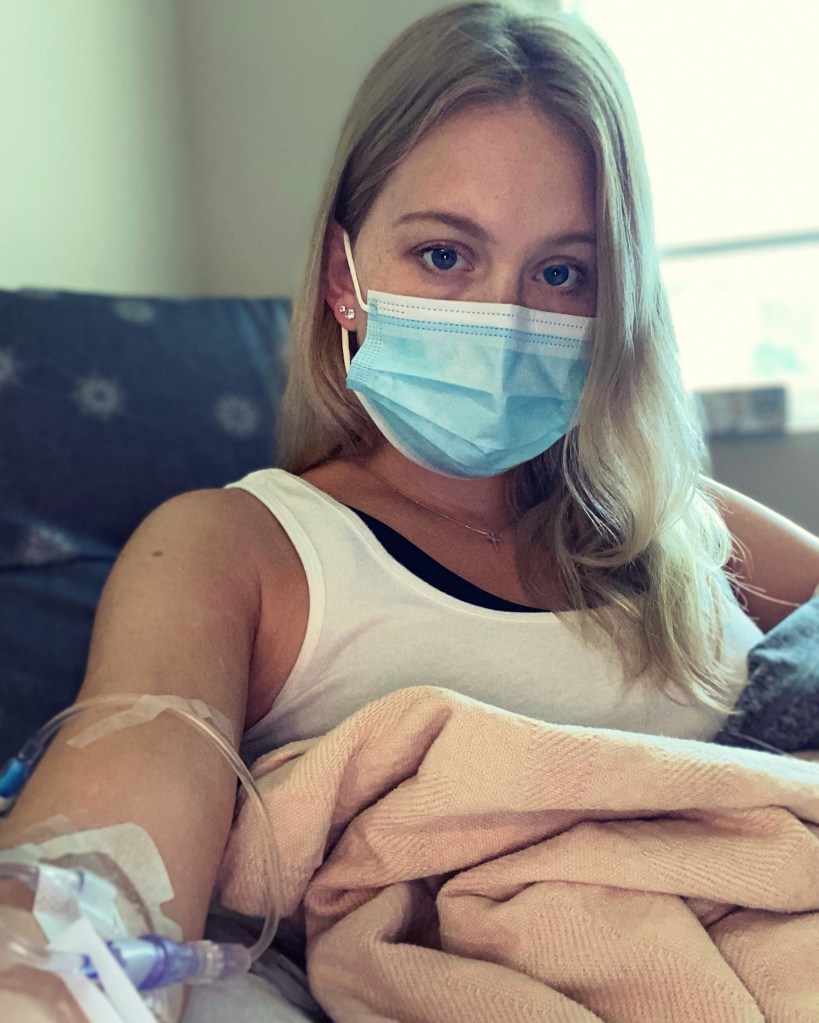










 lights camera crohn's