There’s breaking news in the IBD community—and I can’t wait to share it with you! I’m thrilled to announce the launch of a groundbreaking new website dedicated to empowering women with Inflammatory Bowel Disease (IBD) by providing them with the critical information they need about family planning, pregnancy, and postpartum. This resource is a direct follow-up from the recent Global Consensus Conference on IBD and Pregnancy, which brought together a world-renowned group of scholars, physicians, and patient advocates from around the globe to review all available science, share information, experiences, and insights in the hopes of offering helpful recommendations designed specifically for women with IBD.
This week on Lights, Camera, Crohn’s a look at the website which launched today (March 4, 2025) and what this means for the patient community, along with sentiments from the one and only Dr. Uma Mahadevan.
Empowering Women with Accurate, Consistent Information
Women with IBD often struggle with overwhelming misinformation and confusion when it comes to family planning and pregnancy. I can speak from firsthand experience as an IBD mom of three kids ages 7 and under. Up until recently, there have been a great deal of gray areas that make family planning extra stressful for those with Crohn’s disease or ulcerative colitis.
From varying recommendations by different healthcare providers to conflicting advice from different countries, the lack of a consistent message leaves many women uncertain and fearful about the health of both themselves and their pregnancies.
Dr. Uma Mahadevan, the Chair of the Global Consensus Conference and the primary investigator of the Pregnancy in IBD and Neonatal Outcomes (PIANO) study, highlights this issue, “Women with IBD suffer from so much misinformation and fear. Recommendations vary from provider to provider and country to country. That is why the Global Consensus brought together GI’s, teratologists, pharmacists, surgeons, etc., from around the world to come up with one guidance document for all patients to have a consistent message.”
The new website, which is translated in six different languages, aims to deliver just that—a unified, trusted source of guidance for women with IBD. With contributions from a multidisciplinary team of experts, the website consolidates the latest, evidence-based advice to help women navigate their pregnancy journey with confidence.
As the Patient Ambassador for the United States, I had a chance to see the work that went into this remarkable resource, and I must admit seeing the site brought tears to my eyes. I can’t tell you how fortunate we are to have this information and scientific research available. Our community has needed this for so many years—and now, the patient experience of navigating pregnancy with IBD will be transformed in the best way.
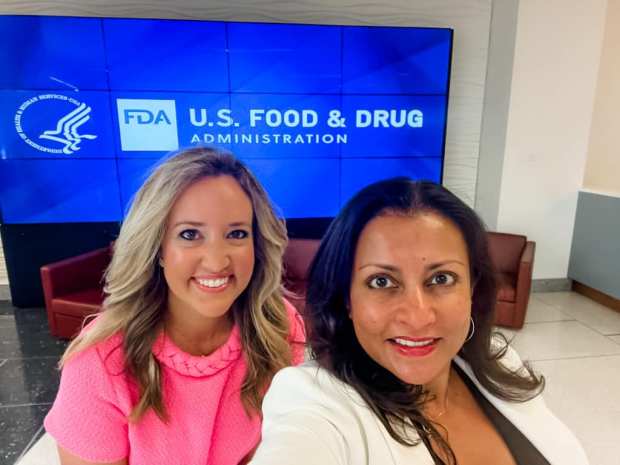
Visited the FDA with Dr. Mahadevan in July 2024 to share the latest guidance from the Global Consensus Conference.
Addressing the Fear of Stopping Medications
One of the most significant concerns among women with IBD during pregnancy is the fear of medication use. Dr. Mahadevan points out that the absence of consistent advice can lead to a dangerous default, “When there is no consistent message, often the fear default is to stop the meds, which can be harmful to the pregnancy – both mother and child.”
The website’s primary goal is to ensure that women understand the importance of continuing essential medications where necessary and how to work with their healthcare providers to safely manage their IBD during pregnancy. The risks of stopping treatment without proper guidance can negatively impact both the mother’s health and the health of the baby, so providing accurate, clear information is crucial.
As a woman on Humira since 2008, I remember how scared I felt about continuing my medication throughout my pregnancies, but I trusted my medical providers (gastroenterologist, maternal fetal medicine, and OB) and had flawless, symptom-free pregnancies because my disease was so well managed. Yes, it’s emotional when you’re 35 weeks pregnant and feel the baby kick as you’re about to inject medication into your body, but I always told myself that by keeping myself healthy, I was protecting my babies. I also found great comfort in participating in the PIANO study with my youngest and MotherToBaby pregnancy studies with my other two children.
Providing Confidence and Joy for Women
Dr. Mahadevan hopes this website and these materials will give women the confidence to move forward with their pregnancy with joy, not fear, and the strength to resist the misinformation.
The resources on the website are designed to reassure women that pregnancy with IBD is possible, and they can be proactive in ensuring their health and the health of their baby. With expert advice, personalized care options, and up-to-date research, the website offers a beacon of support for women navigating this journey.
What Inspires Dr. Mahadevan’s Work in IBD and Family Planning?
Dr. Mahadevan’s dedication to research in IBD and family planning is rooted in both her professional expertise and personal experience. As a leader in this field, she is driven by the desire to make a tangible difference in the lives of women facing IBD-related challenges. “The science around pregnancy is fascinating, and there are always so many new questions to study. However, the most important thing is that I personally know how hard it is to have a family, and I want to do what I can to help other women complete their families, as there is no greater joy!”
Her compassion and commitment to helping women with IBD fulfill their family dreams are at the heart of this new platform, which seeks to bring scientific clarity and emotional support to those who need it most.
A Call to Action for Women with IBD
The launch of this website marks a major step forward in supporting women with IBD who are considering family planning or navigating pregnancy. It is a space where women can find reliable information, connect with healthcare professionals, and feel empowered to make informed decisions that prioritize both their well-being and the well-being of their future children.
If you or someone you know is living with IBD and considering pregnancy, this website is a must-visit. Please help me in spreading the word so patients across the world are aware of the information available right at our fingertips. Together, we can break down the barriers of fear and misinformation, helping women move forward with confidence, joy, and support.
Visit pianostudy.org/GCC_video/ today to access the resources, expert advice, and community support you need to make informed decisions about your pregnancy with IBD.
Be a Part of PIANO
The PIANO Study is a powerful opportunity for women to get involved in this groundbreaking research that could help shape the future of healthcare for women living with IBD. By participating in this study, you can make a direct impact on understanding the unique experiences and challenges that women with IBD face.
Being part of this research gives you a voice in advancing medical science and contributing to discoveries that could improve the lives of countless women in the future. This is your chance to be a part of something bigger than yourself, to make a difference for others who share your experiences, and to support the next generation of women living with IBD. Together, we can pave the way for a healthier, more informed future. I’m so grateful that my youngest child is a part of PIANO and that we’re contributing to the amazing research that is going on.
Many women with Crohn’s disease or ulcerative colitis are diagnosed during peak childbearing years. Despite ongoing advances and strides in research, many questions remain about female fertility as it relates to IBD. This inspired Dr. Marla Dubinsky, MD and Dr. Zoë Gottlieb, MD at Mount Sinai Hospital in New York and Dr.Eugenia Shmidt, MD at the University of Minnesota to create The Women with Inflammatory Bowel Disease and Motherhood (WIsDoM) study. Since launching at Mount Sinai and the University of Minnesota in 2023 about 170 women with IBD have participated, and thanks to a generous grant from the Helmsley Charitable Trust, WIsDoM will continue to enroll participants until the end of August 2025. The goal—to enroll about 500 women across the United States and Canada by the end of next summer.
This week on Lights, Camera, Crohn’s we hear from these leading trailblazers in the IBD field to learn more about their aspirations for this monumental research study and how you can get involved.
The inspiration behind WIsDoM
Dr. Dubinsky and Dr. Gottlieb tell me they care for hundreds of women with IBD who are considering pregnancy, including those with a history of IBD-related surgeries.
“These women, along with their partners and families, often ask how their IBD or surgical history might affect fertility. Unfortunately, the available research on this topic is limited. Much of it comes from retrospective surveys or large database studies, which fail to give us a complete picture,” says Dr. Dubinsky. “Additionally, most of the existing data focuses on women who’ve had open J-pouch surgery for ulcerative colitis; given that many IBD surgeries, including J-pouches, are now done laparoscopically, this information is often not relevant to our current patients.”
They recognized the need for more comprehensive, up-to-date data to help answer these important questions to allow them to provide the best possible guidance for family planning to their IBD patients.
“Unlike previous research, WIsDoM gathers detailed, long-term data, allowing us to better understand the impact of IBD on reproductive health and identify potential risk factors impacting fertility in this population,” Dr. Dubinsky explains.
Main questions about female fertility and IBD that remain
We currently have limited information on how most IBD surgeries, other than open J-pouch surgery, may affect female fertility.
“Many of our patients with IBD have undergone other types of surgery, such as subtotal colectomy or small bowel resection, but we don’t yet know how these procedures might impact fertility. In addition, there is very little data on how other factors—such as the type of IBD, medications, the length of time someone has had the disease, other health conditions, family history, or sexual health—could influence fertility. Our goal is to give women a thorough understanding of how their IBD, along with their overall medical, social, and reproductive histories, might affect their ability to become pregnant,” Dr. Gottlieb says.
Who can participate in the WIsDoM study?
You must be:
A woman with IBD
Aged 18 to 45 years old
Planning to become pregnant in the next 15 months
Able to consent to participation
Live in the United States or Canada
Click here to hear from Dr. Dubinsky and Dr. Gottlieb firsthand.
What does participation involve?
When women join the study, they will be asked to complete an initial questionnaire that covers their IBD, surgical, medical, reproductive, sexual, and social histories. This will be the longest form you need to fill out and may take about 15 to 30 minutes, depending on your individual experiences. After completing the form, participants will receive a $50 gift card. You will also be asked to help obtain some of their medical records so additional information can be gathered about your health history.
“Once they are enrolled, participants will receive a survey each month. In this survey, they’ll be asked whether they’ve tried to conceive, whether they became pregnant, and if there have been any changes in their IBD, surgical, or reproductive health since the last survey,” says Dr. Gottlieb. “They’ll also be asked to describe their IBD symptoms, including whether they’re experiencing a flare-up or if their condition is well controlled. Participants will continue to receive these surveys monthly until they reach 12 weeks of pregnancy or until the study ends in July 2027, unless they choose to opt out.”
When the study ends (either at 12 weeks of pregnancy or the study’s conclusion), participants will receive an additional $50 gift card. If you become pregnant and experience a pregnancy loss, or if you become pregnant, have a baby, and wish to try for another pregnancy during the study period, you can re-enroll and continue participating.
Being proactive with family planning
When women and their families have a clear understanding of how their IBD, surgical, and medical histories may affect fertility—based on comprehensive, real-world data—they can make informed decisions about seeking fertility help sooner.
“This early guidance can help them get the support they need during the family planning process and avoid unnecessary delays in trying to conceive naturally if it seems unlikely to be successful. At the same time, it will also allow us to reassure some women that their fertility is likely to be similar to that of women in the general population, helping them avoid the financial burden of fertility treatments until they truly need them,” says Dr. Dubinsky.
Final thoughts
Through WIsDoM, we have a unique opportunity to make a meaningful difference in how women with IBD receive guidance about pregnancy and family planning. By gathering important data over time and using this to predict a patient’s risk of reduced- or infertility, medical providers can offer early support, including information on how surgery might affect fertility before a patient undergoes an operation.
“We hope that our findings will help change how healthcare providers support women with IBD when it comes to fertility, especially in terms of knowing when to refer patients to a fertility specialist. Currently, there are few clear guidelines on when to make these referrals, and we believe that, too often, we wait too long to offer women the support they need to conceive,” says Dr. Gottlieb. “This delay can impact their family planning and create unnecessary emotional and financial stress. Our goal is to use the data we gather to develop a risk calculator that will help us assess each patient’s individual risk for fertility issues, allowing us to refer them to the right resources earlier and give them the best chance to become pregnant successfully.”
Every patient deserves the most accurate and evidence-based information to make informed decisions about their family planning, and the hope is that WIsDoM will provide this valuable insight for women with IBD. As an IBD mom of three following bowel resection surgery, knowing that research like this is underway for current and future families does my heart good. By participating in IBD studies like WIsDoM, you help paint a clearer picture for how patients and families can be most supported during family planning and beyond.
Interested in learning more about WIsDoM and getting involved:
When you live with a disease like Crohn’s or ulcerative colitis, family planning takes thought and special consideration. The first-ever Global Consensus Conference on Pregnancy and IBD was held during Digestive Disease Week (May 2024) and part of the discussion focused on the latest recommendations for pre-conception counseling and family planning. This week on Lights, Camera, Crohn’s hear from Dr. Uma Mahadevan who co-chaired the conference, along with Dr. Christopher Robinson, a maternal fetal medicine specialist. As an IBD mom of three kids and the patient lead for the United States on this initiative, I’m excited to start sharing the latest guidance for our community.
The latest recommendations for IBD women
Couples should get pre-conception counseling.
Remission prior to conception for at least 3-6 months with objective evidence of remission.
All women with IBD should be followed as high-risk pregnancies (however that monitoring works in each country)
Pregnant women should take low dose aspirin daily by 12-16 weeks gestation to avoid preterm pre-eclampsia.
These recommendations were voted on and determined by more than 50 medical providers and IBD patient advocates from around the world. They are the gold standard, and the hope is that the recommendations help clear up the gray area and bring clarity to couples who are planning to grow their family and wanting to conceive.
“Our goal was to have a universal guideline that was the same worldwide. This would reduce confusion and avoid the default of just not giving women appropriate therapy. The Consensus really tried to advise what we, as pregnancy in IBD experts, do with our patients, so that women everywhere can have the same high level of care,” said Dr. Mahadevan.
Considerations for women prior to conception
Dr. Mahadevan says when a woman starts medication, she generally tells her whether it is a compatible with pregnancy or not.
“I also tell them when they are ready to consider conception to meet with me first. So generally – the education and family planning discussions should start before you are even ready to consider pregnancy. For couples, they should give their GI a 6-month window ideally to make sure there is remission, a chance to optimize medication, and get any testing done that is needed.”
Personally, I had bowel resection surgery in August 2015 while I was engaged. We knew our wedding was in June 2016, and following the surgery I reached remission for the first time in a decade, so timing was of the essence. I told my GI at a post-op appointment in November 2015 that we were planning to start trying for a baby right after our wedding. Knowing that, she put me on a prescription prenatal and folic acid to start prepping my body for pregnancy, I also had a colonoscopy the month prior to my wedding to confirm I was in remission.
Recovering in the hospital after my bowel resection surgery, with hopes of one day being a mom.
Dr. Mahadevan recommends patients start 1 mg of folic acid daily when she learns they are considering conception.
“The prenatal with iron can be bothersome to some patients so I wait for the OB to start that. I check Vitamin D, B12, and iron labs to make sure those are all good.”
Dr. Christopher Robinson, MD, MSCR, Charleston Maternal Fetal Medicine says preconception care is an excellent way to plan out a pregnancy path.
He went on to say, “We recognize that the best outcomes are achieved when preconception care is employed prior to conception for optimization of disease management. This is especially true of IBD where there can be a number of misconceptions about safety of medications and goals for nutrition and surveillance of the pregnancy. Thus, I would recommend preconception counseling and establishing a care plan with Maternal Fetal Medicine early in pregnancy (first trimester).”
What does pre-conception counseling entail
Preconception counseling can be extensive. You should expect to go through an entire healthcare maintenance checklist of the following:
Checking labs—vitamin levels, sometimes drug levels
Updating vaccines
Cancer screenings—pap smear, colonoscopy if appropriate
Ensuring the patient is in remission which may require a colonoscopy, intestinal ultrasound or other imaging
Making sure medications are compatible with pregnancy
Reviewing prior pregnancy and if there were complications
Discussing mode of delivery, referring to a Maternal Fetal Medicine doctor prior to pregnancy if prior complications or if a woman is extremely high risk (for example, prior blood clots), has an ostomy, or if there is evidence of malnutrition or difficulty with weight gain.
Discuss starting aspirin at week 12 and set up a visit schedule with your GI, as you’ll generally see them once per trimester.
I had four pregnancies—three healthy, full-term babies and one miscarriage. As soon as I found out I was pregnant I alerted my GI. From there I set up an appointment with my “regular” OB for the initial ultrasound at 8-10 weeks, and then moving forward I had monthly ultrasounds with a maternal fetal medicine doctor, appointments with my GI each trimester, and the regularly scheduled in-office visits with my OB. Even though I had flawless pregnancies each time (aside from the baby I lost around 7 weeks), I was considered “high risk” because of my history of Crohn’s disease and prior surgery.
I had three scheduled c-sections, not because I had perianal Crohn’s, but because my care team allowed me to decide what I felt most comfortable given my health history. If I could do it all over again, I’d do it all the same. I appreciated the extra surveillance for my children and for me, healed beautifully after each abdominal surgery, and was grateful that by staying on Humira until 39 weeks with my first child and 37 weeks with my younger children, I maintained my remission throughout pregnancy and after.
Dr. Robinson said while each pregnancy has specific needs, in general he also follows pregnancy with serial growth checks every 4 weeks across pregnancy (following the targeted anatomic scan).
“It is possible, if a patient has longstanding, well controlled disease, and an optimum prior pregnancy outcome history, to check a 32- and 36-week ultrasound for growth. However, in the first pregnancy, I agree with serial growth scans.”
What remission before pregnancy really looks like
Remission is often a difficult word to define when it comes to living with IBD. As Dr. Mahadevan tells me, “Not everyone can achieve complete remission.” So, what are doctors looking for and what should your target be?
“We are looking to give moms-to-be the best chance at conceiving, keeping the pregnancy, and having a health pregnancy. I like to see normal labs, normal calprotectin, normal colonoscopy, and imaging without visible inflammation. Not everyone can achieve this, but that is the ideal three to six months prior to conception,” explained Dr. Mahadevan.
“IBD has both genetic and autoimmune underlying components that can interfere with development of the placenta and affect maternal nutrition across pregnancy. In these cases, optimization of disease management can improve care and reduce risk for both mother and fetus. The goal of interventions is to reduce the risk for mother and infant through coordinated care with GI, MFM and OB/Gyn in pregnancy,” said Dr. Robinson.
Stay tuned to Lights, Camera, Crohn’s next week when the latest recommendations for IBD medication in pregnancy and lactation is disclosed. A full manuscript with all the recommendations and guidance is in the works, with hopes of the information being publicly available by the end of this year. I’ll be working on the companion piece for the manuscript dedicated specifically to the patient community.
IBD and motherhood can be beautiful, but it can also be extremely complex and complicated. Especially for those who deal with infertility on top of their Crohn’s disease or ulcerative colitis. As someone who did not have any struggles getting pregnant, I feel it’s extremely important to shed light on the fact that my story, my experience is just that—there are SO many other journeys that need to be shared and heard when it comes to infertility as it relates to IBD.
This week on Lights, Camera, Crohn’s we hear from several women with IBD who juggled their chronic illness while enduring In vitro fertilization (IVF).
Ashley Miller was diagnosed with Crohn’s disease in 2013 when she was 26 years old. As part of her family planning, she discussed her desire to be a mother with her OBGYN. Her doctor told her to give it a go for 6 months and if she didn’t get pregnant, they would start additional testing. Six months passed without a positive pregnancy test. Ashley followed up with her doctor and was diagnosed with bilateral hydrosalpinx (blocked fallopian tubes), because of her Crohn’s.
“Although this diagnosis was upsetting, I was happy to hear that the doctor found a cause for my infertility and that IVF would be a good option for me. I was so lucky to have success with my egg retrieval and subsequent embryo transfers.”
Ashley says IBD prepared her for infertility.
“I’m the type of person who does not like to dwell on issues, I like to take action right away. I am grateful that my IBD was in remission during this time, otherwise, I would not have been able to pursue IVF immediately. I needed clearance from my GI, maternal fetal medicine (MFM) physician, and the reproductive endocrinologist (RE) before starting IVF.”
Ashley is on Stelara and had bowel resection surgery in August 2021. She has a 3-year-old son and a 15-month-old daughter. She intentionally had her children close together thanks to IVF to capitalize on her IBD being in remission.
Jenn Carmichael was diagnosed with Crohn’s disease in 2006 when she was 21 years old. She got married in 2016 but was forced to wait to have kids because she was flaring. She manages her IBD with Stelara and azathioprine. Since her diagnosis she’s underwent an ileocolic resection, a revision, and several incision and drainage procedures (I&D) with setons for perirectal abscesses. Fast forward a few years and she was finally in remission.
Jenn and her husband started trying to conceive. After 6 months she followed up with her GI and consulted with a MFM doctor who specialized in IBD pregnancies.
“My MFM doctor was well versed on all the medications and complications of Crohn’s. He told me that due to my past surgeries if I were to get pregnant, I would need to have it confirmed via ultrasound right away. He explained that due to all the surgeries I’ve had in the abdominal region, that I was at a higher risk of having my fallopian tubes blocked and having an ectopic pregnancy. He also recommended I have a consultation with an RE since we had been trying with no success.”
Jenn underwent a full workup to investigate her hormone levels and had an ultrasound to look at her fallopian tubes. At this point, she was 36 years old. And while her tubes weren’t blocked, she had diminished ovarian reserve. She was told by her care team this was most likely a direct result of all the Crohn’s-related inflammation she had endured.
“Our infertility doctor recommended we start IVF right away. It was a difficult ovary stimulation that lasted much longer than normal (I was on stims for about 28 days vs. the normal 12 days). I wasn’t responding to the stim medications, but I was finally able to make it to the egg retrieval. Unfortunately, when I went in for my egg retrieval, I woke up to devastating news. They were not able to retrieve any eggs. I was heartbroken to say the least. We regrouped with our IVF doctor a week or so later and came up with a new plan.”
Jenn was put on a different medication protocol for the egg stimulation and was even told she should consider donor eggs. She started her second IVF cycle shortly after.
“Just as we started the stimulation phase of the cycle, I got sick with pneumonia and had to cancel the cycle. Then COVID hit about a month later, so all IVF cycles were canceled in my state for the time being. Around July 2020, we were able to try that IVF cycle again, but had to cancel once again due to no response to the stimulation medications.”
At this point Jenn told her RE that she would start to explore the egg donor option, but she wasn’t ready to give up with her own eggs just yet. She tried one last IVF cycle with yet another protocol. One egg was retrieved. The next morning her phone rang, and her heart dropped. Her doctor called to let them know the egg did not fertilize overnight and was abnormal.
Jenn once again re-grouped with her care team. Donor eggs were discussed. A specialized ultrasound showed her fallopian tubes were blocked. She left that appointment with information about an egg donor program, but she wanted to try another cycle with yet another protocol.
“Around the same time, I started to experience pain in my lower right abdominal area. I was admitted to the hospital and was diagnosed with bilateral tubo-ovarian abscesses. The one on the right started to tunnel (create a fistula) towards my sigmoid colon. I was brought to the OR shortly after not knowing if I was going to wake up with one or both fallopian tubes, either ovary or my sigmoid colon. Luckily, I have an amazing colorectal surgeon who’s been part of my team since I was diagnosed with Crohn’s. They did have to remove both fallopian tubes and my right ovary, but my left ovary and sigmoid colon were spared.”
The surgery took a toll on Jenn. Losing both her fallopian tubes, she knew without IVF, she would never be able to get pregnant on her own. During that time, she did a lot of thinking and research about IVF, Crohn’s, and what their future looked like. She also met with a social worker who specialized in infertility to help work through everything she was feeling.
“Once I was healed from surgery and mentally ready, my husband and I decided to pursue IVF using donor eggs. We worked with an egg donor agency to find an egg donor that we liked. After going through the process with all the administrative/legal paperwork and having our donor medically worked up, our donor was able to start the IVF cycle for egg retrieval. The egg retrieval was successful, and we had our first embryo transfer in August 2021. Our first transfer was successful, and I am currently 25 weeks pregnant expecting our first child, our sweet baby boy in May 2022.”
Christina LaDue was diagnosed with Crohn’s disease in 2010 when she was 20. She had a bowel resection at age 23 to remove a fistula and her mom had the foresight to ask that an OB/GYN surgeon be present to ensure there was no damage to her reproductive organs.
“The OB/GYN noted that the inflammation in my pelvis was so great that he could not make a determination about my fertility at that time. When I shared the post-op reports with my PCP, he indicated that because of the noted inflammation I should only wait 6 months (as opposed to the one year that you’re supposed to wait) before pursuing assistance. After getting married and trying for six months I sought a referral to a RE who ran tests and concluded that my tubes were blocked due to scarring from my abdominal surgeries. She had us go right to IVF (as opposed to IUI first).”
Christina started her first round of IVF in November 2018. None of the fertilized embryos made it. She did another round in February 2019 and did a fresh transfer on Day 3, which was also unsuccessful. She did her first frozen embryo transfer (FET) in April 2019 and her son was born in December 2019. When he was 18 months old, she returned to the RE and did another FET in November 2020, which was unsuccessful. With one embryo left, they did an FET in February 2021 and recently welcomed a son to the world in October.
“The most triggering for me is during the initial routine testing via ultrasound my RE found fluid in my abdomen. This was extremely upsetting to me having undergone multiple treatments for recurrent abscesses because of a fistula. I freaked out and paged my GI who ordered a stat MRI. The MRI showed I have endometriosis and hydrosphix (fluid in my tubes) but nothing was wrong with my Crohn’s disease. That said, I was a huge emotional mess waiting for the MRI results and I thought for sure I was rocking another fistula.”
Christina recently started Inflectra (a biosimilar), she was previously on Remicade from September 2013-October 2021.
Megan Picucci was diagnosed with Crohn’s disease in April 2017 when she was 30 years old. After being cleared by her GI and MFM she started trying and got pregnant. Unfortunately, shortly after finding out the news she started bleeding and had an ectopic pregnancy.
“Once I finally got my period in February 2020, I had an hysterosalpingogram (HSG) to check if my tubes were being blocked. It was inconclusive. Luckily, because of my prior abdominal surgery with my IBD and the ectopic pregnancy, I could switch right to IVF. All the bloodwork, shots, etc. was rough but I felt like my Crohn’s journey helped prepare me. I was used to bloodwork, I was used to injections, I had a PICC line at one point, so I was used to mixing meds.”
The first round was promising for Megan and her husband. There were several embryos and her first FET stuck.
“I waited with bated breath. I was sure it was another ectopic for no reason other than I’m not lucky when it comes to health issues. Well, she (though we didn’t know that until delivery) stuck and though I had moments of panic of something bad happening, it didn’t.”
The emotional toll of IBD weighed heavily on her as she prepared to bring a life into this world. She is on Remicade and had emergency bowel resection surgery in April 2017 and the reconnection surgery in July 2017.
“I had a lot of… ‘should I being doing this?’ thoughts. Even though my IBD was under control prior to trying I also knew that could change at any moment. How could I raise a kid with a flare or surgeries and what if I pass my IBD on? But having a great support system made me confident I’d have help if those things occurre. Happy to say my daughter is now 11 months old.”
Jade Fiedler was diagnosed with Crohn’s disease in 2012 at age 22. Jade is on Humira and had an ileocolic resection in July 2015. Her and her husband tried for a baby for one year, but around 7-8 months in she felt something wasn’t right.
“We saw an OB who specialized in RE. We took an aggressive route for treatment. I had an HSG (right tube was blocked and could not flush), Hysteroscopy (which found polyps) and an ultrasound which found a heart shaped uterus. We immediately jumped into 3 back-to-back IUI cycles due to those findings and my husband’s sperm sample being mostly normal with a tiny morphology issue. After those failed, we did a laparoscopy which found more polyps in my uterus (endometriosis), and they found the tube was blocked and covered in scar tissue due to Crohn’s surgery in 2015.”
Jade then had two more failed IUIs but didn’t stop there.
“I advocated for insurance coverage at work, and they covered our first cycle of IVF three months later. We got two genetically normal embryos and one was transferred on October 4th. I am currently 19 weeks pregnant!!!”
She is happy to share what she sent to her employer for a reference if you need it.
Jade says living with IBD and going through IVF is “terrifying” since you must be in remission with your Crohn’s to even try IVF.
“I was going through an emotional toll of finding out that not only are we not able to get pregnant right now, but there’s a very good chance we never will, and most signs point to me as the problem. It’s all encompassing and overwhelming.”
Much like IBD, Infertility is a full-time job.
“Balancing appointments and results and medications and insurance coverage and time off work — all while trying to stay NOT stressed to cause a flare. It’s an added issue when you have scar tissue and scars, which creates more of a puzzle for doctors. It’s really hard to have two diagnoses that are totally out of your control and leave you hating your own body.”
Even though Jade is due with a baby boy in June she still experiences a gamut of emotions. Everything from joy and anxiety to guilt, happiness, and fear. Her and her husband are leaning into their faith and praying their son will continue to grow at a healthy rate and arrive safely.
Katie Ferriss was diagnosed with Crohn’s disease in 2012 when she was 26 years old. After six months with no luck and a series of tests, she learned her right fallopian tube was a hydrosalpinx (Dilated fallopian tube). Unfortunately, the tube needed to be removed, which put her at another disadvantage for getting pregnant.
“We moved forward with 3 medicated IUIs back-to-back-to-back since I had a dominant follicle on the left side each time. Unfortunately, all the IUIs failed. Our next step was IVF. I was so hopeful; I just knew this would work for us. My first retrieval only yielded 4 eggs, 3 of which were mature, 2 fertilized, and 1 made it to the blastocyst stage. We tried a fresh transfer, but ultimately did not end with a pregnancy.”
Katie and her husband were devastated. They had gone through IVF and had nothing to show for it—not even additional embryos to try again. Through the process, Katie learned she was a ‘poor responder’ to medication and had poor egg quality, which is common with autoimmune disease.
“After a couple of months, we moved forward with another retrieval. This time our RE changed to a much more aggressive protocol with higher doses of stims right out of the gate. I responded much better overall and produced several more mature follicles.
During our second retrieval, the RE was able to retrieve 10 eggs with 9 being mature, and at the end we were able to freeze 2 high grade embryos. We thought we would be able to move right into a frozen transfer cycle, but Crohn’s had other plans for us.”
Because of the massive amounts of infertility medication and the unbelievable stress levels, her body almost forced her to rest—she had a Crohn’s flare.
“My GI was adamant I stop fertility treatments until my Crohn’s was in remission. I would do a colonoscopy in 6 months to learn where I was at. Again, completely devastated that our plans for a baby were put on hold due to my body not cooperating. My GI doctor started me on a different medication, Cimzia, that was very pregnancy friendly as it does not cross through the placenta to the baby if I was finally able to get pregnant. Thankfully 6 months later during my follow-up colonoscopy, my Crohn’s had been put in remission, and I was able to be put back in fertility treatments.”
Katie and her husband were hopeful that the stars were finally aligning for their family. But shortly thereafter they had a failed transfer. They only had one frozen embryo left.
“My RE then tried another test called an Endometrial Receptivity Analysis (ERA) to make sure we were transferring at the optimal time. That test led to another discovery that we were transferring too soon, and I needed 24 more hours of progesterone. We started another transfer cycle using a different medication protocol and transfer timing and found out 10 days later it worked. I went on to have a very uneventful pregnancy, and our miracle baby was born 9 months later in March 2019.”
Katie now manages her Crohn’s with Stelara. She developed a stricture and had bowel resection surgery in August 2020. She credits the surgery as giving her life-changing relief. Her and her husband now have two children—their biological son is two. They are in the process of adopting their 3-year-old daughter from foster care.
COVID and IVF
On top of these challenges, going through infertility and oftentimes being immunocompromised from IBD medications through the pandemic has added extra challenges for everyone involved.
“Every procedure, appointment, surgery, getting sad news, even “getting knocked up” was alone. Alone in a cold room, where you are undressed in front of strangers and probed and in pain. I did it all alone. I found a strength in myself that I never knew existed and for that, I have changed. In some ways I am stronger; in others I am damaged. Trauma and infertility go hand in hand. This is something I will have to work through, which I will, but this chapter of my life will never be just a dull memory,” said Jade.
Advice for IBD mamas in waiting from those who have lived it
Allow yourself time to grieve your infertility diagnosis and find support with friends and family. Try to stay positive and keep your “end goal” of having a baby in mind.
Be patient, sometimes your expectations of procedures and embryo transfers may change due to situations out of your control.
Stay hopeful. It may seem like there is no end in sight at times, but always have hope.
You are strong and will get through this.
This is true for any woman struggling to get pregnant: it sucks. Just acknowledging how painful it is to want something so badly and feel like it is unobtainable. It’s OK to feel those big feelings.
Use your knowledge, expertise, and experience as an IBD patient to your advantage. You know how to navigate medical coverage and insurance, don’t hesitate to advocate for yourself. You’re in a much better place to deal with all this medical stuff than someone who does not have a chronic illness.
The IVF process is long. The first appointment for the first positive pregnancy test took 10 months. And the second time, from the time we resumed working with our RE to the positive pregnancy test took 5 months.
Trust your medical team. And if you don’t trust your medical team, it’s OK to find a different doctor or a different clinic. There are no guarantees in IVF and it’s hard for folks, especially after going through all the treatment to have a failed cycle or failed transfer.
Give yourself grace you did nothing to cause your IBD and you also did nothing to cause your infertility. However, it is also ok to be mad, have low moments, and be sad. All those emotions are valid, allow to yourself to have them.
Get the colonoscopy and upper endoscopy done before you start actively trying. Make sure you have records shared for BOTH clinics. Don’t let people pressure you into taking medication for fertility that may offset or flare up your IBD. Don’t forget to remind your providers every time – they may forget.
Find support groups. There are more women than you think going through this. My Facebook community that is an IVF/IUI due date group for women who were due winter/spring of 2021 was the best community I could ask for.
Talk about it. if you feel comfortable. Share your story, share your pain, more people go through this than we realize.
You are more capable than you think. You are stronger than you will ever know. This is going to suck and it’s going to challenge your mental health, friendships, relationship with your husband, your connection to family, you work life, etc. it’s going to change you in ways you could ever imagine and it’s going to rip your heart out of your chest because you can’t know this pain unless you’ve lived it. But I promise you will come out stronger and you will be changed in the most incredible ways. Hang in there.
I can see your fear and it’s big. But I can see your courage and it’s bigger.
Don’t give up hope. You are so much stronger than you give yourself credit for; IVF is incredibly difficult, but you CAN DO IT!!
Do your own research. Find your tribe – IBD and IVF warriors are incredible and there are plenty of us out there in both camps. Get a therapist. Get a support group. Read books. Bake. Find your coping skills and don’t give up. You’re a badass. Having IBD is hard. Going through infertility is hard. But you can do hard things.
This post is sponsored by the American Gastroenterological Association (AGA). I am a paid program Brand Influencer; this post is sponsored and includes my own personal experiences.
While bringing a child into this world is one of the greatest miracles one can witness, it also brings about a world of worry for women with Inflammatory Bowel Disease (IBD). From the moment family planning begins, throughout pregnancy, and during postpartum, when you live with Crohn’s disease or ulcerative colitis it can feel like you’re just constantly waiting and wondering when the other shoe is going to drop. The looming fear of a flare during pregnancy and once baby is here is valid, and it’s real.
The unpredictability of IBD is amplified ten-fold when you have another life to care for and another life on the line. As a mom of three kids, ages four and under, who’s lived with Crohn’s disease for more than 16 years, flaring and being forced to leave my family to be hospitalized is something that’s always in the back of my mind. I know in my heart of hearts, it’s not a matter of if, but when. So how can we thrive through the unknown and not allow this fear to rob us of the joy of motherhood? The American Gastroenterological Association’s IBD Parenthood Project aims to serve as a resource every step of the way to help you feel less alone and more in control of your wellbeing.
Reading Between the Positive Pregnancy Lines
When you receive a positive pregnancy test, your world changes forever. It’s at this point that your IBD directly impacts another life. Prior to becoming a mom, I used to wait until the last possible moment to head to the emergency room. For one of many hospitalizations in my 20’s, I waited so long that my dad had to carry me as a grown woman through the hospital doors like a groom carries his bride. Fast forward to present day, and I’ve learned that it’s in my best interest to wave the proverbial white flag when I start experiencing symptoms that are sidelining me more than they should. The moment you relinquish control of your illness and see it less as an adversary and more as an ally, is the moment you won’t constantly feel pushed up against a wall. While it’s not easy to admit you are struggling, it’s empowering to know you’re being proactive and doing all you can to thrive.
When I write my gastroenterologist (GI) on the patient portal and express concerns about how I’m feeling, she calls me back and we come up with a game plan that makes the most sense. After I had my daughter, Sophia, I started feeling abdominal pain shortly after bringing her home. My GI knew I was breastfeeding and called me with safe options so that I could continue to do so. Because we nipped that minor flare in the bud, my remission was maintained, I didn’t land in the hospital, and I was able to be home and be present for my growing family.
I delivered my third baby, Connor, in July, and since then I’ve noticed an uptick in bathroom trips and abdominal pain. Since Connor is my last baby and I know I’ll never feel as well as I did when I was pregnant, it’s a bit more emotional for me. Luckily, with all three of my pregnancies, my Crohn’s was completely silent. I felt like a “normal” person. Knowing that it’s just me and my Crohn’s from this point forward hits differently. There have been countless days where I have been forced to keep a baby carrier in the bathroom, readily available, with space for my two older children to stand or play while I sit in anguish on the toilet wondering if this is it as I look with tear-filled eyes at my three healthy children before me. I won’t be surprised if I reach out to my GI in the days ahead for guidance, just to be cautious. I have a heightened awareness right now about the extra bathroom breaks and the gnawing pain that’s coming and going after I eat. Whether you are beginning the family planning process or postpartum, ongoing communication with your GI through all stages of having children is so important.
Addressing the Fears of IBD Women
The IBD Parenthood Project aims to address misperceptions about IBD and fears many women with IBD can experience through all phases of family planning (conception, pregnancy and after delivery).
Patients can find answers to common questions like:
Can I get pregnant with IBD?
Does IBD affect my fertility?
Will I pass IBD on to my baby?
Can I stay on medicine during pregnancy?
What if I flare during pregnancy?
Is it possible to have a vaginal delivery?
Can I breastfeed while on medicine?
Does my medicine change how I vaccinate my baby?
When it comes to the postpartum period, there’s a guide for postnatal care. The toolkit is a direct response to survey findings that reported women with IBD want more and better information about managing their disease. Being proactive and advocating for yourself throughout the pregnancy journey and as an IBD mom will not only make you feel empowered, but provide you with a sense of control, despite the unpredictability of your disease.
Thriving in the Face of the Unknown
Whether you were diagnosed with IBD prior to starting your family or after you delivered, Crohn’s and ulcerative colitis force us to wake up each day without knowing what the next hour will bring — all while raising children. Trust that your IBD will serve as a foundation for strength and that your kids will be your greatest motivators to push through and see the beauty that exists in your life despite your chronic illness. The IBD Parenthood Project is an exceptional tool that’s a reminder we are not alone in our worries, our dreams, and our struggles. I’m grateful our community has a resource that removes the gray area so many of us have encountered as IBD moms and helped be a light to lead us on our way to successful pregnancies, families, and motherhood journeys.
This post is sponsored by the American Gastroenterological Association (AGA). I am a paid program Brand Influencer; this post is sponsored and includes my own personal experiences.
Whether you’ve been daydreaming about being a mom since you were a little girl or found your lifelong partner and are exploring the possibility of a future that includes pregnancy and motherhood, creating a family when you have IBD takes a bit more planning than for the average person. My journey to motherhood unfolded differently than I had anticipated. For as long as I can remember, long before my Crohn’s disease diagnosis at age 21, I aspired to one day have children.
After I received my IBD diagnosis in 2005, and then when I was put on a biologic in 2008, my mind often raced when it came to reaching the milestone of motherhood. But being that I was only in my early 20s and single, I didn’t feel much pressure and figured I would cross that bridge when it was time for me to walk it.
Fast forward to June 2015, I had just gotten engaged to the love of my life, Bobby. Less than a month later I was hospitalized with my third bowel obstruction in 16 months. Surgery was the only option. On August 1, 2015, while planning my wedding, I had 18 inches of my small intestine removed, along with my appendix, Meckel’s diverticulum, and ileocecal valve. Up to that point, surgery had been my greatest fear, but my care team comforted me by saying the bowel resection would provide me with a “fresh start.” A fresh start that would help when it came time for family planning. A fresh start that put me into remission for the first time in my decade-long battle with the disease, paving the way for married, family life.
Leaning on the IBD Parenthood Project for Guidance
When you’re a woman with IBD who hopes to be a mom one day, it’s not unusual to feel lost and confused about how to navigate family planning, pregnancy, and beyond. Even though the thought of having a family can feel daunting—believe me I get it—with proper planning and care, women with IBD can have healthy pregnancies and healthy babies. But sadly, many women with IBD decide not to have children based on misperceptions about their disease and pregnancy. The number of women with IBD who are voluntarily childless is three times greater than that of the general population. It’s heartbreaking to think of all the women with IBD who could be moms but are not because they aren’t aware resources like the IBD Parenthood Project exist.
Openly communicating your future plans with your care team long before you want to start trying for a baby helps set the stage for what lies ahead and enables your gastroenterologist (GI) to tailor your treatment plan accordingly. When I had my post-operative appointment with my GI in November 2015, eight months before my wedding, my husband and I let her know we wanted to capitalize on my surgical remission and get pregnant as soon as we could after our wedding day. With that intel, my GI put me on a prescription prenatal vitamin, folic acid, and vitamin D, along with my biologic. Now as a mom of three healthy children, who had three healthy pregnancies while living with Crohn’s, I credit my GI for her proactive efforts that set me up for success and deep remission over the past six-plus years. Prior to trying to conceive, I also scheduled a colonoscopy to further confirm that my Crohn’s was under control. My GI would walk in after each procedure with a big grin on her face and would give us a thumbs up and say we had the green light to try for a baby. Having her stamp of approval made me feel much more at ease.
Time is of the Essence
I know I was extremely fortunate with the timing of my surgery and remission and the fact that I did not have any issues getting pregnant. It can be much more challenging and heartbreaking for others. If you’re flaring or symptomatic, the likelihood of those issues presenting in pregnancy is significant. When it comes to the “rule of thirds”— one third of women with symptoms improve, one third get worse, and one third experience the same symptoms as prior to pregnancy — you want to be mindful of how you’re feeling. I understand remission doesn’t happen for everyone. I get that it’s hard to be patient when all you want is to have a baby and your biological clock is ticking. But don’t rush into a pregnancy unless your health is in check.
As a trusted voice in the GI community, the American Gastroenterological Association is dedicated to improving the care of women of childbearing years living with IBD and is committed to redefining industry standards to further optimize health outcomes for mother, baby, and provider. That’s why it created the IBD Parenthood Project as a resource for women and HCPs through the pregnancy journey.
While various providers can be consulted during pregnancy (OB, dietitian, lactation specialist, psychologist, NP, PA, midwife, and pediatrician once the baby is born), an OB and/or maternal fetal medicine specialist should lead pregnancy-related care and a GI with expertise in IBD should lead IBD care. Communication among these providers, as well as any other providers involved, is very important. During the family planning process and pregnancy, think of yourself as the point person, leading the charge and making sure each member of your care team is in the know.
Be Overly Transparent
If pregnancy and motherhood is something you are hoping to embark on as part of your life journey, be proactive and articulate your needs and wants, even if they are years down the road. The IBD Parenthood Project toolkit does most of the homework for you and lays the groundwork for your roadmap. It’s empowering to be prepared and to be well-versed on how to best manage pregnancy while taking on IBD.
Now that my family of five is complete, when I reflect on how we came to be, I’m grateful for the resources and support I had every step of the way and that my Crohn’s disease didn’t rob me of the future I had always hoped for.
When IBD mom Jessie Magaro was pregnant with her first child, she knew early on she wouldn’t be able to carry another baby herself. Between the hormones from IVF and her Crohn’s disease raging, there was no way her or her doctors felt comfortable embarking on another pregnancy.
Before she got pregnant, Jessie had been in remission for more than 12 years. With pregnancy and IBD, there’s the ‘rule of thirds.’ One third of women will see their symptoms improve, one third will stay the same, and one third get worse. Unfortunately, Jessie fell into the last category. Since having her daughter, Mary Ligon on New Year’s Eve 2018, Jessie’s gotten an ileostomy and has grappled with her Crohn’s being out of control. When her and her husband started thinking about baby number two, she knew surrogacy was her safest and smartest option.
“My daughter Millie (born in April 2021) needed me more to be there as her momma once she got here than she needed me to carry her. Not only was my baby safer, but I was in a much better position health-wise to care for both my daughters.”
The Surrogacy Process
Surprisingly, the FDA controls surrogacy and has specific requirements for the IVF part of the process. Jessie recommends making sure your fertility clinic is well-versed on how everything goes down. Surrogates and biological parents go through medical testing and psychological evaluations prior to the transfer of the embryo.
“This was probably the hardest part for me mentally and emotionally. I was so frustrated and hurt that I had to pay someone a pretty penny to tell the government that I was mentally ok to have my own baby. It was just pouring salt into an already large and festering wound. Can you imagine having to have a stranger tell you if it was ok or not for you to bring your own child into this world?”
It’s important to note that surrogacy laws vary state to state, but in Georgia (where Jessie lives), you must adopt your baby back from the surrogate, even if the child is 100% genetically yours.
“You hire an attorney (one for yourself and one for your surrogate) and they actually file a lawsuit claiming your parental rights to the unborn baby on your behalf. I had to go before a judge and field questions on why I was pursuing surrogacy and whether or not I felt my husband and I were able to take care of the child once it was born. Again, insult to injury.”
There are several ways to go about surrogacy:
You can hire an agency to find you a surrogate and manage the process
You can use a friend or family member (they will still have to be medically and psychologically cleared by the clinic)
You can try to find one via word of mouth in your community.
There are tons of Facebook groups where you can “match” with one (local, regional, national, interest groups i.e., christian, altruistic, low comp, natural minded, etc).
“Normally, you would be able to attend all OB appointments with your surrogate, but Covid made things a little trickier for us. We were unable to attend the transfer, which was sad, but I was able to go to a fair amount of the appointments. My husband unfortunately wasn’t allowed to attend any. We both were allowed to be in the room for the birth though and that was the most important thing to us.”
The experience of having a surrogate
Jessie says had she not been able to carry her first child that she feels surrogacy would have been harder on her. She feels so fortunate that she was able to experience pregnancy once.
“I had already gotten to a place mentally and emotionally where I knew the only way to get my daughter here safely was by having someone else carry her. I wasn’t ever triggered per se by seeing a pregnant belly because I knew she was safer inside our surrogate. I had so much PTSD and trauma from my first pregnancy as well that looking at another pregnant person never made me think “oh man I wish that was me again” if that makes sense. I did/do still deal with mourning though over how pregnancy played out for me and that I was unable to carry safely again. I also find myself spiraling occasionally thinking about how much it cost us to get our children here versus someone who could just have them themselves naturally. It’s been a massive financial burden/sacrifice for my husband and I (but oh so very worth it).”
The Financial Cost of Surrogacy
When looking into surrogacy, Jessie tells me you can ballpark around everything costing $100,000. There are many factors involved that play into whether that number is more or less depending on if you’ve already gone through IVF and have embryos. Much like IVF, there are some grants available for surrogacy, though much less common.
“The ways to bring the cost down for surrogacy would be to do an “independent journey” like we did where you don’t use an agency. You can also use a surrogate (whether it’s a friend, family member or even a stranger) who does not want to be compensated or wants very little. Medical bills will bring the cost up or down significantly depending on insurance plans and same with your legal fees as those will vary based on the surrogacy laws in your state.”
Defending her Decision
While Jessie says it was empowering to make the decision to utilize a surrogate to do what was best for her health and for her family, it’s been frustrating to constantly feel like she still needs to defend her decision to other people and even some doctors.
Whether it was …
“Aren’t you worried about having another child when you’re so sick?”
“Why don’t you guys just adopt??”
“Aren’t you worried the surrogate will want to keep the baby?”
“Aren’t you worried she won’t know you/you won’t be bonded to her??”
“Just one kid is great you should just be ok with having just the one”
etc …
“I know most of the time these comments don’t come from a place of mal-intent, and I try to use them as an opportunity to educate if it feels productive, but everyone is different what they’re open to accepting in their heart and their mind. In my mind, the girls are going to know the stories of how they came to be eventually, and hopefully they’ll see how wanted and loved they were. How unbelievably hard they were fought for. And how many people played a part in bringing them into this world.”
Managing IBD and Motherhood
Prior to looking into surrogacy, Jessie and her husband had to discuss at length if they would be able to handle a second child with her IBD. They also had to loop in their families knowing they would need their help when they couldn’t manage everything on our own.
“My husband and I say all the time, in all seriousness, that my illness has become a third child in a sense. There’s not a day, hardly an hour, that I don’t have to think about my Crohn’s or manage something with it in some way. It’s a difficult balancing act every day when I wake up trying to prioritize who needs the most at what moment (my kids, myself, or even my husband). I deal with a lot of guilt and grief with that. That I’m not the mom or wife I want to be … that I’m not able to give everyone what they need and deserve.”
Jessie often thinks of the oxygen mask analogy and says as an IBD mom it’s imperative to make sure her proverbial mask is on and secured first before she can help anyone else, which is very hard to do as a mother.
Meeting Millie the Day She Was Born
It makes Jessie emotional to think about what it was like to walk into the hospital with her husband and know they were about to meet their daughter. They were able to be in the delivery room when Millie came into the world.
“I had an overwhelming sense of gratitude looking at our surrogate knowing what SHE went through and had sacrificed to get her here. All the anxiety I had been suppressing for months and months from having someone else carry her, to giving up all control, to doing it in the middle of the pandemic, to being so scared something would go wrong like it so often had for us in the past. It just all came pouring out of me uncontrollably as she was pushing. The moment she was placed in my arms it just felt like a lightning bolt connecting us. I felt bonded to her instantaneously. She was mine and I was hers and there was nothing on this earth I wouldn’t do to protect her.”
Jessie knew from the start of this journey that her surrogate would be a lifelong friend. Their families grew close through the process, and they live nearby one another. She says she’ll always hold a deep place in her heart for her and is incredibly grateful to be a family of four.


















 lights camera crohn's