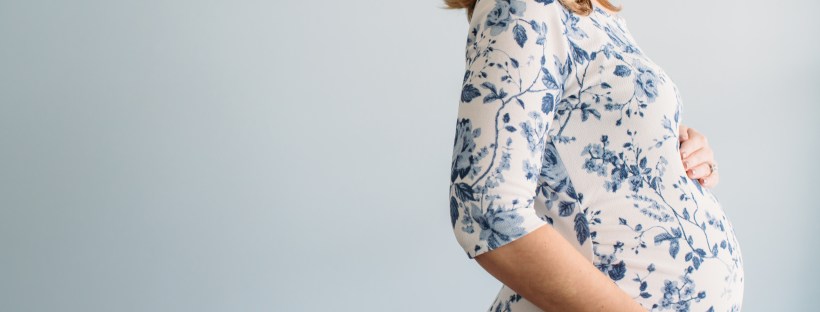
This month marks nine years since I became a mom.
Nine years since my life split into a clear before and after.
Before motherhood.
Before learning how much my heart could stretch.
Before realizing I could love someone so fiercely while still carrying a body that has never felt predictable or safe since my Crohn’s diagnosis in 2005.
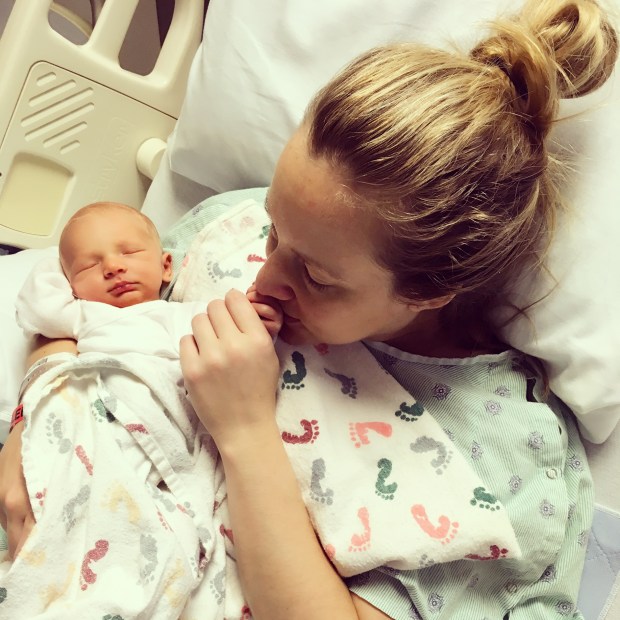
I entered motherhood already shaped by chronic illness. Crohn’s disease had been part of my identity for years before I ever held a positive pregnancy test in my hands. I knew what it meant to live with uncertainty. I knew how to navigate flares, fatigue, medications, and fear. What I didn’t know was how those experiences would transform me into an entirely new version of myself—an IBD mom. When I got pregnant, I only knew of one woman, my cousin’s wife, who has Crohn’s, and stayed on her biologic throughout her four pregnancies.
This week on Lights, Camera, Crohn’s a reflection on my patient journey and what it felt like to go through family planning, pregnancy, and motherhood as a woman with IBD and what I want others to know.
When I Was “Just” the Patient
For a long time, my world revolved around survival. Appointments. Side effects. Lab work. Scopes. Injections. Recovery days. Canceled plans. Hospitalizations. Weaning off steroids. Learning how to read my body’s subtle warning signs. Learning when to push and when to rest.
Crohn’s taught me resilience long before I knew I would need it in motherhood. But it also taught me hyper-awareness. A constant scanning of my body for what might go wrong next. A relationship with fear that felt both protective and exhausting. As time passed, I learned to listen to how my body was speaking to me through symptoms.
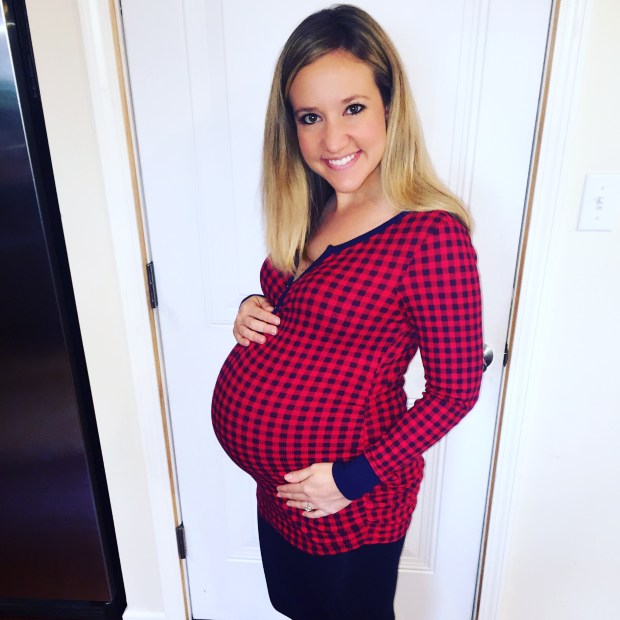
When I imagined becoming a mom, that fear came with me. I had bowel resection surgery two months after getting engaged, I was planning a wedding, and for the first time after a decade of living with Crohn’s I had FINALLY heard the word “remission” for the first time. My fiancé (now husband) and I knew once we got married 10 months later, that we would need to capitalize on that remission and hopefully start our family while we knew I was well enough to do so. Despite being in remission, I still had many questions and thoughts racing through my mind:
Would I be healthy enough?
Would my medication be safe?
Would I flare during pregnancy or postpartum?
Would my disease rob me of moments I dreamed about?
Would I be hospitalized and away from my child?
…the list went on. If you’re an IBD mom or one day aspire to become one, you know the questions we all face.
I wanted to become a mom more than anything, but I carried quiet doubts about whether my body was capable of sustaining not just a pregnancy, but a lifetime of caregiving.
Becoming a Mom with Crohn’s
The day I became a mom everything shifted. Not because my Crohn’s disappeared. Not because my health suddenly became perfect. But because my why expanded.
Suddenly, my body was no longer just something I endured. It was the home my child lived in.
The vehicle through which I would show up, nurture, protect, and love. That realization changed the way I approached my overall health as a mom with IBD. My pregnancy with Reid gave me a renewed sense of love and appreciation for my body.
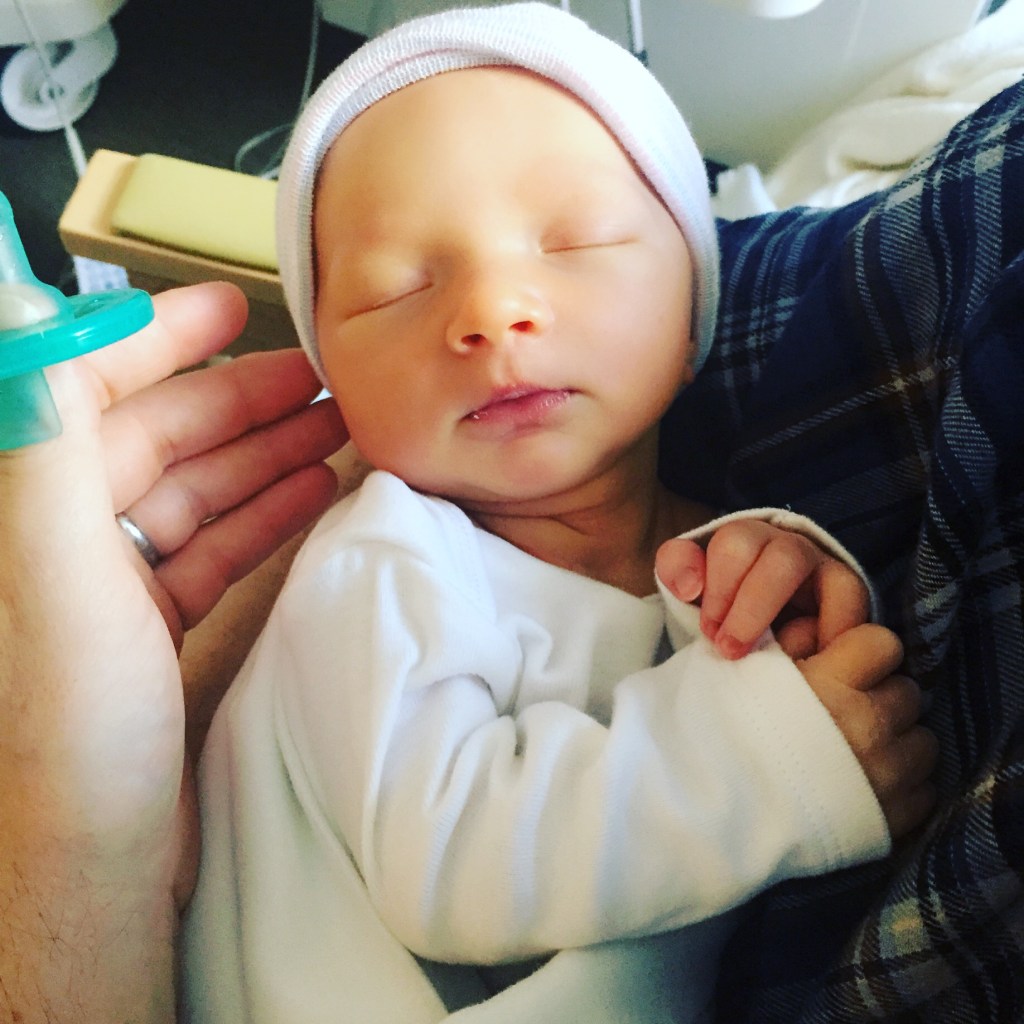
Taking my medication wasn’t just about me anymore.
Advocating at appointments wasn’t just self-preservation.
Resting wasn’t weakness.
Prioritizing sleep wasn’t indulgent.
It was parenting. I began to see caring for myself as an extension of caring for my child. That mental shift — from “patient” to “patient who is also a mother” — was subtle but seismic. Rather than waiting until I was too weak to even walk through the emergency doors by myself, I started to alert my care team within days of recognizing that my Crohn’s seemed a bit “off” so that we could nip any issue that arose in the bud.
Learning to Mother Through Difficult Days
Motherhood with Crohn’s is not picture-perfect. But regardless of your health status, there is no such thing as perfect when it comes to being a mom. You must remind yourself of this and give yourself grace.
There are days I have shown up with heating pads tucked under sweatshirts.
Days I’ve read stories from the bathroom floor.
Days I’ve powered through school drop-offs on pure adrenaline and grit. Days I’ve shown up to PTO meetings and coached soccer on pain medication.
Days I’ve cried because I felt like I was failing at both having a chronic illness and being a mom.
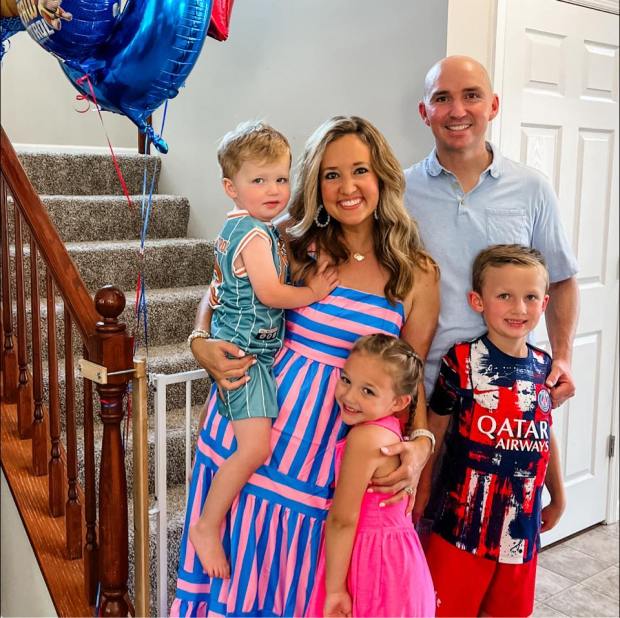
I’ve been in “remission” since 2015, the entire time I’ve been a mom, which I’m eternally grateful for, but just because I’ve been in remission does not mean I don’t face countless struggles with this disease. That’s something I wish people would understand. IBD is a chronic illness, just because someone is in remission doesn’t mean they are free of pain, stress, and more.
I’ve had to learn that good motherhood doesn’t require constant physical perfection. Some seasons look like big adventures and energy. Others look like quiet cuddles, movie days, and choosing rest over outings.
Both count.
My children are being raised by someone who understands empathy, flexibility, and listening to their body. That matters. You’ll notice as a parent with chronic illness how quickly your little ones develop empathy. It’s next level. And so beautiful. You don’t even have to teach it, it’s innate in them because of their daily reality.
Raising a Child Who Understands Illness and Compassion
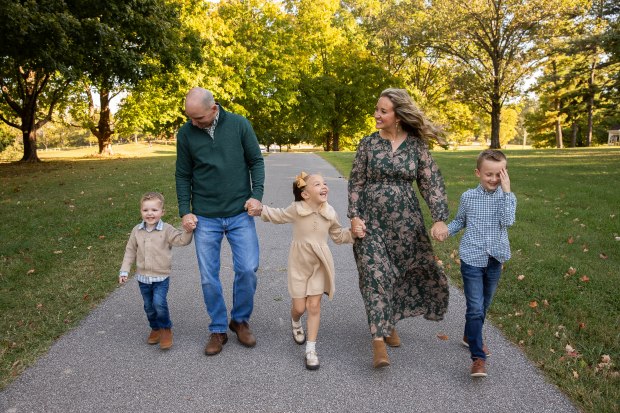
One of the unexpected gifts of being an IBD mom is watching compassion take root early.
My three children know that bodies work differently.
That medicine helps people live.
That rest is sometimes necessary.
That we don’t judge what we can’t see. They’ve learned that strength isn’t always loud.
Sometimes strength looks like getting up anyway.
Sometimes it looks like asking for help.
Sometimes it looks like choosing yourself.
Those lessons feel just as important as anything in a textbook.
How Motherhood Changed My Relationship with My Body
Before becoming a mom, there were times my body felt like the enemy.
The source of pain.
The reason plans fell apart.
The thing holding me back.
Motherhood complicated that narrative.
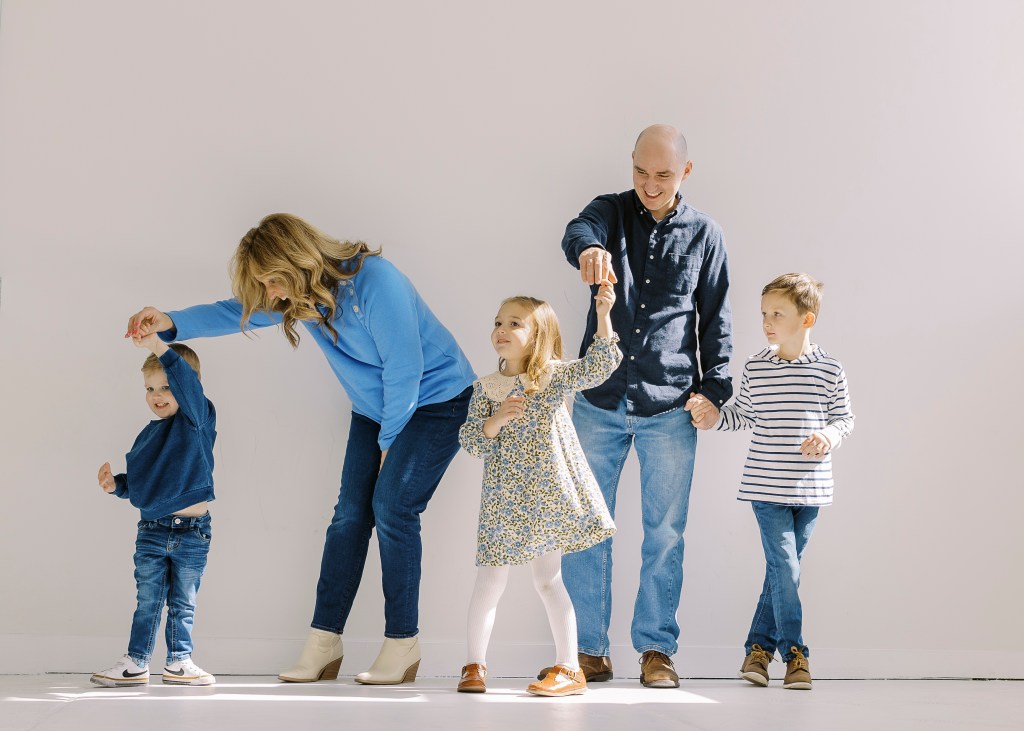
This body carried three children.
This body nourished three children.
This body continues to show up, even when it’s tired, inflamed, or aching.
It isn’t perfect.
But it is more than capable.
I still have hard days. But honestly, I have a lot more amazing days. I never take a feel-good day for granted.
Even after more than two decades of living with Crohn’s, there are still moments where I fantasize about what it would be like to just be a healthy person and not have the burden of my disease.
But I also hold more gratitude now. A grounded, honest one. My three children are my greatest motivation to push through and be my healthiest self.
From Surviving to Advocating
Becoming a mom didn’t quiet my voice.
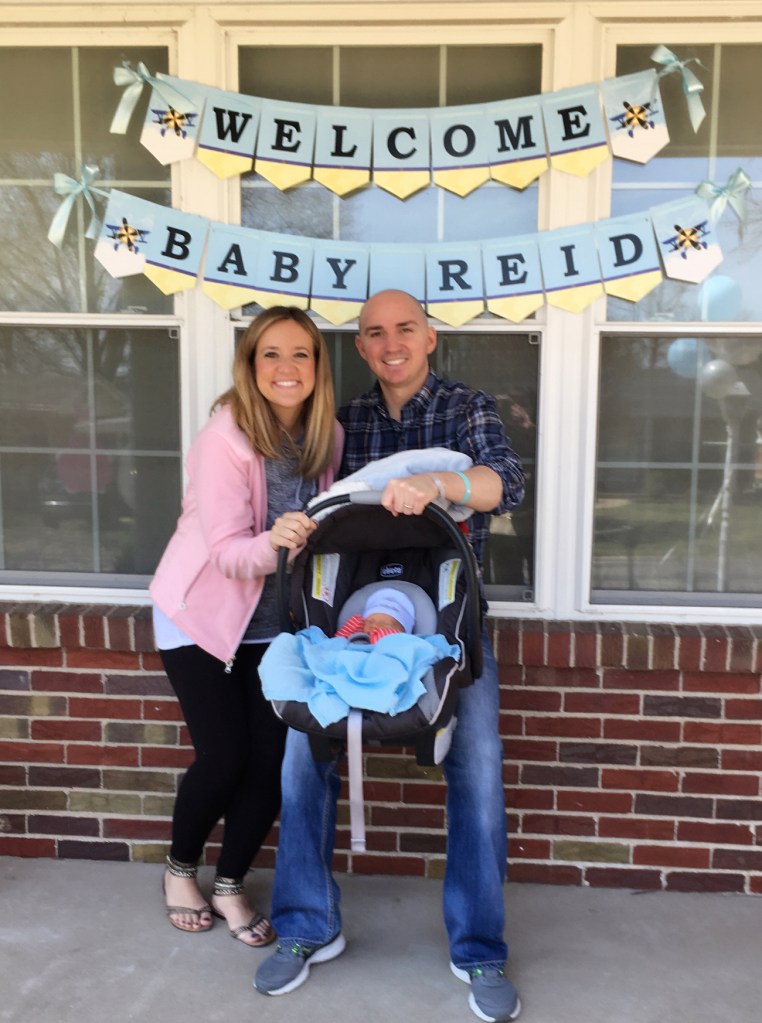
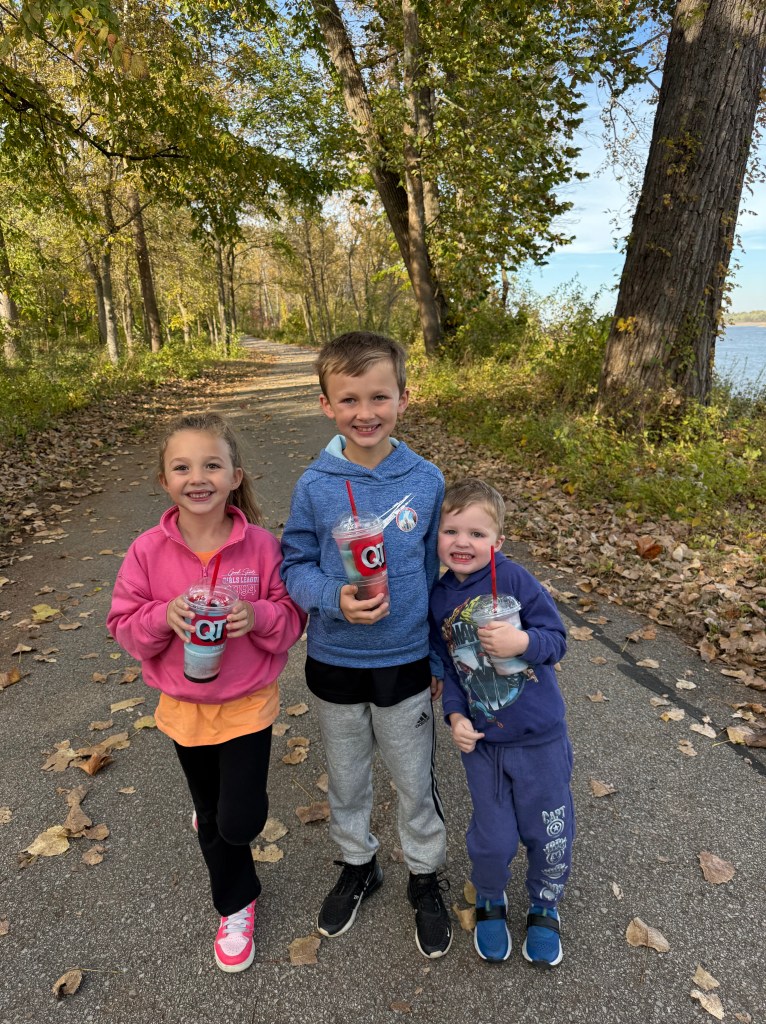
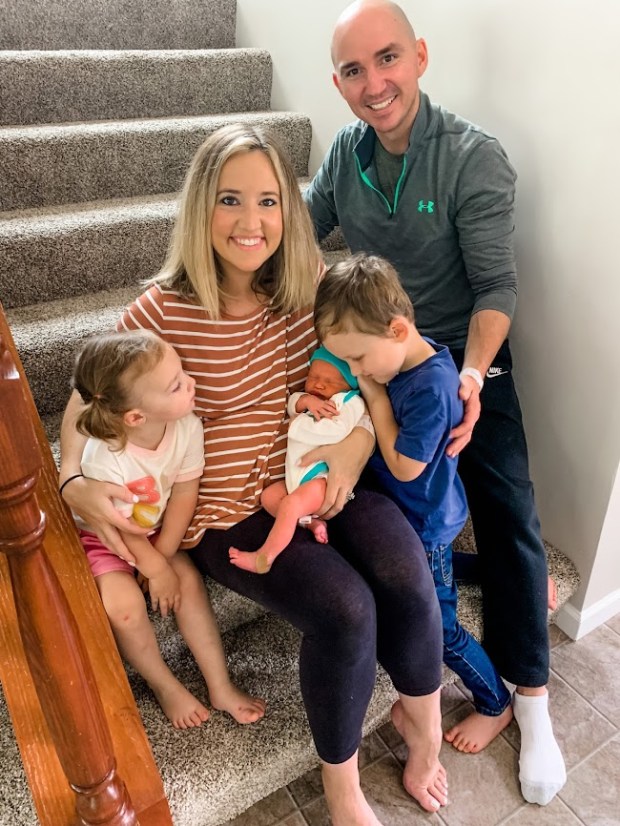
It amplified it. Ironically, this blog, Lights, Camera, Crohn’s, launched July 23rd, 2016… I found out TWO days later I was pregnant with my oldest son, Reid. So, this blog truly captures every moment of pregnancy, family planning, and motherhood from the perspective of someone who learned as I went.
I advocate not only for myself now, but for a future where my children grow up in a world that understands chronic illness better than the one I grew up in.
I speak out because I want fewer people to feel dismissed.
I share stories because I want fewer people to feel alone.
I push for better care because I want better options for the current and the next generation.
I want couples to feel empowered by their decision to have a family, however that may look for them.
I hope women feel comforted by all the constant research going on to address what’s safe and effective as they bring life into this world. I participated in IBD pregnancy studies with all three of my kids, my youngest who turns five in July will be followed through the PIANO study until age 18!
Motherhood turned my survival into purpose.
Nine Years In: Who I Am Now
I am still a patient.
I am still navigating Crohn’s.
I still face uncertainty at times, but through a much different lens.
I am also a mom of nearly a decade.
A mom who has learned how to hold fear and hope at the same time.
A mom who knows that love is not measured in energy levels.
A mom who shows up imperfectly, consistently, and wholeheartedly.
I didn’t become a mother despite Crohn’s.
I became a mother with Crohn’s.
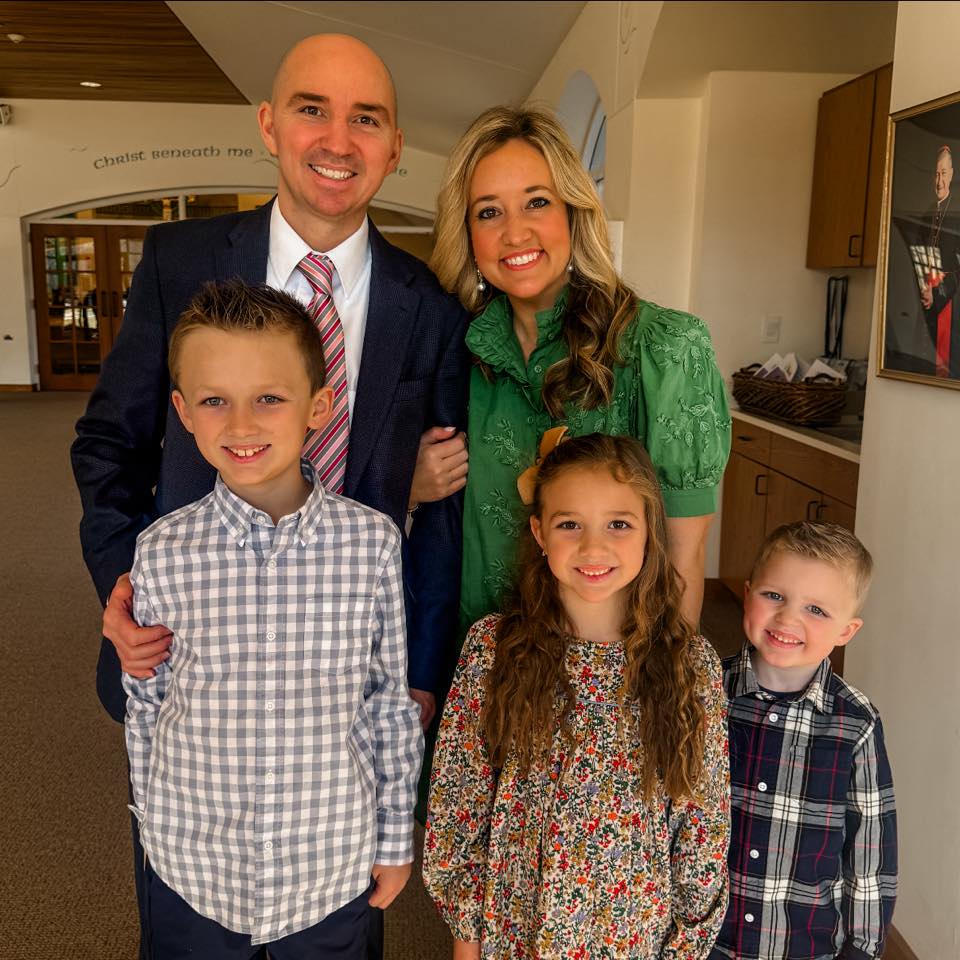
And over the past nine years, I’ve learned that those two identities can coexist, not in conflict, but in strength. I swear I blinked and somehow my sweet Reid, my baby, is nearly double digits. I don’t think there will ever be a time in my lifetime that I don’t stare at all of my children in awe of their existence, I’m sure if you’re a parent you feel the same way. It’s a miracle they are here, healthy, and thriving. So much of why I share my family so openly is to show how my children, who were all exposed in utero to Humira, are doing so beautifully in school, sports, and socially.
To the IBD Moms (and Future Moms) Reading This
You are not broken.
You are not behind.
You are not failing.
You are doing one of the hardest jobs in the world while managing one of the hardest diseases. That deserves recognition.
Later this month, my Reid is nine.
Nine years of learning.
Nine years of adapting.
Nine years of loving fiercely in a body that isn’t always kind.
And I wouldn’t trade this evolution for anything.
IBD Pregnancy Studies
Global Consensus on IBD and Pregnancy
PIANO (Pregnancy in IBD and Neonatal Outcomes) Study
WIsDoM Study: A Study Focused on Female Fertility and Pregnancy



 lights camera crohn's