
When a family member is diagnosed with IBD the same week as you, it can be sort of a saving grace.

One month post diagnosis–dealing with the side effects of prednisone.
My cousin’s wife, Alisa DeMarco, was told she had Crohn’s disease a matter of days before I was in July 2005. At the time, she was one of the only people I knew who had the condition—one of the only people I could confide in who could genuinely understand my reality. At the time of diagnosis and throughout your patient journey—these bonds and relationships are the glue that keeps you together.
 Now, nearly 14 years later—her and I have come a LONG way. She’s on Remicade. I’m on Humira. We are both mothers. We are both wives. Alisa didn’t allow her disease to stop her from following her personal or professional dreams. In 2013, she left corporate America and founded Tekhni Wovens. As an IBD mom and successful business owner, her perspective and ability to overcome the odds is something we can all admire and look up to. This week—an interview with a woman I’m lucky to call family.
NH: What inspired you to create Tekhni Wovens?
AD: As a full-time working mother who enjoyed caring for my children with the help of wraps and slings, I quickly found myself as part of the babywearing community. Over time I shifted from consumer to manufacturer, designing textiles when I didn’t find what I was looking for— a fashion-forward aesthetic in easy-to-wear blends at accessible prices.
NH: As a woman with IBD, a mom of four, and a wife–how do you balance leading a successful business and keeping your disease symptoms under control?
AD: Balance is a hard ideal to maintain– and I am not always successful! 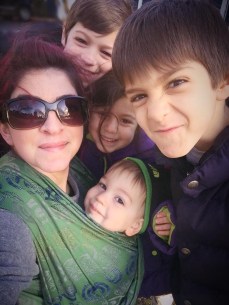 I multi-task everything, stay on top of my biologic infusions, rest when possible and, plan my diet loosely around a mix of SCD and low gluten eating. Getting help is difficult, but I feel lucky to have a supportive husband and local family network. My travel schedule wears me down– but thankfully most of my disease symptoms are well controlled.
NH: What advice do you have for fellow IBD’ers who have big dreams but are hesitant to go after them because of their disease?
AD: Your dreams don’t have to be an all or nothing pursuit! Tekhni started as an idea to make a better product and help support my family… and evolved into multifaceted business with accounts worldwide. However, it took years, and many winding paths to get there. Know that there’s no deadline or requirement for any passion you want to pursue. Start with an idea, and break it down into bite-sized pieces. Your disease is only one small part of your identity, and cannot prevent you from planning and dreaming and accomplishing daily tasks on your own timeline. 
NH: Why are you passionate about babywearing?
AD: Babywearing and attachment parenting are very close to my heart– they are natural extensions of our mothering instincts. They help me care for my young, closely-spaced children while working full-time and managing a household with a husband who is often away for work.  Babywearing helps me effectively multi-task and meet my all children’s needs at the same time. It also helps address postpartum depression, by syncing mother and baby, and raising oxytocin levels. I believe babywearing is a necessity that should be taught to every single expecting parent and caregiver!
NH: Why is babywearing so beneficial for those with IBD in particular?
AD: Babywearing is a perfect fit for people with autoimmune diseases– it helps you hold, carry, and comfort your baby while taking weight and strain off of your back and hips. For difficult days, it can literally be another set of hands. And keeping baby in proximity leads to less crying, less stress, and more rest for both baby and mother.  As a bonus, a variety of baby carriers can be adjusted to accommodate an ostomy or j-pouch.
Stay tuned to my Instagram account (@nataliannhayden) for a giveaway on Friday, May 17. We’ll be giving away a Studio Tekhni Ring Sling! The winner will be announced on World IBD Day (May 19). Good luck!
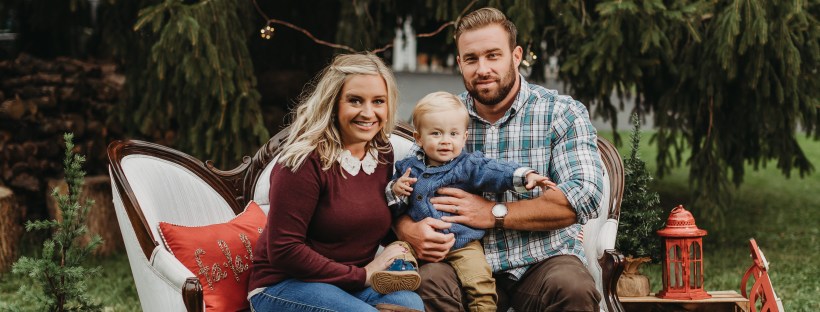
 I’ve had my fair share of surprises and obstacles with Crohn’s disease. My patient journey includes numerous surgeries, multiple doctor appointments a week, sitting in hospitals getting Remicade infusions, switching up medications to tame a flare and my all-time favorite, hospitalizations for days at a time. Please note the sarcasm in that last sentence.
 When the pain presented, I tried everything I could to avoid the trip. I just wanted to stay home and live my life with a newborn, enjoy the snuggles and oddly enough the 3 am feedings. Then, the time came when I couldn’t even get through a feeding without needing to set him down so I could run to the bathroom. I knew it was time.

 My daughter is 4 weeks old today and has been exclusively breastfed. I’m by no means writing this as an expert or to point any fingers. I am completely of the mindset that ‘fed is best’. No judgement here, ladies.
 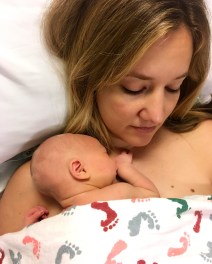 I was worried about the lack of long-term studies on my biologic drug (Humira) and I was concerned about the risk of having a postpartum flare that would land me in the hospital and interrupt my ability to feed him. Being a new mom, I was worried the stress that comes along with breastfeeding could cause me to flare. I ended up breastfeeding him the first three days in the hospital, so that he could receive the colostrum. After that—he was given formula until he turned one. It’s a decision I was confident in, but that tugs at my heartstrings at times, especially now as I breastfeed his sister.
 According to
 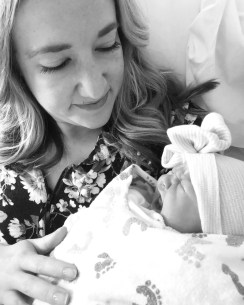 That way—the baby did not receive a burst of the immune-suppressant drug through the placenta, the day she was entering the world and I would be at lower risk of developing an infection as well. Timing your biologic medication is key and a conversation you’ll want to have with your care team so it can be tailored to your pregnancy and your personal journey.


 When it comes to breastfeeding as IBD moms, whether a child is going to latch or if our milk supply is going to be sufficient, tends to be the least of our worries. Our chronic health condition, plus the medications so many of us are dependent on to treat them—adds another layer of stress. In the end, you need to do what you feel comfortable with, what works for your body and for your family. Always know you are not alone in your struggles. Celebrate the parenting wins and accomplishments along the way—no matter how big or small. Lean on your support system—especially fellow breastfeeding mamas who can answer your questions and calm your fears. I can’t tell you how long I’ll continue my breastfeeding journey. For now—all I can do is take it one day at a time. What I can tell you—is how rewarding it is to see what my body is capable of, despite my disease and how amazing it feels to know I’m nourishing my little girl and providing her with a healthy start.


 You’ve reminded me of what is possible and what I’m capable of. You’re already an inspiration to me and you don’t even know it.
 You and your brother serve as my greatest motivation to push through the pain and be strong. You’ll see how your dad loves and nurtures unconditionally and rises to every challenge that comes my way.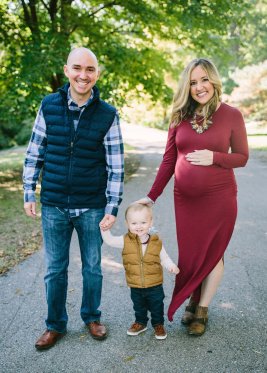
 lights camera crohn's