IBD on the College Campus: The Social Burden

Living with roommates. Having to use public bathrooms. Feeling fatigued and unable to keep up with the energy levels of your peers to study and socialize. While living with IBD while being a college student is difficult in the classroom, many may argue the struggles are even worse outside of academics. Socially, college is a time to explore, learn, and spread your wings. But, when you’re taking on an unpredictable and painful chronic illness, making plans to attend a house party on a Friday night becomes a bit more complicated.

Annie Tremain was diagnosed with Crohn’s disease her senior year of high school, so navigating the disease while starting college was a stressful whirlwind. IMG-1375She was nervous about the potential of being matched up with a roommate who wasn’t a good match.

“I felt so alone. I requested a single dorm room, felt like I was hiding because I didn’t want to use the shared bathrooms when others were around. I was adamantly opposed to a roommate because I didn’t want to have to talk to a stranger about what I was going through.”

Using a public bathroom can be adjustment for any college student, let alone someone battling IBD. Elizabeth Haney IMG-1374was diagnosed with ulcerative colitis less than one week before leaving to study abroad for three months. She says the fact the trip still happened and was so successful was a highlight of her college career. While back on campus in the States, she recalls how stressful it was prepping for colonoscopies.

“Prepping for a colonoscopy while you live in a house with three people but only have one bathroom was horrible. My mom would get me a hotel room for prep night when she could swing it financially.”

Rachel Wigell was only fourteen11886127_10153032256553321_8963053032556586310_o (1) when she became sick with IBD, so she barely had time to form a body image that didn’t include this disease. She says she was never somebody who was confident in her appearance, but having IBD didn’t help. From the prednisone “moon face” to issues with gas and continence, there have been lots of times where she felt too gross to be taken seriously.

“One trouble I had was plain old insecurity. Living in a dorm and sharing a bathroom with 20 other women isn’t fun when you’re having diarrhea multiple times a day. I was desperate to hide how “gross” I was from other women, which meant I didn’t have a support system.”

For Sydney Mouton, being immune compromised IMG_1080caused her to get sick all the time and the community bathrooms weren’t of much help.

“I was in the middle of my worst flare in college, so I had a lot of issues from medication side effects that were more difficult to deal with while in school and trying to have a social life.”

Couple the stress of the living situation with the fatigue that’s brought on from the disease and it can be incredibly challenging. So many students living with IBD have shared with me the difficulty of wanting to be “normal” and like everybody else but then having to deal with the extreme health consequences that generally result from a “fun” night out.

Sarah Kate struggled with handling the unknown of the disease, while trying to help her friends understand her situation.IMG-1376
“Not knowing when I am going to feel well and having to explain to friends and them not really understanding why I felt well yesterday and why I’m not well today.”

Tips for students to calm the social stress

Be candid with your friends and open about your situation. The more you communicate, the better educated those around you will be. If people show lack of compassion or disinterest, that tells you right off the bat that their friendship is not worth your time and effort. Seek out friends who have your back, genuinely. Rather than downplaying your struggles and pain, paint a clear picture to those around you so they can support you and understand the nature of your experiences.

Give yourself plenty of time to get to and from class and social outings. Scout out the best places to have a safe, quiet rest. Pad your course schedule and extracurriculars so you don’t burn yourself out. Try to schedule your classes no earlier than 9 a.m. so you’re able to get plenty of rest each night.

Check out dorms on campus with private bathrooms. During my college experience, I lived in a quad my freshman year and lived with two roommates my sophomore year. I always had a private bathroom. Seek our dorms with these options available. The privacy and comfort will be invaluable.

Weigh the pros and the cons of a night out. If alcohol doesn’t agree with you, don’t push yourself just to try and fit in. You can still go out and have a great time and limit the amount of alcohol you ingest. It’s more fun to be hanging out with others and being sober than it is to be back at the dorm or in the hospital because you put your health in jeopardy.

If you’re struggling, don’t hesitate to reach out to the college counseling center on campus. As isolated and alone as you may feel in the moment, always know there is support available for you both near and far.

Click here for IBD on the College Campus: Getting the Medical Logistics in Check

Click here for IBD on the College Campus: The Challenge of Academics


Why I refuse to mourn who I was prior to Crohn’s: A birthday reflection

This week, I turn 36-years-old. Birthdays are a time of reflection, celebration, and excitement. Last month marked 14 years since I was diagnosed with Crohn’s disease. A chronic illness that has shaped my adult years and my identity.

I recently saw a post on Instagram about imagining life prior to illness. IMG-8194Prior to the challenges and the hurt that coincide with having a disease that you expect to have until your dying day. It’s heavy and can be overwhelming. There’s no cure for IBD and once you are told you have it, your world and your life is forever altered.

When I see childhood photos of myself and think back on my wonderful memories with family and friends through my college years, that girl often feels foreign to me. There are a few things I wish I could whisper in her ear:

“Stop taking your health for granted.”

“Soak in this feeling of invincibility.”

“Make the most of every single day.” IMG-8201

“Enjoy how carefree it feels to never have to worry about what the next day will bring.”

“Soak in the comfort of never needing medication or going through painful pokes and prods.”

“Have more empathy for those around you who aren’t as lucky.”

the list goes on. Hindsight is 20/20. I can’t fault myself for floating through life the first 21 years. I’m glad I had no idea of what was to come. At the same time, I wouldn’t trade what the last 14 years have given me:

They’ve brought me debilitating pain that built my strength.

They’ve brought me sorrow that’s made the sunshine feel extra bright on my shoulders.

They’ve brought me fear that’s been replaced with resolve. 

They’ve brought me lonely moments that are now filled with the laughter of my little ones.

They’ve brought me years of feeling unlovable, but then finding magic with a man who never once shied away from my illness. image (66)

They’ve brought me extreme vulnerability that’s now coupled with gratitude. 

They’ve brought me scars internally and externally that I now see as battle wounds.

They’ve brought me years of embarrassment, that’s transformed to a scarlet letter that I wear with pride.

They’ve brought me feelings of worry that have been washed away by clarity and perspective.

On this birthday and moving forward, rather than mourn the loss of who I was up until age 21, I choose to celebrate who I’ve become the last 14 years. While this illness has tried time and time again to rob me of my joy, it’s provided me with evidence of my resilience. Since my diagnosis, I’ve worked full-time as a TV news anchor, reporter, and producer, I’ve gotten married, I’ve had two children in 21 months, and I’ve become a steadfast patient advocate. balls-1786430_1280Crohn’s has shown me that just because I get knocked down with a flare, doesn’t mean I can’t bounce back and be better. With Crohn’s, life often feels like you’re in the passenger seat and your fate is out of your hands. Rather than sit back passively, I choose to grab the wheel. Cheers to 36!

Dealing with Depression While Taking on IBD: Louise’s Story

No one feels their best when they are unwell, and this is no different for those with chronic illness. There is an ebb and flow to anything chronic – meaning there are good and bad days – but what happens when your bad days outweigh your good days?

In a Twitter poll I conducted this week asking fellow patients how IBD has impacted their mental health, 40% said they’ve experienced depression and it’s a struggle, while 60% said they’ve dealt with mental health issues from time to time. I found it telling that no one who responded to the poll said their mental health wasn’t impacted at all.

IMG_1807This week a guest post from 31-year-old Louise Helen Hunt from the United Kingdom. She was diagnosed with Crohn’s in 2011 and has undergone four surgeries in the last three years. Louise opens up about her struggles with mental health, while living with IBD and offers incredible perspective and words of wisdom that everyone in our community should be mindful of. I’ll let her take it away…

I hit rock bottom six months into my IBD diagnosis. I struggled to find a treatment plan that worked. This involved months of being in and out of hospital. I tried very hard to be positive, but I was sinking. I refused help, I didn’t want to talk about it and I certainly didn’t want any more medication.

Fast forward to 2018, six years since those first depressive episodes and I was still feeling depressed. I’d gone through two major surgeries very close together, came out with a stoma, struggled with my body image and was starting a new job. It was a stressful time and I was not coping. I needed help.

There are lots of emotions experienced by those who live with IBD, both positive and negative. Depression and anxiety come up often on patient surveys from various sources, rates of depression are higher among IBD patients as compared to the general population.Helen Blog

The balancing act of IBD and Depression

Depression is a serious mood disorder that causes feelings of sadness and loss of interest. Depression can make you feel exhausted, worthless, helpless, and hopeless. It can also make dealing with daily tasks difficult. Tasks associated with managing a chronic illness may even feel insurmountable.

Depression often gets worse if it is not treated. IBD specialists are encouraged to assess not just the physical symptoms, but also the emotional symptoms. These can be:

  • Persistent sad, anxious, or “empty” mood
  • Feelings of hopelessness, negativity
  • Feelings of guilt, worthlessness, helplessness
  • Loss of interest or pleasure in hobbies and activities that were once enjoyed, including sex
  • Decreased energy, fatigue, being “slowed down”
  • Difficulty concentrating, remembering or making decisions
  • Insomnia, early-morning awakening, or oversleeping
  • Loss of appetite, weight loss, or overeating and weight gain
  • Restlessness and irritability

Depression is treatable. It is important to seek out a counsellor who has experience in treating people who live with chronic illness. And while it can take some time for the symptoms of depression to go away, seeking treatment can help improve your mood, your quality of life, and your ability to cope with IBD.

This can be in the form of Cognitive behavioural therapy (CBT) – an evidence-based treatment for depression and anxiety, it works to identify and change negative thought patterns and behaviours which can contribute to depression – or medication management which can be used in addition to therapy.

How to handle depression when you’re chronically ill

  • Talk to like-minded people – this could be online, at a support group or your friends.
  • Keep a journal – getting your thoughts out of your head can be very taxing but ultimately therapeutic.
  • Take your prescribed medication regularly.
  • Remember there is no shame in needing or taking medication to cope with your symptoms.
  • Be active – whether this is running or going to the gym, even something as simple as a regular walk can help: being outside and feeling grounded – literally – can lessen some of the symptoms of depression.
  • If you are having a crisis, please seek medical attention. Be proactive and pick up the phone.
  • Don’t expect to “snap out of it.” Instead, expect to feel a little better each day.
  • Ask for and accept help from your family and friends.
  • Know that positive thinking will eventually replace negative thinking as your depression responds to treatment.

fullsizeoutput_1edfRemember that feeling better takes time, and that your mood will likely improve gradually, not immediately.

Connect with Louise on social media:

Facebook: Louise Helen Hunt

Instagram: @louisehelenhunt

Twitter: @louisehelenhunt


Accountability & Chronic Illness: How Pack Health is leading the charge to empower patients

This article is sponsored by WEGO Health, opinions and thoughts are my own.

Accountability can be a tough pill to swallow when you battle chronic illness. Often times it feels as though the only person who can improve our overall wellbeing, is the person you see looking back in the mirror. But, Pack Health and CME Outfitters is looking to offer support to patients like you and me every step of the way to make our journeys less lonesome and isolating. Pack Health in partnership with CME Outfitters does this by providing one-on-one support, over the phone and online, to help people regain control over their health. photo (17)

Right now, Pack Health’s work spans across more than 20 chronic conditions, including inflammatory bowel disease. Not everyone has a support network. Not everyone has a spouse or a significant other they can lean on. Not everyone feels like they can take on the beast that is chronic illness alone. Get this—the average patient is only with their doctor 1 of the 6,000 hours that they’re awake each year! Pack Health works to fill in those gaps.

Here’s how it works—the service is more than just a health coach. By teaming up with an IBD coach, you can have someone texting you when you need a reminder, helping your find ways to make healthy living easier and more enjoyable, and someone who has your best interest at heart, every step of the way.

Finding Your Motivation
You’ll map out your goals for the months ahead. Where do you want to be in 3 months? 6 months? One year? Your personal IBD Health Coach will bring this goal into focus so it’s attainable and less overwhelming.

Setting Weekly Goals
Natalie runningIt’s not always the big goals, it’s getting through the day-to-day. Your IBD Health Coach will help you stick to weekly goals through calls, texts, and emails, based on how you like to communicate. Support will be right at your fingertips.

A Network of Resources
Rather than wasting hours on the internet trying to find dietary information or drug discount cards, the IBD coach will get you what you need to succeed.

By working with an IBD Health Coach patients are more likely to take their medications, stay on top of recognizing symptoms and improving their overall health and well-being. nataliepackhealth2As a chronic illness patient, myself, even though I try and manage my Crohn’s the same each day, sometimes life and being a mom gets in the way. I tend to put my needs and my care at the bottom of the totem pole. As a parent, I know I’m not alone in that. Having a Health Coach standing by ready to listen, educate and inspire me, is a reminder that I’m not in this alone.

Click here to learn more and try it for yourself.

The patient physician dynamic: 5 tips for finding your match

Raise your hand if you’ve considered switching physicians. Raise your hand if you’ve driven more than an hour to seek care. IBDSocialCircle2While attending IBD Social Circle at Digestive Disease Week in San Diego, I listened to a panel with Dr. Neilanjan Nandi, MD, FACP and Dr. Aline Charabaty, MD about the patient and health care practitioner dynamic.

It was an enthralling discussion that opened my eyes to the medical care available to the IBD family. They talked about how physician and patient relationships should not feel like speed dating. Seek a physician who truly cares about how IBD is impacting your life, someone who wants the context behind your symptoms. Rather than a physician wearing a white coat and sitting in front of you, look for one who sits next to you and leaves the white coat off.IMG-2081

If you’re constantly feeling like your GI is being complacent with your care or that you are just a number, you may want to consider finding a physician who’s a better fit. When doing so, it will take some effort on your part. Here are some tips to make the transition a bit less stressful.

  1. Look for a GI who specializes in IBD. Not every GI is passionate about Crohn’s or ulcerative colitis, it may not be their specialty. Finding an IBD specialist will put you in the hands of a care provider who knows the ins and outs of your disease.
  2. If you’re making a road trip to attend the appointment, let the office know. Before you drive hours for an appointment, let the nurses in the practice know that this isn’t a run-of-the-mill appointment. Maybe they can allot more time.
  3. Have your records sent over before you go. Provide the new physician with your back story, so they can familiarize themselves with your patient journey before your first face-to-face.
  4. If tests will be needed, see if they can all be arranged in one day. Save yourself a trip (or two) and check with your physician to see about them getting preauthorization for any tests or procedures ahead of time. This way insurance is notified and it’s one less headache to deal with down the road.
  5. Build a rapport with the nurses in the office. Don’t be afraid to lean on nurses for support. They are often the “middleman” between you and the physician. I rely heavily on the nurses in my GI office. Nurse Penny and I are buds!
  6. BONUS TIP: See if a family member or friend can attend the appointment with you. As the patient, sometimes it can feel as though the teacher from Charlie Brown is talking while we’re sitting in an appointment. So much is being thrown at us, so much is being said—but we’re not comprehending what it means for the present and the long term. By having a loved one by your side, they can take notes—so you can focus on asking the questions you need answered. That extra set of ears and eyes works wonders.

IBDSocialCircleSwitching physicians and entrusting someone new with your well-being is not easy. Trust your gut (for once!) and advocate for care that makes you feel like you have a voice. Think about how you feel leading up to an appointment, while you’re face to face with the physician and the emotions you may experience on that drive home. If anything makes you feel less than or not heard, connect with fellow patients in your area to see who makes up their care team. Do research about IBD specialists within drivable distance and take the steps you need to feel like you have your best ally against this disease.
Writing for a reason: IBD Pen Pals

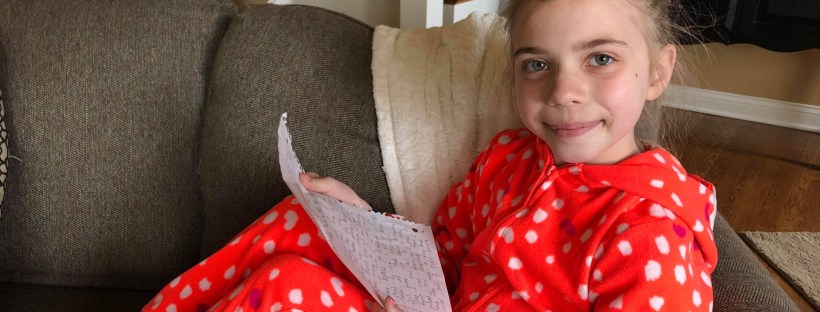
Who says snail mail is a thing of the past? For one 10-year-old in the Chicagoland area, connecting with fellow IBD pediatric patients is helping her cope, comfort and help others as she takes on Crohn’s disease herself. emily4Meet Emily. This past February she received her chronic illness diagnosis. Even though she’s brand new to IBD life, she’s taking all the pain and all the setbacks in stride.

Her mom, Michelle, says watching her young daughter go through Crohn’s has been a punch in the gut.

“It’s overwhelming, lonely, and mentally draining for everyone involved. Her little body has been put through so much in the last few months and she just goes along with it all. I wish I could’ve done all the horrible tests and take away every ounce of her pain. My heart breaks every time she gets poked, every time she takes medicine, every time she has to do a test, or when I send her to school, knowing she feels horrible.”

Emily’s courage and compassion for others has inspired Michelle. Her Crohn’s diagnosis has spurred an interest to connect with other IBD kids. Rather than take on the disease in silence, Emily finds there is strength in numbers, a purpose for her pain. Emily penpalHer mom was able to reach out to fellow parents on Facebook about a pen pal program.

“How cool to come home from school and have a couple letters waiting for you from kids all over the country?!? Emily has already made 12 new friends with IBD from the U.S. and the U.K. I never want Emily to feel alone on this journey nor do I want any other kids to feel alone. I want Emily to see that other kids who have IBD are living a “normal” life and that she can, too! There may be days when I won’t understand what she’s going through, but her new friends will.”

Emilyand michelleFrom a parenting perspective, the pen pal group has introduced Michelle to other mamas going through the same fears and experiences. The connections have brought her peace of mind as she navigates these new waters with her daughter.

“Emily and I are firm believers in spreading positivity and what you give out, you get back. It’s up to us to find the good in this situation and what better way than emilylettermaking new friends? Friends who understand and continually cheer you on, no matter how far they are. My hope is that Emily will make life long connections and that these letters will serve as a constant reminder that she is never alone.”

Interested in joining this pediatric pen pal group? A Facebook page is in the works. In the meantime, you can get involved by emailing Emily’s mom, Michelle: positivelyshelly@gmail.com.

Why my husband is much more than a caregiver, Dr. Phil

I still remember the moment I told my husband I had Crohn’s disease. It was a beautiful August afternoon. We sat overlooking water at a boathouse in St. Louis on our third date. As we enjoyed casual conversation and a mutual interest in one another, I knew I had to tell him about my chronic illness.

IMG_0787

Photo from our third date, the day I told Bobby I had Crohn’s disease.

Nervous to rock the boat. Scared to be judged. Worried it would tarnish the image of who I was so far. I just wanted to rip off the band aid and get this conversation over with.

It was never easy to navigate dating and relationships with my disease. I was diagnosed with Crohn’s at age 21 in 2005. I met Bobby in August 2013 at age 29. Rather than seem put off by my disease, he inquired and showed empathy from that point forward. Never once did he make me feel less than or unworthy of love. In that moment, I knew I had found someone special and I felt a huge sense of relief.

Fast forward to this past month and all the conversation surrounding Dr. Phil’s heartless and ignorant comments about caregiving and relationships. I didn’t see the episode live, but have seen the countless posts on social media being shared to prove him wrong. I watched the interview clip after the segment aired and couldn’t believe my eyes or my ears. Dr. Phil told an interabled couple that “100 out of 100 relationships that involve caregiving fail.”

Photo by J Elizabeth Photography www.jelizabethphotos.com

Helping me walk down stairs during our engagement photos–21 days post op from my bowel resection surgery. Photo cred: J. Elizabeth Photography

It pains me to even write the idiotic words that man said. Not only is it upsetting, but it breaks my heart to think of all the young, newly diagnosed chronic illness patients out there who were already wondering if they were worthy of love because of living with a disease.

IMG_0077I’m here to tell you that you are. I truly believe my vulnerability with my Crohn’s and how I deal with flare ups is a big part of why my husband fell in love with me. Chronic illness isn’t pretty. It forces you to see the world without rose-colored glasses. It makes you realize the importance of your health and how quickly it can be taken away from you.

There’s a reason why you say “in sickness and in health” in wedding vows. My husband chose to spend his life with me, because he loves all of me—even the part of me that is riddled with illness. People are cut out to be caregivers or they’re not. You’ll come across this in your life and know which family members and friends have a special way about them. Those who don’t have this trait and ability aren’t meant to marry people like you and me. And that’s fine.

But to say that 100 out of 100 couples will fail because caregiving is involved couldn’t be further from the truth. It’s through Bobby’s caregiving that I continue to fall more and more in love with him. It’s those moments when I need help to get through a pain-filled day that I’m reminded just how strong and unbreakable our love is.

IMG_9492Caregiving looks and means different things to everyone. It’s not just about being a caregiver in the hospital or at a nursing home. It’s taking care of the one(s) you love on a typical day at home. It can be something as simple as rubbing your back or taking care of the kids while you’re stuck in the bathroom. It can be dishing you out ice cream after you give yourself an injection. Or holding your hand on a walk outside following a hospitalization. It’s those caregiving moments in particular that remind me constantly of the everlasting love I’ve found and make me 100 percent positive we will make it through, for the rest of my life.

My words of advice for you—if you’re a caregiver, know how appreciated you are—for all the little things and the big things. photo by J Elizabeth Photography www.jelizabethphotos.comIf you’re someone dealing with a disability/disease—don’t allow Dr. Phil’s ridiculously inaccurate comments make you think you aren’t worthy of love, because you are and always will be.


Silencing the Stigma: How one man is using his patient journey to empower others

This week—a guest post by IBD patient advocate Ziyad, from The Grumbling Gut. IMG_20181104_220957_401Ziyad shares how his experience taking on Crohn’s inspired his decision to become a radiographer and show fellow patients they are much more than just a number. I’ll let him take it away…
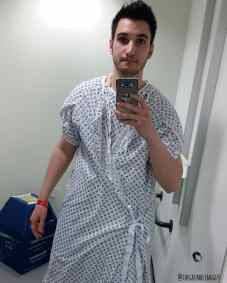
“Don’t let fear keep you quiet. You have a voice so use it. Speak up. Raise your hands. Shout your answers. Make yourself heard. Whatever it takes, just find your voice, and when you do, fill the damn silence.”

Those words were spoken in an episode of Grey’s Anatomy by Meredith Grey and I couldn’t have put it better myself. I was officially diagnosed with Crohn’s disease in 2007 having spent the previous year experiencing symptoms and not knowing what was going on. My absences from school – and to some extent my social life – didn’t go unnoticed and when asked where I was or if I had to cancel last minute, I’d just give my standard air tight excuse of “something came up last minute”.

Truth be told, I wasn’t ready to tell anyone outside of my family about my diagnosis, so I did the only thing I could – kept it a secret. IMG_20181122_171801_972I was afraid of what people might say, what they might think of me or if they might start treating me differently – I didn’t want to be anything other than the supposedly ‘healthy’ 17-year-old with a ‘normal’ life. As a result, I spent twelve years living with Crohn’s in silence. I was embarrassed, because let’s face it, talking about your bowel habits isn’t the most glamorous topic.


If we fast forward to now and having gone from being so secretive about my IBD to talking about it so openly and sharing my experiences through social media – you may ask “what’s changed?”.

The answer is simple – I’m not afraid anymore. I refuse to let fear keep me quiet.

Using my voice to beat the stigma

It took me a long time to realize that not only do I have voice, but I could use this voice and speak up to beat the stigma that held me back from sharing my story for so long. I also believe there’s no point of speaking up if my actions don’t match what I’m trying to achieve, which is why I started to volunteer for Crohn’s & Colitis UK, the charity giving a voice to people with Crohn’s or Colitis. IMG_20181129_204053_117

Anyone that has IBD knows the impact it can have on your daily life, but my IBD helped shape my career. Having spent a fair share of my time in hospitals being a patient, I got used to the hospital environment and now work as a diagnostic radiographer. My IBD exposed me to the radiography profession early on, having all my x-rays and MRI scans done to diagnose and monitor my disease. Shortly after being diagnosed and referred to a specialist I started the pleasant journey of getting treatment for my Crohn’s.

As everyone and their IBD is different, some medications may work for some and won’t for others so at the time there was a lot of trial and error and it felt like ‘let’s throw what we got at the wall and see what sticks’. Some of these treatments would make me feel even sicker due to the side effects and it really did feel like I was being treated as a list of symptoms and not as a person. Long story short, I changed specialists three times before finding one who treated me like a person.

How being a patient helped guide my career

Having experienced life with Crohn’s first hand has given me incredible insight as to how to provide better care for all the patients that I encounter on a day to day basis. I try to give my patients the opportunity to speak up, use their voice and be heard because of what I went through in the early stages of my IBD diagnosis. It can get busy in hospitals, especially with the increasing patient load and shortage of staff. IMG_20190210_202149_996It can be easy to fall into the ‘conveyor belt’ motion of one in, one out, to try and manage the workload. But it is in these busy moments, where taking a few extra seconds to ask a patient who looks upset, scared or frustrated if they’re OK, that can make all the difference.

It humanizes the experience for patients and gives them a chance to express themselves. I’ve learned it’s the little things that have the greatest impact in patient care.

My advice to anyone reading this—No matter how tough things get, always find the strength to speak up, because keeping all your pain and worry inside won’t do any good. The more you share your story, the more likely you will inspire someone else to share theirs.

Follow Ziyad on Instagram: @thegrumblinggut, Twitter: @thegrumblinggut, and Facebook: The Grumbling Gut.


Merry Everything, from my family to yours

We hope the holiday season has been filled with love, joy, happiness and health for you. Thank you for your endless support and encouragement, kind words and feedback and interest in not only my patient journey, but also the well-being of my family. Whether we’ve connected on social media, through Lights, Camera, Crohn’s, by email or collaborations, I feel so grateful to have this platform to share my experience living with Inflammatory Bowel Disease every week of the year. You inspire me to be vulnerable. You inspire me to be strong.

I write and advocate in hopes of being the voice I so desperately needed when I was given a lifelong chronic illness diagnosis at age 21. Being able to lean on the IBD family virtually and in person is the gift that keeps on giving. We can all serve as a wonderful resource for one another, not only during difficult days, but also when we’re feeling on top of the world.

IMG_4950I hope you take this week to enjoy time with loved ones, relax and find time to care for yourself!
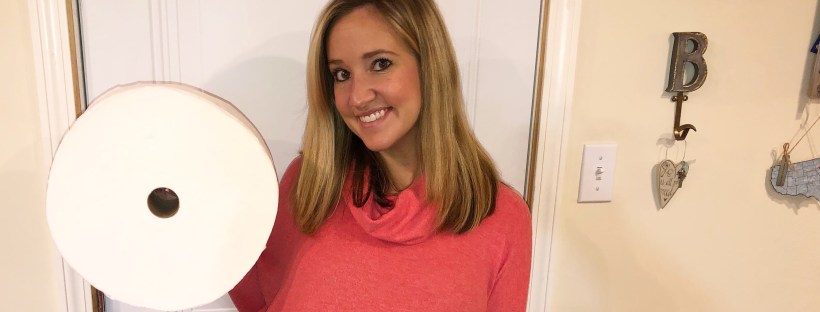
If we haven’t already—let’s connect on social media:

Instagram: @natalieannhayden

Twitter: @nataliesparacio

Facebook: Natalie A. Sparacio

Cheers,

Natalie

Ready to Roll: Charmin unveils its new “Forever” Toilet Paper Roll

This post was sponsored by Charmin. Personal opinions and thoughts are my own.

Safe to say we’ve all been there. You’re in the bathroom. You look. No toilet paper. Not a fun predicament to be in, especially when you live with inflammatory bowel disease (IBD). Talking about bathroom habits is somewhat taboo, regardless of whether you have a health issue. It’s not usually a comfortable conversation to have with others. But, just like the children’s book states, “Everyone Poops” and it’s nothing to be ashamed of. IMG_4815

After living with Crohn’s disease for more than 13 years, I’ve spent countless time dealing with bathroom issues and worrying about accidents. It’s become a part of my life and daily routine. It’s a personal part of my patient journey, but it’s also something that I know I’m not alone in dealing with.

Here’s where the Charmin Forever Roll comes in. It takes away all the hassles of running out of toilet paper. The roll lasts up to ONE MONTH! And yes, boys and girls, it’s available in Charmin Ultra Soft, America’s softest toilet paper made with 2-ply sheets.

When it comes to dealing with flare ups, prepping for colonoscopies and recovering from surgery and hospitalizations, the Forever Roll takes the focus off the toiletries and gives you one less thing to worry about. When your IBD is flaring and fatigue is weighing you down, the “simple” act of making a quick run to the store for toilet paper or even changing the roll can seem strenuous, especially if you live on your own or if you’re building up stamina following abdominal surgery.

At first glance, the Forever Roll may look rather large IMG_4811and industrial to have in your personal bathroom. But reviews far and wide have been overwhelmingly positive!

As a stay at home mom who lives with IBD, oftentimes it’s just my 20-month-old son and I home together during the day. If the roll is out, I’m in quite the predicament. I’ll be adding a baby girl to the mix in a few weeks, so then I’ll really have my hands full! The Forever Roll is efficient and provides peace of mind.

“Charmin is always looking for to ways to improve the lives of consumers, and the Charmin Forever Roll delivers on a big tension: constantly having to change the roll of toilet paper,” said a P&G spokesperson. “By removing one more hassle in the bathroom, consumers can focus on other things without the fear of running out of TP.  Charmin hopes the Forever Roll alleviates this concern and provides a sense of relief for the IBD community with the same quality TP they know and love.”IMG_4837

Click here to order your Charmin Forever Roll Starter Kit. With the Starter Kit you get 3 Forever Rolls, free shipping and a FREE stainless steel roll holder. You have the option for a 1-user bathroom or a multi-user bathroom, so it’s perfect for any household.

Whether you live with IBD or if you’re the picture of health, we all need toilet paper to get through the day. I know I won’t miss opening the door and asking my husband to bring me toilet paper! Give it a go and let me know what you think.