I was putting away the dishes after dinner when I paused, exhaled, and said to my husband, “Whew. I just got a major wave of fatigue.” He said, “Yeah, I feel tired right now, too.” This isn’t the first time a healthy, able-bodied person has responded this way—and I know everyone with a chronic illness can relate. I kind of laughed and tried to explain why chronic illness fatigue wasn’t the same as feeling tired, but I was coming up short for words and having difficulty explaining the difference. My husband, Bobby, genuinely wanted to know why I thought my fatigue was different than his and how I knew it was. I said I used to be healthy. I used to not have a chronic illness. I know what tired felt like then and what fatigue feels like now.
Articulating pain with IBD and fatigue can be so challenging—even though it’s something that is so much a part of our day-to-day experience. Unless you live it and it’s your reality, it’s difficult to put the experience into words.
I called upon the IBD family on Twitter and Instagram to see how they describe their own personal fatigue. Here are some of the responses:
“Imagine your car being on empty and you put $5 worth of gas in the tank until you’re running on fumes. Then you put $5 worth of gas again, and you continue this process for months at a time…while sometimes running out of gas completely multiple times along the way.”
“Having to run a consistent marathon without stopping while carrying a toddler in the front and a backpack with a week’s worth of supplies on your back…in flats.”
“Mentally feeling like you have the energy to do simple tasks, but your body physically won’t let you. Knowing I need to walk 100 feet to get in my work building and having to give myself a pep talk to do it because I’m not sure I’ll make it without having to sit down.”
“You’re tired from being tired. You are just over everything and the day drags on and on. A nap doesn’t help because you “waste” your day, but the truth is you can’t even take a shower because the thought is way too much energy.”
“Like you’re walking with ankle and wrist weights on 24/7. There are days I feel like I’m walking through a fog so dense in my head I can touch it.”
“When I think of chronic fatigue for me it means faking being well. When getting out of bed or getting a shower is an accomplishment or needing to rest after taking a shower. No matter how much sleep you get you still wake up tired. Chronic illness fatigue is physical, mental, and emotional exhaustion.”
“Trying to motivate yourself when you’re fatigued and having brain fog is how I imagine swimming in syrup or molasses would be.”
“It’s the feeling of exhaustion, hopelessness, and loss. You’re beaten down from managing your condition and the various negative side effects that come with it on top of trying to function in whatever role you’re trying to play on a daily basis (for me: wife, mother, employee, and friend). It’s trying to make the most out of life but knowing you’re limited. It’s mourning the person you once were and want to be at that time. It’s physically, mentally, and emotionally draining.”
“I explained the fatigue to my students that just thinking about lifting my legs to walk or the mechanics of moving my limbs is exhausting…let alone the act of doing it. Everything feels heavy.”
“Down to the bone, exhaustion in my core, something that is impossible to push through.”
“I like it’s like first trimester fatigue! But, with no end in sight and nothing hopeful to show for the symptoms like a baby!”
“Like your body is made of bricks. Your mind knows you need to get up and do something—change over the laundry, send an email, but your mind cannot make your body move.”
“Living in a constant state of exhaustion. No amount of sleep or rest seems to shake it.”
“For me…I would describe chronic illness fatigue as KNOWING your car has no more fuel and having to get out and push it home yourself.”
“Heaviness in my body. Just surviving, not thriving. Frustrating because I want to do more things but can’t always.”
“Being tired as soon as you wake up, until you go to bed. Never fully feeling rested. Planning naps throughout a day. Heavy eyes. Mood swing when beyond exhausted.”
“Like constantly living under 10x gravity.”
“Like someone pulled the plug out.”
“Like moving through the mud. It can also creep up on you when you least expect it, sort of like this year’s global pandemic—all encompassing and has no sympathy.”
“Like I’m wearing 100 pounds worth of sandbags that don’t go away even when I get lots of sleep.”
“Waking up and still being tired. No amount of coffee can fix this tired.”
Stop the comparison game
After reading these descriptions, my hope is that the next time you try and compare your fatigue or tiredness to someone with a chronic illness you pause and be selective of your words. Of course, everyone is entitled to be and feel tired, but it’s not an even playing field energy-wise when you’re a healthy, able-bodied person. Coffee, naps, and sleeping in help most of the population feel energized and re-charged, but fatigue with chronic illness is often untouchable. A full night’s rest can still leave you feeling exhausted. A coffee may have no impact. A nap may cause the fatigue to be even more pronounced. As an IBD mom, it can be frustrating to hear someone without a chronic illness try and diminish my personal struggles by equating them to theirs when there is truly no comparison.
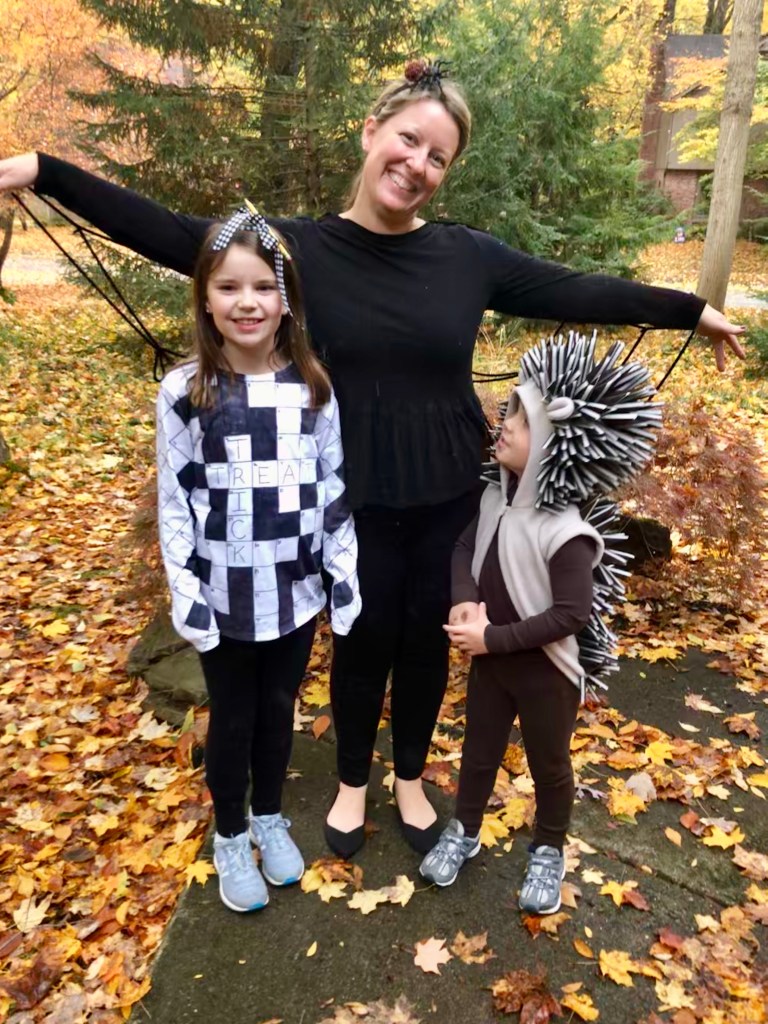
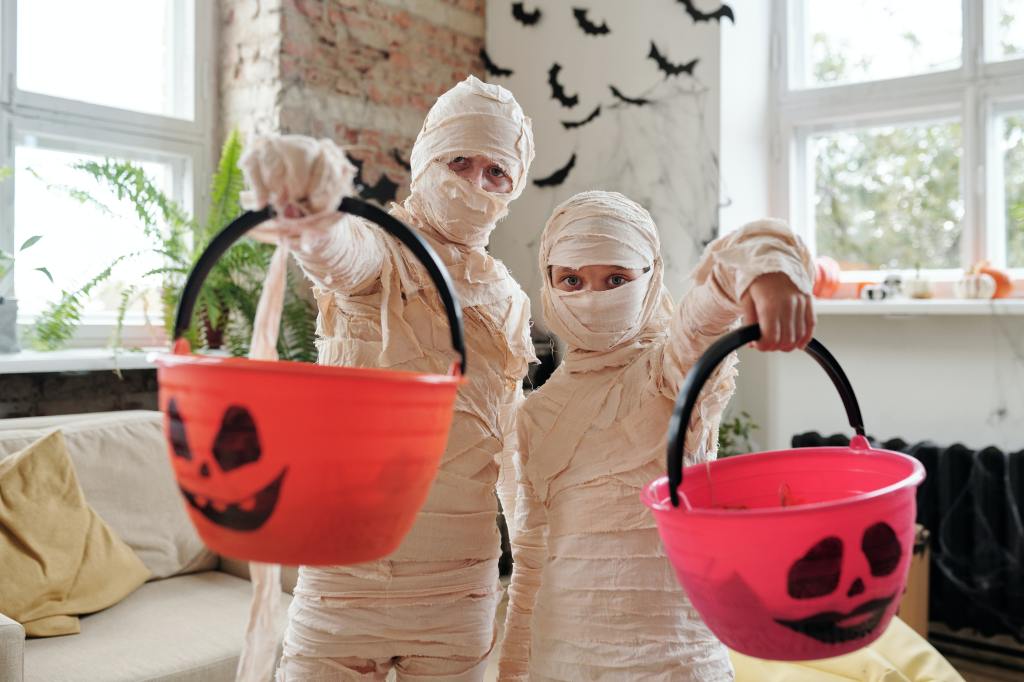
Halloween is extra scary this year for all the wrong reasons. It’s especially challenging for children with IBD who are immunocompromised. This week on Lights, Camera, Crohn’s I share input and advice from several gastroenterologists about everything from trick-or-treating to flu season, along with the game plan four IBD families have in place for the holiday. Much like anything with this pandemic, we’re trying to do the best we can to live, while also staying safe.
As an IBD mom myself, I’m still conflicted about how best to celebrate Halloween with my kids this year. We have their costumes, and the house is decorated festively, but I’m extremely hesitant to allow my 3.5-year-old son to get candy from strangers in the middle of a pandemic. Our game plan is to hang out with my sister-in-law’s family as we do every year. I’ve been inspired by how fellow IBD families are creatively adapting and making adjustments to celebrate. I think you will be, too.
Nicole’s daughter Addy is 15 and has Crohn’s disease. She’s on Humira. Nicole said her family already had a little “pow wow” to discuss Halloween and how it was going to be this year. They’ve decided to celebrate over the span of two days by doing the following:
Making Halloween Gingerbread houses
Decorating Halloween Cookies
Having a glow in the dark scavenger hunt (The lights in the house will be out, the kids will have glow sticks/flashlights and they will have to use clues to find their bags of Halloween décor. With the bags of décor, each child will create a mini haunted house in their bedroom and go “trick or treating” to the different bedrooms and experience their siblings’ haunted house.
On Halloween night Nicole is going to make a Halloween-themed dinner
The family will watch Blair Witch Project
Nicole says being immunocompromised through COVID has been incredibly challenging for her daughter. She says they are trying to balance everything so that Addy doesn’t fully resent her disease.
“She sees that her friends are hanging out together, not social distancing, and not getting sick. We have had many moments filled with tears and frustration and we are doing the best we can to try and offer social interactions in the safest ways. But, she is a teen…and the efforts are hardly enough. Halloween this year is something my kids are all excited about, but it’s the day-to-day stuff that is most challenging through the pandemic.”
Ebony’s 14-year-old son, Jamar, is on Remicade infusions to manage his Crohn’s disease. Jamar was diagnosed with IBD when he was nine. He’s now a freshman in high school and attending school daily in-person for half a day with the hopes of making the basketball team.
“Even though Jamar is attending school, we decided as a family that we are not going to do anything for Halloween this year. We also plan to celebrate the holidays at home, to keep on the safe side. Since he was diagnosed with IBD and expressed sadness that he didn’t understand why he had to have this illness, I’ve explained to him that we’ll get through this together and that I’ll always support him—and that hasn’t changed through this pandemic,” said Ebony.
Paulina’s nine-year-old son, Grayson, also has Crohn’s. He’s on Pentasa, Entocort, and Omeprazole to manage it. She says her family plans to dress up in costumes as usual. Grayson is going to be Bowser from Super Mario Brothers. They have tickets for a drive through Halloween event at the community center by their home in California. Paulina says even though they have to stay in the car this year, Grayson and his sister are still excited to see all the decorations and participate in the scavenger hunt.
“We also plan on faux trick or treating, where we still go out and walk around our neighborhood and enjoy spotting cool decorations, BUT I will bring a bag of goodies and little prizes. For every few houses we walk by, they’ll get a surprise goodie put into their bag. Grayson will be able to go through his “loot” once we’re back home. I’m sure we’ll watch Nightmare Before Christmas (it’s a family favorite). Halloween falls on a Saturday and on a full moon…how could we possibly miss the nightly walk?”
Paulina says Grayson often feels frustrated when the topic of “being immunocompromised” comes up, but that he understands they are being overly cautious for his own health and that of others.
Cindy’s 10-year-old daughter, Jean, has Crohn’s disease and is on weekly Humira injections. She says Jean is in that interesting phase of childhood where she still kind of wants to go trick-or-treating, but also feels like she’s outgrowing it or too cool for that. This year, Jean is going to attend a small outdoor get-together on Halloween night with four classmates. It’s important to note—Jean has been attending 5th grade—in-person, five days a week since August.
“The kids will make s’mores and pizza and watch a spooky kid movie on an outdoor screen. Because she and her friends are in the same classroom “pod” and she spends more waking hours with these classmates than she does in our own home, we are accepting of her celebrating with them.”
Cindy says Jean’s friends and their families have been extremely accommodating to her immunocompromised status throughout the pandemic.
“When she has visited their homes or on limited occasions shared a carpool, these families have been careful to pursue a combination of exclusive outdoor time, mask-wearing, windows down on car rides, pre-packaged or restaurant carry-out snacks and meals, and having freshly cleaned bathrooms dedicated for guests’ use. Other parents proactively talk through risk mitigation and I couldn’t appreciate them more for their thoughtfulness. Immunocompromised or not, we all share similar concerns during COVID.”
Cindy went on to say she thinks Jean will trick-or-treat with her five-year-old brother at a few of their next door neighbors’ houses. They live in Indianapolis and trick-or-treating is “not recommended” by the county health department there, but she expects many of her neighbors will still be handing out candy.
“I also intend to hand out candy from our driveway, so long as trick or treaters or their parents are wearing face masks. This follows our family’s general approach on life during COVID: we are more concerned about “shared air” than we are about surfaces. We believe (and science indicates) surface infection can be largely addressed through handwashing. Because trick or treating can occur in outdoor spaces, we feel somewhat comfortable with that – balanced with the fact that while we are extremely concerned about COVID and have taken all precautions since March – we strive for an ounce of normalcy. There are enough parts of Jean’s life that are not typical due to living with Crohn’s Disease – whenever we can control any part of her life feeling “normal” we make every effort to do so. This was the case before COVID and will remain so afterward.”
Cindy says she reminds her daughter they are doing everything they can to protect her health, while also doing their best to ensure Jean can pursue all the parts of her life that bring her joy. It’s not an easy tightrope to walk, and as an adult with IBD, my hat truly goes off to parents trying to navigate these unforeseen times for their children.
What Gastroenterologists are recommending for Halloween and beyond
Dr Miguel Regueiro, M.D., Chair, Department of Gastroenterology, Hepatology, and Nutrition, at the Cleveland Clinic says he thinks it’s important for people to “live” and be with family and friends. He has a few tips and tricks (or treats!). (His joke, I can’t take credit!)
“For outside events or walking the neighborhood, this is probably the safest as we are learning that open air events are the least likely for transmission of COVID. At the same time, I would still practice wearing masks, social distancing, and practicing good handwashing. Avoid personal contact, shaking hands, hugging, etc.”
For those distributing candy, Dr. Regueiro says it would be prudent to wear gloves (nitrile gloves or similar) to avoid directly touching the candy. Out of abundance of caution, he said it would be reasonable to also wear gloves to unwrap the candy.
“Regarding trick or treating in malls or confined spaces, this would be less optimal than open air. Masks, social distancing, and hand hygiene is a must. Parties or gatherings in houses should follow the guidance of local health advice. Some parts of the country may have a much lower rate of COVID. Overall, though, I would avoid close gatherings in enclosed spaces, which means avoiding these parties, especially if immunocompromised.”
Dr. Regueiro wants to mention that the IBD Secure Registry is finding that IBD patients on immunosuppressive agents/biologics are NOT at increased risk of contracting COVID. He says while this news can be comforting, it may also be that those with IBD on these types of medications have been extra cautious.
“Everyone should get the flu shot. Getting influenza may mimic symptoms of COVID, and influenza is also a very serious virus. We think getting influenza and COVID could be even more dangerous. Getting plenty of sleep, staying well hydrated, eating healthy, and exercising are also important for the immune system and health. Don’t let yourself get run down.”
Dr. Anil Balani, M.D., Director, Inflammatory Bowel Disease Program for Capital Health Center for Digestive Health in New Jersey does not recommend indoor Halloween parties either, even if kids and parents are wearing masks (whether it’s part of the costume or a regular mask).
“With indoor settings it is hard to control the ventilation settings which could potentially increase the risk of airborne transmission, and furthermore many kids may find it difficult to breath indoors with a mask on.”
Dr. Balani says trick or treating, if it’s limited to outside, is probably ok. Although kids should wear masks when doing so.
“Children can trick or treat with their parents or siblings instead of a group of large friends, unless they are with a small group of friends that are in their “pods,” or groups of friends whose parents have been very careful with all COVID related precautions the entire time. Parents of immune compromised kids can also pick up the treats for the kids.”
Along with maintaining proper handwashing and social distancing precautions, Dr. Balani advises everyone to get the flu shot, unless there are medical contradictions. He recommends taking a healthy dose of vitamins including Vitamin C and zinc and continue to stay on top of all your IBD medical care to keep your disease managed and under control the best you can.
“The SECURE-IBD registry has shown us that people who are in the midst of an IBD flare are at high risk for complications from COVID should they contract the virus. On the other hand, if one is in remission, they are likely to have a better outcome from the virus, regardless of which IBD medical therapy they are on.”
When it comes to celebrating Halloween with his own family Dr. Balani and his wife have a few tricks up their sleeves. Instead of typical door to door trick or treating, they plan to set up an outdoor movie night with Halloween-themed movies, have an outdoor candy/treat hung similar to an Easter egg hunt with family and/or a close knit group of friends, host an outdoor pumpkin carving party, and have a backyard costume/glow dance party.
And don’t feel like you need to throw out your kids’ Halloween candy! Studies suggest that the SARS-COV2 virus may not be infectious on surfaces for too long. If there are doubts or concerns, Dr. Balani recommends leaving the candy out for a few days to allow any virus particles to die. Parents can also open the wrappers for their kids.
Dr. Maria Oliva-Hemker, M.D., Director, Division of Pediatric Gastroenterology, Hepatology, and Nutrition at Johns Hopkins suggests for families to look for other creative ways of celebrating Halloween this year, regardless of whether a child has IBD or not.
She recommends:
Virtual costume parties
Halloween movie or craft night
Making special Halloween-themed treats at home
Outdoor costume parades where physical distancing is possible
Checking to see if the local zoo or other outdoor venues in the area are sponsoring a safe, community event, following social distance guidelines.
“Those who hand out treats on Halloween will hopefully wear face coverings and model safe behaviors. If you are trick or treating, consider going to a smaller number of homes compared to past years,” said Dr. Oliva-Hemker.
Prior to making Halloween plans, Dr. Oliva-Hemker says families should be aware of the levels of COVID cases in their communities, as well as where their family members are coming from.
“For example, if they are coming in, or coming from a hot zone, they may want to consider holding a virtual event or be absolutely sure that they follow known guidelines for safety (masks, handwashing, physical distancing).”
She also says she can’t stress enough that this virus can be controlled in our society—other countries have been able to get a handle on things by people following public health guidelines.
“The virus does not know your political, religious or other affiliation—as a physician my hope is that our country pays more attention to what reputable scientists and public health experts are telling us. Taking care of this virus will also get the country back on track economically.”
Handling Halloween When You’re an Immunocompromised Parent
Mom (and dad!) guilt throughout this pandemic has reared its ugly head a few times especially if you live with a chronic illness and are immunocompromised. The last thing I want is for my kids to miss out on fun and experiences because of my health condition.
Dr. Harry Thomas, M.D., Austin Gastroenterology, says, “For parents with IBD, taking children trick-or-treating outdoors – while maintaining social distance, wearing face coverings, using hand sanitizer, and avoiding large gatherings – is, in my opinion, a reasonable option, provided they are not on steroids. However, I would recommend avoiding indoor gatherings, especially without masks, given the rising case numbers in many areas now.”
Along with receiving the flu shot, Dr. Thomas recommends IBD parents to talk with their IBD provider about the two pneumococcal (pneumonia) vaccines, Pneumovax and Prevnar 13.
Navigating the upcoming holiday season in November and December
Halloween is just the tip of the iceberg when it comes to the holiday season. There’s no doubt this will be an extremely hard time for us all.
“This is normally a time to celebrate with friends and family. But with the COVID pandemic, unfortunately things cannot be the same. This will be especially difficult for those of us living in the cooler climates where the tendency is to go indoors. For any potential indoor gatherings, it would be ideal to limit the number of people to allow safe social distancing. I would encourage families that are planning on staying together multiple days to consider getting tested for COVID before getting together,” said Dr. Balani.
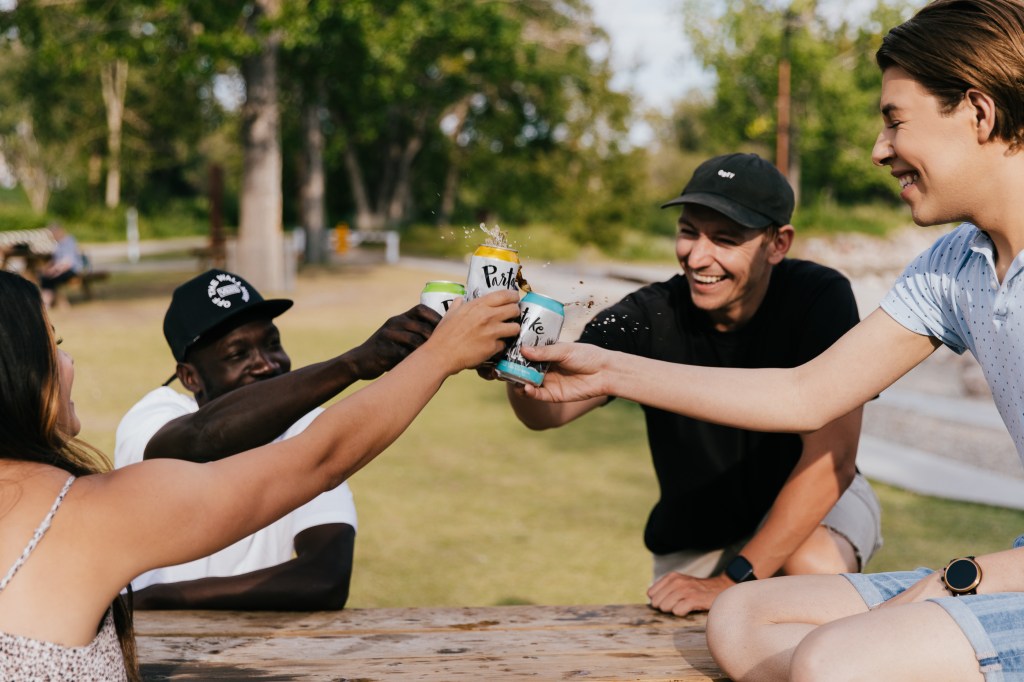
Ted Fleming of Calgarygave up alcohol more than a decade ago to keep his IBD symptoms and disease activity under control. He was diagnosed with Crohn’s disease in 2005, at age 25. Ted says he not only missed the taste of beer, but discovering new beers. Even more than that, he found he missed the social connection that comes with sharing a drink with a colleague after a hard day’s work, cracking a beer with the guys after hockey, and joining in to celebrate special occasions.
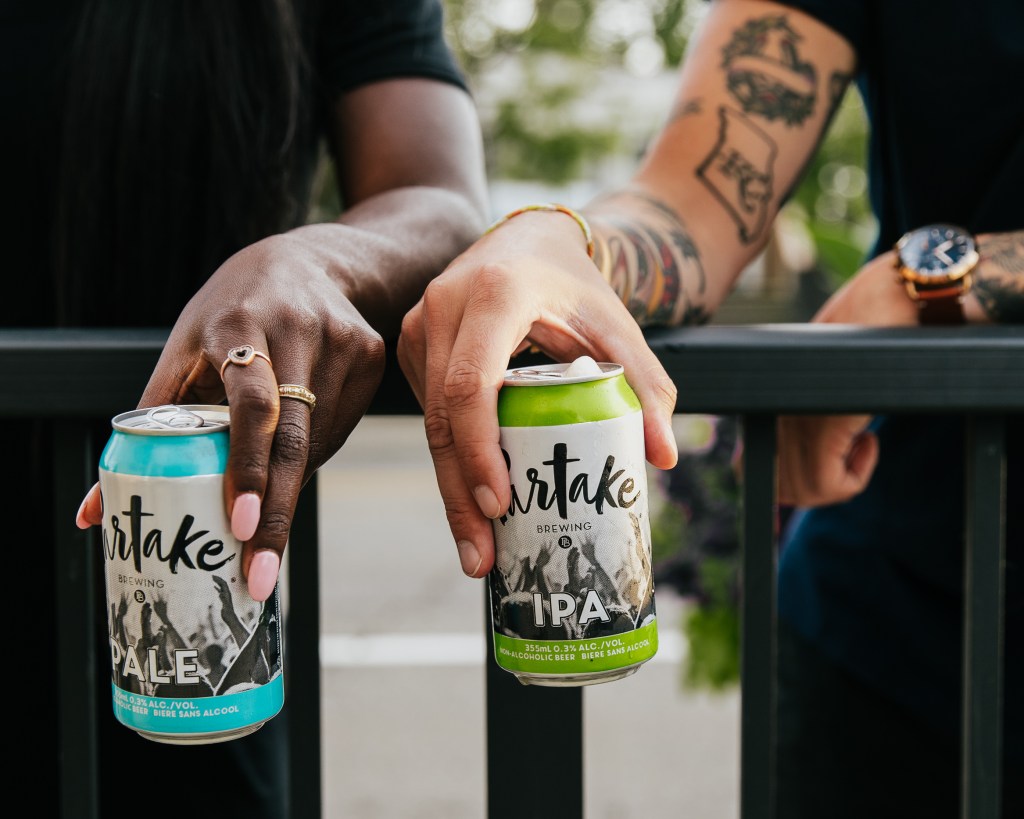
A friend suggested he try non-alcoholic beer. Ted says the problem is most tasted awful and there was almost nothing on the market in terms of variety. It was at that point Ted decided to launch Partake Brewing. His hope—to bring all things that make craft beer great to non-alcoholic beer drinkers including taste, variety, authenticity, creativity, and passion. Now 42, Ted, is a shining example of someone whose career path evolved because of and was inspired by his IBD.
I was intrigued by his patient journey and how he got to where he is today. Here’s his Lights, Camera, Crohn’s interview:
NH:How has your patient journey with Crohn’s disease the last 15-plus years helped you create a successful business?
TF: “The discipline around my own personal health has helped me as a business owner to set priorities and largely keep to those priorities. There are many distractions and potential paths to go down as an early stage business so planning and having the discipline to stick to the plan over the long-haul are critically important.”
NH:How do you manage your IBD (medication/lifestyle wise)?
TF: “Regular exercise, medication (Humira), dietary changes (limited red meat, no uncooked veggies, no alcohol), get enough sleep, and be social.”
NH:What advice do you have for those who are worried about finding a career path they’re passionate about while juggling their IBD?
TF: “I am fortunate to have had some long periods of remission, but early on I struggled and that impacted my journey to find a career that was rewarding in ways important to me. Being willing to try new things is a good way to test interests, but with IBD, we don’t always feel up to it… so knowing when to say no and being ok with that is a necessary skill that takes practice.”
NH: How do you navigate the stress associated with running a business and managing your Crohn’s?
TF: “Managing stress has been an important part of my journey and I find that when I do start to have trouble with my Crohn’s, stress is usually one of the triggers. We each manage stress differently so finding what works best for you is important and integrating regular stress relief and stress avoidance into your daily routine can pay huge dividends. Besides avoiding alcohol, I have adopted better sleeping habits, exercise regularly, plan to socialize directly with people, and largely refrain from using social media.”
NH: What type of feedback have you received from customers? Any IBD folks reach out and thank you for creating this?
TF: “We are so lucky to have some of the best fans in the world, our consumers are incredibly passionate about our beer and our mission. We get emails regularly from consumers from all walks of life who are grateful to have the opportunity to enjoy a great beer no matter what their reason for partaking. The IBD community has really rallied around us and I am incredibly grateful and humbled by their outpouring of support. It was this feedback, particularly in the early stages of the business, that helped us push through the inevitable challenges of running a startup and to this day gives us a powerful purpose.”
NH: What sets your non-alcoholic beer apart from the rest?
TF: “Partake Brewing’s beer is crafted with international award-winning recipes, is incredibly delicious, and is only 10-30 calories per can. Our beer is also brewed with four simple ingredients but is packed full of flavor. When I started Partake Brewing, I wanted to not only brew a great beer but I also wanted to bring a variety of great beers to the non-alcoholic market so anyone can Partake on their own terms.”
NH:How/where can people get their hands on Partake?
TF: “You can find Partake Brewing on shelves across Canada and the USA, but you can also have it delivered straight to your door from DrinkPartake.com. In Canada, you can find us at major retailers such as Safeway/Sobeys, Loblaws, Atlantic Superstore, Great Canadian Superstore, and the LCBO as well as many others. In the US, we are sold at Total Wine & More and select Whole Foods.”
I remember the first time I put glasses on in fourth grade and no longer saw the world unclearly. I can still recall the first time I wore contacts sophomore year of high school and experienced how crisp life is supposed to look. Prior to glasses and corrective lenses, I thought my vision was how everyone else saw. I recently came across a discussion on Twitter by Jessica Caron (ChronicallyJess) about how you would describe your IBD journey at the beginning—in one word. One woman, Emily Morgan (@EmMorgan27) replied with the word blurry.
That response got me thinking. It’s spot on for so many reasons. Take yourself back in time to the first week you were diagnosed with Crohn’s or ulcerative colitis and the clarity you’ve gained and continue to gain with each year that passes.
When I was diagnosed with Crohn’s in July 2005 at age 21, I remember sitting almost stoically in my hospital bed because I was so overwhelmed by not only what the next day or week would bring, but the next hour. All my plans, all my goals, all my dreams that were once crystal clear became incredibly hazy. The thought of thinking beyond that moment almost made me feel dizzy with dread.
What does this new world of chronic illness look like?
What would be possible with IBD? Who am I now? How has my identity shifted? Where do I go from here? What will my friends think? What will future employers think? What’s it like to be on medication for the rest of my life? Will anyone ever love me? The list goes on. The vision that I had the first 21 years of my life was forever tainted.
But as the years rolled by, I came to realize the rose-colored glasses I wore prior to diagnosis didn’t give me that clear of a reality about not only my own life, but those around me. Prior to Crohn’s I just expected everything to go my way. Prior to Crohn’s I felt invincible. Prior to Crohn’s I didn’t think twice about my health and what a gift it was.
Now life is anything but blurry
Looking back over the past 15 years, my vision of life with Crohn’s is anything but blurry. As I grew older and more mature, this disease of mine made me see the world clearer than I had ever before. The darkest days have led me to the brightest, shining moments. Nothing is taken for granted. Nothing is expected, but rather overly appreciated. This disease forced me to see the strength inside myself and the resilience that I never knew existed. This disease has demanded a lot out of me and still does, but it’s enabled me to discover a newfound gratitude for life’s simplicities and provided me with superhero strength vision of who is genuinely in my life, and who is not.
It’s gotten to the point where I don’t even know if I would have been the same adult if I never got Crohn’s. My IBD is not my identity, it’s only a part of who I am. Now I credit not only my contacts, but my Crohn’s, for improving my vision.
When you think of ostomy, what comes to mind? As someone whose had Crohn’s for more than 15 years, but never been an ostomate, it’s something that has loomed over my head since diagnosis. I’ve always wondered if I would ultimately end up with a bag and what that would mean for my life. I know I’m not alone in those worries and curiosities. Which is why I’m kicking off a 4-part series on Lights, Camera, Crohn’s— “So, You Have An Ostomy.” Over the course of these articles you will hear from more than 20 ostomates from around the world.
Today—we’ll focus on what it’s like to find out you need an ostomy, the complexity of coping, and adjusting to your new normal.
What it’s like to wake up from ostomy surgery
Blake Halpern, 39, of Texas, was diagnosed with ulcerative colitis in November 2004. By April 2005 he had a temporary ileostomy. After four weeks of being hospitalized on full bowel rest, it was determined he would need his colon removed. Blake says he was so worn out and emotionally drained, he felt like a shell of his former self. He was anxious to have the surgery and get his life back on track.
“The ostomy is so shocking. It seems like something out of a Sci-Fi movie. My small intestine poking through my abdomen emptying my waste into a bag?? That’s crazy. But it gave me some semblance of my life back. I was able to get out of the hospital, slowly start eating again and reclaiming my life.”
Alison Rothbaum, 41, of Ohio, was diagnosed with Crohn’s disease in 1994 at age 15. She says prior to her ostomy surgery, she went into a very dark mind space that she wasn’t prepared for.
“I woke without a pivotal organ. I woke with a new prosthetic device attached to me. I ached in my belly and in my heart. I needed to mourn the loss of the organ. It’s hard to describe unless you’ve experienced it. I refused to look at myself from the top to bottom in the bathroom mirror for a week. I didn’t want to see what the new body looked like, even though I had already begun to learn how to change my ostomy while lying in my bed.”
For Tina Aswani Omprakash, 36, of New York, needing an ostomy struck a major chord for not only her, but her family. She recalls how her dad hated his ostomy while he was alive and used to rip it off when he was in a coma in the hospital. Because of that, her mom had a significant amount of PTSD from his experiences and was against Tina receiving one. Her cultural society also told her that no one would marry her or accept her if she was an ostomate.
“I held off for as long as I could, but I started thinking that an ostomy wouldn’t be as bad as everyone was saying. I knew I needed to listen to my heart and to my doctors. My gut feeling (as flawed as my gut may be) was right. My ostomy had become my baby so to speak and I grieved for months if not years for the life it had given be back. Don’t let society sway your thinking. Seek counseling and ask all the questions you can to your surgeon and Wound, Ostomy, and Continence Nurse (WOCN) before the operation so you can feel a bit more at ease.”
Tina recommends connecting with fellow ostomate online over social media and through blogs. She says an ostomy doesn’t have to be a life sentence, but rather a life-saving force.
Adjusting to the new normal
Renee Welch, 34, of Toronto, Ontario was diagnosed with Crohn’s when she was nine years old. Getting an ostomy was a life or death decision for her. She knew the life she was currently living wasn’t what she was destined for and ultimately the choice was out of her hands.
“The hardest part of having an ostomy was recovery. It’s a long process that is not progressive. Mine took three months until I was able to feel like myself and even after that my energy was not the same until six months down the road. Recovery is something you can try to mentally prepare for, but you never know.”
Natasha Weinstein, 28, of Connecticut was diagnosed with Crohn’s at age 11. She can still remember feeling that tug on her skin and not knowing if the bag was going to randomly fall off. Eight years later, she’s still impressed with how strong the adhesive is! One of her main struggles was adjusting to her new self-image.
“No longer would I have a “flat” right side when I looked in the mirror, in fact I was always going to have this device protruding and as a college student and a young adult that’s a lot to adjust to.”
Payge Duerre, 21, of Iowa, was diagnosed with ulcerative colitis in 2003 at age 5. Her advice—not to think of your entire life as the first couple months after surgery.
“The first couple months can be shitty. More pain, more recovery, less muscle, new foods, new clothes. The entirety of ostomate life is not like that. My first three months post op were spent relearning life. But now I’m two years post op. I’ve already re-taught my body, but I’m always constantly learning new tips or tricks from other ostomates to make life easy.”
Advice for those who need an ostomy
Ashley Clark, 27, of British Columbia, was diagnosed with Crohn’s when she was 19. Her main piece of advice, “If you’re at a point where you are contemplating ostomy surgery, get it sooner rather than later. Waiting until getting my ostomy was a matter of life or death is one of my biggest regrets. It took me so much longer to recover because I let myself get so sick before I would agree to it. Looking back, I think, wow my life is so much better now, if only I had known it would be and agreed sooner.”
Tionna Forchion, 32, of New Jersey, was diagnosed with Crohn’s when she was 13 years old. She ended up getting an emergency colostomy after a bowel obstruction, so she wasn’t able to mentally prepare for the everything that came her way. Tionna says she was angry at first and cried for days, but as time passed so did her acceptance for how having a bag saved her life.
“My advice for anyone on the verge of getting a bag or needing one is that there is life after getting an ostomy. So many times, people say they don’t want a bag because they assume there will be so many things they can no longer do and that is so false. You can still travel, swim, go to college, have kids, get married and do everything a person without a bag can do.”
Gaylyn Henderson, 36, of Atlanta, Georgia, was diagnosed with Crohn’s at age 14 and has a permanent ileostomy. She says at times with chronic illness you can’t help but wonder if there is anyone out there who really understands what you’re going through, but that there is.
“You need to meet them, and you need to seek them out to know that what you are feeling is not unusual. The feelings you have are very real and it’s not out of the ordinary to be feeling that way. You are not crazy, your life is. There is an importance to building a fellowship of those that can relate to what you are going through. It is imperative to know you are not alone. You may not go through the exact same circumstances, you may not have the same diagnosis, but chances are you have similar experiences and can relate more than you realize. You need to know that what you are going through you will get through.”
Stay tuned for Part 2 of “So, You Have An Ostomy…”, Wednesday (September 23rd) we’ll cover diet recommendations, how to pack when you’re traveling, and how best to change your bag.
It’s often said managing IBD is like having a full-time job. Along with the regular visits to the gastroenterologist, all the blood draws, scopes and scans, we also have to juggle taking and ordering medication (dealing with insurance!), listening to the symptoms our body is speaking to us throughout the day, knowing when we need to slow down…and the list goes on.
One aspect of taking care of our overall health that is often not discussed is the importance of staying on top of all the other preventative health checks—seeing the dentist two times a year, getting a vision screening, having a well-woman visit, and getting a full body skin check by a dermatologist, to name a few.
As we all continue to navigate the choppy waters of this pandemic, being proactive with medical care has been a bit more challenging. Appointments may have been canceled or delayed. The stress of going somewhere for an in-person appointment may seem risky to you, but it’s imperative we all stay on top of our most important job of all—staying as healthy as possible. Because even if your Crohn’s is in remission, your disease, and the medication you take to treat it, can put you at greater risk for other health issues.
Did you know?
According to the American College of Obstetricians and Gynecologists, women with IBD, especially those on immunosuppressants may be at increased risk for cervical dysplasia and abnormal pap smears. Meaning, we’re at a greater risk for abnormal growth of cells on the surface of our cervix that could potentially lead to cervical cancer. Get those pap smears! I visited my OB-GYN and had my well-woman visit a few days ago.
The same goes for seeing a dermatologist. Those of us on immunomodulators or immunosuppressive therapies may have an increased probability of developing malignancy, including non-melanoma skin cancer. I went to the dermatologist this past week for a full body screening. I had a small atypical mole removed from my back that I wasn’t even aware of. Even though atypical moles are not always skin cancer, having these types of moles can be a risk factor for one day developing melanoma. I’ll admit, I haven’t been the best about staying on top of this aspect of disease management. The last time I had been to a dermatologist was 2005, because I was dealing with acne from the prednisone I was taking.
Although medications that manage Crohn’s and ulcerative colitis are the most significant contributor when it comes to our risk of skin cancer, it’s believed having IBD alone can also lead to an increased risk of melanoma.
It’s recommended by the National Cancer Institute, that people with chronic illness be extra vigilant about sun protection. My dermatologist recommends wearing an SPF of at least 30 and having a yearly surveillance of my skin done.
Some researchers believe our faulty immune systems fail to detect cancerous tumors in our bodies and that the increased inflammation can make us more susceptible to certain cancers.
Dental, vision, and IBD
IBD can also make your dental health bite. Studies show people with IBD are at an increased risk of getting cavities and oral infections. While it’s not completely clear why this is, it’s believed our immune systems along with steroid-based drugs and even the acidity of our mouths, can cause our teeth to be weakened.
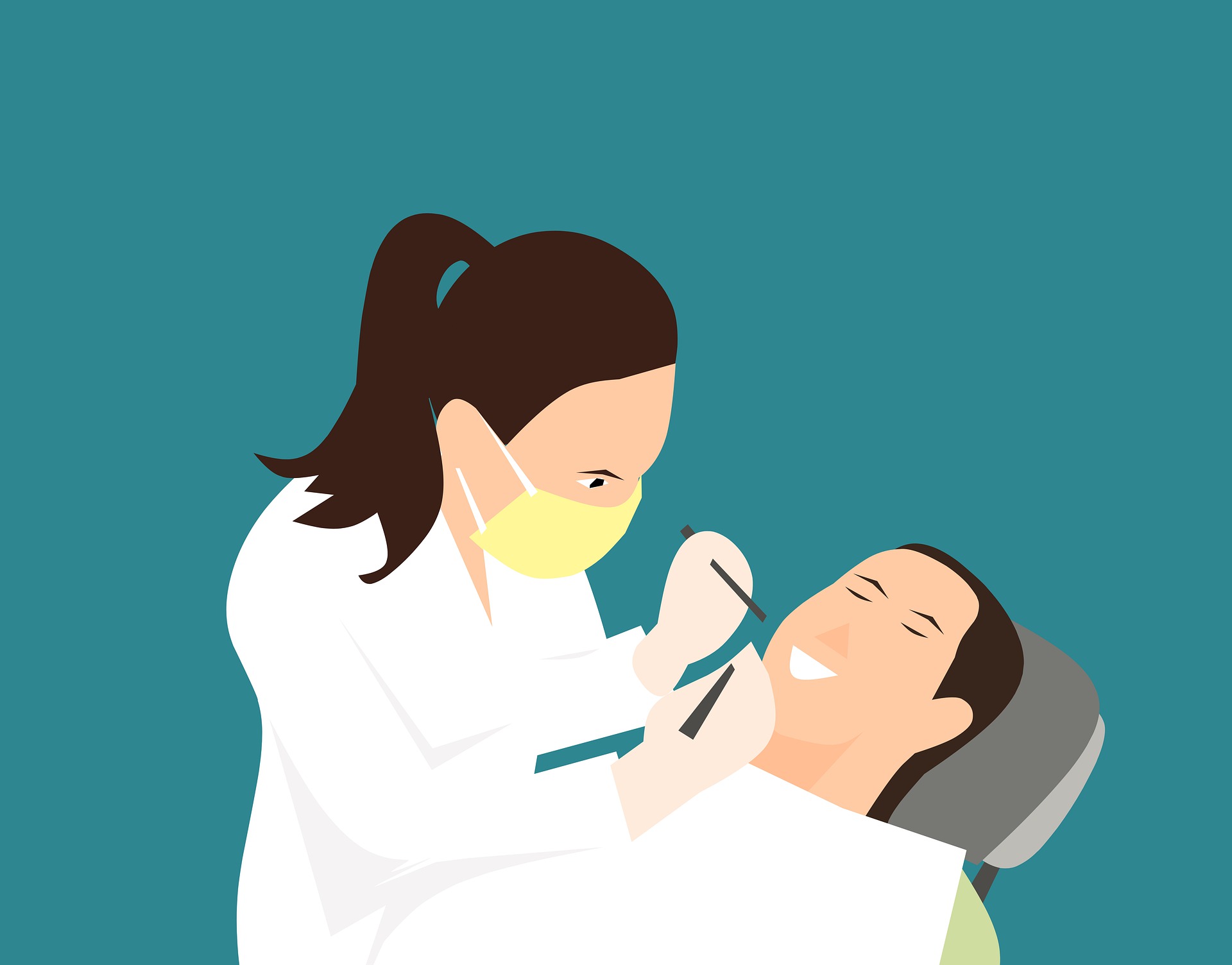
As someone who was forced (haha, by my mom!) to get braces, twice, I have always taken great care of my teeth. But, when I was pregnant with my son Reid, I did develop an abscess on my gum over my molars that luckily went away after he was born. It was unclear at the time if this was more pregnancy or IBD related. I know the thought of going to the dentist seems daunting since it’s such an invasive appointment where you can’t wear a mask while you’re in the chair, but when I went in for my cleaning last month, I felt completely at ease by all the safety protocols in place.
Whether you’re blind as a bat like me, and always get an annual vision screening to update your prescription and order contacts or if you have perfect vision, it’s important to get your eyes checked. Between 4-10% of people with IBD experience issues with their eyes because of their disease activity. Problems with your eyes can be a sign of a flare. During my visit with my ophthalmologist last month I was impressed by all the measures taken to ensure patient safety.
Take time to take care of you
Trust me, I get that life is busy and these times are scary. But, you’re doing yourself a huge disservice if you don’t take advantage of the preventative medical care that is available so you can be proactive should an issue outside of your IBD arise. While telehealth is great to take advantage of when you can, for many of these appointments, you do need to be in person. If you’re worried about this, you can ease your fears by calling the office prior to your appointment to learn about what measures the office takes to protect patients. Whenever I start an appointment I always let the person taking care of me know that I have Crohn’s disease and I’m immunocompromised because of the medication I take.
I don’t particularly enjoy any of these appointments, but I always leave with peace of mind that I’m doing everything I can to be vigilant and healthy not only for myself, but for my family. I often find I get more anxious for these “other” appointments than I do seeing my GI, because I feel much more confident about how I manage my Crohn’s and the way my disease process manifests. Don’t do all the work to keep your IBD in check and forget about the rest of you.
I’m typing this article with a band-aid on my back and a slight burning sensation in my shoulder from the biopsy, with the hope that my experience implores you to make an appointment and get all your ducks in a row when it comes to all your “other” appointments. Yes, I know it’s a lot, but ignorance is not bliss when it comes to your overall well-being.
One of my friends recently said I need to start doing more for me, that once I fill my own cup that energy and that fulfillment will spill onto others, without making me feel depleted and like I’m constantly in survival mode. As an IBD mom of two, who has lived with Crohn’s for more than 15 years, these challenging times we’re living in have forced us all to pause and refocus on what’s important and what we need to do to get by.
Today is my 37th birthday. Sounds a lot older than I feel, but chronic illness has a way of forcing you to grow up and mature well beyond your years. Between the pandemic, mom life, and my advocacy work, there hasn’t been much time for a breather. I feel as though I’ve been coasting for awhile. Coasting through the day to day. Coasting through remission. Coasting just to make it through.
I don’t want to coast anymore
If you’re feeling the same, please follow my lead and that of others, who have recognized they’re ready to do more to improve their quality of life.
I want to stop being such a “yes” person.
I want to stop making excuses.
I want to stop waking up when my kids call out for me and instead start my day with a cup of coffee outside on the patio or a workout, followed by a shower, while the house is calm and quiet.
I want to stop not asking for help.
I want to stop staying up so late binge watching TV or scrolling through my phone.
I want to stop going months on end without a night out with my husband (we’re going on a date tonight for the first time in over six months!)
I want to stop working seven days a week and being at everyone’s beckon call and instead set aside days where I’m offline and able to live in the moment.
I want to start prioritizing my health, my well-being, my marriage, my friendships, who I am outside of being a mom and a person with chronic illness, because while that’s a lot of me—it’s not all of me.
Finding the ‘Joie de vivre’
Let’s face it, this coronavirus nightmare isn’t ending anytime soon. Much like a chronic illness diagnosis—there is no end in sight. We all rise to that challenge day after day, and don’t think twice. I fear if I don’t start spending more time for myself, I may put my remission in jeopardy and that scares me, big time, because when you’re a mom and a wife, your flares impact a lot more than just you.
I look at this 37th year with a lot of hope and a lot of possibility. I’m eternally grateful for the life I have and the family and friends I have around me, near and far. Recognizing there’s a need for change is similar to the importance of being proactive in managing your illness and doing all the things you can to set yourself up for success—whether it’s seeing countless specialists for medical care and preventative screenings, taking medication, getting blood draws and scopes, etc.…I look at this form of self-care as just as important in managing my Crohn’s and giving myself the best shot of staying out of the hospital and flare-free.
Cheers to the next 365 days and beyond! Thank you for following my journey and for your support through the years. This blog is like one of my babies and being able to speak to you through it is one of the most cathartic aspects of my patient journey. If you’re feeling like you’re in a bit of a rut or a funk, remember self-care is not selfish. Now I just need to practice what I preach.
When you’re diagnosed with IBD as a teenager, it’s safe to say, your disease plays a big role in your future. Brittany Duffy is a 24-year-old from Canada who is already a decade into her journey with Crohn’s disease. Her diagnosis inspired her to become a Registered Holistic Nutritionist.
This past March, Brittany had bowel resection surgery that also involved the removal of her appendix. She is currently medication free and choosing to support her body naturally through diet, stress management, and supplements.
Before we dig into this week’s article—I want to preface this by saying medication is not a failure. While diet and lifestyle alone work for some with IBD, it certainly doesn’t work for most. As someone who has been on medication for 15-plus years, I understand what it’s like to aspire to be med-free, but not be able to successfully make the transition without putting your health at risk. Please don’t go off your medication without first consulting with your gastroenterologist and care team. At the same time, even if you are on medication, your body, overall health, and well-being can benefit immensely by living a “clean” lifestyle.
When Brittany was first diagnosed in October 2010, she was put on Humira, which worked well to stop her flares. Unfortunately, the medication caused a host of other issues. She experienced anemia, muscle and joint pain, depression, anxiety, disrupted sleep-wake cycle, dry skin, brittle nails, hair loss, constant constipation, and uncomfortable abdominal pains.
“I am so inspired by other IBD warriors, it reminds me that I’m not alone and to be grateful for the health I have. So many others have it much worse, so each day that is a good day I embrace and make the most of it,” said Brittany. “We never know when a flare will strike. There are tactics in my toolbox I have now to reduce gut inflammation, and I am passionate about sharing this information with others.”
7 tips for managing IBD holistically
Stress management: It’s critical to manage your stress levels, because when the body is in a constant state of stress, simple functions like digestion, absorption, and elimination cannot occur, resulting as nutrient deficiencies, constipation, diarrhea, low energy, and whole-body inflammation. Stress turns off digestion and can trigger uncomfortable digestive symptoms, like gas and bloating, heart burn, acid reflux, constipation, or diarrhea. When we are stressed it can increase inflammation and reduce the chance of reaching remission. Some stress management practices include deep breathing when feeling overwhelmed, yoga or gentle movement, getting outside and being with nature, and also self-care (one activity a day that makes you calm – music, reading, calling a friend, journaling, physical exercise.)
Choose local, fresh, quality foods: Fresh is best. If it doesn’t come from Mother Nature and you don’t understand the ingredient list, the body won’t either. The body recognizes real foods versus processed and boxed items. There are also beneficial enzymes, fiber, and antioxidants in fresh food that helps reduce inflammation and IBD flares.
Avoid antibiotic and hormone fed meat, dairy, and eggs: Antibiotics and added hormones in our food can disrupt our gut bacteria balance and allow harmful bacteria to thrive, which may contribute to IBD symptoms and poor nutrient absorption. Our good bacteria help digest food and increases nutrient absorption, but if our gut bacteria balance has more harmful than good bacteria, our gut health will become affected.
Practice mindful eating: Eating when rushed or in a hurry can delay digestion and may create symptoms of gas and bloating, diarrhea, or constipation. IBD often creates limited food choices due to food sensitivities or trigger foods, bowel blockages, scar tissue, high fiber foods, raw nuts and seeds or fruits and vegetables. If we create a stress-free eating environment it may help reduce digestive stress and allow our body’s a chance to break down “safe” foods easier, while also reducing the risk of triggering a flare or an inflamed gut. A stress-free eating environment includes sitting down while eating, away from stress and distractions, try to enjoy the food you’re eating, become of aware of how you feel while eating, and find pleasure in food. Take a few breaths and put utensils down in between bites to allow yourself time to eat. Eating should be an enjoyable routine, not something we rush through.
Focus on anti-inflammatory foods that may help reduce IBD flares:
Digestible fiber: sautéed spinach, carrots, zucchini, bell peppers, soaked or ground nuts and seeds, pineapple, strawberries, bananas, mango
Herbs and spices: cinnamon, cardamom, turmeric, fenugreek
Tea: ginger, peppermint, green, lemon, chamomile
Understand Food combining: Certain foods digest at different rates, which may result as sugar and protein fermentation in the gut. Uncomfortable symptoms like gas, bloating, heart burn, constipation, diarrhea, and feeling tired can result when there is a compromised digestive system and poor food combinations. Try to eat foods that will digest the quickest first, like fruit, to avoid protein and fat fermentation in the gut. Try to avoid proteins and sugary/starchy carbohydrates together. Proteins and fats are okay with vegetables, but should be eaten separately from grains. The purpose of food combining is to improve healthy nutrient absorption and reduce bacterial overgrowths in the gut by reducing a food source, the sugars. Food combining does not have to be practiced several times a day, but it can help long term to reduce digestive stress, and improve overall gut health.
Eat “Alive” foods: Quality probiotics, fermented food (raw and unpasteurized) like sauerkraut, kimchi, tempeh, coconut yogurt/kefir. These contain beneficial bacteria that supports healthy digestion, nutrient absorption, energy, and may help reduce inflammation.
Now that Brittany is not on medication, she meets annually with her GI specialist to get blood work done once or twice a year. She also has a colonoscopy every three years. Her next scope is scheduled for October. If she recognizes any changes to her health, she contacts her physician or requests blood work. Since Brittany shifted her focus on diet, supplements, and lifestyle, she has improved nutrient absorption and reduced the inflammation in her body.
You can connect with Brittany Duffy, RHN on Instagram and Facebook: @digestionwithbrittany.
When I started my blog, Lights, Camera, Crohn’s, four years ago, my main mission was to be the voice I desperately needed to hear upon diagnosis. As I reflect on my 15 year diagnosis anniversary, I thought it may be helpful to give you a behind the scenes look at some of my email archives from 2005…days after finding out I had Crohn’s disease. I’ve never shown these to anyone (other than the recipients, of course!)…but my hope is that in sharing private feelings, you’ll be able to see how my perspective about life with IBD has shifted and evolved since I was a 21-year-old girl feeling up against the wall with nowhere to turn.
Photos taken in May 2005 (prior to diagnosis) and September 2005 (while on 60 mg of prednisone).
This article is dedicated to the newly diagnosed. We’ve all been in your shoes. What you’re thinking. What you’re feeling. What you’re struggling with. We get it. It’s not fair to compare where you are in coping to someone like me who has been dealing with Crohn’s for 15 years and been in remission for nearly five.
Here are snippets from my emails to friends. Reading the pain in my words and re-living this difficult time can be a trigger, but reflecting and seeing how far I’ve come is also incredibly empowering.
“I’m having a really hard time with this, harder than I ever could have imagined or dreamed…and I’m having a hard time trying to act like everything is great on the exterior. I feel like I’m on the brink of a breakdown…the drugs are getting to me so much. I woke up with visible shakes this morning and have been shaking all day. My moods aren’t me. I feel like I am a different person and that as much as I want to be the old Natalie, it’s just so hard to wake up smiling and happy. I’m getting tired of my family constantly asking me if I’m doing ok and feeling ok and everyone staring at me while I eat…I just feel like a pity case to so many people. I feel so alone in all this. I’m trying to be upbeat…and I know that it is going to take time to get acclimated to the lifestyle changes and everything, but right now I’m just having a difficult time figuring out who I am and where I’m supposed to be in life. The insomnia has left me up every night just thinking and wondering what the future holds and if I am ever going to feel normal again.”
“I try so hard to be strong and tough about this and it just all stays bottled up and I just started crying and am having a hard time stopping. It’s just so hard. I look at pictures and think back to even graduation time and it just freaks me out that I went from living a carefree, healthy life…to this. I know it is something that I will always have and that I have to get used to it…but it’s hard for me to handle at times. I don’t mean to complain or worry you or anything, I just feel as though I need to get out some of this frustration before I go to bed. I’m scared of getting sick again and having to go in the hospital sometime again…and I just feel like I can’t go a day without a thinking about all the what ifs. You know I analyze so much…haha…it’s like a living nightmare!”
“I’m sorry if I talk about this too much. I’m sure it isn’t the most appealing or attractive thing to have to hear from your gf…but sometimes it becomes a little overbearing on me…and I can’t hide my fears when it does. I mean I refuse to let this change who I am and the life I will lead, it’s just at times it seems so much bigger than me, and so much larger than life. I know I have been complaining a lot about my puffy cheeks and stuff…and I know that prob gets old…I just get so self-conscious about it…and it just sucks that I have exactly 2 more months left on the steroid. As my dosage gets lower and lower the side effects should stop and start to go away…I’ll believe it when I see it! I guess it’s just scary to me to see the effects of a drug that are helping me on the inside and hurting me on the outside. I just want to look the same to you as I did the last time you saw me.”
“What I won’t ever apologize for is this summer, because I was going through a living hell, and I saw which friends were there for me and which weren’t. I was ridiculously ill from June 5th-my bday (August 24) and you were angry with me for not keeping in touch. I couldn’t even stand to get myself a glass of water for weeks and was hospitalized for days. I never heard anything from you. I know that people handle those types of situations differently… but that was the hardest thing I’ve ever gone through in my life, and I really needed a strong support system. Battling with a disease and feeling like I completely lost myself has made me have to be a little selfish these past few months. I’m just coming to grips with it all now and thank God I’m feeling well…but it is still an adjustment and has given me a complete different perspective on life.”
You guys. I’m sitting here crying. I’m that girl. I wrote those words. That was 15 years ago and thinking about that time still feels like a knife in my chest. Even though this disease has enabled me to gain so much gratitude and perspective, it still robbed me of a lot. It still hurts…sometimes more emotionally than physically these days since I’m in remission. These diagnosis anniversaries stir up a lot of memories. While I choose to think of it as a time to celebrate another year of taking this disease on with all the strength I can muster, it’s also a time that takes me back to some of the most challenging and difficult moments in my life.
I colored this in my hospital bed after being diagnosed with Crohn’s.
I wish I could hug that girl and tell her it was going to be alright. The career, the love, the family…it would all happen. If you’re in that difficult space right now coming to terms with your newfound identity following diagnosis or getting over a flare up, please know this disease ebbs and flows. It’s not a constant. The good and the bad moments are fleeting, but your resilience and your confidence in coping becomes so much a part of who you are, it’s hard to recognize who you were before.
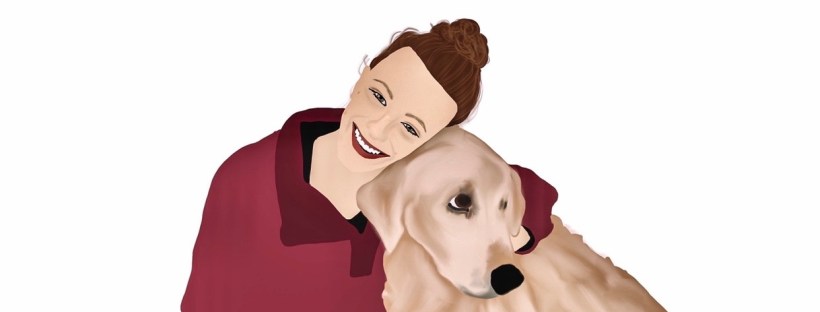
She’s the person behind the artwork that has helped connect thousands of chronic illness patients on Instagram. I’m talking about a 20-year-old woman named Julia who created “The Chronically Honest” in hopes of making others feel less alone. Diagnosed in November 2019 after struggling with symptoms for three years, Julia is coming to grips with her battle against IBD in the middle of a global pandemic.
The first in her family to take this disease on, her experiences thus far have felt a bit isolating. As a college student, she often feels out of place amongst her peers.
“When I was first diagnosed I really searched for something, whether it be art, or blogs that portrayed all the feelings I was experiencing and let me know that it was okay to feel them,” says Julia. “I was met with countless stories of positivity and turning a bad situation into a good new perspective on life. While I definitely appreciate that and know positivity is vital when dealing with IBD I was searching for something that showed struggle and depicted the crappy side of living with this disease (pun intended)!”
Striving to dig beneath the surface
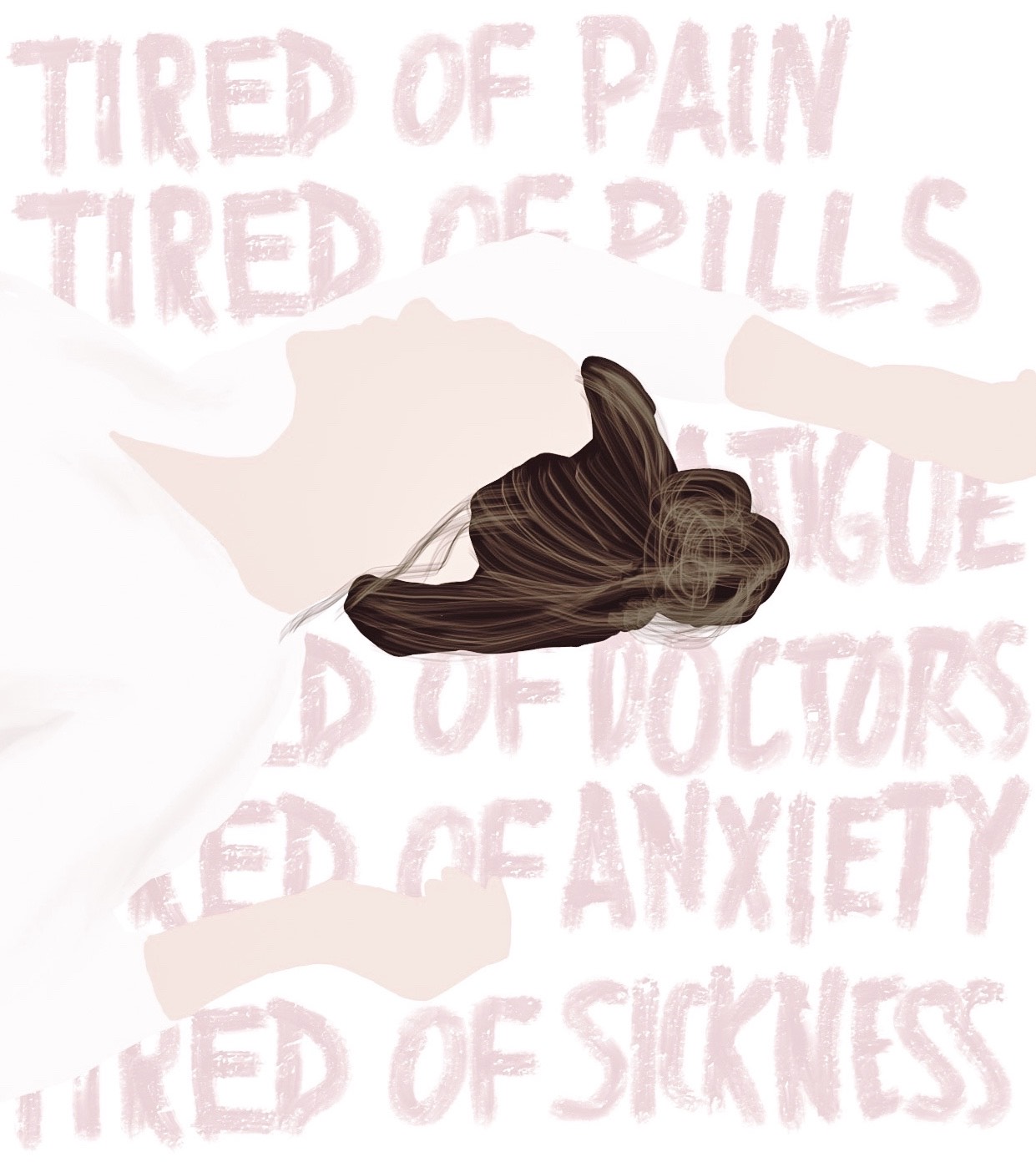
With The Chronically Honest, Julia strives to show both the ups and the down of living with IBD. She hopes that by showing the struggles, she can make fellow patients feel better understood.
“My inspiration to create my illustrations often comes from struggles or triumphs I’m experiencing in the moment. If I am not doing well and have had a bad day, I will create an illustration that reflects that, and vice versa. However, I also get inspiration from others. If I am scrolling through my Instagram feed and see a quote that really resonates with me and my experience and I think it could help others, I will make an illustration based off that.”
Creating art to cope
“My art honestly helps me cope with my IBD more than I could ever imagine. It’s the best distraction and it’s a wonderful outlet for exploring and sharing my feelings. Often when I’m super sick or have to stay home because I’m symptomatic, I will channel my frustration and sadness into making art.”
Julia’s artwork can take her anywhere from five minutes to multiple hours. Some of her biggest fears lie in finding love, becoming a mom one day, and ultimately needing surgery. All aspects of living with IBD that many of us can relate to.
The Chronically Honest is as beneficial to Julia as it is the rest of us. Her artwork exemplifies what so many of us feel throughout the rollercoaster ride that is life with IBD. As a 36-year-old, who has lived with Crohn’s for 15 years, I’m constantly amazed and inspired by the work Julia is doing to not only help herself, but others. Her art is raw and genuine—it will speak to you. You will feel seen. You will feel heard. If you don’t already, be sure to give The Chronically Honest a “follow” on Instagram. She says if you want a custom illustration, you can send her a direct message!




























 lights camera crohn's