
The way we work looks a lot differently these days than months prior. Chances are the COVID-19 pandemic has forced you to work from home, put your job on hold, or be out on the frontlines. Whatever the case may be, there are ways to adapt to these challenging times to help make ends meet. This week—a guest post from Annelise Bretthauer, a certified Financial Planner who also has Crohn’s disease. 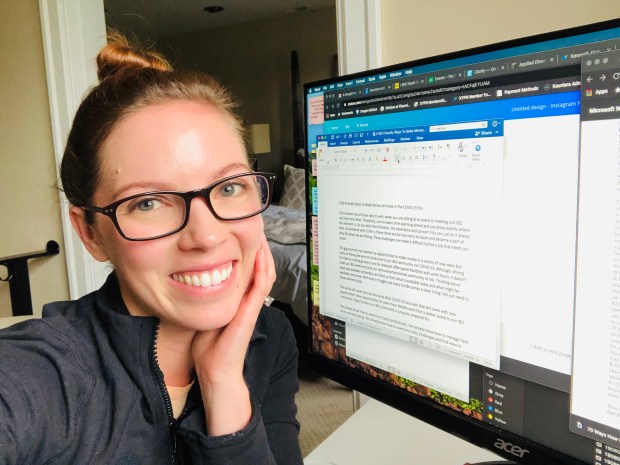 She offers up some invaluable advice about freelancing and educating yourself about opportunities that are right at your fingertips.
The gig economy has opened up opportunities to make money in a variety of new ways but many of these jobs are not conducive to our IBD community nor COVID-19. Although, driving for Uber or making grocery runs for Instacart offers great flexibility with work hours, it doesn’t meet our IBD needs and puts our immunocompromised community at risk. Thinking about what was available yesterday can blind us from what is available today and what might be available tomorrow. With every struggle and every hurdle comes a silver lining. We just need to know where to look.
The world will never truly be the same after COVID-19 and with that will come new opportunities. New opportunities for even more flexible work that is better suited to our IBD community. Opportunities our IBD community is uniquely prepared for.
We already know how to work from home productively. We already know how to manage hard times and keep going. We already know how to overcome daily challenges and find ways to keep our mental state healthy. We’ve been strengthening our creativity and time management muscles for years. We are strong and have developed a comfort with being vulnerable that allows us to show up in non-traditional ways that our peers cannot. To quote Brené Brown, we are masters at “being in the arena.” 
We are wildly adaptable and we’ve already learned to find a community online and make deep connections without ever sitting face to face.
All of these things put our IBD community at the top of the talent pool when it comes to the new jobs that will be created (or established jobs that will evolve) through this crisis. Keep your eye out and your ears open. This list of 5 creative and flexible IBD friendly ways to make money at home is just the beginning!
#1: For The Typing Expert:
Write Transcripts for Audio Files
This job is ideal for those who already spends much of their day on the computer and can type quickly without error. You can make $0.25 – $2.50 per audio/video minute, which translates to ~$15-$25 per hour.
Here are a couple places to go to get started:
#2: For The Person Who Is Happy To Invest In More Education To Make A Bit More Money:
Become A Remote Tax Preparer
This job is ideal for someone who is detail oriented and thinks they could get behind making tax preparation fun and engaging. Once you complete the education (there are some costs associated with doing this) and become certified for tax preparation, you could make up to $100 per hour.
Here are a couple places to go to get started:
#3: For The Computer Wiz:
Get paid to test others websites for usability and content.
This job is ideal for those who can’t stand when a website is hard to navigate and has lots of ideas for how they could make it better. There is quite a range in pay per test (~$5-$90) but it iron’s out to an average pay of around ~$20 per hour.
Here are a couple places to go to get started:
#4: For The Person Who Loves Crossing All The T’s & Dotting All The I’s:
Become an Online Remote Notary (available in in 23 states)
This job is ideal for someone who is detail oriented and enjoys the process of making sure everything is done correctly. Although each state differs in what you are legally allowed to charge for notary services, in most states the maximum is $25 per notarization.
Here is where to go to get started:
#5: For The Early Riser or Night Owl Who Prefers Working Odd Hours:
Teach English Online
This job is ideal for someone who likes to be up early or stays up late. That is because many of the jobs are teaching English to foreigners in different time zones. Please note, many sites require a bachelor’s degree and a TEFL teaching certificate. The pay does vary significantly but most sites pay between $10-$26 per hour.
Here are a couple places to go to get started:
- Magic Ears (need TEFL teaching certification + bachelor’s degree)
- VIPKid (Platform offers TEFL certification but you will need a bachelor’s degree)
- ET Teach Online (need TEFL teaching certification + bachelor’s degree)
- Cambly (no experience needed)
If none of the options above speak to you or you aren’t sure where to start, check out Chronically Capable. Chronically Capable is a job site designed only for those with chronic illness. You can browse for jobs that have already been pre-screened by their team – pretty awesome huh!? 
From one IBD warrior to another, don’t ever lose sight of your worth. Your skills and your adaptability will rise to the top of the talent pool. We can’t pour from an empty cup, so remind yourself that self-care is other’s care.
If you’ve ever been curious about how others make, save and spend their money, feel free to check out Annelise’s podcast, This American Wallet. She interviews different people from different walks of life about money. Available for a listen on Apple podcasts, Spotify, Stitcher or Google Podcasts.
Disclaimer: This article is for informational purposes only and is not to be taken as advice of any kind. All pay estimates were made in best efforts given the informational available via each company website.



 Now more than ever, we’re being labeled as the “sickly”, the “disposable”, the “weak”, the list goes on. COVID-19 is not JUST about the elderly and immunocompromised, this is about everyone. As patients we have a unique perspective and understanding about the struggles we face daily and what it’s like to go through this challenging time. Connect with fellow patients online who get your reality, your emotion, and the whirlwind of going up against this invisible bogeyman. To refrain from social media, you can download awesome free apps like Gali Health and IBD Healthline, with helpful articles, community conversations, and chats by patients, for patients.

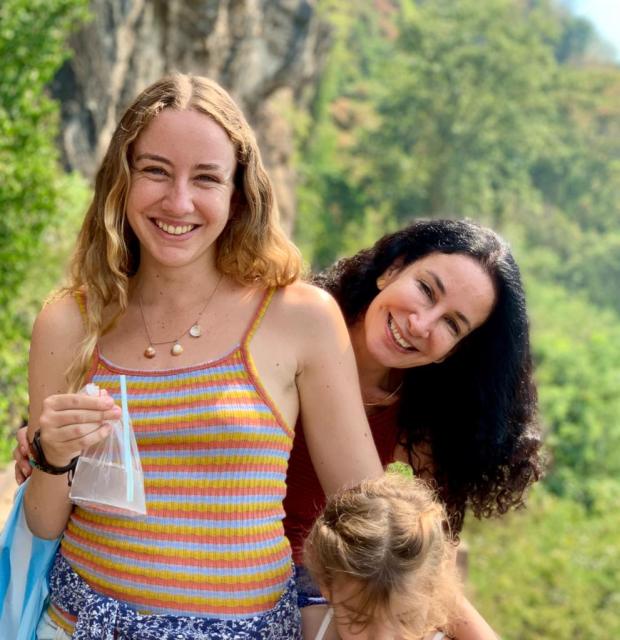


 Jadyn woke up with a fever and a slight cough. Given the craziness of the times we live in right now, they immediately called the COVID-19 hotline. Once the person on the other line heard about Jadyn’s health history and the fact she is immunocompromised, they agreed, Jadyn needed to be seen. In urgent care, Jadyn was tested for the flu, strep throat, and COVID-19. The Richt’s were told they would have a test result in five days, it’s been more than a week now, and still no result.
 I’ll allow Anna to take you back to the beginning, so you can have a better grasp of their ongoing journey and how it’s brought them to where they are today.
 The first couple years were nothing short of a dog fight. I remember sitting in my sister’s living room after an appointment when all of the sudden the doctor’s number popped up on my phone. She was calling to say that Jadyn’s lab results didn’t look good and we needed to head to the hospital right away.



 When you fall in love with IBD, there’s an extra layer of complexity, trust, dependency, and appreciation. There’s no telling what the next hour will bring. You need to be flexible. You need to be understanding that plans may not go as expected. You need to trust that when the next flare up strikes that you won’t be on your own and that your partner will be there every step of the way.
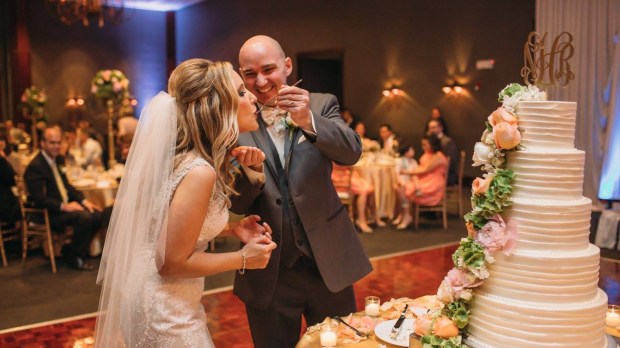 You need to believe that when the going gets tough you won’t be deserted; you won’t be made to feel as a burden. You need to trust that your partner sees you as much more than your disease.


 In a world where we all want immediate gratification, think about how it feels when you share something and there are crickets on the other end. Use your social media channels as a platform to share what you care about and what matters most to you, rather than trying to think about what others want to see.

 I chose to blog and become a patient advocate for several reasons. I was tired of feeling isolated. I wanted to be a voice for the newly diagnosed, as well as the veteran patient. And, as a journalist, I’ve always had a love for the written word. For me—expressing myself through writing comes a lot easier than saying the words out loud.
 In that time, I’ve shared 171 new articles (because some weeks I post on Mondays AND Wednesdays). Over the last three years, more than 105,000 people from around the world have checked out Lights, Camera, Crohn’s. Could the articles be organized better? Yes. Could the design be snazzier? Yes. But, my focus as an IBD blogger and advocate is to give you the nitty gritty. I’d rather spend my time and energy on content vs. design.
 lights camera crohn's