Words of Wisdom: What IBD Moms Wish They Could Tell Their Younger Selves

If you’re a young girl or woman diagnosed with a chronic illness, prior or during your “childbearing” years, chances are you or your parents may wonder what this means for your future family. When I was diagnosed with Crohn’s disease at age 21 in 2005, the thought of settling down and having kids was not on the radar but ever since I was a little girl I always aspired to be a mom. Fast forward to 2008, I was hospitalized for an abscess and taken off Mesalamine and put on a biologic injection (Humira). I can still picture the discussion with my GI. My mom sitting on the couch alongside the hospital window, looking at me wide-eyed, and us wondering if I’d ever be able to have children on my new medication. A medication I was told I’d be on for the rest of my life. I was 24. Back then there was nowhere near the research or guidance available like we have today.

August 2008-One month after starting Humira and on heavy duty steroids.

It was the first time I really began to question and worry about whether I’d physically be able to be a mom. As the flare ups, ER visits, hospitalizations, and tests persisted for years, I honestly didn’t have the energy to think about what my life would look like down the road, I only had the energy to focus on what was going on in that moment. I was not a patient advocate and looking back I was a bit naïve and uneducated about what it meant to have not reached remission.

When I met my husband in 2013, little did we know that for the next two years I would be at my sickest. What we did know—is that we both wanted kids one day. After my third bowel obstruction hospitalization in 15 months, I needed bowel resection surgery in August 2015, which FINALLY put me into surgical remission. Ironically, I was engaged to be married. Babies were on the brain. Since I lived a decade without remission, we knew we were going to have to try for a baby as soon as we got married, as remission can be fleeting. At 32 years old, I didn’t want to take any chances.

A lot has happened since we got married. We got pregnant a month after getting married. Lost our second baby around 7 weeks. And then had our rainbow baby in 2019 and our caboose of the family in 2021. If you’ve followed my advocacy and blog, you know I’m passionate about showing all that’s possible despite your IBD. I know each of our journeys is incredibly intricate and unique, each of us deals with our own set of challenges. But I also know that my younger self would have benefited immensely from seeing and hearing fellow women who’ve been there and done it and have families to show for it despite their chronic illness.

This week on Lights, Camera, Crohn’s we hear from several IBD moms—with kids ranging from newborn age to now adults—who offer amazing perspective that I hope will make you feel comfort in what the future could hold for you.

What IBD moms want you to know

Jennifer: “It’s 100000000 percent worth it! And be honest with your kids and spouse about how you are feeling and what you are going through. Of course, make it age appropriate, but they need to know the struggle.”

Liz: “Your kids will learn their limits and love on you when you need rest. It’s ok to go slow. Even if you flare after birth, you will come out of it.”

Amber: “I would tell a younger me that my body WAS capable of carrying and delivering healthy BIG (lol) babies. After struggling with fertility and then conceiving twins and carrying them full-term, I realized my body hadn’t failed me (how I think so many of us with IBD feel. Motherhood is possible for us and thank you Natalie for reminding us of that.”

“Find your people and be honest with them about how you are doing. Don’t ever feel bad asking for help. It truly takes a village to help.”

Brooke: “One day, you will be better. One day, you will coach little league and make the playoffs. One day, you will work on Capitol Hill. One day, you will live in another country. One day, you will be the best mom and you will thrive through IBD. You’re almost there!”

Jaime: “I would tell my younger self that fertility is not something you take for granted especially with a chronic inflammatory disease that can leave you prone to developing scar tissue. I’d also tell her that IBD may make life hard for awhile but with the right doctors, life will improve and the family you dreamed of having will happen.”

Jessica: “Motherhood is hard. It’s ever harder when you have an illness. It’s ok to rest when needed without feeling guilty.”

Kaitlyn: “Your kiddos are more resilient and adaptable than you think they are. I had a major flare about 7 months after my son was born. I put off being admitted to the hospital for weeks because I was so scared and felt guilty for leaving my baby and thinking he would feel abandoned without any way to explain to him that I was gone. He ended up having a blast with my husband for a week and I finally was able to achieve some sense of relief (slowly coming out of that flare, but there is a light at the end of the tunnel). Also, you’re not a bad mom for not being able to do the things you think you should be able to do (Spoiler Alert: Your baby doesn’t know other moms take their babies on long walks around the park and don’t have to drag you into every public bathroom you pass while running errands).”

Patti: “You only get one chance to raise your babies, so don’t sweat the small stuff. And frequently remind yourself (on the roughest days) that you really ARE doing the absolute best you can…and that is OKAY.”

Alyssa: “Sometimes you’ll be holding your baby on the toilet, but you’ll be okay, and your baby will be okay. The road will be tough, but so worth it. Some days the kids will watch more TV than you want, but you must take care of yourself too so you can be present for them. They’re resilient and will love you no matter what.”

Ally: “Rest when you can! Your body will most likely go into remission once pregnant so not need to get scared or nervous about it.”

Liv: “Make yourself and your health a priority. I went into a huge flare after having my first baby because I was SO focused on her and not eating properly or showering or taking care of me. Meal prep to make the mental load of eating easier! And ask for help!”

Patra: “Don’t be so hard on yourself when you feel the need to rest.”

Phoebe: “I would tell her to follow Natalie Hayden’s blog and IG account (haha)…seriously though, when I see you and other people share about their pregnancies and family life, it gave me hope to have my child. I would also tell my younger self it’s ok if you’re a mom with chronic illness! My younger self assumed I had to have a perfectly healthy body to have babies and raise babies.”

“Take care of yourself, even if it means asking your loved ones to look for signs of your anxiety and exhaustion that you may just be trying to push through or ignore.”

Jenni: “I would tell myself not to be so hard on myself. I would say don’t take on all the sick mom guilt. To let them watch movies and eat cereal without stressing about it when I wasn’t feeling well. I would also say…you don’t have to pretend to be brave all the time. It’s ok for them to see you cry or feel frustrated or be sick. They can handle it, and it is creating such strong, caring, empathetic humans!”

Courtney: “I would tell my younger self that I am enough for my kids and that they will be better people because of what they learn and see.”

Mallory: “Your children are strong, and they understand that it’s not your fault.”

Meg: “You did the right thing by staying on your meds through pregnancy and your baby is perfect.”

Kelly: “You are enough. Don’t feel like you’re not able to be as great of a mom as a healthy mom is.”

Ryann: “All you need is love. While I’m sure my son loves the active days when we’re doing lots of activities, he’ll be fine on the days that I’m laying down on the couch as long as I show him love.”

Rachel: “You’re stronger than you know, and everything will work out no matter what happens.”

Amanda: “Not to let fear of the “whatifs” cripple you.”

Brenda: “You will do great and be sure to find a selfless hands-on partner.”

Kristin: “Give yourself some grace. I didn’t get diagnosed or have any Crohn’s issues until my son was 15 months old. The symptoms came on like wildfire and it took a village to help until I figured it all out.”

Anna: “I want to jump in this convo as a 50 year old who wanted to be a mom, but due to the severity of my disease (diagnosed at 18), was told at 29 to have children by 35 due to being high risk and at 34, I was told not to carry due to complications and unfortunately adoption was not in my future as a single woman with severe illness no another option (freezing eggs, etc.) at that point in time. I feel like that is the MAIN thing Crohn’s stole from me! After many years of therapy, I cope with it very well now; however, I still from time to time mourn not being able to have children that aren’t four-legged…#dogmama!”

Courtney: “I would tell my younger self not to worry about having to use the bathroom urgently so much and that you’ll be carrying around diapers, wipes, and a little potty in your car for years. Your kids will also be able to relate to having accidents. I would all tell her that fertility declines a lot faster for people with chronic inflammation and to get your AMH levels checked early. Or think about freezing embryos if you want a big family in your mid to late thirties. Lastly, that breastfeeding won’t stop your kid from having IBD, so don’t worry about giving them formula.”

Ashley: “So, one time I posted on Reddit about how I have ulcerative colitis and didn’t know if I should have kids…I got a lot of responses. I got 56 that told me not to do it. How they were miserable. Or how their mom had it and they suffered as a kid. It was honestly traumatizing. And int that moment, I made the decision not to have kids.”

Tricia: “There will be some really tough days with your illness, and trying to take care of your kids, but you’ll get through this, and better days are ahead.”

Shannon: “Nap when the baby naps is legit. But also, when the baby is 12, you’re still going to need to take a nap. And that’s okay. It doesn’t make you less than because your body requires rest and reset. It is productive to take a nap if it’s necessary.”

Chanel: “That this chronic illness has a direct effect on pregnancy. Having this disease since 7 years old, no doctors ever thought it would be helpful to mention how important being in remission was before getting pregnant or trying for a baby until I was 26 years old and happened to nonchalantly mention to my doctor at the time that we were going to start trying.”

Jennifer: “Don’t worry! You will be blessed with two beautiful children and IBD will not define who you are and will not hold you back from anything!”

Stephanie: “Be easy on yourself and don’t put high expectations on yourself. It will all be worth it. Take it a day at a time and do what you need to do to feel better. Your kids will learn and be more empathetic and compassionate people for it.”

Bhavna: “It’s going to be hard. More emotionally than physically. You will even doubt whether you should have kids for fear of passing it on. I know eventually I did. My daughter now has an autoimmune condition. But despite all of this, you will make it through. Stronger. Resilient. Sometimes a tad sadder.”

Rosanne: “Kids are more resilient than you think. Motherhood is worth having to potentially miss a few things because of a flare or a difficult day. Your kids will understand and be stronger because of it.”

Pie: “Mum guilt will chew you up on the days that you can’t get out of bed. It’s okay, your little one will grow up to be empathetic and understanding of others.”

Amy: “I was completely well for the 8 years I was pregnant and breastfeeding my three boys. Almost a year after finishing feeding my youngest, I immediately went into a massive flare and have not managed to recover yet (10 months now). I felt betrayed all over again by my body, just at the time when I needed it to be strong. I would tell her that the most important thing is that you’re well, so that you can be the best version of yourself. Children are beautiful, they will take you exactly as you. Try to follow their lead. You are enough. They will forget at times you were absent due to resting, appointments, etc. But they will remember how hard you fought for your health. My middle school boy now seems to be suffering with gastro issues and it’s essential to me that I show him that I have the disease, it does not have me (enough though some days that doesn’t quite work out).”

Megan: “Some days are hard, but you can do it! You will be shocked at how much compassion it gives your children. They understand “mommy doesn’t feel well” at such an early age and really want to help take care of us. Vivi asks me daily, “Mommy, does your belly hurt today?” and says, “I’ll take care of you, Mommy.”

Kara: “Don’t forget to take care of you before it’s too late! You are doing your best and your children will only remember that later. My kids are 8 & 10 now, but when I was pregnant with my youngest, I went into a flare and refused to tell anyone or acknowledge it, thinking it would make me a bad/weak mom…so dumb right? By the time my youngest was 1, I was making an appointment for a temporary ileostomy bag. But my kids only remember the sweet stuff.”

Stephanie: “Simply, it’s possible! It was worried for so long that it wasn’t possible, especially once on a biologic and your Instagram page, Natalie, gave me so much hope! Now, less than 2 weeks from delivering my second baby (but my first pregnancy on a biologic).”

Marnie: “I would tell my kids your disease becomes part of your everyday routine, but it doesn’t define you.”

Crystal: “Make sure your baby learns to take a bottle in case you end up in the hospital with a flare.”

Leslie: “Don’t be scared to be on all the medication you need. You’ll get pregnant one day like you always dreamed.”

Keyla: “This journey will be hard but no matter what your little one becomes stronger through it with you.”

Christine: “Here I am celebrating my 47th birthday with my teenagers! One of the first questions I asked my doctor, according to my mom, was will I be able to have kids? That was when I was 23 years old. Here I am at 47, and they have seen me at my best, and unfortunately, my worst. They are truly the reason why I keep going and want to keep fighting at the worst of times.”

Amy: “Your journey might look different than others, but you can still have a family. Also, accept help when you need it.”

Robin: “My kiddos are 27 and 25 now and I was diagnosed when the 27-year-old was 2.5 and the 25-year-old was a baby. She turned one and took her first steps in the family visiting room at the hospital. So, I have the benefit of living with the fruits of my parenting labor. My IBD has taught me that life is precious. Each moment is precious. Because of this, I really tried to take advantage of life when I was feeling well. AND ALSO, I tended to push through when I wasn’t feeling well if something was important to my family, specifically my children. Your first instinct as a parent will be to protect your children from what you are going through – but it’s ok to be open about what you are experiencing in age-appropriate ways. There is no one perfect way to be a parent, much less be a parent with a chronic illness. Give yourself some GRACE. 

If dads, or aunts, or family friends, or grandparents are jumping in to chauffeur your kiddos and/or take them to do fun things that you can’t do – IT STILL COUNTS! Your kids are still getting to do the thing. Your kiddos will benefit from having other adults they know and trust in their lives. 

Parenting isn’t for the faint of heart. Connect with people that can share the burden. It’s ok to ask for help. I write this while remembering my mantra was “suck it up and figure it out” when they were little. Granted – I was a single parent for a lot of their young life, and I was fortunate to have a strong support system. Even with the support it was difficult to ask for help. SO, ASK FOR AND ACCEPT HELP.

I don’t know what kind of mom I would have been without IBD, but based on who my girls are now, I’m ok with the mom I was and am with IBD.”

Final Thoughts

Hearing this firsthand perspective from all these incredible IBD moms is so inspiring and comforting. It’s a reminder we are not alone in our struggles or our fears—and let’s face it, motherhood isn’t all sunshine and rainbows. But the beauty motherhood brings to our lives and the unbelievable love you feel for your children is the sunshine and the rainbows that makes it all worth it. When you’re an IBD mom, yes there’s a lot of internalized pain and worry. But there’s also so much motivation and joy found in looking into the eyes of your children and knowing that you are enough and will always be enough for them because you’re you.

There are times when their diapers and bathroom habits may set off alarm signals in your head. Don’t think I haven’t brought one of my kids to the ER because I was fearful, they had IBD…wasn’t that. There have been moments where I’ve been bent over making school lunches. There are times I’m on the couch with a heating pad during bedtime stories or in the bathroom mapping out my game plan of how life will go on if I’m hospitalized, and all the moving places I have to orchestrate if I’m out of commission. But SO much overshadows those moments.

As an IBD mom of three, my kids give me such purpose to celebrate each day and soak in each experience I’m blessed to share with them. They provide me with renewed faith in my body and all that I’m capable of. They remind me to laugh and not take life so seriously. When I’m in pain or going through prep for a scope or an uncomfortable procedure my thoughts float to their sweet faces and the incredible memories we’ve shared and it’s the best reprieve from my painful current reality.

When you’re a mom with chronic illness, sure the days can feel long and the years short…but you have a different level of gratitude for what may seem mundane to others. You will second guess yourself more than your children ever will. They are sponges, watching and soaking up their lived experience with you and without even doing anything you’re raising a children with innate empathy and compassion that you’ll see play out as they grow up—I’ve seen it for YEARS with my kids—and while I wish they weren’t the way they are because of my health, I also wouldn’t have it any other way. IBD is a family disease, it impacts way more than just the patient and know that if you choose to carry children, adopt children, or have babies through surrogacy, you are never a burden to your family. You are enough and always will be to your beautiful babies.

My family planning advice for you

My advice family planning

  • Have the discussion about your future 3-5 years out (if possible) so you can get a game plan in place. Something as simple as letting your provider know…”someday I hope to be a mom”…is sufficient. This sets the stage for what makes the most sense medication wise, targeting and tracking remission, planning scopes so you can get the ‘green light’ before conception, etc.
  • Do not try and conceive if you haven’t been in remission for at least 3-6 months. Sure, pregnancies are not always planned and can be a surprise but try not to get pregnant while you’re flaring or have active disease as that increases the likelihood of flaring during pregnancy and after delivery.
  • Once you find out you’re pregnant, alert your GI the same day as your OBGYN and get the ball rolling on finding a maternal fetal medicine (high risk OB) to be part of your care team.
  • Do not try and go rogue and go off all medications for pregnancy. Talk with your care team. Do the research so you can see firsthand about the safety and efficacy of most IBD meds in pregnancy and breastfeeding and be confident that by keeping yourself well and your disease controlled in pregnancy, you are helping you and your baby.
  • Check out the PIANO study and MotherToBaby research opportunities so you can help pave the way for future IBD moms and contribute to research. It’s so rewarding, and your voice and input makes a world of difference. My older two were part of MotherToBaby studies and my youngest is part of PIANO, he’s being “followed” until age 18!
  • Never hesitate to reach out to fellow women with IBD on social media who are moms and receive firsthand advice about their journey so you can feel a bit more at ease about yours.
The Patient Experience: What the IBD Community has to say about Home Infusions

To receive biologic infusions at home or within a medical setting? That is the question. As an IBD mom of three who has done self-injections for 15-plus years, it’s intrigued me to see how many people in the IBD community now receive at-home infusions. This inspired me to dig deeper and hear firsthand what fellow patients have to say about their experience. When polled on Instagram—out of 260 votes, 55% of IBD patients prefer at home infusions compared to 45% who would like to receive their medication in a medical setting. This week on Lights, Camera, Crohn’s hear advice, guidance, the role insurance plays in all of this, and perspective on treating your IBD at home versus at an infusion clinic or hospital. I learned a lot and I think you will, too!

Discussing Home Infusions with your Care Team

If receiving your infusion at home interests you, here’s what you can do to get the ball rolling on making it happen.

  • Talk with your GI about whether home infusions are an option in your area and if they feel comfortable with you doing so. Discuss the risks and benefits. Your GI will need to write a prescription.
  • Call your insurance and make sure home infusions are covered in your health plan.

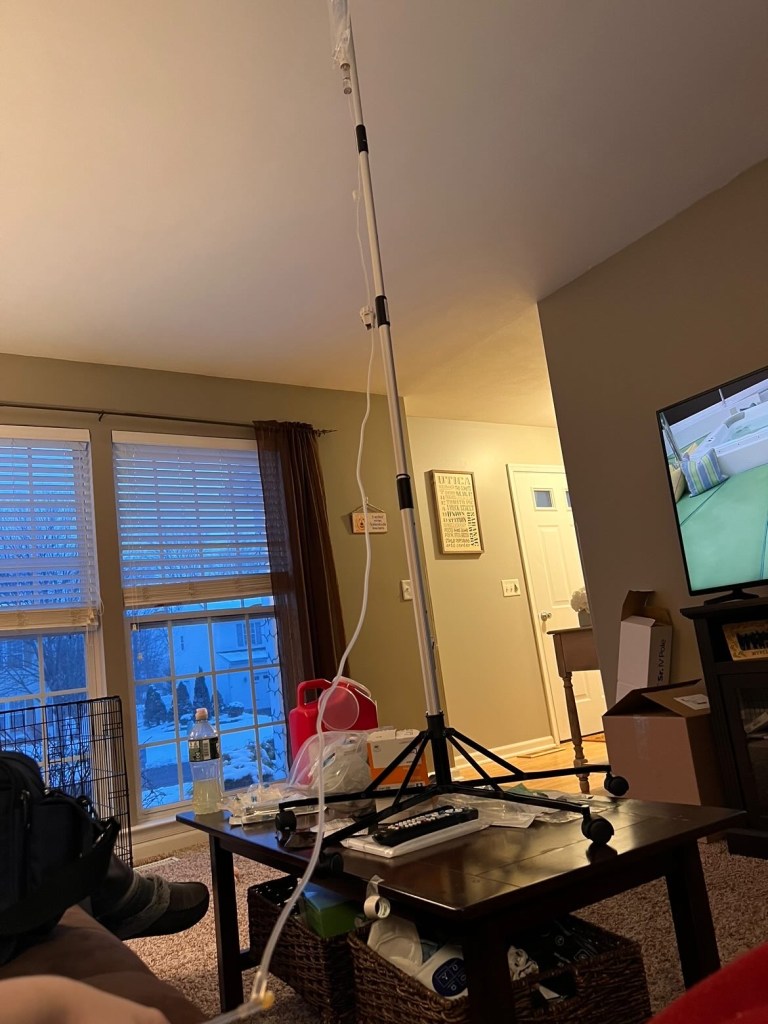
Amanda has been doing Remicade infusions at home since the pandemic started and she says it’s been much better for her. Being able to receive her medication at home and cuddle with her 4-year-old daughter and dog are big wins for her. Recently, she also receives daily IV fluids, and thanks to her Port and home health, she’s been able to do it herself.

Amanda: “Home infusions have changed the game for me. They make me feel safer as someone whose immune compromised. I almost always have the same nurse, and I don’t have to commute before or after. How grateful am I!”

She says how you coordinate setting up home infusions is dependent on your insurance. Personally, after talking with her insurance she found a list of home health agencies within 30 miles of her house and called and spoke with a few.

“Some did not administer my medication, some charged separately for nursing fee, and some were not taking new patients. Once I found a good option for my family, the home health company reaches out to your GI doctor, who then sends the script to the Specialty Pharmacy, rather than to an infusion center.”

When Bad Veins and IV issues Set You Back

One of the main reasons I chose to do a self-injection rather than an infusion was because of how horrible my veins are. When I was told I needed to start a biologic during a hospitalization in July 2008, it was the same hospitalization where it took three people and eight tries to start an IV on me. To this day, I’m still a bit fearful of getting IVs because of that traumatic situation. Several people wrote to me with the same concerns—this is something to consider if you typically need a Vein Finder for hospital visits and procedures.

Olivia: “I initially loved the idea of doing infusions at home. My first one went smoothly, the nurse had a bit of trouble finding a vein and drawing blood, but no problems after that. The ability to do my infusion in my bed or on my couch was so much more comfortable than the hospital! But then, the next two infusions, the nurse had trouble getting a vein and one had to be rescheduled because of hospital policy. That infusion took over an hour to find a vein. After that, we spent a month trying to convince insurance to let me go back to the hospital so I could use the ultrasound to get IVs placed. Ever since, I’ve been doing infusions at the hospital. The idea of doing infusions at home was nice, but it didn’t work for my situation.”

Meredith: “I get my Entyvio infusion at home. I don’t love it. It is more convenient than having to go to the hospital/office, but nurses often have trouble starting IVs on me and at home they are the only option. There is no backup and I’ve had a few bad experiences. Things have gotten better because I now have in my profile that I need pediatric needles, but they aren’t the standard, so those types of needles are not always supplied. The insurance decided for me that I would receive my infusions at home because it’s cheaper and since I’ve never had allergic reaction. The service by me is different, but there is no future scheduling. You know around the date that your next infusion is and then you’re contacted one day beforehand with a time. I’m too high strung to be comfortable with that, but it is what it is.”

Much like Amanda, Meredith loves having her dog there for support. When she initially started getting home infusions her dog needed to stay outside the room because she was too interested in what was going on, but now she’s used to the process and equipment and can snuggle.

Heidi: “My insurance made me switch to home infusions. At first, I was nervous because I’m a hard stick and always require a vein finder. I also just felt safer in a hospital setting. But, I’ve been doing home infusions for three years and I love it. I have my “old faithful” vein and I like being in my own home with my own bathroom and other comforts. I also have wonderful nurses whom I look forward to seeing each time. Everything is so much more personal this way.”

Melissa: “Sadly my veins are awful, and I wouldn’t want to chance the one person who comes not being able to get an IV started.”

Concerns from the Community Regarding Home Infusions

Ashley: “With my ulcerative colitis, comes other chronic illnesses. Which is true for a lot of people in our community. I have POTS, so having my infusions done in a healthcare setting is more reassuring for me because there’s more safety nets in place.”

Emilie: “I don’t get my infusions at home anymore (I used to!) because I hated it. The nurse was always texting me to reschedule, I was always having to deal with CVS trying to get my medication delivered on time, and I had to store all the stuff. It also made me feel like a “patient” in my own home. Mentally it was incredibly stressful organizing and coordinating everything and feeling like I was constantly sick because the medical equipment was always around. I much prefer going to an infusion center, where I just show up and they have everything ready to go. Just another perspective—I know a lot of people love getting infusions at home and I’m in the minority, but there are cons to consider.”

Mary: “I don’t currently do an infusion medication, but I have in the past with Remicade. My GI office set home infusions up for me after I did the first few in the office. It was more convenient for me due to the office being about 1.5 hours away from where I live. I was provided with an IV pole to keep at home among other supplies and a nurse came to my house to do the infusion. It was awkward at first, but after a few times it got better. Unfortunately, during one infusion, I had an allergic reaction unexpectedly, during which the nurse had to give me Benadryl and another medication. After that happened, I couldn’t do them at home anymore and had to go to the office. After two more infusions, my GI discovered I wasn’t responding to Remicade anymore and I had to switch to Stelara. The cons are the risk of something happening and not being in a medical setting. Luckily, I had a great nurse who knew what to do.”

Adam: “I prefer the clinic and the reason is, when I was on Humira and had to self-inject, I always worried I didn’t get it in the right spot or the full injection and miss some of my medication. For me, it’s a piece of mind that my infusion is done properly.”

IBD Moms Experience

Miranda was diagnosed with Crohn’s during the height of the pandemic. When she started Entyvio it was in an infusion center, and she felt like she was putting herself and her family at risk each time she went in. By receiving infusions at home, you can potentially be exposed to fewer hospital-acquired infections. This is especially important for individuals with compromised immune systems, as it helps minimize the risk of additional health complications.

“I saw a few ladies (connections on Instagram) who were receiving home infusions, so I asked my doctor about it. He said it would be no problem to connect me with a company in Dallas that handles nursing and medications for in-home infusions. My only obstacle was seeing if my insurance company would approve home nursing. After calling them to go over benefits, my insurance informed me I could receive in-home nursing. I did have to escalate the call to get it pushed through. At the end of the day home infusions were approved. The same company that ships my meds provides nursing. I do have to make a phone call every January to make sure coverage is good, but other than that it’s a flawless process. The nurse and I are close friends.”

Christina: “I specifically told my GI I don’t want to get infusions at home because I like my “me” time in the infusion clinic. Two hours to read my Kindle in peace! I also decline the accelerated rate…perspective changes when you have kids. My nurse jokes they’re my spa days!”

Krista: “I moved to home infusions once I had my daughter. It was more convenient because I didn’t have to find someone to watch my daughter (I had nobody to help or to ask) so that I could attend my infusions. I had a pleasant experience, and the nurse was fantastic. Being able to do infusions in the comfort of my home was fantastic, especially needing an infusion only 2 weeks postpartum, while recovering from a c-section.”

Getting adjusted to receiving medication without support from fellow patients in the room

Kristi has been receiving Remicade at home monthly since January. Her GI office stopped doing infusions at their office due to staffing issues. After a time or two at the hospital-run infusion center, her insurance company called her to see if she’d be interested in home infusions. Since she had been driving an hour each way for years, she jumped at the chance!

“The idea of not having to worry about getting my infusion during a winter storm was enough for me. My doctor’s office was hesitant at first. I was always on board with the idea, and I was shocked to see the cost was similar to my doctor’s office but significantly less than an infusion center. Home infusions have allowed me more flexibility in scheduling. I also feel like my resting period post-infusion is much easier since I’m already home. While I love home infusions, there are some downsides. I don’t think I would have wanted this back years ago when I started infusions. There’s a lot to be said about the community and the support I received just by being in an infusion room with similar patients. It was also nice to be in my doctor’s office monthly, where I could easily report any symptoms, I was having health wise. I am the person that needs to have my house looking perfect before company comes over, so that adds an extra level of stress during an infusion week. It’s also a bit odd to have the nurse here for so many hours. However, I’ve had two nurses so far and they’ve always been very good and very respectful in my home and if I wanted quiet time. Overall, I don’t think I could go back to going somewhere.”

Kristi says now that she doesn’t have the infusion room support, she relies even more on the social media community and the IBD family online. She also loves getting to snuggle with her dog and use him as a heating blanket while she receives her infusion.

Final Thoughts

Balancing the risks vs. benefits. As you’ve read, home infusions are not a one-size-fits-all approach. What works for one person, doesn’t for another. While the benefit of being at home is a big one, having to worry about the sole nurse at your house finding a vein and not knowing if you’re going to have a bad reaction are just some of the cons that can make the experience worrisome for people.

The convenience of home. Home infusions offer the convenience of receiving treatment in the comfort of your own home. This eliminates the need to travel to a medical facility and allows you to maintain your daily routine more easily. For IBD parents and caregivers it alleviates the need of finding childcare. By fitting infusions into your daily life, it helps to reduce the disruption that may come with hospital or infusion center visits. So many of us deal with medical PTSD and having the comfort and familiarity of home can help to ease that burden a bit.

Kat: “I received home infusions for years for UC. My doctor’s office got them set up because I live in a rural area. The pros were the convenience and being in the comfort of my home. The cons were having a stranger in my home for over an hour. Dealing with the company’s billing department was also horrendous.”

A more personalized treatment experience. You can have a dedicated healthcare professional who gets to know you and your specific needs, creating a customized care plan to address your individual symptoms and concerns. Many IBD people I speak with have a close bond with the nurse who visits their home and feel supported during the process.

Jill started on Humira and was later switched to Remicade infusions. She started receiving infusions at the hospital and then her GI recommended she try home infusions to limit exposure to germs.

“My GI’s office took care of the paperwork and I had the choice between two home health companies. This has been a game changer for any guilt I felt around missing work, because the nurse comes to my home and I can continue working on my laptop, if needed. Or I schedule infusions to begin at the end of my work day. I have a great relationship with my home health nurse and she knows me and my veins so well now. I value the relationship and level of care as well as the flexibility I have found with this option. It’s a win for my mental health as well.

Matt received home infusions for seven years. If he could pass along any advice, he says to be even more proactive about your health.

“I had to always coordinate shipments, supplies, and the infusion schedule. The pros are the flexibility and comfort, but the cons are not being at an infusion center where you can unplug and be in your own thoughts.

It’s important to discuss the option of home infusions with your healthcare team to determine if it’s a suitable choice for you. Your care team can address any concerns or questions you may have, educate you on the process, and help you make an informed decision. Remember, you have options and support to manage your IBD effectively, even when it comes to receiving necessary infusions.

IBD Motherhood Unplugged: Being an Ostomate through pregnancy and beyond

Pregnancy and motherhood look differently for women who have an ostomy. And not just physically. But also, emotionally, and mentally. The path to motherhood is unique for those of us in the IBD community and we’re living at a time when more research about pregnancy and breastfeeding is right at our fingertips, all of which sets IBD moms and moms-to-be up for success.

Whether you’re on the brink of needing an ostomy and fearful of what this means for your future. Whether you’re a mom of a young girl and worry about whether your daughter will ever be able to be a mom. Whether you’re newly diagnosed and can’t imagine your damaged body bringing a life into this world. Whether you just took a pregnancy test after a bag change and can’t believe it’s positive and don’t know what to do next. These transparent and real-life patient stories will bring you hope and help empower you in coping, preparing yourself, and working with your care team, if carrying a baby is something you hope to do one day.

This week we hear from several ostomates—some who are moms, others who are pregnant right now, and two women who got pregnant after having a proctocolectomy (removal of rectum and colon).

Krista Deveau was diagnosed with ulcerative colitis as a child. After having two bowel resection surgeries and her ostomy surgery over the course of 10 years, she was worried about whether being a mom would ever be an option.

The reason for getting a temporary ileostomy and avoiding even more scar tissue, was because of I wanted to start a family with my husband in the years to come. To my surprise and my GI’s surprise, we got pregnant much easier than expected, truly a blessing because this isn’t always the outcome for everyone.” 

She’s now 24 weeks pregnant and expecting her first baby in June! Krista says this is the best she’s ever felt. Her symptoms have been silent aside from having phantom rectum/poop and passing mucus more frequently lately.

Krista is on a dual biologic treatment plan (Stelara and Entyvio) every 4 weeks. She plans to stop her Entyvio treatment at 32 weeks and resume her infusion in the hospital after she delivers. She’s still in the process for determining her game plan with Stelara. She also takes prenatal vitamins, vitamin D, and b12 shots. She expects she’ll need iron infusions before baby arrives.

As of now, she plans to do a vaginal birth. Due to not having perianal disease and already having significant scar tissue and adhesions from previous surgeries, her care team determined this plan with her. Like any IBD mom-to-be, she worries about the ever-present threat of a postpartum flare, having to be hospitalized and be away from her baby, and possibly passing her disease onto offspring.

Katie Cuozzo was diagnosed with Crohn’s disease when she was 5 years old. She’s had concerns about not being able to get pregnant for as long as she can remember. Now, she’s 34-years-old and a mom of three girls. Her oldest daughter was 18 months old when she received her ostomy, so she’s been pregnant with and without a bag.

“The only difference that I noticed between pregnancy with an ostomy versus without was how to dress. As my stomach was getting bigger, it was a little harder to disguise my bag. I would mostly wear baggy clothing. With my first pregnancy, I was able to deliver vaginally, I had c-sections with my younger two.”

Katie’s perianal disease got significantly worse after delivering her firstborn. Originally, she was planning to have a temporary colostomy, but her symptoms didn’t improve so she decided to get a total colectomy. Despite her IBD causing her so many issues, Katie was able to conceive on her own without any problems.

She remained on her medications during all three pregnancies. She took Cimzia during her first pregnancy and Stelara during her other two pregnancies. Katie also continued to take her prenatal vitamin, vitamin D, vitamin b12, and calcium supplements. She also breastfed all her children.

“As I was planning for ostomy surgery, my surgeon told me that if he did a total proctectomy- removal of my rectum, my chance of fertility would decrease significantly. I made the choice to keep my rectum in place until I was done trying for more kids. I am now at a place in my life where I am beyond blessed with my three daughters and am ready to have my final surgery to remove my rectum, knowing that I will likely never be able to have more kids.”

Katie says she was amazed at how great she felt while pregnant. It was the first time in a while she was having regular, normal bowel movements and was able to eat anything and everything without having abdominal pains and needing to run to the bathroom.

Katie Nichol was diagnosed with ulcerative colitis in 2018 when she was 30 years old. She went through an emergency subtotal colectomy surgery in October 2019 to remove her diseased large bowel/colon and an ileostomy was created.

I was told that I would keep my rectal stump to further my chances of being able to have children in the future, but my doctors told me to seriously think about having my family before my next operation, either a total proctectomy or j pouch surgery. Personally, I never thought I would ever be able to get pregnant after surgery as it was such a big life change and a lot of trauma had happened in my abdomen with surgery.”

Katie and her husband had been trying to conceive since before her IBD diagnosis. She didn’t know anyone in real life with a stoma. It made her anxious as she was unsure how her body would respond if she got pregnant and how it would affect her stoma, intestines, and overall health.

“After receiving my ileostomy, I felt so much healthier, happier, and started to think that my body would be able to conceive and start our family. My IBD team and surgeon kept saying at appointments post op that if I wanted a family I would need to start trying in the next couple of years before my next operation.”

Katie says her surgeon wanted to ‘preserve her pipes’ and advised her that a vaginal birth may cause some damage from pushing. Her care team warned her about the possibility of her rectal stump or stoma having the chance to prolapse, so she went ahead and scheduled a c-section.

 “One surprise I used to get was when the baby was lying to my stoma side (right hand side) it would sometimes look like I had a hernia around my stoma sight, but the baby was underneath my stoma, this freaked me out a good few times, but it was amazing to see the baby move and my stoma still standing strong on my stomach.” 

Katie took prenatal vitamins, iron, and was on a rectal foam for her rectal stump while she was pregnant. Since her stoma surgery, she is no longer on medication. Now she takes suppositories for her rectal stump before bed.

Receiving a Total Colectomy as a mom of two

Kimberly Hooks was diagnosed with ulcerative colitis in 2011. She was 28 years old. Her oldest daughter, Briana, was five years old when Kimberly received her IBD diagnosis. After nine years she was able to reach remission and became pregnant with her second child. Kimberly had a three-stage J-pouch procedure between the fall and spring of 2020. She was an IBD mom of two while all of this was going down.

“I honestly did not want to accept that I had to have three surgeries. I was utterly devastated when I found out that I had to have a total colectomy. My surgeries were scheduled during the height of the pandemic in 2020. Mentally, I could not wrap my head around the fact that I would not be there for my family, especially during this critical time in our lives. I felt hopeless; I felt defeated as a mother and wife.”

Kimberly’s colectomy was unexpected. She did not have time to process anything.

“We often put ourselves last; however, I was not given a choice in this case. The reality was I had two more surgeries to undergo, and I understood that I have a family that loves and supports me. I realized this was my time to ensure that I did what I had to do to heal, recover, and finally be the best mom and wife I could be.”

The experience impacted Kimberly and her family in the most positive way. Her husband and daughters rose to the occasion day after day to offer love and support and saw Kimberly as their hero. She was discharged from the hospital after getting her ostomy on Mother’s Day and her daughters made her signs and gave her flowers.

“All the while, it was me who had to accept that living with an ostomy is something to be proud of. At first, mentally, it was a hard pill to swallow, but after awhile I realized that my ostomy bag saved my life; I will be forever thankful!”

Pregnancy after a Proctocolectomy

Kayla Lewis was diagnosed with Crohn’s disease at age 10. When she was 24, Katie had surgery and received her ileostomy. She says that’s the first-time fertility and her future as a mother crossed her mind. Then, in 2017 she became incredibly sick. She tried what she thought was a temporary ostomy for six months. Then in a follow up scope her GI perforated her bowel.

“When I woke up, I was informed that my entire colon was scar tissue so much that the camera could barely go into the bowel before perforating it. At that point, I was told my options were to leave the colon and rectum or schedule to have both removed, but either way, the ostomy was suddenly permanent. I did not want to resort to that initial surgery till I knew I had exercised all other options available to me including meds, treatments, and diet. Being that surgery was my only hope at gaining life back, I never fully questioned how it would affect my fertility. I did briefly ask the surgeon if I can still have kids one day. He responded with a simple ‘yes’ and I left it at that.”

Even though Kayla says she still would have continued with her proctocolectomy regardless, she wishes she would have thought to ask more questions. Thanks to her ostomy, Kayla has been in remission for 5 years. She felt like family planning could be on her own terms.

“Being 12 weeks pregnant with an ostomy has been much smoother than I had envisioned for myself. I work as a nurse in an operating room, so feeling nauseous and vomiting was my biggest concern early on. I have a small body frame, so maybe once the bump starts to show, I will experience stoma changes. Hopefully, nothing more than just cutting the wafer a bit smaller or larger.”

Currently, Kayla takes Imuran and Allopurinol daily and injects Stelara every 8 weeks. She also takes a prenatal vitamin.

“I was always told that when the time comes for me to become a mom, it would have to be via c-section and not vaginally. I knew this well before my ostomy, because I was warned how difficult it could be for me to heal from tearing as well as could trigger a flare. After my proctocolectomy, I knew without a doubt, I would need to schedule a c-section to play it safe.”

Lori Plung was diagnosed with Crohn’s Colitis in 1980. She was 16 years old. Two years after her diagnosis her disease became severe. As she reflects, she remembers being very worried about ever being healthy enough to be a mom.

“My mom was told by my GI at the time that he didn’t have a good feeling about me being able to have children. This was not shared with me at the time, and this was well before surgery was mentioned to us.”

In 1988, Lori had a proctocolectomy. She remembers lying in the hospital bed before her surgery and a local IBD mom and her toddler coming to visit and show her all that’s possible with an ostomy.

“I believe what was missing, was a conversation with my doctors about how my anatomy would change after surgery and the possibility of scar tissue building up near my ovaries, fallopian tubes, and uterus. Therefore, making it harder to conceive. When it was time for us to try for a family, we couldn’t conceive on our own. In the back of my mind, I knew my insides were shifted around and I had a strong suspicion that mechanically things were not working correctly. We tried for about 6 months and started investigating fertility options. We didn’t wait the full year as often recommended because I was feeling well —and as we know with IBD, when the disease is under control, It’s the optimal time to be pregnant.”

Lori went through many fertility treatments and said no one blamed her proctocolectomy as the culprit. She ended up having scar tissue on one of her fallopian tubes. She got pregnant with her first child through IUI (Intrauterine insemination) and her second through IVF.

She remembers telling her husband she didn’t want their kids to have memories of growing up with a “sick mom.” She had three more IBD-related surgeries, numerous hospital stays, and says her energy was drained, but she prided herself on her inner strength and determination to always push through no matter what.

Lori says if she could talk to her former self, she would tell herself not to feel guilty about needing to stay home and do quiet activities because she was having a hard Crohn’s day.

“Not to be hard on myself when we sat and watched Barney (my daughter Dani’s favorite) or Teletubbies (my son Jesse’s favorite) because I was too exhausted to move. Not to feel guilty when everything fell on my husband, especially through each surgery and recovery. It’s ok to ask for help and not feel guilty.”

Lori’s kids are now 23 and 26. She still can’t believe she’s been able to be a mom and be there every step of the way as her kids thrived through each stage and season of life.

Advice for fellow ostomates about pregnancy

  • If you have an ostomy, you can have a baby. Don’t let your ostomy hold you back. Work with your care team to know when the right time is and if there would be any issues with getting pregnant.
  • The body has a way of coping no matter what. Your past trauma prepares you to handle the unknown and celebrate every win—big or small, along the way.
  • Keep the faith. You may run into roadblocks but exhaust all options before you throw in the towel. Miracles happen every day, stay hopeful.
  • Find a care team well-versed on IBD. A medical team who understands your complexities and who is supportive will make your experience with pregnancy and an ostomy a positive one. Have all hands-on deck and connect with your IBD team, surgeon, ostomy nurse, and Maternal Fetal Medicine (MFM) group. It will give you a sense of security as you embark on this wonderful and exciting adventure. Your ostomy nurse will be a huge resource—as your belly grows, so will your stoma.
  • Be mindful of ultrasound gel. Be prepared at OB-GYN and MFM appointments by bringing extra bags and wafers. Try and make sure your ostomy is empty prior to ultrasounds and then fold it up or hold it up to keep it out of the way. Ultrasound gel can make the adhesive come off. Many of the IBD moms I spoke to said they change their bag after every ultrasound to make sure all the gel is off their stomachs, so the new bag can stick on properly.
  • Stoma size and output. Don’t be alarmed if the size of your stoma changes as your baby bump grows. Stomas go back to their pre-pregnancy size after babies are born. For some, output can get thicker, and you can have more gas, but that’s likely due to being able to tolerate more fruits and veggies. As your belly grows, your bag may dangle rather than being tucked away and become a bit uncomfortable.
  • Remember everyone’s journey is unique. While each of these amazing women are sharing positive pregnancy experiences, don’t forget all the roadblocks, flares, and health issues they had to overcome to get to this point.
  • Ostomies gave you life and enable you to bring life into this world. For many IBD moms it’s surreal to experience your body go from attacking itself to nurturing and creating a life. Pregnancy provides a renewed love and appreciation for all that our bodies are capable of, despite our IBD.
  • Connect with other ostomates over social media and through support groups. Don’t hesitate to reach out to women who are living your same reality on social media. We’re all a family. Peer to peer support is amazing, reach out to fellow IBD moms. Here are the Instagram handles for the women featured in this article. Give them a follow!
    • Krista Deveau–@my.gut.instinct
    • Katie Cuozzo–@kati_cuoz
    • Katie Nichol–@bagtolife_
    • Kimberly Hooks–@kimberlymhooks
    • Kayla Lewis–@kaylallewis_
    • Lori Plung–@loriplung

Inaugural Autoimmune Summit just what the patient ordered

This post is sponsored by the Autoimmune Association. All thoughts and opinions shared are my own.

An educated patient is an empowered patient. Over the weekend the Autoimmune Association presented its Inaugural Autoimmune Summit that aimed to do just that. The virtual two-day event featured 23 educational sessions and more than 50 autoimmune experts including physicians, nurses, policy experts, and of course, patient advocates.

The Summit covered a wide variety of important topics that impact patients and caregivers who live with autoimmune conditions. I had the opportunity to moderate a panel discussion about fertility, family planning, and pregnancy alongside Dr. Marla Dubinsky, Chief of Pediatric Gastroenterology at Mount Sinai and Co-Director of the Susan and Leonard Feinstein Inflammatory Bowel Disease Clinical Center and Mariah Leach, a mom of three who lives with Rheumatoid Arthritis and Founder of Mamas Facing Forward. As an IBD mom of three chidren myself, I’m extremely passionate about sharing guidance and support for fellow women on this subject.

During the discussion, Dr. Dubinsky touched on many aspects of the journey to motherhood and beyond with IBD, but one comment she made resonated with me. She said the greatest gift a woman can give their child, is to stay on their medication, and allow their baby to thrive in an uninflamed environment. As someone who needed and depended on my biologic with all three of my pregnancies that comforted me greatly and really struck a chord.

Other topics of discussion during the Summit included tips and tricks for managing multiple specialists to clinical trials, health equity, advocating on Capitol Hill, and complementary medicine.

A dream come true

Lilly Stairs, Vice Chair of the Board of the Autoimmune Association and Summit Lead, lives with Crohn’s disease and arthritis. As a patient advocate, she understands the vital importance of providing those who live with chronic health conditions to share their voice and articulate their needs and struggles.

“It has been a dream of mine and the Autoimmune Association’s to plan an event that unites community members from across autoimmune conditions. Our patient odysseys share deeply rooted similarities. By coming together, we can accelerate autoimmune education, awareness, advocacy, treatment, and someday, cures.”

Goals of the Summit

The goals for the Summit were three-fold. Organizers and presenters like myself hope you walked away feeling connected to people across the patient community, while learning tangible tips for managing your autoimmune conditions. Lastly, the hope is that attendees and Summit participants feel energized and excited about what the bright future holds for those living with autoimmune diseases.

Lilly went on to say, “Events like the Autoimmune Summit are essential engagements for patients and caregivers to participate in. These events provide tools to navigate life with chronic illness and empower patients with the knowledge they need to be “CEO, secretary, and treasurer of your care” as Hetlena Johnson, Lupus Patient Advocate so eloquently stated in the Managing Multiple Autoimmune Conditions panel.”

Events like this are a reminder that we are not alone in our journeys. Even though chronic illness can be extremely isolating, events like the Autoimmune Summit offer the opportunity for connection that often feels like much needed chicken soup for the soul. The camaraderie that is possible even though Zoom has a lasting impact on helping to lift the burden and self-doubt many patients face.

From the Speakers

Tina Aswani Omprakesh participated in a panel on complementary medicine and autoimmunity. As an ostomate who juggles Crohn’s disease, Gastroparesis, and IBS, she knows firsthand how imperative it is to take on illness with multiple approaches.

“This is an important subject that’s often not discussed in the autoimmune space. The reality is that many patients are thinking about exploring it but don’t know how to navigate it in a way that can help complement their existing therapies. These conversations are essential to proliferate both credible information and sources of complementary therapies so patients can truly live their best lives possible.”

Molly Schreiber lives with Type 1 Diabetes, Rheumatoid Arthritis, and POTS. During the Summit, she spoke about what it’s like to manage multiple autoimmune conditions.

“Anytime I can share my story, my hope is that attendees feel less alone in their battle with chronic illness. We may have different health conditions, but our fight is often the same—pain management, medical providers who listen, and affordable medications we can easily obtain.”

Alisha Bridges is a patient advocate who lives with Psoriasis. She participated in a breakout session geared towards dermatology. She says having the chance to speak at the Autoimmune Summit was an honor.

“I hope my story helped viewers to better understand the unique challenges of living with psoriasis as a woman of color especially in the clinical trials sphere. These conversations are imperative to elicit change for better care of patients of all backgrounds.”

Curtain Call

It’s our hope attendees discovered tips for managing autoimmune disease from patient advocates like myself who understand your reality, while also learning about the latest research and future treatments on the horizon.

Did you miss tuning into the first-ever Autoimmune Summit? No worries! All the presentations were recorded and will be shared in the weeks ahead. I’ll be sure to share the Fertility, Family Planning, and Pregnancy discussion I was a part of on my social media channels as soon as the video becomes available.

Thank you to all who tuned in, to all who participated, to the organizers, like Lilly, and the generous sponsors who made this happen. It’s amazing to see what’s possible when patients have a proverbial seat at the table alongside medical professionals and digital health companies. Our voices matter and time and time again we’re being heard loud and clear.

Follow the Autoimmune Association on social media

Instagram: @autoimmune_diseases

Twitter: @AutoimmuneAssoc

Facebook: Autoimmune Association

IBD Motherhood Unplugged: Scopes, Scans, and Breastfeeding

The date for my next scheduled colonoscopy is on my calendar. Even though my scope is one month away, I’ve already started the mental prep of what’s to come. When you’ve had too many colonoscopies to count you know what to expect…which is both a blessing and a curse. This time around I’m exclusively breastfeeding my 3-month-old son. So, like any IBD mom may wonder, how does that correlate when you’re taking prep that cleans out your system and are put out for the procedure?

I checked in with Dr. Aline Charabaty, Assistant Clinical Director of the Division of Gastroenterology at Johns Hopkins School of Medicine, and Clinical Director of the Inflammatory Bowel Disease Center at Johns Hopkins-Sibley Memorial Hospital, as well as my own gastroenterologist (GI) so I knew what to expect and so I could pass along the information to you.

Juggling Kids and Prep

I’m already anticipating the hustle and bustle that I’ll be dealing with as I guzzle down the disgusting concoctions with my 4-year-old and 2-year-old running around as I care for our newest addition. Luckily, my mom flies in for every single colonoscopy (even before I had kids!) to offer emotional and physical support. Now, she gives me a hand with my kids, and this allows my husband, Bobby, to take me to the procedure and celebrate with me after it’s over. Highly recommend you line up childcare when prepping for a colonoscopy so you can focus on yourself and not deal with the stress of mom life on top of it.

Snuggling with my son, Reid, while I did my prep in 2019.

Dr. Charabaty understands what a challenge this can be and has fantastic advice for IBD moms on prep and procedure days:

  • Tell yourself you are doing the right thing taking care of your health, to stay well for you and for your kids.
  • Explain to the kids why mommy is a bit tired today, why she is not sharing their food and why she is going to the bathroom a lot.
  • Enlist help!! Have someone you trust, and who the kids know well, to keep them company and look after them while you are prepping the day before and on the day of the procedure. You need a responsible adult who is fully awake and alert to be with the kids and keep them safe during these days.
  • If your child is old enough to understand, have them play an active and fun role in this prep, for example reminding you to drink fluid during the day from a special cup they chose for you.
  • Hug your children often in between trips to the bathroom, to keep you going.
  • Give yourself plenty of rest after the procedure so you can be fully present to your children the next day.
  • Skip co-sleeping the first night after the procedure, as you might not wake up as usual in the night.

In the days leading up to my scope, I put myself on a self-imposed liquid diet 3-4 days ahead of time to ease the prep. It’s hard enough when I’m not trying to nourish a little person, along with myself. Anyone who has breastfed a child knows how hungry it can make you. My GI told me that despite only having liquids I would not need to supplement with formula. At the same time, she suggested I drink Ensure Clear Protein, which will not affect the prep and will help it. To combat dehydration, she reminded me to drink plenty of water up until two hours before the procedure.

“Breastfeeding women lose an average of 25 ounces of fluid a day through their milk. During the colonoscopy prep, make sure you drink plenty of fluid to keep the prep going and the milk flowing! Consider breastfeeding or pumping just before leaving for the procedure and as soon as you are recover and are awake after the procedure, to minimize discomfort of full breasts and minimize disruption in the usual breastfeeding/pumping schedule and optimize the volume of milk recovered,” explained Dr. Charabaty.

If nursing gets to be too much while I’m in the thick of my prep, I plan to tap into my freezer supply of milk so that my mom or husband can feed the baby while I’m holed up in the bathroom. By being proactive and thinking of these moments ahead of time, it’s one less thing to worry about and stress over.

Is Pump and Dumping Necessary?

Since we all know what colonoscopy prep makes us do, my initial thought was that I would need to pump and dump so my son wasn’t pooping up a storm along with me. I envisioned myself on the toilet with my pump nearby…talk about a living hell! Luckily, my GI said there’s no need to pump and dump with the prep or with the procedure since my care team uses Propofol and Dr. Charabaty agrees.

“Preps like Miralax, Golytely, Moviprep, Fleet phosphosoda, and Dulcolax, are not absorbed from the gut and do not enter the breastmilk; so, no need to pump and dump with preps, save every drop of this precious liquid! There are older recommendations to pump and dump the milk 4 hours after receiving anesthesia; however, review of the data show that most drugs used for anesthesia (midazolam, fentanyl, propofol, ketamine) do not cross into the breastmilk or if they do, the concentration for the drug in the breast milk is too low to affect the baby.”

Click here to lead the latest recommendations from the Association of Anesthetists that supports this guidance.

What about prep for MRE’s and CT scans?

“Radiological contrast agents used in CT and MRI are safe during breastfeeding, but be cautious with Technetium containing contrast that is used for nuclear medicine procedures. Some recommend pumping and dumping for 12 hours; other recommend pumping for 72 hours. Store the milk and only give it to the baby after it has been stored for 72 hours.”

The bottom line

“You can continue to breastfeed baby as usual following the colonoscopy (or endoscopy), as soon as you have recovered from anesthesia, and you are awake enough to hold the baby! Talk to the anesthesiologist before and after the procedure for advice, in case different or unusual medications were needed during the procedure. If you feel tired or sleepy, let someone else handle the feeding. Kudos for taking care of both your GI health and baby’s health!”

As an IBD mom having this intel is extremely comforting and puts my mind and heart at ease as I prepare for another colonoscopy, this time with another little one in tow.

He made me an IBD mom four years ago…here’s what I’ve learned

Four years ago, today, I became a mom. Our son Reid Robert was born and placed into my arms for the very first time. Like any parent, especially one with a chronic illness, those initial moments were emotional and overwhelming in the best way. A wave of relief rushed over me as I lied on the table after my scheduled c-section, grateful my body that had fought Crohn’s disease since 2005, had brought a perfectly healthy baby boy into this world. But I was also nervous about my abilities as an IBD mom and what the journey of parenthood would look like as I juggled taking care of myself and this tiny little human. How would my life with a chronic illness and as a mom play out?

Fast forward four years. I am now a mom of two, with a baby boy on the way (24 weeks tomorrow)! Over these last 1,460 days, I’ve learned and grown a great deal both personally and as an IBD patient. Today—I share that perspective and knowledge with you. Perspective and knowledge, I wish I had when I first became a mom and what I’m continuing to learn along the way.

  1. Fed is best. There is so much pressure on how women choose to feed their babies. It’s ridiculous. I breastfed Reid the first three days and he had formula from that point forward because I was nervous about my biologic. The second time around, I did more research, and chose to breastfeed my daughter. Our journey lasted for six months (my milk supply ran out once I got my period). I supplemented with formula. I’m hoping to nurse our final baby when he’s born in July. That being said—no matter what you choose, it’s your choice. Your baby will thrive. Don’t beat yourself up over it. Drown out the judgement and speak up if someone questions your decision for you and your baby. For me, breastfeeding is a labor of love. I’m not going to act like I enjoy it, because it was hard for me. It’s not something that comes natural for all, and that’s ok. No one is going to ask my kids when they are in elementary school or high school how they were fed or know the difference.
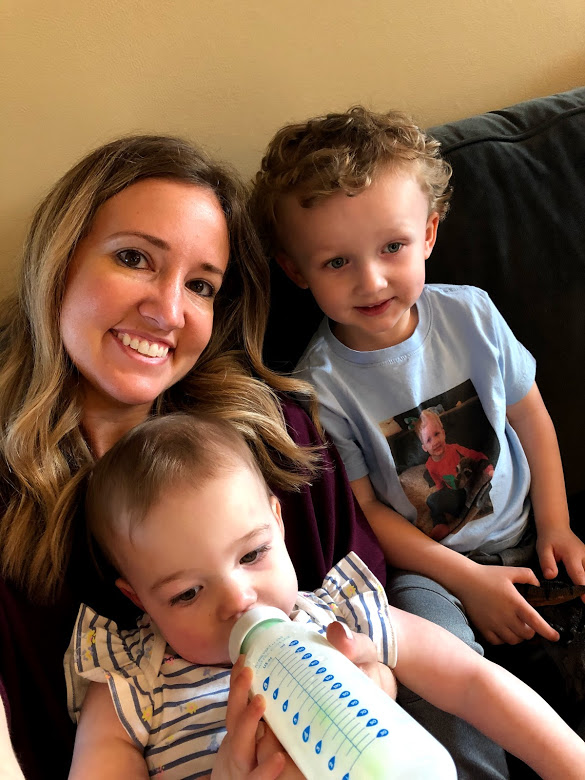
  2. What they see, doesn’t always hurt them. When you’re cowering on the toilet in pain and they’re watching with eyes that speak of concern. When you’re sitting on your couch about to do your injection. When you’re struggling to stand up straight because your abdominal pain is too much. Don’t shield them from your pain. That pain is part of your family story and it’s important you are honest and upfront. It’s those moments that shape their little hearts and their everchanging minds.
  3. Kids roll with the punches. Have to cancel plans or have a low-key day inside watching a movie instead of going for a walk or to the park? —that’s ok. Your children will feel loved and taken care of just the same. Kids are flexible. They don’t need to stick to a rigid schedule to be happy and fulfilled. At the end of the day, it’s your love and support that matters most.
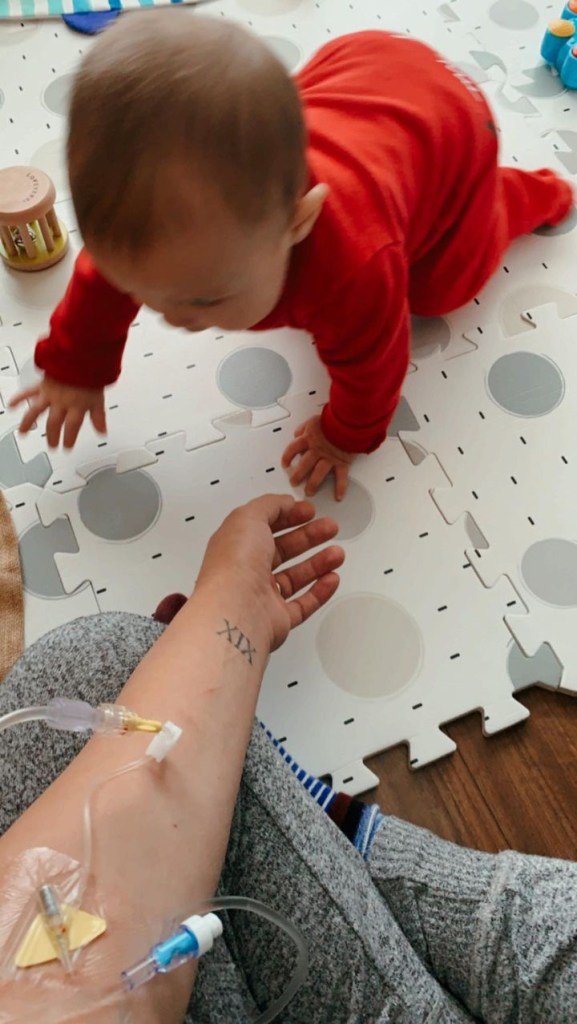
  4. Innate empathy from a young age. With my oldest being four, I can’t tell you enough how many times I’ve been blown away by his empathetic heart. Before he was even two years old, he would kiss my thigh after my injection and walk up to me in the bathroom, give me a hug, and pat my arm or stomach to comfort me. Now, he asks me if I’m hurting or in pain. He knows mommy isn’t always healthy, but that she’s always strong and gets through it. That empathy goes far beyond me—I see it in the way he is with others and it makes my heart feel like it’s going to burst with pride. I credit that aspect of his personality to what he’s witnessed these first few years of life, and for that I’m grateful. I can guarantee you’ll see the same with your children.
  5. Greatest source of motivation. Even though I’ve been in remission since August 2015, my kids still serve as my greatest motivation on the difficult days with the disease. Whether it’s pain, prepping for a scope, or going through a procedure, I keep my eyes on the prize—them. Just thinking of them gets me through everything. They give me so much to fight for, day in and day out. It’s not just about me—it’s about all of us.
  6. The importance of communication. When you become a parent, communication becomes even more paramount in your relationship. If you don’t share when you’re struggling or symptomatic, your partner can’t offer the support you need. Even if you’re not in a full-blown flare, it’s beneficial for everyone involved (you, your partner, and your kid(s)) that you share when your IBD is causing you issues. I always text my husband when he’s at work or simply say, “I’m having a bad Crohn’s day” or if I’m in the bathroom for a long time after dinner while he’s trying to get the kids to bed …and that’s all it takes to get the message across.
  7. Asking for help doesn’t make you weak. You’ve probably heard the saying “it takes a village to raise a child” …and it really does. You are not failing or less than because you ask or help, need a break, or time for yourself. You will be a better mom if you take time for you. You’ll be better able to keep your disease in check if you have time to relax and de-stress. I’m not always the best when it comes to accepting or asking for help, but as I gear up for three babies four and under, I know I’m not going to be able to do it all on my own and that I’m going to need more out of my village.
  8. Your health can’t go on the backburner. When you’re a mom, your needs often go to the bottom of the totem pole. When you are an IBD mom, they can’t. While I used to try and “brave out” my symptoms until the last possible moment, as a mom, I’ve completely changed. After nearly 16 years living with Crohn’s, I know when my body is speaking to me and now, I listen and address what’s going on immediately. I credit being proactive and sharing with my GI when it feels like my remission may be in question for the reason why I’ve been able to stay in remission all this time. I’ve gone on bursts of steroids, had my trough levels checked for my biologic, and done fecal calprotectin tests through the years when needed. The last thing you want as a parent is to be hospitalized because of your IBD. To me—it’s inevitable. It’s not a matter of if it will happen, but when. But I do everything in my power to keep myself home and out of the hospital and will continue to do so until that’s no longer possible.
  9. Every “tummy ache” and loose stool from your child is not IBD. When my kids say they have a tummy ache or I seem to think they’re going to the bathroom more often one day than not, I’m immediately worried and concerned. Could it be IBD? Why are they feeling this way? Is it my fault? What do I need to watch out for? All the questions flood my mind and sometimes my emotions get the best of me. Then, my husband normally talks me down and says it’s probably nothing and I need to stop jumping to conclusions. He’s right. Chances are potty training could be causing tummy aches. Or maybe like the rest of the population, they are going more because of something they ate. The chance of passing along IBD to your child (when one parent has it) is only 2-9% (according to the Crohn’s and Colitis Foundation). Remember that.
  10. You are their hero. Of course, there are times I wish I wasn’t an IBD mom…and “just” a mom. At the same time, I credit my disease for much of my outlook on life and how it helps me cope with setbacks, but also celebrate what to many others may be the mundane. My kids don’t see me than less than. When they sit through doctor appointments in the stroller and blood draws, or watch me make faces drinking colonoscopy prep, or count to 10 while doing my shot before they go to bed, they simply see their mama. This is their normal—they don’t know anything different. When I talk to teenagers or young adults who grew up with a parent who has IBD, I always hear the same thing— ‘they are my hero’.

Along with being a hero to your little one(s)…you are also…

Someone who takes unpleasant moments in stride.

Someone who wears the title of “mama” with great pride.

Someone who will never stop fighting for the feel-good days.

Someone who doesn’t allow your illness to rob you or your child of joy.

Someone who goes after their dreams—like that of being a mom—even though your back story may be a bit more complicated.

Someone who is just as worthy as anyone to be a parent.

We’re four years in, Reid. Like everything in life, each moment—beautiful and challenging—is fleeting. Thank you for being patient with me, for understanding me, and for being a daily reminder that I’m so much more than my Crohn’s disease. Being your mom is my greatest title and has been the best chapter of my life story and patient journey thus far.

Participating in PIANO: Why I choose to be a part of research while pregnant and beyond

As an IBD mom I see it as a responsibility and an opportunity to participate in research studies while I am pregnant and as my children grow. I’m currently 20 weeks pregnant (tomorrow!) with my third baby and this time around I’m enrolled in the Pregnancy in Inflammatory Bowel Disease and Neonatal Outcomes (PIANO) study. The project was conceived, lead, and executed by Dr. Uma Mahadevan, Professor of Medicine at the University of California San Francisco in 2007.

Since the project launched, more than 1,800 women have participated in the registry. Of that number, over 900 stayed on biologics throughout their pregnancies. I’m thrilled to be a part of this initiative. If my pregnancies and children can provide clarity for a future generation of IBD moms, the extra effort on my part is more than worth it. Thanks to women before me who have been on a biologic and been a part of research while pregnant, I have peace of mind knowing that staying on my Humira is best for me and for baby.

Without studies that indicate how babies in utero respond to medication exposures we would be in the dark about what is best for mom and baby not only during pregnancy, but with breastfeeding.

“There is so much misinformation about pregnancy and IBD including being told not to conceive at all or to stop medication. This is incorrect and dangerous. PIANO was started to provide reliable data for women with IBD considering pregnancy so they and their providers can make an informed choice for themselves and their babies,” said Dr. Mahadevan. “Every pregnant woman with IBD has benefited from the generosity of PIANO moms who contributed their outcomes, good or bad, to the pool of knowledge we have. Every PIANO mom who contributes benefits not herself, but future mothers with IBD. It is an invaluable and precious gift.”

What PIANO measures

There are four main areas the PIANO study looks at:

  1. Whether the level of biologic drug transferred across the placenta to the infant by the time of birth predicts the risk of infection or other adverse outcomes
  2. Whether the achievement of developmental milestones is affected by medication exposure
  3. Whether the rates of birth defects, adverse pregnancy outcomes and complications of labor and delivery are affected by IBD medications
  4. Whether second trimester drug levels can be used to adjust drug and minimize transfer across the placenta to the baby

Since I am just now reaching the halfway point of my pregnancy, I have only had to fill out questionnaires. You are required to do so during each trimester, at the end of your pregnancy, and then at 4, 9, and 12 months post-delivery. Along with that, you can provide follow up until your child is 18, once a year. During this trimester I will also provide blood work and a fecal calprotectin. On delivery day, bloodwork will be taken from me, my baby, and my umbilical cord. Depending on my son’s blood work at delivery, I may be asked for more when he’s 3 and 6 months. If at any time I am not comfortable with him getting his blood drawn, I can always opt out. The cord blood is similar to the baby blood at birth so that is adequate. I can also choose to stop the annual questionnaire at any time.

If a woman receives the COVID-19 vaccine during pregnancy, the PIANO study is also measuring the antibody levels found in the cord blood (on the day of birth) to confirm that the benefit transfers to the baby. Breastmilk will also be measured for the transfer of protective antibody against COVID.

The Findings Thus Far

In a presentation this past fall, Dr. Mahadevan shared findings from PIANO.

“We looked at pregnancy, birth and developmental outcomes in the infants at one year, based on exposure to drug, and found no increase in negative outcomes and no reduction in developmental milestones. Biologic‑exposed infants did have some statistically increased improvement in developmental milestones compared to the unexposed group. Overall, what this study suggests is that women with inflammatory bowel disease should continue their biologics and thiopurines throughout pregnancy to maintain remission, given no evidence of harm, and evidence that  disease activity can increase miscarriage.”

The study also found that disease activity can increase preterm labor and birth, all the more reason for women to stay on their medication and not try and go med-free while pregnant.

Looking to the Future

Currently, there is no end date for the study. As long as there is funding, the project will continue. Dr. Mahadevan says with all the new medications coming down the pipeline there is a need for safety data. She says, “The infrastructure of PIANO allows us to study new medications as they come to market, even before they are approved for IBD.”

To participate in the study women must have IBD and live in the United States. Interested in learning more or getting enrolled? Email PIANO@ucsf.edu or call 415-885-3734.

Living life unapologetically as a Black woman with Crohn’s disease

When Melodie Blackwell was initially diagnosed with Crohn’s disease in October 2018, she felt alone. Not because of how isolating IBD can be, but because she couldn’t find many people who were speaking about their journey from the perspective of what it’s like to be a Black or Brown woman in the IBD community. JPixStudio-8924 copy

When I looked for information from the IBD organizations, I felt like there was little to no one who looked like me. Sometimes, and history shows this, we can’t be unapologetic about being a person of color. We must tell our stories in a way that seems more digestible to White America. When I started sharing my journey, I wanted to reach those in the minority community from various walks of life who felt isolated or alone, to let them know they weren’t by themselves and there is a space where they belong. With my non-profit Color of Crohn’s and Chronic Illness (COCCI), I believe that’s what I have been able to do,” says Melodie. 

Dealing with feeling “uninvited”

As a wife, mom, entrepreneur, Black woman, and Crohn’s warrior; Melodie’s view of the IBD community has multiple perspectives. At this time, inclusion and diversity isn’t one that’s at the top of the list. “In order for any organization to be inclusive, they have to have to have a deeper understanding of a community. And when it comes to those who are in the Black community, most people don’t go where they don’t feel invited. Where does that thought process come from? Let’s talk about history and “whites only” venues, seating on the back of the bus, segregation ending less than 100 years ago, and the Tuskegee Experiment to name a few things. Many of us still have family members who can discuss all of the aforementioned like it happened yesterday.” IMG_4657

When it comes to Melodie’s thoughts on not feeling invited, “I am fine with that, because personally, I go where I am not invited. Not having an invitation doesn’t mean that I don’t belong. But as a culture, that’s not a resounding thought process. I know that that can seem odd, it’s a systemic issue. If you don’t know the culture, cultural differences, and historical oppression, you won’t understand that. There are some deeply rooted healthcare adversities – they live on today.”

Leading up to her diagnosis and even today, Melodie has dealt with ignorant physicians along the way. Her Crohn’s presented differently than most. It started with random body parts swelling. She had a doctor tell her she just needed to “squeeze those parts to help the blood flow”. She’s had doctors display their implicit bias and not listen…which resulted in abscesses bursting in her colon and emergency surgery.

Health equity isn’t given, it’s fought for

It’s the inequity that has inspired Melodie to go above and beyond and amplify her voice to show others they can do the same. She launched Color of Crohn’s and Chronic Illness (COCCI) to help lift people up and let them know they aren’t alone and they didn’t choose the challenges before them. She’s received countless messages from people embarrassed about their symptoms. Melodie is driven to show there’s no reason to feel ashamed about your IBD and she’s focused on creating a space that feels safe to get answers and receive help physically and mentally. IMG_1783

I want to empower people of color and beyond, to take control of their healthcare and not feel like they are a victim. I want them to have the resources that they need. I want COCCI to be readily available to help them find doctors, learn more about healthcare, provide a safe space to express their thoughts, help them advocate/lobby for their needs – I want health equity and to decrease the undeniable disparities in this community.”

Don’t be afraid to live

As an IBD mom and patient advocate, Melodie’s main advice is to live. IBD and chronic illness causes all of us to make changes and adjustments throughout the process, but we are still here, and we still can have full lives.

Some days will be tougher than others, but a mindset that says, “I choose Life” every single day, will change your life in the absolute best way,” says Melodie. “You set your limitations, and you determine your victories; don’t let IBD take that away from you.”

You can follow Melodie and COCCI on Instagram:

@melodienblackwell

@colorofcci

Check out her website


Flaring during pregnancy and after: Addy’s story and advice for IBD moms

Flare ups during pregnancy and after, starting a biologic while breastfeeding, and wondering whether one baby is enough—all experiences and concerns that have weighed heavily on 30-year-old Addy Irvine of Minneapolis. Addy was diagnosed with ulcerative colitis in May 2015. Addy and William 1 yearAddy’s son, William, is now 13 months old. This week—she shares a guest post about her journey to bring him into this world and the challenges and victories she’s experienced as a new mom with IBD. I’ll let her take it away.
Children were always a part of my plan. My husband and I knew we wanted to have children and were ready to start trying after I completed my Master’s degree. While my colitis had not been officially determined to be in remission, I was on Asacol and had not experienced symptoms for some time when my IUD was removed. After 8 months of “letting the universe decide” when to have a baby, we found out I was pregnant! Yay!

My first trimester was filled with the usual discomforts. Second trimester, you know, the one where you’re supposed to enjoy pregnancy and start feeling better? Not for me. I went through the worst flare of my life. It was easily the most miserable I’ve ever been, both physically and mentally. I had to stay home from work multiple days a week and was unable to help at home. I don’t know how I could have made it through without my husband’s support. 15 weeks

My doctors put me on oral Uceris, and when that wasn’t enough, they also put me on the rectal foam. The Uceris made things bearable, but I knew I wasn’t doing well.

I wasn’t gaining any weight despite my ever-growing belly. My friends and colleagues started noticing that I was losing weight. At first, it was in the chipper way people comment on weight loss. After a while people started to ask about it in a concerned voice.

I’d tell myself, “At least my baby is doing okay!”

By 3rd trimester, I could function normally most of the time. At my 36-week growth ultrasound, it was determined that my son had intrauterine growth restriction, and they talked to me about the possibility of induction between 37 and 39 weeks of gestation. 33 weeksAfter my second-high blood pressure reading that week, a nurse advised me to come into labor and delivery. When I arrived, I was diagnosed with gestational hypertension and started the induction process the next morning at 37 weeks.

Five days of induction later (really), my beautiful baby boy, William, arrived at 5 pounds 1.5 ounces. He was small, but healthy! After he was born, my UC got so much better until he was 2 months old when I had another flare. Suddenly I needed to care for my newborn in addition to taking care of myself. It seemed an insurmountable task. With frequent bathroom trips and intense fatigue, the newborn phase was made even tougher.

Holding on to the hope of breastfeeding

Breastfeeding was something I was really hoping for as part of my journey into motherhood. Newborn WilliamWhen William was born, I was thrilled, and so fortunate, to have a successful early breastfeeding relationship with him. When I started flaring again, breastfeeding became a significant challenge. I’d be with William during a late-night feeding, get a few minutes in, then have to wake my husband to keep William safe while I quickly ran to the bathroom. Obviously, this made William more than a little upset to start eating only to be pulled away. I also became increasingly worried that he wasn’t getting the nutrition he needed from me because I wasn’t absorbing nutrients the way I needed to. I upped my supplements and kept close tabs on his weight but continued breastfeeding. At this point, I knew I needed to do something different with my medications. What I was doing clearly wasn’t working.
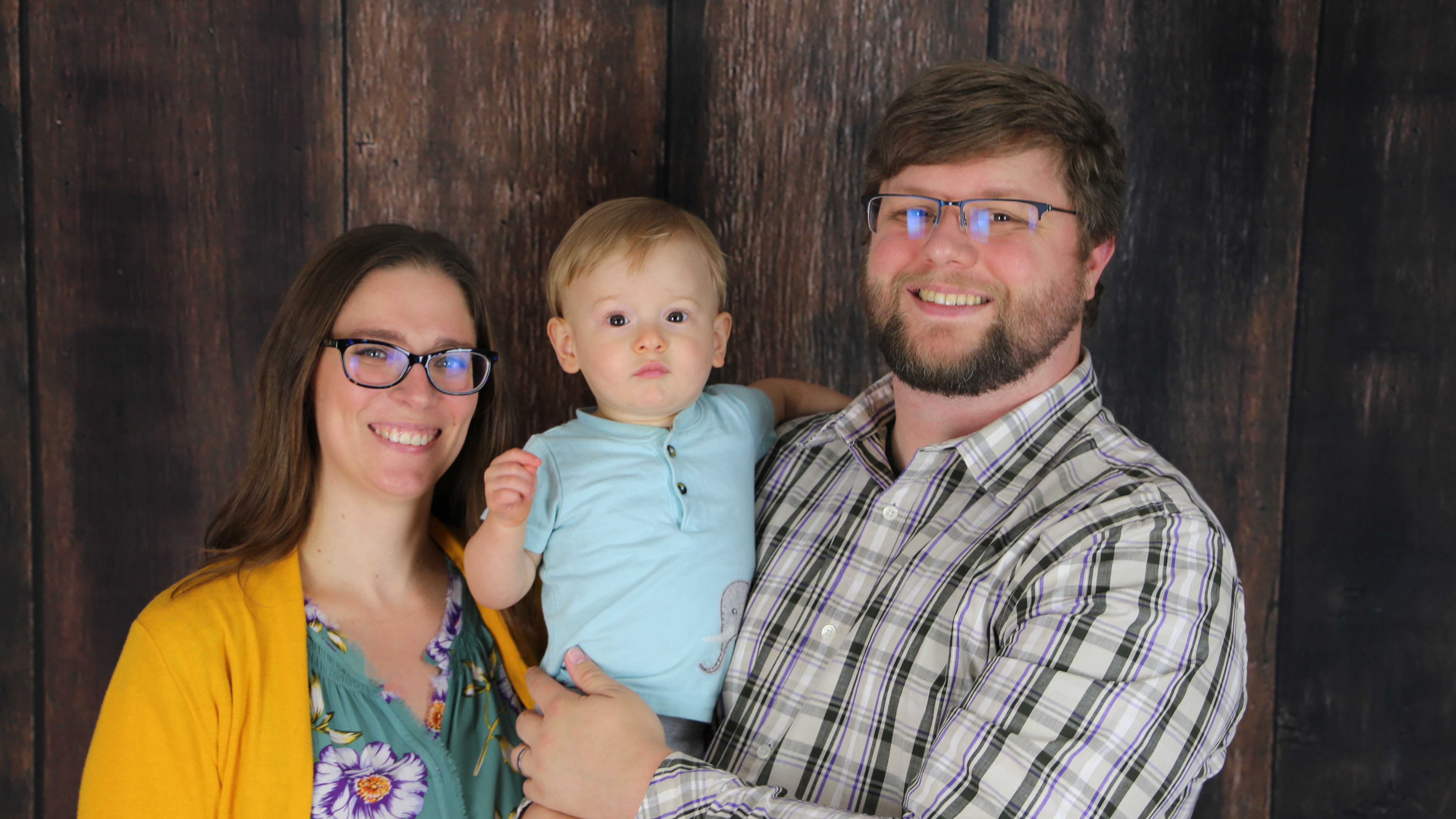

I started to research biologics and met with my doctor to discuss my options. He recommended Entyvio, and my insurance approved it. I worried William would be harmed by breastfeeding while I was on a biologic. Would he be more susceptible to illness because of it? Would my supply be affected? My doctors reassured me that it was safe to be on Entyvio and continue breastfeeding, but I knew the research is limited. After seeking information and support from other moms who have breastfed on biologics, I decided to take the risk, start the biologic, and continue breastfeeding.

“Healthy mom, healthy baby” is the way I decided to frame it.

From flaring to remission

After 3 infusions, I started to feel significantly better, and I am now in clinical remission for the first time since being diagnosed. I finished my breastfeeding journey about a month ago. My supply wasn’t affected by starting the biologic, and my son has had absolutely no ill effects. He gets sick less than I do! Most importantly, I can engage with and care for him so much better than I could while I was ill. Family photo

This journey has made me think twice about having more children. Pregnancy and childbirth were really, hard on my body because of my UC and other complications I experienced after delivery and I’m not sure I want to risk my health again. Sometimes I wish that I were like “normal” people who approach pregnancy without having to think about all of this. I remind myself that this is MY normal, and that’s okay. And it’s okay to have one child if we decide to do that. I keep repeating this: healthy mom, healthy child(ren).

Reflecting on my journey, here are some lessons learned that I hope you take away:

  • Work closely with your GI doc and your Maternal Fetal Medicine team to make a plan BEFORE trying to have a baby (or even “letting the universe decide!)
  • Prioritize your own health, even when pregnant. Remember: healthy mom, healthy baby. This includes taking care of your mental health.
  • Connect to other moms who have CD or UC to learn from them
  • Flaring during pregnancy and postpartum is physically and mentally exhausting – lean on your support system heavily if you find yourself in that place
  • If breastfeeding is important to you, talk to your doctor about whether it’s safe to continue to do so while on a biologic – utilize the IBD Parenthood Project as a helpful resource.


Breastfeeding with IBD: 5 tips for getting started  

You can think of us as ‘bosom buddies’—IBD moms trying to navigate life with chronic illness as we take care of our families.  Both of us battle Crohn’s. Both of us are on Humira. Both of us are bloggers and passionate chronic illness advocates. For Gutsy Girl blogger, Stacy Ransom, one of her main missions was to breastfeed her son. As a mom who chose to formula feed my son and who is currently breastfeeding my 12-week-old daughter, trust me—I get the guilt, I get the struggles, I am completely of the mindset that ‘fed is best’. The same can be said for our guest blogger, Stacy. This week she shares her insight on breastfeeding with IBD and offers up five helpful tips for navigating nursing. image1 (11)

Breastfeeding is a touchy subject. I’ve purposefully avoided discussing my experience for fear of offending others, because it seems that regardless of the stance you take, someone always gets upset. I’d like to start with abundant clarity that above all, fed is best and there is zero shaming here for mothers, regardless of the path they choose.

I was diagnosed with Crohn’s Disease in 2015 and spent years doubting my body’s ability to do anything right. When I became pregnant with my son in 2017, I wanted to do everything possible to prevent future gut issues for him.

We don’t know the cause of Inflammatory Bowel Disease, but someimage2 (1) studies suggest it may start with a bacterial imbalance in the gut, and several studies have shown that people with IBD were less likely to have been breastfed as infants. Furthermore, a study in Denmark showed that breastfed babies developed certain types of healthy bacteria in their digestive tract, which non-breastfed babies were lacking. A healthy amount of beneficial gut bacteria can promote a healthy immune system which fends off different diseases.

When I became pregnant with my son, I opted to deliver via cesarean due to my IBD, but I knew this would shift his first gut community. I read all the studies and learned all the digestive benefits of breastfeeding, so I wanted to do everything I could to set us up for breastfeeding success. My Crohn’s specialist also said she had noticed a decrease in postpartum flares among her patients who breastfed. I was really committed to giving this my best effort.

image3 (2)It wasn’t easy, but I’m so glad I stuck with it. We lasted 16-months until he self-weaned and he has a very healthy immune system so far, despite the cesarean and me being on Humira. Best of all? I didn’t have a postpartum flare, which my doctor attributed to the combination of staying on my medications, following my diet plan and breastfeeding.

I know not everyone has a positive nursing experience, but I’ve received countless messages from new mothers with issues that can easily be either resolved or prevented entirely. If you’re an expectant mother with IBD and think you want to try breastfeeding, here are some of my best tips for getting started:

  • Gather your supplies early. I stocked our fridge with easy, healthy, nursing-friendly snacks. I also made “nursing stations” in key areas around the house including a water bottle, snacks and lanolin cream. I bought a few very loose, button-down shirts to allow for easy nursing access and air flow throughout the day. I also got a few soft nursing bras in a full cup size bigger than my normal size (depending on your “normal” you may opt for two cup sizes bigger), and machine-washable, cotton nursing pads. They stick less than the disposable ones and cause less irritation, in my experience.
  • Find a Lactation Consultant. I can’t stress this enough. No matter how many YouTube videos you watch, nothing can compare to a real expert standing with you and guiding you through. Most hospitals will provide at least one consult before you are discharged. If yours does not, contact your local La Leche Foundation for support. Don’t listen to people who tell you it will just “come naturally,” because you BOTH are learning and the right latch from the beginning makes a world of difference! Some pain is normal in the beginning, but if it’s unbearable or if you start to bleed, something is wrong, and you should have a professional adjust your latch or check your baby for a lip or tongue tie.
  • Start off strong. Allow your newborn to latch as much image4as possible, especially in the first 24 hours, and provide plenty of skin-to-skin. After a c-section, the last thing I wanted to do was constantly get in and out of bed to pick up a newborn. Instead, I just spent my days with my son nestled on my chest so we could both sleep, heal, bond and get my milk flowing.
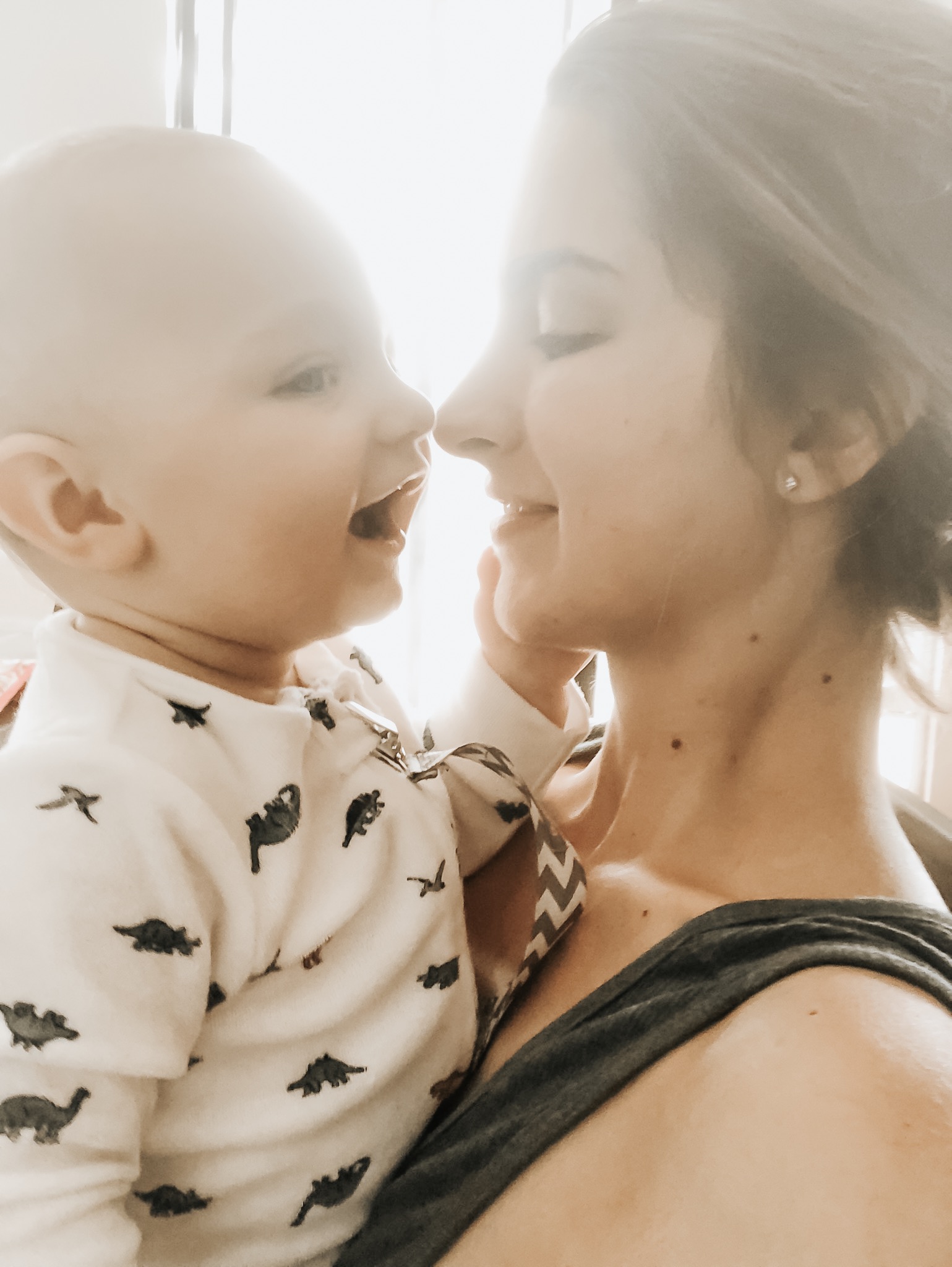
  • Stay positive. Stress won’t help either one of you (and it certainly don’t help your IBD). Relax and take deep breaths as your infant latches. Your milk may take a few days to fully come in, and it may take several weeks to get in a good rhythm. If you feel your supply is “low,” don’t panic. You are likely still producing enough to sustain your infant, as they don’t need much in the beginning. Continue to latch as much as possible (at least every two hours), and don’t supplement with formula unless your doctor advises you to. With that being said…
  • Trust your doctor. You and your baby will have regular check-ups to ensure he/she is gaining the appropriate weight. If they’re not despite your best efforts, it’s 100% okay to supplement. Fed is best and no one wins if your baby is hungry and you’re stressed. Trust your doctor in terms of gauging when to keep trying and when to supplement.

Above all, try to remember that while this is a totally natural experience, sometimes (especially for those with chronic illness) things don’t work like they’re “naturally” supposed to. image5Cut yourself some slack. Becoming a mother is stressful, but if you are feeling overwhelmed, talk to someone. Postpartum depression and anxiety are very real and as a mother with chronic illness, you may be more prone to those feelings. Seek out help from your spouse/partner, enlist nearby family/friends for support, and keep in close contact with your doctor to manage your symptoms.

And if nursing doesn’t work out for you, be kind to yourself. Your baby will still grow up to be healthy and loved, and that’s all that really matters.

Check out Stacy’s blog: https://gutsy-girlblog.com/

Connect with her on Instagram: @gutsygirlblog