What I Wish Every Current and Future IBD Mom Knew

This month marks nine years since I became a mom.

Nine years since my life split into a clear before and after.
Before motherhood.
Before learning how much my heart could stretch.
Before realizing I could love someone so fiercely while still carrying a body that has never felt predictable or safe since my Crohn’s diagnosis in 2005.
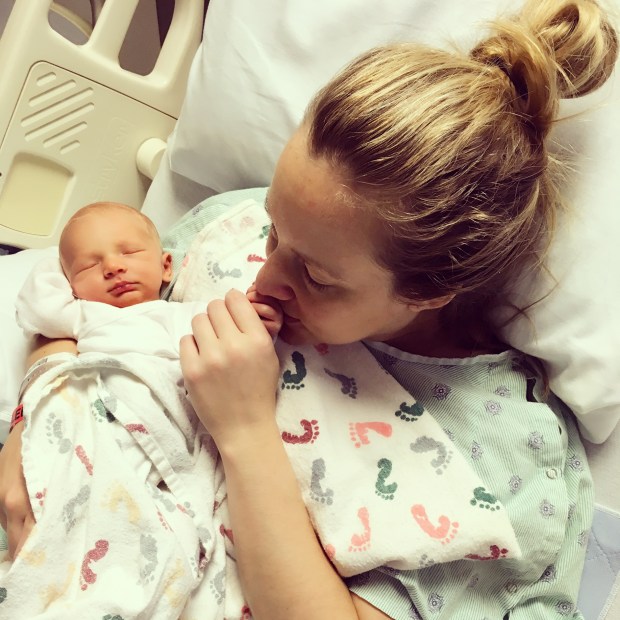
I entered motherhood already shaped by chronic illness. Crohn’s disease had been part of my identity for years before I ever held a positive pregnancy test in my hands. I knew what it meant to live with uncertainty. I knew how to navigate flares, fatigue, medications, and fear. What I didn’t know was how those experiences would transform me into an entirely new version of myself—an IBD mom. When I got pregnant, I only knew of one woman, my cousin’s wife, who has Crohn’s, and stayed on her biologic throughout her four pregnancies.

This week on Lights, Camera, Crohn’s a reflection on my patient journey and what it felt like to go through family planning, pregnancy, and motherhood as a woman with IBD and what I want others to know.

When I Was “Just” the Patient

For a long time, my world revolved around survival. Appointments. Side effects. Lab work. Scopes. Injections. Recovery days. Canceled plans. Hospitalizations. Weaning off steroids. Learning how to read my body’s subtle warning signs. Learning when to push and when to rest.

Crohn’s taught me resilience long before I knew I would need it in motherhood. But it also taught me hyper-awareness. A constant scanning of my body for what might go wrong next. A relationship with fear that felt both protective and exhausting. As time passed, I learned to listen to how my body was speaking to me through symptoms.

When I imagined becoming a mom, that fear came with me. I had bowel resection surgery two months after getting engaged, I was planning a wedding, and for the first time after a decade of living with Crohn’s I had FINALLY heard the word “remission” for the first time. My fiancé (now husband) and I knew once we got married 10 months later, that we would need to capitalize on that remission and hopefully start our family while we knew I was well enough to do so. Despite being in remission, I still had many questions and thoughts racing through my mind:

Would I be healthy enough?
Would my medication be safe?
Would I flare during pregnancy or postpartum?
Would my disease rob me of moments I dreamed about?
Would I be hospitalized and away from my child?

…the list went on. If you’re an IBD mom or one day aspire to become one, you know the questions we all face.

I wanted to become a mom more than anything, but I carried quiet doubts about whether my body was capable of sustaining not just a pregnancy, but a lifetime of caregiving.

Becoming a Mom with Crohn’s

The day I became a mom everything shifted. Not because my Crohn’s disappeared. Not because my health suddenly became perfect. But because my why expanded.

Suddenly, my body was no longer just something I endured. It was the home my child lived in.
The vehicle through which I would show up, nurture, protect, and love. That realization changed the way I approached my overall health as a mom with IBD. My pregnancy with Reid gave me a renewed sense of love and appreciation for my body.
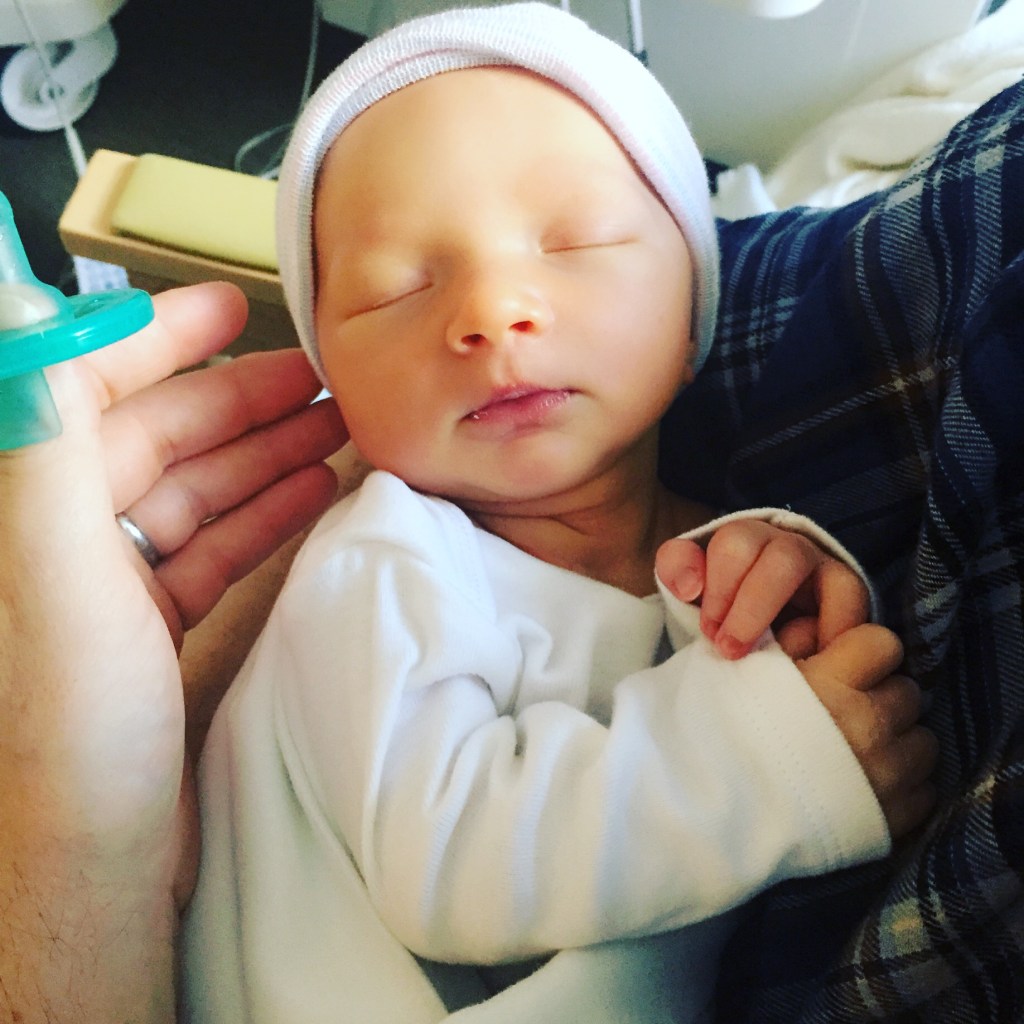
Taking my medication wasn’t just about me anymore.
Advocating at appointments wasn’t just self-preservation.
Resting wasn’t weakness.
Prioritizing sleep wasn’t indulgent.

It was parenting. I began to see caring for myself as an extension of caring for my child. That mental shift — from “patient” to “patient who is also a mother” — was subtle but seismic. Rather than waiting until I was too weak to even walk through the emergency doors by myself, I started to alert my care team within days of recognizing that my Crohn’s seemed a bit “off” so that we could nip any issue that arose in the bud.

Learning to Mother Through Difficult Days

Motherhood with Crohn’s is not picture-perfect. But regardless of your health status, there is no such thing as perfect when it comes to being a mom. You must remind yourself of this and give yourself grace.

There are days I have shown up with heating pads tucked under sweatshirts.
Days I’ve read stories from the bathroom floor.
Days I’ve powered through school drop-offs on pure adrenaline and grit.  Days I’ve shown up to PTO meetings and coached soccer on pain medication.
Days I’ve cried because I felt like I was failing at both having a chronic illness and being a mom.
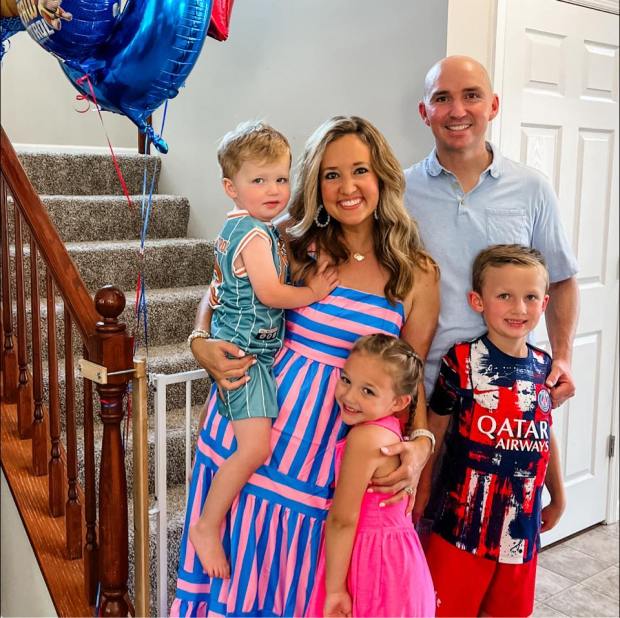
I’ve been in “remission” since 2015, the entire time I’ve been a mom, which I’m eternally grateful for, but just because I’ve been in remission does not mean I don’t face countless struggles with this disease. That’s something I wish people would understand. IBD is a chronic illness, just because someone is in remission doesn’t mean they are free of pain, stress, and more.

I’ve had to learn that good motherhood doesn’t require constant physical perfection. Some seasons look like big adventures and energy. Others look like quiet cuddles, movie days, and choosing rest over outings.

Both count.

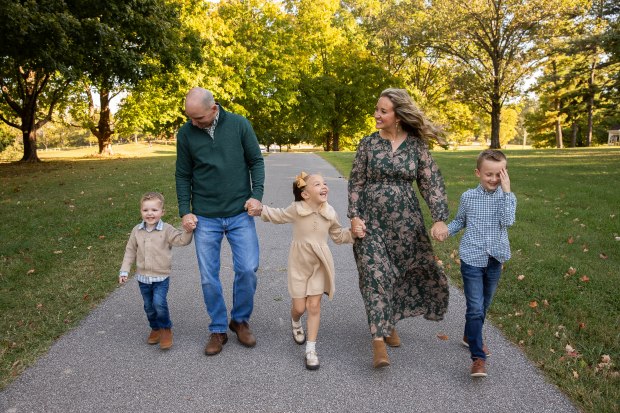
My children are being raised by someone who understands empathy, flexibility, and listening to their body. That matters. You’ll notice as a parent with chronic illness how quickly your little ones develop empathy. It’s next level. And so beautiful. You don’t even have to teach it, it’s innate in them because of their daily reality.
Raising a Child Who Understands Illness and Compassion

One of the unexpected gifts of being an IBD mom is watching compassion take root early.

My three children know that bodies work differently.
That medicine helps people live.
That rest is sometimes necessary.
That we don’t judge what we can’t see. They’ve learned that strength isn’t always loud.

Sometimes strength looks like getting up anyway.
Sometimes it looks like asking for help.
Sometimes it looks like choosing yourself.

Those lessons feel just as important as anything in a textbook.
How Motherhood Changed My Relationship with My Body

Before becoming a mom, there were times my body felt like the enemy.

The source of pain.
The reason plans fell apart.
The thing holding me back.

Motherhood complicated that narrative.

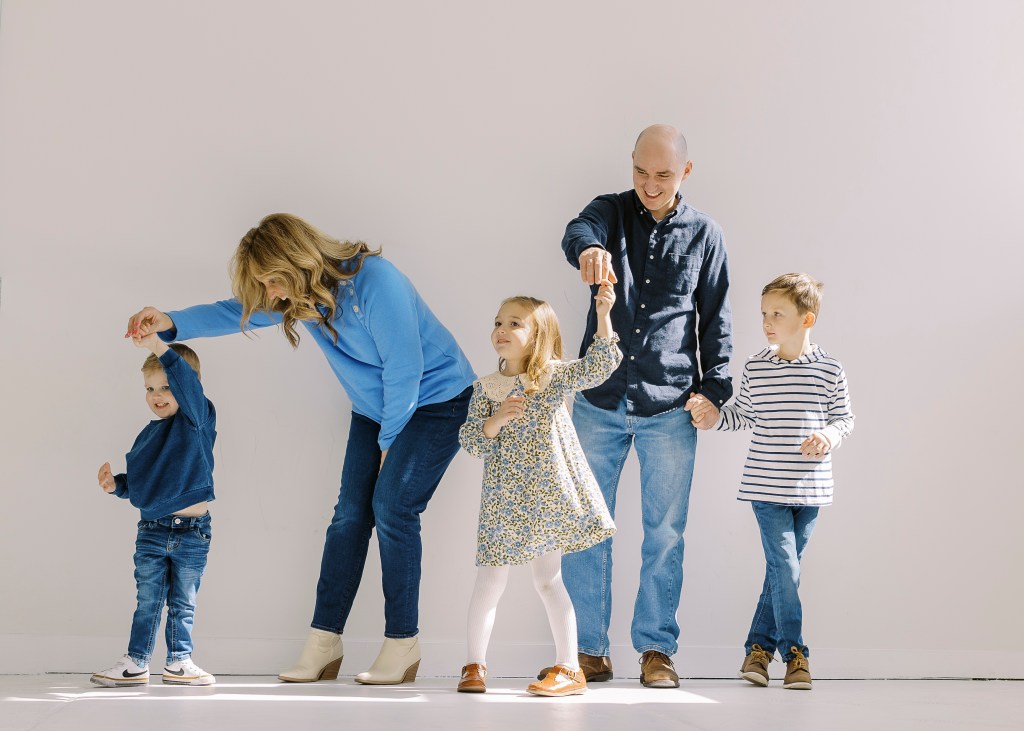
This body carried three children.
This body nourished three children.
This body continues to show up, even when it’s tired, inflamed, or aching.

It isn’t perfect.
But it is more than capable.

I still have hard days. But honestly, I have a lot more amazing days. I never take a feel-good day for granted.
Even after more than two decades of living with Crohn’s, there are still moments where I fantasize about what it would be like to just be a healthy person and not have the burden of my disease.

But I also hold more gratitude now. A grounded, honest one. My three children are my greatest motivation to push through and be my healthiest self.
From Surviving to Advocating

Becoming a mom didn’t quiet my voice.

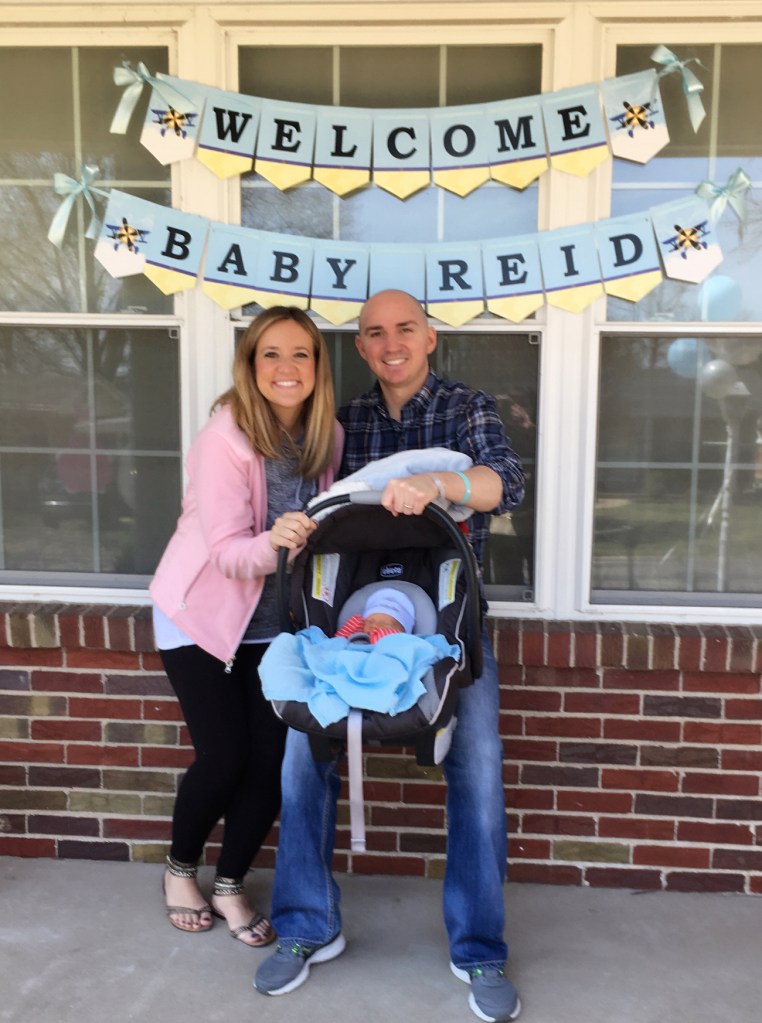
It amplified it. Ironically, this blog, Lights, Camera, Crohn’s, launched July 23rd, 2016… I found out TWO days later I was pregnant with my oldest son, Reid. So, this blog truly captures every moment of pregnancy, family planning, and motherhood from the perspective of someone who learned as I went.

I advocate not only for myself now, but for a future where my children grow up in a world that understands chronic illness better than the one I grew up in.

I speak out because I want fewer people to feel dismissed.
I share stories because I want fewer people to feel alone.
I push for better care because I want better options for the current and the next generation.

I want couples to feel empowered by their decision to have a family, however that may look for them.

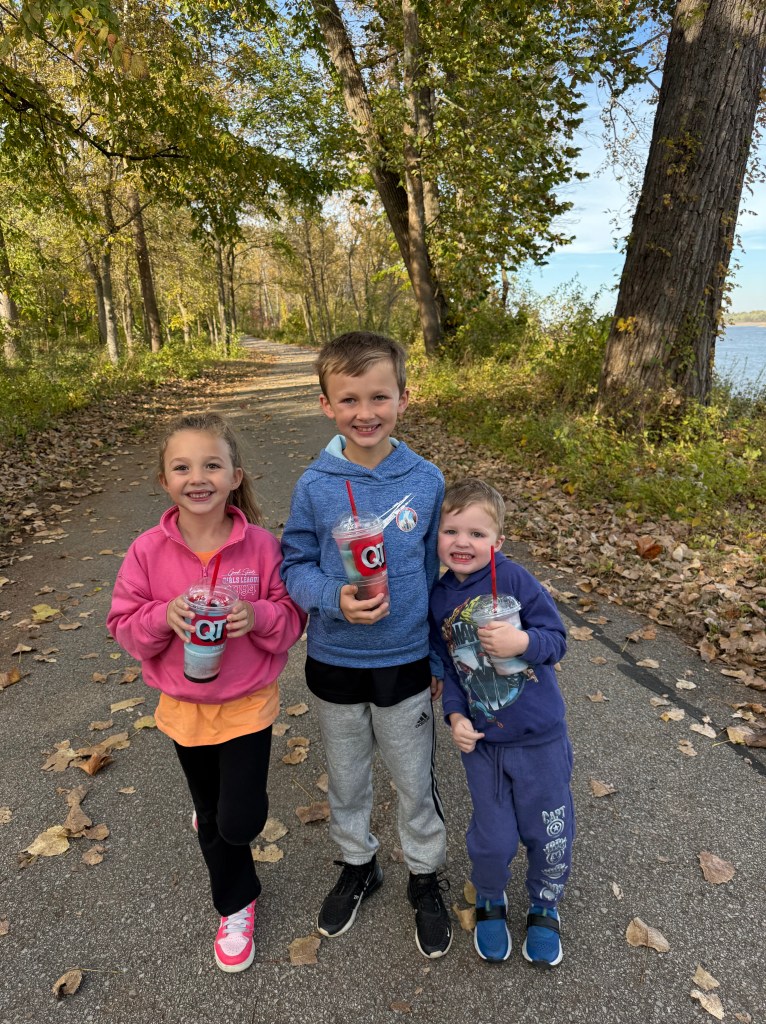
I hope women feel comforted by all the constant research going on to address what’s safe and effective as they bring life into this world. I participated in IBD pregnancy studies with all three of my kids, my youngest who turns five in July will be followed through the PIANO study until age 18!

Motherhood turned my survival into purpose.

Nine Years In: Who I Am Now

I am still a patient.
I am still navigating Crohn’s.
I still face uncertainty at times, but through a much different lens.

I am also a mom of nearly a decade.

A mom who has learned how to hold fear and hope at the same time.
A mom who knows that love is not measured in energy levels.
A mom who shows up imperfectly, consistently, and wholeheartedly.

I didn’t become a mother despite Crohn’s.

I became a mother with Crohn’s.

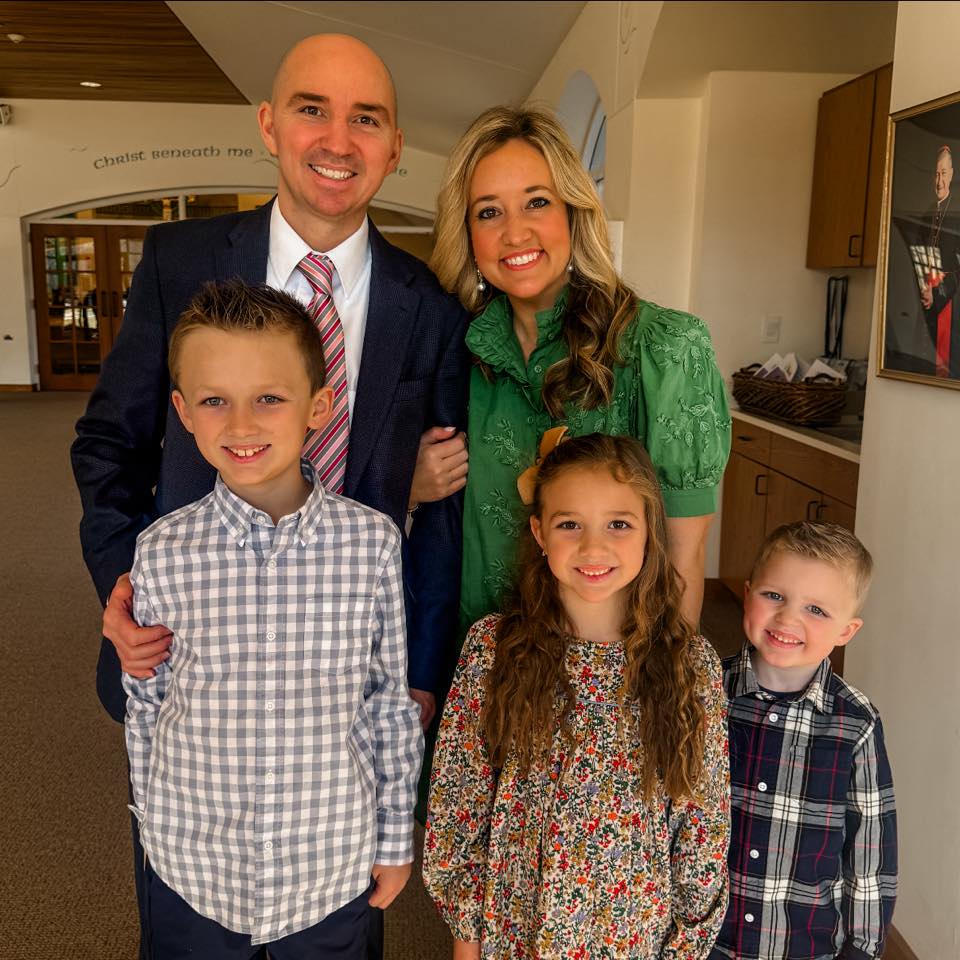
And over the past nine years, I’ve learned that those two identities can coexist, not in conflict, but in strength. I swear I blinked and somehow my sweet Reid, my baby, is nearly double digits. I don’t think there will ever be a time in my lifetime that I don’t stare at all of my children in awe of their existence, I’m sure if you’re a parent you feel the same way. It’s a miracle they are here, healthy, and thriving. So much of why I share my family so openly is to show how my children, who were all exposed in utero to Humira, are doing so beautifully in school, sports, and socially.
To the IBD Moms (and Future Moms) Reading This

You are not broken.
You are not behind.
You are not failing.

You are doing one of the hardest jobs in the world while managing one of the hardest diseases. That deserves recognition.

Later this month, my Reid is nine.

Nine years of learning.
Nine years of adapting.
Nine years of loving fiercely in a body that isn’t always kind.

And I wouldn’t trade this evolution for anything.
IBD Pregnancy Studies

Global Consensus on IBD and Pregnancy

PIANO (Pregnancy in IBD and Neonatal Outcomes) Study

WIsDoM Study: A Study Focused on Female Fertility and Pregnancy

MotherToBaby

Recognizing the touchpoints of independence along your IBD patient journey

Take yourself back to the very first time you needed medical attention for your IBD (but didn’t know it yet). Close your eyes for a moment. Who was that person? Do you know them anymore? How have you changed and transformed since that life changing day?

I was diagnosed with Crohn’s disease July 23, 2005, at age 21. I was blindsided by a chronic illness after growing up as a literal picture of health. A three-sport, in shape athlete, who had never even had an ear infection or been to an emergency room. As a recent college graduate, my world flipped upside down as I struggled to find my way in the real world.

Now, 17 years later, I can tell you firsthand what I, you, and so many others have endured on our patient journeys and how each experience (even the mundane) serves as monumental touchpoints for gaining independence and confidence in making you a more empowered and direct patient. 

Let me paint the picture clearly for you

The first time you bravely laid in an emergency room bed and every time there after—not knowing the tests, pokes and probs, and physical scrutiny you were about to go through. 

How it feels to be wheeled by a stranger through stark hallways to CT scans, MREs, and scopes, wondering what the results will be on the other side and the repercussions for more medications, a longer hospital stay, or surgery.

The difference a couple months makes–pre-diagnosis in May 2005 and 2 months after 60 mg of prednisone a day and 22 pills a day.

What it’s like when you say goodbye to loved ones and they roll you into the OR and you’re shaking like a leaf, all alone and feeling frail and broken, alone with your thoughts and prayers.

The number of moments you’ve watched nurses and even rapid response nurses fumble with IV’s try after IV try and when it’s been more than five, you find your voice from that point forward and start only giving medical professionals two tries before it’s on to the next.

How it feels at the butt crack of dawn when the world is sleeping and the hospital is bustling, waking you abruptly to get more vitals and more labs and you lay alone, haggard, frustrated, and delirious. 

The moment when your GI has a heart to heart with you about starting a biologic and having to determine for yourself what route is your preference—infusion or self-injection. Would you rather sit for hours hooked up to an IV drip or sit on your couch with your kids looking on as you inflict pain on yourself. 

The times you’ve sat up in the middle of the night wide awake thanks to the prednisone kicking in while the rest of your world is asleep wondering if you’ll ever regain some semblance of control of life.

What it’s like trying to eat meals inconspicuously with your family while they not so subtly watch each bite and every trip to the bathroom with sadness and worry in their eyes.

How it felt driving to a first date or a job interview and feeling like your IBD is a dark secret looming over the conversation and not knowing when to take down your walls and share. 

Listening to your friends make comments about health and energy without considering what your experience with a chronic, debilitating illness may be like since you look well on the outside. 

What it feels like to look at your reflection in the hospital bathroom. Battered arms, sunken in eyes, a shell of who you used to be. But as soon as you walk out of the door, putting a soft smile on to protect your visitors from worry. 

What it’s like to sit on an airplane or be on a road trip with others and silently worrying about whether you’ll be able to make it and what your game plan will be. 

When you’re up in the middle of the night doing the second half of colonoscopy prep and wondering ‘why me’ in your 20s and 30s, feeling isolated in the physical, mental, and emotional anguish the process puts you through year after year. 

What you’ve internalized each time someone dumbs down your IBD, offers up ridiculous remedies or goes into a discourse about their aunt’s brother’s cousin who “healed” their Crohn’s this way. 

When you’ve waved the white flag and alerted family and friends that you needed help or to be seen in the hospital after doing as much fighting as you could against your own body.

The first time you bravely looked down at your incision and saw your body forever changed and came to see your scars as battle wounds. 

Waking up each day not knowing what the next 10 minutes will feel like for you and getting after it anyway. 

Not knowing if you’ll find your person, but meeting people and having the courage to share about your health issues, even if there are heartbreaks and disappointments along the way.

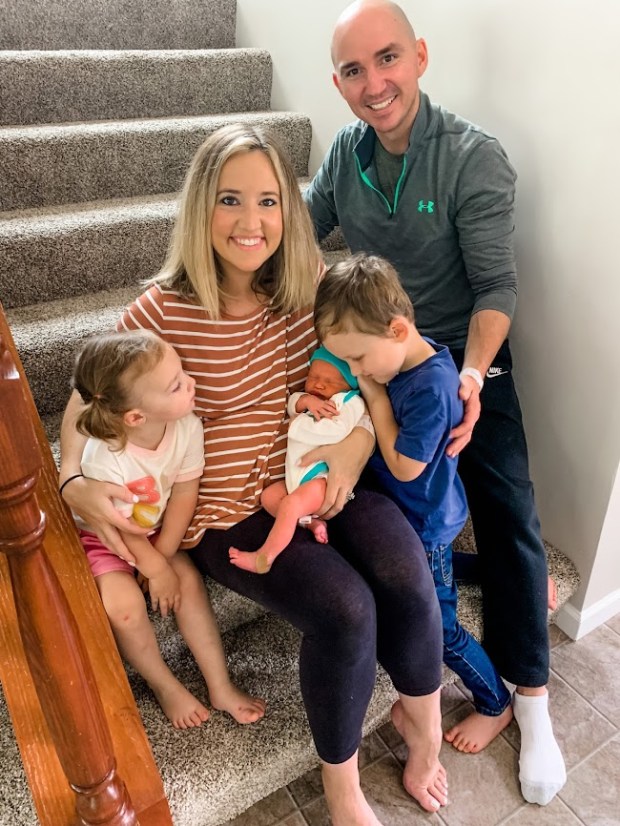
Deciding to have a baby and discussing family planning, despite all the what ifs and becoming a parent because that’s what you hoped for prior to your IBD. 

Landing that dream job with your IBD in your back pocket, not letting the detours stop you from finding the path you were meant to go on. 

Celebrate the independence you’ve discovered

The list goes on and on! No matter how old you are when diagnosed with IBD, in that moment we are robbed of our naivety and thoughts of invincibility, and we’re forced to go on a lifelong war and conquest. Our bodies no longer feel like ours. Our dreams feel in disarray. Our people may change and not be who you thought they were. Our hearts may break, but like a phoenix this disease can build you up just as much as it breaks you down. 

The reprieve of remission, while not perfect or without symptoms has enabled me to breathe and regain my grounding. In 2015, after three back-to-back bowel obstructions and 18 inches of my small intestine, Meckel’s diverticulum, and appendix removed, there was only one way to go and that was up. 

Give yourself grace. Celebrate the independence you’ve discovered that you may not be able to have realized until you’re years out like it took me. And when you’re in the hospital, in for a routine clinic visit or for labs, taking your meds and balancing every daily decision against how it will make your IBD feel, you’ll come to realize what you take on and all you accomplish every day just to survive and thrive, makes you something special. While you may feel dependent on others—and the support of caretakers and a support system can’t be understated, neither can the endless strength that lies within you.

How to be an investigative journalist specializing in chronic illness

Chronic illness forces you to wear many hats and approach life in ways you never thought possible. One of those hats is being an investigative journalist or sleuth. Each time something starts going awry with our health we immediately start the mental gymnastics about what could be going on and if the symptoms are linked to our IBD.

I find that even though my Crohn’s has been in remission since August 2015, that the next flare always looms in a cloud of worry when I’m not feeling my best. 

This past week I experienced this firsthand when my eyes both started twitching nonstop, along with headaches. I started thinking about what I could have done to trigger this bodily response. Was it Crohn’s related? Hormonal from breastfeeding weening? A mineral deficiency? A problem with my eyes or vision? Sleep deprivation or stress? The laundry list of possibilities and worries weighed heavily on me. After consulting with my GI, OB, and having an appointment with my eye doctor, I learned the eye twitching was a result of allergies. I now do eye drops once a day to help. It was such a relief to get an answer and physically be able to do something to make myself feel better.

When you notice an uptick in IBD symptoms or health issues in general how do you get to the bottom of what’s going on?

Here are my top tips for getting answers:

Be proactive. Don’t let things fester and let your anxiety get the best of you.

•Take physical notes, not just mental ones. As the hours turn to days it can be difficult to remember when symptoms began and if they progressed. Keep a simple log of what is happening, how often, the severity, etc. 

•Reach out to care providers early and often. Send a quick message on the patient portal informing your GI about what is going on. With IBD, I find it helpful to always loop my gastroenterologist in since so many issues are often related to Crohn’s. 

•Be seen. If symptoms don’t resolve in 3-5 days, it’s a good idea to be seen in person or at least a telehealth appointment. You can always get on the books and cancel an appointment if you start to feel better. 

Try not to Google too much. While this is always tempting and can feel like a quick way of gaining understanding, it also can lead to going down a dangerous rabbit hole of what ifs that possibly aren’t even relevant. 

Listen to your gut. You know when something feels off. Don’t drown out how your body is speaking to you through symptoms. 

Practice mindfulness and calming exercises. It’s not unusual to feel up against a wall or like you’re taking two steps forward and one step back with chronic illness. Remember to breathe. Take a walk outside to clear your head. Do all you can to rest your mind from stresses that can trigger your IBD.

I get how exhausting it is to constantly feel at odds with your body and worry about what could be going on. Suffering in silence and not communicating health challenges only sets you back from feeling your best. Be mindful of how you feel each day and feel empowered by collaborating with your care team and giving them all the necessary intel to have the full picture when figuring out your health story past and present. 

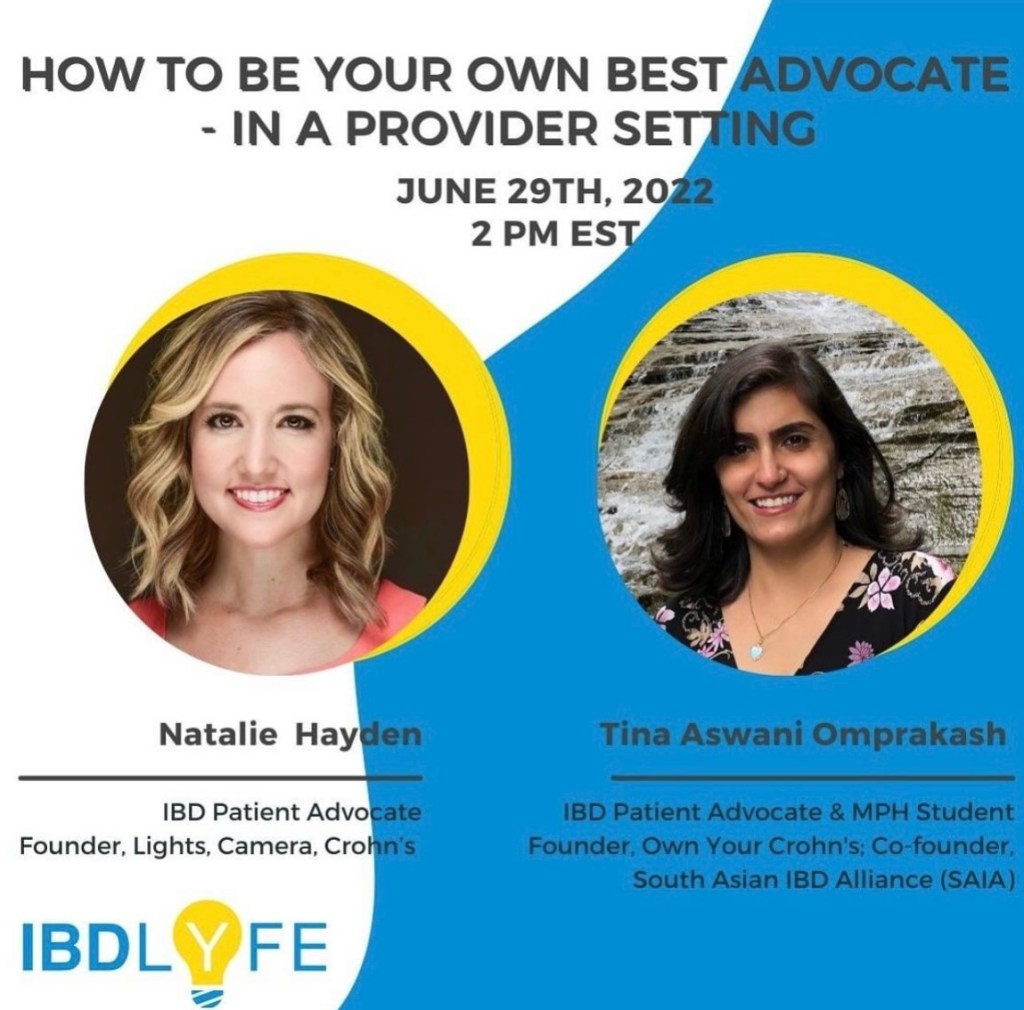
Stay tuned for a special discussion on IBDLyfe, Wednesday June 29, 2022, at 1 pm CT about “How to Be Your Own Best Advocate in a Provider Setting.” I’ll be speaking alongside fellow patient advocate, Tina Aswani Omprakash. Register here.