Saving on prescription costs: Easing the financial burden of IBD

This blog post is sponsored by Inside Rx. All thoughts and opinions are my own. The Inside Rx trademarks and graphics are used with permission of Inside Rx, LLC. 

Sticker shock. Disbelief. Concern. If you live with a chronic illness like me, chances are you’ve experienced all of these feelings when it comes to purchasing prescription medications. The cost to manage IBD can come with a hefty price tag. Whether it’s having to purchase the most expensive insurance plan so you have the lowest deductible or having to fork over money for your daily pills and biologic drug treatments—it’s a lot to handle, from both a physical and a financial standpoint.

According to the CDC, in the past 30 days almost HALF of people (48.9%) have used at least one prescription drug. About 23% of people used three or more prescriptions.[1] This comes as no surprise when you learn that by 2020, 157 million Americans will be living with a chronic illness.[2] This is where Inside Rx comes in. Launched in 2017, the Inside Rx prescription discount card can make saving on prescription medications easy. The Inside Rx card is not insurance and offers eligible users discounts on brand and generic prescriptions.  See InsideRx.com for terms and restrictions, and to learn more.

Inside RX

Here’s how it works:

  • Go to InsideRx.com to search for your medication and find the best deal and closest participating pharmacy near you. The Inside Rx card can be used at more than 40,000 pharmacies across the United States and Puerto Rico.
  • Download a free prescription savings card and see how much you could save on brand-name and generic medications.
  • Show your prescription card to a pharmacist.
  • Enjoy the savings and use the same card every time you pick up your medication.

Adhering to medication guidelines and following through with doctor’s orders is imperative in managing a chronic illness. Inside Rx works to ease the stress off your shoulders so you don’t have to cut back on your treatment or never fill a prescription. Rather than jeopardize your health and wellbeing, check this out and see if the savings can help you. There’s no shame in saving and it’s certainly something you should see if you can take advantage of.

Inside RX2

Be your own best advocate

As you navigate IBD, it’s programs like this that help our community and deserve a shout out. In my nearly 14 years living with Crohn’s, I’ve found that prescription and biologic savings programs are often not articulated by medical professionals. Instead, as patients, we’re just supposed to or expected to find them on our own. This is a shame. Unless you’re told or hear from a family member or friend, you may be paying full price for a medication that has a significant price reduction.

Inside Rx for our four-legged friends, too!

Recently I had to put my 10-year-old Chihuahua Terrier, Hamilton, on seizure medication. There’s even an Inside Rx Pets card, which offers discounts on select human medications prescribed for pets. I went to one store and was told a month’s worth of pills was going to be $86, I went to another store down the road and was told the cost was $26. Now that I know about Inside Rx, I’m able to get his medication for $20 a month.  Savings may vary for your pet’s medications though, so do your homework and visit InsideRx.com/Pets to see if you can save by taking advantage of these helpful tools for patients and pets. And please, communicate with your care team if you’re unable to fill your prescription, rather than not taking it at all. You’ll be thankful in the long run.  Visit InsideRx.com for more information and terms.

[1] https://www.cdc.gov/nchs/fastats/drug-use-therapeutic.htm

[2] https://www.nationalhealthcouncil.org/sites/default/files/AboutChronicDisease.pdf


Accountability & Chronic Illness: How Pack Health is leading the charge to empower patients

This article is sponsored by WEGO Health, opinions and thoughts are my own.

Accountability can be a tough pill to swallow when you battle chronic illness. Often times it feels as though the only person who can improve our overall wellbeing, is the person you see looking back in the mirror. But, Pack Health and CME Outfitters is looking to offer support to patients like you and me every step of the way to make our journeys less lonesome and isolating. Pack Health in partnership with CME Outfitters does this by providing one-on-one support, over the phone and online, to help people regain control over their health. photo (17)

Right now, Pack Health’s work spans across more than 20 chronic conditions, including inflammatory bowel disease. Not everyone has a support network. Not everyone has a spouse or a significant other they can lean on. Not everyone feels like they can take on the beast that is chronic illness alone. Get this—the average patient is only with their doctor 1 of the 6,000 hours that they’re awake each year! Pack Health works to fill in those gaps.

Here’s how it works—the service is more than just a health coach. By teaming up with an IBD coach, you can have someone texting you when you need a reminder, helping your find ways to make healthy living easier and more enjoyable, and someone who has your best interest at heart, every step of the way.

Finding Your Motivation
You’ll map out your goals for the months ahead. Where do you want to be in 3 months? 6 months? One year? Your personal IBD Health Coach will bring this goal into focus so it’s attainable and less overwhelming.

Setting Weekly Goals
Natalie runningIt’s not always the big goals, it’s getting through the day-to-day. Your IBD Health Coach will help you stick to weekly goals through calls, texts, and emails, based on how you like to communicate. Support will be right at your fingertips.
A Network of Resources
Rather than wasting hours on the internet trying to find dietary information or drug discount cards, the IBD coach will get you what you need to succeed.

By working with an IBD Health Coach patients are more likely to take their medications, stay on top of recognizing symptoms and improving their overall health and well-being. nataliepackhealth2As a chronic illness patient, myself, even though I try and manage my Crohn’s the same each day, sometimes life and being a mom gets in the way. I tend to put my needs and my care at the bottom of the totem pole. As a parent, I know I’m not alone in that. Having a Health Coach standing by ready to listen, educate and inspire me, is a reminder that I’m not in this alone.


Click here to learn more and try it for yourself.

How Sharing Your Narrative as a Patient Benefits You and Your Care Team

This post was sponsored by AbbVie Inc. Personal opinions and thoughts are my own.

I recently attended Digestive Disease Week (DDW) in San Diego, California as a patient advocate. The experience was much more than a conference—it opened my eyes to all the work being done on a global level to understand this disease, ease the burden on patients, and improve quality of life.

At DDW, I had the opportunity to sit down with Dr. Miguel Regueiro, Chair of the Department of Gastroenterology, Hepatology, and Nutrition and Vice Chair of the Digestive Disease and Surgery Institute at Cleveland Clinic, to discuss our respective points-of-view on clinician-patient communication. I share more about our conversation below, along with a video of part of our discussion. You can also find resources to guide your conversation with your own doctor here.

There’s something special about being a Crohn’s patient and witnessing firsthand all the research, advancement and dedication for inflammatory bowel disease (IBD). While the exact cause of Crohn’s disease is unknown, it is believed to be caused by an overreaction of the immune system. As a result, damaging, chronic inflammation can occur along the GI tract and lead to symptoms. Crohn’s isn’t contagious, and, as far as we know, it isn’t caused by anything a person has done or eaten.

AbbVie article

During my time at DDW, Dr. Regueiro and I had a chance to discuss the importance of patients and their physicians creating an ongoing, healthy dialogue about everything the patient is going through physically, mentally, emotionally, and financially.

We talked about the importance of goal setting. In this age of personalized medicine, treatment plans are tailored uniquely to each person’s needs, which often go beyond the inflammation in our bodies or our latest symptoms.

“When I meet a patient initially, I sometimes ask ‘what are three things you want out of this visit? What are the three problems that you’ve had?’ Some of it may be related to their IBD, but a lot of it might be related to ‘I’m feeling depressed,’ or issues with sexual activity and intimacy. As a physician, and as a healthcare team, we not only want to treat your IBD, we want to treat the whole person,” said Dr. Regueiro.

One of the biggest stresses associated with IBD can be the unpredictability factor and the progressive nature of the disease. As patients, we never know what the next hour or the next day will bring. Symptoms might worsen or change altogether. Physicians want to hear about changes. Changes in our symptoms. Changes in something that may be related to our medication. And changes in our health beyond our digestive tracts that help our care teams treat us and not just our IBD. By recognizing these changes, your doctor can address them and make sure there’s not a bigger problem festering.

Crohn’s is a lifelong disease, it’s not just about thinking about tomorrow or the next few weeks, it’s really looking at the long-term. If you live with IBD, it’s important to be open about all your symptoms and meet routinely with your doctor to ensure active monitoring of your disease, regardless of symptom severity. Create a proactive treatment plan and set goals that are right for you.

The narrative you choose to share with your care team can truly shape the type of care you receive and your ability to improve your quality of life. Prepare for your next trip to the doctor by visiting CrohnsandColitis.com for tips on managing your appointments and working closely with your gastroenterologist.

Disclosure: This post was sponsored by AbbVie Inc., a biopharmaceutical company, and should not be construed to constitute medical advice. Personal opinions and thoughts are my own. I am not a medical professional and am not qualified to give medical advice. Please talk with your doctor about your individual medical situation.

Healthline unveils new IBD app: What you need to know

This article is sponsored by Healthline. Thoughts and opinions are my own.

I met my husband thanks to a dating site nearly six years ago. I never dreamed I would one day be able to connect with fellow IBD warriors through an app, but hey thanks to Healthline, it’s now possible! IBD_Facebook_Ads-1200x628_Real-Life_5Over the next month, I’ll be partnering with IBD Healthline. I am so excited to share my journey using the app and explain how you too can benefit from all its invaluable features.

When I was diagnosed with Crohn’s disease at age 21 in 2005, I felt incredibly isolated, alone and scared. Like anyone with chronic illness, it can be difficult to not only articulate theses stresses but find people who genuinely care and empathize. The IBD Healthline app addresses this by providing a safe space to conversate with those who live your reality. By communicating with others in the IBD community, it empowers us and is a reminder that there’s a huge network of support right at our fingertips, 24 hours a day.

My favorite functions of the app

One of my favorite parts of Healthline’s IBD app is how it connects you with one new member each day, based on your disease, age, and lifestyle interests. You can check out fellow member profiles and request to connect, too! IBD_Facebook_Ads-1200x628_Real-Life_2I don’t know about you, but the more people I know with IBD, the stronger it makes me feel as I take on the disease.

Healthline’s IBD app is a great gathering place for our community to share experiences, learn from one another and offer support. Many of us tend to sugarcoat our day-to-day experiences, here you can be honest and trust that you won’t be judged for your struggles or setbacks. It’s intuitive and easy to use, whether you’re a patient or a caregiver.

Along with the personal connections, there are medically approved wellness articles IMG_0811and podcasts shared each week on everything from diagnosis to nutrition and self-care tips. The more educated we are about our illness, the better advocates we can be for our care.

Check out the Live Chats

Another great aspect of the app is the “Live Chat” function. Each Healthline Ambassador will be hosting chats in the coming weeks. Save the date—I’ll be hosting a live chat Monday, June 3 about dating, relationships and marriage with IBD. I’m thrilled to have the opportunity to share my personal insight on this subject matter with you and lead the discussion. It’s my hope my words and patient journey will comfort you and give you hope as you navigate life with IBD.

This free app is brand new and was just launched this month. You can download it onto Apple and Android devices by searching for “IBD Healthline”. As patients we are up against so many unknowns, this app is a great constant to have as you deal with the feel-good days and the not so good days. I look forward to connecting with you all!

You can access the free IBD Healthline app here: https://go.onelink.me/LOC7/6dae5800.

From one IBD mom to another: An interview with Tekhni Wovens Founder, Alisa DeMarco

When a family member is diagnosed with IBD the same week as you, it can be sort of a saving grace.

Alisa

One month post diagnosis–dealing with the side effects of prednisone.

My cousin’s wife, Alisa DeMarco, was told she had Crohn’s disease a matter of days before I was in July 2005. At the time, she was one of the only people I knew who had the condition—one of the only people I could confide in who could genuinely understand my reality. At the time of diagnosis and throughout your patient journey—these bonds and relationships are the glue that keeps you together.

alisa3Now, nearly 14 years later—her and I have come a LONG way. She’s on Remicade. I’m on Humira. We are both mothers. We are both wives. Alisa didn’t allow her disease to stop her from following her personal or professional dreams. In 2013, she left corporate America and founded Tekhni Wovens. As an IBD mom and successful business owner, her perspective and ability to overcome the odds is something we can all admire and look up to. This week—an interview with a woman I’m lucky to call family.

NH: What inspired you to create Tekhni Wovens?

AD: As a full-time working mother who enjoyed caring for my children with the help of wraps and slings, I quickly found myself as part of the babywearing community.  Over time I shifted from consumer to manufacturer, designing textiles when I didn’t find what I was looking for— a fashion-forward aesthetic in easy-to-wear blends at accessible prices.

NH: As a woman with IBD, a mom of four, and a wife–how do you balance leading a successful business and keeping your disease symptoms under control?

AD: Balance is a hard ideal to maintain– and I am not always successful! Image-58 I multi-task everything, stay on top of my biologic infusions, rest when possible and, plan my diet loosely around a mix of SCD and low gluten eating. Getting help is difficult, but I feel lucky to have a supportive husband and local family network. My travel schedule wears me down– but thankfully most of my disease symptoms are well controlled.

NH: What advice do you have for fellow IBD’ers who have big dreams but are hesitant to go after them because of their disease?

AD: Your dreams don’t have to be an all or nothing pursuit!  Tekhni started as an idea to make a better product and help support my family… and evolved into multifaceted business with accounts worldwide.  However, it took years, and many winding paths to get there. Know that there’s no deadline or requirement for any passion you want to pursue.  Start with an idea, and break it down into bite-sized pieces. Your disease is only one small part of your identity, and cannot prevent you from planning and dreaming and accomplishing daily tasks on your own timeline. Image-56

NH: Why are you passionate about babywearing?

AD: Babywearing and attachment parenting are very close to my heart– they are natural extensions of our mothering instincts. They help me care for my young, closely-spaced children while working full-time and managing a household with a husband who is often away for work. Image-55Babywearing helps me effectively multi-task and meet my all children’s needs at the same time. It also helps address postpartum depression, by syncing mother and baby, and raising oxytocin levels.  I believe babywearing is a necessity that should be taught to every single expecting parent and caregiver!

NH: Why is babywearing so beneficial for those with IBD in particular?

AD: Babywearing is a perfect fit for people with autoimmune diseases– it helps you hold, carry, and comfort your baby while taking weight and strain off of your back and hips. For difficult days, it can literally be another set of hands.  And keeping baby in proximity leads to less crying, less stress, and more rest for both baby and mother. Image-60As a bonus, a variety of baby carriers can be adjusted to accommodate an ostomy or j-pouch.
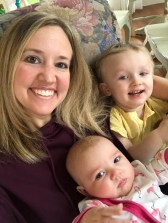
Stay tuned to my Instagram account (@nataliannhayden) for a giveaway on Friday, May 17. We’ll be giving away a Studio Tekhni Ring Sling! The winner will be announced on World IBD Day (May 19). Good luck!


5 Helpful Day-to-Day Tips for IBD Moms

Hey IBD mamas and moms-to-be—this article is for you! With Mother’s Day this Sunday, I wanted to share 5 of my “life hacks” for taking on motherhood while living with IBD.
IMG-1309As a mom of a 2-year-old and an almost 4 month old, I’m in the thick of motherhood right now. While it’s an amazing season of life, it definitely has its challenges. A toddler, a baby, and a chronic illness. Ah, I’m exhausted just reading that myself! While it’s far from easy—I’ve found some ways to help embrace the ups and downs and everything in between.

Here are my 5 helpful tips for IBD moms: 
1.  Don’t be afraid to ask for help.
By verbalizing your pain and communicating openly with family and friends, you open yourself up to a network of support. Don’t try and be a martyr or a superhero. In the end the only person you are hurting is yourself. A few hours to yourself will do wonders for your psyche, you’ll feel rejuvenated and refreshed and you’ll be a better mom because of it.
2. Stay on top of daily disease maintenance: your medication, your doctor appointments, blood tests, and annual scopes. 
Moms have a reputation for putting themselves on the bottom of the totem pole. When it comes to chronic illness, lapse in taking medication and managing your illness can set you up for a flare up. IMG-7462No one wants to be hospitalized or deal with pain. Give yourself the best chance for having feel good days and make your disease management a priority. If you feel symptoms presenting and you’re concerned, alert your GI immediately. Be proactive, nip each flare in the bud as best you can.
3. Busy boxes for the win!
Once you have a toddler—or more than one child, these are lifesavers! Look up ideas on Pinterest and create boxes to keep your little one busy when your fatigue is overwhelming or when you’re in a lot of pain. I went to Hobby Lobby, Michaels and Target and created fun boxes for Reid filled with everything from puzzles to coloring books to sensory activities with noodles. I made a busy box for each day of the week. You can do so very economically!
4. Practice self care as often as possible.
IMG-9834Yes, I know. Self care. We hear it all the time. It’s something that’s constantly talked about, that seems unattainable. But try and do something each day for yourself, whether it’s taking a shower, eating a meal sitting down, going for a walk outdoors with your little one and keeping your phone on silent, reading a book before bed, you name it. Try and find the moments in your day when you can unplug and relax. Practice yoga and meditate during nap time instead of doing the dishes or laundry. You owe it to yourself!
5. Give yourself grace. 
Motherhood is an incredible experience, but it’s not easy. Add chronic illness to the mix and it becomes even more difficult. Don’t beat yourself up on the days you aren’t feeling well and need to stay indoors and lay low. Stop comparing yourself to the mom who seems to have it all together on social media. We all know we have hot mess moments, that’s life. Focus on all the happiness and joy you bring to your little ones life. You are their world. IMG-8890You were given this role and this family because you were meant to have it and you were destined to live this life.

Bonus Tip!: Wear your baby. Baby wearing will do wonders for your joints and your wellbeing. Not only does baby love being close to you, it helps give you a bit of a break whether you’re out and about or at home.
On this upcoming Mother’s Day and always, I commend every woman for their efforts. You are remarkable. You are a warrior. You are a guiding light for your loved ones. And you deserve to be celebrated for all that you do, day in and day out.

Why I cried talking about Crohn’s at my friend’s rehearsal dinner

I stood before a room of strangers last week and shared some sentiments about my friend Jenna who was marrying the love of her life the next morning. Chances are—you’ve been at a rehearsal dinner and participated in the ‘open mic’ opportunities.

IMG-0840

Jenna’s birthday, 2009

As a former TV newsie, I always enjoy a chance to speak and articulate my feelings! I started out talking about how we knew one another and the type of friend she was—and then I went for it. I broke out the “C” card…the “Crohn’s” talk. Most of the people in the room were strangers to me until that night, some probably had no idea what Crohn’s was.

In that moment, I tearfully thanked my friend of more than 12 years in front of a roomful of people for always being present, always genuinely caring and for always being there not only in life’s amazing moments—but also through every flare up I’ve experienced along the way. When you are diagnosed with a chronic illness, you don’t stop and think twice about which friends are going to be there, you just expect it. Unfortunately, you’ll find many ‘friends’ tend to fade to the background and will continue to do so throughout your patient journey.IMG-0841

This friend—is the opposite. This friend has sent me countless snail mail letters on adorable stationary—some with Ryan Gosling’s face plastered all over it, others with an inspirational girl gang type quote. Each time I’ve been hospitalized, she’s been my constant ray of sunshine. Always texting. Always calling. Always checking in on me. Her efforts seem effortless. And that my friends, is priceless. Rather than feeling guilt for being “that friend” she makes me feel empowered and loved.

When you live with IBD (or any chronic illness for that matter)—seek out your Jenna(s). IMG-0838Find the people who lift you up. Trust in the bonds you create with those who are there for you because they want to be out of the goodness in their heart, not as an obligation. Hold on closely to the relationships that spark joy and don’t extinguish your flame. Lean on those who are willing to give you their hand to lift you up, even when you don’t ask for it.

At Jenna’s rehearsal dinner, I wanted her to know. I wanted her to know how her compassion and empathy meant the world to me. I wanted her to know how much I appreciate all the effort she continually puts into our friendship, despite living out of state from one another for the past decade. I wanted her friends and family members, and her now husband to see the impact she’s made on my life and how her efforts to be there, make her who she is.

My hope for the IBD family is friendships like this. The ones that stand the test of time. The ones that ground you. The ones that show you the beauty of another’s heart. The ones that remind you that you aren’t ever going into battle alone. The ones that serve as your light when the days are dark. They exist. They are possible. You just need to find them.

Wedding photo cred: Savannah Kay Photography

Writing for a reason: IBD Pen Pals

Who says snail mail is a thing of the past? For one 10-year-old in the Chicagoland area, connecting with fellow IBD pediatric patients is helping her cope, comfort and help others as she takes on Crohn’s disease herself. emily4Meet Emily. This past February she received her chronic illness diagnosis. Even though she’s brand new to IBD life, she’s taking all the pain and all the setbacks in stride.

Her mom, Michelle, says watching her young daughter go through Crohn’s has been a punch in the gut.

“It’s overwhelming, lonely, and mentally draining for everyone involved. Her little body has been put through so much in the last few months and she just goes along with it all. I wish I could’ve done all the horrible tests and take away every ounce of her pain. My heart breaks every time she gets poked, every time she takes medicine, every time she has to do a test, or when I send her to school, knowing she feels horrible.”

Emily’s courage and compassion for others has inspired Michelle. Her Crohn’s diagnosis has spurred an interest to connect with other IBD kids. Rather than take on the disease in silence, Emily finds there is strength in numbers, a purpose for her pain. Emily penpalHer mom was able to reach out to fellow parents on Facebook about a pen pal program.

“How cool to come home from school and have a couple letters waiting for you from kids all over the country?!? Emily has already made 12 new friends with IBD from the U.S. and the U.K. I never want Emily to feel alone on this journey nor do I want any other kids to feel alone. I want Emily to see that other kids who have IBD are living a “normal” life and that she can, too! There may be days when I won’t understand what she’s going through, but her new friends will.”

Emilyand michelleFrom a parenting perspective, the pen pal group has introduced Michelle to other mamas going through the same fears and experiences. The connections have brought her peace of mind as she navigates these new waters with her daughter.

“Emily and I are firm believers in spreading positivity and what you give out, you get back. It’s up to us to find the good in this situation and what better way than emilylettermaking new friends? Friends who understand and continually cheer you on, no matter how far they are. My hope is that Emily will make life long connections and that these letters will serve as a constant reminder that she is never alone.”

Interested in joining this pediatric pen pal group? A Facebook page is in the works. In the meantime, you can get involved by emailing Emily’s mom, Michelle: positivelyshelly@gmail.com.

Breastfeeding with IBD: 5 tips for getting started  

You can think of us as ‘bosom buddies’—IBD moms trying to navigate life with chronic illness as we take care of our families.  Both of us battle Crohn’s. Both of us are on Humira. Both of us are bloggers and passionate chronic illness advocates. For Gutsy Girl blogger, Stacy Ransom, one of her main missions was to breastfeed her son. As a mom who chose to formula feed my son and who is currently breastfeeding my 12-week-old daughter, trust me—I get the guilt, I get the struggles, I am completely of the mindset that ‘fed is best’. The same can be said for our guest blogger, Stacy. This week she shares her insight on breastfeeding with IBD and offers up five helpful tips for navigating nursing. image1 (11)

Breastfeeding is a touchy subject. I’ve purposefully avoided discussing my experience for fear of offending others, because it seems that regardless of the stance you take, someone always gets upset. I’d like to start with abundant clarity that above all, fed is best and there is zero shaming here for mothers, regardless of the path they choose.

I was diagnosed with Crohn’s Disease in 2015 and spent years doubting my body’s ability to do anything right. When I became pregnant with my son in 2017, I wanted to do everything possible to prevent future gut issues for him.

We don’t know the cause of Inflammatory Bowel Disease, but someimage2 (1) studies suggest it may start with a bacterial imbalance in the gut, and several studies have shown that people with IBD were less likely to have been breastfed as infants. Furthermore, a study in Denmark showed that breastfed babies developed certain types of healthy bacteria in their digestive tract, which non-breastfed babies were lacking. A healthy amount of beneficial gut bacteria can promote a healthy immune system which fends off different diseases.

When I became pregnant with my son, I opted to deliver via cesarean due to my IBD, but I knew this would shift his first gut community. I read all the studies and learned all the digestive benefits of breastfeeding, so I wanted to do everything I could to set us up for breastfeeding success. My Crohn’s specialist also said she had noticed a decrease in postpartum flares among her patients who breastfed. I was really committed to giving this my best effort.

image3 (2)It wasn’t easy, but I’m so glad I stuck with it. We lasted 16-months until he self-weaned and he has a very healthy immune system so far, despite the cesarean and me being on Humira. Best of all? I didn’t have a postpartum flare, which my doctor attributed to the combination of staying on my medications, following my diet plan and breastfeeding.

I know not everyone has a positive nursing experience, but I’ve received countless messages from new mothers with issues that can easily be either resolved or prevented entirely. If you’re an expectant mother with IBD and think you want to try breastfeeding, here are some of my best tips for getting started:

  • Gather your supplies early. I stocked our fridge with easy, healthy, nursing-friendly snacks. I also made “nursing stations” in key areas around the house including a water bottle, snacks and lanolin cream. I bought a few very loose, button-down shirts to allow for easy nursing access and air flow throughout the day. I also got a few soft nursing bras in a full cup size bigger than my normal size (depending on your “normal” you may opt for two cup sizes bigger), and machine-washable, cotton nursing pads. They stick less than the disposable ones and cause less irritation, in my experience.
  • Find a Lactation Consultant. I can’t stress this enough. No matter how many YouTube videos you watch, nothing can compare to a real expert standing with you and guiding you through. Most hospitals will provide at least one consult before you are discharged. If yours does not, contact your local La Leche Foundation for support. Don’t listen to people who tell you it will just “come naturally,” because you BOTH are learning and the right latch from the beginning makes a world of difference! Some pain is normal in the beginning, but if it’s unbearable or if you start to bleed, something is wrong, and you should have a professional adjust your latch or check your baby for a lip or tongue tie.
  • Start off strong. Allow your newborn to latch as much image4as possible, especially in the first 24 hours, and provide plenty of skin-to-skin. After a c-section, the last thing I wanted to do was constantly get in and out of bed to pick up a newborn. Instead, I just spent my days with my son nestled on my chest so we could both sleep, heal, bond and get my milk flowing.
  • Stay positive. Stress won’t help either one of you (and it certainly don’t help your IBD). Relax and take deep breaths as your infant latches. Your milk may take a few days to fully come in, and it may take several weeks to get in a good rhythm. If you feel your supply is “low,” don’t panic. You are likely still producing enough to sustain your infant, as they don’t need much in the beginning. Continue to latch as much as possible (at least every two hours), and don’t supplement with formula unless your doctor advises you to. With that being said…
  • Trust your doctor. You and your baby will have regular check-ups to ensure he/she is gaining the appropriate weight. If they’re not despite your best efforts, it’s 100% okay to supplement. Fed is best and no one wins if your baby is hungry and you’re stressed. Trust your doctor in terms of gauging when to keep trying and when to supplement.

Above all, try to remember that while this is a totally natural experience, sometimes (especially for those with chronic illness) things don’t work like they’re “naturally” supposed to. image5Cut yourself some slack. Becoming a mother is stressful, but if you are feeling overwhelmed, talk to someone. Postpartum depression and anxiety are very real and as a mother with chronic illness, you may be more prone to those feelings. Seek out help from your spouse/partner, enlist nearby family/friends for support, and keep in close contact with your doctor to manage your symptoms.

And if nursing doesn’t work out for you, be kind to yourself. Your baby will still grow up to be healthy and loved, and that’s all that really matters.

Check out Stacy’s blog: https://gutsy-girlblog.com/

Connect with her on Instagram: @gutsygirlblog


The days are long, but the years are short with chronic illness

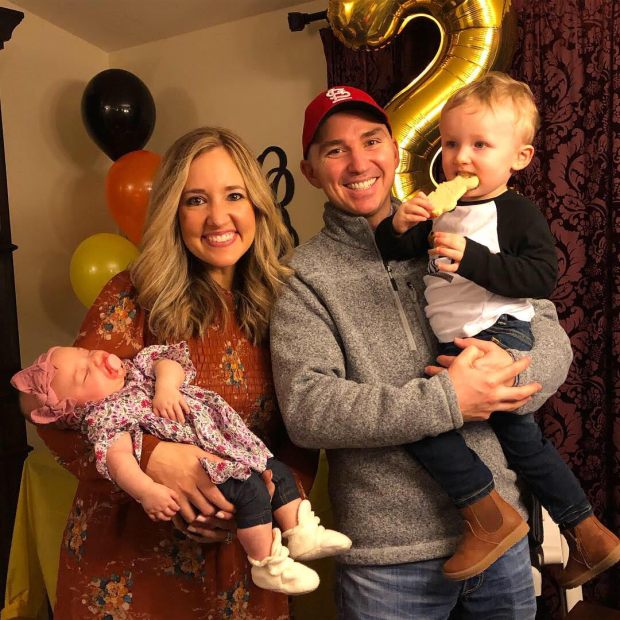
The days are long, but the years are short. Oftentimes this ‘saying’ is commonly shared when talking about parenting. This past weekend my first born turned two. A rush of emotions came over me as we celebrated my son Reid’s special day. I got to thinking—the same is true for life with chronic illness. Reids second bday

The days are long, but the years are short. When you hear that life-sentence uttered from a doctor, your world comes to a standstill. Everything from your past and everything in your future seems to come to an abrupt halt. You feel like you’re suffocating and there’s no way you can go on. But you do.

The days are long, but the years are short. As I come up on 14 years this summer since my diagnosis of Crohn’s disease, I can hardly recall who I was before my IBD. That person, that identity—seems somewhat foreign to me. When you think “14 years”, it sounds like a long time—but, it feels like a blink of an eye. It’s a blur of experiences—some painful, some amazing. I choose to focus on the amazing.

The days are long, but the years are short. When you’re dealing with abdominal pain, when everything just hurts, when you experience nausea and vomiting moments after you try and eat, the days feel endless. IMG_8476When you’re in the thick of a flare and when feel good days feel far from ever being a possibility, try and remember how fleeting these moments are.

The days are long, but the years are short. When you’re being rolled in for another CT scan in the emergency room, when the nurse can’t seem to get an IV started on the fifth try, when you’re dreading your injection, when the colonoscopy prep is making you gag on your knees in the middle of the night in the bathroom, when you’re up counting the hours before surgery, feeling like the world is on your shoulders—remind yourself, this too shall pass.

The days are long, but the years are short. With children as they grow up, we can visually see the physical change going on. Two years ago, my son was a newborn, IMG_6459today he’s a rumbustious, adorable, little ball of energy. Sure, we age, too—but we also mature mentally when it comes to our illness. What felt like the biggest obstacle and scare of our life, evolves into something that is a part of who we are, an identity that while not ideal, helps to define us.

The days are long, but the years are short. Every year without needing to be hospitalized, every year where you feel like you have your disease under control, every year where your health doesn’t take you away from the life you are yearning for, hold on to those years.

The days are long, but the years are short. Rather than wish time away, I try and remind myself how each and every comeback is stronger than the setback. That every time I’ve been knocked to my knees by my disease in the past, I’ve come out of the storm stronger and with greater perspective about this life I’ve been given.

The days are long, but the years are short. You don’t always have to love your life. You can certainly mourn the loss of who you were prior to diagnosis, lord knows I did. remedy-nsmith-stlouis-1283But I can promise you, that as life goes on and as the years since that moment of diagnosis get further and further in the rear view mirror, you will find a comfort in this identity.

The days are long, but the years are short. You will garner a confidence in your strength that wasn’t there years before. And someday, you too will pause and think about where you’ve been and how far you’ve come to reach this moment. I hope you give yourself a proverbial pat on the back to honor your resilience and determination to live your life despite all the what if’s, despite all the pain, despite all the worry. Because you my friend, are a warrior—day in and day out—and you are so much more than your disease.