Different strokes for different folks: Art Therapy and IBD

Coloring books aren’t just for kids, they can be a helpful calming tool for those who battle chronic illness. The simple act of coloring intricate shapes and patterns allows us to enter a meditative mental space. IMG_1060Once you enter this state of calm amongst the stress surrounding your life, you can take in the positive messages of a coloring book.

I recently connected with an artist named Alia who created a coloring book specifically geared toward those who battle inflammatory bowel disease. It’s called “Crohn’s and Colitis: Color to Cope.” After watching her sister battle Crohn’s disease for more than 20 years, she was inspired to use her talents to make a difference.

Alia says, “Seeing how much my sister suffered, physically and emotionally with Crohn’s inspired me to create a coloring book. The psychological aspect of coming to terms with IBD is very underestimated, especially for young women. I wanted to create something to make her feel better. I noticed there was a limited number of informational books available. Adult coloring is a proven stress reliever and engages the limbic (emotional) brain. It helps you enter a ‘flow’ like state. I thought pairing inspiring/supportive quotes with images would help anyone suffering with IBD process what they are feeling.”IMG_1058
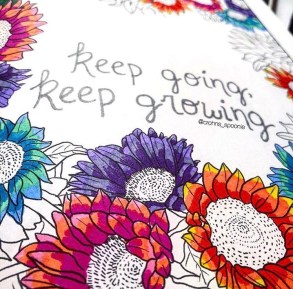
See the support in the palm of your hands

The coloring book is a visual representation of support that many of us in the IBD community yearn for. It validates and honors our experiences—no matter what age you are. Flipping through the pages, you’ll see quotes and images for times of stress, sadness and laughter. The coloring book provides an accessible way to release stress and get motivated to take on the day.

Since the coloring book launched, Alia has received amazing feedback from the IBD community. Here’s an example shared on Instagram:

“Thank you for creating this coloring book. I was diagnosed with Crohn’s at age 17 and am now 33. After four surgeries and two ostomies, as well as a lifetime of stories that no one would truly understand unless you were in my shoes, I think this book is very therapeutic and I appreciate your empathy and support.  Thinking of you & your sister.  Much love.”

The inspiration behind the art

IMG_9039As someone with a creative mind whose passion lies in art, Alia did research within the IBD community to see what types of images might resonate, along with key messages and emotions. Safe to say, the girl did her homework!

Alia went on to explain that coloring calms the amygdala, which is the part of the brain that controls the fight or flight response. This part of the brain is often on high alert during periods of stress or illness. When we’re fatigued, and our energy is low, coloring isn’t taxing, it can take us back to our childhood. A time of life that was most likely more carefree. Whether you’re at home or in a hospital bed, the coloring book can serve as a helpful tool in your day-to-day management of your illness.

How to get your hands on a copy

The coloring book is available on Amazon in the United States, the UK and Europe. Click here to purchase “Crohn’s and Colitis: Color to Cope.” The coloring book is published under Alia’s author name: “MeMoments Creative”.

Follow Alia on Instagram: @crohns.colitis.color2cope

Along with IBD, Alia has also created coloring books geared towards infertility. Her most recent book targets mental health—depression and anxiety. She plans to create more coloring books in the future that can serve as a support tool for other patient communities as well.


5 tips for finding flexibility within yourself while battling chronic illness

I’m a planner. Always have been. Always will be. But, as my grandmother always used to tell me, “Tell God you have a plan, and he’ll laugh at you.” That seems to be the case all too often for those of us in the chronic illness community. If you’re like me, each flare up and hospitalization has occurred completely out of the blue. I’ve bIMG_2413een blindsided each and every time. I’ve worked a full day, trained for a half marathon, taken a road trip…you name it…and BAM…hello, bowel obstruction or abscess.
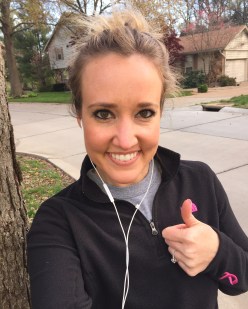
So, how can we go about our lives as normally as possible with the ever-looming dread of the next setback and flare? It’s easier said than done, but it is possible. I’ve battled Crohn’s disease for nearly 13 years, this perspective and knowledge took time for me to gain. When I was first diagnosed, flexibility and patience weren’t in my vocabulary. But, like all things in life, time helps us heal and time teaches.

Here are five helpful tips for finding flexibility while taking on your illness:

  1. Do your best to live in the now. Rather than focusing on the past hiccups in your journey, live in the moment. Feeling well? Capitalize on this. Go outside, meet up with friends or family, get some exercise. Natalie runningIt’s these fleeting moments of invincibility that provide us with a chance to live like the rest of society. It may seem simple, but recognize these moments, verbalize them with loved ones. Celebrate the small joys, that are a big deal.
  2. Stop beating yourself up over what could happen. Many people in the chronic illness community talk about how common post-traumatic stress disorder (PTSD) is. We’ve all faced some challenging, debilitating moments that have shook us to our core. Of course we don’t want that to happen again. Don’t place blame on yourself. Instead, give yourself credit for all you do on a daily basis to manage your disease—whether it’s watching your diet, taking medication or making an effort to practice self-care.
  3. Put your health first, don’t push yourself to the brink. Nobody likes to cancel plans or be a no-show at big events and social gatherings, especially when you’re actually looking forward to them. But, by putting other people’s needs before your own and worrying about what people might say or think of you—you’re only putting yourself in harm’s way. Be mindful of how friends and family members react when your disease is symptomatic. Are they supportive and understanding, or do they make you feel bad for bowing out? When you’re too tired, in pain or struggling, that’s a message from your body telling you to slow down. Please listen.
  4. Roll with the punches of treatment. Trying to wrangle a chronic illness into control is exhausting. It’s constantly a chess game. When you no longer respond well to your biologic, when you’re put on a new medication, when you’re told to try eliminating sugar, dairy, gluten or all the above…try to give everything a shot and a chance. IMG_0230Think about the risk vs. the reward. It’s emotionally draining when nothing seems to be working or helping to ease your pain, but, staying positive and open helps us all physically, emotionally and mentally. Keep an open mind with your healthcare providers and have two-way communication. Educate yourself, learn about the clinical trials and treatment options out there—be your own best advocate. Connect with others who are living your same reality. Trust in other peoples’ journeys, but recognize your journey is unique and so is everyone else. Each person’s IBD presents differently.
  5. Be the first to admit when you need help. IMG_0077By telling someone you are struggling, hurting or worried, you are not showing weakness. You are not complaining. If you are going through a dark time and wonder how you’re ever going to overcome a current setback, lean on your support system without hesitation. Internalizing your pain will only make matters worse. You’re still brave and resilient, no matter what.

The difference between sympathy and empathy with chronic illness

Sympathy and empathy. Two different words with very different meanings. Especially to those of us in the chronic illness community. The first nine years I battled Crohn’s disease, I kept my diagnosis as private as possible. Only close friends, family and co-workers knew what I was going through behind closed doors. I did this because I didn’t want sympathy.

TVblog

Back on the news desk following a bowel obstruction hospitalization, would you ever guess this was my first show back?

I didn’t want people to look at me differently. I didn’t want to be judged or looked down upon. I didn’t want to be viewed as “less than” by my peers. When you choose to suffer in silence you close yourself off to support, you close yourself off to empathy.

Since sharing my patient journey in November 2014 with the public, I’ve realized the power of empathy. How it feels when those close to you and complete strangers reach out to offer support, words of advice and choose to show compassion. By definition, empathy means, “the ability to understand and share the feelings of another.” The definition of sympathy is “feelings of pity and sorrow for someone’s misfortune.”

When we choose to share our story, we open ourselves up to not only support, but criticism. People who believe we are advocates as a way of seeking attention. People who try and dumb down our personal experiences because they feel we share to get pity. People who believe we want others to feel sorry for us. This could not be further from the truth.

I share my experiences with Crohn’s disease as a way to inspire and educate.

crohnswalk

I’ll always remember how my cousins and brother rallied around me at the Take Steps Walk in Chicago.

The last thing I want is for someone else to feel sorry for me. There is no reason to act like I have it worse than you or that you feel bad I’m not “healthy.” I am healthy, I just have a chronic disease that makes my life a little more challenging than yours. The challenges Crohn’s has brought into my life have been difficult, emotional and trying—but with each setback, comes a much stronger comeback. I am stronger and better for the trials I have been faced with.

I don’t want your sympathy. I want your empathy. I want you to reach out and see how I’m doing, because you genuinely care. I want you to show interest when I bring up my disease, rather than change the subject…or walk away. The lack of empathy and disinterest hurts more than anything. It shows you who’s a surface friend…and who is a real one.

IMG_7435

I was hospitalized six months into my relationship with my husband. His support was amazing from the start.

Think about how you’d like to be treated and talked to, if you dealt with an invisible, chronic illness that wreaked havoc on your body without warning. A disease that you do all you can to control with lifestyle and medication. A disease of constant unknowns.

When you conversate with those in the chronic illness community—think before you speak and please choose to be empathetic, rather than sympathetic. Your efforts may seem minimal to you, but they mean more than you know.

Taking on fatigue as a mom with Crohn’s disease

I hear my baby saying “mama” gleefully from the playpen. Anxious for attention and snuggles. I hear this as I’m sitting on the toilet with the door open, paying the price for the cup of coffee I just consumed. It’s one of those days as a mom with inflammatory bowel disease. The all-encompassing fatigue is taking hold. I knew this the minute my eyes opened, and I heard Reid in his crib, despite a restful eight hours of sleep. If you don’t have IBD you may wonder what I’m talking about.

Let me try my bIMG_6729est to paint a picture for you. My legs feel like complete jelly. My brain feels in a fog. I feel so lethargic; the thought of showering seems overwhelming. I’m not in pain. My stomach feels fine. But, there’s something “off” and you feel it with every part of your being.

As my husband helps me unload the dishwasher, I tell him, “I’m so fatigued”…he laughs a little and says, “well, you’re 34…you are getting old.” I explain to him it’s my Crohn’s. Sure, I may be in “deep remission”, I haven’t been hospitalized with a flare since my bowel resection surgery in August 2015 (*knocks on all the wood), but that doesn’t mean the disease doesn’t impact my daily life. My husband is amazing and never says anything malicious, but unless you live it, you simply can’t comprehend it.

I’m going to be vulnerable here. Please no judgement. The clothes I washed more than five days ago, are still in the dryer. Each day I told myself I needed to walk down 13 stairs and bring them up, but it felt like too much. This morning as my husband got ready for work, needing his jeans…I remembered…they were still in the dryer. I felt like a failure. As I rocked my son in his nursery today, it took too much out of my legs to be in motion. All I was doing was sitting, his little body on my chest. But the rocking felt like too much. As I laid him down for a nap, I went back and forth in my mind about whether I could muster up the energy to shower. I chose to. Mid-shower, I had a brainstorm to sit down on the seat and take some deep breaths while the warm water hit my body. When I stood up, I honestly couldn’t remember if I had put shampoo in my hair yet or if I had washed my face. Literally no clue. These are just a few examples. But this is the reality of being a mom with IBD.

I started beating myself up over the fact that the past two days I may have overdone it. IMG_6646Living in the Midwest, I didn’t want two winter days with temps in the 80s to pass without enjoying them. I knew the fresh air and exercise would be a welcome excursion for my little man and me. Did those two walks with the stroller push me to my limits? What is too much? What is not enough? At 34, you feel lazy when you can’t keep up or have to admit you’re just too tired. You look perfectly fine on the outside, you feel like those around you wonder if you try and take advantage of your disease.

Here’s my advice for anyone with chronic illness, specifically IBD, especially the parents out there. remedy-nsmith-stlouis-1204

  1. Try not to beat yourself up over it. This too shall pass. You won’t feel this fatigue every day. As a matter of fact, days ago I had the music playing and I was dancing around with my son as I cleaned the house. I felt SO happy and so energetic. Focus on those times to get you through.
  2. Self-care, self-care, self-care. Whether it’s going to get a massage, exercising, sitting on the couch and enjoying some tea or going to Target to shop by yourself. Do what makes you feel at ease. Do something for yourself every day.
  3. Vocalize your exhaustion. If you don’t communicate your struggles, you won’t receive the comfort and help that you need. You are not admitting failure. You’re not waving a white flag and giving into your disease. Rather, you’re being strong enough to realize, in this moment, on this day, you need a little boost from those around you to get by.
  4. Ask for help. Boy do I struggle with this. But, it’s imperative. Especially for first-time moms. Being a parent is hard work. Being a parent with chronic illness is on a whole different level. Hold your tribe close and call on them when you need them. You won’t regret it.
  5. Rest. It’s ok to lay on the couch if you aren’t feeling up to doing chores. It’s ok to say no to a night out with friends. Give your body what it needs. Listen to it. This fatigue is real and by not listening, you’re only feeding into the problem more. You’ll thank yourself later.

I recently came across a statistic this week on Twitter from the Congress of ECCO (European Crohn’s and Colitis Organization) IMG_6342that stated, “Fatigue in IBD is experienced by up to 86 percent of patients with active disease and 41 percent in remission.” It’s crazy how common this is! For people with IBD, fatigue can be physical, mental or a combination of both.

Fatigue has a significant impact on the quality of life and needs to be talked about. If you’re like me and feeling fatigued, I hope you feel empowered to share and do what you can to combat it. Just know you are not weak, you are not lazy, fatigue impacts everyone on this journey differently. And most importantly, you are not alone.


Canceled Plans: Dealing with the unexpected with IBD

Making plans. It’s almost an oxymoron when you battle Crohn’s disease or ulcerative colitis. For the past month or so, I’ve been corresponding with a girl named Amanda. We were brought together through a patient advocacy group known as “The Breakthrough Crew.” One of the organizers told us we should connect. I’m so glad we have. image1 (7)

You know that feeling when you talk to a complete stranger and feel like they’ve been a part of your life and your patient journey since the start? That’s how it is with Amanda. We went from emailing, to texting, to talking on the phone. Our phone conversation felt so comfortable and effortless. She lives in Chicago, I’m from there. We grew up 20 minutes from one another, little did we know our paths would cross in our 30s. This past week, my virtual IBD bestie and I made plans to meet up for lunch halfway in the suburbs.

Unfortunately, days before our lunch plans, Amanda was hospitalized with a flare up. We texted and decided it would be best to change our plans and for me to take a train into the city so she wouldn’t need to drive. We were both so excited. IMG_6057Three days later, at 10 pm the night before we were going to hang out, Amanda was admitted back into the hospital.

This is life with IBD. Making plans and then your disease intervening and saying “not so fast.” This is life when you don’t know what the next hour or day will bring. IBD can rob us of so much of what so many people take for granted. In these moments, this is when friendships within the IBD community mean so much.

While Amanda sits in her hospital bed, we’re able to correspond and be there for one another. I don’t think twice about having my plans change in a matter of moments, it’s almost an expectation. When I heard she was hospitalized, we shifted our plans and rather than lunch and girl talk, I was going to take the train and an Uber to the hospital to meet this girl who I’ve never met, but feel so close to. Unfortunately, her and I both knew rest was what she needed more than anything. And hospital visits, while uplifting, can be exhausting.

When she voices frustrations I too can feel her pain and offer meaningful words of encouragement.

IMG_6056

Amanda and her amazing husband, Rick

When she talks about her incredible husband Rick and how the poor guy wasn’t even given a chair to sit in as she struggled in pain for hours in the ER, it immediately brings me back to moments where my husband had to lay in my hospital bed with me because he too wasn’t given a place to rest.

Since I started sharing my story in 2014…nearly a decade after my diagnosis, I’ve realized how empowering it is to be open, to find comfort in friends—both virtually and in real life—and to know there are so many people out there who can be your lifeline in health and in flare ups. Find your Amanda. Find your friend who gets it. Even if you have yet to meet in person, they can bring you comfort you never realized you needed until it was available.

Amanda and I made plans. They didn’t happen. But, hey…that’s the nature of the beast we call IBD. If it weren’t for IBD, our paths never would have crossed. We’ll try again next month, and the month after, and one of these times the stars and our health journeys will align.

Young IBD patient aspires to become Pediatric GI

Madison Harbison. I’ll always remember the first time our paths crossed. IMG_4983I had just gotten off the stage after speaking at the Crohn’s and Colitis Foundation Patient Symposium Event in October. Her and her mom, Michelle, approached me outside of the auditorium. Tears in their eyes. Smiles on their faces. I immediately felt a connection and knew this little girl was something special.

Madison was only three years old when she started experiencing symptoms. Bloody diarrhea was the first indicator. After E.coli and C-diff were ruled out by doctors, this little girl underwent a colonoscopy. Imagine that. Three years old. Drinking the prep. Dealing with everything in the bathroom. And not being able to understand why this was happening or knowing what was wrong with you. Being a little girl, naïve to what it means to have a chronic disease that would be a part of her, for her entire life.

Imagine how overwhelming it felt for her parents. Michelle said it felt like they were torturing their daughter. Madison is now 12 years old. IMG_4985She’s had a total of three colonoscopies, an endoscopy and an MRE. She’s been hospitalized due to flare ups three times. She has three siblings at home, so as she’s in the hospital or going to the doctor, her parents have to care for them as well. There’s a reason for the saying—’it takes a village’… because it really does.
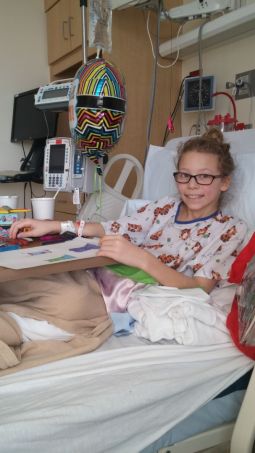
Madison has indeterminate colitis. Her inflammation is centered around her colon. She also battles arthritis that is secondary to her IBD. Just like me, Madison is on Humira injections. Her parents give her the shot—and each time she gets anxious and upset before and after. As a 34-year-old grown woman, I still react the same way at times. So, I can only begin to think what it would feel like for her. Aside from Humira, Madison takes Sulfasalazine, Imuran, Vitamin D, Iron and a multivitamin.

When it comes to advice for fellow parents, Michelle says, “Try to connect with other parents who are going through the same thing. There are “support groups” on Facebook that have helped me so much. Do not give up hope. I have every reason in the world to believe that Madison is going to accomplish everything that she sets out to. This disease is only one part of the amazing person that she is. It does not define her. IMG_4986Also, as a parent of a child with a chronic illness, we are their best advocate. No one knows your child better than you do. If you think that something isn’t quite right, trust your momma instincts!”

When you talk to Madison she radiates strength and resilience. You can see it in her eyes. She’s very mature and well spoken. She says IBD has made her a stronger person. “It’s made me more responsible in the sense of taking my medication, thinking about what foods affect me and always telling my mom if anything is wrong.”

As far as her Humira injection routine (let’s be honest, we all have one!)…her parents take the pen out of the fridge and let it warm up for a few hours, to lessen the sting. Madison likes to use Pinterest on her phone as a distraction. She wipes her leg with the alcohol swab and nods at either her mom or dad so they know to start. IMG_4988Right before the shot, she relaxes her leg, takes a deep breath and pretends she’s anywhere but the living room couch.

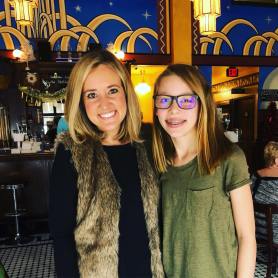
Each summer, Madison attends Camp Oasis. It’s a unique experience where kids with IBD have the chance to be on their own, to make decisions and to take responsibility, while being in a safe and compassionate environment. All the campers have IBD. “Camp has really showed me that I am not alone battling this disease. It is the coolest thing to be surrounded by other kids who know and understand what I have experienced.”

Madison doesn’t let her disease hold her down. She’s an avid soccer, basketball and volleyball player. She’s gearing up to take the stage in “Annie” and she excels at dance. This girl does it all.

Guess what she wants to be when she grows up? A Pediatric Gastroenterologist. Madison wants to help kids who are going through what she’s gone through.

madi

Out to lunch with Madi, taking on IBD together one day at a time.

I can without a doubt say, I know she’ll achieve this goal and follow her dream. She’s a true example of an IBD hero. Someone who hasn’t allowed her disease to rule her life. Someone who looks adversity in the face and says ‘not so fast.’ Someone who I admire and look up to, even though she’s more than 20 years younger than me. If you ever need inspiration—think about Madison during that next Humira shot, think about her when you’re taking that dreadful colonoscopy prep, think of her when you’re getting rolled down to that next CT scan. I know I will.