
Nutrition and IBD. Just saying those two words together makes me feel like I’m running through a rabbit hole, unsure where to turn….and I’ve lived with Crohn’s disease for more than 14 years. Everywhere you look, you see people claiming to “heal their gut” through diet alone, while sharing diet hacks that “cure” IBD, when in fact there is no cure.
Unfortunately, my first experience with a dietitian, days after my diagnosis, was not a positive one. She came into my hospital room and was very doomsday and black and white about what my future held. The conversation led me to believe I would never eat raw fruit or veggies, salads were out, and fried foods were always a no-no. I was told I could have white bread, white pasta, cooked veggies, and plain chicken from that day forward. Hearing this made grappling with the diagnosis much more difficult.
My experience is hopefully not a typical one for those in the IBD community. Dietitians can be and are key players in our overall care teams. They help guide our nutrition and lead us on a path to better health. Chances are if you or someone you love has IBD you’ve come across the laundry list of IBD-friendly diets (SCD, anti-inflammatory, paleo, etc.). If you’ve found a diet that works for you, that’s great—but it can be extremely dangerous and damaging to use your own personal experience to sway others, especially if you preach to go off all medication and focus on diet alone.
Just as IBD manifests uniquely in every person, trigger foods vary, too.  This week—I interview Therezia AlChoufete, a Registered Dietitian Nutritionist (RDN) who specializes in Gastrointestinal Diseases, to set the record straight about this area of disease management. Therezia completed her Bachelor of Science in Neuroscience and her Master of Science in Nutrition and Dietetics from the University of Pittsburgh.
NH: What role does diet/nutrition play in treating IBD?
TA: “A huge role – symptom management is very helpful to improve quality of life for patients with IBD, and many patients have difficulty understanding what they should or should not eat. A Registered Dietitian Nutritionist can help to identify trigger foods and other factors that may be affecting digestion & GI symptoms, nutrition for ostomy management, modifications to diet before and after surgery, recipe modifications to improve GI tolerance, and much more depending on each patient’s medical history.”
NH: When you’re given a patient with IBD, what type of information do you share in those appointments?
TA: “I see my patients in an outpatient setting – this allows me to review the patient’s goals, assess their nutrition status, and determine an individualized plan with every patient. Information can vary depending on each patient’s unique history, goals, and food tolerance.”
NH: Each person’s body responds differently to specific foods, everyone has different triggers, how do you create a plan that is tailored to everyone, rather than saying “all people with IBD need to stay away from XX”?
TA: “There is definitely no one-diet-fits-all approach for IBD. I typically review the patient’s food history, their unique food tolerances, and provide a plan according to each person’s goals and disease status. I try my best to avoid food restriction and liberalize the diet as tolerated by each patient.” 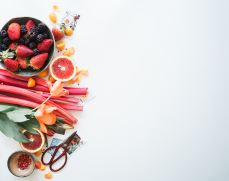
NH: What are the most common questions and concerns you hear from patients?
TA: “A very common question is what food/supplements can I eat to fix my symptoms – unfortunately, there is not a simple answer. But this leaves us some room to discuss food triggers in more detail and review ways to achieve a well-balanced diet.”
NH: Why is working with a nutritionist so critical for those with IBD?
TA: “Registered Dietitian Nutritionists are food and nutrition experts. We use science-based evidence to provide recommendations that are specific to each person’s medical history. This may include review of micronutrient deficiencies, hydration status, fluid build-up (sometimes following use of steroids), medication side effects, risks of malnutrition (which can occur in all body sizes), supplement questions, and so much more. An RDN can provide individualized medical nutrition therapy to minimize GI symptoms and optimize gut health in conjunction with medical plans provided by gastroenterologists.”
NH: What type of difference do you hope to make in a person’s patient journey?
TA: “My hope is to help patients liberalize their diet and improve their quality of life. It is very important to me to help patients realize that they have a team of professionals that can help them manage their IBD. I enjoy working with a team of clinicians to target medical, behavioral, and nutritional health concerns to optimize care for each individual.”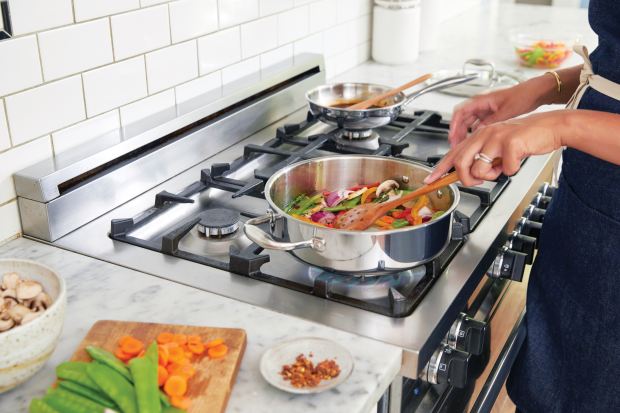
NH: What advice do you have for patients who are in the middle of a flare up?
TA: “Communication with your Gastroenterologist is very important if you feel like you are having flare-like symptoms in order to receive proper treatment. Sometimes, foods that are typically tolerated during times of remission are not tolerated during a flare, and an RDN can help you determine a softer diet that is easier to digest based on your individual needs.”
NH: The term “healing the gut with food” is commonly heard within the IBD community. What’s your belief on that vs. using diet as a combination therapy with medication?
TA: “Unfortunately, diet cannot cure IBD. It can improve some symptoms, but it is so important to work with your doctor to receive proper medical treatment for the disease, follow up with a dietitian to optimize your diet, and address any behavioral health management with your therapist or psychiatrist.”
Connect with Therezia here:
Twitter: @AppetiteOfMind
Instagram: @appetite_of_mind
Additional Resources:
Crohn’s and Colitis Foundation: https://www.crohnscolitisfoundation.org/diet-and-nutrition
International Foundation for Gastrointestinal Disorders: https://www.iffgd.org/other-disorders/inflammatory-bowel-disease.html
United Ostomy Associations of America: https://www.iffgd.org/other-disorders/inflammatory-bowel-disease.html

 This week, a look into her life and how she took on the disease as a preteen, went to college out of state and landed her dream job in California with Walt Disney, after growing up in Wisconsin. My hope is that Emily’s story of perseverance, brings comfort to parents and fellow children and teens experiencing IBD as their life story unfolds.
 While I know that my parents were scared, confused and upset that I was going through this, they never let that show to me. They were and always have been the ones that lift me up when I am down, and never fail to stay by my side through all I have endured.
 And there were times when I wished I would have decided to go to school closer to home, because that would have been easier. The biggest roadblock was the physical distance, because it meant a lot of back and forth travel. Especially, during flare ups. I found myself needing to make the 4-hour drive home more often than I wanted to, which resulted in the need to miss more classes. Additionally, learning to manage my symptoms completely on my own and having to adequately communicate with my medical team from so far away, was challenging at first.
 My health took a drastic turn and it became clear that I would need an ostomy sooner rather than later. I initially was very scared and upset that this was happening. I didn’t know what an ostomy was or anyone that had one, so I had little idea of what to expect going into it. By the time I was a couple weeks away from surgery, I was honestly ready to have it done. I had been experiencing more symptoms and was ready to have the surgery behind me and be feeling better. I was doing my best to go into things with a positive outlook and think about it as a fresh start, but this was no easy task for me. It was an overwhelming and emotional couple of weeks following the surgery getting used to having and caring for an ostomy. I am not afraid to admit that I was scared to look at it and care for it myself after my surgery. But then I realized, this isn’t going to go away anytime soon, so I had to start doing things myself. The more familiar I became with everything, the more comfortable I was and began to realize that I was actually feeling better than before the surgery. This was hard for me to admit to myself, because I didn’t want to be put in the situation of having an ostomy or needing one for the rest of my life. While I am now on the road to needing a permanent ostomy, it still has not sunk in that it will actually happen yet. And I don’t think it is going to fully sink in until that surgery happens.
 This is something that I never thought I would get to experience, and I think having Crohn’s has made me appreciate this opportunity more than I could ever imagine. The last year has been a wild roller coaster ride. I am just thankful to be here, because there were many times where I didn’t think I would even be able to graduate last year. My family and friends have been very supportive because they know how much this opportunity means for me personally and professionally. It is hard to be this far away from my main support system, but they are always just a text or phone call away. Additionally, my providers were very encouraging to me, pushing me to continue to live my life to the fullest and not let my disease slow me down. Hearing them say that to me, was really the last push that I needed to make this a reality. Knowing that my medical team wanted what was best for me, and was willing to work with me to get me where I am today, helped give me the confidence that I could do this.
 It is important to trust their advice and recommendations, as scary as they can be sometimes. Additionally, try your best to not dwell on the negative things that are currently happening and think about what your future can hold. Always do your best to roll with the punches and keep moving forward, your best is all you can do.
 Fast forward three years and her diagnosis changed to Crohn’s Colitis.
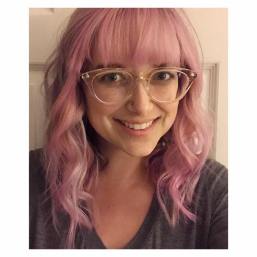 I’m thankful IBD has opened my eyes and given me the gift of true empathy. That empathy has led me to crave a deeper understanding and genuine connection with friends and loved ones. It has also shown me the true strength in others, and I am constantly humbled by the selflessness of my sweet husband and forever soulmate.”
 Your new “normal” is going to look a little or a lot different; it will take some time to adjust to that. Try not to compare your new energy level to your old, your body is fighting a hard battle and you’re doing the best you can. If your energy/activity level is more limited, plan accordingly. Choose wisely who you want to spend your time with and what you want to do – soak in and cherish these times.”
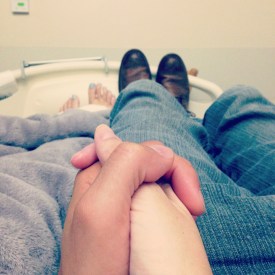 Whenever I am having a really difficult day and see a fellow warrior saying they can relate, offering words of kindness, or that they are having a hard day as well, you can feel that genuine connection and know that they truly mean it.”
 lights camera crohn's