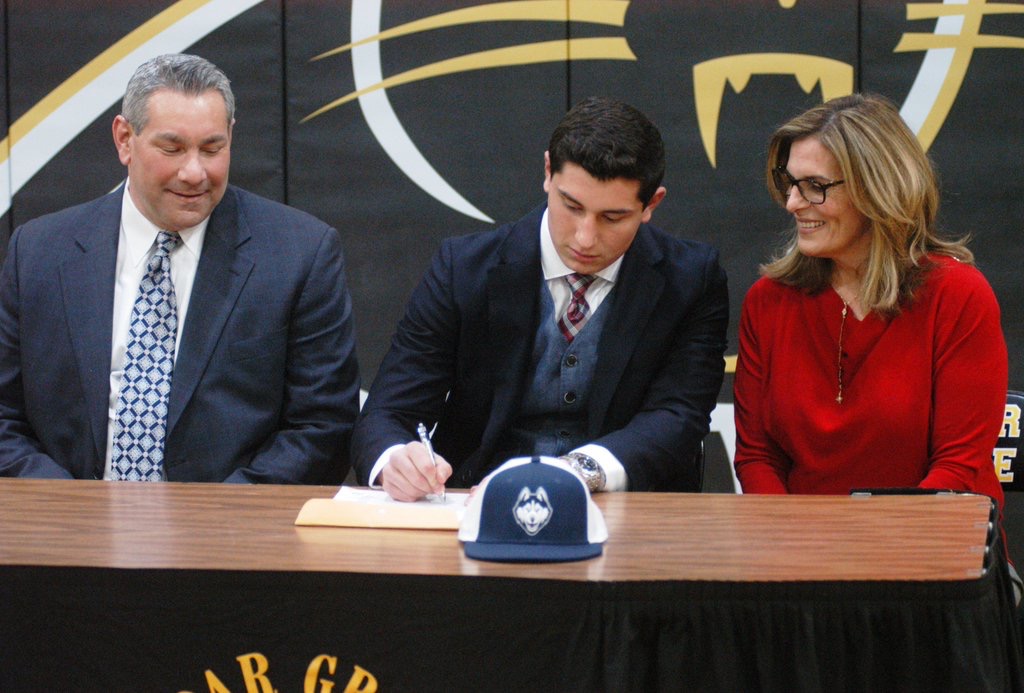
In 2016, Nick Zecchino was living the dream. After years of relentless dedication, he signed a Division I football scholarship to the University of Connecticut. For a young athlete who had poured his heart, body, and soul into the sport he loved, it was validation that every sacrifice had been worth it.
“I was on top of the world,” Nick recalls. “It was the proudest day of my life to that point. Then, one month later my health started to decline out of nowhere. It was scary, there were a lot of questions and uncertainties with what my future was going to hold.”
This week on Lights, Camera, Crohn’s a look at Nick’s remarkable journey and his comeback story both on and off the football field that left me in awe.
When a Dream Collides with a Diagnosis
Like many of us, Nick’s health issues blindsided him out of nowhere. He lost his appetite. Crushing fatigue set in. Blood appeared consistently in his stool, and his bowel movements increased dramatically. In March 2016, a colonoscopy confirmed what he had never even heard of before: ulcerative colitis.
At first, Nick assumed it would be manageable. Get it under control. Heal up. Be ready for UConn by June.
“I didn’t know the long road ahead,” he says.
Weeks turned into months, and instead of improving, his symptoms worsened. During his senior year of high school, Nick missed most of his baseball season due to a constant flare. Maintaining weight and building muscle, which are essential for a college football player, became nearly impossible. By April, the fear crept in: What if this costs me football?
Playing Through the Unthinkable at UConn
Nick arrived on campus determined to push through. But ulcerative colitis never truly loosened its grip.
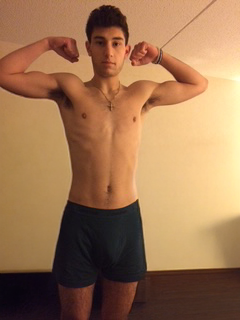
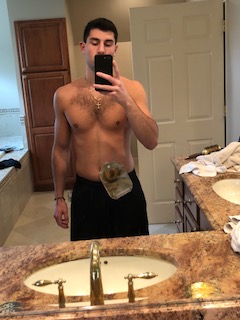
From the first game of his freshman season to the last, his health declined sharply. Between September and November alone, during his first college football season, Nick lost more than 50 pounds! By the final game, he weighed just 145 pounds and looked visibly ill. He used the bathroom 20 to 25 times a day, often passing only blood and mucus.
“There really wasn’t any managing it at that point,” Nick says. “I just had to deal with it and the consequences.”
He tried to hide his illness from coaches and teammates, unwilling to show vulnerability or weakness. He timed bathroom breaks to the last possible minute before kickoff, rushed off at halftime, and avoided eating on game days altogether. Even then, the urgency never stopped.
Years of Medications and No Relief
Nick’s treatment history reads like a roadmap of severe disease. After initially trying mesalamine and Lialda, his doctors escalated to stronger therapies as his condition worsened. Over time, he was on Remicade, Humira, Entyvio, 6-MP, prednisone, and antibiotics like Cipro. He even tried multiple biologics still in clinical trials for ulcerative colitis.
Nothing worked to wrangle his IBD under control.
At one point, doctors administered the maximum dose of Remicade possible, at the shortest interval allowed. It still wasn’t enough.
A Turning Point
Eventually, Nick’s dad made the hardest call of his life.
“My dad picked me up from UConn because I couldn’t go on like that anymore.”
A few days later, they were sitting in a doctor office at Mount Sinai in New York with Dr. Arthur Kornbluth, an IBD specialist who would change the course of Nick’s life.
“Going to Mount Sinai saved my life,” Nick says simply.
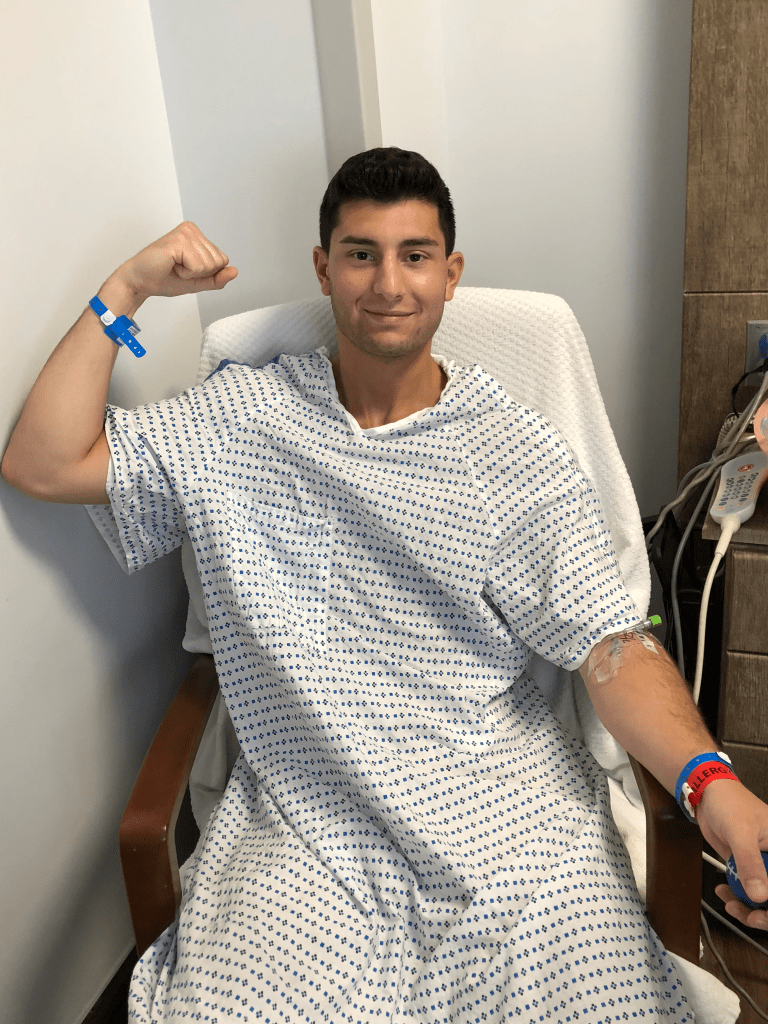
Dr. Kornbluth tried everything. Every possible medical “trick in the book” to try and get Nick into clinical remission. But despite his efforts, Nick couldn’t achieve lasting remission. Finally, they faced the reality neither wanted to confront: surgery.
“It was terrifying,” Nick admits. “But it was the only way I could get my life back and maybe still have a chance to play football again after my future was put on hold for over two years. Making the decision to go to Mount Sinai and get surgery completely changed the trajectory of my life. It will always be one of the best decisions I’ve ever made.”
Three Surgeries. One Unbreakable Goal.
Nick had a total colectomy (which removed his entire colon and gave him a temporary colostomy bag, followed by Takedown surgery and a J-pouch). After the three surgeries in six months, Nick finally began to feel like himself again. In January 2019, he returned to the gym for the first time.
He was weak. Deconditioned. A shell of the athlete he once was. But his motivation never wavered.
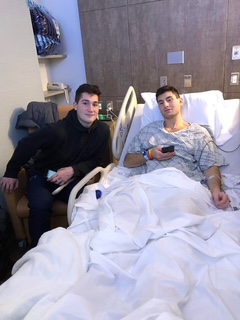
“Football was my one and only motivation,” he says. “I spent nights in the hospital bed thinking about how I could get back on the field.”
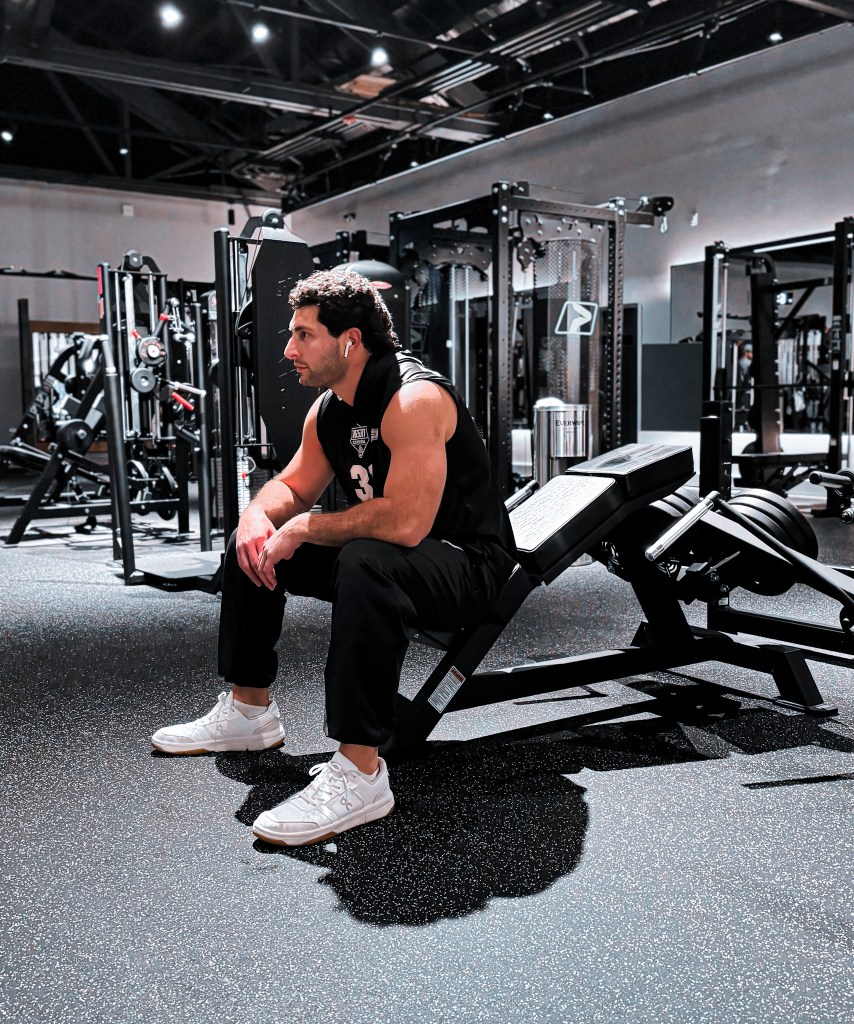
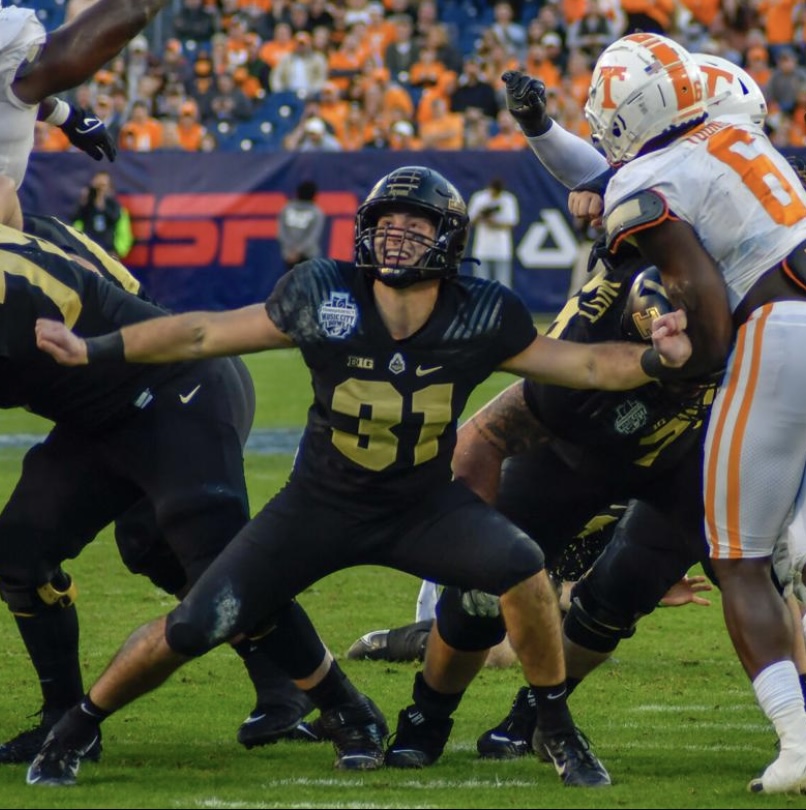
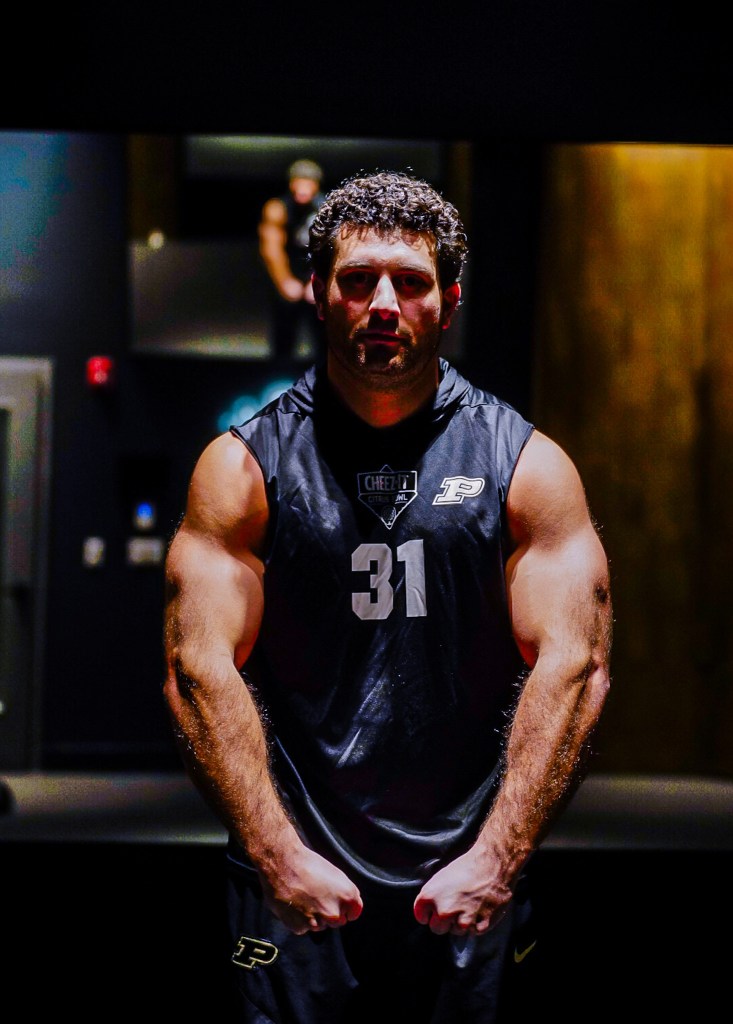
By June 2019, Nick arrived at Purdue University. At this point, he was not just healthier, but also confident that his dream was no longer out of reach.
A Second Chance at Everything
Walking onto Purdue’s campus felt surreal. Nick felt like a freshman again, even though he wasn’t. In many ways, it was a new life.
“I was just so grateful,” he says. “I had a completely different outlook than anyone else my age.”
When game day arrived, the nerves hit harder than they ever had before. But the moment he took his first snap, they vanished.
“I felt like myself again,” Nick says. “It was one of the best feelings in the world.”
From that point forward, confidence replaced fear. He had already survived more than most people ever would.
Life After UC—and Living Medication-Free
During his four years at Purdue, Nick dealt with recurring pouchitis every couple of months. Antibiotics like Cipro helped, but he grew tired of relying on medication.
Determined to find another way, Nick dove into research on gut health, inflammation, and natural support. Supplements like L-glutamine made a noticeable difference. Eventually, the pouchitis stopped coming back.
One day, his dad noticed the growing lineup of supplements on the kitchen counter.
“If this works so well for you,” his dad asked, “why not create something that could help other people too?”
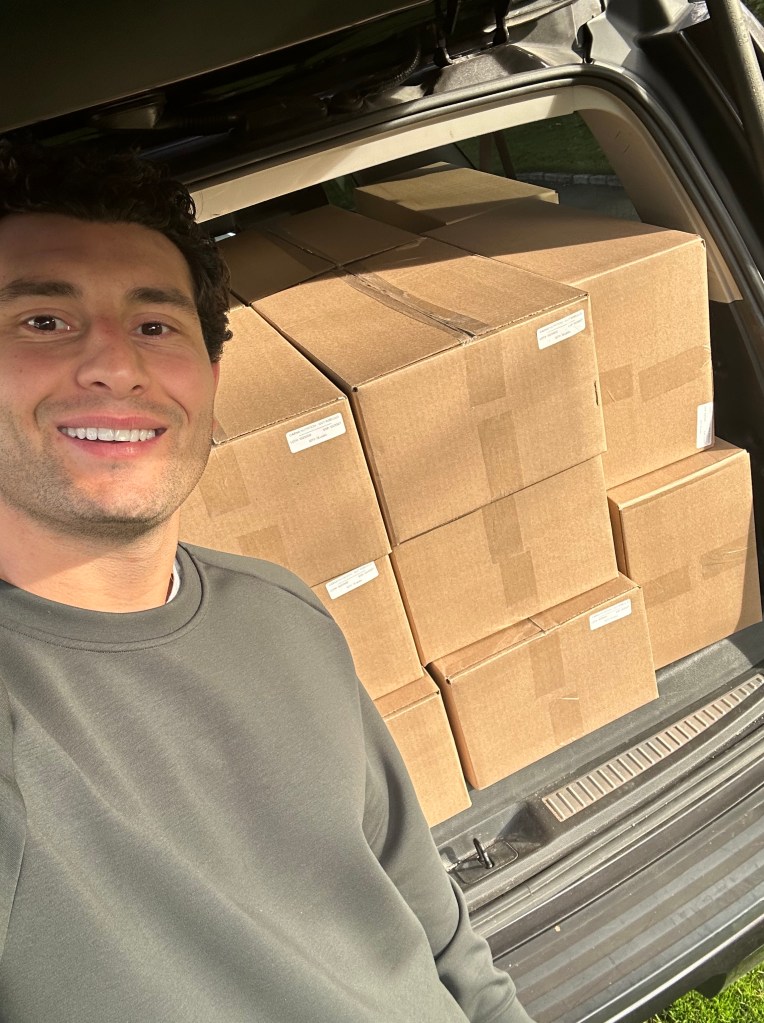
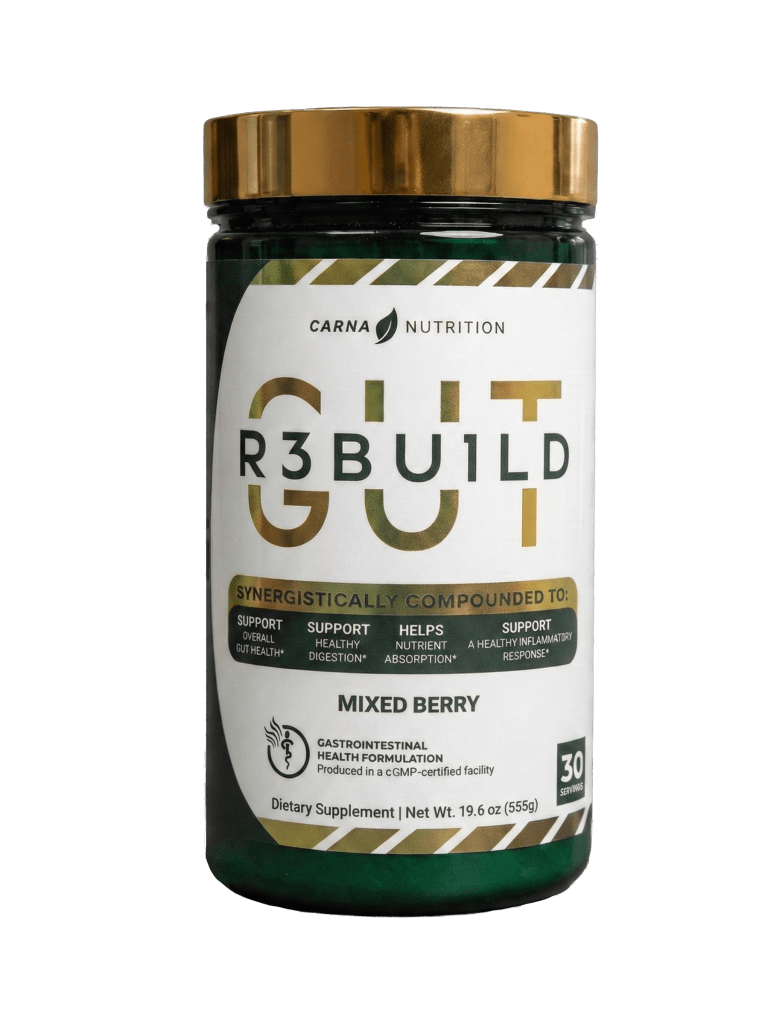
That conversation sparked the creation of Carna Nutrition and its flagship product, GUT R3BU1LD—a gut health formula inspired by Nick’s own journey.
The name Carna comes from Roman mythology: the goddess of health, vitality, and protection of the internal organs, while helping with digestion.
“I created the full spectrum formula of our product with the help of a health & wellness professional that has been in the industry for 25+ years,” explains Nick. “We also used the access to the manufacturers’ scientists that they have in-house to help us understand the way that the pharmaceutical grade and clinically studied dosages of the ingredients that we have in the product all work together synergistically in a beneficial way for every major gut healing pathway during digestive stress.”
“He Was on His Death Bed. It’s Incredible What He Did.”
Nick’s comeback left a lasting impression on everyone who witnessed it, including his football coaches.
Former UConn head coach and Purdue defensive coordinator and linebackers coach, Bob Diaco, recalls:
“I remember watching him and trying to figure out how to stop it. My wife hadn’t seen him for a few months, and she was distraught. He was on his death bed for real. It was bad. It’s incredible what he did.”
“He’s the kind of kid that makes you better,” Diaco continued. “He’s been the underdog at every turn. He always comes out on top. He’s always making an impact on the people around him in a positive way.”
A Message to His Younger Self and to Young Athletes Today
If Nick could speak to his 2016 self, he knows exactly what he’d say:
“Your journey isn’t going to look anything like you imagine, but it’s going to be the most rewarding path for you. Trust it.”
And for young athletes with IBD who are scared their diagnosis might end their dreams?
“Your diagnosis is not the end of your story,” Nick says. “You’re allowed to struggle. You’re allowed to take time to heal. But don’t lose hope. Most of the battle is mental. Stay strong, stay supported, and keep chasing your dreams.”
Nick’s story is a reminder that even when IBD takes everything, it doesn’t get the final word. Sometimes, it forges something stronger than before. Whether you’re a young person living with IBD or a caregiver worried about what the future will hold for your child, I hope Nick’s incredible story of resilience serves as inspiration to show all that’s possible despite the difficult diagnosis of IBD. I found it interesting that Nick wouldn’t trade all he’s endured to be where he is today, as I always say the same. As time passes and hindsight is 20/20 so many of us experience a transformation that shapes who we are today, all because of the struggles that took us to get here.
It’s considered the most common surgical procedure for ulcerative colitis patients when medication fails to keep IBD under control. The ileal pouch anal-anastomosis (IPAA) or j-pouch, is created after a surgeon removes your colon and rectum and uses the end of your small intestine to form an internal pouch, which looks like the shape of J.
This week on Lights, Camera, Crohn’s we hear from a colorectal surgeon and IBD patient himself, along with several women with j-pouches about their experience, what they’ve learned along the way, and what they hope others know who are living similar realities.
What does the j-pouch procedure entail?
Before we dig deeper, a short “lesson” on what the j-pouch procedure involves. It’s typically a one, two, or three stage process.
According to the Crohn’s and Colitis Foundation:
The first surgery removes your colon and rectum and preserves your anus and anal sphincter muscles. The ileum is made into a j-shaped pouch and connected to the top of your anal canal.
A temporary ileostomy is typically created to give your newly formed pouch a chance to heal. A loop of your small intestine will be pulled through an opening in your abdomen, called a stoma, to allow waste to exit your body into an ostomy bag.
During this time, you will need to always wear an ostomy bag, and it will need to be emptied several times a day.
You will have your second surgery eight to 12 weeks later, once the pouch has healed.
The second surgery will reverse the temporary ileostomy and reconnect your small intestine. Your internal pouch will then collect waste and allow stool to pass through your anus in a bowel movement.
Some surgeons choose to perform this surgery in just one stage, in which the pouch is created and joined to the anus without a temporary ileostomy. This is done less often than the two-stage procedure because of an increased risk of infection.
This topic resonates with Dr. Stefan D. Holubar, MD, MS, FASCRS, FACS, IBD Surgery Section Chief & Director of Research for the Department of Colorectal Surgery at Cleveland Clinic, for many reasons. He was diagnosed with Crohn’s colitis when he was 7 years old and was on and off steroids (the only treatment at the time) for many years.
“I had learned to live with chronic embarrassing urgent incontinence, as well as being small and skinny, and with a swollen face from the steroids. I was offered an end ileostomy as a teenager (not a J-pouch as it was Crohn’s) and was lucky to get a second opinion with the famous Dr. Daniel Present (RIP) at Mount Sinai. I went on NPO and TPN for one year which helped get me into remission and grow about a foot in one year. Somehow, I made it through college and got into medical school, but it turned out I hadn’t had a colonoscopy in about a decade.”
Over Christmas 1999, Dr. Holubar had a colonoscopy and received a call a few days later while he was skiing that he had colon cancer.
“That same day, the tumor swelled from the biopsies, and I developed a large bowel obstruction. I had emergency subtotal colectomy w ileosigmoid anastomosis without an ileostomy. After chemotherapy and completing medical school, I needed the rectum removed (due to risk of rectal cancer) and underwent a modified 2-stage J-pouch without ileostomy one month before surgical residency. I’ve been great ever since, not perfect as I have had some complications over the years, but great, with three kids, the best job and wife in the world.”
During the second half of medical school, Dr. Holubar was considering going into GI or Medical Oncology and learned that colorectal surgery was a specialty.
“Once I learned Colorectal was a specialty and they are the IBD experts, my future path was set in stone. It’s rare to know that you want to be a colorectal surgeon that early in training. I’m blessed to share my successful story and give patients with complicated IBD like me hope every single day of my life. My experiences have also influenced me to do clinical research to try to change care more broadly and ideally, globally. My IBD history is a source of endless inspiration for our innovative work.”
I asked Dr. Holubar what advice he has for patients who are on the fence about getting a J-pouch. His most important advice—is to seek expertise.
“I would recommend looking for surgeons who specialize in IBD. J-pouch surgery is a niche these days (hence “IBD Surgeons”), and your care team should be expert in taking care of the complications that may develop. A majority (>90%) of patients with a pouch would do it again and/or recommend it to a friend or family member.” (Fazio et al., Annals of Surgery, 2013, PMID: 23299522).
Dr. Holubar wants to highlight a couple important points in terms of this article:
Only about 10% of people who are deemed candidates for a pouch choose not to have it, for personal reasons such as work, or lifestyle-related reasons such as lack of access to a toilet for many hours at a time, or those who prefer a one-and-done approach (Holubar, Inflamm Bowel Dis, 2009, PMID: 19266572). We have a new article on this, but it has only been published as an abstract so far (Total Proctocolectomy with End-Ileostomy Versus Ileoanal Pouch for Ulcerative Colitis: Who Doesn’t Pouch, And How Do They Do? Dis Colon Rectum 64;5; Meeting AbstractPOD169)
On the other hand, the overall long-term pouch survival is about 90-95% which is very high (in other words, it works out most of the time, but not always) (Fazio et al., Annals of Surgery, 2013, PMID: 23299522).
In the current digital era, we are blessed to have support groups on social media and active discussions on #SoMe4IBD. That said, it’s important to know that not everyone who has a pouch – whether the experience is great, or they have complications – is vocal on social media. It’s important to check with your care team to discuss the best treatment options for you.
When it comes to the risk and benefits of having a J-pouch, Dr. Holubar says each patient needs to chart out the pros and cons of end ileostomy (or rarely a continence ileostomy aka Kock pouch) vs. IPAA as the risk-benefit profiles are quite different.
“The main benefit is that a patient can maintain transanal defecation and avoid a permanent ileostomy and care of the ileostomy. An added “benefit” of having a pouch is that you can almost always go back to an ileostomy if it doesn’t work, or you are not satisfied with the function. Going back into the belly is of course with some risk of further surgical complications,” he explained.
The j-pouch patient perspective
Jackie was diagnosed with ulcerative colitis in March 2009. She was 24 years old and had been given a multiple sclerosis diagnosis before that. At the time, her care team was concerned a biologic could set off her MS.
“Less than a year after my diagnosis, I was told that I’d run out of medication options and I’d need to have my colon removed and opted to schedule surgery at that time to work towards a j-pouch,” said Jackie.
Getting acclimated to having an ostomy didn’t come easily. She says her biggest obstacle was getting over her own biases.
“I didn’t know anything about ostomies except from what I read online from other patients at the time and the consensus in the online forums was not good. I was nervous, but I learned almost immediately that I felt better, was healthier, and could do more. After my first surgery, I traveled across the country and hiked through some parks in Oregon. None of that would have been possible before my ostomy. It only took a few experiences like that to realize how much the ostomy had really given me.”
Of course, there’s a learning curve. There’s new terminology to learn, you must find what works on your body, and that can be frustrating.
“I was curious from day one. I knew that I was sent home in the appliance the hospital had set me up with, but I wasn’t convinced that was the best one for me, so I took it upon myself to test lots of brands and products to get the one that worked best for me.”
Jasmine was diagnosed with ulcerative colitis in 2017 when she was 19. She was a freshman in college. Two years later she dealt with a flare she started Entyvio, but the drug failed her shortly thereafter. She switched to Remicade in January 2020 and had the same problem, even after receiving the highest possible dosage every 4 weeks. Her health continued to rapidly decline, and she was hospitalized in March 2020.
“This was the first-time surgical intervention, an ostomy, and a j-pouch were mentioned to me in a real way, however, the doctors continued to say they felt cautiously optimistic Remicade would pull me out of my flare. Throughout these months, I tried a variety of diets including SCD and AIP, visited multiple dieticians and nutritionists, met with natural health doctors, sought out second opinions, and followed a robust supplement regime that was continuously updated by my functional health doctor.”
Despite every effort, by April of 2020, her health was the worst it had been her my entire life. Weighing 105 pounds, she lived in constant, excruciating pain, unable to sleep or eat, too weak to stand in the shower for longer than five short minutes.
“IBD completely ruled my life. When I spoke with my doctors in early May, they told me I had two options: I could try Stelara, the last drug available to me, which my team was 99% sure would not work and would result in emergency surgery since the drug takes months to kick in and provide relief. Otherwise, I could have surgery immediately. My options hardly felt like options when both resulted in the same outcome, just at different times. I opted to have surgery sooner rather than later. If it was inevitable, I wanted to begin the process and start feeling better as soon as possible, rather than continuing to needlessly suffer.”
A few days later, Jasmine met with a surgeon, and less than a week after that appointment (and the morning after her college graduation), she was rolled into the operating room to have my colon removed.
“No life experience prepares you to look down and see an internal organ on the outside of your body. A stoma is far outside the lines of normal human experience, and despite all the preparation in the world, your brain can’t fully process what it will be like until it’s happened. I found the transition to be difficult; while the nurses in the hospital were helpful, the nurses sent to my home barely seemed to know what to do. I had to teach myself how to empty the bag, and at first, it often took me an hour to change the ostomy. However, with time and as my body healed from surgery, I became more confident and able to quickly take care of the ostomy in under five minutes,” said Jasmine.
Even though the physical acclimation was challenging, Jasmine says the mental acclimation was even harder.
“At the time, I was 22 years old and had never in a million years imagined my life to involve a bag of waste attached to my stomach. I felt like I was constantly grieving the life I’d imagined and the life I’d never get to live. The ostomy felt like a reminder of all that had been taken from me that I couldn’t ignore, concrete proof of how different I was from all other 22-year-olds and how far my life had diverged from the normal college experience. I spent many days looking in the mirror and crying at what I saw, struggling to accept the ostomy as the life saver it was. Over time, as I began to regain more freedom and control over my life, eating the food I wanted, sleeping through the night, exercising, and traveling, I slowly began to make peace with the ostomy through the lens of all it enabled me to do.”
Aimee was diagnosed with ulcerative colitis in 2011 when she was 22 years old. She struggled responding to medical intervention and dealt with severe abdominal cramping and high levels of blood in her stool which destroyed her quality of life.
“I had to give up my job, my life, my apartment, my social life and moved back to my hometown to be taken care of by my parents. In one hospital admission 9 months after first symptoms, the surgical team advised I do the ostomy to avoid a tear or rupture to the colon which could lead to emergency surgery or worse, sepsis.”
The ostomy relieved Aimee’s constant cramping and she felt instant relief from her chronic pain. Going into surgery the plan from the start was to do a three-step surgical journey over 12 months that resulted in a j-pouch May 2012.
“There is so much help in the hospital that it was only the day I was leaving that it hit me that this was going to be something that would be hard to get used to. I was 22 and I was embarrassed to tell everyone and conscious of my looks, so there was a vanity piece that was hard to overcome. When I was home, I felt alone. I wanted to manage the bag all by myself, I didn’t allow anyone to see the stoma or my bags or anything. Looking back at my young self, I wish I had let my family and friends in more to help me, I didn’t need to hide it.”
Elissa was initially diagnosed with ulcerative colitis when she was 14 years old, back in 1994 and years later, Crohn’s, in her small intestine. Her diagnosis journey was a difficult one. She was told she was lactose intolerant, had food allergies, IBS, anxiety, and a nervous stomach.
When Elissa was 20, she underwent emergency surgery to remove her colon. She was one of the first patients to participate in a clinical trial for Remicade back in the day. Unfortunately, the medications kept failing her, she became dependent on high doses of steroids, and she had precancerous cells in her colon.
“I was in college at the time and didn’t feel comfortable telling most people. There were a few occurrences of my bag leaking (one especially memorable experience in the middle of a fraternity party), and I was mortified. However, my recovery also highlighted the thoughtfulness and generosity of my best friends and family members who would drive me to the pharmacy to pick up medical supplies, drive me to doctor appointments, even just sit with me and rest. People really come out of the woodwork – sometimes asking for help is the hardest part.”
At times Elissa felt very alone. She wishes she had known the Crohn’s and Colitis Foundation was available, along with support groups. She says, now, there are so many amazing resources available for people in recovery, including the forum j-pouch.org.
Dani was diagnosed with ulcerative colitis in 2005, when she was just 8 years old. She was initially managed on oral medication then switched to biologics and went through Remicade, Humira, Xeljanz, Stelara, and Entyvio.
“I always knew that surgery was on the table, and I felt like I was always buying time until a new medication came out. In January of 2021 I became extremely sick and was admitted to the hospital for IV cyclosporin to try to lessen my immune response. I was ok enough to leave the hospital and was feeling ok for about four days out of the hospital and then I started to become sick again. My surgeon came around a few times to check on me and introduce himself. He said, “I just want you to know that I’m not the scary man with a knife.” At that time, I didn’t know he would be my surgeon. When I started to get sick again after leaving the hospital, I knew that surgery was going to be the next step.”
From then on, Dani met with her GI doctor and Colorectal surgeon (who work together), and they scheduled her for a subtotal colectomy a few weeks later. She began the 3-step surgical process in March 2021.
“It was a huge adjustment. I constantly felt my bag and it felt so foreign to me. At the same time, it gave me an independence that I had never had before. My plan was to go through all 3 j-pouch surgeries to have an ostomy for nine months and then have a j-pouch. I felt confident that I could adjust to an ostomy again if necessary and that I wanted to give a j-pouch a try.”
Dani got her take down surgery J-pouch in December 2021.
The hope of reversing from the start
Jackie: “The plan was to reverse, but I did have a major panic moment a few months before I was supposed to have another surgery. A friend of mine who had started his journey to a -j-pouch around the same time I did, was one step ahead of me in his surgical sequence, and he was having some major problems. I figured the ostomy was the devil I know, better stick with what you know, because I was afraid of what the other side looked like. But I knew myself, and I knew I had to at least try for a reversal, otherwise I’d spend the rest of forever wondering how it would have gone.”
Jasmine: “From the start, the colectomy was presented to me as a step toward the larger goal of getting a j-pouch. I went into the first surgery planning to try the j-pouch.”
Elissa: “I knew the ostomy would be temporary, but I really had no idea what to expect as far as recovery was concerned. My doctors and surgeons did not explain any potential complications. I wish I had known more questions to ask.”
For Elissa, a pouch was created at the time of surgery that removed her colon. Three months later, she had reversal surgery during college spring break – unfortunately, the reversal failed, she caught an infection and ended up in the ICU. The ostomy was placed again for her body to recover from an additional open abdominal surgery. She then went on to have a successful reversal in July of 2000.
Making the decision to go for a j-pouch
Jackie: “I knew that I could have chosen to keep my ostomy, but there was a real sense of “why wouldn’t you get a j-pouch” from the medical team. There was an undertone in what they said and did that insinuated the j-pouch was the more ideal situation and that I should clearly want to go that route. At the time, I was still regularly following most professional medical advice and didn’t really question it. But the option to keep the ostomy was never really discussed and it was always assumed I would reverse it.”
Jasmine: “Because I was young, otherwise healthy, and it had been confirmed many times through testing that I had ulcerative colitis, rather than Crohn’s disease, my doctors said I was a great candidate for j-pouch surgery. In general, my surgeon told me that close to 90% of j-pouch surgeries are successful, and I felt confident trying based on my background and the conversations with my medical team. By the time I’d had surgery, I’d only had ulcerative colitis for three years and had been in remission for two of them. The j-pouch felt like the best avenue for a life as close to normal as possible given the circumstances, and at 22, with (hopefully) a lot of life ahead of me, that sense of normality was important to me.”
How it felt leading up to reversal
Jackie: “I kept reading about all the things that could go wrong and it really freaked me out. I knew people personally who had some complications and it made it seem less like a potential statistic and more like a reality. The reality is that more people do well but are not often talking about it online. At that time there weren’t enough stories about people thriving after j-pouch surgery. I knew what life with the ostomy was like and I knew I could do that. Welcoming another major surgery and another major change just seemed really overwhelming.”
Jackie started the process in March 2010. She unfortunately had a few complications along the way which resulted in more surgeries and a longer sequence to the j-pouch, so her takedown occurred in mid-2012.
Jasmine: “I often worried something would go wrong that would prevent me from getting a j-pouch. Everything that could go wrong had gone wrong for me to even end up 22 and colon-less, and it was hard for me to imagine something could go “right.” I felt very distrustful after the variety of promises made to me by my medical team over the past year that never came to fruition and struggled with cynicism about what might happen. Coupled with all the negativity online about life with a j-pouch, I became very apprehensive about something either going wrong with my surgeries or my j-pouch failing.”
Jasmine’s j-pouch was created in December 2020 with a diverting loop ileostomy and was fully connected in February 2021.
Dani:“I had read about ‘butt burn’ and that when you first get a j-pouch you are going to the bathroom frequently, so I was concerned about that. I had just gotten used to being able to go where I wanted and not worry about the bathroom, and I was concerned that I was going to be putting myself back into a position where I was more limited.”
What j-pouch recovery was like
Jackie: “The takedown was one of the easier surgeries to recover from for me because that was the only thing they were doing in that surgery. Sometimes surgeons combine steps that can make certain parts more difficult to recover from, but for me it was just hooking up the plumbing, which had already been healing internally for months. Despite the complications I had that resulted in more surgery, it gave my body more time to heal, which I think is part of why my j-pouch has been so successful. The hardest part was understanding that the j-pouch can take a year or so to settle, which means you may still have some accidents here or there in the beginning. It wasn’t an immediate magical fix, but over time I learned to understand my j-pouch and to predict its behaviors.”
Jasmine: “J-pouch recovery is an exercise in endurance and mental fortitude, but I didn’t find it as terrifying as it seemed from reading online. From the beginning, I felt like I had far more control than I did with ulcerative colitis. There was almost no urgency, and I could take a minute or two to finish what I was doing before going to the bathroom, rather than having to drop everything and run. Although you do go to the bathroom quite often at the start, having that control makes a huge difference. One of the harder parts of recovery is the acidic stool – waste in the small intestine has more stomach acid in it, which usually gets broken down by the colon, however, without a colon, that acid creates burning on the skin. My skin was constantly raw and sore the first few weeks no matter how much butt cream or fluffy toilet paper I used. Sometimes the burning pain was so bad it would wake me up at night, but now, almost two years out, I rarely have butt burn.”
Aimee: “This was the hardest surgery because it was so long and so much handling of my intestines, my bowel lost function, so I vomited for eight days after my surgery. My doctors considered TPN, but luckily peristalsis started again, and I could eat!
Elissa: “Honestly, recovering from surgeries itself wasn’t too bad, especially after years of IBD flares. Getting rid of my colon provided almost immediate relief. I just had to be patient and let my body heal.”
Dani: “The recovery was the easiest in terms of there weren’t new incision spots. I had to get used to seeing my stoma hole as it closed in naturally and I was still very sore. I also was going to the bathroom frequently and wasn’t sleeping through the night for the first few weeks, which was hard. I was frustrated that I felt like I always needed to be near a bathroom, but that feeling was temporary. “
Pros and Cons of life with a j-pouch
Jackie: “Honestly…it has been so good. I have a total rockstar j-pouch. I eat anything I want (popcorn? yes! all the nuts? yes! spicy food? Yes, please!), I can hold my bowels for hours upon hours. I rarely have any urgency and in general have peace of mind that I can live my life, go where I want, and UC no longer can control that. The cons exist, but for me, they’re small. I’ve had pouchitis a few times, which feels like UC again, but it’s treated with antibiotics and then you’re back on your feet! I have accidents at night maybe once a year. I still use the bathroom more often than a person without IBD, but it’s mostly because I choose to for peace of mind. My digestive tract in no way resembles a normal one, it’s different how everything works now, but it’s not a detriment in my life.”
Jasmine: “My j-pouch has given me a level of freedom I never thought I’d experience with IBD. I don’t currently take any medications, and I don’t worry about flaring or failing a medication the way I would with my colon. Although I know there’s always the possibility of needing medication in the future, I’ve been given more freedom and autonomy over my life than I ever thought possible. I eat what I want when I want. I sleep through the night. I sit through meetings and classes without thinking about the bathroom. I go out with friends, travel, and exercise. For me, the j-pouch has brought me closer to my pre-IBD or deep remission self than anything else, and although there are permanent tradeoffs to having such major surgeries, I don’t regret my decision in the slightest. There is an adjustment phase and a new normal, but that new normal has enabled me to integrate IBD my life, rather than having my life completely consumed by my illness.”
Aimee: “I have had fistulae since at the anastomosis, so they have been tricky to manage, but Humira has been wonderful to me, keeping them at bay and giving me energy to live a full life. I also need to have the scar tissue at the anastomosis stretched surgically every 6 months.”
Elissa: “J-pouch life has been amazing! I was in the bathroom 20+ times a day before my surgeries and felt like a shell of a human being. I’m now 42 and have had my j-pouch for 22 years. I can do pretty much anything a “normal” healthy person can do, just need to take occasional extra precautions like electrolyte replenishment or dealing with occasional pouchitis or Crohn’s flares. (My Crohn’s diagnosis came after my j-pouch surgery).”
Dani: “The first few weeks/months with a j-pouch were tough. Your body needs to figure out how to function with a new man-made organ. I was only comfortable laying down for the first few weeks after the surgery. I really hit a turning point when I was able to start taking Imodium and Metamucil. They were helpful for me in the first few months and now I don’t need them. Three months after my final surgery, I had moved out of my house and was starting a new full-time job. So, the initial discomfort and increase in bowel frequency were very temporary!!”
What j-pouchers wish they knew prior to their reversal
Jackie: “I always say its trading a large set of problems for a smaller, more manageable set of problems. UC was awful for me and ended up being life threatening. It was no way to live. My j-pouch has given me my life back, but it’s not a cure. It’s not perfect. I still have some small problems here and there, but it’s all manageable and in no way resembles life before surgery.”
Jasmine: “It’s hard to find information on j-pouches, and I think many of us turn to the internet to learn about what life with one might be like. I personally found the internet to contain a lot of negative information, making me more fearful going into the surgeries than I would have been had I just listened to my surgeon. I would recommend limiting time spent online and trying to connect with individuals who have j-pouches/ostomies through your doctor or the Crohn’s and Colitis Foundation. These resources provide a more accurate peek into life with a j-pouch and can allow you to ask questions and connect with someone who’s been through the same thing. Most people who are healthy aren’t online complaining about their j-pouch, which skews the sample of information accessible to the rest of us. Whenever I started to feel overwhelmed by everything online, I reminded myself of something a nurse once said to me: the internet is a showcase of the best and the worse situations, more often than not, you’ll end up somewhere in-between.”
Aimee: “I was told this would be the end of treatment and medicine which wasn’t the case. As I had Crohn’s, not UC, I had many more hurdles ahead. Also, a new pouch is new so it’s behavior post op, is not your life. Your body adjusts to the pouch and output goes slower as the post-op weeks go by. The j-pouch is an alternative to an ostomy bag, but has to be adjusted to also. It’s different from having your colon. After a few months though, you will have longer periods between toilet runs and sleep through the night. I go 11pm to 6am with no pooping, which is so much better than those few months post-op when I thought oh dear, this is hard!”
Elissa: “When I had my surgeries, I was 20. No doctors discussed potential fertility issues. My daughter was born via IVF 9 years ago, though all additional efforts have failed. This is something I wish I had known about – I always wanted kids and would have frozen my eggs. Obviously, every person is different. Also, I still go to the bathroom 6-7 times a day. This is apparently normal (though again, everyone has different experiences).”
Dani: “I can eat salad for dinner with no problem!”
Advice for ostomates on the fence about going for a j-pouch
Jackie: “If you feel healthy and strong both physically and mentally, I would say, try it. I know it’s more complicated than giving a new restaurant a try, but I knew that I’d always have wondered. I knew on the bad days I would have idolized a life with a j-pouch, and I needed to know that it either would or wouldn’t work. I felt like the worst-case scenario was that my j-pouch would fail, and I’d return to an ostomy, which I already knew I could do, and I liked those odds.”
Jasmine: “I think it’s a personal decision dependent on the history and circumstances of each person’s illness. Going through the j-pouch surgeries means additional time spent in the hospital and recovering, which is worth it for some, but not others. Although I can share my experiences, everyone’s body is different, and you can’t always predict how someone else will respond. I think the best thing to do is find a colorectal surgeon skilled in these procedures and discuss whether they think you’re a viable candidate. Finding a skilled surgeon is the best way to hedge against future problems and increase chances of success. Beyond that, I would advise talking to as many people as possible with a j-pouch and permanent ostomy, to get questions answered and hear the pros and cons of each route. Having this information should help you feel more confident in your decision, and if you’re still undecided, you can always put off the decision until you’re ready.”
Aimee: “Tell them to get support, don’t expect instant results, give yourself time to adjust to yet another way of going to the toilet…reach out to the online community.”
Dani: “I think this is a very personal decision and there is validity to both sides. An important thing for me was to remember that people are more likely to write online if they have a bad outcome rather than a good outcome. Everyone’s instinct is to research things online and at some point, I felt like reading everything (both good and bad) was too overwhelming.”
Post-op expectations with a j-pouch
Like any surgery, recovery takes time and patience. The Crohn’s and Colitis Foundation shares the following on their website:
Some patients may experience an increased number of bowel movements, sometimes up to 12 times per day. This will typically decrease over time.
Some male patients may experience sexual dysfunction as a result of nerve damage.
Some female patients may develop scar tissue that surrounds their ovaries and fallopian tubes, which may lead to infertility.
Both men and women should discuss sexual function with their surgeon and ask when it is safe to resume sexual activity.
Ask your healthcare providers what supplies you may need at home, especially if you have a temporary ileostomy.
Your healthcare team will advise you on how to manage your temporary ostomy and how to keep it clean.
Final Thoughts
Jackie: “This is a weird one, but I had to use brain power the first time I had to poop after my takedown. It had been almost 2 years since I had used my butt, and I had to really think about how to use those muscles again. It was a little funny at the time.”
Jasmine: “In terms of recovery, the most important thing to remember is j-pouch surgery completely alters one of the body’s major systems and adjusting takes significant time. Recovery doesn’t happen overnight, and it can feel frustrating. I tried to give my body some grace and the time it needed to heal, while reminding myself that life with a j-pouch during the first few week’s post-op isn’t indicative of what living with a j-pouch will be like long-term.”
Aimee: “It’s a journey. I have a few good months, a few bad months. Part of me knows that quality of life could be better with an ostomy, but I’m not ready to say goodbye to my pouch yet. I have been unlucky with the scar tissue, but those small procedures are like going to the dentist for me, I’m so used to them.”
Elissa: “Do it! Healing takes time, but you will feel like a new person. Life is too short to be in pain all the time. So many improvements have happened over the past 10-15 years and awareness is absolutely the key. “
Dr. Holubar wants to remind patients, “The J-pouch cannot save your life – it is a lifestyle operation like cosmetic surgery in some way. Overall quality of life is excellent with both a pouch and with a permanent end ileostomy. Finally, we should think of surgery as an excellent “medical” therapy in patients suffering from colitis despite modern medicines. One of my expressions is that a good ileostomy (or pouch) is better than a bad colon, rectum, or anus (and a good ileostomy is better than a bad pouch). The great news is you cannot make a wrong choice.”
Pregnancy and motherhood look differently for women who have an ostomy. And not just physically. But also, emotionally, and mentally. The path to motherhood is unique for those of us in the IBD community and we’re living at a time when more research about pregnancy and breastfeeding is right at our fingertips, all of which sets IBD moms and moms-to-be up for success.
Whether you’re on the brink of needing an ostomy and fearful of what this means for your future. Whether you’re a mom of a young girl and worry about whether your daughter will ever be able to be a mom. Whether you’re newly diagnosed and can’t imagine your damaged body bringing a life into this world. Whether you just took a pregnancy test after a bag change and can’t believe it’s positive and don’t know what to do next. These transparent and real-life patient stories will bring you hope and help empower you in coping, preparing yourself, and working with your care team, if carrying a baby is something you hope to do one day.
This week we hear from several ostomates—some who are moms, others who are pregnant right now, and two women who got pregnant after having a proctocolectomy (removal of rectum and colon).
Krista Deveau was diagnosed with ulcerative colitis as a child. After having two bowel resection surgeries and her ostomy surgery over the course of 10 years, she was worried about whether being a mom would ever be an option.
“The reason for getting a temporary ileostomy and avoiding even more scar tissue, was because of I wanted to start a family with my husband in the years to come. To my surprise and my GI’s surprise, we got pregnant much easier than expected, truly a blessing because this isn’t always the outcome for everyone.”
She’s now 24 weeks pregnant and expecting her first baby in June! Krista says this is the best she’s ever felt. Her symptoms have been silent aside from having phantom rectum/poop and passing mucus more frequently lately.
Krista is on a dual biologic treatment plan (Stelara and Entyvio) every 4 weeks. She plans to stop her Entyvio treatment at 32 weeks and resume her infusion in the hospital after she delivers. She’s still in the process for determining her game plan with Stelara. She also takes prenatal vitamins, vitamin D, and b12 shots. She expects she’ll need iron infusions before baby arrives.
As of now, she plans to do a vaginal birth. Due to not having perianal disease and already having significant scar tissue and adhesions from previous surgeries, her care team determined this plan with her. Like any IBD mom-to-be, she worries about the ever-present threat of a postpartum flare, having to be hospitalized and be away from her baby, and possibly passing her disease onto offspring.
Katie Cuozzo was diagnosed with Crohn’s disease when she was 5 years old. She’s had concerns about not being able to get pregnant for as long as she can remember. Now, she’s 34-years-old and a mom of three girls. Her oldest daughter was 18 months old when she received her ostomy, so she’s been pregnant with and without a bag.
“The only difference that I noticed between pregnancy with an ostomy versus without was how to dress. As my stomach was getting bigger, it was a little harder to disguise my bag. I would mostly wear baggy clothing. With my first pregnancy, I was able to deliver vaginally, I had c-sections with my younger two.”
Katie’s perianal disease got significantly worse after delivering her firstborn. Originally, she was planning to have a temporary colostomy, but her symptoms didn’t improve so she decided to get a total colectomy. Despite her IBD causing her so many issues, Katie was able to conceive on her own without any problems.
She remained on her medications during all three pregnancies. She took Cimzia during her first pregnancy and Stelara during her other two pregnancies. Katie also continued to take her prenatal vitamin, vitamin D, vitamin b12, and calcium supplements. She also breastfed all her children.
“As I was planning for ostomy surgery, my surgeon told me that if he did a total proctectomy- removal of my rectum, my chance of fertility would decrease significantly. I made the choice to keep my rectum in place until I was done trying for more kids. I am now at a place in my life where I am beyond blessed with my three daughters and am ready to have my final surgery to remove my rectum, knowing that I will likely never be able to have more kids.”
Katie says she was amazed at how great she felt while pregnant. It was the first time in a while she was having regular, normal bowel movements and was able to eat anything and everything without having abdominal pains and needing to run to the bathroom.
Katie Nichol was diagnosed with ulcerative colitis in 2018 when she was 30 years old. She went through an emergency subtotal colectomy surgery in October 2019 to remove her diseased large bowel/colon and an ileostomy was created.
“I was told that I would keep my rectal stump to further my chances of being able to have children in the future, but my doctors told me to seriously think about having my family before my next operation, either a total proctectomy or j pouch surgery. Personally, I never thought I would ever be able to get pregnant after surgery as it was such a big life change and a lot of trauma had happened in my abdomen with surgery.”
Katie and her husband had been trying to conceive since before her IBD diagnosis. She didn’t know anyone in real life with a stoma. It made her anxious as she was unsure how her body would respond if she got pregnant and how it would affect her stoma, intestines, and overall health.
“After receiving my ileostomy, I felt so much healthier, happier, and started to think that my body would be able to conceive and start our family. My IBD team and surgeon kept saying at appointments post op that if I wanted a family I would need to start trying in the next couple of years before my next operation.”
Katie says her surgeon wanted to ‘preserve her pipes’ and advised her that a vaginal birth may cause some damage from pushing. Her care team warned her about the possibility of her rectal stump or stoma having the chance to prolapse, so she went ahead and scheduled a c-section.
“One surprise I used to get was when the baby was lying to my stoma side (right hand side) it would sometimes look like I had a hernia around my stoma sight, but the baby was underneath my stoma, this freaked me out a good few times, but it was amazing to see the baby move and my stoma still standing strong on my stomach.”
Katie took prenatal vitamins, iron, and was on a rectal foam for her rectal stump while she was pregnant. Since her stoma surgery, she is no longer on medication. Now she takes suppositories for her rectal stump before bed.
Receiving a Total Colectomy as a mom of two
Kimberly Hooks was diagnosed with ulcerative colitis in 2011. She was 28 years old. Her oldest daughter, Briana, was five years old when Kimberly received her IBD diagnosis. After nine years she was able to reach remission and became pregnant with her second child. Kimberly had a three-stage J-pouch procedure between the fall and spring of 2020. She was an IBD mom of two while all of this was going down.
“I honestly did not want to accept that I had to have three surgeries. I was utterly devastated when I found out that I had to have a total colectomy. My surgeries were scheduled during the height of the pandemic in 2020. Mentally, I could not wrap my head around the fact that I would not be there for my family, especially during this critical time in our lives. I felt hopeless; I felt defeated as a mother and wife.”
Kimberly’s colectomy was unexpected. She did not have time to process anything.
“We often put ourselves last; however, I was not given a choice in this case. The reality was I had two more surgeries to undergo, and I understood that I have a family that loves and supports me. I realized this was my time to ensure that I did what I had to do to heal, recover, and finally be the best mom and wife I could be.”
The experience impacted Kimberly and her family in the most positive way. Her husband and daughters rose to the occasion day after day to offer love and support and saw Kimberly as their hero. She was discharged from the hospital after getting her ostomy on Mother’s Day and her daughters made her signs and gave her flowers.
“All the while, it was me who had to accept that living with an ostomy is something to be proud of. At first, mentally, it was a hard pill to swallow, but after awhile I realized that my ostomy bag saved my life; I will be forever thankful!”
Pregnancy after a Proctocolectomy
Kayla Lewis was diagnosed with Crohn’s disease at age 10. When she was 24, Katie had surgery and received her ileostomy. She says that’s the first-time fertility and her future as a mother crossed her mind. Then, in 2017 she became incredibly sick. She tried what she thought was a temporary ostomy for six months. Then in a follow up scope her GI perforated her bowel.
“When I woke up, I was informed that my entire colon was scar tissue so much that the camera could barely go into the bowel before perforating it. At that point, I was told my options were to leave the colon and rectum or schedule to have both removed, but either way, the ostomy was suddenly permanent. I did not want to resort to that initial surgery till I knew I had exercised all other options available to me including meds, treatments, and diet. Being that surgery was my only hope at gaining life back, I never fully questioned how it would affect my fertility. I did briefly ask the surgeon if I can still have kids one day. He responded with a simple ‘yes’ and I left it at that.”
Even though Kayla says she still would have continued with her proctocolectomy regardless, she wishes she would have thought to ask more questions. Thanks to her ostomy, Kayla has been in remission for 5 years. She felt like family planning could be on her own terms.
“Being 12 weeks pregnant with an ostomy has been much smoother than I had envisioned for myself. I work as a nurse in an operating room, so feeling nauseous and vomiting was my biggest concern early on. I have a small body frame, so maybe once the bump starts to show, I will experience stoma changes. Hopefully, nothing more than just cutting the wafer a bit smaller or larger.”
Currently, Kayla takes Imuran and Allopurinol daily and injects Stelara every 8 weeks. She also takes a prenatal vitamin.
“I was always told that when the time comes for me to become a mom, it would have to be via c-section and not vaginally. I knew this well before my ostomy, because I was warned how difficult it could be for me to heal from tearing as well as could trigger a flare. After my proctocolectomy, I knew without a doubt, I would need to schedule a c-section to play it safe.”
Lori Plung was diagnosed with Crohn’s Colitis in 1980. She was 16 years old. Two years after her diagnosis her disease became severe. As she reflects, she remembers being very worried about ever being healthy enough to be a mom.
“My mom was told by my GI at the time that he didn’t have a good feeling about me being able to have children. This was not shared with me at the time, and this was well before surgery was mentioned to us.”
In 1988, Lori had a proctocolectomy. She remembers lying in the hospital bed before her surgery and a local IBD mom and her toddler coming to visit and show her all that’s possible with an ostomy.
“I believe what was missing, was a conversation with my doctors about how my anatomy would change after surgery and the possibility of scar tissue building up near my ovaries, fallopian tubes, and uterus. Therefore, making it harder to conceive. When it was time for us to try for a family, we couldn’t conceive on our own. In the back of my mind, I knew my insides were shifted around and I had a strong suspicion that mechanically things were not working correctly. We tried for about 6 months and started investigating fertility options. We didn’t wait the full year as often recommended because I was feeling well —and as we know with IBD, when the disease is under control, It’s the optimal time to be pregnant.”
Lori went through many fertility treatments and said no one blamed her proctocolectomy as the culprit. She ended up having scar tissue on one of her fallopian tubes. She got pregnant with her first child through IUI (Intrauterine insemination) and her second through IVF.
She remembers telling her husband she didn’t want their kids to have memories of growing up with a “sick mom.” She had three more IBD-related surgeries, numerous hospital stays, and says her energy was drained, but she prided herself on her inner strength and determination to always push through no matter what.
Lori says if she could talk to her former self, she would tell herself not to feel guilty about needing to stay home and do quiet activities because she was having a hard Crohn’s day.
“Not to be hard on myself when we sat and watched Barney (my daughter Dani’s favorite) or Teletubbies (my son Jesse’s favorite) because I was too exhausted to move. Not to feel guilty when everything fell on my husband, especially through each surgery and recovery. It’s ok to ask for help and not feel guilty.”
Lori’s kids are now 23 and 26. She still can’t believe she’s been able to be a mom and be there every step of the way as her kids thrived through each stage and season of life.
Advice for fellow ostomates about pregnancy
If you have an ostomy, you can have a baby. Don’t let your ostomy hold you back. Work with your care team to know when the right time is and if there would be any issues with getting pregnant.
The body has a way of coping no matter what. Your past trauma prepares you to handle the unknown and celebrate every win—big or small, along the way.
Keep the faith. You may run into roadblocks but exhaust all options before you throw in the towel. Miracles happen every day, stay hopeful.
Find a care team well-versed on IBD. A medical team who understands your complexities and who is supportive will make your experience with pregnancy and an ostomy a positive one. Have all hands-on deck and connect with your IBD team, surgeon, ostomy nurse, and Maternal Fetal Medicine (MFM) group. It will give you a sense of security as you embark on this wonderful and exciting adventure. Your ostomy nurse will be a huge resource—as your belly grows, so will your stoma.
Be mindful of ultrasound gel. Be prepared at OB-GYN and MFM appointments by bringing extra bags and wafers. Try and make sure your ostomy is empty prior to ultrasounds and then fold it up or hold it up to keep it out of the way. Ultrasound gel can make the adhesive come off. Many of the IBD moms I spoke to said they change their bag after every ultrasound to make sure all the gel is off their stomachs, so the new bag can stick on properly.
Stoma size and output. Don’t be alarmed if the size of your stoma changes as your baby bump grows. Stomas go back to their pre-pregnancy size after babies are born. For some, output can get thicker, and you can have more gas, but that’s likely due to being able to tolerate more fruits and veggies. As your belly grows, your bag may dangle rather than being tucked away and become a bit uncomfortable.
Remember everyone’s journey is unique. While each of these amazing women are sharing positive pregnancy experiences, don’t forget all the roadblocks, flares, and health issues they had to overcome to get to this point.
Ostomies gave you life and enable you to bring life into this world. For many IBD moms it’s surreal to experience your body go from attacking itself to nurturing and creating a life. Pregnancy provides a renewed love and appreciation for all that our bodies are capable of, despite our IBD.
Connect with other ostomates over social media and through support groups. Don’t hesitate to reach out to women who are living your same reality on social media. We’re all a family. Peer to peer support is amazing, reach out to fellow IBD moms. Here are the Instagram handles for the women featured in this article. Give them a follow!






 lights camera crohn's