The Power of Community in IBD: What New Research Reveals About Connection, Stigma, and Support

Community and chronic illness can be thought of as a beautiful tapestry. Our lives and experiences, while unique, become intertwined, and once we recognize we don’t have to embark on the isolating journey alone, we are forever changed. We are so much stronger together. Johnson & Johnson’s published White Paper developed through IBD Social Circle entitled, “The Power of Community in Inflammatory Bowel Disease: Coming Together to Reduce physical and psychosocial impacts” highlights key touchpoints of the patient and caregiver experience and shows the ripple effect of Inflammatory Bowel Disease and how complexity and intricacies of Crohn’s and ulcerative colitis reach far beyond the gut. IBD impacts our careers, our relationships, our identities, our mental and emotional health, and it often dictates how our life stories unfold.

This week on Lights, Camera, Crohn’s, I’ll walk you through the valuable insights from the white paper and show what the research uncovered when it comes to stigma, mental health, online communities, and more. You’ll hear heartfelt reactions from IBD patients and caregivers about the findings and hear what two leading gastroenterologists have to say about the research.

Leaning on the lifeline of community

Jessie Magaro was diagnosed with IBD when she was 15 years old. Her reaction to the white paper speaks volumes.
“I was almost in tears reading this research. When I was first diagnosed as a child, there was no readily accessible community to lean on. It was isolating, depressing, and incredibly lonely. But when my disease returned in adulthood after years of remission, I realized the world had changed,” she recalls. “Suddenly, there was visibility. People sharing their stories openly online, entire communities forming on social media. For the first time, I could connect with others who were like-minded and like-bodied, people who understood my fears, my choices, and my fight.”

That connection wasn’t just comforting; it was lifesaving. It became essential to Jessie’s mental health and gave her the strength to make the hard, necessary decisions about her body and her health that helped her survive.
The white paper digs deep into how and why patients and caregivers crave additional information and resources within the IBD community. According to the survey, “Nearly all people with IBD (95%) are looking for IBD information and resources beyond what their physician provides or discusses with them.” The survey found:

  • 42% of people with IBD have participated in online IBD support groups
  • 37% have engaged with social media forums or group chats on platforms like Facebook and Reddit
  • 28% have followed influencers who share their IBD journey on social media platforms.

Dr. Jami A. Kinnucan, MD, is an IBD specialist at the Mayo Clinic Florida. She says, “This research is profoundly impactful for the IBD community, as it highlights many of the challenges that patients experience but often do not share with friends, family, or even their healthcare team. It opens the door for important conversations within the IBD community and reinforces the need for clinicians to explore the broader effects of disease beyond physical symptoms.”
The pediatric caregiver perspective

Cindy Hancock’s daughter was diagnosed with Crohn’s at age eight, she tells me if there can be a “best” part of being an IBD caregiver, it is “absolutely the online community she’s been so grateful to find and learn from.”

As a result of how heavily her and her daughter have leaned on and benefited from the support of others who “get” the reality of life with IBD, Cindy was not surprised by the findings of this white paper that highlight the power of community.

“The courage to seek out a second opinion, and bring info shared by the second-opinion gastroenterologist to our established gastroenterologist? CHECK. Information about how to interpret iron blood work that helped me advocate for transformational care for my daughter, CHECK. Learning what intestinal ultrasound is, and why it presents an amazing opportunity for IBD care and joining forces with other patients to informally advocate for its increased usage in the U.S., CHECK. Anecdotes about drug interactions via lived experiences of other people with IBD, CHECK. Recommendations about favorite heating pads, CHECK. Learning from another Crohnie that gummy bears who aren’t red or purple are part of a colonoscopy prep diet, CHECK!! I could go on and on all day!” says Cindy.

She feels fortunate that her daughter has a good team of physicians, and they always seek their opinions first of course. But Cindy feels the tidbits they’ve gleaned from the IBD community online are what have transformed her daughter’s quality of life with Crohn’s. “The impact is incalculable.”

Cindy credits patient advocates for helping guide healthcare decisions, saying “the IBD community is akin to a warm blanket. We very rarely interact with people in the “real” world who live with IBD, but every day we get to interact virtually with people just like us who understand this life… and that sense of community is priceless.”

Bridget Brown’s daughter was diagnosed with Crohn’s two years ago when she was eight. She says, “Humans are built for connection—but when you’re handed a diagnosis that isn’t widely understood, it can feel incredibly isolating. Most families reach an IBD diagnosis after some really dark, confusing months and years. The IBD community brings the light back in.”
She says as a parent, hearing other people’s stories and experiences is everything.

“I don’t know what it feels like to live inside my daughter’s body, but the insight gathered from the online IBD community helps me support her better. There’s real strength in shared stories, and there is nothing more valuable than being heard from someone who truly gets it.”

Dr. Hilary Michel, MD is a pediatric gastroenterologist at Nationwide Children’s Hospital in Ohio. She says in reading this white paper she could not help but think about how the concepts also apply to children and adolescents with IBD.

“In addition to physical symptoms, youth with IBD are also at increased risk for anxiety and depression and school absenteeism. In a period of life characterized by marked changes in development, independence, and relationships, the diagnosis of a chronic disease like IBD can be incredibly impactful,” says Dr. Michel. “Access to the IBD community for education and support is likely to be equally as important to young people with IBD and already exists in formats including in person and online groups, advocacy efforts, and camps, such as Camp Oasis. Just knowing they are not alone with IBD is so powerful. Additional attention should be paid to privacy and safety concerns when developing interventions for young people.”

Dr. Michel also feels support for parents and caregivers of youth with IBD is essential.

“Parents are at risk for missed work themselves and experience immense guilt and stress related to caring for their child. Connecting with other parents who have “been there,” sharing tips and tricks to navigate their journey, or simply having a listening ear can go so far in allowing parents to feel supported.”

The Power of the IBD Social Circle: A Veteran’s Perspective 

Suzy Burnett is an IBD mom of three and blogger at Crohnie Mommy was diagnosed with Crohn’s in 2008. She says when the white paper was published, she read, and re-read, the IBD Social Circle’s latest report.

“The first reading left me stunned by the raw reality encapsulated in the statistics. The second reading became a series of nods: “Yes, that’s me,” I found myself thinking with every single finding. I found the white paper to be fascinating, maddening, raw, and often heartbreaking. Mostly, because I have personally walked down, or known someone in the IBD community who has walked down, every single path described. Simply put, this report is SPOT ON.”

Suzy says her own patient experience deeply resonated with the segment that focused on the critical role our community plays in every aspect of life with IBD: from the shock of diagnosis and the struggle with relationships to the relentless search for answers and navigating new medications.

The Birth of a Community

“When I was first diagnosed, Crohn’s disease was relatively unknown. The internet was not the wealth of knowledge it is today,” explains Suzy. “I was handed a packet of paper, told there was no cure, and left to grapple with denial, depression, and severe flares for years.”
As Suzy grappled with her disease and the years ticked on by, she felt as though the IBD community was born.

“Or we all simply started emerging from the woodwork, bloggers, patient advocates, and a growing number of patients sharing their stories. It felt as if we made an invisible pact: to stick together, stay strong, and fight for each other. It felt like a window of hope opened: I found others. Others like me.””

Suzy says the research done in this report should be shared with every newly diagnosed patient and every “old veteran”.

“We are IBD warriors, and this white paper embodies that truth to the core. It is an invaluable resource for all who suffer from IBD, as well as for the caregivers and family members who stand by their side.”

Recognizing the importance of treating the whole self

Katie Connelly has lived with Crohn’s disease for more than 20 years. She says hearing that patients are afraid to share their emotional burdens with their HCPs is defeating and eye-opening.

“As someone who is lucky enough to have one of those GI specialists who sees me as a whole person, it is imperative that I let her know how I am feeling about my quality of life. It helps her gauge where I am both physically and emotionally with the treatments I am on,” she shares. “With the mind/gut connection being such a real thing, it needs to be instilled in every HCP’s practice to inquire on how their patients feel in life. The responsibility cannot always fall to the patient to disclose everything.” 
As a woman living with perianal fistulizing Crohn’s disease, Katie knows firsthand how isolating and complicated the patient journey can be. She credits the patient community for helping her cope and get educated about the questions she has had about intimacy and sexual dysfunction.

“I have had fistula for six years now and have both dated and ended up married while living with them. It has been far from easy, and there is a lack of understanding and communication around it. I hope to start bringing up my own sexual experiences and helpful tips through my own community, Badass with a Bad Ass in hopes to help lower those numbers. I just want us all to feel less isolated in this.”

Being wary of misinformation shared online and in person

Kelly Dwyer says she’s benefited from both in person and online IBD communities over the many, many years of living with her disease. While she’s grateful for community support, she believes misinformation is one of the greatest threats to IBD patients.

“When I attended my first support group after I was diagnosed, I found a community of people who were anti-biologic and unsupportive of many questions I had about treatments and medical care for IBDers. I was so dismayed to see that they were the only in-person support community in one of the US’s largest metropolitan areas, and promoting non-science backed theories of IBD care,” recalls Kelly. “Commitment to strict content moderation and upholding science-backed information is one of the reasons that support communities affiliated with national IBD organizations are an essential part of IBD care and connection.”

While she agrees the online community is beneficial, she also wants patients and caregivers to always have their guard up and be aware of the misinformation and opportunists who go after vulnerable IBDers by attempting to spread fake cures and push “snake-oil” treatment to a make a quick buck.

“As with many chronic illness communities, the newly diagnosed are uniquely susceptible to bad actors because of the desperation and grief that comes with being diagnosed with this incurable, devastating disease,” says Kelly.

While she believes many patient advocates seek to promote accurate and data-driven information, such as advocates like Tina Aswani-Omprakash and Brooke Abbott Abron who are cited in this study, Kelly wants to warn others that just as many others are publicly sharing their support for dangerous treatments, unregulated supplements, and potentially harmful lifestyle and diet choices.

“National organizations, physicians, patient advocates, and support communities like IBD Social Circle are doing their best to create easily accessible, data-driven, and science-backed resources for education for IBDers at all levels of managing their disease, and from diverse cultural and racial backgrounds. Making sure these resources speak loudly and spread far online will be a vital step to combatting the harms of misinformation. We all need to do as much as we can to educate and inoculate fellow IBDers against the dangers of anti-science rhetoric,” advises Kelly.

The financial trade-off and workplace woes with IBD

Ian Goldstein has lived with Crohn’s since 16 years old. The white paper’s discussion on disclosing diagnosis in the workplace and requesting accommodations hit home for him.

“I was fearful of mentioning my disease on job interviews and at work because I did not know if my co-workers would view me differently, if they would think I was less equipped for my role or more expendable. For a long time, I had to get weekly iron infusions, and I don’t know if my employer didn’t like that I worked remotely because of this, says Ian.

The white paper highlights a 2024 survey from the Crohn’s & Colitis Foundation that found more than 40% of people with IBD have made significant financial trade-offs to afford their healthcare, including giving up vacations or major household purchases, increasing credit card debt, and cutting back on essential items such as food, clothing, and basic household items.

“YES! 1000% YES. If I ever take a vacation, it is a weekend trip upstate because I need to make sure I have money set aside to afford my one thousand dollar a month health insurance premium in addition to the deductible and copay costs. If healthcare didn’t cost so much, my life would look quite different,” says Ian.

Everything from career impact to diet resonated with Ian. The focus in the research on foods and beverages that are staples for most but may be on the list of foods people with IBD should avoid (such as fried or greasy foods, spicy foods, sugar-sweetened drinks, and whole-fat dairy). Ian believes it’s important that people understand that it is not just the “unhealthy” or “junk” foods that can exacerbate symptoms.

“For 10 years I avoided vegetables and nuts completely because they put me at risk of having a bowel obstruction. The same foods that would make me healthy could also send me to hospital,” explains Ian.

Falling back on community for overall well-being and treatment decisions

The white paper highlights that, through IBD community engagement and support, patients have reported positive impacts on:

Physical well-being and treatment decisions

  • 39% reported that it has helped them identify ways to make improvements in their physical health and well-being
  • 39% learned how to improve their ability to communicate with their HCPs
  • 39% became more informed about IBD treatment options, including different treatment options they did not know about before
  • 32% learned how to better advocate for themselves with their HCPs

Ian couldn’t agree more, “Community has been a game changer for me. Because of two friends I met from social media, I learned about an amazing surgeon in New York who did an outstanding job with me in 2025, and I haven’t felt this good in years.”

He puts on comedy shows in New York centered around healthcare and because of one show called, “The Autoimmune Saloon,” Ian crossed paths with an audience member who mentioned Intestinal Ultrasound. “No doctor had ever mentioned it to me, but this random audience member did. Because of her, I’m able to get this test, which is much less invasive and informative when it comes to my Crohn’s. This is how community makes an impact: we teach others what we know, things that doctors may never think to tell us.”

Facing the music and fighting the stigma across all races and cultures

According to the white paper, up to 84% of adults with IBD feel that there is perceived disease-related stigma against them, which results in social stereotypes making them seem unreliable or antisocial.

IBD has historically affected White populations at a higher prevalence than other groups; however, the research shows the incidence of IBD is increasing in all races and ethnicities across the US, including in people who are Black, Hispanic, Latino, and East or Southeast Asian. Research also suggests that Black, Asian, and Hispanic individuals with IBD may have a higher incidence of more severe disease.

Kimberly Hooks says, as a Black woman living with IBD, she knows exactly what it feels like to be dismissed, overlooked, and told that her symptoms didn’t fit the picture.

“I was diagnosed late, and even after that, there were delays in getting the medication I truly needed for my severe Ulcerative Colitis. That delay cost me my colon. My story isn’t unique; it reflects what so many Black and Brown patients experience when our pain is minimized or our symptoms aren’t taken seriously,” Kimberly shares. “That’s why this research matters so much. It confirms what we’ve been living. IBD does not discriminate, and our communities are being affected at rapidly increasing rates. This is why I advocate, because visibility saves lives, and every person deserves to be heard, believed, and treated with quality care.”

Kimberly went on to say how incredibly grateful she is for the IBD Social Circle creating a safe space for patient voices and grounding this work in real lived experiences.

“Partnering with advocates to highlight our real stories and pairing those stories with research exploring the physical and psychosocial factors impacting patient care is powerful. It shows the benefits of community and how connection can support people with IBD in every part of their disease management. This kind of work gives me hope. When patients and community come together, we don’t just raise awareness, we help shape a better, more equitable future for everyone living with IBD,” she says.

Acknowledging the struggles IBD can present in motherhood and beyond

As a patient leader and an IBD mom of two small kids, Michelle Pickens appreciates the white paper for a multitude of reasons, especially the notion that we can appear “fine” even while we’re struggling. She also valued the discussion around the wide range of symptoms patients face and how this variability can delay diagnosis and access to support.

“That “in-between” period—when someone is sick but unsure where they fit or where to turn—is incredibly challenging. You experience symptoms consistent with IBD, yet you don’t quite feel part of that community without a formal diagnosis,” Michelle explains.

The section of the white paper on remission really resonated with Michelle. There is often an expectation that once you begin treatment, you will immediately feel better, but that is not always the case. She says it’s important to acknowledge the need for community support when clinical measures indicate remission, but physical symptoms persist.

“I was glad to see the impact on the family unit addressed, especially in areas such as domestic responsibilities and parenting. These are areas where I personally struggle at times. In the workplace, accommodations can be requested to help manage IBD symptoms, but parenting offers no such structure,” Michelle shares. “As a mother, it can be difficult to find someone who can step in and keep things running the way you would, so the responsibilities often fall back on you, even when you’re unwell. This contributes to significant “mom guilt,” and while mom communities exist, the parenting experiences of those without chronic illness differ greatly from my own.”

Addressing mental health struggles

The white paper reveals that more than half (52%) of people with IBD consider the impact of IBD on their mental well-being as negative. Other research studies have shown that individuals also experience depression and anxiety—with as many as 40% and 30%, respectively, experiencing these comorbidities, even while in remission.

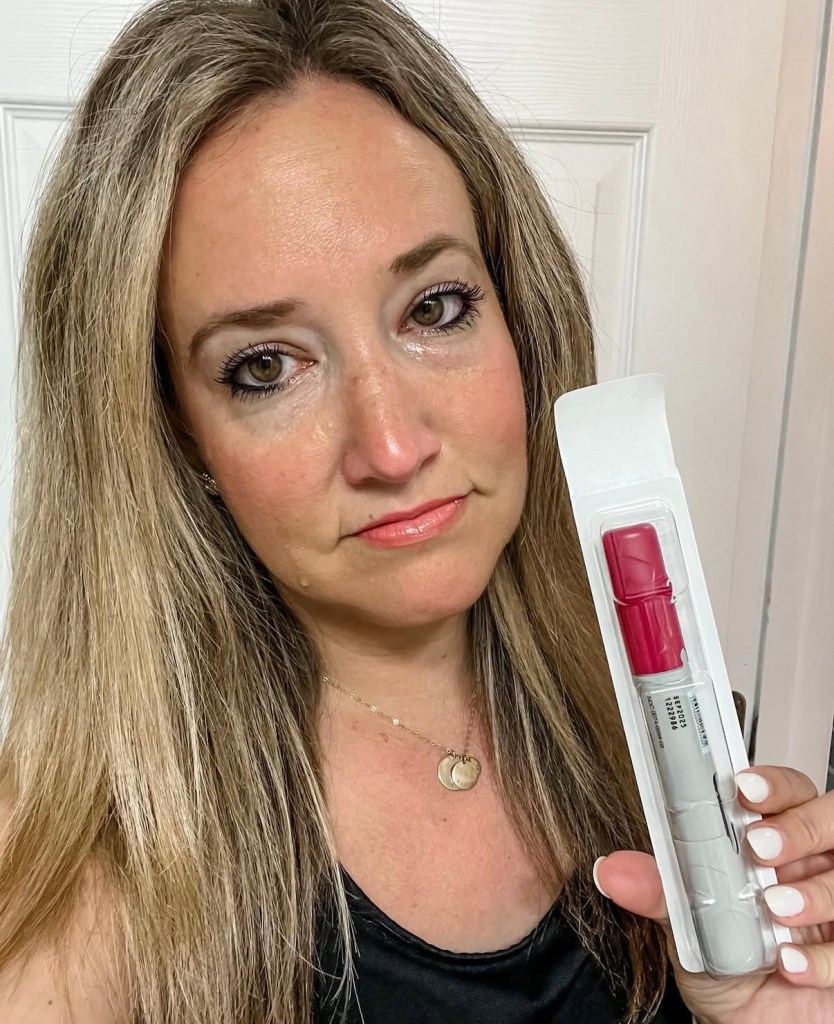
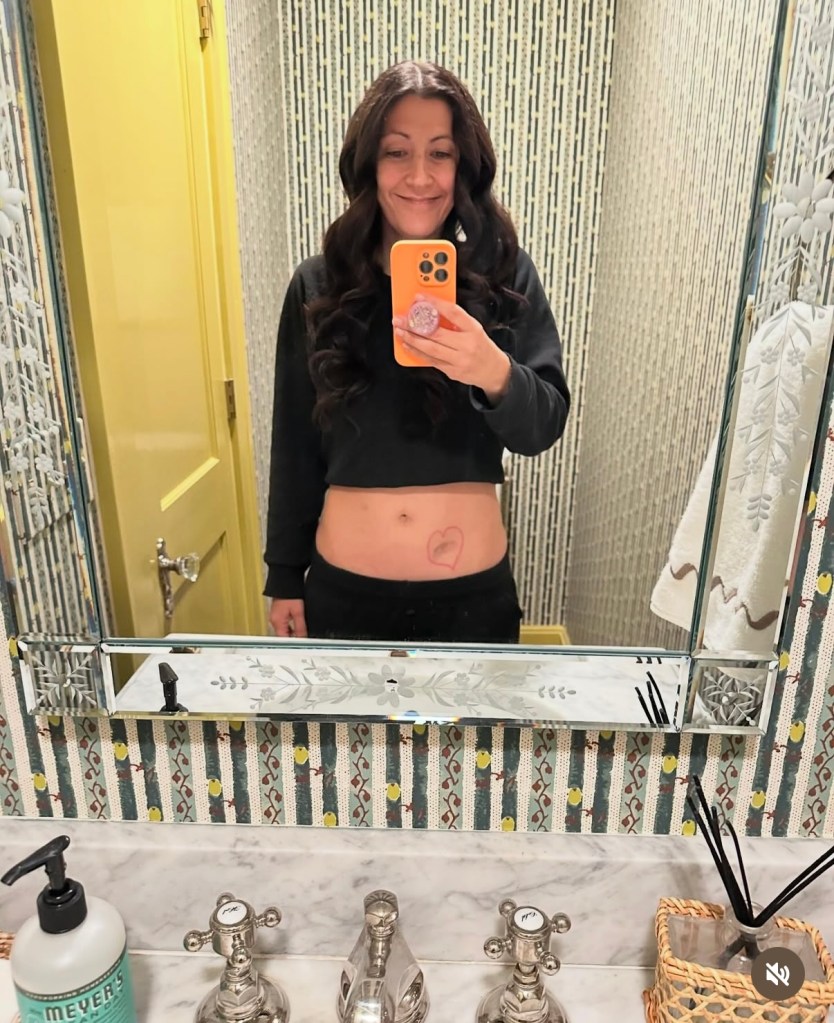
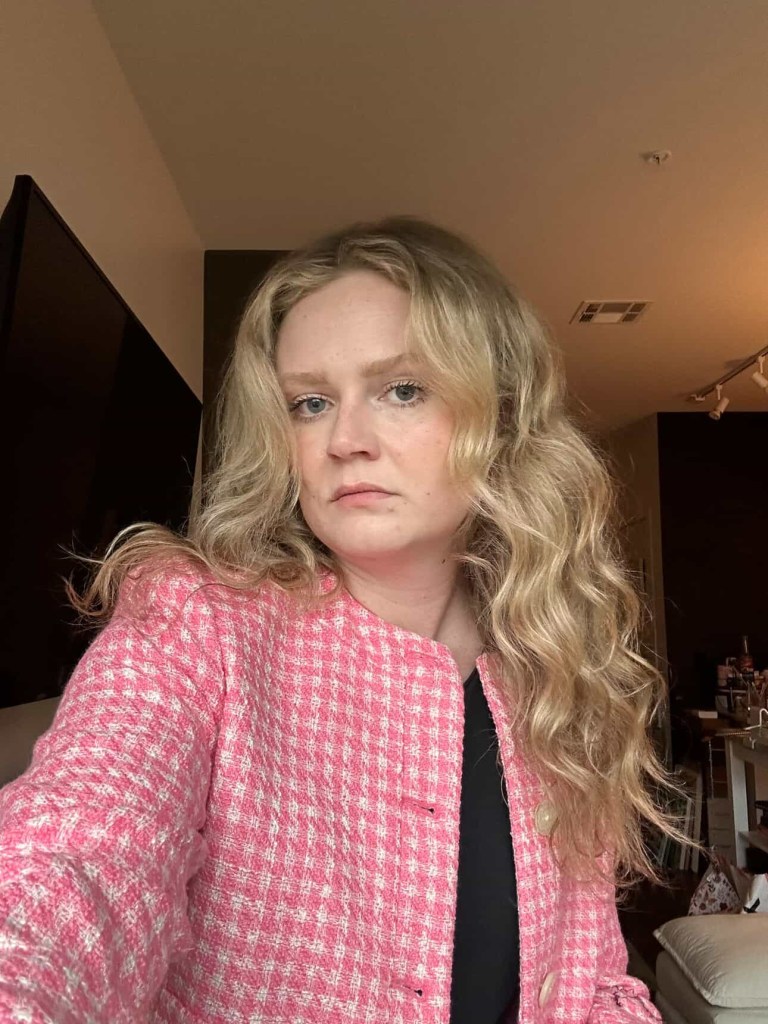
The body image issues that stem from IBD such as weight loss, hair loss, steroid-related weight gain, ostomy bags, fistula, and other extraintestinal manifestations make life feel like a minefield. We are constantly up against the unpredictable nature of living with a disease that can rear its ugly head at any given moment. We are constantly forced to pivot and make decisions that often have a direct impact on our overall body image. I remember when I was in college (prior to my Crohn’s diagnosis) that I loved being on camera, working in TV news. Fast forward to five months post-graduation and three months post-diagnosis, and I was mortified anytime anyone tried to take a picture of me. Looking in a mirror was a stark reminder of what I was now and what I used to be.

These photos were taken 3 months apart. Pre-diagnosis and while on 22 pills a day.

Please know that if you struggle with this, you are not alone. As the white paper notes, “as many as 75% of women and 50% of men experience body image issues because of their IBD.”

Final thoughts

This white paper is a gift to the IBD community. As someone who was diagnosed with Crohn’s in 2005, I would have given anything to have a resource like this at my fingertips to validate my struggles and recognize my fears. We are at a pivotal point in patient advocacy and leadership where we can help shape the future of what it means to live with IBD and thrive despite the dark days.

Dr. Matthew Ciorba, MD, a gastroenterologist at Wash U in St. Louis says, “This work offers patient-identified, doctor-approved insight. It brings together perspectives that clinicians alone often cannot fully grasp. The document fills a unique niche in the IBD space. It bridges the lived experience of patients with the expertise of leading clinician advocates. There is truly nothing else quite like it.”

Our community, everyone from patients to caregivers, and medical providers, is so unique. For many of us, these connections and friendships (whether online or in person) have helped us to reclaim a sense of purpose within our disease journeys. My hope is that medical providers and GI psychologists use this research to empower and educate the community by providing this incredible research to patients and caregivers.

Check out the Executive Summary of the White Paper

For Patient/Caregivers

For HCPs

More Than Just a Switch: Unpacking the Emotional and Clinical Impact of Biosimilars and IBD

It feels like a punch to the gut. Even though you’re anticipating it, the experience is not easy for anyone. For patients with inflammatory bowel disease (IBD), stability is everything. Whether living with Crohn’s disease or ulcerative colitis, finding a medication that keeps symptoms under control is often the result of years of trial and error. So, when insurance companies or healthcare systems mandate a switch from a familiar biologic like Humira to a biosimilar such as Hyrimoz or Amjevita, the decision can feel sudden, confusing, and unsettling. As of right now (May 2025) there are 22 FDA-approved biosimilars on the market for infliximab (Remicade), adalimumab (Humira), and Ustekinumab (Stelara) with many more coming down the pipeline.
It’s easy for providers to rely solely on the science that says it should be a “seamless,” effortless transition for patients and caregivers—but that’s not always the case, nor is it ever a guarantee. This week on Lights, Camera, Crohn’s we hear from more than 30 patients who have lived this reality. While many people seem to do well clinically, it’s imperative that we also discuss the mental and emotional toll this forced non-medical switch takes on people with chronic, debilitating illnesses and their caregivers. This blog aims to demystify biosimilars, highlight the emotional and clinical complexity of switching therapies, and provide guidance for healthcare providers and patients navigating this challenging transition.

As someone who was forced off my Humira after being on it for 16 years and put on Hyrimoz, I empathize with how complicated this is for patients. Not only was I petrified to switch—but I had a God-awful experience that resulted in going from deep remission to dealing with an adverse response for two months of my life, while trying to be a mom to three young kids.

I don’t take this subject lightly and frankly; I don’t care who I piss off by sharing this patient experience transparently. I angered some donors from a Pharmacy Benefit Manager (PBM) when I spoke on stage in front of a large crowd last fall genuinely thanking my IBD nurse who went to bat for me countless times to help me win my appeal to get back on Humira—this isn’t about profit, it’s about patients. We don’t owe anyone an apology for being uncertain about being told we need to switch our heavy-duty drug therapy not by a doctor, but by someone working in corporate America.

Biosimilars are not generics

First things first, I must clear the air on this. Almost every direct message I receive from patients refers to biosimilars as “generics” …and that’s a common misconception that needs to be done away with.

Unlike generic drugs, which have identical active components, biosimilars are comparable but not identical to their originator drugs. According to the US-FDA, a biosimilar is a biological product that is potent, pure, and safe and that is “highly similar to and has no clinically meaningful differences from an existing US-FDA-approved reference product”. In other words, biosimilars are equivalent to the reference biologics regarding safety and efficacy.

When you hear the terms “originator” or “reference” biologics—that means Infliximab (Remicade), adalimumab (Humira), and Ustekinumab (Stelara). There are many other biologics of course, but so far, these three biologics have biosimilars approved by the FDA. You can familiarize with their names that I’ve listed below so if you see one listed in a letter it’s not foreign to you.

Infliximab Biosimilars:

  1. Inflectra (infliximab-dyyb)
  2. Renflexis (infliximab-abda)
  3. Avsola (infliximab-axxq)
  4. Ixifi (infliximab-qbtx)
  5. Zymfentra (infliximab-dyyb)

Adalimumab Biosimilars:

  1. Amjevita (adalimumab-atto)
  2. Cyltezo (adalimumab-adbm)
  3. Abrilada (adalimumab-afzb)
  4. Hadlima (adalimumab-bwwd)
  5. Hulio (adalimumab-fkjp)
  6. Hyrimoz (adalimumab-adaz)
  7. Idacio (adalimumab-aacf)
  8. Yuflyma (adalimumab-aaty)
  9. Yusimry (adalimumab-aqvh)
  10. Simlandi (adalimumab-ryvk)

Ustekinumab Biosimilars:

  1. Wezlana (ustekinumab-auub)
  2. Selarsdi (ustekinumab-aekn)
  3. Otulfi (ustekinumab-aauz)
  4. Imuldosa (ustekinumab-srlf)
  5. Yesintek (ustekinumab-kfce)
  6. Pyzchiva (ustekinumab-ttwe)
  7. Steqeyma (ustekinumab-stba)

Important note: While these biosimilars have received FDA approval, the availability of some may be subject to patent litigation settlements or market launch agreements, potentially delaying their commercial availability.

Let’s look at the real-life numbers

While working on this article, I ran several polls on Instagram asking the IBD community about their personal experiences. Some of the findings surprised me:

Have you received a letter saying you have to switch? Of the 265 respondents, 64% of patients said “yes”, and 36% said “no”.

Did you appeal before switching to a biosimilar? Out of 200 responses, 33% responded “yes” and 67% responded “no”.

For those who switched was the transition seamless—or did you notice an uptick in symptoms? Of the 140 responses, 51% had a seamless transition and 49% noticed an uptick in symptoms. This right here speaks volumes.

If you responded poorly to your biosimilar and your GI appealed insurance, what was the outcome of the appeal? Out of 75 responses—38% of patients were denied, 32% were put back on the originator drug (biologic), and for 30% after multiple appeals they finally won and returned on their biologic.

Let’s hear directly from patients

Bre: “I was taken off Humira after the New Year and placed on Simlandi for my ulcerative colitis. I was nervous as I had just come out of a two-year flare and had finally found a drug that worked and even though I was reassured that this was as good as Humira, I still had my doubts. Thankfully, I have had a positive experience and have remained in remission since starting Simlandi in January. I hope this story helps others feel less afraid of the potential outcomes when they get the dreaded non-coverage letters.”

Kyrsten: “Back in April I was forced off Stelara to the biosimilar, Yesintek. I went into it with an open mind because my Crohn’s has been in remission for about a year and a half. Unfortunately, I am now experiencing more symptoms that I’m documenting and oral manifestations of Crohn’s and need to see an oral medicine doctor now.”

Stefanie: “I’ve had to switch biosimilars twice at this point, this second time, while I was pregnant. I’m doing just fine!”

Alexandra: “I was first afraid of Humira, then I grew into being afraid of not having it; so, when my insurance mandated the switch to Hyrimoz late last summer, I was so worried (as all are/were)! In September, I was starting to feel some symptoms pop in, so we did all the tests, which indicated that I was still in clinical remission. Thankfully, I am doing ok now with no issues.”

Christina: “It was first recommended to me by my GI a couple of months after diagnosis in 2021 to start on biologics, since the oral medications had stopped working for me. We collectively decided the best option for me would be Remicade, however when it was brought to my insurance company, they immediately denied it. Insurance said it wasn’t their “preferred method” and wanted me to try and fail Humira first. When my GI tried to get the Humira approved, my insurance company ended up denying that, too, and this time, their excuse was it “wasn’t medically necessary.” It took my GI a couple of months to get a biologic approved and I almost ended up back in the hospital as a result.”

After receiving her first injection, Christina ended up developing an allergic reaction and had to be switched to something else. After another month of fighting insurance, Christina’s GI was able to get Remicade approved.

Christina goes on to say, “I did very well on that for about a year, until my body developed antibodies, and I had to switch once again. I then started Entyvio infusions which I have been on ever since, and so far, I’ve been doing well on it.”

Audrey: “I was forced to switch from Remicade to Inflectra a few years ago due to insurance coverage. My job at the time was horribly stressful and very time-consuming and getting the news then about my medication no longer being covered and that my next infusion was delayed because of this change over the phone from my infusion clinic was terrible. I remember sitting in the workplace cafeteria when my phone rang, and I burst into tears and was pleading with the pharmacist that gave me the news prior to receiving the letter.”

At this point, Audrey was receiving Remicade every seven weeks. With the delay and having to wait for Inflectra to be shipped, she was pushed out an extra week.

“The thing that made me so angry, was that I had already received my Remicade shipment, the nurses just weren’t allowed to mix and dispense it because of the insurance change. I refused to toss that Remicade dose until the vials expired, since I knew how costly it was. I called so many charity pharmacies for low-income folks to see if they could take the vials and since its temperature controlled, they couldn’t. Such a waste,” said Audrey.

Thankfully, Audrey tells me she hasn’t had any issues with the switch, and she’s stayed in remission—even during and after her first pregnancy. But she says the stress and frustration that occurred impacted her mental health at the time.

Kelly: “I just got the letter. Been on Stelara since 2017. I also take it every four weeks, even though the recommended dose is every eight weeks. I get my insurance through my husband and our insurance turns over on 6/31/25. The new policy begins July 1st. I’m really concerned and honestly don’t want to deal with this.”

Sandi: “I was forced to change from Remicade that had me in remission for several years to Inflectra and the outcome was not good. I had multiple Crohn’s flares a month, which was not happening when I was in remission. My GI appealed and after a year, insurance started to cover my Remicade again. Since getting back on Remicade, I’m in deep remission, again.”

Britt: “I was diagnosed with Crohn’s in 2011 at the same time I was diagnosed with Primary Sclerosing Cholangitis (PSC), a rare liver disease. I was on Remicade and was switched to Avsola. For a while, I was quite skeptical, but we stayed the course. I had some ups and downs with my health, but I was just told I am in histological remission by my GI! After five years of struggles to find the right medication, my health finally seems to have aligned. I also take 6mp to reduce antibody development to the Avsola.

Danielle: “I went into my pregnancy in remission and my first and second trimesters were lovely. About halfway through my pregnancy, insurance decided it was the right time to swap my medications. Two weeks following that change, I was already struggling. I ended up finishing my pregnancy on two different rounds of methotrexate and iron infusions. I had a scheduled C-section at 39 weeks, and I think my care team hoped that my body was just struggling balancing pregnancy and Crohn’s…that was not the case at all.”

Danielle says she tried two more Inflectra infusions after her daughter was born and saw no improvement. She required a round of prednisone and that didn’t help either. She was then switched to Humira injections every two weeks and they seemed to work wonderfully and she started to feel better.

“Then my insurance threatened to switch me to a Humira biosimilar, but Humira failed me right when that was supposed to happen, so I was transitioned to Entyvio. For six months I saw no improvement on Entyvio…more prednisone and still NO improvement. Finally when my daughter was 14 months old (so over a year and a half of feeling like absolute garbage and having no energy) I got bowel resection surgery and switched to Stelara.”

Danielle went on to say she’s been in remission since December 2021, and she still wonders if switching to the Remicade biosimilar caused all this to happen.

“I truly feel like that change took part of the joy of pregnancy away from me and also took a lot of special time away from my daughter the first 14 months of her life. I spent her second Christmas in the hospital unable to see her for two weeks. I was on so many pain medications for so long before the surgery that I don’t remember her first birthday. I lost a lot simply because someone was trying to cut costs and making decisions they are not educated about.”

Brooke: “I was on Remicade for 15 years, then I was forced to switch to Inflectra. I was incredibly stressed and tried to appeal but lost that battle. I’ve now been on Inflectra for 3 years and I am doing well! I still hate that we are forced to change when something is going well. The amount of stress, anxiety, and time I spent fighting the insurance company took a toll on me.”

Brooke went on to say that she got pregnant and had a daughter while on Inflectra. Her GI and OB had no concerns with the biosimilar during pregnancy.

Maya: “At the beginning of March, I was told by my insurance that Stelara will no longer be covered and that I would be put on Yesintek. I’ve only gotten one dose of it so far, but I very much empathize with all the emotions that come with getting the letter. So far, I haven’t noticed any additional symptoms or changes in how I feel. I’m hoping Yesintek works for me and that I continue to feel ok!”

Maria: “I live in Sweden where Humira is covered by the State since no private insurance is needed, the last year though I was recommended from doctors to switch to a biosimilar. So, in autumn of last year, I decided to try Hyrimoz. I noticed no difference in the first three months, but after that, I saw an increase in symptoms, especially for my rheumatoid arthritis. My doctor recommended that I take the injection weekly instead of biweekly, but that didn’t help at all. Since I haven’t developed any antibodies, my doctor switched me back to Humira and I felt the difference right away.”

Sadly, Maria recently got the news that Humira will no longer be covered in Sweden starting in August, so she will either have to pay out of pocket or find another medication.

“You can imagine how that feels. Humira has been my trusted friend since 2008, managing my Crohn’s and RA so well. Hard to think of life without it,” Maria said with a tearful emoji.

Kenzie: “I’ve been on two different biosimilars of Remicade. Inflectra was seamless—no issues. Then, a few years later, I got new insurance, and they made me switch to Avsola, which I had an allergic reaction to. No allergic reactions to Remicade or Inflectra, after being on them for more than six years. Now I’m on Cimzia injections (not a biosimilar) because it’s safe for nursing and that just seemed like the better option for me right now. I’ve only been on Cimzia for 10 weeks, but so far, my Crohn’s and RA seem slightly better.”

Audrey: “I switched to a biosimilar (Inflectra) in January 2022. I got pregnant in June 2024 and delivered a healthy baby boy this March. No disease issues thus far.”

Tara: “I was on a biosimilar when I conceived and throughout my entire pregnancy. I’m on Hulio and everything went well. I stayed in remission throughout the pregnancy and postpartum.”

Amanda: “I was able to conceive and am currently pregnant on a biosimilar. Everything is going great, thankfully I was on Humira for about six years and then got the dreaded letter to switch. I went on Hyrimoz at the end of last summer and was on it for five months prior to getting pregnant.”

Lauren: “I conceived and was pregnant with my now 3-week-old all while on Inflectra. I stayed in remission the whole time.”

Katie: “I was able to conceive while on Avsola, a biosimilar to Remicade. I haven’t experienced any issues related to pregnancy. I did develop some antibodies though and had to escalate my dose while pregnant. I also take premeds of Solumedrol and Benadryl before every infusion now. I got hives during the Avsola infusion while I was pregnant.”

Erica: “My doctor wouldn’t appeal it. I was put on Amjevita. Thank goodness and knock on alllll the wood…it’s been going well. I haven’t noticed any difference in symptoms. It’s been a little over a month, so I pray it stays that way.”

Jessica: “Conceived and pregnant on Inflectra infusions. I just had a healthy baby girl one month ago, and I’m now breastfeeding. No problems at all.”

Marla: “I switched to Hyrimoz while pregnant and I did not notice a change. However, I will say I’ve been in remission since getting pregnant with my first child and I don’t always take my medicine on time, so I don’t know if the transition was seamless because the medicine is truly fine or if it’s because my body just does well while I’m pregnant and breastfeeding (which I basically have been the past four years having three babies). I will say it’s an ABSOLUTE nightmare trying to get my medication each month. Constant bills I’m having to fight and constant new prescriptions and prior auths from my doctor for the SAME medication. It’s literally unreal. I blame that on CVS Specialty pharmacy.”

Amanda: “While I was pregnant, my OB appealed because insurance would no longer cover my Delzicol for ulcerative colitis. I won but was only allowed to stay on it until I delivered, then I had to switch to a generic mesalamine.”

Christine: “Pregnancy is what got me a temporary appeal. Once the baby was born, I had to switch, but it was peace of mind not having to make the transition during pregnancy. I was anxious that it was just a regular infusion, there wasn’t a loading dose or a slow rate or anything. They just infused the Inflectra the same way they infused the Infliximab. About two years after making the switch, I had to go from every 7 weeks to every 6, but I will never know if it was due to the biosimilar or if after 10 years on a biologic/biosimilar, my body just needed the drug at more regular intervals.”

Danielle: “I was pregnant (in remission), and my GI decided that was the correct time to switch me to Inflectra from Remicade…it did NOT go well.”

Jordyn: “I found out I was pregnant around the same time I had my first biosimilar infusion. I went through my whole pregnancy on the biosimilar and only noticed an uptick in symptoms around 10ish weeks, which a course of steroid foam resolved. Postpartum is when I noticed the return of symptoms the most. After 2 or 3 infusions (I get them every 4 weeks) with no improvement, I asked for an appeal, and it was granted for me to go back on Remicade.”

Natalie: “I got pregnant the month after switching to Avsola. I made the switch November 2022 to the biosimilar and found out I was pregnant December 29th. Pregnancy went fine, delivered in August 2023, all my problems started in February 2024. I went back on Remicade at that point because my GI suspected I had serum sickness for months on end, and to this day, they still aren’t sure if the serum sickness initiated my problem of Crohn’s attacking my joints.”

Angie: “We were told we would have to switch, but the doctor office contacted them, and they will be covering me at least until September for Humira…then we will renew the prescription and hope that it will be covered, again.”

Jasmine: “I’m on Avsola (biosimilar for Remicade) and I wasn’t trying to get pregnant, but did, and had a perfectly healthy pregnancy.”

Allie: “My specialists appealed saying I was going through fertility treatments and then insurance approved my Remicade for another year.”

Malea: “I got my insurance letter recently and have been meaning to reach out as I remember your Humira nightmare. I have not appealed yet, partly because my GI office is incredibly dysfunctional and hard to get ahold of. I am on Stelara, which is the first thing to have kept my Crohn’s in remission and they want me to switch to Selarsdi, which I can not find any patient experiences/anecdotal evidence about.”

Georgia: “I was on Humira last summer when Accredo tried to switch me to a biosimilar without notification. I had a letter saying that my Humira was still covered. I worked with my GI who told me they are seeing this a lot and if the person doesn’t push back, they just switch them to a biosimilar. But, if the person pushes back, the GI calls Accredo with a code (DW1 Brand Medically Necessary) to block it. That’s what I did, and they therefore had to send me my Humira since my insurance was still covering it. I want to let others know in case they have a prior authorization from their insurance saying they will cover Humira, despite the pharmacy trying to switch them!”

Jessica: “I so appreciate you talking about this. For my daughter, I went to refill her Humira, and insurance said the doctor allowed the switch. I asked the doctor, and they said no…it’s insurance. I had to use one of my daughter’s biosimilar pens while mine was being shipped, and I noticed more pain and burning. I advocated for my daughter to be on brand name only and they approved the request. When it came to my biologic, my letter had the same wording and once again it was insurance, not my doctor.”

Jessica’s GI said despite her being in remission for so long, she would need to try the biosimilar, then if any symptoms occurred then they could fight for return to the originator drug.

The Emotional Toll of a Forced Switch

For many patients, switching medications, especially after long-term remission, can trigger anxiety, mistrust, and a profound sense of vulnerability. Here are a few of the emotional and psychological responses patients may face:

  • Fear of Flare-ups: Patients often fear that a new medication might not work as well, risking disease recurrence and potentially hospitalization. So many of us have been relying on our biologic as a crutch for several years if not decades, it’s worrisome when you find a medication that works and have to change simply because insurance decides it’s necessary.
  • Loss of Control: Being told to switch due to non-medical reasons (like insurance mandates) can feel disempowering.
  • Medical Trauma: Those who’ve experienced years of instability before finding an effective treatment may associate medication changes with setbacks and suffering.
  • Distrust in the System: Patients may feel like financial decisions are being prioritized over their health and well-being.

How to Comfort and Support Patients Through the Transition

Healthcare providers and care teams play a critical role in guiding patients through these difficult changes. Here are some key strategies to help:

  • Educate With Compassion: Clearly explain what biosimilars are, how they’re tested, and what the current evidence says about their safety and effectiveness in IBD. Emphasize that switching is based on clinical research and real-world data, not just cost. Have discussions about biosimilars with patients in clinic even if they haven’t received a letter in the mail yet so they are prepared.
  • Validate Their Concerns: Avoid minimizing fears. Instead, acknowledge them openly. Saying, “I understand why you’re anxious about this” creates space for honest discussion and trust-building.
  • Monitor Closely After the Switch: Set up a proactive monitoring plan to track disease activity, symptoms, and lab markers. This can reassure patients that you’re watching for any changes closely—and are ready to act quickly if needed. As a patient leader who unfortunately had to appeal my biosimilar, the fact I kept a detailed journal for two months and then wrote my own appeal letter in conjunction with my GI really helped us win the appeal.
  • Advocate When Necessary: If a patient is stable and deeply concerned about switching, advocate on their behalf. Some payers allow exemptions if a provider makes a strong clinical case for staying on the original biologic. It may take extra paperwork, but the effort can mean everything to the patient, especially for pediatric patients and women who have family planning considerations.
  • Encourage Peer Support: Connecting patients with others who have made similar transitions can provide reassurance and reduce feelings of isolation. Patient communities, both online and in-person, can be powerful.

Navigating the Complexity of Informed Consent

True informed consent means patients understand not just the science, but the context of their decision. It’s more than ticking a box—it’s about creating space for dialogue, questions, and partnership. When I received the letter saying Humira would no longer be covered, I alerted my GI team not to sign the new script, as that gives the pharmacy/insurance the ability to switch you. A biosimilar is not able to be prescribed until your doctor signs off on it, remember that.

A thoughtful approach might involve:

  • Discuss what will happen if symptoms worsen after switching. My GI called me multiple times to comfort me and even prescribed a couple of Xanax pills to ease my anxiety leading up to the switch.
  • Review the process for switching back (if possible). Have a game plan in place so you’re not scrambling if you notice a change in your health.
  • Ensure patients know they won’t be left to manage complications alone. Support every step of the way makes all the difference.

Research articles to help you feel informed about biosimilars

An informed patient is an empowered patient. I did some research to help do the homework for you. By reading the articles below you should feel better educated on biosimilars so you feel more comfortable with the switch (if it’s a necessity) and about discussing this further with your care team:

Biosimilars versus biological therapy in inflammatory bowel disease: challenges and targeting strategies using drug delivery systems – PMC

Biosimilars in IBD Treatment: Expert Panel Discussion | IBD Pro

Biosimilars in Pediatric IBD: Updated Considerations for Disease Management – PMC

Use of Biosimilars to Infliximab During Pregnancy in Women With Inflammatory Bowel Disease: Results From the Pregnancy in Inflammatory Bowel Disease and Neonatal Outcomes Study – PMC

Biobetters and biosimilars in inflammatory bowel disease – ScienceDirect

Biosimilars in IBD: What Every Clinician Needs to Know – PubMed

When to Switch Biosimilars for Patients with Inflammatory Bowel Disease

Biosimilars Gastroenterology Roundup: March 2025

Biosimilars in Pediatric Inflammatory Bowel Diseases: A Systematic Review and Real Life-Based Evidence – PMC

Final thoughts

Switching from a biologic to a biosimilar can feel like stepping into the unknown—but it doesn’t have to be done in fear or isolation. With transparency, empathy, and collaboration, patients can be empowered to make informed decisions, feel supported during the process, and maintain confidence in their care.

While some people feel more confident switching from a biologic to a different drug class (for example, Humira to Skyrizi or Stelara to Entyvio) to dodge the biosimilar, others are fearful of building up antibodies to a drug class that is otherwise working. You must weigh the pros and cons and do what you feel most comfortable doing. It’s important to remember it’s only a matter of time until all biologics for IBD have biosimilars, so by switching drug classes you are most likely just delaying the inevitable.

If you are planning to become pregnant or you are currently pregnant and on a biologic or a biosimilar please check out the PIANO registry so you can help pave the way for future IBD families and contribute to research so we have more information about the safety of these medications in pregnancy.

The science behind biosimilars is promising. But the human side of medicine—the fear, uncertainty, and trust involved in change, must be just as carefully managed. I hope after reading this article you feel less alone and supported in your personal health decisions.

Navigating IBD: A Journey of Resilience, Advocacy, and Hope

An Inflammatory Bowel Disease (IBD) diagnosis often comes with a heavy toll, not only on the body but also on the mind and spirit. For patient leader and three-time author Stephanie A. Wynn, her journey through IBD (like many of us) has been one of pain, perseverance, and advocacy. 

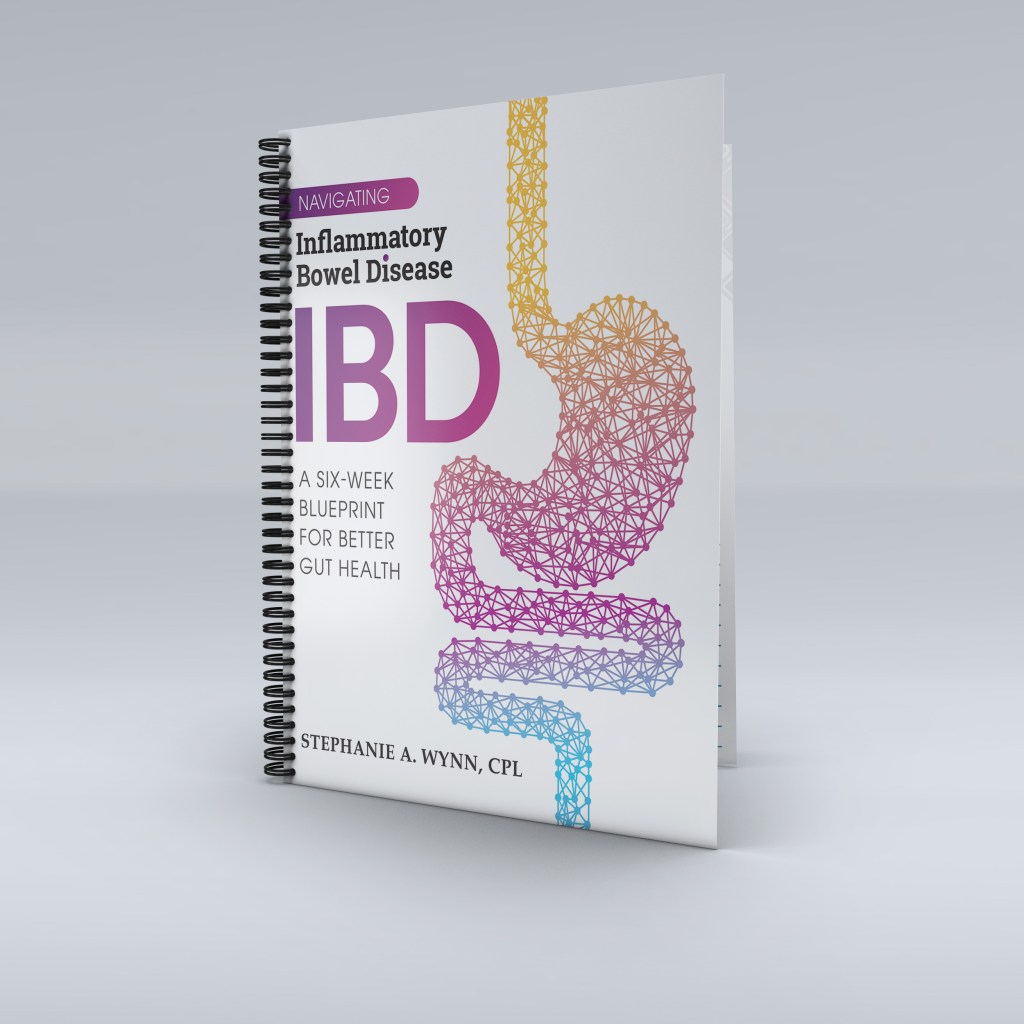
This week on Lights, Camera, Crohn’s a look at what inspired Stephanie to write, “Navigating Inflammatory Bowel Disease – A Six-Week Blueprint for Better Gut Health” and what she hopes our community takes away from her latest book.

The Inspiration Behind the Book

Reflecting on her personal story, Stephanie recalls a heartbreaking experience that would unknowingly be tied to her IBD diagnosis years later. “Fifteen years ago, I lost my daughter, Jameson. At the time, I had no idea that Crohn’s Disease had anything to do with it. I wasn’t even diagnosed yet,” she shares. For years, her symptoms were not properly understood by doctors, which only added to the emotional and physical turmoil. It wasn’t until her sixth diagnosis that medical professionals finally connected the dots.

Through this painful experience, Stephanie realized the vital need for advocacy and support for those suffering in silence. This realization sparked her passion for helping others who may be overlooked or misdiagnosed. “I advocate for the women who are told their pain is normal. I advocate for the patients dismissed by doctors because their symptoms don’t fit the textbook definition,” Stephanie explains.

This journey led to the creation of Navigating Inflammatory Bowel Disease (IBD): A Six-Week Blueprint for Better Gut Health. This book is more than just a personal account; it’s a powerful resource for those living with IBD and their caregivers. Stephanie wrote the book she wished she had when she was first diagnosed — a roadmap that offers not only practical advice but also emotional support.

A Glimpse Inside the Writing Process

As a three-time author, Stephanie approaches writing as a deeply empathetic process. She listens carefully to the stories and concerns of the IBD community. “Before I write, I ask: What are people struggling with the most? What’s missing from the resources currently available? How can I make complex medical and lifestyle topics easier to digest?” she says.

Each chapter of Navigating Inflammatory Bowel Disease (IBD) is designed to address the real-life struggles of patients and caregivers. The book offers practical advice on managing symptoms, self-advocating in medical spaces, and embracing resilience, making it a comprehensive guide to living well with IBD.

What Stephanie Hopes Readers Take Away

The central focus of this book is to give patients confidence. Confidence in managing their health, advocating for themselves in medical spaces, and maintaining hope for a fulfilling life despite the challenges of IBD. The six-week blueprint includes:

  • Actionable steps to manage life with Crohn’s Disease or Ulcerative Colitis
  • Reflection prompts to help patients process their journey
  • Guidance on managing symptoms, diet, and mental health
  • Tools for improving communication with doctors and loved ones

Stephanie emphasizes that no one should have to face IBD alone. “This book is about helping people find their voice, take control of their health, and live their lives with confidence.”

Amplifying Underrepresented Voices

Another key aspect of Stephanie’s work is ensuring that underrepresented communities are included in the conversation about IBD. She is especially passionate about advocating for Black, Brown, and marginalized patients who often face additional barriers to diagnosis, treatment, and support.

“Minorities and underrepresented communities have been overlooked in conversations about IBD,” she says. “The lack of awareness, delayed diagnoses, and disparities in treatment access are real barriers. Through my work as an IBD Patient Navigator® and Certified Patient Leader, I ensure that these communities feel seen, heard, and supported.” Stephanie is determined to elevate voices that are often ignored and make sure that health equity becomes a priority for all.

Why This Book Means So Much

For Stephanie, Navigating Inflammatory Bowel Disease is not just a book — it’s a mission. It is the culmination of her own struggles, triumphs, and desire to make a difference. “This book isn’t just a project, it’s my story, my advocacy, my purpose,” she shares. It’s the blueprint she desperately needed when she first began her journey with IBD, and now it’s available for others to guide them through the maze of treatments, lifestyle adjustments, and emotional challenges that come with this chronic illness.

She hopes her story serves as a beacon of hope for anyone who feels lost or overwhelmed by their diagnosis. “No one should have to figure out Crohn’s Disease or Ulcerative Colitis alone,” Stephanie says.

Final Thoughts

Stephanie’s message is clear: IBD may shape our lives, but it doesn’t have to define us—which I love! Navigating Inflammatory Bowel Disease (IBD): A Six-Week Blueprint for Better Gut Health is not just a guide for managing symptoms, it’s a testament to the power of resilience, hope, and community. With this book, Stephanie aims to spark a movement towards better gut health, stronger patient advocacy, and a future where no one navigates IBD alone.

Whether you are newly diagnosed, a caregiver, or someone who has lived with IBD for years, this book is for you. As a fellow patient advocate and leader, I’m so proud of Stephanie for going after her dreams and making this latest resource a reality for our community. Together, we can turn pain into purpose and ensure that no one fights this battle in silence.

Click here to order your copy of Navigating Inflammatory Bowel Disease.

Let’s keep the conversation going.

Connect with Stephanie on Instagram and LinkedIn and share your IBD story.

Learn more about the Stephanie A. Wynn Foundation, Inc., which is dedicated to eliminating healthcare and financial disparities in underserved African American and marginalized communities.

The Gut-Brain Connection: Understanding Its Role in Inflammatory Bowel Disease

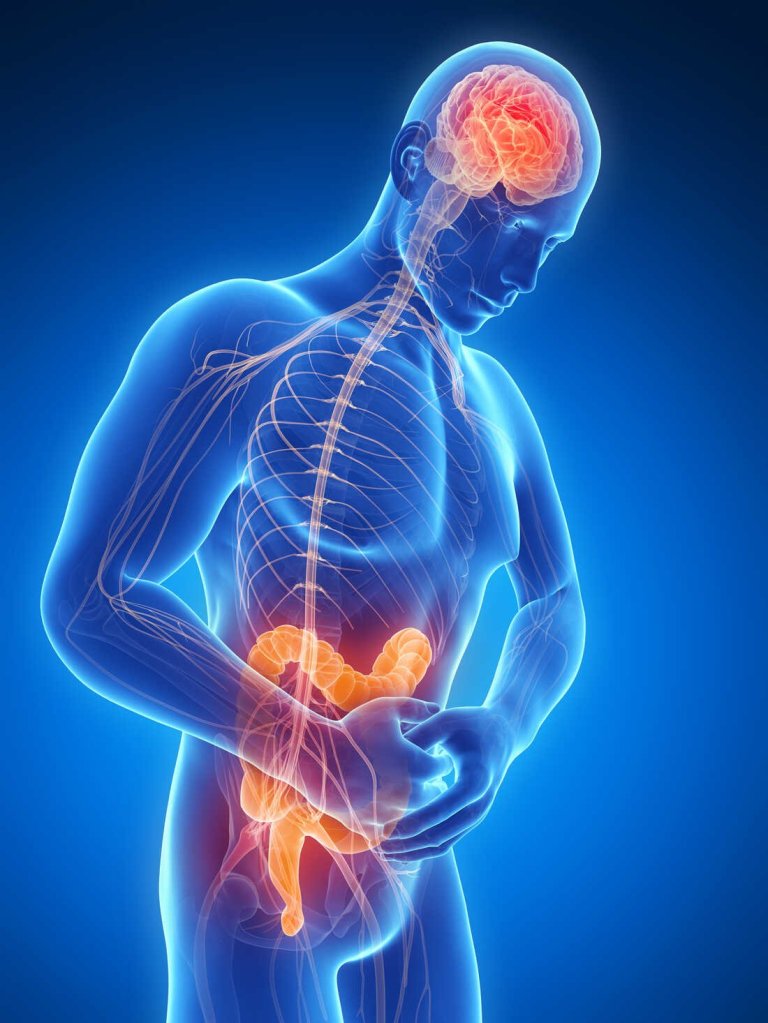
Ever have a feeling in your gut that says you can trust someone or to make a certain decision? Get diarrhea or constipation when you’re under a lot of stress or anxiety? Your gut is so sensitive and smart scientists call it your “second brain! The human body is a complex ecosystem, with various systems interconnecting in intricate ways. One of the most fascinating of these connections is between the gut and the brain, often referred to as the “gut-brain axis.” This communication network plays a crucial role in maintaining our overall health, influencing everything from mood and cognition to immune function and digestive health. Emerging research indicates that the gut-brain axis may significantly influence the development and progression of IBD. The big question being—how?

This week on Lights, Camera, Crohn’s a look into how the Gut-Brain Axis works and what this means for the future of IBD treatment and care. Whether it’s stress, people pleasing, avoiding emotions, or anxiety—there are many triggers aside from food.

The Gut-Brain Axis: A Two-Way Street

Before we get started, it’s helpful to understand what the gut-brain axis involves and the multiple pathways it impacts, including the nervous system, the endocrine system, and the immune system. The primary components of this axis are:

  • The Enteric Nervous System (ENS): Think of this as how it feels when you get “butterflies in your stomach”. The ENS is a vast network of neurons (nerve cells that send messages all over your body to allow you to do everything from breathing to talking, eating, walking, and thinking) embedded in the walls of the gastrointestinal tract. It operates independently of the central nervous system but communicates with it via the vagus nerve, which runs from the brainstem to the abdomen.
  • Neurotransmitters and Hormones: The gut produces and responds to various neurotransmitters and hormones, including serotonin, dopamine, and cortisol. These chemicals are crucial for regulating mood, stress responses, and digestive functions.
  • The Microbiome: Trillions of microorganisms reside in the gut, forming a complex and dynamic community known as the microbiome. These microbes play a critical role in digestion, immune modulation, and even the production of neurotransmitters.

The Gut-Brain Connection and IBD

Chronic inflammation in IBD can affect the enteric nervous system, leading to alterations in gut motility and sensitivity. Those of us with IBD often experience abdominal pain, cramping, and changes in bowel habits, which are partly mediated by the nervous system. Conversely, stress and psychological factors can exacerbate IBD symptoms. Stress activates the hypothalamic-pituitary-adrenal (HPA) axis, leading to the release of cortisol and other stress hormones, which can, in turn, promote inflammation in the gut.

The Role of the Microbiome

The gut microbiome is crucial in maintaining intestinal health and regulating immune responses. For those with IBD, the composition and diversity of our gut microbiomes are often disrupted, a condition known as dysbiosis. Dysbiosis can contribute to the chronic inflammation seen in IBD by impairing the gut barrier function and promoting an overactive immune response. Interestingly, the microbiome also communicates with the brain through the production of metabolites and neurotransmitters, which influences mood and cognitive function.

You can optimize your gut microbiome with diet by eating:

  • Green leafy vegetables (broccoli, kale, Brussel sprouts, asparagus, spinach, garlic, etc.).
  • Healthy fats (extra virgin olive oil, sesame oil, coconut oil, nuts, seeds)
  • Protein (eggs, fish, grass-fed meats)
  • Low sugar fruits (avocado, bell peppers, cucumber, tomato, zucchini, limes, and lemons)

*Before altering your diet or incorporating foods that could trigger disease activity, please talk with your care team and discuss this further with a registered dietitian who specializes in IBD.

Psychological Factors and IBD

IBD is often associated with psychological conditions such as anxiety and depression. According to the Crohn’s and Colitis Foundation,  we’re two to three times more likely to deal with anxiety and depression than the general population. These mental health issues can both contribute to and result from the physical symptoms of IBD. For instance, chronic pain and discomfort can lead to increased stress and anxiety, while anxiety and depression can exacerbate gut inflammation and symptom severity. It’s a vicious cycle that can often feel out of our control.

Therapeutic Implications

Understanding the gut-brain connection opens new avenues for the way we treat IBD. Traditional treatments focus on reducing inflammation and managing symptoms through medications and lifestyle changes. However, addressing the gut-brain axis could provide additional therapeutic benefits. Some potential approaches include:

  • Probiotics and Prebiotics: These can help restore a healthy balance in the gut microbiome, potentially reducing inflammation and improving gut health. Talk with GI about their thoughts on this, as each provider has their own opinion.
  • Psychological Interventions: Cognitive-behavioral therapy (CBT), mindfulness-based stress reduction (MBSR), and other stress-management techniques can help manage the psychological aspects of IBD, potentially reducing symptom severity. Tools such as breath work and gut-directed hypnotherapy can help to improve GI systems, while improving your mood and decreasing stress. This works by softening the body’s stress response, inhibiting the secretion of cortisol, decreasing inflammation, and supporting the immune system.
  • Dietary Modifications: Certain diets, such as the low-FODMAP diet, can help manage symptoms by reducing gut irritation and inflammation. Personalized nutrition plans based on an individual’s microbiome composition are also being explored. Connecting with a registered IBD dietitian can provide you with a personalized plan geared to where you’re at on your patient journey—this will differ if you’re recovering from surgery, pregnant, flaring, the list goes on. Diet is not a one size fits approach, it’s unique to you. Before you start eliminating entire food groups and putting difficult limitations on yourself, talk with a professional.
  • Pharmacological Treatments: Medications that target the gut-brain axis, such as those that modulate neurotransmitter levels, are being investigated for their potential to treat both the psychological and physiological aspects of IBD.

Final thoughts

Our gut and brain are in constant contact through nerves and chemical signals, and taking care of our mental health and our gut health goes hand in hand. The relationship between our gut and brain is a fascinating and complex one that significantly influences our overall health, playing a pivotal role in everything from mood and cognition to immune response and digestive health. For those of us living with IBD, understanding and addressing this connection can provide new insights into the management and treatment of our disease.

As research continues to uncover the complexities of the gut-brain axis, we move closer to a holistic approach to IBD care that considers the intricate interplay between mind and body. Know that there are psychologists who specialize in gastrointestinal illnesses as well as dietitians who do as well. By adding specialists like this to your care team, you’ll be better equipped to manage the unpredictability of life with Crohn’s and ulcerative colitis.

Additional Resources

The Gut-Brain Axis in Inflammatory Bowel Disease—Current and Future Perspectives – PMC (nih.gov)

Researching IBD and mental health through the gut microbiome – UChicago Medicine

The influence of the brain–gut axis in inflammatory bowel disease and possible implications for treatment – The Lancet Gastroenterology & Hepatology

The Gut-Brain Connection — Does It Go Beyond Butterflies? | Live Healthy | MU Health Care

Brain structure and function changes in inflammatory bowel disease – ScienceDirect

Crohn’s disease, gut health, and mental health: What’s the link? (medicalnewstoday.com)

Brain-gut connection explains why integrative treatments can help relieve digestive ailments – Harvard Health

The best advice IBD warriors have ever received from therapists

It’s no surprise IBD impacts so much more than just our guts. Not only is there the gut and brain connection, but also the complex nature of our chronic illness(es) that can cause serious anxiety, depression, and mental health issues. The isolating nature of Crohn’s disease and ulcerative colitis, the unknowingness of what the next day holds, and the never-ending laundry list of procedures, labs, scans, and surgeries, year after year is a lot for any person to go through.

Even though I’ve lived with Crohn’s disease for more than 18 years, and have seen three different gastroenterologists in that time, not once has my mental health been brought up during a clinic appointment. When treating a person for IBD, the health of the whole person needs to be considered. I ran a poll on Instagram asking the IBD community if they’ve ever been to therapy. Out of 185 respondents, 70% seek therapy, 18% have not, and 12% are considering it.

I did an article in September 2020 about why a specific public bathroom at a grocery store I used to shop at triggers me and shared tactics for coping. You can read the article that featured Dr. Tiffany Taft here.

This week on Lights, Camera, Crohn’s we hear from those in our community about the advice that’s resonated with them the most since receiving their IBD diagnosis.

The words that have made a lasting impact

Olivia: “3% effort is still effort. You’re not going to be able to give 100% every day and that’s OK. Your best can look different from day to day.”

Julie: “It’s not your fault, you didn’t do anything wrong.”

Kristen: “You can’t drive forward if you’re always looking in the rearview mirror.”

Sarah: “Medical trauma is trauma and to give myself credit for all I have overcome.”

Cindy: “Remove all IBD related stressors from the bedroom to avoid impacting sleep. In our case, this meant no Humira injections for my daughter while sitting on the bed or nearby it.”

Tina: “Imitation is the best form of flattery.”

Lauren: “Don’t Google things you’re worried about, like symptoms.”

Jennifer: “Stay in the present.”

Heather: “Sometimes you just need to take a nap!”

Myisha: “If it’s not going to matter in five years, don’t give it five minutes of your energy.”

Kate: “It’s not your fault.”

Susan: “I’ve never seen a therapist, but I always tell myself it could always be worse.”

Stacey said: “You can’t control how seriously people take Covid. You can only control how you protect your physical and mental health. You have to put your health first. And, if people don’t agree with your choices, then that’s their problem. You can’t risk your health just to make it easy for others or to placate them. You come first in your life.”

Robin: “The “things” I do—my work advocating for others, supporting others, helping others face challenges with their diseases—I deserve that, too. Not from other people, but from myself. The beauty in therapy is that you’re receiving a non-biased/outsider opinion. This person that has no side and will sometimes say something you’ve heard 1,000 times in a way you’ve never heard before or even in a better way that allows you to really listen to what’s being said. To absorb it. Even to say it multiple times with no judgement if that’s what’s needed. Also, EMDR, which is a whole other thing and only part of the therapy experience.”

What is EMDR therapy?

Several people said EMDR therapy was their favorite and has been lifechanging. So, what exactly is it? Eye movement desensitization and reprocessing (EMDR) is a fairly new, non-traditional type of psychotherapy that’s popular for treating post-traumatic stress disorder. EMDR focuses on the natural tendencies our brains have for healing from traumatic memories. There are mental blocks (such as feelings of self-esteem issues and powerlessness) that can prevent us from healing. During EMDR, you are allowed to process the bad memories and experiences to start healing yourself. This helps our brains process challenging thoughts and feelings in a healthier way. Chances are through your patient journey you’ve endured several vivid and significantly painful moments that you haven’t been able to process and heal from.

Supportive Resources about managing mental health and IBD

Crohn’s and Colitis Foundation

Helpful Apps

Searching for links between IBD and mental health, through the gut microbiome

The link between mental health disorders and ulcerative colitis

Psychological Factors Associated with IBD

Crohn’s disease and Your Mental Health

Looking in the rearview mirror as an IBD mom

I can remember the moment vividly. Leaving a gastroenterologist appointment three months post-surgery and crying walking to get sushi with my husband on a chilly November day in the middle of the workday. When I walked into that clinic appointment, I was hopeful I would never need a biologic medicine again. We were planning to start trying for a family after our June wedding, but my doctor knocked me back to earth and told me my Crohn’s was too aggressive and I’d be setting myself up for disaster if I attempted going med-free. 

The tears flowed. I felt like a failure. I worried about bringing babies into this world while on a heavy-duty drug and if my surgery would provide me with the remission I had never achieved the first ten years of having IBD. I was so upset my husband-to-be and I both called into work and took the rest of the day off. Over sushi we talked about our future family and my health. Everything seemed at our fingertips but out of reach at the same time. That was November 2015. Sometimes we don’t realize how far we’ve come unless we look in the rearview mirror.

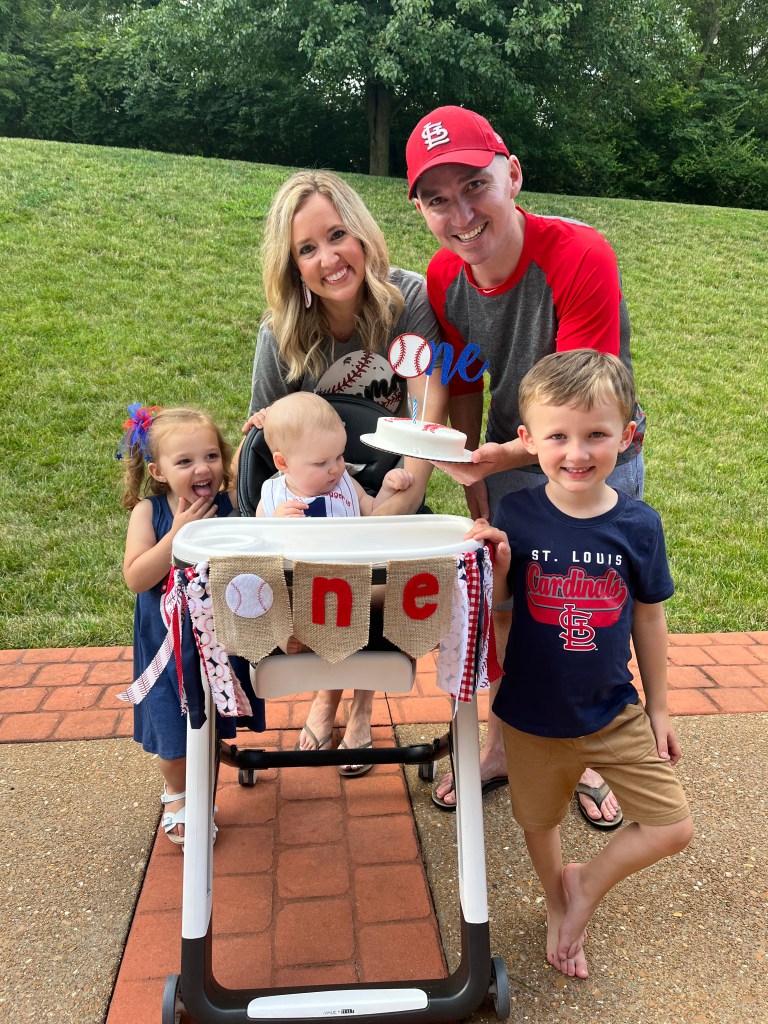
Now July 2022, we’re gearing up to celebrate our third child’s first birthday (July 14). We had his first birthday party over the weekend. It’s been a surreal and incredible ride since that November day. I often find myself looking at my three children and still feeling surprised my body was able to create them and bring them safely into this world.

Knowing this is our last baby and the last “first” of everything is bittersweet and amazing all at once. I feel an immense sense of relief and comfort being at this stage and knowing I don’t need to count on my body to sustain life through pregnancy or breastfeeding anymore. I’ve made it an entire year exclusively breastfeeding and if you would have asked me if that would ever be possible a year ago, I would have said no way. 

One of my fears is when my next flare will be and leaving my children for days on end while I’m in the hospital. While I know it’s a not a matter of if, but when, it puts me at ease that my children are almost out of the baby stage, and I can begin to explain my health struggles and why I may not always be like other moms. When my oldest was born I hoped to stay out of the hospital until he started walking. He starts kindergarten next month. I can only hope I stay flare-free until my other two are that old. 

Learning as I went as a woman with IBD

When I think back to that November day and the tough love my GI professed, I’m so grateful I followed her lead and trusted her approach in managing my Crohn’s. Back then, I wasn’t a patient advocate. The only IBD mom I knew was my cousin’s wife. I navigated the waters of family planning and my first pregnancy all alone without much guidance. Each pregnancy I became more well versed on how to juggle IBD and family planning and everything that comes along with it, but I think back to how isolating and overwhelming it can feel when you dream of having a family, but don’t know how to make it happen when chronic illness is in the mix. 

No one knows how their family will play out or if fertility or loss will be a part of their story. It’s sad how many women with IBD choose to be voluntary childless, not because they don’t want to be a mom, but because of the limitations of their IBD and overall well-being getting in the way. A day doesn’t go by that I don’t recognize how lucky I am that I “get” to be a mom. Not every day is wonderful, but even in the trenches as a stay-at-home IBD mom of three littles with almost no breaks, I do my best to remind myself of that day my husband and I got sushi and dreamed of living the life we are living today. 

How to be an investigative journalist specializing in chronic illness

Chronic illness forces you to wear many hats and approach life in ways you never thought possible. One of those hats is being an investigative journalist or sleuth. Each time something starts going awry with our health we immediately start the mental gymnastics about what could be going on and if the symptoms are linked to our IBD.

I find that even though my Crohn’s has been in remission since August 2015, that the next flare always looms in a cloud of worry when I’m not feeling my best. 

This past week I experienced this firsthand when my eyes both started twitching nonstop, along with headaches. I started thinking about what I could have done to trigger this bodily response. Was it Crohn’s related? Hormonal from breastfeeding weening? A mineral deficiency? A problem with my eyes or vision? Sleep deprivation or stress? The laundry list of possibilities and worries weighed heavily on me. After consulting with my GI, OB, and having an appointment with my eye doctor, I learned the eye twitching was a result of allergies. I now do eye drops once a day to help. It was such a relief to get an answer and physically be able to do something to make myself feel better.

When you notice an uptick in IBD symptoms or health issues in general how do you get to the bottom of what’s going on?

Here are my top tips for getting answers:

Be proactive. Don’t let things fester and let your anxiety get the best of you.

•Take physical notes, not just mental ones. As the hours turn to days it can be difficult to remember when symptoms began and if they progressed. Keep a simple log of what is happening, how often, the severity, etc. 

•Reach out to care providers early and often. Send a quick message on the patient portal informing your GI about what is going on. With IBD, I find it helpful to always loop my gastroenterologist in since so many issues are often related to Crohn’s. 

•Be seen. If symptoms don’t resolve in 3-5 days, it’s a good idea to be seen in person or at least a telehealth appointment. You can always get on the books and cancel an appointment if you start to feel better. 

Try not to Google too much. While this is always tempting and can feel like a quick way of gaining understanding, it also can lead to going down a dangerous rabbit hole of what ifs that possibly aren’t even relevant. 

Listen to your gut. You know when something feels off. Don’t drown out how your body is speaking to you through symptoms. 

Practice mindfulness and calming exercises. It’s not unusual to feel up against a wall or like you’re taking two steps forward and one step back with chronic illness. Remember to breathe. Take a walk outside to clear your head. Do all you can to rest your mind from stresses that can trigger your IBD.

I get how exhausting it is to constantly feel at odds with your body and worry about what could be going on. Suffering in silence and not communicating health challenges only sets you back from feeling your best. Be mindful of how you feel each day and feel empowered by collaborating with your care team and giving them all the necessary intel to have the full picture when figuring out your health story past and present. 

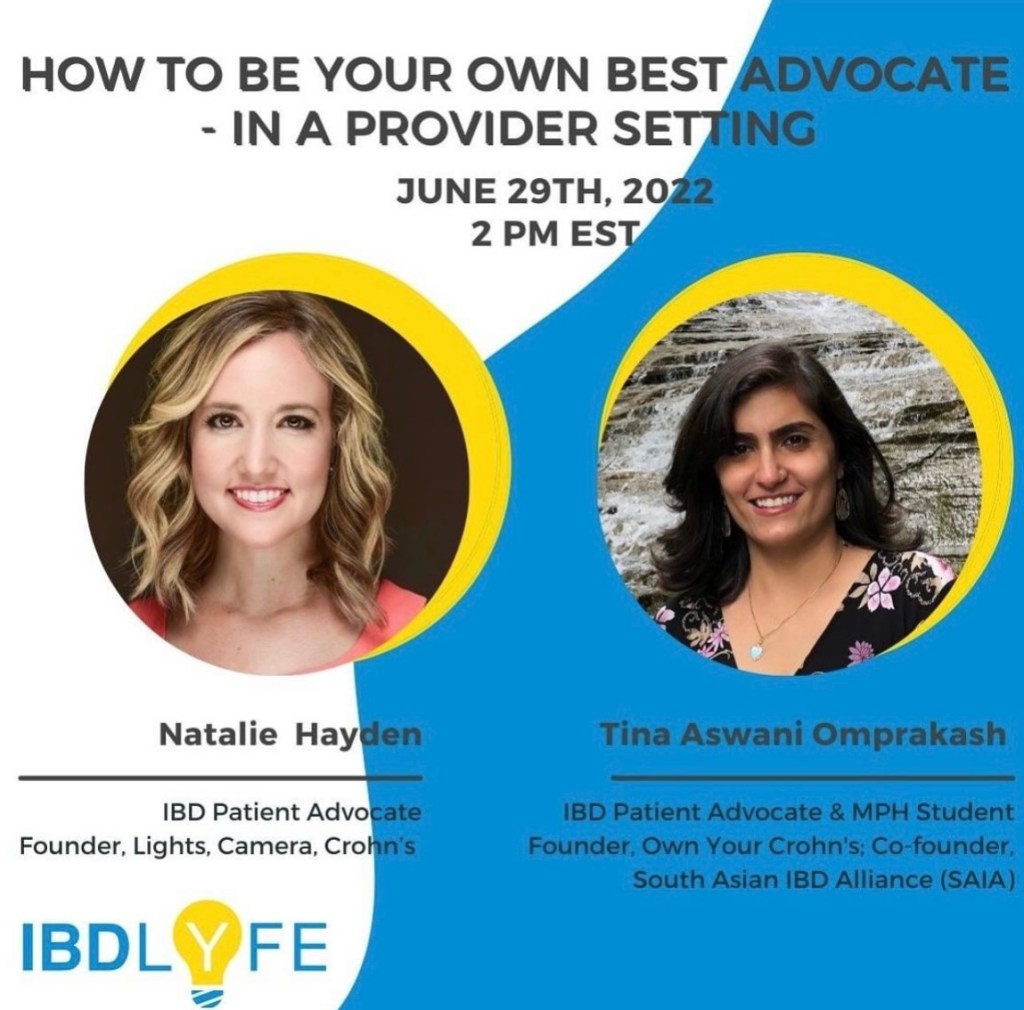
Stay tuned for a special discussion on IBDLyfe, Wednesday June 29, 2022, at 1 pm CT about “How to Be Your Own Best Advocate in a Provider Setting.” I’ll be speaking alongside fellow patient advocate, Tina Aswani Omprakash. Register here.

IBD Motherhood Unplugged: Womanhood Questioned by Crohn’s Disease

Motherhood is so much more than a word—it’s an expectation and an identity. It’s a right of passage many girls dream of when they think about their future and what their family will look like. But family planning, pregnancy, and motherhood are far from a given, especially for those with chronic illness. As an IBD mom of two with one on the way, I’ve recognized that while my story and my experience may comfort and guide others—it’s only that, one story. I fully understand I am extremely lucky not to have the struggle of infertility or physical limitations to hold me back from having children, despite my Crohn’s.

This week kicks off IBD Motherhood Unplugged, an ongoing series that will be shared periodically in the months and years ahead on Lights, Camera, Crohn’s. The series will feature guest posts from women with Crohn’s and ulcerative colitis who may not physically be able to carry a child, who battle infertility, who grow their family through adoption and surrogacy, who have children following loss—the list goes on and on. Ultimately, I want everyone to feel seen, heard, and understood. There’s not one cookie cutter approach to becoming a mom or having a family.

The first article is by my dear friend and fellow patient advocate and thought leader Tina Aswani Omprakash. Tina is a 37-year-old woman in New York, living with perianal, fistulizing Crohn’s Disease. She’s endured more than 20 surgeries and lives with a permanent ileostomy. Since she was a child, she thought she could put off motherhood and did so through many years of virulent disease. At one point, as a young adult, she needed to go on a disability and be taken care of by her mom. When she got married to the love of her life, Anand, nearly 11 years ago, the questions started.

“Being of South Asian descent, the nosy, busybody aunties at weddings and cultural events would always find ways to jeer and sneer at the fact that I hadn’t had a child yet. And after I started Stelara 5.5 years ago and tasted remission for the very first time in a decade, I too began to wonder: is it time for me to consider my own child?”

I’ll let Tina take it away and explain her struggles with family planning and finding out pregnancy wasn’t in the cards. Her heartfelt words and openness about feeling excluded from being an IBD mom, shed light on an important topic and aspect of our illness that is often not discussed or talked about. We hope in sharing this—if you are going through the same situation, struggles, or worries, that you know you are not alone.

Genetic counseling, surrogacy, and reproductive endocrinologists, oh my

In April 2016, I went to see a reproductive endocrinologist, who did a transvaginal ultrasound. Based on his medical expertise, he thought he could retrieve maybe three of my eggs, which was incredible news given everything I had been through surgically. He had proposed 2-3 rounds of IVF for hormone stimulation and egg retrieval but there was no guarantee that the eggs retrieved would be viable to be combined with my husband’s sperm. He didn’t think carrying the baby was a good option for me given all the scarring from surgery and fistulae. Moreover, fertility is often affected by j-pouch surgery and later excision.  As such, he offered me the option of surrogacy and asked me to seek genetic counseling due to the hereditary nature of my Crohn’s Disease.

Anand and I went through months of genetic counseling, an expensive process that didn’t lend to any substantial findings. Crohn’s, as many doctors have explained to me, is spread out over several genes and one gene cannot be targeted necessarily as a form of gene therapy. That left us both stumped as his family has a history of an autoimmune condition called ankylosing spondylitis and I have various skin and bowel autoimmune conditions on my side of the family.

During this time, we also looked into the surrogacy process. Since the reproductive endocrinologist recommended that I not consider a pregnancy myself given all the surgeries, fistulae, and pelvic cysts I’ve had, we obliged. But considering all the legal and surrogacy fees, we were looking at $100,000 for one surrogate pregnancy (at least), which was an extraordinary sum of money for us. So, we decided to table having a child for the time being and think over adoption, another expensive proposition.

Tick, tock, tick, tock…

Two years passed and we came to realize that there is no easy solution. During that time, the IBD Parenthood Project shared excellent knowledge for women with IBD to conceive and carry a pregnancy to term safely. And I thought, let me ask my GI doctor now about his thoughts. Unfortunately, he reiterated the same thoughts as the reproductive endocrinologist shared: for someone with my surgical and fistula history and aggressive family history of Crohn’s disease, it may be best not to try. He also said the risk of me using hormones for egg retrieval would risk a blood clot in a patient with my history.

Part of me was still in denial that motherhood may never be a possibility. Within weeks of my conversation with my GI doctor, I was diagnosed with mild endometriosis by a premier OB/GYN surgeon in NYC. I asked him, “What do my options for pregnancy and fertility look like now?” And he said very openly and honestly, “Bleak at best. Let’s say you do carry the pregnancy and don’t lose the baby, Tina, will I have to cut through bowel and scar tissue to get to your baby?” After a brief pause, he said, “I would recommend adoption if having a child is something you really want to consider.”

While, on one hand, I genuinely appreciated his honesty, on the other hand, the statement, “cut through bowel and scar tissue to get to your baby” seared through my mind for months after and has left its mark even today. I needed to hear it; I needed my bubble to pop. But the statement no doubt cuts and ravages every minutiae of my being as a woman. Not having the privilege to choose to have a baby was suddenly taken from me in that one fell swoop and it left my head spinning.

Losing Motherhood to Crohn’s Disease

My God-given right as a woman was taken from me in that instant. As if having six fistulae and Crohn’s wreaking havoc on my pelvis and reproductive system wasn’t enough, let’s take Tina down another notch. Let’s take away her right to choose to have a child.

Even though voluntary childlessness is always a choice, now I didn’t even have that choice. Childlessness was thrust upon me like a stab wound in the back. All I was left with were unaffordable options of surrogacy or adoption.

So why not adoption? It’s simply too expensive and I do wonder about whether I’ll be able to even take care of the child given my constant roller coaster of health issues and medical appointments. Hiring full-time help seems out of reach, too.

Include Women Who Aren’t Mothers

That day with the endometriosis surgeon was nearly three years ago. And I’ve done a lot of work in therapy to process much of it. But I can’t say I don’t feel left out every time I see a mom scolding her child or complaining about her child(ren)’s mischievousness because I, like many other women with chronic illnesses, will never be able to experience the joys and sorrows of motherhood.

As happy as I am for my friends with children, there is a deep void I’m reminded of every time someone else gets pregnant, hosts a baby shower, or sends along amazingly cute photos of their child(ren). I will never be able to have that, no, but I wish I could still be included in the mommy paradigm as a cool aunt or as a godmother. But I’m often not, and that makes me feel sad and excluded.

Dealing with the Cultural Aspects

In American culture, it’s hard enough as it is to be a woman of my age without a child, but in Indian culture, you’re really considered a pariah of sorts. I’m often asked the question of when I will bear a child now that Anand and I have been married for so many years. I usually find ways to dodge those questions by changing the subject or by simply saying, “whenever the time is right.” It’s not a conversation I want to be having with acquaintances nor do I want to be fodder for gossip.

But when it comes to my close friends saying, “Tina, gosh, you would have made an amazing mother, you have so much good to impart on to the world,” it feels good and bad all at once. I’m flattered that someone would think I could do a fine job as a mother but saddened by the fact that I will never know that for myself.

Becoming a Mother Hen

Alas, today in 2021, I continue to focus on my advocacy work and my graduate program, in attempts to focus my attention elsewhere. And in the words of my therapist, “if I cannot be a mother to a child, I can at least be a mother hen to my IBD community, helping to educate and guide patients of underserved populations who would otherwise feel bewildered.” I take a lot of solace in that and recognize that I wasn’t supposed to be here today with all the near-death experiences I’ve had with my brand of Crohn’s disease. All I can express is my gratitude for being alive today, for being able to do this work, and for being able to be a mother hen in my own way to my community.

To my fellow IBD women & chronic illness warriors: please know you are not alone. Please know it’s okay to be sad, angry, and terrified. Many of us are struggling deeply with the idea of motherhood as our clocks keep ticking. Do your research, learn what your options are and make the best decision with your specialist(s) regarding conception and pregnancy. And if having a child is not in the cards, that’s okay too. Never forget (and I need this reminder too) – not having a child doesn’t make you less of a woman.

Connect with Tina

Blog: Own Your Crohn’s

Instagram: @ownyourcrohns

Facebook: @ownyourcrohns, Own Your Crohn’s Community (Private group created for the Global South Asian community living with inflammatory bowel diseases)

Twitter: @ownyourcrohns

Why Every Person with Chronic Illness Needs to Read “What Doesn’t Kill You”

Prior to receiving a chronic illness diagnosis, it’s incredibly challenging and nearly impossible to fathom ‘forever sickness’. In Tessa Miller’s book, “What Doesn’t Kill You: A Life with Chronic Illness–Lessons from a Body in Revolt”, she masterfully articulates the highs and lows of life with Inflammatory Bowel Disease (IBD). From navigating the diagnosis, flare ups, the healthcare system, relationships, and the mental health component, she’s created an invaluable resource that I wish every single person with chronic illness could be handed the moment they find out their life story has taken an unforeseen turn.

As someone who was diagnosed with Crohn’s in 2005, two months after college graduation, I wish my former self had these powerful words at my fingertips. The overwhelming nature of IBD can be nearly suffocating at times. As I read this page-turner of a book, I felt seen and understood. I found myself nodding my head, because I could relate to so much of her story and so much of her sage advice. I felt like a college student highlighting what felt like the whole page, because it was ALL so important.

Tessa and I are both journalists. We both have Crohn’s. We both randomly grew up in Illinois. I connected with her over social media after reading her New York Times article, “Five Things I Wish I had Known Before My Chronic Illness.” The article had an impact on me, so when I heard she landed a deal with a publisher, I anxiously awaited for this book to drop.

In the beginning of “What Doesn’t Kill You,” Tessa writes, “I became a professional patient, and a good one. I learned that bodies can be inexplicably resilient and curiously fragile. I would never get better, and that would change everything: the way I think about my body, my health, my relationships, my work, and my life. When things get rough, people like to say, “this too shall pass.” But what happens when “this” never goes away?”

Finding the Right Care Team

When you live with a disease like Crohn’s, it’s imperative you trust your gastroenterologist and care team and are confident in how they help you manage your illness. I always tell fellow patients to take a moment and think about who they will feel comfortable with at their bedside in a hospital room when they’re flaring or facing surgery. If it’s not your current doctor, it’s time to look elsewhere. Tessa breaks down the “qualifications” for getting a care team in place. From finding a doctor who explains why they’re doing what they’re doing and why to a doctor who looks at you as a human, not an opportunity.

“Good doctors see their loved ones in their patients; they make choices for their patients that they would make for their own family. Asking a doctor, “Why did you choose this line of medicine?” will reveal a lot about what drives them and how they view their patients.”

The Grieving Process of Chronic Illness

Receiving a chronic illness diagnosis forces us each to go through the grieving process. For many of us, we were naïve and felt invincible before our health wasn’t a given. We’re so used to feeling as though we’re in control of our destiny, that when we lose that control, we spiral, understandably. Tessa interviewed Paul Chafetz, PhD, a clinical psychologist based in Dallas. Dr. Chafetz is quoted in the book saying, “We go through life with an illusion of safety, guaranteed health, even immortality. Acquiring a chronic illness pierces that illusion, and this is a loss. Grieving this loss is an integral part of adjusting to the illness.”

Take a moment to stop and think how you coped those first few weeks and months after finding out you had a chronic illness. While acceptance takes time and comes in different stages, Tessa explains how flexibility and willingness to adapt to your new “normal” is even more important.

“Rather than searching for big, sweeping acceptance, then feeling like a failure when it doesn’t come, chronically ill folks can enact small, empowering steps, such as taking required medications, learning everything we can about how our diseases work, seeing doctors regularly and being prepared for appointments with a list of questions, advocating for our needs and wants, figuring out which foods makes us feel good, and going to therapy and/or connecting with a support group.”

In my own patient advocacy and experience living with Crohn’s I can attest to the fact that we all spend a lot of time wishing for our past and worry about what our futures will hold, rather than focusing on the right now. The majority of IBD patients are diagnosed prior to age 35. This leads most of us to experience the big milestones of adulthood (career, finding love, living on our own, family planning, etc.) with a disease in tow and wondering how that disease is going to complicate life or hold us back from accomplishing all we aspire to.

Bringing on the Biologics

Tessa calls herself an “infliximab veteran,” she spends a great deal of time talking with new patients and caretakers, mostly moms of young IBDers, about their fears. Most questions I receive through my blog and social media also revolve around biologics and the worries people have about side effects and whether the drug will fail them or be a success. I feel confident deeming myself an “adalimumab veteran”, as I’ve been giving myself Humira injections since 2008.

As patients we are faced with difficult decisions all the time and must look at the risk versus the benefit. Having health literacy and understanding your actual risk from a biologic is something that should be communicated with you from your physician. Tessa’s doctor explained to her that six in 10,000 people who take anti-TNF agents (Humira and Remicade) get lymphoma. But as patients, all we see on the internet and in the side effect notes are “lymphoma.” Force yourself to dig digger and remind yourself of your alternative—to not feel better.

The Truth Serum of Chronic Illness

One of the superpowers of chronic illness is that we get to see which family members and friends come to the forefront and which fade to the background. Not everyone is cut out to be a caregiver, but you’ll quickly see who has empathy and who genuinely cares. In my own personal experience, it’s helped me get out of relationships with guys who were no where to be seen while I lied in a hospital bed and allowed me to distance myself from friends who couldn’t find the time in their day to check in when they knew I was flaring.

Tessa says that chronic illness forced her to peel back the layers and the isolation wall she put up, too. Chronic illness has shown her that people do more than just hurt each other— “they nurture, they listen, they enrich one another’s lives.” Her IBD also empowered her to be brave enough to put an end to unhealthy relationships that weren’t benefiting her well-being, both with friends and love interests. Her Crohn’s has showed her that not every friendship is meant to support you in the same way.

This is a great piece of advice. As you live with a chronic illness, you’ll come to know which friends you can share your deep dark secrets and worries with, and which you give the high-level cliff notes version of your experience to. Your chronic illness will help you set those boundaries in a graceful way.

Her love story with her husband embodies what those of us with chronic illness deserve, a partner who sees us as more than our disease, but understands the severity and complexity at the same time.

Juggling a Career and Crohn’s

One of the biggest challenges of life with IBD is knowing how and when to disclose your health situation with your employer. You may wonder how the news will be received, if it will jeopardize your chance for promotion, if your coworkers will resent you…the list goes on and on. As someone who worked in the TV industry as a producer, news anchor and reporter for nearly a decade, and as a PR professional and corporate communications specialist, I’ve been lucky that all my bosses have been incredibly understanding of my struggles with Crohn’s, but never used them against me in any way. I’ve always waited until after I have received the job offer and then told my boss in a meeting the first week of work. This alleviated some of the stress on my shoulders and ensured my coworkers wouldn’t be blindsided when I had a flare that landed me in the hospital. By communicating openly, it also to set an expectation that I may not always feel up to par and that I may need more bathroom breaks or to work from home or come in late after doctor appointments.

Tessa so eloquently writes, “You want your boss to understand that while your disease affects your life, you’re still capable of doing your job. Deliver the necessary facts about your illness without bombarding your boss with information—keep it direct and simple. Be clear about how you manage the illness and that although you do your best to keep it under control, it can flare up. Tell your boss what you’ll do if and when that happens.”

Realizing the Power of Pain

One of my favorite analogies that Tessa shares in the book is that each of us carries an invisible bucket, some are heavier than others, and the weight of that said bucket is constantly in fluctuation. She says that as she started connecting with those in our community, she came to realize that her personal pain was no better or worse than anyone else’s. So often we weigh our struggles against those of others, and that’s not helpful to beneficial for anyone.

“Think about it: If a friend came to you in pain, would you tell them that other people have it worse and that their pain isn’t valid? If you did, you’d be a lousy friend—so why do you speak to yourself in such a way?”

Rather than thinking that ‘someone always has it worse’ ask for support when you need it. Don’t downplay your struggles out of guilt thinking you aren’t deserving of help. Give support when you can but don’t forget about the person you see looking back in the mirror, be loving, kind, and patient to them, too.

Leaving the Rest to Imagination

Some of my other favorite excerpts from the book are Tessa’s “Seven Secrets”. The secrets (both big and small) she keeps from loved ones and friends about her experience with IBD. The secrets are relatable. We don’t want to come off as a burden. We don’t want to scare those who mean something to us. We want to hold on tightly to the notion that our illness doesn’t define us, so we often don’t disclose the true reality of what encompasses our illness.

Another section I know you’ll love is “Thirty-Eight Experiences of Joy” where Tessa shares quotes from 38 different people with chronic illness and how they’ve discovered joy despite their illness. I’m honored to be featured in that section of the book.

She understands the power of community and how finding your tribe within your disease space and outside of it is an important aspect of disease management and life fulfillment.

“Connecting with other chronically ill people teaches you how to carry each other’s weight—when to lift when you have strength, and when to share the burden when you have no energy left,” writes Tessa. “I’ve found the chronic illness and disability community to be one of endless empathy and generosity.”

The Gratitude That Comes with Chronic Illness

I’ll leave you with one of my favorite quotes from the book and a perspective that I wholeheartedly share:

“At the beginning of my illness, I was so inwardly focused on what I’d lost that I couldn’t see the gifts illness had given me. Mom, a determined optimist, taught me to always look for the silver lining. Mine is this: Yeah, my body won’t allow for any bullshit—no jobs I hate, no relationships I’m not fulfilled by, no hours crying over wrinkles. Illness made me braver, kinder, and more empathetic, and that gives me way more radical power than the faux control I was clutching to for so long. In the most unexpected way, illness freed me. It compelled me to begin therapy, which kick-started the process of tending my wounds old and new. It made me focus on the present more than the anxiety of the future. And it made me be in my body in a way I never experienced before. Suddenly, I had to mindfully care for my body and brain as best I could and understand that beyond that, it’s out of my hands.”

Connect with Tessa:

Twitter: @TessaJeanMiller

Instagram: @tessajeanmiller

Her website

Purchase “What Doesn’t Kill You: A Life with Chronic Illness–Lessons from a Body in Revolt”

Amazon

Barnes & Noble

IndieBound

Stay tuned to my Instagram (@natalieannhayden) for a special book giveaway kicking off today (February 8)! Five lucky followers in the United States will receive a FREE hardcover copy of Tessa’s book.

Why this public bathroom triggers me: Tactics for coping with the mental health aspect of IBD

I paid for my groceries and casually pushed my cart full of food through the automatic door when I saw it. The bathroom where I experienced one of my scariest and most painful moments. The bathroom I had to run into after pulling over on my way home from work because I was in such debilitating pain, I couldn’t handle sitting upright in my car to make it the extra five minutes home. The bathroom where I lost all feeling in my arms and legs and where my fingers locked into painful contortions. I couldn’t even hold my phone to call my boyfriend (now husband) to tell him we needed to go to the hospital. The bathroom where I unknowingly happened to call my mom after accidentally hitting “Recent Calls” with my elbow. All she heard on the other line when she answered was me screaming. She didn’t know if I was getting raped, she didn’t know what the hell was going on and she was in a different state. God was watching out for me because she was able to call Bobby and let him know I needed help and I needed help fast.

He rushed to the grocery store and whisked me out of the bathroom and straight to the hospital where I found out I had a bowel obstruction.

I’ve been going to this same grocery store for nearly seven years. It’s been nearly six years since that dramatic experience occurred. But even now, five years into remission, I always go out the other doors because seeing that bathroom is a trigger. A trigger to one of my lowest points in my patient journey with Crohn’s disease. A trigger that caused my IBD to act up right in that moment this past week.

I was forced to go out of the grocery store that way as part of COVID-19 safety procedures to keep all incoming traffic through one set of doors and all outgoing traffic to another.

Coping with psychological triggers

When those of us in the IBD community hear the word “trigger”, food usually comes to mind. We casually say “oh that’s a trigger food for me”, but we often don’t pay much attention to the physical triggers in our lives that can exacerbate our symptoms—such as locations like that grocery store bathroom, relationships with certain friends and family members, the pressure of being enough and doing enough in comparison to our peers, the list goes on.

I interviewed Dr. Tiffany Taft, PsyD, MIS, a Research Assistant Professor at Northwestern University Feinberg School of Medicine, and a fellow IBD warrior to get some clarity on this subject and to learn more about what steps we can make right now to protect our mental health and prepare for the unknown.

NH: As chronic illness patients–how can we best navigate triggers that instigate a stress response? (Other than avoidance)

Dr. Taft: “While avoidance feels like the safest option when it comes to situations that trigger our stress response, it simply kicks the can down the road in terms of the effects these situations have on our bodies. People living with chronic illness may collect multiple situations that trigger the stress response – doctor’s offices, hospitals, certain tests or treatments, making avoidance very risky if it means not managing the illness and staying healthy.

Try the “Exposure Hierarchy” exercise: Dr. Taft recommends making a list of activities or situations that are stressful, ranking them from the least stressful to the most stressful and picking 10 things. Rate those 10 things from 10 to 100 (100 being the worst). After making the list, she has patients start with number 10 and practice that task several times over the course of a week.

Before that, though, she teaches relaxation strategies such as deep breathing and grounding to help when the anxiety goes up. She says, “With repeated exposures to the feared situations and working through the anxiety, each time we do activity 10 again, it will feel easier and confidence grows. Once the patient is ready, they repeat with 20, 30, etc. until we get to the dreaded 100 which will actually feel less scary because of all the other work we did before.”

**NOTE** If you feel you have symptoms of Post-Traumatic Stress Disorder (PTSD) which include vivid nightmares, flashbacks, and feeling on high alert most of the time, you should seek treatment with a trauma therapist. The good news is research on treatments for PTSD show they are just as effective when delivered via tele-medicine.

NH: Can you explain (in layman’s terms) what goes on when we’re “triggered”?

Dr. Taft: “Triggered is setting off our body’s fight-flight-freeze response, and results in a cascade of physical sensations and emotions. The most common ones are muscle tension, sweating, shallow breathing, and heart racing. Unfortunately, this response can also trigger our guts to start acting up because of the brain-gut connection. It’s a completely normal process but when you have IBD it can trigger symptoms. Your thoughts may be all over the place and littered with “what if’s” and “I can’ts”. Your mind may revisit the worst aspects of past experiences or come up with even more catastrophic possibilities in the future.”

NH: As people with IBD–I know many of us are nervous about flaring and needing to be hospitalized all alone during this pandemic, while being at greater risk for getting COVID. Do you have any advice on how to cope/mentally deal with that worry/concern?

Dr. Taft: “Facing a flare and hospitalization was stressful in the “before times” so facing this during COVID19 is an extra level of stress. While we have video chat, it does not replace the comfort of physical closeness and touch we would get from supports who could be in the hospital with us. The good news is hospitals have figured out COVID quite well and the odds of contracting it while hospitalized for IBD are lower than they were at the start of the pandemic.”

If you’re facing hospitalization, think about your resilience in these circumstances. There were probably times you felt like you couldn’t handle it, or it was never going to end or get better, but here you are today reading these words. You made it through. It may not have been pretty, it was probably incredibly hard. Anxiety has a great ability to negate our memories of how much we’ve navigated in the past.

Feeling anxious? Do this: Write down the ways you coped before, what worked and what maybe didn’t. Evaluate your thoughts about being hospitalized. Are they accurate? Are they helpful? What are some alternatives that could help you feel less anxious? If that doesn’t work, sit with the anxiety, and try some deep breathing to calm your nervous system. The sensations will likely pass and then you can retry evaluating your thinking when you aren’t feeling so keyed up.

NH: What advice do you have for people during these already complicated and challenging times when it comes to managing mental health?

Dr. Taft: “This is truly a unique time in that we are all in this COVID19 boat together. We all came into the pandemic with our own life challenges, and those probably haven’t gone away and even may have been made worse. We’re coping with a lot of information, new rules every other day, grim statistics, and people bickering over who’s right or wrong. I’ve told every patient I see to turn off the news. Get out of the comments on social media when people are arguing the same points over and over.”

Steps you can take in your day-to-day: Dr. Taft advises not to spend more than 15 minutes a day on the news, so you can stay informed but not get into the weeds. Take social media breaks, especially if your feed is full of the same tired arguments. Focus your attention on meaningful activities that align with your values. Those are what will bring you some stress relief. And those are unique to you, so no list on the internet of how to cope with COVID is going to solve everything. Sometimes these lists make us feel worse because we’re not doing most of the recommendations. Be as kind to yourself as you would be to your best friend or a beloved family member. Nobody has it figured out right now even though some people like to say they do.