Food, Flares, and Finding What Works: Real Talk on Eating with IBD

Knowing what to eat with IBD can feel stressful and overwhelming. While research updates in our community are often exciting, the “news” isn’t always actionable for patients and caregivers. Food, however, is where the rubber meets the road—it’s a daily, practical touchpoint for those of us living with IBD.

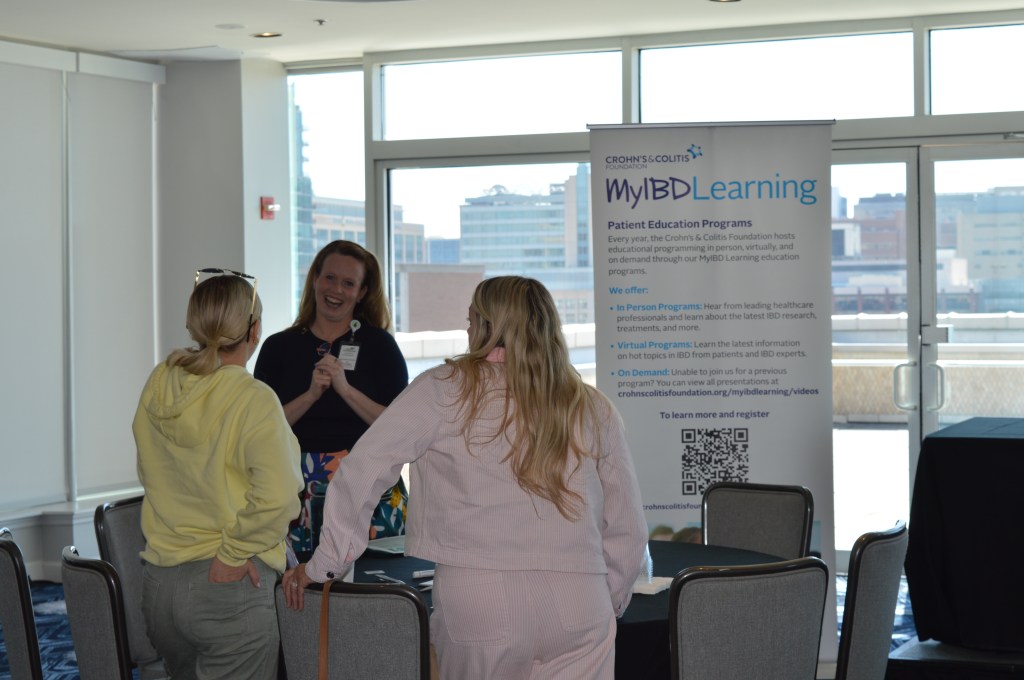
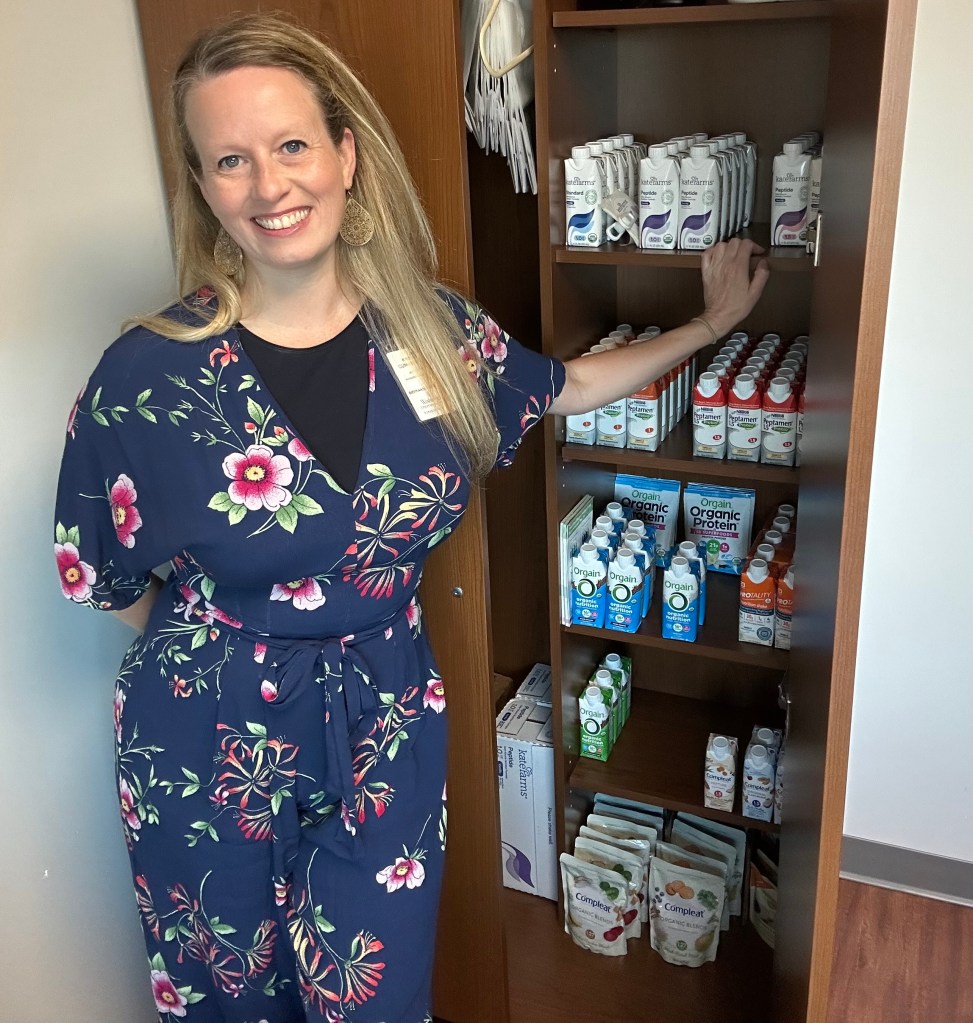
Kristin Cunningham, MHA, RD, CSDH, LD, a registered dietitian at WashU’s IBD Center in St. Louis, understands this reality both professionally and personally. Diagnosed with Crohn’s disease more than 30 years ago, Kristin recently shared a presentation with her local Crohn’s & Colitis Foundation chapter focused on choosing snacks that are affordable while still meeting the unique needs of someone with IBD.

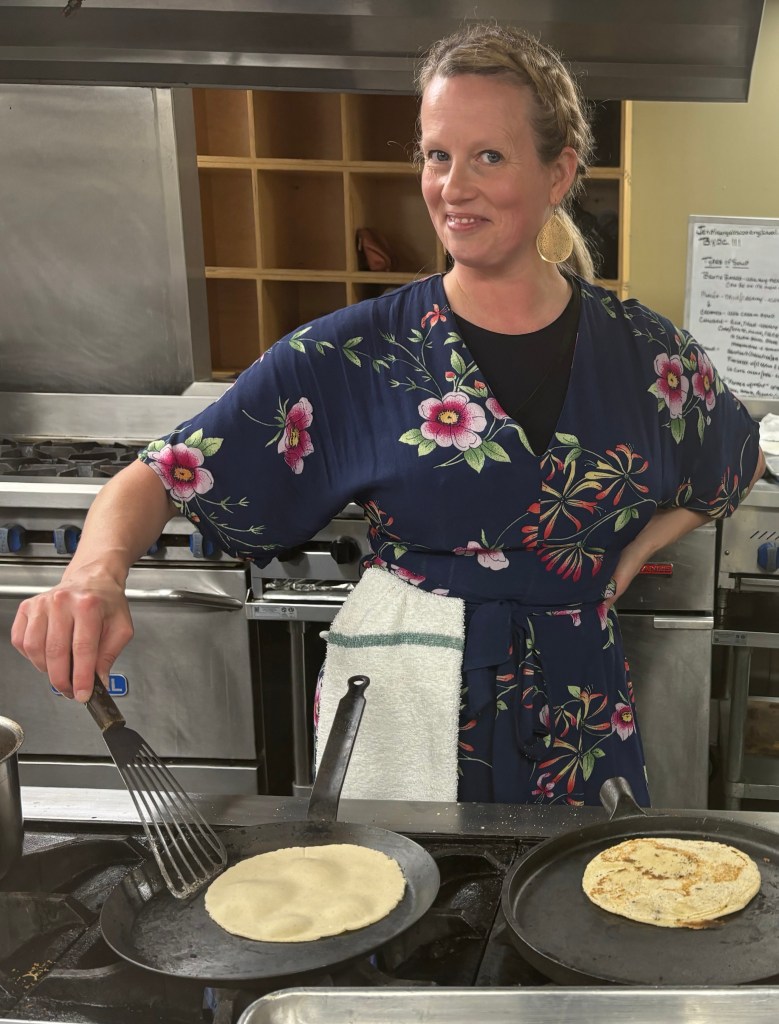
This week on Lights, Camera, Crohn’s, Kristin offers insight into how we can approach nutrition and everyday food decisions—whether we’re in a flare or remission.

Food Insecurity and IBD

A growing concern in the IBD community is access to food itself. Research shows that 13.5% of Americans with IBD experience food insecurity, compared to 9% of the general population.

“We know food costs have risen in the past three years, and SNAP benefits have decreased for some, so we can reasonably predict that food insecurity rates are even higher now,” Kristin explains.

Certain groups are disproportionately affected, including individuals who are non-Hispanic Black, uninsured or on Medicaid, or relying on SNAP benefits. Kristin emphasizes that clinicians should routinely screen for food insecurity and take a multidisciplinary approach, bringing in dietitians and social workers to better support patients.

Pain Points from our Community

One of the biggest emotional burdens Kristin sees? Guilt.

Many people with IBD blame themselves, believing they should have been able to pinpoint the exact food that “caused” a flare.

“I try to offer reassurance that active disease is much more complex than just something eaten,” she says. “Diet may play a role, but there are many other factors outside of our control that drive inflammation.”
Beyond that, patients commonly struggle with:

  • Fatigue that makes meal planning feel impossible
  • Limited time or cooking skills
  • The rising cost of food

Dealing with Diet while flaring

Kristin is quick to validate just how difficult eating can be when symptoms are at their worst.

“I struggle to eat well when my disease is active, too,” she shares. “Even water moving through your GI tract can hurt.”

Her approach is not about eliminating discomfort completely—but about minimizing additional irritation and maintaining nutrition while the body heals.

That often means focusing on foods that are easier to digest and gentler on inflamed areas, such as:

  • Peanut butter
  • Greek Yogurt: Select a yogurt with 7 grams or less of added sugar. The least costly way to achieve this while avoiding artificial sweeteners is to buy plain yogurt & flavor on your own. For example, with vanilla extract, fruit, 1 tsp of honey/sugar/maple syrup, which would add 4-6 grams of added sugar.
  • Canned Black Beans/Hummus: You can mash up any canned beans for tolerance. Rinse salted canned beans with water to reduce sodium content.
  • Avocado
  • Hard boiled Eggs
  • Cottage Cheese with fruit: Select cottage cheese that is 2% fat or less (unless trying to gain weight) & free of carrageenan. Select diced fruit in 100% juice to avoid added sugar or artificial sweeteners.
  • Cereal: Select a cereal with 2+ grams of fiber & 4 grams or less of added sugar per serving.
  • Microwave Baked Potato with Olive Oil: Avoid skin if stricture/short bowel/ileostomy or other difficulty with insoluble fiber
  • Unsweetened Applesauce
  • Soft-cooked carrots
  • Slow cooker shredded chicken
  • Smoothies
  • Mashed potatoes

Preparation matters just as much as the food itself. Chewing thoroughly, cooking well, peeling, mashing, or pureeing can all make a meaningful difference.

For those open to more structured approaches, Kristin may suggest:

While these options have stronger evidence in Crohn’s disease, early research suggests potential benefits in ulcerative colitis as well. That said, Kristin is transparent, she knows from firsthand experience, that these approaches can be difficult to tolerate and may take weeks to show results.

“Most of my patients aren’t interested in that level of structure, and that’s completely understandable,” she says. “But people deserve to know these options exist.”

Snacking with IBD

Kristin’s top three snacks are guacamole and chips, Cheerios, and snack cookies.

Snack Cookie Recipe

Serves: 6

Ingredients:

• 2 Ripe Bananas

• 1 egg

• ½ cup nut or seed butter

• ½ TB olive oil

• 1 tsp vanilla extract

• 1 cup Flour of choice (almond, white wheat, whole wheat, etc.)

• ½ tsp baking powder

• ½ tsp baking soda

• ¼ tsp salt

• 2 cups of cereal (ex. Puffed rice cereal, puffed millet cereal, cornflakes)

Directions: Preheat oven to 350 F. Line baking sheet with parchment paper. Add bananas to a large bowl & mash. Add remaining ingredients (except cereal) and mix well. Add cereal and mix well. Drop by 1-1 ½ TB scoops onto baking sheet. Makes 12 cookies. Store any not eaten same day in an airtight container in the refrigerator.
Final Thoughts

Food will never be a perfect science with IBD, and it’s not supposed to be. What matters isn’t control, but connection: learning your body’s cues, honoring its limits, and responding with flexibility instead of fear. Some days that might look like a well-balanced meal; other days, it’s a few safe bites just to get through. Both count. Both matter. Because living with IBD isn’t about getting it “right,” it’s about continuing to nourish yourself, in whatever way you can, even when it’s hard.

Kristin’s list of helpful resources for IBD-friendly recipes:

Gut Friendly Recipes | Crohn’s & Colitis Foundation

IBD-Friendly Recipes & Nutrition | GI Nutrition Foundation

Freebies | Wellness By Food

Pureed Pzazz: Pureed Food Recipes

Chef-Crafted Recipes for Gut Health & IBD Wellness | Chef With IBD

Recipes Recipes – Eat Well Crohn’s Colitis

IBD AID Recipes – Center for Applied Nutrition at UMass Chan Medical School
Quick Easy Recipes – African, Latin American, Asian, Vegetarian & Vegan OLDWAYS – Cultural Food Traditions

A Registered Dietitians’s Take: Diet vs Medicine for IBD

Managing and treating inflammatory bowel disease (IBD) with medication is often necessary for those who live with Crohn’s disease or ulcerative colitis. But for many, it’s a difficult decision that often comes with pushback and worry. This week on Lights, Camera, Crohn’s we hear from well-respected registered IBD dietitian and ulcerative colitis patient extraordinaire, Stacey Collins, about how she breeches this subject with patients and caregivers and how she utilizes her own patient journey to help empathize with those who are struggling to take the plunge.

Holding space and helping patients accept their reality

When it comes to needing medication, oftentimes conversations are harder on parents or caregivers, than the patients themselves. Stacey tries to encourage caregivers to find the support they need to accept the reality of their loved one needing medication to have a quality of life.

She says, “If someone wants to work with me on their nutrition “instead of medication,” I try to understand where the person is coming from. Usually, it’s from a place of fear, or uncertainty, and I really affirm that experience and hold space with them. Medications, side effects, accessibility, and adherence…it can all be so…heavy. There’s plenty of room to hold those two truths: meds are hard. And they’re often necessary.”

Stacey says when having these conversations she always begins with listening and holding space and then she puts her clinical hat on to ensure that it’s understood that these diseases are progressive and inflammatory, and that science shows that it’s best to get ahead of the inflammation, often with a medical provider, rather than chasing down the symptoms and the inflammation while quality of life suffers.

“I see my role as a registered dietitian as supportive of both treatment goals: helping patients have a quality of life, while assisting with the inflammation. But, I can’t provide medical nutrition therapy without the medicine component, and since diet isn’t ultimately the cause of these diseases, it works best as a complementary therapy with the support of a GI team; not as a cure.”

If patients aren’t trusting of their GI provider, Stacey tries to encourage them to seek out an IBD-specific GI doctor, if possible, while ensuring there’s also frequent follow-up with their local GI team, if they’re living somewhere rural. She says a lot of these conversations are born out of not feeling supported by GI providers, so she tries to help patients find GI’s who specialize in IBD, who are that are a better match.

“I’m upfront about not feeling comfortable about using nutrition in lieu of medication. That puts a lot of non-evidence-based pressure on my job as a dietitian, removes a lot of joy from the experience of eating, and further perpetuates the stigma associated with medicine. IBD is not a preventative metabolic disease, and patients should never feel blamed for eating their way into an autoimmune disease diagnosis. It’s simply not true, and it’s harmful messaging.”

How Stacey’s IBD journey inspired her to become a registered dietitian
 

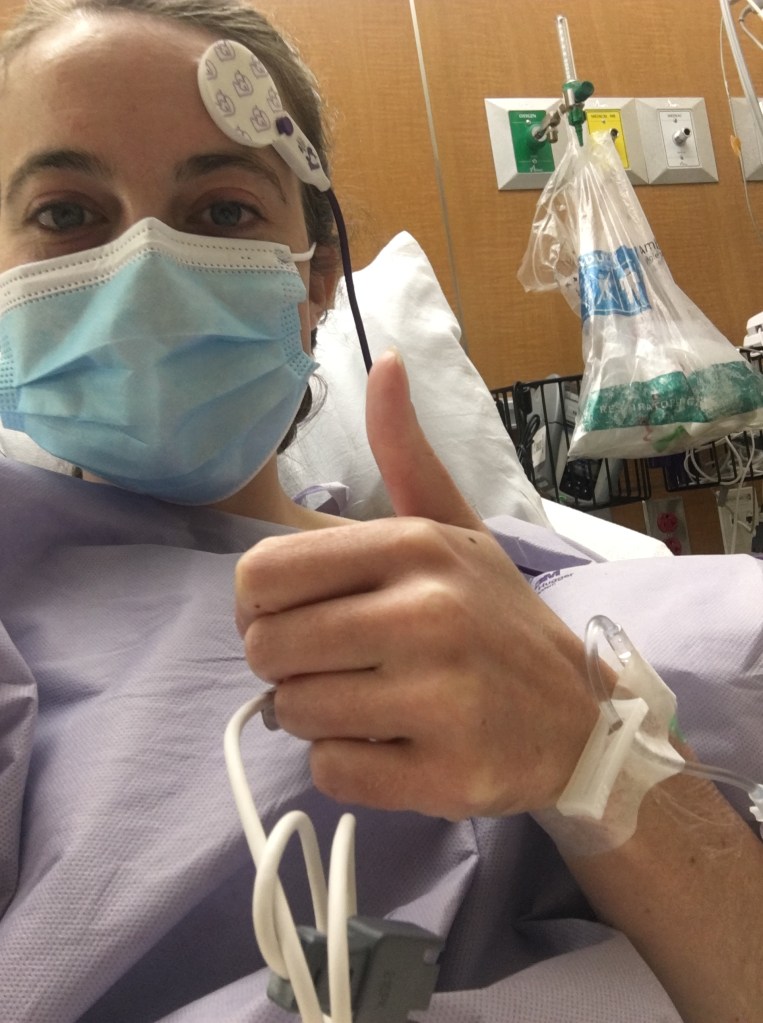
At the time of her IBD diagnosis, Stacey was desperate for anything to stay alive. So, when it was either steroids, a biologic infusion, or having her colon removed, she was thankful the outcome wasn’t terminal.

“I happily agreed to the meds without even thinking about it. Within a month, I felt like a “normal” college student again, and honestly the changes that I experienced within my body due to the disease itself (losing my long, thick hair in clumps from malnutrition; seeing my body change rapidly to look emaciated), were far more difficult than any side effects from the medication. I felt like it was very much a night-to-day scenario, and I was so grateful for the medications as a result.”

But once she started feeling a little bit better and opened up to some family members about her disease, she heard a lot of negative chatter about the aggressive nature of the IV meds that she had “chosen” and thought, “Hmm. Maybe I’ll try juicing and holistic wellness,” never mind the fact that she was 21 years old with no professional support in making that decision.

“I quickly ended up hospitalized and needing an emergency Remicade infusion (the good ole days when hospitals kept it stocked in their pharmacy). The attending GI doc gave me some tough love, and really took the time to explain to me how “this is lifelong” and “you can’t be late on an infusion, because your immune system will lose response to the medication” and that really clicked for me. It was a hard moment and a tough pill to swallow, but it was a lesson of “maybe my well-meaning family members don’t know what’s best for me, and I’m going to have to trust my body, this med, and this doctor.”

In the years after, she went on to lose response to medications, start new ones, and it was always a night-to-day scenario all over again.

“I think this black/white sort of dichotomy of my experience on and off medication helped me accept that this was my reality pretty easily compared to others’ experience perhaps where maybe they’re less sick and the meds (not to mention the insurance gymnastics required to obtain them regularly) might seem daunting and leave people thinking, “Do I really need this?”. I was able to truly see that meds (and a whole GI team advocating on my behalf repeatedly for access to them) absolutely are the reason I’m still here.”

The challenge of receiving infusions

Infusions were psychologically a little “icky” for Stacey at first. She went from being a young, fun college student on campus with peers one minute… to driving 5 miles away to an infusion center where she was the youngest by a longshot, usually next to someone twice her age receiving chemotherapy or dialysis, and then she would go back to campus and pretend like nothing had happened.

“My boyfriend at the time (now husband) and I had a favorite haunt: Homeslice Pizza in Austin, Texas. Before my diagnosis, we were there on a date, and I spent the whole time in the bathroom. This was one of those places where there’s only one toilet…so I’d immediately finish and get back into line for the bathroom.He was really kind and said, “It’s okay! We’ll take it to-go, and when you’re feeling better, we’ll come back and have a pizza day and celebrate!”

Stacey says they were both so grateful for the night-to-day improvement with medicine that they named infusion days “Pizza Days” and this gave her a reason to look forward to infusion days, instead of dreading them. Over the years, we started inviting our friends to “Stacey’s Pizza Day” everywhere we moved: from Austin to Houston to Oklahoma City, and her friends had so much fun celebrating her infusion schedule every 2, 4, 6, or 8 weeks.

Utilizing research to help back the need for medication

As a dietitian, medications are out of Stacey’s scope of practice. As a patient, she knows them to be helpful. She tries to connect patients to resources so they can make informed decisions for themselves with a GI team that they trust. Resources like the IBD Medication Guide on the Crohn’s and Colitis Foundation’s website are really useful, as well as IBD And Me if patients and caregivers are having some cognitive dissonance about finding a biologic that feels right for them.

“Then I’ll ask them about what their takeaways were. Sometimes, talking out these conversations really helps patients find useful, effective ways to communicate to their GI doctor, so while I understand that it’s not my role as a dietitian to provide guidance on medication selection, I’m happy to help patients sift through what sort of questions or concerns they need to express to their GI doctor. So often as patients we brush off our concerns or our fears because we don’t want to be a bother, and I really encourage patients to have these hard conversations with their GI provider; A good doctor will want to know.”

Why taking medication is not the “easy way out”

It’s fine to struggle with medications; medications can be hard. It’s not fine to feel shamed out of using them under the dogma of gut-health and over-supplementing, and unfortunately there’s a lot of misinformation in the IBD space of people professing left and right how they’ve “healed their gut” naturally.

“I feel like I’m uniquely in the middle of loving the science of nutrition and needing modern medicine to still be here. For me, it’s been damaging and debilitating to also make society comfortable with my need for medicine for so many years until I learned to let that go. Now I speak up when I can if it’s worth my energy. There’s nothing easy about needing medicine for life to stay alive, and the people who say otherwise just haven’t seen that in their life, and that’s okay. It’s not okay for them to think their experience can be applied to all people with gut health issues though. Would also love to have clarification on “gut health.” IBS? SIBO? Constipation? Nervous stomach? Gas? IBD? These are different things that can’t have the same, convenient solution.”

How we can rely on nutrition as a valuable tool in managing our IBD

Stacey sees nutrition as the shiniest, easiest available tool in a toolbox full of other tools: mental health, sleep, pain management/PT/movement, medicine, and surgery.

“Sometimes when I work with IBD patients, nutrition is not even the most important tool- it just depends on what’s going on in each person’s life. Maybe surgery is the most important tool, or it’s mental health. Different life moments with IBD will require different tools, and while my obvious favorite tool is nutrition, the other tools mean a lot, too.”

Nutrition is a tool that is compatible with all the other tools, and nutrition interventions might take some fine-tuning, mindset shifts, and some tailoring to each person’s lifestyle. But the beauty is that it can be picked up as needed, and that’s nutrition’s superpower: it’s a tool, and it’s also a bridge for connection, safety, comfort, and a quality of life within the context of IBD.

“I teach my patients individualized nutrition for IBD as the remissive/relapsing beast that it is, not just for what it looks like during the time that I work with them.”

Stacey’s advice for patients

  • Expect non-linear. Try not to compare. Feel the feelings, let the energy and the emotion move through you whatever way it needs to, brace for impact, and know you’re still here. Make room in your day to celebrate a good one!
  • Recognizing there can be two dualities that are true. You can hate needing medicine and be grateful that they kept you alive. You can feel deep sorrow for losing your health before you were old enough to acknowledge its presence and embrace this new, unprecedented, post-op reality, even though it’s different than what you expected.
  • Embrace your emotions. You can cryabout the reality of having needed an ostomy and be thrilled to eat a chocolate croissant in a moving car without pain BECAUSE the ostomy granted you a pain-free eating experience. You can be fearful about choosing a j-pouch and celebrate that it’s possible and wild to live with one.
  • Resenting the diagnosis is normal. You can resent your IBD diagnosis and be grateful for who you are with it (and thankful for all the people you’ve met because of your diagnosis!).
  • Lean on support groups and the IBD family. The support groups through the Crohn’s and Colitis Foundation have been helpful for a lot of Stacey’s friends, and for her personally. She’s a huge fan of Spin4 and Team Challenge. Finding a safe, welcoming community who gets your reality (wherever that may be!) can be powerful and uniquely helpful.