The Whiplash of Living with IBD: When Remission Doesn’t Feel Like Remission

Just when you start to trust your body again, inflammatory bowel disease (IBD) has a way of reminding you who’s in charge. Last week, my bloodwork was perfect. My inflammatory markers were normal. By every measurable standard, I was doing well. Remission was validated.

Then Thursday evening hit.

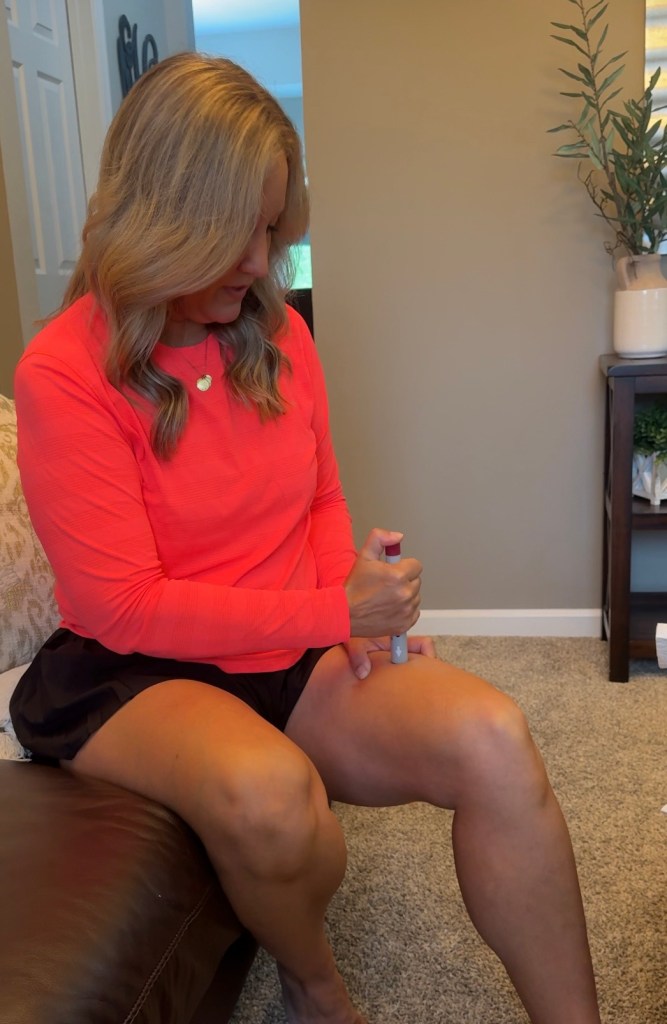
What followed was nearly three days of constant, debilitating abdominal pain that left me glued to the couch with a heating pad, exhausted, frustrated, and questioning everything I thought I knew about my disease. Each night I went to bed and woke up with the same pain. By Sunday morning, out of nowhere, the pain suddenly lifted. As I write this (Monday), I’m back to feeling like myself. Luckily, I had a Humira injection today!
If you’ve lived with Crohn’s disease or ulcerative colitis for any length of time, chances are you’ve experienced this type of whiplash. One day you’re making plans, feeling strong, and celebrating remission. The next, you’re wondering if a flare is brewing, if your medication has stopped working, or if you’re headed back down a road you’ve traveled before. And the hardest part? Sometimes there are no clear answers. This week on Lights, Camera, Crohn’s a look at the behind-the-scenes reality of life with IBD, even when you’re in remission.

When the Tests Say One Thing and Your Body Says Another

One of the most mentally exhausting aspects of IBD is that symptoms and objective disease activity don’t always line up and they often show up unannounced.

You can have:

  • Normal bloodwork
  • Normal fecal calprotectin
  • A recent clear colonoscopy
  • Therapeutic levels of your biologic
  • No evidence of active inflammation

And still experience significant symptoms. That’s not to say the pain isn’t real. It absolutely is. For some people, symptoms can stem from scar tissue, adhesions, visceral hypersensitivity, altered gut motility, stress, infections, dietary triggers, or other gastrointestinal conditions that coexist alongside IBD. Sometimes it’s a temporary viral illness. Sometimes it’s something that remains unexplained.

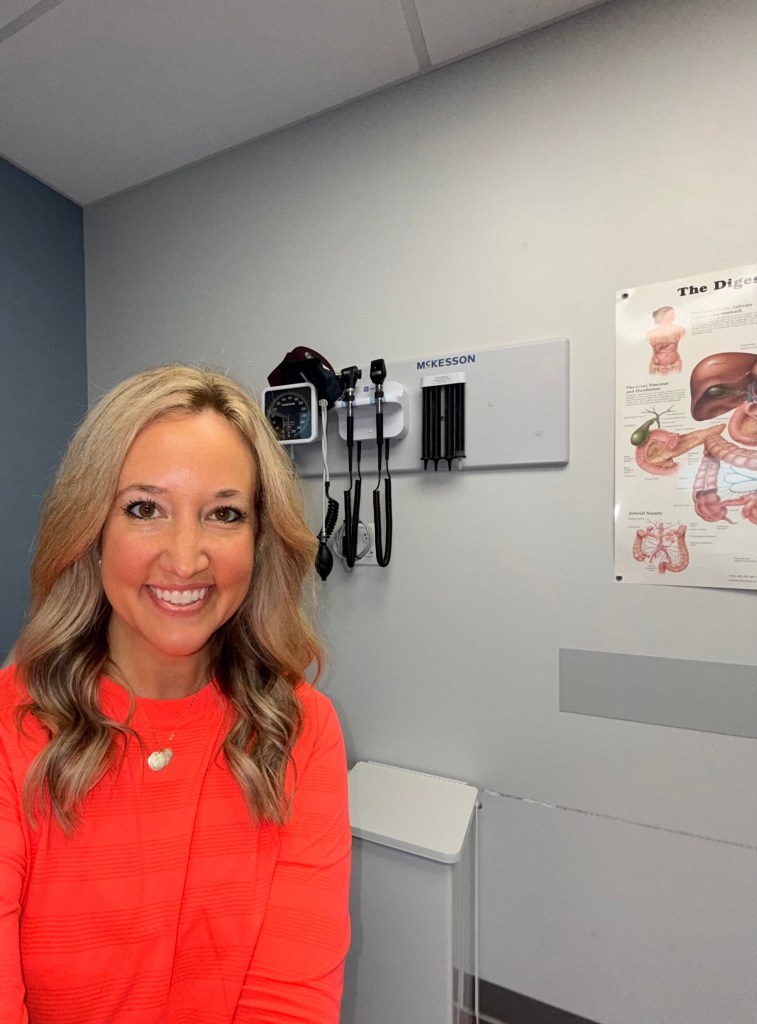
When I saw my GI today, he wasn’t overly concerned given my recent normal labs and the fact that the symptoms had resolved. The only change he made was moving my surveillance colonoscopy up a few months, from December to August/September, to provide some additional reassurance and make sure nothing is missed.
While I appreciated the precaution, I’ll admit part of me still wonders what caused all of this to happen. I’m left with something many IBD patients know all too well: uncertainty.

The Mental Toll Nobody Talks About

The physical pain was difficult. The mental spiral was challenging. When symptoms appear out of nowhere, it’s easy to immediately jump to worst-case scenarios:

“Is my medication failing?”

“Am I flaring?”

“Did I do something wrong?”

“What if I’m hospitalized this summer with all three kids out of school?”

“Is this the beginning of something bigger?”

Living with a chronic illness means carrying years, sometimes decades, of medical trauma and memories. Next month marks 21 years since my Crohn’s diagnosis, as a veteran patient, I consider myself to be well-versed on not only IBD, but how my symptoms speak to me and when I truly need to listen. Ironically, the month of July has historically been my “worst” month. I’ve had several hospitalizations during that month, so this time of year, I’m always a bit weary.

A bad pain day doesn’t just exist in the present moment. It can instantly transport you back to previous flares, hospitalizations, surgeries, or periods when your disease wasn’t controlled. For many of us, the fear isn’t about today’s symptoms. It’s about what those symptoms might mean tomorrow.

You’re Not Alone

If this experience sounds familiar, you’re in good company.

Many people living with IBD report episodes of abdominal pain or GI symptoms despite being in clinical or even endoscopic remission. In fact, symptom burden remains one of the biggest quality-of-life challenges in the IBD community. We often hear the word “remission” and imagine a finish line.

Since I reached surgical remission in August 2015 following bowel resection surgery (18 inches of my small intestine + appendix), I’ve come to realize the reality is much messier.

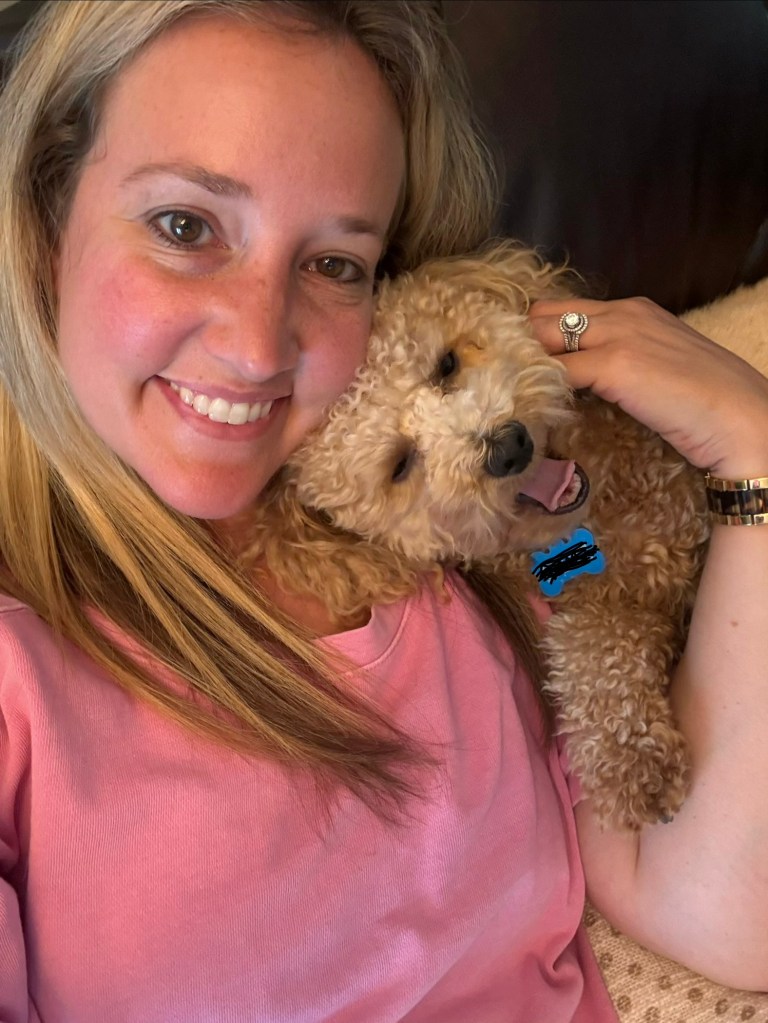
Remission doesn’t always mean symptom-free. It doesn’t mean every stomachache disappears or that you may not urgently have to run to the bathroom 5+ times a day. It doesn’t mean you’ll never have a bad day or week. And it certainly doesn’t mean your concerns aren’t valid. I think one of the most challenging parts of remission is that friends and family just think you’re 100% well all the time because the average person thinks remission is perfect, normal health, when in fact it’s not.
How to Navigate the Whiplash

When symptoms strike unexpectedly, here are a few strategies that can help:

Don’t Panic on Day One. Easier said than done, I know.But not every symptom equals flare. Give yourself permission to gather information before jumping to conclusions. I typically allow 2-3 days of symptoms before I reach out to my GI team over the patient Portal.

Reach Out to Your Care Team. Even if symptoms resolve, it’s worth documenting what happened and notifying your GI. Patterns matter. Taking notes whether handwritten or on your phone/computer will help you keep track of the good days vs. the rough days. Oftentimes when we’re in clinic, we tend to gloss over the hard times not because we’re being evasive purposefully, but because our normal isn’t normal, but it becomes our normal. You get what I’m dropping.

Focus on Trends, Not Moments. A few rough days may be less concerning than symptoms that steadily worsen over weeks.

Ask yourself:

  • Is this getting better, worse, or staying the same?
  • Are symptoms recurring?
  • Am I seeing new symptoms?

Trust Your Experience. Normal labs are reassuring, but they don’t invalidate your symptoms.You know your body.You don’t need abnormal test results to justify seeking support.

Keep a Symptom Journal. Documenting pain levels, diet, stress, sleep, and bowel habits can sometimes reveal patterns that aren’t obvious in the moment.

Consider Seeking Help from a GI Psychologist. My GI brought this option up to me in clinic today. Even though we may feel like we have a good handle on it all, living with IBD can be heavier than we realize and managing our anxiety and coping mechanisms with a professional can help us take life on more effortlessly. There are many amazing psychologists who specialize in IBD, many with virtual visits available right at our fingertips.

Remember That Remission Isn’t Fragile. One bad weekend doesn’t erase months or years of progress.This is something I’m reminding myself of right now.

Moving Forward

IBD has taught me many lessons over the past two decades, but one of the hardest is learning to live in the gray area. Not every symptom has an immediate explanation. Not every setback becomes a flare.

And sometimes the most difficult part of this disease isn’t the inflammation itself, it’s the uncertainty. This past weekend was a reminder that even in remission, Crohn’s disease can still mess with your head. But it was also a reminder that symptoms can pass. That normal labs still matter. That one difficult chapter doesn’t automatically predict the rest of the story.

If you’ve ever experienced the whiplash of feeling healthy one day and terrified the next, know this: You’re not overreacting. You’re not imagining it. And you’re certainly not alone.

Digging in the Archives: Emails I wrote following my Crohn’s diagnosis in 2005

When I started my blog, Lights, Camera, Crohn’s, four years ago, my main mission was to be the voice I desperately needed to hear upon diagnosis. As I reflect on my 15 year diagnosis anniversary, I thought it may be helpful to give you a behind the scenes look at some of my email archives from 2005…days after finding out I had Crohn’s disease. I’ve never shown these to anyone (other than the recipients, of course!)…but my hope is that in sharing private feelings, you’ll be able to see how my perspective about life with IBD has shifted and evolved since I was a 21-year-old girl feeling up against the wall with nowhere to turn.

7E5116AD-B985-4874-93C0-812987927578

Photos taken in May 2005 (prior to diagnosis) and September 2005 (while on 60 mg of prednisone).

This article is dedicated to the newly diagnosed. We’ve all been in your shoes. What you’re thinking. What you’re feeling. What you’re struggling with. We get it. It’s not fair to compare where you are in coping to someone like me who has been dealing with Crohn’s for 15 years and been in remission for nearly five.

Here are snippets from my emails to friends. Reading the pain in my words and re-living this difficult time can be a trigger, but reflecting and seeing how far I’ve come is also incredibly empowering.

“I’m having a really hard time with this, harder than I ever could have imagined or dreamed…and I’m having a hard time trying to act like everything is great on the exterior. I feel like I’m on the brink of a breakdown…the drugs are getting to me so much. I woke up with visible shakes this morning and have been shaking all day. My moods aren’t me. I feel like I am a different person and that as much as I want to be the old Natalie, it’s just so hard to wake up smiling and happy. I’m getting tired of my family constantly asking me if I’m doing ok and feeling ok and everyone staring at me while I eat…I just feel like a pity case to so many people. I feel so alone in all this. I’m trying to be upbeat…and I know that it is going to take time to get acclimated to the lifestyle changes and everything, but right now I’m just having a difficult time figuring out who I am and where I’m supposed to be in life. The insomnia has left me up every night just thinking and wondering what the future holds and if I am ever going to feel normal again.”

“I try so hard to be strong and tough about this and it just all stays bottled up and I just started crying and am having a hard time stopping. It’s just so hard. I look at pictures and think back to even graduation time and it just freaks me out that I went from living a carefree, healthy life…to this. I know it is something that I will always have and that I have to get used to it…but it’s hard for me to handle at times. I don’t mean to complain or worry you or anything, I just feel as though I need to get out some of this frustration before I go to bed. I’m scared of getting sick again and having to go in the hospital sometime again…and I just feel like I can’t go a day without a thinking about all the what ifs. You know I analyze so much…haha…it’s like a living nightmare!”

“I’m sorry if I talk about this too much. I’m sure it isn’t the most appealing or attractive thing to have to hear from your gf…but sometimes it becomes a little overbearing on me…and I can’t hide my fears when it does. I mean I refuse to let this change who I am and the life I will lead, it’s just at times it seems so much bigger than me, and so much larger than life. I know I have been complaining a lot about my puffy cheeks and stuff…and I know that prob gets old…I just get so self-conscious about it…and it just sucks that I have exactly 2 more months left on the steroid. As my dosage gets lower and lower the side effects should stop and start to go away…I’ll believe it when I see it!  I guess it’s just scary to me to see the effects of a drug that are helping me on the inside and hurting me on the outside. I just want to look the same to you as I did the last time you saw me.”

“What I won’t ever apologize for is this summer, because I was going through a living hell, and I saw which friends were there for me and which weren’t. I was ridiculously ill from June 5th-my bday (August 24) and you were angry with me for not keeping in touch. I couldn’t even stand to get myself a glass of water for weeks and was hospitalized for days. I never heard anything from you. I know that people handle those types of situations differently… but that was the hardest thing I’ve ever gone through in my life, and I really needed a strong support system. Battling with a disease and feeling like I completely lost myself has made me have to be a little selfish these past few months. I’m just coming to grips with it all now and thank God I’m feeling well…but it is still an adjustment and has given me a complete different perspective on life.”

You guys. I’m sitting here crying. I’m that girl. I wrote those words. That was 15 years ago and thinking about that time still feels like a knife in my chest. Even though this disease has enabled me to gain so much gratitude and perspective, it still robbed me of a lot. It still hurts…sometimes more emotionally than physically these days since I’m in remission. These diagnosis anniversaries stir up a lot of memories. While I choose to think of it as a time to celebrate another year of taking this disease on with all the strength I can muster, it’s also a time that takes me back to some of the most challenging and difficult moments in my life.

IMG-5353

I colored this in my hospital bed after being diagnosed with Crohn’s.

I wish I could hug that girl and tell her it was going to be alright. The career, the love, the family…it would all happen. If you’re in that difficult space right now coming to terms with your newfound identity following diagnosis or getting over a flare up, please know this disease ebbs and flows. It’s not a constant. The good and the bad moments are fleeting, but your resilience and your confidence in coping becomes so much a part of who you are, it’s hard to recognize who you were before.

From remission to flaring in one week: What 2015 taught me about life with Crohn’s

I woke up from my colonoscopy five years ago and was told “You’re in remission”. Tears of happiness streamed down my cheeks. I was in disbelief. Was I dreaming?! It took a decade for me to hear those words, and one week to be robbed of the title.

One week later, I was hospitalized with a small bowel obstruction. The first of three that would happen that next year. So many of us in the chronic illness and IBD community specifically, are constantly chasing after “remission”. But what does remission really mean?

Remission is different for every person, much like IBD manifests differently in everybody. When I heard the word remission five years ago, it felt magical and exciting.

Remission2015

Celebratory post-colonoscopy cheesecake after finding out I was in remission Feb. 2015.

Hell, my mom and boyfriend (now husband) and I went out and celebrated with a big meal at The Cheesecake Factory. When I flared days later, I started feeling skeptical of the term and came to realize how fleeting and elusive remission can be. I laid in the hospital bed, devastated and dumbfounded by what had just transpired.

It took three bowel obstruction and 18 inches of my small intestine to ultimately be removed in August 2015, for me to reach surgical remission. While surgery is not a cure, my bowel resection provided me with a new beginning. As I approach my five year “remission” anniversary this August,

IMG_7445

Hospitalized a week later with a bowel obstruction.

I remain on edge. I’ve been blessed to be on cruise control with my illness these past few years. My GI has me well-managed on my biologic and vitamins, I know how to read my body when it speaks to me through symptoms, and when I suspect something is going awry, my care team and I nip the disease activity in the bud.

To me, remission is waking up each morning with the expectation that I’m going to feel well and be able to take on the day as planned. Remission is having more ‘feel good’ days than painful ones. Remission is being confident to attend social outings, travel, and do all the things I set my heart out to do, without feeling suffocated by the fear of the ‘what ifs” of a flare. Remission is being able to focus on the part of me that is so much more than my disease. remission blog

Remission tends to the be the “goal” when it comes to IBD, but it’s not always feasible. It’s easy to see posts on social media and feel like you’re failing because your body is failing you, repeatedly. It took me a decade of living with Crohn’s and surgery to be in remission.

While I’m a compliant patient, I don’t take much credit for my remission. I know how at the drop of a hat I could be rushing to the ER, unable to breathe from my abdominal pain. I remember all the flares that blindsided me and I know my body can decide to flip the switch at any given moment. I feel lucky most the time—while my Crohn’s could be worse, it could be better, too. Remission doesn’t mean that symptoms are non-existent, moreso that the majority of the time I feel well with some not so great days sprinkled in the mix. While in this state of remission, I remind myself not to take this time for granted, not to become complacent, and to stay vigilant on managing my symptoms and overall well-being.

Rather than focusing on the big “R” word that’s loaded beyond belief and placing so much emphasis on it, let’s focus on feeling the best we can each day, communicating openly with our physicians, friends, and family, and taking this uphill battle one step and one day at a time.

Flaring during pregnancy and after: Addy’s story and advice for IBD moms

Flare ups during pregnancy and after, starting a biologic while breastfeeding, and wondering whether one baby is enough—all experiences and concerns that have weighed heavily on 30-year-old Addy Irvine of Minneapolis. Addy was diagnosed with ulcerative colitis in May 2015. Addy and William 1 yearAddy’s son, William, is now 13 months old. This week—she shares a guest post about her journey to bring him into this world and the challenges and victories she’s experienced as a new mom with IBD. I’ll let her take it away.
Children were always a part of my plan. My husband and I knew we wanted to have children and were ready to start trying after I completed my Master’s degree. While my colitis had not been officially determined to be in remission, I was on Asacol and had not experienced symptoms for some time when my IUD was removed. After 8 months of “letting the universe decide” when to have a baby, we found out I was pregnant! Yay!

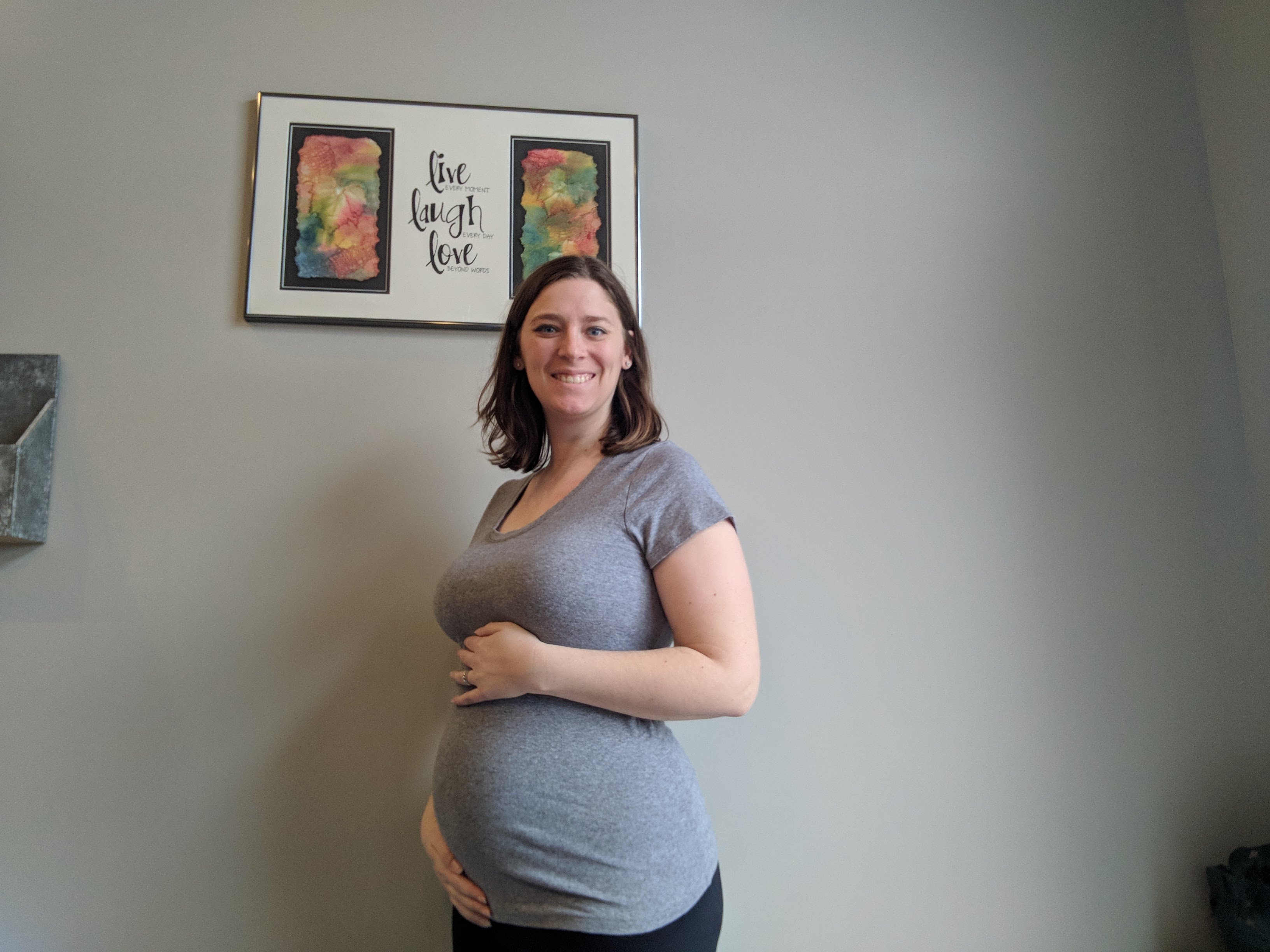
My first trimester was filled with the usual discomforts. Second trimester, you know, the one where you’re supposed to enjoy pregnancy and start feeling better? Not for me. I went through the worst flare of my life. It was easily the most miserable I’ve ever been, both physically and mentally. I had to stay home from work multiple days a week and was unable to help at home. I don’t know how I could have made it through without my husband’s support. 15 weeks

My doctors put me on oral Uceris, and when that wasn’t enough, they also put me on the rectal foam. The Uceris made things bearable, but I knew I wasn’t doing well.

I wasn’t gaining any weight despite my ever-growing belly. My friends and colleagues started noticing that I was losing weight. At first, it was in the chipper way people comment on weight loss. After a while people started to ask about it in a concerned voice.

I’d tell myself, “At least my baby is doing okay!”

By 3rd trimester, I could function normally most of the time. At my 36-week growth ultrasound, it was determined that my son had intrauterine growth restriction, and they talked to me about the possibility of induction between 37 and 39 weeks of gestation. 33 weeksAfter my second-high blood pressure reading that week, a nurse advised me to come into labor and delivery. When I arrived, I was diagnosed with gestational hypertension and started the induction process the next morning at 37 weeks.

Five days of induction later (really), my beautiful baby boy, William, arrived at 5 pounds 1.5 ounces. He was small, but healthy! After he was born, my UC got so much better until he was 2 months old when I had another flare. Suddenly I needed to care for my newborn in addition to taking care of myself. It seemed an insurmountable task. With frequent bathroom trips and intense fatigue, the newborn phase was made even tougher.

Holding on to the hope of breastfeeding

Breastfeeding was something I was really hoping for as part of my journey into motherhood. Newborn WilliamWhen William was born, I was thrilled, and so fortunate, to have a successful early breastfeeding relationship with him. When I started flaring again, breastfeeding became a significant challenge. I’d be with William during a late-night feeding, get a few minutes in, then have to wake my husband to keep William safe while I quickly ran to the bathroom. Obviously, this made William more than a little upset to start eating only to be pulled away. I also became increasingly worried that he wasn’t getting the nutrition he needed from me because I wasn’t absorbing nutrients the way I needed to. I upped my supplements and kept close tabs on his weight but continued breastfeeding. At this point, I knew I needed to do something different with my medications. What I was doing clearly wasn’t working.
I started to research biologics and met with my doctor to discuss my options. He recommended Entyvio, and my insurance approved it. I worried William would be harmed by breastfeeding while I was on a biologic. Would he be more susceptible to illness because of it? Would my supply be affected? My doctors reassured me that it was safe to be on Entyvio and continue breastfeeding, but I knew the research is limited. After seeking information and support from other moms who have breastfed on biologics, I decided to take the risk, start the biologic, and continue breastfeeding.

“Healthy mom, healthy baby” is the way I decided to frame it.

From flaring to remission

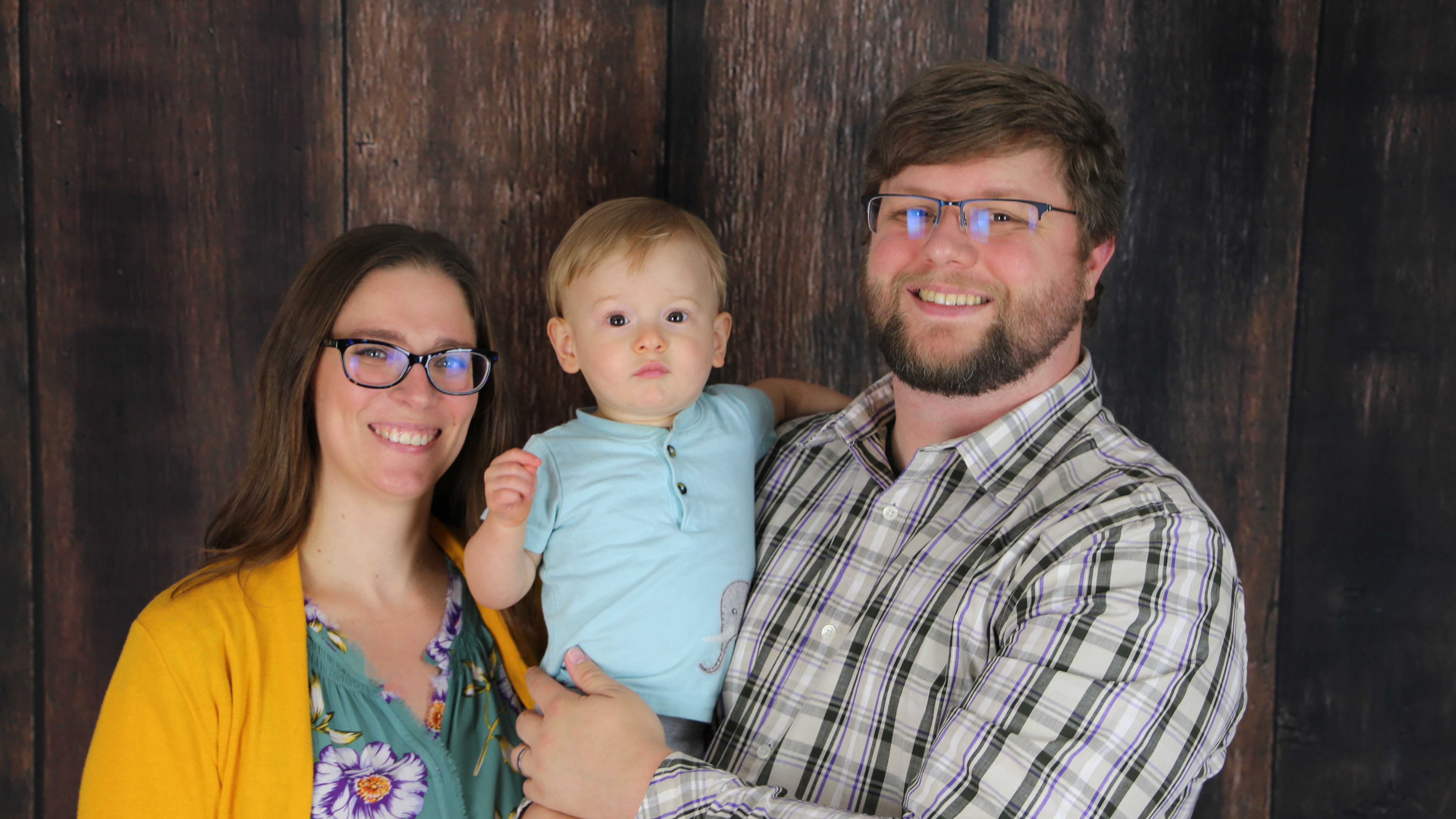
After 3 infusions, I started to feel significantly better, and I am now in clinical remission for the first time since being diagnosed. I finished my breastfeeding journey about a month ago. My supply wasn’t affected by starting the biologic, and my son has had absolutely no ill effects. He gets sick less than I do! Most importantly, I can engage with and care for him so much better than I could while I was ill. Family photo

This journey has made me think twice about having more children. Pregnancy and childbirth were really, hard on my body because of my UC and other complications I experienced after delivery and I’m not sure I want to risk my health again. Sometimes I wish that I were like “normal” people who approach pregnancy without having to think about all of this. I remind myself that this is MY normal, and that’s okay. And it’s okay to have one child if we decide to do that. I keep repeating this: healthy mom, healthy child(ren).

Reflecting on my journey, here are some lessons learned that I hope you take away:

  • Work closely with your GI doc and your Maternal Fetal Medicine team to make a plan BEFORE trying to have a baby (or even “letting the universe decide!)
  • Prioritize your own health, even when pregnant. Remember: healthy mom, healthy baby. This includes taking care of your mental health.
  • Connect to other moms who have CD or UC to learn from them
  • Flaring during pregnancy and postpartum is physically and mentally exhausting – lean on your support system heavily if you find yourself in that place
  • If breastfeeding is important to you, talk to your doctor about whether it’s safe to continue to do so while on a biologic – utilize the IBD Parenthood Project as a helpful resource.