
Love doesn’t always come easy. Especially when you have a chronic illness like Crohn’s disease. Dating, relationships and finding “the one” becomes a bit more complicated when your health isn’t on par with that of your peers. Before I met my husband Bobby, I had several eye-opening experiences that left me feeling unlovable and unworthy.
When I was diagnosed with Crohn’s in the emergency room two months after college graduation in 2005 and hospitalized for eight days, my boyfriend never visited and broke up with me over the phone the day I got home. Prior to my diagnosis we were head over heels in love and talked about the future.
When I was hospitalized with an abscess in my small intestine that was the size of a tennis ball over Fourth of July weekend and on the brink of surgery in 2008, my boyfriend of seven months never visited and told me gas prices were too much (for a 3 hour drive) and told me he preferred to go fishing.
When I was about to jump in the shower for a first date in 2009, I fell to my knees in my bathroom from excruciating pain and had to text the guy and tell him my Crohn’s was flaring and that I was headed to the hospital. He laughed at me and told me it was comical that I used that excuse and should just admit I didn’t want to see him. I was hospitalized with a bowel obstruction that night. Never heard from him again.
These were poignant moments in my 20’s that stick with me to this day. I look at those experiences now as a blessing of course, but hindsight is 20-20. When you’re in the thick of taking on IBD and trying to find someone to spend your life with, these struggles can feel overwhelming and extremely daunting. Not everyone is cut out to be a caretaker, and that’s ok—but if you live with a chronic illness like me, it’s imperative you find someone with a nurturing heart, a patient personality, and a comforting way about them.
 When you fall in love with IBD, there’s an extra layer of complexity, trust, dependency, and appreciation. There’s no telling what the next hour will bring. You need to be flexible. You need to be understanding that plans may not go as expected. You need to trust that when the next flare up strikes that you won’t be on your own and that your partner will be there every step of the way.
Imagine doing a trust fall. You need to count on your person to ALWAYS be there to catch you when they least expect it.  You need to believe that when the going gets tough you won’t be deserted; you won’t be made to feel as a burden. You need to trust that your partner sees you as much more than your disease.
Love and IBD isn’t always sunshine and rainbows, but that’s the case with every love story. It’s navigating unknown waters and knowing that just because you go under for a little while, doesn’t mean you won’t be floating in the calm soon. It’s being vulnerable with the fact that your body will continually let you down, but it’s also capable of surprising you, too. It’s knowing when to ask for help and not being scared to communicate your needs. It’s making sure your partner knows how much you appreciate all that they do, even if they don’t feel like they’re going above and beyond. It’s the comfort of knowing that any minute of the day, you can tell your partner you’re unwell and everything else going on becomes background noise.
If you’re reading this and you haven’t found your person or if you’re unsure about whether your significant other is meant to be, think about the type of person you want alongside you as your #1 confidante for everything in life, including your disease.

If you feel like a burden, if you’re made to feel like your disease is a joke, if you feel like you’re ghosted anytime your health goes awry, take all those feelings as red flags. Sure, the way some of my ex’s treated me when it came to my Crohn’s was extremely disheartening, but at the same time those flare ups were the truth serum I needed to see people’s true colors. Use this to your advantage.
When you find the person who genuinely chooses to stay, to be your rock, to be your sounding board, that’s when you know you’re where you’re meant to be. IBD causes us to be vulnerable, but it also opens our eyes to the true character of others and helps guide our way for finding love that’s meant to last.
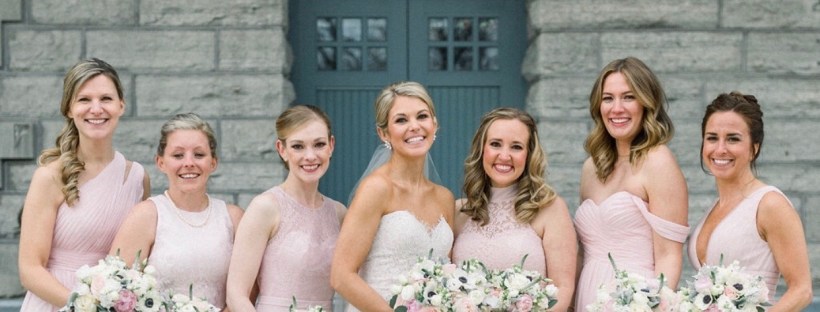


 Find the people who lift you up. Trust in the bonds you create with those who are there for you because they want to be out of the goodness in their heart, not as an obligation. Hold on closely to the relationships that spark joy and don’t extinguish your flame. Lean on those who are willing to give you their hand to lift you up, even when you don’t ask for it.


 It was a brisk January morning. Tears filled my eyes as I was overcome with emotion. Our rainbow baby is here, safe and sound. Another pregnancy behind me, a pregnancy that silenced my Crohn’s disease and provided sweet reprieve from my chronic illness. It was time to take Sophia home and start our life as a family of four.
 Each time I have a procedure or deal with painful symptoms, I see their faces, I say their names in my head, and it brings me a sense of calm. My goal when Reid was born, was to stay out of the hospital until he could walk, luckily that’s been the case. He’ll be two in March. Now, I have that same goal following the arrival of my daughter.
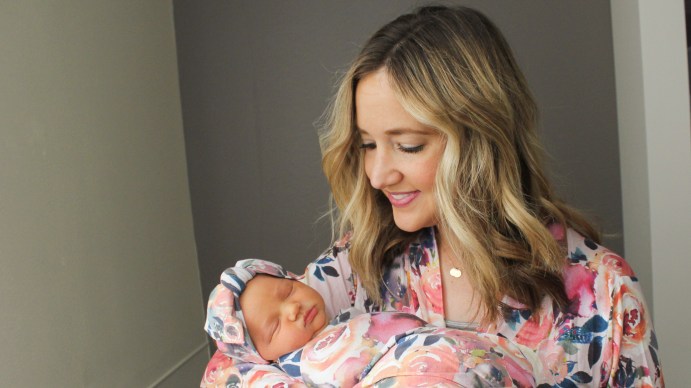 Motherhood and IBD can be a difficult and challenging balance. Some days the fatigue and symptoms are so debilitating you feel like you’re falling short. At the same time, the days where you’re feeling well, remind you that you are so much more than your disease. Just because you have a chronic illness, doesn’t mean you are robbed of experiencing the beauty of life and what it feels like to have your very own family.
 It all starts with recognizing where you are in your patient journey and then determining when your symptoms and body are in the best shape to get pregnant. While everyone’s disease experience is different—the worries, concerns and fears associated with parenting and chronic illness are often the same. Always know you are never alone. Communicating these feelings with those around you, makes all the difference. Lean on our patient community and all those who’ve lived your reality.
 When Sophia Shea entered the world January 14, 2019, our family received a wonderful gift. Between our son Reid and our baby girl, we could not be more blessed. My chronic illness has given me such an appreciation for health and for life in general. With the pregnancies behind me, I often reflect on where I started back at age 21 in 2005. At that time, in my eyes, I was Natalie and I had Crohn’s disease. There was no telling what my future would hold. Now, nearly 14 years later, at age 35, I’m so much more. I’m a mom to two under two. I’m a wife. I’m a daughter. I’m a sister. I’m an aunt. I’m a friend. And I also have Crohn’s.
 Try having a flare during the worst natural disaster in the history of your country. It happened to me. I survived.
 One morning I decided to stop in my GI’s office. He had lost the A/C unit and the office was flooded during the storm. He ordered some labs, an emergency colonoscopy and a few days of rest. I was anxious, exhausted, scared. After the colonoscopy, I was prescribed prednisone for a month and then started Humira.
 I hope my experience sheds light on what it’s like for those in the chronic illness community as they endure the repercussions of natural disasters. It’s a critical conversation that needs to happen—preparedness for the IBD community in the face of weather disasters. How can employers, government and society step up to the plate?
 lights camera crohn's