When life hands you lemons: Brittany’s story of resilience while battling Crohn’s

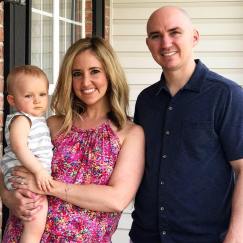
Imagine being hospitalized with a Crohn’s disease flare. Now, close your eyes and picture yourself in Germany, surrounded by doctors and nurses who don’t speak English. Brittany7You have your husband and children, but other than that…all your family and friends are thousands of miles overseas. That was the case for my college friend, Brittany Cable. Brittany was diagnosed with Crohn’s in 2007, about a year after she had her oldest son.
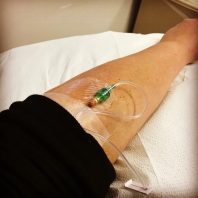
It’s one thing to take on IBD and be surrounded by family and friends who you can lean on for support, it’s an entirely different situation when you have to take on your disease in a foreign place, with nowhere to turn. Luckily, Brittany is now back in the States, with a strong support system nearby.

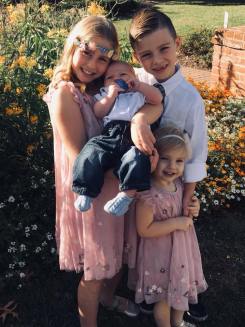
As an IBD mom, Brittany flared after all three of her pregnancies. While she was pregnant, her disease was well-controlled. She was able to bring three, beautiful, healthy babies into this world—despite her own health issues. brittany

Throughout her patient journey these past 11 years, Brittany has been on Asacol, Lialda, Uceris, Humira and Entyvio. The prednisone bursts and tapers have been difficult—to say the least. At one point, she was on 80 mg a day! To anyone who has been on prednisone, you know that’s a monster amount. After my initial diagnosis, I was on 60 mg for three months, so I can attest firsthand about how much of a struggle that presents due to all the side effects.

Brittany is a super-mom in every sense of the word. She’s now a single mom, raising three children, as she takes on Crohn’s. She works full time and has full custody of her children. She does this all alone. I’ve known Brittany for 16 years. She’s always been a super strong person with a great sense of humor. Brittany3Despite the hardships and heartbreak through her life, she’s never allowed the difficult moments to dull her spirit. She tells it like it is and isn’t ever shy when it comes to sharing her story. I’ve always admired that about her.

As Brittany says, the constant fatigue, body and joint aches are what she struggles with the most now. Every day after work, she is tired and wants to crawl in bed, but she knows her kids depend on her and need her. She knows dinner needs to be made and soccer, swimming and other activities have to be attended. It’s one thing to be a single mom and have your health—I can’t imagine living her reality and doing it all on her own. But she does. And her kids have thrived because of her herculean efforts to be there and be present, every single hour, of every single day.

So how does she do it? Brittany says, “When I think about my journey so far, I figure if I made it through having three kids, living in a foreign country and my husband leaving… all while managing Crohn’s disease, there isn’t any thing I can’t do. Every time I get a stomachache, I still fear that something horrible is about to happen, but I think that’s normal for all of us on this journey. So I take everything that comes my way one day at a time. My children will not suffer if I don’t make a home cooked meal every night. Sandwiches or pizza are okay!”brittany2

When Brittany’s husband left her and their children, she was sure the stress and drama of it all was going to throw her disease in a tailspin. But it didn’t! Instead, the hardship has empowered her to trust in her faith and seek counseling. She chooses to tell herself everyday that she is stronger than her disease and even if it attacks again, she knows she will get through it. And I know she will, too. Because that’s Brittany.

Crohn’s Research Study: Share your patient experience

Research studies provide insight and hope for those of us in the inflammatory bowel disease community. Whenever I get the chance to participate in a study and share my patient journey, I do so. I’m passionate about helping researchers understand the intricacies of the disease so they can fine tune treatment and care.

Recently, a master’s degree student from RGUPicRobert Gordon University in Aberdeen, Scotland, named Katie LaSalle, reached out to me about a research study she is conducting surrounding IBD. Katie has family members and a friend who battle Crohn’s, and has witnessed firsthand how debilitating and difficult the disease can be.

For her research, Katie wants to discover how IBD patients obtain their information, manage their healthcare, and use their patient knowledge to take on the disease each day.

Katie says, “Ultimately, I want to look at ways information sources can be improved to provide better support for Crohn’s patients. Personally, I have a perception that health care providers could be doing RCSEDPicmore to provide patient education and information support, and I’m curious on the patients’ perception and how they feel the information is lacking/could be improved.”
This questionnaire is anonymous and is broken up into two sections. The first is 10-15 minutes and will ask questions about demographics and information seeking behavior. The second section, the baseline health literacy test, is 7-10 minutes.

Click here to participate.

The deadline to complete the online survey is August 23, 2018.


To the person who doesn’t want to see me smile as I battle Crohn’s

Today marks my 13th anniversary with Crohn’s disease. Lights, Camera, Crohn’s: An Unobstructed View, is two years old today! It’s a big day. Lots of reflection and bittersweet emotions. It’s always difficult to know how to handle an anniversary of a chronic illness diagnosis—is it a celebration? Is it a remembrance of what was? Is it all the above? For me, I like to think about how far I’ve come since July 23, 2005. How my perception of life, people and my own personal strength has grown, changed and evolved, thanks to my disease.

Since I started sharing my story in 2014 as a patient advocate, I’ve really put myself out there. I’ve been vulnerable, honest and haven’t minced my words. I’ve been fortunate to have speaking opportunities, videos, conferences and feature stories. While that is all wonderful—it also puts you in a space and a place where complete strangers—who have no idea what you’ve endured, can pass judgement and make claims about how you choose to take on your illness.

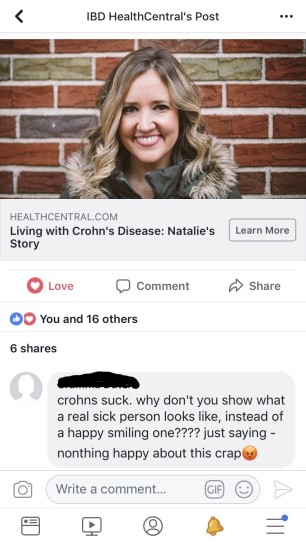
This past week—I was surprised by a comment on Facebook, written on an article by Health Central that highlighted my patient story. Like many people on social media, rather than read the article—they reply to the title or the pulled quote in the caption. Reader CommentThe featured image from the story is one of me smiling outside my home. The comment on the article: “Crohn’s sucks. Why don’t you show what a real sick person looks like, instead of a happy smiling one???? Just saying—nothing happy about this crap.”
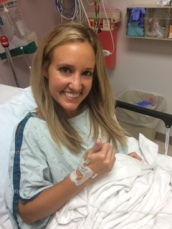
This really took me aback. This felt like a slap in the face. This comment hurt me. Obviously, she didn’t read the article or she would have known about all my hospitalizations, surgery, and rollercoaster of a journey. But to flat-out judge a fellow patient who lives with this debilitating disease and demean me for having a positive attitude…and smiling (God forbid!). If it weren’t for my attitude and the way I approach my Crohn’s disease, I never would have accomplished my dreams of being a television news anchor. I never would have trusted a man with my heart and gotten married. I never would have become a mother and gotten pregnant again.

If there’s anything I’ve wanted you to take away from my blog and my journey, it’s about finding the power of positivity in your experiences and seeking the good that still exists in your life, despite your disease. If you want to think woe is me and suffer all day long on the couch…that will be your life. image1 (13)If you choose to smile and show Crohn’s who’s boss, than no matter what obstacles and setbacks come your way you’ll tackle them and fight through flares with a knowingness that better days are ahead.
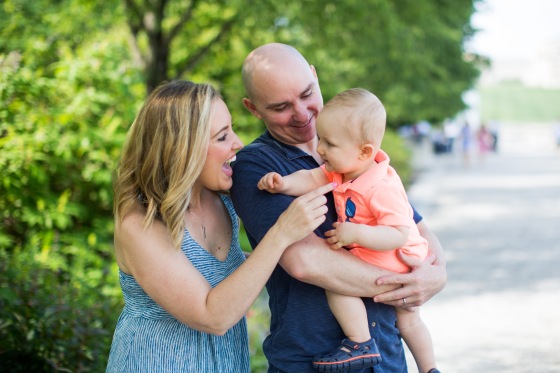
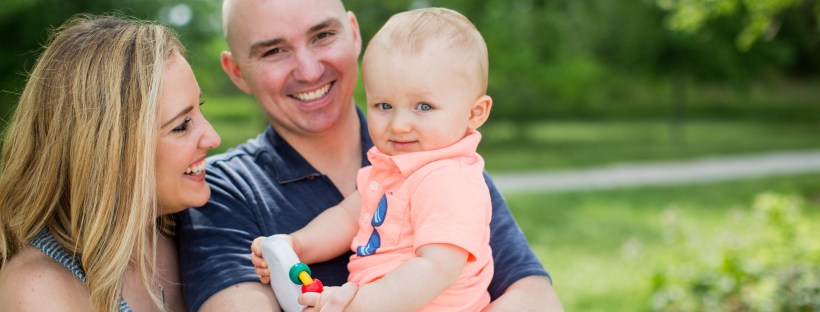
As a patient advocate—I know I can’t please everyone. I know not everything I say will resonate with you. And that’s completely fine. All I ask is that you have an open mind and understand that each person chooses to take on this terrible disease how they want to and shouldn’t be called out for it. My life is not all about hospitals, IVs, pain and suffering. Yes, this past week my injection hurt so badly I was sobbing hysterically and yes my stomach was killing me while out to dinner. But you know what, those moments passed. Rather than allow my pain to rob me of a wonderful conversation with a friend—I stayed at the restaurant. Instead of wallowing in the pain of my injection and the bruise that remains days later, I had a bowl of ice cream and gave my 16-month-old a few extra high fives. _F6B3268

So, to whoever decided to try and belittle me on the article about my patient journey and look down on me for smiling, please know I am a real person…and I am sick. But sick doesn’t come first when I think of who I am. It’s a part of me. It’s not all of me. That’s how it will always be, no matter what. And one thing I can promise you—now and in the future, it will never stop me from smiling.


Taking on dehydration with the help of DripDrop

Making sure I don’t get dehydrated while taking on Crohn’s disease can feel like an uphill battle at times. Add in pregnancy to the mix and dehydration can be a real concern. Not just for me, but for my baby. I never thought I’d be so happy to reach the second trimester to arrive. For six weeks straight, I vomited 2-5 times a day, along with several bathroom trips (thanks to my Crohn’s). There were moments I was nervous. There were times I wondered if my baby was getting the nutrition and hydration it needed to thrive and develop. This is where DripDrop came in.

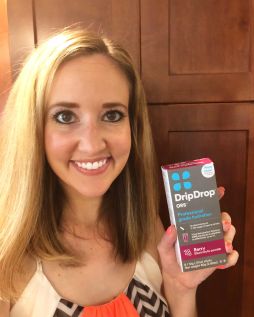
DripDrop is an oral rehydration solution (ORS) developed by a pediatrician. dripdropEvery stick of DripDrop is formulated for fast absorption, making dehydration recovery as effective as an IV—without having to take in the excess sugar found in sports drinks. It contains a precise ratio of sodium, sugars, and other electrolytes that absorb quickly and hydrate more effectively. For me, this was huge. There were times I called my OB after throwing up multiple times, wondering if IV fluids were necessary…but thanks to DripDrop, I was able to stay in the comfort of my home and boost my hydration in a matter of minutes.

As a pregnant mom of a 15-month-old, this was huge for me. No one likes getting IV’s and no one enjoys sitting in the hospital and being away from family. DripDrop is the solution, literally and figuratively to combat this. This pregnancy, just like my last, I consult with a regular OB, a high-risk OB and a gastroenterologist. All my doctors gave me their stamp of approval for using DripDrop. Before I started using it, I consulted with each of my healthcare providers. They looked at the ingredients and were impressed. My high-risk OB even said she was going to start telling other patients about it, so they too could try it out!

DripDrop has given me peace of mind, comfort and Flavor-graphic-squarehelped me get through the dehydration that comes along with pregnancy symptoms. It’s super easy—you just need water and then pick your favorite flavor to mix in. My favorite flavor is Berry. Along with helping me feel better through my pregnancy, I find it helps when I take my son out for walks on 90 degree hot and humid summer days in St. Louis and when I physically feel the need to boost my reserves.
You don’t need to be pregnant, you don’t need to combat a chronic illness. DripDrop is an amazing tool for all of us. Our military, athletes, firefighters…you name it, have experienced the benefit. Interested in trying it out? You can get a two-stick trial for $3.99 by clicking heredripdrop2

I’m excited to continue to use DripDrop throughout my pregnancy and to share my journey with you. As a chronic illness mom, who’s preparing for baby number two, I’m grateful to have DripDrop in my arsenal so I can be as strong and present as possible.

The story behind the announcement: Celebrating our rainbow baby

On Mother’s Day we received the best news. I woke up, took a pregnancy test and found out our little rainbow baby had arrived. Two months prior, I endured a miscarriage. It’s something I don’t talk about often, but something that still stings.

blog photo

Mother’s Day 2018-the day we found out we were pregnant.

Ironically, I would have been 13 weeks on Mother’s Day. We had planned to make the news public on that day. God had a different plan for our family and brought in new life that day instead. Each time I say “baby number 2” I hesitate, since it’s actually baby number 3.

For me, miscarriage was worrisome, because I didn’t want the stress or grief to throw my Crohn’s out of control. I didn’t want to jeopardize my health for the next pregnancy or for my family. I hesitated in whether to share about this experience, but know my words will help to shed light on something so many women go through, often in silence. As a chronic illness mom of a 15 month old son, I not only want to share the happy times, but also let you know my days are not all sunshine and rainbows. If you are reading this and yearning for a baby, know my heart is with you. If you’re concerned about your body that’s stricken with a chronic illness creating life, you are not alone. When you see a pregnancy announcement on social media, understand there may be a backstory you are unaware of. announcement

Pregnancy while battling Crohn’s disease, or any illness for that matter, is a constant state of unknowns. You never know if your body is going to fail you or how your medications are going to impact your unborn child. It’s a heavy weight to hold. The symptoms of pregnancy coupled with Crohn’s symptoms are a lot to handle, especially while chasing a toddler around. The fatigue is amplified ten fold. The benefit of pregnancy symptoms is that there is an end in sight, you know you’re feeling poorly for the best reason possible. It’s so much different than chronic illness, which is never-ending.

The key for me is staying proactive with my health. Recognizing when I need to slow down. When I need to lean heavily on my husband for help and trusting that my son will be “ok” if we spend a low key day at home. I find since I’ve brought a life into this world before, I am more confident in my body and what it’s capable of. I’ve witnessed that despite taking a biologic my entire first pregnancy, my son is the picture of health. It’s my hope that’s the case for our baby girl who is due in January.

As women and as mothers, there is so much to consider when going into a pregnancy and starting a family. My hope is that you don’t allow your chronic illness to rob you of your dreams, if this is what you aspire to have in your life. I use a healthcare team approach and seek care from a regular OB, high-risk OB and my gastroenterologist. blogbabyEveryone works together to watch me, the baby and the pregnancy every step of the way. We get an ultrasound once a month! I see that as a perk!
I’m so excited for what’s ahead for my family and hope and pray the second and third trimesters go smoothly and are flare-free. Thank you for all the support, well wishes and kind words. I share my story because I want to touch lives. I want to show that motherhood is possible, despite illness and that you too can find your rainbow.

Why July, my Crohn’s and I don’t mesh

Oh, July. We meet again. Each and every year I dread you. For some reason, you like to throw me curve balls—time and time again. From my diagnosis of Crohn’s, to that tennis ball size abscess, to starting Humira, and to the bowel obstruction that resulted in 18 inches of my intestine being removed. The month of July and I just haven’t meshed well since 2005.

Do you ever feel like certain times of the year, months or seasons tend to trigger your symptoms? natalieandreidI don’t know what it is about July, but that’s always been my danger zone. I always breathe a sigh of relief when August begins. Call me superstitious, but prior to getting married, I knew I could never have my wedding this month nor would I want to welcome a baby into the world. I have July’s number.

Keeping those difficult moments in the past and not allowing them to seep into my daily thoughts can be a struggle this time of year. I’ve always been one to reminisce and think about memories and experiences. I have a reputation for having a mind like a steel trap. Ask me what I was wearing, where we first met, when your birthday is…I could probably tell you the information without having to do much thinking. Sometimes that’s a nice trait to have, but it can also be detrimental. The difficult July moments in my past still feels so fresh, despite the years that have ticked by.

So how do we get passed the past? It can be easier said than done. But, here’s what I do to cope:

Get out of your head

Sure, my Crohn’s has wreaked havoc on multiple occasions during the month of July—but, out of the last 13 years I’ve also had nine good Julys. It’s easy to fall back and focus on the negative, try and think about the times your body has surprised you in a good way. If you stress and worry about the unknown that will only increase your likelihood for experiencing painful symptoms.

Be proactive

If you are noticing your disease is spiraling out of control, remedy-nsmith-stlouis-1284nip it in the bud. Don’t try and be a superhero and take on a flare yourself or fail to communicate to those around you. You and I both know exactly how it feels when a trip to the hospital is a must. Delaying the inevitable will only add insult to injury. Stay on top of maintenance medication, vitamins, exercise and sleep.
Try to place more emphasis on self-care

If there’s a pesky month or time of year be selfish and do what you need to take care of you. Does walking outside in nature help you clear your mind? Do you enjoy taking an Epsom salt bath? Reading a book by the pool? Do whatever brings you a sense of calm. Your body and mind will thank you for it.

Celebrating a decade of Humira Mondays and what’s on the horizon

This week marks a decade since I first felt it. It referring to a Humira injection. To this day, I can still envision myself shaking like a leaf as the nurse in the doctor’s office instructed me on how to self-inject a biologic drug into my thigh for the first time. Rather than give me the four loading dose injections, she made me do them all by myself. I was petrified. I was emotional. I was worried. IMG_0243

I had no clue if this heavy-duty medication would help ease my symptoms. I had no idea how it would feel to inflict pain on myself. I was overwhelmed, frail and healing from a hospital stay days before, following an abscess the size of a tennis ball in my small intestine. I was 24 years old.

I did one. It felt like liquid fire burning through my skin. Tears rolled down my cheeks. I had to do three more of the very same, while sitting in that chair. My mom looking on with a concerned look in her eyes. Wishing she could take the pain away. Wishing her daughter didn’t have to resort to this as a way of maintaining health. It was brutal. But I did it. Once the loading dose was over my mom and I walked together in the hallway towards the exit. We paused and hugged for several moments. I still remember the embrace.

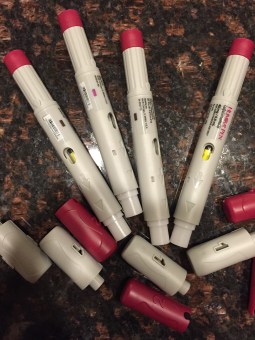
Fast forward 10 years. I’ve given those very same injections 267 times. Two loading doses (10 injections), four months of weekly injections (16) and 120 months of bimonthly injections (240). To this day, I am not desensitized to the pain or the anxiety associated with my Humira Mondays. But that’s all about to change. IMG_0239

Starting later this summer, sometime in August or September, for the first time in over ten years, I will self-inject with a brand new Humira formula. A formula that no longer includes citrate. This type of Humira has been approved in Europe for more than a year and is currently available to pediatric patients in the United States. This a HUGE lifechanging moment as an inflammatory bowel disease patient. My maintenance of my disease is about to get a so much easier. My Monday evenings will be so different.

Rather than dread the injection as I stare at it on my kitchen counter, it won’t be a big deal. My husband and son won’t need to watch me wince in pain and fight back the tears as I count to 10 and hold the needle in. Since I started Humira in 2008, I never expected this day to come. I didn’t know it was possible. It still seems too good to be true. IMG_0240

I’ve battled Crohn’s disease for nearly 13 years. This new “pain free” formula for Humira is a major patient win for anyone who depends on this drug for quality of life and healing. I’ve heard from my GI and from patients who have used the new citrate free pens, that you can’t even feel the medication going in and that I may wonder if I even got the medication! It does my heart good to know that young pediatric patients will no longer have to endure the pain and be so fearful of receiving their medication. Words can’t express my gratitude and excitement, as this change will help ease my life as a chronic illness patient in a big way.

This evening as I do my injection, it will bring me comfort to know the moments of pain will soon come to an end.

Taking on IBD one step at a time: Getting empowered through Team Challenge

One of the many benefits of getting involved with the Crohn’s and Colitis Foundation is finding people locally who understand and live your reality. I became friends with a woman named Angie last year. facebook_1529431731870She’s a resilient person with a positive attitude. Her energy is contagious. This week, a guest post about her involvement with Team Challenge and how it’s enabled her to find community not just in St. Louis, but throughout the United States. I’ll allow Angie to take it away…
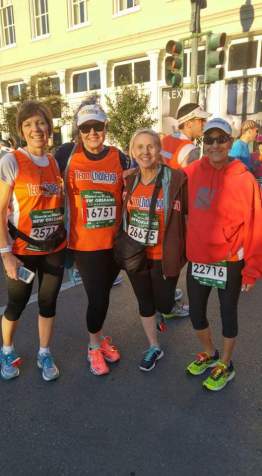
My journey began with inflammatory bowel disease began in April 2011. For me, symptoms went from non-existent to emergency surgery within a month of first waking up with cramps and diarrhea. I had been a healthy active person up to that point and I was a month shy of my 46th birthday.

I was first diagnosed with ulcerative colitis, but that diagnosis was later changed to Crohn’s disease. Due to reoccurring abscesses, my GI doctor ordered some additional tests that showed I have Crohn’s. When I was first diagnosed with IBD, I had never heard of Crohn’s disease. There was so much to learn and absorb, but I was so sick, it was hard to take it all in. My emergency surgery resulted in a total colectomy. I had a perforated bowel in 4 places. Once the surgeon opened me up, he discovered things were much worse than he expected and I had sepsis. Those early days in the hospital were hard, but I was committed to staying positive and hopeful.

One of my favorite ways to stay active had always been power walking. If I could walk somewhere vs getting in my car and driving there, that was my path of least resistance. So, getting to a point where I felt well enough to get back to exercising was a goal of mine. Ironically when I first asked my doctor when he thought I’d be well enough to power walk again, he recommend I not walk too far because he knew I’d probably need to use the restroom. In those first couple years living with Crohn’s, I was taking 20+ pills a day and probably using the restroom 30+ times a day. I was fragile and got short winded quickly, even walking to the corner in my neighborhood was a challenge.  I stayed hopeful that brighter days were ahead. I was very fortunate to have a very supportive group of friends and family around me.

Fast forward to the fall of 2015. I was feeling much stronger since being on Humira for about a year. facebook_1529431766690I saw a post on Facebook about Team Challenge and an upcoming Rock and Roll Marathon and Half Marathon that was taking place in February 2016 in New Orleans. I didn’t hesitate to sign up and commit to doing a Half Marathon and fundraising to find a cure for Crohn’s & Colitis. Almost immediately, one of my childhood girlfriends decided she was going to do the Half with me and she too joined Team Challenge. I’m not sure we knew what we were getting into, but we were 100 percent committed. Two ladies, soon to be 50, and neither had even done a 10K, let alone a Half Marathon! In full disclosure, we always knew we were going to walk, not run the Half. We might be crazy, but as they say, we were only “Half Crazy”!

Team Challenge has been one of the best decisions of my life. It has been a truly life changing experience. I am about to start training for my third Team Challenge race taking place in November in Savannah, GA. Team Challenge is a few hundred people who share one common goal, which is to find a cure for IBD. Once you sign up, you commit to a fundraising goal, but Team Challenge provides the coaching and training to not only complete the race, but to reach your goal and have fun along the way.

Race weekend is amazing! There are opportunities throughout the weekend to meet with your individual team, as well as the entire Team Challenge family. The night before the race there is an inspirational pasta dinner.

The evening is filled with tears of joy and we celebrate our combined mission of finding a cure. Some are parents running or walking for a child, some are friends and family running in memory of a loved one lost, and some are like me – a Crohn’s patient determined to not let Crohn’s hijack her life!

My advice to anyone looking to feel empowered against IBD would be to get involved with Team Challenge. I have made so many new friends and I’ve gained so much confidence through my involvement. I guarantee you’ll leave race weekend with a feeling of accomplishment and you’ll feel the love from the Team Challenge tribe that is now an extended family and support system of your own.

Click here to learn more about how you can get involved with Team Challenge.

An ode to Dads: A letter from a father of four with IBD

I’d like to give a shout out to all the dads out there who have inflammatory bowel disease, yet persistently persevere to make life happen. christian3  

I have been dealing with UC/Crohn’s for 18 years now, and in that time, I have had seven surgeries, countless procedures, two near death experiences, my colon removed, a j-pouch, my ego scared, and my relationship with God strengthened.  I’ve tried every prescription drug, had every side effect, and continue to fight the good fight on a daily basis. christianI’ve also been blessed with a beautiful wife and life partner, as well as four amazing children (10, 7, 3, and 9 months). This takes an already difficult situation, and adds more “life” responsibility as well.  

You see, as a father, you place the needs of your family and children above your own.  A father doesn’t really get a day off. And when you’re dealing with health issues that can cause daily battles, it’s easy to find yourself in a place of self-pity, weakness, or doubt.  That’s why I’m absolutely amazed to see the strength of all the dads out there that can deal with this struggle, but continue to be a dad first, push through, and ensure that “life” still happens. You see, Crohn’s doesn’t mean you can miss baseball practice, the soccer game, the anniversary dinner, or just “life” in general. Life will go on with or without you, so all those with chronic illness are heroes in my mind.   In fact, being a father of four has been the most motivating and rewarding things we could have done as a family. christian2

I can remember when I was recovering from one of my more recent surgeries, my family came in to visit me in the hospital.  Like most fathers, I felt the need to provide for my family, get back to work, I just had to get going. I just didn’t have time for this!  There are MORE than enough reasons for everyone impacted by IBD to feel defeated, want to give up, or take an easy route. My family is a CONSTANT motivation for me to keep going and keep fighting the fight. I cannot and will not let them down. I think most fathers feel that way. We are here to help shape our children, and ultimately provide the ability to learn, have fun, be kids, and eventually mold them into productive members of society.  It’s a tall order for us all, but I think men with IBD have learned to be persistent with their health battles, and that also helps us to persevere through the trials and tribulations of fatherhood.

So today and every day, I commend all of those fathers who refuse to let their disease dictate their life.christian4 Take the time to get to know a father with IBD, and you will meet one of the most courageous strong willed people in the community. As a man, we can sometimes let ourselves down because as an individual, it just impacts me. But as a father, that is not an option.  We must persist, have faith, and fight the fights every single day, so that we can continue to mold and shape our children, and provide support and guidance for our families that mean absolutely everything to us.  

We are motivated, we are strong, and we have IBD.  Above everything else though, we are blessed to be a father, and if lucky enough, a dad.  

Finding strength through your IBD tribe

Back in the fall, I had the privilege of sharing the stage with a fellow IBD advocate in the St. Louis area during a Crohn’s and Colitis event. Her name is Kelli Young. Kelli has battled Crohn’s disease for 28 years. She’s a veteran to the game, and has incredible perspective about how IBD not only shapes our lives, but dictates the kind of people we become. This week—a guest post from Kelli about why finding your tribe—an empathetic support system—makes a world of difference.

It took over a year and a half of being prodded and poked in every orifice of my body to receive the diagnosis of Crohn’s. I received the devastating news eight days before entering my sophomore year in college. IMG_1076The excitement of knowing “I’m not a hypochondriac” was overshadowed by the fear of having a “poop disease”. You see, my first year of college, I became best friends with my Suite mate. Ironically, she too battles Crohn’s. I was 20 years old, diagnosed with a disease that had no cause and therefore no cure…how can that be? Why me? What am I going to do?  I didn’t even know how to swallow a pill. I was never the sick kid! Now, I had to take 24 pills a day, which sometimes would take me an entire hour to swallow one dose, throw up, re-swallow again. Three times a day. It was as if I had entered “hell”.IMG_1077

Six month after diagnosis, I came home from college for winter break.  Tipping the scale at a whopping 75 pounds, my body was too weak to undergo surgery. For 45 long days, I received all my nutrition through an IV. This was so my bowel could rest as I prepared for a colon resection. The surgery was my only hope for living a more productive life.

What I’ve learned after nearly 30 years with IBD

Fast forward nearly three decades—and through the years, I’ve been labeled as “the complicated” patient. I’ve undergone multiple surgeries which include: three colon resections, gall bladder removal, appendectomy, countless ERCP’s and fistula repair. Can’t forget the life-saving blood transfusion I needed after my colon ruptured, causing me to lose half my blood volume. I dealt with TPN (Total parenteral nutrition)/bowel rest for each of the three surgeries. 45 days was my longest duration on NPO(no food). 30 days was my longest hospital visit. For the last 28 years, my body has had medication dumped in it.

My generation was taught differently. IMG_1078Which made my journey with the disease a little different than today. I was raised to think “only the weak complain!”  “Someone always has it worse!”  “Suck it up butter cup”.  “If you want the job done right, do it yourself”. This made me look at the situation as this was “my” disease, “my” problem and I don’t want to make anyone worry about me or feel sorry for me!  I became a master at hiding the disease and a master at hiding the byproducts of the disease.

It has taken me decades to evolve. Six years ago, I realized, I had to create a better “village” for myself. And my voice was starting to be heard. I just wanted my peeps to treat me as an equal, no matter how many bowel movements I’ve had that day. And most importantly, yearning for support and compassion, not to be mistaken for pity or despair! During my evolution process, big sacrifices had to be made. As a mother of two, I had more than just myself to think about.

The power of transparency

Today, transparency has set me free. Free from the misconception that I’m “lazy”. Free from the labels placed on me because of my thin statured frame. Free from the worry of how others view me. And free to live my life.

Today, I am able to share my journey with an audience that might share a similar experience or with an audience that has a loved one with Crohn’s Disease. I share my story, with the hope of inspiring others and showing anything is possible.

My disease has made me who I am today. It has taught me that I am strong, determined, confident and secure. kelliI’m a proud mother to two amazing children. I carried and gave birth to both of them with zero complications. I’m a business owner of a successful insurance agency, which I established 4 years after diagnosis. I didn’t allow my disease to derail my professional aspirations. I’m an active mother and manage to find time to be a room mother and Girl Scout cookie manager.

As a patient advocate, I serve on the board of the MidAmerica Chapter of the Crohn’s and Colitis Foundation, in addition to other professional boards. I value the good days! I reflect on my bad days and listen when my body tells me to slow down and get rest.

My advice to you

If you’re newly diagnosed or in the thick of the battle, it’s important that you realize… “this is your normal”. Embrace it! Accept it! Own it! Speak about it!!  Get a “village” that gives you positive support, not to be mistaken for negative attention. If I can get thru this crazy game of life with Crohn’s disease, so can you!  Don’t let the disease define you.

While I know my journey will include the daily struggles from the disease, it no longer is my hidden secret. My village knows and loves me for me. They understand the disease and ask questions to understand it better. This is not just my “problem” any more. As we all patiently wait for a cure, it is important we speak up, join together and help one another.