The Disability Showdown: How those with IBD in the US can get the benefits they need

This article is sponsored by Atticus. All thoughts and opinions are my own.

Navigating federal disability like Social Security Disability Insurance or Supplemental Security Income with inflammatory bowel disease (IBD) can be complicated and overwhelming. Those with chronic illness in the United States face roadblocks when it comes to being on the receiving end of benefits. Did you know 80% of people are denied the first time they apply for federal disability benefits and an astounding 90% are denied during the next stage of appeal?!

This week on Lights, Camera, Crohn’s we hear from Sarah Ashmore, an attorney at Atticus who has Crohn’s disease. The firm’s core mission is to “tear down barriers between people in crisis and the aid they need.” The social safety nets that exist are quite difficult to access. Atticus strives to help people in the IBD community and beyond get the assistance they deserve.

Juggling a flare and disability benefits 

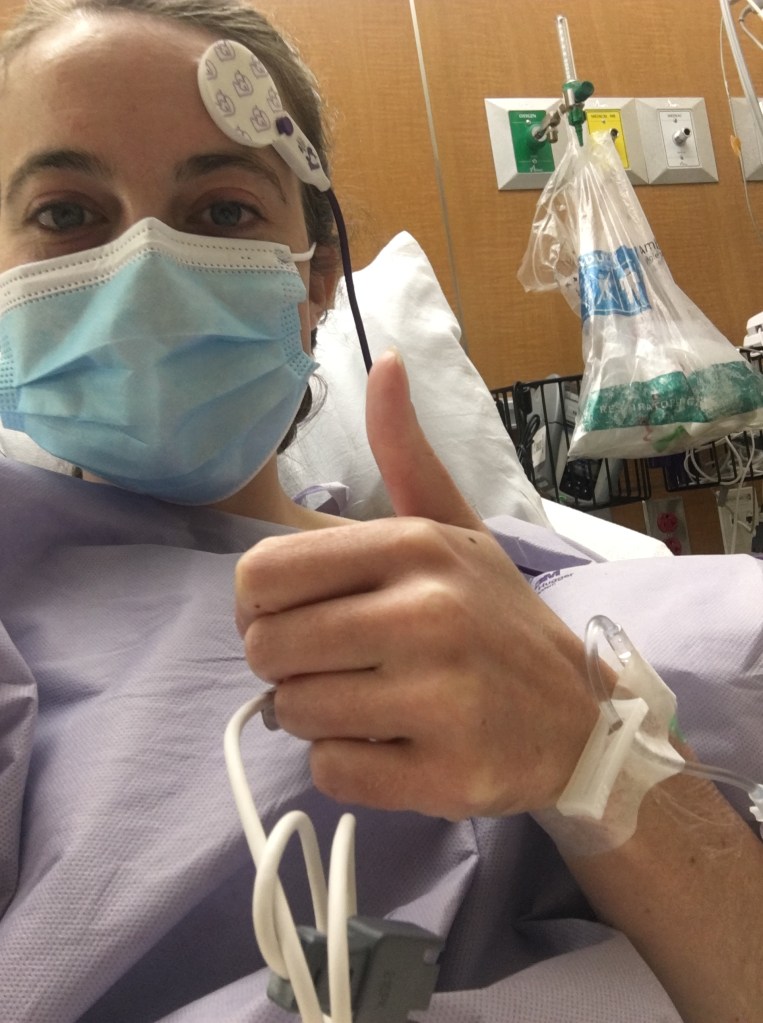
Since being diagnosed with Crohn’s disease in 2005, luckily, I’ve only needed to utilize short term disability through my former employer after my small bowel resection. In the moment, surgery recovery and dealing with Human Resources unexpectedly from my hospital bed was stressful. I went from speaking at an all-employee event to blacking out from abdominal pain in the bathroom and going to the hospital. When I left my work office in July 2015, little did I know I would not be healthy enough to return for more than two months. 
At the time, I was completely naïve to short term and long-term disability benefits and how to get the support I needed to fully recover from surgery and maintain my position at work, while receiving a portion of my salary. I was like a fish out of water, learning as I went. I received my benefits and didn’t have issues, but that’s often not the case. Luckily, I’ve never needed to explore this further, so I did not need to utilize Atticus’ services.

Sarah’s experience

Sarah was diagnosed with Crohn’s disease in 2019 after dealing with symptoms for a year that left her feeling weak and powerless.
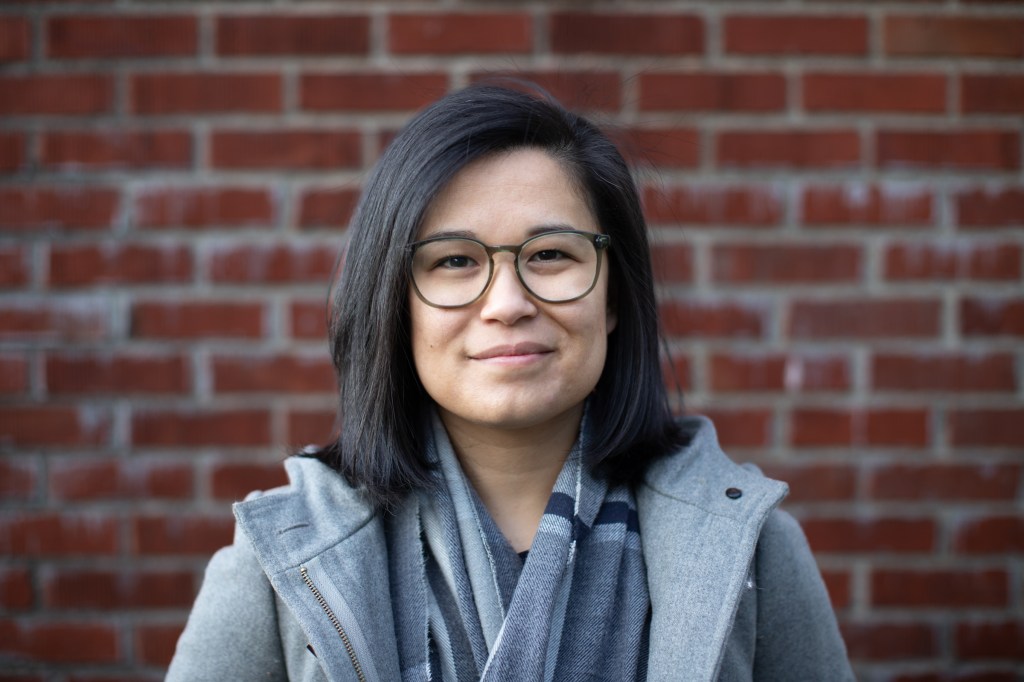
At the end of that year, my symptoms were so severe that I had to take short-term leave from my job and move in with my family to help take care of me: I was so sick that I couldn’t wash my dishes,” she said.

Sarah applied for short-term disability while awaiting her official diagnosis. Thankfully, once she received her IBD diagnosis and was put on medication, she was able to return to her old lifestyle and work.

“I think one of the biggest roadblocks is that applying for benefits requires organization, persistence, and patience and trying to access them on your own while dealing with the types of symptoms from an illness or injury that make it difficult for you to work can be extremely hard. I needed that support from my family and friends while I was applying for short-term disability and, for many people, applying for Social Security Disability Insurance (SSDI) is a harder and longer process.”

What makes someone eligible for disability? 

There are multiple options and they get confusing fast! You may wonder Which Benefits Do I Qualify For? Both short-term and long-term disability are often private insurance policies, while SSDI and SSI are provided by the government. 

Short-term disability, like what Sarah and I accessed, is generally private disability insurance that you purchased or was provided by your employer before you became disabled. It normally lasts 3-6 months and pays a percentage of your salary. There are also five states that offer short-term disability separately from private short-term disability. Long-term disability is very similar to private short-term disability, but it often pays a smaller percentage of your salary and, of course, lasts longer than private short-term disability. 

Social Security Disability Insurance and Social Security Income are both federal programs and, really, where Atticus can help. 

“Both Social Security Disability Insurance (SSDI) and Social Security Income (SSI) are federal programs designed for people with a diagnosed medical condition that will prevent them from working for at least 12 months. The technical eligibility (such as how much money you make or your age) is different for each program, as is what a beneficiary gets. The medical eligibility for both programs is the same: you must have a diagnosed medical condition that will keep you from working (although you can do some limited work) for at least a year,” explained Sarah.

The rules around eligibility are quite intricate and there are exceptions, if you are struggling to work due to your chronic condition or disability, make sure to talk to a lawyer about your specific situation to see if you’re eligible for coverage.

For SSDI a person should generally be making less than $1,350.00/month at a job, be younger than 66, and have worked about five of the last ten years. If you are awarded benefits, you get Medicare and up to $3,300.00/month depending on your work history. 

For SSI, a person should generally be receiving less than $841.00/month from any source of income and have less than $2,000.00 in assets (not counting things like your home) if you are single. The income and asset limits are a bit higher for married couples. If a person is granted SSI, they get Medicaid and up to $841.00/month depending on your sources of income. 

You can apply for both programs at the same time, and, in some cases, a beneficiary can be on both programs at the same time. 

“While there are general rules for eligibility, the evaluation is involved and there are exceptions to the rules, so please reach out to us at Atticus to determine your eligibility because we can offer individualized advice based on the specifics of your situation,” Sarah said.

Dealing with the disability denial and when to seek counsel

Getting an initial denial does not mean that you won’t get benefits or that you have a bad disability case. Don’t let this stop you from going through the process. If you get a denial, Sarah tells me you should request reconsideration within 60 days. This is when it’s optimal to get legal counsel involved. The lawyers at Atticus can walk you through the next steps in detail and get you connected with someone who can help you.

 “Ideally, legal counsel would not be necessary for getting disability benefits but, unfortunately, many people do need it. Although having a lawyer can be helpful at any stage of the process, if you are at the hearing stage, you are three times more likely to get benefits if you have an attorney or legal representative with you. Good lawyers will have the experience to understand what the Social Security Administration is looking for when determining whether to grant benefits: they should understand what documents you will need and what questions you will need to answer to help your application,” she said. 

Why Atticus is completely free to clients

All SSDI and SSI attorneys and legal representatives get paid on contingency, so they only get paid if they win their client’s case. If they don’t win, the attorneys (and Atticus) get nothing. The federal government actually sets how much an SSDI/SSI attorney can get paid so it is the same across the board: 25% of only the first check that someone gets from the Social Security Administration should they win their case, capped at $7,200.
 
“Atticus gets paid by the attorneys that we refer a case to the same way the attorneys get paid by the Social Security Administration. If the attorney or legal representative wins, we get 25% of whatever the attorney got from SSA. That is never passed on to the client (so the amount of money taken out of the client’s first check is always the same). Getting paid this way allows us to provide free advice and resources to folks we speak with whether or not they are eligible, want an attorney, or end up using our services,” Sarah explained.

Click here to connect directly with an attorney at Atticus.

Coming to grips with the emotional struggle of realizing you need help

The stress of life and career can make this entire ordeal feel endless. As we all know it can be humbling to have to express how sick you are to those who often don’t understand the severity and complexity of IBD. There’s no need to suffer. There’s no need to be a martyr. Recognize when you need to wave the white flag and realize needing disability, whether SSDI, SSI, or short term does not make you less than your co-workers or peers.

Much like myself, Sarah and I don’t consider our Crohn’s a “disability” per se, but we did know that we could not work or live the way we were when we needed support. 

“It’s a common theme we hear a lot from our clients. Especially if they don’t identify with the term ‘disability;’ or if someone feels like they are taking a government hand out after spending years working hard to make it on their own. SSDI is forced insurance designed for people who can’t work due to an injury or illness. Most workers have been paying into it every time they get FICA taxes taken out of their paycheck. It is designed to be there when you need it. If you would feel comfortable using private insurance, you should feel comfortable using SSDI. Asking for help can be hard but doing it can be so good for you in the long run,” she said.

Demystify the process of applying for disability benefits

Atticus’ goal is to get as many eligible people connected with federal disability benefits (SSDI and SSI) as they can. 

“We function as the equivalent of a patient navigator for anyone in the disability application process. We are like a primary care physician, but for legal issues: someone will often come to us and say something like “I have this medical condition or had this injury; I can’t work anymore, and I am not sure what to do next,” Sarah said. 

When someone calls Atticus for assistance, they will speak with an intake specialist who can help determine what benefits they are eligible for and recommend next steps.

If you want to continue the application process on your own, Atticus can provide resources and input on next steps for applying (for example, letting folks know they should get specialist care and then call back or apply).

“We give out our Guide to Applying for SSI to folks doing their initial SSI application. If they are not eligible, we can often point them in the right direction for other resources they may be looking for (for example, help with housing or signing up with Medicaid).”

If you are eligible and want legal help for the process, Atticus connects you with a legal representative or attorney who they think would be a good fit based on the specifics of their case, such as: location, case stage, medical condition, etc. 

“We only work with attorneys that we have hand-picked and vetted. Those attorneys and legal representatives don’t pay to join our network or sign up for a membership with us; we thoroughly vet every lawyer and representative we work with and form relationships with only those we trust and respect,” Sarah explained.

Testimonials from IBD warriors

Jeremiah: “I have been dealing with IBD for 13 months. Atticus was able to help me with my legal issues while I was too sick to fight for my own rights. I was able to receive the best representation while becoming healthy again. They fought for me and today I am receiving SSI and disability for my condition. These programs are dedicated to people like us, who are suffering. Now I do not have to fear the future or what I will do when I flare again. I’m able to focus on my health and live my life. I urge anyone to ask for help, it’s out there. Atticus is one phone call or e-mail away.”

Joni: “I was diagnosed with Crohn’s almost 2 years ago, but lived with IBD for years not knowing what it was. Treatment is not 100% as I still tend to get flare ups that usually put me in a hospital, missing work. With that and other health issues, I decided to apply for SSD, being denied twice, I reached out to Atticus to get legal help/representation. I emailed them and within an hour they reached out. By the end of the day, I had an attorney representing me. They’ve been a great and fast help! Very professional!”

Helpful resources

A Registered Dietitians’s Take: Diet vs Medicine for IBD

Managing and treating inflammatory bowel disease (IBD) with medication is often necessary for those who live with Crohn’s disease or ulcerative colitis. But for many, it’s a difficult decision that often comes with pushback and worry. This week on Lights, Camera, Crohn’s we hear from well-respected registered IBD dietitian and ulcerative colitis patient extraordinaire, Stacey Collins, about how she breeches this subject with patients and caregivers and how she utilizes her own patient journey to help empathize with those who are struggling to take the plunge.

Holding space and helping patients accept their reality

When it comes to needing medication, oftentimes conversations are harder on parents or caregivers, than the patients themselves. Stacey tries to encourage caregivers to find the support they need to accept the reality of their loved one needing medication to have a quality of life.

She says, “If someone wants to work with me on their nutrition “instead of medication,” I try to understand where the person is coming from. Usually, it’s from a place of fear, or uncertainty, and I really affirm that experience and hold space with them. Medications, side effects, accessibility, and adherence…it can all be so…heavy. There’s plenty of room to hold those two truths: meds are hard. And they’re often necessary.”

Stacey says when having these conversations she always begins with listening and holding space and then she puts her clinical hat on to ensure that it’s understood that these diseases are progressive and inflammatory, and that science shows that it’s best to get ahead of the inflammation, often with a medical provider, rather than chasing down the symptoms and the inflammation while quality of life suffers.

“I see my role as a registered dietitian as supportive of both treatment goals: helping patients have a quality of life, while assisting with the inflammation. But, I can’t provide medical nutrition therapy without the medicine component, and since diet isn’t ultimately the cause of these diseases, it works best as a complementary therapy with the support of a GI team; not as a cure.”

If patients aren’t trusting of their GI provider, Stacey tries to encourage them to seek out an IBD-specific GI doctor, if possible, while ensuring there’s also frequent follow-up with their local GI team, if they’re living somewhere rural. She says a lot of these conversations are born out of not feeling supported by GI providers, so she tries to help patients find GI’s who specialize in IBD, who are that are a better match.

“I’m upfront about not feeling comfortable about using nutrition in lieu of medication. That puts a lot of non-evidence-based pressure on my job as a dietitian, removes a lot of joy from the experience of eating, and further perpetuates the stigma associated with medicine. IBD is not a preventative metabolic disease, and patients should never feel blamed for eating their way into an autoimmune disease diagnosis. It’s simply not true, and it’s harmful messaging.”

How Stacey’s IBD journey inspired her to become a registered dietitian
 

At the time of her IBD diagnosis, Stacey was desperate for anything to stay alive. So, when it was either steroids, a biologic infusion, or having her colon removed, she was thankful the outcome wasn’t terminal.

“I happily agreed to the meds without even thinking about it. Within a month, I felt like a “normal” college student again, and honestly the changes that I experienced within my body due to the disease itself (losing my long, thick hair in clumps from malnutrition; seeing my body change rapidly to look emaciated), were far more difficult than any side effects from the medication. I felt like it was very much a night-to-day scenario, and I was so grateful for the medications as a result.”

But once she started feeling a little bit better and opened up to some family members about her disease, she heard a lot of negative chatter about the aggressive nature of the IV meds that she had “chosen” and thought, “Hmm. Maybe I’ll try juicing and holistic wellness,” never mind the fact that she was 21 years old with no professional support in making that decision.

“I quickly ended up hospitalized and needing an emergency Remicade infusion (the good ole days when hospitals kept it stocked in their pharmacy). The attending GI doc gave me some tough love, and really took the time to explain to me how “this is lifelong” and “you can’t be late on an infusion, because your immune system will lose response to the medication” and that really clicked for me. It was a hard moment and a tough pill to swallow, but it was a lesson of “maybe my well-meaning family members don’t know what’s best for me, and I’m going to have to trust my body, this med, and this doctor.”

In the years after, she went on to lose response to medications, start new ones, and it was always a night-to-day scenario all over again.

“I think this black/white sort of dichotomy of my experience on and off medication helped me accept that this was my reality pretty easily compared to others’ experience perhaps where maybe they’re less sick and the meds (not to mention the insurance gymnastics required to obtain them regularly) might seem daunting and leave people thinking, “Do I really need this?”. I was able to truly see that meds (and a whole GI team advocating on my behalf repeatedly for access to them) absolutely are the reason I’m still here.”

The challenge of receiving infusions

Infusions were psychologically a little “icky” for Stacey at first. She went from being a young, fun college student on campus with peers one minute… to driving 5 miles away to an infusion center where she was the youngest by a longshot, usually next to someone twice her age receiving chemotherapy or dialysis, and then she would go back to campus and pretend like nothing had happened.

“My boyfriend at the time (now husband) and I had a favorite haunt: Homeslice Pizza in Austin, Texas. Before my diagnosis, we were there on a date, and I spent the whole time in the bathroom. This was one of those places where there’s only one toilet…so I’d immediately finish and get back into line for the bathroom.He was really kind and said, “It’s okay! We’ll take it to-go, and when you’re feeling better, we’ll come back and have a pizza day and celebrate!”

Stacey says they were both so grateful for the night-to-day improvement with medicine that they named infusion days “Pizza Days” and this gave her a reason to look forward to infusion days, instead of dreading them. Over the years, we started inviting our friends to “Stacey’s Pizza Day” everywhere we moved: from Austin to Houston to Oklahoma City, and her friends had so much fun celebrating her infusion schedule every 2, 4, 6, or 8 weeks.

Utilizing research to help back the need for medication

As a dietitian, medications are out of Stacey’s scope of practice. As a patient, she knows them to be helpful. She tries to connect patients to resources so they can make informed decisions for themselves with a GI team that they trust. Resources like the IBD Medication Guide on the Crohn’s and Colitis Foundation’s website are really useful, as well as IBD And Me if patients and caregivers are having some cognitive dissonance about finding a biologic that feels right for them.

“Then I’ll ask them about what their takeaways were. Sometimes, talking out these conversations really helps patients find useful, effective ways to communicate to their GI doctor, so while I understand that it’s not my role as a dietitian to provide guidance on medication selection, I’m happy to help patients sift through what sort of questions or concerns they need to express to their GI doctor. So often as patients we brush off our concerns or our fears because we don’t want to be a bother, and I really encourage patients to have these hard conversations with their GI provider; A good doctor will want to know.”

Why taking medication is not the “easy way out”

It’s fine to struggle with medications; medications can be hard. It’s not fine to feel shamed out of using them under the dogma of gut-health and over-supplementing, and unfortunately there’s a lot of misinformation in the IBD space of people professing left and right how they’ve “healed their gut” naturally.

“I feel like I’m uniquely in the middle of loving the science of nutrition and needing modern medicine to still be here. For me, it’s been damaging and debilitating to also make society comfortable with my need for medicine for so many years until I learned to let that go. Now I speak up when I can if it’s worth my energy. There’s nothing easy about needing medicine for life to stay alive, and the people who say otherwise just haven’t seen that in their life, and that’s okay. It’s not okay for them to think their experience can be applied to all people with gut health issues though. Would also love to have clarification on “gut health.” IBS? SIBO? Constipation? Nervous stomach? Gas? IBD? These are different things that can’t have the same, convenient solution.”

How we can rely on nutrition as a valuable tool in managing our IBD

Stacey sees nutrition as the shiniest, easiest available tool in a toolbox full of other tools: mental health, sleep, pain management/PT/movement, medicine, and surgery.

“Sometimes when I work with IBD patients, nutrition is not even the most important tool- it just depends on what’s going on in each person’s life. Maybe surgery is the most important tool, or it’s mental health. Different life moments with IBD will require different tools, and while my obvious favorite tool is nutrition, the other tools mean a lot, too.”

Nutrition is a tool that is compatible with all the other tools, and nutrition interventions might take some fine-tuning, mindset shifts, and some tailoring to each person’s lifestyle. But the beauty is that it can be picked up as needed, and that’s nutrition’s superpower: it’s a tool, and it’s also a bridge for connection, safety, comfort, and a quality of life within the context of IBD.

“I teach my patients individualized nutrition for IBD as the remissive/relapsing beast that it is, not just for what it looks like during the time that I work with them.”

Stacey’s advice for patients

  • Expect non-linear. Try not to compare. Feel the feelings, let the energy and the emotion move through you whatever way it needs to, brace for impact, and know you’re still here. Make room in your day to celebrate a good one!
  • Recognizing there can be two dualities that are true. You can hate needing medicine and be grateful that they kept you alive. You can feel deep sorrow for losing your health before you were old enough to acknowledge its presence and embrace this new, unprecedented, post-op reality, even though it’s different than what you expected.
  • Embrace your emotions. You can cryabout the reality of having needed an ostomy and be thrilled to eat a chocolate croissant in a moving car without pain BECAUSE the ostomy granted you a pain-free eating experience. You can be fearful about choosing a j-pouch and celebrate that it’s possible and wild to live with one.
  • Resenting the diagnosis is normal. You can resent your IBD diagnosis and be grateful for who you are with it (and thankful for all the people you’ve met because of your diagnosis!).
  • Lean on support groups and the IBD family. The support groups through the Crohn’s and Colitis Foundation have been helpful for a lot of Stacey’s friends, and for her personally. She’s a huge fan of Spin4 and Team Challenge. Finding a safe, welcoming community who gets your reality (wherever that may be!) can be powerful and uniquely helpful.

PIANO 2.0: What women with IBD need to know about the latest pregnancy and postpartum research 

When the Pregnancy Inflammatory Bowel Disease and Neonatal Outcomes (PIANO) study first launched in 2007 the main goal was to understand the safety of anti-TNF biologics like Humira and Remicade, and thiopurines for women throughout pregnancy and postpartum. As an IBD mom of three, I was able to participate with my youngest who is nearly 16 months old. The experience was something I am extremely grateful for. This incredible research for our community that is going on daily, helps guide decision making for treatment, while easing our fears as we embark on motherhood while managing IBD.

PIANO 2.0 is now underway and this week on Lights, Camera, Crohn’s I share everything you need to know about the updates to the ongoing research project, how you can participate, what the findings have shown thus far, and the goals for the future. Esteemed gastroenterologist, Dr. Uma Mahadevan, continues to lead the charge and help pave the way by sharing discoveries and findings.

“With new funding from the Helmsley Charitable Trust, we are really able to transform PIANO and try to reach a broader group of patients and answer more challenging questions. These questions include the safety of small molecules (tofacitinib, upadacitinib, ozanimod) and the newer biologics (ustekinumab, vedolizumab, risankizumab) as well as expand into studying the placenta and the impact of IBD, the response to COVID vaccine in pregnant IBD patients, and following children out to 18 years of age to look at long term safety and outcomes. The more you know, the more questions that come up.”

What’s new with PIANO

All women with IBD who are pregnant in the United States are invited to enroll. Specific interest in enrolling women on newer biologics (Stelara, Skyrizi, Entyvio, biosimilars) and small molecules (Xeljanz, Rinvoq, Zeposia) even if it was within 3 months of your last menstrual period but not during pregnancy. PIANO 2.0 is also expanding to look at the safety of aspirin in pregnancy (to reduce the pre-eclampsia rate) and well as how IBD women heal after a c-section and vaginal delivery.

There are new and improved patient and site interaction updates as well. There’s now a patient portal that enables women to enter their data directly, a Twitter page (@PIANOIBD) for research findings and updates, and a website with outcome data right at your fingertips.

The medical sites participating have also expanded to include USC, University of Miami, and the University of Maryland. Dr. Mahadevan says they realized most patients in PIANO were Caucasian and of higher socioeconomic status.

“We know pregnancy outcomes differ by race and socioeconomic status and we need to understand if that also applied to IBD pregnancies – does it make those differences more extreme or is there no impact? By expanding to sites with a far more diverse population, we will be able to better answer those questions.”

As far as the Patient Portal, rather than filling out paperwork and participating in phone interviews, now women simply answer questionnaires on the portal when they enter the study, every trimester, after delivery, at months 4, 9, and 12 of baby’s life and then once a year thereafter. Thanks to the Patient Portal, women can enroll remotely across the United States and don’t have to be at an IBD Center to participate.

Pushing the research further

The overarching goal with PIANO 2.0 is to gather data points from newer biologics and biosimilars and look at the safety of small molecules. So far, 2,012 women with IBD have participated in PIANO. The hope is to have at least 150 newly pregnant women participate each year. 

So grateful I was able to participate in the PIANO study during this pregnancy, with my youngest child, who is nearly 16 months.

“With biologics we generally feel they are all low risk as they won’t cross the placenta in the first trimester when the baby’s organs are forming. Small molecules, however, are more concerning as they will cross during that key period of organogenesis. However, for some women that is the only therapy that works, and they must make difficult decisions,” explained Dr. Mahadevan.

Once the baby is born, the research will look at if the child develops any infection issues, malignancies, neurological issues, and immune diseases like IBD. There are some questions about basic diet as well. Having long-term data and a fuller picture of the future for IBD moms is priceless. By participating we’re truly paving the way for IBD moms now and in the future.

Dr. Rishika Chugh recently shared a presentation at the American College of Gastroenterology conference that Dr. Mahadevan co-authored that looked at data on 47 women on Stelara (ustekinumab) and 66 on Entyvio (vedolizumab). Those women were compared to moms not on biologics/thiopurines and those on anti-TNF therapies. 

 “There was no increase in harm from being on Stelara or Entyvio compared to those groups. Interestingly, those on Stelara had lower rates of preterm birth and C section. Numerically, there were also less infections on Stelara though that was not statistically significant.”

Participate in a Townhall Discussion with Dr. Mahadevan: Starting a Family with IBD: What Men and Women with IBD Should Know about Conception and Pregnancy

Save the date for a discussion taking place Thursday, December 15 at 6:30 pm Pacific Time. Click here to register for the free event.

Click here to enroll in PIANO 2.0

Follow the latest on PIANO 2.0 on Twitter.

Check out the new website

I’m excited to be serving as one of the IBD patient advisors on the project, alongside fellow IBD moms Jessica Caron, Brooke Abbott and Amber Tresca (from IBD moms). We’re looking forward to providing the patient perspective and helping to guide the conversation. Jess and I were on biologics in pregnancy and have previously participated in PIANO. I had the opportunity to participate in IBD research studies with all three of my kids and it’s extremely empowering to know you are helping to change the future of care for women in our community and providing women with the added support we need while navigating pregnancy and motherhood with a chronic illness.

What four educators have learned about life in the classroom with IBD

Life with IBD impacts our careers in many ways. Our disease can often dictate what path our future takes. As students, teachers, and families gear up for another school year, I thought it would be interesting to hear from educators who have IBD about what it’s like to lead a classroom while living with an unpredictable chronic illness. This week on Lights, Camera, Crohn’s hear the inspiring stories and perspectives of four unsung heroes who don’t allow their IBD to rob them of their career aspirations.

Sarah Rife has been a teacher for seven years, she’s also an IBD mom and an ostomate. She’s currently teaching eighth grade math in the Chicagoland area, but previously taught high school Geometry and Algebra.

“I have taught through many highs and lows Crohn’s wise. For the first 5 years, there wasn’t a single year that I didn’t use every single sick day I had (and then some unpaid days). I believe four out of five of those first years, I had at least one hospitalization where I missed consecutive days, as well. In this time, I was on four different medications and tried a clinical trial.”

While this was going on Sarah says she rarely ate at school and if she did, she stuck to 3-4 “safe foods” to help get through the day.

“I constantly taught with an escape plan in the back of my mind. You can’t just leave a room full of 28-32 kids sitting unsupervised, so I constantly had to think about things like ‘Who will I have cover my class?’ ‘What if I am gone more than 5-10 minutes?’ ‘What can they work on that they will know how to do if I have to step out in the middle of teaching them something new?”

Sarah is open about her IBD with students and their families and says having IBD has made her a more compassionate educator since she understands when students need to miss school.

“When I was younger, I was the student missing multiple days of school. I remember the things that some of my favorite teachers did that helped me to not stress when I felt like I had mountains of missing work. Whenever I have a student gone for health reasons, physical or mental, my standard answer when they come back is “Worry about everything else first, and then I’ll talk to you about what we can do to bring you up to speed in math class. Don’t stress, I will work with you on it.”

One year while being evaluated by her principal during a drop-in visit. He walked into her room, sat down, and started typing. He was aware of her Crohn’s, but Sarah panicked when she knew she needed to make a mad dash to the bathroom while he was in her classroom observing her.

“I ended up going over to him and asking “I really need to step out and use the bathroom. Do you want me to grab someone like I usually do, or do you just want to watch them since you are here” He agreed to watch them, and I ran out to go to the bathroom. Whenever I had to step out, I was also conscious of what time it was. This time, there were about 30 minutes of class left. In my head, I needed to get back ASAP because THE PRINCIPAL was in there and he was supposed to be observing me. When I heard the bell ring and I was still on the toilet, I panicked – I’m talking instant tears. I was able to finish and tried to hurry back to my room. My path crossed his on the way back and I started to say, “I’m sorry, I didn’t know I would be that long.”

Sarah says her mind was racing with crazy thoughts about her abilities as a teacher and what she was capable of. The principal could see she had been crying and more tears were starting to fall, and he interrupted her and said, “Sarah, I am not worried about it. This is your third year here and we know this happens. I am worried about what I see when you are able to be in the classroom and what I saw meets and exceeds our expectations. Please don’t worry about it.” – This reassured her so much more than even he will ever know, but the story replays in her head every time an administrator pops in her room for an unannounced observation – even 4 years later.

When Sarah taught high school, she was nowhere near remission, forcing her to be extremely transparent with her students.

“I told them that I had a disease called Crohn’s and that in a nutshell, my immune system was attacking itself, specifically my intestines. They knew that me having to step out of class and disappear to the bathroom was a possibility and witnessed it multiple times a week, sometimes in the same class period. They were also aware that often these bathroom breaks would result in pain, nausea, and exhaustion.”

Whenever Sarah would have an episode, she says the students went above and beyond to be empathetic and understanding.

“I had students volunteer to work out examples on the board so I could sit down, and they were extremely good at switching gears and changing the plan if I needed to do something with less walking around, standing, or talking – for example work on a worksheet instead of doing notes or bringing questions to me at my desk over me walking around offering help. I really do think high school students are more resilient and compassionate than people give them credit for.”

Since her ostomy surgery, Sarah’s life in the classroom has changed for the better.

“I feel like a completely different teacher. My energy isn’t nearly as much of an issue, I can teach without constantly having an escape plan or worrying how long I’ll be stuck in the bathroom, I can eat lunch at school like a normal person, without worry or only packing the same 3 things, and for the first time in my teaching career, I had paid sick days left at the end of the year. I had a chance to worry about the content I was teaching first and my health second, which I had never been able to do in the past.”

Sadly, this past week, Sara’s ostomy leaked while she was in the middle of teaching 30 thirteen-year-old students. Luckily, she works less than one mile from home so she yanked her shirt down as far as it could go and told the admin she’d be back in 15 minutes.

Sara Margolin of New York has been a professor of psychology for 15 years, with a focus on neuropsychology, cognition, and aging. She says her experience with ulcerative colitis and two other autoimmune conditions has made her more understanding toward her students.
Sara says, “Robin Roberts said it best, “everybody has something.” And she’s right. I’m not the only person with a chronic illness. Many of my students struggle or someone they love struggles. Understanding that they deserve the compassion that I wish to have has only made me a better professor.”

Sara has had to leave the classroom on multiple occasions to urgently use the bathroom.

“I will either quickly show a film if I have one at hand or pretend to get a call from my children’s school and “need to leave to take it.” But in my smaller classes, where the discussion leads us there — in the discussion of medical trials, medications for chronic illness, or psychological issues stemming from chronic illness, I’ve discussed my condition. And there have been a handful of students over the years who have been diagnosed while in my class, and I share with them that I understand what they are going through. We bond over that.”

Now that classes are back to in person this fall, she has some concerns knowing she is not fully in remission and not able to teach remotely anymore.

“When I was teaching at home, I had a time or two where I turned my camera off and taught from the bathroom…. EEK! … and knowing that I may be in the position to need to do that but not be able to is nerve wracking. But I know that my colleagues will fill in for me if I do need them to.”

Madison Laspisa of New York has taught fourth grade for four years. She was diagnosed with Crohn’s disease in June 2020, during her first year of having her own classroom. Not only were schools shutting down when her severe symptoms began, but she was dealing with school closures and remote teaching, on top of being diagnosed with a chronic illness.

“My life was flipped completely upside-down to say the least. I was truly devastated at everything that was happening around me and to me. My first year in my own classroom should have been the most memorable part of my career (in a good way), but I sadly cannot say that. My life changed before I had a minute to truly process what was happening. However, since we were forced to stay home because of the Covid-19 pandemic I had the availability to see doctors and get procedures done as needed. Had it been a normal school year I would have had to take a leave of absence during my very first year of teaching.”

Since then, Madison says her IBD has impacted her experience as an educator in more ways than she’d like to admit.

“Aside from needing to take days off to receive my infusion, there have been days where I needed to take a last-minute half day because I desperately needed to see my doctor. At times, this can leave the main office scrambling to find a substitute for my class with an already existing shortage. Not to mention the schedule change my students have to now adjust to with their teacher leaving mid-day.”

Madison says the toughest challenge for her is the amount of time she needs to take off to receive her medication and meet with her care team. She does her best to schedule doctor appointments after school hours, but sometimes it’s not realistic. Right now, she receives her biologic every four weeks, which was changed from every eight weeks.

This required change in my treatment plan will now require me to miss time in my classroom with my students twice as often. It’s not as simple as “taking a day off” as it is very time consuming to create thorough substitute plans on the days, I am absent. It makes me feel like I’m a “bad teacher” because I have to take time away from my students and classroom. I feel guilty when I’m making substitute plans because I know I am going to be absent the next day and my students have no idea.”

Madison says the weight of the unpredictability of her Crohn’s makes her anxious. She worries about waking up one morning and not being physically able to go into work and do her job.

 “I love what I do with a passion and anything that can hinder my ability to do my job to the fullest breaks me. Having the summer months off allows me to slow down and take a break from my rigorous work schedule. In a sense, it provides me with some relief because I know being home, I don’t have to worry about missing work because of my IBD.”

Madison hopes that if someone reading this article aspires to work in education, that they don’t allow their IBD to deter them from taking the leap.

Teaching and being with my students is my escape from my reality with IBD sometimes. IBD has robbed me of so much and I refuse to let it rob me of my dream job. Do not let IBD dictate what you can and cannot do. Being a teacher and having IBD are both full-time jobs and can be extremely overwhelming at times but loving what you do makes all the difference.”

Krista Deveau has been a teacher in Canada for seven years, she recently became a mom and is an ostomate. She currently teaches kindergarten but has also taught third grade and worked as an intervention specialist helping students with literacy and numeracy. She started her teaching career three months after having a bowel resection surgery. She ended up landing back in the hospital three months later, weighing under 100 pounds, in one of the worst flares of her life.

My GI team told me that I had to work part time if I was able to or else my chances of being back in a hospital bed were quite high. Working part time has really given me a work- life balance where I can take care of my health and myself and also focus on my career.”

Prior to receiving her ostomy, Krista tells me it was difficult to teach, as she was having accidents almost daily and was vomiting in a garbage can outside of her classroom. During her first year of teaching, she had a meeting with an administrator after school and happened to have an accident. Krista had forgotten to bring a change of clothes.

“I was so embarrassed that I stayed behind my desk all afternoon so students couldn’t smell me. I cleaned up at recess as best as I could. After school I went to meet with admin and told them I had to leave because I had had an accident and didn’t have a change of clothes. I had already told them about my situation and how I was experiencing incontinence, so it wasn’t a big deal, but I was humiliated.”

Krista says teaching is a stressful and demanding job—and that it’s important to be honest with your admin team so there are no surprises along the way.

“Make sure to take care of yourself. Don’t stay late every day. Work smarter, not harder. Collaborate and share plans with other teachers so you aren’t reinventing the wheel. Lean on your coworkers. Find one good coworker friend that will have your back. Don’t work on weekends. Don’t take on too much of the extras, it’s okay to say no. Try to have a healthy work life balance. And find a school/school board that’s a good fit for you and where you feel supported.”

Helpful Tips for Educators with IBD

  • Be flexible and rework plans, not just in terms of being absent, but also what you can do instead if your energy level is too low to actively teach on your feet or if you need to talk for an hour straight multiple times a day.
    • For example: Create PowerPoint slides where every single step of a math problem animates itself with the click of a button so you can be sitting instead of standing up, exerting energy.
  • Teaching is a pleasant distraction. Teaching enables you to get your mind off your IBD and do what you love. Regardless of what you do professionally, your IBD is going to be a part of you, why let it take more from you than it already has? Enjoy the thing you can enjoy.
  • Make the appropriate accommodations for yourself. Once you are hired or work in a school district, provide school administrators with medical documentation as to why you are unable to work on a certain date. At the start of the school year, it can be helpful to turn in a letter stating your treatment plan along with a request to use the bathroom when needed stating your medical condition. Typically, teachers use the bathroom on their scheduled breaks, but this accommodation allows that in the event you need emergency use of a bathroom, someone will need to cover your class at any given time. This type of documentation for my district must be renewed every school year.
    • For example, if a typical teacher instructs five classes with an hour to plan and a 25-minute lunch, split with a 25-minute study hall, inquire about keeping your schedule consistent year after year and teaching two classes, then having a plan period, teaching two more classes, and then a ‘duty-free lunch’—meaning you get the entire 56 minutes for lunch, instead of having a study hall to give you a buffer for a bathroom trip along with minimal interruption to other classes.
    • Request a classroom close to a bathroom and department office so that there are people nearby in case you need someone to cover your class on a moment’s notice.
  • Try not to fear the worst. Being hospitalized is beyond your control and whether you have a chronic illness like IBD or not, life happens, and co-workers will need help from time to time. Rather than stress about who gave up what time to help you, focus on how to pay it forward and help other teachers when you feel well and when someone else is in need.
  • Teaching takes a village. Everyone is more than willing to help you out if you let them. Besides, it all becomes so much easier when you don’t feel like you must hide such a huge part of who you are. The sooner you realize people are willing to help you and you don’t have to try and keep it hidden, the easier teaching with IBD becomes.

Turning Over a New Leaf: The Lifestyle Changes This Single IBD Mom Made to Manage her Crohn’s

**Disclaimer: This article is in no way meant to offer medical advice or guidance. Medication to treat and manage IBD is NOT a failure. Please understand this is one person’s experience and journey. Prior to going off medication, consult with your gastroenterologist and care team.**

She was diagnosed with Crohn’s disease in 1991 at 19 years old. As a veteran patient and IBD mom of two teenagers, Kelli Young says the COVID-19 pandemic, along with turning 50, inspired her to dig deeper into her health journey and look beyond the “cookie cutter” approach to treating IBD. After multiple surgeries and decades of biologics and other medications, she was determined to try a different approach.

Much like many of us in the IBD community, we often choose to hide our disease from others. Kelli says 15 years of that strategy often left her feeling misunderstood. Once she started sharing and opening herself up to support, her world changed for the better. Anytime someone is sympathetic and says, “you poor thing,” Kelli reminds them that Crohn’s disease molded her in the person she is today and that everyone has problems, hers just happens to be IBD.

“Having lived more than half my life as an IBD patient, I knew I didn’t want to live the second half of my life the way I did the first half.”

Taking a closer look into food sensitivities

It’s no surprise the importance of diet has become a larger part of treating IBD in recent years, but there’s still a lot of gray area.

“Diet is often the one thing that the medical profession overlooks or provides the same generic diet to everyone, assuming everyone is the same. Diet is the #1 factor that affects your health in every way imaginable. Your energy, sleep, weight, sex drive, bowel movements, heart rate, and mood, just to name a few.”

Prior to changing her diet, Kelli connected with her longtime friend of more than 20 years, Dr. Sean Branham, a chiropractor who specializes in functional medicine. Dr. Branham ordered the Oxford Food Sensitivity Test. The test measures inflammation in the body on a cellular level. Food sensitivities are unique to each person, so it’s impossible to determine what your sensitivities are without getting tested. Reactions can also be delayed or be dose dependent.

Kelli says, “The Oxford Food Sensitivity Test looks at all types of white blood cells (Neutrophils, Lymphocytes, Monocytes and Eosinophils) and measures release of all pro-inflammatory chemicals like Cytokines, Histamines, Prostaglandins and Leukotrienes. Certain groups of foods are pro-inflammatory to humans because we may not contain all the enzymes to thoroughly break them down (like dairy). Other foods are pro-inflammatory because of their processing, like many different forms of sugar. Some are inflammatory due to genetic modification like gluten. Some healthy foods can create inflammation once digestive damage has been done and these partially digested foods leak across the digestive barrier and trigger an immune response.”

Customizing diet with Food Sensitivity results

Kelli’s tests results showed mushrooms, cashews, trout, mangos, green peas, coconut, among other foods, triggered an immune reaction. Once Kelli had her Food Sensitivity results in hand, her and Dr. Branham started to customize her diet.

“We first started by removing the bigger classes of pro-inflammatory foods like; dairy, sugar, gluten and soy and then assessed specific foods that were causing a problem for me individually.”

Along with removing these food groups from her diet, Kelli did a whole-body digestive cleanse that involved a specific diet with supplements, a shake, and a cream to rid the body the body of toxins, decrease inflammation, and cleanse the liver and digestive tract.

“Testing revealed that there were more than just digestive issues going on. I also had a blood sugar regulation problem, Estrogen dominance, nutrient deficiencies, a need for: digestive enzymes, immune support, and microbiome support. Once I completed the cleanse, we customized a supplement regimen specific to me based on my test results. We started with what Dr. Branham considered the most important things first and then as we corrected those issues, we moved on and tackled the next issue and so on.”

Celebrating a “new way of life”

As a single mom of a 19-year-old and a 16-year-old who have supported her through her IBD journey every step of the way, Kelli calls these lifestyle changes her “new way of life”.

When my son was between the ages of 8-12 years old, he was showing IBD symptoms, but he didn’t have IBD, he was experiencing empathic pains. He watched me, a single mother, battle with the daily struggles. I tried to hide it, but he saw right through me. Today he is 16, growing, thriving, and enjoying his healthy mother. My daughter, 19, the age at which I was diagnosed, is thriving as well. I am now able to truly be present in both of their lives.”

When Kelli and her husband divorced, her children were only 8 and 5 years old. As an IBD mom it made an already challenging time that much more complicated. She never dreamed she’d be at this place in her life health-wise.

“Back then I wondered how I was going to give myself my own shots, how I was going to care for two small children 50% of the time when I was always sick. Being a single mother with IBD forced me to take a good hard look at my life, not only for me, but for the sake of my children. My motto used to be “expect the unexpected” and “no expectations.” Today, I no longer worry about the future bad days or wonder if I’m going to be around to be a grandmother someday. Yes, it’s difficult at times to follow such a structured lifestyle, but it’s even more difficult living a life being chronically ill.”

Going off all meds

Kelli has been off all IBD medication since May 2021. She says her GI of 30 years is reluctantly supporting her decision to go this route on her patient journey. Kelli had a colonoscopy in June 2022, and after the scope in recovery he said, “Well Kelli, your new way of life is working. I’ve never seen your scope results look this good.”

While this lifestyle may seem “extreme” to some or difficult to follow, Kelli says she was sick and tired of being sick and tired.

“The definition of “remission” varies depending on who you ask. I am celebrating three years of a “disease free” diagnosis. The Crohn’s will ALWAYS be very much part of my life, but now, the only time I have a “bad day” is when I cheat on my new way of life, eating something I shouldn’t be eating, not getting enough sleep, not exercising, and not managing my stress.”   

My partner has IBD and so do I

Love can be extra complicated to find, trust, and open yourself up to when you have IBD. This week on Lights, Camera, Crohn’s we hear from five different IBD couples (dating and married), but they aren’t your typical couples. In these cases, both partners have IBD.

Emily + Jason

Emily Geist and her husband, Jason, of Pennsylvania had an unusual diagnosis journey. Their children were surprisingly diagnosed before they were! Their oldest daughter was diagnosed with IBD in 2014 when she was four years old. Then a few months later, their middle daughter was diagnosed with IBD at just 21 months old. Through the process, Emily and her husband were asked if they had any family history of IBD and the answer was “no” at the time.

Their diagnoses made my husband and I rethink the “sensitive stomachs” that we thought we had. We had previously talked with our health care providers, and no one thought of IBD, given our mild symptoms. Since I was pregnant with our third daughter when our second daughter was diagnosed, it took some time for me to see a GI and be diagnosed in 2016 with ulcerative colitis. My husband’s symptoms were more significant, and he ended up getting diagnosed with ulcerative colitis the same year as me.”

Emily says they were in shock after all four of them were diagnosed with IBD within a two-year period, not to mention having a newborn thrown into the mix!

“I joked that my husband and I were perfect for each other – so perfect we both had the same chronic disease and didn’t know it for the first 8 years of our marriage.”

She is grateful in a way for their delayed diagnoses as a couple, since passing along IBD when both partners have Crohn’s disease or ulcerative greatly increases.

“It was a blessing, in a way, that we had our family of three beautiful girls before we even knew we both had IBD. If my husband and I, and the two older girls had been diagnosed before I became pregnant with our third daughter, I am not sure what we would have done. And this thought hurts my heart, knowing the uniquely amazing kid we have in our third. We have watched our youngest so carefully for signs of IBD. Last fall, based on some very minor issues that might have been ignored in any other family, she had scopes and we found out she also has IBD at the age of six.”

Emily says Jason and her approach medical issues differently. He is calm, she’s a bit anxiety ridden. It’s always like that, right?!

“This works in my favor often as he can help calm me down. I lean hard on him during tough times. While we both have IBD, I think much of Jason’s empathy and support come from other health challenges he has faced. Jason was hospitalized as a teen for a (benign) sinus tumor and associated surgery. He also had cancer and underwent surgery and chemo for it. (We were married during his first round of chemo – but that is a whole other story!) He remembers what helped him in both of those situations and uses it to help our daughters and myself.”

Emily and Jason are on two different 5-ASA medications. Jason and two of the girls are on sulfasalazine, one daughter is on Remicade, another on Humira.

“There are two things I tell my girls: (1) Everyone has something…everyone has a challenge they work to overcome…and ours is IBD. (2) It takes intense pressure to create a diamond, we can deal with our ‘pressure’ and use it to become something rare and amazing.”

Amanda + David

Amanda Vogel moved to Colorado Springs in late August 2021. Two weeks after moving there, she started talking to a guy named David through a dating app. It just so happens they lived across the street from one another, so they planned to meet at a restaurant the following day.

The day we were supposed to meet, he texted me and said he had to cancel our date due to “stomach issues.” I immediately thought to myself, “Hmm, I wonder if he has Crohn’s disease”? I brushed it off, we continued to text back and forth and made plans for that weekend. While we were texting, I made a joke about him canceling on me again and that’s when he told me he had Crohn’s disease. I was mind blown and told him how I have Crohn’s myself. I shared with him my blog post from March 2020 and felt an instant connection. We were both diagnosed with Crohn’s disease at age 13 and both have the same incision on our stomachs.”

Amanda couldn’t believe these incredible coincidences or the odds of their paths crossing.

“It’s mostly an understanding of each other’s dietary preferences, with some gentle encouragement to try things in moderation here and there. Also, a no-explanation-needed approach to random stomach stuff that can pop up anytime.”

While she says there is a “baseline” of empathy and understanding, which is amazing, it’s surprised her how differently IBD presents in each of them.

“The most surprising thing has been being so close to someone else with the same diagnosis but with very different day-to-day and long-term symptoms, medications, and little personal details of the whole patient experience. It’s helped me understand that one of the frustrations of IBD is how differently it can affect people, which can make it difficult for others to really understand. For me, that translates to empathy in the form of knowing Crohn’s can interject itself into our day whether we expect it or not and making sure to accept that without blame or guilt.”

These lovebirds joke about one day doing a “couples colonoscopy.” David is on Humira, and Amanda has an appointment in upcoming weeks with her new GI to discuss treatment plans moving forward.

“Anyone that would treat you like a burden due to a health problem that you’re doing your best to manage is not someone who deserves to be in a relationship with you. There are plenty of loving, understanding people out there, IBD-savvy or otherwise. Love yourself and the rest takes care of itself.”

Anika + Louis

Anika and her boyfriend, Louis, of Virginia, were friends for years before they officially started dating. They were out with friends one night and she mentioned she had ulcerative colitis. He replied that he did, too.

“When we started dating, I was less than a year into my diagnosis and I felt less alone when I found out he had it, too. Before I began my clinical journey to a diagnosis, I had never heard of UC let alone knew anyone under the age of 70 who had it. There are so many things that I assume I would have had to explain to a partner, that I didn’t have to explain to him because he had a similar experience.”

She says as long as they’ve been together neither of them has felt ill on the same day.

It’s usually clear if one person is sicker than the other, so the less-sick individual takes more of the heavy lifting. I recently had to undergo a colonoscopy and without me asking he took off work so he could drive me to and from my appointment. He religiously read the prep materials the doctor had given me to make sure I took the right medication at the right time and even did all my prep shopping (buying me Jellos and Gatorades so I had prep friendly snacks). I think in general he’s an extremely empathetic person, but the fact that he can also relate is unbelievably nice.”

Both of these lovebirds take four mesalamine pills a day. They tease each other that if they forget their medication they can just borrow from the other person since they’re on the same prescription. She wants everyone with IBD to remember they are not a burden and deserve to be loved like everyone else.

I don’t think you should ever think of yourself as a burden, and I know that’s a lot easier said than done. I believe that if someone loves you, like fully loves you, they will love you no matter what and be there to support you in anything you have to deal with. If someone shows early on that they are not compassionate or caring or can’t show up for you, then that’s a blessing that you found out early on and not when it’s too late. You deserve someone who loves you for all that you are.”

Brittany + Morgan

Brittany Wheaton and her boyfriend, Morgan, of British Columbia, both didn’t have IBD when their paths first crossed in 2018. Morgan was diagnosed with ulcerative colitis in 2013, but Brittany didn’t have answers for the symptoms she’d been experiencing since 2016. She says her boyfriend tends to be private about sharing about his ulcerative colitis, so he didn’t share his health situation with her until a few months after she had been diagnosed and he was sure they had a future.

Since I was diagnosed while we were together, Morgan walked through the process with me and figured out the connection when he learned my new GI was his long-term GI! He didn’t grasp the connection between Crohn’s and UC right away as his awareness of his disease comes from his GI and doctor only – I’m more literate and curious about it!”

When it comes to having kids one day, Morgan has zero concerns. He’s confident that the medical supports are increasing every day and is excited about the prospects of new drugs and treatments if they are in the position of becoming parents to a child with IBD.

“He also reminds me regularly that we would be the greatest advocates and supporters to that child. We live in Canada, so we have the reassurance of universal healthcare which is such a privilege. I am more apprehensive about kids, particularly as I spent the past two years in a severe flare that I was worried might end my life. I struggle with the guilt of knowing I could pass these difficult experiences on by no ill-intention of my own. I also worry what pregnancy would be like on my body and have concerns around not being able to sustain a pregnancy due to my difficulties with nutrition. I also acknowledge that choosing to not have a child due to the risk of IBD can fringe on eugenics and is quite ableist.”

Brittany and Morgan often talk about how despite their IBD they have been fortunate to live beautiful, fulfilled lives and have gotten unique lessons and learnings about themselves and each other through their personal limitations.

“We choose to live in an apartment because we’d rather spend our healthy time having fun and relaxing rather than maintaining a stand-alone home; we’ve planned and started saving for retirement and periods off work at 29 and 34 because we know it’s likely inevitable; we have stringent boundaries around stress and taking on too much because the busyness isn’t worth the cost of our health; we have decided to do everything we can do to maximize our rest and fun, and minimize the stress of a too-full life because we know how fragile life really is, and have seen what is really important to us as IBD has taken it away before for periods of time.”

Brittany and Morgan place importance on being independent as patients but are grateful to have each other to understand the language of IBD and take advantage of having a partner who intuitively gets it.

The day that we decided that we would be together for the long-haul, we committed to always putting our health first. Having a partner who understands that my physical and mental well-being and his physical and mental well-being need be our priority has provided such a rich and earnest connection without shame or guilt. It’s so beautiful to have a partner who encourages me to take care of myself rather than forcing his way in and trying to micromanage it for me. I feel empowered and trusted, and when I’m in a place where I need the external help, he’s always ready and waiting to step in.”

Brittany and Morgan are both on a 4-week cycle of Entyvio and the nurses at the clinic think it’s a hoot! Morgan is also on azathioprine. Since she was diagnosed while knowing Morgan, they both see the same GI.

“It was funny telling our doc because he (and pretty much everyone) suspects we must have met because of our conditions, but we just ignorantly both swiped right and found out the details later! Our general practitioners find it so interesting that we found each other and ask a lot of interpersonal questions about how we pull it off!!”

IBD is a part of who they are, and though Brittany is not thankful for the disease, she’s thankful for the lessons the IBD experience has brought them both. She says the emotional infrastructure of having IBD has made them better matches for each other!

Rebecca + Joey

When Rebecca Goodrich of California first met her husband, Joey, he opened up about having Crohn’s disease early on. At the time, she did not know she also had IBD. He candidly shared about his experiences with medication, flare ups, and traveling with Crohn’s. Rebecca was curious and eager to learn more about his patient journey, and at the time started to think she may be in denial about her own health.

I knew what IBD was and was honored that he felt comfortable sharing his experiences with me. I was also so impressed with how determined Joey was to care for his body through healthy habits (sleep, hydration, meditation, etc.). When I was diagnosed, he was incredibly supportive—always reminding me through the tough moments that ‘this too shall pass’.”

She went on to say Joey has a way of keeping her grounded when she gets worked up about procedures or an uptick in symptoms. He takes Humira, she takes Lialda and Mesalamine enemas. Her current GI is Joey’s previous doctor.

“My advice for finding love with IBD is to be with someone who loves you for you. There’s no such thing as perfect, we all struggle with something. I am incredibly grateful to be married to someone who truly “gets it,” for my loyal Labrador Sherman-Shell, and for my family who has been there since the beginning.”

Looking in the rearview mirror as an IBD mom

I can remember the moment vividly. Leaving a gastroenterologist appointment three months post-surgery and crying walking to get sushi with my husband on a chilly November day in the middle of the workday. When I walked into that clinic appointment, I was hopeful I would never need a biologic medicine again. We were planning to start trying for a family after our June wedding, but my doctor knocked me back to earth and told me my Crohn’s was too aggressive and I’d be setting myself up for disaster if I attempted going med-free. 

The tears flowed. I felt like a failure. I worried about bringing babies into this world while on a heavy-duty drug and if my surgery would provide me with the remission I had never achieved the first ten years of having IBD. I was so upset my husband-to-be and I both called into work and took the rest of the day off. Over sushi we talked about our future family and my health. Everything seemed at our fingertips but out of reach at the same time. That was November 2015. Sometimes we don’t realize how far we’ve come unless we look in the rearview mirror.

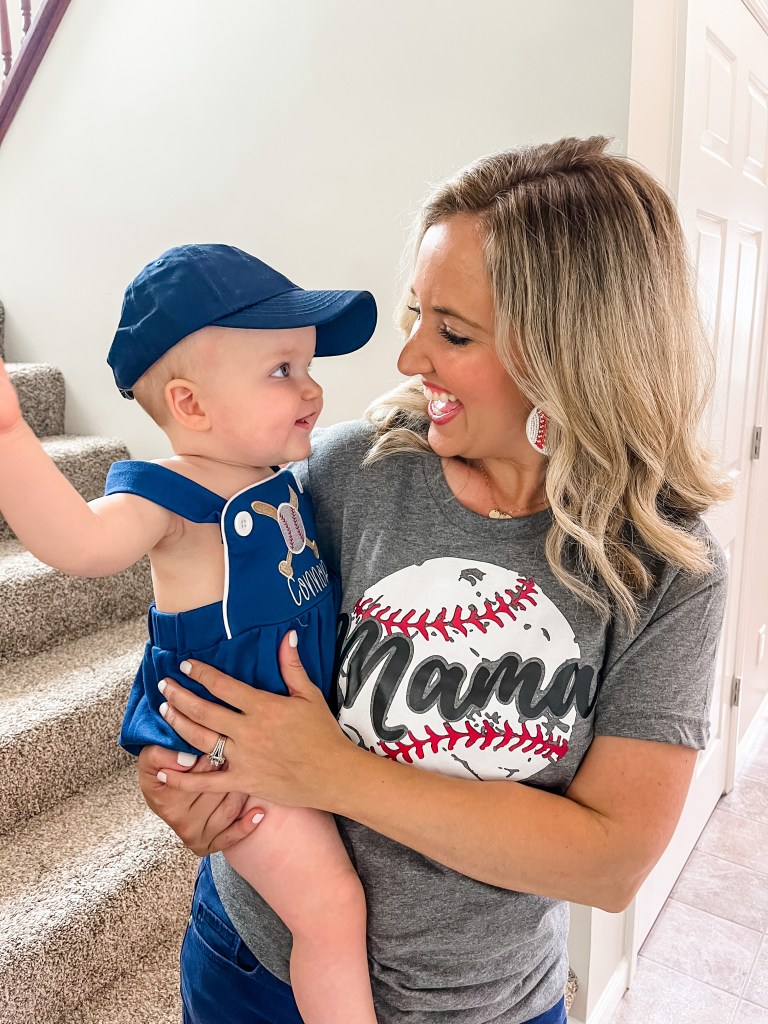
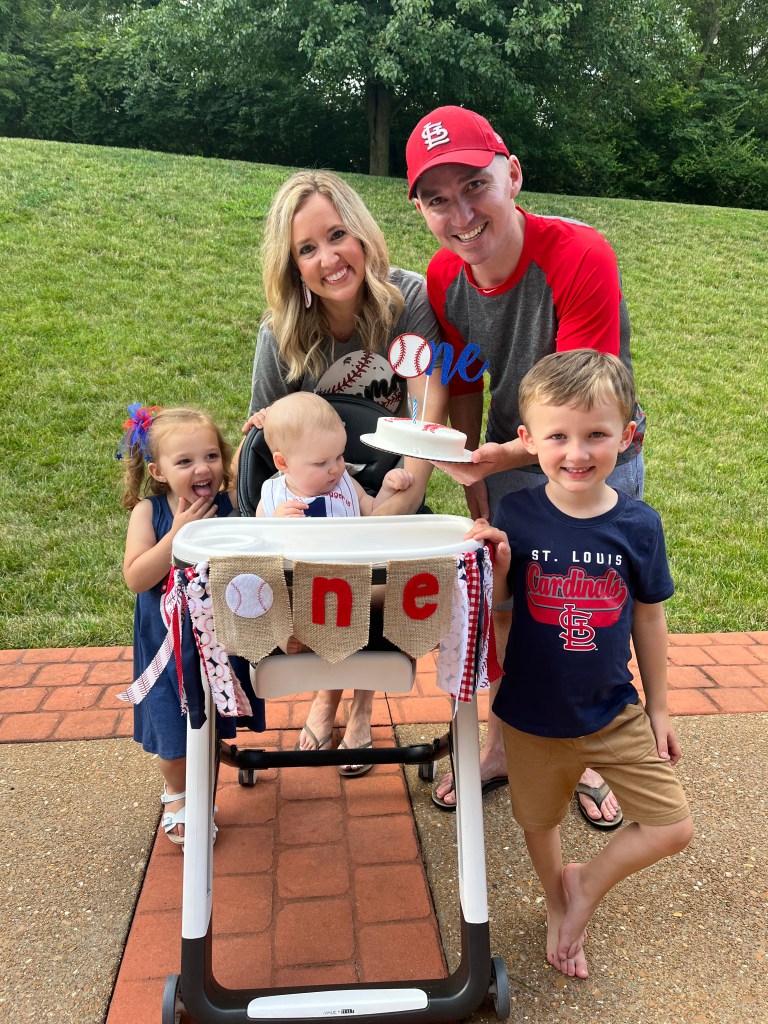
Now July 2022, we’re gearing up to celebrate our third child’s first birthday (July 14). We had his first birthday party over the weekend. It’s been a surreal and incredible ride since that November day. I often find myself looking at my three children and still feeling surprised my body was able to create them and bring them safely into this world.

Knowing this is our last baby and the last “first” of everything is bittersweet and amazing all at once. I feel an immense sense of relief and comfort being at this stage and knowing I don’t need to count on my body to sustain life through pregnancy or breastfeeding anymore. I’ve made it an entire year exclusively breastfeeding and if you would have asked me if that would ever be possible a year ago, I would have said no way. 

One of my fears is when my next flare will be and leaving my children for days on end while I’m in the hospital. While I know it’s a not a matter of if, but when, it puts me at ease that my children are almost out of the baby stage, and I can begin to explain my health struggles and why I may not always be like other moms. When my oldest was born I hoped to stay out of the hospital until he started walking. He starts kindergarten next month. I can only hope I stay flare-free until my other two are that old. 

Learning as I went as a woman with IBD

When I think back to that November day and the tough love my GI professed, I’m so grateful I followed her lead and trusted her approach in managing my Crohn’s. Back then, I wasn’t a patient advocate. The only IBD mom I knew was my cousin’s wife. I navigated the waters of family planning and my first pregnancy all alone without much guidance. Each pregnancy I became more well versed on how to juggle IBD and family planning and everything that comes along with it, but I think back to how isolating and overwhelming it can feel when you dream of having a family, but don’t know how to make it happen when chronic illness is in the mix. 

No one knows how their family will play out or if fertility or loss will be a part of their story. It’s sad how many women with IBD choose to be voluntary childless, not because they don’t want to be a mom, but because of the limitations of their IBD and overall well-being getting in the way. A day doesn’t go by that I don’t recognize how lucky I am that I “get” to be a mom. Not every day is wonderful, but even in the trenches as a stay-at-home IBD mom of three littles with almost no breaks, I do my best to remind myself of that day my husband and I got sushi and dreamed of living the life we are living today. 

Recognizing the touchpoints of independence along your IBD patient journey

Take yourself back to the very first time you needed medical attention for your IBD (but didn’t know it yet). Close your eyes for a moment. Who was that person? Do you know them anymore? How have you changed and transformed since that life changing day?

I was diagnosed with Crohn’s disease July 23, 2005, at age 21. I was blindsided by a chronic illness after growing up as a literal picture of health. A three-sport, in shape athlete, who had never even had an ear infection or been to an emergency room. As a recent college graduate, my world flipped upside down as I struggled to find my way in the real world.

Now, 17 years later, I can tell you firsthand what I, you, and so many others have endured on our patient journeys and how each experience (even the mundane) serves as monumental touchpoints for gaining independence and confidence in making you a more empowered and direct patient. 

Let me paint the picture clearly for you

The first time you bravely laid in an emergency room bed and every time there after—not knowing the tests, pokes and probs, and physical scrutiny you were about to go through. 

How it feels to be wheeled by a stranger through stark hallways to CT scans, MREs, and scopes, wondering what the results will be on the other side and the repercussions for more medications, a longer hospital stay, or surgery.

The difference a couple months makes–pre-diagnosis in May 2005 and 2 months after 60 mg of prednisone a day and 22 pills a day.

What it’s like when you say goodbye to loved ones and they roll you into the OR and you’re shaking like a leaf, all alone and feeling frail and broken, alone with your thoughts and prayers.

The number of moments you’ve watched nurses and even rapid response nurses fumble with IV’s try after IV try and when it’s been more than five, you find your voice from that point forward and start only giving medical professionals two tries before it’s on to the next.

How it feels at the butt crack of dawn when the world is sleeping and the hospital is bustling, waking you abruptly to get more vitals and more labs and you lay alone, haggard, frustrated, and delirious. 

The moment when your GI has a heart to heart with you about starting a biologic and having to determine for yourself what route is your preference—infusion or self-injection. Would you rather sit for hours hooked up to an IV drip or sit on your couch with your kids looking on as you inflict pain on yourself. 

The times you’ve sat up in the middle of the night wide awake thanks to the prednisone kicking in while the rest of your world is asleep wondering if you’ll ever regain some semblance of control of life.

What it’s like trying to eat meals inconspicuously with your family while they not so subtly watch each bite and every trip to the bathroom with sadness and worry in their eyes.

How it felt driving to a first date or a job interview and feeling like your IBD is a dark secret looming over the conversation and not knowing when to take down your walls and share. 

Listening to your friends make comments about health and energy without considering what your experience with a chronic, debilitating illness may be like since you look well on the outside. 

What it feels like to look at your reflection in the hospital bathroom. Battered arms, sunken in eyes, a shell of who you used to be. But as soon as you walk out of the door, putting a soft smile on to protect your visitors from worry. 

What it’s like to sit on an airplane or be on a road trip with others and silently worrying about whether you’ll be able to make it and what your game plan will be. 

When you’re up in the middle of the night doing the second half of colonoscopy prep and wondering ‘why me’ in your 20s and 30s, feeling isolated in the physical, mental, and emotional anguish the process puts you through year after year. 

What you’ve internalized each time someone dumbs down your IBD, offers up ridiculous remedies or goes into a discourse about their aunt’s brother’s cousin who “healed” their Crohn’s this way. 

When you’ve waved the white flag and alerted family and friends that you needed help or to be seen in the hospital after doing as much fighting as you could against your own body.

The first time you bravely looked down at your incision and saw your body forever changed and came to see your scars as battle wounds. 

Waking up each day not knowing what the next 10 minutes will feel like for you and getting after it anyway. 

Not knowing if you’ll find your person, but meeting people and having the courage to share about your health issues, even if there are heartbreaks and disappointments along the way.

Deciding to have a baby and discussing family planning, despite all the what ifs and becoming a parent because that’s what you hoped for prior to your IBD. 

Landing that dream job with your IBD in your back pocket, not letting the detours stop you from finding the path you were meant to go on. 

Celebrate the independence you’ve discovered

The list goes on and on! No matter how old you are when diagnosed with IBD, in that moment we are robbed of our naivety and thoughts of invincibility, and we’re forced to go on a lifelong war and conquest. Our bodies no longer feel like ours. Our dreams feel in disarray. Our people may change and not be who you thought they were. Our hearts may break, but like a phoenix this disease can build you up just as much as it breaks you down. 

The reprieve of remission, while not perfect or without symptoms has enabled me to breathe and regain my grounding. In 2015, after three back-to-back bowel obstructions and 18 inches of my small intestine, Meckel’s diverticulum, and appendix removed, there was only one way to go and that was up. 

Give yourself grace. Celebrate the independence you’ve discovered that you may not be able to have realized until you’re years out like it took me. And when you’re in the hospital, in for a routine clinic visit or for labs, taking your meds and balancing every daily decision against how it will make your IBD feel, you’ll come to realize what you take on and all you accomplish every day just to survive and thrive, makes you something special. While you may feel dependent on others—and the support of caretakers and a support system can’t be understated, neither can the endless strength that lies within you.

IBD Dads: What these patient heroes have to say about fatherhood

Fatherhood looks differently when you have a chronic illness. Finding a partner, family planning, decision making, and parenting are all impacted when you have IBD. This week on Lights, Camera, Crohn’s we hear from several men around the world. Whether they are preparing to start a family or have adult children, you’ll hear firsthand accounts about how their Crohn’s disease and ulcerative colitis has shaped who they are as men and as dads.

London Harrah, a 31-year-old dad in California, was diagnosed with ulcerative colitis in April 2016. He says IBD has impacted fatherhood in different ways and presented unique challenges. He’s grateful for the endless support his family has given him, making him feel comfortable to openly share about the struggles.

“Prior to my surgery and ostomy, my ulcerative colitis heavily impacted my parenting role. I had to shape my entire day around my ability to have close access to a restroom. Now after surgery, I have had a lot more freedom and a heightened quality of life. I am now able to partake in a lot more activities without my condition hindering me. I also feel like being an IBD dad makes me stronger because I look at parenting as an opportunity to set an example for my son on how to deal with adversity,” said London.

He says IBD has instilled a profound sense of empathy in his 13-year-old son because he has not only witnessed his dad go through the ups and downs of chronic illness, but London has also shared other peoples’ stories from the patient community with him as well.

“Some people ask me for advice on how I navigate different topics in life, and I share many of those stories with my son so he can understand different things that are actually happening in the real world and paint a picture of what some people have to deal with, that may not be visible on the surface.”

London says his son has been through this journey with him since day one. He can still remember when he first started experiencing symptoms and he knew something was wrong and trying to explain that to his child.

“He watched me spend hours in the restroom and was there for me as much as he could. I have always felt open and able to talk to him about this topic, more than anyone else.”

London sees his ostomy as a great learning opportunity for his son.

“As a dad, having an ostomy is kind of a great experience to have because of all the life lessons and teaching opportunities that it creates when raising children. You learn a lot about yourself during this journey and it allows for a lot of realization about the important things in life, which are all transferable when raising our children.”

Brandon Gorge of Michigan has five-year-old and two-year-old sons. Diagnosed with ulcerative colitis freshman year of college in 2003, he’s grateful his IBD was under control for 11 years while on Remicade/Inflectra infusions and now Stelara for the last year and a half.

“My sons wake up early and I love to wake up with them, have breakfast and play before getting the day started. With their ages, my biggest challenge is having to run to the bathroom while my wife is still sleeping. I used to have to wake her up to cover for me, but now they’ll play while I’m in the bathroom or come in with me. I tend to schedule doctor appointments and lab work early in the morning. Making sure my wife knows my morning plan is important so she can schedule accordingly, and we can make sure the boys are set for the morning/day.”

Brandon credits his wife for being a great listener and support.

“She comes with me to colonoscopies and to Crohn’s and Colitis Foundation events. My parents are still a huge support as they helped me find the right doctor when I was diagnosed with UC a week before moving out of state for freshman year of college and continue to be a sounding board for my UC. They’re also involved with the CCF because of me.”

His older son broke his arm when he was four and has been extremely interested in how the human body works and heals. Brandon and his wife found a YouTube video series called “Operation Ouch” by two British doctors. One video they stumbled on is about a girl with IBD.

“He said it wasn’t interesting because he couldn’t see her booboo. I explained to him that some people have booboos that you can’t see, and I have the same one as the girl in the video. He knows I go to the “tush” doctor regularly; they take pictures inside my body – and I’ve showed him the pictures, I give myself shots, and getting a shot is no big deal. Talking about the bathroom is very normal in our family!”

Brian Greenberg of New York was diagnosed with IBD when he was 11 years old, he’s now 39. He says juggling and finding a balance for all things in life is difficult. Between being a husband, a father, and then having a career, and managing chronic illness on top of general health, it’s a lot.

“My family is amazing. My wife knows there are nights where I have to tap out, and she understands when this happens. My family and her family have also been supportive that it took me a little longer to settle into being a dad and learning how to add everything it comes with to my 24/7 job of being a Spoonie. But their patience has paid off and I feel like after a few months of being a father, I found my stride.”

As an ostomate with a 17-month-old daughter, Brian says while she still has no idea what she’s seeing, him and his wife have started the education process with the books “Awesome Ollie” and “Ollie the Bear.”

“It’s teaching her that after some challenges and the fact I’m a little different now, I’m still capable of so much, which I hope to show her one day.”

Trying for a family as a man with IBD

Brad Watson-Davelaar of Canada got married earlier this year and now him and his wife are hopeful to start their family. Brad was diagnosed with Crohn’s disease in 2001 at age 17. Since then, he’s never been in remission.

“I used to be worried about having kids since my IBD has never been stable. Since meeting my wife five years ago, I’ve learned that she and I together are a wonderful team. I’m very much all in for kids. Being an uncle really solidified my desire to be a dad. We’ve been trying for two months and we’re hoping my wife is pregnant by the end of the year, which is a big ask as I’m preparing to go in for a laparoscopic right hemicolectomy with abdominal-perianal resection transanal total mesorectal excision with permanent colotomy later this year. I don’t know how my mental and physical state will be afterward.”

Brad and his wife have talked about the possibility of their children having IBD, but both agreed that if that is the case, they will 150% be there as a support and advocate for our children, something he lacked in his own health journey.

“We’ve also talked about how I will be a stay-at-home dad, as I’ve been on disability for a large majority of my adult life. I know there will be rough points where I will feel like utter garbage and just not feel like being there. But I know even if I let myself get to that point, my wife will be there to help. We’re making sure to move ourselves to where we will have a good support system if anything happens. Having a strong partner makes it easier to be ready and excited for what the future holds.”

With everything going on in the world, Brad says it’s a bit daunting to become a dad.

“I’ve been doing my research. I really want to make sure to do the right things. I treat the prospect of fatherhood much like I manage my IBD. Lots of research and staying open to change. I am so excited to be a father though. I feel like it’s what I need in my life.”

Reflecting on how IBD changes through each parenting season

Alistar Kennedy of the UK was diagnosed with ulcerative colitis in 2000. Now as a 49-year-old married father of two he’s able to reflect on how his IBD journey has impacted fatherhood and family.

“When you have a chronic illness your energy and time are limited. Having children can be exhausting and all-consuming even without health issues. The biggest challenge I found when my children were very young was coping with their boundless energy, their desire to be active, and trying to enjoy outdoor play. Active IBD can be a big issue in those circumstances, fatigue was a real struggle, but also the need to keep near to facilities in case you need them. This meant solo parenting was hard, but good planning and an understanding partner made the normal things achievable. Also, as the kids grew, they became more aware of what was needed from them. Empathy and adjustment to surroundings.”

Speaking of empathy, Alistar says his kids are both very aware of his IBD and how it’s impacted their family.

“My kids have grown up knowing I might have a day when I’m unable to do things due to fatigue or have to make a dash to facilities. Being open and honest with them from an early age has given them a broader understanding of the struggles a lot of families have. They are both very caring individuals. As a family, we are flexible and everyone understands that, sometimes plans must change. We make the most of the good days.”

Since being diagnosed, Alistar sees great promise for the future of IBD treatment and care in the years ahead.

“Medication, treatment plans, the role of diet, and the importance of mental wellbeing has advanced dramatically in the last 20-plus years. I see far more hope from the future about what this disease will mean for all of us and how it will or won’t dictate our lives. If you want to start a family and enjoy everything that can bring, you can. It won’t change the fact teenagers can’t load a dishwasher properly! I’m very proud of the fact that I did the school pick up and drop off for 10 years solid without either child getting a single late mark!”

Dan Bradley of the UK recalls how differently IBD impacted his role as a dad when his children were younger.

“My youngest child is 17, so I don’t feel like my IBD affects my children in a big way. When I was diagnosed 8 years ago it created a huge challenge with being a dad and dealing with the lethargy and fatigue. It was a struggle to be able to do my day-to-day activities and be there for the wants and needs of my children since they were too young to understand my illness and what I was going through as a parent during that time.”

He feels his disease helped shape who his children grew up to be as they enter adulthood.

“I like to think my children were brought up to offer empathy to others, but my IBD has certainly given them a deeper understanding about stomas and the complications that can arise with chronic illness. There’s nothing like telling your 16-year-old daughter she needs to get out of the bathroom quickly when she is trying to get ready for a night out!

Thomas Fowler of New York was first diagnosed with ulcerative colitis in 2004 when he was 30 years old, then three years later he found out he had Crohn’s. Since he was first diagnosed, he’s undergone more than 25 surgeries and currently deals with anal fistulas. He says life as an IBD dad is about finding your “new normal” and that it helped him to have a decade of life with IBD prior to taking the plunge into parenting.

“We talk about Crohn’s all the time, so my kids accept me as I am because they don’t know Daddy without Crohn’s. I sense that they know when I’m having a bad day or flare. I tend to shutdown socially and don’t talk as much. Fatigue is my number one battle in life. I don’t mind the bathroom trips as much or the daily pain, it’s the fatigue. It’s the one symptom that I can’t fight.”

Recently, Thomas says his latest challenge with IBD and fatherhood is juggling his Crohn’s with his son’s baseball season.

“I am not able to eat dinner before baseball practice/games. My son 100% understands why. And sometimes my son will ask to go and get ice cream after a game, and I say I can’t because Daddy has to get home and eat real food first. Sometimes that means eating at almost 9 pm. Which presents another issue in and of itself, because if I eat that late, I automatically know I’m going to be up several times during that night to use the bathroom.”

Why men with IBD tend to stay silent

As an IBD mom of three myself, I’m aware in my extensive advocacy work how our patient community is predominately made of female voices and experiences. For many years, the male experience has been lacking and is often difficult to find.

“Men are conditioned not to share their detailed emotions. Often told to ’suck it up’ and just get on with it. Sharing can make you feel vulnerable and fragile to our peers, so we avoid it. It shouldn’t because it’s incredibly empowering and rewarding. I was diagnosed pre-social media and at the time, advice, and information available online was vague, confusing, and often misleading. It felt very lonely to have IBD back then. Being part of an online community has been game changing. Men struggle to engage and verbalize in this space though, but they are there. Personally, I’m very facts and evidence driven, so the advocacy space must reflect that,” said Alistar.

“We’re taught at an early age that we’re supposed to be tough. That we shouldn’t be sick or show any weakness. That stereotype is slowly being broken as men are learning that even our health can change in a moment, and it’s okay to be vulnerable,” Brian explained.

“I co-chair the Crohn’s & Colitis Foundation’s Detroit Young Professional Group. One of my co-chairs is also a dad. Our group is evenly split between men and women. Before I became involved with the group, I never participated in any type of group for support or advocacy. I think a lot of men (and people with IBD) need to learn how to advocate for themselves with insurance and their medical team before they advocate and help others,” said Brandon.

Dan said, “I think it’s a typical man thing. IBD is not talked about. Some of the symptoms that come with IBD, in particular going to the bathroom, can be seen as a taboo subject. I do feel this is changing and more awareness is getting out there. In the UK, we have recently had a couple of “famous” people raise awareness which has been fantastic.”

“I think in the society we live in today makes it harder for men to be vulnerable with their feelings. In my situation, even I still struggle sometimes talking about certain topics with new people. I do however acknowledge the difficulty and try to work through it,” said London.

Advice for future IBD dads-to-be

Whether you’re in the throes of trying for a baby or if you’re a parent and your child has IBD, and you worry about his future and what it will hold in regards to fatherhood—here’s some amazing advice to guide you and show you all that’s possible.

“There are always more good days than bad. Having children is a wonderful, if very tiring, gift. They change you for the better and help you to grow as a person. Getting my IBD under control has been incredibly challenging, but we’ve done all the things normal families do. Be open and honest with your partner about your fears, priorities self-care and mental wellbeing. Talk and share your feelings to your family and friends. Don’t be hard on yourself. Take naps! The best advice as an active parent is always that good up-front planning and working as a team is essential,” said Alistar.

“Talk to your gastroenterologist to ease any fears about the effects of medicines or worsening IBD, develop a treatment plan, and revisit that plan before a flare gets out of control and affects you being able to be there for your kids,” said Brandon.

“I would tell fellow men not to let IBD stop them from becoming a dad! They are very well capable of having a healthy child, but it starts with them taking initiative and becoming healthy (mentally/physically) themselves before-hand,” said London.

Brian said, “Becoming a father with a chronic illness like IBD is scary. I wasn’t sure how it was going to work, how I’d be able to adjust to everything I was about to add onto life, or where would I find the energy. But you find answers to all those things because the love your heart is filled with carries you through so much, and it’s more important than anything else in life to find a way.”

“Don’t hesitate to start a family.  There will never be a “perfect” time to have a kid with this disease. Don’t set goals like, I’ll start a family when I’m 2 years symptom free, or when I don’t have a surgery for 3 consecutive years. You will always have issues for the rest of your life. The only hard part I had was when my kids were newborn through toddler age and I had them by myself away from the house. You get very creative with bathroomn visits.  I would use the diaper changing tables and strap my kids in and let them use my phone for distractions so I could use the bathroom. You become a logistical genius when leaving your house. Being a dad is the BEST thing that has ever happened to me.  And a hug from your kid is better than any medicine money can buy when you are having Crohn’s related issues,” said Thomas.

“There is no reason on earth to allow your IBD to stop you from becoming a dad if that’s what you want to be. Go for it. Be open so everyone knows where you stand. With the right medication and treatment plan in place, there really isn’t anything you will be stopped from doing. I enjoy long bike rides, long walks with the dog, and a pub lunch after reffing my kids football games. I have flown with an ostomy without issue. If you think you may have IBD, don’t ignore your symptoms. See a doctor and get yourself on the path to treatment so you can live life as fully as possible,” said Dan

14 years of injections: What I’ve learned as a mom with Crohn’s

This blog article is sponsored by Portal Instruments. All opinions and experiences shared are my own.

I’ll always remember how I felt the moment I was told I needed to go on a biologic drug to try and manage and control my Crohn’s disease. It was Fourth of July weekend 2008. My gastroenterologist walked into my hospital room and told me it was time to “break out the big guns,” meaning starting to get medication through an infusion or through a self-injection. I was a morning news anchor at the time in Wisconsin, three years into my patient journey. I knew without a doubt, for privacy reasons, and keeping my chronic health issue under the radar, that doing an injection in the comfort of my apartment was the best choice. As I watched the fireworks reflect off the hospital room window with my mom, tears flowed down my face. I didn’t know how on God’s green Earth I was ever going to be able to give myself an injection for the rest of my life.

I was never a huge fan of needles prior to my diagnosis. Once you have Inflammatory Bowel Disease, needles unfortunately are all part of it. While we may get desensitized, patients would give anything to be able to treat their disease without needles. When I started on my biologic, my mom and I went to my gastroenterologist office and a nurse told me I needed to do four, painful injections in my thighs because at the time I didn’t have enough fat on my stomach. I was shaking like a leaf. I had no idea what to expect, I was about to inflict pain on myself, the injector felt so foreign in my sweaty palms, and I was scared about not only how much it was going to hurt, but also the long-term side effects the medication could cause to my body. 

I did the first injection and it felt like liquid fire burning through my skin. I couldn’t believe I had to sit there and do three more, back…to back…to back. The experience was traumatizing. When I finally did all four, my mom and I walked into the hallway and I embraced her, crying because of my reality, and knowing that in two weeks I would need to inject two more needles into my thighs for the final loading dose. Since July 2008, I’ve done a self-injection every other Monday and for a short time weekly, while I was flaring. That’s more than 2,600 shots. 

Dreading “shot day”

The first few years I would absolutely dread my “shot day” and deal with the looming dread each week. Early on I would get emotional during the process and feel bad for myself. I was only 25 years old. It made me feel like I was a sickly person. My peers couldn’t relate. It was isolating and overwhelming. Every time I open my fridge, the box of injections is staring back at me as a constant reminder of what’s to come. 

Doing my injections as an IBD mom

Fast forward to present day, I’m now a 38-year-old mom of three. Luckily, the formula for the medication was changed in 2018, making the drug virtually “pain-free”, but there are times I still feel the needle. Even though I have my medication process down to a science, I still wish I didn’t have to do it and I usually wait until Monday nights to do it. The timing is moreso out of habit, because when I was a morning news anchor there was no way I was going to deal with an injection at 2 a.m. I started a tradition of doing my injection while watching the Bachelor/Bachelorette, and that’s carried over now that I have three young children, often waiting until after their bedtimes. Each time after I’m done with my shot, I text my mom to let her know how it went. She’s a nurse and has been my greatest support with my IBD since the day I was diagnosed.

Sometimes my 5-year-old and 3-year-old watch me do my injection and each time they are intrigued. I’m sure my 11-month-old will be the same once he starts to gain an understanding of what I’m doing. It makes me sad that they often witness me doing my injection, but they are also my greatest motivation to be strong and smile through it. Watching me doing injections has made my kids incredibly brave at the pediatrician when it’s time for them to get their immunizations. Because I have little ones, I have to be mindful of disposing of my medication properly and keeping the Sharps disposal container out of harm’s way. We keep Sharps Containers up high in a cubby hole in our laundry room and I dispose of the injector pen immediately. 

As an IBD mom, my greatest fear is passing along my Crohn’s to my children. While the risk is low, it’s there. I hope and pray my children won’t ever need to receive a biologic medication whether it’s through self-injection or infusion. For me, there’s no end in sight, I’m expected to be on my medication (if it remains therapeutic) for the rest of my life. Thinking of my babies having to deal with needles and being forced to inflict pain on them would be difficult for me and only add to the guilt.

The future holds so much promise when it comes to drug delivery without a needle. My hope is that in the years to come, other people won’t have to succumb to the same anxiety, pain, and worry I’ve had to deal with for more than a decade.