Nori Health helps IBD patients re-gain control: How you can get free early access

This article is sponsored by Nori Health. All thoughts and opinions shared are my own.

When Roeland Pater was diagnosed with Crohn’s disease nearly 20 years ago at age 19 there was a lot he didn’t realize and a lot he tried to ignore. He felt like he was on cruise control the first few years after surgery led him to remission. A few years later, his IBD took a turn and so did his perspective on his health.

“I started to realize that everything I did in life was impacting my disease. Suddenly, I couldn’t do whatever I wanted when I wanted. I became cautious of my actions and decisions. I tried to get a better grasp of how my IBD was impacting my life by receiving personalized care, but I was struggling trying to find a way to do that,” explained Roeland, Founder of Nori Health.

He noticed that during his medical treatment, he experienced a lack of support and education between hospital appointments, with little to no focus on quality of life or emphasis on how he was living day-to-day. Like many with IBD, this left Roeland feeling frustrated, misunderstood, and like there was no hope in controlling his condition.

The inspiration behind Nori Health

As a professional in the tech industry, this caused a proverbial light bulb to go off in Roeland’s head. He identified this massive gap in IBD care and decided to dedicate his life to solving the problem, with the goal of helping others. He recognized the need for a digital solution to help people like himself better manage and control their disease through daily behaviors. This is how the concept and mission for Nori Health was created. The company received an investment two years ago, which drove the concept into a real product and an app.

“Research shows that people living with a chronic inflammatory disease typically experience a 30% lower quality of life when compared to healthy individuals. Closing this gap is our mission. We believe this can be done by improving the understanding of the disease and its triggers through education and disease management. We aim to give patients in our program a sense of control over their disease management,” said Roeland.

How the Nori Health app works

The Nori Health app offers an 8-week program for IBD patients, guided by Nori, a digital coach. Through regular conversations (text-based—like WhatsApp) with Nori you receive personalized insights on factors that are proven to impact quality of life, and symptoms like pain and fatigue. These tips can be saved to your personal dashboard, and you can implement them into your daily routine, helping to keep your IBD under control.

“Most apps on the market are focused on a tracking model. This puts a lot of responsibility in the hands of the patient to monitor their daily activities and to discover patterns that might trigger symptoms. We changed this model around to best support the patients. Nori guides the patients through their health journey, with personalized, evidence-based factors. Nori provides the user with actionable tips that can be saved in the app, which can then be easily implemented into daily routines and lead to significant change,” said Roeland.

You can think of Nori as an artificial intelligence chat coach. You will work together to discover the lifestyle factors that impact how you feel and learn about simple changes you can make to gain more control of your disease. The end goal? To have less pain, more energy, and less strain on your mental health. Changes include everything from forming a new hydration routine, to talking to others about your condition, to reaching a point of acceptance of living with a chronic disease.

Main areas of focus include:

  • Stress
  • Hydration
  • Exercise
  • Diet
  • Mental Health
  • Pain
  • Low Energy
  • Sleep

“We would like to emphasize the importance of finishing the 8-week program. Just like taking a full course of antibiotics, the true benefit from the app comes from completing the entire course of the program,” said Roeland.

The app is not currently open to the public, but I’m excited to offer 100 of my Lights, Camera, Crohn’s readers direct early access!

Getting started:

  • Download the Nori Health app for iPhone here and Android access here.
  • During registration use access code TEST212 for free access to the full program. 
  • As you are given free access to the app, you will be asked to provide feedback on your progress (this is in-app, and anonymous). The Nori Health team will reach out to you by email to collect feedback about your experience as well.

Hopes for the future 

Nori Health is deeply rooted in recognizing the power of community. The program was not only developed by an IBD patient but created thanks to the input of more than 600 patients in England, Netherlands, Belgium, France, and beyond. By participating in this initial launch, you can continue to provide valued feedback and guidance so that the team at Nori Health can make the appropriate tweaks and further understand unmet needs. So far, the feedback has been overwhelmingly positive and has shown that patients can be supported throughout their patient journey—whether they are newly diagnosed or a veteran patient.

“We’ve seen an average of 34% improvement in daily management (diet, stress, and exercising on a daily basis) with people who completed the 8-week program,” said Roeland. “Half of the participants whose social lives were compromised due to symptoms, started to reconnect with friends and loved ones. These are the types of improvements and shifts we had aspired to see happen when we created the app.”

By working with patients like himself, Roeland says these valuable insights have changed Nori Health’s focus and influenced them to go much deeper into the factors that improve quality of life.

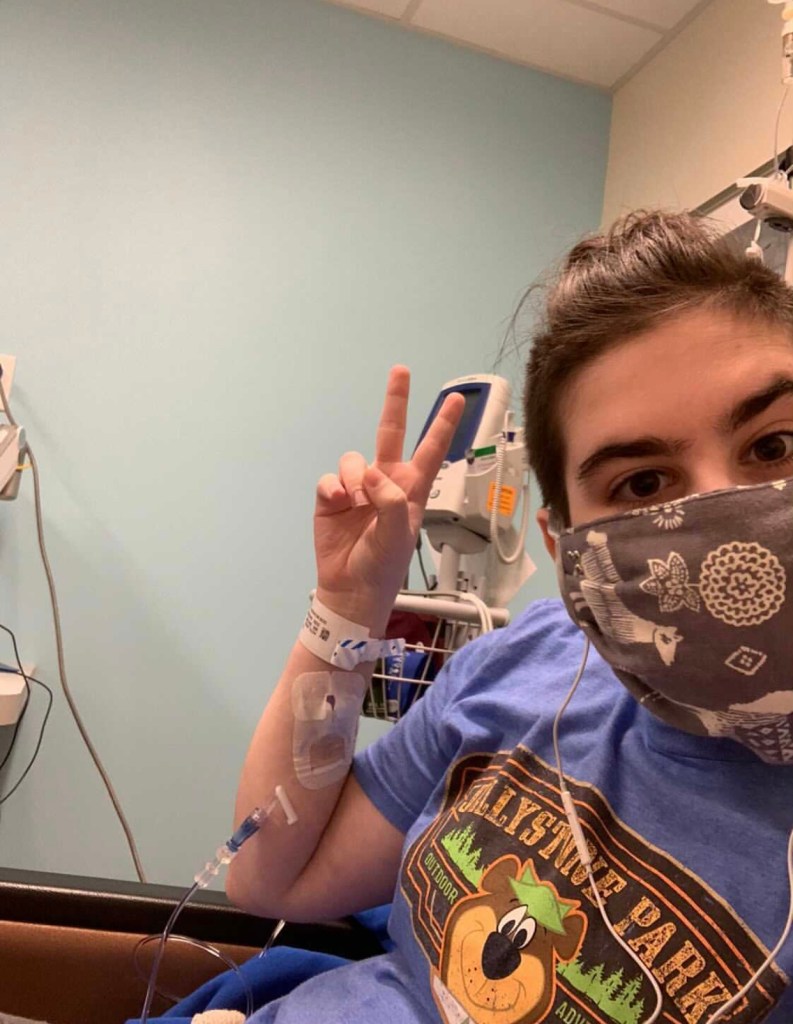
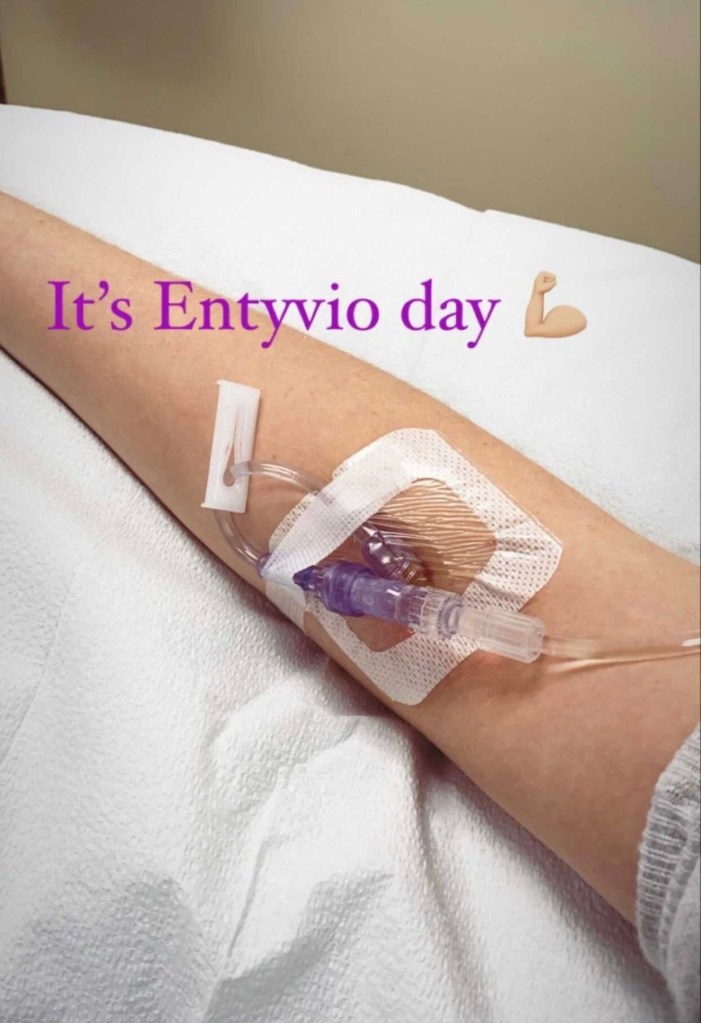
The Patient Experience: What the IBD Community says about Entyvio

Starting a biologic or switching to a new one after a drug fails you is a stark reality for many with IBD.  I personally have been on the same biologic since July 2008. Lucky for me, my body hasn’t built up antibodies and it’s served me well in managing and treating my Crohn’s disease. Recently, a woman with Crohn’s disease private messaged me on Instagram. She’s been on Humira (adalimumab) since 2006, but she’s no longer responding to it. Her gastroenterologist has advised she start Entyvio (vedolizumab).

Like anyone who deals with a drug failing them, she’s reached a level of comfort giving herself injections and knowing the ins and outs of the medication she receives. Now, 15 years later, she feels a bit like a fish out of water trying to navigate a new biologic and all the unknowns that come along with that transition, especially because she hopes to start a family in the next year.

After hearing from her and wanting to help, I went out on a limb and shared the following on my Instastory—to try and comfort her as she embarks on this new chapter in her treatment. “Hey IBD fam! Let me know if you’re on Entyvio and what your experience on it has been thus far. Looking to get info for someone who has been on Humira since 2006 and is making the switch after losing response to it. Appreciate your help and insight.”

The overwhelming response from the community

Several people wrote me directly about their experience with Entyvio—everything from tips and tricks to minimize side effects to how Entyvio has improved their quality of life or been detrimental to it. The response truly blew me away. We all know, IBD presents uniquely in each of us. So, one person’s experience with a biologic (or anything for that matter in treating Crohn’s or ulcerative colitis) must be taken with a grain of salt. At the same time, there’s a sense of camaraderie in connecting with those who use or have experienced your same therapy.

Since I’ve never been on Entyvio, I learned a lot in the process…and wanted to share my findings from these direct message discussions with you. Entyvio is known for its low side effect profile, as it specifically targets the gut. My hope is that this will help alleviate people’s concerns and help educate the community, should Entyvio be offered up as a possible treatment plan presently or in the future for you. (NOTE: I am writing this on my own accord—with NO affiliation or guidance to pharma). This is strictly created from IBD patient experience.

Infusion: Dosing schedule + timing

Generally, the recommended dosage is a 30-minute intravenous infusion, every 8 weeks. Depending on a patient’s response, this can shift to every 6 weeks or even every 4.

“Been on Entyvio since it was approved by the FDA. It has been very helpful since it targets the gut. I am on supplemental IBD meds, but I like that it’s a fast infusion and has given me my life back. It’s the longest I’ve ever been on a biologic, too.”

“It’s about an hour total to get the IV, wait for the med to be mixed, and have the infusion. I am noticeably tired the day of the infusion, but then bounce back quickly by day two. No other side effects at all. Entyvio has been a lifesaver for me!”

While some people saw improvement after the loading doses, Entyvio is known to react slower than other biologics. While most of us are used to biologics taking 2-3 months to work their magic, several people stated their GI warned them ahead of time that Entyvio could take 8 months to a year to be fully effective.

Side effects: The consensus among those who responded

Headaches/Dehydration/Fatigue

“I take Tylenol and Benadryl at every infusion because I found when I didn’t, I ended up with really bad headaches. I seem to feel better if I exercise for a little bit after my infusion, like walk 20 minutes or do 20 minutes on a bike. Real slow and easy. I often feel tired that day and maybe the next day, but after that I’m pretty much golden.”

“A lot of people get headaches after the infusion—they think from dehydration, so it’s helpful to ask for an extra bag of saline fluids during the infusion.”

“My friend and I both get tired after our Entyvio infusions. We both need a good nap after and then we feel fine. Hydrating the day before, during, and right after the infusion helps a ton.”

Hair Loss/Growth

“I lost a LOT of my hair while on this and had to take a large amount of prednisone for almost a year to get back on track because this medication. Please do research on this one! I did not do much and read a lot of people lost almost all their hair. Thankfully, mine grew back while I was pregnant. It was a big bummer! I’m on Stelara now and it works just as well as Humira did for me before my response to it also declined.”

“Been on Entyvio about 2.5 years and it’s the only drug to get me into remission! Was on infliximab (Remicade) before and became allergic and lost response. Minimal side effects with the Entyvio as well! If anything, I just noticed my hair doesn’t really grow the same.”

Navigating infusions and life

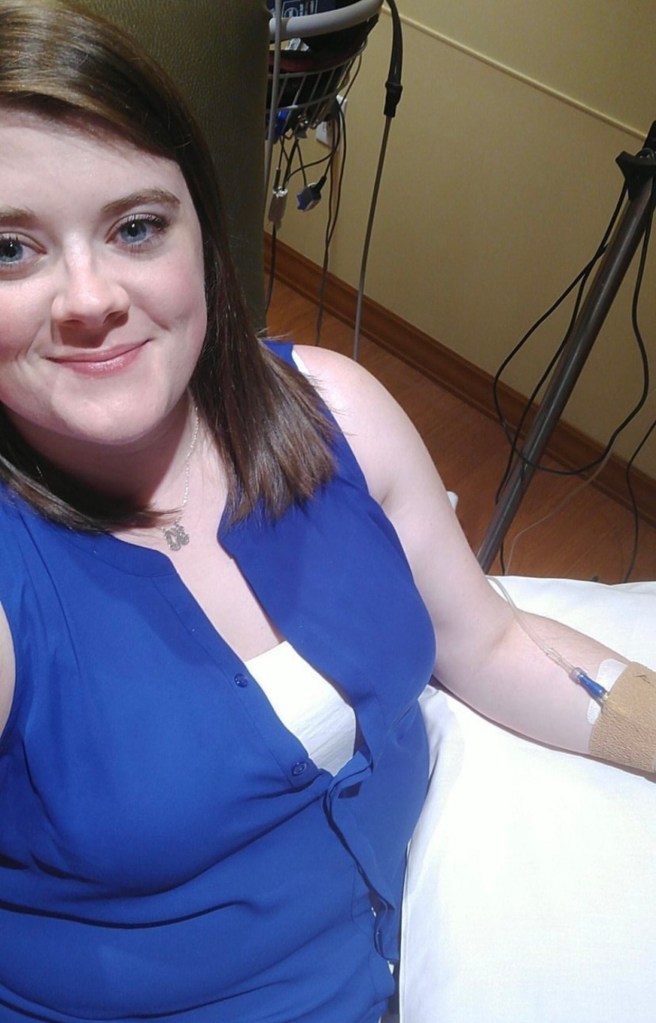
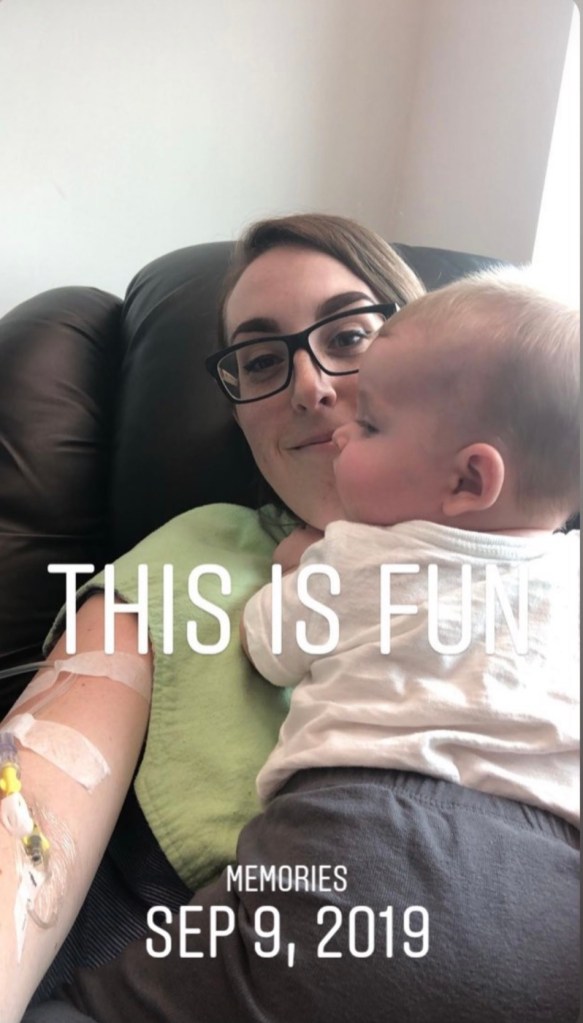
While the shorter infusion time is a plus, nothing beats the convenience of an at-home injection. At the same time, several patients shared the benefit of setting up an at-home infusion, so that’s something to look into versus going into a medical facility to receive your medication.

“I have ulcerative colitis and I’ve been on Entyvio for almost a year now. It’s the first biologic I’ve been on and it has helped a little, but it hasn’t been able to heal my rectum at all. I’m in a teen support group and one of the group leaders has had the same experience. After the starter doses, I was on every 8 weeks, but my drug levels were too low, so we switched to every 6 weeks and that didn’t do anything either. Since my symptoms were increasing, I was moved to every 4 weeks as of November. I honestly wish I were on Humira or another at home injectable only because I’m 18 and want to have a normal life that isn’t tied to needing to be home or to go the hospital every month, but it is what it is. The infusions don’t take long, but I do come home and sleep for the rest of the day. I started a pediatric clinical trial about a month ago since the Entyvio isn’t doing enough, but I still have to stay on the Entyvio.”

Pregnancy and Breastfeeding

For guidance on pregnancy and breastfeeding in regards to Entyvio, you can find helpful information at the IBD Parenthood Project and through the PIANO registry study. You can also connect with IBD Moms and Mamas Facing Forward, social media communities comprised of women living your reality.

Prior to planning to conceive, it’s always a good idea to communicate your family planning goals and dreams with your care team. Let your GI and OB know that you’re hoping to get pregnant 6-plus months ahead of time, so they are clear on what your expectations are. That way, you can put your best care plan in place, especially as it comes to staying on top of managing your IBD while you bring a life into the world.

“It was the first biologic that actually showed healing on my colonoscopy. I was on Entyvio my whole pregnancy, and now I’m breastfeeding on it.”

“I have been on all biologics and have had the best response to Entyvio. It put me into a 3.5-year remission (my only remission ever) and allowed me to have my son. Unfortunately, it does not target perianal Crohn’s, so I have had issues over the last few years. After trying Stelara, I had to go back to Entyvio because it’s the only drug that treats my luminal Crohn’s. It really is an amazing drug. No side effects for me, and my immune system is stronger than it has ever been—on the other drugs, I caught a million colds and would get bronchitis and pneumonia several times a year. Since being on Entyvio, I think I’ve gotten a cold a year (maybe?!), it’s a dream!”

“I have been on Entyvio for about two years now and it has been lifechanging. In terms of my ulcerative colitis, it has been day and night, and it has even gotten me into remission! I do feel really tired after my infusion and a little bit into the next day, but since I only get them every 8 weeks, that is a side effect I am more than willing to take on! I was on Entyvio for my entire second pregnancy and that was a breeze compared to my first.”

Be a proactive patient

Like many biologics and prescription drugs, there is a patient savings program available that you’ll want to check out. Learn more about Entyvio Connect here.

Helpful Entyvio-Focused Facebook Communities

Several of the people who responded shared they’ve had positive experiences and found support in Facebook groups geared for those specifically on Entyvio. Check them out:

Entyvio Mommas

Entyvio Warriors

Thanks to everyone who went out of their way to share their experience and help a fellow IBD warrior in need. Having this type of intel is good as gold and extremely beneficial in empowering patients as they make drug and treatment choices.

How a physician with Crohn’s in Ethiopia is helping others with IBD cope

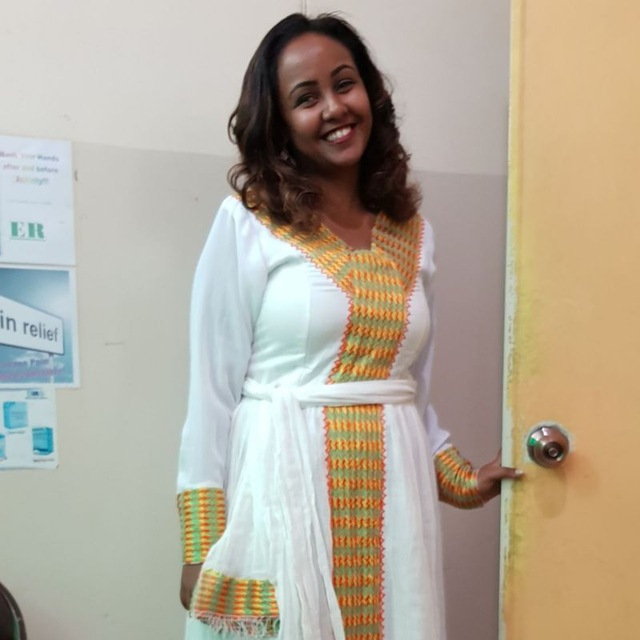
She’s a physician in Ethiopia looking to pave the way for those with IBD. She understands the need because she was diagnosed with Crohn’s in August 2017 at age 22 while she was a fourth-year medical student. After suffering from debilitating symptoms for eight months, she finally received a diagnosis. Dr. Fasika Shimeles Teferra says in her home country and in developing countries, she had always been taught that inflammatory bowel disease was non-existent. She felt isolated and alone as she embarked on her journey with chronic illness. There were no resources. No support. She had no clue where to turn when it came to being understood and knowing how to navigate nutrition.

In her school of medicine, an IBD diagnosis was morbid. She was told if she continued to learn about her illness, she’d die from the stress.

“Despite my medical background, I expected death to be imminent. The breaking point which later turned out to be a turning point for me, was when I was suffering from ovarian cyst torsion, explained Dr. Teferra. “Even though I was in remission at the time, every OBGYN who saw me in the ER refused to operate on me. One doctor refused to operate on me because I’m a “complicated patient with IBD”. He wanted to wait to see if pain meds will help solve it.”

Luckily, one doctor decided to operate on her, but unfortunately, she lost her left fallopian tube and ovary in the process. At age 23, she lost half her chance of being able to conceive a child. Her Crohn’s relapsed a few weeks later and depression set in. (Note: Luckily, she is due with her first child in June!)

“I went to my doctor and told him I was quitting med school (I was 5th year at the time and just starting my medical internship). But what he said changed me forever and made me feel less alone. He told me he was treating multiple IBD cases and that my disease was much more common in Ethiopia than most thought. He also told me Crohn’s was manageable with medication.”

Holding onto new hope

With a renewed sense of hope, Dr. Teferra started advocating for herself and looking for local support groups to connect with others who lived with IBD. The problem—she couldn’t find any! She joined a Facebook group based in the United States and recognized the need for support in Ethiopia.

“I reached out to a couple of gastroenterologists here in Addis and told them I wanted to start a support group in Amharic focusing on sharing experiences, supporting one another. My hope was to help others who were struggling with coping with their diagnosis. I thought sharing my story would make a difference in someone’s life.”

Launching Crohn’s and Colitis Ethiopia to make a difference

After speaking with multiple doctors, Dr. Teferra decided to start an organization that would not only focus on support groups, but also advocacy work for policy makers. The last published data on IBD in Ethiopia dates back to 1990s! She recognized this lapse in research led to major gaps in treatment for IBD patients. This inspired her to launch Crohn’s and Colitis Organization Ethiopia in January 2020. When the COVID-19 pandemic hit in March 2020, it put everything on hold as the world stood at a standstill.

Even though the organization exists, Dr. Teferra is struggling to garner participation in support groups, because sadly the stigma of IBD leaves many in Ethiopia to suffer in silence and shame. She says fellow IBD patients prefer to communicate directly with her, so she has taken it upon herself to meet them and their families to better explain their condition and how to live a full life with it.

“I try and explain to the patient and their family how they can best take care of themselves and how family members can offer compassionate and empathetic support along the way,” said Dr. Teferra. “Many people discontinue their medication the moment they experience a side effect. I’m also passionate about discussing family planning and breastfeeding. Because of my medical background, I am able to give reliable information about IBD and I am able to use my story to guide the narrative.”

Dr. Teferra also has a registered dietitian who serves as a board member for Crohn’s and Colitis Organization Ethiopia. The nutritionist can provide guidance about how to enjoy Ethiopian cuisine and manage diet in the context of cultural foods.

But Dr. Teferra is only one person and can’t address the growing need for support and care. Even though local gastroenterologists have her contact information, and she tries to meet with as many people as possible, as you can imagine, it gets to be a lot.

Bringing IBD to Prime Time in Ethiopia

During an interview about COVID-19 on national television in Ethiopia, Dr. Teferra took it upon herself to also speak about IBD.

“Since it was Primetime, I was able to reach multiple people at once and I was able to send out the message that those with IBD are not alone. I plan to use such platforms to continue to share facts about IBD and that it does exist in Addis. In the meantime, I am working hard to find a researcher who can work on this with us. We cannot challenge policy makers without evidence, and we cannot change the minds of the medical community without research.”

Dr. Teferra says gastroenterologists in Ethiopia can testify that IBD cases are increasing daily. There is lack of medicine, lack of education, and lack of understanding. Many patients struggle to afford medication and choose to discontinue it because of lack of availability.

Overall, Dr. Teferra main mission with Crohn’s and Colitis Organization Ethiopia is to improve the quality of life and health literacy of people living with IBD in Ethiopia and provide the patient community with a better understanding of their condition by empowering them to take charge of their own health.

Connect with Dr. Fasika Shimeles Teferra on Twitter: @DrFasika.

Email: fasikateferramd@gmail.com

Register NOW: IBD Insider Patient Education Program (January 30)

Calling all IBD patients and caretakers, the IBD Insider Patient Education Program is this Saturday (January 30) at 11 am CT. The virtual symposium will include IBD clinicians along with patient moderators. I’m excited to share I am one of three patients who will be speaking and sharing my experience during the live event.

The discussion will include updates from the Crohn’s and Colitis Congress, and we’ll talk about the following topics:

  • Getting the most out of your healthcare visit
  • Future therapies in IBD
  • Holistic Approach to IBD Care
  • Management of IBD Care during the COVID-19 pandemic

I’ll be teaming up with Dr. Brigid Boland, MD, Assistant Professor of Medicine, University of California, San Diego to talk about the future treatment of IBD. As someone who was diagnosed with Crohn’s nearly 16 years ago, it’s been extremely comforting to see how many therapies have become available since 2005 and all that is on the horizon. Below is a chart that was shared during the Crohn’s and Colitis Congress that shows all the therapies currently in research and clinical trials. When I started my biologic in 2008, I had two options. With each year that passes, we get closer to a cure and get more and more options to manage our disease if our current therapies fail us.

“I love the idea of designing a program with patient advocates where we are communicating to patients and their families about the latest breakthroughs in research and patient care. There’s never enough time in visits to talk about all the research going on that will impact their care now and in the future.  Ultimately, all the research and future therapies that are being studied are ways to improve patients quality of life and provide a lot of hope for everyone affected by IBD (patients, caregivers and providers),” said Dr. Boland.

As people living with a disease for which there is no cure, it’s in our best interest to stay up to date on all the latest happenings and developments. IBD can feel like a beast of a disease to be up against day after day. When you participate in learning opportunities like this that are right at the touch of your fingertips you empower yourself as you make decisions and grow through your patient journey. It’s like the education saying, “The More You Know.” As you make decisions about how you manage your Crohn’s and ulcerative colitis, as you take on flares from a hospital bed, as you navigate life milestones like career and family planning, having resources like this in your arsenal of knowledge will only help you advocate for yourself and collaborate with your care team.

It’s not too late to register! Click here to sign up and can’t wait to “see” you Saturday!

Clinical Trials: How the IBD Community Can Drive Breakthrough Research

Clinical trials are the backbone of medical breakthroughs and the lifeblood for the future of treating diseases like Crohn’s and ulcerative colitis. When I started on my biologic treatment in July 2008 to get my Crohn’s disease under control, there were only two treatment options on the market. Fast forward to 2020, and now there are 12 biologic treatment options for IBD. This is all thanks in part to clinical trials. This piece has been entered in the Patients Have Power Writing Contest run by Clara Health designed to raise awareness about the importance of clinical trials. I am passionate about educating others on this topic with the hopes of raising awareness about the power of breakthrough research.

It’s promising and hopeful to know that as we speak, according to ClinicalTrial.gov, there are thousands of clinical trials geared towards IBD research underway around the world! Despite the pandemic, recruitment and patient enrollment for clinical trials are still underway. While there may be 12 biologic treatment options on the market, there are still so many patients who build up antibodies to every drug they try and have nowhere to turn. The Crohn’s and Colitis Foundation finds one-third of patients do not respond to initial IBD treatments. It’s imperative more options become available for our community not only now, but in the future.

Talk it out with your care team

By communicating with your gastroenterologist, you can learn more about the options available and how to find a clinical trial that is tailored to you and fits your needs. By participating, you can help shape the treatment landscape for the future and have a hand in pioneering innovative therapies. Some patients may shy away from clinical trials, thinking they’d be a guinea pig, while others are desperate to improve their quality of life and weigh the benefits as being greater than the risks. It all comes down to the patient population being better informed of what it’s like to be a clinical trial participant and how safety is paramount.

Understanding the safety measures to protect clinical trial participants

Prior to a clinical trial starting, it’s important to understand there are a lot of hoops to jump through. When it gets to the point where patients like you and me participate, the research process on the new treatment has already been going on for more than a decade. According to Clara Health, first the treatment is tested in lab cells and animal studies. Then, the Food and Drug Administration (FDA) gets involved and must give its stamp of approval for a clinical trial to get underway.

Clinical trial participants can have peace of mind knowing they’ll receive top notch medical attention from start to finish and be observed for any potential safety concerns. Every single potential side effect is documented and shared by the study team so that all participants are aware of any new risks, benefits, or side effects that are discovered during the trial.

When you think of participating in a clinical trial it’s empowering to know you are not only possibly helping yourself, but the entire IBD community. The future of how our disease is managed and treated depends on patients like us to step up to the plate. New treatments and therapies are dependent on us. Treatments can’t be created without us. So often the “what if” looms over our heads as IBD patients, in a negative way. With clinical trials, the “what if” signifies endless possibilities, hope, change, and breakthroughs that could ultimately shift and inspire what the future of care looks like for not only us but future generations who will be up against the beast that is Crohn’s and ulcerative colitis.

The Crohn’s and Colitis Foundation has many resources dedicated to this topic that are sure to put your mind at ease.

To learn more about clinical trials head to Clara Health’s website.

The future of biologics and the changes coming down the pipe

This article was sponsored by SmartTab. All opinions and thoughts are my own.

The future of IBD care and treatment is constantly evolving and there’s a lot of hope on the horizon for the patient community. Think back to the moment your physician discussed starting a biologic for the first time and how daunting it was to imagine giving yourself an injection or getting an infusion for the rest of your life. It’s a heavy burden to bear for many reasons.

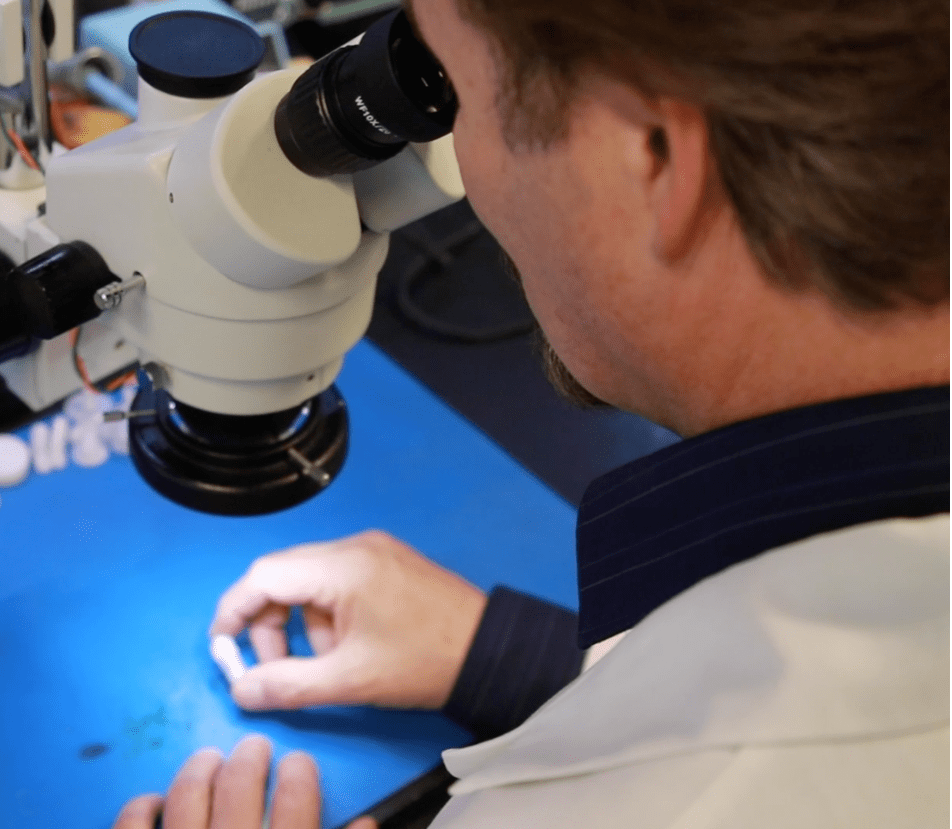
This is where SmartTab comes in. SmartTab is a digital medicine company focused on drug delivery and improving patient care, comfort, and compliance. Their main application, the InjectTab, would give people the option of using the current syringe or autoinjector used to give biologic medication or instead have a person swallow a capsule that would deliver the active ingredients to either the stomach or the small intestine. This initiative is making waves in a big way in both the patient, pharmaceutical, and technology industries. SmartTab was recently named a Tech Crunch Disrupt 2020 Top Pick.

This image has an empty alt attribute; its file name is picture1.png

As someone who has been giving myself injections for over 12 years, this is music to my ears. My next question was what this means for those on infusions.

Robert Niichel, Founder and CEO of SmartTab, says, “We will start with the biologics deployed through a syringe and needle and then move to biologic infusions. Imagine if you take that infusion dose and instead take a smaller dose of the same medication as an ingestible capsule once a day. You now have reduced the amount of drug to a daily amount, side effects would go down because you’re not having to process this entire bolus and keep in mind that some of these drugs, no matter what it is, when you have an infusion, whether it’s to treat Crohn’s or receive chemotherapy, your body has to process that out through the liver or the kidneys. It’s stressful on the metabolism and the organs. Our goal, is that one day, regardless of whether it’s an infusion or an injectable, that you’ll take those drugs via an InjectTab capsule.”

This image has an empty alt attribute; its file name is profile1.jpg

Keeping patients in mind every step of the way

SmartTab is determined to limit the anxiety associated with managing diseases like Crohn’s and ulcerative colitis. The diagnosis and living with a chronic illness can be challenging to cope with, no matter how many years you’ve had it. It’s exciting to think what the future will hold for the IBD family.

“If physicians could go to people and say, we are going to start you on a biologic, you will take one capsule, every week, that’s a lot less of a burden than finding out you need to give yourself injections or spend hours with an IV getting an infusion. Your compliance goes up, patient outcomes, go up. At the end of the day, we’re trying to figure things out so people can lead better and more comfortable lives,” said Robert.

Getting InjectTab FDA-approved

SmartTab has the technology of the capsule finalized and they are starting a pre-clinical animal study next month. The InjectTab will inject an active ingredient into the side of the stomach.

“We will then do blood draws to collect the different levels of the active ingredients. Once that is complete, we will move on to human clinical trials and then onto FDA clearance, meaning approval of a device. Once we have that clearance, then we can combine our InjectTab with other active ingredients. Then we would seek out strategic partners to combine a prescription drug with our InjectTab. We would then do human studies.”

A lot of the heavy lifting for the actual technology has been completed, now it’s all about the clinical studies. Robert says the good news is that they’re not working on getting a new drug approved, since existing biologics will be used with the InjectTab technology.

“We believe that five years from now, if you take a biologic, you will no longer need to be doing a self-injection, there will be more options than syringes or needles to get your medication. You could just take a capsule. Whether it’s once a day or once a week, it will be as easy as taking your vitamins and moving on with your day.”

The cost benefits of a capsule vs. an injector

Right now, autoinjectors are typically hundreds of dollars. The InjectTab will range from $10-$50 a capsule, so right away there’s a significant cost reduction per use.

Robert says SmartTab is really counting on the insurance companies to look at this and say they’ll reimburse for the technology to deploy the drug because now patients are compliant and have reduced office visits and disease progression that can lead to hospital stays and surgeries.

SmartTab is currently in talks with several pharmaceutical companies, because that is the path to commercialization and making InjectTab a game changing reality for patients. Initially, the capsule technology will be available in the United States and then Europe. InjectTab will be geared towards the adult population first.

Life with IBD can be a tough pill to swallow, but the future possibilities surrounding InjectTab may prove otherwise. As someone who has given myself injections for more than a dozen years, this type of technology blows my mind in the best way. When my GI walked into my hospital room in July 2008 while I was battling an abscess the size of a tennis ball in my small intestine and he told me I had two options—Humira or Remicade, I was devastated. I didn’t want to give myself injections and I didn’t want to sit with an IV in my arm and feel sickly. It was a lot to process then and is still not always easy now. Hats off to companies like SmartTab innovating and changing the landscape for the future of IBD and beyond. As a patient, it means the world to me to see the tireless work going on behind the scenes that will change the future for those living with Crohn’s disease, ulcerative colitis, and other conditions.

This image has an empty alt attribute; its file name is humira-loading-dose-day.jpg

Interested in learning more about IBD innovations? Check out the virtual IBD Innovate: Product Development for Crohn’s and Colitis conference November 17-18. Register here.

Click here to learn more about Tech Crunch’s Top Picks for 2020.

Check out my podcast interview about living life powerfully with Crohn’s disease and the future of IBD treatment.