**Disclaimer: This article is in no way meant to offer medical advice or guidance. Medication to treat and manage IBD is NOT a failure. Please understand this is one person’s experience and journey. Prior to going off medication, consult with your gastroenterologist and care team.**
She was diagnosed with Crohn’s disease in 1991 at 19 years old. As a veteran patient and IBD mom of two teenagers, Kelli Young says the COVID-19 pandemic, along with turning 50, inspired her to dig deeper into her health journey and look beyond the “cookie cutter” approach to treating IBD. After multiple surgeries and decades of biologics and other medications, she was determined to try a different approach.
Much like many of us in the IBD community, we often choose to hide our disease from others. Kelli says 15 years of that strategy often left her feeling misunderstood. Once she started sharing and opening herself up to support, her world changed for the better. Anytime someone is sympathetic and says, “you poor thing,” Kelli reminds them that Crohn’s disease molded her in the person she is today and that everyone has problems, hers just happens to be IBD.
“Having lived more than half my life as an IBD patient, I knew I didn’t want to live the second half of my life the way I did the first half.”
Taking a closer look into food sensitivities
It’s no surprise the importance of diet has become a larger part of treating IBD in recent years, but there’s still a lot of gray area.
“Diet is often the one thing that the medical profession overlooks or provides the same generic diet to everyone, assuming everyone is the same. Diet is the #1 factor that affects your health in every way imaginable. Your energy, sleep, weight, sex drive, bowel movements, heart rate, and mood, just to name a few.”
Prior to changing her diet, Kelli connected with her longtime friend of more than 20 years, Dr. Sean Branham, a chiropractor who specializes in functional medicine. Dr. Branham ordered the Oxford Food Sensitivity Test. The test measures inflammation in the body on a cellular level. Food sensitivities are unique to each person, so it’s impossible to determine what your sensitivities are without getting tested. Reactions can also be delayed or be dose dependent.
Kelli says, “The Oxford Food Sensitivity Test looks at all types of white blood cells (Neutrophils, Lymphocytes, Monocytes and Eosinophils) and measures release of all pro-inflammatory chemicals like Cytokines, Histamines, Prostaglandins and Leukotrienes. Certain groups of foods are pro-inflammatory to humans because we may not contain all the enzymes to thoroughly break them down (like dairy). Other foods are pro-inflammatory because of their processing, like many different forms of sugar. Some are inflammatory due to genetic modification like gluten. Some healthy foods can create inflammation once digestive damage has been done and these partially digested foods leak across the digestive barrier and trigger an immune response.”
Customizing diet with Food Sensitivity results
Kelli’s tests results showed mushrooms, cashews, trout, mangos, green peas, coconut, among other foods, triggered an immune reaction. Once Kelli had her Food Sensitivity results in hand, her and Dr. Branham started to customize her diet.
“We first started by removing the bigger classes of pro-inflammatory foods like; dairy, sugar, gluten and soy and then assessed specific foods that were causing a problem for me individually.”
Along with removing these food groups from her diet, Kelli did a whole-body digestive cleanse that involved a specific diet with supplements, a shake, and a cream to rid the body the body of toxins, decrease inflammation, and cleanse the liver and digestive tract.
“Testing revealed that there were more than just digestive issues going on. I also had a blood sugar regulation problem, Estrogen dominance, nutrient deficiencies, a need for: digestive enzymes, immune support, and microbiome support. Once I completed the cleanse, we customized a supplement regimen specific to me based on my test results. We started with what Dr. Branham considered the most important things first and then as we corrected those issues, we moved on and tackled the next issue and so on.”
Celebrating a “new way of life”
As a single mom of a 19-year-old and a 16-year-old who have supported her through her IBD journey every step of the way, Kelli calls these lifestyle changes her “new way of life”.
“When my son was between the ages of 8-12 years old, he was showing IBD symptoms, but he didn’t have IBD, he was experiencing empathic pains. He watched me, a single mother, battle with the daily struggles. I tried to hide it, but he saw right through me. Today he is 16, growing, thriving, and enjoying his healthy mother. My daughter, 19, the age at which I was diagnosed, is thriving as well. I am now able to truly be present in both of their lives.”
When Kelli and her husband divorced, her children were only 8 and 5 years old. As an IBD mom it made an already challenging time that much more complicated. She never dreamed she’d be at this place in her life health-wise.
“Back then I wondered how I was going to give myself my own shots, how I was going to care for two small children 50% of the time when I was always sick. Being a single mother with IBD forced me to take a good hard look at my life, not only for me, but for the sake of my children. My motto used to be “expect the unexpected” and “no expectations.” Today, I no longer worry about the future bad days or wonder if I’m going to be around to be a grandmother someday. Yes, it’s difficult at times to follow such a structured lifestyle, but it’s even more difficult living a life being chronically ill.”
Going off all meds
Kelli has been off all IBD medication since May 2021. She says her GI of 30 years is reluctantly supporting her decision to go this route on her patient journey. Kelli had a colonoscopy in June 2022, and after the scope in recovery he said, “Well Kelli, your new way of life is working. I’ve never seen your scope results look this good.”
While this lifestyle may seem “extreme” to some or difficult to follow, Kelli says she was sick and tired of being sick and tired.
“The definition of “remission” varies depending on who you ask. I am celebrating three years of a “disease free” diagnosis. The Crohn’s will ALWAYS be very much part of my life, but now, the only time I have a “bad day” is when I cheat on my new way of life, eating something I shouldn’t be eating, not getting enough sleep, not exercising, and not managing my stress.”
Take yourself back to your most vulnerable moments as an IBD patient. There’s a good chance you’ve experienced an upsetting situation that involves getting an IV or a blood draw on more than one occasion. What may seem simple, can be complicated and traumatic. Back in December 2020 I shared an article on Lights, Camera, Crohn’s entitled, “Sticking to your guns: How to Speak up During Blood Draws and IVs”. This past week, I received a reader comment that quite honestly, made me angry.
The comment read, “Phlebotomists are only allowed 2 sticks anyways. After 2 unsuccessful attempts they should be getting someone else. No need to tell them they only get 2 tries lol. “I’m a hard stick” ok cool lol like we’re not going to figure that out while looking for a vein. Don’t be this annoying patient that everyone arguing who’s turn it is to deal with every time they walk in lol. Try being nice! Healthcare workers have to deal with too many shitty people. We only wanted to be in healthcare to help people! Not to hurt them!”
This comment inspired me to connect with the IBD community to hear firsthand what it’s like from our side, the patient experience. Shocker—we’re not “annoying patients” or “shitty people” …many of us have dealt with unimaginable pain and suffering related to our diseases. We’re tougher than nails because what we’ve been forced to endure, but that doesn’t mean we should be proverbial pin cushions made to feel guilty for making someone’s job a bit more difficult. It’s not a matter of placing blame or pointing fingers, it comes down to basic human decency, showing empathy to the person who is sick, trying to manage a complicated, unpredictable disease, who needs help.
In an Instagram poll I asked, “Has it ever taken more than two tries for a blood draw/IV? In a 24-hour period, 530 patients responded. 85 percent voted YES, 15% voted no. I followed up by asking “Do you share ahead of time that you have tough veins?” 76% of people voted YES, 24% voted NO.
In my own 17-year journey with Crohn’s disease, I’m your textbook patient with “bad veins”. It’s always an ordeal to get an IV started, blood draws often take multiple tries. I’m no stranger to this patient struggle, but I’ve learned to speak up respectfully in the moment and offer guidance rather than suffer in silence.
During a hospitalization for an abscess the size of a tennis ball in my small intestine in 2008 it took EIGHT tries to get my IV started. That moment still rocks my world when I think about it. Two nurses, rapid response nurses, and finally an anesthesiologist got the job done. That hospitalization I was told I needed to start a biologic—the only options back in 2008 were Remicade (an infusion) and Humira (a self-injection). One of the main reasons I chose Humira was because of my newfound fear of IVs.
Prior to an MRE in 2015 to see if I needed bowel resection surgery, I was so sick and rather than attempting to re-start an IV mid-hospitalization, the nurses brought in the vein finder—it was a game changer during an already stressful time.
In the recovery room after my colonoscopy in 2021 I had a nightmare of an experience with a nurse that I later reported to the hospital. My GI had asked for them to do labs through my IV (which is always a nightmare and never works because I’m so dehydrated from the prep). They decided to wait until after the procedure to get the labs. I was out of it and woke up to a nurse poking me SIX times. I kept pleading with her to let me go to a lab and to stop. She didn’t even respond to me; it was like I was invisible. Instead, she was ripping my well-respected GI apart and complaining to other nurses loudly about being asked to draw labs on dehydrated scope patients. I asked for my husband, she rolled her eyes. When he came back and told him I needed time to “calm down” before we left. I was hysterically crying. When I reported her unprofessional and heartless behavior, by the response on the other line, pretty sure I had the last laugh. Moving forward this fall with my colonoscopy I won’t be allowing labs to be drawn prior to or after the procedure. I’m more than happy to go to a lab at a different time and save us both the headache.
Let’s hear what fellow patients have to say about it
I was overwhelmed by the response from our community regarding this issue. I’m not able to share all the input but appreciate everyone taking the time to share.
When healthcare professionals say the darndest things
“I have so many memories of nurses/lab techs ignoring me when I say I’m a hard stick and dismissing me when I point them to the tried-and-true vein. I’ve heard everything from “I never miss” to “I used to work in the NICU, if I can get an IV started on a newborn, I can get one started on you.” And still, my veins will blow, and they’ll take more than three times to get it. These experiences have made me regret choosing Inflectra infusions as my first Crohn’s medication, as it forces blood draws and an IV every 8 weeks.”
“Some healthcare workers have rolled their eyes at me and were like “Well, let me just see what I can find” and then act irritated with me in the end when they need to ask me where to stick me anyway.”
“Usually they tell me something like, “I like a challenge!” or most recently, “Do I look like the kind of nurse who would be afraid of veins?”
“Nurses will always tell me “They’re the best” …yet they’re usually the ones who can’t find the veins. Then it’s almost like a disappointment in the patient because they always get everyone’s veins but can’t get yours?! It creates so much hoopla over nothing.”
“One hospitalization a nurse asked me if I “don’t want to get better” and if I “just want to keep getting sick.” She said, “Let me do my job and grabbed my arm hard.” I tried to suppress the screams as it was extremely painful. She tried seven times. My GI was livid. He put in a warning to the hospital about her. It was extremely scary to have someone be so rough when I’m so vulnerable and to be at their mercy. In contrast, I just had an amazing experience during my iron infusion. Each nurse tapped my veins for ages and then said they were going to call someone better than they were. I ended up with the head doctor from the ICU!”
“In the early stages of diagnosis, anytime I would go to the ER in pain, I would give the nurses a heads up that my veins were hard to get a successful IV started in. I know they hear that comment a lot, but they should just smirk and brush it off. It took eight tries one time before the nurse decided to get a vein finding machine. As she walked in with it, she said, “You weren’t lying when you said your veins were a hard get.”
“I’m often made to feel guilty. I’ve been asked why I don’t have a port if I’m such a hard stick. One time I was sent home from a scheduled treatment because the infusion nurse was so flustered that she couldn’t get a vein and I had “messed up her patient schedule” for the day. I found myself apologizing on the way out and now realize how wrong that entire situation was. The blame is usually placed on me for not hydrating properly.”
“I always tell them there is typically the most success in my hands and on several occasions the nurses in the ER will say “Oh well, this vein looks better, and I’m more comfortable doing this location.” This usually results in getting poked three times and blowing my veins and then finally trying my hand and being successful. When I tell phlebotomists or any of my surgery prep team, they take me seriously and usually use an instant heating pack to help and get it first try. They take their time and make sure they only do one stick. It’s really only nurses in the ER or Urgent Care settings who give pushback which is WILD because every time I’m admitted I am severely dehydrated so it’s going to be even harder than normal, and that’s basic knowledge nurses should have.”
“When I had a colonoscopy, the anesthesiologist poked me three times after I told her where my good vein was and she said out loud to the doctor, “Doc, your patient is telling me how to do my job!” Luckily, the doctor ignored her after he saw two blown veins.”
To disclose about “tough veins” or not to
“I warn everyone who is going to try and stick me. They usually try everything to get my veins to pop, sometimes it takes one try, other times it takes five. I can’t remember any nurses or phlebotomists giving me attitude, they usually try and make me laugh so that they don’t feel much pressure.”
“I do give them a heads up that I have thin veins and require the thinnest needle. I have certain veins that are more successful. I’ve allowed them two chances, but if it requires a third try, I request the best person they have. This can be super painful. I think it’s extra important to bring it up for colonoscopies when you’re dehydrated.”
“I’ve never had any issues when telling nurses or phlebotomists that I have bad veins. They’re usually happy I have told them because it makes it easier on them. I have decent veins, but they can roll and if I don’t mention it, more often not, it won’t be done right.”
“I’m a hard stick and after a recent 17-day hospitalization, I came home with SO many bruises and scars from IV’s and blood draws. Every IV infiltrated. I’m always outspoken about my veins and while some nurses believe me, I’ve faced pushback. Despite me telling them I know my veins and which ones are easier. The best part is when I’m right, my veins roll, and they miss and then they’re amazed because I told them so. The most resistance I’ve encountered as a patient has been with anesthesiologists—ego is often an issue. For a surgery in 2020, one was trying to place an IV and it hurt me immediately once it was in. So much so that I was crying. I asked him to remove it and try elsewhere and he refused. I had to ask for an attending doctor to step in.”
“I went in for an MRI and told them I had terrible veins and I’m a hard stick. The gentleman was kind and when he started to look for a vein said, “Oh, you actually DO have bad veins.” He said they often have patients tell them they have hard veins when they don’t. They called in the IV team, and it took them two tries.”
“I usually start by saying that they usually have a hard time getting it and I need to use a butterfly needle. I have been told several times that they know what they are doing and refuse to use butterfly needles. One time a needle was causing me such discomfort that I vomited. The nurse never apologized even though I had been pleading with her to take it out and try elsewhere.”
“I tell everyone I have baby veins that move and have been traumatized. I get a lot of pushback because most people think they are the one with the magic touch. I have a 2-stick rule before they must get the next best person.”
IBD hospital visit and infusion center horror stories
“The most common pushback is that the first person that tries sees it as a challenge. But not in a good way, in a prideful way. I had one guy refuse to let someone else try after 3 or 4 failed sticks and then made the executive decision that I would just orally hydrate with Gatorade in the ER…for dehydration. I also have had a lot of trouble with people not believing me when I tell them the IV has infiltrated. I was crying in pain from an infiltrated potassium IV. They didn’t believe me because potassium is known to burn. They were running it at the same time as iron and after a little while there was a stain in my arm from the iron.”
“I straight up told a nurse once she couldn’t poke me anymore because she blew all my veins and instead of getting someone else or getting an ultrasound machine, she just wrote, “Refusing Treatment” in my chart and I went over 12 hours without antibiotics until the resident intervened. “
“I have tiny veins and I’m a tough stick. Sometimes they have to move to a different spot and multiple times I have had someone else come in to try. My worst experience was during a scan with contrast dye. I told the woman repeatedly the needle was not in, and she wouldn’t listen. They put me in the machine, and I had to yell to the radiologist because I had a golf ball size lump on the back of my hand. She then started slapping it until it went down, which was incredibly painful, and I now have a small scar from it.”
“One time I warned a nurse when getting an infusion and she made a snarky comment that she’d been a nurse for 20 years. She injected Benadryl into my arm making it swollen and blue for days. I was crying and she told the doctor who was on call that she’s a “good nurse” and I was overreacting.”
“I once had to get stuck the week before my wedding 32 times. It took four nurses, anesthesia, and peds! I was so bruised the make up artist had to cover my bruises for my wedding and the photographer had to edit them out.”
“I usually have okay veins, but one time was sent for TB bloods before starting a new biologic. The abuse I got from the phlebotomist when they had difficulty getting a vein left me in tears.”
“I went to the same infusion center for 2 years and it was always the same two nurses. Every time I had to tell them about my fear of needles and tell them not to tell me what they were doing. I don’t even know how many times I cried there.”
“I’ve dealt with enough nurses at my infusion center and in the ER that I have ridiculous PTSD and anxiety when it comes to getting poked. I’m 42 and cry like I’m 4 when I get someone who doesn’t take my guidance about my best vein. What makes it extra frustrating is that I used to be a phlebotomist. I know firsthand patients know their bodies better than me and for both our sakes a one and done poke is worth everything.”
“After years and years of infertility and countless blood draws, I’ve seen too many nurses, medical assistants, and phlebotomists being rude and pushy. Everyone seems to “love a challenge” and sometimes their cockiness and attitude to never miss a vein make me their punching bag and experiment.”
“One nurse wouldn’t listen to me and keep rooting around. I told her she was going to blow my only good arm vein. We got into an argument, and she stormed out with the needle dangling out of my arm and my vein blown.”
Bringing out the IBD mama bears
“There is a nurse known for being good at inserting IVs at our Children’s Hospital’s Radiology department (i.e., for MRE’s). I learned this after a challenging IV my daughter experienced at her first MRE, when she was called in and I was told she was “the best at doing it.” With this knowledge, I immediately asked for her the second visit. I was dismissed and someone else spent 15 minutes trying to start an IV on my daughter, at which point the “good nurse” was called in to handle it. The experience was traumatizing for my daughter, and we now have to put off a necessary MRE because of this trauma. If/when we go back for the next MRE, I will not let anyone, but the “good nurse” touch her. We will up and leave if we have to, that’s how strong I feel about it.”
“As the mom of a VEO-IBD (Very Early Onset) IBD patient, we always ask for the PICC team and an anesthesiologist to start our daughter’s IVs. We always have to explain ourselves and get so much pushback each time. Everyone always thinks they can be the one to do it and it’s beyond frustrating. I don’t let any nurses see my daughter anymore unless it’s an extenuating circumstance.”
“The infusion nurse missed twice trying to start an IV for my daughter’s Remicade infusion. I was watching closely and not even sure she was going for a vein. My daughter is usually an easy stick! Easy to see veins and we focus on hydration prior to an infusion. Before the third stick, she asked ME where she should try next. I said how about getting another nurse or the IV team with ultrasound, if necessary. She became so offended, but I had a very nervous kiddo. The next nurse got it quickly without a problem. The first infusion nurse continued to give us attitude the rest of the appointment. I let the nurse manager know I did not want her caring for my daughter at any future appointments.”
“At my son’s second scope (He was 3 years old), I told the anesthesiologist that he’s a tough stick and does best in the right hand or arm. She half laughed and said, “It will be ok, Mom. We will get it.” When she returned the IV was in his foot and he had FOUR other band aids on him from failed attempts, none on his right arm or hand. She said, “You were right, he is a tough stick.” And walked away. We since have left that doctor because that was the only hospital with which he was associated. Now we go to an amazing Children’s hospital and have no complaints.”
Tips for getting through from the IBD family
“They’re always cocky and think they’ll get it. But I honestly find that warning them makes them look harder and they’re usually more successful if I give them a heads up. If I fail to give them a warning, it usually takes a few tries. I have had a specialist use the vein finder ultrasound once. It was super cool! He took one look and said, “Yup! Those are the veins of a Crohn’s patient.”
“I’ve been on Remicade since 2003 so needless to say my veins are shot. My best ones left are in my hands and I always say, “Sorry, my veins are tiny and collapse easily, but don’t worry I’m an easy patient so it’s ok if it takes a few tries. My hands are your best bet, but sometimes they have luck with xyz veins.” I can’t tell you how many times they say that the hand hurts more. As both a nurse and a patient, I know how important it is to advocate for yourself as the patient and listen to what your patient has to say.”
“One thing I’ve learned from several hospital stays is that when you get into the ER and they do the initial IV, make sure it is in a place that will work for a long stay. Not in the crux of your arm, but maybe the hand even though it hurts. That way you can maneuver it better in bed and when walking around the hospital corridors. “
“I have a routine that helps. I’ve been poked 5-7 times to start an IV or get blood. I’ve realized the more often I would say something, the more often they would miss (for a blood draw). For an IV, I started to communicate which vein to hit. Sometimes nurses resist and it sucks because you want the infusion so badly and you’re already nervous or have taken time off, gotten a sitter, and you start wondering if you won’t get your medication and if you’ll need to come back another time to do it all again. I usually take anxiety medication prior to infusions.”
“I truly believe if you go in saying “Oh my veins are easy, no problems here” it gives the nurse confidence! The only times I’ve had trouble are when I tell them I have tough veins. It psyches them out.”
“I always say to the person starting my IV, “I’m not doubting your skills, but the best place to access my veins are this vein and this vein, even though they don’t look promising.”
Perspective from and IBD patient + Healthcare Professional
Michelle Ladonne, 34, was diagnosed with Crohn’s disease in 2010. She’s also an Operations Manager of a large GI practice in Boston, so she sees both sides of the issue not only as a patient, but from the healthcare perspective.
“I am a tough stick and have had some horrible experiences (10+ sticks to get an IV, then having it infiltrate because it wasn’t fully in—so painful). But working in healthcare and managing nurses, medical assistants and phlebotomists who do this work every day, I also see the other side of things.”
Michelle says patients often come in and make comments like “you get one try” and “I can only be stuck in this particular vein,” which can be challenging for the nurse and phlebotomist.
“They’re trying hard for a safe and comfortable draw. My staff tries to listen to the patients’ experience and respect that they know their body better than we ever could. But also, the staff member is responsible for patient safety and if they can’t feel a particular vein or aren’t comfortable with a certain stick, they need to share that perspective politely and respectfully with the patient.”
She says patients can advocate for themselves, while also helping nurses and phlebotomists use their own judgement. For example, Michelle advises saying, “The vein in my antecubital (inside my elbow) looks like a good one, but there is a lot of scarred tissue there, so people usually have a hard time getting the IV all the way in. I tend to have better luck with a wrist or hand IV, but you know best!”-Luckily in the GI practice Michelle manages, several staff members and physicians have IBD.
“Our medical director of the IBD Center has had Crohn’s since he was a teenager, and it gives so much perspective in being able to see both sides of the issues. If it’s an elective blood draw or an infusion, hydrate, hydrate, hydrate! I chug my iced coffee before my Entyvio infusions to get my veins nice and plump. Not always possible clearly for patients coming in through the ER who are dehydrated and have been vomiting, but for elective draws, it’s a huge thing.”
In closing, it’s often a difficult balance when you’re in dire circumstances and the last thing you’re worried about is being polite or feeling the need to forgo your needs to appease a healthcare worker’s feelings. Speak up. As someone with a chronic illness, you are a professional patient. I always state from the beginning that I’ve had Crohn’s for 17 years, IBD gives you street cred for having strength. Make it clear you aren’t doubting their skills, but that you know your body best. Hydrate if you’re able, ask for heat packs to get your veins to perk up, inquire about the vein finder ultrasound, and put limitations on the number of sticks you’re willing to allow before it’s time for someone else to tap into the ring. This isn’t about not hurting feelings or being the “bad guy,” it’s about putting your wellbeing first and doing what you need to do to limit the possibility of another traumatic experience in your patient journey. Your trepidation is valid and justified, don’t let anyone tell you otherwise.
Love can be extra complicated to find, trust, and open yourself up to when you have IBD. This week on Lights, Camera, Crohn’s we hear from five different IBD couples (dating and married), but they aren’t your typical couples. In these cases, both partners have IBD.
Emily + Jason
Emily Geist and her husband, Jason, of Pennsylvania had an unusual diagnosis journey. Their children were surprisingly diagnosed before they were! Their oldest daughter was diagnosed with IBD in 2014 when she was four years old. Then a few months later, their middle daughter was diagnosed with IBD at just 21 months old. Through the process, Emily and her husband were asked if they had any family history of IBD and the answer was “no” at the time.
“Their diagnoses made my husband and I rethink the “sensitive stomachs” that we thought we had. We had previously talked with our health care providers, and no one thought of IBD, given our mild symptoms. Since I was pregnant with our third daughter when our second daughter was diagnosed, it took some time for me to see a GI and be diagnosed in 2016 with ulcerative colitis. My husband’s symptoms were more significant, and he ended up getting diagnosed with ulcerative colitis the same year as me.”
Emily says they were in shock after all four of them were diagnosed with IBD within a two-year period, not to mention having a newborn thrown into the mix!
“I joked that my husband and I were perfect for each other – so perfect we both had the same chronic disease and didn’t know it for the first 8 years of our marriage.”
She is grateful in a way for their delayed diagnoses as a couple, since passing along IBD when both partners have Crohn’s disease or ulcerative greatly increases.
“It was a blessing, in a way, that we had our family of three beautiful girls before we even knew we both had IBD. If my husband and I, and the two older girls had been diagnosed before I became pregnant with our third daughter, I am not sure what we would have done. And this thought hurts my heart, knowing the uniquely amazing kid we have in our third. We have watched our youngest so carefully for signs of IBD. Last fall, based on some very minor issues that might have been ignored in any other family, she had scopes and we found out she also has IBD at the age of six.”
Emily says Jason and her approach medical issues differently. He is calm, she’s a bit anxiety ridden. It’s always like that, right?!
“This works in my favor often as he can help calm me down. I lean hard on him during tough times. While we both have IBD, I think much of Jason’s empathy and support come from other health challenges he has faced. Jason was hospitalized as a teen for a (benign) sinus tumor and associated surgery. He also had cancer and underwent surgery and chemo for it. (We were married during his first round of chemo – but that is a whole other story!) He remembers what helped him in both of those situations and uses it to help our daughters and myself.”
Emily and Jason are on two different 5-ASA medications. Jason and two of the girls are on sulfasalazine, one daughter is on Remicade, another on Humira.
“There are two things I tell my girls: (1) Everyone has something…everyone has a challenge they work to overcome…and ours is IBD. (2) It takes intense pressure to create a diamond, we can deal with our ‘pressure’ and use it to become something rare and amazing.”
Amanda + David
Amanda Vogel moved to Colorado Springs in late August 2021. Two weeks after moving there, she started talking to a guy named David through a dating app. It just so happens they lived across the street from one another, so they planned to meet at a restaurant the following day.
“The day we were supposed to meet, he texted me and said he had to cancel our date due to “stomach issues.” I immediately thought to myself, “Hmm, I wonder if he has Crohn’s disease”? I brushed it off, we continued to text back and forth and made plans for that weekend. While we were texting, I made a joke about him canceling on me again and that’s when he told me he had Crohn’s disease. I was mind blown and told him how I have Crohn’s myself. I shared with him my blog post from March 2020 and felt an instant connection. We were both diagnosed with Crohn’s disease at age 13 and both have the same incision on our stomachs.”
Amanda couldn’t believe these incredible coincidences or the odds of their paths crossing.
“It’s mostly an understanding of each other’s dietary preferences, with some gentle encouragement to try things in moderation here and there. Also, a no-explanation-needed approach to random stomach stuff that can pop up anytime.”
While she says there is a “baseline” of empathy and understanding, which is amazing, it’s surprised her how differently IBD presents in each of them.
“The most surprising thing has been being so close to someone else with the same diagnosis but with very different day-to-day and long-term symptoms, medications, and little personal details of the whole patient experience. It’s helped me understand that one of the frustrations of IBD is how differently it can affect people, which can make it difficult for others to really understand. For me, that translates to empathy in the form of knowing Crohn’s can interject itself into our day whether we expect it or not and making sure to accept that without blame or guilt.”
These lovebirds joke about one day doing a “couples colonoscopy.” David is on Humira, and Amanda has an appointment in upcoming weeks with her new GI to discuss treatment plans moving forward.
“Anyone that would treat you like a burden due to a health problem that you’re doing your best to manage is not someone who deserves to be in a relationship with you. There are plenty of loving, understanding people out there, IBD-savvy or otherwise. Love yourself and the rest takes care of itself.”
Anika + Louis
Anika and her boyfriend, Louis, of Virginia, were friends for years before they officially started dating. They were out with friends one night and she mentioned she had ulcerative colitis. He replied that he did, too.
“When we started dating, I was less than a year into my diagnosis and I felt less alone when I found out he had it, too. Before I began my clinical journey to a diagnosis, I had never heard of UC let alone knew anyone under the age of 70 who had it. There are so many things that I assume I would have had to explain to a partner, that I didn’t have to explain to him because he had a similar experience.”
She says as long as they’ve been together neither of them has felt ill on the same day.
“It’s usually clear if one person is sicker than the other, so the less-sick individual takes more of the heavy lifting. I recently had to undergo a colonoscopy and without me asking he took off work so he could drive me to and from my appointment. He religiously read the prep materials the doctor had given me to make sure I took the right medication at the right time and even did all my prep shopping (buying me Jellos and Gatorades so I had prep friendly snacks). I think in general he’s an extremely empathetic person, but the fact that he can also relate is unbelievably nice.”
Both of these lovebirds take four mesalamine pills a day. They tease each other that if they forget their medication they can just borrow from the other person since they’re on the same prescription. She wants everyone with IBD to remember they are not a burden and deserve to be loved like everyone else.
“I don’t think you should ever think of yourself as a burden, and I know that’s a lot easier said than done. I believe that if someone loves you, like fully loves you, they will love you no matter what and be there to support you in anything you have to deal with. If someone shows early on that they are not compassionate or caring or can’t show up for you, then that’s a blessing that you found out early on and not when it’s too late. You deserve someone who loves you for all that you are.”
Brittany + Morgan
Brittany Wheaton and her boyfriend, Morgan, of British Columbia, both didn’t have IBD when their paths first crossed in 2018. Morgan was diagnosed with ulcerative colitis in 2013, but Brittany didn’t have answers for the symptoms she’d been experiencing since 2016. She says her boyfriend tends to be private about sharing about his ulcerative colitis, so he didn’t share his health situation with her until a few months after she had been diagnosed and he was sure they had a future.
“Since I was diagnosed while we were together, Morgan walked through the process with me and figured out the connection when he learned my new GI was his long-term GI! He didn’t grasp the connection between Crohn’s and UC right away as his awareness of his disease comes from his GI and doctor only – I’m more literate and curious about it!”
When it comes to having kids one day, Morgan has zero concerns. He’s confident that the medical supports are increasing every day and is excited about the prospects of new drugs and treatments if they are in the position of becoming parents to a child with IBD.
“He also reminds me regularly that we would be the greatest advocates and supporters to that child. We live in Canada, so we have the reassurance of universal healthcare which is such a privilege. I am more apprehensive about kids, particularly as I spent the past two years in a severe flare that I was worried might end my life. I struggle with the guilt of knowing I could pass these difficult experiences on by no ill-intention of my own. I also worry what pregnancy would be like on my body and have concerns around not being able to sustain a pregnancy due to my difficulties with nutrition. I also acknowledge that choosing to not have a child due to the risk of IBD can fringe on eugenics and is quite ableist.”
Brittany and Morgan often talk about how despite their IBD they have been fortunate to live beautiful, fulfilled lives and have gotten unique lessons and learnings about themselves and each other through their personal limitations.
“We choose to live in an apartment because we’d rather spend our healthy time having fun and relaxing rather than maintaining a stand-alone home; we’ve planned and started saving for retirement and periods off work at 29 and 34 because we know it’s likely inevitable; we have stringent boundaries around stress and taking on too much because the busyness isn’t worth the cost of our health; we have decided to do everything we can do to maximize our rest and fun, and minimize the stress of a too-full life because we know how fragile life really is, and have seen what is really important to us as IBD has taken it away before for periods of time.”
Brittany and Morgan place importance on being independent as patients but are grateful to have each other to understand the language of IBD and take advantage of having a partner who intuitively gets it.
“The day that we decided that we would be together for the long-haul, we committed to always putting our health first. Having a partner who understands that my physical and mental well-being and his physical and mental well-being need be our priority has provided such a rich and earnest connection without shame or guilt. It’s so beautiful to have a partner who encourages me to take care of myself rather than forcing his way in and trying to micromanage it for me. I feel empowered and trusted, and when I’m in a place where I need the external help, he’s always ready and waiting to step in.”
Brittany and Morgan are both on a 4-week cycle of Entyvio and the nurses at the clinic think it’s a hoot! Morgan is also on azathioprine. Since she was diagnosed while knowing Morgan, they both see the same GI.
“It was funny telling our doc because he (and pretty much everyone) suspects we must have met because of our conditions, but we just ignorantly both swiped right and found out the details later! Our general practitioners find it so interesting that we found each other and ask a lot of interpersonal questions about how we pull it off!!”
IBD is a part of who they are, and though Brittany is not thankful for the disease, she’s thankful for the lessons the IBD experience has brought them both. She says the emotional infrastructure of having IBD has made them better matches for each other!
Rebecca + Joey
When Rebecca Goodrich of California first met her husband, Joey, he opened up about having Crohn’s disease early on. At the time, she did not know she also had IBD. He candidly shared about his experiences with medication, flare ups, and traveling with Crohn’s. Rebecca was curious and eager to learn more about his patient journey, and at the time started to think she may be in denial about her own health.
“I knew what IBD was and was honored that he felt comfortable sharing his experiences with me. I was also so impressed with how determined Joey was to care for his body through healthy habits (sleep, hydration, meditation, etc.). When I was diagnosed, he was incredibly supportive—always reminding me through the tough moments that ‘this too shall pass’.”
She went on to say Joey has a way of keeping her grounded when she gets worked up about procedures or an uptick in symptoms. He takes Humira, she takes Lialda and Mesalamine enemas. Her current GI is Joey’s previous doctor.
“My advice for finding love with IBD is to be with someone who loves you for you. There’s no such thing as perfect, we all struggle with something. I am incredibly grateful to be married to someone who truly “gets it,” for my loyal Labrador Sherman-Shell, and for my family who has been there since the beginning.”
I can remember the moment vividly. Leaving a gastroenterologist appointment three months post-surgery and crying walking to get sushi with my husband on a chilly November day in the middle of the workday. When I walked into that clinic appointment, I was hopeful I would never need a biologic medicine again. We were planning to start trying for a family after our June wedding, but my doctor knocked me back to earth and told me my Crohn’s was too aggressive and I’d be setting myself up for disaster if I attempted going med-free.
The tears flowed. I felt like a failure. I worried about bringing babies into this world while on a heavy-duty drug and if my surgery would provide me with the remission I had never achieved the first ten years of having IBD. I was so upset my husband-to-be and I both called into work and took the rest of the day off. Over sushi we talked about our future family and my health. Everything seemed at our fingertips but out of reach at the same time. That was November 2015. Sometimes we don’t realize how far we’ve come unless we look in the rearview mirror.
Now July 2022, we’re gearing up to celebrate our third child’s first birthday (July 14). We had his first birthday party over the weekend. It’s been a surreal and incredible ride since that November day. I often find myself looking at my three children and still feeling surprised my body was able to create them and bring them safely into this world.
Knowing this is our last baby and the last “first” of everything is bittersweet and amazing all at once. I feel an immense sense of relief and comfort being at this stage and knowing I don’t need to count on my body to sustain life through pregnancy or breastfeeding anymore. I’ve made it an entire year exclusively breastfeeding and if you would have asked me if that would ever be possible a year ago, I would have said no way.
One of my fears is when my next flare will be and leaving my children for days on end while I’m in the hospital. While I know it’s a not a matter of if, but when, it puts me at ease that my children are almost out of the baby stage, and I can begin to explain my health struggles and why I may not always be like other moms. When my oldest was born I hoped to stay out of the hospital until he started walking. He starts kindergarten next month. I can only hope I stay flare-free until my other two are that old.
Learning as I went as a woman with IBD
When I think back to that November day and the tough love my GI professed, I’m so grateful I followed her lead and trusted her approach in managing my Crohn’s. Back then, I wasn’t a patient advocate. The only IBD mom I knew was my cousin’s wife. I navigated the waters of family planning and my first pregnancy all alone without much guidance. Each pregnancy I became more well versed on how to juggle IBD and family planning and everything that comes along with it, but I think back to how isolating and overwhelming it can feel when you dream of having a family, but don’t know how to make it happen when chronic illness is in the mix.
No one knows how their family will play out or if fertility or loss will be a part of their story. It’s sad how many women with IBD choose to be voluntary childless, not because they don’t want to be a mom, but because of the limitations of their IBD and overall well-being getting in the way. A day doesn’t go by that I don’t recognize how lucky I am that I “get” to be a mom. Not every day is wonderful, but even in the trenches as a stay-at-home IBD mom of three littles with almost no breaks, I do my best to remind myself of that day my husband and I got sushi and dreamed of living the life we are living today.
Take yourself back to the very first time you needed medical attention for your IBD (but didn’t know it yet). Close your eyes for a moment. Who was that person? Do you know them anymore? How have you changed and transformed since that life changing day?
I was diagnosed with Crohn’s disease July 23, 2005, at age 21. I was blindsided by a chronic illness after growing up as a literal picture of health. A three-sport, in shape athlete, who had never even had an ear infection or been to an emergency room. As a recent college graduate, my world flipped upside down as I struggled to find my way in the real world.
Now, 17 years later, I can tell you firsthand what I, you, and so many others have endured on our patient journeys and how each experience (even the mundane) serves as monumental touchpoints for gaining independence and confidence in making you a more empowered and direct patient.
Let me paint the picture clearly for you
The first time you bravely laid in an emergency room bed and every time there after—not knowing the tests, pokes and probs, and physical scrutiny you were about to go through.
How it feels to be wheeled by a stranger through stark hallways to CT scans, MREs, and scopes, wondering what the results will be on the other side and the repercussions for more medications, a longer hospital stay, or surgery.
The difference a couple months makes–pre-diagnosis in May 2005 and 2 months after 60 mg of prednisone a dayand 22 pills a day.
What it’s like when you say goodbye to loved ones and they roll you into the OR and you’re shaking like a leaf, all alone and feeling frail and broken, alone with your thoughts and prayers.
The number of moments you’ve watched nurses and even rapid response nurses fumble with IV’s try after IV try and when it’s been more than five, you find your voice from that point forward and start only giving medical professionals two tries before it’s on to the next.
How it feels at the butt crack of dawn when the world is sleeping and the hospital is bustling, waking you abruptly to get more vitals and more labs and you lay alone, haggard, frustrated, and delirious.
The moment when your GI has a heart to heart with you about starting a biologic and having to determine for yourself what route is your preference—infusion or self-injection. Would you rather sit for hours hooked up to an IV drip or sit on your couch with your kids looking on as you inflict pain on yourself.
The times you’ve sat up in the middle of the night wide awake thanks to the prednisone kicking in while the rest of your world is asleep wondering if you’ll ever regain some semblance of control of life.
What it’s like trying to eat meals inconspicuously with your family while they not so subtly watch each bite and every trip to the bathroom with sadness and worry in their eyes.
How it felt driving to a first date or a job interview and feeling like your IBD is a dark secret looming over the conversation and not knowing when to take down your walls and share.
Listening to your friends make comments about health and energy without considering what your experience with a chronic, debilitating illness may be like since you look well on the outside.
What it feels like to look at your reflection in the hospital bathroom. Battered arms, sunken in eyes, a shell of who you used to be. But as soon as you walk out of the door, putting a soft smile on to protect your visitors from worry.
What it’s like to sit on an airplane or be on a road trip with others and silently worrying about whether you’ll be able to make it and what your game plan will be.
When you’re up in the middle of the night doing the second half of colonoscopy prep and wondering ‘why me’ in your 20s and 30s, feeling isolated in the physical, mental, and emotional anguish the process puts you through year after year.
What you’ve internalized each time someone dumbs down your IBD, offers up ridiculous remedies or goes into a discourse about their aunt’s brother’s cousin who “healed” their Crohn’s this way.
When you’ve waved the white flag and alerted family and friends that you needed help or to be seen in the hospital after doing as much fighting as you could against your own body.
The first time you bravely looked down at your incision and saw your body forever changed and came to see your scars as battle wounds.
Waking up each day not knowing what the next 10 minutes will feel like for you and getting after it anyway.
Not knowing if you’ll find your person, but meeting people and having the courage to share about your health issues, even if there are heartbreaks and disappointments along the way.
Deciding to have a baby and discussing family planning, despite all the what ifs and becoming a parent because that’s what you hoped for prior to your IBD.
Landing that dream job with your IBD in your back pocket, not letting the detours stop you from finding the path you were meant to go on.
Celebrate the independence you’ve discovered
The list goes on and on! No matter how old you are when diagnosed with IBD, in that moment we are robbed of our naivety and thoughts of invincibility, and we’re forced to go on a lifelong war and conquest. Our bodies no longer feel like ours. Our dreams feel in disarray. Our people may change and not be who you thought they were. Our hearts may break, but like a phoenix this disease can build you up just as much as it breaks you down.
The reprieve of remission, while not perfect or without symptoms has enabled me to breathe and regain my grounding. In 2015, after three back-to-back bowel obstructions and 18 inches of my small intestine, Meckel’s diverticulum, and appendix removed, there was only one way to go and that was up.
Give yourself grace. Celebrate the independence you’ve discovered that you may not be able to have realized until you’re years out like it took me. And when you’re in the hospital, in for a routine clinic visit or for labs, taking your meds and balancing every daily decision against how it will make your IBD feel, you’ll come to realize what you take on and all you accomplish every day just to survive and thrive, makes you something special. While you may feel dependent on others—and the support of caretakers and a support system can’t be understated, neither can the endless strength that lies within you.
Fatherhood looks differently when you have a chronic illness. Finding a partner, family planning, decision making, and parenting are all impacted when you have IBD. This week on Lights, Camera, Crohn’s we hear from several men around the world. Whether they are preparing to start a family or have adult children, you’ll hear firsthand accounts about how their Crohn’s disease and ulcerative colitis has shaped who they are as men and as dads.
London Harrah, a 31-year-old dad in California, was diagnosed with ulcerative colitis in April 2016. He says IBD has impacted fatherhood in different ways and presented unique challenges. He’s grateful for the endless support his family has given him, making him feel comfortable to openly share about the struggles.
“Prior to my surgery and ostomy, my ulcerative colitis heavily impacted my parenting role. I had to shape my entire day around my ability to have close access to a restroom. Now after surgery, I have had a lot more freedom and a heightened quality of life. I am now able to partake in a lot more activities without my condition hindering me. I also feel like being an IBD dad makes me stronger because I look at parenting as an opportunity to set an example for my son on how to deal with adversity,” said London.
He says IBD has instilled a profound sense of empathy in his 13-year-old son because he has not only witnessed his dad go through the ups and downs of chronic illness, but London has also shared other peoples’ stories from the patient community with him as well.
“Some people ask me for advice on how I navigate different topics in life, and I share many of those stories with my son so he can understand different things that are actually happening in the real world and paint a picture of what some people have to deal with, that may not be visible on the surface.”
London says his son has been through this journey with him since day one. He can still remember when he first started experiencing symptoms and he knew something was wrong and trying to explain that to his child.
“He watched me spend hours in the restroom and was there for me as much as he could. I have always felt open and able to talk to him about this topic, more than anyone else.”
London sees his ostomy as a great learning opportunity for his son.
“As a dad, having an ostomy is kind of a great experience to have because of all the life lessons and teaching opportunities that it creates when raising children. You learn a lot about yourself during this journey and it allows for a lot of realization about the important things in life, which are all transferable when raising our children.”
Brandon Gorge of Michigan has five-year-old and two-year-old sons. Diagnosed with ulcerative colitis freshman year of college in 2003, he’s grateful his IBD was under control for 11 years while on Remicade/Inflectra infusions and now Stelara for the last year and a half.
“My sons wake up early and I love to wake up with them, have breakfast and play before getting the day started. With their ages, my biggest challenge is having to run to the bathroom while my wife is still sleeping. I used to have to wake her up to cover for me, but now they’ll play while I’m in the bathroom or come in with me. I tend to schedule doctor appointments and lab work early in the morning. Making sure my wife knows my morning plan is important so she can schedule accordingly, and we can make sure the boys are set for the morning/day.”
Brandon credits his wife for being a great listener and support.
“She comes with me to colonoscopies and to Crohn’s and Colitis Foundation events. My parents are still a huge support as they helped me find the right doctor when I was diagnosed with UC a week before moving out of state for freshman year of college and continue to be a sounding board for my UC. They’re also involved with the CCF because of me.”
His older son broke his arm when he was four and has been extremely interested in how the human body works and heals. Brandon and his wife found a YouTube video series called “Operation Ouch” by two British doctors. One video they stumbled on is about a girl with IBD.
“He said it wasn’t interesting because he couldn’t see her booboo. I explained to him that some people have booboos that you can’t see, and I have the same one as the girl in the video. He knows I go to the “tush” doctor regularly; they take pictures inside my body – and I’ve showed him the pictures, I give myself shots, and getting a shot is no big deal. Talking about the bathroom is very normal in our family!”
Brian Greenberg of New York was diagnosed with IBD when he was 11 years old, he’s now 39. He says juggling and finding a balance for all things in life is difficult. Between being a husband, a father, and then having a career, and managing chronic illness on top of general health, it’s a lot.
“My family is amazing. My wife knows there are nights where I have to tap out, and she understands when this happens. My family and her family have also been supportive that it took me a little longer to settle into being a dad and learning how to add everything it comes with to my 24/7 job of being a Spoonie. But their patience has paid off and I feel like after a few months of being a father, I found my stride.”
As an ostomate with a 17-month-old daughter, Brian says while she still has no idea what she’s seeing, him and his wife have started the education process with the books “Awesome Ollie” and “Ollie the Bear.”
“It’s teaching her that after some challenges and the fact I’m a little different now, I’m still capable of so much, which I hope to show her one day.”
Trying for a family as a man with IBD
Brad Watson-Davelaar of Canada got married earlier this year and now him and his wife are hopeful to start their family. Brad was diagnosed with Crohn’s disease in 2001 at age 17. Since then, he’s never been in remission.
“I used to be worried about having kids since my IBD has never been stable. Since meeting my wife five years ago, I’ve learned that she and I together are a wonderful team. I’m very much all in for kids. Being an uncle really solidified my desire to be a dad. We’ve been trying for two months and we’re hoping my wife is pregnant by the end of the year, which is a big ask as I’m preparing to go in for a laparoscopic right hemicolectomy with abdominal-perianal resection transanal total mesorectal excision with permanent colotomy later this year. I don’t know how my mental and physical state will be afterward.”
Brad and his wife have talked about the possibility of their children having IBD, but both agreed that if that is the case, they will 150% be there as a support and advocate for our children, something he lacked in his own health journey.
“We’ve also talked about how I will be a stay-at-home dad, as I’ve been on disability for a large majority of my adult life. I know there will be rough points where I will feel like utter garbage and just not feel like being there. But I know even if I let myself get to that point, my wife will be there to help. We’re making sure to move ourselves to where we will have a good support system if anything happens. Having a strong partner makes it easier to be ready and excited for what the future holds.”
With everything going on in the world, Brad says it’s a bit daunting to become a dad.
“I’ve been doing my research. I really want to make sure to do the right things. I treat the prospect of fatherhood much like I manage my IBD. Lots of research and staying open to change. I am so excited to be a father though. I feel like it’s what I need in my life.”
Reflecting on how IBD changes through each parenting season
Alistar Kennedy of the UK was diagnosed with ulcerative colitis in 2000. Now as a 49-year-old married father of two he’s able to reflect on how his IBD journey has impacted fatherhood and family.
“When you have a chronic illness your energy and time are limited. Having children can be exhausting and all-consuming even without health issues. The biggest challenge I found when my children were very young was coping with their boundless energy, their desire to be active, and trying to enjoy outdoor play. Active IBD can be a big issue in those circumstances, fatigue was a real struggle, but also the need to keep near to facilities in case you need them. This meant solo parenting was hard, but good planning and an understanding partner made the normal things achievable. Also, as the kids grew, they became more aware of what was needed from them. Empathy and adjustment to surroundings.”
Speaking of empathy, Alistar says his kids are both very aware of his IBD and how it’s impacted their family.
“My kids have grown up knowing I might have a day when I’m unable to do things due to fatigue or have to make a dash to facilities. Being open and honest with them from an early age has given them a broader understanding of the struggles a lot of families have. They are both very caring individuals. As a family, we are flexible and everyone understands that, sometimes plans must change. We make the most of the good days.”
Since being diagnosed, Alistar sees great promise for the future of IBD treatment and care in the years ahead.
“Medication, treatment plans, the role of diet, and the importance of mental wellbeing has advanced dramatically in the last 20-plus years. I see far more hope from the future about what this disease will mean for all of us and how it will or won’t dictate our lives. If you want to start a family and enjoy everything that can bring, you can. It won’t change the fact teenagers can’t load a dishwasher properly! I’m very proud of the fact that I did the school pick up and drop off for 10 years solid without either child getting a single late mark!”
Dan Bradley of the UK recalls how differently IBD impacted his role as a dad when his children were younger.
“My youngest child is 17, so I don’t feel like my IBD affects my children in a big way. When I was diagnosed 8 years ago it created a huge challenge with being a dad and dealing with the lethargy and fatigue. It was a struggle to be able to do my day-to-day activities and be there for the wants and needs of my children since they were too young to understand my illness and what I was going through as a parent during that time.”
He feels his disease helped shape who his children grew up to be as they enter adulthood.
“I like to think my children were brought up to offer empathy to others, but my IBD has certainly given them a deeper understanding about stomas and the complications that can arise with chronic illness. There’s nothing like telling your 16-year-old daughter she needs to get out of the bathroom quickly when she is trying to get ready for a night out!
Thomas Fowler of New York was first diagnosed with ulcerative colitis in 2004 when he was 30 years old, then three years later he found out he had Crohn’s. Since he was first diagnosed, he’s undergone more than 25 surgeries and currently deals with anal fistulas. He says life as an IBD dad is about finding your “new normal” and that it helped him to have a decade of life with IBD prior to taking the plunge into parenting.
“We talk about Crohn’s all the time, so my kids accept me as I am because they don’t know Daddy without Crohn’s. I sense that they know when I’m having a bad day or flare. I tend to shutdown socially and don’t talk as much. Fatigue is my number one battle in life. I don’t mind the bathroom trips as much or the daily pain, it’s the fatigue. It’s the one symptom that I can’t fight.”
Recently, Thomas says his latest challenge with IBD and fatherhood is juggling his Crohn’s with his son’s baseball season.
“I am not able to eat dinner before baseball practice/games. My son 100% understands why. And sometimes my son will ask to go and get ice cream after a game, and I say I can’t because Daddy has to get home and eat real food first. Sometimes that means eating at almost 9 pm. Which presents another issue in and of itself, because if I eat that late, I automatically know I’m going to be up several times during that night to use the bathroom.”
Why men with IBD tend to stay silent
As an IBD mom of three myself, I’m aware in my extensive advocacy work how our patient community is predominately made of female voices and experiences. For many years, the male experience has been lacking and is often difficult to find.
“Men are conditioned not to share their detailed emotions. Often told to ’suck it up’ and just get on with it. Sharing can make you feel vulnerable and fragile to our peers, so we avoid it. It shouldn’t because it’s incredibly empowering and rewarding. I was diagnosed pre-social media and at the time, advice, and information available online was vague, confusing, and often misleading. It felt very lonely to have IBD back then. Being part of an online community has been game changing. Men struggle to engage and verbalize in this space though, but they are there. Personally, I’m very facts and evidence driven, so the advocacy space must reflect that,” said Alistar.
“We’re taught at an early age that we’re supposed to be tough. That we shouldn’t be sick or show any weakness. That stereotype is slowly being broken as men are learning that even our health can change in a moment, and it’s okay to be vulnerable,” Brian explained.
“I co-chair the Crohn’s & Colitis Foundation’s Detroit Young Professional Group. One of my co-chairs is also a dad. Our group is evenly split between men and women. Before I became involved with the group, I never participated in any type of group for support or advocacy. I think a lot of men (and people with IBD) need to learn how to advocate for themselves with insurance and their medical team before they advocate and help others,” said Brandon.
Dan said, “I think it’s a typical man thing. IBD is not talked about. Some of the symptoms that come with IBD, in particular going to the bathroom, can be seen as a taboo subject. I do feel this is changing and more awareness is getting out there. In the UK, we have recently had a couple of “famous” people raise awareness which has been fantastic.”
“I think in the society we live in today makes it harder for men to be vulnerable with their feelings. In my situation, even I still struggle sometimes talking about certain topics with new people. I do however acknowledge the difficulty and try to work through it,” said London.
Advice for future IBD dads-to-be
Whether you’re in the throes of trying for a baby or if you’re a parent and your child has IBD, and you worry about his future and what it will hold in regards to fatherhood—here’s some amazing advice to guide you and show you all that’s possible.
“There are always more good days than bad. Having children is a wonderful, if very tiring, gift. They change you for the better and help you to grow as a person. Getting my IBD under control has been incredibly challenging, but we’ve done all the things normal families do. Be open and honest with your partner about your fears, priorities self-care and mental wellbeing. Talk and share your feelings to your family and friends. Don’t be hard on yourself. Take naps! The best advice as an active parent is always that good up-front planning and working as a team is essential,” said Alistar.
“Talk to your gastroenterologist to ease any fears about the effects of medicines or worsening IBD, develop a treatment plan, and revisit that plan before a flare gets out of control and affects you being able to be there for your kids,” said Brandon.
“I would tell fellow men not to let IBD stop them from becoming a dad! They are very well capable of having a healthy child, but it starts with them taking initiative and becoming healthy (mentally/physically) themselves before-hand,” said London.
Brian said, “Becoming a father with a chronic illness like IBD is scary. I wasn’t sure how it was going to work, how I’d be able to adjust to everything I was about to add onto life, or where would I find the energy. But you find answers to all those things because the love your heart is filled with carries you through so much, and it’s more important than anything else in life to find a way.”
“Don’t hesitate to start a family. There will never be a “perfect” time to have a kid with this disease. Don’t set goals like, I’ll start a family when I’m 2 years symptom free, or when I don’t have a surgery for 3 consecutive years. You will always have issues for the rest of your life. The only hard part I had was when my kids were newborn through toddler age and I had them by myself away from the house. You get very creative with bathroomn visits. I would use the diaper changing tables and strap my kids in and let them use my phone for distractions so I could use the bathroom. You become a logistical genius when leaving your house. Being a dad is the BEST thing that has ever happened to me. And a hug from your kid is better than any medicine money can buy when you are having Crohn’s related issues,” said Thomas.
“There is no reason on earth to allow your IBD to stop you from becoming a dad if that’s what you want to be. Go for it. Be open so everyone knows where you stand. With the right medication and treatment plan in place, there really isn’t anything you will be stopped from doing. I enjoy long bike rides, long walks with the dog, and a pub lunch after reffing my kids football games. I have flown with an ostomy without issue. If you think you may have IBD, don’t ignore your symptoms. See a doctor and get yourself on the path to treatment so you can live life as fully as possible,” said Dan
This blog article is sponsored by Portal Instruments. All opinions and experiences shared are my own.
I’ll always remember how I felt the moment I was told I needed to go on a biologic drug to try and manage and control my Crohn’s disease. It was Fourth of July weekend 2008. My gastroenterologist walked into my hospital room and told me it was time to “break out the big guns,” meaning starting to get medication through an infusion or through a self-injection. I was a morning news anchor at the time in Wisconsin, three years into my patient journey. I knew without a doubt, for privacy reasons, and keeping my chronic health issue under the radar, that doing an injection in the comfort of my apartment was the best choice. As I watched the fireworks reflect off the hospital room window with my mom, tears flowed down my face. I didn’t know how on God’s green Earth I was ever going to be able to give myself an injection for the rest of my life.
I was never a huge fan of needles prior to my diagnosis. Once you have Inflammatory Bowel Disease, needles unfortunately are all part of it. While we may get desensitized, patients would give anything to be able to treat their disease without needles. When I started on my biologic, my mom and I went to my gastroenterologist office and a nurse told me I needed to do four, painful injections in my thighs because at the time I didn’t have enough fat on my stomach. I was shaking like a leaf. I had no idea what to expect, I was about to inflict pain on myself, the injector felt so foreign in my sweaty palms, and I was scared about not only how much it was going to hurt, but also the long-term side effects the medication could cause to my body.
I did the first injection and it felt like liquid fire burning through my skin. I couldn’t believe I had to sit there and do three more, back…to back…to back. The experience was traumatizing. When I finally did all four, my mom and I walked into the hallway and I embraced her, crying because of my reality, and knowing that in two weeks I would need to inject two more needles into my thighs for the final loading dose. Since July 2008, I’ve done a self-injection every other Monday and for a short time weekly, while I was flaring. That’s more than 2,600 shots.
Dreading “shot day”
The first few years I would absolutely dread my “shot day” and deal with the looming dread each week. Early on I would get emotional during the process and feel bad for myself. I was only 25 years old. It made me feel like I was a sickly person. My peers couldn’t relate. It was isolating and overwhelming. Every time I open my fridge, the box of injections is staring back at me as a constant reminder of what’s to come.
Doing my injections as an IBD mom
Fast forward to present day, I’m now a 38-year-old mom of three. Luckily, the formula for the medication was changed in 2018, making the drug virtually “pain-free”, but there are times I still feel the needle. Even though I have my medication process down to a science, I still wish I didn’t have to do it and I usually wait until Monday nights to do it. The timing is moreso out of habit, because when I was a morning news anchor there was no way I was going to deal with an injection at 2 a.m. I started a tradition of doing my injection while watching the Bachelor/Bachelorette, and that’s carried over now that I have three young children, often waiting until after their bedtimes. Each time after I’m done with my shot, I text my mom to let her know how it went. She’s a nurse and has been my greatest support with my IBD since the day I was diagnosed.
Sometimes my 5-year-old and 3-year-old watch me do my injection and each time they are intrigued. I’m sure my 11-month-old will be the same once he starts to gain an understanding of what I’m doing. It makes me sad that they often witness me doing my injection, but they are also my greatest motivation to be strong and smile through it. Watching me doing injections has made my kids incredibly brave at the pediatrician when it’s time for them to get their immunizations. Because I have little ones, I have to be mindful of disposing of my medication properly and keeping the Sharps disposal container out of harm’s way. We keep Sharps Containers up high in a cubby hole in our laundry room and I dispose of the injector pen immediately.
As an IBD mom, my greatest fear is passing along my Crohn’s to my children. While the risk is low, it’s there. I hope and pray my children won’t ever need to receive a biologic medication whether it’s through self-injection or infusion. For me, there’s no end in sight, I’m expected to be on my medication (if it remains therapeutic) for the rest of my life. Thinking of my babies having to deal with needles and being forced to inflict pain on them would be difficult for me and only add to the guilt.
The future holds so much promise when it comes to drug delivery without a needle. My hope is that in the years to come, other people won’t have to succumb to the same anxiety, pain, and worry I’ve had to deal with for more than a decade.
Saturday my husband and I celebrated our sixth wedding anniversary. Special milestones like this tend to make us all reminisce about the past, present, and the future. When you live with IBD many of those memories and the current reality are from flare ups, hospitalizations, procedures, recoveries, and simply navigating the day to day. While Bobby has been a part of my life for nine years (next month!), I spent the first eight years living with Crohn’s disease, without him—in my 20s.
During those eight years I experienced many heartbreaks and disappointments when it came to trying to find my person. To give you the cliff notes version—my boyfriend who I was dating when I was diagnosed never visited me during a week-long hospital stay and broke up with me while I was in a wheelchair over the phone after getting discharged and going into my parent’s car. Then, I dated a guy who refused to drive 3 hours when I was hospitalized for an abscess the size of a tennis ball in my small intestine, because “gas prices were too expensive” (can you imagine how he’s handling the prices now, HA!) and he wanted to go fishing. Another moment that makes me shake my head to this day is when I had to cancel a first date because I was doubled over in pain on the bathroom floor and was heading to the ER and he texted me that it was a poor excuse and laughed at me.
While I could have seen my Crohn’s disease as a scarlet letter and settled with a person who clearly didn’t have a genuine heart, I used my IBD to guide my decision making and it brought me to the relationship and the person I was meant to be with.
So, while I was out to dinner over the weekend looking across the table at my husband and the man I have three kids with—a man who has taken my disease journey and everything that’s come along with it in stride, I not only felt an immense sense of gratitude but also want you to know that your disease can give you superhuman clarity when it comes to helping you weed through the people who aren’t your person. This week on Lights, Camera, Crohn’s a close look at love and relationships and the tremendous support our romantic partners are, while also speaking to those who are single and struggling to see themselves as anything but a burden. I hope this article shows you the incredible relationships so many of us in the IBD community have been able to have, despite our disease—and remind you that you are worthy of all that love has to offer. Your disease does not make you less than. You deserve the same respect, consideration, compassion, and unconditional love as everyone else.
How does your partner go above and beyond?
I tapped into our community on Instagram and asked: “How does your partner support you?” By reading the countless messages it just goes to show, it is possible to find a partner who sees you for more than your IBD. Someone who loves you for all of you:
“Taking care of the house, speaking up for me at appointments, fighting insurance when I can’t anymore, and listening to me.”
“Knows what I can and cannot eat and makes sure there’s food available that I can tolerate.”
“I’ve got a winner, there’s too many things to type in this small box! Will make a late-night food run because of my limited options with a flare or let me pick a meal. Shows support by driving me to colonoscopies, even if it means missing work.”
“They listen when I “complain” and offer solutions when I don’t feel well.”
“Attends most of my doctor appointments with me.”
“When I’m ill he takes over with our son and cleaning, orders takeout, and rubs my back.”
“Encouraging me to rest, especially to flare and then taking care of the house and baby.”
“Dealing with insurance and appointment scheduling so I can focus on other stuff.”
“I could go on forever but knowing my needs even when I don’t want to ask for help.”
“Helps me believe good days are coming. Asked, “where are we going on our next adventure?” while walking me around the hospital unit. Listens. Is present. Helps without being asked. Considerate. Kind. Empathetic.”
“He takes on more responsibility around the house when I’m not feeling well and comforts me!”
“By listening, learning, laughing, and trusting me.”
“Ricky is my rock. He is steadfast and always levelheaded.”
“He takes care of the kids and keeps the household running when I’m out of commission.”
“Understands the importance of rest, diet, low stress, and medications.”
“He got a Crohn’s and Colitis shirt and wears it on my bad days or procedure days to show support.”
“My husband doesn’t “do sick” well. He has never been sick since I met him 10 years ago. So, it was very hard for me during my first flare up as his wife. He did not tolerate me being sick at all. He kept telling me not to “identify” with the illness and manifest good health. At the time it was torture. I felt so alone and didn’t feel any compassion from him. He is a “mind over matter” person and has been helping me manifest a strong, healthy body. He supports us by living a very healthy lifestyle. He gets me up every morning to work out with him, no holistic treatment is too expensive. He is giving. Sacrifices everything for his family. Even though he is different from me, I’m forever grateful for his approach because I have never been healthier!”
“When I’m in a flare he takes care of the kids and cleaning so I can rest and not stress while I’m sick. Helps me feel comfortable and confident managing my Crohn’s.”
“In ever way. He never asks more of me than I can give at that moment.”
“Being by my side before I even have to ask.”
“He’s my cheerleader on injection days!”
“He understands if I need to stop driving often.”
“Does more than his share of chores. Eats safe food dinners with me. Hugs me when I cry and so much more!!!”
“My husband is truly a miracle. Diagnosed as newlyweds, never in remission. His thoughtful intentionality and his presence make me so proud and lucky. I couldn’t do this without him.”
Fears about finding your person
Now on the contrary, those who are single and struggling to find their match may hesitate to put themselves out there for many reasons. Chronic illness and love can be overwhelming. I asked the following question on Instagram: What worries you about love and IBD?”:
“They will not accept my permanent ostomy and think it’s gross.”
“Thinking I’m less fun because I don’t want to go out as much and need to rest more.”
“Feeling less than. Who wants to deal with going IBD/fibromyalgia? ☹”
“Honestly, everything…like how and will they truly be there at my worst.”
“Being considered too much baggage!”
“Why would someone choose to love someone who’s sick all the time?”
“That my husband would get tired of my lifestyle and not feeling well all the time and leave.”
“That they won’t accept my ostomy—how long do I wait to tell them? It’s hard.”
“How to tell someone when you first start dating. Men not wanting to deal with it.”
“Fearful I won’t have the energy to keep up with activities, dates, etc.”
“My wedding day—how I will feel! I’m far from that stage of life, but I worry about this often.”
“It’s hard enough to find a man, let alone one that can handle IBD life.”
“That I won’t be accepted. I’ve had to get dentures because of Crohn’s.”
“They won’t accept me for my disease, and I will be a burden to them because I’m sick.”
“That someone will get tired of dealing with my health issues. That I will burden them too much.”
“I worry about rejection and being a burden to a potential partner.”
“I’m not single, but my biggest fear is one day my spouse will wake up and realize this isn’t the life he wants and that taking care of me is too big of a sacrifice. That he’s run out of energy to give and needs to take care of himself (do what makes him happy). I don’t know what I’d do without him.”
…
Woah. How heartbreaking and relatable are those comments?! First, I want you to read an article I wrote awhile back that addresses the term “burden” as it relates to love and IBD. While it can be incredibly intimidating to share the fact you have IBD and everything that comes along with your personal case (scars, ostomy, flaring, need for hardcore medications, etc.), it’s all a part of you and if someone you are dating is going to pass judgement or be “turned off” by that, I’m telling you now RUN FOR THE FREAKIN’ HILLS. As you date, don’t settle for anyone who makes you feel guilty for something that’s completely out of your control. Let your IBD shine a bright light on someone’s true colors. Same goes for friendships. In the moment it can be shocking to see who is there and who is not, many people will surprise you—and not in a good way, but take that intel and keep your inner circle made up of people who you can trust implicitly and be yourself completely with.
When it comes to disclosing—you’ll know when the moment is right. For me, I told my husband on our third date while we were out to lunch. You don’t have to get into the nitty gritty, just put it out there—a high level explanation—and let them ask questions. In that moment you will be able to gauge their interest. Bobby didn’t bat an eye. To this day he reminds me I’m a healthy person, aside from my intestines. Don’t wait too long to share about your IBD so you don’t invest time and energy if they aren’t going to be worth it. If you’re lying in a hospital bed and feeling neglected or alone as you face serious health complications, it’s time to take a serious look at what you want and what you need in a relationship. I promise you will not regret breaking up with someone who makes your life and emotions complicated.
I can still remember crying in my parent’s bedroom after being diagnosed with Crohn’s and dealing with a breakup during the same week. I was 21. It felt like my world was crashing and burning. I wish I could hug that girl and tell her not to worry and that she’d be a happily married mom of three kids who rose above and didn’t settle. Love and IBD doesn’t have to be scary, it’s something really special.
When something traumatic happens—like the mass shooting in Uvalde that left 19 children and two adults dead last week, the stress, sadness, and overwhelming grief can cause IBD to spiral out of control. You are not alone if the heavy nature of what’s happening in the world causes your mind to race and your GI symptoms to be amplified. As May (Maternal Mental Health month) comes to an end, a look at how we can best navigate these emotions and how our thoughts impact the gut-brain connection.
Looming threat of flares and violence
With the constant news cycle that bombards us, added into our reliance on social media, and seeing everyone’s opinions and posts, it’s the perfect storm for feeling suffocated by sadness. Life with IBD, whether you are in remission or not, is living with the looming thought of when your next flare or hospitalization is going to be. You know in your heart of hearts that it’s not a matter of if, but when your IBD is going to rear its ugly head. These days with violence happening left and right, it’s a challenge not to wonder and worry when you’re out in public if you’re going to be in the wrong place at the wrong time or if your children are in harm’s way.
The anxiety of worrying about the “what if” and the pain of grieving can often correlate to actual physical pain in our bodies that are already fighting an uphill battle. It’s difficult to try and make sense of what’s going on in the world. It’s impossible to try and wrap your brain around how people can be so evil. As a mom, I found myself crying putting each of my kids to sleep last week. Snuggling them a little longer. Worrying about their wellbeing and praying as hard as I could over them.
As a former news anchor and journalist, I vividly recall the moment the news of Sandy Hook broke. I was standing in the newsroom, about to head out to the studio to anchor the Midday show, when the heartbreaking news came over the newsfeed. It was incomprehensible then and it’s even worse now as a mom of three. I have only been able to watch the news in short snippets right now because I felt like the sadness of it all was consuming me in an unhealthy way. There’s a guilt that comes with trying to tune out the coverage and feeling like you’re not giving the reality of other peoples’ heartbreak the attention it deserves, while trying to protect your own mental state and heart.
Dr. Lindsay Hallett (Zimmerman), PsyD, is a clinical psychologist in Indiana. Here is her advice for coping:
Give yourself half the grace you give to others. This can make a significant difference in your overall well-being and stress level.
Reach out. If connection feels like what you truly need, enlist a friend or relative. The higher the level of personal connection, the better- seeing a friend is preferable to FaceTime, a phone call is preferable to texting, etc. But also, any connection is better than none.
Make time to move. Time is a premium to everyone and even 15 minutes will do. Listen to your body and give it what it needs – stretching, a walk, an intense workout, gardening… any kind of movement that respects your body’s own capabilities.
Give yourself permission to check out. If everything feels to be “too much,” avoidance can be healthy. Communicate healthy boundaries with others that you can’t talk about topic XYZ right now.
Seek therapy. Your emotional house doesn’t have to be “on fire” to benefit. Ask your primary care doctor, contact your insurance company, or research PsychologyToday.com to find a therapist. In-person with occasional virtual supplementation is best, but online therapy platforms can be helpful if you aren’t having luck otherwise.
Give yourself permission to unplug and stop doom scrolling. While there is no “right way” to cope with traumatic events like what happened in Uvalde and so many times before, give yourself permission to feel whatever complex emotions you are experiencing while also giving yourself space and time to take breaks and turns off screens. When you have IBD, being cognizant of what triggers you and recognizing how your symptoms speak to you, can allow you to stay one step ahead of the game in managing your illness. Focus on what’s tangible, what’s right in front of you, and what you are able to control.
This week I was feeding my 9-month-old a smoothie in his highchair before I had to run to grab my older two from preschool. I realized it was an injection day, so I figured I would do my shot while the baby was in the highchair to get it out of the way. It seemed like no big deal in the moment. But as I sat there and saw the baby food next to my Humira on the kitchen table I started thinking about how life as an IBD mom may feel normal to us, but what we do each day goes above and beyond.
Then my mind started wondering. I thought about how I had taken my oldest to his outdoor fieldtrip last week and refrained from having my morning coffee or eating breakfast so I could curb my Crohn’s from causing me problems. I thought about how my 3-year-old is so intuitive if she thinks I’m in pain, she grabs my belly and pretends to put the pain into her belly, telling me “I love you mama, take a breath.”
Take a breath. Boy oh boy do mothers in general need to stop and take that advice or what? Motherhood whether you have IBD or not is the most beautiful, exhausting, and rewarding challenge. No matter what season you are in it comes with triumphs and challenges it comes with happy tears and sad ones, too. It’s a constant game of trying to manage your emotions and tap into your patience, or whatever is left of it each day. We come to forget that we are also growing up in many ways, just as our kids do.
Motherhood and IBD is a balance of wanting to be all the things but knowing that at any given moment your body can throw your life and plans upside down. There are unspoken limitations.
It’s silently worrying and praying what will happen to your family if you go down and end up in the hospital.
It’s trying to stand tall when all you may want to do is rest on the couch.
It’s seeing your children thrive and feeling so much pride you constantly feel like you can cry tears of joy at any moment.
It’s getting scared when your little one randomly says their tummy hurts.
It’s knowing that your disease robbed you of a great deal—physically, mentally, emotionally, but it didn’t rob you of the greatest gift of all, being a mom.
It’s recognizing all that is still possible, even with this grueling disease.
It’s showing up each day, not only for yourself but for your family.
It’s taking the pain and feel-good days and focusing on one moment in time that feels slow but is going by in a flash.
Take a breath. You deserve it. We weren’t meant to mother alone. Lean on your village. Voice your struggles. Cry if you want to cry. But also, don’t put yourself to unattainable expectations. You have a chronic illness and you’re a mom. Don’t push yourself to the brink. Some days will be adventure-filled, others will be spent on the couch—and that’s OK. Your children are learning from you and gaining innate intuition, and that’s a gift. They’re witnessing that health is not something to be taken for granted. They’re watching you even when you think they are not. What may feel mundane to you, is not. As an IBD mom you are juggling countless extra balls in the air that healthy mothers don’t have to think about. Give yourself credit where credit is due and take a breath.

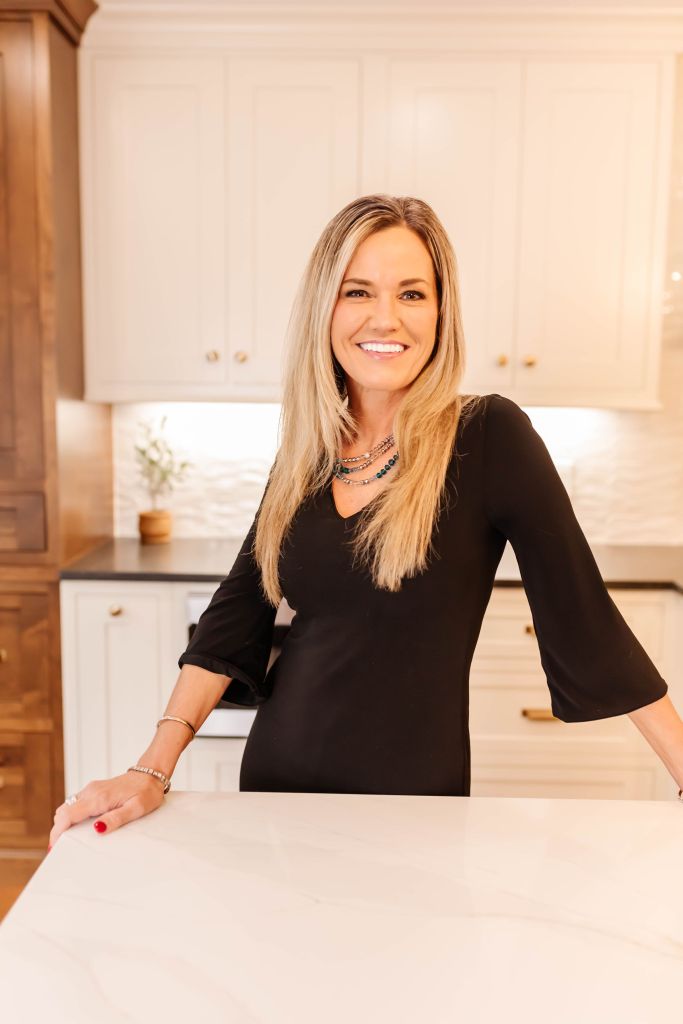
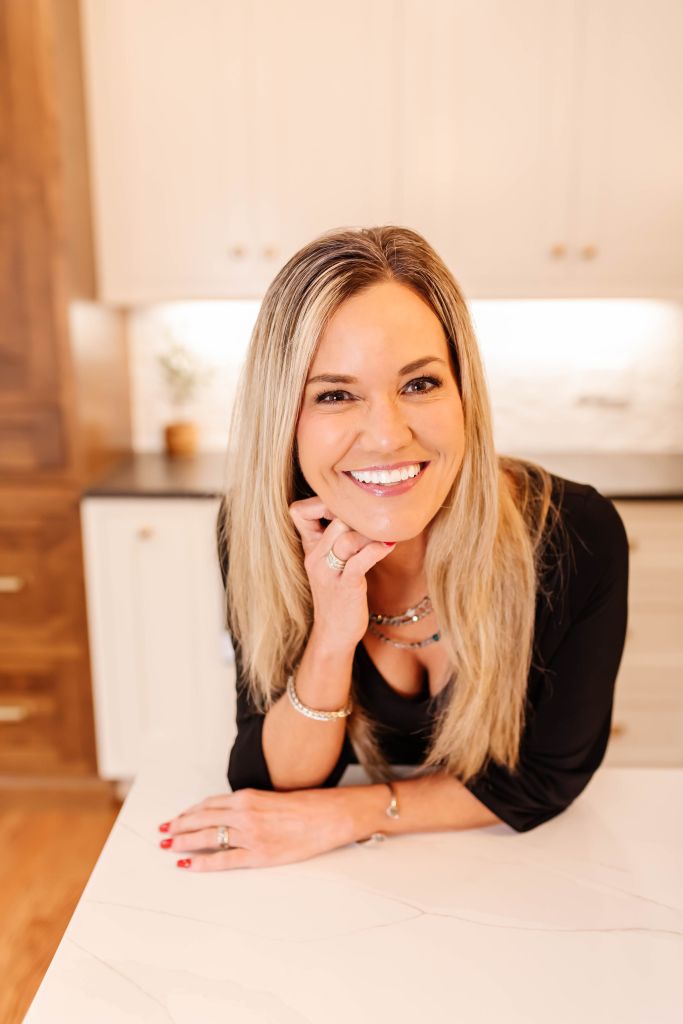




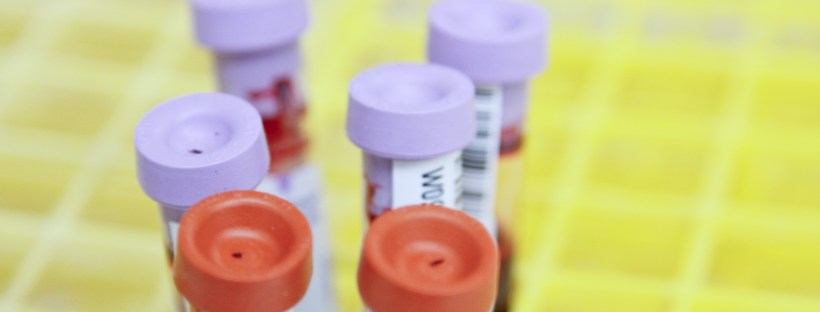






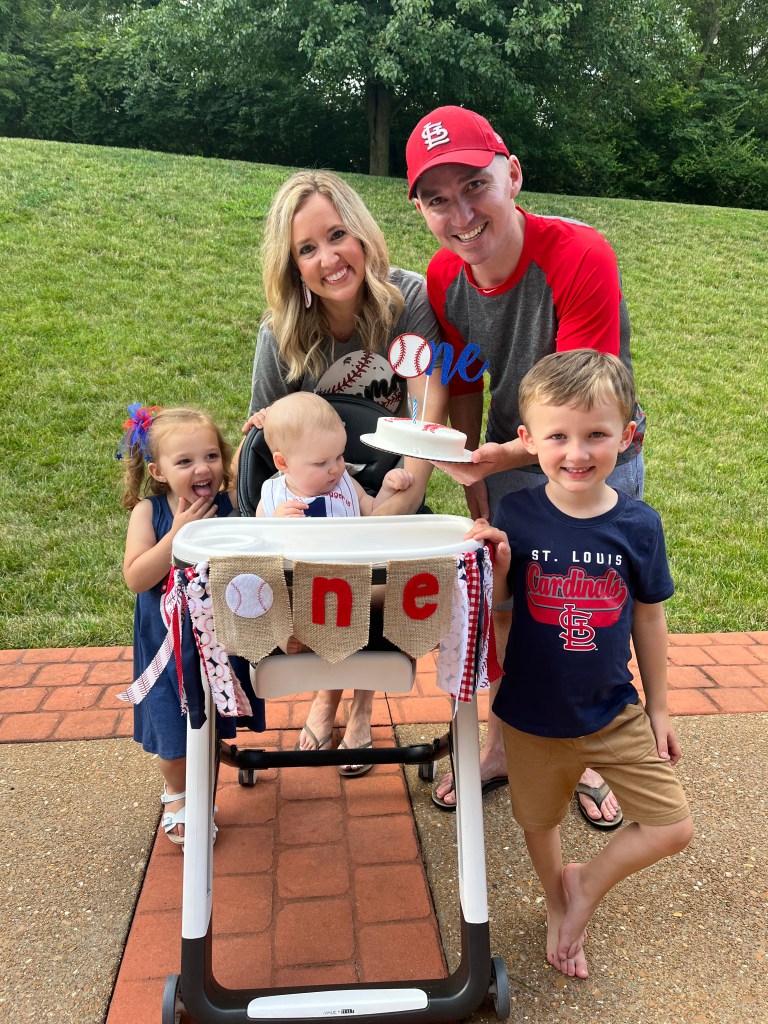





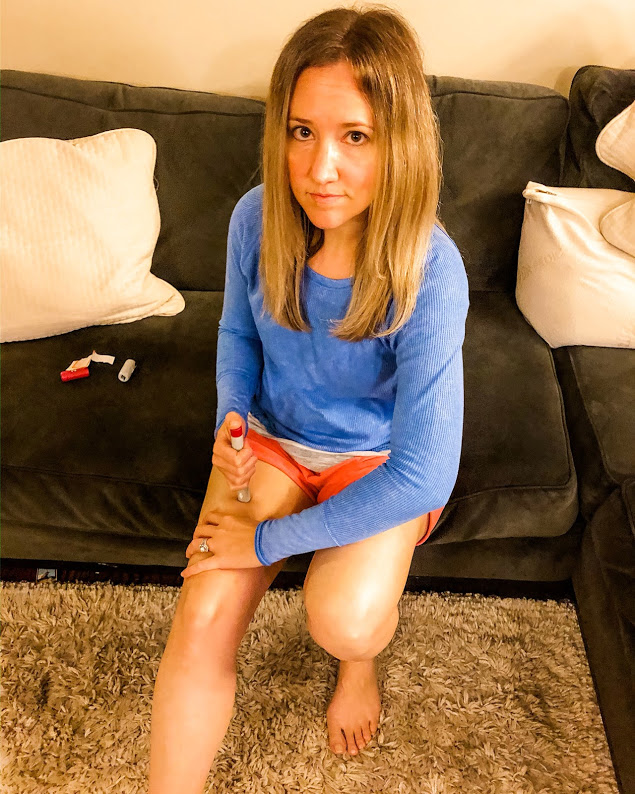
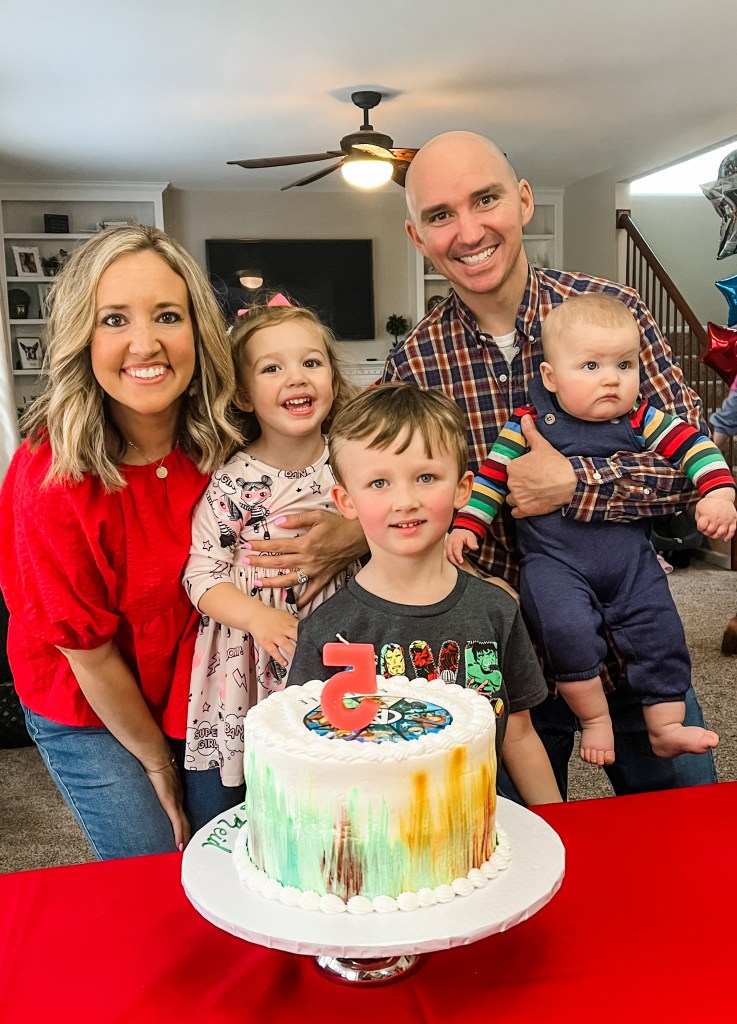










 lights camera crohn's