The mental health burden of IBD and coping through community and therapy

When you live with chronic illness, you experience a wide range of emotions and personal experiences that shape you. Life can feel like an uncertain rollercoaster ride, you never know when the next twist or turn is going to happen. This week on Lights, Camera, Crohn’s, 21-year-old Parsa Iranmahboub, candidly shares the mental health burden that IBD brings upon a patient. Diagnosed with Crohn’s when he was only eight years old, Parsa shares the perspective of what it’s like to be a pediatric patient who has grown into adulthood. He’s currently a student at UCLA and the Education Chair for the Crohn’s and Colitis Foundation’s National Council of College Students.
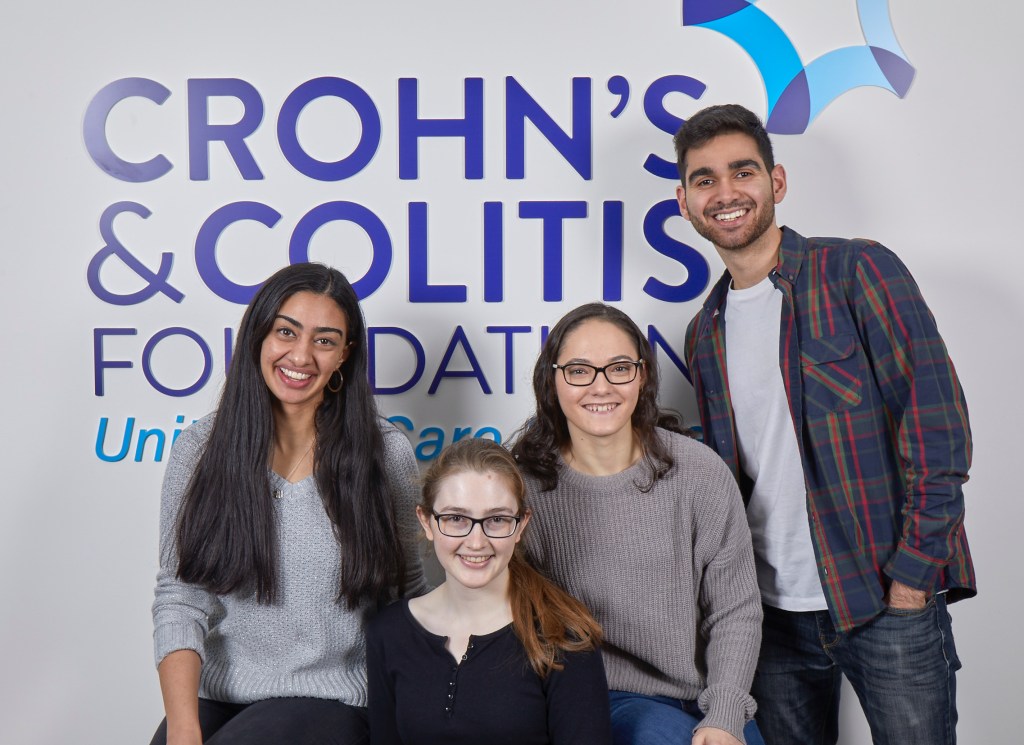
Parsa explains the psychosocial component of life with Crohn’s disease and ulcerative colitis by breaking it down to anxiety, embarrassment, guilt, and loneliness. He recently spoke about this at the Crohn’s and Colitis Congress as well as on IBD Patient Insider and his powerful words resonated with me and I know they will with you, too. Here’s Parsa’s breakdown of the IBD patient experience:

Anxiety: Being a bathroom disease, there is often the anxiety of whether a patient has easy accessibility to a restroom when they are out. But there can also be anxiety related to a patient’s diet. When I was younger, I was placed on a low sodium diet due to one of my medications. If I wanted to eat out with family or friends, there would be this anxiety of whether I could even eat anything from the restaurant. There’s also the anxiety that stems from extra-intestinal manifestations. I have a history of developing fistulas. And during my sophomore year of college, my labs were not looking too good, I was flaring a little bit, and I began to worry if this meant I would develop another fistula. I began to wonder how I would deal with a fistula as a college student. How would another flare up affect my grades and my ability to get my work done? I lived in a communal style dorm, so how would a sitz bath even work? Essentially, with anxiety there can be this fear of the disease taking over my life and how can I constantly accommodate it.

Embarrassment: Embarrassment can arise in numerous forms. For one, there’s the poo taboo. But there can also be embarrassment from when you are flaring. From when you are losing weight, when you no longer look healthy, when you now look “sick.” There are the side effects from medications. From when you begin to gain weight, develop acne, and now have that dreaded moon face. Let’s not forget the impact of extra-intestinal manifestations. In 6th grade, I had surgery for a perianal fistula. After the surgery, I had to wear tighty whities with a maxi pad to help absorb the pus. It would be an understatement to describe how much I began to despise physical education. Not because I had to exercise and run around. No, I was always too active of a kid to hate PE. But because we had to change into our uniforms during the beginning of class. And I was embarrassed to be in the locker room. I was embarrassed that everyone else would look cool with their boxers, but here I was with my tighty whities and a maxi pad. And it might sound ridiculous, almost like a scene taken from the “Diary of the Wimpy Kid”, but to my sixth-grade self, looking cool and being like everyone else mattered.

Guilt: There is often the guilt of feeling like a burden for others. That others have to not only be flexible with you but that they need to make accommodations because of you. “Oh, you all want to go hiking, well I can’t because there’s no accessible bathroom.” “Oh, you all want to eat at this place, actually can we go somewhere else where I can better tolerate the food?” There can even be instances where you feel guilt for believing that you no longer are a good friend. That since you have to refuse to hang out with friends because of fatigue or pain, your friends probably think you simply don’t enjoy hanging out with them. But there can also be guilt from a non-compliant label. When I was younger, I would receive weekly injections. Soon, I began to throw up after every injection. My doctor switched me to the pill version, but it would still make me feel incredibly nauseous. So much so, that I would refuse to touch the pills. Instead, I would take the pill container, open the lid, slowly pour the pills into the lid, pour too many, attempt to pour the extra pills from the lid back to the container, and once again pour too many pills back. It was a whole process. But I simply refused to touch the pills.

Well, it shouldn’t be a surprise that eventually I became non-compliant. Consequently, I switched medications and soon developed acute pancreatitis. At the onset of my symptoms, I was out of the house and had to call my dad to pick me up because I was continuing to throw up blood. And in the car, I told him “Dad, I think I’m going to die.” Thankfully, it was an over exaggeration. But at that moment, it wasn’t.

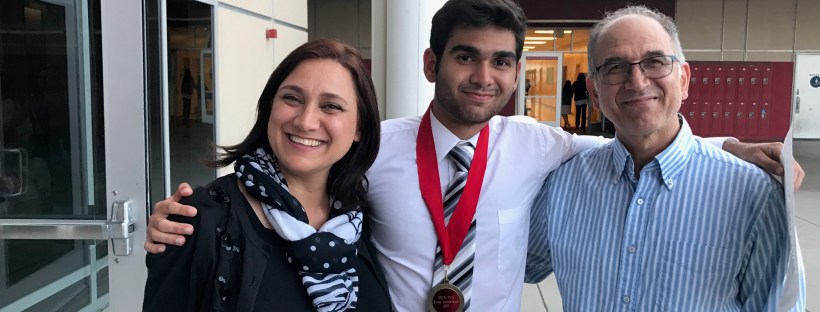
Parsa with his parents.

Now that I reflect on the moment, not only do I feel guilty for putting myself through that situation, but for also putting my family through that. I can’t imagine being a father and hearing your son tell you those words. And all of this happened because I couldn’t get myself to take those stupid pills. So, not only was I labeled as a non-compliant patient, a patient who was too immature to take his medications, but I was now also a patient who had “hurt” his family.

Loneliness: IBD is an invisible disease. You might look at a person and not realize they are living with a chronic illness. The invisibility is both the disease’s blessing and curse. There have been so many instances where I’ve been happy to have the ability to put on a mask and pretend that everything is okay. That my friends and peers do not have to associate me with a “disease,” a connotation that I despise so much that I often introduce my chronic illness as Crohn’s and not Crohn’s disease. However, because of the invisibility, the disease can feel extremely isolating. You might not know anyone else who can relate to your experiences/feelings. In fact, despite being diagnosed at a young age, for almost a decade I refused to share my story with friends and those close to me. It wasn’t until I met an IBD patient for the first time who was my age that I began to realize the importance of a shared community.

Dr. Tiffany Taft , PsyD, MIS, a Research Assistant Professor at Northwestern University Feinberg School of Medicine, spoke alongside Parsa during that Crohn’s and Colitis panel about Mental Health as it relates to IBD. As a Crohn’s patient of 19 years herself, she offers a unique perspective for her patients. I asked her when an IBD patient expresses these feelings of anxiety, embarrassment, guilt, and loneliness how she helps people deal with the struggles.
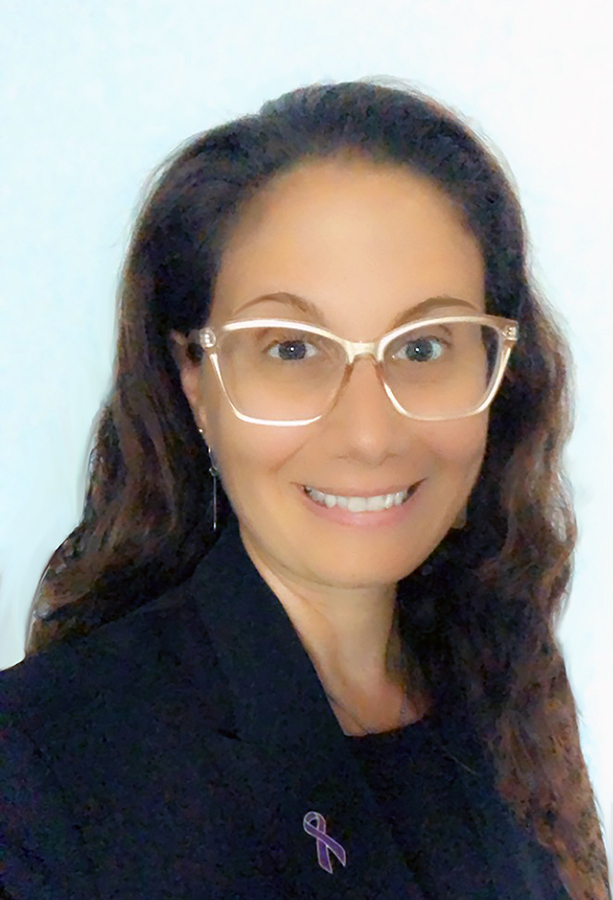
“The first thing I do is simply listen and reflect to the person my understanding without advice or judgement. It’s important to let someone tell their story before interjecting with any sort of interpretation or the like. Then, I start with some education about how our thoughts affect how we feel and how we behave. And that these thoughts are often on autopilot or may feel like they’re on an infinite loop and impossible to turn off,” explained Dr. Taft. “My goal is to help the patient understand their thinking and learn to slow it down and take a step back from their thoughts to be able to evaluate them, and maybe either change them or not let them have as much power.”

She went on to say that from there her and her patients tie their thoughts into other symptoms like anxiety, shame, or guilt, to see patterns and opportunities for change.

“It’s not an easy process, but most people can succeed. Loneliness has been harder during the pandemic. Social distancing has created a lot of isolation without an easy solution. I encourage staying connected via video chat, texting, and social media (so long as it’s not stressful!) People say that online interactions aren’t as fulfilling, and that’s probably true. But if I shift my thoughts from this negative lens to a more positive perspective, then it can help offset some of that loneliness until we can all be together again.”

The Decision to Open Up

It takes time and patience for many of us to come to terms with our diagnosis and decide how we want to present our experience to the world. For both Parsa and me, it took us a decade to take off our proverbial masks and share our reality with those around us. Parsa says he decided to share his patient journey at the end of freshman year of college after he joined a research lab at the UCLA Center for Inflammatory Bowel Diseases. He met someone for the first time who was his age and had IBD.

“When I was talking with her, this sort of light bulb just sparked. I realized I could connect with this person in a way I couldn’t have connected with anyone else before. She truly understood the challenges I was facing or had faced. Not from a scientific or “oh, I see” perspective, but from a “oh, I know cause you’re not alone” perspective. This connection was essentially my first exposure to the IBD community, and slowly, I began to become more involved in the community.”

The Power of Connecting with the IBD Community

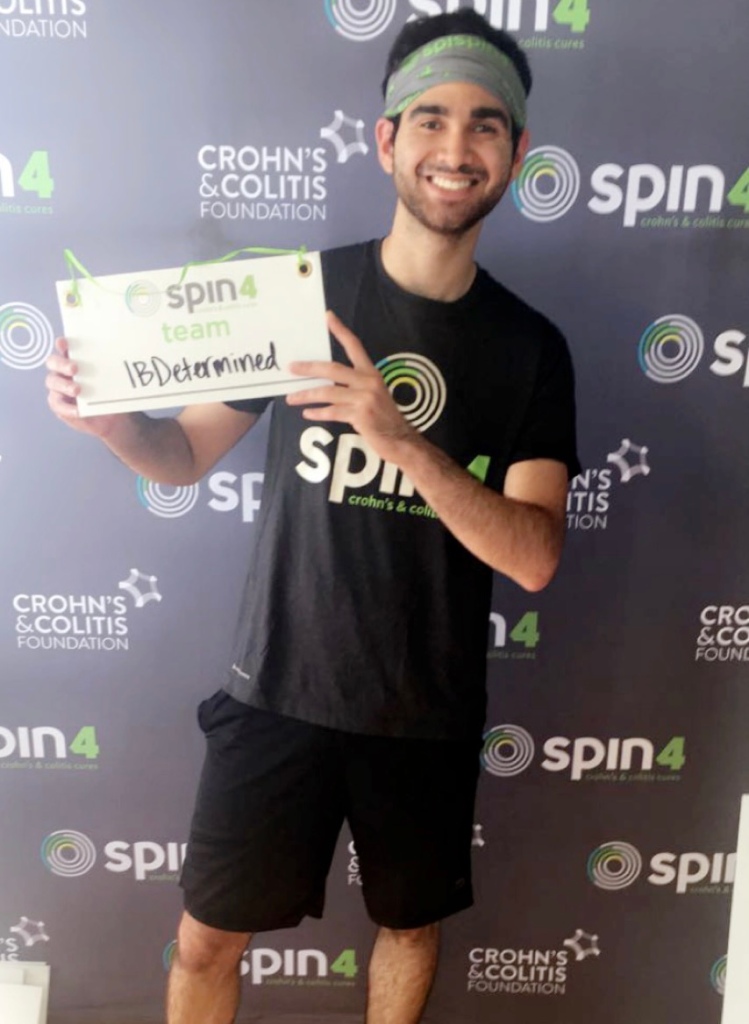
Parsa went from forming his first spin4 team to joining the National Council of College Leaders to becoming more involved with his local chapter in California. He then started a local support network for college students on the UCLA campus. His advice for patients and caregivers—find a support network within the IBD community.
Foundation of National Council of College Leaders (NCCL)—this group of college students from across the United States volunteers with the Foundation to provide a distinct voice for young adults with IBD. Members also connect on how IBD affects them as students, athletes, and partners in a relationship, the intersectionality that stems from a patient’s identity, and tips for having an ostomy bag, reducing stress through coping mechanisms, and applying for accommodations at school.

Parsa also co-founded IBDetermined at UCLA, a student organization geared towards providing a support network and advocacy-centered space for UCLA students with IBD.

“Even though there are some amazing national and local support groups, we noticed that there was a gap for local resources that focused specifically on the intersection between being a college student and an IBD patient. Hence, we wanted to create that more local space, where individuals could address their specific questions/concerns/thoughts relating to being an IBD college student at UCLA. It’s a space where our members can learn about accommodations that are available through our university’s Center for Accessible Education, can exchange tips and advice for navigating schoolwork and college life with IBD, can express their frustrations about the disease or the lack of university resources, and can share where the best and cleanest bathrooms are located on campus.”
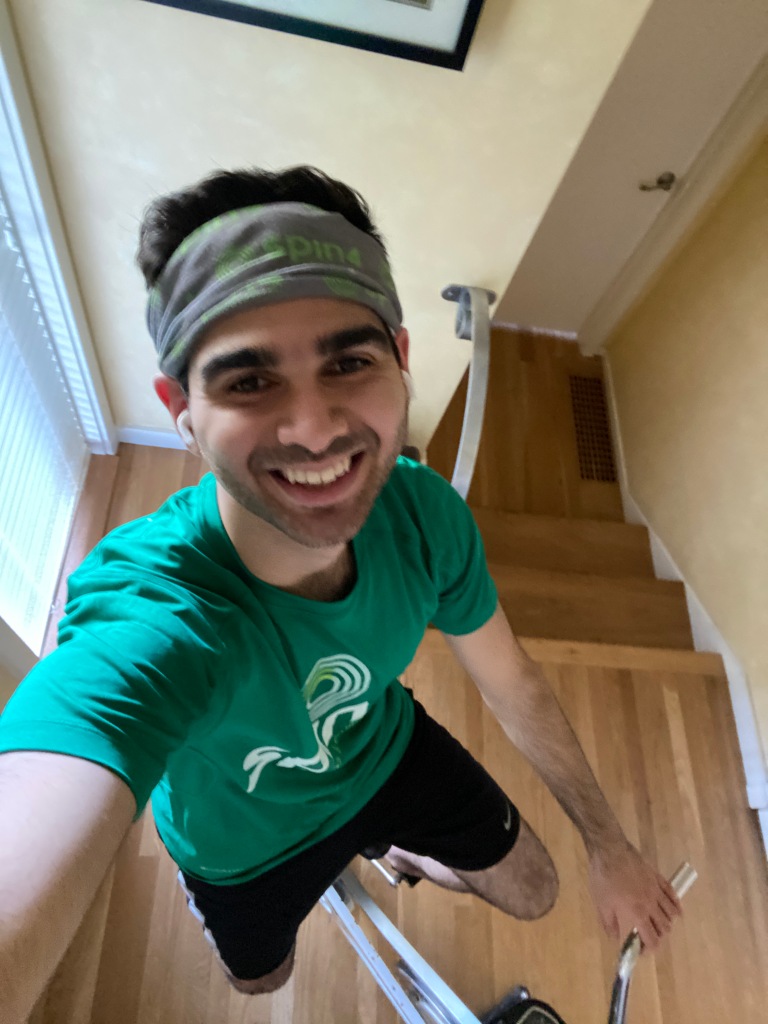
Parsa says growing up with Crohn’s made him responsible at a young age. He learned about resilience. He learned to embrace the obstacles he has hurdled and to keep on pushing through even when he couldn’t immediately see the light at the end of the tunnel. Parsa says he learned to appreciate the time he felt healthy enough to live life not controlled by a chronic illness. Through the years he’s realized you can still be fortunate through a misfortune. This belief has given him a strong appreciation to make the most of the opportunities that come his way and refuse to take the easy way out.

Register NOW: IBD Insider Patient Education Program (January 30)

Calling all IBD patients and caretakers, the IBD Insider Patient Education Program is this Saturday (January 30) at 11 am CT. The virtual symposium will include IBD clinicians along with patient moderators. I’m excited to share I am one of three patients who will be speaking and sharing my experience during the live event.

The discussion will include updates from the Crohn’s and Colitis Congress, and we’ll talk about the following topics:

  • Getting the most out of your healthcare visit
  • Future therapies in IBD
  • Holistic Approach to IBD Care
  • Management of IBD Care during the COVID-19 pandemic

I’ll be teaming up with Dr. Brigid Boland, MD, Assistant Professor of Medicine, University of California, San Diego to talk about the future treatment of IBD. As someone who was diagnosed with Crohn’s nearly 16 years ago, it’s been extremely comforting to see how many therapies have become available since 2005 and all that is on the horizon. Below is a chart that was shared during the Crohn’s and Colitis Congress that shows all the therapies currently in research and clinical trials. When I started my biologic in 2008, I had two options. With each year that passes, we get closer to a cure and get more and more options to manage our disease if our current therapies fail us.

“I love the idea of designing a program with patient advocates where we are communicating to patients and their families about the latest breakthroughs in research and patient care. There’s never enough time in visits to talk about all the research going on that will impact their care now and in the future.  Ultimately, all the research and future therapies that are being studied are ways to improve patients quality of life and provide a lot of hope for everyone affected by IBD (patients, caregivers and providers),” said Dr. Boland.

As people living with a disease for which there is no cure, it’s in our best interest to stay up to date on all the latest happenings and developments. IBD can feel like a beast of a disease to be up against day after day. When you participate in learning opportunities like this that are right at the touch of your fingertips you empower yourself as you make decisions and grow through your patient journey. It’s like the education saying, “The More You Know.” As you make decisions about how you manage your Crohn’s and ulcerative colitis, as you take on flares from a hospital bed, as you navigate life milestones like career and family planning, having resources like this in your arsenal of knowledge will only help you advocate for yourself and collaborate with your care team.

It’s not too late to register! Click here to sign up and can’t wait to “see” you Saturday!

Four Things People with IBD Wish Healthy People Knew

If you live with chronic illness, you may often find you sugarcoat your struggles. For 26-year-old Marissa Spratley of Maryland, this is nothing new. She battles Crohn’s disease, psoriatic arthritis, ankylosing spondylitis, and interstitial cystitis. She manages her conditions with Stelara and sulfasalazine. This week she openly shares what she wishes healthy people knew about life with IBD. I’ll let her take it away.

In the chronic illness community we all know how incredibly difficult it is to have Inflammatory Bowel Disease (IBD), or any other chronic illness. We know what it feels like to get hit with a wave of fatigue so hard you have to lay down immediately. We know what it feels like when our gut is on fire from something we ate. We know what it feels like to have nausea so badly all we can do is curl up in a ball on the bathroom floor and cry. We know these things, yet when we communicate with a healthy able-bodied person, we downplay our struggles and pain. 

Why are we afraid to be honest about how much pain we’re in on a daily basis? Is it because we don’t want to make others feel bad for us? Is it because we don’t want to show weakness? Or maybe it’s because we feel like by explaining how much we suffer on a regular basis, people might know the truth about us. That even though we are incredibly resilient, we live a hard life. We struggle and we cry and we ache and there are days where we wish IBD didn’t exist at all.

The truth is, hell yeah we are strong. But we are also weak, and we are tired. We are exhausted from always having to be strong in the face of pain. We are sick of having to downplay our symptoms and our suffering to make the healthy, able-bodied people around us feel less uncomfortable. We are tired of saying, “I’m good,” when someone asks how we’re doing and we really want to say “I feel like death.” 

So, in the spirit of honesty and opening up to the very ableist world around us about what it’s like to live with IBD, here are four things people with IBD wish healthy people knew.

  1. There are days when it hurts just to breathe. 

No, I am not being overdramatic. Yes, IBD affects more than just your gut. There are days when we wake up and everything about us aches. The way I describe it, is that I feel like I just got hit by a bus. My whole body aches deep in my bones, and it can take me an hour just to get out of bed and stand up straight. Those days are some of the hardest because on the outside we look perfectly normal. Please remember that not all illnesses are visible to the eye.

  1. Good intent doesn’t always mean good impact.

We know you’re just trying to help when you make suggestions about things we could do to try to feel better. But the truth is, we know our bodies better than anyone else, and trust us when we say — if there was something we could do to make us feel better, we’d do it. When you comment about things we should try (like juicing or yoga or going paleo), it makes us feel like you think we aren’t doing enough to feel better. Our healing and health are our business, and while we know you care, if we want your help or advice, we’ll ask for it. We appreciate you understanding this.

  1. Having a chronic illness is really hard on our mental health.

IBD is hard, period. Folks with chronic illnesses not only have to struggle with our physical health, but IBD also has a huge impact on our mental health. Being chronically ill makes you question a lot about yourself — Am I a burden to those around me? Am I worthy if I can’t work? Does my chronic illness make me hard to love? It also makes you question a lot about your worth — Am I lesser than because I can’t work as long as healthy people? Will employers not want to hire me? Do I bring enough to a relationship? These are all real questions I’ve asked myself at one time or another, and I can guarantee they are things other chronically ill folks have thought about as well. The way that IBD can affect your mental health is one of the most challenging parts of being chronically ill, because it is not talked about. So, what can you do to help us with our mental health? You can remind us we are inherently worthy, no matter how “productive” we are. You can remind us that you love us for who we are in our hearts, and not what we can do with our bodies. That means more to us than we can even put into words.

  1. Ableism affects the chronically ill, too.

Many people with IBD and chronic illnesses struggle to claim themselves as disabled, and this is something I could go on a tangent about. But here’s what you need to know: IBD affects our bodies in ways that make us less able, or disabled. The truth is, in the able-bodied centric society we live in, we believe it is offensive to call someone disabled because it means they can’t do something. However, to the actual disabled folks in our community, it is not offensive at all. We own the fact that we can’t use non-handicapped restroom stalls or walk up stairs. We are not afraid to say that there are tasks we cannot do as chronically ill, disabled individuals. It is our ableist society who thinks the term disabled is offensive. It is the ableist mindset that believes by saying someone can’t do something, we are being hurtful. Because to the chronically ill and disabled community, we know that our disabilities do not affect our worth. We know that our health does not affect our worth. But now we need you to know that, too.

To all my IBD and chronic illness folks: I see you, and I hear you. I hope that the next time you have a conversation with someone and you want to be real about how much it truly sucks sometimes, you can send them this article.

To the healthy, able-bodied folks reading this article, thank you for showing up and reading to the end. I hope you learned something new about how to better support your loved ones with IBD or chronic illness.

Connect with Marissa on Instagram: @mindbodycrohns

Why IBD Forces You to Take Off the Rose-Colored Glasses and See Clearly

I remember the first time I put glasses on in fourth grade and no longer saw the world unclearly. I can still recall the first time I wore contacts sophomore year of high school and experienced how crisp life is supposed to look. Prior to glasses and corrective lenses, I thought my vision was how everyone else saw. I recently came across a discussion on Twitter by Jessica Caron (ChronicallyJess) about how you would describe your IBD journey at the beginning—in one word. One woman, Emily Morgan (@EmMorgan27) replied with the word blurry.

That response got me thinking. It’s spot on for so many reasons. Take yourself back in time to the first week you were diagnosed with Crohn’s or ulcerative colitis and the clarity you’ve gained and continue to gain with each year that passes.

When I was diagnosed with Crohn’s in July 2005 at age 21, I remember sitting almost stoically in my hospital bed because I was so overwhelmed by not only what the next day or week would bring, but the next hour. All my plans, all my goals, all my dreams that were once crystal clear became incredibly hazy. The thought of thinking beyond that moment almost made me feel dizzy with dread.

What does this new world of chronic illness look like?

What would be possible with IBD? Who am I now? How has my identity shifted? Where do I go from here? What will my friends think? What will future employers think? What’s it like to be on medication for the rest of my life? Will anyone ever love me? The list goes on. The vision that I had the first 21 years of my life was forever tainted.

But as the years rolled by, I came to realize the rose-colored glasses I wore prior to diagnosis didn’t give me that clear of a reality about not only my own life, but those around me. Prior to Crohn’s I just expected everything to go my way. Prior to Crohn’s I felt invincible. Prior to Crohn’s I didn’t think twice about my health and what a gift it was.

Now life is anything but blurry

Looking back over the past 15 years, my vision of life with Crohn’s is anything but blurry. As I grew older and more mature, this disease of mine made me see the world clearer than I had ever before. The darkest days have led me to the brightest, shining moments. Nothing is taken for granted. Nothing is expected, but rather overly appreciated. This disease forced me to see the strength inside myself and the resilience that I never knew existed. This disease has demanded a lot out of me and still does, but it’s enabled me to discover a newfound gratitude for life’s simplicities and provided me with superhero strength vision of who is genuinely in my life, and who is not.

It’s gotten to the point where I don’t even know if I would have been the same adult if I never got Crohn’s. My IBD is not my identity, it’s only a part of who I am. Now I credit not only my contacts, but my Crohn’s, for improving my vision.

Why this public bathroom triggers me: Tactics for coping with the mental health aspect of IBD

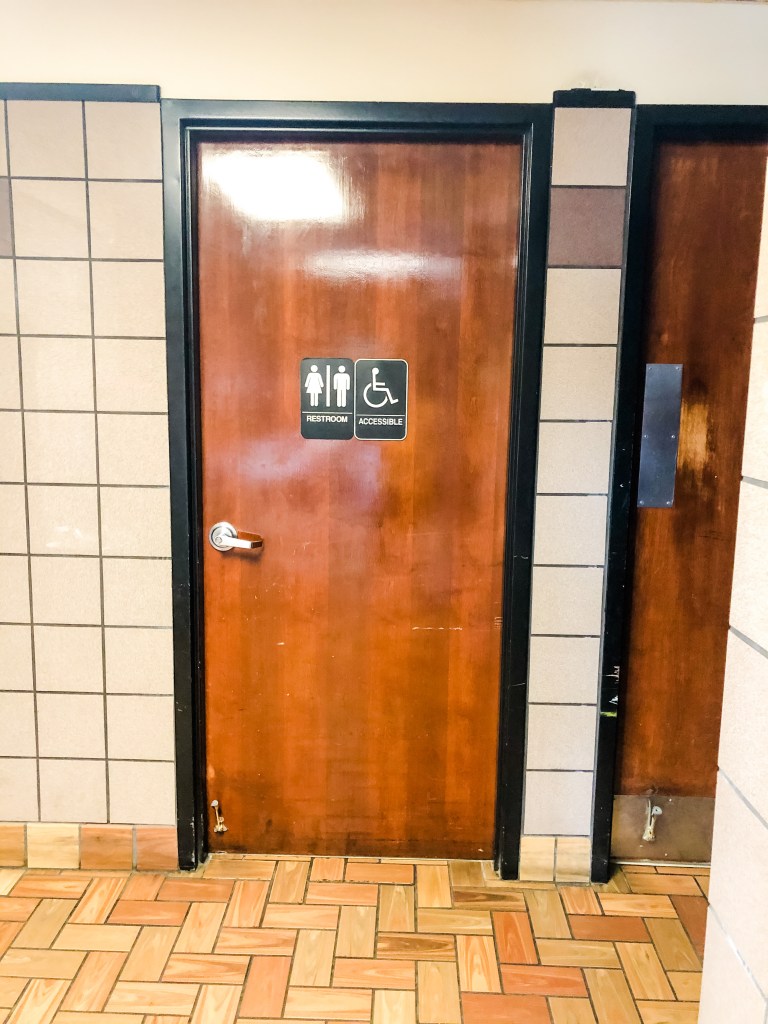
I paid for my groceries and casually pushed my cart full of food through the automatic door when I saw it. The bathroom where I experienced one of my scariest and most painful moments. The bathroom I had to run into after pulling over on my way home from work because I was in such debilitating pain, I couldn’t handle sitting upright in my car to make it the extra five minutes home. The bathroom where I lost all feeling in my arms and legs and where my fingers locked into painful contortions. I couldn’t even hold my phone to call my boyfriend (now husband) to tell him we needed to go to the hospital. The bathroom where I unknowingly happened to call my mom after accidentally hitting “Recent Calls” with my elbow. All she heard on the other line when she answered was me screaming. She didn’t know if I was getting raped, she didn’t know what the hell was going on and she was in a different state. God was watching out for me because she was able to call Bobby and let him know I needed help and I needed help fast.

He rushed to the grocery store and whisked me out of the bathroom and straight to the hospital where I found out I had a bowel obstruction.

I’ve been going to this same grocery store for nearly seven years. It’s been nearly six years since that dramatic experience occurred. But even now, five years into remission, I always go out the other doors because seeing that bathroom is a trigger. A trigger to one of my lowest points in my patient journey with Crohn’s disease. A trigger that caused my IBD to act up right in that moment this past week.

I was forced to go out of the grocery store that way as part of COVID-19 safety procedures to keep all incoming traffic through one set of doors and all outgoing traffic to another.

Coping with psychological triggers

When those of us in the IBD community hear the word “trigger”, food usually comes to mind. We casually say “oh that’s a trigger food for me”, but we often don’t pay much attention to the physical triggers in our lives that can exacerbate our symptoms—such as locations like that grocery store bathroom, relationships with certain friends and family members, the pressure of being enough and doing enough in comparison to our peers, the list goes on.

I interviewed Dr. Tiffany Taft, PsyD, MIS, a Research Assistant Professor at Northwestern University Feinberg School of Medicine, and a fellow IBD warrior to get some clarity on this subject and to learn more about what steps we can make right now to protect our mental health and prepare for the unknown.

NH: As chronic illness patients–how can we best navigate triggers that instigate a stress response? (Other than avoidance)

Dr. Taft: “While avoidance feels like the safest option when it comes to situations that trigger our stress response, it simply kicks the can down the road in terms of the effects these situations have on our bodies. People living with chronic illness may collect multiple situations that trigger the stress response – doctor’s offices, hospitals, certain tests or treatments, making avoidance very risky if it means not managing the illness and staying healthy.

Try the “Exposure Hierarchy” exercise: Dr. Taft recommends making a list of activities or situations that are stressful, ranking them from the least stressful to the most stressful and picking 10 things. Rate those 10 things from 10 to 100 (100 being the worst). After making the list, she has patients start with number 10 and practice that task several times over the course of a week.

Before that, though, she teaches relaxation strategies such as deep breathing and grounding to help when the anxiety goes up. She says, “With repeated exposures to the feared situations and working through the anxiety, each time we do activity 10 again, it will feel easier and confidence grows. Once the patient is ready, they repeat with 20, 30, etc. until we get to the dreaded 100 which will actually feel less scary because of all the other work we did before.”

**NOTE** If you feel you have symptoms of Post-Traumatic Stress Disorder (PTSD) which include vivid nightmares, flashbacks, and feeling on high alert most of the time, you should seek treatment with a trauma therapist. The good news is research on treatments for PTSD show they are just as effective when delivered via tele-medicine.

NH: Can you explain (in layman’s terms) what goes on when we’re “triggered”?

Dr. Taft: “Triggered is setting off our body’s fight-flight-freeze response, and results in a cascade of physical sensations and emotions. The most common ones are muscle tension, sweating, shallow breathing, and heart racing. Unfortunately, this response can also trigger our guts to start acting up because of the brain-gut connection. It’s a completely normal process but when you have IBD it can trigger symptoms. Your thoughts may be all over the place and littered with “what if’s” and “I can’ts”. Your mind may revisit the worst aspects of past experiences or come up with even more catastrophic possibilities in the future.”

NH: As people with IBD–I know many of us are nervous about flaring and needing to be hospitalized all alone during this pandemic, while being at greater risk for getting COVID. Do you have any advice on how to cope/mentally deal with that worry/concern?

Dr. Taft: “Facing a flare and hospitalization was stressful in the “before times” so facing this during COVID19 is an extra level of stress. While we have video chat, it does not replace the comfort of physical closeness and touch we would get from supports who could be in the hospital with us. The good news is hospitals have figured out COVID quite well and the odds of contracting it while hospitalized for IBD are lower than they were at the start of the pandemic.”

If you’re facing hospitalization, think about your resilience in these circumstances. There were probably times you felt like you couldn’t handle it, or it was never going to end or get better, but here you are today reading these words. You made it through. It may not have been pretty, it was probably incredibly hard. Anxiety has a great ability to negate our memories of how much we’ve navigated in the past.

Feeling anxious? Do this: Write down the ways you coped before, what worked and what maybe didn’t. Evaluate your thoughts about being hospitalized. Are they accurate? Are they helpful? What are some alternatives that could help you feel less anxious? If that doesn’t work, sit with the anxiety, and try some deep breathing to calm your nervous system. The sensations will likely pass and then you can retry evaluating your thinking when you aren’t feeling so keyed up.

NH: What advice do you have for people during these already complicated and challenging times when it comes to managing mental health?

Dr. Taft: “This is truly a unique time in that we are all in this COVID19 boat together. We all came into the pandemic with our own life challenges, and those probably haven’t gone away and even may have been made worse. We’re coping with a lot of information, new rules every other day, grim statistics, and people bickering over who’s right or wrong. I’ve told every patient I see to turn off the news. Get out of the comments on social media when people are arguing the same points over and over.”

Steps you can take in your day-to-day: Dr. Taft advises not to spend more than 15 minutes a day on the news, so you can stay informed but not get into the weeds. Take social media breaks, especially if your feed is full of the same tired arguments. Focus your attention on meaningful activities that align with your values. Those are what will bring you some stress relief. And those are unique to you, so no list on the internet of how to cope with COVID is going to solve everything. Sometimes these lists make us feel worse because we’re not doing most of the recommendations. Be as kind to yourself as you would be to your best friend or a beloved family member. Nobody has it figured out right now even though some people like to say they do.