For someone living with Crohn’s disease, surgery can feel like a necessary reset button. The diseased portion of your intestine is removed, you recover, and you hope your body and your life will settle into a new normal.
But what happens when too much intestine is removed, or the remaining intestine can no longer absorb what your body needs?
That’s where short bowel syndrome (SBS) comes in.
SBS occurs when the small intestine is too short or isn’t functioning well enough to adequately absorb the fluids, electrolytes, nutrients, and calories the body needs. For people with Crohn’s disease who have undergone multiple intestinal surgeries, SBS is a potential complication that deserves more attention.
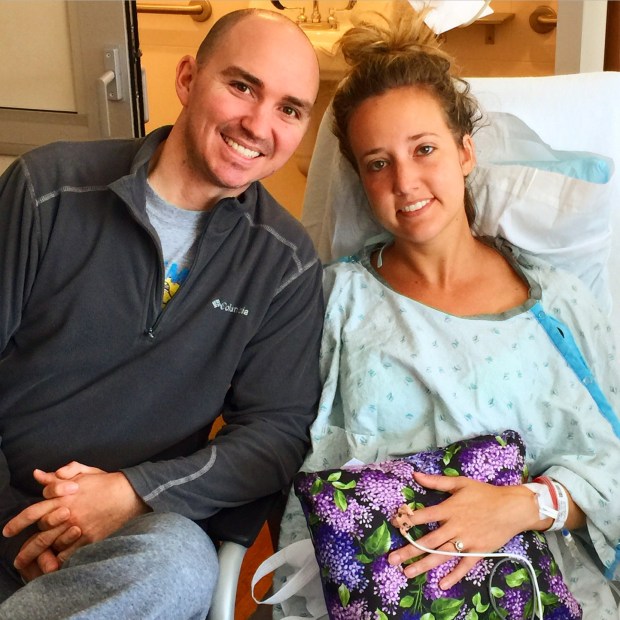
When 18 inches of my small intestine were removed in 2015, SBS was never mentioned as something I might need to think about if future surgeries became necessary. And that got me wondering: How many other people living with IBD aren’t aware of this?
This week on Lights, Camera, Crohn’s, we’re taking a closer look at SBS: what it means for people with IBD, how it can affect quality of life, what treatment options are available, and what patients and caregivers should know so they can recognize the signs and advocate for the care they need.
What exactly is short bowel syndrome?
The small intestine plays a huge role in keeping us nourished and hydrated. It absorbs nutrients from the foods and liquids we consume and helps our bodies get the building blocks they need to function. When someone has SBS, there isn’t enough functional small intestine to adequately perform that job.
SBS can develop after surgical removal of the small intestine because of conditions including Crohn’s disease, other forms of IBD, cancer, blood clots, or traumatic injury. It can also occur in people who are born with a shortened or incompletely developed small intestine.
According to the Short Bowel Foundation, SBS is a rare condition affecting 20,000 people in the United States.
Much like IBD, A person with SBS may look completely healthy on the outside while dealing with fatigue, abdominal symptoms, frequent bathroom trips, diarrhea, difficulty maintaining weight and ongoing challenges with hydration and nutrition.
Dr. Sukanya Subramanian, MD, Medstar Georgetown University Hospital, is a small bowel adult transplant gastroenterologist and specializes in intestinal rehab. She says diagnosing SBS can be a challenge.

“For example, Crohn’s disease is much more recognizable with endoscopic, microscopic, and laboratory criteria. There isn’t an absolute unequivocal test that tells you that you do or don’t have short bowel syndrome. Sometimes people are in the ambiguous zone, and we have to estimate length of bowel, do testing of absorptive capacity, evaluate transit times of food through the remaining intestine and consider this in the context of symptoms and lab data to make inferences about the diagnosis.”
Short bowel doesn’t automatically mean short bowel syndrome
There isn’t a simple blood test, scan or single diagnostic test that says, You have SBS.
Short bowel is described as having fewer than approximately 180–200 centimeters of small intestine, but the number alone doesn’t tell the whole story.
Think about it this way: two people could have the same amount of intestine remaining but have very different experiences.
The amount of bowel someone started with can vary. A smaller person may naturally have less intestine than a much taller person. And someone may technically have more than 200 centimeters of intestine remaining but still experience significant problems if their bowel isn’t functioning properly.

That’s why length isn’t the only consideration. Function matters.
Healthcare providers need to consider whether the remaining intestine can absorb enough fluid, electrolytes, and nutrients to maintain adequate hydration and nutrition.
SBS should be on the radar for someone with a history of intestinal surgery who is experiencing ongoing loose stools, difficulty maintaining weight or challenges staying adequately hydrated.
Why Crohn’s patients should know about SBS
Life with Crohn’s is unpredictable and ongoing inflammation, strictures, fistulas, obstructions, and other complications can lead to surgery. While removing diseased bowel can be lifesaving and dramatically improves someone’s quality of life, every intestinal surgery can change the anatomy and function of the digestive system. For example, if someone has their ileum removed, they become vulnerable to fat malabsorption, meaning that bile salts can’t be recycled to the liver.
For patients who have had multiple resections, it’s important to understand that there can be consequences beyond the recovery period.
The question isn’t simply, “How much intestine do I have left?” It’s, “How well is the intestine I have left working?”
Dr. Subramanian says, “Length of remnant bowel is not the sole determining factor in the diagnosis of SBS. The quality of the remaining bowel is very important. Intestinal ischemia, active Crohn’s disease, Crohn’s fibrosis, and intestinal dysmotility are co-existing conditions that can impact the capacity of the bowel.”
This is a conversation worth having with your gastroenterologist, particularly if you’re experiencing persistent diarrhea, dehydration, nutritional deficiencies, or difficulty maintaining your weight after intestinal surgery.
Treatment starts with nutrition and hydration
When someone is first diagnosed with SBS, the immediate priority is getting the patient out of crisis and stabilized.
That can sometimes mean an escalation of care to make sure the person receives the fluids, electrolytes, and nutrition they need. Once someone is stable, the goal is to gradually optimize their intestinal absorption, and when possible, dial back the level of parenteral or intravenous support required.
“Dietary modifications are crucial to achieving enteral autonomy and far too often are treated as an afterthought during a clinical visit, explains Dr. Subramanian. “The dietary recommendation for each patient depends on their anatomy, mainly whether there is a colon present and if it is in continuity with the rest of the bowel. It is important that each patient with SBS work with their local care team to identify and address their unique needs.”

Some people can meet their nutritional needs by eating and drinking by mouth. Others may require nutritional support through a vein, known as parenteral nutrition.
Someone with SBS may assume that drinking more plain water is the obvious solution to frequent diarrhea or dehydration. But depending on the individual, simply increasing water intake may actually make symptoms worse.
That’s why some patients may need oral rehydration solutions specifically designed to help the body absorb fluids and electrolytes more effectively.
There is no “perfect SBS diet”
Nutrition counseling for SBS should be individualized and physician and patient priorities should be aligned.
A healthcare provider may consider:
- What foods is the person eating now?
- What foods do they tolerate?
- What foods are important to them? Are there cultural considerations?
- What are their nutritional needs?
- What are their symptoms?
- What changes are realistic?
- What are the patient’s non-negotiables?
A treatment plan that completely ignores quality of life may look perfect on paper but may be challenging for a person to sustain. The goal should be to find an approach that supports nutrition and hydration while still honoring the person dealing with the diagnosis and setting them up for success.
Medications can help manage symptoms
Nutrition and hydration are the foundation of SBS care, but medications may also play an important role.
Antidiarrheal or antimotility medications can slow the movement of food through the intestine, which may help manage the diarrhea that frequently accompanies SBS.
Acid-reducing medications may also be used to decrease stomach acid that can contribute to damage of the intestinal lining and affect absorption.
And there is another important medication to know about: teduglutide, a GLP-2 analog.
Teduglutide is currently the only FDA-approved medication specifically for SBS. Unlike medications that primarily address symptoms, it is considered a disease-modifying treatment. It works by promoting structural and functional changes in the intestine, slowing intestinal transit, and improving nutrients and fluid absorption.
“Teduglutide has changed the paradigm of treatment of SBS because it is disease modifying; it structurally changes the bowel,” says Dr. Subramanian. “It doesn’t just slow transit; it enhances the capacity of the intestine to absorb. Patients have to be able to eat though in order for this treatment to be effective.”
Living with SBS can feel isolating
One of the most difficult parts of any invisible illness is explaining something that other people can’t see. People living with SBS and their caregivers and family members can benefit from connecting with others who understand the realities of the condition. SBS is not as dismal of a prognosis as it used to be. Support groups, advocacy organizations, and educational resources can help patients feel less alone and better equipped to advocate for their care.
If you or someone you love is living with short bowel syndrome, education and support can make a meaningful difference. The Med-IQ Short Bowel Syndrome Patient and Caregiver Education Resource Hub offers educational materials, links to patient advocacy and caregiver resources, and a clinical directory to help people find SBS care.
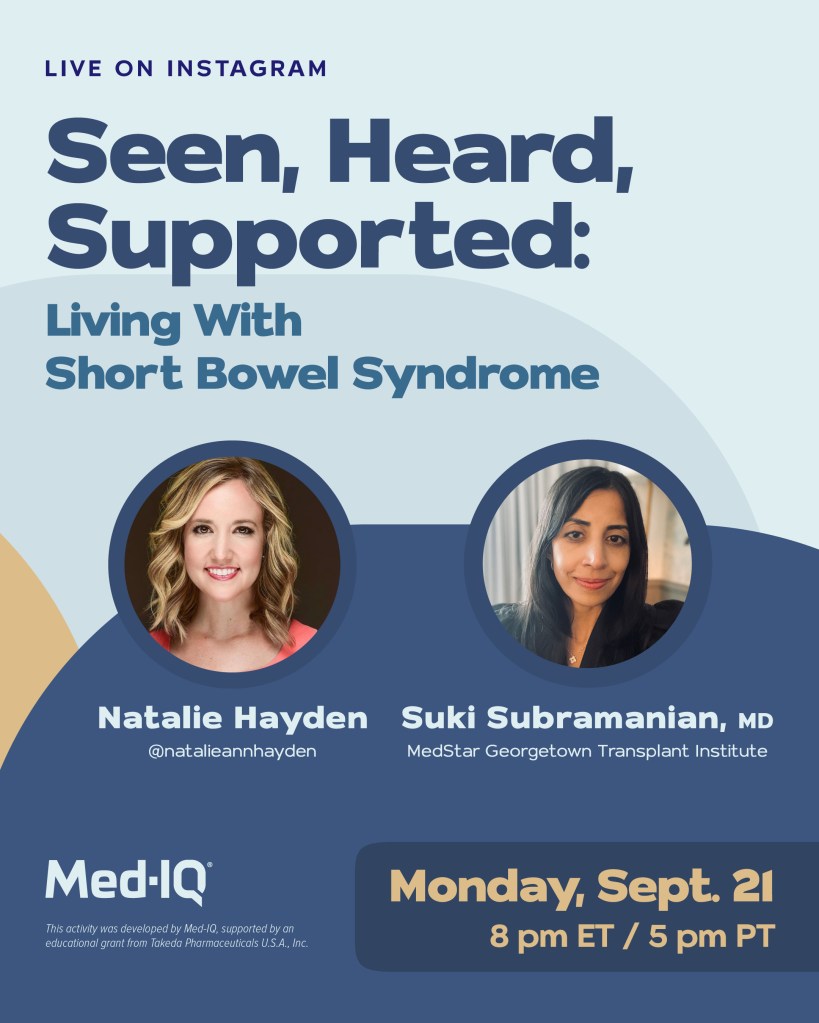
Thanks @mediqcme. Supported by an educational grant from Takeda Pharmaceuticals, U.S.A., Inc.
Join me LIVE on Instagram TONIGHT (Monday, September 21) at 7 PM CT for an in-depth conversation with Dr. Subramanian about SBS—what it means for patients, the latest strides in care, and what patients and caregivers need to know. We’ll break down the questions you may have, the treatment landscape, and how people living with SBS can better advocate for themselves.
 lights camera crohn's